Method for synthesis of secondary alcohols
US20120142934A1
2012-06-07
13/045,003
2011-03-10
✅ Patent granted
US 8,410,320 B2
2013-04-02
-
-
Elvis O Price
Muncy, Geissler, Olds & Lowe, PLLC
2031-10-20
Abstract:
A method for synthesis of secondary alcohols is provided for pharmaceutical secondary alcohol by addition of organoboronic acids with aldehydes in presence of the cobalt ion and bidentate ligands as the catalyst. In addition, an enantioselective synthesis method for secondary alcohols is also herein provided in the present invention. The present invention has advantages in using less expensive cobalt ion and commercially available chiral ligands as the catalyst, wide scope of organoboronic acids and aldehydes compatible with this catalytic reaction and achieving excellent yields and/or enantiomeric excess.
Inventors:
- CHIEN-HONG CHENG 42 🇹🇼 Hsinchu, Taiwan
- Jaganathan Karthikeyan 1 🇹🇼 Hsinchu, Taiwan
- Pang-Chi Huang 1 🇹🇼 Hsinchu, Taiwan
Assignee:
- NATIONAL TSING HUA UNIVERSITY 1,388 🇹🇼 Hsinchu, Taiwan
Applicant:
Interested in similar patents?
Get notified when new applications in this technology area are published.
Classification:
C07B37/04 » CPC further
Reactions without formation or introduction of functional groups containing hetero atoms, involving either the formation of a carbon-to-carbon bond between two carbon atoms not directly linked already or the disconnection of two directly linked carbon atoms Substitution
C07D307/12 » CPC further
Heterocyclic compounds containing five-membered rings having one oxygen atom as the only ring hetero atom not condensed with other rings having no double bonds between ring members or between ring members and non-ring members with substituted hydrocarbon radicals attached to ring carbon atoms Radicals substituted by oxygen atoms
C07B2200/07 » CPC further
Indexing scheme relating to specific properties of organic compounds Optical isomers
C07C2601/14 » CPC further
Systems containing only non-condensed rings with a six-membered ring The ring being saturated
C07D307/42 » CPC main
Heterocyclic compounds containing five-membered rings having one oxygen atom as the only ring hetero atom not condensed with other rings having two or three double bonds between ring members or between ring members and non-ring members with substituted hydrocarbon radicals attached to ring carbon atoms; Radicals substituted by oxygen atoms Singly bound oxygen atoms
C07C33/26 » CPC further
Unsaturated compounds having hydroxy or O-metal groups bound to acyclic carbon atoms Polyhydroxylic alcohols containing only six-membered aromatic rings as cyclic part
C07D333/16 » CPC further
Heterocyclic compounds containing five-membered rings having one sulfur atom as the only ring hetero atom not condensed with other rings not substituted on the ring sulphur atom with only hydrogen atoms, hydrocarbon or substituted hydrocarbon radicals, directly attached to the ring carbon atoms; Radicals substituted by singly bound hetero atoms other than halogen by oxygen atoms
C07C69/76 » CPC further
Esters of carboxylic acids; Esters of carbonic or haloformic acids Esters of carboxylic acids having a carboxyl group bound to a carbon atom of a six-membered aromatic ring
C07C67/343 » CPC further
Preparation of carboxylic acid esters by modifying the acid moiety of the ester, such modification not being an introduction of an ester group by isomerisation; by change of size of the carbon skeleton by increase in the number of carbon atoms
C07C33/46 » CPC further
Unsaturated compounds having hydroxy or O-metal groups bound to acyclic carbon atoms; Halogenated unsaturated alcohols containing only six-membered aromatic rings as cyclic parts
C07C33/24 » CPC further
Unsaturated compounds having hydroxy or O-metal groups bound to acyclic carbon atoms; Monohydroxylic alcohols containing only six-membered aromatic rings as cyclic part polycyclic without condensed ring systems
C07C33/18 » CPC further
Unsaturated compounds having hydroxy or O-metal groups bound to acyclic carbon atoms Monohydroxylic alcohols containing only six-membered aromatic rings as cyclic part
C07C43/23 » CPC further
Ethers; Compounds having groups, groups or groups; Ethers having an ether-oxygen atom bound to a carbon atom of a six-membered aromatic ring containing hydroxy or O-metal groups
C07C41/30 » CPC further
Preparation of ethers; Preparation of compounds having groups, groups or groups; Preparation of ethers by reactions not forming ether-oxygen bonds by increasing the number of carbon atoms, e.g. by oligomerisation
C07C33/34 » CPC further
Unsaturated compounds having hydroxy or O-metal groups bound to acyclic carbon atoms Monohydroxylic alcohols containing six-membered aromatic rings and other rings
C07C69/94 » CPC further
Esters of carboxylic acids; Esters of carbonic or haloformic acids; Esters of carboxylic acids having a carboxyl group bound to a carbon atom of a six-membered aromatic ring of polycyclic hydroxy carboxylic acids, the hydroxy groups and the carboxyl groups of which are bound to carbon atoms of six-membered aromatic rings
C07C205/19 » CPC further
Compounds containing nitro groups bound to a carbon skeleton the carbon skeleton being further substituted by hydroxy groups having nitro groups bound to carbon atoms of six-membered aromatic rings and hydroxy groups bound to acyclic carbon atoms
C07C255/15 » CPC further
Carboxylic acid nitriles having cyano groups bound to acyclic carbon atoms containing cyano groups and singly-bound oxygen atoms bound to the same unsaturated acyclic carbon skeleton
C07D213/30 » CPC further
Heterocyclic compounds containing six-membered rings, not condensed with other rings, with one nitrogen atom as the only ring hetero atom and three or more double bonds between ring members or between ring members and non-ring members having three double bonds between ring members or between ring members and non-ring members having no bond between the ring nitrogen atom and a non-ring member or having only hydrogen or carbon atoms directly attached to the ring nitrogen atom with substituted hydrocarbon radicals attached to ring carbon atoms; Radicals substituted by singly-bound oxygen or sulphur atoms Oxygen atoms
C07C201/12 » CPC further
Preparation of esters of nitric or nitrous acid or of compounds containing nitro or nitroso groups bound to a carbon skeleton; Preparation of nitro compounds by reactions not involving the formation of nitro groups
C07C45/61 IPC
Preparation of compounds having >C = O groups bound only to carbon or hydrogen atoms; Preparation of chelates of such compounds by reactions not involving the formation of >C = O groups
C07C29/38 » CPC further
Preparation of compounds having hydroxy or O-metal groups bound to a carbon atom not belonging to a six-membered aromatic ring increasing the number of carbon atoms by reactions with formation of hydroxy groups, which may occur via intermediates being derivatives of hydroxy, e.g. O-metal by reaction with aldehydes or ketones
C07C253/30 » CPC further
Preparation of carboxylic acid nitriles by reactions not involving the formation of cyano groups
C07C67/30 IPC
Preparation of carboxylic acid esters by modifying the acid moiety of the ester, such modification not being an introduction of an ester group
C07C29/14 IPC
Preparation of compounds having hydroxy or O-metal groups bound to a carbon atom not belonging to a six-membered aromatic ring by reduction of an oxygen containing functional group of >C=O containing groups, e.g. —COOH of a —CHO group
Description
BACKGROUND OF THE INVENTION
1. Field of the Invention
The present invention relates to a method for synthesis of secondary alcohols, particularly to a method for synthesis of secondary alcohols by addition of organoboronic acids with aldehydes in presence of the cobalt ion and bidentate ligands.
2. Description of the Prior Art
Chiral secondary alcohols are key structural units present in various biologically and pharmaceutically active compounds. Transition-metal-catalyzed addition of organometallic reagents with aldehydes is a key method for the synthesis of substituted secondary alcohols. Among them, organoboronic reagents have gained much attention due to the advantages of air and moisture stability, low toxicity, and availability. Among the transition-metal-catalysts, rhodium, palladium, platinum and nickel complexes efficiently catalyzed the addition reaction of organoboronic acids with aldehydes. Recently, copper- and iron-catalyzed addition reactions of organoboronic acid with aldehydes were also reported. However, the scope of aldehydes in these addition reactions is rather limited. Only aromatic aldehydes with an electron-withdrawing substituent worked well. Despite the fact that various metal-catalyzed addition reactions of organoboronic acids with aldehydes are available in the literature, only a few reports on asymmetric reactions were discussed.
Zhou et al. (Org. Lett. 2006, 8, 1479) reported a rhodium-catalyzed enantioselective addition reaction of aromatic boronic acids with aromatic aldehydes. In the reaction, enantiomeric excess (ee) values of 62-87% for chiral biaryl methanols were observed.
Recently, Miyaura et al (Angew. Chem. Int. Ed. 2009, 48, 4414) reported a ruthenium-catalyzed enantioselective addition reaction of aromatic boronic acids with aromatic aldehydes. In the reaction, the expected chiral biaryl methanols were observed in excellent enantiomeric excess. However, in these reactions specially designed chiral ligands and expensive ruthenium or rhodium catalysts were used.
To sum up, the development of new, mild and convenient methods using a low-cost catalyst for the synthesis of chiral secondary alcohols remains highly attractive.
SUMMARY OF THE INVENTION
The present invention is directed to a method for synthesis of secondary alcohols provided for pharmaceutical secondary alcohol by addition of organoboronic acids with aldehydes in presence of the cobalt ion and bidentate ligands as the catalyst.
According to one embodiment, a method for synthesis of secondary alcohols where an organoboronic acid and an aldehyde are reacted in a reaction reagent to obtain a secondary alcohol is disclosed, wherein the reaction reagent comprises a cobalt ion and a bidentate ligand.
The present invention is also directed to an enantioselective method for synthesis of secondary alcohols provided for enantioselective secondary alcohol by addition of organoboronic acids with aldehydes in presence of the cobalt ion and bidentate chiral ligands as the catalyst.
According to another embodiment of the present invention, an enantioselective method for synthesis of secondary alcohols where an organoboronic acid and an aldehyde in an organic reagent are reacted to obtain an enantioselective secondary alcohol, wherein the organic reagent comprises a cobalt ion and a chiral bidentate ligand.
Other advantages of the present invention will become apparent from the following descriptions taken in conjunction with the accompanying drawings wherein certain embodiments of the present invention are set forth by way of illustration and examples.
DESCRIPTION OF THE PREFERRED EMBODIMENT
The present invention is directed to a method for synthesis of secondary alcohols by addition of organoboronic acids with aldehydes in a reaction reagent including cobalt ion and bidentate ligands conjugated thereto as the catalyst.
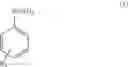
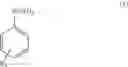
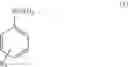
The organoboronic acids of the present invention may include alkyl and/or aryl boric acid. Preferably, the organoboronic acids are aryl boric acids, particularly phenyl boric acids, which is represented by structural formula (1):
, wherein R1 is a member selected from the group consisting of H, halo, cyano, trifluoromethyl, amino, C1-C10 alkyl, C2-C10 alkenyl, C2-C10 alkynyl, C3-C20 cycloalkyl, C3-C20 cycloalkenyl, C1-C20 heterocycloalkyl, C1-C20 heterocycloalkenyl, aryl and heteroaryl.
The aldehydes of the present invention are represented by the structural formula (2):
, wherein R2 is a member selected from the group consisting of C1-C10 alkyl, C2-C10 alkenyl, C2-C10 alkynyl, C3-C20 cycloalkyl, C3-C20 cycloalkenyl, C1-C20 heterocycloalkyl, C1-C20 heterocycloalkenyl, aryl and heteroaryl.
Alkyl, alkenyl, alkynyl, cycloalkyl, cycloalkenyl, heterocycloalkyl, heterocycloalkenyl, aryl and heteroaryl mentioned herein include both substituted and unsubstituted moieties, unless specified otherwise. Possible substituents on cycloalkyl, cycloalkenyl, heterocycloalkyl, heterocycloalkenyl, aryl, and heteroaryl include, but are not limited to, C1-C10 alkyl, C2-C10 alkenyl, C2-C10 alkynyl, C3-C20 cycloalkyl, C3-C20 cycloalkenyl, C1-C20 heterocycloalkyl, C1-C20 heterocycloalkenyl, C1-C10 alkoxy, aryl, aryloxy, heteroaryl, heteroaryloxy, amino, C1-C10 alkylamino, C1-C20 dialkylamino, arylamino, diarylamino, C1-C10 alkylsulfonamino, arylsulfonamino, C1-C10 alkylimino, arylimino, C1-C10 alkylsulfonimino, arylsulfonimino, hydroxyl, halo, thio, C1-C10 alkylthio, arylthio, C1-C10 alkylsulfonyl, arylsulfonyl, acylamino, aminoacyl, aminothioacyl, amido, amidino, guanidine, ureido, thioureido, cyano, nitro, nitroso, azido, acyl, thioacyl, acyloxy, carboxyl, and carboxylic ester. On the other hand, possible substituents on alkyl, alkenyl, or alkynyl include all of the above-recited substituents except C1-C10 alkyl. Cycloalkyl, cycloalkenyl, heterocycloalkyl, heterocycloalkenyl, aryl, and heteroaryl can also be fused with each other.
In one embodiment, diaryl methanols may be obtained as product by using reactants arylboronic acid and aryl aldehyde.
The cobalt ion used in the present invention may be Co2+ or Co3+, preferably Co2+, and may be provided by Co(acac)2, CoI2, CoBr2 or CoCl2
The bidentate ligands used in the present invention, for example, include phosphor, nitrogen or oxygen and is used for conjugating with cobalt ion as the catalyst.
For example, bidentate ligands containing phosphor may include DPPE (1,2-bis(diphenylphosphino)ethane), (R)-Prophos ((R)-(+)-1,2-bis(diphenylphosphino)propane), (R)-Tol-BINAP ((R)-(+)-2,2′-Bis(di-p-tolylphosphino)-1,1′-binaphthyl), (S)-BINAP ((S)-(−)-2,2′-Bis(diphenylphosphino)-1,1′-binaphthyl), (S,S)-Chiraphos ((2S,3S)-(−)-bis(diphenylphosphino)butane), (R,R)-BDPP (2R,4R)-(+)-2,4-bis(diphenylphosphino)pentane), (S,S)-BDPP (2S,4S)-(+)-2,4-bis(diphenylphosphino)pentane), (R,R)-Ph-BPE ((−)-1,2-Bis((2R,5R)-2,5-diphenylphospholano)ethane), (R)-Quinap ((R)-(+)-1-(2-diphenylphosphino-1-naphthyl)isoquinoline), (R)-MOP ((R)-(+)-2-(diphenylphosphino)-2′-methoxy-1,1′-binaphthyl), (S,S)-DIPAMP ((S,S)-1,2-Bis[(2-methoxyphenyl)(phenylphosphino)]ethane), (R)-Monophos ((R)-(−)-(3,5-Dioxa-4-phospha-cyclohepta[2,1-a:3,4-a′]dinaphthalen-4-yl)dimethylamine) or (S,S)-DIOP ((4S,5S)-(+)-4,5-Bis(diphenylphosphinomethyl)-2,2-dimethyl-1,3-dioxolane).
For example, bidentate ligands containing nitrogen may include 3,5-dimethyl-bispyrazolylmethane, 2,2′-bipyridine or 1,1-bis[4,4-dimethyl-1,3-oxazolin-2-yl]ethane.
For example, bidentate ligands containing oxygen may include (S)-BINOL ((S)-(−)-1,1′-Bi(2-napthol).
Also in one embodiment, the reaction reagent of the present invention is basic and provided by K2CO3; however, this is a preferred embodiment and is not thus limited.
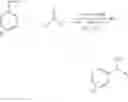
Referring to Table 1 and the reaction formula listed below, in one embodiment of the present invention, a secondary alcohol 3 may be obtained from reaction of an arylboronic acid 1 and an aldehyde 2 in presence of the cobalt ion and bidentate ligand as the catalyst.
| TABLE 1 |
| Results of the addition reaction of |
| arylboronic acid with aldehydes[a] |
| Yield[b] | |||
| Entries | Reactant | Product | [%] |
| 1 | 1a: R1 = H; 2a: R2 = 4-CN—C6H4 | 3aa | 96 |
| 2 | 1a: R1 = H; | 3ab | 97 |
| 2b: R2 = 4-NO2—C6H4 | |||
| 3 | 1a: R1 = H; | 3ac | 93 |
| 2c: R2 = 4-CHO—C6H4 | |||
| 4 | 1a: R1 = H; | 3ad | 98 |
| 2d: R2 = 4-CO2Me—C6H4 | |||
| 5 | 1a: R1 = H; | 3ae | 89 |
| 2e: R2 = 4-CF3—C6H4 | |||
| 6 | 1a: R1 = H; 2f: R2 = 4-F—C6H4 | 3af | 92 |
| 7 | 1a: R1 = H; 2g: R2 = 3-F—C6H4 | 3ag | 82 |
| 8 | 1a: R1 = H; 2h: R2 = 2-F—C6H4 | 3ah | 80 |
| 9 | 1a: R1 = H; 2i: R2 = 4-C1—C6H4 | 3ai | 96 |
| 10 | 1a: R1 = H; 2j: R2 = 4-Br—C6H4 | 3aj | 84 |
| 11 | 1a: R1 = H; 2k: R2 = Ph | 3ak | 73 |
| 12 | 1a: R1 = H; 2l: R2 = 1-napthyl | 3al | 75 |
| 13 | 1a: R1 = H; 2m: R2 = 2-napthyl | 3am | 75 |
| 14 | 1a: R1 = H; 2n: R2 = 4-Me—C6H4 | 3an | 67 |
| 15 | 1a: R1 = H; | 3ao | 57 |
| 2o: R2 = 4-OMe—C6H4 | |||
| 16 | 1a: R1 = H; | 3ap | 76 |
| 2p: R2 = 4-pyridinyl | |||
| 17 | 1a: R1 = H; 2q: R2 = 2-furyl | 3aq | 69 |
| 18 | 1a: R1 = H; 2r: R2 = 2-thienyl | 3ar | 78 |
| 19 | 1a: R1 = H; 2s: R2 = cyclohexyl | 3as | 79 |
| 20 | 1b: R1 = 4-Br; | 3bd | 93 |
| 2d: R2 = 4-CO2Me—C6H4 | |||
| 21 | 1c: R1 = 4-F; | 3cd | 93 |
| 2d: R2 = 4-CO2Me—C6H4 | |||
| 22 | 1d: R1 = 4-CHO; | 3dd | 84 |
| 2d: R2 = 4-CO2Me—C6H4 | |||
| 23 | 1e: R1 = 4-Me; | 3ed | 92 |
| 2d: R2 = 4-CO2Me—C6H4 | |||
| 24 | 1f: R1 = 4-OMe; | 3fd | 97 |
| 2d: R2 = 4-CO2Me—C6H4 | |||
| 25 | 1g: R1 = 2-OMe; | 3gd | 96 |
| 2d: R2 = 4-CO2Me—C6H4 | |||
| 26 | 1h: R1 = 4-viny; | 3hd | 75 |
| 2d: R2 = 4-CO2Me—C6H4 | |||
| 27 | 1i: R1 = (E)-styryl; | 3id | 78 |
| 2d: R2 = 4-CO2Me—C6H4 | |||
| [a]Unless otherwise mentioned, all of the reactions were carried out by using arylboronic acid 1 (1.20 mmol), aldehydes 2 (1.00 mmol), Co(acac)2 (5 mol %), dppe (5 mol %), and THF/CH3CN (1:1) at 80° C. for 12 h. | |||
| [b]Isolated yields. |
Examples 3aa˜3 as
In the above-mentioned reaction condition, various secondary alcohols were obtained from the addition reaction of phenylboronic acid 1a with aromatic aldehydes, heterocyclic aldehydes, and aliphatic aldehydes. Here, benzaldehydes with electron-withdrawing groups, such as 4-NO2 (2b), 4-CHO (2c), 4-CO2Me (2d), and 4-CF3 (2e) provided diarylmethanols 3ab-3ae in excellent yields (89-97%; Table 1, entries 2-5).
Halo-substituted benzaldehyde derivatives are also compatible with the present catalytic reaction. For example, 4-F (2H), 3-F (2g), 2-F (2h), 4-Cl (2i), and 4-Br (2j) also reacted efficiently with 1a to give the corresponding diarylmethanols 3af-3aj in good to excellent yields (Table 1, entries 6-10).
Similarly, benzaldehyde (2k), 1-napthaldehyde (2l) and 2-napthaldehyde (2m) underwent addition reaction with 1a to afford products 3ak-3am in good yields (Table 1, entries 11-13).
Benzaldehydes containing electron-donating groups, such as 4-Me (2n) and 4-OMe (2o) also gave addition products 3an and 3ao albeit in moderate yields (Table 1, entries 14 and 15).
Heterocyclic aldehydes, including 4-formylpyridine (2p), 2-formylfuran (2q), and 2-formylthiophene (2r) also reacted efficiently to give addition products 3ap-3ar in 76, 69, and 78% yields, respectively (Table 1, entries 16-18).
Aliphatic aldehyde, such as cyclohexanecarbaldehyde (2s), also effectively participated in the addition reaction affording product 3 as in 79% yield (Table 1, entry 19).
Examples 3bd-3id
In addition, various substituted organoboronic acids were reacted with methyl 4-formyl benzoate (2d). Substituents 4-Bromo (1b), 4-fluoro (1c), 4-formyl (1d), 4-methyl (1e), 4-methoxy (1f), 2-methoxy (1g) and 4-vinylphenylboronic (1h) acids all reacted effectively with 2d to furnish substituted diarylmethanols 3bd-3hd in 93, 93, 84, 92, 97, 96, and 75% yield, respectively (Table 1, entries 20-26).
These results clearly indicate that the present addition reaction shows excellent tolerance towards Br, F, CHO, Me, and OMe functional groups.
The catalytic reaction also worked very well with alkenylboronic acid. Thus, (E)-1-styrylboronic acid (11) reacted with 2d to afford allylic alcohol 31d in 78% yield (Table 1, entry 27).
Example Results with Different Catalysts Used
Treatment of phenylboronic acid (1a) with 4-cyanobenzaldehyde (2a) in presence of Co(acac)2 (5 mol %), 1,2-bis(diphenylphosphino)ethane (dppe; 5 mol %) in THF/CH3CN (1/1) at 80° C. for 12 h gave addition product 3aa in 96% isolated yield (Table 1, entry 1).
In the present reaction, no extra base was required and only 1.2 mmol of boronic acid was used. The catalytic reaction also worked equally well using CoI2 or CoCl2 (5 mol %), dppe (5 mol %) as the catalyst, and THF as solvent to afford 3aa in 96-97% yield, but base (K2CO3 (1.50 equiv)) was needed to activate the boronic acid.
Enantioselective Secondary Alcohols
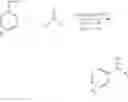
Referring to Table 2 and the reaction formula listed below, the present invention is also directed to a secondary alcohol 3 obtained from reaction of an arylboronic acid 1 and an aldehyde 2 in presence of the cobalt ion and bidentate ligand as the catalyst.
| TABLE 2 |
| Results of the enantioselective addition reaction of various |
| phenylboronic acids with substituted aldehydes.[a] |
| Yield[b] | |||
| Entries | Reactant | Product | (ee)[%] |
| 1 | 1a: R1 = H; | (S)-3aa | 97 | (92) |
| 2a: R2 = 4-CN—C6H4 | ||||
| 2 | 1a: R1 = H; | (S)-3ab | 95 | (93) |
| 2b: R2 = 4-NO2—C6H4 | ||||
| 3 | 1a: R1 = H; | (S)-3ad | 98 | (94) |
| 2d: R2 = 4-CO2Me—C6H4 | ||||
| 4 | 1a: R1 = H; | (R)-3ad | 95[c] | (93) |
| 2d: R2 = 4-CO2Me—C6H4 | ||||
| 5 | 1a: R1 = H; | (S)-3ae | 97 | (92) |
| 2e: R2 = 4-CF3—C6H4 | ||||
| 6 | 1a: R1 = H; 2f: R2 = 4-F—C6H4 | (S)-3af | 95 | (99) |
| 7 | 1a: R1 = H; 2i: R2 = 4-Cl—C6H4 | (S)-3ai | 97 | (93) |
| 8 | 1a: R1 = H; 2j: R2 = 4-Br—C6H4 | (S)-3aj | 97 | (96) |
| 9 | 1a: R1 = H; 2l: R2 = 1-napthyl | (S)-3al | 77 | (89) |
| 10 | 1a: R1 = H; 2m: R2 = 2-napthyl | (S)-3am | 89 | (92) |
| 11 | 1a: R1 = H; | (S)-3an | 90 | (93) |
| 2n: R2 = 4-Me—C6H4 | ||||
| 12 | 1a: R1 = H; | (S)-3ao | 85 | (92) |
| 2o: R2 = 4-OMe—C6H4 | ||||
| 13 | 1a: R1 = H; 2r: R2 = 2-thienyl | (S)-3ar | 82 | (86) |
| 14 | 1a: R1 = H; | (R)-3as | 84 | (97) |
| 2s: R2 = cyclohexyl | ||||
| 15 | 1b: R1 = 4-Br; | (+)-3bd | 99 | (90) |
| 2d: R2 = 4-CO2Me—C6H4 | ||||
| 16 | 1b: R1 = 4-Br; 2k: R2 = Ph | (R)-3bk | 84 | (94) |
| (R)-3aj | ||||
| 17 | 1e: R1 = 4-Me; 2k: R2 = Ph | (R)-3ek | 91 | (95) |
| (R)-3an | ||||
| 18 | 1f: R1 = 4-OMe; 2k: R = Ph | (R)-3fk | 93 | (94) |
| (R)-3ao | ||||
| 19 | 1e: R1 = 4-Me; | (+)-3ed | 95 | (91) |
| 2d: R = 4-CO2Me—C6H4 | ||||
| 20 | 1f: R1 = 4-OMe; | (+)-3fd | 97 | (94) |
| 2d: R = 4-CO2Me—C6H4 | ||||
| 21 | 1g: R1 = 2-OMe; | (+)-3gd | 92 | (90) |
| 2d: R = 4-CO2Me—C6H4 | ||||
| [a]Unless otherwise mentioned, all of the reactions were carried out by using arylboronic acid 1 (1.50 mmol), aldehydes 2 (1.00 mmol), CoI2 (5 mol %), (R,R)-BDPP (5 mol %), K2CO3 (1.5 equiv) and THF (2.0 ml) at 80° C. for 12 h. | ||||
| [b]Isolated yields. | ||||
| [c](S,S)-BDPP was used. |
Examples for Selecting Ligands and Cobalt Ions
Various bidentate chiral ligands, including (R)-Prophos, (R)-Tol-BINAP, (S)-BINAP, (S,S)-Chiraphos, (S)-BINOL, (R,R)-Ph-BPE, (R)-Quinap, (R)-MOP, (S,S)-DIPAMP, (R)-Monophos, (R,R)-BDPP, (S,S)-BDPP and (S,S)-DIOP, were adopted and examined in the present invention.
Phenylboronic acid (1a) and 2d were used as the model substrates in this study, where cobalt catalyst CoI2 (5 mol %), a bidentate chiral ligand (5 mol %), and K2CO3 (1.5 equiv) in THF were used. Among the tested ligands, (R,R)-BDPP is most effective, affording (S)-diarylmethanol 3ad in 98% yield with an ee value of 94% (Table 2, entry 3). Other ligands provided 3ad in 44-86% yields with an ee value of 10-67%.
Under the reaction conditions, (S,S)-BDPP provided the other enantiomer (R)-diarylmethanol 3ad in 95% yield with an ee of 93% (Table 2, entry 4).
Another cobalt catalyst, C (acac)2/(R,R)-BDPP, in THF without base is also effective, giving chiral (S)-3ad in 95% yield and 93% ee.
Examples 3aa-3 as
Referring to Table 2 and the reaction formula, in presence of CoI2 (5 mol %)/(R,R)-BDPP (5 mol %) and K2CO3 (1.5 equiv) in THF, the reaction of various substituted aldehydes with phenylboronic acid (1a) were then examined.
Electron-withdrawing groups, 4-CN (2a), 4-NO2 (2b), 4-CO2Me (2d), and 4-CF3 (2e) substituted benzaldehydes afforded chiral (S)-diarylmethanols 3aa, 3ab, 3ad, and 3ae in excellent 97, 95, 98, and 97% yield with 92, 93, 94 and 92% ee, respectively (Table 2, entries 1-3, 5).
Also, if CoI2/(S,S)-BDPP was employed as the catalyst, the reaction of 1a with 2d afforded the corresponding (R)-3ad in 93% ee (Table 2, entry 4).
Similarly, by using CoI2/(R,R)-BDPP as the catalyst, 4-F (2f), 4-Cl (2i) and 4-Br (2j) substituted benzaldehydes may effectively react with phenylboronic acid 1a providing (S)-diarylmethanols 3af, 3ai and 3aj in excellent 95-97% yield with 99, 93, and 96% ee, respectively (Table 2, entries 6-8).
Likewise, 1-naphth (21) and 2-naphthaldehyde (2m), 4-methyl (2n), 4-methoxybenzaldehyde (2o), and 2-formylthiophene (2r) gave (S)-diarylmethanols 3al, 3am, 3an, 3ao, and 3ar, respectively, in 77-90% yield with 86-93% ee (Table 2, entries 9-13).
In a similar manner, cyclohexanecarbaldehyde (2s) yielded (R)-3 as in 84% yield with 97% ee (Table 2, entry 14).
Examples 3bd, 3ed, 3fd and 3gd
In addition, other substituted phenylboronic acids, including 4-bromo (1b), 4-methyl (1e), 4-methoxy (1f), and 2-methoxy (1g) phenylboronic acids, also reacted smoothly with 4-CO2Me substituted benzaldehyde 2d to give diarylmethanols 3bd, 3ed, 3fd, and 3gd in excellent yields (92-99%) and ee values (90-94%), respectively (Table 2, entries 15, 19-21).
It is noteworthy that (R)-3bk is the enantiomer of (S)-3aj (Table 2, entry 8) prepared from phenylboronic acid (1a) and 4-bromobenzaldehyde (2j) using the same chiral CoI2/(R,R)-BDPP catalyst.
In a similar manner, product (R)-3ek (Table 2, entry 17) is enantiomer of (S)-3an (Table 2, entry 11) and (R)-3fk (Table 2, entry 18) is the enantiomer of (S)-3ao (Table 2, entry 12).
Thus, the present catalytic asymmetric addition reaction provides a versatile method to prepare the two enantiomers by using the same chiral catalyst. Moreover, in the present asymmetric reaction, products (S)-3ai and (R)-3ek are known to be the key intermediates for biologically active compounds (S)-cetirizine and (R)-neobenodine, respectively.
To sum up, the method for synthesis of secondary alcohols of the present invention may obtain pharmaceutical secondary alcohol with excellent yields and/or enantiomeric excess by addition of organoboronic acids with aldehydes in presence of the cobalt ion and bidentate ligands as the catalyst. The present invention may also have advantages in using less expensive cobalt ion and commercially available chiral ligands (such as (R,R)-BDPP) as the catalyst and wide scope of organoboronic acids and aldehydes compatible with this catalytic reaction.
While the invention can be subject to various modifications and alternative forms, a specific example thereof has been shown in the drawings and is herein described in detail. It should be understood, however, that the invention is not to be limited to the particular form disclosed, but on the contrary, the invention is to cover all modifications, equivalents, and alternatives falling within the spirit and scope of the appended claims.
Claims
What is claimed is:1. A method for synthesis of secondary alcohols, comprising:
reacting an organoboronic acid and an aldehyde in a reaction reagent to obtain a secondary alcohol, wherein the reaction reagent comprises a cobalt ion and a bidentate ligand.
2. The method as claimed in claim 1, wherein the organoboronic acid is an arylboronic acid.
3. The method as claimed in claim 1, wherein the organoboronic acid is a phenylboronic acid represented by a structure formula (1):
, wherein R1 is a member selected from the group consisting of H, halo, cyano, trifluoromethyl, amino, C1-C10 alkyl, C2-C10 alkenyl, C2-C10 alkynyl, C3-C20 cycloalkyl, C3-C20 cycloalkenyl, C1-C20 heterocycloalkyl, C1-C20 heterocycloalkenyl, aryl and heteroaryl.
4. The method as claimed in claim 1, wherein the aldehyde is represented by a structure formula (2):
, wherein R2 is a member selected from the group consisting of C1-C10 alkyl, C2-C10 alkenyl, C2-C10 alkynyl, C3-C20 cycloalkyl, C3-C20 cycloalkenyl, C1-C20 heterocycloalkyl, C1-C20 heterocycloalkenyl, aryl and heteroaryl.
5. The method as claimed in claim 1, wherein the bidentate ligand contains phosphor.
6. The method as claimed in claim 5, wherein the bidentate ligand comprises DPPE, (R)-Prophos, (R)-Tol-BINAP, (S)-BINAP, (S,S)-Chiraphos, (R,R)-Ph-BPE, (R)-Quinap, (R)-MOP, (S,S)-DIPAMP, (R)-Monophos, (R,R)-BDPP or (S,S)-DIOP.
7. The method as claimed in claim 1, wherein the cobalt ion is Co2+.
8. The method as claimed in claim 1, wherein the cobalt ion is provided by Co(acac)2, CoI2, CoBr2 or CoCl2.
9. The method as claimed in claim 1, wherein the reaction reagent is basic.
10. The method as claimed in claim 9, wherein the basic reaction reagent is provided by K2CO3.
11. An enantioselective method for synthesis of secondary alcohols, comprising:
reacting an organoboronic acid and an aldehyde in an organic reagent to obtain an enantioselective secondary alcohol, wherein the organic reagent comprises a cobalt ion and a chiral bidentate ligand.
12. The method as claimed in claim 11, wherein the organoboronic acid is an arylboronic acid.
13. The method as claimed in claim 11, wherein the organoboronic acid is a phenylboronic acid represented by a structure formula (1):
, wherein R1 is a member selected from the group consisting of H, halo, cyano, trifluoromethyl, amino, C1-C10 alkyl, C2-C10 alkenyl, C2-C10 alkynyl, C3-C20 cycloalkyl, C3-C20 cycloalkenyl, C1-C20 heterocycloalkyl, C1-C20 heterocycloalkenyl, aryl and heteroaryl.
14. The method as claimed in claim 11, wherein the aldehyde is represented by a structure formula (2):
, wherein R2 is a member selected from the group consisting of C1-C10 alkyl, C2-C10 alkenyl, C2-C10 alkynyl, C3-C20 cycloalkyl, C3-C20 cycloalkenyl, C1-C20 heterocycloalkyl, C1-C20 heterocycloalkenyl, aryl and heteroaryl.
15. The method as claimed in claim 11, wherein the bidentate ligand contains phosphor.
16. The method as claimed in claim 15, wherein the bidentate ligand comprises (R)-Prophos, (R)-Tol-BINAP, (S)-BINAP, (S,S)-Chiraphos, (R,R)-Ph-BPE, (R)-Quinap, (R)-MOP, (S,S)-DIPAMP, (R)-Monophos, (R,R)-BDPP or (S,S)-DIOP.
17. The method as claimed in claim 11, wherein the cobalt ion is Co2+.
18. The method as claimed in claim 11, wherein the cobalt ion is provided by Co(acac)2, CoI2, CoBr2 or CoCl2.
19. The method as claimed in claim 11, wherein the organic reagent is basic.
20. The method as claimed in claim 19, wherein the basic organic reagent is provided by K2CO3.
Images & Drawings included:



Sources:
- United States Patent and Trademark Office - verify current appl. status at the USPTO↗
Recent applications in this class:
- » 20240368100 2024-11-07
PROCESSES AND CATAYLSTS FOR THE SELECTIVE HYDROGENATION OF COMPOUNDS HAVING CARBONYL CARBON ATOMS - » 20240294485 2024-09-05
METHOD FOR PREPARING 2,5-BISHYDROXYMETHYLFURAN USING 5-CHLOROMETHYLFURFURAL - » 20240182434 2024-06-06
Polymerase inhibitors and related compositions and methods - » 20230416214 2023-12-28
REDUCTIVE DIMERIZATION OF FURFURAL VIA A CONTINUOUS PROCESS - » 20230097403 2023-03-30
Polymerase inhibitors and related compositions and methods - » 20220372009 2022-11-24
Bio-based diols from sustainable raw materials, uses thereof to make diglycidyl ethers, and their coatings - » 20220089557 2022-03-24
Reductive dimerization of furfural via a continuous process - » 20220064136 2022-03-03
Processes and catalysts for the selective hydrogenation of compounds having carbonyl carbon atoms - » 20210139443 2021-05-13
Furan monomer having bifunctional hydroxymethyl group and preparation method therefor - » 20200199088 2020-06-25
Polymerase inhibitors and related compositions and methods
Recent applications for this Assignee:
- » 20250175185 2025-05-29
SUCCESSIVE APPROXIMATION ANALOG-TO-DIGITAL CONVERTER FOR A PAM-(2N-2) RECEIVER - » 20250142264 2025-05-01
PIEZOELECTRIC SPEAKER AND METHOD FOR MANUFACTURING THE SAME - » 20250142263 2025-05-01
PIEZOELECTRIC SPEAKER AND METHOD FOR MANUFACTURING THE SAME - » 20250114638 2025-04-10
RADIOTHERAPY SYSTEM, METHOD FOR DELIVERING NEUTRON ACCEPTOR, AND METHOD FOR TREATING OR DIAGNOSING CANCER - » 20250054459 2025-02-13
EMOTION PERCEIVING ARTIFICIAL INTELLIGENCE MASK AND OPERATING METHOD - » 20250007758 2025-01-02
FEED-FORWARD EQUALIZER - » 20240404611 2024-12-05
ONE-TIME-PROGRAMMABLE MEMORY DEVICES - » 20240404511 2024-12-05
METHOD AND SYSTEM FOR FAIR SPEECH EMOTION RECOGNITION - » 20240402011 2024-12-05
TWO-DIMENSIONAL HYPERSPECTRAL IMAGING SYSTEM AND METHOD THEREOF - » 20240372561 2024-11-07
Decoder for decoding data in a PAM-2M format, decoder device using the decoder, and receiver using the decoder device