Method of efficacy anticipation and failure examination for an apparatus
US20120144237A1
2012-06-07
13/043,700
2011-03-09
✅ Patent granted
US 8,639,454 B2
2014-01-28
-
-
Stephen Cherry
WAPT, PC | Justin King
2032-01-03
Abstract:
A method of efficacy anticipation and failure examination for an apparatus is disclosed. The method first establishes an anticipation model, and then trains the anticipation model by calibrating the same using errors obtained between a realistic data and an anticipated data, so as to use the calibrated anticipation model to estimate the performance efficacy of an apparatus or any component in the apparatus, and also to acknowledge if there is any abnormality occurred during the operation of the apparatus or the component.
Inventors:
- Yu-Liang Chung 16 🇹🇼 Taipei City, Taiwan
- Chun-Chieh Wang 32 🇹🇼 New Taipei City, Taiwan
- Chun-Chieh Wang 23 🇹🇼 New Taipei, Taiwan
- Yu-Liang Chung 10 🇹🇼 Taipei, Taiwan
Assignee:
- INDUSTRIAL TECHNOLOGY RESEARCH INSTITUTE 7,890 🇹🇼 HSINCHU, Taiwan
Applicant:
Interested in similar patents?
Get notified when new applications in this technology area are published.
Classification:
G05B23/0229 » CPC main
Testing or monitoring of control systems or parts thereof; Electric testing or monitoring by means of a monitoring system capable of detecting and responding to faults characterised by the fault detection method dealing with either existing or incipient faults; Process history based detection method, e.g. whereby history implies the availability of large amounts of data; Qualitative history assessment, whereby the type of data acted upon, e.g. waveforms, images or patterns, is not relevant, e.g. rule based assessment; if-then decisions knowledge based, e.g. expert systems; genetic algorithms
G05B23/0245 » CPC further
Testing or monitoring of control systems or parts thereof; Electric testing or monitoring by means of a monitoring system capable of detecting and responding to faults characterised by the fault detection method dealing with either existing or incipient faults model based detection method, e.g. first-principles knowledge model based on a qualitative model, e.g. rule based; if-then decisions
G06F11/07 IPC
Error detection; Error correction; Monitoring Responding to the occurrence of a fault, e.g. fault tolerance
G01B3/44 IPC
Instruments as specified in the subgroups and characterised by the use of mechanical measuring means; Gauges with an open yoke and opposed faces, i.e. calipers, in which the internal distance between the faces is fixed, although it may be preadjustable of limit-gauge type, i.e. "go/no-go" preadjustable for wear or tolerance
Description
TECHNICAL FIELD
The present disclosure relates to a method of efficiency anticipation and failure examination for an apparatus, and more particularly, to a method capable of using an anticipation model to estimate the efficiency of an apparatus and simultaneously to detect if there is any abnormality occurred during the operation of the apparatus.
TECHNICAL BACKGROUND
With the increasing attention toward the global climate change and environmental consciousness, green energy, such as solar power, wind power, wave power, geothermal power, hydrogen energy or biomass energy, is becoming a focal point for industries all over the world since it can be extracted, generated, and/or consumed without any significant negative impact to the environment. Among which, wind power is the one most likely to become the alternative energy source of the future since its development had exceeded others.
It is noted that wind turbine is the device most commonly used today for harnessing and converting wind power into electricity, Nevertheless, while operating under spatially and temporally heterogeneous and unstable wind field, not only the wind turbine might not be able to produce electricity in direct proportion with the wind speed and the amount of wind being received thereby, but also the sudden disruption of violent gusts may cause damages to the key components of the wind turbine, such as the gear box and generator. Thus, it is important to be able to predict and estimate the efficiency as well as the lifespan of the wind turbines so as to optimize its performance.
There are two types of lifespan estimation method that are most often used, which are a theoretical lifespan analysis and estimation for key components of wind turbines; and a machinery state-of-health evaluation and identification based upon the experience of field maintenance staff or experts.
In the theoretical lifespan analysis and estimation method, the lifespan of any key component is estimated and anticipated using a calculation based upon a service life expectancy evaluation relating to the material of the key component. Nevertheless, in order to obtain such theoretical maximum service life estimation for the key component, such as gears and bearings, the calculation is mostly based upon how good the ability of the material that is used to make the key component can resist fatigue failure. Therefore, it is required to have a plurality of basic parameters, such as material characteristics, operation modes or working environment, to be defined before the calculation for obtaining such theoretical maximum service life can be performed. However, any error in the definition of any such basic parameter can severely affect the accuracy of the resulting theoretical maximum service life estimation. Moreover, since the environment parameters for characterizing an actual working environment are generally are non-linearly distributed, the definitions of such environment parameters can be very difficult to obtain.
In the machinery state-of-health evaluation and identification based upon the experience of field maintenance staff or experts, since the machinery used in the field can vary with the change of working environment and the field maintenance staff can performed the estimation only based upon their own working experience and the current working status of the machinery, the accuracy of the estimation is severely dependent upon how experienced the field maintenance staff is.
To sum up, as one of the two most commonly used methods for efficiency and service life estimation can only be performed after a plurality of basic parameters are obtained and defined exactly corresponding to the actual working environment, but that can be a very difficult task, while the accuracy of another method is solely depending upon the experience of its field maintenance staff, not only the accuracy is in question, but also the procedures for performing of the aforesaid methods can not be standardized as they can be heavily depending on individual experience. Thus, there still are much to be improved in the aforesaid efficiency and service life estimation methods.
TECHNICAL SUMMARY
The object of the present disclosure is to provide a method of efficacy anticipation and failure examination for an apparatus, in which first an anticipation model is established based upon a realistic input data and a realistic output data relating to an apparatus or one component of the apparatus, and then the anticipation model is trained and calibrated using errors obtained between the realistic output data and an anticipated output data, so that the calibrated anticipation model can be used in an operation of efficacy anticipation and failure examination.
To achieve the above object, the present invention provides a method of efficacy anticipation and failure examination, which comprises the steps of:
-
- (1) collecting signal data: collecting a realistic input data and a realistic output data from an apparatus or a component of the apparatus;
- (2) establishing an evaluation datum;
- (3) establishing an anticipation model: defining and setting parameters to be used for establishing an anticipation model;
- (4) training the anticipation model: inputting the realistic input data and the realistic output data into the anticipation model for training the anticipation model;
- (5) setting a convergence time to be defined as the operation time of the anticipation model;
- (6) outputting an estimation resulting from the operation of the anticipation model: inputting the realistic output data into the anticipation model so as to obtain an estimation value, and then comparing the estimation value with the evaluation datum for obtaining an estimation of efficacy anticipation and failure examination.
In the aforesaid step (1), the format of the realistic input data, being a physical quality, is a signal average obtained within a specific period of time; and when the realistic input data is a continuing signal, a stochastic parameter estimation is performed using the continuous signal for obtaining a parameter, and the parameter can be a parameter selected from the group consisting of: the average, the standard deviation and the variance of the stochastic parameter estimation, whichever capable of representing the continuous signal.
In the aforesaid step (2), the evaluation datum is calculated and obtained based upon the relationship between a performance curve and a curve of historical data.
Moreover, the method of the present disclosure further comprises a step for deleting excess data that is performed after the step (2) and prior to the step (3), and is substantially a dimension reduction process being performed when the volume of data containing in the realistic input data of step (1) is being determined to be too large, whereas the dimension reduction process is an analysis selected from the group consisting of: the principal component analysis (PCA) and the linear discriminant analysis (LDA).
In the aforesaid step (3), the parameters being defined includes an initial error, a learning speed and a convergence error; and the anticipation model is established using a means selected from the group consisting of: an artificial neural network means, an auto-regressive model, and a logistic regression means.
In the aforesaid step (5), a process for selectively calibrating a condition of completion is performed, which comprises the steps of: calculating an error value between a realistic data and an anticipated data; proceeding to the step (6) when the error is smaller than a predefined error value; and calibrating the anticipation model while proceeding back to the step (4) when the error is larger than the predefined error value.
To sum up, the method of efficacy anticipation and failure examination of the present disclosure has the following advantages:
-
- (1) In an embodiment that when the apparatus is a wind turbine and the component is a gear box, a spindle or the generator of the wind turbine, the performance efficiency of the apparatus or the component as well as any abnormality occurred during the operation of the apparatus or the component can be estimated and anticipated by the anticipation model according to the comparison between the realistic output data and the calculation result of the anticipation model.
- (2) As the method of the present disclosure can be applied for inspecting the operation of the whole apparatus or for inspecting the operation of any single component in the apparatus, the adverse affect caused by those external uncertainty factor can be minimized and this the accuracy of the estimation achieved by the method of the present disclosure is increased.
- (3) In addition to performance efficiency estimation, the method of the present disclosure can also predict the occurrence of damage, that is, any abnormality occurred during the operation of the apparatus or the component can be estimated and anticipated by the anticipation model according to the comparison between the realistic output data and the calculation result of the anticipation model.
Further scope of applicability of the present application will become more apparent from the detailed description given hereinafter. However, it should be understood that the detailed description and specific examples, while indicating exemplary embodiments of the disclosure, are given by way of illustration only, since various changes and modifications within the spirit and scope of the disclosure will become apparent to those skilled in the art from this detailed description.
BRIEF DESCRIPTION OF THE DRAWINGS
The present disclosure will become more fully understood from the detailed description given herein below and the accompanying drawings which are given by way of illustration only, and thus are not limitative of the present disclosure and wherein:
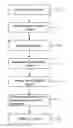
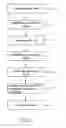
FIG. 1 is a flow chart showing the steps performed in a method of efficacy anticipation and failure examination according to the present disclosure.
DESCRIPTION OF THE EXEMPLARY EMBODIMENTS
For your esteemed members of reviewing committee to further understand and recognize the fulfilled functions and structural characteristics of the disclosure, several exemplary embodiments cooperating with detailed description are presented as the follows.
Please refer to FIG. 1, which is a flow chart showing the steps performed in a method of efficacy anticipation and failure examination according to the present disclosure. As shown in FIG. 1, the method of efficacy anticipation and failure examination comprises the following steps:
-
- (1) collecting a signal data 10: collecting a realistic input data and a realistic output data from an apparatus or a component of the apparatus. For instance, when the apparatus is substantially a wind turbine, the realistic input data can be the rotation speed, the wind speed or the wind direction, and the realistic output data can be the electricity generating capacity. Moreover, there can be two format types of the realistic input data, and one of which is a signal average obtained within a specific period of time, representing a physical quality; and the other is used when the realistic input data is a continuing signal, whereas the continuous signal is used in a stochastic parameter estimation for obtaining a parameter, and the parameter can be a parameter selected from the group consisting of: the average, the standard deviation and the variance of the stochastic parameter estimation, whichever capable of representing the continuous signal. In addition, when the apparatus is substantially a wind turbine, the abovementioned component can be its gearbox, spindle, or generator. If the component is substantially a gearbox, the realistic input data can be the rotation speed, and the realistic output data can be the noise. Accordingly, since the variation in noise level can be predicted through the variation in rotation speed, such prediction can be applied as the result of the efficacy anticipation and failure examination method of the present disclosure.
- (2) establishing an evaluation datum 11: the evaluation datum is calculated and obtained based upon the relationship between a performance curve and a curve of historical data. Taking the aforesaid wind turbine for example, its evaluation datum for a common wind turbine can be ranged between 0˜1 according to its performance curve and curve of historical data.
- (3) deleting excess data 12: such data deletion step is substantially a dimension reduction process being performed when the volume of data containing in the realistic input data of step (1) is being determined to be too large so as to minimizing the time required for model establishment, whereas the dimension reduction process performed in the data deletion step is an analysis process selected from the group consisting of: the principal component analysis (PCA) and the linear discriminant analysis (LDA).
- (4) establishing an anticipation model 13: defining and setting parameters to be used for establishing an anticipation model, whereas the anticipation model is established using a means selected from the group consisting of: an artificial neural network means, an auto-regressive model, and a logistic regression means, and according to that the parameters being used for establishing the anticipation model can include an initial error, a learning speed and a convergence error.
- (5) training the anticipation model 14: inputting the realistic input data and the realistic output data into the anticipation model for training the anticipation model.
- (6) setting a convergence time or calibrating a condition of completion 15: in this step, a convergence time is set, whereas such convergence time is the predicted operation period of the anticipation model, or an error is calculated between a realistic data and an anticipated data, by that the method will proceed to the next step when the error is smaller than a predefined error value; or the method will perform an operation for calibrating the anticipation model and then proceed back to the step (5) when the error is larger than the predefined error value. Taking the aforesaid wind turbine for instance, the error is substantially the difference between the electricity generating capacity that is actually measured from the wind turbine and the predicted electricity generating capacity of the wind turbine.
- (7) outputting a result 16: inputting the realistic output data into the anticipation model so as to obtain an estimation value, and then comparing the estimation value with the evaluation datum for obtaining an estimation of efficacy anticipation and failure examination.
To sum up, the method of the present disclosure first establish an anticipation model, and then use the anticipation model to calculate and obtain an estimation value, whereas the estimation value is substantially a prediction that can be compared with an evaluation datum of the apparatus or with a realistic output data measured from the apparatus so as to estimate the performance efficacy of an apparatus or any component in the apparatus, and also to acknowledge if there is any abnormality occurred during the operation of the apparatus or the component.
With respect to the above description then, it is to be realized that the optimum dimensional relationships for the parts of the disclosure, to include variations in size, materials, shape, form, function and manner of operation, assembly and use, are deemed readily apparent and obvious to one skilled in the art, and all equivalent relationships to those illustrated in the drawings and described in the specification are intended to be encompassed by the present disclosure.
Claims
What is claimed is:1. A method of efficacy anticipation and failure examination, comprising the steps of:
(1) collecting signal data: collecting a realistic input data and a realistic output data from an apparatus or a component of the apparatus;
(2) establishing an evaluation datum;
(3) establishing an anticipation model: defining and setting parameters to be used for establishing an anticipation model;
(4) training the anticipation model: inputting the realistic input data and the realistic output data into the anticipation model for training the anticipation model;
(5) setting a convergence time to be defined as the operation time of the anticipation model; and
(6) outputting an estimation resulting from the operation of the anticipation model: inputting the realistic output data into the anticipation model so as to obtain an estimation value, and then comparing the estimation value with the evaluation datum for obtaining an estimation of efficacy anticipation and failure examination.
2. The method of claim 1, further comprising a step for deleting excess data that is performed after the step (2) and prior to the step (3), and is substantially a dimension reduction process being performed when the volume of data containing in the realistic input data of step (1) is being determined to be too large.
3. The method of claim 2, wherein in the step (5), a process for selectively calibrating a condition of completion is performed, which comprises the steps of: calculating an error value between a realistic data and an anticipated data; proceeding to the step (6) when the error is smaller than a predefined error value; and calibrating the anticipation model while proceeding back to the step (4) when the error is larger than the predefined error value.
4. The method of claim 3, wherein in the step (1), the format of the realistic input data is a signal average obtained within a specific period of time, representing a physical quality.
5. The method of claim 3, wherein when the realistic input data is a continuing signal, a stochastic parameter estimation is performed using the continuous signal for obtaining a parameter, and the parameter can be a parameter selected from the group consisting of: the average, the standard deviation and the variance of the stochastic parameter estimation, whichever capable of representing the continuous signal.
6. The method of claim 3, wherein the evaluation datum is calculated and obtained based upon the relationship between a performance curve and a curve of historical data.
7. The method of claim 6, wherein, the dimension reduction process performed in the data deletion step is an analysis process selected from the group consisting of: the principal component analysis (PCA) and the linear discriminant analysis (LDA).
8. The method of claim 7, wherein in the step (3), the parameters being defined includes an initial error, a learning speed and a convergence error; and the anticipation model is established using a means selected from the group consisting of: an artificial neural network means, an auto-regressive model, and a logistic regression means.
9. The method of claim 8, wherein the apparatus is a wind turbine.
10. The method of claim 8, wherein the component is a part selected from the group consisting of: a gear box, a spindle and a generator.
11. The method of claim 4, wherein the evaluation datum is calculated and obtained based upon the relationship between a performance curve and a curve of historical data.
12. The method of claim 5, wherein the evaluation datum is calculated and obtained based upon the relationship between a performance curve and a curve of historical data.
Images & Drawings included:
Sources:
- United States Patent and Trademark Office - verify current appl. status at the USPTO↗
Recent applications in this class:
- » 20250093864 2025-03-20
Ontology-Based Evaluation of Data in Industrial Plants - » 20250076863 2025-03-06
INTELLIGENT MONITORING, INVERSION AND DYNAMIC PREDICTION SYSTEM FOR TRANSIENT PROCESS OF PUMPED STORAGE UNITS - » 20240419158 2024-12-19
AI SYSTEM FOR WAFER DEFECT DETECTION - » 20240353827 2024-10-24
COMPUTER-IMPLEMENTED METHOD FOR PROVIDING EXPLANATIONS CONCERNING A GLOBAL BEHAVIOR OF A MACHINE LEARNING MODEL - » 20240118685 2024-04-11
ASSISTANCE APPARATUS AND METHOD FOR AUTOMATICALLY IDENTIFYING FAILURE TYPES OF A TECHNICAL SYSTEM - » 20240012405 2024-01-11
Method and Device for Determining a Remaining Service Life of a Technical System - » 20230297094 2023-09-21
FAILURE FACTOR PRIORITY ORDER CALCULATION DEVICE AND METHOD BASED ON USE ENVIRONMENT - » 20230236587 2023-07-27
DATA FUSION AND RECONSTRUCTION METHOD FOR FINE CHEMICAL INDUSTRY SAFETY PRODUCTION BASED ON VIRTUAL KNOWLEDGE GRAPH - » 20230195095 2023-06-22
INDUSTRIAL KNOWLEDGE GRAPH AND CONTEXTUALIZATION - » 20230004152 2023-01-05
METHOD FOR MONITORING AND/OR PREDECTING MACHINING PROCESSES AND/OR MACHNINING OUTCOMES
Recent applications for this Assignee:
- » 20250289330 2025-09-18
MOBILE VEHICLE CHARGING PROTECTION DEVICE FOR ELECTRICAL SAFETY IN LIVESTOCK HOUSES - » 20250287224 2025-09-11
COMMUNICATION DEVICE AND COMMUNICATION METHOD - » 20250286593 2025-09-11
COMMUNICATION DEVICE AND METHOD OF BEAM MANAGEMENT - » 20250284336 2025-09-11
SYSTEM AND METHOD FOR ADJUSTING IMAGE BASED ON PHYSIOLOGICAL INFORMATION AND POSTURE - » 20250281908 2025-09-11
ELECTROCATALYST COMPOSITION AND PREPARATION METHOD THEREOF - » 20250273403 2025-08-28
CAPACITOR AND ELECTRONIC DEVICE - » 20250271759 2025-08-28
POLYMER, POSITIVE PHOTORESIST COMPOSITION, AND METHOD FOR FORMING PATTERNED PHOTORESIST LAYER - » 20250265803 2025-08-21
MULTI-SENSOR COORDINATION METHOD, PROCESSING DEVICE, AND INFORMATION DISPLAY SYSTEM - » 20250263659 2025-08-21
METHOD AND KIT FOR PREPARING AN IMMUNE CELL DIFFERENTIATED FROM A STEM CELL - » 20250252547 2025-08-07
CORROSION POSITIONING SYSTEM, CORROSION INSPECTION VEHICLE AND CORROSION POSITIONING METHOD USING THE SAME