COATED ARTICLE AND METHOD FOR MANUFACTURING COATED ARTICLE
US20120164410A1
2012-06-28
13/084,655
2011-04-12
Abstract:
An coated article includes a substrate; and a lubricant layer deposited on the substrate; wherein the lubricant layer is a molybdenum sulphur boron nitride layer and comprises molybdenum sulfur boron nitride (MoSBN) having a molybdenum disulfide phase and a boron nitride phase.
Inventors:
- Hsin-Pei CHANG 199 🇹🇼 Tu-Cheng, Taiwan
- WEN-RONG CHEN 194 🇹🇼 Tu-Cheng, Taiwan
- CHENG-SHI CHEN 212 🇹🇼 Tu-Cheng, Taiwan
- HUANN-WU CHIANG 185 🇹🇼 Tu-Cheng, Taiwan
- SHYAN-JUH LIU 9 🇹🇼 Tu-Cheng, Taiwan
- Cong Li 36 🇨🇳 Shenzhen, China
Assignee:
- HON HAI PRECISION INDUSTRY CO., LTD. 12,828 🇹🇼 Tu-Cheng, Taiwan
- HONG FU JIN PRECISION INDUSTRY (SHENZHEN) CO., LTD. 4,225 🇨🇳 Shenzhen City, China
Interested in similar patents?
Get notified when new applications in this technology area are published.
Classification:
C23C14/025 » CPC main
Coating by vacuum evaporation, by sputtering or by ion implantation of the coating forming material; Pretreatment of the material to be coated; Deposition of sublayers, e.g. to promote adhesion of the coating Metallic sublayers
C23C14/0641 » CPC further
Coating by vacuum evaporation, by sputtering or by ion implantation of the coating forming material characterised by the coating material Nitrides
Y10T428/24942 » CPC further
Stock material or miscellaneous articles; Structurally defined web or sheet [e.g., overall dimension, etc.] including components having same physical characteristic in differing degree
Y10T428/265 » CPC further
Stock material or miscellaneous articles; Web or sheet containing structurally defined element or component, the element or component having a specified physical dimension; Coating layer not in excess of 5 mils thick or equivalent; Up to 3 mils 1 mil or less
Y10T428/31678 » CPC further
Stock material or miscellaneous articles; Composite [nonstructural laminate] Of metal
B32B7/02 IPC
Layered products characterised by the relation between layers; Layered products characterised by the relative orientation of features between layers, or by the relative values of a measurable parameter between layers, i.e. products comprising layers having different physical, chemical or physicochemical properties; Layered products characterised by the interconnection of layers Physical, chemical or physicochemical properties
B32B9/00 IPC
Layered products characterised by particular substances used
B32B9/00 IPC
Layered products comprising a layer of a particular substance not covered by groups -
C23C14/35 » CPC further
Coating by vacuum evaporation, by sputtering or by ion implantation of the coating forming material characterised by the process of coating; Sputtering by application of a magnetic field, e.g. magnetron sputtering
C23C14/06 IPC
Coating by vacuum evaporation, by sputtering or by ion implantation of the coating forming material characterised by the coating material
B32B3/00 IPC
Layered products comprising a layer with external or internal discontinuities or unevennesses, or a layer of non-planar form ; Layered products having particular features of form
B32B15/04 IPC
Layered products comprising a layer of metal comprising metal as the main or only constituent of a layer, next to another layer of a
Description
BACKGROUND
1. Technical Field
The exemplary disclosure generally relates to coated articles and method for manufacturing the coated articles.
2. Description of Related Art
Molybdenum disulfide (MoS2) has been used to deposit a coating on metal bases of cutting tools or molds for reducing friction. However, when the cutting tools with the MoS2 coatings are used to cut magnesium alloy and/or aluminum alloy, the magnesium alloy and/or aluminum alloy can stick to the cutting tools because the wettability between the MoS2 coating and the aluminum alloy and/or magnesium alloy is low.
Therefore, there is room for improvement within the art.
BRIEF DESCRIPTION OF THE DRAWINGS
Many aspects of the embodiments can be better understood with reference to the following drawings. The components in the drawings are not necessarily drawn to scale, the emphasis instead being placed upon clearly illustrating the principles of the exemplary coated article and method for manufacturing the coated article. Moreover, in the drawings like reference numerals designate corresponding parts throughout the several views. Wherever possible, the same reference numbers are used throughout the drawings to refer to the same or like elements of an embodiment.
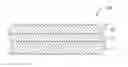
FIG. 1 is a cross-sectional view of an exemplary embodiment of coated article.
FIG. 2 is a schematic view of a magnetron sputtering coating machine for manufacturing the coated article in FIG. 1.
DETAILED DESCRIPTION
Referring to FIG. 1, an exemplary embodiment of a coated article 10 includes a substrate 11, a bonding layer 13 deposited on the substrate 11, and a lubricant layer 15 deposited on the bonding layer 13 opposite to the substrate 11. The coated article 10 may be a cutting tool, a mold, or housing for electronic devices. The substrate 11 may be made of stainless steel, high speed steel or die steel. The bonding layer 13 is a molybdenum layer and has a thickness between 200 nanometers and 300 nanometers. The lubricant layer 15 is a molybdenum sulfur boron nitride (MoSBN) layer and has a thickness between 0.8 micrometers and 1.3 micrometers. The lubricant layer 15 comprises molybdenum sulfur boron nitride (MoSBN) having a molybdenum disulfide phase and a boron nitride phase. The molybdenum disulfide phase causes the lubricant layer 15 to have good lubricity, and the boron nitride phase causes the lubricant layer 15 to have good corrosion resistance and good oxidation resistance.
The bonding layer 13 and the lubricant layer 15 may both be deposited by magnetron sputtering process. The chemical stability of the bonding layer 13 is between the chemical stability of the substrate 10 and the chemical stability of the lubricant layer 15, and a coefficient of thermal expansion of the bonding layer 13 is between the coefficient of thermal expansion of the substrate 10 and the coefficient of thermal expansion of the lubricant layer 15. Thus, the bonding layer 13 improves binding between the substrate 10 and the lubricant layer 15 so the lubricant layer 15 can be firmly deposited on the substrate 10.
Referring to FIG. 2, a method for manufacturing the coated article 10 may include at least the following steps.
Providing a substrate 11. The substrate 11 may be made of stainless steel, high speed steel or die steel.
Pretreating the substrate 11, by washing with a solution (e.g., Alcohol or Acetone) in an ultrasonic cleaner, to remove impurities and contaminates, such as grease, or dirt. The substrate 11 is dried. The substrate 11 is then cleaned by argon plasma cleaning.
Providing a vacuum sputtering coating machine 100. The vacuum sputtering coating machine 100 includes a sputtering coating chamber 20 and a vacuum pump 30 connecting to the sputtering coating chamber 20. The vacuum pump 30 is used to pump the air out the sputtering coating chamber 20. The vacuum sputtering coating machine 100 further includes a rotating bracket 21, two first targets 22, two second targets 23, two third targets 23 and a plurality of gas inlets 25. The rotating bracket 21 rotates the substrate 11 in the sputtering coating chamber 20 relative to the first targets 22 and the second targets 23. The first targets 22 face each other, and are respectively located on one side of the rotating bracket 21. The second targets 23 face each other, and are respectively located on opposite sides of the rotating bracket 21. The third targets 24 face each other, and are respectively located on opposite sides of the rotating bracket 21. In this exemplary embodiment, the first targets 22 are molybdenum disulfide (MoS2) targets, the second targets 23 are boron nitride targets, the third targets 24 are molybdenum targets.
An bonding layer 13 is deposited on the substrate 11. The vacuum level inside the sputtering coating chamber 20 is set to about 3.0×10⁻³ Pa. The temperature in the sputtering coating chamber 20 is set between about 100° C. (Celsius degree) and about 200° C. Argon is fed into the sputtering coating chamber 20 at a flux between about 300 Standard Cubic Centimeters per Minute (sccm) and about 400 sccm from the gas inlets 25. The third targets 24 in the sputtering coating chamber 20 are evaporated at a power between about 2 kW and about 5 kW. A bias voltage applied to the substrate 11 may be between about −100 volts and about −300 volts, for between about 20 minutes and about 40 minutes, to deposit the bonding layer 13 on the substrate 11.
An lubricant layer 15 is deposited on the bonding layer 13. The temperature in the sputtering coating chamber 20 is set between about 100° C. and about 200° C. Argon is fed into the sputtering coating chamber 20 at a flux between about 120 sccm and 350 sccm from the gas inlets 25. The first targets 22 in the sputtering coating chamber 20 are evaporated at a power between about 100 W and about 300 W. The second targets 23 in the sputtering coating chamber 20 are evaporated at a power between about 100 W and about 500 W. A bias voltage applied to the substrate 11 may be between about −100 volts and about −300 volts, for between about 90 minutes and about 120 minutes, to deposit the lubricant layer 15 on the bonding layer 13.
It is to be understood, however, that even through numerous characteristics and advantages of the exemplary disclosure have been set forth in the foregoing description, together with details of the system and function of the disclosure, the disclosure is illustrative only, and changes may be made in detail, especially in matters of shape, size, and arrangement of parts within the principles of the disclosure to the full extent indicated by the broad general meaning of the terms in which the appended claims are expressed.
Claims
What is claimed is:1. A coated article, comprising:
a substrate; and
a lubricant layer deposited on the substrate;
wherein the lubricant layer is a molybdenum sulphur boron nitride layer and comprises molybdenum disulfide phase and boron nitride phase.
2. The coated article as claimed in claim 1, wherein the lubricant layer has a thickness between 0.8 micrometers and 1.3 micrometers.
3. The coated article as claimed in claim 1, wherein the substrate is made of stainless steel, high speed steel or die steel.
4. The coated article as claimed in claim 1, further comprising a bonding layer formed between the substrate and the lubricant layer.
5. The coated article as claimed in claim 4, wherein the chemical stability of the bonding layer is between the chemical stability of the substrate and the chemical stability of the lubricant layer, and a coefficient of thermal expansion of the bonding layer is between the coefficient of thermal expansion of the substrate and the coefficient of thermal expansion of the lubricant layer.
6. The coated article as claimed in claim 5, wherein the bonding layer is a molybdenum layer.
7. The coated article as claimed in claim 6, wherein the bonding layer is a molybdenum layer and has a thickness between 200 nanometers and 300 nanometers.
8. The coated article as claimed in claim 1, wherein the bonding layer and the lubricant layer are both deposited by magnetron sputtering process.
9. A method for manufacturing a coated article comprising steps of:
providing a substrate;
depositing a bonding layer on the substrate by magnetron sputtering; and
depositing an lubricant layer on the bonding layer by magnetron sputtering.
10. The method of claim 9, wherein during depositing the bonding layer on the substrate, the substrate is retained in a sputtering coating chamber of a magnetron sputtering coating machine, the sputtering coating chamber has a molybdenum target therein; the vacuum level inside the sputtering coating chamber is set to about 3.0×10⁻³ Pa; the temperature in the sputtering coating chamber is set between about 100° C. and about 200° C.; argon is fed into the sputtering coating chamber at a flux between about 300 Standard Cubic Centimeters per Minute and about 400 sccm; the molybdenum target is evaporated at a power between about 2 kW and about 5 kW; a bias voltage applied to the substrate is between about −100 volts and about −300 volts, for between about 20 minutes and about 40 minutes, to deposit the bonding layer on the substrate.
11. The method of claim 9, wherein during depositing the lubricant layer on the bonding layer, the substrate is retained in a sputtering coating chamber of a magnetron sputtering coating machine, the sputtering coating chamber has a molybdenum disulfide target and a boron nitride target therein; the temperature in the sputtering coating chamber is set between about 100° C. and about 200° C.; argon is fed into the sputtering coating chamber at a flux between about 120 sccm and 350 sccm; the molybdenum disulfide target is evaporated at a power between about 100 W and about 300 W; the boron nitride target is evaporated at a power between about 100 W and about 500 W; a bias voltage applied to the substrate is between about −100 volts and about −300 volts, for between about 90 minutes and about 120 minutes, to deposit the lubricant layer on the bonding layer.
Images & Drawings included:


Sources:
- United States Patent and Trademark Office - verify current appl. status at the USPTO↗
Similar patent applications:
- » 20160333214
COATED ARTICLE MANUFACTURING METHOD, COATING AND LAMINATE - » 20220371314
METHOD FOR MANUFACTURING LAMINATE, METHOD FOR MANUFACTURING COATED ARTICLE, METHOD FOR MANUFACTURING BONDED STRUCTURE, THERMAL TRANSFER SHEET, AND LAMINATE - » 20220134727
METHOD FOR MANUFACTURING LAMINATE, METHOD FOR MANUFACTURING COATED ARTICLE, METHOD FOR MANUFACTURING BONDED STRUCTURE, THERMAL TRANSFER SHEET, AND LAMINATE - » 20060134344
Coated article, manufacturing method therefor and coating apparatus - » 20120171515
Coated article and method for manufacturing coated article - » 20120164475
COATED ARTICLE AND METHOD FOR MANUFACTURING COATED ARTICLE - » 20160053056
Organosiloxane compositions and coatings, manufactured articles, methods and uses - » 20120171508
Coated article and method for manufacturing the coated article - » 20240181756
TRANSFER FILM, HARD COAT FILM, HARD-COATED FORMED ARTICLE, AND METHOD FOR MANUFACTURING HARD-COATED FORMED ARTICLE - » 20130251941
THERMAL BARRIER COATED ARTICLE AND A METHOD OF MANUFACTURING A THERMAL BARRIER COATED ARTICLE
Recent applications in this class:
- » 20250011914 2025-01-09
COSMETIC FINISH FOR ALUMINUM ALLOYS - » 20240158905 2024-05-16
PROTECTIVE COATING FOR A COPPER ALLOW SUBSTRATE AND CORRESPONDING PROCESS - » 20230193447 2023-06-22
PRECIOUS METAL LAMINATE AND METHODS OF MANUFACTURE - » 20230160052 2023-05-25
SELF-LUBRICATING FILM OVER WIDE TEMPERATURE RANGES IN VACUUM AND PREPARATION METHOD AND USE THEREOF - » 20230126038 2023-04-27
METHOD FOR DECORATING A SUBSTRATE - » 20210340662 2021-11-04
Low friction wear film and method for producing the same - » 20210047719 2021-02-18
Optical element having metallic seed layer and aluminum layer, and method for producing same - » 20210032738 2021-02-04
Multimodal microstructure material and methods of forming same - » 20200270738 2020-08-27
METHOD FOR PRODUCING A BASE PLATE FOR AN ELECTRONIC MODULE - » 20200080185 2020-03-12
Multimodal microstructure material and methods of forming same
Recent applications for this Assignee:
- » 20140233961 2014-08-21
Optical communication module including optical-electrical signal converters and optical signal generators - » 20140083669 2014-03-27
HEAT SINK - » 20140083669 2014-03-27
HEAT SINK - » 20140063746 2014-03-06
Electronic device with heat dissipation assembly - » 20140061224 2014-03-06
AUTOMATIC VENDING MACHINE - » 20140060914 2014-03-06
Enclosure with shield apparatus - » 20140058727 2014-02-27
MULTIMEDIA RECORDING SYSTEM AND METHOD - » 20140055955 2014-02-27
Fastener - » 20140055322 2014-02-27
DISPLAY SYSTEM AND HEAD-MOUNTED DISPLAY APPARATUS - » 20140054439 2014-02-27
CONTAINER DATA CENTER WITH SUPPORTING APPARATUS