Reversible tube towel device
US20120204900A1
2012-08-16
13/335,862
2011-12-22
✅ Patent granted
US 9,848,751 B2
2017-12-26
-
-
Alexander Markoff
2035-11-09
Abstract:
An ergonomically designed cylindrically configured wiping towel forming a tube with two open ends, forming a mitt with two openings, and further capable of being constructed with multiple, pre-selected exterior areas of varied colors and patterns for user awareness of soiled portions in order to discourage possible cross contamination. The cylindrically structured tube towel is designed to provide the same amount of cleaning surface as a flat conventional towel in a tubular cavity which encompasses and compacts into a more maneuverable, controlled and tubular device. The cylindrically configured wiping towel turns inside out in order to utilize all towel surfaces.
Inventors:
- Rebecca McKenzie 2 🇺🇸 Littleton, CO, United States
- Rebecca Anne Mckenzie 1 🇺🇸 Littleton, CO, United States
Assignee:
- Rebecca McKenzie 1 🇺🇸 Littleton, CO, United States
Applicant:
Interested in similar patents?
Get notified when new applications in this technology area are published.
Classification:
B23P11/00 IPC
Connecting or disconnecting metal parts or objects by metal-working techniques not otherwise provided for
A47K10/02 » CPC further
Body-drying implements; Toilet paper; Holders therefor Towels
Y10T29/49826 » CPC further
Metal working; Method of mechanical manufacture Assembling or joining
B08B1/00 IPC
Cleaning by methods involving the use of tools, brushes, or analogous members
A47L13/16 » CPC main
Implements for cleaning floors, carpets, furniture, walls, or wall coverings; Scrubbing; Scouring; Cleaning; Polishing Cloths; Pads; Sponges
B08B7/04 IPC
Cleaning by methods not provided for in a single other subclass or a single group in this subclass by a combination of operations
Description
THIS IS A CONTINUATION IN PART OF EARLIER FILED application Ser. No. 10/836,168, FILED APRIL 30, 2004
CROSS-REFERENCE TO RELATED DESIGN U.S. Pat. No. D566,970
FEDERALLY SPONSORED RESEARCH
Not applicable
SEQUENCE LISTING OR PROGRAM
Not Applicable
FIELD OF INVENTION
This invention relates to wiping towels relevant to household cleaning or any profession that uses rags or towels for cleanup and especially within the professional cleaning industry. Specifically to an improved wiping towel exhibiting superior control and maneuverability in use as well as unique design features that promote efficient usage of the entire towel surface.
BACKGROUND OF THE INVENTION
Wiping towels are commonly used by professional cleaning companies as well as car washes, janitorial services, window washers etc. and in ordinary household cleaning. The conventional, flat cleaning and wiping towels are generally rectangular or square sheets of absorbent fabric or other material. Most prior art consistently reflects this pattern, sometimes adding chemical treatments and abrasive materials to same. U.S. Pat. No. 5,671,498 to Martin (1997) discloses a scrubbing device providing a first layer of foam material, a second layer of woven synthetic adhered to one another. U.S. Pat. No. 6,692,812 to Watanabe (2004) discloses a multi layer sheet structure comprising a front sheet, a net-like backing sheet and sewing threads for partially joining the front sheet with the backing sheet so as to form bag portions which may be stuffed with pad such as cotton, wool etc. U.S. Pat. No. 5,968,204 to Wise (1999) discloses sheets capable of developing a positive electrostatic charge use for a variety of surface cleaning operations.
My tubular towel provides ergonomically designed construction features providing increased efficiency and ease of use, in a “basic towel” configuration. The most similar article which applicant is aware is shown in U.S. Pat. No. 4,893,372 to Wenzel (1990) which discloses a tubular towel with an elastic band for encircling and gripping a user's arm with an enlarged lower end portion that drapes loosely over the user's hand. My Tube Towel is also of a cylindrical construction, but there, the similarity ends. Wenzels's free-hand tubular towel is worn on the forearm of the user and is retracted onto the arm when not in use. The principal object to provide a towel carried on the forearm and extending over the hand, making it immediately available for use as a wiping towel, of a mitt style. As seen below, my Reversible Tube Towel is much more austere in design relying on the dynamics of its construction, thereby resulting in exceptional efficiency and handling properties of a wiping towel. The problem with any mitt or duster, is that the one used end used to do the wiping becomes soiled, and the use of the item is finished.
By having open ends for reversing the used end to the back of the arm, or of the device used, an entire new surface for cleaning is available.
When the tubular towel if secured to another device, the option to turn the tube inside out and reapply to the device is a time saver.
OBJECTS AND ADVANTAGES
Accordingly, besides the objects and advantages of the Reversible Tube Towel Device described in my above patent, several objects and advantages of the present invention are:
-
- (a) to provide a mitt with two opening so the user's fingers can egress out of the opening as needed and which further is able to provide a wiping towel that handles well;
- (b) to provide a mitt with two openings and a wiping towel that easily turns inside out to allow all surface portions to be utilized;
- (c) to provide a tubular mitt which also will provide wiping towel that when not encompassing a user's hand or tool will automatically provides a double thickness without folding for exceptional absorbency;
- (d) to provide a tubular mitt for stability in a towel that ergonomically responds to a user's hand;
- (e) to provide a wiping towel mitt that can encompass a users hand or other tools and can be reversed quickly to use the opposing end;
- (f) to provide a wiping towel that can be produced in multiple colors or surface patterns for user awareness of soiled areas of the towel in order to discourage possible cross contamination;
- (g) to provide a wiping towel that can be produced in multiple materials for multiple uses having, perhaps, a scrubbing side and a wiping side within the same unit created by adjoining the two panels;
- (h) to provide a wiping towel that has sections of differing materials adjoined and adhered to the base tube
- (l) to provide a multiple versions, sizes, materials in a mitt style tubular wiping device
Further objects and advantages are to provide tubular mitt which is capable of being long or short in length because both ends are open providing a tubular wiping-cleaning towel that presents the same amount of cleaning surface area commonly found in a conventional square or rectangular wiping cloth in a towel that occupies a fraction the measurable dimensions of surface area due to its unique construction, the Reversible Tube Towel Device functions in a more compact, maneuverable, controlled manner than other products presently on the market.
Because the towel mitt is worn, the advantages are numerous from providing and excellent controlled mitt, free of material hanging down from the user's hand, and the need to control the material.
The material of the tubular device is secured on the user or a tool, and is easily manageable regardless of size.
The two openings allow for easy exit, entrance into the cavity.
Since either end is an opening, the user does not need to take a moment to find the opening, there are two openings into the tubular mitt.
With one of the user's hands already placed inside of the tube's cavity, the user can easily slide another hand into the cavity through the second opening, and transfer the tubular towel mitt onto the other hand, as well as easily transfer the tube with a hand or tool inserted into the cavity, covering over the items places with in, and then easily transferring the tubular mitt device onto the other.
A very versatile tubular mitt, and tool covering, as well as a towel that is transported on a user's person, or other item for ready recall to place into service.
When the ends are twisted and secured a cavity with closed ends is formed.
A separate clip may be used to secure on of the opening closed
Additionally, other embodiments may be easily formed, to accommodate a variety of shapes in tools, and applications, such that the ends of the tube could be closed, and a slit applied to each end just below the closed end, this would keep a ruler type tool inside, with openings at both ends to let the ruler back out. Or, the ends are partially closed by means of fastening, either by occurring in the making process, or additionally added as in snaps, hook and loop, or tapering. The ends easily twist, fold, crimp, secure.
SUMMARY
In accordance with the present invention a Reversible Tube Towel Device comprises a cylindrical shaped body forming a tube configuration that easily turns inside out or can be fully or partially reverse-folded over itself to utilize all surface portions while keeping track of soiled portions. It may encompass a users hand, tool, be partially full, or be used flat. The doubled thickness provides superior absorbency and structure providing extra control thereby reducing hand fatigue. The structural dynamics of my Reversible Tube Towel Device result in a more manageable wiping mitt.
DRAWINGS
Figures
In the drawings, closely related figures have the same number but different alphabetic suffixes.
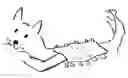
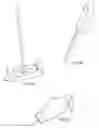
FIGS. 1A and 2A show a perspective view of a Reversible Tube Towel Device
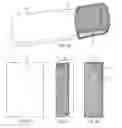
FIGS. 1B to 1D show the construction of a Reversible Tube Towel Device using one flat panel of material.
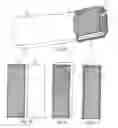
FIGS. 2B to 2D show the construction of a Reversible Tube Towel Device using two equally sized panels of material.
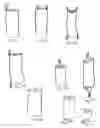
FIGS. 3A to 3F show various applications of color, pattern and construction features as applied to the exterior of single panel and double panel Reversible Tube Towel Device base materials prior to stitching.
FIGS. 4A and 4B show a knitted version of a Reversible Tube Towel Device.
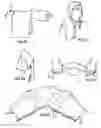
FIGS. 5A to 5i show various advantages and ways of using a Reversible Tube Towel Device.
FIGS. 6A to 6C show various uses and functions of a Reversible Tube Towel Device.
FIGS. 7A to 7i show means and methods of attaching a Tubular Towel Device to another object, or to itself.
FIG. 8A to FIG. 8E show additional materials to perform other tasks with the tubular device.
FIGS. 9A to 9G show additional embodiments of the tubular device.
FIG. 10A to FIG. 10i show tools with the type or style of tube that would be
Useful for an application.
FIGS. 11A to 11D show additional tasks and embodiments
FIGS. 12A to 12C show a tube that has a large long slit on one side, such that the tube is only secured at each opening.
FIGS. 13A to 13F show additions to the tubular device
FIGS. 14A to 14D show some optional methods of carrying or hanging or temporarily using an additional means to secure a tubular device to another item
FIGS. 15A to 15C show wadding and twisting and scrunching and tucking the tubular device on a users hand
FIGS. 16A to 16 show how to operate the tubular device to form and facilitate other useful devices
FIG. 17A to FIG. 17E show the versatility of sizes, styles and options of using the tubular device
FIGS. 18A to 18C show other options of use and styles of the tubular device
FIGS. 19A to 19C show ways to use the tubular device
FIGS. 20A to 20D show how a long tube can be used
DRAWINGS
Reference Numerals
-
- 10 base material
- 12 longitudinal edges
- 14 end edges
- 16 seam
- 18 opening
- 20 dyed portion
- 22 patterned portion
- 24 embroidered portion
DETAILED DESCRIPTION
FIG. 1A to
Preferred Embodiment
A preferred embodiment of the Reversible Tube Towel Device of the present invention is illustrated in FIGS. 1A and 1B. My Reversible Tube Towel Device, an improved wiping towel, is cylindrical in shape forming a tube configuration, having openings for entry or exit 18 at either end and is adjoined at multiple longitudinal sides 12. FIG. 1A shows a completed one-panel Reversible Tube Towel. FIGS. 1B to 1D show its basic construction utilizing a single panel of base material 10. FIG. 1B shows the panel of base material laid flat. FIG. 1C shows the panel of base material 10 folded once. FIG. 1D shows the two longitudinal edges 12 of the panel joined with a seam 16. FIG. 2A shows a completed two-panel Reversible Tube Towel Device. FIGS. 2B to 2D show its basic construction utilizing two equally sized and configured panels of a base material 10. FIG. 2B shows the two panels of base material side-by-side. An exterior surface is represented on the left with the interior surface indicated on the right. FIG. 2C shows one panel of base material 10 superimposed directly over the second, with the two exterior surfaces facing each other. FIG. 2D shows all four longitudinal edges of the two panels of base material 10 joined with seams.
My Reversible Tube Towel Device may be constructed in any desired material common to wiping or cleaning, scrubbing, exfoliating, drying, brushing, scouring, sanding, such as paper, plastic, wool, cotton, abrasive scrubbing mesh or any other synthetic or natural fiber, static dust cloths, micro fiber, PVA, fleece, flannel, disposable paper product, chamois, plastic, rubbery nubbed material, lint removing fabric, etc. The open ends may be either hemmed or left unfinished.
An elasticized tube may be formed from stretchable material, or as well as knitted.
The dimensions of my finished Reversible Tube Towel Device are established with the width of the towel being measured to be less than the length. A standard Reversible Tube Towel Device specification being approximately 7 to 9 inches in width and approximately 12 to 20 inches in length. A smaller, more compact version of my Reversible Tube Towel Device may be approximately 5 inches in width by approximately 9 inches in length. A larger, automotive wiping size could measure approximately 9 to 10 inches in width and approximately 24 inches in length. And yet other variances in size and dimension would be formed for specific job tasks, or tool covering applications. For example, a 7 by 28 inch works nicely in the kitchen folded over an apron tie. A 7 by 15 inch Reversible Tube Towel Device makes a great dish-drying towel, chef's apron towel, spa towel or polishing towel. A very long towel may be used as a hair drying towel or cinched in the middle for a golfers towel. A small stretch towel is ideal for cosmetic applications and exfoliating. The preferred Reversible Tube Towel Device would accept a user's hand and (or) forearm into the cylinder. A narrower Reversible Tube Towel Device will securely stay on a user's hand by simply spreading the fingers within the confines of the tube. The entire Reversible Tube Towel turns inside out to provide a fresh clean surface.
Optional Construction Features
When a pre-existing material is used in the base of the tube's construction, one or more seams 16 may be used for the purpose of adjoining the longitudinal sides. For one piece of material, one seam 16 as seen in FIG. 1A or for two separate sections of material, two seams 16 as seen in FIG. 2A. However, additional vertical, and (or) horizontal, and (or) diagonal seams 16 may also be incorporated into the device for structural stability or definition.
The tubular towel may also be formed without the use of pre existing panel of material, as in directly formed into a tubular device form fiber
For definition of soiled areas, portions of my Reversible Tube Towel Device may be dyed or my Reversible Tube Towel Device may be constructed using multiple colored or patterned panels. This feature provides instant user-awareness of soiled areas of the towel in order to discourage possible cross contamination.
My Design U.S. Pat. No. D 566,970 provides an easily recognizable pattern, providing a optional awareness of sequence to the user, such that the diagonal stripes are known to the user as always to begin using with the stripped portion first.
The interior cavity may be a continually known product line such that the variation of lines, always indicate the beginning of the device's use, per inside cavity use, and exterior use.
Or, such that the interior of the product is always known as orange, always, and the outside may be or is always blue or white, or whatever color is designated for the exterior.
Additionally such that the white side, as in this example, may have a small scrubby patch, when the scrubby patch is the desired material wanted for use as the surface of the tubular device, the users knows the desired patch is on the white side.
This concept allows for quick knowledge of the desired portion of the tubular device.
FIGS. 3A through 3F show various optional construction features and exterior treatments that may be applied to my Reversible Tube Towel Device for the purpose of delineation of towel areas in order to discourage possible cross contamination as discussed above. FIG. 3A shows a single panel featuring a dyed portion 20 occurring on one half of the single panel at the end edge 14 resulting in that half of the finished Reversible Tube Towel Device being of a contrasting color. FIG. 3B shows a single panel tube featuring a dyed portion occurring at the length of a longitudinal edge of the panel resulting in one side of the folded and finished Reversible Tube Towel Device being of a contrasting color. FIG. 3C shows a single panel tube featuring dyed portions at both ends, resulting in each end edge 14 being of a contrasting color. FIG. 3D shows a single panel tube having contrasting colors of embroidery 24 occurring at both ends resulting in each end edge 14 exhibiting a contrasting color or pattern. FIG. 3E shows a double panel tube having a contrasting patterned 22 second panel resulting in one side of the finished Reversible Tube Towel being of a contrasting pattern. FIG. 3F shows a double panel tube with contrasting colors and patterns created by dividing and consequently adjoining two halves of contrasting colors or patterns on each panel prior to adjoining their longitudinal sides resulting in a four panel finished Reversible Tube Towel Device having four distinctly contrasting panels. Four or more different contrasting colors or patterns may be incorporated within a Reversible Tube Towel Device in this manner.
FIGS. 4A to 4B
Additional Embodiments
FIG. 4A shows a knitted, elasticized Reversible Tube Towel Device with openings 18 at either end and having no seams. An elasticized version of my Reversible Tube Towel Device could measure approximately 4 inches by 14 inches, with the 4 inch width being expandable to 6 or 7 inches. Or a small stretchy finger tube could measure 3 inches by 4 inches. FIG. 4B shows a user's hand inside a Reversible Tube Towel Device. The narrower width of the elasticized body encourages the Reversible Tube Towel to conform and mold to a user's hand when inserted inside the tube structure. The tube measurements should be ample enough to allow the towel to turn inside out for use of the surface of the other side.
Operation
FIGS. 5A to 5I
FIGS. 5A through 5I show my Reversible Tube Towel Device in operation off of a hand or tool. FIG. 5A shows how a user's hand manipulates the towel in normal use. The double thickness of my Reversible Tube Towel Device creates an automatic towel of double thickness without the need to fold first. And the bulk created by the double thickness lends its self to a fuller, yet flexible wiping towel for superior handling and control. FIG. 5B shows a Reversible Tube Towel Device in use with the user's hand inserted in the cavity of the towel. FIG. 5C shows how a Reversible Tube Towel Device may be partially turned inside out in order to double the thickness while a hand is inserted within the cavity of the cylinder. FIG. 5D shows a Reversible Tube Towel Device deposited on the forearm of a user when it is not in use. FIG. 5E shows how the Reversible Tube Towel Device conveniently drapes over the forearm of a user. 5F shows how the unique shape of a Reversible Tube Towel Device naturally drapes over a shoulder for easy access. And FIG. 5G shows a Reversible Tube Towel Device handily resting on the handle of a vacuum. The longer, narrower configuration of my Reversible Tube Towel Device makes it easy to use and convenient to deposit out of the way on a user's person or stationary object when not in use. FIG. 5H shows how an extra long Reversible Tube Towel Device provides leverage for two hands for polishing. FIG. 5I shows how both hands may be inserted within the cylinder for extra scrubbing power.
FIGS. 6A to 6C show various optional uses for my Reversible Tube Towel Device. The versatility of My Reversible Tube Towel Device is virtually unlimited to use within many other industries such as relating to beauty, hygiene etc. Many sweepers and mops will accept a wiping towel on the mop head. FIG. 6A shows how the Reversible Tube Towel Device easily adapts for use on mop-sweeper heads offering the distinct advantage that the towel can be reversed (turned inside out) and reapplied to the mop head providing a clean surface. FIG. 6B shows the Reversible Tube Towel Device used with an extender such as a yardstick or broom handle inserted for extra reach. FIG. 6C shows how a Reversible Tube Towel Device may be used to enclose a feather duster or wool duster, or other style of duster.
The open-ended construction feature allows for a tool or a hand to be inserted in either end of my Reversible Tube Towel Device with the option to switch ends when one is soiled. And the tube may then be turned inside out to expose a fresh surface and to be reused.
FIGS. 7A to 7I shows means and methods of attaching a Tubular Towel Device to another object, or to itself.
FIG. 7A shows a single loop attached at one opening
FIG. 7B shows two loops attached at a single opening
FIG. 7C shows two loops attached at each opening
FIG. 7D shows a single loop attached at each opening
FIG. 7E shows an elasticized cord attached at two points a one of the openings of the tubular device
FIG. 7F shows an elasticized cord attached at two points at each of the opening of the tubular device
FIG. 7G shows a small slit applied a each opening
FIG. 7H shows a magnet attached to an opening of the tubular device
FIG. 7I shows additionally other means of securing such as a Velcro patch or snap may be applied to attach to another item, or to attach one opening to the opposing opening
FIG. 8A to FIG. 8E show additional materials to perform other tasks with the tubular device.
FIG. 8A shows a tube with a lofty fluff y material for washing which has a material base and is not lofty on the interior
FIG. 8B shows a rubbery nubby material for brushing, the tube is not nubby on the interior
FIG. 8C shows a synthetic dusting material on the exterior, but is not lofty on the interior
FIG. 8 D shows an airy holey mesh net type material
FIG. 8 E shows a base tube with a lofty material on one side, and an airy mesh type material on the opposing side
FIGS. 9 A to 9G show additional embodiments of the tubular device
FIG. 9A shows a mesh net type material added as a panel to form the tube of two materials
FIG. 9B shows a scrubby patch attached to the surface of the tubular device
FIG. 9C shows two different materials attached to each other to form the tubular device
FIG. 9D shows an understood pattern
FIG. 9E shows an understood pattern
FIG. 9F shows an extremely long and narrow tubular device
FIG. 9 G shows a stretches out tube
FIG. 9 H shows how a squeegy can be covered by a tubular device
FIG. 10A to FIG. 10J show tools with the type or style of tube that would be useful for an application.
FIG. 10 A shows a tool with a hook or faster to secure a tubular material
FIG. 10B shows a tube with slits for hooking onto a fastener
FIG. 10C shows another style of tool for accepting a tube
FIG. 10D shows possible tubes to attach to a tool such as a lint removing tube, or fluffy duster tube, or possibly a scrubby material tube, a nubby tube, or any desired material.
FIG. 10E shows yet another tool possible for accepting a tubular device
FIG. 10F shows a tube that accents the tool of FIG. 10E
FIG. 10G shows a hook or fastener which could accept a tube with a slit or loop.
FIG. 10H shows a mop head accepting a tubular device with a loop a each opening
FIG. 10I shows a tool which can secure a tube with two loops at each opening
FIG. 10J shows a tool that can secure a tubular device without a means of a secure means other than molding to the item placed within the tubular cavity
FIGS. 11A to 11D shows additional tasks and embodiments
FIG. 11A shows brushing a nubby tubular device
FIG. 11B shows wiping of dirt while protecting the user's hand from being exposed to the soil
FIG. 11C shows a large tube with an attached pocket for inserting a user's hand into
FIG. 11D shows a plastic tube covering and protecting a user's hand from
a substance or germs on an item such as a gas pump
FIGS. 12A to 12C show a tube that has a large long slit on one side, or such that the tube is only secured at each opening.
This provides an additional flexibility for wadding and twisting and securing the tubular device.
This embodiment of the tubular device is excellent for dish washing as the users hand can pop out of the long slit.
FIG. 12A shows the tubular device, and that the inside of the cavity is visible
FIG. 12B shows the openings of the tube pulled up together
FIG. 12C shows the tubular openings twisted and crossed over themselves
FIG. 13A to FIG. 13F show additions to the tubular device
FIG. 13A shows a tube which is not uniform such that at one of the openings the side area slightly bellows outward and at the other opening there is a narrowing tapering at that end portion
FIG. 13B shows darting at an opening to narrow the entrance into the cavity
FIG. 13C shows a tube with a long slit down the side, and netting applied over a portion of the tubular body for scrubbing purposes
FIG. 13D shows an outside surface and an interior cavity surface to be of differing materials
FIG. 13E shows a scalloping at one of the openings and a ragged edge at the other opening
FIG. 13F shows how a knitted tube is formed from a fiber of thread
FIGS. 14A to 14D show some optional methods of carrying or hanging or temporarily using an additional means to secure a tubular device to another item
FIG. 14A shows a user wearing an elasticized band on an arm
FIG. 14B shows a user wearing a tubular device with the arm in the cavity of the tube and tucking the tubular device under the elastic band
FIG. 14C shows the user wearing an elasticized band and tucking the tubular device under the elasticized bad, with the cavity empty
FIG. 14D shows a hook and loop stick together band cinched around the exterior of the tubular device and a hook or clip for securing the tubular device to another item
FIGS. 15A to 15C show wadding and twisting and scrunching and tucking the tubular device on a users hand
FIG. 15A shows the user wadding scrunching and twisting the tubular device to form a useful mitt
FIG. 15B shows the above but the user has applied a separate temporary optional additional elasticized arm band to cinch and gather an opening
FIG. 15C shows one of the opening loosely over a users arm and the opposing opening twisted and tucked up under the tubular device itself as mean of shortening the tubular devices length and temporarily securing the tubular device to user's arm area while the users arm is inside the cavity if the tubular device
FIGS. 16A to 16F shows how to operate the tubular device to form and facilitate other useful devices
FIG. 16A shows how a padded mitt is formed with pocket which allow for a user's had to slid around the interior of the pocket formed by tucking tone end of the tube into the other end and forming a circular pocket
FIG. 16B show how a hook and loop fastener has been added to secure the opening to each other to form the padded mitt
FIG. 16C shows how one end of the tube may be inserted into the other end forming a tubular circle
FIG. 16D shows the tubular circle laid flat which also forms another type of pocket for the user's hand to be inserted into
FIG. 16E shows a tube with an interior cavity of a scrubbing material and how the user flips the cavity outward onto the exterior surface being of a different material so as to have access to two different wiping surfaces at the same time
FIG. 16F shows how protecting an item within the cavity is useful, with the option to pinch and twist the tubular device from the outside to clean and polish the item placed within
FIGS. 17A to FIG. 17E show the versatility of sizes, styles and options of using the tubular device
FIG. 17A shows how the openings have been slightly adhered together to make the opening smaller and provide a rim, or lip at the openings
FIG. 17B shows a tube which has been cinched with a fastener, and attached a clip and how one portion allows a golf club to be inserted to be wiped clean and the opposing side has a patch of a differing material on the outside and the tubular towel to insert items into as well as a differing wiping surface on the exterior
FIG. 17C shows a larger tubular device pulled onto a user's head
FIG. 17D shows how the tubular device is twisted, and tightened onto the head of the user
FIG. 17E shows an item inserted into the cavity and the shifting of the tube over the item placed within said cavity
FIGS. 18A to 18C show other options of use and styles of the tubular device
FIG. 18A shows how two pockets are formed by turning back the openings of the device
FIG. 18B shows a tube is marked for labeling its use and accompanies the product it will be used with being a spray can in this view
FIG. 18C shows labeling tubular device for its use and with an attached loop hanging for hanging off of the spray bottle it accompanies
FIGS. 19A to 19C show ways to use the tubular device
FIG. 19A shows an oven mitt formed by curling the tubular end onto the palm of the user
FIG. 19B shows a small tube filled with a exfoliating wash for small circular motions on delicate surfaces such as skin
FIG. 19C shows another method of using the Tubular Towel Device
FIG. 19D shows an item inserted within the cavity and stored inside and secured by folding the openings of tubular device over the tube
The tube may be flipped over with the weight of the item sealing the folded ends
FIG. 19E shows an item inserted with the cavity of the tubular device and the ends twisted to secure the item within
FIGS. 20A to 20D show how a long tube can be used
FIG. 20A shows a long tubular device that would shimmy and see-saw across a user's back with a bathing-hygiene formed tube of a scratchy material for exfoliating
FIG. 20B shows a tube with a pocket for filling with a product for hygiene cleaning and care
FIG. 20C shows a tubular device with cord and handles attached
FIG. 20D shows a user shimming the tubular device across their back
ADVANTAGES
From the description above, a number of advantages of my Reversible Tube Towel Device become evident:
-
- (a) The cylindrical structure of my Reversible Tube Towel Device provides inside access to the user's hand for control and maneuverability as well as easy access for turning the towel inside out.
- (b) Better control helps diminish hand fatigue.
- (c) Both inside and outside of my Reversible Tube Towel Device is utilized for efficient usage of all surfaces. When the outside is soiled, the towel is simply turned inside out for fresh unsoiled area.
- (d) My Reversible Tube Towel Device may be used partially turned inside out for doubling the thickness while controlled from within.
- (e) My Reversible Tube Towel Device may be laid flat and used in the manner of any other conventional towel without folding for extra thickness.
- (f) My Reversible Tube Towel Device can be color or pattern delineated to help the user identify soiled areas in order to discourage possible cross-contamination.
- (g) My Reversible Tube Towel Device is simply removed and reversed and put back onto the hand, tool, or item that was placed within the cavity, when the end of the tube is soiled
- (h) My Reversible Tube Towel Device is easily shortened in length by tucking the end portion downward into the cavity of the tube
- (l) My Reversible Tube Towel Device is flipped and rotated easily onto and off a user's hand, tools, or foot for cleaning with a tubular device on a user's foot, as shuffling and swiping along to clean or polish a floor
Although the description above contains many specificities, these should not be construed as limiting the scope of the invention but as merely providing illustrations of some of the presently preferred embodiments of this invention. For example, the design lends itself to unlimited adaptations in size, materials and surface treatments.
Thus the scope of the invention should be determined by the appended claims and their legal equivalents, rather than by the examples given.
Claims
I claim:1. A method of dusting, wiping, washing, scrubbing, drying, applying, exfoliating, polishing, brushing, swooshing, protecting, brushing, stroking, sanding, transporting, shuffling and general cleaning, comprising the steps of;
providing an open-ended, multi-function, elongated tubular device, having openings at each end, providing a tubular cavity, each said opening providing entrance into the tubular cavity, each said opening free of an elasticized bands at either opening, and can be free of surfactants;
inserting a user's hand into the tubular cleaning device forming a hand enclosure such that the user's hand makes contact with said cavity and tension can occur or tension with expansion occurs when the user's thumb and fingers are extended providing optimum control and maneuverability;
whereby the tubular towel provides immediate access and egress means for a user's hand;
inserting a user's hand into the tubular cleaning device wherein the cavity is controlled by a user's fingertips by wadding, pinching, tucking, and extending the fingertips inserting a tool into the tubular cleaning device,
forming an enclosure with the tubular cleaning device covering the tool;
whereby the user can manipulate the tool with the tubular cleaning device over the tool in order to dust, wipe, wash, scrub, dry, polish, sand, brush, paint, stroke, shuffle on a surface and general cleaning;
inserting a user's hand, arm, or tool into the tubular device whereby the users may transport the tubular device;
manipulating the tubular cleaning device exteriorly with the user's hand, or tool;
whereby the tubular cleaning device provides for utilizing the tubular cleaning device as a hand held towel as well as a tool pad for a tool or apparatus;
rotating the tubular cleaning device on a user's hand to expose a fresh, clean surface in order to utilize all sides of the tube as the tube becomes soiled, wherein the tubular cleaning cloth may also be reversibly turned inside out, and may also be reversibly turned end to end, when soiled, to expose a fresh clean surface, and
repositioning the tubular cleaning device on a user's hand to expose a clean area and wisp away the soiled area, and
repositioning an opening of the tubular device from at or beyond the user's fingertips and positioning the opening onto the fingers or hand of the user, providing for instant finger protrusion, in order to free the fingers and hand, and
reversing the position of the openings of the tubular cleaning device covering a tool end to end;
whereby a new cleaning portion of the tubular cleaning device is available and whereby the covered tool is exposed and
retracting and sliding the tubular cleaning device from the user's hand and repositioning the tubular device onto a wrist or forearm of the user when not in service and between usages, wherein the tubular device remains in place on the wrist or forearm of the user for ready recall, as needed, in order to dust, wipe, clean, polish, scrub, dry polish, sand, exfoliate, swipe, brush, protect, shuffle, and general cleaning.
Inserting a user's hand and wrist into the tubular cavity and curling the user's fingers for clutching the tube's opening up and into said user's hand providing a wade of wiping material for covering the user's hand.
inserting a tool into the tubular cleaning cloth, forming an enclosure with the tubular cleaning device covering the tool;
whereby the user can manipulate the tool with the tube over it;
retracting and sliding the tubular cleaning cloth from a user's hand and repositioning the tubular cleaning cloth onto the wrist or forearm of the user when not in service and between usages, wherein the tubular cleaning cloth remains in place on the wrist or forearm, of the user for ready recall, as needed, in order to dust, wipe, wash, scrub, dry, or polish a surface and general cleaning. tucking the tubular cleaning device into itself
providing partial reversal of said tubular cleaning cloth over, and onto its self
providing shortening of tubular cleanings cloth's length by tucking one of said opening into said cavity;
inserting a user's hand, fingers and fingertips from either said opening, tucking the tubular device into the tubular cavity
whereby providing a protective covering
wiggling the tubular cavity from within with the user's hand and providing a clean unused surface while the exterior is over covered by the interior portion wiggling downward
2. A method of attaching the tubular cleaning device of claim 1 to another item;
providing a tubular cleaning cloth and a means of attachment to said other item;
Said means is;
as few as one single loop
Said means is;
as few a single slit
Said mean is;
as few a single magnet
Said means is;
as few as a single snap
Said means is;
as few as a single hook and loop faster
Said means is;
a tubular towel with two openings
3. A method of cleaning with a tubular cleaning device of claim 1
(a) Pinching said tubular towel from within the said cavity as well as pinching exteriorly to control and clean from internally and externally
(b) Tugging said tubular device
(c) Tunneling said openings into said cavity of said tubular device
(d) Slipping said tubular cavity over an item
(e) Inserting an item into said cavity
(f) Curling said openings toward said cavity
(g) Gathering said cavity and said openings
(h) Wadding said tubular device
(i) Labeling said tubular device
(j) Molding said tubular cavity
(k) Folding said tubular cavity from within
(l) Shimmying said tubular device
(m) Twisting said tubular device interiorly as well as exteriorly
(j) Grasping said tubular device from within said cavity as well exteriorly
(k) Spinning said tubular device
(l) Rotating said tubular device
(m) Securing said tubular device
(n) Attaching said tubular device
(o) Stretching said tubular device
(p) Expanding said tubular device
(q) Pushing as well as pulling said tubular device
(r) Fitting said tubular device to cover an item placed with said cavity
(s) Covering as well as protecting an item placed within said cavity
(t) Insulating and protecting an item placed with said cavity
(u) Rolling an opening to reverse said opening end to end
Images & Drawings included:





Sources:
- United States Patent and Trademark Office - verify current appl. status at the USPTO↗
Recent applications in this class:
- » 20250281017 2025-09-11
SCRUBBER - » 20250275663 2025-09-04
SYNTHETIC SPONGE AND USE THEREOF AS A DISH SCRUBBER - » 20250268446 2025-08-28
SPONGE - » 20250255449 2025-08-14
System for Cleaning Surfaces - » 20250241503 2025-07-31
MULTI-LAYER MELAMINE SPONGE - » 20250221600 2025-07-10
CLEANING WIPE - » 20250160599 2025-05-22
RENEWABLE CLEANING DEVICE - » 20250127369 2025-04-24
BIOLOGICALLY-DERIVED SPONGE WITH SCRUBBING ENHANCER - » 20240423439 2024-12-26
CLEANING ARTICLE HAVING COATED TOW FIBERS - » 20240366054 2024-11-07
Easybroom