Azeotrope and azeotrope-like composition of 2,3,3,3-tetrafluoropropene and ammonia
US20120205574A1
2012-08-16
13/178,955
2011-07-08
✅ Patent granted
US 8,557,135 B2
2013-10-15
-
-
John Hardee
Buchanan Ingersoll & Rooney P.C.
2031-07-08
Abstract:
The present invention relates to azeotrope and azeotrope-like compositions comprised of 2,3,3,3-tetrafluoropropene (HFO-1234yf) and ammonia, and uses thereof.
Assignee:
- Arkema France 1,711 🇫🇷 Colombes, France
Applicant:
Interested in similar patents?
Get notified when new applications in this technology area are published.
Classification:
C09K5/045 » CPC main
Heat-transfer, heat-exchange or heat-storage materials, e.g. refrigerants; Materials for the production of heat or cold by chemical reactions other than by combustion; Materials undergoing a change of physical state when used the change of state being from liquid to vapour or for compression-type refrigeration systems comprising halogenated compounds containing only fluorine as halogen
C08J9/127 » CPC further
Working-up of macromolecular substances to porous or cellular articles or materials; After-treatment thereof using blowing gases generated by a previously added blowing agent by a physical blowing agent Mixtures of organic and inorganic blowing agents
C08J9/146 » CPC further
Working-up of macromolecular substances to porous or cellular articles or materials; After-treatment thereof using blowing gases generated by a previously added blowing agent by a physical blowing agent organic; Halogen containing compounds containing carbon, halogen and hydrogen only only fluorine as halogen atoms
C08J9/149 » CPC further
Working-up of macromolecular substances to porous or cellular articles or materials; After-treatment thereof using blowing gases generated by a previously added blowing agent by a physical blowing agent organic Mixtures of blowing agents covered by more than one of the groups -
C09K3/30 » CPC further
Materials not provided for elsewhere for aerosols
C11D7/28 » CPC further
Compositions of detergents based essentially on non-surface-active compounds; Organic compounds containing halogen
C11D7/5018 » CPC further
Compositions of detergents based essentially on non-surface-active compounds; Solvents; Organic solvents Halogenated solvents
C11D7/5068 » CPC further
Compositions of detergents based essentially on non-surface-active compounds; Solvents; Azeotropic mixtures containing halogenated solvents Mixtures of halogenated and non-halogenated solvents
C08J2203/162 » CPC further
Foams characterized by the expanding agent; Unsaturated hydrocarbons Halogenated unsaturated hydrocarbons, e.g. HC=CF
C08J2203/182 » CPC further
Foams characterized by the expanding agent; Binary blends of expanding agents of physical blowing agents, e.g. acetone and butane
C08J2300/22 » CPC further
Characterised by the use of unspecified polymers Thermoplastic resins
C09K2205/126 » CPC further
Aspects relating to compounds used in compression type refrigeration systems; Components; Hydrocarbons Unsaturated fluorinated hydrocarbons
C09K2205/132 » CPC further
Aspects relating to compounds used in compression type refrigeration systems; Components containing nitrogen
C09K3/00 IPC
Materials not provided for elsewhere
C11D17/00 IPC
Detergent materials or soaps characterised by their shape or physical properties
C09K5/00 IPC
Heat-transfer, heat-exchange or heat-storage materials, e.g. refrigerants; Materials for the production of heat or cold by chemical reactions other than by combustion
C09K5/04 IPC
Heat-transfer, heat-exchange or heat-storage materials, e.g. refrigerants; Materials for the production of heat or cold by chemical reactions other than by combustion; Materials undergoing a change of physical state when used the change of state being from liquid to vapour or
Description
FIELD OF INVENTION
The present invention relates to azeotrope and azeotrope-like compositions comprised of 2,3,3,3-tetrafluoropropene (HFO-1234yf) and ammonia, and uses thereof.
BACKGROUND
Fluorocarbon based fluids have found widespread use in industry in a number of applications, including as refrigerants, aerosol propellants, blowing agents, heat transfer media, and gaseous dielectrics. Because of the suspected environmental problems associated with the use of some of these fluids, including the relatively high global warning potentials associated therewith, it is desirable to use fluids having low or even zero ozone depletion potential and very low global warming potential. Additionally, the use of single component fluids or azeotropic mixtures, which do not fractionate on boiling and evaporation, is desirable. However, the identification of new, environmentally safe, non-fractionating mixtures is complicated due to the fact that azeotrope formation is not readily predictable.
The object of the present invention is to provide novel compositions that can serve as refrigerants, heat transfer fluids, cleaning agents, propellants, blowing agents, solvents, etc. that provide unique characteristics to meet the demands of low or zero ozone depletion potential and lower global warming potential as compared to the current HFCs.
DESCRIPTION OF PREFERRED EMBODIMENTS
The present invention provides azeotrope or azeotrope-like compositions comprised of 2,3,3,3-trifluoropropene (HFO-1234yf) and ammonia (NH3).
The preferred compositions of the invention have low-flammability and very low global warming potentials (“GWPs”). Accordingly, applicants have recognized that such compositions can be used to great advantage in a number of applications, including as replacements for CFCs, HCFCs, and HFCs (such as HCFC-22, HFC-134a, HFC-32) as refrigerants, heat transfer fluids, cleaning agents, propellants, blowing agents, solvents, and in other applications.
Additionally, applicants have recognized surprisingly that azeotrope or azeotrope-like compositions of HFO-1234yf and ammonia can be formed. Accordingly, in other embodiments, the present invention provides methods of producing an azeotrope-like composition comprising combining HFO-1234yf and ammonia in amounts effective to produce an azeotrope-like composition.
Azeotrope-Like Compositions
As used herein, the term “azeotrope-like” is intended in its broad sense to include both compositions that are strictly azeotropic, are compositions that behave like azeotropic mixtures, and are quasi-azeotropic.
As used herein, the term “quasi-azeotrope” is intended to include the compositions for which, at constant temperature, the pressure of the saturated liquid and the pressure of the saturated vapor are almost identical, with the difference in pressure being 10% or less, preferably 5% or less, compared to the liquid saturated vapor pressure.
For azeotropic compositions, at constant temperature, the maximum difference in pressure is close to 0%.
It follows that another characteristic of azeotrope-like compositions is that there is a range of compositions containing the same components in varying proportions that are azeotrope-like or constant boiling. All such compositions are intended to be covered by the terms “azeotrope-like” and “constant boiling”. As an example, it is well known that at differing pressures, the composition of a given azeotrope will vary at least slightly, as does the boiling point of the composition. Thus, an azeotrope of A and B represents a unique type of relationship, but with a variable composition depending on temperature and/or pressure. It follows that, for azeotrope-like compositions, there is a. range of compositions containing the same components in varying proportions that are azeotrope-like. All such compositions are intended to be covered by the term azeotrope-like as used herein.
Applicants have discovered unexpectedly that HFO-1234yf and ammonia form azeotrope and/or azeotrope-like compositions.
By binary compositions of the present invention, one understands as compositions consisting of HFO-1234yf and ammonia; that is to say a composition consisting primarily of HFO-1234yf and ammonia, but being able to contain impurities at less than 1%, preferably less than 0.5%, more preferably less than 0.1%, more preferably less than 0.05% and even more preferably less than 0.01%.
According to certain preferred embodiments, the azeotrope or azeotrope-like compositions of the present invention comprise, and preferably consist essentially of, effective azeotrope or azeotrope-like amounts of HFO-1234yf and ammonia. The term “effective azeotrope-like amounts” as used herein refers to the amount of each component that upon combination with the other components, results in the formation of an azeotrope-like composition of the present invention. Preferably, the present azeotrope-like compositions comprise, and preferably consist essentially of, from 1 to 60 wt % ammonia and from 40 to 99 wt % HFO-1234yf, more preferably from 5 to 45 wt % ammonia and from 55 to 95 wt % HFO-1234yf, more preferably from 15 to 30 wt % ammonia and from 70 to 85 wt % HFO-1234yf, more preferably from 18 to 26 wt % ammonia and from 74 to 82 wt % HFO-1234yf, and even more preferably from 21 to 23 wt % ammonia and from 77 to 79 wt % HFO-1234yf
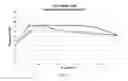
Among the compositions above, some have the advantage of being azeotropic or quasi-azeotropic. For example, an azeotrope for the binary mixture of HFO-1234yf/NH3 is obtained for a proportion of NH3 at approximately 23% (±2%), at a temperature of 5° C. (±1° C.) and with a pressure of 7.3 bar (±1 bar).
The azeotrope-like compositions of the present invention can be produced by combining effective azeotrope or azeotrope-like amounts of HFO-1234yf and ammonia. Any of a wide variety of methods known in the art for combining two or more components to form a composition can be adapted for use in the present methods to produce an azeotrope-like composition. For example, HFO-1234yf and ammonia can be mixed, blended, or otherwise contacted by hand and/or by machine, as part of a batch or continuous reaction and/or process, or via combinations of two or more such steps. In light of the disclosure herein, those of skill in the art will be readily able to prepare azeotrope-like compositions according to the present invention without undue experimentation.
The azeotrope or azeotrope-like compositions of the present invention may further include any of a variety of optional additives including surface active agents, stabilizers, tracers, fluorescent agents, odorants, solubilizing agents, and the like.
In certain preferred embodiments, the compositions of the present invention further comprise a lubricant. Examples of suitable lubricants include mineral oil, alkyl benzenes, polyol esters, polyalkylene glycols, polyvinyl ethers, polyalpha olefins, and the like.
The present compositions have utility in a wide range of applications including as refrigerants, heat transfer fluids, cleaning agents, propellants, blowing agents, solvents, and in other applications, For example, one embodiment of the present invention relates to refrigerant compositions comprising the present azeotrope-like compositions.
EXAMPLES
The invention is further illustrated in the following examples which are intended to be illustrative, but not limiting in any manner.
Example 1
Vapor-Liquid Equilibrium
Vapor-liquid equilibrium experiments were conducted on binary mixtures of HFO-1234yf and ammonia using the following procedure: A vacuum cell is equipped with a sapphire tube and is cooled to 5° C. with an oil bath. Once thermal equilibrium is reached the cell is charged with HFO-1234yf and the equilibrium pressure is recorded. A quantity of ammonia is added to the cell and the contents are mixed. At equilibrium, a minimal quantity of sample is taken from the gas and liquid phases for an analysis by gas chromatography with a thermal conductivity detector.
The data obtained at various mixtures of HFO-1234yf and ammonia is shown in FIG. 1. Table 1 gives the composition of the liquid and the corresponding pressure at equilibrium.
| TABLE 1 |
| Liquid composition and Pressure |
| 1234yf | NH3 | Pressure |
| (wt %) | (wt %) | (bar) |
| 100 | 0 | 3.69 |
| 90 | 10 | 7.02 |
| 80 | 20 | 7.29 |
| 70 | 30 | 7.29 |
| 60 | 40 | 7.27 |
| 50 | 50 | 7.25 |
| 40 | 60 | 7.19 |
| 30 | 70 | 7.03 |
| 20 | 80 | 6.69 |
| 10 | 90 | 6.09 |
| 0 | 100 | 5.16 |
Claims
What is claimed is:1. An azeotrope-like composition comprising from 1 to 60 wt % ammonia and from 40 to 99 wt % HFO-1234yf.
2. The azeotrope-like composition of claim 1 comprising from 5 to 45 wt % ammonia and from 55 to 95 wt % HFO-1234yf.
3. The azeotrope-like composition of claim 1 comprising from 15 to 30 wt % ammonia and from 70 to 85 wt % HFO-1234yf.
4. The azeotrope-like composition of claim 1 comprising from 18 to 26 wt % ammonia and from 74 to 82 wt % HFO-1234yf.
5. The azeotrope-like composition of claim 1 comprising from 21 to 23 wt % ammonia and from 77 to 79 wt % HFO-1234yf.
6. A refrigerant composition comprising an azeotrope-like composition of claim 1.
7. A. heat transfer fluid composition comprising an azeotrope-like composition of claim 1.
8. A propellant composition comprising an azeotrope-like composition of claim 1.
9. A blowing agent comprising an azeotrope-like composition of claim 1.
10. A solvent comprising an azeotrope-like composition of claim 1.
Images & Drawings included:
Sources:
- United States Patent and Trademark Office - verify current appl. status at the USPTO↗
Recent applications in this class:
- » 20250289988 2025-09-18
REFRIGERANT COMPOSITIONS CONTAINING PROPYLENE AND FLUOROCARBONS AND USES THEREOF - » 20250289987 2025-09-18
AIR CONDITIONER - » 20250270433 2025-08-28
HEAT CYCLE WORKING MEDIUM, AND HEAT CYCLE SYSTEM COMPOSITION - » 20250270432 2025-08-28
INTEGRATED SYSTEM AND PROCESS FOR PRODUCING RECLAIMED, STABILIZED AND TRACEABLE REFRIGERANT COMPOSITIONS - » 20250257254 2025-08-14
AZEOTROPIC COMPOSITIONS OF HFO-1234YF AND PROPYLENE - » 20250230351 2025-07-17
COMPOSITIONS COMPRISING TETRAFLUOROPROPENE AND HEXAFLUOROBUTENE - » 20250230350 2025-07-17
COMPOSITIONS COMPRISING 2,3,3,3-TETRAFLUOROPROPENE - » 20250230349 2025-07-17
STABILIZED BLEND COMPOSITIONS COMPRISING 2,3,3,3-TETRAFLUOROPROPENE - » 20250230348 2025-07-17
STABILIZED COMPOSITIONS COMPRISING 2,3,3,3-TETRAFLUOROPROPENE - » 20250223483 2025-07-10
COMPOSITION CONTAINING REFRIGERANT, AND REFRIGERATION METHOD USING SAID COMPOSITION, OPERATING METHOD FOR REFRIGERATION DEVICE, AND REFRIGERATION DEVICE
Recent applications for this Assignee:
- » 20250289955 2025-09-18
DUCTILE FLAME-RETARDANT POLYAMIDE COMPOSITIONS AND USES THEREOF, IN PARTICULAR FOR RAILWAYS - » 20250282700 2025-09-11
METHOD FOR PRODUCING TRIFLUOROETHYLENE - » 20250276896 2025-09-04
PROCESS FOR THE PRODUCTION OF HYDROGEN-ENRICHED SYNTHESIS GAS - » 20250243358 2025-07-31
COMPOSITION COMPRISING A MULTISTAGE POLYMER AND A (METH)ACRYLIC POLYMER, ITS METHOD OF PREPARATION AND ITS USE - » 20250236584 2025-07-24
IMPROVED METHOD FOR PRODUCING HIGH-PURITY BUTYL ACRYLATE - » 20250207693 2025-06-26
MULTILAYER TUBULAR STRUCTURE INTENDED FOR TRANSPORTING A HEAT-TRANSFER FLUID - » 20250197545 2025-06-19
(METH)ACRYLIC COMPOSITION, POLYMERIC COMPOSITE MATERIAL OBTAINED FROM SUCH A COMPOSITION, METHOD FOR PRODUCING SAID COMPOSITION AND MATERIAL, AND USES THEREOF - » 20250196484 2025-06-19
MULTILAYER STRUCTURE BASED ON RECYCLED POLYAMIDE - » 20250183400 2025-06-05
FIREPROOFED MULTILAYER TUBULAR STRUCTURE FOR COOLING ELECTRIC VEHICLE BATTERIES OR STATIONARY ENERGY STORAGE SYSTEM BATTERIES - » 20250179254 2025-06-05
COMPOSITIONS WITH LITTLE OR NO SOLVENT COMPRISING CARBON NANOTUBES AND AT LEAST ONE POLYMER