PORTABLE SKI TROLLEY
US20120205885A1
2012-08-16
13/208,244
2011-08-11
Abstract:
The invention to which this application relates, is a method of attaching a pair of wheels to skis, thereby enabling the skis to be rolled over the ground. The invention is a webbing strap that receives a pair of wheels, which are then fastened around the end of the skis. The wheels are formed onto a right-angled bracket, the vertical facet inserts into the webbing strap, and the skis sit on the horizontal facet of the bracket. When the wheels are inserted into the strap, and the strap is fastened around the end of the skis, a form of trolley is produced, that allows the skis to be pushed or pulled along the ground. This invention is lightweight and compact and can be stored in a pocket whilst not in use.
Interested in similar patents?
Get notified when new applications in this technology area are published.
Classification:
B62B5/0083 » CPC main
Accessories or details specially adapted for hand carts Wheeled supports connected to the transported object
A63C11/026 » CPC further
Accessories for skiing or snowboarding; Devices for stretching, clamping or pressing skis or snowboards for transportation or storage; Carrying-devices for skis or ski-sticks on wheels
B62B1/262 » CPC further
Hand carts having only one axis carrying one or more transport wheels; Equipment therefor characterised by supports specially adapted to objects of definite shape the objects being of elongated shape, e.g. fishing rods, golf clubs
B62B2202/401 » CPC further
Indexing codes relating to type or characteristics of transported articles; Sport articles Skis
B62B1/00 IPC
Hand carts having only one axis carrying one or more transport wheels; Equipment therefor
B62B1/00 IPC
Hand carts
Description
CROSS REFERENCE TO RELATED APPLICATIONS
Not Applicable
STATEMENT REGARDING FEDERALLY SPONSORED RESEARCH OR DEVELOPMENT
Not Applicable
REFERENCE TO SEQUENCE LISTING, A TABLE, OR A COMPUTER PROGRAM LISTING COMPACT DISC APPENDIX
Not Applicable
BACKGROUND OF THE INVENTION
A problem for many skiers is transporting their skis from their accommodation or vehicle, to the ski slopes and back again. This generally requires people to carry heavy skis, whilst walking in cumbersome ski boots. Children in particular find this difficult, requiring adults to also carry their skis.
Problems associated with the practice of carrying skis include:
-
- 1 Exerting a physical strain on the person carrying the skis and exposing them to a risk of injury.
- 2 The skis are commonly carried on people's shoulders, which produces a long lever at around head height. This exposes other people to a risk of injury if the person carrying the skis should turn around.
- 3 Carrying the skis on the shoulder has the potential to damage the skier's jacket due to the sharp edges, ski wax and the ski bindings.
In the process of researching the invention to which this application relates, 2 other designs for devices to transport skis were identified. These 2 designs were published by the World Intellectual Property Organisation, with the following International Publication Numbers: WO 2004/087269 A1 and WO 2010/056140 A3.
Whilst the function of these existing devices for transporting skis is similar, there are several problems with their designs, which the invention to which this application relates attempts to address. These problems include the following:
-
- 1 The existing devices for transporting skis are too bulky, and cannot easily be inserted into a pocket when the skier arrives at the slopes.
- 2 The existing devices may need to be removed from the skis prior to further transportation of the skis on the roof of a vehicle. This could result in repeated refitting of the existing devices.
- 3 The existing devices would need to be removed prior to embarking in a cable car, as they would not fit into the external ski rack.
- 4 The existing devices are formed from plastic that may have the potential to damage skis.
- 5 The existing devices will potentially have greater production costs.
BRIEF SUMMARY OF THE INVENTION
The invention to which this application relates, is intended to facilitate the transportation of skis, making it easier for skiers to transport their skis by hand, to and from the ski slopes. The invention allows the skier to attach wheels to their skis, allowing the skis to be pushed or pulled along the surface of the ground.
The invention is intended to address the problems associated with carrying skis, identified in the Background of the Invention, in the following ways:
-
- 1 To reduce the physical strain on the person transporting the skis, by reducing the need to lift skis onto the shoulder and be carried, thereby reducing their risk of injury.
- 2 To reduce the risk of injury to others, by allowing the skis to be rolled along the ground, and not carried at head height.
- 3 To reduce damage to ski clothing by refraining from carrying the skis on the shoulder.
The invention is intended to address the problems associated with existing devices for transporting skis, identified in the Background of the Invention, in the following ways:
-
- 1 To reduce the size and bulk of the device for transporting skis, so that the device can easily be placed into a pocket on arrival at the slopes, and not require further means of carrying the device when removed.
- 2 To allow the device for transporting skis to remain on the skis during transit on a car roof. This will reduce the frequency of removal and refitting of the device during a daily trip to and from the ski slopes in a car.
- 3 To allow the device to remain fitted on the skis during transit in a cable car, should further carrying of the skis be necessary at the top of the cable car.
- 4 To provide a flexible and non marking interface between the device and the skis during transit, thereby reducing possible damage to the skis.
- 4 To reduce the production costs of the device, thereby reducing the purchase price for customers, making the device more affordable.
BRIEF DESCRIPTION OF THE SEVERAL VIEWS OF THE DRAWING
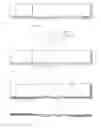
FIG. 1—Illustrates a front view of the strap with the wheels, prior to the wheels being inserted into the strap.
FIG. 2—Illustrates a front view of the strap with the wheels inserted
FIG. 3—Illustrates a rear view of the strap
FIG. 4—End view of the strap
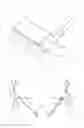
FIG. 5—View of the strap with the wheels inserted and attached to the ends of skis
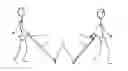
FIG. 6—Illustration of the skis being pushed and pulled with the wheels attached using the strap
DETAILED DESCRIPTION OF THE INVENTION
The invention to which this application relates, is a method of attaching a pair of wheels to the tail end of skis, thereby enabling the skis to be rolled over the ground.
The invention is a webbing strap that receives a pair of wheels, which are then fastened around the end of the skis. When the wheels are inserted into the strap, and the strap is fastened around the end of the skis, a form of trolley is produced, that allows the skis to be pushed or pulled along the ground.
The assembly comprises of two lengths of nylon webbing band (FIGS. 1, 3 & 4; no's. 2 & 4), which are stitched or glued together to form three separated conjoined sections (FIG. 3; no's. 6, 7, 8). Between each section of the strap that is stitched or glued together, there is a section of the strap left unstitched/unglued. The two sections of the strap that are not stitched or glued together, form the two sleeves (FIGS. 1, 3 and 4; no. 3) that receive the wheels.
The wheels (FIG. 1; no 9) are formed on right angled brackets (FIG. 1; no's. 7,8). The vertical facets of the brackets (FIG. 1; no. 7) slide into the sleeves of the strap (FIG. 2).
Reciprocating lengths of hook and loop material (e.g. Velcro) are stitched or glued to the ends of opposite sides of the strap (FIGS. 1, 3 and 4; no's. 1, 5), to enable the two ends of the strap to be fastened together around the skis (FIG. 5; no. 3). The length of the strap may extend beyond one complete circumference of the tail end of the skis.
The internal surface of the strap (FIG. 1; no 2) that forms the interface with the skis (FIG. 1; no 6) will be covered in a non slip material, either by a coating or the addition of a layer of foam, to provide greater friction between the surface of the strap and the surface of the skis.
Once the wheels have been inserted into the strap (FIG. 2), the tail end of the skis (FIG. 5; no. 4) sit on the horizontal facets of the wheel brackets (FIG. 1; no 8/FIG. 5; no. 2). The strap then wraps around the skis (FIG. 5; no. 3), thereby attaching the wheels to the end of the skis (FIG. 5; no. 1). The wheels may or may not be permanently fixed into the sleeves of the strap.
The result of this assembly is to allow the skis (FIG. 6; no's. 2 and 4) to be pushed or pulled along the surface of the ground (FIG. 6; no. 3). For pushing the skis, the person holds the skis directly (FIG. 6; no. 1). In order to pull the skis, a narrower webbing loop can be used, held in place with a normal ski strap, forming a leash type handle (FIG. 6; no. 5).
The invention to which this application relates has two significant advantages over existing devices for transporting skis. Firstly, the simplicity of the design; and secondly, the reduced bulk of the device.
The simplicity of the design of using the strap to attach wheels to skis, presents many advantages. It provides the opportunity for people of all ages, including children, to fit the wheels to the skis and transport them independently, thereby significantly reducing the physical strain of carrying skis. The low production costs would make the product more affordable, especially to families. The potential for malfunctions or damage to the ski transport device is also reduced, due to the simplicity of the components.
Existing designs offer a bulkier form of transportation for skis, which could present an encumbrance to the skier whilst on the slopes. This design enables the wheels to be easily stored in the pocket, once the skier has arrived at the slopes. Existing designs would require significant storage capacity for the ski transporting device, upon arrival at the ski slope. This is particularly relevant for a family group, where for example 4 devices may have been used.
The compact nature of the invention to which this application relates, also enables the strap and wheels to remain attached to the skis in situations where existing devices for transporting skis could not. For example, whilst transporting the skis on the roof of a vehicle the device would not need to be removed, so the skis could be transported with the wheels attached to and from the vehicle, without repeated fitting and removal of the device.
Claims
I claim:1. A device for transporting skis by the use of a flexible strap, consisting of layers which are joined together in such a way as to accommodate wheels, thereby enabling the wheels to be attached to the end of skis for the purpose of rolling the skis along the ground.
2. A device for transporting skis according to claim 1, where the length, relative lengths or widths of the strap or fastening material will vary to accommodate differing types of skis.
Images & Drawings included:
Sources:
- United States Patent and Trademark Office - verify current appl. status at the USPTO↗
Recent applications in this class:
- » 20240359720 2024-10-31
Expandable Dolly - » 20230174131 2023-06-08
Expandable dolly - » 20220388560 2022-12-08
TRANSPORT ASSIST EQUIPMENT AND BED - » 20200172139 2020-06-04
Robotic vehicle, system therewith and use thereof - » 20190389500 2019-12-26
Axle kit apparatus - » 20190263436 2019-08-29
Detachable wheel assembly for wheeled cases - » 20180222511 2018-08-09
Adjustable all-terrain dolly system and method - » 20180148080 2018-05-31
Medical transport device, auxiliary drive, and method for transporting such a transport device - » 20180072337 2018-03-15
WASTE RECEPTACLE DOLLIES AND ANCHORS - » 20170341670 2017-11-30
Trolley handling device, trolley cabinet, transportation means, and method of guiding a trolley