Fluorinated aromatic materials and their use in optoelectronics
US20120208989A1
2012-08-16
13/391,375
2010-08-20
✅ Patent granted
US 9,024,094 B2
2015-05-05
WO; PCT/US2010/046207; 20100820
WO; WO2011/022678; 20110224
James Rogers
Faegre Baker Daniels LLP
2032-04-05
Abstract:
Fluorinated aromatic materials, their synthesis and their use in optoelectronics. In some cases, the fluorinated aromatic materials are perfluoroalkylated aromatic materials that may include perfluoropolyether substituents.
Assignee:
- THE UNIVERSITY OF SOUTH DAKOTA 7 🇺🇸 Vermillion, SD, United States
Applicant:
Interested in similar patents?
Get notified when new applications in this technology area are published.
Classification:
H01L51/0052 » CPC main
Solid state devices using organic materials as the active part, or using a combination of organic materials with other materials as the active part; Processes or apparatus specially adapted for the manufacture or treatment of such devices, or of parts thereof; Selection of organic semiconducting materials, e.g. organic light sensitive or organic light emitting materials; Macromolecular systems with low molecular weight, e.g. cyanine dyes, coumarine dyes, tetrathiafulvalene Polycyclic condensed aromatic hydrocarbons, e.g. anthracene
C07C17/202 » CPC further
Preparation of halogenated hydrocarbons by replacement by halogens of halogen atoms by other halogen atoms two or more compounds being involved in the reaction
C07C22/08 » CPC further
Cyclic compounds containing halogen atoms bound to an acyclic carbon atom having unsaturation in the rings containing six-membered aromatic rings containing fluorine
C07C41/22 » CPC further
Preparation of ethers; Preparation of compounds having groups, groups or groups; Preparation of ethers by reactions not forming ether-oxygen bonds by introduction of halogens; by substitution of halogen atoms by other halogen atoms
C07C43/126 » CPC further
Ethers; Compounds having groups, groups or groups; Ethers having all ether-oxygen atoms bound to acyclic carbon atoms; Saturated ethers containing halogen having more than one ether bond
H01L51/0072 » CPC further
Solid state devices using organic materials as the active part, or using a combination of organic materials with other materials as the active part; Processes or apparatus specially adapted for the manufacture or treatment of such devices, or of parts thereof; Selection of organic semiconducting materials, e.g. organic light sensitive or organic light emitting materials; Macromolecular systems with low molecular weight, e.g. cyanine dyes, coumarine dyes, tetrathiafulvalene aromatic compounds comprising a hetero atom, e.g.: N,P,S; Polycyclic condensed heteroaromatic hydrocarbons comprising only nitrogen in the heteroaromatic polycondensed ringsystem, e.g. phenanthroline, carbazole
C07C2603/24 » CPC further
Systems containing at least three condensed rings; Ortho- or ortho- and peri-condensed systems containing three rings containing only six-membered rings Anthracenes; Hydrogenated anthracenes
C07D517/00 » CPC further
Heterocyclic compounds containing in the condensed system at least one hetero ring having selenium, tellurium, or halogen atoms as ring hetero atoms
C09B1/10 » CPC further
Dyes with anthracene nucleus not condensed with any other ring; Hydroxy-anthraquinones; Ethers or esters thereof; Preparation from starting materials already containing the anthracene nucleus Dyes containing halogen
H01L51/0558 » CPC further
Solid state devices using organic materials as the active part, or using a combination of organic materials with other materials as the active part; Processes or apparatus specially adapted for the manufacture or treatment of such devices, or of parts thereof specially adapted for rectifying, amplifying, oscillating or switching, or capacitors or resistors with at least one potential- jump barrier or surface barrier multistep processes for their manufacture the devices being controllable only by the electric current supplied or the electric potential applied, to an electrode which does not carry the current to be rectified, amplified or swiched, e.g. three-terminal devices; Field-effect devices, e.g. TFTs insulated gate field effect transistors characterised by the channel of the transistor
H01L51/42 » CPC further
Solid state devices using organic materials as the active part, or using a combination of organic materials with other materials as the active part; Processes or apparatus specially adapted for the manufacture or treatment of such devices, or of parts thereof specially adapted for sensing infra-red radiation, light, electro-magnetic radiation of shorter wavelength or corpuscular radiation and adapted for the conversion of the energy of such radiation into electrical energy or for the control of electrical energy by such radiation using organic materials as the active part, or using a combination of organic materials with other material as the active part; Multistep processes for their manufacture
H01L51/5012 » CPC further
Solid state devices using organic materials as the active part, or using a combination of organic materials with other materials as the active part; Processes or apparatus specially adapted for the manufacture or treatment of such devices, or of parts thereof specially adapted for light emission, e.g. organic light emitting diodes [OLED] or polymer light emitting devices [PLED] Electroluminescent [EL] layer
Y02E10/549 » CPC further
Energy generation through renewable energy sources; Photovoltaic [PV] energy Organic PV cells
Y02E10/549 » CPC further
Energy generation through renewable energy sources; Photovoltaic [PV] energy Organic PV cells
Y02P70/50 » CPC further
Climate change mitigation technologies in the production process for final industrial or consumer products Manufacturing or production processes characterised by the final manufactured product
Y02P70/50 » CPC further
Climate change mitigation technologies in the production process for final industrial or consumer products Manufacturing or production processes characterised by the final manufactured product
C07F3/00 IPC
Compounds containing elements of Groups 2 or 12 of the Periodic System
C07F9/00 IPC
Compounds containing elements of Groups 5 or 15 of the Periodic System
C07D215/233 IPC
Heterocyclic compounds containing quinoline or hydrogenated quinoline ring systems having no bond between the ring nitrogen atom and a non-ring member or having only hydrogen atoms or carbon atoms directly attached to the ring nitrogen atom with hetero atoms or with carbon atoms having three bonds to hetero atoms with at the most one bond to halogen, e.g. ester or nitrile radicals, directly attached to ring carbon atoms; Oxygen atoms attached in position 2 or 4 only one oxygen atom which is attached in position 4
C07D401/04 IPC
Heterocyclic compounds containing two or more hetero rings, having nitrogen atoms as the only ring hetero atoms, at least one ring being a six-membered ring with only one nitrogen atom containing two hetero rings directly linked by a ring-member-to-ring-member bond
C07D221/06 IPC
Heterocyclic compounds containing six-membered rings having one nitrogen atom as the only ring hetero atom, not provided for by groups - condensed with carbocyclic rings or ring systems; Ortho- or peri-condensed ring systems Ring systems of three rings
C07F5/00 IPC
Compounds containing elements of Groups 3 or 13 of the Periodic System
C07F1/02 IPC
Compounds containing elements of Groups 1 or 11 of the Periodic System Lithium compounds
C07F1/04 IPC
Compounds containing elements of Groups 1 or 11 of the Periodic System Sodium compounds
C07F1/06 IPC
Compounds containing elements of Groups 1 or 11 of the Periodic System Potassium compounds
C07F3/02 IPC
Compounds containing elements of Groups 2 or 12 of the Periodic System Magnesium compounds
C07F3/04 IPC
Compounds containing elements of Groups 2 or 12 of the Periodic System Calcium compounds
C07F5/06 IPC
Compounds containing elements of Groups 3 or 13 of the Periodic System Aluminium compounds
C07F9/60 IPC
Compounds containing elements of Groups 5 or 15 of the Periodic System; Phosphorus compounds; Heterocyclic compounds, e.g. containing phosphorus as a ring hetero atom having one nitrogen atom as the only ring hetero atom; Six-membered rings Quinoline or hydrogenated quinoline ring systems
C07F9/58 IPC
Compounds containing elements of Groups 5 or 15 of the Periodic System; Phosphorus compounds; Heterocyclic compounds, e.g. containing phosphorus as a ring hetero atom having one nitrogen atom as the only ring hetero atom; Six-membered rings Pyridine rings
C07F9/84 IPC
Compounds containing elements of Groups 5 or 15 of the Periodic System; Arsenic compounds; Organo-arsenic compounds; Heterocyclic compounds Arsenic compounds containing one or more quinoline ring systems
C07F9/82 IPC
Compounds containing elements of Groups 5 or 15 of the Periodic System; Arsenic compounds; Organo-arsenic compounds; Heterocyclic compounds Arsenic compounds containing one or more pyridine rings
C07F7/30 IPC
Compounds containing elements of Groups 4 or 14 of the Periodic System Germanium compounds
C07F7/22 IPC
Compounds containing elements of Groups 4 or 14 of the Periodic System Tin compounds
C07F7/24 IPC
Compounds containing elements of Groups 4 or 14 of the Periodic System Lead compounds
C07F9/94 IPC
Compounds containing elements of Groups 5 or 15 of the Periodic System Bismuth compounds
C07F7/28 IPC
Compounds containing elements of Groups 4 or 14 of the Periodic System Titanium compounds
C07F15/00 IPC
Compounds containing elements of Groups 8, 9, 10 or 18 of the Periodic System
C07F1/10 IPC
Compounds containing elements of Groups 1 or 11 of the Periodic System Silver compounds
C07F3/08 IPC
Compounds containing elements of Groups 2 or 12 of the Periodic System Cadmium compounds
C07F15/02 IPC
Compounds containing elements of Groups 8, 9, 10 or 18 of the Periodic System Iron compounds
C07F15/06 IPC
Compounds containing elements of Groups 8, 9, 10 or 18 of the Periodic System Cobalt compounds
C07F15/04 IPC
Compounds containing elements of Groups 8, 9, 10 or 18 of the Periodic System Nickel compounds
C07F1/08 IPC
Compounds containing elements of Groups 1 or 11 of the Periodic System Copper compounds
C07F1/12 IPC
Compounds containing elements of Groups 1 or 11 of the Periodic System Gold compounds
C07F3/14 IPC
Compounds containing elements of Groups 2 or 12 of the Periodic System; Mercury compounds Heterocyclic substances containing mercury
C07C25/22 » CPC main
Compounds containing at least one halogen atom bound to a six-membered aromatic ring; Polycyclic aromatic halogenated hydrocarbons with condensed rings
C07C17/32 » CPC further
Preparation of halogenated hydrocarbons by reactions involving an increase in the number of carbon atoms in the skeleton by introduction of halogenated alkyl groups into ring compounds
C07C17/00 IPC
Compounds containing carbon and halogens with or without hydrogen
C07C17/00 IPC
Preparation of halogenated hydrocarbons
C07D471/04 » CPC further
Heterocyclic compounds containing nitrogen atoms as the only ring hetero atoms in the condensed system, at least one ring being a six-membered ring with one nitrogen atom, not provided for by groups - in which the condensed system contains two hetero rings Ortho-condensed systems
Description
CROSS-REFERENCE TO RELATED APPLICATION
This application claims the benefit of provisional patent application Ser. No. 61/235,970, entitled “FLUORINATED AROMATIC MATERIALS AND THEIR USE IN OPTOELECTRONICS,” filed Aug. 21, 2009, which application is incorporated by reference herein in its entirety.
STATEMENT REGARDING FEDERALLY SPONSORED RESEARCH OR DEVELOPMENT
The United States government may have certain rights to this invention.
TECHNICAL FIELD
The disclosure pertains generally to fluorinated aromatic materials, their synthesis and their use in optoelectronics.
BACKGROUND
Fluorinated aromatics and related materials offer many advantages over non-fluorinated materials in a variety of different optoelectronic devices such as, but not limited to, organic light emitting diodes, organic field-effect transistors, organic solar cells, and dye-sensitized solar cells. These fluorinated materials have processing advantages and are thermally and photochemically stable. They have reduced flammability tolerance to extreme environmental conditions, including superhydrophobicity and oleophobicity. Fluorinated materials also have advantages in tuning the electronic and optical properties of these devices. For example, these materials can be used to produce oxygen stable n-type semiconductors.
SUMMARY
The invention is directed to fluorinated aromatic materials, their synthesis and their use in optoelectronics. In some embodiments, the fluorinated aromatic materials are perfluoroalkylated aromatic materials that may include perfluoropolyether substituents.
While multiple embodiments are disclosed, still other embodiments of the present invention will become apparent to those skilled in the art from the following detailed description, which shows and describes illustrative embodiments of the invention. Accordingly, the drawings and detailed description are to be regarded as illustrative in nature and not restrictive.
BRIEF DESCRIPTION OF THE DRAWINGS
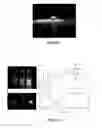
FIG. 1 is an electronic image illustrating hydrophobicity.
FIG. 2 is an electronic image illustrating luminescence.
FIG. 3 is a graph illustrating the photostability of perfluoroalkylated anthracenes.
FIG. 4 is a graph illustrating the photostability of perfluoroalkylated pyrenes.
FIG. 5 is a schematic illustration of a heterojunction organic blue light emitting diode (OLED).
FIG. 6 is a schematic illustration of a homojunction organic blue light emitting diode (OLED).
FIG. 7 is a schematic illustration of a heterojunction flexible organic solar cell (OSC).
DETAILED DESCRIPTION
Fluorinated materials such as fluorinated aromatic materials have strongly enhanced luminescence, higher chemical stability and higher photostability when compared to corresponding non-fluorinated aromatic materials. Fluorinated aromatic materials are also highly hydrophobic and oleophobic, which may be useful in limiting proton-related reduction of the aromatic. FIG. 1 illustrates the hydrophobic nature of fluorinated materials. In FIG. 1, a water drop is seen on a solid perfluoroalkylated dye covered glass slide. FIG. 2 illustrates the luminescence. In FIGS. 2A and 2B, the photoluminescence of, from left to right, anthracence, 9,10-dibromo anthracene and 9,10-bis(perfluorooctyl)anthracene is seen. FIG. 2C provides a graphical representation of luminescence intensity for anthracene and 9,10-bis(perfluorooctyl)anthracene.
FIGS. 3 and 4 illustrate the photostability of the fluorinated aromatic materials described herein. In FIGS. 3 and 4, the materials were tested with a 300 W Xe light with a 1.5 AM filter. The Y axis shows the percentage of the tested compounds remaining after being exposed to light for a particular amount of time. FIG. 3 compares fluorinated and non-fluorinated anthracene derivatives while FIG. 4 compares fluorinated and non-fluorinated pyrene derivatives.
In some embodiments, the fluorinated aromatic materials have fluorinated side chains that include sp3 hydridized carbon atoms. In some embodiments, Csp3—F functional groups are much more chemically resistant than Csp2—F functional groups, which in some cases are susceptible to nucleophilic aromatic substitution when strong nucleophiles are present. Although the Csp2—F bond is stable against oxidation, it can undergo reductive defluorination, especially when reducing metals and reagents are present or under electrochemical reducing conditions.
In some embodiments, the fluorinated aromatic materials are perfluoroalkylated aromatic materials that may include perfluoropolyether substituents. These materials may include at least one perfluoroalkyl group or semi-perfluoroalkyl group on the aromatic core structure. Illustrative but non-limiting examples of aromatic core structures include pyrroles, thiophenes, benzenes, naphthalenes, anthracenes, acenaphthene, acenaphthylene, fluorene, phenalene, phenanthrene, benzo[a]anthracene, benzo[a]fluorine, benzo[c]phenanthrene, chrysene, fluoranthene, pyrenes, tetracenes, triphenylene, anthanthrene, benzopyrene, benzo[a]pyrene, benzo[e]pyrene, benzo[b]fluoranthene, benzo[j]fluoranthene, benzo[k]fluoranthene, benzo[ghi]perylene, corannulene, coronene, dicoronylene, diindenoperylene, helicene, heptacene, hexacene, kekulene, ovalene, pentacene, perylene, picene, tetraphenylenepentacenes, fullerenes, bi-pyridines, ter-pyridines, quinolines, phenanthrolines, porphyrins, benzoporphyrins, and phthalocyanines.
In some embodiments, fluorinated aromatic materials may be of the formula:
Ar—(R)x(Q)y-(G)z,
where Ar is an aromatic core including 3 to about 120 sp2 hybridized carbon atoms or a total of 3 to about 120 sp2 hybridized carbon atoms, nitrogen atoms, oxygen atoms and sulfur atoms; R is a perfluoroalkyl group of the formula CnF2n+1, n is an integer ranging from 1 to about 30; Q is a perfluoropolyether group of the formula CkF2k+1Oh, k is an integer ranging from 1 to about 1000, h is an integer less than or equal to k−1; G is an organic functional group selected from the group consisting of hydrogen, C1-30 alkyl, C3-30 aryl, halogen, nitro, cyano, ester, ether, hydroxyl, aryl group bearing substituents including one or more of carbon, fluorine, chlorine, bromine, nitro or methoxy, or an aryl group including a heteroatom such as N, O and S; x, y and z are integers such that x+y+z is less than or equal to the total number of sp2 hybridized carbon atoms, nitrogen atoms, oxygen atoms and sulfur atoms within the aromatic core, and y and z may independently be zero.
In some embodiments, the aromatic core may be selected from the group consisting of benzene, naphthalene, anthracene, pyrene, coronene, phenanthroline, bi-pyridine and ter-pyridine. In some embodiments, R may be C8F17 and x is in the range of 2 to 6. In some embodiments, G may be hydrogen, C1-30 alkyl, C3-30 aryl, halogen, nitro, cyano, ester, ether or hydroxyl.
In some embodiments, the perfluoroalkylated heterocyclic aromatics may form metal complexes with metals such as Li, Na, K, Mg, Ca, Al, P, S, Se, As, Ge, Ga, In, Sn, Sb, Tl, Pb, Bi, Sr, Ba, Sc, Y, Ti, V, Cr, Mn, Zr, Nb, Mo, Ru, Rh, Pd, Ag, Cd, Fe, Co, Ni, Cu, Au, Hf, Ta, W, Re, Os, Ir, Pt, Au, Hg, and lanthanides with formal oxidation states from +1 to +6. In some embodiments, the heterocyclic aromatic cores may be selected from the group consisting of phenanthroline, bi-pyridine, ter-pyridine, and quinoline. In some embodiments, a metal complex may be one or more molecules selected from the group consisting of
in which n may be between about 1 and about 30.
In some embodiments, a fluorinated aromatic material may be one or more molecules selected from the group consisting of:
In some embodiments, n is between about 1 and about 30.
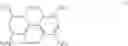
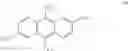
In some embodiments, a fluorinated aromatic material may be 9,10-bis-perfluorooctyl anthracene, which has the structure:
In some embodiments, a fluorinated aromatic material may be 1,3,6,8-tetrakis perfluorooctyl pyrene, which has the structure:
In some embodiments, a fluorinated aromatic material may be 2,6,9,10-tetrakis-heptadecafluorooctyl-anthracene, which has the structure:
In some embodiments, a fluorinated aromatic compound may be 5,6-bisperfluorooctyl-1,10-phenanthroline, which has the structure:
In some embodiments, perfluoroalkylated and semi-perfluoroalkylated aromatics and heterocyclic aromatics and related polymers may be synthesized via transition metal mediated/catalyzed cross-coupling reactions from corresponding halogenated aromatic precursors (Ar—X, where X is F, Cl, Br or I) and perfluoroalkyl halide (RfX, where X is Cl, Br or I). In some embodiments, the perfluoroalkylation reaction may be copper mediated and may be carried out under a nitrogen atmosphere. In some embodiments, the perfluoroalkyl group may be abbreviated as CnF2n+1 in which n is an integer between 1 and 18 and the semi-perfluoroalkyl group may be abbreviated as CmH2mCnF2n+1 in which m is an integer between 1 and 3 and n is an integer between 1 and 17.
In some embodiments, polar aprotic solvents, such as DMSO or DMF, with cupper mediator, work well for many aromatic halides (bromide and iodide). However, since DMSO and DMF are fluorophobic instead of fluorophilic, the reaction intermediates of perfluoroalkylated compounds are almost insoluble in these fluorophobic solvents. The insolubility of the reaction intermediates lead to an incomplete reaction and multiple side products, including isomers that are very difficult to separate.
In some embodiments, polar fluorophilic solvents (e.g. benzotrifluoride) may be used as co-solvents to dissolve the reaction intermediates. As a result, the perfluoroalkylation reaction goes to completion and gives almost exclusively the target product for most of the reactions under optimized conditions. Examples of suitable polar fluorophilic solvents include benzotrifluoride and the fluorinated ethers available commercially from 3M under the tradenames HFE-7100®, HFE-7200® and HFE-7500®.
In some embodiments, perfluoroalkylated aromatic materials may be made in accordance with the following reaction scheme:
In some embodiments, perfluoroalkylated aromatic materials may be directly synthesized by perfluoroalkylating a brominated aromatic molecule. In some embodiments, perfluoroalkylated aromatic materials may be synthesized through a stepwise bromination, perfluoroalkylation, further bromination and so on.
The fluorinated aromatic materials described herein may be used in a variety of optoelectronic devices. Illustrative but non-limiting examples of suitable uses include organic solar cells, dye-sensitized solar cells, polymer solar cells, organic light emitting diodes (OLEDs), organic thin-film field-effect transistors (OFETs), laser diodes, two-photon absorption materials, multifunctional biomedical imaging reagents including reagents for MRI, ultrasounds, NIR fluorescence, photodynamic therapy and others. In some embodiments, these materials may be used to form air stable and moisture resistant n-type semiconductors.
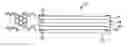
FIG. 5 is a schematic illustration of a heterojunction organic blue light emitting diode (OLED) 10 that utilizes both fluorinated and non-fluorinated materials. The OLED 10 may be constructed via chemical vapor deposition, physical vapor deposition and a thickness-controlled spin coating method in which the thickness of each element and layer is controlled. The OLED 10 includes a conducting carbon fiber cathode 12 and a fluorinated n-type semiconductor 14. Commercial carbon fiber may be used for the conducting carbon fiber cathode 12. The fluorinated n-type semiconductor 14 may be formed of a perfluoroalkylated pyrene of the structure shown, in which n may be an integer ranging from about 0 to about 17. The OLED 10 includes a p-type non-fluorinated semiconductor 16 that may, in some embodiments, be formed of the same material as the n-type semiconductor 14 but without the perfluoroalkyl substituent groups. The OLED 10 may include a perfluoroalkylated conducting polymer anode 16 and a conducting glass or polymer substrate 18. Printed silver wire is used as the electrical connectors 22. The perfluoroalkylated conducting polymer anode 16 may be formed of poly 3,4-perfluoroalkyl pyrroles and/or poly 3,4-perfluoroalkyl thiophenes having the following structures:
in which n is in the range of about 1 to about 30 and mi is in the range of about 1 to about 10,000.
FIG. 6 is a schematic illustration of a homojunction organic blue light emitting diode (OLED) 24 that includes fluorinated aromatic materials such as those discussed above. The OLED 24 may be constructed via chemical vapor deposition, physical vapor deposition and a thickness-controlled spin coating method in which the thickness of each element and layer is controlled. The OLED 24 includes a conducting carbon fiber cathode 26 formed of commercial conducting carbon fiber and a fluorinated n-type semiconductor 28. The fluorinated n-type semiconductor 28 may be formed of a perfluoroalkylated anthracene of the structure shown. The OLED 24 may include a perfluoroalkylated conducting polymer anode 30 and a conducting glass or polymer substrate 32. Printed silver wire is used as the electrical connectors 34. The perfluoroalkylated conducting polymer anode 30 may be formed of the poly 3,4-perfluoroalkyl pyrroles and poly 3,4-perfluoroalkyl thiophenes described above with respect to FIG. 5.
FIG. 7 is a schematic illustration of a heterojunction flexible organic solar cell (OSC) 36 that is constructed using fluorinated aromatic materials (e.g. perfluoroalkylated porphyrins, perfluoroalkylated benzoporphyrins, and perfluoroalkylated phthalocyanines), fluorinated polymers, and nonfluorinated materials as p-type semiconductors (e.g. benzoporphyrins, phthalocyanines). The OSC 36 may be constructed via chemical vapor deposition, physical vapor deposition and a thickness-controlled spin coating method in which the thickness of each element and layer is controlled. The OSC 36 includes a perfluoroalkylated (e.g. poly 3,4-perfluoroalkyl thiophene) conducting polymer cathode 38 and a fluorinated n-type semiconductor 40 that may be formed of any of the fluorinated aromatic materials discussed herein. The OSC 36 includes a non-fluorinated p-type semiconductor 42 and a perfluoroalkylated conducting polymer anode 44. The OSC 36 includes a conducting substrate 46. Printed silver wire is used as the electrical connectors 48. The perfluoroalkylated conducting polymer anode 44 may be formed of the poly 3,4-perfluoroalkyl pyrroles and poly 3,4-perfluoroalkyl thiophenes described above with respect to FIG. 5.
EXAMPLES
Example 1
Synthesis of 1,3,6,8-Tetrakis-perfluorooctyl-pyrene
Perfluorooctyl iodide (C8F17I, 1.10 ml, 4.13 mmol) was added into a mixture of 1,3,6,8-Tetrabromopyrene (0.146 g, 0.25 mmol) and copper powder (0.525 g, 8.26 mmol) in α,α,α-trifluorotoluene and anhydrous DMSO under nitrogen protection at 130-135° C. 1,3,6,8-Tetrabromopyrene was prepared from pyrene through direct bromonation. The reaction was monitored by TLC and quenched after 5 hours with acidic ice water. The mixture was suction filtered and the precipitate was washed at least three times with hydrochloric acid and D.I. water, then the solid crude product (ash gray) was further extracted with HFE-7200® to yield white crystalline 1,3,6,8-tetrakis-perfluorooctyl-pyrene (0.363 g, 75%) with bright blue fluorescence. Characterization data: 1H-NMR: 8.65 ppm (1H) and 8.82 ppm (2H).
Example 2
Synthesis of 2,6,9,10-tetrakis-heptadecafluorooctyl-anthracene
Perfluorooctyl iodide (C8F17I, 3.28 ml, 12.4 mmol) was added into a mixture of 2,6,9,10-tetrabromoanthracene (0.494 g, 1 mmol) and copper powder (1.576 g, 24.8 mmol) in α,α,α-trifluorotoluene and anhydrous DMSO under nitrogen protection at 130-135° C. 2,6,9,10-tetrabromoanthracene was prepared from anthracene through direct bromonation. The reaction was monitored by TLC and quenched after 4 hours with ice water. The mixture was worked up with standard extraction methylene chloride and toluene and filtration to give 2,6,9,10-tetrakis-heptadecafluorooctyl-anthracene in good yield. mp 94-96° C.
Characterization data: 1H NMR (CDCl3): δ 9.00 ppm (s, 2H), 8.75 ppm (d, 2H), 7.85 ppm (d, 2H); 19F NMR (CDCl3); δ −80.57 ppm (t, 23.34 Hz, 12F), −90.91 ppm (m, 8F), −111.62 ppm (m, 8F), −116.81 ppm (m, 8F), −121.46 ppm (m, 8F), −121.84 ppm (m, 8F), −122.86 ppm (m, 8F), −126.08 ppm (m, 8F); MS (LRFAB pos ion); m/z (m+) 1850.0 (calcd for C46H6F68: 1850.4): C, H analysis; Calcd (%) for C46H6F68 is C, 29.85; H, 0.32. found C, 29.67; H, 0.19.
Example 3
Synthesis of 9,10-bis-perfluorooctyl-anthracene
Perfluorooctyl iodide (C8F17I, 2.36 ml, 8.93 mmol) was added into a mixture of 9,10-dibromoanthracene (0.6 g, 1.78 mmol) and copper powder (1.14 g, 17 8 mmol) in trifluorotoluene and anhydrous DMSO under nitrogen protection at 130° C. 9.10-dibromoanthrocene is commercially available. The reaction was monitored by TLC and quenched after 4 hours with ice water. The mixture was worked up with standard extraction with methylene chloride to give 9,10-bis-perfluorooctyl-anthracene in good yield.
Characterization data: mp 128-132° C.; 1H NMR (CDCl3): δ 8.42 ppm (d, 4H), 7.61 ppm (d, 4H); 19F NMR (CDCl3); δ −80.56 ppm (t, 21.36 Hz, 6F), −90.86 ppm (m, 4F), −116.68 ppm (m, 4F), −121.21 ppm (m, 4F), −121.57 ppm (m, 4F), −122.88 ppm (m, 4F), −125.88 ppm (m, 4F), −125.91 ppm (m, 8F); MS (LRFAB pos ion); m/z (m+) 1014.0 (calcd for C30H8F34: 1014.3): C, H analysis; Calcd (%) for C30H8F34 is C, 35.52; H, 0.78. found C, 35.17; H, 0.74.
Example 4
Synthesis of 5,6-bisperfluorooctyl-1,10-phenanthroline
0.5 g (1.47 mmol) of 5,6-dibromo-1,10-phenanthroline, 1.13 g (17.78 mmol) of copper powder were added into a three neck round bottom flask with α,α,α-trifluorotoluene and DMSO. When the temperature inside the reaction mixture reached 106° C., 2.4 ml (8 9 mmol) of C8F17I was added drop wise over 45 min and the reaction was run for 3 hrs. The reaction mixture was allowed to cool to room temperature and 200 ml of chloroform was added. The mixture was then washed with 6×100 ml of concentrated ammonium hydroxide solution, followed by washing with 3×100 ml of D.I. water. The chloroform layer was then collected, dried, and removed to yield crude product, which was further recrystallized from methylene chloride.
Characterization data: 1H NMR (CDCl3): δ 9.22 ppm, 8.69 ppm, 7.92 ppm; 19F NMR (CDCl3); δ −80.62 ppm (t, 6F), −104.61 ppm (m, 4F), −119.79 ppm (m, 4F), −121.09 ppm (m, 4F), −121.58 ppm (m, 4F), −121.76 ppm (m, 4F), −122.58 ppm (m, 4F), −125.98 ppm (m, 4F); MS (LRFAB); m/z (m+) 1016.8 (calcd for C28H6F34N2: 1016.3).
Example 5
Synthesis of 2,6,9,10-tetrakis-heptadecafluorooctyl-anthracene in HFE-7200
Perfluorooctyl iodide (C8F17I, 3.28 ml, 12 4 mmol) was added into a mixture of 2,6,9,10-tetrabromoanthracene (0.494 g, 1 mmol) and copper powder (1.576 g, 24.8 mmol) in HFE-7200® and anhydrous DMSO under nitrogen protection at 90° C. The reaction was monitored by TLC and cooled down to room temperature after 24 hours. The mixture was separated directly to give a HFE-7200® solution of 2,6,9,10-tetrakis-heptadecafluorooctyl-anthracene. Removal of the HFE-7200® solvent yielded the solid product 2,6,9,10-tetrakis-heptadecafluorooctyl-anthracene having characterization data matching that of Example 2.
Example 6
Thin film production of 2,6,9,10-tetrakis-heptadecafluorooctyl-anthracene with HFE-7200
5 mg of 2,6,9,10-tetrakis-heptadecafluorooctyl-anthracene was dissolved in 1.0 mL of HFE-7200 and spin coated onto a glass slide a room temperature and atmosphere pressure. The thin film was stable with treatment of water and hydrocarbon based non-halogen solvents, and stable under sunlight (tested with 1.5 AM solar simulator).
Prophetic Example
Synthesis of 2,4,6,8,9,10-hexa-heptadecafluorooctyl-anthracene
Step one: 2,6,9,10-tetrakis-heptadecafluorooctyl-anthracene (1 mmol) is dissolved into 50 ml of HFE-7500® and heated up in a 130° C. oil bath. Anhydrous A1Br3 (0.05 mmol) and DBI solid (1.2 mmol) are added into the reaction mixture under string. After 24 hours at 130° C. the reaction mixture will be cooled down to room temperature, and washed with water. The HFE-7500® solution is evaporated to yield 4,8-dibromo-2,6,9,10-tetrakis-heptadecafluorooctyl-anthracene.
Step two: Perfluorooctyl iodide (C8F17I, 2.5 mmol) is added into a mixture of 4,8-dibromo-2,6,9,10-tetrakis-heptadecafluorooctyl-anthracene (0.5 mmol) and copper powder (5.0 mmol) in HFE-7500 and anhydrous DMSO under nitrogen protection at 130° C. The reaction is monitored by TLC and cooled down to room temperature after 72 hours. The mixture will be separated directly to give a HFE-7500 solution of 2,4,6,8,9,10-hexa-heptadecafluorooctyl-anthracene. Removal of HFE-7500 will give solid compound 2,4,6,8,9,10-hexa-heptadecafluorooctyl-anthracene.
Various modifications and additions can be made to the exemplary embodiments discussed without departing from the scope of the present invention. For example, while the embodiments described above refer to particular features, the scope of this invention also includes embodiments having different combinations of features and embodiments that do not include all of the above described features.
Claims
1. A fluorinated aromatic compound of the formula:
Ar—(R)x-(Q)y-(G)z,
where Ar is an aromatic core including 3 to about 120 sp2 hybridized carbon atoms or a total of about 3 to about 120 sp2 hybridized carbon atoms, nitrogen atoms, oxygen atoms and sulfur atoms;
R is a perfluoroalkyl group of the formula CnF2n+1, n is an integer ranging from 1 to about 30;
Q is a perfluoropolyether group of the formula CkF2k+1Oh, k is an integer ranging from 1 to about 1000, h is an integer less than or equal to k−1;
G is an organic functional group selected from the group consisting of hydrogen, C1-30 alkyl, C3-30 aryl, halogen, nitro, cyano, ester, ether, hydroxyl, aryl group bearing substituents including one or more of carbon, fluorine, chlorine, bromine, nitro or methoxy, or an aryl group including a heteroatom such as N, O and S;
x, y and z are integers such that x+y+z is less than or equal to a total number of sp2 hybridized carbon atoms, nitrogen atoms, oxygen atoms and sulfur atoms in the aromatic core, and y and z may independently be zero.
2. The fluorinated aromatic compound of claim 1, wherein the aromatic core is selected from the group consisting of pyrroles, thiophenes, benzenes, naphthalenes, anthracenes, acenaphthene, acenaphthylene, fluorene, phenalene, phenanthrene, benzo[a]anthracene, benzo[a]fluorine, benzo[c]phenanthrene, chrysene, fluoranthene, pyrenes, tetracenes, triphenylene, anthanthrene, benzopyrene, benzo[a]pyrene, benzo[e]pyrene, benzo[b]fluoranthene, benzo[j]fluoranthene, benzo[k]fluoranthene, benzo[ghi]perylene, corannulene, coronene, dicoronylene, diindenoperylene, helicene, heptacene, hexacene, kekulene, ovalene, pentacene, perylene, picene, tetraphenylenepentacenes, fullerenes, bi-pyridines, ter-pyridines, quinolines, phenanthrolines, porphyrins, benzoporphyrins, and phthalocyanines.
3. The fluorinated aromatic compound of claim 1, wherein G is hydrogen, C1-30 alkyl, C3-30 aryl, halogen, nitro, cyano, ester, ether or hydroxyl.
4. The fluorinated aromatic compound of claim 1, wherein R is C8F17 and x is in the range of 2 to 6.
5. The fluorinated aromatic compound of claim 1, wherein the fluorinated aromatic compound is selected from the group consisting of
where n is in a range of about 1 to about 30.
6. The fluorinated aromatic compound of claim 1, wherein the fluorinated aromatic compound comprises
7. The fluorinated aromatic compound of claim 1, wherein the fluorinated aromatic compound comprises
8. The fluorinated aromatic compound of claim 1, wherein the fluorinated aromatic compound comprises
9. The fluorinated aromatic compound of claim 1, wherein the fluorinated aromatic compound comprises
10. The fluorinated aromatic compound of claim 1, wherein the fluorinated aromatic compound comprises at least one of:
where n is in the range of about 1 to about 30 and m is in the range of about 1 to about 10,000.
11. A metal complex comprising a metal and a fluorinated aromatic compound of claim 1 in which Ar is a heterocyclic aromatic.
12. The metal complex of claim 11, in which the metal is selected from the group consisting of Li, Na, K, Mg, Ca, Al, P, S, Se, As, Ge, Ga, In, Sn, Sb, Tl, Pb, Bi, Sr, Ba, Sc, Y, Ti, V, Cr, Mn, Zr, Nb, Mo, Ru, Rh, Pd, Ag, Cd, Fe, Co, Ni, Cu, Au, Hf, Ta, W, Re, Os, Ir, Pt, Au, Hg, and lanthanides with formal oxidation states from +1 to +6; and in which Ar is selected from the group consisting of phenanthroline, bi-pyridine, ter-pyridine and quinoline.
13. The metal complex of claim 11, wherein the metal complex comprises one or more of the following:
in which n is in the range of about 1 to about 30.
14. An n-type semiconductor comprising the fluorinated aromatic compound of claim 1.
15. The n-type semiconductor of claim 14, forming part of a device selected from the group consisting of an organic light emitting diode, an organic solar cell or an organic field effect transistor.
16. A method of making a fluorinated aromatic compound, comprising:
combining a brominated aromatic and a perfluoroalkyl halide in a solvent including a fluorinated solvent; and
reacting the brominated aromatic and the perfluoroalkyl halide in a copper mediated cross-coupling reaction.
17. The method of claim 16, wherein the solvent includes one or more of DMF, DMSO, CH3CN, trifluoromethyl benzene or a fluorinated ether.
18. The method of claim 16, further comprising reacting a perfluoropolyether group.
Images & Drawings included:





Sources:
- United States Patent and Trademark Office - verify current appl. status at the USPTO↗
Similar patent applications:
Recent applications in this class:
- » 20230309380 2023-09-28
COMPOUND, MATERIAL FOR ORGANIC ELECTROLUMINESCENCE DEVICE, ORGANIC ELECTROLUMINESCENCE DEVICE, AND ELECTRONIC APPARATUS - » 20230217809 2023-07-06
ORGANIC ELECTRONIC ELEMENT, DISPLAY PANEL COMPRISING THE SAME AND DISPLAY DEVICE COMPRISING THE SAME - » 20230200213 2023-06-22
LIGHT-EMITTING DEVICE AND ELECTRONIC APPARATUS INCLUDING THE LIGHT-EMITTING DEVICE - » 20230096217 2023-03-30
ELECTROLUMINESCENT DEVICE AND SEMICONDUCTOR NANOPARTICLE - » 20230094185 2023-03-30
Light-emitting element, display device, electronic device, and lighting device - » 20230089346 2023-03-23
Light-Emitting Device, Light-Emitting Apparatus, Light-Emitting And Light-Receiving Apparatus, Electronic Appliance, and Lighting Device - » 20230021165 2023-01-19
COMPOSITION, DEPOSITION SOURCE, ORGANIC ELECTROLUMINESCENT DEVICE INCLUDING SAME, AND MANUFACTURING METHOD THEREFOR - » 20220384729 2022-12-01
ORGANIC LIGHT EMITTING DEVICE - » 20220367815 2022-11-17
LIGHT-EMITTING DEVICE AND APPARATUS INCLUDING THE SAME - » 20220278282 2022-09-01
ORGANIC LIGHT EMITTING DIODE AND ORGANIC LIGHT EMITTING DEVICE INCLUDING THE SAME
Recent applications for this Assignee:
- » 20150207078 2015-07-23
Fluorinated aromatic materials and their use in optoelectronics - » 20130206231 2013-08-15
Electron-deficient fluorous porphyrins and methods of making and their use in organic solar cells - » 20130115259 2013-05-09
Polymeric systems for delivering hypohalide salts - » 20130101963 2013-04-25
Rechargeable long-term antifungal denture materials - » 20090324536 2009-12-31
ANTIMICROBIAL POLYMERS AND COATINGS - » 20050081265 2005-04-14
Maize chloroplast protein synthesis elongation factors and methods of use for same