Power management integrated circuit using a flexible script-based configurator and method for power management
US20120260109A1
2012-10-11
13/127,211
2011-04-06
✅ Patent granted
US 9,092,217 B2
2015-07-28
WO; PCT/CN2011/000580; 20110406
WO; WO2012/135973; 20121011
Thomas Lee | Robert Cassity
Hayes and Boone LLP
2031-05-23
Abstract:
A power management integrated circuit incorporates (a) a microprocessor; (b) a non-volatile memory accessible by the microprocessor for storing programs executable by the microprocessor; (c) a random access memory accessible by the microprocessor; (d) an external interface which allows an external device to communicate with the power management integrated circuit; and (e) power regulators providing regulated output voltages from the power management integrated circuit, each power regulator being controllable by the microprocessor and the external interface over the register-controlled bus. A second external interface may be provided, which is used to provide a configuration file descriptive of power requirements of a system in which the power management integrated circuit is deployed. Such a system may include a system-on-a-chip (SOC) integrated circuit. Initially, the microprocessor of the power management integrated circuit executes a power sequence to provide the power-up power supply voltages to the SOC integrated circuit. Thereafter, the SOC integrated circuit controls power-up sequences for the peripheral devices. The configuration file is derived from a script file that is editable by a text editor or a word processor. The script file may be based on a scripting language that allows specifying control of the power regulators of the power management integrated circuit.
Inventors:
- Fei Ma 9 🇨🇳 Shanghai, China
- Shubing Zhai 8 🇨🇳 Shanghai, China
- Hanbing Jiang 1 🇨🇳 ZheJiang, China
Assignee:
- Integrated Device Technology, Inc. 831 🇺🇸 San Jose, CA, United States
Applicant:
Interested in similar patents?
Get notified when new applications in this technology area are published.
Classification:
G06F1/3203 » CPC main
Details not covered by groups - and; Power supply means, e.g. regulation thereof; Means for saving power Power management, i.e. event-based initiation of a power-saving mode
G06F1/00 IPC
Details not covered by groups - and
G06F1/26 IPC
Details not covered by groups - and Power supply means, e.g. regulation thereof
G06F1/32 IPC
Details not covered by groups - and; Power supply means, e.g. regulation thereof Means for saving power
Description
BACKGROUND OF THE INVENTION
1. Field of the Invention
The present invention relates to integrated circuit power management. In particular, the present invention relates to a flexible power management circuit that, based on executing a script file, controls and sequences the various power supply circuits in a system.
2. Discussion of the Related Art
A typical electronic system includes many components which require different power supply voltages for proper operations. Some common required voltages are 5.0V, 3.3V, 2.5V, 1.8V, 1.2V and 1V. For example, a system-on-a-chip (SOC) integrated circuit (IC) may require a low voltage for a digital core, a higher voltage for input/output (I/O) operations, another voltage for analog circuitry (e.g., phase-locked loops (PLL), analog-digital-converter (ADC), yet another voltage for one or more memory interfaces, and an always-on voltage to keep system state during a power-saving or sleep mode. In addition, a typical system also includes, in addition to the SOC, additional peripheral devices or controllers each having specific power requirements. To bring up such a system, proper sequencing of the various power supplies is required.
One possible solution is to incorporate into the SOC a software programmable capability to manage the system's power supply requirements. However, the SOC itself is typically a complicated integrated circuit requiring multiple power supply voltages, with specific sequencing requirements. Therefore, one solution in the prior art is to provide a simple processor (i.e., one requiring only a single power supply) to first bring up the SOC, which then allows the SOC bring up the peripheral devices or controllers. A reverse sequence takes place when the system is shut down.
FIG. 1 shows an exemplary system 100 of such a solution. As shown in FIG. 1, system 100 includes single-supply microprocessor 101, power management IC 102, SOC 103, memory devices 104, and a number of memory-mapped peripherals 105 (e.g., removable memory card reader 105a, global positioning system (GPS) device 105b, FM radio receiver 105c, liquid crystal display (LCD) 105d and GPRS radio communication system 105e). Power management IC generates the various regulated power supply voltages required by system 100. In system 100, after single-supply microprocessor 101 boots up, single-power supply microprocessor 101 interacts with (indicated by arrow 121) power management IC 102 to provide the power-up sequence 123 of SOC 103. In some instances, single-supply microprocessor 101 may download power management information regarding memory devices 104 and peripheral devices and controllers 105 into SOC 103. In other instances, SOC 103 may discover memory devices and peripheral device and controllers 105, may use its own pre-programmed power management information. Thereafter, SOC 103 interacts with (indicated by arrow 122) power management IC 102 to provide the power-up sequences 124 for memory devices 104 and memory-mapped peripherals 105.
A system, such as system 100, has a number of disadvantages. First, a system designer typically develops a family of related systems that are made up of different combinations of SOCs, memory and other peripheral devices, each having different specific power sequencing requirements. Thus, even though the systems are related, a different set of power-up and power-down sequences need to be developed for each system. Development of a set of power-up and power-down sequences typically takes place using an in-circuit emulation (ICE) system. The designer usually writes code for single-supply microprocessor 101 using a high-level programming language (e.g., the “C” programming language), which is compiled into executable code. In such a system, system development and system changes require the specialized skills of a software engineer, using debugging tools provided on the ICE system. Experience has demonstrated that in the life of a product, many minor changes are often needed. For example, a minor change on the printed circuit board (PCB) may require adding an additional millisecond delay in a power-up sequence for a regulated power supply. Even such a simple change requires the software engineer to modify and recompile the software on the ICE system. However, in many applications, power management problems are diagnosed in the field by field application engineers who often have neither access to such an ICE system nor the requisite skills to perform the sophisticated software tasks.
SUMMARY
According to some embodiments of the present invention, a power management integrated circuit is provided which incorporates (a) a microprocessor; (b) a non-volatile memory accessible by the microprocessor for storing programs executable by the microprocessor; (c) a random access memory accessible by the microprocessor; (d) an external interface which allows an external device to communicate with the power management integrated circuit; and (e) power regulators providing regulated output voltages from the power management integrated circuit, each power regulator being controllable by the microprocessor and the external interface over the register-controlled bus. The external interface may be, for an example, a serial interface (e.g., an I2C interface). In some embodiments, a second external interface is provided, which is used to provide a configuration file descriptive of power requirements of a system in which the power management integrated circuit is deployed.
According to some embodiments of the present invention, the power management integrated circuit may be deployed in a system including a system-on-a-chip (SOC) integrated circuit. Initially, the microprocessor of the power management integrated circuit executes a power sequence to provide the power-up power supply voltages to the SOC integrated circuit. Thereafter, the SOC integrated circuit controls power-up sequences for the peripheral devices.
In some embodiments, the configuration file is derived from a script file that is editable by a text editor or a word processor. The script file is based on a scripting language that allows specifying control of the power regulators of the power management integrated circuit. Such a scripting language may include commands that allow specifying a power-up condition for each of the power regulators. The power-up condition may include one or more of checking the value of the register representing a power regulator, checking the value of a bit of the register representing the power regulator, waiting a specified time period, waiting for a bit of the register representing the power regulator to be set or cleared, and waiting for an interrupt external or internal to the power management integrated circuit.
According to some embodiments of the present invention, a method is provided based on the operations of the power management integrated circuit.
The present invention is better understood upon consideration of the detailed description below in conjunction with the accompanying drawings.
BRIEF DESCRIPTION OF THE DRAWINGS
FIG. 1 shows system 100 having a power management system of the prior art.
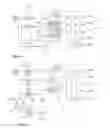
FIG. 2 shows exemplary system 200 according to some embodiments of the present invention.
FIG. 3 illustrates a representative format of script 300 written in the scripting language of the present invention.
FIG. 4 is flow chart 400 showing the operations of a representative script, according to some embodiments of the present invention.
FIG. 5 shows power curves 501, 502, 503 and 504, respectively, illustrating the required power-up sequences for four regulated power supply regulators, according to some embodiments of the present invention.
To simplify the description and to facilitate identification of common information among the figures, like elements are assigned like reference numerals.
DETAILED DESCRIPTION OF THE PREFERRED EMBODIMENTS
The present invention integrates a power-management microprocessor and various power regulators into a single power management device. In addition, the present invention provides utility software that interprets a script written in a scripting language (described below) to synthesize a configuration file that can be used by the power-management device to provide power-up sequences for devices in any system in which the power management device is deployed. The scripting language is designed to be readily learned by even a field application engineer without the specialized skills of a software engineer. A script written in such a scripting language may be read and edited by a user using any suitable text editor or word processor. FIG. 2 shows exemplary system 200 according to some embodiments of the present invention.
As shown in FIG. 2, system 200 includes power management IC 201 which incorporates microprocessor 209 with power regulators 212 and 213, according to some embodiments of the present invention. Power regulators 212 and 213 are controlled from a register-controlled bus, which may be accessed by both microprocessor 209 and SOC 103. Under this arrangement, each power regulator is assigned a register address. Using this arrangement, the values of the power regulator's control parameters are set or read by the bits or values written into the “register.” In exemplary system 200, SOC 103 accesses the register-controlled bus over an industrial standard serial interface (e.g., I2C slave interface 208).
In FIG. 2, microprocessor 209 is supported with internal read-only memory (ROM) 210 and random-access memory (RAM) 211, and an external industrial standard serial interface (e.g., I2C master interface 207), all of which are integrated into power management IC 201. Initially, at power-up, microprocessor 209 is booted up from internal ROM 210. Thereafter, microprocessor 209 loads a configuration file into internal RAM 211 from an external non-volatile memory device (e.g., electrically erasable and programmable read-only memory (EEPROM) 202) over the I2C master interface 207. The configuration file is prepared by the utility tool of the present invention from a script written in the scripting language of the present invention. In some embodiments, where power management IC 201 is designed for a volume-production platform, the configuration file is also incorporated into internal ROM 210, thereby eliminating the need and cost for an external non-volatile memory. System 200 may support microprocessor 209 to control the power-up sequences for SOC 103, memory devices 104 and peripheral devices and controllers 105. Alternatively, microprocessor 209 may first control the power-up sequence for SOC 103, and allows SOC 103 to control the power-up sequences for memory devices 104 and peripheral devices and controllers 105 in turn, or any of many variations of such an arrangement.
According to some embodiments of the present invention, the configurable file is an image file that may be included into internal ROM 210. In addition, vendors of devices or other suppliers may also provide script files for controlling power-up sequences for their specific devices which may be merged with other script files for other devices in the system to provide all the power-up sequences necessary for the system. Script files for power-down or other power events may be similarly provided. The utility tool operates on the merged script files to provide the image file that includes all power-up, power-down or other power event sequences to be controlled by microprocessor 209 of power management device 201.
According to some embodiments of the present invention, a scripting language of the present invention includes, for example, the following instructions or commands (“statements”):
-
- a) “Write”—writes a value into a register
- a. Usage: Write(register_address, value), where register_address is a 16-bit address specifying a register and value is an 8-bit value;
- b. Example—Write(0x0100, 0xaa)
- b) “Wait”—remains in wait a state for a specified time period
- a. Usage: Wait (microsecond), where microsecond is a 16-bit value;
- b. Example: Wait(1000);
- c) “WaitF”—checks whether a bit in a register is set or cleared, and accordingly executes the next instruction or exits the current sequence;
- a. Usage: WaitF(address, bit, value), where address is a 16-bit address specifying a register, bit is a 0-7 value specifying one of 8 bit positions, and value is 0 or 1 (i.e., cleared or set);
- b. Example: WaitF(0x0100, 3, 1)
- d) “WaitV”—checks whether a register has the specified value, and accordingly executes the next instruction or exits the current sequence;
- a. Usage: WaitV(address, value), where address is a 16-bit address specifying a register, and value is an 8-bit value;
- b. Example: WaitV(0x0100, 0xff)
- e) “SetF”—sets or clears a specified bit in a specified register;
- a. Usage: SetF(address, bit, value), where address is a 16-bit address specifying a register, bit is a 0-7 value specifying one of 8 bit positions, and value is 0 or 1 (i.e., cleared or set);
- b. Example: SetF(0x0100, 3, 1)
- f) “LoopF”—waits on a bit to be set or clear in a specified register, the firm idles until the specified condition is satisfied;
- a. Usage: LoopF(address, bit, value), where address is a 16-bit address specifying a register, bit is a 0-7 value specifying one of 8 bit positions, and value is 0 or 1 (i.e., cleared or set);
- b. Example: LoopF(0x0100, 3, 1)
- g) “#define”—a construct to define a mnemonic for a constant;
- a. Usage: #define VAR value, where VAR can be any string of alphanumeric characters (including ‘_’), and value can be any 8- or 16-bit value, as appropriate;
- b. Example: #define REG_BUCK0 0xa080
- a) “Write”—writes a value into a register
As indicated, values may be expressed, for example, in hexadecimal notations. In some embodiments, reserved keywords “Begin” and “End” may be used to delimit beginning and end of a specified sequence. A reserve keyword “//” is used to signal the beginning of a comment line (i.e., a text string which serves no functional purpose other than for the human readership).
FIG. 3 illustrates a representative format of script 300 written in the scripting language of the present invention. As shown in FIG. 3, script 300 includes sections 301, 302 and 303. Section 301 includes mnemonic definitions of constants, and sections 302 and 303 are sequences each delimited by “Begin” and “End” reserved keywords. As shown in FIG. 3, it is expected that, at the entry point of each sequence, a WaitV, WaitF, or LoopF statement is used to wait on a condition, or to determine if a condition is satisfied, for the sequence to proceed.
FIG. 4 is flow chart 400 showing the operations of a representative script, according to some embodiments of the present invention. As shown in FIG. 4, the representative script includes N sequences, labeled respectively 401-1, 401-2, . . . , 401-N. Initially (i.e., at power-up), according to whether or not a condition specified by a WaitV, WaitF or LoopF statement is satisfied, the statements in sequence 401-1 is first executed, or sequence 401-1 exited. After that, each of sequence 401-2, . . . , 401-N are likewise examined in turn for execution or is exited. The process is then in sleep mode (i.e., state 402). By executing all sequences 401-1, 401-2, . . . , 401-N, the system transitions from power-up or sleep mode 402 to fully power active, and from fully power active to power-down sequences to sleep mode 402. At sleep mode 402, an internal or external interrupt to microprocessor 209 restarts at sequence 401-1.
The following exemplary script manages four regulated power supply regulators requiring the power-up sequences illustrating by power curves 501, 502, 503 and 504 of FIG. 5, respectively. Power curve 501 represents a 3.3 volts DC/DC buck converter, which is enabled after a power button is pressed. Power curve 502 represents a 1.8 volts DC/DC buck converter, which enters regulation after the 3.3 volts DC/DC buck converter is in regulation. Likewise, power curve 503 represents a 1.2 volts low drop-out (LDO) converter which enters regulation after the 1.8 volts buck converter enters regulation. Power curve 504 represents a 1.2 volts DC/DC buck converter which is turned on or off by an interrupt signal received on an external general purpose I/O (GPIO) pin.
In the following script, section 1 defines the mnemonic constants for registers, voltages, and bits. Section 2.1 provides the power-up sequence of the PLLs, the 3.3 volts DC/DC buck converter, the 1.8 volts DC/DC buck converter, and the 1.2 volts LDO converter. Section 2.2 provides the power-up sequence for the 1.2 volts DC/DC buck converter, based on waiting on an interrupt at external GPIO pin GPIO7. Section 2.3 provides the power-down sequence for the 1.2 volts DC/DC buck converter, based on waiting on an interrupt at external GPIO pin GPIO7. Section 2.4 is a general power-down sequence, also based on waiting on an external interrupt. Section 2.5 is a general power-down sequence, also based on waiting on an external interrupt (in this case, the power button is held down for a specific period of time).
Exemplary Script File
| //************************************************ |
| // | Example power Sequence |
| //************************************************ |
| // LDO | 1.2V - LDO_150_1 |
| // |
| // DC/DC | 3.3V - Buck0 |
| // | 1.8V - Buck1 |
| // | 1.2V - Buck2 (Controlled by GPIO7) |
| //************************************************ |
| //************************************************ |
| // 1. Registers Definition |
| //************************************************ |
| //Define constants |
| //register definition |
| //ACCM Registers |
| #define REG_SYSTEM_RESET | 0XA000 |
| #define REG_GLOBAL_LDO_ENABLE | 0XA004 |
| #define REG_GLOBAL_DCDC_ENABLE | 0XA005 |
| #define REG_INT_STATUS0 | 0XA00A |
| #define REG_INT_STATUS1 | 0XA00B |
| #define REG_EXT_INT_STATUS | 0XA015 |
| // REG_UP_CONTEXT0 is used as power state register |
| #define REG_UP_CONTEXT0 | 0XA018 |
| #define PWR_STATE_0 | 0X00 |
| #define PWR_STATE_1 | 0X01 |
| //================================================ |
| // PCON Registers |
| #define REG_GPIO_DATA0 | 0XA022 |
| #define REG_GPIO_INT_STATUS0 | 0XA02A |
| #define REG_SWITCH_STATUS | 0XA031 |
| #define REG_PLL_CONFIG | 0XA034 |
| #define REG_POR_OUT | 0XA03C |
| // LDO/DCDC Registers |
| #define REG_LDO150_1 | 0xA062 |
| #define REG_BUCK0 | 0XA080 |
| #define REG_BUCK1 | 0XA082 |
| #define REG_BUCK2 | 0XA084 |
| //voltage definition |
| //DCDC Output voltage = VOUT*25 + 750 mV |
| #define BUCK_33V | 0X66 |
| #define BUCK_18V | 0X2A |
| #define BUCK_12V | 0X12 |
| //LDO Output voltage = VOUT*25 + 750 mV |
| #define LDO_12V | 0X12 |
| //bit definition |
| #define BIT_EXT_INT | 0X00 |
| #define BIT_GLOBAL_BUCK0 | 0X00 |
| #define BIT_GLOBAL_BUCK1 | 0X01 |
| #define BIT_GLOBAL_BUCK2 | 0X02 |
| #define BIT_GLOBAL_LDO150_1 | 0X05 |
| #define BIT_RESET | 0X07 |
| #define BIT_INT_STATUS_GPIO7 | 0X07 |
| #define BIT_INT_STATUS_SSW | 0X04 |
| #define BIT_INT_STATUS_LSW | 0X05 |
| #define BIT_GPIO7 | 0X07 |
| #define BIT_S0 | 0X00 |
| #define BIT_S1 | 0X01 |
| #define BIT_LDO_ENABLE | 0X07 |
| #define BIT_BUCK_ENABLE | 0X07 |
| //************************************************ |
| // 2. Sequence Definition |
| //************************************************ |
| //================================================ |
| // 2.1 Power on sequence |
| // | Active when: cold start (power state == 0x00) and |
| short //button push is detected |
| BEGIN |
| //check power state == 0x00, the up-context0 register has the |
| //value of /0 on cold start |
| WAITV(REG_UP_CONTEXT0, PWR_STATE_0) |
| //check ssw interrupt happened. Short button press will cause |
| //an interrupt |
| WAITF(REG_INT_STATUS1, BIT_INT_STATUS_SSW, 1) |
| //assert the output power on reset |
| WRITE(REG_POR_OUT, 0X00) |
| //PLL power up with 32Khz XTAL_IN as reference clock |
| SETF(REG_PLL_CONFIG, BIT_S1, 1) |
| SETF(REG_PLL_CONFIG, BIT_S0, 0) |
| //wait 3ms for pll lock |
| WAIT(3000) |
| //set the output voltage of BUCK&LDO |
| WRITE(REG_BUCK0, BUCK_33V) |
| WRITE(REG_BUCK1, BUCK_18V) |
| WRITE(REG_BUCK2, BUCK_12V) |
| WRITE(REG_LDO150_1, LDO_12V) |
| //enable global BUCK&LDO output |
| SETF(REG_GLOBAL_DCDC_ENABLE, BIT_GLOBAL_BUCK0, 1) |
| SETF(REG_GLOBAL_DCDC_ENABLE, BIT_GLOBAL_BUCK1, 1) |
| SETF(REG_GLOBAL_DCDC_ENABLE, BIT_GLOBAL_BUCK2, 1) |
| SETF(REG_GLOBAL_LDO_ENABLE, BIT_GLOBAL_LDO150_1, 1) |
| //(1) enable Buck0-3.3V first |
| SETF(REG_BUCK0, BIT_BUCK_ENABLE, 1) |
| //(2) enable Buck1-1.8V after 330us |
| WAIT(240) |
| SETF(REG_BUCK1, BIT_BUCK_ENABLE, 1) |
| //(3) enable LDO_150_1-1.2V after 180us |
| WAIT(30) |
| SETF(REG_LD0150_1, BIT_LDO_ENABLE, 1) |
| //(4) release the output power on reset after 1ms |
| WAIT(1000) |
| WRITE(REG_POR_OUT, 0X01) |
| //clear ssw interrupt status bit |
| WRITE(REG_SWITCH_STATUS, 0X01) |
| //set power state to 0x01. you need to maintain your own |
| power //state |
| WRITE(REG_UP_CONTEXT0,PWR_STATE_1) |
| END |
| //================================================ |
| // 2.2 Buck2-1.2V turn on sequence |
| // | Active when: GPIO7 interrupt detected and GPIO7 is |
| high |
| BEGIN |
| //check GPIO7 interrupt happened |
| WAITF(REG_INT_STATUS0, BIT_INT_STATUS_GPIO7, 1) |
| //check GPIO7 is high |
| WAITF(REG_GPIO_DATA0, BIT_GPIO7, 1) |
| //enable buck2 |
| SETF(REG_BUCK2, BIT_BUCK_ENABLE, 1) |
| //clear GPIO7 interrupt status bit |
| WRITE(REG_GPIO_INT_STATUS0, 0X80) |
| END |
| //================================================ |
| // 2.3 Buck2-1.2V turn off sequence |
| // | Active when: GPIO7 interrupt detected and GPIO7 is low |
| BEGIN |
| //check GPIO7 interrupt happened |
| WAITF(REG_INT_STATUS0, BIT_INT_STATUS_GPIO7, 1) |
| //check GPIO7 is low |
| WAITF(REG_GPIO_DATA0, BIT_GPIO7, 0) |
| //disable buck2 |
| SETF(REG_BUCK2, BIT_BUCK_ENABLE, 0) |
| //clear GPIO7 interrupt status bit |
| WRITE(REG_GPIO_INT_STATUS0, 0X80) |
| END |
| //================================================ |
| // 2.4 Power off sequence 1 |
| // | Active when: power state == 0x01 and external |
| interrupt //detected |
| BEGIN |
| //check power state == 0x01 |
| WAITV(REG_UP_CONTEXT0, PWR_STATE_1) |
| //external AP write the “external INT data” register |
| WAITF(REG_EXT_INT_STATUS,BIT_EXT_INT,1) |
| //(1) disable Buck0-3.3V first |
| SETF(REG_BUCK0, BIT_BUCK_ENABLE, 0) |
| WAIT(250) |
| //(2) disable all other power together after 330us |
| WRITE(REG_GLOBAL_DCDC_ENABLE, 0x00) |
| WRITE(REG_GLOBAL_LDO_ENABLE, 0x00) |
| SETF(REG_BUCK1, BIT_BUCK_ENABLE, 0) |
| SETF(REG_BUCK2, BIT_BUCK_ENABLE, 0) |
| SETF(REG_LDO150_1, BIT_LDO_ENABLE, 0) |
| //wait 1 ms |
| WAIT(1000) |
| //clear external interrupt status bit |
| WRITE(REG_EXT_INT_STATUS, 0x01) |
| //set system_reset to make cyrus chip into off state |
| SETF(REG_SYSTEM_RESET,BIT_RESET,1) |
| END |
| //================================================ |
| // 2.5 Power off sequence 2 |
| // | Active when: power state == 0x01 and long button push |
| is detected |
| BEGIN |
| //check power state == 0x01 |
| WAITV(REG_UP_CONTEXT0, PWR_STATE_1) |
| //check lsw interrupt happened |
| WAITF(REG_INT_STATUS1, BIT_INT_STATUS_LSW, 1) |
| //(1) disable Buck0-3.3V first |
| SETF(REG_BUCK0, BIT_BUCK_ENABLE, 0) |
| WAIT(250) |
| //(2) disable all other power together after 330us |
| WRITE(REG_GLOBAL_DCDC_ENABLE, 0x00) |
| WRITE(REG_GLOBAL_LDO_ENABLE, 0x00) |
| SETF(REG_BUCK1, BIT_BUCK_ENABLE, 0) |
| SETF(REG_BUCK2, BIT_BUCK_ENABLE, 0) |
| SETF(REG_LDO150_1, BIT_LDO_ENABLE, 0) |
| //wait 1 ms |
| WAIT(1000) |
| //clear lsw interrupt status bit |
| WRITE(REG_SWITCH_STATUS, 0X02) |
| //set system_reset to make cyrus chip into off state |
| SETF(REG_SYSTEM_RESET,BIT_RESET,1) |
| END |
Therefore, according to the present invention, the simple register interface and the relative ease of the scripting language allows the system designer to focus on system issues without being required of high-level language programming skills and the accesses to a compiler and an ICE system, since a script file may be edited easily using any text editor or word processor, such that changes in a system may be written and implemented very quickly. The utility program, which includes an interpreter for the scripting language, may be installed on any desktop or mobile computer. In addition, the prior art's external single-supply microprocessor is eliminated.
The detailed description above is provided to illustrate specific embodiments of the present invention and is not intended to be limiting. Numerous variations and modifications within the scope of the present invention are possible. In fact, the scripting language of the present invention can be used to manage not only power sequences, but also can be used for handling any events through a set of registers. The present invention is set forth in the accompanying claims.
Claims
1. A power management integrated circuit, comprising:
a microprocessor;
a non-volatile memory accessible by the microprocessor for storing programs executable by the microprocessor;
a random access memory accessible by the microprocessor;
an external interface which allows an external device to communicate with the power management integrated circuit; and
a plurality of power regulators providing a plurality of regulated output voltages from the power management integrated circuit, each power regulator being controllable by the microprocessor and the external interface over the register-controlled bus.
2. The power management integrated circuit of claim 1, wherein the external interface comprises a serial interface.
3. The power management integrated circuit of claim 2, wherein the serial interface comprises an I2C interface.
4. The power management integrated circuit of claim 1, further comprising a second external interface for providing a configuration file descriptive of power requirements of a system in which the power management integrated circuit is deployed.
5. The power management integrated circuit of claim 4, wherein the system comprises a system-on-a-chip (SOC) integrated circuit.
6. The power management integrated circuit of claim 5, wherein a power sequence executed by the microprocessor provides the power-up power supply voltages to the SOC integrated circuit.
7. The power management integrated circuit of claim 6, wherein the system further comprises peripheral devices, and wherein the SOC integrated circuit controls power-up sequences for the peripheral devices.
8. The power management integrated circuit of claim 4, wherein the configuration file is derived from a script file that is editable by a text editor or a word processor.
9. The power management integrated circuit of claim 8, wherein the script file is based on a scripting language that allows specifying control of the power regulators of the power management integrated circuit.
10. The power management integrated circuit of claim 9, wherein the scripting language comprises commands that allow specifying a power-up condition for each of the power regulators.
11. The power management integrated circuit of claim 10, wherein the power-up condition comprises one or more of checking the value of the register representing a power regulator, checking the value of a bit of the register representing the power regulator, waiting a specified time period, waiting for a bit of the register representing the power regulator to be set or cleared, and waiting for an interrupt external or internal to the power management integrated circuit.
12. A method comprising:
(a) providing in a power management integrated ciruit:
a microprocessor;
a non-volatile memory accessible by the microprocessor for storing programs executable by the microprocessor;
a random access memory accessible by the microprocessor;
an external interface which allows an external device to communicate with the power management integrated circuit; and
a plurality of power regulators providing a plurality of regulated output voltages from the power management integrated circuit; and
(b) controlling each power regulator by the microprocessor and the external interface over the register-controlled bus.
13. The method of claim 12, wherein the external interface comprises a serial interface.
14. The method of claim 13, wherein the serial interface comprises an I2C interface.
15. The method of claim 12, further comprising:
providing a second external interface in the power management integrated circuit; and
loading a configuration file into the random access memory, the configuration file being descriptive of power requirements in a system in which the power management integrated circuit is deployed.
16. The method of claim 15, wherein the system comprises a system-on-a-chip (SOC) integrated circuit.
17. The method of claim 16, further comprising executing a power sequence in the microprocessor to provide the power-up power supply voltages to the SOC integrated circuit.
18. The method of claim 17, wherein the system further comprises peripheral devices, the method further comprising controlling power-up sequences for the peripheral devices through the SOC integrated circuit.
19. The method of claim 15, wherein the configuration file is derived from a script file that is editable by a text editor or a word processor.
20. The method of claim 19, wherein the script file is based on a scripting language that allows specifying control of the power regulators of the power management integrated circuit.
21. The method of claim 20, further comprising providing in the scripting language commands that allow specifying a power-up condition for each of the power regulators.
22. The method of claim 21, wherein the power-up condition comprises one or more of checking the value of the register representing a power regulator, checking the value of a bit of the register representing the power regulator, waiting a specified time period, waiting for a bit of the register representing the power regulator to be set or cleared, and waiting for an interrupt external or internal to the power management integrated circuit.
Images & Drawings included:



Sources:
- United States Patent and Trademark Office - verify current appl. status at the USPTO↗
Recent applications in this class:
- » 20250291399 2025-09-18
AI-DRIVEN ELASTIC NETWORK TO REDUCE ENERGY CONSUMPTION - » 20250231606 2025-07-17
ON-DEMAND IP INITIALIZATION WITHIN POWER STATES - » 20250181133 2025-06-05
CONTROL RIGHT HANDOVER METHOD AND APPARATUS FOR POWER MANAGEMENT, DEVICE, AND STORAGE MEDIUM - » 20250110538 2025-04-03
GRANULAR POWER GATING OVERRIDE - » 20250044852 2025-02-06
AUTOMATIC POWER ON APPARATUS, SYSTEM, METHOD, AND CIRCUIT - » 20240402785 2024-12-05
ELECTRONIC DEVICES - » 20240385670 2024-11-21
Operation method of a power supply circuit - » 20240345643 2024-10-17
POWER MANAGEMENT SYSTEM FOR ACTIVE STYLUS - » 20240345642 2024-10-17
ETHERNET MEDIA CONVERTER APPARATUSES AND SYSTEMS - » 20240219987 2024-07-04
MOVABLE MINING MACHINES WITH DYNAMICALLY ADJUSTABLE COMPUTING POWER
Recent applications for this Assignee:
- » 20230044377 2023-02-09
Wireless power receiver configurable for LDO or buck operation - » 20220091228 2022-03-24
Sliding window and DC offset correction technique for pulse doppler radar systems - » 20210364326 2021-11-25
Fully redundant position sensor - » 20210320536 2021-10-14
Reconfigurable power in a wireless power transfer system - » 20210175745 2021-06-10
Wireless power Tx to Tx conflict and protection - » 20210135647 2021-05-06
Compact balanced radio frequency balun facilitating easy integration - » 20210096025 2021-04-01
Monolithic spectrometer - » 20210067183 2021-03-04
Principle and techniques for integrated TRX switch - » 20210010829 2021-01-14
360 degree position sensor - » 20200409446 2020-12-31
DDR5 client PMIC power up sequence and state transitions