Inhibitor of protein crosslinking and use of the same
US20120277423A1
2012-11-01
13/508,247
2010-05-19
✅ Patent granted
US 8,937,091 B2
2015-01-20
WO; PCT/JP2010/058411; 20100519
WO; WO2011/055561; 20110512
Bruck Kifle
Foley & Lardner LLP
2030-09-05
Abstract:
The present invention relates to: a ketone compound having transglutaminase-inhibiting activity, which is represented by the following Formula 1, 2, or 3:
wherein R1 is a substituted or unsubstituted aryl or heterocyclyl group, R2, R3, and R4 are hydrogen atoms, n is 2, X is halogen, R5 and R6 independently represent a hydrogen atom or a substituted or unsubstituted C1-C10 alkyl, aryl, or aralkyl group, wherein R5 and R6 are not hydrogen atoms at the same time, or R5 and R6 may be taken together to form a saturated or unsaturated and substituted or unsubstituted heterocyclyl group containing a nitrogen atom (N); an inhibitor of protein crosslinking comprising the compound; and a composition for preventing or treating a protein-crosslinking causative disease, which comprises the compound or the protein crosslinking inhibitor.
Inventors:
- Katsuhiko MIKOSHIBA 9 🇯🇵 Saitama, Japan
- Kozo Hamada 1 🇯🇵 Saitama, Japan
- Akiko Terauchi 2 🇯🇵 Saitama, Japan
- Shouichirou Ozaki 1 🇯🇵 Saitama, Japan
- Jun-ichi Goto 2 🇯🇵 Saitama, Japan
- Etsuko Ebisui 2 🇯🇵 Saitama, Japan
- Akinobu Suzuki 3 🇯🇵 Saitama, Japan
Assignee:
- Japan Science and Technology Agency 722 🇯🇵 Saitama, Japan
Applicant:
Interested in similar patents?
Get notified when new applications in this technology area are published.
Classification:
A61K31/45 IPC
Medicinal preparations containing organic active ingredients; Heterocyclic compounds having nitrogen as a ring hetero atom, e.g. guanethidine or rifamycins having six-membered rings with one nitrogen as the only ring hetero atom; Non condensed pyridines; Hydrogenated derivatives thereof; Non condensed piperidines, e.g. piperocaine having oxo groups directly attached to the heterocyclic ring, e.g. cycloheximide
C07D295/10 IPC
Heterocyclic compounds containing polymethylene-imine rings with at least five ring members, 3-azabicyclo [3.2.2] nonane, piperazine, morpholine or thiomorpholine rings, having only hydrogen atoms directly attached to the ring carbon atoms with substituted hydrocarbon radicals attached to ring nitrogen atoms substituted by doubly bound oxygen or sulphur atoms
A61K31/045 » CPC main
Medicinal preparations containing organic active ingredients Hydroxy compounds, e.g. alcohols; Salts thereof, e.g. alcoholates
A61K31/085 » CPC further
Medicinal preparations containing organic active ingredients; Ethers or acetals having an ether linkage to aromatic ring nuclear carbon
A61K31/12 » CPC further
Medicinal preparations containing organic active ingredients Ketones
A61K31/136 » CPC further
Medicinal preparations containing organic active ingredients; Amines having aromatic rings, e.g. ketamine, nortriptyline having the amino group directly attached to the aromatic ring, e.g. benzeneamine
A61K31/137 » CPC further
Medicinal preparations containing organic active ingredients; Amines having aromatic rings, e.g. ketamine, nortriptyline Arylalkylamines, e.g. amphetamine, epinephrine, salbutamol, ephedrine or methadone
A61K31/216 » CPC further
Medicinal preparations containing organic active ingredients; Esters, e.g. nitroglycerine, selenocyanates of carboxylic acids of acids having aromatic rings, e.g. benactizyne, clofibrate
A61K31/341 » CPC further
Medicinal preparations containing organic active ingredients; Heterocyclic compounds having oxygen as the only ring hetero atom, e.g. fungichromin having five-membered rings with one oxygen as the only ring hetero atom, e.g. isosorbide not condensed with another ring, e.g. ranitidine, furosemide, bufetolol, muscarine
A61K31/381 » CPC further
Medicinal preparations containing organic active ingredients; Heterocyclic compounds having sulfur as a ring hetero atom having five-membered rings
A61K31/40 » CPC further
Medicinal preparations containing organic active ingredients; Heterocyclic compounds having nitrogen as a ring hetero atom, e.g. guanethidine or rifamycins having five-membered rings with one nitrogen as the only ring hetero atom, e.g. sulpiride, succinimide, tolmetin, buflomedil
A61K31/417 » CPC further
Medicinal preparations containing organic active ingredients; Heterocyclic compounds having nitrogen as a ring hetero atom, e.g. guanethidine or rifamycins having five-membered rings with two or more ring hetero atoms, at least one of which being nitrogen, e.g. tetrazole 1,3-Diazoles Imidazole-alkylamines, e.g. histamine, phentolamine
A61K31/426 » CPC further
Medicinal preparations containing organic active ingredients; Heterocyclic compounds having nitrogen as a ring hetero atom, e.g. guanethidine or rifamycins having five-membered rings with two or more ring hetero atoms, at least one of which being nitrogen, e.g. tetrazole; Thiazoles 1,3-Thiazoles
A61K31/4402 » CPC further
Medicinal preparations containing organic active ingredients; Heterocyclic compounds having nitrogen as a ring hetero atom, e.g. guanethidine or rifamycins having six-membered rings with one nitrogen as the only ring hetero atom; Non condensed pyridines; Hydrogenated derivatives thereof only substituted in position 2, e.g. pheniramine, bisacodyl
A61K31/4406 » CPC further
Medicinal preparations containing organic active ingredients; Heterocyclic compounds having nitrogen as a ring hetero atom, e.g. guanethidine or rifamycins having six-membered rings with one nitrogen as the only ring hetero atom; Non condensed pyridines; Hydrogenated derivatives thereof only substituted in position 3, e.g. zimeldine
A61K31/4409 » CPC further
Medicinal preparations containing organic active ingredients; Heterocyclic compounds having nitrogen as a ring hetero atom, e.g. guanethidine or rifamycins having six-membered rings with one nitrogen as the only ring hetero atom; Non condensed pyridines; Hydrogenated derivatives thereof only substituted in position 4, e.g. isoniazid, iproniazid
A61K31/4439 » CPC further
Medicinal preparations containing organic active ingredients; Heterocyclic compounds having nitrogen as a ring hetero atom, e.g. guanethidine or rifamycins having six-membered rings with one nitrogen as the only ring hetero atom; Non condensed pyridines; Hydrogenated derivatives thereof containing further heterocyclic ring systems containing a five-membered ring with nitrogen as a ring hetero atom, e.g. omeprazole
A61K31/444 » CPC further
Medicinal preparations containing organic active ingredients; Heterocyclic compounds having nitrogen as a ring hetero atom, e.g. guanethidine or rifamycins having six-membered rings with one nitrogen as the only ring hetero atom; Non condensed pyridines; Hydrogenated derivatives thereof containing further heterocyclic ring systems containing a six-membered ring with nitrogen as a ring heteroatom, e.g. amrinone
A61K31/4453 » CPC further
Medicinal preparations containing organic active ingredients; Heterocyclic compounds having nitrogen as a ring hetero atom, e.g. guanethidine or rifamycins having six-membered rings with one nitrogen as the only ring hetero atom; Non condensed pyridines; Hydrogenated derivatives thereof; Non condensed piperidines, e.g. piperocaine only substituted in position 1, e.g. propipocaine, diperodon
A61K31/496 » CPC further
Medicinal preparations containing organic active ingredients; Heterocyclic compounds having nitrogen as a ring hetero atom, e.g. guanethidine or rifamycins having six-membered rings with two nitrogen atoms as the only ring heteroatoms, e.g. piperazine Non-condensed piperazines containing further heterocyclic rings, e.g. rifampin, thiothixene
A61K31/4965 » CPC further
Medicinal preparations containing organic active ingredients; Heterocyclic compounds having nitrogen as a ring hetero atom, e.g. guanethidine or rifamycins having six-membered rings with two nitrogen atoms as the only ring heteroatoms, e.g. piperazine Non-condensed pyrazines
A61K31/5375 » CPC further
Medicinal preparations containing organic active ingredients; Heterocyclic compounds having nitrogen as a ring hetero atom, e.g. guanethidine or rifamycins having six-membered rings with at least one nitrogen and one oxygen as the ring hetero atoms, e.g. 1,2-oxazines 1,4-Oxazines, e.g. morpholine
A61P1/00 » CPC further
Drugs for disorders of the alimentary tract or the digestive system
A61P1/16 » CPC further
Drugs for disorders of the alimentary tract or the digestive system for liver or gallbladder disorders, e.g. hepatoprotective agents, cholagogues, litholytics
A61P7/04 » CPC further
Drugs for disorders of the blood or the extracellular fluid Antihaemorrhagics; Procoagulants; Haemostatic agents; Antifibrinolytic agents
A61P9/10 » CPC further
Drugs for disorders of the cardiovascular system for treating ischaemic or atherosclerotic diseases, e.g. antianginal drugs, coronary vasodilators, drugs for myocardial infarction, retinopathy, cerebrovascula insufficiency, renal arteriosclerosis
A61P17/00 » CPC further
Drugs for dermatological disorders
A61P25/00 » CPC further
Drugs for disorders of the nervous system
A61P25/14 » CPC further
Drugs for disorders of the nervous system for treating abnormal movements, e.g. chorea, dyskinesia
A61P25/16 » CPC further
Drugs for disorders of the nervous system for treating abnormal movements, e.g. chorea, dyskinesia Anti-Parkinson drugs
A61P25/28 » CPC further
Drugs for disorders of the nervous system for treating neurodegenerative disorders of the central nervous system, e.g. nootropic agents, cognition enhancers, drugs for treating Alzheimer's disease or other forms of dementia
A61P27/12 » CPC further
Drugs for disorders of the senses; Ophthalmic agents for cataracts
A61P37/06 » CPC further
Drugs for immunological or allergic disorders; Immunomodulators Immunosuppressants, e.g. drugs for graft rejection
A61P43/00 » CPC further
Drugs for specific purposes, not provided for in groups -
C07D213/50 IPC
Heterocyclic compounds containing six-membered rings, not condensed with other rings, with one nitrogen atom as the only ring hetero atom and three or more double bonds between ring members or between ring members and non-ring members having three double bonds between ring members or between ring members and non-ring members having no bond between the ring nitrogen atom and a non-ring member or having only hydrogen or carbon atoms directly attached to the ring nitrogen atom with substituted hydrocarbon radicals attached to ring carbon atoms; Radicals substituted by doubly-bound oxygen, sulfur, or nitrogen atoms, or by two such atoms singly-bound to the same carbon atom; Oxygen atoms Ketonic radicals
C07D223/10 IPC
Heterocyclic compounds containing seven-membered rings having one nitrogen atom as the only ring hetero atom not condensed with other rings with hetero atoms or with carbon atoms having three bonds to hetero atoms with at the most one bond to halogen, e.g. ester or nitrile radicals, directly attached to ring carbon atoms; Oxygen atoms attached in position 2
C07D409/06 IPC
Heterocyclic compounds containing two or more hetero rings, at least one ring having sulfur atoms as the only ring hetero atoms containing two hetero rings linked by a carbon chain containing only aliphatic carbon atoms
C07D333/22 IPC
Heterocyclic compounds containing five-membered rings having one sulfur atom as the only ring hetero atom not condensed with other rings not substituted on the ring sulphur atom with only hydrogen atoms, hydrocarbon or substituted hydrocarbon radicals, directly attached to the ring carbon atoms Radicals substituted by doubly bound hetero atoms, or by two hetero atoms other than halogen singly bound to the same carbon atom
C07D295/16 IPC
Heterocyclic compounds containing polymethylene-imine rings with at least five ring members, 3-azabicyclo [3.2.2] nonane, piperazine, morpholine or thiomorpholine rings, having only hydrogen atoms directly attached to the ring carbon atoms acylated on ring nitrogen atoms
A61K31/36 » CPC further
Medicinal preparations containing organic active ingredients; Heterocyclic compounds having oxygen as the only ring hetero atom, e.g. fungichromin having two or more oxygen atoms in the same ring, e.g. crown ethers, guanadrel Compounds containing methylenedioxyphenyl groups, e.g. sesamin
A61K31/55 » CPC further
Medicinal preparations containing organic active ingredients; Heterocyclic compounds having nitrogen as a ring hetero atom, e.g. guanethidine or rifamycins having seven-membered rings, e.g. azelastine, pentylenetetrazole
Description
TECHNICAL FIELD
The present invention relates to a compound having transglutaminase-inhibiting activity or an inhibitor of protein crosslinking and to the use of the same.
More specifically, the present invention relates to a compound having transglutaminase-inhibiting activity, which is a ketone or alcohol, especially a ketone, having a particular structure, to an inhibitor of protein crosslinking and/or an intracellular calcium modulator, and to a composition for preventing or treating protein-crosslinking causative diseases such as Alzheimer's disease, Huntington's disease, Parkinson's disease, Celiac disease, cataract, mad cow disease, congenital lamellar ichthyosis, congenital hemostatic disorder, liver disorder, autoimmune disease, and cerebral infarction.
BACKGROUND ART
Calcium is well known to play various and important roles in living organisms and cells. In the past, the present inventors discovered that 2-APB (2-aminoethyl diphenyl borinate) acts to modulate the intracellular calcium concentration (Non-Patent Literature 1), and then synthesized about 500 different boron compounds analogous to 2-APB and examined calcium concentration modulating activities of these compounds (Patent Literatures 1 to 4). As a result, it was revealed that these compounds function to modulate an intracellular calcium concentration associated with SOCE (store operated calcium entry) or IICR (IP3 induced calcium release). In addition, it was found that some of the compounds have transglutaminase-inhibiting activities, in addition to the above-mentioned activities.
It has been revealed that abnormal crosslinking reactions of certain proteins cause intractable diseases such as Alzheimer's disease, Huntington's disease, Parkinson's disease, Celiac disease, cataract, mad cow disease, congenital lamellar ichthyosis, and congenital hemostatic disorder (Non-Patent Literatures 2 to 4). In particular, an enzyme that is thought to be involved in abnormal protein crosslinking reactions is transglutaminase.
Transglutaminase is an enzyme that is activated in the presence of calcium. Recently, it has been known that transglutaminase is involved in the development of neurological diseases such as Alzheimer's disease, Parkinson's disease, and Huntington's disease. Thus, transglutaminase inhibitors are thought to be effective drugs for treatment of such diseases (Non-Patent Literatures 5 and 6).
The main reaction of the abnormal protein crosslinking is a reaction in which isopeptide bonds are formed from the amide group of glutamine and the amino group of lysine of a protein through deammoniation. The mechanism revealing that inhibitors of the enzyme capable of inducing such reaction (i.e., transglutaminase) would be effective for treatment of the aforementioned diseases or the like has been clarified (Non-Patent Literature 7). Based on these findings, there are increasing researches to develop transglutaminase inhibitors as therapeutic drugs for diseases such as Alzheimer's disease, Huntington's disease, Parkinson's disease, Celiac disease, cataract, mad cow disease, congenital lamellar ichthyosis, congenital hemostatic disorder, liver disorder, autoimmune disease, and cerebral infarction (Non-Patent Literatures 8 to 13).
CITATION LIST
Patent Literatures
- Patent Literature 1: WO 03/033002
- Patent Literature 2: WO 2007/061074
- Patent Literature 3: JP Patent Publication (Kokai) No. 2009-184988 A
- Patent Literature 4: JP Patent Publication (Kokai) No. 2007-169272 A
Non-Patent Literatures
- Non-Patent Literature 1: Mikoshiba et al., J. Biochem., 1997, 122:498-505
- Non-Patent Literature 2: Hartley M D et al., Transglutaminase induces protofibril-like amyloid β-protein assemblies that are protease-resistant and inhibit long-term potentiation, J. Biol. Chem., 2008, 283:16790-16800
- Non-Patent Literature 3: Thomas M J et al., Increased levels of γ-glutamylamines in Huntington disease CSF, J. Neurochemistry, 2008 April 1, 106 (1): 7-44
- Non-Patent Literature 4: Kim S Y et al., Transglutaminases in disease. Neurochem Int., 2002 January, 40 (1): 85-103
- Non-Patent Literature 5: Hoffner G and Djian P, Transglutaminase and diseases of the central nervous system, Front Biosci., 2005 September 1,10: 3078-3092
- Non-Patent Literature 6: Duval E et al., Structure-activity relationship study of novel tissue transglutaminase inhibitors., Bioorg Med Chem. Lett., 2005 April 1, 15 (7): 1885-1889
- Non-Patent Literature 7: Mastroberardino P G, et al., Tissue transglutaminase ablation reduce neuronal death and prolongs survival in a mouse model of Huntington's disease, Cell Death Differ., 2002 September, 9 (9): 873-880
- Non-Patent Literature 8: Lorand L, Neurodegenerative diseases and transglutaminase, Proc Natl Acad Sci U.S.A., 1996 December 10, 93 (25): 14310-14313
- Non-Patent Literature 9: Grierson A J, et al., Three different human tau isoforms and rat neurofilament light, middle and heavy chain proteins are cellular substrates for transglutaminase, Neurosci Lett., 2001 January 26, 298 (1): 9-12
- Non-Patent Literature 10: Watts R E, et al., Structure-activity relationship analysis of the selective inhibition of transglutaminase 2 by dihydroisoxazoles, J Med. Chem., 2006 December 14, 49 (25): 7493-7501
- Non-Patent Literature 11: Karpuj M V et al., Prolonged survival and decreased abnormal movements in transgenic model of Huntington disease, with administration of the transglutaminase inhibitor cystamine, Nat. Med., 2002 February, 8 (2): 143-149
- Non-Patent Literature 12: Thung G L et al., Identification of Chemical Inhibitors to Human Tissue Transglutaminase by Screening Existing Drug Libraries Chemistry & Biology 2008 September 22, 15: 969-978
- Non-Patent Literature 13: Tatsukawa H et al., Transglutaminase Cross-links SP1-mediated transcriptional to ethanol-induce liver injury, Gastroenterology 2009. 136 (5): 1783-1795
SUMMARY OF INVENTION
Problem to be Solved by Invention
An object of the present invention is to produce compounds having the action of modulating an intracellular calcium concentration, modulators of transglutaminase activity, and compounds capable of modulating a protein crosslinking reaction. Another object of the present invention is to develop drugs for preventing and/or treating diseases caused by abnormal protein crosslinking.
Means for Solving Problem
In order to achieve the above-mentioned objects, the present inventors attempted to find compounds having the above-mentioned action other than boron compounds previously developed by the present inventors. As a result, the present inventors have now found that ketone compounds having particular structures have the action significantly superior to the boron compounds. This led to the completion of the present invention. It was revealed that such ketone compounds have transglutaminase-inhibiting activities, and that they include compounds that substantially do not inhibit SOCE but strongly inhibit IICR, and compounds inhibiting IICR more strongly than SOCE.
The present invention has the features as described below.
In a first aspect, the present invention provides a ketone compound having transglutaminase-inhibiting activity, which is represented by Formula (1), (2), or (3):
wherein R1 is a substituted or unsubstituted aryl or heterocyclyl group, R2, R3, and R4 are hydrogen atoms, n is 2, X is halogen, R5 and R6 independently represent a hydrogen atom or a substituted or unsubstituted C1-C10 alkyl, aryl, or aralkyl group, wherein R5 and R6 are not hydrogen atoms at the same time, or R5 and R6 may be taken together to form a saturated or unsaturated and substituted or unsubstituted heterocyclyl group containing a nitrogen atom (N).
In one embodiment of the present invention, R1 is a substituted or unsubstituted phenyl, naphthyl, fluorenyl, benzothienyl, pyridyl, pyrazinyl, furyl, thienyl, pyrrolyl, thiazolyl, ferrocenyl, morpholino, or 6- to 7-membered cyclic lactam group.
In another embodiment of the present invention, R5 or R6 is a substituted or unsubstituted benzyl or C1-C6 alkyl group.
In another embodiment of the present invention, a heterocyclyl group formed from R5 and R6 is a substituted or unsubstituted piperadino, piperidino, or pyrrolidino group.
In another embodiment of the present invention, a substituent on R1 is one or more C1-C4 alkyl, halogen, cyano, hydroxy, C1-C4 alkoxy, or substituted or unsubstituted phenyl, phenoxy, or phenylthio groups.
In another embodiment of the present invention, a substituent on R5 or R6 is one or more substituted or unsubstituted C1-C10 alkyl, halogen, cyano, hydroxy, C1-C4 alkoxy, C1-C4 alkylcarbonyl, C1-C4 alkylcarbonyloxy, disulfide, thiol, amino, substituted or unsubstituted mono-C1-C10 alkylamino, substituted or unsubstituted di-C1-C10 alkylamino, carbonyl, substituted or unsubstituted phenyl or phenyl-C1-C4 alkyl, or substituted or unsubstituted aryl or heterocyclyl groups.
In another embodiment of the present invention, the ketone compound represented by Formula (1) is selected from the group consisting of the following compounds (where the numerals in parentheses represent compound ID numbers).
- acryloylbenzene (8184)
- 4-methyl-1-acryloylbenzene (8185)
- 4-fluoro-1-acryloylbenzene (8186)
- 1-bromo-6-acryloylnaphthalene (8187)
- 2-acryloylnaphthalene (8213)
- 2-acryloylanthracene (8189)
- 1-acryloylmorpholine (8171)
- 2-(cinnamoyl)-naphthalene (9195)
- 1-acryloyl-4-bromobenzene (8266)
- 2-bromo-4,5-dioxymethylene-1-acryloylbenzene (8200)
- 4-bromo-2-methoxy-1-acryloylbenzene (8203)
- 2,5-dimethyl-1-acryloylbenzene (8209)
- 1-methyl-6-acryloylnaphthalene (8211)
- 1-methyl-4-crotonoylbenzene (6228)
- 1-methoxy-4-crotonoylbenzene (8229)
- 1-methoxy-4-tigloylbenzene (8233)
- 1-ethyl-4-acryloylbenzene (8237)
- 3,4-dimethyl-1-acryloylbenzene (8241)
- 3,4-dimethoxy-1-acryloylbenzene (8243)
- 1-acryloyldibenzyl (8250)
- 1-acryloyldiphenylether (8251)
- 2-methyl-6-acryloylnaphthalene (8256)
- 1-fluoro-6-acryloylnaphthalene (8257)
- Acryloyldiphenylsulfide (9261)
- 4-chloro-1-acryloylbenzene (8264)
- 4-acryloylpyridine (8265)
- 1-chloro-6-acryloylnaphthalene (8268)
- Acryloyldiphenylmethane (8269)
- Acryloyl-1-phenylnaphthalene (8270)
- 3-methoxyacryloylbenzene (8294)
- 1-acryloylnaphthalene (8293)
In another embodiment of the present invention, the ketone compound represented by Formula (2) is selected from the group consisting of the following compounds, (where the numerals in parentheses represent compound ID numbers).
- 1-(3-chloropropionyl)-4-fluorobenzene (8178)
- 1-(3-chloropropionyl)-4-methylbenzene (8179)
- 3-chloropropio-4-bromophenone (8180)
In another embodiment of the present invention, the ketone compound represented by Formula (3) is selected from the group consisting of the following compounds (where the numerals in parentheses represent compound ID numbers).
- 2-(N-t-butyl-2-hydroxyethyl)aminoethyl-4-pyridylketone (8672)
- 2-(N-methylbenzyl)aminoethyl-4-pyridylketone (8673)
- 2-(N-hydroxyethylbutyl)aminoethyl-4-pyridylketone (8674)
- 2-(hydroxyethylisopropyl)aminoethyl-3-thiophenylketone (8675)
- 2-(N-isopropylbenzyl)aminoethyl-4-benzylphenylketone (8285)
- 2-(N-isopropylbenzyl)aminoethyl-4-methylphenylketone (8286)
- 2-(N-isopropylbenzyl)aminoethyl-2-naphthylketone (8291)
- 2-(isopropylbenzyl)aminoethylphenylketone (8299)
- 2-(N-isopropylbenzyl)aminoethyl-4-methoxyphenylketone (8304)
- 2-(N-isopropylbenzyl)aminoethyl-2-pyridylketone (8305)
- 2-(N-methylbenzyl)aminoethyl-2-pyridylketone (8310)
- 2-(N-methylbenzyl)aminoethyl-5-methyl-2-naphthylketone (8315)
- 2-(N-isopropylbenzyl)aminoethyl-5-methyl-2-naphthylketone (8316)
- 2-(N-diphenyl)aminoethyl-5-methyl-2-naphthylketone (8317)
- 1-(N-benzylisopropyl)aminoethyl-1-naphthylketone (8298)
- 2-(N-isopropylbenzyl)aminoethyl-5-chloro-2-naphthylketone (8323)
- 2-(N-isopropylbenzyl)aminoethyl-4-phenoxyphenylketone (8324)
- 2-(N-methylbenzyl)aminoethyl-4-phenoxyphenylketone (8327)
- 2-(N-2-hydroxy-2-phenylethyl)aminoethyl-4-phenoxyphenylketone (8329)
- 2-piperidinoethyl-5-chloro-2-naphthylketone (8330)
- 2-(N-2-hydroxyethylbenzyl)aminoethyl-5-chloro-2-naphthylketone (8331)
- 2-(N-1,1-dihydroxymethylpropyl)aminoethyl-5-chloro-2-naphthylketone (8332)
- 2-(N-2-hydroxyethylbutyl)aminoethyl-5-chloro-2-naphthylketone (8333)
- 2-(N-t-butylbenzyl)aminoethyl-2-pyridylketone (8336)
- 2-(N-hydroxymethylbenzyl)aminoethyl-2-pyridylketone (8339)
- 2-(N-methylbenzyl)aminoethyl-2-naphthylketone (8346)
- 2-(N-methylhydroxyethyl)aminoethyl-2-naphthylketone (8347)
- N-benzylethylaminoethyl-3-thiophenylketone (8677)
- N,N-bis(2-hydroxyethyl)aminoethyl-2-pyrazylketone (8678)
- 2-(N-isopropylbenzyl)aminoethyl-4-benzylphenylketone (8361)
- 2-(N-methylbenzyl)aminoethyl-4-benzylphenylketone (8362)
- 2-(N-t-butylbenzyl)aminoethyl-4-benzylphenylketone (8363)
- 2-(N-isopropylbenzyl)aminoethyl-3-pyridylketone (8366)
- 2-(N-isopropylbenzyl)aminoethyl-4-pyridylketone (8367)
- 2-(N-butyl-2-hydroxyethyl)aminoethyl-2-pyrazinylketone (8679)
- 2-(N-isopropylbenzyl)aminoethyl-2-furylketone (8370)
- 2-(N-ethylbenzyl)aminoethyl-2-pyrazinylketone (8680)
- 2-(N-mercaptoethyl)aminoethyl-4-phenoxyphenylketone (8375)
- 2-(N-imidazolylethyl)aminoethyl-4-phenoxyphenylketone (8376)
- 2-(N-hydroxyethylbutyl)aminoethyl-4-phenoxyphenylketone (8377)
- 2-(N-furoylpiperazyl)aminoethyl-4-phenoxyphenylketone (8378)
- 2-(N-diethyl)aminoethyl-4-phenoxyphenylketone (8379)
- 2-(N-isopropylbenzyl)aminoethyl-2-pyrazylketone (8381)
- 2-(N-isopropylbenzyl)aminoethyl-2-thiazolylketone (8384)
- 2-(N-t-butylbenzyl)aminoethyl-2-furylketone (8385)
- 2-(N-t-butylhydroxyethyl)aminoethyl-2-furylketone (8387)
- 2-(N-hydroxyethylbenzyl)aminoethyl-2-furylketone (8388)
- 2-(N-methylbenzyl)aminoethyl-2-thiophenylketone (8389)
- 2-(N-methylhydroxyethyl)aminoethyl-2-thiophenylketone (8390)
- 2-hydroxymethylpyrazinylethyl-2-thiophenylketone (8391)
- 2-(N-benzylhydroxyethyl)aminoethyl-2-pyrazylketone (8397)
- 2-(N-bis-hydroxyethyl)aminoethyl-2-furylketone (8398)
- 2-(N-phenylhydroxyethyl)aminoethyl-4-pyridylketone (8402)
- 2-(N-benzylhydroxyethyl)aminoethyl-4-pyridylketone (8403)
- 2-(N-benzylhydroxyethyl)aminoethyl-5-methyl-2-furylketone (8404)
- 2-(N-benzyl-t-butyl)aminoethyl-5-methyl-2-furylketone (8405)
- 2-(N-dibenzyl)aminoethyl-5-methyl-2-furylketone (8406)
- 2-(N-benzylhydroxyethyl)aminoethyl-5-methyl-2-furylketone (8407)
- 2-(N-methylhydroxyethyl)aminoethyl-5-methyl-2-furylketone (8409)
- 2-(N-benzylethyl)aminoethyl-2-furylketone (8412)
- 2-(N,N-dihydroxyethyl)aminoethyl-2-thiazolylketone (8682)
- 2-(N-benzylethyl)aminoethyl-3-pyridylketone (8414)
- 2-(N-bishydroxyethyl)aminoethyl-5-methyl-2-furylketone (8415)
- 2-(N-isopropylhydroxyethyl)aminoethyl-5-methyl-2-furylketone (8416)
- 2-(N-bishydroxyethyl)aminoethyl-2-naphthylketone (8418)
- 2-(N-dihydroxyethyl)aminoethylthiophenylketone (8420)
- 2-(N-isopropylhydroxyethyl)aminoethyl-2-pyrazylketone (8422)
- 2-(N-hydroxyethylisopropyl)aminoethyl-2-furylketone (8424)
- 2-(N-hydroxyethylisopropyl)aminoethyl-2-pyridylketone (8426)
- 2-(N-hydroxyethylisopropyl)aminoethyl-4-pyridylketone (8428)
- 2-(N-hydroxyethylisopropyl)aminoethyl-2-thiazolylketone (8429)
- 2-(N-isopropylhydroxyethyl)aminoethyl-3′-pyridylketone (8433)
- 2-(N-hydroxyethylisopropyl)aminoethyl-4-fluorophenylketone (8503)
- 2-(N-methyl-2-hydroxyethyl)aminoethyl-2-(N-methylpyrrolyl)ketone (8685)
- 2-(N-isopropylbenzyl)aminomethyl-4-phenylketone (8506)
- 2-(N-isopropyl-2-hydroxyethyl)aminoethyl-2-(N-methylpyrrolyl)ketone (8686)
- 2-(N-isopropyl-2-hydroxyethyl)aminoethyl-2-pyrrolylketone (8687)
- 2-(N-bis(hydroxyethyl))aminoethyl-2-furylketone (8516)
- 2-(N-2-hydroxyethylbenzyl)aminoethyl-3-pyridylketone (8691)
- 3-(N-isopropylbenzyl)aminopropylphenylketone (8523)
- 2-(N-2-hydroxyethylbutyl)aminoethyl-3-pyridylketone (8692)
- 1-methyl-2-(N-hydroxyethylisopropyl)aminoethyl-2-fluorophenylketone (8525)
- 1-methyl-2-(N-benzylisopropyl)aminoethyl-2-fluorophenylketone (8526)
- 2-(N-isopropylbenzyl)aminoethyl-2-thiophenylketone (8651)
- 2-(N-2-hydroxyethylbenzyl)aminoethyl-3-thiophenylketone (8652)
- 2-(N-isopropylbenzyl)aminoethyl-2-(3-ethyl)-pyrazylketone (8656)
- 2-(N-hydroxyethylbenzyl)aminoethyl-2-(3-ethyl)-pyrazylketone (8657)
- 2-(N-t-butylbenzyl)aminoethyl-2-(3-ethyl)-pyrazylketone (8658)
- 2-N-adamantane-aminoethyl-2-methylfurylketone (8534)
- 2-(N-t-butylbenzyl)aminoethyl-2-thiophenylketone (8638)
- 2-(N-isopropylhydroxyethyl)aminoethyl-2-thiophenylketone (8639)
- 2-(N-isopropylbenzyl)aminoethyl-1-methyl-2-pyrrylketone (8646)
- 3-(N-benzylisopropyl)aminopropionylcaprolactam (8563)
- 2-(N-isopropylbenzyl)aminomethyl-3-(2,5-dichlorothiophenyl)ketone (8659)
- 2-(N-isopropyl-2-hydroxyethyl)aminomethyl-3-(2,5-dichlorothiophenyl)ketone (8660)
- 2-(N-2-hydroxyethylbenzyl)aminomethyl-3-(2,5-dichlorothiophenyl)ketone (8661)
- 2-(N-hydroxyethylisopropyl)aminoethyl-2-naphthylketone (8570)
- 2-(N-hydroxyethylisopropyl)aminomethylphenylketone (8572)
- 2-(N-hydroxyethylmethyl)aminoethyl-2-pyrazylketone (8593)
- 2-(N-ethylbenzyl)aminoethyl-4-pyridylketone (8594)
- 2-(N-t-butylbenzyl)aminoethyl-4-pyridylketone (8595)
- 2-(N-2-furylpiperadino)ethyl-4-fluorophenylketone (8596)
- 2-(N-isopropylbenzyl)aminoethyl-4-fluorophenylketone (8597)
- 2-(N-2-benzyl-t-butyl)aminoethyl-2-pyrazylketone (8693)
- 2-(N-2-hydroxyethyl-t-butyl)aminoethyl-2-pyrazylketone (8694)
- 2-(N-benzylmethyl)aminoethyl-2-pyrazylketone (8695)
- N,N-bis(4-pyrizoylethyl)spermidine (8603)
- 2-hydroxypiperidinoethyl-4-pyridylketone (8604)
- 2-(N-benzylethyl)aminoethyl-2-florenylketone (8663)
- 2-(N-benzylisopropyl)aminoethyl-5-(2,4-dimethylthiazolyl)ketone (8666)
- 2-(N-isopropylbenzyl)aminoethyl-3-thiophenylketone (8625)
- 2-(N-isopropylbenzyl)aminoethyl-4,5-dimethyl-2-furylketone (8696)
- 2-(N-2-hydroxyethylethyl)aminoethyl-4,5-dimethyl-2-furylketone (8697)
- 2-(N-2-hydroxyethylbenzyl)aminoethyl-4,5-dimethyl-2-furylketone (8698)
- 2-(N-2-hydroxyethylethyl)aminoethyl-2,5-dimethyl-3-thiophenylketone (8699)
- 2-(N-benzyl-t-butyl)aminoethyl-3-pyridylketone (8702)
- 2-(N-t-butyl-2-hydroxyethyl)aminoethyl-3-pyridylketone (8703)
- 2-(N-benzylmethyl)aminoethyl-2-furylketone (8705)
- 2-(N-2-hydroxyethylbutyl)aminoethyl-2-furylketone (8706)
- 2-(N-2-hydroxyethylmethyl)aminoethyl-2-furylketone (8707)
- 2-(N-benzylmethyl)aminoethyl-3-thiophenylketone (8708)
- 2-(N-2-hydroxyethylbutyl)aminoethyl-3-thiophenylketone (8709)
- 2-(N-benzyl-t-butyl)aminoethyl-3-thiophenylketone (8710)
- 2-(N-benzylethyl)aminoethyl-5-methyl-2-furylketone (8711)
- 2-(N-2-hydroxyethyl-t-butyl)aminoethyl-5-methyl-2-furylketone (8712)
- 2-(N-benzylmethyl)aminoethyl-5-methyl-2-furylketone (8713)
- 2-(N-benzylethyl)aminoethyl-2-pyridylketone (8714)
- 2-(N-bis-2-hydroxyethyl)aminoethyl-2-pyridylketone (8715)
- 2-(N-t-butyl-2-hydroxyethyl)aminoethyl-2-pyridylketone (8716)
- 2-(N-benzyl-2-hydroxyethyl)aminoethyl-2-thiophenylketone (8717)
- 2-(N-t-butyl-2-hydroxyethyl)aminoethyl-2-thiophenylketone (8718)
- 2-(N-butyl-2-hydroxyethyl)aminoethyl-2-thiophenylketone (8719)
- 2-(N-benzylmethyl)aminoethyl-3-pyridylketone (8720)
- 2-(N-bis-2-hydroxyethyl)aminoethyl-4-pyridylketone (8721)
- 2-(N-2-hydroxyethylbutyl)aminoethyl-4-pyridylketone (8723)
- 2-(N-methyl-2-hydroxyethyl)aminoethyl-2-pyridylketone (8724)
- 2-(N-isopropyl-2-hydroxyethyl)aminoethyl-3-ethyl-2-pyrazylketone (8725)
- 2-(N-benzylethyl)aminoethyl-2-thiophenylketone (8734)
- 2-(N-2-hydroxyethylmethyl)aminoethyl-3-thiophenylketone (8727)
- 2-(N-2-hydroxyethylbutyl)aminoethyl-5-methyl-2-furylketone (8728)
- 2-(N-benzyl-t-butyl)aminoethyl-2-thiazolylketone (8729)
- 2-(N-benzylmethyl)aminoethyl-2-thiazolylketone (8731)
- 2-(N-2-hydroxyethylmethyl)aminoethyl-3-pyridylketone (8732)
- 2-(N-bis-hydroxyethyl)aminoethyl-3-ethyl-2-pyrazylketone (8733)
- 2-(N-bis-hydroxyethyl)aminoethyl-2-thiophenylketone (8676)
- 2-(N-2-hydroxyethylmethyl)aminoethyl-4-pyridylketone (8722)
- 2-(N-benzylisopropyl)aminoethyl-4-methyl-2-thiazolylketone (8738)
- 2-(N-butyl-2-hydroxyethyl)aminoethyl-4-methyl-2-thiazolylketone (8739)
- 2-(N-benzylmethyl)aminoethyl-4-methyl-2-thiazolylketone (8740)
- 2-(N-benzylisopropyl)aminoethyl-5-chloro-2-thiophenylketone (8741)
- 2-(N-2-hydroxyethylisopropyl)aminoethyl-5-chloro-2-thiophenylketone (8742)
- 2-(N-benzyl-2-hydroxyethyl)aminoethyl-5-chloro-2-thiophenylketone (8743)
- 2-(N-t-butylbenzyl)aminoethyl-5-bromo-2-thiophenylketone (8778)
- 2-(N-1,2-diphenyl-2-hydroxyethyl)aminoethyl-2-furylketone (8748)
- N,N-bis(2-pyrazoylethyl)-N-hydroxyethylethylenediamine (8749)
- 2-(N-1-benzyl-2-hydroxyethyl)aminoethyl-4-pyridylketone (8750)
- 2-(N-2-hydroxyethyl)aminoethyl-2-furylketone (8751)
- N,N-bis(2-pyrazoylethyl)tetramethylenediamine (8752)
- 2-bis(N-2-hydroxyethyl)aminoethyl-5-chloro-2-thienylketone (8753)
- 2-(N-ethylbenzyl)aminoethyl-5-chloro-2-thienylketone (8754)
- 2-(N-methylbenzyl)aminoethyl-5-chloro-2-thienylketone (8755)
- 2-(N-t-butylbenzyl)aminoethyl-5-chloro-2-thienylketone (8756)
- 2-(2-hydroxymethylpyrrolidino)ethyl-2-pyrazylketone (8758)
- 2-(N-isopropylbenzyl)aminoethyl-2-benzothienylketone (8759)
- 2-(N-isopropyl-2-hydroxyethyl)aminoethyl-2-benzothienylketone (8760)
- 2-(N-t-butylbenzyl)aminoethyl-2-benzothienylketone (8761)
- 2-(N-isopropylbenzyl)aminoethylferrocenylketone (8762)
- 2-(N-isopropyl-2-hydroxyethyl)aminoethylferrocenylketone (8763)
- 2-bis(N-2-hydroxyethyl)aminoethylferrocenylketone (8764)
- 2-(N-ethylbenzyl)aminoethyl-2-thiazolylketone (8765)
- 2-(N-2-hydroxyethylbenzyl)aminoethyl-2-thiazolylketone (8766)
- 2-(N-2-hydroxyethylmethyl)aminoethyl-2-thiazolylketone (8767)
- 2-(N-isopropylbenzyl)aminoethyl-5-bromo-2-thienylketone (8768)
- 2-(N-2-hydroxyethylbutyl)aminoethyl-5-bromo-2-thienylketone (8769)
- 2-(N-isopropylbenzyl)aminoethyl-1-4-biphenylketone (8774)
- 2-(N-2-hydroxyethylisopropyl)aminoethyl-4-biphenylketone (8775)
- 2-(N-2-hydroxyethylphenyl)aminoethyl-4-biphenylketone (8776)
- 2-(N-phenethyl)aminoethyl-2-furylketone (8745)
- 2-(N-ethylbenzyl)aminoethyl-5-bromo-2-thienylketone (8779)
- 2-(N-t-butylbenzyl)aminoethyl-4-cyanophenylketone (8789)
- 4-tolyl(N-benzyl-N-t-butyl)aminoethylketone (8793)
- 4-cyanophenyl(N-benzyl-N-t-butyl)aminoethylketone (8794)
- 2-(N-t-butyl-N-benzyl)aminoethyl-4-chlorophenylketone (8799)
- 2-(N-hydroxyethyl)aminoethyl-5-bromo-2-thienylketone (8802)
- 2-(N-benzylisopropyl)aminoethyl-4-cyanophenylketone (8803)
- 2-(N-hydroxylethylisopropyl)aminoethyl-4-cyanophenylketone (8804)
- 2-(N-benzylisopropyl)aminoethyl-4-chloro-phenylketone (8805)
- 2-(N-hydroxyethylisopropyl)aminoethyl-4-chloro-phenylketone (8806)
- 2-(N-hydroxyethylisopropyl)aminoethylphenylketone (8807)
- 2-(N-benzylethyl)aminoethyl-4-fluorophenylketone (8808)
- 2-(N-benzyl-t-butyl)aminoethyl-3-methyl-2-thienylketone (8816)
- 2-(N-benzyl-t-butyl)aminoethyl-4-methyl-2-thienylketone (8817)
- 2-(N-benzyl-t-butyl)aminoethyl-5-methyl-2-thienylketone (8818)
- 2-(N-benzyl-t-butyl)aminoethyl-5,6-ethylenedioxy-2-phenylketone (8820)
- 2-(N-benzylisopropyl)aminoethyl-5-methyl-2-thienylketone (8822)
- 2-(N-benzylethyl)aminoethyl-5-methyl-2-thienylketone (8823)
- 2-(N,N-bis-(2-hydroxyethyl)aminoethyl-5-iodo-2-thienylketone (8948)
- 2-(N-benzylisopropyl)aminoethyl-4-methyl-2-thienylketone (8828)
- 2-(N-dibenzyl)aminoethyl-4-methyl-2-thienylketone (8829)
- 2-(N-benzylhydroxyethyl)aminoethyl-4-methyl-2-thienylketone (8830)
- 2-(N-benzyl-t-butyl)aminoethyl-4-bromophenylketone (8831)
- 2-(N-dibenzyl)aminoethyl-5-bromo-2-thienylketone (8832)
- 2-(N-benzylmethyl)aminoethyl-5-bromo-2-thienylketone (8833)
- 2-(N-benzylhydroxyethyl)aminoethyl-5-bromo-2-thienylketone (8834)
- 2-(N-hydroxyethylmethyl)aminoethyl-5-bromo-2-thienylketone (8835)
- 2-(N-hydroxyethylisopropyl)aminoethyl-5-bromo-2-thienylketone (8836)
- 2-(N-bishydroxyethyl)aminoethyl-5-bromo-2-thienylketone (8837)
- 2-(N-2-hydroxyethylethyl)aminoethyl-5-bromo-2-thienylketone (8838)
- 2-(N-hydroxyethyl-t-butyl)aminoethyl-5-bromo-2-thienylketone (8839)
- 2-(2-hydroxymethylpyrrolidinyl)aminoethyl-5-bromo-2-thienylketone (8842)
- 2-(N-2-hydroxyethyl-N-2-aminoethyl)aminoethyl-5-bromo-2-thienylketone (8843)
- 2-(N-mercaptoethyl)aminoethyl-5-bromo-2-thienylketone (8844)
- 2-(N-phenyl-N-n-butyl)aminoethyl-5-bromo-2-thienylketone (8847)
- 2-(N,N-di-n-butyl)aminoethyl-5-bromo-2-thienylketone (8848)
- 2-(N,N-di-sec-butyl)aminoethyl-5-bromo-2-thienylketone (8849)
- N,N-bis(2-(5-bromo-2-thiophenoyl)ethyl)cystamine (8823)
- N-2-furoyl-piperadinoethyl-5-bromo-2-thienylketone (8851)
- 2-(N-2-hydroxy-3-aminopropyl)aminoethyl-5-bromo-2-thienylketone (8853)
- 2-(N-4-aminobutyl-N-3-aminopropyl)aminoethyl-5-bromo-2-thienylketone (8854)
- 2-(N-2-hydroxypyrrolidino)aminoethyl-5-bromo-2-thienylketone (8855)
- 2-(N-hydroxypropyl-N-5-bromo-thienoylethyl)aminoethyl-5-bromo-2-thienylketone (8856)
- 2-piperidinoethyl-5-bromo-2-thienylketone (8858)
- 2-(N-hydroxymethylpiperidinoethyl-5-bromo-2-thienylketone (8860)
- 2-phenethylaminoethyl-5-bromo-2-thienylketone (8861)
- 2-(N-5-bromothienoylethylaminoethyl-N-hydroxyethyl)aminoethyl-5-bromo-2-thienylketone (8864)
- N,N-bis(5-bromo-2-thienoylethyl)tetramethylenediamine (8866)
- 2-(N-hydroxy-1-benzylethyl)aminoethyl-5-bromo-2-thienylketone (8867)
- 2-(N-hydroxyethyl)aminoethyl-5-bromo-2-thienylketone (8868)
- 2-(N-2-hydroxypropyl)aminoethyl-5-bromo-2-thienylketone (8870)
- 2-(4-hydroxyethylpiperadino)ethyl-5-bromo-2-thienylketone (8871)
- 2-(N-hydroxymethyl-N-ethyl)aminoethyl-5-bromo-2-thienylketone (8872)
- 2-(N-methylpiperadino)ethyl-5-bromo-2-thienylketone (8873)
- 2-(4-imidazolylethyl)aminoethyl-5-bromo-2-thienylketone (8874)
- 2-(N-1,1-bishydroxymethylpropyl)aminoethyl-5-bromo-2-thienylketone (8875)
- N,N-bis(2-(5-chloro-2-thiophenoyl)ethyl)cystamine (8876)
- N,N-bis(2-(4-bromo-benzoyl)ethyl)cystamine (8877)
- N,N-bis(2-(benzoyl)ethyl)cystamine (8878)
- N,N-bis(2-(2-thiophenoyl)ethyl)cystamine (8879)
- N,N-bis(2-naphthoylethyl)cystamine (8881)
- N,N-bis(3-pyridinoylethyl)cystamine (8882)
- N,N-bis(2-furoylethyl)cystamine (8883)
- 2-(N-butyl-N-benzyl)aminoethyl-5-bromo-2-thienylketone (8884)
- 2-(N-butyl-N-benzyl)aminoethyl-5-chloro-2-thienylketone (8885)
- 2-(N-butyl-N-benzyl)aminoethyl-4-bromophenylketone (8886)
- 2-(N-butyl-N-benzyl)aminoethyl-4-pyridylketone (8887)
- 2-(N-butyl-N-benzyl)aminoethyl-2-furylketone (8888)
- 2-(N-butyl-N-benzyl)aminoethyl-2-naphthylketone (8889)
- 2-(N-2-hydroxyethyl-N-benzyl)aminoethyl-5-iodo-2-thienylketone (8947)
- N,N-bis(2-(3-thiophenoyl)ethyl)cystamine (8891)
- N,N-bis(2-(2,5-dichloro-3-thiophenoyl)ethyl)cystamine (8892)
- 2-N-benzylaminoethyl-5-bromo-2-thienylketone (8840)
- 2-(N,N-dihexyl)aminoethyl-5-bromo-2-thienylketone (8900)
- 2-(N,N-diisobutyl)aminoethyl-5-bromo-2-thienylketone (8901)
- 2-(N,N-dihexyl)aminoethyl-5-chloro-2-thienylketone (8902)
- N,N-bis(2-(5-bromo-2-thiophenoyl)ethyl)cystinemethylester (8904)
- N,N-bis(2-(5-chloro-2-thiophenoyl)ethyl)cystine (8905)
- N,N-bis(4-iodobenzoylethyl)cystamine (8906)
- N,N-bis(2-thiophenoylethyl)cystinemethylester (8908)
- 2-(N-isopropyl-N-benzyl)aminoethyl-5-iodo-2-thienylketone (8946)
- N,N-bis(2-naphthoylethyl)cystinemethylester (8910)
- N,N-bis(2-(4-bromobenzoyl)ethyl)cystinemethylester (8911)
- N,N-bis(2-(4-pyridinoyl)ethyl)cystinemethylester (8912)
- N,N-bis(2-(benzothiophenoyl)ethyl)cystinemethylester (8913)
- 2-diisopropylaminoethyl-5-bromo-2-thienylketone (8925)
- 2-diisopropylaminoethyl-5-chloro-2-thienylketone (8926)
- 2-diisopropylaminoethyl-4-pyridylketone (8927)
- N,N-bis(4-cyanobenzoylethyl)cystamine (8928)
- N,N-bis(4-cyanobenzoylethyl)cystinemethylester (8929)
- N,N-bis(2-thiazolylethyl)cystinemethylester (8930)
- N,N-bis(2-furoylethyl)cystinemethylester (8931)
- N,N-bis(2-pyrazinoylethyl)cystinemethylester (8933)
- N,N-bis(2-(5-methyl-2-thiophenoyl)ethyl)cystinemethylester (8932)
- N,N-bis(2-fluorenylethyl)cystinemethylester (8936)
- 2-(N-t-butyl-N-benzyl)aminoethyl-5-iodo-2-thienylketone (8937)
- N,N-bis(5-iodo-2-thiophenoylethyl)cystinemethylester (8938)
- 2-(N-t-butyl-N-benzyl)aminoethyl-3-bromo-2-thienylketone (8939)
- 2-(N-t-butyl-N-benzyl)aminoethyl-3-bromo-2-pyridylketone (8940)
- N,N-bis(2-(5-bromo-2-thiophenoyl)ethyl)cystinemethylester (8941)
- N,N-bis-(2-(5-iodo-2-thiophenoyl)ethyl)cystamine (8942)
- 2-(N,N-diisobutyl)aminoethyl-5-iodo-2-thienylketone (8943)
- 2-(N,N-isobutyl)aminoethyl-6-bromo-2-pyridylketone (8944)
- 2-(N,N-isobutyl)aminoethyl-3-bromo-2-thienylketone (8945)
In another embodiment of the present invention, the ketone compound further has IICR-inhibiting activity higher than SOCE-inhibiting activity.
Where the SOCE activity is inhibited, store operated calcium entry (SOCE) is inhibited. Meanwhile, where the IICR activity is inhibited, IP3 induced calcium release (IICR) is inhibited. When a compound has an IICR-inhibiting activity higher than SOCE-inhibiting activity, it means that the compound can control IICR and SOCE such that the amount of Ca2+ released into the endoplasmic reticulum becomes greater than the amount of Ca2+ released from the endoplasmic reticulum. In such case, it is predicted that the Ca2+ concentration in cytoplasm surrounding the endoplasmic reticulum would transiently decrease. Since transglutaminase (TG) activity is changed in a Ca2+-concentration-dependent manner, a decrease in Ca2+ concentration would cause inhibition of TG activity. Therefore, it is thought that a compound that has a high TG-inhibiting activity and also has an IICR-inhibiting activity higher than SOCE-inhibiting activity would be able to inhibit TG with good efficiency. When the IICR-inhibiting activity is compared with the SOCE-inhibiting activity at a compound concentration that allows 50% inhibition, the IICR-inhibiting activity would be, for example, at least 3 times, preferably at least 5 times, more preferably at least 10 times, further preferably at least 50 times as strong as the SOCE-inhibiting activity.
In another embodiment of the present invention, a ketone compound that has an IICR-inhibiting activity higher than SOCE-inhibiting activity is selected from the group consisting of the following compounds (where the numerals in parentheses represent compound ID numbers).
- 2-(N-methylbenzyl)aminoethyl-4-pyridylketone (8673)
- 2-(N-isopropylbenzyl)aminoethyl-4-benzylphenylketone (8285)
- 2-(N-isopropylbenzyl)aminoethyl-2-pyridylketone (8305)
- 2-(N-isopropylbenzyl)aminoethyl-3-pyridylketone (8366)
- 2-(N-isopropylbenzyl)aminoethyl-4-pyridylketone (8367)
- 2-(N-isopropylbenzyl)aminoethyl-2-furylketone (8370)
- 2-(N-isopropylbenzyl)aminoethyl-2-pyrazylketone (8381)
- 2-(N-t-butylbenzyl)aminoethyl-2-furylketone (8385)
- 2-(N-benzylhydroxyethyl)aminoethyl-2-pyrazylketone (8397)
- 2-(N-benzylhydroxyethyl)aminoethyl-5-methyl-2-furylketone (8404)
- 2-(N-benzyl-t-butyl)aminoethyl-5-methyl-2-furylketone (8405)
- 2-(N-benzylethyl)aminoethyl-2-furylketone (8412)
- 2-(N-hydroxyethylisopropyl)aminoethyl-2-furylketone (8424)
- 2-(N-isopropylbenzyl)aminoethyl-2-(3-ethyl)-pyrazylketone (8656)
- 2-(N-t-butylbenzyl)aminoethyl-2-(3-ethyl)-pyrazylketone (8658)
- 2-(N-t-butylbenzyl)aminoethyl-2-thiophenylketone (8638)
- 2-(N-isopropylbenzyl)aminomethyl-3-(2,5-dichlorothiophenyl)ketone (8659)
- 2-(N-benzylisopropyl)aminoethyl-5-(2,4-dimethylthiazolyl)ketone (8666)
- 2-(N-benzyl-t-butyl)aminoethyl-3-pyridylketone (8702)
- 2-(N-2-hydroxyethylmethyl)aminoethyl-2-furylketone (8707)
- 2-(N-benzyl-t-butyl)aminoethyl-2-thiazolylketone (8729)
- 2-(N-t-butylbenzyl)aminoethyl-5-bromo-2-thiophenylketone (8778)
- 2-(N-t-butylbenzyl)aminoethyl-5-chloro-2-thienylketone (8756)
- 2-(N-isopropylbenzyl)aminoethyl-2-benzothienylketone (8759)
- 2-(N-t-butylbenzyl)aminoethyl-2-benzothienylketone (8761)
- 2-(N-ethylbenzyl)aminoethyl-2-thiazolylketone (8765)
- 2-(N-2-hydroxyethylbenzyl)aminoethyl-2-thiazolylketone (8766)
- 2-(N-isopropylbenzyl)aminoethyl-5-bromo-2-thienylketone (8768)
- 2-(N-2-hydroxyethylbutyl)aminoethyl-5-bromo-2-thienylketone (8769)
- 2-(N-t-butylbenzyl)aminoethyl-4-cyanophenylketone (8789)
- 4-cyanophenyl(N-benzyl-N-t-butyl)aminoethylketone (8794)
- 2-(N-benzylisopropyl)aminoethyl-4-cyanophenylketone (8803)
- 2-(N-benzyl-t-butyl)aminoethyl-3-methyl-2-thienylketone (8816)
- 2-(N-benzyl-t-butyl)aminoethyl-4-methyl-2-thienylketone (8817)
- 2-(N-benzyl-t-butyl)aminoethyl-5-methyl-2-thienylketone (8818)
- 2-(N,N-di-n-butyl)aminoethyl-5-bromo-2-thienylketone (8848)
- 2-(N,N-di-sec-butyl)aminoethyl-5-bromo-2-thienylketone (8849)
- 2-(N-2-hydroxy-3-aminopropyl)aminoethyl-5-bromo-2-thienylketone (8853)
In a second aspect, the present invention provides a transglutaminase activity inhibitor, which comprises at least one member selected from the group consisting of the compounds represented by any of Formulae (1) to (3) and the aforementioned specific compounds.
In a third aspect, the present invention provides an inhibitor of protein crosslinking, which comprises at least one of the compounds represented by any of Formulae (1) to (3) and the aforementioned specific compounds.
In a forth aspect, the present invention provides a calcium concentration modulator, which comprises at least one of the compounds represented by any of Formulae (1) to (3) and the aforementioned specific compounds.
In a fifth aspect, the present invention provides a composition for prevention or treatment of a protein-crosslinking causative disease, which comprises at least one of the compounds represented by any of Formulae (1) to (3) and the aforementioned specific compounds.
In the above aspects of the present invention, the protein-crosslinking causative disease is selected from the group consisting of Alzheimer's disease, Huntington's disease, Parkinson's disease, Celiac disease, cataract, mad cow disease, congenital lamellar ichthyosis, congenital hemostatic disorder, liver disorder, autoimmune disease, and cerebral infarction.
This description includes all or part of the contents as disclosed in the description and/or drawings of Japanese Patent Application No. 2009-255518, from which the present application claims the pripority.
Advantageous Effect of Invention
The compounds of the present invention have the action of modulating an intracellular calcium concentration (SOCE and/or IICR) or the action of inhibiting a transglutaminase (TG) activity or a protein crosslinking reaction. In addition, it has now been found that these compounds include therapeutically useful compounds that strongly exhibit the TG-activity-inhibiting action (i.e. the protein-crosslinking-inhibiting action) and also strongly exhibit an IICR-inhibiting activity but almost no SOCE-inhibiting activity. Since the compounds of the present invention have such properties, they are useful for prevention or treatment of diseases caused by abnormal protein crosslinking (e.g., Alzheimer's disease, Huntington's disease, Parkinson's disease, Celiac disease, cataract, mad cow disease, congenital lamellar ichthyosis, congenital hemostatic disorder, liver disorder, autoimmune disease, and cerebral infarction).
MODE FOR CARRYING OUT INVENTION
The present invention provides a ketone compound having transglutaminase-inhibiting activity represented by Formula (1), (2), or (3) above. Such compound has a protein-crosslinking-inhibiting action and thus it can be effectively used for prevention or treatment of a disease caused by an abnormal crosslinking reaction of a certain protein.
In any Formula shown above, R1 is a substituted or unsubstituted C1-C20 alkyl, aryl, or heterocyclyl group, R2, R3, R4, R5, and R6 independently represent a hydrogen atom or a substituted or unsubstituted C1-C10 alkyl, aryl, or aralkyl group, wherein R5 and R6 are not hydrogen atoms at the same time, or R5 and R6 may be taken together to form a saturated or unsaturated and substituted or unsubstituted heterocyclyl group containing a nitrogen atom (N), X is halogen or NR5R6 (where R5 and R6 have the same meanings as defined above), and n is an integer of 2 to 4, preferably 2.
A preferable example of the compound is a ketone compound having transglutaminase-inhibiting activity of Formula (1), (2) or (3), wherein R1 is a substituted or unsubstituted aryl or heterocyclyl group, R2, R3, and R4 are hydrogen atoms, n is 2, X is halogen, R5 and R6 independently represent a hydrogen atom or a substituted or unsubstituted C1-C10 alkyl, aryl, or aralkyl group, wherein R5 and R6 are not hydrogen atoms at the same time, or R5 and R6 may be taken together to form a saturated or unsaturated and substituted or unsubstituted heterocyclyl group containing a nitrogen atom (N).
The alkyl group is a substituted or unsubstituted C1-C20, preferably C1-C10, more preferably C1-C6, such as C1-C4, linear, branched, or cyclic alkyl group. Examples thereof include methyl, ethyl, n- or iso-propyl, n-, iso- or tert-butyl, n-pentyl, n-hexyl, cyclopentyl, cyclohexyl, and adamantyl.
The aryl group is a substituted or unsubstituted monocyclic or (condensed) polycyclic (preferably bicyclic or tricyclic) aromatic group. Examples thereof include substituted or unsubstituted phenyl, naphthyl, and anthracenyl. Examples of substituted phenyl include ethylenedioxyphenyl, diphenyl, phenoxy-phenyl, benzyl-phenyl, and phenylthio-phenyl.
The aralkyl group is an arylalkyl group. Examples thereof include substituted or unsubstituted phenylalkyl such as benzyl, phenylethyl, and phenylpropyl.
The heterocyclyl group is a cyclic group containing 1 atom or 2 or more different atoms (such as N, O, or S other than C) on its ring. It may be a substituted or unsubstituted and saturated or unsaturated monocyclic heterocyclyl group or condensed heterocyclyl group. Examples thereof include, but are not limited to, pyridyl, pyrimidyl, quinolyl, isoquinolyl, furyl, pyrazyl, pyrazinyl, pyrazolyl, pyrimidyl, pyridazinyl, imidazolyl, thiazolyl, isothiazolyl, imidazolyl, oxazolyl, isooxazolyl, triazolyl, thienyl, pyrrolyl, indolyl, carbazolyl, indazolyl, pyrrolidinyl, pyrrolinyl, imidazolidinyl, pyrazolidinyl, pyrazolinyl, piperazyl, piperidyl, piperazinyl, indolinyl, morpholinyl, benzofuryl, benzothienyl, lactone, lactam, and ferrocenyl.
The halogen is a fluorine atom, a bromine atom, a chlorine atom, or an iodine atom.
The position of the above substituents is not particularly limited.
Examples of the substituents include one or more C1-C10 alkyl (e.g., methyl, ethyl, n- or iso-propyl, or n-, iso- or tert-butyl), C2-C10 alkenyl (e.g., ethenyl or propenyl), C2-C10 alkynyl, halogen (e.g., fluorine, bromine, chlorine, or iodine), C1-C4 alkoxy (e.g., methoxy, ethoxy, or n- or iso-propoxy), methylenedioxy, ethylenedioxy, C1-C4 alkylthio (e.g., methylthio or ethylthio), C1-C4 alkylsulfonyl (e.g., mesyl or ethylsulfonyl), sulfamoyl, carboxy, C1-C4 alkoxycarbonyl (e.g., methoxycarbonyl or ethoxycarbonyl), C1-C4 alkylcarbonyloxy (e.g., acetoxy or ethylcarbonyloxy), hydroxy, mercapto, alkylthio, amide, acetamide, carbonyl (—C(═O)—), amino, mono- or di-C1-C4 alkylamino (e.g., methylamino, dimethylamino, ethylamino, or diethylamino), hydroxyalkylamino, nitro, cyano, isocyanato, thiocyanato, cycloalkyl (e.g., cyclohexyl or cyclopentyl), disulfide (—S—S—), —NH—, and aryl or heterocyclyl groups that have the same meanings as defined above. However, the substituents are not limited to such examples as long as the compound is imparted with transglutaminase-inhibiting activity.
In an embodiment of the present invention, preferably R1 is a substituted or unsubstituted phenyl, naphthyl, fluorenyl, benzothienyl, pyridyl, pyrazinyl, furyl, thienyl, pyrrolyl, thiazolyl, ferrocenyl, morpholino, or 6- to 7-membered cyclic lactam group.
In another embodiment of the present invention, preferably R5 or R6 is a substituted or unsubstituted benzyl or C1-C6 alkyl group.
In another embodiment of the present invention, a preferable heterocyclyl group formed from R5 and R6 is a substituted or unsubstituted piperadino, piperidino, or pyrrolidino group.
In another embodiment of the present invention, examples of a preferable substituent on R1 include one or more C1-C4 alkyl, halogen, cyano, hydroxy, C1-C4 alkoxy, or substituted or unsubstituted phenyl, phenoxy, or phenylthio groups.
In another embodiment of the present invention, examples of a preferable substituent on R5 or R6 include one or more substituted or unsubstituted C1-C10 alkyl, halogen, cyano, hydroxy, C1-C4 alkoxy, C1-C4 alkylcarbonyl, C1-C4 alkylcarbonyloxy, disulfide, thiol, amino, substituted or unsubstituted mono-C1-C10 alkylamino, substituted or unsubstituted di-C1-C10 alkylamino, carbonyl, substituted or unsubstituted phenyl or phenyl-C1-C4 alkyl, or substituted or unsubstituted aryl or heterocyclyl groups.
Specifically, examples of the compounds of the present invention include, but are not limited to, the following compounds (where the numerals in parentheses represent compound ID numbers).
- acryloylbenzene (8184)
- 4-methyl-1-acryloylbenzene (8185)
- 4-fluoro-1-acryloylbenzene (8186)
- 1-bromo-6-acryloylnaphthalene (8187)
- 2-acryloylnaphthalene (8213)
- 2-acryloylanthracene (8189)
- 1-acryloylmorpholine (8171)
- 1-(3-chloropropionyl)-4-fluorobenzene (8178)
- 1-(3-chloropropionyl)-4-methylbenzene (8179)
- 3-chloropropio-4-bromophenone (8180)
- 2-(cinnamoyl)-naphthalene (9195)
- 1-acryloyl-4-bromobenzene (8266)
- 2-bromo-4,5-dioxymethylene-1-acryloylbenzene (8200)
- 4-bromo-2-methoxy-1-acryloylbenzene (8203)
- 2,5-dimethyl-1-acryloylbenzene (8209)
- 1-methyl-6-acryloylnaphthalene (8211)
- 2-(N-t-butyl-2-hydroxyethyl)aminoethyl-4-pyridylketone (8672)
- 2-(N-methylbenzyl)aminoethyl-4-pyridylketone (867)
- 1-methyl-4-crotonoylbenzene (6228)
- 1-methoxy-4-crotonoylbenzene (8229)
- 1-methoxy-4-tigloylbenzene (8233)
- 1-ethyl-4-acryloylbenzene (8237)
- 3,4-dimethyl-1-acryloylbenzene (8241)
- 3,4-dimethoxy-1-acryloylbenzene (8243)
- 1-acryloyldibenzyl (8250)
- 1-acryloyldiphenylether (8251)
- 2-methyl-6-acryloylnaphthalene (8256)
- 1-fluoro-6-acryloylnaphthalene (8257)
- 2-(N-hydroxyethylbutyl)aminoethyl-4-pyridylketone (8674)
- Acryloyldiphenylsulfide (9261)
- 4-chloro-1-acryloylbenzene (8264)
- 4-acryloylpyridine (8265)
- 2-(hydroxyethylisopropyl)aminoethyl-3-thiophenylketone (8675)
- 1-chloro-6-acryloylnaphthalene (8268)
- Acryloyldiphenylmethane (8269)
- Acryloyl-1-phenylnaphthalene (8270)
- 2-(N-isopropylbenzyl)aminoethyl-4-benzylphenylketone (8285)
- 2-(N-isopropylbenzyl)aminoethyl-4-methylphenylketone (8286)
- 2-(N-isopropylbenzyl)aminoethyl-2-naphthylketone (8291)
- 3-methoxyacryloylbenzene (8294)
- 1-acryloylnaphthalene (8293)
- 2-(isopropylbenzyl)aminoethylphenylketone (8299)
- 2-(N-isopropylbenzyl)aminoethyl-4-methoxyphenylketone (8304)
- 2-(N-isopropylbenzyl)aminoethyl-2-pyridylketone (8305)
- 2-(N-methylbenzyl)aminoethyl-2-pyridylketone (8310)
- 2-(N-methylbenzyl)aminoethyl-5-methyl-2-naphthylketone (8315)
- 2-(N-isopropylbenzyl)aminoethyl-5-methyl-2-naphthylketone (8316)
- 2-(N-diphenyl)aminoethyl-5-methyl-2-naphthylketone (8317)
- 1-(N-benzylisopropyl)aminoethyl-1-naphthylketone (8298)
- 2-(N-isopropylbenzyl)aminoethyl-5-chloro-2-naphthylketone (8323)
- 2-(N-isopropylbenzyl)aminoethyl-4-phenoxyphenylketone (8324)
- 2-(N-methylbenzyl)aminoethyl-4-phenoxyphenylketone (8327)
- 2-(N-2-hydroxy-2-phenylethyl)aminoethyl-4-phenoxyphenylketone (8329)
- 2-piperidinoethyl-5-chloro-2-naphthylketone (8330)
- 2-(N-2-hydroxyethylbenzyl)aminoethyl-5-chloro-2-naphthylketone (8331)
- 2-(N-1,1-dihydroxymethylpropyl)aminoethyl-5-chloro-2-naphthylketone (8332)
- 2-(N-2-hydroxyethylbutyl)aminoethyl-5-chloro-2-naphthylketone (8333)
- 2-(N-t-butylbenzyl)aminoethyl-2-pyridylketone (8336)
- 2-(N-hydroxymethylbenzyl)aminoethyl-2-pyridylketone (8339)
- 3-acetyl-3-methoxycarbonylpropyl-2-naphthylketone (8341)
- 2-(N-methylbenzyl)aminoethyl-2-naphthylketone (8346)
- 2-(N-methylhydroxyethyl)aminoethyl-2-naphthylketone (8347)
- N-benzylethylaminoethyl-3-thiophenylketone (8677)
- N,N-bis(2-hydroxyethyl)aminoethyl-2-pyrazylketone (8678)
- 2-(N-isopropylbenzyl)aminoethyl-4-benzylphenylketone (8361)
- 2-(N-methylbenzyl)aminoethyl-4-benzylphenylketone (8362)
- 2-(N-t-butylbenzyl)aminoethyl-4-benzylphenylketone (8363)
- 2-(N-isopropylbenzyl)aminoethyl-3-pyridylketone (8366)
- 2-(N-isopropylbenzyl)aminoethyl-4-pyridylketone (8367)
- 2-(N-butyl-2-hydroxyethyl)aminoethyl-2-pyrazinylketone (8679)
- 2-(N-isopropylbenzyl)aminoethyl-2-furylketone (8370)
- 2-(N-ethylbenzyl)aminoethyl-2-pyrazinylketone (8680)
- 2-(N-mercaptoethyl)aminoethyl-4-phenoxyphenylketone (8375)
- 2-(N-imidazolylethyl)aminoethyl-4-phenoxyphenylketone (8376)
- 2-(N-hydroxyethylbutyl)aminoethyl-4-phenoxyphenylketone (8377)
- 2-(N-furoylpiperazyl)aminoethyl-4-phenoxyphenylketone (8378)
- 2-(N-diethyl)aminoethyl-4-phenoxyphenylketone (8379)
- 2-(N-isopropylbenzyl)aminoethyl-2-pyrazylketone (8381)
- 2-(N-isopropylbenzyl)aminoethyl-2-thiazolylketone (8384)
- 2-(N-t-butylbenzyl)aminoethyl-2-furylketone (8385)
- 2-(N-t-butylhydroxyethyl)aminoethyl-2-furylketone (8387)
- 2-(N-hydroxyethylbenzyl)aminoethyl-2-furylketone (8388)
- 2-(N-methylbenzyl)aminoethyl-2-thiophenylketone (8389)
- 2-(N-methylhydroxyethyl)aminoethyl-2-thiophenylketone (8390)
- 2-hydroxymethylpyrazinylethyl-2-thiophenylketone (8391)
- 2-(N-benzylhydroxyethyl)aminoethyl-2-pyrazylketone (8397)
- 2-(N-bis-hydroxyethyl)aminoethyl-2-furylketone (8398)
- 2-(N-phenylhydroxyethyl)aminoethyl-4-pyridylketone (8402)
- 2-(N-benzylhydroxyethyl)aminoethyl-4-pyridylketone (8403)
- 2-(N-benzylhydroxyethyl)aminoethyl-5-methyl-2-furylketone (8404)
- 2-(N-benzyl-t-butyl)aminoethyl-5-methyl-2-furylketone (8405)
- 2-(N-dibenzyl)aminoethyl-5-methyl-2-furylketone (8406)
- 2-(N-benzylhydroxyethyl)aminoethyl-5-methyl-2-furylketone (8407)
- 2-(N-methylhydroxyethyl)aminoethyl-5-methyl-2-furylketone (8409)
- 2-(N-benzylethyl)aminoethyl-2-furylketone (8412)
- 2-(N,N-dihydroxyethyl)aminoethyl-2-thiazolylketone (8682)
- 2-(N-benzylethyl)aminoethyl-3-pyridylketone (8414)
- 2-(N-bishydroxyethyl)aminoethyl-5-methyl-2-furylketone (8415)
- 2-(N-isopropylhydroxyethyl)aminoethyl-5-methyl-2-furylketone (8416)
- 2-(N-bishydroxyethyl)aminoethyl-2-naphthylketone (8418)
- 2-(N-dihydroxyethyl)aminoethylthiophenylketone (8420)
- 2-(N-isopropylhydroxyethyl)aminoethyl-2-pyrazylketone (8422)
- 2-(N-hydroxyethylisopropyl)aminoethyl-2-furylketone (8424)
- 2-(N-hydroxyethylisopropyl)aminoethyl-2-pyridylketone (8426)
- 2-(N-hydroxyethylisopropyl)aminoethyl-4-pyridylketone (8428)
- 2-(N-hydroxyethylisopropyl)aminoethyl-2-thiazolylketone (8429)
- 2-(N-isopropylhydroxyethyl)aminoethyl-3′-pyridylketone (8433)
- 2-(N-hydroxyethylisopropyl)aminoethyl-4-fluorophenylketone (8503)
- 2-(N-methyl-2-hydroxyethyl)aminoethyl-2-(N-methylpyrrolyl)ketone (8685)
- 2-(N-isopropylbenzyl)aminomethyl-4-phenylketone (8506)
- 2-(N-isopropyl-2-hydroxyethyl)aminoethyl-2-(N-methylpyrrolyl)ketone (8686)
- 2-(N-isopropyl-2-hydroxyethyl)aminoethyl-2-pyrrolylketone (8687)
- 2-(N-bis(hydroxyethyl))aminoethyl-2-furylketone (8516)
- 2-(N-2-hydroxyethylbenzyl)aminoethyl-3-pyridylketone (8691)
- 3-(N-isopropylbenzyl)aminopropylphenylketone (8523)
- 2-(N-2-hydroxyethylbutyl)aminoethyl-3-pyridylketone (8692)
- 1-methyl-2-(N-hydroxyethylisopropyl)aminoethyl-2-fluorophenylketone (8525)
- 1-methyl-2-(N-benzylisopropyl)aminoethyl-2-fluorophenylketone (8526)
- 2-(N-isopropylbenzyl)aminoethyl-2-thiophenylketone (8651)
- 2-(N-2-hydroxyethylbenzyl)aminoethyl-3-thiophenylketone (8652)
- 2-(N-isopropylbenzyl)aminoethyl-2-(3-ethyl)-pyrazylketone (8656)
- 2-(N-hydroxyethylbenzyl)aminoethyl-2-(3-ethyl)-pyrazylketone (8657)
- 2-(N-t-butylbenzyl)aminoethyl-2-(3-ethyl)-pyrazylketone (8658)
- 2-N-adamantane-aminoethyl-2-methylfurylketone (8534)
- 2-(N-t-butylbenzyl)aminoethyl-2-thiophenylketone (8638)
- 2-(N-isopropylhydroxyethyl)aminoethyl-2-thiophenylketone (8639)
- 2-(N-isopropylbenzyl)aminoethyl-1-methyl-2-pyrrylketone (8646)
- 3-(N-benzylisopropyl)aminopropionylcaprolactam (8563)
- 2-(N-isopropylbenzyl)aminomethyl-3-(2,5-dichlorothiophenyl)ketone (8659)
- 2-(N-isopropyl-2-hydroxyethyl)aminomethyl-3-(2,5-dichlorothiophenyl)ketone (8660)
- 2-(N-2-hydroxyethylbenzyl)aminomethyl-3-(2,5-dichlorothiophenyl)ketone (8661)
- 2-(N-hydroxyethylisopropyl)aminoethyl-2-naphthylketone (8570)
- 2-(N-hydroxyethylisopropyl)aminomethylphenylketone (8572)
- 2-(N-hydroxyethylmethyl)aminoethyl-2-pyrazylketone (8593)
- 2-(N-ethylbenzyl)aminoethyl-4-pyridylketone (8594)
- 2-(N-t-butylbenzyl)aminoethyl-4-pyridylketone (8595)
- 2-(N-2-furylpiperadino)ethyl-4-fluorophenylketone (8596)
- 2-(N-isopropylbenzyl)aminoethyl-4-fluorophenylketone (8597)
- 2-(N-2-benzyl-t-butyl)aminoethyl-2-pyrazylketone (8693)
- 2-(N-2-hydroxyethyl-t-butyl)aminoethyl-2-pyrazylketone (8694)
- 2-(N-benzylmethyl)aminoethyl-2-pyrazylketone (8695)
- Bis-N,N-(4-pyrizoylethyl)spermidine (8603)
- 2-hydroxypiperidinoethyl-4-pyridylketone (8604)
- 2-(N-benzylethyl)aminoethyl-2-florenylketone (8663)
- 2-(N-benzylisopropyl)aminoethyl-5-(2,4-dimethylthiazolyl)ketone (8666)
- 2-(N-isopropylbenzyl)aminoethyl-3-thiophenylketone (8625)
- 2-(N-isopropylbenzyl)aminoethyl-4,5-dimethyl-2-furylketone (8696)
- 2-(N-2-hydroxyethylethyl)aminoethyl-4,5-dimethyl-2-furylketone (8697)
- 2-(N-2-hydroxyethylbenzyl)aminoethyl-4,5-dimethyl-2-furylketone (8698)
- 2-(N-2-hydroxyethylethyl)aminoethyl-2,5-dimethyl-3-thiophenylketone (8699)
- 2-(N-benzyl-t-butyl)aminoethyl-3-pyridylketone (8702)
- 2-(N-t-butyl-2-hydroxyethyl)aminoethyl-3-pyridylketone (8703)
- 2-(N-benzylmethyl)aminoethyl-2-furylketone (8705)
- 2-(N-2-hydroxyethylbutyl)aminoethyl-2-furylketone (8706)
- 2-(N-2-hydroxyethylmethyl)aminoethyl-2-furylketone (8707)
- 2-(N-benzylmethyl)aminoethyl-3-thiophenylketone (8708)
- 2-(N-2-hydroxyethylbutyl)aminoethyl-3-thiophenylketone (8709)
- 2-(N-benzyl-t-butyl)aminoethyl-3-thiophenylketone (8710)
- 2-(N-benzylethyl)aminoethyl-5-methyl-2-furylketone (8711)
- 2-(N-2-hydroxyethyl-t-butyl)aminoethyl-5-methyl-2-furylketone (8712)
- 2-(N-benzylmethyl)aminoethyl-5-methyl-2-furylketone (8713)
- 2-(N-benzylethyl)aminoethyl-2-pyridylketone (8714)
- 2-(N-bis-2-hydroxyethyl)aminoethyl-2-pyridylketone (8715)
- 2-(N-t-butyl-2-hydroxyethyl)aminoethyl-2-pyridylketone (8716)
- 2-(N-benzyl-2-hydroxyethyl)aminoethyl-2-thiophenylketone (8717)
- 2-(N-t-butyl-2-hydroxyethyl)aminoethyl-2-thiophenylketone (8718)
- 2-(N-butyl-2-hydroxyethyl)aminoethyl-2-thiophenylketone (8719)
- 2-(N-benzylmethyl)aminoethyl-3-pyridylketone (8720)
- 2-(N-bis-2-hydroxyethyl)aminoethyl-4-pyridylketone (8721)
- 2-(N-2-hydroxyethylbutyl)aminoethyl-4-pyridylketone (8723)
- 2-(N-methyl-2-hydroxyethyl)aminoethyl-2-pyridylketone (8724)
- 2-(N-isopropyl-2-hydroxyethyl)aminoethyl-3-ethyl-2-pyrazylketone (8725)
- 2-(N-benzylethyl)aminoethyl-2-thiophenylketone (8734)
- 2-(N-2-hydroxyethylmethyl)aminoethyl-3-thiophenylketone (8727)
- 2-(N-2-hydroxyethylbutyl)aminoethyl-5-methyl-2-furylketone (8728)
- 2-(N-benzyl-t-butyl)aminoethyl-2-thiazolylketone (8729)
- 2-(N-benzylmethyl)aminoethyl-2-thiazolylketone (8731)
- 2-(N-2-hydroxyethylmethyl)aminoethyl-3-pyridylketone (8732)
- 2-(N-bis-hydroxyethyl)aminoethyl-3-ethyl-2-pyrazylketone (8733)
- 2-(N-bis-hydroxyethyl)aminoethyl-2-thiophenylketone (8676)
- 2-(N-2-hydroxyethylmethyl)aminoethyl-4-pyridylketone (8722)
- 2-(N-benzylisopropyl)aminoethyl-4-methyl-2-thiazolylketone (8738)
- 2-(N-butyl-2-hydroxyethyl)aminoethyl-4-methyl-2-thiazolylketone (8739)
- 2-(N-benzylmethyl)aminoethyl-4-methyl-2-thiazolylketone (8740)
- 2-(N-benzylisopropyl)aminoethyl-5-chloro-2-thiophenylketone (8741)
- 2-(N-2-hydroxyethylisopropyl)aminoethyl-5-chloro-2-thiophenylketone (8742)
- 2-(N-benzyl-2-hydroxyethyl)aminoethyl-5-chloro-2-thiophenylketone (8743)
- 2-(N-t-butylbenzyl)aminoethyl-5-bromo-2-thiophenylketone (8778)
- 2-(N-1,2-diphenyl-2-hydroxyethyl)aminoethyl-2-furylketone (8748)
- N,N-bis(2-pyrazoylethyl)-N-hydroxyethylethylenediamine (8749)
- 2-(N-1-benzyl-2-hydroxyethyl)aminoethyl-4-pyridylketone (8750)
- 2-(N-2-hydroxyethyl)aminoethyl-2-furylketone (8751)
- N,N-bis(2-pyrazoylethyl)tetramethylenediamine (8752)
- 2-bis(N-2-hydroxyethyl)aminoethyl-5-chloro-2-thienylketone (8753)
- 2-(N-ethylbenzyl)aminoethyl-5-chloro-2-thienylketone (8754)
- 2-(N-methylbenzyl)aminoethyl-5-chloro-2-thienylketone (8755)
- 2-(N-t-butylbenzyl)aminoethyl-5-chloro-2-thienylketone (8756)
- 2-(2-hydroxymethylpyrrolidino)ethyl-2-pyrazylketone (8758)
- 2-(N-isopropylbenzyl)aminoethyl-2-benzothienylketone (8759)
- 2-(N-isopropyl-2-hydroxyethyl)aminoethyl-2-benzothienylketone (8760)
- 2-(N-t-butylbenzyl)aminoethyl-2-benzothienylketone (8761)
- 2-(N-isopropylbenzyl)aminoethylferrocenylketone (8762)
- 2-(N-isopropyl-2-hydroxyethyl)aminoethylferrocenylketone (8763)
- 2-bis(N-2-hydroxyethyl)aminoethylferrocenylketone (8764)
- 2-(N-ethylbenzyl)aminoethyl-2-thiazolylketone (8765)
- 2-(N-2-hydroxyethylbenzyl)aminoethyl-2-thiazolylketone (8766)
- 2-(N-2-hydroxyethylmethyl)aminoethyl-2-thiazolylketone (8767)
- 2-(N-isopropylbenzyl)aminoethyl-5-bromo-2-thienylketone (8768)
- 2-(N-2-hydroxyethylbutyl)aminoethyl-5-bromo-2-thienylketone (8769)
- 2-(N-isopropylbenzyl)aminoethyl-1-4-biphenylketone (8774)
- 2-(N-2-hydroxyethylisopropyl)aminoethyl-4-biphenylketone (8775)
- 2-(N-2-hydroxyethylphenyl)aminoethyl-4-biphenylketone (8776)
- 2-(N-phenethyl)aminoethyl-2-furylketone (8745)
- 2-(N-ethylbenzyl)aminoethyl-5-bromo-2-thienylketone (8779)
- 2-(N-t-butylbenzyl)aminoethyl-4-cyanophenylketone (8789)
- 4-tolyl(N-benzyl-N-t-butyl)aminoethylketone (8793)
- 4-cyanophenyl(N-benzyl-N-t-butyl)aminoethylketone (8794)
- 2-(N-t-butyl-N-benzyl)aminoethyl-4-chlorophenylketone (8799)
- 2-(N-hydroxyethyl)aminoethyl-5-bromo-2-thienylketone (8802)
- 2-(N-benzylisopropyl)aminoethyl-4-cyanophenylketone (8803)
- 2-(N-hydroxylethylisopropyl)aminoethyl-4-cyanophenylketone (8804)
- 2-(N-benzylisopropyl)aminoethyl-4-chloro-phenylketone (8805)
- 2-(N-hydroxyethylisopropyl)aminoethyl-4-chloro-phenylketone (8806)
- 2-(N-hydroxyethylisopropyl)aminoethylphenylketone (8807)
- 2-(N-benzylethyl)aminoethyl-4-fluorophenylketone (8808)
- 2-(N-benzyl-t-butyl)aminoethyl-3-methyl-2-thienylketone (8816)
- 2-(N-benzyl-t-butyl)aminoethyl-4-methyl-2-thienylketone (8817)
- 2-(N-benzyl-t-butyl)aminoethyl-5-methyl-2-thienylketone (8818)
- 2-(N-benzyl-t-butyl)aminoethyl-5,6-ethylenedioxy-2-phenylketone (8820)
- 2-(N-benzylisopropyl)aminoethyl-5-methyl-2-thienylketone (8822)
- 2-(N-benzylethyl)aminoethyl-5-methyl-2-thienylketone (8823)
- 2-(N,N-bis-(2-hydroxyethyl)aminoethyl-5-iodo-2-thienylketone (8948)
- 2-(N-benzylisopropyl)aminoethyl-4-methyl-2-thienylketone (8828)
- 2-(N-dibenzyl)aminoethyl-4-methyl-2-thienylketone (8829)
- 2-(N-benzylhydroxyethyl)aminoethyl-4-methyl-2-thienylketone (8830)
- 2-(N-benzyl-t-butyl)aminoethyl-4-bromophenylketone (8831)
- 2-(N-dibenzyl)aminoethyl-5-bromo-2-thienylketone (8832)
- 2-(N-benzylmethyl)aminoethyl-5-bromo-2-thienylketone (8833)
- 2-(N-benzylhydroxyethyl)aminoethyl-5-bromo-2-thienylketone (8834)
- 2-(N-hydroxyethylmethyl)aminoethyl-5-bromo-2-thienylketone (8835)
- 2-(N-hydroxyethylisopropyl)aminoethyl-5-bromo-2-thienylketone (8836)
- 2-(N-bishydroxyethyl)aminoethyl-5-bromo-2-thienylketone (8837)
- 2-(N-2-hydroxyethylethyl)aminoethyl-5-bromo-2-thienylketone (8838)
- 2-(N-hydroxyethyl-t-butyl)aminoethyl-5-bromo-2-thienylketone (8839)
- 2-(2-hydroxymethylpyrrolidinyl)aminoethyl-5-bromo-2-thienylketone (8842)
- 2-(N-2-hydroxyethyl-N-2-aminoethyl)aminoethyl-5-bromo-2-thienylketone (8843)
- 2-(N-mercaptoethyl)aminoethyl-5-bromo-2-thienylketone (8844)
- 2-(N-phenyl-N-n-butyl)aminoethyl-5-bromo-2-thienylketone (8847)
- 2-(N,N-di-n-butyl)aminoethyl-5-bromo-2-thienylketone (8848)
- 2-(N,N-di-sec-butyl)aminoethyl-5-bromo-2-thienylketone (8849)
- N,N-bis(2-(5-bromo-2-thiophenoyl)ethyl)cystamine (8823)
- N-2-furoyl-piperadinoethyl-5-bromo-2-thienylketone (8851)
- 2-(N-2-hydroxy-3-aminopropyl)aminoethyl-5-bromo-2-thienylketone (8853)
- 2-(N-4-aminobutyl-N-3-aminopropyl)aminoethyl-5-bromo-2-thienylketone (8854)
- 2-(N-2-hydroxypyrrolidino)aminoethyl-5-bromo-2-thienylketone (8855)
- 2-(N-hydroxypropyl-N-5-bromo-thienoylethyl)aminoethyl-5-bromo-2-thienylketone (8856)
- 2-piperidinoethyl-5-bromo-2-thienylketone (8858)
- 2-(N-hydroxymethylpiperidinoethyl-5-bromo-2-thienylketone (8860)
- 2-phenethylaminoethyl-5-bromo-2-thienylketone (8861)
- 2-(N-5-bromothienoylethylaminoethyl-N-hydroxyethyl)aminoethyl-5-bromo-2-thienylketone
- (8864)
- N,N-bis(5-bromo-2-thienoylethyl)tetramethylenediamine (8866)
- 2-(N-hydroxy-1-benzylethyl)aminoethyl-5-bromo-2-thienylketone (8867)
- 2-(N-hydroxyethyl)aminoethyl-5-bromo-2-thienylketone (8868)
- 2-(N-2-hydroxypropyl)aminoethyl-5-bromo-2-thienylketone (8870)
- 2-(4-hydroxyethylpiperadino)ethyl-5-bromo-2-thienylketone (8871)
- 2-(N-hydroxymethyl-N-ethyl)aminoethyl-5-bromo-2-thienylketone (8872)
- 2-(N-methylpiperadino)ethyl-5-bromo-2-thienylketone (8873)
- 2-(4-imidazolylethyl)aminoethyl-5-bromo-2-thienylketone (8874)
- 2-(N-1,1-bishydroxymethylpropyl)aminoethyl-5-bromo-2-thienylketone (8875)
- N,N-bis(2-(5-chloro-2-thiophenoyl)ethyl)cystamine (8876)
- N,N-bis(2-(4-bromo-benzoyl)ethyl)cystamine (8877)
- N,N-bis(2-(benzoyl)ethyl)cystamine (8878)
- N,N-bis(2-(2-thiophenoyl)ethyl)cystamine (8879)
- N,N-bis(2-naphthoylethyl)cystamine (8881)
- N,N-bis(3-pyridinoylethyl)cystamine (8882)
- N,N-bis(2-furoylethyl)cystamine (8883)
- 2-(N-butyl-N-benzyl)aminoethyl-5-bromo-2-thienylketone (8884)
- 2-(N-butyl-N-benzyl)aminoethyl-5-chloro-2-thienylketone (8885)
- 2-(N-butyl-N-benzyl)aminoethyl-4-bromophenylketone (8886)
- 2-(N-butyl-N-benzyl)aminoethyl-4-pyridylketone (8887)
- 2-(N-butyl-N-benzyl)aminoethyl-2-furylketone (8888)
- 2-(N-butyl-N-benzyl)aminoethyl-2-naphthylketone (8889)
- 2-(N-2-hydroxyethyl-N-benzyl)aminoethyl-5-iodo-2-thienylketone (8947)
- N,N-bis(2-(3-thiophenoyl)ethyl)cystamine (8891)
- N,N-bis(2-(2,5-dichloro-3-thiophenoyl)ethyl)cystamine (8892)
- 2-N-benzylaminoethyl-5-bromo-2-thienylketone (8840)
- 2-(N,N-dihexyl)aminoethyl-5-bromo-2-thienylketone (8900)
- 2-(N,N-diisobutyl)aminoethyl-5-bromo-2-thienylketone (8901)
- 2-(N,N-dihexyl)aminoethyl-5-chloro-2-thienylketone (8902)
- N,N-bis(2-(5-bromo-2-thiophenoyl)ethyl)cystinemethylester (8904)
- N,N-bis(2-(5-chloro-2-thiophenoyl)ethyl)cystine (8905)
- N,N-bis(4-iodobenzoylethyl)cystamine (8906)
- N,N-bis(2-thiophenoylethyl)cystinemethylester (8908)
- 2-(N-isopropyl-N-benzyl)aminoethyl-5-iodo-2-thienylketone (8946)
- N,N-bis(2-naphthoylethyl)cystinemethylester (8910)
- N,N-bis(2-(4-bromobenzoyl)ethyl)cystinemethylester (8911)
- N,N-bis(2-(4-pyridinoyl)ethyl)cystinemethylester (8912)
- N,N-bis(2-(benzothiophenoyl)ethyl)cystinemethylester (8913)
- 2-diisopropylaminoethyl-5-bromo-2-thienylketone (8925)
- 2-diisopropylaminoethyl-5-chloro-2-thienylketone (8926)
- 2-diisopropylaminoethyl-4-pyridylketone (8927)
- N,N-bis(4-cyanobenzoylethyl)cystamine (8928)
- N,N-bis(4-cyanobenzoylethyl)cystinemethylester (8929)
- N,N-bis(2-thiazolylethyl)cystinemethylester (8930)
- N,N-bis(2-furoylethyl)cystinemethylester (8931)
- N,N-bis(2-pyrazinoylethyl)cystinemethylester (8933)
- N,N-bis(2-(5-methyl-2-thiophenoyl)ethyl)cystinemethylester (8932)
- N,N-bis(2-fluorenylethyl)cystinemethylester (8936)
- 2-(N-t-butyl-N-benzyl)aminoethyl-5-iodo-2-thienylketone (8937)
- N,N-bis(5-iodo-2-thiophenoylethyl)cystinemethylester (8938)
- 2-(N-t-butyl-N-benzyl)aminoethyl-3-bromo-2-thienylketone (8939)
- 2-(N-t-butyl-N-benzyl)aminoethyl-3-bromo-2-pyridylketone (8940)
- N,N-bis(2-(5-bromo-2-thiophenoyl)ethyl)cystinemethylester (8941)
- N,N-bis-(2-(5-iodo-2-thiophenoyl)ethyl)cystamine (8942)
- 2-(N,N-diisobutyl)aminoethyl-5-iodo-2-thienylketone (8943)
- 2-(N,N-isobutyl)aminoethyl-6-bromo-2-pyridylketone (8944)
- 2-(N,N-isobutyl)aminoethyl-3-bromo-2-thienylketone (8945)
The above compounds, and in particular, the compounds represented by Formula (1), include compounds that have high transglutaminase-inhibiting activities. Many such compounds have an acryloyl (—CO—CH═CH2) group and a substituted or unsubstituted aromatic group such as phenyl, naphthalene, or diphenylmethane. Examples of such compounds include the following compounds (where the numerals in parentheses represent compound ID numbers).
- Aacryloylbenzene (8184)
- 4-methyl-1-acryloylbenzene (8185)
- 4-fluoro-1-acryloylbenzene (8186)
- 2-acryloylnaphthalene (8213)
- 1-acryloyl-4-bromobenzene (8266)
- 2-bromo-4,5-dioxymethylene-1-acryloylbenzene (8200)
- 1-methyl-6-acryloylnaphthalene (8211)
- 1-fluoro-6-acryloylnaphthalene (8257)
- Acryloyldiphenylmethane (8269)
- 1-acryloylnaphthalene (8293)
Further preferable examples of the compounds of Formula (1) include the following compounds.
- acryloylbenzene (8184)
- acryloyldiphenylmethane (8269)
Alternatively, other examples of the compound of the present invention include the following compounds represented by Formula (2), wherein X is halogen and n is 2 (where the numerals in parentheses represent compound ID numbers).
- 1-(3-chloropropionyl)-4-fluorobenzene (8178)
- 1-(3-chloropropionyl)-4-methylbenzene (8179)
- 3-chloropropio-4-bromophenone (8180)
Further preferable examples of the compounds of Formula (2) include the following compounds.
- 1-(3-chloropropionyl)-4-fluorobenzene (8178)
Alternatively, examples of the compounds of the present invention include the following compounds represented by Formula (3) (where the numerals in parentheses represent compound ID numbers).
- 2-(N-t-butyl-2-hydroxyethyl)aminoethyl-4-pyridylketone (8672)
- 2-(N-methylbenzyl)aminoethyl-4-pyridylketone (8673)
- 2-(N-hydroxyethylbutyl)aminoethyl-4-pyridylketone (8674)
- 2-(hydroxyethylisopropyl)aminoethyl-3-thiophenylketone (8675)
- 2-(N-isopropylbenzyl)aminoethyl-4-benzylphenylketone (8285)
- 2-(N-isopropylbenzyl)aminoethyl-4-methylphenylketone (8286)
- 2-(N-isopropylbenzyl)aminoethyl-2-naphthylketone (8291)
- 2-(isopropylbenzyl)aminoethylphenylketone (8299)
- 2-(N-isopropylbenzyl)aminoethyl-4-methoxyphenylketone (8304)
- 2-(N-isopropylbenzyl)aminoethyl-2-pyridylketone (8305)
- 2-(N-methylbenzyl)aminoethyl-2-pyridylketone (8310)
- 2-(N-methylbenzyl)aminoethyl-5-methyl-2-naphthylketone (8315)
- 2-(N-isopropylbenzyl)aminoethyl-5-methyl-2-naphthylketone (8316)
- 2-(N-diphenyl)aminoethyl-5-methyl-2-naphthylketone (8317)
- 1-(N-benzylisopropyl)aminoethyl-1-naphthylketone (8298)
- 2-(N-isopropylbenzyl)aminoethyl-5-chloro-2-naphthylketone (8323)
- 2-(N-isopropylbenzyl)aminoethyl-4-phenoxyphenylketone (8324)
- 2-(N-methylbenzyl)aminoethyl-4-phenoxyphenylketone (8327)
- 2-(N-2-hydroxy-2-phenylethyl)aminoethyl-4-phenoxyphenylketone (8329)
- 2-piperidinoethyl-5-chloro-2-naphthylketone (8330)
- 2-(N-2-hydroxyethylbenzyl)aminoethyl-5-chloro-2-naphthylketone (8331)
- 2-(N-1,1-dihydroxymethylpropyl)aminoethyl-5-chloro-2-naphthylketone (8332)
- 2-(N-2-hydroxyethylbutyl)aminoethyl-5-chloro-2-naphthylketone (8333)
- 2-(N-t-butylbenzyl)aminoethyl-2-pyridylketone (8336)
- 2-(N-hydroxymethylbenzyl)aminoethyl-2-pyridylketone (8339)
- 2-(N-methylbenzyl)aminoethyl-2-naphthylketone (8346)
- 2-(N-methylhydroxyethyl)aminoethyl-2-naphthylketone (8347)
- N-benzylethylaminoethyl-3-thiophenylketone (8677)
- N,N-bis(2-hydroxyethyl)aminoethyl-2-pyrazylketone (8678)
- 2-(N-isopropylbenzyl)aminoethyl-4-benzylphenylketone (8361)
- 2-(N-methylbenzyl)aminoethyl-4-benzylphenylketone (8362)
- 2-(N-t-butylbenzyl)aminoethyl-4-benzylphenylketone (8363)
- 2-(N-isopropylbenzyl)aminoethyl-3-pyridylketone (8366)
- 2-(N-isopropylbenzyl)aminoethyl-4-pyridylketone (8367)
- 2-(N-butyl-2-hydroxyethyl)aminoethyl-2-pyrazinylketone (8679)
- 2-(N-isopropylbenzyl)aminoethyl-2-furylketone (8370)
- 2-(N-ethylbenzyl)aminoethyl-2-pyrazinylketone (8680)
- 2-(N-mercaptoethyl)aminoethyl-4-phenoxyphenylketone (8375)
- 2-(N-imidazolylethyl)aminoethyl-4-phenoxyphenylketone (8376)
- 2-(N-hydroxyethylbutyl)aminoethyl-4-phenoxyphenylketone (8377)
- 2-(N-furoylpiperazyl)aminoethyl-4-phenoxyphenylketone (8378)
- 2-(N-diethyl)aminoethyl-4-phenoxyphenylketone (8379)
- 2-(N-isopropylbenzyl)aminoethyl-2-pyrazylketone (8381)
- 2-(N-isopropylbenzyl)aminoethyl-2-thiazolylketone (8384)
- 2-(N-t-butylbenzyl)aminoethyl-2-furylketone (8385)
- 2-(N-t-butylhydroxyethyl)aminoethyl-2-furylketone (8387)
- 2-(N-hydroxyethylbenzyl)aminoethyl-2-furylketone (8388)
- 2-(N-methylbenzyl)aminoethyl-2-thiophenylketone (8389)
- 2-(N-methylhydroxyethyl)aminoethyl-2-thiophenylketone (8390)
- 2-hydroxymethylpyrazinylethyl-2-thiophenylketone (8391)
- 2-(N-benzylhydroxyethyl)aminoethyl-2-pyrazylketone (8397)
- 2-(N-bis-hydroxyethyl)aminoethyl-2-furylketone (8398)
- 2-(N-phenylhydroxyethyl)aminoethyl-4-pyridylketone (8402)
- 2-(N-benzylhydroxyethyl)aminoethyl-4-pyridylketone (8403)
- 2-(N-benzylhydroxyethyl)aminoethyl-5-methyl-2-furylketone (8404)
- 2-(N-benzyl-t-butyl)aminoethyl-5-methyl-2-furylketone (8405)
- 2-(N-dibenzyl)aminoethyl-5-methyl-2-furylketone (8406)
- 2-(N-benzylhydroxyethyl)aminoethyl-5-methyl-2-furylketone (8407)
- 2-(N-methylhydroxyethyl)aminoethyl-5-methyl-2-furylketone (8409)
- 2-(N-benzylethyl)aminoethyl-2-furylketone (8412)
- 2-(N,N-dihydroxyethyl)aminoethyl-2-thiazolylketone (8682)
- 2-(N-benzylethyl)aminoethyl-3-pyridylketone (8414)
- 2-(N-bishydroxyethyl)aminoethyl-5-methyl-2-furylketone (8415)
- 2-(N-isopropylhydroxyethyl)aminoethyl-5-methyl-2-furylketone (8416)
- 2-(N-bishydroxyethyl)aminoethyl-2-naphthylketone (8418)
- 2-(N-dihydroxyethyl)aminoethylthiophenylketone (8420)
- 2-(N-isopropylhydroxyethyl)aminoethyl-2-pyrazylketone (8422)
- 2-(N-hydroxyethylisopropyl)aminoethyl-2-furylketone (8424)
- 2-(N-hydroxyethylisopropyl)aminoethyl-2-pyridylketone (8426)
- 2-(N-hydroxyethylisopropyl)aminoethyl-4-pyridylketone (8428)
- 2-(N-hydroxyethylisopropyl)aminoethyl-2-thiazolylketone (8429)
- 2-(N-isopropylhydroxyethyl)aminoethyl-3′-pyridylketone (8433)
- 2-(N-hydroxyethylisopropyl)aminoethyl-4-fluorophenylketone (8503)
- 2-(N-methyl-2-hydroxyethyl)aminoethyl-2-(N-methylpyrrolyl)ketone (8685)
- 2-(N-isopropylbenzyl)aminomethyl-4-phenylketone (8506)
- 2-(N-isopropyl-2-hydroxyethyl)aminoethyl-2-(N-methylpyrrolyl)ketone (8686)
- 2-(N-isopropyl-2-hydroxyethyl)aminoethyl-2-pyrrolylketone (8687)
- 2-(N-bis(hydroxyethyl)aminoethyl-2-furylketone (8516)
- 2-(N-2-hydroxyethylbenzyl)aminoethyl-3-pyridylketone (8691)
- 3-(N-isopropylbenzyl)aminopropylphenylketone (8523)
- 2-(N-2-hydroxyethylbutyl)aminoethyl-3-pyridylketone (8692)
- 1-methyl-2-(N-hydroxyethylisopropyl)aminoethyl-2-fluorophenylketone (8525)
- 1-methyl-2-(N-benzylisopropyl)aminoethyl-2-fluorophenylketone (8526)
- 2-(N-isopropylbenzyl)aminoethyl-2-thiophenylketone (8651)
- 2-(N-2-hydroxyethylbenzyl)aminoethyl-3-thiophenylketone (8652)
- 2-(N-isopropylbenzyl)aminoethyl-2-(3-ethyl)-pyrazylketone (8656)
- 2-(N-hydroxyethylbenzyl)aminoethyl-2-(3-ethyl)-pyrazylketone (8657)
- 2-(N-t-butylbenzyl)aminoethyl-2-(3-ethyl)-pyrazylketone (8658)
- 2-N-adamantane-aminoethyl-2-methylfurylketone (8534)
- 2-(N-t-butylbenzyl)aminoethyl-2-thiophenylketone (8638)
- 2-(N-isopropylhydroxyethyl)aminoethyl-2-thiophenylketone (8639)
- 2-(N-isopropylbenzyl)aminoethyl-1-methyl-2-pyrrylketone (8646)
- 3-(N-benzylisopropyl)aminopropionylcaprolactam (8563)
- 2-(N-isopropylbenzyl)aminomethyl-3-(2,5-dichlorothiophenyl)ketone (8659)
- 2-(N-isopropyl-2-hydroxyethyl)aminomethyl-3-(2,5-dichlorothiophenyl)ketone (8660)
- 2-(N-2-hydroxyethylbenzyl)aminomethyl-3-(2,5-dichlorothiophenyl)ketone (8661)
- 2-(N-hydroxyethylisopropyl)aminoethyl-2-naphthylketone (8570)
- 2-(N-hydroxyethylisopropyl)aminomethylphenylketone (8572)
- 2-(N-hydroxyethylmethyl)aminoethyl-2-pyrazylketone (8593)
- 2-(N-ethylbenzyl)aminoethyl-4-pyridylketone (8594)
- 2-(N-t-butylbenzyl)aminoethyl-4-pyridylketone (8595)
- 2-(N-2-furylpiperadino)ethyl-4-fluorophenylketone (8596)
- 2-(N-isopropylbenzyl)aminoethyl-4-fluorophenylketone (8597)
- 2-(N-2-benzyl-t-butyl)aminoethyl-2-pyrazylketone (8693)
- 2-(N-2-hydroxyethyl-t-butyl)aminoethyl-2-pyrazylketone (8694)
- 2-(N-benzylmethyl)aminoethyl-2-pyrazylketone (8695)
- Bis-N,N-(4-pyrizoylethyl)spermidine (8603)
- 2-hydroxypiperidinoethyl-4-pyridylketone (8604)
- 2-(N-benzylethyl)aminoethyl-2-florenylketone (8663)
- 2-(N-benzylisopropyl)aminoethyl-5-(2,4-dimethylthiazolyl)ketone (8666)
- 2-(N-isopropylbenzyl)aminoethyl-3-thiophenylketone (8625)
- 2-(N-isopropylbenzyl)aminoethyl-4,5-dimethyl-2-furylketone (8696)
- 2-(N-2-hydroxyethylethyl)aminoethyl-4,5-dimethyl-2-furylketone (8697)
- 2-(N-2-hydroxyethylbenzyl)aminoethyl-4,5-dimethyl-2-furylketone (8698)
- 2-(N-2-hydroxyethylethyl)aminoethyl-2,5-dimethyl-3-thiophenylketone (8699)
- 2-(N-benzyl-t-butyl)aminoethyl-3-pyridylketone (8702)
- 2-(N-t-butyl-2-hydroxyethyl)aminoethyl-3-pyridylketone (8703)
- 2-(N-benzylmethyl)aminoethyl-2-furylketone (8705)
- 2-(N-2-hydroxyethylbutyl)aminoethyl-2-furylketone (8706)
- 2-(N-2-hydroxyethylmethyl)aminoethyl-2-furylketone (8707)
- 2-(N-benzylmethyl)aminoethyl-3-thiophenylketone (8708)
- 2-(N-2-hydroxyethylbutyl)aminoethyl-3-thiophenylketone (8709)
- 2-(N-benzyl-t-butyl)aminoethyl-3-thiophenylketone (8710)
- 2-(N-benzylethyl)aminoethyl-5-methyl-2-furylketone (8711)
- 2-(N-2-hydroxyethyl-t-butyl)aminoethyl-5-methyl-2-furylketone (8712)
- 2-(N-benzylmethyl)aminoethyl-5-methyl-2-furylketone (8713)
- 2-(N-benzylethyl)aminoethyl-2-pyridylketone (8714)
- 2-(N-bis-2-hydroxyethyl)aminoethyl-2-pyridylketone (8715)
- 2-(N-t-butyl-2-hydroxyethyl)aminoethyl-2-pyridylketone (8716)
- 2-(N-benzyl-2-hydroxyethyl)aminoethyl-2-thiophenylketone (8717)
- 2-(N-t-butyl-2-hydroxyethyl)aminoethyl-2-thiophenylketone (8718)
- 2-(N-butyl-2-hydroxyethyl)aminoethyl-2-thiophenylketone (8719)
- 2-(N-benzylmethyl)aminoethyl-3-pyridylketone (8720)
- 2-(N-bis-2-hydroxyethyl)aminoethyl-4-pyridylketone (8721)
- 2-(N-2-hydroxyethylbutyl)aminoethyl-4-pyridylketone (8723)
- 2-(N-methyl-2-hydroxyethyl)aminoethyl-2-pyridylketone (8724)
- 2-(N-isopropyl-2-hydroxyethyl)aminoethyl-3-ethyl-2-pyrazylketone (8725)
- 2-(N-benzylethyl)aminoethyl-2-thiophenylketone (8734)
- 2-(N-2-hydroxyethylmethyl)aminoethyl-3-thiophenylketone (8727)
- 2-(N-2-hydroxyethylbutyl)aminoethyl-5-methyl-2-furylketone (8728)
- 2-(N-benzyl-t-butyl)aminoethyl-2-thiazolylketone (8729)
- 2-(N-benzylmethyl)aminoethyl-2-thiazolylketone (8731)
- 2-(N-2-hydroxyethylmethyl)aminoethyl-3-pyridylketone (8732)
- 2-(N-bis-hydroxyethyl)aminoethyl-3-ethyl-2-pyrazylketone (8733)
- 2-(N-bis-hydroxyethyl)aminoethyl-2-thiophenylketone (8676)
- 2-(N-2-hydroxyethylmethyl)aminoethyl-4-pyridylketone (8722)
- 2-(N-benzylisopropyl)aminoethyl-4-methyl-2-thiazolylketone (8738)
- 2-(N-butyl-2-hydroxyethyl)aminoethyl-4-methyl-2-thiazolylketone (8739)
- 2-(N-benzylmethyl)aminoethyl-4-methyl-2-thiazolylketone (8740)
- 2-(N-benzylisopropyl)aminoethyl-5-chloro-2-thiophenylketone (8741)
- 2-(N-2-hydroxyethylisopropyl)aminoethyl-5-chloro-2-thiophenylketone (8742)
- 2-(N-benzyl-2-hydroxyethyl)aminoethyl-5-chloro-2-thiophenylketone (8743)
- 2-(N-t-butylbenzyl)aminoethyl-5-bromo-2-thiophenylketone (8778)
- 2-(N-1,2-diphenyl-2-hydroxyethyl)aminoethyl-2-furylketone (8748)
- N,N-bis(2-pyrazoylethyl)-N-hydroxyethylethylenediamine (8749)
- 2-(N-1-benzyl-2-hydroxyethyl)aminoethyl-4-pyridylketone (8750)
- 2-(N-2-hydroxyethyl)aminoethyl-2-furylketone (8751)
- N,N-bis(2-pyrazoylethyl)tetramethylenediamine (8752)
- 2-bis(N-2-hydroxyethyl)aminoethyl-5-chloro-2-thienylketone (8753)
- 2-(N-ethylbenzyl)aminoethyl-5-chloro-2-thienylketone (8754)
- 2-(N-methylbenzyl)aminoethyl-5-chloro-2-thienylketone (8755)
- 2-(N-t-butylbenzyl)aminoethyl-5-chloro-2-thienylketone (8756)
- 2-(2-hydroxymethylpyrrolidino)ethyl-2-pyrazylketone (8758)
- 2-(N-isopropylbenzyl)aminoethyl-2-benzothienylketone (8759)
- 2-(N-isopropyl-2-hydroxyethyl)aminoethyl-2-benzothienylketone (8760)
- 2-(N-t-butylbenzyl)aminoethyl-2-benzothienylketone (8761)
- 2-(N-isopropylbenzyl)aminoethylferrocenylketone (8762)
- 2-(N-isopropyl-2-hydroxyethyl)aminoethylferrocenylketone (8763)
- 2-bis(N-2-hydroxyethyl)aminoethylferrocenylketone (8764)
- 2-(N-ethylbenzyl)aminoethyl-2-thiazolylketone (8765)
- 2-(N-2-hydroxyethylbenzyl)aminoethyl-2-thiazolylketone (8766)
- 2-(N-2-hydroxyethylmethyl)aminoethyl-2-thiazolylketone (8767)
- 2-(N-isopropylbenzyl)aminoethyl-5-bromo-2-thienylketone (8768)
- 2-(N-2-hydroxyethylbutyl)aminoethyl-5-bromo-2-thienylketone (8769)
- 2-(N-isopropylbenzyl)aminoethyl-1-4-biphenylketone (8774)
- 2-(N-2-hydroxyethylisopropyl)aminoethyl-4-biphenylketone (8775)
- 2-(N-2-hydroxyethylphenyl)aminoethyl-4-biphenylketone (8776)
- 2-(N-phenethyl)aminoethyl-2-furylketone (8745)
- 2-(N-ethylbenzyl)aminoethyl-5-bromo-2-thienylketone (8779)
- 2-(N-t-butylbenzyl)aminoethyl-4-cyanophenylketone (8789)
- 4-tolyl(N-benzyl-N-t-butyl)aminoethylketone (8793)
- 4-cyanophenyl(N-benzyl-N-t-butyl)aminoethylketone (8794)
- 2-(N-t-butyl-N-benzyl)aminoethyl-4-chlorophenylketone (8799)
- 2-(N-hydroxyethyl)aminoethyl-5-bromo-2-thienylketone (8802)
- 2-(N-benzylisopropyl)aminoethyl-4-cyanophenylketone (8803)
- 2-(N-hydroxylethylisopropyl)aminoethyl-4-cyanophenylketone (8804)
- 2-(N-benzylisopropyl)aminoethyl-4-chloro-phenylketone (8805)
- 2-(N-hydroxyethylisopropyl)aminoethyl-4-chloro-phenylketone (8806)
- 2-(N-hydroxyethylisopropyl)aminoethylphenylketone (8807)
- 2-(N-benzylethyl)aminoethyl-4-fluorophenylketone (8808)
- 2-(N-benzyl-t-butyl)aminoethyl-3-methyl-2-thienylketone (8816)
- 2-(N-benzyl-t-butyl)aminoethyl-4-methyl-2-thienylketone (8817)
- 2-(N-benzyl-t-butyl)aminoethyl-5-methyl-2-thienylketone (8818)
- 2-(N-benzyl-t-butyl)aminoethyl-5,6-ethylenedioxy-2-phenylketone (8820)
- 2-(N-benzylisopropyl)aminoethyl-5-methyl-2-thienylketone (8822)
- 2-(N-benzylethyl)aminoethyl-5-methyl-2-thienylketone (8823)
- 2-(N,N-bis-(2-hydroxyethyl)aminoethyl-5-iodo-2-thienylketone (8948)
- 2-(N-benzylisopropyl)aminoethyl-4-methyl-2-thienylketone (8828)
- 2-(N-dibenzyl)aminoethyl-4-methyl-2-thienylketone (8829)
- 2-(N-benzylhydroxyethyl)aminoethyl-4-methyl-2-thienylketone (8830)
- 2-(N-benzyl-t-butyl)aminoethyl-4-bromophenylketone (8831)
- 2-(N-dibenzyl)aminoethyl-5-bromo-2-thienylketone (8832)
- 2-(N-benzylmethyl)aminoethyl-5-bromo-2-thienylketone (8833)
- 2-(N-benzylhydroxyethyl)aminoethyl-5-bromo-2-thienylketone (8834)
- 2-(N-hydroxyethylmethyl)aminoethyl-5-bromo-2-thienylketone (8835)
- 2-(N-hydroxyethylisopropyl)aminoethyl-5-bromo-2-thienylketone (8836)
- 2-(N-bishydroxyethyl)aminoethyl-5-bromo-2-thienylketone (8837)
- 2-(N-2-hydroxyethylethyl)aminoethyl-5-bromo-2-thienylketone (8838)
- 2-(N-hydroxyethyl-t-butyl)aminoethyl-5-bromo-2-thienylketone (8839)
- 2-(2-hydroxymethylpyrrolidinyl)aminoethyl-5-bromo-2-thienylketone (8842)
- 2-(N-2-hydroxyethyl-N-2-aminoethyl)aminoethyl-5-bromo-2-thienylketone (8843)
- 2-(N-mercaptoethyl)aminoethyl-5-bromo-2-thienylketone (8844)
- 2-(N-phenyl-N-n-butyl)aminoethyl-5-bromo-2-thienylketone (8847)
- 2-(N,N-di-n-butyl)amino ethyl-5-bromo-2-thienylketone (8848)
- 2-(N,N-di-sec-butyl)aminoethyl-5-bromo-2-thienylketone (8849)
- N,N-bis(2-(5-bromo-2-thiophenoyl)ethyl)cystamine (8823)
- N-2-furoyl-piperadinoethyl-5-bromo-2-thienylketone (8851)
- 2-(N-2-hydroxy-3-aminopropyl)aminoethyl-5-bromo-2-thienylketone (8853)
- 2-(N-4-aminobutyl-N-3-aminopropyl)aminoethyl-5-bromo-2-thienylketone (8854)
- 2-(N-2-hydroxypyrrolidino)aminoethyl-5-bromo-2-thienylketone (8855)
- 2-(N-hydroxypropyl-N-5-bromo-thienoylethyl)aminoethyl-5-bromo-2-thienylketone (8856)
- 2-piperidinoethyl-5-bromo-2-thienylketone (8858)
- 2-(N-hydroxymethylpiperidinoethyl-5-bromo-2-thienylketone (8860)
- 2-phenethylaminoethyl-5-bromo-2-thienylketone (8861)
- 2-(N-5-bromothienoylethylaminoethyl-N-hydroxyethyl)aminoethyl-5-bromo-2-thienylketone (8864)
- N,N-bis(5-bromo-2-thienoylethyl)tetramethylenediamine (8866)
- 2-(N-hydroxy-1-benzylethyl)aminoethyl-5-bromo-2-thienylketone (8867)
- 2-(N-hydroxyethyl)aminoethyl-5-bromo-2-thienylketone (8868)
- 2-(N-2-hydroxypropyl)aminoethyl-5-bromo-2-thienylketone (8870)
- 2-(4-hydroxyethylpiperadino)ethyl-5-bromo-2-thienylketone (8871)
- 2-(N-hydroxymethyl-N-ethyl)aminoethyl-5-bromo-2-thienylketone (8872)
- 2-(N-methylpiperadino)ethyl-5-bromo-2-thienylketone (8873)
- 2-(4-imidazolylethyl)aminoethyl-5-bromo-2-thienylketone (8874)
- 2-(N-1,1-bishydroxymethylpropyl)aminoethyl-5-bromo-2-thienylketone (8875)
- N,N-bis(2-(5-chloro-2-thiophenoyl)ethyl)cystamine (8876)
- N,N-bis(2-(4-bromo-benzoyl)ethyl)cystamine (8877)
- N,N-bis(2-(benzoyl)ethyl)cystamine (8878)
- N,N-bis(2-(2-thiophenoyl)ethyl)cystamine (8879)
- N,N-bis(2-naphthoylethyl)cystamine (8881)
- N,N-bis(3-pyridinoylethyl)cystamine (8882)
- N,N-bis(2-furoylethyl)cystamine (8883)
- 2-(N-butyl-N-benzyl)aminoethyl-5-bromo-2-thienylketone (8884)
- 2-(N-butyl-N-benzyl)aminoethyl-5-chloro-2-thienylketone (8885)
- 2-(N-butyl-N-benzyl)aminoethyl-4-bromophenylketone (8886)
- 2-(N-butyl-N-benzyl)aminoethyl-4-pyridylketone (8887)
- 2-(N-butyl-N-benzyl)aminoethyl-2-furylketone (8888)
- 2-(N-butyl-N-benzyl)aminoethyl-2-naphthylketone (8889)
- 2-(N-2-hydroxyethyl-N-benzyl)aminoethyl-5-iodo-2-thienylketone (8947)
- N,N-bis(2-(3-thiophenoyl)ethyl)cystamine (8891)
- N,N-bis(2-(2,5-dichloro-3-thiophenoyl)ethyl)cystamine (8892)
- 2-N-benzylaminoethyl-5-bromo-2-thienylketone (8840)
- 2-(N,N-dihexyl)aminoethyl-5-bromo-2-thienylketone (8900)
- 2-(N,N-diisobutyl)aminoethyl-5-bromo-2-thienylketone (8901)
- 2-(N,N-dihexyl)aminoethyl-5-chloro-2-thienylketone (8902)
- N,N-bis(2-(5-bromo-2-thiophenoyl)ethyl)cystinemethylester (8904)
- N,N-bis(2-(5-chloro-2-thiophenoyl)ethyl)cystine (8905)
- N,N-bis(4-iodobenzoylethyl)cystamine (8906)
- N,N-bis(2-thiophenoylethyl)cystinemethylester (8908)
- 2-(N-isopropyl-N-benzyl)aminoethyl-5-iodo-2-thienylketone (8946)
- N,N-bis(2-naphthoylethyl)cystinemethylester (8910)
- N,N-bis(2-(4-bromobenzoyl)ethyl)cystinemethylester (8911)
- N,N-bis(2-(4-pyridinoyl)ethyl)cystinemethylester (8912)
- N,N-bis(2-(benzothiophenoyl)ethyl)cystinemethylester (8913)
- 2-diisopropylaminoethyl-5-bromo-2-thienylketone (8925)
- 2-diisopropylaminoethyl-5-chloro-2-thienylketone (8926)
- 2-diisopropylaminoethyl-4-pyridylketone (8927)
- N,N-bis(4-cyanobenzoylethyl)cystamine (8928)
- N,N-bis(4-cyanobenzoylethyl)cystinemethylester (8929)
- N,N-bis(2-thiazolylethyl)cystinemethylester (8930)
- N,N-bis(2-furoylethyl)cystinemethylester (8931)
- N,N-bis(2-pyrazinoylethyl)cystinemethylester (8933)
- N,N-bis(2-(5-methyl-2-thiophenoyl)ethyl)cystinemethylester (8932)
- N,N-bis(2-fluorenylethyl)cystinemethylester (8936)
- 2-(N-t-butyl-N-benzyl)aminoethyl-5-iodo-2-thienylketone (8937)
- N,N-bis(5-iodo-2-thiophenoylethyl)cystinemethylester (8938)
- 2-(N-t-butyl-N-benzyl)aminoethyl-3-bromo-2-thienylketone (8939)
- 2-(N-t-butyl-N-benzyl)aminoethyl-3-bromo-2-pyridylketone (8940)
- N,N-bis(2-(5-bromo-2-thiophenoyl)ethyl)cystinemethylester (8941)
- N,N-bis-(2-(5-iodo-2-thiophenoyl)ethyl)cystamine (8942)
- 2-(N,N-diisobutyl)aminoethyl-5-iodo-2-thienylketone (8943)
- 2-(N,N-isobutyl)aminoethyl-6-bromo-2-pyridylketone (8944)
- 2-(N,N-isobutyl)aminoethyl-3-bromo-2-thienylketone (8945)
Preferable examples of the compound of Formula (3) are described below (where the numerals in parentheses represent compound ID numbers).
- 2-(N-methylbenzyl)aminoethyl-4-pyridylketone (8673)
- 2-(N-hydroxyethylbutyl)aminoethyl-4-pyridylketone (8674)
- 2-(N-isopropylbenzyl)aminoethyl-4-benzylphenylketone (8285)
- 2-(N-isopropylbenzyl)aminoethyl-2-pyridylketone (8305)
- 2-(N-2-hydroxyethylbenzyl)aminoethyl-5-chloro-2-naphthylketone (8331)
- 2-(N-2-hydroxyethylbutyl)aminoethyl-5-chloro-2-naphthylketone (8333)
- 2-(N-t-butylbenzyl)aminoethyl-2-pyridylketone (8336)
- 2-(N-isopropylbenzyl)aminoethyl-3-pyridylketone (8366)
- 2-(N-isopropylbenzyl)aminoethyl-4-pyridylketone (8367)
- 2-(N-butyl-2-hydroxyethyl)aminoethyl-2-pyrazinylketone (8679)
- 2-(N-isopropylbenzyl)aminoethyl-2-furylketone (8370)
- 2-(N-ethylbenzyl)aminoethyl-2-pyrazinylketone (8680)
- 2-(N-isopropylbenzyl)aminoethyl-2-pyrazylketone (8381)
- 2-(N-isopropylbenzyl)aminoethyl-2-thiazolylketone (8384)
- 2-(N-t-butylbenzyl)aminoethyl-2-furylketone (8385)
- 2-(N-benzylhydroxyethyl)aminoethyl-2-pyrazylketone (8397)
- 2-(N-benzylhydroxyethyl)aminoethyl-5-methyl-2-furylketone (8404)
- 2-(N-benzyl-t-butyl)aminoethyl-5-methyl-2-furylketone (8405)
- 2-(N-benzylethyl)aminoethyl-2-furylketone (8412)
- 2-(N-hydroxyethylisopropyl)aminoethyl-2-furylketone (8424)
- 2-(N-isopropylbenzyl)aminoethyl-2-(3-ethyl)-pyrazylketone (8656)
- 2-(N-t-butylbenzyl)aminoethyl-2-(3-ethyl)-pyrazylketone (8658)
- 2-(N-t-butylbenzyl)aminoethyl-2-thiophenylketone (8638)
- 2-(N-isopropylbenzyl)aminomethyl-3-(2,5-dichlorothiophenyl)ketone (8659)
- 2-(N-isopropyl-2-hydroxyethyl)aminomethyl-3-(2,5-dichlorothiophenyl)ketone (8660)
- 2-(N-2-hydroxyethylbenzyl)aminomethyl-3-(2,5-dichlorothiophenyl)ketone (8661)
- 2-(N-ethylbenzyl)aminoethyl-4-pyridylketone (8594)
- 2-(N-t-butylbenzyl)aminoethyl-4-pyridylketone (8595)
- 2-(N-2-furylpiperadino)ethyl-4-fluorophenylketone (8596)
- 2-(N-isopropylbenzyl)aminoethyl-4-fluorophenylketone (8597)
- 2-(N-benzylisopropyl)aminoethyl-5-(2,4-dimethylthiazolyl)ketone (8666)
- 2-(N-isopropylbenzyl)aminoethyl-4,5-dimethyl-2-furylketone (8696)
- 2-(N-2-hydroxyethylethyl)aminoethyl-4,5-dimethyl-2-furylketone (8697)
- 2-(N-2-hydroxyethylbenzyl)aminoethyl-4,5-dimethyl-2-furylketone (8698)
- 2-(N-benzyl-t-butyl)aminoethyl-3-pyridylketone (8702)
- 2-(N-2-hydroxyethylbutyl)aminoethyl-2-furylketone (8706)
- 2-(N-2-hydroxyethylmethyl)aminoethyl-2-furylketone (8707)
- 2-(N-benzylethyl)aminoethyl-5-methyl-2-furylketone (8711)
- 2-(N-2-hydroxyethyl-t-butyl)aminoethyl-5-methyl-2-furylketone (8712)
- 2-(N-benzylethyl)aminoethyl-2-pyridylketone (8714)
- 2-(N-benzylethyl)aminoethyl-2-thiophenylketone (8734)
- 2-(N-2-hydroxyethylbutyl)aminoethyl-5-methyl-2-furylketone (8728)
- 2-(N-benzyl-t-butyl)aminoethyl-2-thiazolylketone (8729)
- 2-(N-benzylmethyl)aminoethyl-2-thiazolylketone (8731)
- 2-(N-benzylisopropyl)aminoethyl-4-methyl-2-thiazolylketone (8738)
- 2-(N-benzylisopropyl)aminoethyl-5-chloro-2-thiophenylketone (8741)
- 2-(N-t-butylbenzyl)aminoethyl-5-bromo-2-thiophenylketone (8778)
- 2-(N-ethylbenzyl)aminoethyl-5-chloro-2-thienylketone (8754)
- 2-(N-t-butylbenzyl)aminoethyl-5-chloro-2-thienylketone (8756)
- 2-(N-isopropylbenzyl)aminoethyl-2-benzothienylketone (8759)
- 2-(N-t-butylbenzyl)aminoethyl-2-benzothienylketone (8761)
- 2-(N-isopropylbenzyl)aminoethylferrocenylketone (8762)
- 2-(N-ethylbenzyl)aminoethyl-2-thiazolylketone (8765)
- 2-(N-2-hydroxyethylbenzyl)aminoethyl-2-thiazolylketone (8766)
- 2-(N-2-hydroxyethylmethyl)aminoethyl-2-thiazolylketone (8767)
- 2-(N-isopropylbenzyl)aminoethyl-5-bromo-2-thienylketone (8768)
- 2-(N-2-hydroxyethylbutyl)aminoethyl-5-bromo-2-thienylketone (8769)
- 2-(N-t-butylbenzyl)aminoethyl-4-cyanophenylketone (8789)
- 4-cyanophenyl(N-benzyl-N-t-butyl)aminoethylketone (8794)
- 2-(N-t-butyl-N-benzyl)aminoethyl-4-chlorophenylketone (8799)
- 2-(N-benzylisopropyl)aminoethyl-4-cyanophenylketone (8803)
- 2-(N-benzylisopropyl)aminoethyl-4-chloro-phenylketone (8805)
- 2-(N-hydroxyethylisopropyl)aminoethyl-4-chloro-phenylketone (8806)
- 2-(N-benzyl-t-butyl)aminoethyl-3-methyl-2-thienylketone (8816)
- 2-(N-benzyl-t-butyl)aminoethyl-4-methyl-2-thienylketone (8817)
- 2-(N-benzyl-t-butyl)aminoethyl-5-methyl-2-thienylketone (8818)
- 2-(N-benzylisopropyl)aminoethyl-4-methyl-2-thienylketone (8828)
- 2-(N-benzyl-t-butyl)aminoethyl-4-bromophenylketone (8831)
- 2-(N-dibenzyl)aminoethyl-5-bromo-2-thienylketone (8832)
- 2-(N-benzylmethyl)aminoethyl-5-bromo-2-thienylketone (8833)
- 2-(N-benzylhydroxyethyl)aminoethyl-5-bromo-2-thienylketone (8834)
- 2-(N,N-di-n-butyl)amino ethyl-5-bromo-2-thienylketone (8848)
- 2-(N,N-di-sec-butyl)aminoethyl-5-bromo-2-thienylketone (8849)
- 2-(N-2-hydroxy-3-aminopropyl)aminoethyl-5-bromo-2-thienylketone (8853)
- 2-(N-hydroxymethylpiperidinoethyl-5-bromo-2-thienylketone (8860)
- N,N-bis(2-(benzoyl)ethyl)cystamine (8878)
- N,N-bis(2-furoylethyl)cystamine (8883)
- 2-(N-butyl-N-benzyl)aminoethyl-4-bromophenylketone (8886)
- 2-(N-butyl-N-benzyl)aminoethyl-2-naphthylketone (8889)
- 2-diisopropylaminoethyl-4-pyridylketone (8927)
- 2-(N-t-butyl-N-benzyl)aminoethyl-5-iodo-2-thienylketone (8937)
- 2-(N-t-butyl-N-benzyl)aminoethyl-3-bromo-2-pyridylketone (8940)
- 2-(N,N-diisobutyl)aminoethyl-5-iodo-2-thienylketone (8943)
In addition, the compounds shown in table 1 below are characterized in that they strongly exhibit a TG-activity-inhibiting action or protein-crosslinking-inhibiting action and also strongly exhibit an IICR-inhibiting activity but almost no SOCE-inhibiting activity.
| TABLE 1 | |||||
| Compound | SOCE IC50 | IICR IC50 | TG IC50 | ||
| Example | ID number | Structural Formula | (μmol) | (μmol) | (μmol) |
| 153 | 8424 | 100> | 20 | 0.3 | |
| 121 | 8385 | 100> | 30 | 0.5 | |
| 117 | 8381 | 100> | 30 | 2 | |
| 107 | 8367 | 100> | 10< | 1.3 | |
| 106 | 8366 | 100> | 10< | 0.4 | |
In addition to the compounds shown in table 1, the following compounds similarly exhibit an excellent activity (where the numerals in parentheses represent compound ID numbers). These compounds also strongly exhibit a TG-activity-inhibiting action or protein-crosslinking-inhibiting action and have an IICR-inhibiting activity higher than SOCE-inhibiting activity.
- 2-(N-methylbenzyl)aminoethyl-4-pyridylketone (8673)
- 2-(N-isopropylbenzyl)aminoethyl-4-benzylphenylketone (8285)
- 2-(N-isopropylbenzyl)aminoethyl-2-pyridylketone (8305)
- 2-(N-isopropylbenzyl)aminoethyl-2-furylketone (8370)
- 2-(N-benzylhydroxyethyl)aminoethyl-2-pyrazylketone (8397)
- 2-(N-benzylhydroxyethyl)aminoethyl-5-methyl-2-furylketone (8404)
- 2-(N-benzyl-t-butyl)aminoethyl-5-methyl-2-furylketone (8405)
- 2-(N-benzylethyl)aminoethyl-2-furylketone (8412)
- 2-(N-isopropylbenzyl)aminoethyl-2-(3-ethyl)-pyrazylketone (8656)
- 2-(N-t-butylbenzyl)aminoethyl-2-(3-ethyl)-pyrazylketone (8658)
- 2-(N-t-butylbenzyl)aminoethyl-2-thiophenylketone (8638)
- 2-(N-isopropylbenzyl)aminomethyl-3-(2,5-dichlorothiophenyl)ketone (8659)
- 2-(N-benzylisopropyl)aminoethyl-5-(2,4-dimethylthiazolyl)ketone (8666)
- 2-(N-benzyl-t-butyl)aminoethyl-3-pyridylketone (8702)
- 2-(N-2-hydroxyethylmethyl)aminoethyl-2-furylketone (8707)
- 2-(N-benzyl-t-butyl)aminoethyl-2-thiazolylketone (8729)
- 2-(N-t-butylbenzyl)aminoethyl-5-bromo-2-thiophenylketone (8778)
- 2-(N-t-butylbenzyl)aminoethyl-5-chloro-2-thienylketone (8756)
- 2-(N-isopropylbenzyl)aminoethyl-2-benzothienylketone (8759)
- 2-(N-t-butylbenzyl)aminoethyl-2-benzothienylketone (8761)
- 2-(N-ethylbenzyl)aminoethyl-2-thiazolylketone (8765)
- 2-(N-2-hydroxyethylbenzyl)aminoethyl-2-thiazolylketone (8766)
- 2-(N-isopropylbenzyl)aminoethyl-5-bromo-2-thienylketone (8768)
- 2-(N-2-hydroxyethylbutyl)aminoethyl-5-bromo-2-thienylketone (8769)
- 2-(N-t-butylbenzyl)aminoethyl-4-cyanophenylketone (8789)
- 4-cyanophenyl(N-benzyl-N-t-butyl)aminoethylketone (8794)
- 2-(N-benzylisopropyl)aminoethyl-4-cyanophenylketone (8803)
- 2-(N-benzyl-t-butyl)aminoethyl-3-methyl-2-thienylketone (8816)
- 2-(N-benzyl-t-butyl)aminoethyl-4-methyl-2-thienylketone (8817)
- 2-(N-benzyl-t-butyl)aminoethyl-5-methyl-2-thienylketone (8818)
- 2-(N,N-di-n-butyl)aminoethyl-5-bromo-2-thienylketone (8848)
- 2-(N,N-di-sec-butyl)aminoethyl-5-bromo-2-thienylketone (8849)
- 2-(N-2-hydroxy-3-aminopropyl)aminoethyl-5-bromo-2-thienylketone (8853)
The compound of the present invention can be obtained by synthesizing compounds using, for example, a variety of reactions described in the Examples below, purifying the compounds, examining the bioactivity (e.g., transglutaminase-inhibiting activity) levels of the compounds, and selecting an optimum compound.
The compounds of the present invention can be produced by the methods described in the following: H. Dannenberg et al., Zur Darstellung von 1,5-Benzindan, Chemiche Ber. (1955) 88:1405; F. Mayer et al., Uber eine Synthese von Indanen, Ber. (1922) 60:2279; A. E. Vanstone et al., A Covenient Preparation of Viny Ketones, J. Chem. Soc. (C) (1966) 1972; F. Golemba. et al., Polymers of Phenyl Vinyl Ketones, Macromoleculeles (1972) 5:212; and WO 2007/136790, for example.
Purification can be carried out by techniques generally used in the art such as salting-out, extraction, evaporation, distillation, crystallization, and chromatography (e.g., silica gel column chromatography, ion-exchange chromatography, hydrophobic interaction chromatography, size-exclusion chromatography, HPLC, gas chromatography, or thin-layer chromatography). In addition, the obtained compounds can be analyzed by NMR, IR, Mass spectrometry, element analysis, or the like.
The above compounds can be synthesized by Friedel-Crafts reactions (I) and (II) and Grignard reaction (III) with the reaction schemes shown in Reaction formulae (I) to (VIII) below. Ketone (1) can be obtained via chromic acid oxidation of alcohol (4) obtained through Grignard reaction (III) (Reaction formula (IV)). Compound (3) can be obtained through Michael addition of amine and ketone (1) which is an acryloyl compound (Reaction formula (V)). Compound (5) can be obtained by allowing paraformaldehyde and amine to react with ketone (8) (Reaction formula (VI); Mannnich Reaction (Arend M et al., Angew. Chem. Int. Ed (1998) 37: 1044)). When compound (5) is in the acidic condition, a reverse reaction of the Michael reaction occurs to give compound (6) (Reaction formula (VII)). In addition, compound (7) can be obtained by reacting halogenated ketone (compound (2) (X═Cl)) with amine (Reaction formula (VIII)).
(wherein R1 to R6, X, and n have the same meanings as defined above).
The present inventors have now found that compound (1) comprising a double bond conjugated with the carbonyl of the ketone has a strong transglutaminase activity. Further, the present inventors have now found that compound (3), which is synthesized by allowing the compound to react with amine via the Michael addition reaction, also has an activity similar to that of compound (1). Accordingly, the present inventors assayed the obtained compounds for both calcium concentration modulating action (i.e., SOCE or IICR) and TG (transglutaminase)-activity-inhibiting action, synthesized compounds having preferable activity, and selected preferable R1 to R6, X, and n. As a result, it has now been found that compound (5) obtained using, as a raw material, compound (8), such as acetylpyridine, acetylfuran, acetylthiophene, or acetylpyrazine, has the most preferable TG activity. Further, the present inventors have now found the compounds exemplified above, which are characterized in that they have low levels of or no SOCE-inhibiting activity but high levels of IICR-inhibiting activity, among the above-described compounds.
The compounds of the present invention have TG-activity-inhibiting action, i.e., protein-crosslinking-inhibiting action. As such, they can be used as prophylactic/therapeutic drugs or pharmaceutical compositions for preventing or treating diseases caused by abnormal protein crosslinking reactions. Examples of such diseases include Alzheimer's disease, Huntington's disease, Parkinson's disease, Celiac disease, cataract, mad cow disease, congenital lamellar ichthyosis, congenital hemostatic disorder, liver disorder, autoimmune disease, and cerebral infarction. In addition, the relationship between the diseases exemplified above and abnormal protein crosslinking is as described in “Background Art” above.
In addition, as described above, the compounds of the present invention include compounds characterized in that they have TG-activity-inhibiting action or protein-crosslinking-inhibiting action and have low levels of SOCE-inhibiting activity (and thus do not significantly influence the SOCE function) but high levels of IICR-inhibiting activity. There are known diseases associated with an increase in intracellular calcium concentration. Examples of such diseases include Alzheimer's disease, platelet aggregation, ischemic heart or brain diseases, immunodeficiency, allergic diseases, bronchial asthma, hypertension, cerebral vasoconstriction, a variety of kidney diseases, pancreatitis, autoimmune disease, multiple sclerosis (MS), Crohn's disease, and Sjögren's syndrome. Examples of known diseases caused in connection with the IICR function (i.e., the induction of calcium ion release from calcium ion pools in a cell) include ischemic diseases of the heart or brain, hypertension, cerebral vasoconstriction, and Alzheimer's disease (JP Patent Publication (Kokai) No. 2009-184988 A). The compounds of the present invention can be used as drugs for treating or preventing such diseases.
As used herein, the term “protein crosslinking” refers to a situation in which a new intramolecular or intermolecular protein chain bond (e.g. a covalent bond, ion bond, coordination bond, or hydrogen bond) is formed for crosslinking.
In addition, it is known that when an abnormal protein crosslinking reaction takes place in the brain so as to result in insoluble protein formation or protein aggregation, neurodegenerative diseases such as Alzheimer's disease, Huntington's disease, and Parkinson's disease are developed.
Transglutaminase is an enzyme that is involved in protein crosslinking in the cases of the above diseases. As such, transglutaminase inhibitors are effective for prevention or treatment of the diseases.
According to the present invention, the enzyme-inhibiting action of transglutaminase (TGase) can be determined by assaying enzyme activity using an optionally modified version of the method of Lorand et al. (Lorand, L. et al. (1971) Anal Biochem. 1971 November 44 (1):221-31). Specifically, the methods described in the Examples below can be used.
Alternatively, the therapeutic effects of the compounds of the present invention can be confirmed by administering each of the compounds of the present invention to model animals (e.g. mice) with diseases such as Alzheimer's disease, Huntington's disease, and Parkinson's disease and observing alleviation of the symptoms. Examples of known model animals include Huntington's disease model mice (J Neurol Sci, 231: 57-66 (Apr. 15, 2005)), Alzheimer's disease model mice (J. Clin. Invest., 116 (3): 825-832 (2006)), and Parkinson's disease model mice (PLoS Biol. 3 (8): e303 (2005 August)).
One or more compounds of the present invention (i.e., active substances or active ingredients) formulated in the oral or parenteral dosage form can be systemically or locally administered to subjects (i.e., mammals including humans, and preferably humans). Examples of parenteral administration include intravenous administration, intraarterial administration, intramuscular administration, subcutaneous administration, intradermal administration, intraperitoneal administration, intrarectal administration, intradural administration, intravaginal administration, transmucosal administration, intracerebral/transdural administration, and intraocular administration.
The administration dose would vary depending on the type of compound to be administered, subject's age, sex, weight, and symptoms, expected therapeutic effects, administration methods, and the like. However, in general, the dose for an adult (with a body weight of about 60 kg) is, for example, 10 μg to 1,000 mg per oral administration once or several times per day. Alternatively, it is, for example, 1 μg to 100 mg per oral administration once or several times per day.
Examples of the formulations of the compounds of the present invention include, but are not limited to: tablets, pills, suspensions, solutions, capsules, syrups, elixirs, granules, and powders for oral administration; injections, drugs for external use, suppositories, solutions for external use, ointments, liniments, inhalation, and spray for parenteral administration; and pessaries for intravaginal administration.
The above formulation can comprise a pharmaceutically acceptable carrier (e.g., an excipient or a diluent) and an additive, in combination with the compound of the present invention used as an active ingredient.
Examples of excipients include lactose, mannitol, glucose, microcrystalline cellulose, and starch.
Examples of an additive include a binder (e.g., hydroxypropyl cellulose, polyvinyl pyrrolidone, or magnesium aluminometasilicate), a disintegrant (e.g., calcium carboxymethyl cellulose), a lubricant (e.g., magnesium stearate), a stabilizer (e.g., an amino acid or a sugar), and a solubilizer (e.g., glutamic acid or aspartic acid).
The formulation of the present invention may be coated with a coating agent (e.g. sucrose, gelatin, hydroxypropyl cellulose, or hydroxypropyl methylcellulose phthalate) or it may be coated with at least two layers. As a result of such coating, the formulation of the present invention can be formed into a controlled-release formulation, an enteric formulation, or the like. Further, it may be formed into capsules made of an bioabsorbable material such as gelatin (i.e., soft or hard gelatin).
A solution for oral administration is prepared by dissolving, suspending, or emulsifying at least one active substance in a generally used diluent (e.g., purified water, ethanol, buffer, Ringer's solution, or a mixture thereof). The thus prepared solution may contain a wetting agent, a suspending agent, an emulsifier, a stabilizer, a sweetening agent, a flavor, a fragrance, a preservative, a buffering agent, and the like.
Examples of injections for parenteral administration include solutions, suspensions, emulsions, and injections prepared by dissolving or suspending in a solvent upon use. An injection is prepared by dissolving, suspending, or emulsifying at least one active substance in a solvent. Examples of a solvent include distilled water for injection, physiological saline, vegetable oil, propylene glycol, polyethylene glycol, alcohol such as ethanol, and combinations thereof. Such injection may comprise a stabilizer (e.g., an amino acid such as lysine or methionine, or a sugar such as trehalose), a solubilizer (e.g., glutamic acid, aspartic acid, or polysorbate 80 (registered trademark)), a suspending agent, an emulsifier, a soothing agent, a buffer, a preservative, and the like. The prepared injection is sterilized in the final production step or produced/formulated by an aseptic technique. In addition, it is possible to produce a sterile solid agent such as a freeze-dried product and dissolve the product in sterilized or sterile distilled water for injection, or in a different solvent, before use.
A spray formulation may comprise a stabilizer such as sodium bisulfite and a buffering agent that can impart isotonicity, such as an isotonic agent (e.g., sodium chloride, sodium citrate, or citric acid), in addition to a generally used diluent.
EXAMPLES
The present invention will hereafter be described in more detail with reference to the following examples. It is contemplated, however, that the technical scope of the present invention is not limited to the examples.
Bioactivity Assay:
<Assay of SOCE (Store Operated Calcium Entry)-Inhibiting Action>
The extracellular fluid (i.e., medium) of cultured Chinese hamster ovary (CHO) cells was replaced by BSS containing no calcium. One minute later, a test compound was added. Two minutes later, 1 μM thapsigargin was added to cause depletion of the intracellular calcium store. Nine minutes later, calcium chloride (final concentration: 2 mM) was added to the extracellular fluid. The SOCE-inhibiting action levels at different compound concentrations after the addition of calcium chloride were determined as the percentage of inhibition (%) by evaluating the influence of the compound on the degree of increase in the intracellular calcium concentration.
<Assay of IICR (IP3 Induced Calcium Release)-Inhibiting Action>
The extracellular fluid (i.e., medium) of cultured CHO cells was replaced by BSS containing calcium. One minute later, a test compound was added. Two minutes later, 10 μM ATP was added. The IICR-inhibiting action levels at different compound concentrations after the addition of ATP were determined as the percentage of inhibition (%) by evaluating the influence of the compound on the degree of increase in the intracellular calcium concentration.
<TG (Trans Glutaminase)-Inhibiting Activity Assay>
Inhibition of TG enzyme was determined by assaying the enzyme activity in accordance with an opptionally modified version of the method of Lorand et al. (Lorand, L. et al. (1971) Anal Biochem. 44 (1):221-231).
An enzyme reaction solution (0.1 ml) (100 mM HEPES-NaOH, pH 7.5, 1 mM CaCl2, 20 μM monodansyl cadaverine, 0.05 mg/ml N,N-dimethylcasein, 5 μg/ml TGase) was introduced into wells of a 96-well plate (Nunc, 96 Well Black Plate with Clear Bottom). A test compound was added in concentrations of 0.3, 1.0, 3.0, 10, and 30 μM. The solution and the compound were sufficiently mixed while preventing foaming. The plate was set in the fluorescence drug screening system FDSS 3000 (Hamamatsu Photonics K.K.). TGase-inhibiting activity of the compound was calculated by assaying changes in fluorescence wavelength (at 340 nm) per unit time. The assay level at which a fluorescence change was observed with the addition of DMSO (dimethyl sulfoxide) (1 μl) used as a control instead of the test compound was designated as 100. The assay level at which TGase activity decreased by half in the presence of the test compound was designated as TG 50.
Hereafter, the numerals in parentheses written after the TG level, the SOCE level, and the IICR level correspond to the test compound concentrations. The number following the name of each title compound used in the Examples below represents a compound ID number designated arbitrarily by the present inventors.
Example 1
Acryloylbenzene 8184
Benzene (1 mL), acryloyl chloride (0.4 mL), and aluminium chloride (0.33 g) were added to dichloromethane (4 mL), followed by stirring at 0° C. for 2 hours. After reaction, 1 N hydrochloric acid and dichlormethane (5 mL) were added in order. The organic phase was concentrated. The obtained residue was applied to a silica gel column to obtain the title compound (120 mg).
NMR (CDCl3) 5.85 (d, 1H), 6.45 (d, 1H), 7.2-8.9 (m, 6H)
TG 46 (1 μmol) 16.8 (3 μmol) 4.8 (10 μmol) 5.9 (30 μmol)
Example 2
4-methyl-1-acryloylbenzene 8185
Toluene (0.3 mL), acryloyl chloride (0.23 g), and aluminium chloride (0.33 g) were treated in the same manner as described in Example 1 to obtain the title compound (90 mg).
NMR (CDCl3) 2.85 (s, 3H), 5.85 (d, 1H), 6.45 (d, 1H), 7.0-7.9 (m, 5H)
TG 72.8 (1 μmol) 39.9 (3 μmol) 18 (10 μmol) 5.0 (30 μmol)
Example 3
4-fluoro-1-acryloylbenzene 8186
Fluorobenzene (0.5 mL), acryloyl chloride (0.23 g), and aluminium chloride (0.33 g) were treated in the same manner as described in Example 1 to obtain the title compound (90 mg).
NMR (CDCl3) 6.05 (m, 1H), 6.45 (d, 1H), 7.0-8.0 (m, 5H)
TG 72.8 (1 μmol) 39.9 (3 μmol) 18 (10 μmol) 5.0 (30 μmol)
Example 4
1-bromo-6-acryloylnaphthalene 8187
1-bromonaphthalene (0.42 g), acryloyl chloride (0.31 g), and aluminium chloride (0.27 g) were treated in the same manner as described in Example 1 to obtain the title compound (22 mg).
NMR (CDCl3) 5.95 (m, 1H), 6.52 (d, 1H), 7.35-8.20 (m, 5H)
TG 90.5 (1 μmol) 78.17 (3 μmol) 60.7 (10 μmol) 24.4 (30 μmol)
Example 5
2-acryloylnaphthalene 8213
Naphthalene (0.128 g), acryloyl chloride (0.11 g), and aluminium chloride (0.15 g) were treated in the same manner as described in Example 1 to obtain the title compound (75 mg).
NMR (CDCl3) 6.00 (m, 1H), 6.5 (d, 1H), 7.35-8.00 (m, 8H)
TG 44.1 (3 μmol) 11.3 (10 μmol) 0.4 (30 μmol)
Example 6
2-acryloylanthracene 8189
Anthracene (0.156 g), acryloyl chloride (0.11 g), and aluminium chloride (0.15 g) were treated in the same manner as described in Example 1 to obtain the title compound (56 mg).
NMR (CDCl3) 5.95 (m, 1H), 6.45 (d, 1H), 7.00-7.80 (m, 10H)
TG 90.3 (3 μmol) 78.7 (10 μmol) 68.0 (30 μmol)
Example 7
1-acryloylmorpholine 8171
Commercially Available Product
TG 81.3 (1 μmol) 79.0 (3 μmol)
Example 8
2-chloroethyl-2-naphthylketone 8175
2-chloroethylpropionyl chloride (2.78 g), naphthalene (2.56 g), and aluminium chloride (3.2 g) were reacted in nitrobenzene (9 mL) at 0° C., followed by treatment with hydrochloric acid to obtain the title compound (1.5 g).
NMR (CDCl3) 3.60 (m, 2H), 3.95 (m, 2H), 6.70-8.20 (m, 7H)
TG 59.1 (3 μmol) 39.2 (10 μmol) 0.1 (30 μmol)
Example 9
2-chloroethyl-2-anthranilketone 8176
2-chloroethylpropionyl chloride (0.63 g), anthracene (0.89 g), and aluminium chloride (0.8 g) were reacted in nitrobenzene (2.3 mL) at 0° C., followed by treatment with hydrochloric acid to obtain the title compound (1.5 g).
NMR (CDCl3) 3.50 (m, 2H), 4.4 (m, 2H), 7.20-8.10 (m, 9H)
TG 59.1 (3 μmol) 39.2 (10 μmol) 0.1 (30 μmol)
Example 10
3-chloropropiophenone 8177
Commercially Available Product
TG 100 (3 μmol) 100 (10 μmol) 96.9 (30 μmol)
Example 11
1-(3-chloropropionyl)-4-fluorobenzene 8178
2-chloroethylpropionyl chloride (0.63 g), fluorobenzene (0.48 g), and aluminium chloride (0.8 g) were reacted in nitrobenzene (2.3 mL) at 0° C., followed by treatment with hydrochloric acid to obtain the title compound (0.2 g).
NMR (CDCl3) 3.5 (m, 2H), 4.3 (m, 2H), 7.2-8.1 (m, 4H)
TG 49.6 (3 μmol) 22.4 (10 μmol) 5.6 (30 μmol)
Example 12
1-(3-chloropropionyl)-4-methylbenzene 8179
2-chloroethylpropionyl chloride (0.63 g), toluene (0.885 g), and aluminium chloride (0.8 g) were reacted in nitrobenzene (1 mL) at 0° C., followed by treatment with hydrochloric acid to obtain the title compound (0.25 g).
NMR (CDCl3) 2.1 (s, 3H) 3.5 (m, 2H), 4.1 (m, 2H), 6.8-8.2 (m, 4H)
TG 89.5 (3 μmol) 50.7 (10 μmol) 3.7 (30 μmol)
Example 13
3-chloropropio-4-bromophenone 8180
2-chloroethylpropionyl chloride (0.63 g), bromobenzene (0.46 g), and aluminium chloride (0.8 g) were reacted in nitrobenzene (1 mL) at 0° C., followed by treatment with hydrochloric acid to obtain the title compound (0.25 g).
NMR (CDCl3) 3.55 (m, 2H), 4.15 (m, 2H), 6.82-8.24 (m, 4H)
TG 90.2 (3 μmol) 52.5 (10 μmol) 7.8 (30 μmol)
Example 14
MethAcryloylbenzene 8192
Benzene (1 mL), methacryloyl chloride (0.156 mg), and aluminium chloride (199 mg) were reacted in carbon disulfide (2 mL) at from 0° C. to room temperature for 2 hours. The resultant was treated in the same manner as described in Example 1 to obtain the title compound (106 mg).
NMR (CDCl3) 2.16 (m, 3H), 5.62 (m, 1H), 6.20 (d, 1H), 7.2-7.7 (m, 5H)
TG 95.2 (3 μmol) 98.4 (10 μmol) 88.7 (30 μmol)
Example 15
methacryloylnaphthalene 8193
Naphthalene (128 mg), methacryloyl chloride (0.156 mg), and aluminium chloride (199 mg) were reacted in carbon disulfide (2 mL) at from 0° C. to room temperature for 2 hours. The resultant was treated in the same manner as described in Example 1 to obtain the title compound (65 mg).
NMR (CDCl3) 1.95 (m, 3H), 5.65 (m, 1H), 6.20 (d, 1H)), 7.3-8.0 (m, 7H)
TG 88.3 (3 mol 93.0 (10 μmol) 86.7 (30 μmol)
Example 16
Cinnamoylbenzene 8194
Benzene (1 mL), cinnamoyl chloride (0.160 mg), and aluminium chloride (150 mg) were reacted in carbon disulfide (5 mL) at from 0° C. to room temperature for 2 hours. The resultant was treated in the same manner as described in Example 1 to obtain the title compound (35 mg).
NMR (CDCl3) 6.45 (d, 1H), 6.60 (d, 1H), 7.4-8.0 (m, 10H)
TG 95.4 (3 μmol) 95.4 (10 μmol) 90.7 (30 μmol)
Example 17
2-(cinnamoyl)-naphthalene 9195
Naphthalene (128 mg), cinnamoyl chloride (0.160 mg), and aluminium chloride (150 mg) were reacted in carbon disulfide (5 mL) at from 0° C. to room temperature. The resultant was treated in the same manner as described in Example 1 to obtain the title compound (35 mg).
NMR (CDCl3) 6.65 (s, 1H), 6.68 (a1H) 7.4-8.0 (m, 12H)
TG 96.0 (3 μmol) 95.9 (10 μmol) 86.3 (30 μmol)
Example 18
p-methacryloyl toluene 8197
Toluene (1 mL), cinnamoyl chloride (100 mg), and aluminium chloride (150 mg) were reacted in carbon disulfide (5 mL) at from 0° C. to room temperature for 2 hours. The resultant was treated in the same manner as described in Example 1 to obtain the title compound (35 mg).
NMR (CDCl3) 2.05 (s, 3H), 5.50 (s, 1H), 5.84 (s, 1H), 7.20-7.95 (m, 4H)
TG 100 (3 μmol) 98.5 (10 μmol) 86.7 (30 μmol)
Example 19
1-methacryloyl-4-fluorobenzene 8198
Fluorobenzene (1 mL), cinnamoyl chloride (100 mg), and aluminium chloride (150 mg) were reacted in carbon disulfide (5 mL) at from 0° C. to room temperature for 2 hours. The resultant was treated in the same manner as described in Example 1 to obtain the title compound (52 mg).
NMR (CDCl3) 6.65 (s, 1H), 6.68 (a1H), 7.4-8.0 (m, 12H)
TG 99.1 (3 μmol) 100 (10 μmol) 100 (30 μmol)
Example 20
1-acryloyl-4-bromobenzene 8266
Bromobenzene (0.5 mL), acryloyl chloride (110 mg), and aluminium chloride (160 mg) were reacted in dichloromethane (1.5 mL) at from 0° C. to room temperature for 4 hours. The resultant was treated in the same manner as described in Example 1 to obtain the title compound (1207.0 mg).
NMR (CDCl3) 7.00-7.95 (m, 7H)
TG 32.2 (3 μmol) 31.0 (10 μmol) 6.6 (30 μmol)
Example 21
2-bromo-4,5-dioxymethylene-1-acryloylbenzene 8200
Bromobenzene (0.5 mL), acryloyl chloride (110 mg), and aluminium chloride (160 mg) were reacted in dichloromethane (1.5 mL) at from 0° C. to room temperature for 4 hours. The resultant was treated in the same manner as described in Example 1 to obtain the title compound (1207 mg).
NMR (CDCl3) 7.00-7.95 (m, 7H)
TG 32.2 (3 μmol) 31.0 (10 μmol) 6.6 (30 μmol)
Example 22
4-bromo-2-methoxy-1-acryloylbenzene 8203
3-methoxybromobenzene (0.5 mL), acryloyl chloride (110 mg), and aluminium chloride (160 mg) were reacted in dichloromethane (1.5 mL) at from 0° C. to room temperature for 4 hours. The resultant was treated in the same manner as described in Example 1 to obtain the title compound (8.0 mg).
NMR (CDCl3) 3.7 (s, 3H), 5.8 (m, 1H), 6.3 (m, 1H), 6.8-7.5 (m, 4H)
TG 81.2 (3 μmol) 73.6 (10 μmol) 57.0 (30 μmol)
Example 23
4-bromo-1-methacryloylbenzene 8205
Bromobenzene (0.5 mL), methacryloyl chloride (110 mg), and aluminium chloride (150 mg) were reacted in dichloromethane (1.5 mL) at from −20° C. to room temperature for 4 hours. The resultant was treated in the same manner as described in Example 1 to obtain the title compound (1207 mg).
NMR (CDCl3) 2.0 (m, 3H), 5.57 (s, 1H), 6.25 (m, 1H), 7.2-7.5 (m, 5H)
TG 90.0 (3 μmol) 99 (10 μmol) 100 (30 μmol)
Example 24
4-bromo-2-methoxy-1-methacryloylbenzene 8206
3-methoxybromobenzene (238 mg), methacryloyl chloride (110 mg), and aluminium chloride (160 mg) were reacted in dichloromethane (1.5 mL) at from 0° C. to room temperature for 4 hours. The resultant was treated in the same manner as described in Example 1 to obtain the title compound (120 mg).
NMR (CDCl3) 3.8 (m, 3H), 5.62 (m, 1H), 5.93 (m, 1H), 6.8-7.4 (m, 3H)
TG 86 (3 μmol) 97 (10 μmol) 100 (30 μmol)
Example 25
2-bromo-4,5-dioxymethylene-1-methacryloylbenzene 8207
3,4-dimethoxymethylene bromobenzene (201 mg), methacryloyl chloride (110 mg), and aluminium chloride (160 mg) were reacted in dichloromethane (1.5 mL) at from 0° C. to room temperature for 4 hours. The resultant was treated in the same manner as described in Example 1 to obtain the title compound (110 mg).
NMR (CDCl3) 2.15 (m, 3H), 5.62 (m, 1H), 5.8 (m, 2H), 5.9 (m, 1H), 6.2 (m, 1H), 6.7-7.4 (m, 2H)
TG 94 (3 μmol) 90 (10 μmol) 93 (30 μmol)
Example 26
2,5-dimethyl-1-methacryloylbenzene 8208
Paraxylene (1 mL), methacryloyl chloride (110 mg), and aluminium chloride (160 mg) were reacted in dichloromethane (1.5 mL) at from 0° C. to room temperature for 4 hours. The resultant was treated in the same manner as described in Example 1 to obtain the title compound (140 mg).
NMR (CDCl3) 2.3-2.4 (m, 6H), 5.77 (m; 1H), 5.95 (m, 1H), 6.9-7.2 (m, 3H)
TG 86 (3 μmol 96 (10 μmol 87 (30 μmol)
Example 27
2,5-dimethyl-1-acryloylbenzene 8209
Paraxylene (0.5 mL), methacryloyl chloride (110 mg), and aluminium chloride (150 mg) were reacted in dichloromethane (1.5 mL) at from 0° C. to room temperature for 4 hours. The resultant was treated in the same manner as described in Example 1 to obtain the title compound (89 mg).
NMR (CDCl3) 2.3-2.6 (m, 6H), 6.8-7.4 (m, 5H)
TG 100 (3 μmol) 66 (10 μmol) 12.9 (30 μmol)
Example 28
1-methyl-6-methacryloylnaphthalene 8212
1-methylnaphthalene (142 mg), methacryloyl chloride (110 mg), and aluminium chloride (160 mg) were reacted in dichloromethane (1.5 mL) at from −30° C. to room temperature for 4 hours. The resultant was treated in the same manner as described in Example 1 to obtain the title compound (122 mg).
NMR (CDCl3) 2.8-2.9 (m, 6H), 5.3 (m, 1H), 6.9 (m, 1H), 7.2-8.0 (m, 6H)
TG 100 (3 μmol) 100 (10 μmol) 88 (30 μmol)
Example 29
1-methyl-6-acryloylnaphthalene 8211
1-methylnaphthalene (142 mg), acryloyl chloride (100 mg), and aluminium chloride (150 mg) were reacted in carbon disulfide (0.5 mL) at from −20° C. to room temperature for 1 hour. The resultant was treated in the same manner as described in Example 1 to obtain the title compound (169 mg) in a viscous liquid form.
NMR (CDCl3) 6.0 (m, 1H), 6.27 (m, 1H), 6.95 (m, 1H), 7.2-8.0 (m, 6H)
TG 85.1 (0.3 μmol) 64.1 (1 μmol) 22.2 (3 μmol) 9.8 (10 μmol) 4.9 (30 μmol)
Example 30
2-(N-t-butyl-2-hydroxyethyl)aminoethyl-4-pyridylketone 8672
4-acetylpyridine (121 mg), t-butyl-2-hydroxyethyl amine (117 mg), and paraformaldehyde (36 mg) were reacted in dioxane (0.2 ml) at 130° C. for 2 hours.
NMR (CDCl3) 1.05 (s, 9H), 2.6-2.8 (m, 4H), 3.6 (m, 2H), 8.81 (s, 2H)
TG 75.9 (3 μmol) 12.8 (30 μmol)
SOCE 0 (10 μmol) 0 (30 μmol) 0 (100 μmol)
IICR 20 (10 μmol) 10 (30 μmol) 10 (100 μmol)
Example 31
2-(N-methylbenzyl)aminoethyl-4-pyridylketone 8673
4-acetylpyridine (121 mg), methylbenzylamine (121 mg), and paraformaldehyde (36 mg) were reacted in dioxane (0.2 ml) at 130° C. for 2 hours.
NMR (CDCl3) 2.1 (s, 3H), 2.6 (m, 2H), 2.8 (m, 2H), 3.4 (m, 2H)
TG 27.4 (3 μmol) 0.5 (30 μmol)
SOCE 0 (10 μmol) 0 (30 μmol) 0 (100 μmol)
IICR 40 (10 μmol) 60 (30 μmol) 80 (100 μmol)
Example 32
Tigloylbenzene 8222
Benzene (1 mL), tigloyl chloride (236 mg), and aluminium chloride (160 mg) were reacted in dichloromethane (1.5 mL) at from 0° C. to room temperature for 4 hours. The resultant was treated in the same manner as described in Example 1 to obtain the title compound (126 mg).
NMR (CDCl3) 1.9-2.0 (m, 6H), 5.9 (m, 1H), 6.8-7.0 (m, 5H)
TG 100 (3 μmol) 100 (10 μmol) 100 (30 μmol)
Example 33
Crotonoylbenzene 6223
Benzene (1 mL), crotonoyl chloride (236 mg), and aluminium chloride (280 mg) were reacted in dichloromethane (1.5 mL) at from −30° C. to room temperature for 16 hours. The resultant was treated in the same manner as described in Example 1 to obtain the title compound (66 mg).
NMR (CDCl3) 1.9-2.0 (m, 3H), 5.8 (m, 2H), 6.9-7.0 (m, 5H)
TG 100 (3 μmol) 100 (10 μmol) 100 (30 μmol)
Example 34
Crotonoylnaphthalene 8227
Naphthalene (128 mg), crotonoyl chloride (124 mg), and aluminium chloride (180 mg) were reacted in dichloromethane (1.5 mL) at from −20° C. to room temperature for 4 hours. The resultant was treated in the same manner as described in Example 1 to obtain the title compound (126 mg).
NMR (CDCl3) 2.0 (m, 3H), 5.9 (m, 1H), 6.6 (m, 1H), 6.8-8.2 (m, 7H)
TG 100 (3 μmol) 100 (10 μmol) 88 (30 μmol)
Example 35
1-methyl-4-crotonoylbenzene 6228
Benzene (1 mL), crotonoyl chloride (236 mg), and aluminium chloride (160 mg) were reacted in dichloromethane (1.5 mL) at from 0° C. to room temperature for 4 hours. The resultant was treated in the same manner as described in Example 1 to obtain the title compound (126 mg).
NMR (CDCl3) 1.9-2.0 (m, 6H), 5.9 (m, 1H), 6.8-7.0 (m, 5H)
TG 90 (3 μmol) 85 (10 μmol) 57 (30 μmol)
Example 36
1-methoxy-4-crotonoylbenzene 8229
Anisole (0.3 mL), crotonoyl chloride (24 mg), and aluminium chloride (160 mg) were reacted in dichloromethane (1.5 mL) at from −50° C. to room temperature for 4 hours. The resultant was treated in the same manner as described in Example 1 to obtain the title compound (75 mg).
NMR (CDCl3) 1.95 (m, 3H), 3.9 (m, 3H), 6.96 (m, 2H), 7.06 (m, 1H), 7.25 (m, 1H), 7.95 (m, 2H)
TG 96 (3 μmol) 74 (10 μmol 67 (30 μmol)
Example 37
2-methoxy-6-crotonoylnaphthalene 8230
2-methoxynaphthalene (158 mg), crotonoyl chloride (124 mg), and aluminium chloride (150 mg) were reacted in dichloromethane (1.5 mL) at from 0° C. to room temperature for 4 hours. The resultant was treated in the same manner as described in Example 1 to obtain the title compound (156 mg).
NMR (CDCl3) 1.9-2.0 (m, 3H), 3.9 (m, 3H), 5.9 (m, 1H), 5.6 (m, 1H), 7.2-7.9 (m, 6H)
TG 100 (3 μmol) 100 (10 μmol 100 (30 μmol)
Example 38
1-methoxy-4-acryloylbenzene 3231
Anisole (108 mg), acryloyl chloride (154 mg), and aluminium chloride (199 mg) were reacted in dichloromethane (1.5 mL) at from −20° C. to room temperature for 4 hours. The resultant was treated in the same manner as described in Example 1 to obtain the title compound (160 mg).
NMR (CDCl3) 3.95 (m, 3H), 6.48-8.00 (m, 7H)
TG 100 (3 μmol) 100 (10 μmol) 93 (30 μmol)
Example 39
1-methoxy-4-tigloylbenzene 8233
Anisole (128 mg), tigloyl chloride (140 mg), and aluminium chloride (155 mg) were reacted in dichloromethane (1.5 mL) at from 0° C. to room temperature for 4 hours. The resultant was treated in the same manner as described in Example 1 to obtain the title compound (63 mg).
NMR (CDCl3) 1.9 (d, 3H), 2.9 (d, 3H) 3.8 (m, 3H), 5.13 (m, 1H), 6.9-76 (m, 4H)
TG 63 (3 μmol) 26 (10 μmol 8.2 (30 μmol)
Example 40
4-chlorobutyrylbenzene 8236
Benzene (0.5 mg), 4-chlorobutyryl chloride (141 mg), and aluminium chloride (170 mg) were reacted in dichloromethane (1.5 mL) at from 0° C. to room temperature for 4 hours. The resultant was treated in the same manner as described in Example 1 to obtain the title compound (10.3 mg).
NMR (CDCl3) 2.30 (m, 2H), 3.20 (m, 2H), 3.93 (m, 2H), 7.45-8.10 (m, 5H)
TG 85 (3 μmol) 92 (10 μmol) 83 (30 μmol)
Example 41
1-ethyl-4-acryloylbenzene 8237
Ethylbenzene (0.5 mL), acryloyl chloride (120 mg), and aluminium chloride (199 mg) were reacted in dichloromethane (1.5 mL) at from 0° C. to room temperature for 4 hours. The resultant was treated in the same manner as described in Example 1 to obtain the title compound (110 mg).
NMR (CDCl3) 1.2 (m, 3H), 2.62 (m, 2H), 5.93 (m, 1H), 6.4 (m, 1H), 7.0-7.9 (m, 5H)
TG 71 (3 μmol) 55 (10 μmol) 21 (30 μmol)
Example 42
2,4-dimethyl-1-acryloylbenzene 8239
Metaxylene (128 mg), acryloyl chloride (154 mg), and aluminium chloride (160 mg) were reacted in dichloromethane (1.5 mL) at from 0° C. to room temperature for 4 hours. The resultant was treated in the same manner as described in Example 1 to obtain the title compound (31 mg).
NMR (CDCl3) 2.42 (m, 6H), 7.0-7.8 (m, 4H)
TG 88 (3 μmol) 93 (10 μmol) 85 (30 μmol)
Example 43
Chloroacetyl benzene 8240
Benzene (0.5 mL), chloroacetyl chloride (120 mg), and aluminium chloride (180 mg) were reacted in dichloromethane (1.5 mL) at from −40° C. to room temperature for 2 hours. The resultant was treated in the same manner as described in Example 1 to obtain the title compound (11 mg).
NMR (CDCl3) 4.7 (s, 2H), 7.45 (m, 2H), 7.2 (m, 1H), 7.86 (m, 2H)
TG 59 (3 μmol) 28 (10 μmol) 12 (30 μmol)
Example 44
3,4-dimethyl-1-acryloylbenzene 8241
Orthoxylene (0.5 mL), acryloyl chloride (120 mg), and aluminium chloride (150 mg) were reacted in dichloromethane (1.5 mL) at from 0° C. to room temperature for 4 hours. The resultant was treated in the same manner as described in Example 1 to obtain the title compound (160 mg).
NMR (CDCl3) 2.20-2.25 (m, 6H), 5.58 (d, 1H), 6.42 (d, 1H), 7.0-7.5 (m, 4H)
TG 51 (3 μmol) 30 (10 μmol) 10 (30 μmol)
Example 45
2,6-dimethyl-4-t-butyl-1-acryloylbenzene 8242
5-t-butylmetaxylene (0.5 mL), acryloyl chloride (120 mg), and aluminium chloride (150 mg) were reacted in dichloromethane (1.5 mL) at from −40° C. to room temperature for 2 hours. The resultant was treated in the same manner as described in Example 1 to obtain the title compound (120 mg).
NMR (CDCl3) 1.2 (s, 9H), 2.22 (m, 6H), 6.5-6.6 (m, 2H)
TG 86 (3 μmol) 97 (10 μmol) 99 (30 μmol)
Example 46
3,4-dimethoxy-1-acryloylbenzene 8243
1,2-dimethoxybenzene (135 mg), acryloyl chloride (118 mg), and aluminium chloride (199 mg) were reacted in dichloromethane (1.5 mL) at from −40° C. to room temperature for 2 hours. The resultant was treated in the same manner as described in Example 1 to obtain the title compound (55 mg).
NMR (CDCl3) 3.8 (m, 6H), 6.4 (m, 1H), 5.75 (m, 1H), 6.7-7.5 (m, 4H)
TG 87 (3 μmol) 79 (10 μmol) 47 (30 μmol)
Example 47
1-acryloyldibenzyl 8250
Diphenyl (154 mg), acryloyl chloride (220 mg), and aluminium chloride (319 mg) were reacted in dichloromethane (5 mL) at from 0° C. to room temperature for 4 hours. The resultant was treated in the same manner as described in Example 1 to obtain the title compound (240 mg).
NMR (CDCl3) 5.95 (m, 1H), 6.48 (m, 1H), 7.3-8.0 (m, 7H)
TG 88 (3 μmol) 52 (10 μmol 15 (30 μmol)
Example 48
1-acryloyldiphenylether 8251
Diphenylether (170 mg), acryloyl chloride (220 mg), and aluminium chloride (319 mg) were reacted in dichloromethane (6 mL) at from 0° C. to room temperature for 4 hours. The resultant was treated in the same manner as described in Example 1 to obtain the title compound (390 mg).
NMR (CDCl3) 5.91 (m, 1H), 6.5 (m, 1H), 6.9-8.2 (m, 10H)
TG 88 (3 μmol) 52 (10 μmol) 15 (30 μmol)
Example 49
2-methyl-6-acryloylnaphthalene 8256
Diphenylether (170 mg), acryloyl chloride (220 mg), and aluminium chloride (319 mg) were reacted in dichloromethane (6 mL) at from 0° C. to room temperature for 4 hours. The resultant was treated in the same manner as described in Example 1 to obtain the title compound (390 mg).
NMR (CDCl3) 5.91 (m, 1H), 6.5 (m, 1H), 6.9-8.2 (m, 10H)
TG 88 (3 μmol) 52 (10 μmol) 15 (30 μmol)
Example 50
1-fluoro-6-acryloylnaphthalene 8257
1-fluoronaphthalene (146 mg), acryloyl chloride (110 mg), and aluminium chloride (150 mg) were reacted in dichloromethane (1 mL) at from −15° C. to room temperature for 2 hours. The resultant was treated in the same manner as described in Example 1 to obtain the title compound (390 mg).
NMR (CDCl3) 5.80 (m, 1H), 6.3 (m, 1H), 6.5 (m, 1H), 6.9-8.8 (m, 7H)
TG 46 (3 μmol) 18 (10 μmol) 7 (30 μmol)
Example 51
2-(N-hydroxyethylbutyl)aminoethyl-4-pyridylketone 8674
4-acetylpyridine (124 mg), 2-hydroxyethylbutyl amine (117 mg), and paraformaldehyde (36 mg) were reacted in dioxane (0.2 ml) at 130° C. for 2 hours.
NMR (CDCl3) 0.8 (s, 3H), 1.1-1.5 (m, 4H), 2.42 (m, 2H), 2.6 (m, 2H), 2.9 (m, 2H), 3.8 (m, 2H), 3.5 (m, 2H), 4.4 (m, 2H), 7.8 (m, 2H), 8.8 (m, 2H)
TG 42.7 (3 μmol) 3.4 (30 μmol)
SOCE 0 (10 μmol) 0 (30 μmol) 0 (100 μmol)
IICR 0 (10 μmol) 20 (30 μmol) 100 (100 μmol)
Example 52
Acryloyldinaphthylether 8260
Diphenylether (170 mg), acryloyl chloride (220 mg), and aluminium chloride (319 mg) were reacted in dichloromethane (6 mL) at from 0° C. to room temperature for 4 hours. The resultant was treated in the same manner as described in Example 1 to obtain the title compound (390 mg).
NMR (CDCl3) 5.9 (m, 1H), 6.5 (m, 1H), 7.0-8.1 (m, 14H)
TG 102 (3 μmol) 92 (10 μmol) 61 (30 μmol)
Example 53
Acryloyldiphenylsulfide 9261
Phenyl sulfide (188 mg), acryloyl chloride (300 mg), and aluminium chloride (440 mg) were reacted in dichloromethane (2 mL) at from −40° C. to room temperature for 2 hours. The resultant was treated in the same manner as described in Example 1 to obtain the title compound (390 mg).
NMR (CDCl3) 5.9 (m, 1H), 6.5 (m, 1H), 7.29-7.90 (m, 10H)
TG 97 (3 μmol) 88 (10 μmol) 34 (30 μmol)
Example 54
4-chloro-1-acryloylbenzene 8264
Chlorobenzene (0.3 mL), acryloyl chloride (120 mg), and aluminium chloride (115 mg) were reacted in dichloromethane (1 mL) at from 0° C. to room temperature for 4 hours. The resultant was treated in the same manner as described in Example 1 to obtain the title compound (390 mg).
NMR (CDCl3) 5.91 (m, 1H), 6.4 (m, 1H), 7.2-7.9 (m, 5H)
TG 27 (3 μmol) 10 (10 μmol) 7.9 (30 μmol)
Example 55
4-acryloylpyridine 8265
Pyridine (0.5 mL), acryloyl chloride (120 mg), and aluminium chloride (150 mg) were reacted in dichloromethane (1 mL) at from 0° C. to room temperature for 2 hours. The resultant was treated in the same manner as described in Example 1 to obtain the title compound (37.9 mg).
NMR (CDCl3) 5.9 (m, 1H), 6.6 (m, 1H), 6.0-8.2 (m, 5H)
TG 78 (3 μmol) 75 (10 μmol) 52 (30 μmol)
Example 56
2-(hydroxyethylisopropyl)aminoethyl-3-thiophenylketone 8675
3-acetylthiophene (121 mg), isopropyl-2-hydroxyethyl amine (126 mg), and paraformaldehyde (36 mg) were reacted in dioxane (0.2 ml) at 130° C. for 2 hours.
NMR (CDCl3) 1.05 (m, 6H), 2.4 (m, 4H), 2.9 (m, 2H), 3.8 (m, 2H), 4.3 (m, 2H), 7.3 (s, 1H), 7.9 (s, 1H), 8.0 (s, 1H)
TG 70.9 (3 μmol) 0.2 (30 μmol)
SOCE 0 (10 μmol) 0 (30 μmol) 0 (100 μmol)
IICR 0 (10 μmol) 0 (30 μmol) 50 (100 μmol)
Example 57
Methyl vinylketone 8267
Commercially Available Product
TG 84 (3 μmol) 94 (10 μmol) 37 (30 μmol)
Example 58
1-chloro-6-acryloylnaphthalene 8268
1-chloronaphthalene (183 mg), acryloyl chloride (120 mg), and aluminium chloride (150 mg) were reacted in dichloromethane (1.5 mL) at from −40° C. to room temperature for 2 hours. The resultant was treated in the same manner as described in Example 1 to obtain the title compound (277 mg).
NMR (CDCl3) 6.0 (d, 1H), 6.9 (m, 1H), 7.3-8.5 (m, 6H)
TG 15.1 (3 μmol) 4.8 (10 μmol) 2.6 (30 μmol)
Example 59
Acryloyldiphenylmethane 8269
Diphenylmethane (168 mg), acryloyl chloride (200 mg), and aluminium chloride (280 mg) were reacted in dichloromethane (2 mL) at from −40° C. to room temperature for 2 hours. The resultant was treated in the same manner as described in Example 1 to obtain the title compound (190 mg).
NMR (CDCl3) 6.0 (m, 1H), 6.5 (m, 1H), 6.4 (m, 1H), 7.5-8.2 (m, 8H)
TG 6.7, 14.1 (3 μmol) 1.7, 4.8 (10 μmol) 0.6, 3.0 (30 μmol)
Example 60
Acryloyl-1-phenylnaphthalene 8270
1-phenylnaphthalene (204 mg), acryloyl chloride (200 mg), and aluminium chloride (290 mg) were reacted in dichloromethane (1.5 mL) at from −40° C. to room temperature for 2 hours. The resultant was treated in the same manner as described in Example 1 to obtain the title compound (323 mg).
NMR (CDCl3) 5.95 (d, 1H), 6.1 (d, 1H), 6.5-8.0 (m, 11H)
TG 70.6 (3 μmol) 41.1 (10 μmol) 19.1 (30 μmol)
Example 61
Vinylphenylcarbinol 8272
Benzaldehyde (342 mg) was mixed with THF (4 ml) and further mixed with vinylmagnesium bromide (1 N solution) (4 mL), followed by stirring for 12 hours to obtain the title compound (320 mg).
NMR (CDCl3) 5.42 (d, 1H), 5.23 (m, 1H), 6.1 (m, 1H), 7.3-7.4 (m, 5H)
TG 100 (3 μmol) 100 (10 μmol) 62 (30 μmol)
Example 62
Vinyl-4-methoxy phenylcarbinol 8273
p-anisaldehyde (136 mg) was mixed with THF (4 ml) and further mixed with vinylmagnesium bromide (1 N solution) (4 mL), followed by stirring for 12 hours to obtain the title compound (195 mg).
NMR (CDCl3) 3.80 (s, 3H), 5.2 (m, 1H), 6.1 (d, 1H), 6.2 (s, 1H), 6.95 (m, 2H), 7.3 (m, 2H)
TG100 (3 μmol) 100 (10 μmol) 82 (30 μmol)
Example 63
Vinyl-2-naphthylcarbinol 8274
2-naphthylaldehyde (300 mg) was mixed with THF (4 ml) and further mixed with vinylmagnesium bromide (1 N solution) (4 mL), followed by stirring for 12 hours to obtain the title compound (352 mg).
NMR (CDCl3) 5.25 (m, 1H), 5.39 (m, 1H), 6.14 (d, 1H), 7.5 (m, 3H), 7.85 (m, 4H)
TG 100 (3 μmol) 89 (10 μmol) 71.5 (30 μmol)
Example 64
2-(N-isopropylbenzyl)aminoethyl-4-benzylphenylketone 8285
Acryloyldiphenylmethane (22 mg), isopropylbenzylamine (14.9 mg), and diisopropylethyl amine (5 mg) were reacted in dichlormethane (0.2 ml) at 50° C. for 2 hours.
NMR (CDCl3) 1.05 (m, 6H), 2.5 (m, 2H), 3.0 (m, 2H), 3.5 (m, 2H), 3.6 (m, 2H), 7.5 (m, 3H), 7.85 (m, 4H).
TG 45.8 (3 mol) 17.5 (10 μmol) 8.7 (30 μmol)
SOCE 0 (10 μmol) 0 (30 μmol) 30 (100 μmol)
IICR 50 (10 μmol) 70 (30 μmol) 96 (100 μmol)
Example 65
2-(N-isopropylbenzyl)aminoethyl-4-methylphenylketone 8286
Acryloyl toluene (15 mg), isopropylbenzylamine (14.9 mg), and diisopropylethyl amine (5 mg) were reacted in dichlormethane (0.2 ml) at 50° C. for 2 hours.
NMR (CDCl3) 1.05 (m, 6H), 2.5 (m, 4H), 3.0 (m, 2H), 3.0 (m, 1H), 3.7 (m, 2H), 6.8-7.8 (m, 9H)
TG 88.8 (3 μmol) 62 (10 μmol) 16.3 (30 μmol)
SOCE 0 (10 μmol) 0 (30 μmol) 30 (100 μmol)
IICR 30 (10 μmol) 10 (30 μmol) 30 (100 μmol)
Example 66
2-(N-isopropylbenzyl)aminoethyl-2-naphthylketone 8291
2-acetonaphthone (17 mg), isopropylbenzylamine (149 mg), and paraformaldehyde (39 mg) were reacted in dioxane (0.2 ml) at 150° C. for 2 hours.
NMR (CDCl3) 1.05 (m, 6H), 2.5 (m, 2H), 3.0 (m, 2H), 3.0 (m, 1H), 3.7 (m, 2H), 7.1-7.9. (m, 12H)
TG 80.2 (3 μmol) 62.4 (10 μmol) 17.5 (30 μmol)
SOCE 0 (10 μmol) 0 (30 μmol) 0 (100 μmol)
IICR 10 (10 μmol) 10 (30 μmol) 70 (100 μmol)
Example 67
3-methoxyacryloylbenzene 8294
Vinyl-4-methoxy phenylcarbinol (172 mg) was oxidized with pyridinium chlorochromate (230 mg).
NMR (CDCl3) 2.9 (m, 3H), 5.7 (m, 1H), 6.3 (m, 1H), 7.2 (m, 1H), 7.7 (m, 4H)
TG 83.9 (3 μmol) 53.6 (10 μmol) 16.8 (30 μmol)
SOCE 0 (10 μmol) 0 (30 μmol) 0 (100 μmol)
IICR 40 (10 μmol) 40 (30 μmol) 70 (100 μmol)
Example 68
1-acryloylnaphthalene 8293
Vinyl-1-naphthylcarbinol (184 mg) was oxidized with pyridinium chlorochromate (214 mg).
NMR (CDCl3) 5.25 (m, 1H), 6.05 (m, 1H), 6.14 (d, 1H), 7.2-8.3 (m, 7H)
TG 33.1 (3 μmol) 7.8 (10 μmol) 0.8 (30 μmol)
SOCE 0 (10 μmol) 10 (30 μmol 70 (100 μmol)
IICR 80 (10 μmol) 90 (30 μmol) 95 (100 μmol)
Example 69
2-(isopropylbenzyl)aminoethylphenylketone 8299
Acetophenone (17 mg), isopropylbenzylamine (149 mg), and paraformaldehyde (39 mg) were reacted in dioxane (0.2 ml) at 150° C. for 2 hours reaction.
NMR (CDCl3) 1.05 (m, 6H), 2.5 (m, 2H), 3.0 (m, 2H), 3.0 (m, 1H), 3.7 (m, 2H), 6.5 (1H), 7.0-7.9 (m, 10H)
TG 68.4 (3 μmol) 40.2 (10 μmol) 3.4 (30 μmol)
SOCE 0 (10 μmol) 10 (30 μmol) 20 (100 μmol)
IICR 20 (10 μmol) 20 (30 μmol) 90 (100 μmol)
Example 70
2-N-diphenylaminoethyl naphthylketone 8301
1-acetonaphthone (170 mg), diphenyl amine (169 mg), and paraformaldehyde (39 mg) were reacted in dioxane (0.2 ml) at 150° C. for 2 hours.
NMR (CDCl3) 2.8 (m, 2H), 3.2 (m, 2H), 7.0-8.05 (m, 17H)
TG 100 (3 μmol) 91 (10 μmol) 74 (30 μmol)
SOCE 0 (10 μmol) 10 (30 μmol 20 (100 μmol)
IICR 10 (10 μmol) 0 (30 μmol) 40 (100 μmol
Example 71
2-(N-methylbenzyl)aminoethyl naphthylketone 8303
2-acetonaphthone (170 mg), methylbenzylamine (121 mg), and paraformaldehyde (39 mg) were reacted in dioxane (0.2 ml) at 150° C. for 2 hours.
NMR (CDCl3) 2.3 (m, 2H), 2.8 (m, 2H), 3.8 (m, 5H), 7.4-80 (m, 12H)
TG 92.9 (3 μmol) 82.7 (10 μmol) 31.8 (30 μmol)
SOCE 0 (10 μmol) 0 (30 μmol) 0 (100 μmol)
IICR 0 (10 μmol) 0 (30 μmol) 0 (100 μmol)
Example 72
2-(N-isopropylbenzyl)aminoethyl-4-methoxyphenylketone 8304
4-methoxyacetophenone (150 mg), isopropylbenzylamine (149 mg), and paraformaldehyde (39 mg) were reacted in dioxane (0.2 ml) at 150° C. for 2 hours.
NMR (CDCl3) 1.05 (m, 6H), 2.5 (m, 2H), 3.0 (m, 2H), 3.0 (m, 1H), 3.7 (m, 2H), 3.9 (s, 3H), 6.9-8.0 (m, 9H)
TG 93.6 (3 μmol) 87.5 (10 μmol) 43.1 (30 μmol)
SOCE 0 (10 μmol) 10 (30 μmol) 20 (100 μmol)
IICR 20 (10 μmol) 20 (30 μmol) 70 (100 μmol)
Example 73
2-(N-isopropylbenzyl)aminoethyl-2-pyridylketone 8305
2-acetylpyridine (121 mg), isopropylbenzylamine (149 mg), and paraformaldehyde (39 mg) were reacted in dioxane (0.2 ml) at 150° C. for 2 hours.
NMR (CDCl3) 1.05 (m, 6H), 2.5 (m, 2H), 3.0 (m, 2H), 3.0 (m, 1H), 3.7 (m, 2H), 7.0-8.1 (m, 9H)
TG 84 (0.3 mol) 52 (1 μmol) 16.9 (3 μmol) 9.5 (10 μmol) 4.4 (30 μmol)
SOCE 0 (10 μmol) 0 (30 μmol) 10 (100 μmol)
IICR 70 (10 μmol) 100 (30 μmol) 90 (100 μmol)
Example 74
2-(N-methylbenzyl)aminoethyl-1-naphthylketone 8306
1-acetonaphthone (170 mg), methylbenzylamine (121 mg), and paraformaldehyde (39 mg) were reacted in dioxane (0.2 ml) at 150° C. for 2 hours.
NMR (CDCl3) 2.2 (m, 3H), 2.7 (m, 2H), 3.0 (m, 2H), 3.7 (m, 2H), 7.3-8.0 (m, 12H)
TG 96.1 (3 μmol) 89 (10 μmol) 65 (30 μmol)
SOCE 0 (10 μmol) 10 (30 μmol) 30 (100 μmol)
IICR 30 (10 μmol) 50 (30 μmol) 70 (100 μmol)
Example 75
2-(N-diphenyl)aminoethyl-2-naphthylketone 8307
2-acetonaphthone (170 mg), dibenzyl amine (169 mg), and paraformaldehyde (39 mg) were reacted in dioxane (0.2 ml) at 150° C. for 2 hours.
NMR (CDCl3) 2.5 (m, 2H), 3.7 (m, 2H), 6.7-8.0 (m, 17H)
TG 91.4 (3 μmol) 66.1 (10 μmol) 35.1 (30 μmol)
SOCE 0 (10 μmol) 0 (30 μmol) 0 (100 μmol)
IICR 0 (10 μmol) 0 (30 μmol) 0 (100 μmol)
Example 76
2-(N-methylbenzyl)aminoethyl-4-methoxyphenylketone 8309
1-4-methoxyacetophenone (150 mg), methylbenzylamine (121 mg), and paraformaldehyde (39 mg) were reacted in dioxane (0.2 ml) at 150° C. for 2 hours.
NMR (CDCl3) 2.2 (m, 3H), 2.5 (m, 2H), 3.7 (m, 2H), 3.9 (m, 5H), 6.9-8.0 (9H)
TG 93.5 (3 μmol) 82 (10 μmol) 57 (30 μmol)
SOCE 0 (10 μmol 10 (30 μmol) 20 (100 μmol)
IICR 0 (10 μmol) 10 (30 μmol) 30 (100 μmol)
Example 77
2-(N-methylbenzyl)aminoethyl-2-pyridylketone 8310
2-acetylpyridine (150 mg), methylbenzylamine (121 mg), and paraformaldehyde (39 mg) were reacted in dioxane (0.2 ml) at 150° C. for 2 hours reaction.
NMR (CDCl3) 2.27 (s, 3H), 2.5 (m, 2H), 3.0 (m, 2H), 3.7 (m, 2H), −8.0 (9H)
TG 85.2 (3 μmol) 71.2 (10 μmol) 23.4 (30 μmol)
SOCE 0 (10 μmol 20 (30 μmol) 30 (100 μmol)
IICR 0 (10 μmol) 10 (30 μmol) 30 (100 μmol)
Example 78
2-(N-methylbenzyl)aminoethyl-5-methyl-2-naphthylketone 8315
5-methylacryloylnaphthalene (14.8 mg) and methylbenzylamine (9.1 mg) were reacted at 50° C. for 5 hours.
NMR (CDCl3) 2.2 (s, 3H), 2.5 (m, 2H), 3.0 (m, 2H), 3.7 (m, 2H), 3.9 (s, 3H), 7.2-8.1 (m, 11H)
TG 87.9 (3 μmol) 62.7 (10 μmol) 8.2 (30 μmol)
SOCE 10 (10 μmol) 20 (30 μmol) 50 (100 μmol)
IICR 20 (10 μmol) 70 (30 μmol) 90 (100 μmol)
Example 79
2-(N-isopropylbenzyl)aminoethyl-5-methyl-2-naphthylketone 8316
5-methylacryloylnaphthalene (14.8 mg) and isopropylbenzylamine (9.1 mg) were reacted at 50° C. for 5 hours.
NMR (CDCl3) 1.05 (m, 6H), 2.5 (m, 2H), 3.0 (m, 2H), 3.0 (m, 1H), 3.7 (m, 2H), 3.9 (s, 3H), 7.2-8.1 (m, 11H)
TG 64.4 (3 μmol) 28.1 (10 μmol) 1.8 (30 μmol)
SOCE 10 (10 μmol) 30 (30 μmol) 70 (100 μmol)
IICR 70 (10 μmol) 90 (30 μmol) 90 (100 μmol)
Example 80
2-(N-diphenyl)aminoethyl-5-methyl-2-naphthylketone 8317
5-methylacryloylnaphthalene (14.8 mg) and diphenyl amine (9.1 mg) were reacted at 50° C. for 5 hours.
NMR (CDCl3) 2.7 (m, 2H), 3.4 (m, 2H), 4.2 (s, 3H) 6.9-8.0 (16H)
TG 72.2 (3 μmol) 54.9 (10 μmol) 10.8 (30 μmol)
SOCE 10 (10 μmol) 30 (30 μmol) 50 (100 μmol)
IICR 10 (10 μmol) 50 (30 μmol) 90 (100 μmol)
Example 81
2-piperidinoethyl-5-methyl-2-naphthylketone 8318
5-methylacryloylnaphthalene (21.8 mg) and piperidine (9.1 mg) were reacted at 50° C. for 5 hours.
NMR (CDCl3) 1.4-1.8 (m, 6H), 2.5 (m, 2H), 2.8 (m, 6H), 3.2 (s, 3H), 7.0-8.0 (6H)
TG 89.2 (3 μmol) 99 (10 μmol) 69.4 (30 μmol
SOCE 0 (10 μmol) 10 (30 μmol) 40 (100 μmol)
IICR 0 (10 μmol) 10 (30 μmol) 30 (100 μmol)
Example 82
1-(N-benzylisopropyl)aminoethyl-1-naphthylketone 8298
1-acetonaphthone (170 mg), isopropylbenzylamine (149 mg), and paraformaldehyde (39 mg) were reacted in dioxane (0.2 mol) at 140° C. for 2 hours.
NMR (CDCl3) 1.05 (m, 6H), 2.7 (m, 2H), 3.05 (m, 1H), 3.10 (m, 2H), 3.60 (m, 2H), 7.1-8.0 (m, 12H)
TG 90.3 (3 μmol) 57 (10 μmol) 6.5 (30 μmol)
SOCE 0 (10 μmol) 0 (30 μmol) 20 (100 μmol)
IICR 50 (10 μmol) 70 (30 μmol) 100 (100 μmol)
Example 83
N-methylpiperazinylpropyl-1-thiophenylketone 8576
2-(4-chlorobutanoyl)thiophene (188 mg), N-methylpiperidine (100 mg), and diisopropylethyl amine (128 mg) were heated at 100° C. for 1 hour.
NMR (CDCl3) 1.3 (m, 2H), 2.20 (m, 2H), 2.40 (m, 2H), 2.9 (m, 4H), 3.6 (m, 2H), 4.2 (s, 2H), 6.8 (s, 1H), 7.7 (s. 1H), 7.7 (s, 1H)
TG 100 (3 μmol) 100 (10 μmol) 88 (30 μmol)
Example 84
2-(N-isopropylbenzyl)aminoethyl-5-chloro-2-naphthylketone 8323
Vinyl-5-chloro-2-naphthylketone (18.5 mg) and isopropylbenzylamine (12.7 mg) were reacted in dichloromethane (0.5 mL).
NMR (CDCl3) 1.05 (m, 6H), 2.5 (m, 2H), 3.0 (m, 2H), 3.0 (m, 1H), 3.7 (m, 2H), 7.0-8.9 (11H)
TG 34.5 (3 μmol) 11.6 (10 μmol) 1.4 (30 μmol)
SOCE 20 (10 μmol) 30 (30 μmol) 70 (100 μmol)
IICR 90 (10 μmol) 100 (30 μmol) 100 (100 μmol)
Example 85
2-(N-isopropylbenzyl)aminoethyl-4-phenoxyphenylketone 8324
Vinyl-4-phenoxyphenylketone (15.9 mg) and isopropylbenzylamine (10.6 mg) were reacted in dichloromethane (0.3 mL).
NMR (CDCl3) 1.05 (m, 6H), 2.5 (m, 2H), 3.0 (m, 2H), 3.0 (m, 1H), 3.7 (m, 2H), 6.9-7.9 (14H)
TG 73.7 (3 μmol) 61.8 (10 μmol) 16.9 (30 μmol)
SOCE 10 (10 μmol) 20 (30 μmol) 30 (100 μmol)
IICR 50 (10 μmol) 50 (30 μmol) 95 (100 μmol)
Example 86
2-(N-methylbenzyl)aminoethyl-4-phenoxyphenylketone 8327
Vinyl-4-phenoxyphenylketone (18.9 mg) and methylbenzylamine (10.3 mg) were reacted in dichloromethane (0.3 mL).
NMR (CDCl3) 2.5 (m, 2H), 3.0 (m, 2H), 3.7 (m, 2H), 3.9 (m, 3H), 6.9-7.9 (m, 14H)
TG 89.3 (3 μmol) 72.6 (10 μmol) 28.7 (30 μmol)
SOCE 0 (10 μmol) 20 (30 μmol) 50 (100 μmol)
IICR 30 (10 μmol) 70 (30 μmol) 95 (100 μmol)
Example 87
2-(N-2-hydroxy-2-phenylethyl)aminoethyl-4-phenoxyphenylketone 8329
Vinyl-4-phenoxyphenylketone (10.4 mg) and 2-amino-1-phenyl ethanol amine (10.3 mg) were reacted in dichloromethane (0.3 mL).
NMR (CDCl3) 3.2 (m, 2H), 3.4 (m, 2H), 3.7 (m, 2H), 6.8-8.0 (m, 14H)
TG 61.7 (3 μmol) 41.7 (10 μmol) 8.7 (30 μmol)
SOCE 0 (10 μmol) 0 (30 μmol) 20 (100 μmol)
IICR 10 (10 μmol) 10 (30 μmol) 90 (100 μmol)
Example 88
2-piperidinoethyl-5-chloro-2-naphthylketone 8330
Vinyl-5-chloro-2-naphthylketone (21.4 mg) and piperidine (8.4 mg) were reacted in dichloromethane (0.3 mL).
NMR (CDCl3) 1.4-1.8 (m, 6H), 2.5 (m, 2H), 2.8 (m, 6H), 7.0-8.0 (6H)
TG 69.9 (3 μmol) 52.2 (10 μmol) 10.2 (30 μmol)
SOCE 0 (10 μmol) 0 (30 mol) 20 (100 μmol)
IICR 10 (10 μmol) 10 (30 μmol) 100 (100 μmol)
Example 89
2-(N-2-hydroxyethylbenzyl)aminoethyl-5-chloro-2-naphthylketone 8331
Vinyl-5-chloro-2-naphthylketone (14.8 mg) and benzylethanol amine (10.3 mg) were reacted in dichloromethane (0.3 mL).
NMR (CDCl3) 2.6 (m, 2H), 2.8 (m, 2H), 3.0 (m, 2H), 3.2 (m, 2H), 4.2 (m, 2H), 7.2-8.0 (11H)
TG 27.6 (3 μmol) 11.2 (10 mol) 11.2 (30 μmol)
SOCE 0 (10 μmol) 10 (30 μmol) 80 (100 μmol)
IICR 30 (10 μmol) 80 (30 μmol) 100 (100 μmol)
Example 90
2-(N-1,1-dihydroxymethylpropyl)aminoethyl-5-chloro-2-naphthylketone 8332
Vinyl-5-chloro-2-naphthylketone (28.4 mg) and 2-amino-2-ethyl-1,3-propanediol (11.4 mg) were reacted in dichloromethane (0.3 mL).
NMR (CDCl3) 0.9 (m, 3H), 1.6 (m, 2H), 3.05 (m, 2H), 3.2 (m, 2H), 3.4 (m, 2H), 3.6 (m, 2H), 7.4-8.3 (6H)
TG 64.5 (3 μmol) 44.5 (10 μmol) 11.7 (30 μmol)
SOCE 0 (10 μmol) 10 (30 μmol) 30 (100 μmol)
IICR 10 (10 μmol) 20 (30 μmol) 100 (100 μmol)
Example 91
2-(N-2-hydroxyethylbutyl)aminoethyl-5-chloro-2-naphthylketone 8333
Vinyl-5-chloro-2-naphthylketone (19.1 mg) and N-n-butylethanol amine (9.9 mg) were reacted in dichloromethane (0.3 mL).
NMR (CDCl3) 0.9 (m, 3H), 1.4 (m, 4H), 2.6 (m, 2H), 3.05 (m, 2H), 3.2 (m, 2H), 3.6 (m, 2H), 3.9 (m, 2H), 7.6-8.4 (6H)
TG 31.8 (3 μmol) 14.4 (10 μmol) 18.5 (30 μmol)
SOCE 0 (10 μmol) 10 (30 μmol) 90 (100 μmol)
IICR 20 (10 μmol) 90 (30 μmol) 100 (100 μmol)
Example 92
Allyl-2-naphthylketone 8334
Allyl-2-naphthylcarbinol 205 mg obtained by reacting naphthylaldehyde (960 mg) and 1N allylmagnesium bromide (6.3 ml) and pyridinium chlorochromate (230 mg) were reacted in dichloromethane (2 mL) at room temperature for 4 hours.
TG 82.2 (3 μmol) 67.4 (10 μmol) 52.2 (30 μmol
SOCE 0 (10 μmol 0 (30 μmol) 0 (100 μmol)
IICR 0 (10 μmol) 0 (30 μmol) 30 (100 μmol)
Example 93
Allyl-1-naphthylketone 8335
Allyl-1-naphthylcarbinol (205 mg) and pyridinium chlorochromate (230 mg) were reacted in dichloromethane (2 mL) at room temperature for 4 hours.
TG 71 (3 μmol) 69 (10 μmol) 46 (30 μmol)
SOCE 0 (10 μmol) 0 (30 μmol) 30 (100 μmol)
IICR 20 (10 μmol) 70 (30 μmol) 90 (100 μmol)
Example 94
2-(N-t-butylbenzyl)aminoethyl-2-pyridylketone 8336
Acetylpyridine (121 mg), N-t-butylbenzylamine (163 mg), and paraformaldehyde (36 mg) were reacted in dioxane (0.2 ml) at 150° C. for 2 hours.
NMR (CDCl3) 1.2 (m, 9H), 2.7 (m, 2H), 3.0 (m, 2H), 3.2 (m, 2H), 7.0-7.9 (m, 9H)
TG 27.3 (3 μmol) 16.0 (10 μmol) 12.2 (30 μmol)
SOCE 0 (10 μmol) 0 (30 μmol) 0 (100 μmol)
IICR 30 (10 μmol) 90 (30 μmol) 100 (100 μmol)
Example 95
2-piperidinoethyl-2-pyridylketone 8338
-
- 2-acetylpyridine (121 mg), piperidine (65 mg), and paraformaldehyde (36 mg) were reacted in dioxane (0.2 ml) at 150° C. for 2 hours.
NMR (CDCl3) 1.4 (m, 6H), 2.5 (m, 4H), 2.6 (m, 2H), 2.8 (m, 2H), 7.4-8.7 (m, 4H)
TG 89.0 (3 μmol) 76.9 (10 μmol 69.2 (30 μmol)
SOCE 0 (10 μmol) 0 (30 μmol) 0 (100 μmol)
IICR 0 (10 μmol) 10 (30 μmol) 10 (100 μmol)
Example 96
2-(N-hydroxymethylbenzyl)aminoethyl-2-pyridylketone 8339
Acetylpyridine (121 mg), N-benzylethanol amine (151 mg), and paraformaldehyde (36 mg) were reacted in dioxane (0.2 ml) at 150° C. for 2 hours.
NMR (CDCl3) 2.7 (m, 2H), 3.0 (m, 2H), 3.7 (m, 2H), 3.8 (m, 2H), 3.6 (m, 2H), 7.2-8.0 (m, 9H)
TG 56.9 (3 μmol) 41.8 (10 μmol) 15.6 (30 μmol)
SOCE 0 (10 μmol) 0 (30 μmol) 0 (100 μmol)
IICR 20 (10 μmol) 30 (30 μmol) 100 (100 μmol)
Example 97
3-acetyl-3-methoxycarbonylpropyl-2-naphthylketone 8341
Acryloylnaphthalene (11.9 mg) and acetoacetic acid methyl ester (7.6 mg) were heated with a small amount of sodium ethylate at 45° C. for 5 hours.
NMR (CDCl3) 1.6 (m, 2H), 2.6 (m, 3H), 3.6 (m, 2H), 3.8 (m, 3H), 7.4-8.3 (7H)
TG 100 (3 μmol) 77.5 (10 μmol) 47.6 (30 μmol)
SOCE 0 (10 μmol) 10 (30 μmol) 90 (100 μmol)
IICR 0 (10 μmol) 10 (30 μmol) 70 (100 μmol)
Example 98
3-propionyl-3-methoxycarbonylpropyl-2-naphthylketone 8342
2-acryloylnaphthalene (9.9 mg) and 3-ketovaleric acid methyl ester (7.1 mg) were heated with a small amount of sodium ethylate at 45° C. for 5 hours.
NMR (CDCl3) 1.1 (m, 3H), 1.3 (m, 2H), 2.3 (m, 2H), 2.6 (m, 2H), 3.8 (m, 3H), 7.4-8.3 (7H)
TG 100 (3 μmol) 92.2 (10 μmol) 77.2 (30 μmol
SOCE 0 (10 μmol 10 (30 μmol) 60 (100 μmol)
IICR 0 (10 μmol 0 (30 μmol) 0 (100 μmol)
Example 99
2-(N-methylbenzyl)aminoethyl-2-naphthylketone 8346
2-acryloylnaphthalene (17.2 mg) and N-methylbenzylamine (7.1 mg) were heated at 45° C. for 15 hours.
NMR (CDCl3) 2.5 (m, 2H), 3.0 (m, 2H), 3.7 (m, 2H), 3.9 (m, 3H), 7.2-78.0 (m, 12H)
TG 100 (3 μmol) 84 (10 μmol) 35 (30 μmol
SOCE 0 (10 μmol 0 (30 μmol) 30 (100 μmol)
IICR 0 (10 μmol) 20 (30 μmol) 60 (100 μmol)
Example 100
2-(N-methylhydroxyethyl)aminoethyl-2-naphthylketone 8347
2-acryloylnaphthalene (9.8 mg) and N-methylethanol amine (4.1 mg) were heated at 45° C. for 15 hours.
NMR (CDCl3) 2.5 (m, 2H), 2.6 (m, 2H), 3.1 (m, 2H), 3.6 (m, 2H), 3.7 (m, 3H), 6.9-7.9 (m, 7H)
TG 92.5 (3 μmol) 57.6 (30 μmol)
SOCE 0 (10 μmol) 0 (30 μmol 20 (100 μmol)
IICR 0 (10 μmol 0 (30 μmol) 60 (100 μmol)
Example 101
N-benzylethylaminoethyl-3-thiophenylketone 8677
2-acetylthiophene (126 mg), ethylbenzylamine (135 mg), and paraformaldehyde (39 mg) were reacted in dioxane (0.2 ml) at 130° C. for 2 hours.
NMR (CDCl3) 1.0 (s, 3H), 2.2-3.2 (m, 6H), 3.6-3.8 (m, 2H), 7.1-8.0 (m, 8H)
TG 80.5 (3 μmol) 13.4 (30 μmol)
SOCE 10 (10 μmol) 20 (30 μmol) 40 (100 μmol)
IICR 30 (10 μmol) 70 (30 μmol) 100 (100 μmol)
Example 102
N,N-bis(2-hydroxyethyl)aminoethyl-2-pyrazylketone 8678
1-acetylpyrazine (122 mg), diethanol amine (105 mg), and paraformaldehyde (39 mg) were reacted in dioxane (0.2 ml) at 130° C. for 2 hours.
NMR (CDCl3) 2.5-2.8 (m, 4H), 3.4-3.8 (m, 8H), 7.6 (s, 1H), 8.7 (s, 1H), 9.2 (s, 1H)
TG 57.8 (1 μmol 19.8 (3 μmol 1.1 (30 μmol)
SOCE 0 (10 μmol) 0 (30 μmol) 0 (100 μmol)
IICR 0 (10 μmol) 20 (30 μmol) 100 (100 μmol)
Example 103
2-(N-isopropylbenzyl)aminoethyl-4-benzylphenylketone 8361
Vinyl-4-benzylphenylketone (15.3 mg) and isopropylbenzylamine (10.2 mg) were heated at 45° C. for 5 hours.
NMR (CDCl3) 1.05 (m, 6H), 2.4 (m, 2H), 2.7 (m, 2H), 2.9 (m, 1H), 3.7 (m, 2H), 4.0 (s, 2H), 7.2-7.8 (m, 14H)
TG 79.3 (3 μmol) 46.3 (10 μmol) 18.5 (30 μmol)
SOCE 10 (10 μmol) 50 (30 μmol) 60 (100 μmol)
IICR 80 (10 μmol) 80 (30 μmol) 100 (100 μmol)
Example 104
2-(N-methylbenzyl)aminoethyl-4-benzylphenylketone 8362
Vinyl-4-benzylphenylketone (15.3 mg) and methylbenzylamine (8.2 mg) were heated at 45° C. for 5 hours.
NMR (CDCl3) 2.4 (m, 2H), 2.7 (m, 2H), 3.7 (m, 2H), 3.8 (m, 3H), 4.0 (m, 2H), 7.1-7.8 (m, 14H)
TG 95 (3 μmol) 82 (10 μmol 44 (30 μmol)
SOCE 0 (10 μmol) 10 (30 μmol) 70 (100 μmol)
IICR 40 (10 μmol) 20 (30 μmol 90 (100 μmol
Example 105
2-(N-t-butylbenzyl)aminoethyl-4-benzylphenylketone 8363
Vinyl-4-benzylphenylketone (15.3 mg) and t-butylbenzylamine (12.2 mg) were heated at 45° C. for 5 hours.
NMR (CDCl3) 1.25 (s, 9H), 2.4 (m, 2H), 2.7 (m, 2H), 3.7 (m, 2H), 4.0 (m, 2H), 7.1-7.8 (m, 14H)
TG 63.3 (3 μmol) 36.2 (10 μmol) 23.6 (30 μmol)
SOCE 0 (10 μmol) 20 (30 μmol) 40 (100 μmol)
IICR 40 (10 μmol) 70 (30 μmol) 90 (100 μmol)
Example 106
2-(N-isopropylbenzyl)aminoethyl-3-pyridylketone 8366
Acetylpyridine (121 mg), propylbenzylamine (149 mg), and paraformaldehyde (36 mg) were reacted in dioxane (0.2 ml) at 150° C. for 2 hours.
NMR (CDCl3) 1.05 (m, 6H), 2.6 (m, 2H), 2.7 (m, 2H), 2.9 (m, 1H), 3.7 (m, 2H), 7.0-9.1 (m, 9H)
TG 57.4 (0.3 μmol) 19.4 (1 μmol) 23.4 (3 μmol) 8.7 (10 μmol) 6.0 (30 μmol)
SOCE 0 (10 μmol) 0 (30 μmol) 0 (100 μmol)
IICR 90 (10 μmol) 90 (30 μmol) 100 (100 μmol)
Example 107
2-(N-isopropylbenzyl)aminoethyl-4-pyridylketone 8367
Acetylpyridine (121 mg), isopropylbenzylamine (163 mg), and paraformaldehyde (36 mg) were reacted in dioxane (0.2 ml) at 150° C. for 2 hours.
NMR (CDCl3) 1.05 (m, 6H), 2.5-2.7 (m, 2H), 2.8 (m, 2H), 3.0 (m, 1H), 3.7 (m, 2H), 7.1-7.6 (7H), 7.8 (2H)
TG 10.4 (3 μmol) 6.5 (10 μmol) 6.3 (30 μmol)
SOCE 0 (10 μmol) 20 (30 μmol) 30 (100 μmol)
IICR 30 (10 μmol) 90 (30 μmol) 90 (100 μmol)
Example 108
2-(N-butyl-2-hydroxyethyl)aminoethyl-2-pyrazinylketone 8679
Acetylpyrazine (122 mg), 2-hydroxyethylbutyl amine (105 mg), and paraformaldehyde (36 mg) were reacted in dioxane (0.2 ml) at 150° C. for 2 hours.
NMR (CDCl3) 0.8 (s, 3H), 1.5 (m, 4H), 2.4 (m, 2H), 2.7 (m, 2H), 2.9 (m, 2H), 3.5 (m, 2H), 3.7 (m, 2H), 8.72 (s, 1H), 8.75 (s, 1H), 9.21 (m, 1H)
TG 29.6 (3 μmol) 2.6 (30 μmol)
SOCE 0 (10 μmol) 0 (30 μmol) 0 (100 μmol)
IICR 0 (10 μmol) 10 (30 μmol) 80 (100 μmol)
Example 109
2-(N-isopropylbenzyl)aminoethyl-2-furylketone 8370
Acetylfuran (121 mg), isopropylbenzylamine (163 mg), and paraformaldehyde (36 mg) were reacted in dioxane (0.2 ml) at 150° C. for 2 hours.
NMR (CDCl3) 0.9-1.1 (m, 6H), 2.45 (m, 2H), 2.8 (m, 2H), 2.9 (m, 1H), 3.7 (m, 2H), 7.0-7.6 (m, 8H)
TG 71 (0.3 μmol) 40 (1 μmol) 13.8 (3 μmol) 14.5 (10 μmol) 17.5 (30 μmol)
SOCE 0 (10 μmol) 0 (30 μmol) 10 (100 μmol)
IICR 20 (10 μmol) 90 (30 μmol) 70 (100 μmol)
Example 110
2-(N-isopropylbenzyl)aminoethyl-2-pyrroleketone 8372
Acetyl pyrrole (109 mg), N-isopropylbenzylamine (149 mg), and paraformaldehyde (36 mg) were reacted in dioxane (0.2 ml) at 140° C. for 2 hours.
NMR (CDCl3) 1.05 (m, 6H), 2.4 (m, 2H), 2.9 (m, 3H), 3.7 (m, 2H), 7.0-8.0 (m, 8H)
TG 92 (3 μmol) 91.2 (10 μmol) 85.9 (30 μmol)
SOCE 0 (10 μmol) 0 (30 μmol) 0 (100 μmol)
IICR 20 (10 μmol) 40 (30 μmol) 100 (100 μmol)
Example 111
2-(N-ethylbenzyl)aminoethyl-2-pyrazinylketone 8680
Acetylpyrazine (122 mg), ethylbenzylamine (135 mg), and paraformaldehyde (36 mg) were reacted in dioxane (0.2 ml) at 140° C. for 2 hours.
NMR (CDCl3) 0.8 (s, 3H), 2.5-2.7 (m, 2H), 3.3 (m, 2H), 3.6 (m, 2H), 6.9-7.1 (m, 6H), 8.6 (s, 1H), 9.1 (s, 1H)
TG 14 (3 μmol) 4.2 (30 μmol)
SOCE 0 (10 μmol) 0 (30 μmol) 0 (100 μmol)
IICR 30 (10 μmol) 80 (30 μmol) 95 (100 μmol)
Example 112
2-(N-mercaptoethyl)aminoethyl-4-phenoxyphenylketone 8375
1-acryloyldiphenylether (12.3 mg) and cysteamine (4.3 mg) were reacted at 50° C. for 5 hours.
NMR (CDCl3) 2.9-3.2 (m, 4H), 3.3 (m, 2H), 3.4 (m, 2H), 6.8-8.0 (9H)
TG 71.4 (3 μmol 47.1 (10 μmol) 20.3 (30 μmol)
SOCE 0 (10 μmol) 0 (30 μmol) 30 (100 μmol)
IICR 20 (10 μmol) 30 (30 μmol) 40 (100 μmol)
Example 113
2-(N-imidazolylethyl)aminoethyl-4-phenoxyphenylketone 8376
1-acryloyldiphenylether (11.3 mg) and histamine (5.6 mg) were reacted at 50° C. for 5 hours.
NMR (CDCl3) 2.9-3.2 (m, 2H), 3.5 (m, 2H), 3.7 (m, 2H), 3.8 (m, 2H), 6.8-8.0 (m, 11H)
TG 72.6 (3 μmol) 34.2 (10 μmol) 4.0 (30 μmol)
SOCE 0 (10 μmol) 10 (30 μmol) 40 (100 μmol)
IICR 70 (10 μmol) 90 (30 μmol 100 (100 μmol)
Example 114
2-(N-hydroxyethylbutyl)aminoethyl-4-phenoxyphenylketone 8377
1-acryloyldiphenylether (12.3 mg) and butylethanol amine (6.63 mg) were reacted at 50° C. for 5 hours.
NMR (CDCl3) 1.4-1.7 (m, 7H), 2.4 (m, 2H), 2.7 (m, 2H), 3.02 (m, 2H), 3.7 (m, 2H), 7.4-8.3 (m, 9H)
TG 73.9 (3 μmol) 44.4 (10 μmol) 3.7 (30 μmol)
SOCE 0 (10 μmol) 10 (30 μmol) 40 (100 μmol)
IICR 70 (10 μmol) 100 (30 μmol) 30 (100 μmol)
Example 115
2-(N-furoylpiperazyl)aminoethyl-4-phenoxyphenylketone 8378
1-acryloyldiphenylether (12.3 mg) and furoylpiperazine (10 mg) were reacted at 50° C. for 5 hours.
NMR (CDCl3) 12.5 (m, 2H), 3.1 (m, 2H), 3.8 (m, 8H), 6.5-8.0 (12H)
TG 84 (3 μmol) 89 (10 μmol) 28.8 (30 μmol)
SOCE 0 (10 μmol) 0 (30 μmol) 30 (100 μmol)
IICR 20 (10 μmol 20 (30 μmol 20 (100 μmol)
Example 116
2-(N-diethyl)aminoethyl-4-phenoxyphenylketone 8379
1-acryloyldiphenylether (12.3 mg) and diethyl amine (4.3 mg) were reacted at 50° C. for 5 hours.
NMR (CDCl3) 1.50 (m, 6H), 3.0 (m, 4H), 3.4 (m, 2H), 7.0-8.0 (m, 9H)
TG 84.8 (3 μmol) 65.1 (10 μmol) 14.1 (30 μmol)
SOCE 0 (10 μmol) 0 (30 μmol) 20 (100 μmol)
IICR 20 (10 μmol) 20 (30 μmol) 70 (100 μmol)
Example 117
2-(N-isopropylbenzyl)aminoethyl-2-pyrazylketone 8381
Acetylpyrazine (61 mg), N-isopropylbenzylamine (75 mg), and paraformaldehyde (20 mg) were reacted in dioxane (0.2 ml) at 150° C. for 2 hours.
NMR (CDCl3) 1.05 (m, 6H), 2.7 (m, 2H), 2.9 (m, 2H), 2.9 (m, 1H), 3.7 (m, 2H), 7.0-8.8 (m, 8H)
TG 32.9 (3 μmol) 12.4 (10 μmol) 0.7 (30 μmol)
SOCE 0 (10 μmol) 0 (30 μmol) 0 (100 μmol)
IICR 20 (10 μmol) 50 (30 μmol) 90 (100 μmol)
Example 118
2-(N-aminobutyl)aminoethyl-2-naphthylketone 8382
Acetyl naphthalene (170 mg), diaminobutane (88 mg), and paraformaldehyde (36 mg) were reacted in dioxane (0.2 ml) at 150° C. for 2 hours.
NMR (CDCl3) 1.3 (m, 4H), 1.8 (m, 4H), 3.0 (m, 2H), 3.0 (m, 1H), 3.7 (m, 2H), 6.5 (1H), 7.1 (1H), 7.2 (1H)
TG 100 (3 μmol) 88.6 (10 μmol) 56.1 (30 μmol)
SOCE 0 (10 μmol) 0 (30 μmol) 0 (100 μmol)
IICR 0 (10 μmol) 0 (30 μmol) 0 (100 μmol)
Example 119
2-(N-aminopropylaminobutyl)aminoethyl-2-naphthylketone 8383
Acetyl naphthalene (170 mg), spermidine (145 mg), and paraformaldehyde (36 mg) were reacted in dioxane (0.2 ml) at 150° C. for 2 hours.
NMR (CDCl3) 1.60 (m, 4H), 2.54 (m, 4H), 2.6 (m, 2H), 2.8 (m, 2H), 3.2 (m, 2H), 3.4 (m, 2H), 3.6 (m, 2H), 7.5-8.2 (7H)
TG 100 (3 μmol) 72.4 (10 μmol) 31.7 (30 μmol)
SOCE 0 (10 μmol) 0 (30 μmol) 0 (100 μmol)
IICR 0 (10 μmol) 0 (30 μmol) 0 (100 μmol)
Example 120
2-(N-isopropylbenzyl)aminoethyl-2-thiazolylketone 8384
Acetyl thiazole (64 mg), N-isopropylbenzylamine (75 mg), and paraformaldehyde (18 mg) were reacted in dioxane (0.2 ml) at 150° C. for 2 hours.
NMR (CDCl3) 1.05 (m, 6H), 2.4 (m, 2H), 2.7 (m, 2H), 2.9 (m, 1H), 3.7 (m, 2H), 7.0-8.0 (m, 7H)
TG 47.5 (3 μmol) 23.5 (10 μmol) 1.7 (30 μmol)
SOCE 0 (10 μmol) 0 (30 μmol) 20 (100 μmol)
IICR 10 (10 μmol) 90 (30 μmol) 100 (100 μmol)
Example 121
2-(N-t-butylbenzyl)aminoethyl-2-furylketone 8385
Acetylfuran (110 mg), N-t-butylbenzylamine (163 mg), and paraformaldehyde (36 mg) were reacted in dioxane (0.2 ml) at 150° C. for 2 hours.
NMR (CDCl3) 1.2 (m, 9H), 2.4 (m, 2H), 2.7 (m, 2H), 3.7 (m, 2H), 7.0-8.0 (m, 8H)
TG 70 (0.3 μmol) 38 (1 μmol) 13.3 (3 μmol) 0.2 (10 μmol) 1.7 (30 μmol)
SOCE 0 (10 μmol) 0 (30 μmol) 0 (100 μmol)
IICR 10 (10 μmol) 50 (30 μmol) 100 (100 μmol)
Example 122
2-(N-t-butylhydroxyethyl)aminoethyl-2-thiazolylketone 8681
Acetyl thiazole (127 mg), N-t-butylethanol amine (117 mg), and paraformaldehyde (36 mg) were reacted in dioxane (0.2 ml) at 130° C. for 2 hours.
NMR (CDCl3) 1.0 (m, 9H), 3.0 (m, 2H), 3.6 (m, 4H), 6.8 (m, 1H), 8.2 (m, 1H)
TG 102 (3 μmol) 68 (30 μmol)
SOCE 0 (10 μmol 0 (30 μmol) 0 (100 μmol)
IICR 0 (10 μmol) 0 (30 μmol) 0 (100 μmol)
Example 123
2-(N-t-butylhydroxyethyl)aminoethyl-2-furylketone 8387
Acetylfuran (110 mg), N-t-butylethanol amine (117 mg), and paraformaldehyde (36 mg) were reacted in dioxane (0.2 ml) at 150° C. for 2 hours.
NMR (CDCl3) 1.05 (m, 6H), 2.5 (m, 2H), 3.0 (m, 2H), 3.0 (m, 2H), 3.6 (m, 2H), 6.6 (1H), 7.2 (1H), 7.6 (1H)
TG 57.9 (3 μmol) 25.5 (10 μmol) 9.2 (30 μmol)
SOCE 0 (10 μmol) 10 (30 μmol) 20 (100 μmol)
IICR 20 (10 μmol) 20 (30 μmol) 70 (100 μmol)
Example 124
2-(N-hydroxyethylbenzyl)aminoethyl-2-furylketone 8388
Acetylfuran (110 mg), benzylethanol amine (151 mg), and paraformaldehyde (36 mg) were reacted in dioxane (0.2 ml) at 150° C. for 2 hours.
NMR (CDCl3) 2.5 (m, 2H), 3.0 (m, 2H), 3.7 (m, 2H), 3.8 (m, 2H), 4.2 (m, 2H), 6.6 (1H), 7.2 (1H), 7.1-7.6. (1H), 7.2-7.4 (5H)
TG 31.6 (3 μmol) 23 (10 μmol) 6.8 (30 μmol)
SOCE 0 (10 μmol 0 (30 μmol) 0 (100 μmol)
IICR 20 (10 μmol) 20 (30 μmol) 70 (100 μmol)
Example 125
2-(N-methylbenzyl)aminoethyl-2-thiophenylketone 8389
Acetylthiophene (126 mg), methylbenzylamine (121 mg), paraformaldehyde (36 mg) were reacted in dioxane (0.2 ml) at 150° C. for 2 hours.
NMR (CDCl3) 2.2 (m, 3H), 2.5 (m, 2H), 3.1 (m, 2H), 3.7 (m, 2H), 7.0-7.7 (8H)
TG 78.9 (3 μmol) 62.2 (10 μmol) 19.0 (30 μmol)
SOCE 0 (10 μmol) 0 (30 μmol) 0 (100 μmol)
IICR 0 (10 μmol) 30 (30 μmol) 70 (100 μmol)
Example 126
2-(N-methylhydroxyethyl)aminoethyl-2-thiophenylketone 8390
Acetylthiophene (126 mg), methylethanol amine (75 mg), and paraformaldehyde (36 mg) were reacted in dioxane (0.2 ml) at 150° C. for 2 hours.
NMR (CDCl3) 2.5 (s, 3H), 2.7 (m, 2H), 3.7 (m, 2H), 3.8 (m, 2H), 7.2 (1H), 6.5 (1H), 6.7 (1H)
TG 57 (3 μmol) 30 (10 μmol) 4.8 (30 μmol)
SOCE 0 (10 μmol) 0 (30 μmol) 0 (100 μmol)
IICR 20 (10 μmol) 20 (30 μmol) 70 (100 μmol)
Example 127
2-hydroxymethylpyrazinylethyl-2-thiophenylketone 8391
Acetylthiophene (126 mg), 2-piperidine methanol (115 mg), and paraformaldehyde (36 mg) were reacted in dioxane (0.2 ml) at 150° C. for 2 hours.
NMR (CDCl3) 1.5 (m, 6H), 2.3 (m, 4H), 2.6 (m, 2H), 3.0 (m, 2H), 3.6 (m, 2H), 7.2 (H), 7.6-7.7 (2H)
TG 67.7 (3 μmol) 25.7 (10 μmol) 3.4 (30 μmol)
SOCE 0 (10 μmol) 0 (30 μmol) 10 (100 μmol)
IICR 20 (10 μmol) 20 (30 μmol) 50 (100 μmol)
Example 128
2-(2-mercaptophenyl)aminoethylthiophenylketone 8392
Acetylthiophene (126 mg), aminothiophenol (125 mg), and paraformaldehyde (36 mg) were reacted in dioxane (0.2 ml) at 150° C. for 2 hours.
NMR (CDCl3) 2.5 (m, 2H), 2.7 (m, 2H), 7.1 (1H), 7.6 (1H), 7.7 (1H))
TG 91.5 (3 μmol) 86.3 (10 μmol) 70.5 (30 μmol)
SOCE 0 (10 μmol) 0 (30 μmol) 20 (100 μmol)
IICR 0 (10 μmol) 30 (30 μmol) 10 (100 μmol)
Example 129
2-(N-benzylhydroxyethyl)aminoethyl-2-pyrazylketone 8397
Acetylpyrazine (122 mg), benzylethanol amine (157 mg), and paraformaldehyde (36 mg) were reacted in dioxane (0.2 ml) at 150° C. for 2 hours.
NMR (CDCl3) 2.6 (m, 2H), 3.0 (m, 2H), 3.7 (m, 2H), 3.8 (m, 2H), 7.2-7.4 (5H), 8.6 (s, 1H), 8.7 (s, 1H), 9.2 (s, 1H))
TG 68 (1 μmol) 37.3 (3 μmol) 8.0 (10 μmol) 10.8 (30 μmol)
SOCE 0 (10 μmol) 0 (30 μmol) 0 (100 μmol)
IICR 0 (10 μmol) 50 (30 μmol) 90 (100 μmol)
Example 130
2-(N-bis-hydroxyethyl)aminoethyl-2-furylketone 8398
Acetylfuran (110 mg), diethanol amine (105 mg), and paraformaldehyde (36 mg) were reacted in dioxane (0.2 ml) at 150° C. for 2 hours.
NMR (CDCl3) 2.4-2.6 (m, 4H), 2.8 (m, 2H), 3.4-3.7 (m, 4H), 3.7 (m, 2H), 6.5 (1H), 7.1 (1H), 7.5 (1H)
TG 60 (1 μmol) 16.8 (3 μmol) 6.4 (10 μmol) 1.9 (30 μmol)
SOCE 0 (10 μmol) 0 (30 μmol) 0 (100 μmol)
IICR 20 (10 μmol) 20 (30 μmol) 50 (100 μmol)
Example 131
2-(N-methylpiperazyl)ethylphenylketone 8399
Acetophenone (120 mg), N-methylpiperazine (100 mg), and paraformaldehyde (36 mg) were reacted in dioxane (0.2 ml) at 150° C. for 2 hours.
NMR (CDCl3) 2.5 (m, 2H), 3.0 (m, 4H), 3.0 (m, 2H), 3.6 (m, 2H), 6.6 (1H), 6.5 (1H), 7.1-7.2.0 (7H)
TG 100 (3 μmol) 92.2 (10 μmol) 83.1 (30 μmol)
SOCE 0 (10 μmol) 0 (30 μmol) 0 (100 μmol)
IICR 30 (10 μmol) 20 (30 μmol) 50 (100 μmol)
Example 132
2-(N-phenylhydroxyethyl)aminoethyl-2-furylketone 8400
Acetylfuran (110 mg), anilinoethanol (137 mg), and paraformaldehyde (36 mg) were reacted in dioxane (0.2 ml) at 150° C. for 2 hours.
NMR (CDCl3) 2.5 (m, 2H), 3.0 (m, 4H), 3.0 (m, 2H), 3.6 (m, 2H), 6.6 (1H), 6.5 (1H), 7.1-7.2.0 (7H)
TG 100 (3 μmol) 99 (10 μmol) 67 (30 μmol)
SOCE 0 (10 μmol) 0 (30 μmol) 0 (100 μmol)
IICR 10 (10 μmol) 20 (30 μmol) 20 (100 μmol)
Example 133
2-(N-phenylhydroxyethyl)aminoethylphenylketone 8401
Acetophenone (111 mg), 2-anilinoethanol (137 mg), and paraformaldehyde (36 mg) were reacted in dioxane (0.2 ml) at 150° C. for 2 hours.
NMR (CDCl3) 2.5 (m, 2H), 3.0 (m, 4H), 3.0 (m, 2H), 3.6 (m, 2H), 6.6 (1H), 6.5 (1H), 7.1-7.2.0 (7H).
TG 100 (3 μmol) 92.2 (10 μmol) 90 (30 μmol)
SOCE 0 (10 μmol) 0 (30 μmol) 0 (100 μmol)
IICR 20 (10 μmol) 20 (30 μmol) 30 (100 μmol)
Example 134
2-(N-phenylhydroxyethyl)aminoethyl-4-pyridylketone 8402
Acetylpyridine (121 mg), 2-anilinoethanol (146 mg), and paraformaldehyde (36 mg) were reacted in dioxane (0.2 ml) at 150° C. for 2 hours.
NMR (CDCl3) 2.5 (m, 2H), 3.0 (m, 4H), 3.0 (m, 2H), 3.6 (m, 2H), 6.6 (1H), 6.5 (1H), 7.1-7.2.0 (7H)
TG 63.6 (3 μmol) 42.0 (10 μmol) 10.9 (30 μmol)
SOCE 0 (10 μmol) 0 (30 μmol) 0 (100 μmol)
IICR 20 (10 μmol) 20 (30 μmol) 30 (100 μmol)
Example 135
2-(N-benzylhydroxyethyl)aminoethyl-4-pyridylketone 8403
4-acetylpyridine (243 mg), benzylhydroxyethyl amine (302 mg), and paraformaldehyde (80 mg) were reacted in dioxane (0.4 ml) at 130° C. for 2 hours.
NMR (CDCl3) 2.60 (m, 2H), 3.0 (m, 2H), 3.6 (m, 2H), 4.3 (m, 2H), 7.1 (m, 1H), 7.3 (m, 5H), 7.7 (s, 1H), 8.8 (s, 1H)
TG 64 (3 μmol) 42 (10 μmol) 11 (30 μmol)
SOCE 0 (10 μmol) 0 (30 μmol) 0 (100 μmol)
IICR 20 (10 μmol) 10 (30 μmol) 0 (100 μmol)
Example 136
2-(N-benzylhydroxyethyl)aminoethyl-5-methyl-2-furylketone 8404
4-methyl-acetylfuran (124 mg), isopropylbenzylamine (144 mg), and paraformaldehyde (36 mg) were reacted in dioxane (0.2 ml) at 150° C. for 2 hours.
NMR (CDCl3) 1.05 (m, 6H), 2.1 (m, 2H), 2.8 (m, 2H), 3.0 (m, 1H), 3.7 (m, 2H), 6.1 (111), 7.1-7.5 (m, 7H)
TG 13.6 (3 μmol) 11.0 (10 μmol) 0 (30 μmol)
SOCE 0 (10 μmol) 0 (30 μmol) 20 (100 μmol)
IICR 50 (10 μmol) 60 (30 μmol) 80 (100 μmol)
Example 137
2-(N-benzyl-t-butyl)aminoethyl-5-methyl-2-furylketone 8405
4-methyl-acetylfuran (124 mg), N-t-butylbenzylamine (163 mg), and paraformaldehyde (36 mg) were reacted in dioxane (0.2 ml) at 150° C. for 2 hours.
NMR (CDCl3) 1.1 (m, 9H), 2.1 (s, 3H), 2.5 (m, 2H), 2.8 (m, 2H), 3.7 (m, 2H), 6.1 (1H), 7.0-7.2 (6H)
TG 42.8 (3 μmol) 16.4 (10 μmol) 5.8 (30 μmol)
SOCE 0 (10 μmol) 0 (30 μmol) 0 (100 μmol)
IICR 40 (10 μmol) 50 (30 μmol) 50 (100 μmol)
Example 138
2-(N-dibenzyl)aminoethyl-5-methyl-2-furylketone 8406
4-methyl-acetylfuran (124 mg), dibenzylamine (198 mg), and paraformaldehyde (36 mg) were reacted in dioxane (0.2 ml) at 150° C. for 2 hours.
NMR (CDCl3) 2.1 (m, 3H), 2.5 (m, 2H), 3.4 (m, 2H), 3.7 (m, 4H), 7.3-7.5 (m, 12H)
TG 77.3 (3 μmol) 46.1 (10 μmol) 17.4 (30 μmol)
SOCE 0 (10 μmol) 10 (30 μmol) 20 (100 μmol)
IICR 0 (10 μmol) 0 (30 μmol) 10 (100 μmol
Example 139
2-(N-benzylhydroxyethyl)aminoethyl-5-methyl-2-furylketone 8407
4-methyl-acetylfuran (124 mg), hydroxyethylbenzylamine (154 mg), and paraformaldehyde (36 mg) were reacted in dioxane (0.2 ml) at 150° C. for 2 hours.
NMR (CDCl3) 2.1 (m, 3H), 2.5 (m, 2H), 2.9 (m, 2H), 3.7 (m, 2H), 3.8 (m, 2H), 4.3 (m, 2H), 6.2 (s, 1H), 7.1 (m, 1H), 7.2-7.5 (m, 5H)
TG 68.6 (3 μmol) 31.7 (10 μmol) 5.6 (30 μmol)
SOCE 0 (10 μmol) 0 (30 μmol) 0 (100 μmol)
IICR 20 (10 μmol) 20 (30 μmol) 30 (100 μmol)
Example 140
2-(N-methylhydroxyethyl)aminoethyl-5-methyl-2-furylketone 8409
4-methyl-acetylfuran (124 mg), hydroxyethylmethyl amine (76 mg), and paraformaldehyde (36 mg) were reacted in dioxane (0.2 ml) at 150° C. for 2 hours.
NMR (CDCl3) 2.1 (m, 3H), 2.3 (m, 2H), 3.0 (m, 2H), 3.6 (m, 2H), 6.6 (1H), 7.0 (1H)
TG 67 (1 μmol) 32.3 (3 μmol) 11.9 (10 μmol) 4.4 (30 μmol)
SOCE 0 (10 μmol) 0 (30 μmol 0 (100 μmol)
IICR 20 (10 μmol) 20 (30 μmol) 30 (100 μmol)
Example 141
2-(N-methyl-1,1-dihydroxymethylpropyl)aminoethyl-1-naphthylketone 8410
1-acetyl naphthalene (170 mg), 2-amino-2-ethyl-1,3-propanediol (161 mg), and paraformaldehyde (36 mg) were reacted in dioxane (0.2 ml) at 150° C. for 2 hours.
NMR (CDCl3) 0.9 (m, 3H), 2.5 (m, 2H), 3.6 (m, 2H), 3.7 (m, 2H), 4.4 (m, 4H), 7.4-8.0 (7H)
TG 81.5 (3 μmol) 80.2 (10 μmol) 61.6 (30 μmol)
SOCE 0 (10 μmol) 0 (30 μmol) 0 (100 μmol)
IICR 20 (10 μmol) 20 (30 μmol) 20 (100 μmol)
Example 142
2-(N-benzylethyl)aminoethyl-2-furylketone 8412
2-acetylfuran (121 mg), ethylbenzylamine (140 mg), and paraformaldehyde (36 mg) were reacted in dioxane (0.2 ml) at 150° C. for 2 hours.
NMR (CDCl3) 1.05 (m, 3H), 2.5 (m, 2H), 2.9 (m, 2H), 3.5 (m, 2H), 3.7 (m, 2H), 6.5 (1H), 7.2-7.2 (7H)
TG 24.8 (3 μmol) 10.8 (10 μmol) 6.9 (30 μmol)
SOCE 0 (10 μmol) 0 (30 μmol) 0 (100 μmol)
IICR 40 (10 μmol) 50 (30 μmol) 80 (100 μmol)
Example 143
2-(N,N-dihydroxyethyl)aminoethyl-2-thiazolylketone 8682
2-acetyl thiazole (50 mg), diethanol amine (44 mg), and paraformaldehyde (10 mg) were reacted at 130° C. for 1 hour.
NMR (CDCl3) 2.5-2.8 (m, 6H), 3.5-3.9 (m, 6H), 7.6-8.1 (m, 2H)
TG 66 (3 μmol) 10 (30 μmol)
SOCE 0 (10 μmol) 0 (30 μmol) 10 (100 μmol
IICR 0 (10 μmol) 50 (30 μmol) 90 (100 μmol)
Example 144
2-(N-benzylethyl)aminoethyl-3-pyridylketone 8414
3-acetylpyridine (121 mg), ethylbenzylamine (135 mg), and paraformaldehyde (36 mg) were reacted in dioxane (0.2 ml) at 150° C. for 2 hours.
NMR (CDCl3) 0.9-1.0 (m, 3H), 2.3-2.8 (m, 4H), 3.4 (m, 2H), 3.7 (m, 2H), 7.0-7.8 (m, 8H), 8.8 (1H)
TG 32.6 (3 μmol) 10.2 (10 μmol) 10.4 (30 μmol)
SOCE 0 (10 μmol) 0 (30 μmol) 0 (100 μmol)
IICR 30 (10 μmol) 40 (30 μmol) 50 (100 μmol)
Example 145
2-(N-bishydroxyethyl)aminoethyl-5-methyl-2-furylketone 8415
4-methyl-acetylfuran (124 mg), bishydroxyethyl amine (125 mg), and paraformaldehyde (36 mg) were reacted in dioxane (0.2 ml) at 150° C. for 2 hours.
NMR (CDCl3) 2.15-2.4 (m, 4H), 2.4-2.4 (m, 2H), 3.5-3.9 (m, 4H), 4.2 (m, 2H), 6.1 (1H), 7.2 (1H)
TG 62.9 (3 μmol) 45.3 (10 μmol) 13.1 (30 μmol)
SOCE 0 (10 μmol) 10 (30 μmol) 20 (100 μmol)
IICR 50 (10 μmol) 30 (30 μmol) 30 (100 μmol)
Example 146
2-(N-isopropylhydroxyethyl)aminoethyl-5-methyl-2-furylketone 8416
4-methyl-acetylfuran (124 mg), isopropylaminoethanol (106 mg), paraformaldehyde (36 mg) were reacted in dioxane (0.2 ml) at 150° C. for 2 hours.
NMR (CDCl3) 0.96 (m, 6H), 2.4 (m, 4H), 3.0 (m, 2H), 3.6 (m, 2H), 6.6 (1H), 7.1-7.2.0 (1H)
TG 36 (3 μmol) 15 (10 μmol) 5 (30 μmol)
SOCE 0 (10 μmol) 0 (30 μmol) 0 (100 μmol)
IICR 50 (10 μmol) 30 (30 μmol) 90 (100 μmol)
Example 147
2-(N-bishydroxyethyl)aminoethyl-2-naphthylketone 8418
2-acetyl naphthalene (167 mg), diethanol amine (102 mg), and paraformaldehyde (36 mg) were reacted in dioxane (0.2 ml) at 150° C. for 2 hours.
NMR (CDCl3) 2.6 (m, 4H), 3.0 (m, 2H), 3.6 (m, 2H), 3.8 (m, 2H), 7.6-8.1 (7H)
TG 76.2 (3 μmol) 63.3 (10 μmol 30.3 (30 μmol)
SOCE 0 (10 μmol) 0 (30 μmol) 0 (100 μmol)
IICR 20 (10 μmol) 60 (30 μmol) 90 (100 μmol)
Example 148
2-(N-bishydroxyethyl)aminoethyl-4-methoxyphenylketone 8419
4-methoxyacetophenone (171 mg), diethanol amine (102 mg), and paraformaldehyde (36 mg) were reacted in dioxane (0.2 ml) at 150° C. for 2 hours.
NMR (CDCl3) 2.4-2.6 (m, 4H), 2.8 (m, 2H), 3.4-3.7 (m, 4H), 3.7 (s, 3H), 7.0 (m, 2H), 7.95 (m, 2H)
TG 115 (3 μmol) 105 (10 μmol) 58 (30 μmol)
SOCE 0 (10 μmol) 0 (30 μmol) 0 (100 μmol)
IICR 20 (10 μmol) 30 (30 μmol) 90 (100 μmol)
Example 149
2-(N-dihydroxyethyl)aminoethylthiophenylketone 8420
Acetylthiophene (134 mg), diethanol amine (112 mg), and paraformaldehyde (36 mg) were reacted in dioxane (0.2 ml) at 150° C. for 2 hours.
NMR (CDCl3) 2.4-2.6 (m, 4H), 2.8 (m, 2H), 3.4-3.7 (m, 4H), 3.7 (m, 2H), 6.5 (1H), 7.1 (1H), 7.2 (1H)
TG 84.1 (3 μmol) 60.6 (10 μmol) 24.3 (30 μmol)
SOCE 0 (10 μmol) 0 (30 μmol) 0 (100 μmol)
IICR 20 (10 μmol) 20 (30 μmol) 80 (100 μmol)
Example 150
2-(N-bishydroxyethyl)aminoethyl-3-pyridylketone 8421
3-acetylpyridine (126 mg), diethanol amine (114 mg), and paraformaldehyde (36 mg) were reacted in dioxane (0.2 ml) at 150° C. for 2 hours.
NMR (CDCl3) 2.5 (m, 2H), 2.8 (m, 4H), 3.6 (m, 4H), 4.0 (m, 2H), 7.4 (1H) 8.2 (1H), 8.6-9.2 (2H)
TG 103.4 (3 μmol) 83.4 (10 μmol) 57.4 (30 μmol)
SOCE 0 (10 μmol) 0 (30 μmol) 10 (100 μmol)
IICR 30 (10 μmol) 20 (30 μmol) 50 (100 μmol)
Example 151
2-(N-isopropylhydroxyethyl)aminoethyl-2-pyrazylketone 8422
Acetylpyrazine (122 mg), isopropylethanol amine (111 mg), and paraformaldehyde (36 mg) were reacted in dioxane (0.2 ml) at 150° C. for 2 hours.
NMR (CDCl3) 1.1-1.2 (m, 6H), 2.1 (m, 2H), 2.7 (m, 4H), 3.8 (m, 2H), 8.6-9.3 (m, 3H)
TG 64.0 (3 μmol) 46.9 (10 μmol 18.0 (30 μmol)
SOCE 0 (10 μmol) 0 (30 μmol 0 (100 μmol)
IICR 20 (10 μmol) 20 (30 μmol) 50 (100 μmol
Example 152
2-(N-benzyl)aminoethyl-5-methyl-2-furylketone 8423
4-methyl-acetylfuran (124 mg), benzylamine (107 mg), and paraformaldehyde (36 mg) were reacted in dioxane (0.2 ml) at 150° C. for 2 hours.
NMR (CDCl3) 2.2-2.5 (m, 5H), 3.4 (m, 2H), 3.6 (m, 2H), 6.1 (1H), 7.1-7.5 (6H)
TG 83.3 (3 μmol 86.4 (10 μmol) 81.4 (30 μmol
SOCE 0 (10 μmol 10 (30 μmol 30 (100 μmol)
IICR 20 (10 μmol) 10 (30 μmol) 30 (100 μmol)
Example 153
2-(N-hydroxyethylisopropyl)aminoethyl-2-furylketone 8424
Acetylfuran (110 mg), isopropylethanol amine (111 mg), and paraformaldehyde (36 mg) were reacted in dioxane (0.2 ml) at 150° C. for 2 hours.
NMR (CDCl3) 1.05 (m, 6H), 2.5 (m, 2H), 2.9 (m, 2H), 3.9 (m, 2H), 4.2 (m, 2H), 6.6 (1H), 6.5 (1H), 7.1-7.2 (1H)
TG 25.1 (3 μmol) 6.4 (10 μmol) 8.3 (30 μmol)
SOCE 0 (10 μmol) 0 (30 μmol) 10 (100 μmol)
IICR 50 (20 μmol) 60 (30 μmol) 80 (100 μmol)
Example 154
2-(N-hydroxyethylisopropyl)aminoethyl-2-pyridylketone 8426
Acetylpyridine (121 mg), isopropylethanol amine (111 mg), and paraformaldehyde (36 mg) were reacted in dioxane (0.2 ml) at 150° C. for 2 hours.
NMR (CDCl3) 1.05 (m, 6H), 2.6 (m, 2H), 2.7 (m, 2H), 3.4 (m, 2H), 3.8 (m, 2H), 7.5 (1H), 7.9 (1H), 8.0 (1H), 8.7 (m, 1H)
TG 60.6 (3 μmol) 44.5 (10 μmol) 12.9 (30 μmol)
SOCE 0 (10 μmol) 0 (30 μmol) 0 (100 μmol)
IICR 40 (10 μmol) 20 (30 μmol) 80 (100 μmol)
Example 155
2-(N-hydroxyethylisopropyl)aminoethyl-4-pyridylketone 8428
4-acetylpyridine (121 mg), isopropylethanol amine (111 mg), and paraformaldehyde (36 mg) were reacted in dioxane (0.2 ml) at 150° C. for 2 hours.
NMR (CDCl3) 1.1 (m, 6H), 2.6 (m, 4H), 2.8 (m, 2H), 3.6 (m, 2H), 7.2 (2H), 7.8 (2H)
TG 60 (3 μmol) 37 (10 μmol) 9.4 (30 μmol)
SOCE 0 (10 μmol) 0 (30 μmol) 0 (100 μmol)
IICR 20 (10 μmol) 50 (30 μmol) 80 (100 μmol)
Example 156
2-(N-hydroxyethylisopropyl)aminoethyl-2-thiazolylketone 8429
Acetyl thiazole (63 mg), isopropylethanol amine (52 mg), and paraformaldehyde (20 mg) were reacted in dioxane (0.2 ml) at 150° C. for 2 hours.
NMR (CDCl3), 0.9-1.2 (m, 6H), 2.7 (m, 2H), 3.0 (m, 4H), 3.4 (m, 1H), 3.8 (m, 2H), 7.7 (1H), 8.1 (1H).
TG 80.9 (3 μmol) 68.4 (10 μmol) 26.0 (30 μmol)
SOCE 0 (10 μmol) 10 (30 μmol) 20 (100 μmol)
IICR 20 (10 μmol) 30 (30 μmol) 60 (100 μmol)
Example 157
1-methyl-2-(N-hydroxyethylisopropyl)aminoethyl-4-fluorophenylketone 8431
4-fluoropropiophenone (152 mg), isopropylethanol amine (103 mg), and paraformaldehyde (36 mg) were reacted in dioxane (0.2 ml) at 150° C. for 2 hours.
NMR (CDCl3) 1.05 (m, 6H), 1.2 (m, 3H), 2.0-2.5 (m, 2H), 2.8-3.0 (m, 3H), 3.5-3.6 (m, 2H), 6.5 (1H), 7.2 (2H), 7.9. (2H)
TG 104.6 (3 μmol) 107.1 (10 μmol) 84.8 (30 μmol)
SOCE 0 (10 μmol) 0 (30 μmol) 0 (100 μmol)
IICR 0 (10 μmol) 0 (30 μmol) 0 (100 μmol)
Example 158
2-(N-isopropylhydroxyethyl)aminoethyl-3′-pyridylketone 8433
3-acetylpyridine (363 mg), isopropylethanol amine (309 mg), and paraformaldehyde (110 mg) were reacted in dioxane (0.6 ml) at 150° C. for 2 hours.
NMR (CDCl3) 1.05 (m, 6H), 2.5 (m, 4H), 3.0 (m, 2H), 3.0 (m, 1H), 3.7 (m, 2H), 6.5 (1H), 6.8 (1H), 8.6 (1H), 9.0 (1H).
TG 92 (3 μmol) 55 (10 μmol) 11.4 (30 μmol)
SOCE 0 (10 μmol) 0 (30 μmol) 0 (100 μmol)
IICR 30 (10 μmol) 20 (30 μmol) 20 (100 μmol)
Example 159
2-(N-hydroxyethylbenzyl)amino-1-methylethyl-4-fluorophenylketone 8436
4-fluoropropiophenone (152 mg), benzylethanol amine (103 mg), and paraformaldehyde (36 mg) were reacted in dioxane (0.2 ml) at 150° C. for 2 hours.
NMR (CDCl3) 1.28 (m, 3H), 2.5 (m, 2H), 3.4 (m, 2H), 3.5 (m, 2H), 4.0 (m, 2H), 7.1-7.2.0 (7H), 8.0 (m, 2H)
TG 100 (3 μmol) 100 (10 μmol) 92 (30 μmol)
SOCE 0 (10 μmol) 0 (30 μmol) 20 (100 μmol)
IICR 0 (10 μmol) 0 (30 μmol) 20 (100 μmol)
Example 160
2-(N-bis(hydroxyethyl))amino-1-methylethyl-4-fluorophenylketone 8439
4-fluoropropiophenone (152 mg), diethanol amine (105 mg), paraformaldehyde (36 mg) were reacted in dioxane (0.2 ml) at 150° C. for 2 hours.
NMR (CDCl3) 1.25 (m, 3H), 2.5 (m, 2H), 3.0 (m, 4H), 3.0 (m, 2H), 3.6-3.7 (m, 4H), 6.9-7.2 (2H), 7.9-8.1 (2H)
TG 92 (3 μmol) 113 (10 μmol) 103 (30 μmol)
SOCE 0 (10 μmol) 20 (30 μmol) 60 (100 μmol)
IICR 0 (10 μmol 0 (30 μmol) 20 (100 μmol)
Example 161
2-(N-hydroxyethyl-t-butyl)amino-1-methylethyl-4-fluorophenylketone 8444
4-fluoropropiophenone (152 mg), t-butylethanol amine (103 mg), and paraformaldehyde (36 mg) were reacted in dioxane (0.2 ml) at 150° C. for 2 hours.
NMR (CDCl3) 1.05 (m, 6H), 2.5 (m, 2H), 3.0 (m, 2H), 3.0 (m, 1H), 3.7 (m, 2H), 6.5 (1H), 7.1 (1H), 7.2.0 (1H)
TG 100 (3 μmol) 106 (10 μmol) 88 (30 μmol)
SOCE 0 (10 μmol) 0 (30 μmol) 20 (100 μmol)
IICR 0 (10 μmol) 0 (30 μmol) 20 (100 μmol)
Example 162
2-(N-t-butylbenzyl)amino-1-methylethyl-4-fluorophenylketone 8445
4-fluoropropiophenone (152 mg), t-butylbenzylamine (163 mg), and paraformaldehyde (36 mg) were reacted in dioxane (0.2 ml) at 150° C. for 2 hours.
NMR (CDCl3) 1.2 (m, 9H), 1.3 (m, 3H), 2.0 (m, 2H), 3.8 (m, 2H), 6.8-8.1 (9H)
TG 100 (3 μmol) 104 (10 μmol) 87 (30 μmol)
SOCE 0 (10 μmol) 0 (30 μmol) 40 (100 μmol)
IICR 0 (10 μmol) 0 (30 μmol) 0 (100 μmol)
Example 163
2-(N-hydroxyethylmethyl)amino-1-methylethyl-4-fluorophenylketone 8446
4-fluoropropiophenone (152 mg), methylethanol amine (73 mg), and paraformaldehyde (40 mg) were reacted in dioxane (0.2 ml) at 150° C. for 2 hours.
NMR (CDCl3) 1.3 (m, 3H), 2.3 (m, 3H), 2.5 (2H), 3.0 (m, 2H), 3.6 (m, 2H), 6.6 (2H), 7.1-7.20 (2H)
TG 100 (3 μmol) 100 (10 μmol 91 (30 μmol)
SOCE 0 (10 μmol) 0 (30 μmol) 20 (100 μmol)
IICR 0 (10 μmol) 0 (30 μmol) 0 (100 μmol)
Example 164
2-(N-benzyl-2-hydroxyethyl)aminoethyl-2-(N-methylpyrrolyl)ketone 8683
2-acetyl-1-methylpyrrole (62 mg), hydroxyethylbenzylamine (76 mg), paraformaldehyde (18 mg) were reacted in dioxane (0.1 ml) at 150° C. for 2 hours.
NMR (CDCl3) 2.7 (m, 2H), 3.0 (m, 2H), 3.6-3.8 (m, 6H), 4.3 (s, 3H), 7.2 (m, 5H)
TG 107 (3 μmol) 91.3 (30 μmol)
SOCE 0 (10 μmol) 0 (30 μmol) 10 (100 μmol)
IICR 0 (10 μmol) 0 (30 μmol) 40 (100 μmol)
Example 165
2-(N-benzyl-t-butyl)aminoethyl-2-(N-methylpyrrolyl)ketone 8684
2-acetyl-1-methylpyrrole (62 mg), t-butylbenzylamine (81 mg), and paraformaldehyde (18 mg) were reacted in dioxane (0.2 ml) at 150° C. for 2 hours.
NMR (CDCl3) 1.0 (s, 9H), 2.33 (m, 2H), 3.64 (m, 2H), 3.83 (m, 2H), 6.0 (s, 1H), 6.6 (s, H), 6.7 (s, 1H), 7.24 (m, 5H)
TG 114 (3 μmol) 100 (30 μmol)
SOCE 0 (10 μmol) 0 (30 μmol) 0 (100 μmol)
IICR 0 (10 μmol) 0 (30 μmol) 0 (100 μmol)
Example 166
2-(N-hydroxyethylisopropyl)aminoethyl-4-fluorophenylketone 8503
4-fluoroacetophenone (138 mg), hydroxyethylisopropylamine (103 mg), and paraformaldehyde (36 mg) were reacted in dioxane (0.2 ml) at 150° C. for 2 hours.
NMR (CDCl3) 1.05 (m, 6H), 2.5 (m, 4H), 3.0 (m, 2H), 3.0 (m, 1H), 3.7 (m, 2H), 7.2 (2H), 8.0 (2H)
TG 97 (3 μmol) 67 (10 μmol) 35.5 (30 μmol)
SOCE 0 (10 μmol) 0 (30 μmol) 20 (100 μmol)
IICR 0 (10 μmol) 0 (30 μmol) 0 (100 μmol)
Example 167
2-(N-methyl-2-hydroxyethyl)aminoethyl-2-(N-methylpyrrolyl)ketone 8685
2-acetyl-1-methylpyrrole (62 mg), hydroxyethylmethyl amine (41 mg), and paraformaldehyde (18 mg) were reacted in dioxane (0.1 ml) at 150° C. for 2 hours.
NMR (CDCl3) 2.4-2.8 (m, 6H), 3.8-4.1 (m, 5H), 6.0 (s, 1H), 6.6-6.7 (m, 2H),
TG 104 (3 μmol) 100 (30 μmol)
SOCE 0 (10 μmol) 0 (30 μmol) 0 (100 μmol)
IICR 0 (10 μmol) 0 (30 μmol) 0 (100 μmol)
Example 168
2-(N-isopropylbenzyl)aminomethyl-4-phenylketone 8506
Phenacyl chloride (154 mg), isopropylbenzylamine (149 mg), and diisopropylethyl amine (128 mg) were reacted in dioxane (0.1 ml) at 100° C. for 2 hours.
NMR (CDCl3) 1.05 (m, 6H), 2.5 (m, 2H), 3.0 (m, 1H), 3.7 (m, 2H), 7.2-8.0 (10H)
TG 77 (3 μmol) 41.6 (10 μmol) 10.6 (30 μmol)
SOCE 0 (10 μmol) 0 (30 μmol) 50 (100 μmol)
IICR 0 (10 μmol 0 (30 μmol) 70 (100 μmol)
Example 169
2-(N-isopropyl-2-hydroxyethyl)aminoethyl-2-(N-methylpyrrolyl)ketone 8686
2-acetyl-1-methylpyrrole (62 mg), hydroxyethylisopropylamine (53 mg), and paraformaldehyde (20 mg) were reacted in dioxane (0.1 ml) at 150° C. for 2 hours.
NMR (CDCl3) 10 (m, 6H), 2.4 (m, 2H), 2.9 (m, 2H), 3.9 (m, 2H), 4.0 (m, 3H), 4.3 (m, 2H), 5.15, 6.8, 6.95
TG 107 (3 μmol) 95 (30 μmol)
SOCE 0 (10 μmol) 0 (30 μmol) 0 (100 μmol)
IICR 0 (10 μmol) 0 (30 μmol) 0 (100 μmol)
Example 170
2-(N-isopropyl-2-hydroxyethyl)aminoethyl-2-pyrrolylketone 8687
2-acetyl pyrrole (109 mg), hydroxyethylisopropylamine (107 mg), and paraformaldehyde (40 mg) were reacted in dioxane (0.1 ml) at 150° C. for 2 hours.
NMR (CDCl3) 1.60 (m, 6H), 2.35 (m, 2H), 2.83 (m, 2H), 3.78 (m, 2H), 4.23 (m, 2H), 6.16, 6.84, 6.97
TG 103 (3 μmol) 85.2 (30 μmol)
SOCE 0 (10 μmol) 0 (30 μmol) 0 (100 μmol)
IICR 0 (10 μmol) 0 (30 μmol) 0 (100 μmol)
Example 171
2-furyl vinylketone 8512
Acryloyl chloride (0.45 g), furan (0.34 g), and AlCl3 (0.66 g) were reacted in CH2Cl2 at −60° C.
NMR (CDCl3) 5.2 (m, 1H), 5.4 (m, 1H), 6.0 (m, 1H), 6.2-6.5 (m, 1H), 7.2 (m, 1H) 7.5 (m, 1H)
TG 96 (3 μmol) 97 (10 μmol) 7.4 (30 μmol)
SOCE 0 (10 μmol) 10 (30 μmol) 30 (100 μmol)
IICR 0 (10 μmol) 0 (30 μmol) 0 (100 μmol)
Example 172
2-(N-isopropylhydroxyethyl)aminoethyl-2-furylketone 8513
2-furyl vinylketone (36 mg) and isopropylhydroxyethyl amine (30 mg) were mixed with dichlormethane (0.5 mL). The resultant was left for 2 hours.
NMR (CDCl3) 1.4 (m, 6H), 2.2 (m, 2H), 2.8 (m, 2H), 3.4 (m, 2H), 3.8 (m, 2H), 6.5 (1H), 7.1 (1H), 7.2 (1H)
TG 70.6 (3 μmol) 104 (10 μmol) 77.7 (30 μmol)
SOCE 0 (10 μmol) 0 (30 μmol) 0 (100 μmol)
IICR 0 (10 μmol) 0 (30 μmol) 0 (100 μmol)
Example 173
2-(N-benzylhydroxyethyl)aminoethyl-2-pyrrolylketone 8688
2-acetyl pyrrole (109 mg), hydroxyethylbenzylamine (151 mg), and paraformaldehyde (40 mg) were reacted in dioxane (0.2 ml) at 150° C. for 2 hours.
NMR (CDCl3) 2.42 (m, 2H), 2.73 (m, 2H), 2.97 (m, 2H), 3.70-90 (m, 4H), 4.31 (2H), 5.29 (m, 1H), 6.24 (m, 1H), 7.0 (m, 1H), 7.31 (m, 5H)
TG 107 (3 μmol) 91.3 (30 μmol)
SOCE 0 (10 μmol) 0 (30 μmol) 0 (100 μmol)
IICR 0 (10 μmol) 50 (30 μmol) 80 (100 μmol)
Example 174
2-(N-bis(hydroxyethyl))aminoethyl-2-furylketone 8516
2-acryloylfuran (29 mg) and diethanol amine (24 mg) were reacted in dioxane (0.2 ml) at 50° C. for 2 hours.
NMR (CDCl3) 3.0 (m, 4H), 3.7 (m, 4H), 3.8 (m, 2H), 6.2 (1H), 6.4 (1H), 7.1-7.2 (1H)
TG 88 (3 μmol) 79.0 (10 μmol) 51.6 (30 μmol)
SOCE 0 (10 μmol) 0 (30 μmol) 0 (100 μmol)
IICR 0 (10 μmol) 0 (30 μmol) 0 (100 μmol)
Example 175
2-(N-benzylmethyl)aminoethyl-2-pyrrolylketone 8689
2-acetyl pyrrole (112 mg), benzylmethyl amine (125 mg), and paraformaldehyde (40 mg) were reacted in dioxane (0.2 ml) at 130° C. for 2 hours.
NMR (CDCl3) 2.12 (m, 2H), 2.40 (m, 2H), 8.8 (m, 5H), 6.10 (s, 1H), 7.60 (s, 1H), 7.3 (m, 5H)
TG 99.9 (3 μmol) 108 (30 μmol)
SOCE 0 (10 μmol) 0 (30 μmol) 0 (100 μmol)
IICR 10 (10 μmol) 10 (30 μmol) 20 (100 μmol)
Example 176
2-(1-imidazolylethyl)aminoethyl-3-pyridylketone 8690
3-acetylpyridine (6.5 mg), histamine (6 mg), and paraformaldehyde (2 mg) were reacted in dioxane (0.1 ml) at 150° C. for 2 hours.
NMR (CDCl3) 2.10 (m, 2H), 2.18 (m, 2H), 3.50 (m, 2H), 3.60 (m, 2H), 7.0-7.8 (m, 61-1)
TG 100 (3 μmol) 88 (30 μmol)
SOCE 0 (10 μmol) 0 (30 μmol) 0 (100 μmol)
IICR 10 (10 μmol) 30 (30 μmol) 50 (100 μmol
Example 177
2-(N-2-hydroxyethylbenzyl)aminoethyl-3-pyridylketone 8691
3-acetylpyridine (121 mg), hydroxyethylbenzylamine (156 mg), and paraformaldehyde (40 mg) were reacted in dioxane (0.2 ml) at 130° C. for 2 hours.
NMR (CDCl3) 2.6 (m, 2H), 3.6 (m, 2H), 3.7 (m, 2H), 3.9 (m, 2H), 4.3 (m, 2H), 7.2 (s, 1H), 7.4 (m, 5H), 8.2 (s, H), 8.8 (s, 1H), 9.1 (s, 1H)
TG 84.6 (3 μmol) 8.8 (30 μmol)
SOCE 0 (10 μmol) 0 (30 μmol) 0 (100 μmol)
IICR 0 (10 μmol) 0 (30 μmol) 50 (100 μmol)
Example 178
3-(N-isopropylhydroxyethyl)aminopropylphenylketone 8522
Chlorobutyrophenone (10.9 mg), hydroxyethylisopropylamine (3.8 mg), and diisopropylethyl amine (4 mg) were reacted in dioxane (0.2 ml) at 50° C. for 2 hours.
NMR (CDCl3) 2.5 (m, 2H), 3.0 (m, 4H), 3.0 (m, 2H), 3.6 (m, 2H), 6.6 (1H), 6.5 (1H), 7.1-7.2.0 (7H)
TG 107 (3 μmol) 100 (10 μmol) 60.3 (30 μmol)
SOCE 0 (10 μmol) 0 (30 μmol) 0 (100 μmol)
IICR 0 (10 μmol) 0 (30 μmol) 0 (100 μmol)
Example 179
3-(N-isopropylbenzyl)aminopropylphenylketone 8523
4-chlorobutyrophenone (10 mg), isopropylbenzylamine (3.8 mg), and diisopropylethanol amine (4.7 mg) at 100° C. for 1.5 hours.
NMR (CDCl3) 1.05 (m, 6H), 2.3 (m, 4H), 3.2 (m, 2H), 3.0 (m, 1H), 3.7 (m, 2H), 6.5 (1H), 7.5-80 (10H)
TG 107 (3 μmol) 100 (10 μmol) 75 (30 μmol)
SOCE 0 (10 μmol) 0 (30 μmol) 0 (100 μmol)
IICR 0 (10 μmol) 0 (30 μmol) 0 (100 μmol)
Example 180
2-(N-2-hydroxyethylbutyl)aminoethyl-3-pyridylketone 8692
3-acetylpyridine (122 mg), hydroxyethylbutyl amine (115 mg), and paraformaldehyde (40 mg) were reacted in dioxane (0.2 ml) at 150° C. for 2 hours.
NMR (CDCl3) 0.95 (s, 3H), 1.4 (m, 4H), 2.5 (m, 2H), 2.7 (m, 2H), 2.9 (m, 2H), 3.8 (m, 2H), 4.3 (m, 2H) 7.5, 8.2, 8.9, 9.1 (s, 1H)
TG 39.7 (3 μmol) 6.6 (10 μmol) −4.8 (30 μmol)
SOCE 0 (10 μmol) 0 (30 μmol) 0 (100 μmol)
IICR 0 (10 μmol) 0 (30 μmol) 50 (100 μmol)
Example 181
1-methyl-2-(N-hydroxyethylisopropyl)aminoethyl-2-fluorophenylketone 8525
2-fluoropropylphenone (152 mg), hydroxyethylisopropylamine (103 mg), and paraformaldehyde (40 mg) were reacted in dioxane (0.2 ml) at 150° C. for 2 hours.
NMR (CDCl3) 1.2 (m, 6H), 1.7 (m, 3H), 3.0 (m, 4H), 3.4 (m, 2H), 3.6 (m, 2H), 6.6 (1H), 7.0-7.8 (4H)
TG 108 (3 μmol) 91.3 (10 μmol) 67 (30 μmol
SOCE 20 (10 μmol) 40 (30 μmol) 80 (100 μmol)
IICR 0 (10 μmol) 10 (30 μmol) 20 (100 μmol)
Example 182
1-methyl-2-(N-benzylisopropyl)aminoethyl-2-fluorophenylketone 8526
2-fluoropropylphenone (152 mg), benzylisopropylamine (149 mg), and paraformaldehyde (40 mg) were reacted in dioxane (0.2 ml) at 150° C. for 2 hours.
NMR (CDCl3) 1.1 (m, 6H), 1.4 (m, 3H), 2.8 (m, 2H), 3.0 (m, 1H), 3.7 (m, 2H), 7.1-7.5 (m, 9H)
TG 100 (3 μmol) 96 (10 μmol) 74 (30 μmol)
SOCE 10 (10 μmol) 50 (30 μmol) 80 (100 μmol)
IICR 0 (10 μmol) 0 (30 μmol) 50 (100 μmol)
Example 183
2-(N-isopropylbenzyl)aminoethyl-2-thiophenylketone 8651
2-acetylthiophene (126 mg), benzylisopropylamine (149 mg), and paraformaldehyde (40 mg) were reacted in dioxane (0.2 ml) at 130° C. for 2 hours.
NMR (CDCl3) 1.1 (m, 6H), 2.6 (m, 2H), 2.9 (m, 2H), 3.6-3.8 (m, 3H), 7.0-7.8 (m, 8H)
TG 27.5 (3 μmol) 5.4 (10 μmol) 68.0 (30 μmol)
SOCE 0 (10 μmol) 0 (30 μmol) 20 (100 μmol)
IICR 0 (10 μmol) 0 (30 μmol) 50 (100 μmol)
Example 184
2-(N-2-hydroxyethylbenzyl)aminoethyl-3-thiophenylketone 8652
2-acetylthiophene (126 mg), benzylhydroxyethyl amine (151 mg), and paraformaldehyde (40 mg) were reacted in dioxane (0.2 ml) at 130° C. for 2 hours.
NMR (CDCl3) 2.55 (m, 2H), 3.0 (m, 2H), 3.7 (m, 2H), 3.8 (m, 2H), 4.35 (m, 2H), 7.1 (m, 6H), 7.55 (s, 1H), 8.0 (s, 1H)
TG 76.5 (3 μmol) 36.8 (10 μmol) 7.3 (30 μmol)
SOCE 0 (10 μmol) 0 (30 μmol) 0 (100 μmol)
IICR 30 (10 μmol) 50 (30 μmol) 60 (100 μmol)
Example 185
2-(N,N-diphenyl)aminoethyl-2-pyridylketone 8337
2-acetylpyridine (121 mg), diphenyl amine (169 mg), and paraformaldehyde (40 mg) were reacted in dioxane (0.2 ml) at 130° C. for 2 hours.
NMR (CDCl3) 2.8 (m, 4H), 6.8-7.4 (m, 10H), 7.4 (1H), 7.8. (1H), 8.1 (m, 1H), 8.7 (m, 1H)
TG 97.1 (3 μmol 114.6 (10 μmol 106.2 (30 μmol)
SOCE 0 (10 μmol) 10 (30 μmol) 20 (100 μmol)
IICR 0 (10 μmol) 10 (30 μmol) 20 (100 μmol)
Example 186
2-(N-isopropylbenzyl)aminoethyl-2-(3-ethyl)-pyrazylketone 8656
2-acetyl-3-ethylpyrazine (151 mg), benzylisopropylamine (149 mg), and paraformaldehyde (40 mg) were reacted in dioxane (0.2 ml) at 130° C. for 2 hours.
NMR (CDCl3) 1.1-1.2 (m, 6H), 2.7 (m, 1H), 3.1 (m, 4H), 3.7 (m, 2H), 7-7.2 (m, 1H)
TG 29 (3 μmol) 16 (10 μmol) 14 (30 μmol)
SOCE 0 (10 μmol) 0 (30 μmol) 10 (100 μmol)
IICR 70 (10 μmol) 90 (30 μmol) 100 (100 μmol)
Example 187
2-(N-hydroxyethylbenzyl)aminoethyl-2-(3-ethyl)-pyrazylketone 8657
2-acetyl-3-ethylpyrazine (150 mg), hydroxyethylisopropylamine (149 mg), and paraformaldehyde (40 mg) were reacted in dioxane (0.2 ml) at 130° C. for 2 hours.
NMR (CDCl3) 1.3 (m, 3H), 2.6 (m, 4H), 3.2 (m, 4H), 8.6 (s, 1H), 8.7 (s, 1H)
TG 90.3 (3 μmol) 73 (10 μmol) 30 (30 μmol)
SOCE 0 (10 μmol) 0 (30 μmol) 10 (100 μmol)
IICR 20 (10 μmol) 10 (30 μmol) 100 (100 μmol)
Example 188
2-(N-t-butylbenzyl)aminoethyl-2-(3-ethyl)-pyrazylketone 8658
2-acetyl-3-ethylpyrazine (151 mg), benzyl-t-butyl amine (149 mg), and paraformaldehyde (40 mg) were reacted in dioxane (0.2 ml) at 130° C. for 2 hours.
NMR (CDCl3) 1.1 (m, 9H), 2.7 (m, 1H), 3.1 (m, 4H), 3.7 (m, 2H), 7-7.1 (m, 1H), 8.5-8.6 (m, 1H)
TG 42 (3 μmol) 22 (10 μmol) 10 (30 μmol)
SOCE 0 (10 μmol) 0 (30 μmol) 20 (100 μmol)
IICR 50 (10 μmol) 90 (30 μmol) 100 (100 μmol)
Example 189
2-N-adamantaneaminoethylphenylketone 8533
Acetophenone (120 mg), aminoadamantane HCl (187 mg), and paraformaldehyde (36 mg) were reacted in dioxane (0.2 ml) at 110° C. for 2 hours.
NMR (CDCl3) 1.8-2.1 (m, 12H), 3.4 (m, 2H), 3.95 (m, 2H), 7.2-9.4 (5H)
TG 116 (3 μmol) 105 (10 μmol) 83 (30 μmol)
SOCE 0 (10 μmol) 10 (30 μmol) 10 (100 μmol)
IICR 0 (10 μmol) 0 (30 μmol) 0 (100 μmol)
Example 190
2-N-adamantane-aminoethyl-2-methylfurylketone 8534
5-Methyl-2-acetylfuran (124 mg), aminoadamantane HCl (187 mg), and paraformaldehyde (120 mg) were reacted in 110° C. for 2 hours.
NMR (CDCl3) 1.7-2.2 (m, 16H), 3.4 (m, 2H), 3.6 (m, 2H), 6.1 (1H), 7.3 (1H)
TG 106 (3 μmol) 87.3 (10 μmol) 35.9 (30 μmol)
SOCE 0 (10 μmol) 10 (30 μmol) 50 (100 μmol)
IICR 0 (10 μmol) 10 (30 μmol) 50 (100 μmol)
Example 191
1-methyl-2-(N-adamantane)aminoethyl-2-fluorophenylketone 8535
The title compound was synthesized in the manner as described in Example 189.
NMR (CDCl3) 1.8 (m, 3H), 2.2 (m, 13H), 3.0 (m, 2H), 6.5 (2H), 7.1-8.2 (2H)
TG 111 (3 μmol) 124.4 (10 μmol) 113.1 (30 μmol)
SOCE 0 (10 μmol) 0 (30 μmol) 0 (100 μmol)
IICR 0 (10 μmol) 0 (30 μmol) 0 (100 μmol)
Example 192
3-chloropropyl-4-pyridylketone 8537
The title compound was synthesized from chlorobutyryl chloride (141 mg), pyridine (2 ml), and AlCl3 (260 mg).
NMR (CDCl3) 2.1 (m, 2H), 2.2 (m, 2H), 2.6 (m, 2H), 3.7 (m, 2H), 7.7 (2H), 8.6 (2H)
TG 117 (3 μmol) 93 (10 μmol) 49 (30 μmol)
SOCE 0 (10 μmol) 10 (30 μmol) 20 (100 μmol)
IICR 0 (10 μmol) 0 (30 μmol) 0 (100 μmol)
Example 193
2-(N-t-butylbenzyl)aminoethyl-2-thiophenylketone 8638
2-acetylthiophene (127 mg), benzyl-t-butyl amine (169 mg), and paraformaldehyde (40 mg) were reacted in dioxane (0.2 ml) at 130° C. for 2 hours.
NMR (CDCl3) 1.1 (m, 9H), 2.7 (m, 2H), 3.0 (m, 2H), 3.8 (m, 2H), 7.0-7.4 (5H), 7.7 (2H)
TG 51.5 (0.3 μmol) 18.5 (1.0 μmol) 4.3 (3 μmol) −14.6 (10 μmol) −15.6 (30 μmol)
SOCE 0 (10 μmol) 0 (30 μmol 0 (100 μmol
IICR 70 (10 μmol) 95 (30 μmol) 100 (100 μmol)
Example 194
2-(N-isopropylhydroxyethyl)aminoethyl-2-thiophenylketone 8639
2-acetylthiophene (126 mg), 2-hydroxyethylisopropylamine (121 mg), and paraformaldehyde (40 mg) were reacted in dioxane (0.2 ml) at 130° C. for 2 hours.
NMR (CDCl3) 1.05 (m, 6H), 2.5 (m, 2H), 3.0 (m, 4H), 3.0 (m, 2H), 3.6 (m, 2H), 6.6 (1H), 6.5 (1H), 7.1-7.2.0 (7H)
TG 80.5 (3 μmol) 38.3 (10 μmol) −4.3 (30 μmol)
SOCE 0 (10 μmol 0 (30 μmol) 10 (100 μmol)
IICR 0 (10 μmol) 0 (30 μmol) 0 (100 μmol)
Example 195
2-(N-isopropylbenzyl)aminoethyl-1-methyl-2-pyrrylketone 8646
2-acetyl-1-methylpyrrole (123 mg), isopropylbenzylamine (149 mg), and paraformaldehyde (36 mg) were reacted at 70° C. for 10 minutes.
NMR (CDCl3) 1.05 (m, 6H), 2.5 (m, 2H), 3.0 (m, 3H), 3.5-3.8 (m, 2H), 3.7 (m, 2H), 7.0-7.5 (m, 6H), 7.7-8.0 (2H)
TG 73 (3 μmol) 62.6 (10 μmol) 6.4 (30 μmol)
SOCE 0 (10 μmol) 0 (30 μmol) 10 (100 μmol)
IICR 0 (10 μmol) 0 (30 μmol) 0 (100 μmol)
Example 196
1-(N-benzylisopropyl)aminomethyl-4-fluorophenylketone 8559
4-fluorobromoacetophenone (217 mg), benzylisopropylamine (149 mg), paraformaldehyde (40 mg), and diisopropylethyl amine (128 mg) were reacted in dioxane (0.2 ml) at 130° C. for 2 hours.
NMR (CDCl3) 1.05 (m, 6H), 3.2 (m, 2H), 3.2 (m, 1H), 3.6 (m, 2H), 6.2-7.6 (9H)
TG 108 (3 μmol) 98 (10 μmol) 77.6 (30 μmol)
SOCE 0 (10 μmol) 20 (30 μmol) 40 (100 μmol)
IICR 0 (10 μmol) 10 (30 μmol) 30 (100 μmol)
Example 197
2-(N-hydroxyethylisopropyl)aminoethylmethylketone 8560
Methyl vinylketone (106 mg) and isopropyl-2-hydroxyethyl amine (156 mg) were heated in hexane (0.5 ml) at 80° C. for 2 hours.
NMR (CDCl3) 1.1 (m, 6H), 2.1 (s, 3H), 2.6 (m, 2H), 2.8 (m, 2H), 2.9 (m, 1H), 3.5 (m, 2H), 3.85 (m, 2H)
TG 97 (3 μmol) 79 (10 μmol) 35.9 (30 μmol)
SOCE 0 (10 μmol) 0 (30 μmol) 0 (100 μmol)
IICR 0 (10 μmol) 0 (30 μmol) 0 (100 μmol)
Example 198
2-(N-benzylisopropyl)aminoethylmethylketone 8561
Methyl vinylketone (117 mg) and isopropylbenzylamine (246 mg) were heated in hexane (0.5 ml) at 30° C. for 2 hours.
NMR (CDCl3) 1.05 (m, 6H), 2.0 (m, 3H), 2.5 (m, 2H), 2.8 (m, 2H), 2.85 (m, 1H), 3.6 (m, 2H), 7.3 (5H)
TG 87 (3 μmol) 66 (10 μmol) 29.2 (30 μmol)
SOCE 0 (10 μmol) 0 (30 μmol) 0 (100 μmol)
IICR 0 (10 μmol) 0 (30 μmol) 0 (100 μmol)
Example 199
2-(N-isopropylhydroxyethyl)aminoethyl-1-imidazolylketone 8630
3-acetyl imidazole (110 mg), hydroxyethylisopropylamine (103 mg), and paraformaldehyde (40 mg) were reacted in dioxane (0.2 ml) at 130° C. for 2 hours.
NMR (CDCl3) 1.05 (m, 6H), 2.2 (m, 2H), 2.8 (m, 2H), 3.0 (m, 2H), 3.7 (m, 2H), 6.9 (1H), 7.1-7.6 (2H)
TG 104.9 (3 μmol) 127.1 (10 μmol) 132.2 (30 μmol)
SOCE 0 (10 μmol) 0 (30 μmol) 0 (100 μmol)
IICR 10 (10 μmol) 20 (30 μmol) 0 (100 μmol)
Example 200
3-(N-benzylisopropyl)aminopropionyleaprolactam 8563
N-acetylcaprolactam (153 mg), benzylisopropylamine (149 mg), and paraformaldehyde (40 mg) were reacted in dioxane (0.2 ml) at 130° C. for 2 hours.
NMR (CDCl3) 1.05 (m, 6H), 1.7 (m, 6H), 2.0 (m, 2H), 2.5 (m, 2H), 2.8 (m, 2H), 2.85 (m, 2H), 3.8 (m, 2H), 7.2 (5H)
TG 101.2 (3 μmol) 83.7 (10 μmol) 47.9 (30 μmol)
SOCE 0 (10 μmol) 0 (30 μmol) 10 (100 μmol)
IICR 0 (10 μmol) 0 (30 μmol) 20 (100 μmol)
Example 201
3-(N-hydroxyethylisopropyl)aminopropionylcaprolactam 8564
N-acetylcaprolactam (153 mg), isopropyl-2-hydroxyethyl amine (149 mg), and paraformaldehyde (40 mg) were reacted in dioxane (0.2 ml) at 130° C. for 2 hours.
NMR (CDCl3) 1.05 (m, 6H), 1.7 (m, 6H), 2.0 (m, 2H), 2.5 (m, 2H), 2.8 (m, 2H), 2.85 (m, 2H), 3.3 (m, 2H), 4.0 (m, 2H)
TG 103.2 (3 μmol) 97.9 (10 μmol) 65.3 (30 μmol)
SOCE 0 (10 μmol) 0 (30 μmol) 0 (100 μmol)
IICR 0 (10 μmol) 0 (30 μmol) 0 (100 μmol)
Example 202
2-(N-isopropylbenzyl)aminomethyl-3-(2,5-dichlorothiophenyl)ketone 8659
3-acetyl-2,5-dichlorothiophene (195 mg), benzylisopropylamine (149 mg), and paraformaldehyde (40 mg) were reacted in dioxane (0.2 ml) at 130° C. for 2 hours.
NMR (CDCl3) 1.0-1.2 (m, 6H), 2.0 (m, H), 2.6 (m, 2H), 2.8-2.9 (m, 2H), 3.4-3.8 (m, 2H), 7-7.5 (m, 6H)
TG 17.8 (3 μmol) 10.5 (10 μmol) −1.1 (30 μmol)
SOCE 0 (10 μmol) 20 (30 μmol) 50 (100 μmol)
IICR 50 (10 μmol) 80 (30 μmol) 100 (100 μmol)
Example 203
2-(N-isopropyl-2-hydroxyethyl)aminomethyl-3-(2,5-dichlorothiophenyl)ketone 8660
3-acetyl-2,5-dichlorothiophene (195 mg), 2-hydroxyethylisopropylamine (103 mg), and paraformaldehyde (40 mg) were reacted in dioxane (0.2 ml) at 130° C. for 2 hours.
NMR (CDCl3) 11.9-1.1 (m, 6H), 2.3 (m, 2H), 2.7 (m, 2H), 3.6 (m, 2H), 3.8 (m, 2H), 7.2 (s, 1H)
TG 35 (3 μmol) 13 (10 μmol) 2.5 (30 μmol)
SOCE 50 (10 μmol) 20 (30 μmol) 10 (100 μmol)
IICR 40 (10 μmol) 90 (30 μmol) 100 (100 μmol)
Example 204
2-(N-2-hydroxyethylbenzyl)aminomethyl-3-(2,5-dichlorothiophenyl)ketone 8661
3-acetyl-2,5-dichlorothiophene (195 mg), benzyl-2-hydroxyethyl amine (151 mg), and paraformaldehyde (40 mg) were reacted in dioxane (0.2 ml) at 130° C. for 2 hours.
NMR (CDCl3) 2.5 (m, 2H), 2.9 (m, 2H), 3.6-3.7 (m, 4H), 4.2 (m, 2H), 7.0-7.5 (m, 6H)
TG 49.1 (3 μmol) 17.6 (10 μmol) 7.7 (30 μmol)
SOCE 0 (10 μmol) 0 (30 μmol) 50 (100 μmol)
IICR 0 (10 μmol) 40 (30 μmol) 70 (100 μmol)
Example 205
2-(N-hydroxyethylisopropyl)aminoethyl-2-naphthylketone 8570
2-acetyl naphthalene (170 mg), 2-hydroxyethylisopropylamine (103 mg), and paraformaldehyde (40 mg) were reacted in dioxane (0.2 ml) at 130° C. for 2 hours reaction.
NMR (CDCl3) 1.05 (m, 6H), 2.7 (m, 2H), 2.9 (m, 1H), 3.7 (m, 2H), 3.85 (m, 2H), 4.3 (m, 2H), 7.6-8.4 (m, 7H)
TG 82.5 (3 μmol) 62.4 (10 μmol) 28.3 (30 μmol)
SOCE 0 (10 μmol) 0 (30 μmol) 0 (100 μmol)
IICR 0 (10 μmol) 0 (30 μmol) 0 (100 μmol)
Example 206
2-(N-hydroxyethylisopropyl)aminomethylphenylketone 8572
Chloroacetophenone (154 mg), 2-hydroxyethylisopropylamine (103 mg), and diisopropylethyl amine (128 mg) were reacted in dioxane (0.2 ml) at 130° C. for 2 hours.
NMR (CDCl3) 1.05 (m, 6H), 3.1 (m, 2H), 3.6 (m, 1H), 3.6 (m, 2H), 4.0 (m, 2H), 7.1-7.2 (m, 5H)
TG 67.6 (3 μmol) 63.6 (10 μmol) 27.4 (30 μmol)
SOCE 0 (10 μmol) 0 (30 μmol) 0 (100 μmol)
IICR 0 (10 μmol) 0 (30 μmol) 40 (100 μmol)
Example 207
3-(N-hydroxyethylisopropyl)aminopropylphenylketone 8573
4-chlorobutyrophenone (269 mg), 2-hydroxyethylisopropylamine (152 mg), and diisopropylethyl amine (187 mg) were reacted at 120° C. for 2 hours.
NMR (CDCl3) 1.4 (m, 6H), 2.5 (m, 2H), 3.05 (m, 4H), 3.0 (m, 2H), 3.6 (m, 2H), 6.6 (1H), 6.5 (1H), 7.1-7.2.0 (7H)
TG 95.2 (3 μmol) 92.5 (10 μmol) 82.9 (30 μmol)
SOCE 0 (10 μmol) 0 (30 μmol) 30 (100 μmol)
IICR 20 (10 μmol) 20 (30 μmol) 20 (100 μmol)
Example 208
2-(N-hydroxyethylmethyl)aminoethyl-2-pyrazylketone 8593
2-acetylpyrazine (122 mg), methylhydroxyethyl amine (75 mg), and paraformaldehyde (40 mg) were reacted at 130° C. for 2 hours.
NMR (CDCl3) 1.8-2.8 (m, 7H), 3.0 (m, 2H), 3.2 (m, 2H), 7.5-8.1 (3H)
TG 99.0 (3 μmol) 53.6 (10 μmol) 11.0 (30 μmol)
SOCE 0 (10 μmol 10 (30 μmol) 20 (100 μmol)
IICR 20 (10 μmol) 30 (30 μmol) 30 (100 μmol)
Example 209
2-(N-ethylbenzyl)aminoethyl-4-pyridylketone 8594
Acetylpyridine (121 mg), benzylethyl amine (135 mg), and paraformaldehyde (40 mg) were reacted in dioxane (0.2 ml) at 130° C. for 2 hours.
NMR (CDCl3) 1.05 (m, 3H), 1.8 (m, 2H), 1.9 (m, 2H), 2.6 (m, 2H), 3.5 (m, 2H), 7.-8.5 (91-1)
TG 100 (3 μmol) 85.9 (10 μmol) 46.0 (30 μmol)
SOCE 0 (10 μmol) 20 (30 μmol) 60 (100 μmol)
IICR 20 (10 μmol) 20 (30 μmol) 50 (100 μmol)
Example 210
2-(N-t-butylbenzyl)aminoethyl-4-pyridylketone 8595
4-acetylpyridine (121 mg), benzyl-t-butyl amine (149 mg), and paraformaldehyde (40 mg) were reacted in dioxane (0.2 ml) at 130° C. for 2 hours.
NMR (CDCl3) 1.05 (m, 9H), 2.5 (m, 2H), 3.4 (m, 2H), 3.8 (m, 2H), 7.5 (5H), 7.9 (2H), 8.3 (2H)
TG 102 (3 μmol) 96 (10 μmol) 69 (30 μmol)
SOCE 0 (10 μmol) 10 (30 μmol) 30 (100 μmol)
IICR 0 (10 μmol) 20 (30 μmol 0 (100 μmol)
Example 211
2-(N-2-furylpiperadino)ethyl-4-fluorophenylketone 8596
4-fluoroacetophenone (138 mg), acetyl piperazine (180 mg), and paraformaldehyde (40 mg) were reacted in dioxane (0.2 ml) at 130° C. for 2 hours.
NMR (CDCl3) 2.5 (m, 2H), 3.0 (m, 4H), 3.0 (m, 2H), 3.6 (m, 2H), 6.5 (2H), 6.5 (1H), 7.1-7.2 (4H), 8.0 (m, 2H)
TG 100 (3 μmol 91.0 (10 μmol) 49.7 (30 μmol)
SOCE 0 (10 μmol) 10 (30 μmol) 30 (100 μmol)
IICR 30 (10 μmol) 20 (30 μmol) 20 (100 μmol)
Example 212
2-(N-isopropylbenzyl)aminoethyl-4-fluorophenylketone 8597
4-fluoroacetophenone (138 mg), benzylisopropylamine (149 mg), and paraformaldehyde (40 mg) were reacted in dioxane (0.2 ml) at 130° C. for 2 hours.
NMR (CDCl3) 1.05 (m, 6H), 2.5 (m, 4H), 2.9 (m, 1H), 3.9 (m, 2H), 7.0-7.5 (7H), 8.0 (2H)
TG 104 (3 μmol) 82 (10 μmol) 37 (30 μmol)
SOCE 0 (10 μmol) 30 (30 μmol) 50 (100 μmol)
IICR 20 (10 μmol) 80 (30 μmol) 30 (100 μmol)
Example 213
2-(N-2-benzyl-t-butyl)aminoethyl-2-pyrazylketone 8693
2-acetylpyrazine (122 mg), t-butylbenzylamine (162 mg), and paraformaldehyde (40 mg) were reacted in dioxane (0.2 ml) at 130° C. for 2 hours.
NMR (CDCl3) 1.2 (m, 6H), 2.7 (m, 2H), 3.1 (m, 2H), 3.7 (m, 2H), 7.0 (m, 1H), 7.3 (m, 5H), 8.5 (m, 1H), 9.1 (m, 1H)
TG 10.1 (3 μmol) 2.7 (10 μmol) 0.4 (30 μmol)
SOCE 0 (10 μmol) 0 (30 μmol) 10 (100 μmol)
IICR 20 (10 μmol) 80 (30 μmol) 90 (100 μmol)
Example 214
2-(N-2-hydroxyethyl-t-butyl)aminoethyl-2-pyrazylketone 8694
2-acetylpyrazine (122 mg), t-butyl-2-hydroxyethyl amine (117 mg), and paraformaldehyde (40 mg) were reacted in dioxane (0.2 ml) at 130° C. for 2 hours.
NMR (CDCl3) 1.10 (s, 9H), 2.60 (m, 2H), 2.45 (m, 2H), 3.9 (m, 2H), 4.25 (m, 2H), 8.71 (s, 1H), 8.8 (s, 1H), 9.21 (s, 1H)
TG 45.8 (3 μmol) 7.1 (30 μmol)
SOCE 10 (10 μmol) 0 (30 μmol) 0 (100 μmol)
IICR 0 (10 μmol) 0 (30 μmol) 0 (100 wimp
Example 215
2-(N-benzylmethyl)aminoethyl-2-pyrazylketone 8695
2-acetylpyrazine (122 mg), methylbenzylamine (121 mg), and paraformaldehyde (40 mg) were reacted in dioxane (0.2 ml) at 130° C. for 2 hours.
NMR (CDCl3) 2.15 (m, 2H), 3.0 (m, 2H), 3.4 (m, 2H), 3.7 (m, 3H),
TG 24.5 (3 μmol) −1.3 (10 μmol) −3.1 (30 μmol)
SOCE 0 (10 μmol) 0 (30 μmol) 0 (100 μmol)
IICR 0 (10 μmol) 0 (30 μmol) 50 (100 μmol)
Example 216
N,N-bis(4-pyrizoylethyl)spermidine 8603
2-acetylpyridine (121 mg), spermidine (87 mg), and paraformaldehyde (40 mg) were reacted in dioxane (0.2 ml) at 130° C. for 2 hours.
NMR (CDCl3) 1.7-2.4 (6H), 2.6 (m, 4H), 3.4-3.6 (m, 8H), 3.8 (2H), 7.4-8.4 (8H)
TG 106.8 (3 μmol) 87.0 (10 μmol) 45.3 (30 μmol)
SOCE 0 (10 μmol) 10 (30 μmol) 10 (100 μmol)
IICR 0 (10 μmol) 0 (30 μmol) 30 (100 μmol
Example 217
2-hydroxypiperidinoethyl-4-pyridylketone 8604
2-acetylpyridine (121 mg), piperidine methanol (115 mg), and paraformaldehyde (40 mg) were reacted in dioxane (0.2 ml) at 130° C. for 2 hours.
NMR (CDCl3) 1.2-2.2 (6H), 2.6 (m, 4H), 3.4-4.0 (m, 6H), 7.4-8.2 (4H)
TG 107 (3 μmol) 93.5 (10 μmol) 81.2 (30 μmol
SOCE 10 (10 μmol) 0 (30 μmol) 20 (100 μmol
IICR 0 (10 μmol) 20 (30 μmol) 50 (100 μmol
Example 218
2-(N-benzylethyl)aminoethyl-2-florenylketone 8663
2-acetylfluorene (208 mg), ethylbenzylamine (135 mg), and paraformaldehyde (40 mg) were reacted in dioxane (0.2 ml) at 130° C. for 2 hours.
NMR (CDCl3) 1.0 (m, 3H), 2.2 (m, m, 2H), 2.5 (m, 2H), 2.8 (m, m, 2H), 2.9 (m, 2H), 7.1-8.1 (m, 7H)
TG 100 (3 μmol) 73.6 (10 μmol) 28.5 (30 μmol)
SOCE 20 (10 μmol) 60 (30 μmol) 70 (100 μmol)
IICR 10 (10 μmol) 40 (30 μmol) 70 (100 μmol)
Example 219
2-(N-benzylisopropyl)aminoethyl-5-(2,4-dimethylthiazolyl)ketone 8666
5-acetyl-2,4-dimethylthiazole (155 mg), isopropylbenzylamine (162 mg), and paraformaldehyde (40 mg) were reacted in dioxane (0.2 ml) at 130° C. for 2 hours.
NMR (CDCl3) 1.0-1.2 (m, 12H), 2.55 (m, 2H), 2.6-2.7 (m, 6H), 2.8 (m, m, 2H), 3.6 (m, 2H)
TG 36 (3 μmol) −2.5 (30 μmol)
SOCE 0 (10 μmol) 0 (30 μmol) 0 (100 μmol)
IICR 20 (10 μmol) 90 (30 μmol) 100 (100 μmol)
Example 220
2-(N-2-hydroxyaminoethyl)aminoethyl-5-(2,4-dimethylthiazolyl)ketone 8668
5-acetyl-2,4-dimethylthiazole (155 mg), hydroxyethylethyl amine (104 mg), and paraformaldehyde (40 mg) were reacted in dioxane (0.2 ml) at 130° C. for 2 hours.
NMR (CDCl3) 2.55 (m, 2H), 2.65 (m, 10H), 3.5-3.7 (m, 4H), 5. (m, 4H)
TG 103 (3 μmol) 70 (30 μmol)
SOCE 0 (10 μmol) 0 (30 μmol) 0 (100 μmol)
IICR 0 (10 μmol) 40 (30 μmol) 40 (100 μmol)
Example 221
2-(N-benzylisopropyl)aminoethyl-3-(2,5-dimethylfuryl)ketone 8669
3-acetyl-2,5-dimethylfuran (155 mg), isopropylbenzylamine (49 mg), and paraformaldehyde (40 mg) were reacted in dioxane (0.2 ml) at 130° C. for 2 hours.
NMR (CDCl3) 1.05 (m, 6H), 1.25 (m, 6H), 2.2 (m, 2H), 2.4 (m, 2H), 3.6 (m, 2H), 3.8 (m 1H), 7.2 (m, 6H)
TG 98 (3 μmol) 44.5 (30 μmol)
SOCE 0 (10 μmol) 0 (30 primp 0 (100 μmol)
IICR 0 (10 μmol) 0 (30 μmol) 0 (100 μmol)
Example 222
2-(N-isopropylbenzyl)aminoethyl-3-thiophenylketone 8625
3-acetylthiophene (126 mg), N-isopropylbenzylamine (149 mg), and paraformaldehyde (36 mg) were reacted in dioxane (0.2 ml) at 130° C. for 2 hours.
NMR (CDCl3) 1.05 (m, 6H), 2.5 (m, 2H), 3.0 (m, 2H), 3.0 (m, 1H), 3.7 (m, 2H), 7.0-7.5 (6H), 7.6 (2H)
TG 65.3 (3 μmol) 10.8 (10 μmol) −24.2 (30 μmol)
SOCE 0 (10 μmol) 0 (30 μmol) 10 (100 μmol)
IICR 0 (10 μmol) 30 (30 μmol) 80 (100 μmol)
Example 223
2-(N-phenethyl)aminoethyl-3-thiophenylketone 8626
3-acetylthiophene (126 mg), phenylethyl amine (121 mg), and paraformaldehyde (40 mg) were reacted in dioxane (0.2 ml) at 130° C. for 2 hours.
NMR (CDCl3) 2.5 (m, 2H), 2.7 (m, 2H), 3.4 (m, 2H), 3.8 (m, 2H), 7.1-7.2. (5H), 7.5 (m, 2H), 8.0 (m, 2H)
TG 113.3 (3 μmol) 108.7 (10 μmol) 104.4 (30 μmol)
SOCE 0 (10 μmol) 10 (30 μmol) 20 (100 μmol)
IICR 0 (10 μmol) 0 (30 μmol) 0 (100 μmol)
Example 224
2-(N-isopropylbenzyl)aminoethyl-1-imidazolylketone 8629
3-acetylimidazole (70 mg), benzylisopropylamine (140 mg), and paraformaldehyde (40 mg) were reacted in dioxane (0.2 ml) at 130° C. for 2 hours.
NMR (CDCl3) 1.05 (m, 6H), 2.5 (m, 2H), 3.0 (m, 2H), 3.0 (m, 1H), 3.7 (m, 2H), 5.9 (1H), 6.8-7.4 (6H), 8.0 (1H)
TG 112 (3 μmol) 122 (10 μmol) 144.9 (30 μmol)
SOCE 0 (10 μmol) 0 (30 μmol) 20 (100 μmol)
IICR 20 (10 μmol) 20 (30 μmol) 0 (100 μmol)
Example 225
2-(N-isopropylbenzyl)aminoethyl-4,5-dimethyl-2-furylketone 8696
3-acetyl-2,3-dimethylfuran (136 mg), benzylisopropylamine (149 mg), and paraformaldehyde (40 mg) were reacted in dioxane (0.2 ml) at 130° C. for 2 hours.
NMR (CDCl3) 1.0 (m, 6H), 1.9 (m, 3H), 2.3 (m, 3H), 2.4 (m, 2H), 2.8 (m, 2H), 3.6 (m, 2H), 7.0 (m, 6H)
TG 34.8 (3 μmol) 6.0 (10 μmol) −13.9 (30 μmol)
SOCE 10 (10 μmol) 30 (30 μmol) 70 (100 μmol)
IICR 20 (10 μmol) 30 (30 μmol) 90 (100 μmol)
Example 226
2-(N-2-hydroxyethylethyl)aminoethyl-4,5-dimethyl-2-furylketone 8697
3-acetyl-2,3-dimethylfuran (136 mg), 2-ethylaminoethanol (89 mg), and paraformaldehyde (40 mg) were reacted in dioxane (0.2 ml) at 130° C. for 2 hours.
NMR (CDCl3) 1.0 (m, 3H), 2.0 (m, 6H), 2.2 (m, 4H), 2.6 (m, 4H), 2.6 (m, 2H), 7.0 (s, 1H)
TG 61.7 (3 μmol) 11.4 (10 μmol) −5.9 (30 μmol)
SOCE 0 (10 μmol) 0 (30 μmol) 0 (100 μmol
IICR 0 (10 μmol) 0 (30 μmol) 50 (100 μmol)
Example 227
2-(N-2-hydroxyethylbenzyl)aminoethyl-4,5-dimethyl-2-furylketone 8698
3-acetyl-2,3-dimethylfuran (136 mg), benzylaminoethanol (151 mg), and paraformaldehyde (40 mg) were reacted in dioxane (0.2 ml) at 130° C. for 2 hours.
NMR (CDCl3) 2.0 (m, 3H), 2.15 (m, 2H), 2.5 (m, 2H), 2.8 (m, 2H), 4.1 (m, 2H), 7.1 (m, 6H)
TG 76.6 (3 μmol) 43.8 (10 μmol 2.5 (30 μmol)
SOCE 0 (10 μmol) 0 (30 μmol) 0 (100 μmol)
IICR 20 (10 μmol) 0 (30 μmol) 20 (100 μmol)
Example 228
2-(N-2-hydroxyethylethyl)aminoethyl-2,5-dimethyl-3-thiophenylketone 8699
3-acetyl-2,3-dimethylthiophene (154 mg), ethylethanol amine (89 mg), and paraformaldehyde (40 mg) were reacted in dioxane (0.2 ml) at 130° C. for 2 hours.
NMR (CDCl3) 1.0 (m, 3H), 2.4 (m, 8H), 2.6 (m, 4H), 2.9 (m, 2H), 6.9 (s, 1H)
TG 96.3 (3 μmol) 75.1 (10 μmol) 30.9 (30 μmol)
SOCE 0 (10 μmol) 0 (30 μmol) 20 (100 μmol)
IICR 20 (10 μmol) 0 (30 μmol) 20 (100 μmol)
Example 229
2-(N,N-bis-2-hydroxyethyl)aminoethyl-2,5-dimethyl-3-thiophenylketone 8700
3-acetyl-2,3-dimethylthiophene (154 mg), diethanol amine (105 mg), and paraformaldehyde (40 mg) were reacted in dioxane (0.2 ml) at 130° C. for 2 hours.
NMR (CDCl3) 2.4 (m, 3H), 2.5 (m, 3H), 2.6 (m, 2H), 2.7 (m, 2H), 2.9 (m, 2H), 3.0 (m, 2H), 3.7 (m, 2H), 3.7 (m, 2H), 4.3 (m, 2H), 7.0 (s, 1H)
TG 107 (3 μmol) 107 (10 μmol) 77 (30 μmol)
SOCE 0 (10 μmol) 0 (30 μmol) 0 (100 μmol)
IICR 0 (10 μmol) 0 (30 μmol) 0 (100 μmol)
Example 230
2-(N-2-hydroxyethylisopropyl)aminoethyl-2,5-dimethyl-3-thiophenylketone 9701
3-acetyl-2,3-dimethylthiophene (154 mg), isopropylethanol amine (103 mg), and paraformaldehyde (40 mg) were reacted in dioxane (0.2 ml) at 130° C. for 2 hours.
NMR (CDCl3) 1.0 (m, 6H), 2.15 (m, 6H), 2.2 (m, 2H), 2.8 (m, 2H), 3.8 (m, 2H), 4.1 (m, 2H), 7.0 (s, 1H)
TG 102 (3 μmol) 99 (10 μmol) 87.1 (30 μmol)
SOCE 0 (10 μmol) 0 (30 μmol) 0 (100 μmol)
IICR 0 (10 μmol) 0 (30 μmol) 20 (100 μmol)
Example 231
2-(N-benzyl-t-butyl)aminoethyl-3-pyridylketone 8702
3-acetylpyridine (242 mg), t-butylbenzylamine (326 mg), and paraformaldehyde (80 mg) were reacted in dioxane (0.4 ml) at 130° C. for 2 hours.
NMR (CDCl3) 1.17 (s, 9H), 2.64 (m, 2H), 3.02 (m, 2H), 3.72 (m, 2H), 7.2-9.1 (m, 9H)
TG 4.8 (3 μmol) 1.0 (10 μmol) 0.5 (30 μmol)
SOCE 0 (10 μmol) 0 (30 μmol) 0 (100 μmol)
IICR 20 (10 μmol) 90 (30 μmol) 100 (100 μmol)
Example 232
2-(N-t-butyl-2-hydroxyethyl)aminoethyl-3-pyridylketone 8703
3-acetylpyridine (280 mg), t-butylethanol amine (272 mg), and paraformaldehyde (80 mg) were reacted in dioxane (0.4 ml) at 130° C. for 2 hours.
NMR (CDCl3) 1.13 (s, 9H), 2.66 (m, 2H), 2.90 (m, 2H), 3.83 (m, 2H), 4.39 (m, 2H), 7.45, 8.26, 8.80, 9.17
TG 85.5 (3 μmol) 49.0 (10 μmol) 7.5 (30 μmol)
SOCE 0 (10 μmol 0 (30 μmol) 0 (100 μmol)
IICR 0 (10 μmol 10 (30 μmol) 10 (100 μmol
Example 233
2-(N-benzylmethyl)aminoethyl-2-furylketone 8705
2-acetylfuran (220 mg), benzylmethyl amine (242 mg), and paraformaldehyde (40 mg) were reacted at 130° C. for 2 hours.
NMR (CDCl3) 2.16 (m, 3H), 2.49 (m, 2H), 2.89 (m, 2H), 3.55 (m, 2H), 6.5-7.7 (m, 8H)
TG 96.3 (3 μmol 75.1 (10 μmol 30.9 (30 μmol)
SOCE 0 (10 μmol) 0 (30 μmol) 10 (100 μmol)
IICR 30 (10 μmol) 70 (30 μmol) 80 (100 μmol)
Example 234
2-(N-2-hydroxyethylbutyl)aminoethyl-2-furylketone 8706
2-acetylfuran (220 mg), butylethanol amine (134 mg), and paraformaldehyde (78 mg) were reacted at 130° C. for 2 hours.
NMR (CDCl3) 0.90 (m, 3H), 1.3 (m, 4H), 2.5 (m, 2H) 2.90 (m, 2H), 3.54 (m, 2H), 3.76 (2H), 6.53 (s, 1H), 7.21 (1H), 7.6 (1H)
TG 25.0 (3 μmol) 2.9 (10 μmol) −2.5 (30 μmol
SOCE 0 (10 μmol) 0 (30 μmol) 10 (100 μmol)
IICR 0 (10 μmol) 70 (30 μmol) 80 (100 μmol)
Example 235
2-(N-2-hydroxyethylmethyl)aminoethyl-2-furylketone 8707
2-acetylfuran (220 mg), methylethanol amine (155 mg), and paraformaldehyde (78 mg) were reacted at 130° C. for 2 hours.
NMR (CDCl3) 2.2-2.5 (m, 7H), 3.6-3.9 (m, 4H), 6.56, 7.21, 7.61
TG 16.5 (3 μmol) 2.8 (10 μmol) 0.5 (30 μmol)
SOCE 0 (10 μmol) 0 (30 μmol) 0 (100 μmol)
IICR 0 (10 μmol) 90 (30 μmol) 80 (100 μmol)
Example 236
2-(N-benzylmethyl)aminoethyl-3-thiophenylketone 8708
3-acetylthiophene (252 mg), methylbenzylamine (244 mg), and paraformaldehyde (78 mg) were reacted at 130° C. for 2 hours.
NMR (CDCl3) 2.16 (m, 3H), 2.23 (m, 2H), 3.04 (m, 2H), 3.63 (m, 2H), 7.1-8.0 (m, 8H)
TG 102 (3 μmol) 79.0 (10 μmol 37.3 (30 μmol
SOCE 0 (10 μmol) 0 (30 μmol) 20 (100 μmol)
IICR 10 (10 μmol) 10 (30 μmol 80 (100 μmol)
Example 237
2-(N-2-hydroxyethylbutyl)aminoethyl-3-thiophenylketone 8709
3-acetylthiophene (252 mg), butylethanol amine (234 mg), and paraformaldehyde (78 mg) were reacted at 130° C. for 2 hours.
NMR (CDCl3) 0.90 (m, 3H), 1.4 (m, 4H), 2.56 (m, 2H), 2.95 (m, 2H), 3.78 (m, 2H), 7.5-8.1 (m, 3H)
TG 83.6 (3 μmol) 57.6 (10 μmol) 15.2 (30 μmol)
SOCE 0 (10 μmol 0 (30 μmol) 0 (100 μmol)
IICR 20 (10 μmol 10 (30 μmol 70 (100 μmol)
Example 238
2-(N-benzyl-t-butyl)aminoethyl-3-thiophenylketone 8710
2-acetylthiophene (252 mg), benzyl-t-butyl amine (234 mg), and paraformaldehyde (78 mg) were reacted at 130° C. for 2 hours.
NMR (CDCl3) 1.12 (m, 9H), 2.34 (m, 2H), 2.94 (m, 2H), 3.84 (m, 2H), 7.5-8.0 (m, 8H)
TG 83.7 (3 μmol 55.3 (10 μmol) 11.8 (30 μmol)
SOCE 0 (10 μmol) 0 (30 μmol 0 (100 μmol
IICR 10 (10 μmol 0 (30 μmol) 0 (100 μmol)
Example 239
2-(N-benzylethyl)aminoethyl-5-methyl-2-furylketone 8711
2-acetyl-5-methylfuran (248 mg), ethylbenzylamine (270 mg), and paraformaldehyde (78 mg) were reacted at 130° C. for 2 hours.
NMR (CDCl3) 1.09 ((m, 3H), 2.40 (m, 2H), 2.91 (m, 2H), 3.50 (m, 2H), 3.60 (m, 2H), 6.10 (m, 1H), 7.20 (m, 6H)
TG 51.7 (3 μmol) 2.2 (10 μmol) 4.3 (30 μmol)
SOCE 0 (10 μmol 0 (30 μmol 10 (100 μmol)
IICR 0 (10 μmol) 50 (30 μmol) 80 (100 μmol)
Example 240
2-(N-2-hydroxyethyl-t-butyl)aminoethyl-5-methyl-2-furylketone 8712
2-acetyl-5-methylfuran (248 mg), t-butylethanol amine (234 mg), and paraformaldehyde (78 mg) were reacted at 130° C. for 2 hours.
NMR (CDCl3) 2.24 (m, 3H), 2.48 (m, 3H), 2.85 (m, 2H), 3.55 (m, 2H), 6.1 (s, 1H), 7.0-7.4 (m, 7H)
TG 4.5 (3 μmol) 1.1 (10 μmol) 0 (30 μmol)
SOCE 0 (10 μmol) 0 (30 μmol) 0 (100 μmol)
IICR 10 (10 μmol) 30 (30 μmol) 50 (100 μmol)
Example 241
2-(N-benzylmethyl)aminoethyl-5-methyl-2-furylketone 8713
2-acetyl-5-methylfuran (248 mg), benzylmethyl amine (242 mg), and paraformaldehyde (78 mg) were reacted at 130° C. for 2 hours.
NMR (CDCl3) 2.24 (m, 3H), 2.48 (m, 3H), 2.85 (m, 2H), 3.55 (m, 2H), 6.1 (s, 1H), 7.0-7.4 (m, 6H)
TG 55.9 (3 μmol) 22.6 (10 μmol) 3.6 (30 μmol)
SOCE 0 (10 μmol) 0 (30 μmol) 10 (100 μmol)
IICR 0 (10 μmol) 0 (30 μmol 70 (100 μmol)
Example 242
2-(N-benzylethyl)aminoethyl-2-pyridylketone 8714
2-acetylpyridine (242 mg), ethylbenzylamine (270 mg), and paraformaldehyde (78 mg) were reacted at 130° C. for 2 hours.
NMR (CDCl3) 0.88 (m, 3H), 2.41 (m, 2H), 2.61 (m, 2H), 2.93 (m, 2H), 3.48 (m, 2H), 3.69 (m, 2H), 7.1-8.3 (m, 9H)
TG 43.2 (3 μmol) 8.1 (10 μmol) 3.0 (30 μmol)
SOCE 0 (10 μmol) 0 (30 μmol) 0 (100 μmol)
IICR 30 (10 μmol) 80 (30 μmol) 90 (100 μmol)
Example 243
2-(N-bis-2-hydroxyethyl)aminoethyl-2-pyridylketone 8715
2-acetylpyridine (242 mg), diethanol amine (210 mg), and paraformaldehyde (78 mg) were reacted at 130° C. for 2 hours.
NMR (CDCl3) 2.74 (m, 2H), 3.06 (m, 2H), 3.65 (m, 2H), 3.78 (m, 4H), 4.32 (m, 2H), 7.7, 7.9, 8.1, 8.6
TG 42.6 (10 μmol) 10.1 (30 μmol)
SOCE 0 (10 μmol) 0 (30 μmol) 0 (100 μmol)
IICR 0 (10 μmol) 0 (30 μmol) 50 (100 μmol)
Example 244
2-(N-t-butyl-2-hydroxyethyl)aminoethyl-2-pyridylketone 8716
2-acetylpyridine (242 mg), t-butylethanol amine (234 mg), and paraformaldehyde (78 mg) were reacted at 130° C. for 2 hours.
NMR (CDCl3) 1.12 (ms, 9H), 2.70 (m, 2H), 2.95 (m, 2H), 3.84 (m, 2H), 4.18 (m, 2H), 7.48, 7.85, 9.03, 8.69
TG 96.3 (3 μmol) 75.1 (10 μmol) 30.9 (30 μmol)
SOCE 0 (10 μmol) 0 (30 μmol) 0 (100 μmol)
IICR 0 (10 μmol) 0 (30 μmol) 0 (100 μmol)
Example 245
2-(N-benzyl-2-hydroxyethyl)aminoethyl-2-thiophenylketone 8717
2-acetylthiophene (252 mg), benzylethanol amine (302 mg), and paraformaldehyde (78 mg) were reacted at 130° C. for 2 hours.
NMR (CDCl3) 2.64 (m, 2H), 2.95 (m, 2H), 3.7-3.8 (m, 4H), 4.3 (m, 2H), 7.0-7.7 (m, 7H)
TG 100.2 (3 μmol) 69.4 (10 μmol) 24.3 (30 μmol)
SOCE 0 (10 μmol) 0 (30 μmol) 0 (100 μmol)
IICR 0 (10 μmol) 0 (30 μmol) 0 (100 μmol)
Example 246
2-(N-t-butyl-2-hydroxyethyl)aminoethyl-2-thiophenylketone 8718
2-acetylthiophene (252 mg), t-butylethanol amine (234 mg), and paraformaldehyde (78 mg) were reacted at 130° C. for 2 hours.
NMR (CDCl3) 1.1 (s, 9H), 2.2 (m, 4H), 2.95 (m, 2H), 3.85 (m, 2H), 7.2, 7.8, 7.85
TG 64.7 (3 μmol 31.3 (10 μmol) 5.8 (30 μmol)
SOCE 0 (10 μmol 0 (30 μmol) 0 (100 μmol)
IICR 10 (10 μmol) 0 (30 μmol 0 (100 μmol)
Example 247
2-(N-butyl-2-hydroxyethyl)aminoethyl-2-thiophenylketone 8719
2-acetylthiophene (252 mg), butylethanol amine (234 mg), and paraformaldehyde (78 mg) were reacted at 130° C. for 2 hours.
NMR (CDCl3) 0.9 (m, 3H), 1.4 (m, 4H), 2.2 (m, 2H), 2.35 (m, 2H), 3.8 (m, 2H), 7.2, 7.8, 7.9
TG 89.5 (3 μmol) 76.5 (10 μmol) 36.6 (30 μmol)
SOCE 0 (10 μmol) 0 (30 μmol) 0 (100 μmol)
IICR 10 (10 μmol) 0 (30 μmol) 0 (100 μmol)
Example 248
2-(N-benzylmethyl)aminoethyl-3-pyridylketone 8720
2-acetylpyridine (242 mg), benzylmethyl amine (242 mg), and paraformaldehyde (78 mg) were reacted at 130° C. for 2 hours.
NMR (CDCl3) 2.2 (m, 3H), 2.2 (m, 2H), 2.6 (m, 2H), 3.6 (m, 2H), 7.7 (m, 2H), 8.5 (m, 2H)
TG 55.7 (3 μmol) 23.8 (10 μmol) 6.0 (30 μmol)
SOCE 0 (10 μmol) 0 (30 μmol) 0 (100 μmol)
IICR 0 (10 μmol) 10 (30 μmol) 80 (100 μmol)
Example 249
2-(N-bis-2-hydroxyethyl)aminoethyl-4-pyridylketone 8721
4-acetylpyridine (242 mg), diethanol amine (210 mg), and paraformaldehyde (78 mg) were reacted at 130° C. for 2 hours.
NMR (CDCl3) 1.9 (m, 2H), 2.1 (m, 2H), 2.6 (m, 2H), 2.7 (m, 2H), 3.5-3.7 (m, 4H), 7.0-9.2 (m, m, 4H)
TG 56.2 (3 μmol) 13.6 (10 μmol) 12 (30 μmol)
SOCE 0 (10 μmol) 0 (30 μmol) 20 (100 μmol)
IICR 0 (10 μmol) 60 (30 μmol) 80 (100 μmol)
Example 250
2-(N-2-hydroxyethylbutyl)aminoethyl-4-pyridylketone 8723
4-acetylpyridine (242 mg), butylethanol amine (234 mg), and paraformaldehyde (78 mg) were reacted at 130° C. for 2 hours.
NMR (CDCl3) 0.9 (m, 3H), 1.4-1.4 (m, 4H), 2.5 (m, 2H), 2.6 (m, 2H), 2.9 (m, 2H), 3.7 (m, 2H), 4.1 (m, 2H), 7.5, 7.8, 8.1, 8.7
TG 97.3 (3 μmol) 63.2 (10 μmol) 27.0 (30 μmol)
SOCE 0 (10 μmol) 0 (30 μmol) 0 (100 μmol)
IICR 0 (10 μmol) 10 (30 μmol) 20 (100 μmol)
Example 251
2-(N-methyl-2-hydroxyethyl)aminoethyl-2-pyridylketone 8724
2-acetylpyridine (242 mg), methylethanol amine (150 mg), and paraformaldehyde (78 mg) were reacted at 130° C. for 2 hours.
NMR (CDCl3) 2.35 (m, 2H), 2.7 (m, 3H), 2.9 (m, 2H), 3.7 (m, 2H), 7.5, 7.8, 8.1, 8.4
TG 81.4 (3 μmol 80.8 (10 μmol) 53.1 (30 μmol)
SOCE 0 (10 μmol) 0 (30 μmol) 0 (100 μmol)
IICR 0 (10 μmol) 0 (30 μmol) 0 (100 μmol)
Example 252
2-(N-isopropyl-2-hydroxyethyl)aminoethyl-3-ethyl-2-pyrazylketone 8725
2-acetyl-3-ethylpyrazine (150 mg), isopropylethanol amine (103 mg), and paraformaldehyde (38 mg) were reacted at 130° C. for 2 hours.
NMR (CDCl3) 1.30 (m, 6H), 2.73 (m, 2H), 3.14 (m, 2H), 3.9 (m, 2H), 4.25 (m, 2H), 8.4, 8.5
TG 75.4 (3 vitriol) 42.9 (10 μmol) 17.7 (30 μmol)
SOCE 0 (10 μmol) 0 (30 μmol) 0 (100 μmol
IICR 0 (10 vitriol) 0 (30 μmol) 80 (100 μmol)
Example 253
2-(N-benzylethyl)aminoethyl-2-thiophenylketone 8734
2-acetylthiophene (240 mg), ethylbenzylamine (270 mg), and paraformaldehyde (78 mg) were reacted at 130° C. for 2 hours.
NMR (CDCl3) 1.0 (m, 3H), 2.5 (m, 2H), 3.0 (m, 2H), 3.6 (m, 4H), 7.0-7.8 (m, 8H)
TG 39.1 (3 μmol) 3.3 (10 μmol) 0.4 (30 μmol)
SOCE 0 (10 μmol) 10 (30 μmol) 40 (100 μmol)
IICR 20 (10 μmol) 0 (30 μmol) 20 (100 μmol)
Example 254
2-(N-2-hydroxyethylmethyl)aminoethyl-3-thiophenylketone 8727
3-acetylthiophene (252 mg), methylethanol amine (150 mg), and paraformaldehyde (78 mg) at 130° C. for 2 hours.
NMR (CDCl3) 2.15 (m, 2H), 2.2 (m, 5H), 2.8 (m, 2H), 3.7 (m, 2H), 6.7 (1H), 6.6 (1H), 8.0 (1H)
TG 85.3 (3 μmol) 64.3 (10 μmol) 19.0 (30 μmol)
SOCE 0 (10 μmol) 0 (30 μmol) 0 (100 μmol)
IICR 0 (10 μmol) 30 (30 μmol) 40 (100 μmol)
Example 255
2-(N-2-hydroxyethylbutyl)aminoethyl-5-methyl-2-furylketone 8728
2-acetyl-5-methylfuran (248 mg), butylethanol amine (234 mg), and paraformaldehyde (78 mg) were reacted at 130° C. for 2 hours.
NMR (CDCl3) 1.90 (m, 3H), 1.40 (m, 4H), 2.4-2.8 (m 4H), 3.3 (m, 2H), 3.7 (m, 2H), 6.15, 7.15
TG 11.6 (3 μmol) −6.1 (10 μmol) −7.9 (30 μmol)
SOCE 0 (10 μmol) 0 (30 μmol) 0 (100 μmol)
IICR 0 (10 μmol) 30 (30 μmol) 50 (100 μmol)
Example 256
2-(N-benzyl-t-butyl)aminoethyl-2-thiazolylketone 8729
2-acetyl thiazole (32 mg), t-butylbenzylamine (34 mg), and paraformaldehyde (10 mg) were reacted at 130° C. for 2 hours.
NMR (CDCl3) 1.00 (s, 9H), 2.70 (m, 2H), 2.95 (m, 2H), 3.7 (m, 2H), 7.0-7.7 (m, 8H)
TG 19.1 (3 μmol) 5.8 (10 μmol) −0.3 (30 μmol)
SOCE 0 (10 μmol) 0 (30 μmol) 10 (100 μmol)
IICR 50 (10 μmol) 90 (30 μmol) 80 (100 μmol)
Example 257
2-(N-isopropyl-2-hydroxyethyl)aminoethyl-2,4-dimethyl-5-thiazolylketone 8730
5-acetyl-2,4-dimethylthiazole (82.5 mg), isopropylethanol amine (55 mg), and paraformaldehyde (78 mg) were reacted at 130° C. for 2 hours.
NMR (CDCl3) 1.00 (m, s, 6H), 2.9 (m, 2H), 2.6 (m, 3H), 2.8 (m, 2H), 2.97 (m, 1H), 3.8 (m, 2H)
TG 101 (3 μmol) 91.4 (10 μmol) 60.6 (30 μmol)
SOCE 0 (10 μmol) 0 (30 μmol) 0 (100 μmol)
IICR 0 (10 μmol 0 (30 μmol) 20 (100 μmol)
Example 258
2-(N-benzylmethyl)aminoethyl-2-thiazolylketone 8731
2-acetyl thiazole (33 mg), benzylmethyl amine (32 mg), and paraformaldehyde (10 mg) were reacted at 130° C. for 2 hours.
NMR (CDCl3) 2.2 (m, 3H), 2.4 (m, 2H), 2.5 (m, 2H), 3.6-3.7 (m, 2H), 7.0, 8.0 (m, 8H)
TG 48.5 (3 μmol) 19.6 (10 μmol) 0.4 (30 μmol)
SOCE 0 (10 μmol) 0 (30 μmol) 0 (100 μmol)
IICR 20 (10 μmol) 0 (30 μmol) 20 (100 μmol)
Example 259
2-(N-2-hydroxyethylmethyl)aminoethyl-3-pyridylketone 8732
2-acetylpyridine (248 mg), methylethanol amine (150 mg), and paraformaldehyde (78 mg) were reacted at 130° C. for 2 hours.
NMR (CDCl3) 1.50 (m, 2H), 1.75 (m, 2H), 2.80 (m, 2H), 3.4 (m, 2H), 6.9 (m, 2H), 7.9 (m, 2H)
TG 53.7 (3 μmol) 19.9 (10 μmol) 3.4 (30 μmol)
SOCE 0 (10 μmol) 0 (30 μmol) 0 (100 μmol)
IICR 0 (10 μmol) 0 (30 μmol) 20 (100 μmol)
Example 260
2-(N-bis-hydroxyethyl)aminoethyl-3-ethyl-2-pyrazylketone 8733
2-acetyl-3-ethylpyrazine (148 mg), diethanol amine (119 mg), and paraformaldehyde (40 mg) were reacted at 130° C. for 2 hours.
NMR (CDCl3) 1.31 (t, 3H), 2.75 (m, 43H), 3.25 (m, 2H), 3.71 (m, 2H), 3.80 (M, 2H), 4.0 (m, 2H), 8.2 (s, 1H), 8.25 (s, 1H)
TG 76.3 (3 μmol) 45.2 (10 μmol) 10.2 (30 μmol)
SOCE 0 (10 μmol) 0 (30 μmol) 0 (100 μmol)
IICR 20 (10 μmol) 0 (30 μmol) 20 (100 μmol)
Example 261
2-(N-bis-hydroxyethyl)aminoethyl-2-thiophenylketone 8676
Acetylthiophene (126 mg), diethanol amine (105 mg), and paraformaldehyde (40 mg) were reacted at 130° C. for 2 hours.
NMR (CDCl3) 2.5 (m, 2H), 2.6 (m, 2H), 2.8 (m, 2H), 3.6 (m, 4H), 4.2 (m, 2H), 6.6, 7.7, 8.0
TG 87 (3 μmol) 22 (30 μmol)
SOCE 0 (10 μmol) 0 (30 μmol 0 (100 μmol)
IICR 10 (10 μmol) 20 (30 μmol) 20 (100 μmol)
Example 262
2-(N-2-hydroxyethylmethyl)aminoethyl-4-pyridylketone 8722
4-acetylpyridine (242 mg), methylethanol amine (150 mg), and paraformaldehyde (78 mg) were reacted at 130° C. for 2 hours.
NMR (CDCl3) 2.69 (m, 2H), 2.89 (m, 2H), 3.69 (m, 3H), 7.8 (m, 2H), 8.7 (m, 2H)
TG 75 (3 μmol) 8.6 (30 μmol)
SOCE 0 (10 μmol) 0 (30 μmol) 0 (100 μmol)
IICR 0 (10 μmol) 0 (30 μmol) 70 (100 μmol)
Example 263
2-(N-benzylisopropyl)aminoethyl-4-methyl-2-thiazolylketone 8738
2-acetyl-4-methylthiazole (152 mg), isopropylbenzylamine (134 mg), and paraformaldehyde (78 mg) were reacted at 130° C. for 2 hours.
NMR (CDCl3) 0.9-1.1 (m, 6H), 2.3-2.9 (m, 3H), 3.4-3.8 (m, 4H), 7.0-7.4 (m, 6H)
TG 26 (3 μmol) 8.6 (30 μmol) 5.6 (10 μmol) 0.2 (30 μmol)
SOCE 0 (10 μmol) 0 (30 μmol 30 (100 μmol)
IICR 0 (10 μmol) 0 (30 μmol) 70 (100 μmol)
Example 264
2-(N-butyl-2-hydroxyethyl)aminoethyl-4-methyl-2-thiazolylketone 8739
2-acetyl-4-methylthiazole, n-butyl-2-hydroxyethyl amine, and paraformaldehyde were reacted at 130° C. for 2 hours.
NMR (CDCl3) 0.6-0.95 (m, 3H), 1.1-1.5 (m, 4H), 2.5-2.6 (m, 6H), 2.9 (m, 2H), 3.5-3.8 (m, 4H), 7.25 (s, 1H)
TG 40 (3 μmol) 9.9 (10 μmol) 2.6 (30 μmol)
SOCE 0 (10 μmol) 0 (30 μmol) 10 (100 μmol)
IICR 0 (10 μmol) 0 (30 μmol) 70 (100 μmol)
Example 265
2-(N-benzylmethyl)aminoethyl-4-methyl-2-thiazolylketone 8740
2-acetyl-4-methylthiazole, methylbenzylamine, and paraformaldehyde were reacted at 130° C. for 2 hours.
NMR (CDCl3) 2.1-3.6 (m, 5H), 2.4-3.1 (m, 2H), 3.4-3.7 (m, 2H), 7.0-7.2 (m, 6H)
TG 33 (3 μmol) 7.1 (10 μmol) (130 μmol)
SOCE 10 (10 μmol) 10 (30 μmol) 10 (100 μmol)
IICR 0 (10 μmol) 0 (30 μmol) 70 (100 μmol)
Example 266
2-(N-benzylisopropyl)aminoethyl-5-chloro-2-thiophenylketone 8741
2-acetyl-5-chlorothiophene (320 mg), isopropylbenzylamine (298 mg), and paraformaldehyde (78 mg) were reacted at 130° C. for 2 hours.
NMR (CDCl3) 0.9-1.2 (m, 6H), 2.50 (m, 2H), 2.7-3.0 (m, 3H), 3.5-3.7 (m, 2H), 6.8-7.2 (m, 7H)
TG 2.6 (3 μmol) 4.7 (10 μmol) −4.7 (30 μmol)
SOCE 0 (10 μmol) 20 (30 μmol) 40 (100 μmol)
IICR 0 (10 μmol) 0 (30 μmol) 70 (100 μmol)
Example 267
2-(N-2-hydroxyethylisopropyl)aminoethyl-5-chloro-2-thiophenylketone 8742
2-acetyl-5-chlorothiophene, 2-hydroxyethylisopropylamine, and paraformaldehyde were reacted at 130° C. for 2 hours.
NMR (CDCl3) 2.69 (m, 2H), 2.89 (m, 2H), 3.69 (m, 3H), 7.8 (m, 2H), 8.7 (m, 2H)
TG 58 (3 μmol) 27 (10 μmol) 7.9 (30 μmol)
SOCE 0 (10 μmol) 0 (30 μmol) 0 (100 μmol)
IICR 0 (10 μmol) 0 (30 μmol) 70 (100 μmol)
Example 268
2-(N-benzyl-2-hydroxyethyl)aminoethyl-5-chloro-2-thiophenylketone 8743
2-acetyl-5-chlorothiophene, 2-hydroxyethylbenzylamine, and paraformaldehyde were reacted at 130° C. for 2 hours.
NMR (CDCl3) 2.69 (m, 2H), 2.89 (m, 2H), 3.69 (m, 3H), 7.8 (m, 2H), 8.7 (m, 2H)
TG 32 (3 μmol) 28 (10 μmol) 6.3 (30 μmol)
SOCE 10 (10 μmol) 0 (30 μmol) 10 (100 μmol)
IICR 0 (10 μmol) 0 (30 μmol) 70 (100 μmol)
Example 269
2-(N-t-butylbenzyl)aminoethyl-5-bromo-2-thiophenylketone 8778
2-acetyl-5-bromothiophene (410 mg), t-butylbenzylamine (326.5 mg), and paraformaldehyde (78 mg) were heated in dioxane (0.4 ml) at 130° C. for 30 minutes.
NMR (CDCl3) 1.20 (s, 9H), 2.64 (t, 2H), 2.97 (t, 2H), 3.73 (m, 2H), 7.1 (s, 1H), 7.4-7.6 (m, 6H)
TG 15 (0.3 μmol) 12 (1 μmol) 4.7 (3 μmol) 4.5 (10 μmol) 3.1 (30 μmol)
Example 270
2-(N-hydroxypropyl)aminoethyl-2-pyrazylketone 8746
NMR (CDCl3) 1.88 (m, 2H), 2.75 (m, 2H), 3.78 (m, 4H), 4.37 (m, 2H), 8.78 (m, 2H), 9.21 (1H)
TG 106 (3 μmol) 71.7 (30 μmol)
SOCE 10 (30 μmol) 30 (100 μmol)
IICR 20 (10 μmol) 0 (30 μmol) 10 (100 μmol)
Example 271
2-(N-benzyl)aminoethyl-4-pyridylketone 8747
NMR (CDCl3) 2.64 (m, 2H), 3.42 (m, 2H), 3.86 (m, 2H), 7.28 (m, 5H), 8.24 (m, 1H), 8.79 (m, 1H), 9.17 (m, 1H)
TG 108 (3 μmol) 88.5 (30 μmol)
SOCE 0 (30 μmol) 10 (100 μmol)
IICR 10 (10 μmol) 0 (30 μmol) 40 (100 μmol)
Example 272
2-(N-1,2-diphenyl-2-hydroxyethyl)aminoethyl-2-furylketone 8748
NMR (CDCl3) 2.48 (m, 2H), 3.70 (m, 1H), 5.29 (m, 1H), 6.54 (m, 1H), 6.9-7.4 (m, 6H)
TG 95.7 (3 μmol) 40.0 (30 μmol)
SOCE 20 (30 μmol) 40 (100 μmol)
IICR 40 (10 μmol) 20 (30 μmol) 20 (100 μmol)
Example 273
N,N-bis(2-pyrazoylethyl)-N-hydroxyethylethylenediamine 8749
NMR (CDCl3) 2.75 (m, 2H), 2.85 (m, 2H), 3.60 (m, 2H), 3.70 (m, 2H), 5.31 (m, 2H), 8.17 (1H), 8.53 (s, 1H), 8.68 (s, 1H), 9.23 (s, 1H)
TG 90.6 (3 μmol) 25.6 (30 μmol)
SOCE 0 (30 μmol) 10 (100 μmol)
IICR 40 (10 μmol) 30 (30 μmol) 20 (100 μmol)
Example 274
2-(N-1-benzyl-2-hydroxyethyl)aminoethyl-4-pyridylketone 8750
NMR (CDCl3) 2.64 (m, 2H), 3.35 (m, 2H), 3.7 (m, 2H), 4.37 (m, 2H), 7.24 (m, 5H), 7.73 (m, 2H), 8.82 (m, 2H).
TG 99.0 (3 μmol) 51.5 (30 μmol)
SOCE 0 (30 μmol) 0 (100 μmol)
IICR 20 (10 μmol) 20 (30 μmol) 80 (100 μmol)
Example 275
2-(N-2-hydroxyethyl)aminoethyl-2-furylketone 8751
NMR (CDCl3) 2.46 (m, 2H), 2.65 (m, 2H), 3.14 (m, 2H), 3.67 (m, 2H), 5.30 (s1H), 6.54 (1H), 7.14 (1H), 7.57 (1H)
TG 106 (3 μmol) 60.6 (30 μmol)
SOCE 0 (30 μmol) 0 (100 μmol)
IICR 30 (10 μmol) 30 (30 μmol) 30 (100 μmol)
Example 276
N,N-bis(2-pyrazoylethyl) tetramethylenediamine 8752
2-acetylpyrazine (244 mg), tetramethylenediamine (88 mg), and paraformaldehyde (80 mg) were reacted at 130° C. for 2 hours.
NMR (CDCl3) 1.66 (m, 4H), 2.74 (m, 2H), 3.35 (m, 2H), 3.62 (m, 2H), 7.60 (m, 2H), 8.76 (s, 1H)
TG 102 (3 μmol) 45.2 (30 μmol)
SOCE 0 (30 μmol) 0 (100 μmol)
IICR 0 (10 μmol) 0 (30 μmol) 20 (100 μmol)
Example 277
2-bis(N-2-hydroxyethyl)aminoethyl-5-chloro-2-thienylketone 8753
NMR (CDCl3) 2.52 (m, 2H), 2.72 (m, 2H), 3.00 (m, 2H), 3.73 (m, 2H), 4.38 (m, 4H), 6.91 (1H), 7.48 (1H)
TG 37.8 (3 μmol) 4.7 (10 μmol) 3.7 (30 μmol)
SOCE 0 (30 μmol) 0 (100 μmol)
IICR 0 (10 μmol) 0 (30 μmol) 20 (100 μmol)
Example 278
2-(N-ethylbenzyl)aminoethyl-5-chloro-2-thienylketone 8754
NMR (CDCl3) 0.95 (m, 3H), 2.51 (m, 2H), 2.90 (m, 2H), 3.55 (m, 4H), 6.8-7.6 (m, 7H)
TG 7.4 (3 μmol) 4.0 (30 μmol)
SOCE 30 (30 μmol) 40 (100 μmol)
IICR 30 (10 μmol) 20 (30 μmol) 60 (100 μmol)
Example 279
2-(N-methylbenzyl)aminoethyl-5-chloro-2-thienylketone 8755
NMR (CDCl3) 2.23 (m, 2H), 2.51 (m, 2H), 2.85 (m, 2H), 3.55-3.6 (m, 3H) 6.95-7.5 (m, 7H)
TG 26.2 (3 μmol) 7.1 (30 μmol)
SOCE 30 (30 μmol) 40 (100 μmol)
IICR 20 (10 μmol) 0 (30 μmol) 40 (100 μmol)
Example 280
2-(N-t-butylbenzyl)aminoethyl-5-chloro-2-thienylketone 8756
NMR (CDCl3) 1.17 (s, 9H), 2.64 (m, 2H), 2.97 (m, 2H), 3.72 (m, 2H), 6.9-7.7 (m, 7H)
TG −3.1 (3 μmol) 3.5 (30 μmol)
SOCE 0 (30 μmol) 30 (100 μmol)
IICR 50 (10 μmol) 60 (30 μmol) 70 (100 μmol)
Example 281
2-(N-2-hydroxypropyl)aminoethyl-2-pyrazylketone 8757
NMR (CDCl3) 1.24 (m, 3H), 2.55 (m, 1H), 2.74 (m, 2H), 3.70 (m, 2H), 8.79 (1H), 9.05 (1H), 9.22 (1H)
TG 101.0 (3 μmol) 80.0 (30 μmol)
SOCE 0 (30 μmol) 0 (100 μmol)
IICR 20 (10 μmol) 20 (30 μmol) 50 (100 μmol)
Example 282
2-(2-hydroxymethylpyrrolidino)ethyl-2-pyrazylketone 8758
NMR (CDCl3) 1.77 (m, 4H), 2.11 (m, 2H), 2.73 (m, 2H), 3.37 (m, 2H), 3.46 (m, 2H), 3.70 (m, 2H), 8.6-8.7 (m, 2H), 8.24 (s, 1H)
TG 84.9 (3 μmol) 21.2 (30 μmol)
SOCE 0 (30 μmol) 0 (100 μmol)
IICR 0 (10 μmol) 20 (30 μmol) 50 (100 μmol)
Example 283
2-(N-isopropylbenzyl)aminoethyl-2-benzothienylketone 8759
2-acetylbenzothiophene (352 mg), isopropylbenzylamine (298 mg), and paraformaldehyde (76 mg) were reacted at 130° C. for 2 hours.
NMR (CDCl3) 1.05 (m, 9H), 2.65 (m, 2H), 2.95 (m, 1H), 3.54-3.6 (m, 2H), 7.15-7.66 (m, 10H)
TG 11.1 (3 μmol) 1.1 (30 μmol)
SOCE 0 (30 μmol) 40 (100 μmol)
IICR 50 (10 μmol) 80 (30 μmol) 50 (100 μmol)
Example 284
2-(N-isopropyl-2-hydroxyethyl)aminoethyl-2-benzothienylketone 8760
NMR (CDCl3) 1.10 (m, 6H), 2.65 (m, 2H), 2.85 (m, 2H), 3.86 (m, 2H), 7.4-7.9 (m, 5H)
TG 71.6 (3 μmol 7.8 (30 μmol)
SOCE 0 (30 μmol) 0 (100 μmol)
IICR 0 (10 μmol) 0 (30 μmol) 40 (100 μmol)
Example 285
2-(N-t-butylbenzyl)aminoethyl-2-benzothienylketone 8761
NMR (CDCl3) 1.18 (ms, 9H), 2.84 (m, 2H), 3.04 (m, 2H), 3.74 (m, 2H), 7.2-7.9 (m, 10H)
TG 2.3 (3 μmol) −1.5 (30 μmol
SOCE 0 (30 μmol) 50 (100 μmol)
IICR 50 (10 μmol) 80 (30 μmol) 60 (100 μmol)
Example 286
2-(N-isopropylbenzyl)aminoethylferrocenylketone 8762
2-acetylferrocene (228 mg), isopropylbenzylamine (148 mg), and paraformaldehyde (40 mg) were reacted at 130° C. for 2 hours.
NMR (CDCl3) 1.18 (m, 6H), 2.84 (m, 2H), 3.04 (m, 2H), 3.74 (m, 2H), 7.3-7.9 (m, 10H)
TG 99.2 (3 μmol) 54.2 (30 μmol)
SOCE 0 (30 μmol) 0 (100 μmol)
IICR 50 (10 μmol) 80 (30 μmol) 50 (100 μmol
Example 287
2-(N-isopropyl-2-hydroxyethyl)aminoethylferrocenylketone 8763
NMR (CDCl3) 2.08 (m, 6H), 2.97 (m, 2H), 3.5 (m, 2H), 3.9 (m, 2H), 4.21 (m, 2H), 7.4-8.0 (m, 8H)
TG 100 (3 μmol) 60.8 (30 μmol)
SOCE 0 (30 μmol) 10 (100 μmol)
IICR 20 (10 μmol) 40 (30 μmol) 40 (100 μmol)
Example 288
2-bis(N-2-hydroxyethyl)aminoethylferrocenylketone 8764
NMR (CDCl3) 1.75 (m, 2H), 2.36 (m, 2H), 2.83 (m, 4H), 3.76 (m, 4H), 4.52 (s, 4H), 4.78 (s, 4H)
TG 94.9 (3 μmol) 44.1 (30 μmol)
SOCE 10 (30 μmol) 40 (100 μmol)
IICR 40 (10 μmol) 50 (30 μmol) 60 (100 μmol)
Example 289
2-(N-ethylbenzyl)aminoethyl-2-thiazolylketone 8765
NMR (CDCl3) 1.0 (m, 3H), 2.4 (m, 2H), 2.5 (m, 1H), 2.7 (m, 2H), 3.6 (m, 2H), 7-7.5 (m, 5H), 7.66 (s, 1H), 7.7 (s, 1H)
TG 46.9 (3 μmol) 8.1 (30 μmol)
SOCE 0 (30 μmol) 10 (100 μmol)
IICR 40 (10 μmol) 80 (30 μmol) 100 (100 μmol)
Example 290
2-(N-2-hydroxyethylbenzyl)aminoethyl-2-thiazolylketone 8766
NMR (CDCl3) 2.08 (m, 1H), 2.74 (m, 2H), 2.79 (m, 2H), 3.73 (m, 2H), 3.81 (m, 2H), 7.35 (m, 5H), 7.68 (s, 1H), 8.01 (s, 1H)
TG 71.4 (3 μmol) 14.9 (30 μmol)
SOCE 0 (30 μmol) 0 (100 μmol)
IICR 40 (10 μmol) 60 (30 μmol) 90 (100 μmol)
Example 291
2-(N-2-hydroxyethylmethyl)aminoethyl-2-thiazolylketone 8767
NMR (CDCl3) 2.26 (m, 2H), 2.44 (m, 2H), 2.72 (m, 2H), 7.65 (m, 2H), 7.99 (2H)
TG 61.8 (3 μmol) 14.3 (30 μmol)
SOCE 0 (10 μmol) 0 (30 μmol) 0 (100 μmol)
IICR 40 (10 μmol) 70 (30 μmol) 100 (100 μmol)
Example 292
2-(N-isopropylbenzyl)aminoethyl-5-bromo-2-thienylketone 8768
NMR (CDCl3) 1.0 (m, 6H), 2.5 (m, 2H), 2.8-9 (m, 2H), 3.5 (m, 2H), 7.0-7.5 (m, 7H)
TG −0.3 (3 μmol) −3.8 (30 μmol)
SOCE 0 (10 μmol) 20 (30 μmol) 40 (100 μmol)
IICR 50 (10 μmol) 80 (30 μmol) 90 (100 μmol)
Example 293
2-(N-2-hydroxyethylbutyl)aminoethyl-5-bromo-2-thienylketone 8769
NMR (CDCl3) 0.9 (t, 3H), 1.44 (m, 2H), 1.49 (m, 2H), 2.2 (m, 2H), 2.9 (m, 2H), 3.7 (m, 2H), 7.1 (1H), 7.49 (1H) 1.0 (m, 3H), 2.4 (m, 2H), 2.5 (m, 1H), 2.7 (m, 2H), 3.6 (m, 2H), 7-7.5 (m, 5H), 7.6 (s, 1H), 7.7 (s, 1H)
TG 35.5 (3 μmol) 5.3 (30 μmol)
SOCE 0 (10 μmol) 0 (30 μmol) 10 (100 μmol)
IICR 80 (10 μmol) 50 (30 μmol) 90 (100 μmol)
Example 294
2-(N-2-hydroxyethyl-t-butyl)aminoethyl-5-bromo-2-thienylketone 8770
NMR (CDCl3) 1.1 (m, 9H), 2.5 (m, 2H), 2.9 (m, 2H), 3.8 (m, 2H), 4.4 (m, 2H), 7.11 (m, 2H), 7.44 (m, 2H).
TG 102 (3 μmol) 104 (30 μmol)
SOCE 0 (10 μmol) 0 (30 μmol) 10 (100 μmol)
IICR 70 (10 μmol) 40 (30 μmol) 50 (100 μmol)
Example 295
2-(N-isopropylbenzyl)aminoethyl-1-benzotriazoketone 8771
2-acetyl-1H-benzotriazole (80 mg), isopropylbenzylamine (74.5 mg), and paraformaldehyde (40 mg) were reacted at 130° C. for 2 hours.
NMR (CDCl3) 2.0 (m, 6H), 3.0 (m, 2H), 3.5-3.74 (m, 4H), 4.1 (m, 2H), 7.2-8.0 (m, 9H).
TG 102 (3 μmol) 107 (30 μmol
SOCE 0 (10 μmol) 0 (30 μmol) 0 (100 μmol)
IICR 80 (10 μmol) 70 (30 μmol) 60 (100 μmol)
Example 296
2-bis(N-2-hydroxyethyl)aminoethyl-1-benzotriazoketone 8773
NMR (CDCl3) 2.1 (m, 2H), 2.8 (m, 2H), 3.0 (m, 2H), 3.6 (m, 2H), 4.15 (m, 2H), 6.6 (m, 2H), 7.5 (m, 4H)
TG 105 (3 μmol) 107 (30 μmol)
SOCE 0 (10 μmol) 0 (30 μmol) 20 (100 μmol
IICR 0 (10 μmol) 50 (30 μmol) 60 (100 μmol)
Example 297
2-(N-isopropylbenzyl)aminoethyl-4-biphenylketone 8774
4-acetyl biphenyl (392 mg), isopropylbenzylamine (298 mg), and paraformaldehyde (80 mg) were reacted at 130° C. for 2 hours.
NMR (CDCl3) 0.95 (m, 6H), 2.6 (m, 2H), 3.06 (m, 2H), 3.67 (m, 2H), 7-8.1 (m, 14H)
TG 75.7 (3 μmol) 7.1 (30 μmol)
SOCE 20 (10 μmol) 50 (30 μmol) 60 (100 μmol)
IICR 50 (10 μmol) 50 (30 μmol) 90 (100 μmol)
Example 298
2-(N-2-hydroxyethylisopropyl)aminoethyl-4-biphenylketone 8775
NMR (CDCl3) 1.09 (m, 5H), 2.6 (m, 2H), 2.85 (m, 2H), 3.67 (m, 2H), 3.83 (m, 2H), 3.83 (m, 2H), 7.4-8.0 (m, 7H)
TG 95.1 (3 μmol) 64.9 (30 μmol)
SOCE 20 (10 μmol) 40 (30 μmol) 50 (100 μmol)
IICR 60 (10 μmol) 50 (30 μmol) 60 (100 μmol)
Example 299
2-(N-2-hydroxyethylphenyl)aminoethyl-4-biphenylketone 8776
NMR (CDCl3) 2.6 (m, 2H), 3.38 (m, 2H), 4.13 (m, 2H), 4.85 (m, 2H), 7.3-8.1 (m, 14H)
TG 96.4 (3 μmol) 84.3 (30 μmol)
SOCE 20 (10 μmol) 40 (30 μmol) 40 (100 μmol)
IICR 70 (10 μmol) 30 (30 μmol) 30 (100 μmol)
Example 300
2-(N-phenethyl)aminoethyl-2-furylketone 8745
NMR (CDCl3) 2.48 (m, 2H), 2.74 (m, 4H), 3.45 (m, 2H), 6.53 (1H), 7.21 (m, 5H), 7.58 (s, 1H)
TG 105 (3 μmol) 90.5 (30 μmol)
SOCE 20 (30 μmol) 40 (100 μmol)
IICR 30 (10 μmol) 0 (30 μmol) 10 (100 μmol)
Example 301
2-(N-ethylbenzyl)aminoethyl-5-bromo-2-thienylketone 8779
NMR (CDCl3) 1.0 (m, 3H), 2.64 (m, 2H), 2.9 (m, 2H), 3.6 (m, 2H), 3.7 (m, 2H), 7.0-7.4 (m, 7H)
TG 74 (0.3 μmol) 33 (1 μmol) 2 (3 μmol) 3.1 (10 μmol) 0.8 (30 μmol)
SOCE 20 (10 μmol) 30 (30 μmol) 40 (100 μmol)
IICR 70 (10 μmol) 70 (30 μmol) 90 (100 μmol)
Example 302
2-(N-t-butylbenzyl)aminoethyl-4-cyanophenylketone 8789
NMR (CDCl3) 1.25 (d, 9H), 2.64 (t, 2H), 2.97 (t, 2H), 3.73 (m, 2H), 6.9-7.4 (m, 9H)
TG 12.2 (3 μmol) 5.5 (10 μmol) 6.4 (30 μmol)
SOCE 0 (10 μmol) 0 (30 μmol) 20 (100 μmol)
IICR 60 (10 μmol) 90 (30 μmol) 90 (100 μmol)
Example 303
4-tolyl(N-benzyl-N-t-butyl)aminoethylketone 8793
NMR (CDCl3) 1.25 (d, 9H), 2.60 (t, 2H), 2.97 (t, 2H), 3.85 (m, 2H), 7.2-7.9 (m, 9H)
TG 45 (3 μmol) 5 (10 μmol) 0.6 (30 μmol)
SOCE 0 (10 μmol) 0 (30 μmol) 0 (100 μmol)
IICR 20 (10 μmol) 20 (30 μmol) 40 (100 μmol)
Example 304
4-cyanophenyl(N-benzyl-N-t-butyl)aminoethylketone 8794
NMR (CDCl3) 1.1 (m, 9H), 2.64 (t, 2H), 2.97 (m, 2H), 3.73 (m, 2H), 6.9-7.4 (m, 9H)
TG 11.4 (3 μmol) 2.1 (10 μmol) 4 (30 μmol)
SOCE 0 (10 μmol) 0 (30 μmol) 10 (100 μmol)
IICR 90 (10 μmol 100 (30 μmol) 20 (100 μmol)
Example 305
2-(N-t-butyl-N-benzyl)aminoethyl-4-chlorophenylketone 8799
NMR (CDCl3) 1.25 (d, 9H), 2.62 (t, 2H), 2.90 (t, 2H), 3.73 (m, 2H), 6.9-7.4 (m, 9H)
TG 5 (3 μmol) 0 (10 μmol) −3 (30 μmol)
SOCE 20 (10 μmol) 20 (30 μmol) 60 (100 μmol)
IICR 60 (10 μmol) 70 (30 μmol) 50 (100 μmol)
Example 306
2-(N-hydroxyethyl)aminoethyl-5-methyl-2-thienylketone 8801
NMR (CDCl3) 2.42 (m, 2H), 2.465 (m, 2H), 3.48 (m, 3H), 3.67 (m, 2H), 6.94 (s, 1H), 7.4 (s, 1H)
TG 100 (3 μmol) 96 (10 μmol) 84 (30 μmol)
SOCE 10 (10 μmol) 20 (30 μmol) 30 (100 μmol)
IICR 50 (10 μmol) 20 (30 μmol) 30 (100 μmol)
Example 307
2-(N-hydroxyethyl)aminoethyl-5-bromo-2-thienylketone 8802
NMR (CDCl3) 2.51 (m, 2H), 2.65 (m, 2H), 3.48 (m, 2H), 3.67 (m, 2H), 7.1 (s, 1H), 7.4 (s, 1H)
TG 93 (3 μmol) 76 (10 μmol) 40 (30 μmol)
SOCE 0 (10 μmol) 10 (30 μmol) 10 (100 μmol)
IICR 30 (10 μmol) 20 (30 μmol) 30 (100 μmol)
Example 308
2-(N-benzylisopropyl)aminoethyl-4-cyanophenylketone 8803
NMR (CDCl3) 0.48 (m, 6H), 2.68 (m, 2H), 2.65 (m, 2H), 3.47 (m, 2H), 7.0-8.0 (m, 9H)
TG 8.9 (3 μmol) 2.1 (10 μmol) 3.8 (30 μmol)
SOCE 0 (10 μmol) 0 (30 μmol) 10 (100 μmol)
IICR 90 (10 μmol) 100 (30 μmol) 95 (100 μmol)
Example 309
2-(N-hydroxylethylisopropyl)aminoethyl-4-cyanophenylketone 8804
NMR (CDCl3) 1.09 (m, 6H), 1.85 (m, 2H), 2.65 (m, 2H), 3.45 (m, 2H), 7.80-8.2 (m, 4H)
TG 60 (3 μmol) 2.8 (10 μmol) 6 (30 μmol)
SOCE 0 (10 μmol) 0 (30 μmol) 10 (100 μmol)
IICR 0 (10 μmol) 0 (30 μmol) 20 (100 μmol)
Example 310
2-(N-benzylisopropyl)aminoethyl-4-chloro-phenylketone 8805
NMR (CDCl3) 1.06 (m, 6H), 2.61 (m, 2H), 2.93 (m, 2H), 3.55 (m, 2H), 7.1-8.0 (m, 9H).
TG 19 (3 μmol) 3.6 (10 μmol) 1.6 (30 μmol)
SOCE 0 (10 μmol) 0 (30 μmol) 10 (100 μmol)
IICR 80 (10 μmol) 80 (30 μmol) 70 (100 μmol)
Example 311
2-(N-hydroxyethylisopropyl)aminoethyl-4-chloro-phenylketone 8806
NMR (CDCl3) 1.03 (m, 6H), 2.59 (m, 2H), 2.91 (m, 2H), 3.58 (m, 2H), 3.71 (m, 2H), 7.0-7.4 (m, 6H)
TG 31 (3 μmol) 5.6 (10 μmol) 2 (30 μmol)
SOCE 0 (10 μmol) 0 (30 μmol) 10 (100 μmol)
IICR 50 (10 μmol) 30 (30 μmol) 50 (100 μmol)
Example 312
2-(N-hydroxyethylisopropyl)aminoethylphenylketone 8807
NMR (CDCl3) 2.24 (m, 3H), 2.48 (m, 3H), 2.85 (m, 2H), 3.55 (m, 2H), 6.1 (s, 1H), 7.0-7.4 (m, 6H)
TG 87 (3 μmol) 49 (10 μmol) 12 (30 μmol)
SOCE 0 (10 μmol) 0 (30 μmol) 10 (100 μmol)
IICR 20 (10 μmol) 20 (30 μmol) 80 (100 μmol)
Example 313
2-(N-benzylethyl)aminoethyl-4-fluoro-phenylketone 8808
NMR (CDCl3) 2.24 (m, 3H), 2.48 (m, 3H), 2.85 (m, 2H), 3.55 (m, 2H), 6.1 (s, 1H), 7.0-7.4 (m, 6H)
TG 87 (3 μmol) 63 (10 μmol) 12 (30 μmol)
SOCE 0 (10 μmol 0 (30 μmol) 30 (100 μmol)
IICR 20 (10 μmol 20 (30 μmol) 30 (100 μmol)
Example 314
2-(N-benzyl-t-butyl)aminoethyl-3-methyl-2-thienylketone 8816
NMR (CDCl3) 1.24 (m, 9H), 2.20 (m, 2H), 2.70 (m, 2H), 3.00 (m, 2H), 3.75 (m, 2H), 7.0-7.4 (m, 7H)
TG 11 (3 μmol) 0.4 (10 μmol) −4.3 (30 μmol)
SOCE 0 (10 μmol) 10 (30 μmol) 20 (100 μmol)
IICR 70 (10 μmol) 70 (30 μmol) 100 (100 μmol
Example 315
2-(N-benzyl-t-butyl)aminoethyl-4-methyl-2-thienylketone 8817
NMR (CDCl3) 1.17 (m, 9H), 2.15 (s, 3H), 2.25 (m, 2H), 2.7 (m, 2H), 3.55 (m, 2H), 6.1 (s, 1H), 6.8-7.4 (m, 7H)
TG 3.4 (3 μmol) −3.9 (10 μmol) −1.5 (30 μmol)
SOCE 0 (10 μmol) 0 (30 μmol) 30 (100 μmol)
IICR 80 (10 μmol) 90 (30 μmol) 100 (100 μmol)
Example 316
2-(N-benzyl-t-butyl)aminoethyl-5-methyl-2-thienylketone 8818
NMR (CDCl3) 1.17 (m, 9H), 2.48 (m, 3H), 2.6 (m, 2H), 3.0 (m, 2H), 3.7 (m, 2H), 6.1 (s, 1H), 7.0-7.4 (m, 6H)
TG 2.1 (3 μmol) −5.7 (10 μmol) −4.9 (30 μmol)
SOCE 0 (10 μmol) 10 (30 μmol) 20 (100 μmol
IICR 70 (10 μmol) 80 (30 μmol) 100 (100 μmol
Example 317
2-(N-benzyl-t-butyl)aminoethyl-5,6-ethylenedioxy-2-phenylketone 8820
NMR (CDCl3) 1.17 (m, 9H), 2.75 (m, 2H), 2.95 (m, 2H), 3.85 (m, 2H), 7.0-7.6 (m, 8H)
TG 52 (3 μmol) 1.2 (10 μmol) −11.2 (30 μmol)
SOCE 10 (10 μmol) 10 (30 μmol) 30 (100 μmol)
IICR 90 (10 μmol 95 (30 μmol) 100 (100 μmol)
Example 318
2-(N-benzylisopropyl)aminoethyl-5-methyl-2-thienylketone 8822
NMR (CDCl3) 0.9-1.5 (m, 6H), 2.5 (m, 3H), 2.75 (m, 2H), 3.55 (m, 2H), 7.0-7.4 (m, 7H)
TG 17.1 (3 μmol) −12 (10 μmol) 8.8 (30 μmol)
SOCE 10 (10 μmol) 20 (30 μmol) 40 (100 μmol)
IICR 10 (10 μmol) 60 (30 μmol) 80 (100 μmol)
Example 319
2-(N-benzylethyl)aminoethyl-5-methyl-2-thienylketone 8823
NMR (CDCl3) 0.5 (m, 3H), 1.8-2.2 (m, 4H), 3.2 (m, 2H), 2.85 (m, 2H), 3.55 (m, 2H), 6.0-7.3. (m, 7H)
TG 70 (3 μmol) 28 (10 μmol) −2.9 (30 μmol)
SOCE 0 (10 μmol) 10 (30 μmol) 20 (100 μmol)
IICR 20 (10 μmol) 10 (30 μmol) 70 (100 μmol)
Example 320
2-(N,N-bis-(2-hydroxyethyl)aminoethyl-5-iodo-2-thienylketone 8948
NMR (CDCl3) 2.53 (m, 3H), 2.73 (m, 2H), 3.02 (m, 2H), 3.66 (m, 2H), 3.75 (m, 2H), 7.32 (m, 2H)
TG 40 (3 μmol) 12 (10 μmol) 5.9 (30 μmol)
SOCE 20 (10 μmol) 40 (30 μmol) 50 (100 μmol)
IICR 0 (10 μmol) 0 (30 μmol) 70 (100 μmol)
Example 321
2-(N-benzylisopropyl)aminoethyl-4-methyl-2-thienylketone 8828
NMR (CDCl3) 0.9-1.1 (m, 6H), 2.48 (m, 3H), 2.55 (m, 2H), 3.2 (m, 2H) 3.55 (m, 2H), 7.0-7.4 (m, 7H)
TG 67 (3 μmol) 27 (10 μmol) −0.4 (30 μmol)
SOCE 0 (10 μmol) 0 (30 μmol) 0 (100 μmol)
IICR 20 (10 μmol) 70 (30 μmol) 100 (100 μmol)
Example 322
2-(N-dibenzyl)aminoethyl-4-methyl-2-thienylketone 8829
NMR (CDCl3) 2.3 (m, 2H), 2.40 (m, 3H), 2.85 (m, 2H), 3.55 (m, 2H), 3.8 (m, 4H), 7.0-7.4 (m, 12H).
TG 92 (3 μmol) 76 (10 μmol) 25 (30 μmol)
SOCE 0 (10 μmol) 10 (30 μmol) 20 (100 μmol)
IICR 10 (10 μmol) 20 (30 μmol) 30 (100 μmol)
Example 323
2-(N-benzylhydroxyethyl)aminoethyl-4-methyl-2-thienylketone 8830
NMR (CDCl3) 2.29 (m, 2H), 2.48 (s, 3H), 2.85 (m, 2H), 3.0 (m, 2H), 3.8 (m, 2H), 7.0-7.4 (m, 7H)
TG 90 (3 μmol) 88 (10 μmol) 54 (30 μmol)
SOCE 0 (10 μmol) 0 (30 μmol 30 (100 μmol)
IICR 30 (10 μmol) 50 (30 μmol) 30 (100 μmol)
Example 324
2-(N-benzyl-t-butyl)aminoethyl-4-bromophenylketone 8831
NMR (CDCl3) 1.17 (m, 9H), 2.75 (m, 2H), 2.95 (m, 2H), 3.8 (m, 2H), 7.0-7.4 (m, 9H)
TG −6 (3 μmol) −12.2 (10 μmol) −5.7 (30 μmol
SOCE 20 (10 μmol) 20 (30 μmol) 20 (100 μmol)
IICR 50 (10 μmol) 40 (30 μmol) 40 (100 μmol)
Example 325
2-(N-dibenzyl)aminoethyl-5-bromo-2-thienylketone 8832
NMR (CDCl3) 2.5 (m, 2H), 2.9 (m, 2H), 3.55 (m, 4H), 7.0-7.4 (m, 12H)
TG 43 (3 μmol) 11 (10 μmol) −4 (30 μmol)
SOCE 0 (10 μmol) 20 (30 μmol) 40 (100 μmol)
IICR 20 (10 μmol) 20 (30 μmol) 50 (100 μmol)
Example 326
2-(N-benzylmethyl)aminoethyl-5-bromo-2-thienylketone 8833
NMR (CDCl3) 2.24 (m, 2H), 2.48 (m, 2H), 2.85 (m, 2H), 3.55 (m, 3H), 7.0-7.4 (m, 7H)
TG 23 (3 μmol) 4.2 (10 μmol) −11.7 (30 μmol)
SOCE 10 (10 μmol) 30 (30 μmol) 60 (100 μmol)
IICR 40 (10 μmol) 10 (30 μmol) 40 (100 μmol)
Example 327
2-(N-benzylhydroxyethyl)aminoethyl-5-bromo-2-thienylketone 8834
NMR (CDCl3) 2.8 (m, 2H), 3.0 (m, 2H), 3.7 (m, 2H), 3.55 (m, 2H), 3.8 (m, 2H) 7.0-7.4 (m, 7H)
TG 31 (3 μmol) 0.7 (10 μmol 2.8 (30 μmol
SOCE 20 (10 μmol 20 (30 μmol) 30 (100 μmol)
IICR 70 (10 μmol) 10 (30 μmol) 40 (100 μmol)
Example 328
2-(N-hydroxyethylmethyl)aminoethyl-5-bromo-2-thienylketone 8835
NMR (CDCl3) 2.41 (m, 2H), 2.48 (m, 3H), 2.85 (m, 2H), 3.55 (m, 2H), 3.8 (m, 2H), 7.1 (s, 1H) 7.4 (s, 1H)
TG 57 (3 μmol) 21.1 (10 μmol) 2.1 (30 μmol)
SOCE 10 (10 μmol) 10 (30 μmol 0 (100 μmol)
IICR 0 (10 μmol) 10 (30 μmol) 80 (100 μmol)
Example 329
2-(N-hydroxyethylisopropyl)aminoethyl-5-bromo-2-thienylketone 8836
NMR (CDCl3) 1.1 (m, 6H), 2.44 (m, 2H), 2.58 (m, 2H), 2.85 (m, 2H), 3.9 (m, 2H), 6.1 (s, 1H), 7.4 (s, 1H)
TG 35 (3 μmol) 9.1 (10 μmol) −13.7 (30 μmol)
SOCE 20 (10 μmol) 20 (30 μmol) 10 (100 μmol)
IICR 0 (10 μmol) 10 (30 μmol) 50 (100 μmol)
Example 330
2-(N-bishydroxyethyl)aminoethyl-5-bromo-2-thienylketone 8837
NMR (CDCl3) 2.54 (m, 2H), 2.75 (m, 2H), 3.04 (m, 2H), 3.65-3.8 (m, 6H), 7.1 (s, 1H), 7.4 (s, 1H)
TG 30 (3 μmol) 4.6 (10 μmol) −3.3 (30 μmol)
SOCE 10 (10 μmol) 10 (30 μmol) 20 (100 μmol)
IICR 30 (10 μmol) 40 (30 μmol) 50 (100 μmol)
Example 331
2-(N-2-hydroxyethylethyl)aminoethyl-5-bromo-2-thienylketone 8838
NMR (CDCl3), 1.05 (m, 3H), 2.5 (m, 4H), 2.9 (m, 2H), 3.65 (m, 4H), 7.1 (s, 1H), 7.4 (s, 1H)
TG 89 (3 μmol) 64 (10 μmol) 10 (30 μmol)
SOCE 0 (10 μmol) 10 (30 μmol) 20 (100 μmol)
IICR 0 (10 μmol) 10 (30 μmol) 70 (100 μmol)
Example 332
2-(N-hydroxyethyl-t-butyl)aminoethyl-5-bromo-2-thienylketone 8839
NMR (CDCl3) 1.16 (m, 9H), 2.48 (m, 2H), 2.85 (m, 2H), 3.55 (m, 4H), 7.1 (s, 1H), 7.4 (s, 1H)
TG 33 (3 μmol) 4.6 (10 μmol) −6.6 (30 μmol)
SOCE 0 (10 μmol) 10 (30 μmol) 20 (100 μmol)
IICR 0 (10 μmol) 10 (30 μmol) 50 (100 μmol)
Example 333
2-(2-hydroxymethylpyrrolidinyl)aminoethyl-5-bromo-2-thienylketone 8842
NMR (CDCl3) 1.73 (m, 4H), 2.48 (m, 2H), 2.60 (m, 2H), 3.70 (m, 2H), 7.1 (s, 1H), 7.4 (s, 1H)
TG 62 (3 μmol) 37 (10 μmol) 2.3 (30 μmol)
SOCE 20 (10 μmol) 30 (30 μmol) 20 (100 μmol)
IICR 0 (10 μmol) 30 (30 μmol) 50 (100 μmol)
Example 334
2-(N-2-hydroxyethyl-N-2-aminoethyl)aminoethyl-5-bromo-2-thienylketone 8843
NMR (CDCl3) 2.5 (m, 4H), 2.58 (m, 2H), 2.65 (m, 2H), 3.55-3.7 (m, 4H), 7.1 (s, 1H), 7.4 (s, 1H)
TG 57 (3 μmol) 26 (10 μmol) 9.0 (30 μmol)
SOCE 30 (10 μmol) 30 (30 μmol) 40 (100 μmol)
IICR 20 (10 μmol) 0 (30 μmol) 60 (100 μmol)
Example 335
2-(N-mercaptoethyl)aminoethyl-5-bromo-2-thienylketone 8844
NMR (CDCl3) 2.1 (m, 2H), 2.48 (m, 4H), 2.85 (m, 2H), 3.55 (m, 2H), 7.1 (s, 1H), 7.4 (s, 1H)
TG 93 (3 μmol) 56 (10 μmol) 12 (30 μmol)
SOCE 20 (10 μmol 30 (30 μmol) 50 (100 μmol)
IICR 10 (10 μmol 50 (30 μmol) 70 (100 μmol)
Example 336
2-(N-hydroxyphenyl)aminoethyl-5-bromo-2-thienylketone 8846
NMR (CDCl3) 1.59 (m, 2H), 2.48 (m, 2H), 2.71 (m, 1H), 7.1-7.4 (m, 6H)
TG 102 (3 μmol) 101 (10 μmol) 100 (30 μmol)
SOCE 10 (10 μmol) 0 (30 μmol) 0 (100 μmol)
IICR 20 (10 μmol) 10 (30 μmol) 60 (100 μmol)
Example 337
2-(N-phenyl-N-n-butyl)aminoethyl-5-bromo-2-thienylketone 8847
NMR (CDCl3), 0.95 (m, 3H), 1.38-1.5 (m, 4H), 245 (m, 2H), 3.33 (m, 2H), 6.5-7.4 (m, 7H)
TG 112 (3 μmol) 84.6 (10 μmol) 54.7 (30 μmol)
SOCE 20 (10 μmol) 30 (30 μmol) 40 (100 μmol)
IICR 50 (10 μmol) 20 (30 μmol) 0 (100 μmol)
Example 338
2-(N,N-di-n-butyl)aminoethyl-5-bromo-2-thienylketone 8848
NMR (CDCl3), 0.7 (m, 6H), 1.2-1.4 (m, 8H), 2.35 (m, 2H), 2.55 (m, 2H), 2.7 (m, 2H), 7.1 (s, 1H), 7.4 (s, 1H).
TG 22 (3 μmol) 4.4 (10 μmol) 7.0 (30 μmol)
SOCE 0 (10 μmol) 0 (30 μmol) 24 (100 μmol)
IICR 50 (10 μmol) 50 (30 μmol) 60 (100 μmol)
Example 339
2-(N,N-di-sec-butyl)aminoethyl-5-bromo-2-thienylketone 8849
NMR (CDCl3), 0.86-1.0 (m, 16H), 2.48 (m, 2H), 2.85 (m, 2H), 71 (s, 1H), 7.4 (s, 1H)
TG 2.3 (3 μmol) −4.3 (10 μmol −10 (30 μmol)
SOCE 0 (10 μmol) 8 (30 μmol) 61 (100 μmol)
IICR 50 (10 μmol) 80 (30 μmol) 60 (100 μmol)
Example 340
N,N-bis(2-(5-bromo-2-thiophenoyl)ethyl)cystamine 8823
2-acetyl-5-bromothiophene (230 mg), cystamine (122 mg), paraformaldehyde (64 mg), and dioxane (0.4 mL) were heated at 110° C. for 30 minutes.
NMR (CDCl3) 1.15 (m, 2H), 2.52 (m, 4H), 3.13 (m, 4H), 3.40 (m, 4H), 3.72 (m, 4H), 7.2 (s, 2H), 7.4 (s, 2H)
TG 0.8 (3 μmol) 2.5 (10 μmol) 4.3 (30 μmol)
SOCE 0 (10 μmol) 18 (30 μmol) 65 (100 μmol)
IICR 0 (10 μmol) 40 (30 μmol) 60 (100 μmol)
Example 341
N-2-furoyl-piperadinoethyl-5-bromo-2-thienylketone 8851
NMR (CDCl3) 2.54-2.9 (m, 4H), 3.7-3.79 (m, 8H), 6.48 (s, 1H), 6.99 (s, 1H), 7.1 (s, 1H), 7.46 (m, 2H)
TG 101 (3 μmol) 96 (10 μmol) 55 (30 μmol)
SOCE 0 (10 μmol) 0 (30 μmol) 21 (100 μmol)
IICR 0 (10 μmol) 10 (30 μmol) 30 (100 μmol)
Example 342
2-(N-1-phenyl-2-hydroxyethyl)aminoethyl-5-bromo-2-thienylketone 8852
NMR (CDCl3) 3.61 (m, 2H), 3.7 (m, 2H), 3.9 (m, 2H), 4.2 (m, 2H), 7.0-7.4 (m, 7H)
TG 120 (3 μmol) 105 (10 μmol) 94 (30 μmol)
SOCE 0 (10 μmol) 0 (30 μmol) 34 (100 μmol)
IICR 0 (10 μmol) 20 (30 μmol) 40 (100 μmol)
Example 343
2-(N-2-hydroxy-3-aminopropyl)aminoethyl-5-bromo-2-thienylketone 8853
NMR (CDCl3) 2.16 (m, 2H), 2.51 (m, 2H), 2.85 (m, 2H), 3.55 (m, 4H), 6.8-7.6 (m, 4H)
TG 37 (3 μmol) 20 (10 μmol) −4.3 (30 μmol)
SOCE 0 (10 μmol) 0 (30 μmol) 26 (100 μmol)
IICR 50 (10 μmol) 70 (30 μmol) 80 (100 μmol)
Example 344
2-(N-4-aminobutyl-N-3-aminopropyl)aminoethyl-5-bromo-2-thienylketone 8854
NMR (CDCl3), 1.50 (m, 2H), 1.61 (m, 4H), 2.1-2.8 (m, 4H), 3.22-3.36 (m, 4H), 6.1 (s, 1H), 7.4 (s, 1H)
TG 82 (3 μmol) 48 (10 μmol) 30 (30 μmol)
SOCE 0 (10 μmol) 2 (30 μmol) 6 (100 μmol)
IICR 10 (10 μmol) 40 (30 μmol) 30 (100 μmol)
Example 345
2-(N-2-hydroxypyrrolidino)aminoethyl-5-bromo-2-thienylketone 8855
NMR (CDCl3) 2.1-2.48 (m, 2H), 2.85 (m, 2H), 37 (m, 2H), 7.1 (s, 1H), 7.4 (s, 1H)
TG 75 (3 μmol) 44 (10 μmol) 12.9 (30 μmol)
SOCE 0 (10 μmol) 0 (30 μmol) 10 (100 μmol)
IICR 0 (10 μmol) 20 (30 μmol) 70 (100 μmol)
Example 346
2-(N-hydroxypropyl-N-5-bromo-thienoylethyl)aminoethyl-5-bromo-2-thienylketone 8856
NMR (CDCl3) 1.16 (m, 3H), 2.8 (m, 2H), 2.8-4.0 (m, 12H), 7.1-7.4 (m, 4H)
TG 51 (3 μmol) 24 (10 μmol) 10 (30 μmol)
SOCE 0 (10 μmol) 1 (30 μmol) 35 (100 μmol)
IICR 10 (10 μmol) 30 (30 μmol) 90 (100 μmol)
Example 347
2-(N-2-mercaptophenyl)aminoethyl-5-bromo-2-thienylketone 8857
NMR (CDCl3) 1.59 (m, 1H), 2.51 (m, 2H), 2.71 (m, 2H), 3.55 (m, 2H), 7.1-7.4 (m, 6H)
TG 95 (3 μmol) 102 (10 μmol) 86 (30 μmol)
SOCE 0 (10 μmol) 0 (30 μmol) 0 (100 μmol)
IICR 0 (10 μmol) 20 (30 μmol) 50 (100 μmol)
Example 348
2-piperidinoethyl-5-bromo-2-thienylketone 8858
NMR (CDCl3) 1.43 (m, 6H), 2.38 (m, 6H), 3.62 (m, 2H), 7.1 (m, 1H), 7.4 (s, 1H)
TG 82 (3 μmol) 63 (10 μmol) 26 (30 μmol)
SOCE 0 (10 μmol) 0 (30 μmol) 16 (100 μmol)
IICR 20 (10 μmol) 0 (30 μmol) 20 (100 μmol)
Example 349
2-(2-hydroxy-2-phenylethyl)aminoethyl-5-bromo-2-thienylketone 8859
NMR (CDCl3) 2.51 (m, 2H), 2.86 (m, 2H), 3.65 (m, 2H), 7.1-7.4 (m, 7H)
TG 99 (3 μmol) 96 (10 μmol) 78 (30 μmol)
SOCE 46 (10 μmol) 0 (30 μmol) 0 (100 μmol)
IICR 20 (10 μmol) 0 (30 μmol) 50 (100 μmol)
Example 350
2-(N-hydroxymethylpiperidinoethyl-5-bromo-2-thienylketone 8860
NMR (CDCl3) 1.47 (m, 2H), 1.68 (m, 2H), 1.85 (m, 2H), 2.15 (m, 2H), 2.52 (m, 2H), 3.50 (m, 2H), 7.1-7.4 (m, 2H)
TG 46 (3 μmol) 17.4 (10 μmol) 6.6 (30 μmol)
SOCE 10 (10 μmol) 2 (30 μmol) 3 (100 μmol)
IICR 60 (10 μmol) 50 (30 μmol) 70 (100 μmol)
Example 351
2-phenethylaminoethyl-5-bromo-2-thienylketone 8861
NMR (CDCl3) 2.51 (m, 2H), 2.74 (m, 4H), 3.4 (m, 2H), 7.21-7.4 (m, 7H)
TG 92 (3 μmol) 73 (10 μmol) 26 (30 μmol)
SOCE 0 (10 μmol) 9 (30 μmol) 32 (100 μmol
IICR 30 (10 μmol) 0 (30 μmol) 0 (100 μmol)
Example 352
2-(3-hydroxypropyl)aminoethyl-5-bromo-2-thienylketone 8862
NMR (CDCl3) 1.62 (m, 2H), 2.51 (m, 2H), 2.99 (m, 2H), 3.86 (m, 2H), 4.39 (m, 2H), 7.11 (s, 1H), 7.4 (s, 1H)
TG 110 (3 μmol) 107 (10 μmol) 98 (30 μmol)
SOCE 0 (10 μmol) 0 (30 μmol) 34 (100 μmol)
IICR 30 (10 μmol) 0 (30 μmol) 0 (100 μmol)
Example 353
2-(1-hydroxy-1-phenylmethyl)aminoethyl-5-bromo-2-thienylketone 8863
NMR (CDCl3) 2.5 (m, 2H), 2.9 (m, 2H), 3.55 (m, 2H), 4.7 (m, 2H), 7.1-7.4 (m, 6H)
TG 109 (3 μmol) 107 (10 μmol) 96 (30 μmol)
SOCE 0 (10 μmol) 0 (30 μmol) 7 (100 μmol)
IICR 60 (10 μmol) 0 (30 μmol 20 (100 μmol)
Example 354
2-(N-5-bromothionylethylaminoethyl-N-hydroxyethyl)aminoethyl-5-bromo-2-thienylketone 8864
NMR (CDCl3) 1.8 (m, 1H), 2.3 (m, 2H), 2.6 (m, 6H), 3.0 (m, 4H), 7.1-7.4 (m, 4H)
TG 66 (3 μmol) 32.6 (10 μmol) 13.6 (30 μmol)
SOCE 0 (10 μmol) 10 (30 μmol) 10 (100 μmol)
IICR 0 (10 μmol) 0 (30 μmol) 60 (100 μmol)
Example 355
2-(2-hydroxy-1,2-diphenyl-ethyl)aminoethyl-5-bromo-2-thienylketone 8865
NMR (CDCl3) 1.9 (m, 2H), 2.48 (m, 2H), 3.37 (m, 1H), 3.70 (m, 1H), 3.9 (m, 2H), 6.9-7.4 (m, 12H)
TG 109 (3 μmol) 99 (10 μmol) 79 (30 μmol)
SOCE 0 (10 μmol) 16 (30 μmol) 16 (100 μmol)
IICR 0 (10 μmol) 0 (30 μmol) 50 (100 μmol)
Example 356
N,N-bis(5-bromo-2-thienoylethyl)tetramethylenediamine 8866
NMR (CDCl3) 1.64 (m, 4H), 2.51 (m, 4H), 3.35 (m, 4H), 3.7 (m, 4H), 6.8-7.4 (m, 4H)
TG 93 (3 μmol) 22.6 (10 μmol) 3.6 (30 μmol)
SOCE 0 (10 μmol) 3 (30 μmol) 10 (100 μmol)
IICR 0 (10 μmol) 0 (30 μmol) 10 (100 μmol)
Example 357
2-(N-hydroxy-1-benzylethyl)aminoethyl-5-bromo-2-thienylketone 8867
NMR (CDCl3) 2.51 (m, 2H), 2.476 (m, 2H), 3.24 (m, 2H), 3.71 (m, 2H), 4.34 (m, 2H), 6.5-7.4 (m, 7H)
TG 102 (3 μmol) 77 (10 μmol) 4 (30 μmol)
SOCE 0 (10 μmol) 9 (30 μmol) 47 (100 μmol)
IICR 0 (10 μmol) 0 (30 μmol) 70 (100 μmol)
Example 358
2-(N-hydroxyethyl)aminoethyl-5-bromo-2-thienylketone 8868
NMR (CDCl3) 2.67 (m, 2H), 3.12 (m, 2H), 3.70 (m, 2H), 4.32 (m, 2H), 7.1 (s, 1H), 7.4 (s, 1H)
TG 95 (3 μmol) 72 (10 μmol) 31 (30 μmol)
SOCE 0 (10 μmol) 4 (30 μmol) 23 (100 μmol)
IICR 0 (10 μmol) 0 (30 μmol) 70 (100 μmol)
Example 359
2-(N-hydroxyethyl-N-phenyl)aminoethyl-5-bromo-2-thienylketone 8869
NMR (CDCl3), 2.51 (m, 2H), 3.42 (m, 2H), 4.17 (m, 2H), 4.57 (m, 2H), 6.1-7.7 (m, 7H)
TG 113 (3 μmol) 105 (10 μmol) 94 (30 μmol)
SOCE 0 (10 μmol) 24 (30 μmol) 57 (100 μmol)
IICR 0 (10 μmol) 0 (30 μmol) 70 (100 μmol)
Example 360
2-(N-2-hydroxypropyl)aminoethyl-5-bromo-2-thienylketone 8870
NMR (CDCl3), 1.21 (m, 3H), 1.60 (m, 2H), 2.51 (m, 2H), 3.540 (m, 2H), 4.43 (m, 2H), 7.1 (s, 1H), 7.4 (s, 1H)
TG 99 (3 μmol) 76 (10 μmol) 46 (30 μmol)
SOCE 10 (10 μmol) 0 (30 μmol) 20 (100 μmol)
IICR 0 (10 μmol) 0 (30 μmol) 70 (100 μmol)
Example 361
2-(4-hydroxyethylpiperadino)ethyl-5-bromo-2-thienylketone 8871
NMR (CDCl3), 1.35 (m, 2H), 1.65 (m, 4H), 2.50 (m, 2H), 3.50 (m, 2H), 3.66 (m, 2H), 4.03 (m, 2H), 4.33 (m, 2H), 7.1 (s, 1H), 7.4 (s, 1H)
TG 103 (3 μmol) 75 (10 μmol) 38 (30 μmol)
SOCE 22 (10 μmol) 2 (30 μmol) 19 (100 μmol)
IICR 22 (10 μmol) 0 (30 μmol) 19 (100 μmol)
Example 362
2-(N-hydroxymethyl-N-ethyl)aminoethyl-5-bromo-2-thienylketone 8872
NMR (CDCl3), 0.9 (m, 3H), 1.51 (m, 2H), 3.28 (m, 2H), 4.49 (m, 2H), 7.1 (s, 1H), 7.4 (s, 1H)
TG 109 (3 μmol) 96 (10 μmol) 72 (30 μmol)
SOCE 11 (10 μmol) 13 (30 μmol) 23 (100 μmol)
IICR 0 (10 μmol) 0 (30 μmol) 70 (100 μmol)
Example 363
2-(N-methylpiperadino)ethyl-5-bromo-2-thienylketone 8873
NMR (CDCl3), 2.29 (m, 2H), 2.3-2.7 (m, 10H), 7.1 (s, 1H), 7.4 (s, 1H)
TG 80 (3 μmol) 42 (10 μmol) 16 (30 μmol)
SOCE 0 (10 μmol) 0 (30 μmol) 14 (100 μmol)
IICR 0 (10 μmol) 0 (30 μmol) 70 (100 μmol)
Example 364
2-(4-imidazolylethyl)aminoethyl-5-bromo-2-thienylketone 8874
NMR (CDCl3), 1.56 (m, 2H), 2.51 (m, 2H), 7.1 (s, 1H), 7.26 (m, 2H), 7.4 (s, 1H),
TG 102 (3 μmol 66 (10 μmol) 3.6 (30 μmol)
SOCE 24 (10 μmol) 49 (30 μmol) 70 (100 μmol)
IICR 0 (10 μmol 0 (30 μmol) 40 (100 μmol)
Example 365
2-(N-1,1-bishydroxymethylpropyl)aminoethyl-5-bromo-2-thienylketone 8875
NMR (CDCl3), 0.93 (m, 3H), 1.50 (m, 2H), 2.17 (m, 2H), 2.50 (m, 2H), 3.50 (m, 2H), 4.45 (m, 2H), 7.1 (s, 1H), 7.4 (s, 1H)
TG 55.9 (3 μmol 22.6 (10 μmol) 3.6 (30 μmol)
SOCE 0 (10 μmol) 0 (30 μmol) 10 (100 μmol
IICR 0 (10 μmol 0 (30 μmol) 70 (100 μmol)
Example 366
N,N-bis(2-(5-chloro-2-thiophenoyl)ethyl)cystamine 8876
NMR (CDCl3) 1.75 (m, 2H), 2.50 (m, 2H), 3.50-3.67 (m, 4H), 7.0 (s, 2H), 7.4 (s, 2H)
TG 5 (3 μmol) 6.3 (30 μmol)
SOCE 6 (10 μmol) 0 (30 μmol 90 (100 μmol)
IICR 0 (10 μmol 0 (30 μmol) 70 (100 μmol)
Example 367
N,N-bis(2-(4-bromo-benzoyl)ethyl)cystamine 8877
NMR (CDCl3) 1.61 (m, 4H), 2.6 (m, 4H), 3.43 (m, 4H), 3.71 (m, 4H), 7.4-8.0 (m, 8H)
TG 18 (3 μmol 9.1 (30 μmol
SOCE 0 (10 μmol) 17 (30 μmol) 96 (100 μmol)
IICR 0 (10 μmol 0 (30 μmol) 70 (100 μmol)
Example 368 N,N-bis(2-(benzoyl)ethyl)cystamine 8878
NMR (CDCl3) 1.78 (m, 4H), 3.45 (m, 8H), 3.71 (m, 4H), 7.3-8.0 (m, 10H)
TG 63 (3 μmol) 10 (30 μmol)
SOCE 0 (10 μmol) 0 (30 μmol) 90 (100 μmol)
IICR 0 (10 μmol) 50 (30 μmol 81 (100 μmol)
Example 369
N,N-bis(2-(2-thiophenoyl)ethyl)cystamine 8879
NMR (CDCl3) 1.56 (m, 8H), 2.58 (m, 4H), 3.71 (m, 4H), 7.14-7.70 (m, 6H)
TG 95.1 (3 μmol) −64.9 (30 μmol)
SOCE 20 (10 μmol) 40 (30 μmol) 50 (100 μmol)
IICR 0 (10 μmol) 0 (30 μmol) 70 (100 μmol)
Example 370
N,N-bis(2-naphthoylethyl)cystamine 8881
NMR (CDCl3) 2.0 (m, 2H), 2.74 (m, 8H), 3.5-4.0 (m, 8H), 7.3-8.4 (m, 14H)
TG 36 (3 μmol) 1.6 (30 μmol)
SOCE 0 (10 μmol) 0 (30 μmol) 3 (100 μmol)
IICR 0 (10 μmol) 0 (30 μmol) 29 (100 μmol)
Example 371
N,N-bis(3-pyridinoylethyl)cystamine 8882
NMR (CDCl3) 1.57 (m, 2H), 2.64 (m, 8H), 3.5 (m, 4H), 3.67 (m, 4H), 7.4-9.2 (m, 8H)
TG 24 (3 μmol) 3.3 (30 μmol)
SOCE 5 (10 μmol) 0 (30 μmol) 71 (100 μmol)
IICR 0 (10 μmol) 0 (30 μmol) 21 (100 μmol)
Example 372
N,N-bis(2-furoylethyl)cystamine 8883
NMR (CDCl3) 1.56 (m, 4H), 2.49 (m, 4H), 3.71 (m, 8H), 6.5 (m, 2H), 7.26 (m, 2H), 7.58 (m, 2H),
TG 13 (3 μmol) −1.5 (30 μmol)
SOCE 0 (10 μmol) 0 (30 μmol) 15 (100 μmol)
IICR 0 (10 μmol) 54 (30 μmol) 58 (100 μmol)
Example 373
2-(N-butyl-N-benzyl)aminoethyl-5-bromo-2-thienylketone 8884
NMR (CDCl3) 0.84 (m, 3H), 1.82 (m, 4H), 2.51 (m, 4H), 2.7 (m, 2H), 3.53 (m, 2H), 7.0-7.8 (m, 2H)
TG 11 (3 μmol) 4.7 (30 μmol
SOCE 100 (10 μmol) 28 (30 μmol) 65 (100 μmol
IICR 0 (10 μmol) 36 (30 μmol) 0 (100 μmol)
Example 374
2-(N-butyl-N-benzyl)aminoethyl-5-chloro-2-thienylketone 8885
NMR (CDCl3) 0.91.09 (m, 3H), 1.3-1.4 (m, 4H), 2.3 (m, 2H), 2.4 (m, 2H), 3.6 (m, 2H), 3.9 (m, 2H), 7.0-7.5 (m, 7H)
TG 12 (3 μmol) 0 (30 μmol
SOCE 0 (10 μmol 0 (30 μmol) 53 (100 μmol)
IICR 0 (10 μmol) 8 (30 μmol) 0 (100 μmol)
Example 375
2-(N-butyl-N-benzyl)aminoethyl-4-bromophenylketone 8886
NMR (CDCl3) 0.8 (m, 3H), 1.3-1.5 (m, 4H), 2.3 (m, 2H), 2.6 (m, 2H), 3.0 (m, 2H), 3.6 (m, 2H), 7.0-7.8 (m, 9H)
TG 54 (3 μmol) 9.8 (30 μmol)
SOCE 4 (10 μmol) 0 (30 μmol) 40 (100 μmol)
IICR 0 (10 μmol) 33 (30 μmol 0 (100 μmol)
Example 376
2-(N-butyl-N-benzyl)aminoethyl-4-pyridylketone 8887
NMR (CDCl3) 0.9 (m, 3H), 1.2-1.4 (m, 4H), 2.3 (m, 2H), 2.5 (m, 2H), 2.8 (m, 2H), 3.5 (m, 2H), 6.8-7.5 (m, 9H)
TG 19 (3 μmol) 0.2 (30 μmol
SOCE 21 (10 μmol) 0 (30 μmol) 27 (100 μmol)
IICR 18 (10 μmol) 84 (30 μmol) 51 (100 μmol)
Example 377
2-(N-butyl-N-benzyl)aminoethyl-2-furylketone 8888
NMR (CDCl3) 0.9 (m, 3H), 1.2-1.4 (m, 4H), 2.5 (m, 2H), 2.9 (m, 2H), 3.6 (m, 2H), 3.83 (m, 2H), 7.0-7.5 (m, 8H)
TG 27 (3 μmol) 0.2 (30 μmol
SOCE 21 (10 μmol) 0 (30 μmol) 27 (100 μmol)
IICR 22 (10 μmol) 20 (30 μmol) 36 (100 μmol)
Example 378
2-(N-butyl-N-benzyl)aminoethyl-2-naphthylketone 8889
NMR (CDCl3) 0.9 (m, 3H), 1.3-1.4 (m, 4H), 2.5 (m, 2H), 2.7 (m, 2H), 3.7 (m, 2H), 7.1-8.0 (m, 12H)
TG 93 (3 μmol) 7.6 (30 μmol)
SOCE 0 (10 μmol) 0 (30 μmol) 41 (100 μmol)
IICR 50 (10 μmol) 24 (30 μmol) 46 (100 μmol)
Example 379
2-(N-2-hydroxyethyl-N-benzyl)aminoethyl-5-iodo-2-thienylketone 8947
NMR (CDCl3) 2.5 (m, 2H), 2.98 (m, 2H), 3.71 (m, 2H), 3.81 (m, 2H), 4.31 (m, 2H), 7.2-7.4 (m, 8H)
TG 81 (3 μmol) 71 (10 μmol) 56 (30 μmol)
SOCE 20 (10 μmol) 40 (30 μmol) 50 (100 μmol)
IICR 50 (10 μmol) 24 (30 μmol) 46 (100 μmol)
Example 380
N,N-bis(2-(3-thiophenoyl)ethyl)cystamine 8891
NMR (CDCl3) 2.60 (m, 4H), 3.4 (m, 4H), 3.6-3.8 (m, 8H), 7.4-8.0 (m, 7H)
TG 25 (3 μmol) 4.2 (30 μmol)
SOCE 4 (10 μmol) 31 (30 μmol) 70 (100 μmol)
IICR 10 (10 μmol) 76 (30 μmol) 81 (100 μmol)
Example 381
N,N-bis(2-(2,5-dichloro-3-thiophenoyl)ethyl)cystamine 8892
NMR (CDCl3) 1.57 (m, 8H) 2.68 (m, 4H), 7.28 (s, 2H)
TG 60 (3 μmol) 27 (30 μmol)
SOCE 6 (10 μmol 0 (30 μmol) 39 (100 μmol)
IICR 51 (10 μmol) 51 (30 μmol) 74 (100 μmol)
Example 382
2-N-benzylaminoethyl-5-bromo-2-thienylketone 8840
NMR (CDCl3) 2.5 (m, 2H), 3.4 (m, 2H), 3.7 (m, 2H), 7.0-7.4 (m, 7H)
TG 86 (3 μmol) 14.1 (30 μmol)
SOCE 0 (10 μmol) 10 (30 μmol) 20 (100 μmol)
IICR 0 (10 μmol) 10 (30 μmol) 50 (100 μmol)
Example 383
2-(N,N-dihexyl)aminoethyl-5-bromo-2-thienylketone 8900
NMR (CDCl3) 0.87 (m, 6H), 1.22 (m, 2H), 3.7 (m, 2H), 7.0-7.4 (m, 7H)
TG 27 (3 μmol) 11.2 (10 μmol) 4.2 (30 μmol)
SOCE 25 (10 μmol) 16 (30 μmol) 46 (100 μmol)
IICR 0 (10 μmol) 5 (30 μmol) 0 (100 μmol)
Example 384
2-(N,N-diisobutyl)aminoethyl-5-bromo-2-thienylketone 8901
NMR (CDCl3) 2.5 (m, 2H), 3.4 (m, 2H), 3.7 (m, 2H), 7.0-7.4 (m, 7H)
TG 16 (3 μmol) 4.9 (10 μmol) 4.2 (30 μmol
SOCE 0 (10 μmol) 10 (30 μmol) 100 (100 μmol)
IICR 0 (10 μmol) 35 (30 μmol) 70 (100 μmol)
Example 385
2-(N,N-dihexyl)aminoethyl-5-chloro-2-thienylketone 8902
NMR (CDCl3) 0.98 (m, 6H), 1.25 (m, 16H), 2.1-2.38 (m, 6H), 6.96 (s, 1H), 7.47 (s, 1H)
TG 13 (3 μmol) 6.1 (10 μmol) 6.3 (30 μmol)
SOCE 0 (10 μmol) 95 (30 μmol) 53 (100 μmol)
IICR 0 (10 μmol) 14 (30 μmol) 0 (100 μmol)
Example 386
N,N-bis(2-(5-bromo-2-thiophenoyl)ethyl)cystinemethylester 8904
2-acetyl-5-bromothiophene (34.3 mg), cystinedimethylester (23.3 mg), paraformaldehyde (6.7 mg), and dioxane (0.2 mL) were heated for 30 minutes to 110° C.
NMR (CDCl3) 2.02 (m, 2H), 2.51 (m, 4H), 2.93 (m, 4H), 3.15 (m, 4H), 3.4 (m, 2H), 3.79 (m, 6H), 7.1 (s, 2H), 7.4 (s, 2H).
TG 4.6 (3 μmol) 2.9 (10 μmol) 14 (30 μmol)
SOCE 20 (10 μmol) 40 (30 μmol) 50 (100 μmol)
IICR 44 (10 μmol) 72 (30 μmol) 77 (100 μmol)
Example 387
N,N-bis(2-(5-chloro-2-thiophenoyl)ethyl)cystine 8905
NMR (CDCl3) 2.25 (m, 2H), 3.4 (m, 2H), 3.7 (m, 3H), 5.31 (m, 2H) 7.0-7.4 (m, 2H)
TG 4.6 (3 μmol) 11 (10 μmol) 18 (30 μmol)
SOCE 20 (10 μmol) 40 (30 μmol) 50 (100 μmol)
IICR 0 (10 μmol) 0 (30 μmol) 70 (100 μmol)
Example 388
N,N-bis(4-iodobenzoylethyl)cystamine 8906
NMR (CDCl3) 2.0 (m, 2H), 2.0 (m, 2H) 2.60 (m, 2H), 2.9 (m, 2H), 5.30-5.31 (m, 2H), 1 (m, 2H), 7.1-7.34 (m, 4H)
TG 14 (3 μmol) 10 (10 μmol) 13 (30 μmol)
SOCE 20 (10 μmol) 40 (30 μmol) 50 (100 μmol)
IICR 0 (10 μmol) 0 (30 μmol) 70 (100 μmol)
Example 389
N,N-bis(2-thiophenoylethyl)cystinemethylester 8908
NMR (CDCl3) 3.1 (m, 4H), 3.7 (m, 8H), 3.9 (m, 4H), 6.57 (m, 2H), 7.25 (m, 2H), 7.67 (m, 2H),
TG 9.7 (3 μmol) 2.7 (10 μmol) −3.8 (30 μmol)
SOCE 20 (10 μmol) 40 (30 μmol) 50 (100 μmol)
IICR 22 (10 μmol) 45 (30 μmol) 54 (100 μmol)
Example 390
2-(N-isopropyl-N-benzyl)aminoethyl-5-iodo-2-thienylketone 8946
NMR (CDCl3) 0.9-12 (m, 6H), 2.5 (m, 2H), 2.8 (m, 2H), 3.6 (m, 2H), 7.0-7.5 (m, 7H)
TG 16 (3 μmol) 4.6 (10 μmol) 1.6 (30 μmol)
SOCE 20 (10 μmol) 40 (30 μmol) 50 (100 μmol)
IICR 0 (10 μmol) 0 (30 μmol) 70 (100 μmol)
Example 391
N,N-bis(2-naphthoylethyl)cystinemethylester 8910
NMR (CDCl3) 2.74 (m, 2H), 3.71 (m, 2H), 3.81 (m, 2H), 7.59-8.4 (m, 7H),
TG 33 (3 μmol) 6.4 (10 μmol) 29 (30 μmol)
SOCE 20 (10 μmol) 40 (30 μmol) 50 (100 μmol)
IICR 6 (10 μmol) 37 (30 μmol) 41 (100 μmol)
Example 392
N,N-bis(2-(4-bromobenzoyl)ethyl)cystinemethylester 8911
NMR (CDCl3) 2.59 (m, 4H), 3.5 (m, 4H), 3.71 (m, 4H), 3.88 (m, 6H), 7.6 (m, 4H), 7.84 (m, 4H),
TG 25 (3 μmol) 3.7 (10 μmol) 2.3 (30 μmol)
SOCE 20 (10 μmol 40 (30 μmol) 50 (100 μmol)
IICR 58 (10 μmol) 61 (30 μmol) 76 (100 μmol)
Example 393
N,N-bis(2-(4-pyridinoyl)ethyl)cystinemethylester 8912
NMR (CDCl3) 2.34 (m, 2H), 2.54 (m, 2H), 2.6 (m, 3H), 7.74 (m, 2H), 8.82 (m, 2H),
TG 54 (3 μmol) 16 (10 μmol) 3.5 (30 μmol)
SOCE 20 (10 μmol) 40 (30 μmol) 50 (100 μmol)
IICR 44 (10 μmol) 42 (30 μmol) 21 (100 μmol)
Example 394
N,N-bis(2-(benzothiophenoyl)ethyl)cystinemethylester 8913
NMR (CDCl3) 2.67 (m, 3H), 3.26 (m, 2H), 3.74 (m, 4H), 7.44 (m, 2H), 7.94 (m, 3H),
TG 94 (3 μmol) 82 (10 μmol 60 (30 μmol)
SOCE 20 (10 μmol) 40 (30 μmol) 50 (100 μmol)
IICR 0 (10 μmol) 0 (30 μmol) 70 (100 μmol)
Example 395
2-diisopropylaminoethyl-5-bromo-2-thienylketone 8925
NMR (CDCl3) 0.88 (m, 9H), 2.5 (m, 2H), 3.7 (m, 2H), 7.11 (m, 1H), 7.27 (m, 1H),
TG 22 (3 μmol) 12 (10 μmol) 4.7 (30 μmol)
SOCE 20 (10 μmol) 40 (30 μmol) 50 (100 μmol)
IICR 14 (10 μmol) 67 (30 μmol) 83 (100 μmol)
Example 396
2-diisopropylaminoethyl-5-chloro-2-thienylketone 8926
NMR (CDCl3) 0.85-1.03 (m, 9H), 2.51 (m, 2H), 2.96 (m, 2H), 6.96 (m, 1H), 7.47 (m, 1H),
TG 41 (3 μmol) 18 (10 μmol) 6.7 (30 μmol)
SOCE 20 (10 μmol) 40 (30 μmol) 50 (100 μmol)
IICR 2 (10 μmol) 72 (30 μmol) 83 (100 μmol)
Example 397
2-diisopropylaminoethyl-4-pyridylketone 8927
NMR (CDCl3) 1.03 (m, 12H), 3.7 (m, 2H), 3.9 (m, 2H), 7.74 (m, 2H), 8.8 (m, 2H),
TG 103 (3 μmol) 96 (10 μmol) 75 (30 μmol)
SOCE 20 (10 μmol) 40 (30 μmol) 50 (100 μmol)
IICR 0 (10 μmol) 0 (30 μmol) 10 (100 μmol)
Example 398
N,N-bis(4-cyanobenzoylethyl)cystamine 8928
NMR (CDCl3) 1.56 (m, 4H), 2.65 (m, 4H), 3.7 (m, 4H), 7.78 (s, 4H), 8.03 (s, 4H),
TG 33 (3 μmol) 12 (10 μmol) 2.6 (30 μmol)
SOCE 20 (10 μmol) 40 (30 μmol) 50 (100 μmol)
IICR 1 (10 μmol) 44 (30 μmol) 80 (100 μmol)
Example 399
N,N-bis(4-cyanobenzoylethyl)cystinemethylester 8929
NMR (CDCl3) 2.64 (m, 4H), 3.69 (m, 8H), 3.75 (m, 8H), 7.27 (m, 4H), 8.03 (m, 4H),
TG 36 (3 μmol) 13 (10 μmol) 2.9 (30 μmol
SOCE 20 (10 μmol) 40 (30 μmol) 50 (100 μmol)
IICR 0 (10 μmol) 0 (30 μmol) 70 (100 μmol)
Example 400
N,N-bis(2-thiazolylethyl)cystinemethylester 8930
NMR (CDCl3) 2.73 (m, 4H), 3.59 (m, 4H), 3.70 (m, 6H), 3.9 (m, 4H), 7.68 (m, 2H), 8.01 (m, 2H),
TG 73 (3 μmol) 52 (10 μmol) 25 (30 μmol)
SOCE 20 (10 μmol) 40 (30 μmol) 50 (100 μmol)
IICR 19 (10 μmol) 0 (30 μmol) 13 (100 μmol)
Example 401
N,N-bis(2-furoylethyl)cystinemethylester 8931
NMR (CDCl3) 2.46 (m, 4H), 3.3 (m, 4H), 3.7 (m, 14H), 6.53 (m, 2H), 7.26 (m, 2H), 7.57 (m, 2H),
TG 17 (3 μmol) 7.9 (10 μmol) 3.7 (30 μmol)
SOCE 20 (10 μmol) 40 (30 μmol) 50 (100 μmol)
IICR 31 (10 μmol) 1 (30 μmol) 57 (100 μmol)
Example 402
N,N-bis(2-pyrazinoylethyl)cystinemethylester 8933
NMR (CDCl3) 2.73 (m, 4H), 3.35 (m, 4H), 3.46 (m, 4H), 7.26 (m, 2H), 8.65 (m, 2H), 8.76 (m, 2H),
TG 67 (3 μmol) 34 (10 μmol) 10 (30 μmol)
SOCE 20 (10 μmol) 40 (30 μmol) 50 (100 μmol)
IICR 39 (10 μmol) 12 (30 μmol) 28 (100 μmol)
Example 403
N,N-bis(2-(5-methyl-2-thiophenoyl)ethyl)cystinemethylester 8932
NMR (CDCl3) 2.54 (m, 4H), 2.67 (m, 4H), 3.71 (m, 6H), 3.85 (m, 4H), 6.94 (m, 2H), 7.52 (m, 2H),
TG 17 (3 μmol) 4.4 (10 μmol) 2 (30 μmol)
SOCE 20 (10 μmol) 40 (30 μmol) 50 (100 μmol)
IICR 57 (10 μmol) 17 (30 μmol) 83 (100 μmol)
Example 404
N,N-bis(2-fluorenylethyl)cystinemethylester 8936
NMR (CDCl3) 2.67 (m, 4H), 3.71 (m, 6H), 3.80 (m, 4H), 3.97 (m, 8H), 7.4-8.05 (m, 16H)
TG 60 (3 μmol) 16 (10 μmol) 0.3 (30 μmol)
SOCE 20 (10 μmol) 40 (30 μmol) 50 (100 μmol)
IICR 54 (10 μmol) 84 (30 μmol) 94 (100 μmol)
Example 405
2-(N-t-butyl-N-benzyl)aminoethyl-5-iodo-2-thienylketone 8937
NMR (CDCl3) 1.17 (m, 9H), 2.53 (m, 2H), 2.96 (m, 2H), 3.71 (m, 2H), 7.1-7.5 (m, 7H)
TG 2.6 (3 μmol) 0.8 (10 μmol) −3.3 (30 μmol)
SOCE 20 (10 μmol) 40 (30 μmol) 50 (100 μmol)
IICR 78 (10 μmol) 73 (30 μmol) 35 (100 μmol)
Example 406
N,N-bis(5-iodo-2-thiophenoylethyl)cystinemethylester 8938
NMR (CDCl3) 2.52 (m, 8H), 3.71 (m, 6H), 3.9 (m, 4H), 7.3 (m, 4H)
TG 35 (3 μmol) 14 (10 μmol) 7.1 (30 μmol)
SOCE 20 (10 μmol) 40 (30 μmol) 50 (100 μmol)
IICR 49 (10 μmol) 43 (30 μmol) 62 (100 μmol)
Example 407
2-(N-t-butyl-N-benzyl)aminoethyl-3-bromo-2-thienylketone 8939
NMR (CDCl3) 1.17 (s, 9H), 2.93 (m, 2H), 3.0 (m, 2H), 3.73 (m, 2H), 6.9-7.5 (m, 7H)
TG 9.4 (3 μmol) 2.5 (10 μmol) 2.1 (30 μmol)
SOCE 20 (10 μmol) 40 (30 μmol) 50 (100 μmol)
IICR 89 (10 μmol) 83 (30 μmol) 77 (100 μmol)
Example 408
2-(N-t-butyl-N-benzyl)aminoethyl-3-bromo-2-pyridylketone 8940
NMR (CDCl3) 1.1 (m, 9H), 3.0 (m, 2H), 3.1 (m, 2H), 3.75 (m, 2H), 7.0-8.1 (m, 8H)
TG 2.8 (3 μmol) 4.1 (10 μmol) 3.3 (30 μmol)
SOCE 20 (10 μmol) 40 (30 μmol) 50 (100 μmol)
IICR 76 (10 μmol) 83 (30 μmol) 77 (100 μmol)
Example 409
N,N-bis(2-(5-bromo-2-thiophenoyl)ethyl)cystinemethylester 8941
NMR (CDCl3) 2.15 (m, 2H), 2.5 (m, 3H), 2.67 (m, 2H), 2.8 (m, 2H), 3.6 (m, 2H), 3.83 (m, 3H), 7.0-7.5 (m, 2H)
TG 9.3 (3 μmol) 6.1 (10 μmol) 7.9 (30 μmol)
SOCE 20 (10 μmol 40 (30 μmol) 50 (100 μmol
IICR 26 (10 μmol) 76 (30 μmol 81 (100 μmol)
Example 410
N,N-bis-(2-(5-iodo-2-thiophenoyl)ethyl)cystamine 8942
NMR (CDCl3) 2.5 (m, 4H), 3.5 (m, 4H), 3.6 (m, 2H), 7.25 (m, 2H)
TG 11 (3 μmol) 5.6 (10 μmol) 3.3 (30 μmol)
SOCE 20 (10 μmol) 40 (30 μmol) 50 (100 μmol)
IICR 59 (10 μmol) 65 (30 μmol) 88 (100 μmol)
Example 411
2-(N,N-diisobutyl)aminoethyl-5-iodo-2-thienylketone 8943
NMR (CDCl3) 0.9-1.4 (m, 16H), 2.55 (m, 2H), 2.8 (m, 2H), 2.9 (m, 2H), 7.2-7.4 (m, 2H)
TG 3.9 (3 μmol) 5.6 (10 μmol) −4.4 (30 μmol)
SOCE 20 (10 μmol) 40 (30 μmol) 50 (100 μmol)
IICR 76 (10 μmol) 80 (30 μmol) 82 (100 μmol
Example 412
2-(N,N-isobutyl)aminoethyl-6-bromo-2-pyridylketone 8944
NMR (CDCl3) 0.9-1.0 (m, 16H), 2.2-2.5 (m, 4H), 7.6-7.9 (m, 3H)
TG 16 (3 μmol) 8.4 (10 μmol) 2.7 (30 μmol)
SOCE 20 (10 μmol) 40 (30 μmol) 50 (100 μmol)
IICR 44 (10 μmol) 58 (30 μmol) 79 (100 μmol)
Example 413
2-(N,N-isobutyl)aminoethyl-3-bromo-2-thienylketone 8945
NMR (CDCl3) 0.6-1.2 (m, 16H), 2.69 (m, 2H), 3.08 (m, 2H), 4.22 (m, 2H), 7.1-7.5 (m, 2H)
TG 24 (3 μmol) 11 (10 μmol) 13 (30 μmol)
SOCE 20 (10 μmol) 40 (30 μmol) 50 (100 μmol)
IICR 48 (10 μmol) 81 (30 μmol) 78 (100 μmol)
INDUSTRIAL APPLICABILITY
The aforementioned compounds of the present invention have transglutaminase-inhibiting activity or protein-crosslinking-inhibiting activity and further have intracellular calcium modulatory activity. Therefore, the compounds can be used for prevention or treatment of protein-crosslinking causative diseases and diseases associated with an increase in intracellular calcium concentration.
All publications, patents, and patent applications cited herein are incorporated herein by reference in their entirety.
Claims
1-16. (canceled)
17. A ketone compound having transglutaminase-inhibiting activity, which is represented by the following Formula (3):
wherein R1 is a substituted or unsubstituted cyanophenyl, benzothienyl, pyridyl, pyrazinyl, furyl, thienyl or thiophenyl, or thiazolyl group, R2, R3, and R4 are hydrogen atoms, R5 and R6 independently represent a hydrogen atom or a substituted or unsubstituted C1-C10 alkyl, aryl, or aralkyl group, wherein R5 and R6 are not hydrogen atoms at the same time, or R5 and R6 may be taken together to form a saturated or unsaturated and substituted or unsubstituted heterocyclyl group containing a nitrogen atom (N).
18. The ketone compound according to claim 17, wherein R5 or R6 is a substituted or unsubstituted benzyl or C1-C6 alkyl group.
19. The ketone compound according to claim 17, wherein the heterocyclyl group formed from R5 and R6 is a substituted or unsubstituted piperadino, piperidino, or pyrrolidino group.
20. The ketone compound according to claim 17, wherein the substituent on R1 is one or more C1-C4 alkyl, halogen, cyano, hydroxy, or C1-C4 alkoxy.
21. The ketone compound according to claim 17, wherein the substituent on R5 or R6 is one or more substituted or unsubstituted C1-C10 alkyl, halogen, cyano, hydroxy, C1-C4 alkoxy, C1-C4 alkylcarbonyl, C1-C4 alkylcarbonyloxy, disulfide, thiol, amino, substituted or unsubstituted mono-C1-C10 alkylamino, substituted or unsubstituted di-C1-C10 alkylamino, carbonyl, substituted or unsubstituted phenyl or phenyl-C1-C4 alkyl, or substituted or unsubstituted aryl or heterocyclyl groups.
22. The ketone compound according to claim 17, wherein the ketone compound represented by Formula 3 is selected from the group consisting of the following compounds, wherein numerals in parentheses represent compound ID numbers:
2-(N-t-butyl-2-hydroxyethyl)aminoethyl-4-pyridylketone (8672);
2-(N-methylbenzyl)aminoethyl-4-pyridylketone (8673);
2-(N-hydroxyethylbutyl)aminoethyl-4-pyridylketone (8674);
2-(hydroxyethylisopropyl)aminoethyl-3-thiophenylketone (8675);
2-(N-isopropylbenzyl)aminoethyl-2-pyridylketone (8305);
2-(N-methylbenzyl)aminoethyl-2-pyridylketone (8310);
2-(N-t-butylbenzyl)aminoethyl-2-pyridylketone (8336);
2-(N-hydroxymethylbenzyl)aminoethyl-2-pyridylketone (8339);
N-benzylethylaminoethyl-3-thiophenylketone (8677);
N,N-bis(2-hydroxyethyl)aminoethyl-2-pyrazylketone (8678);
2-(N-isopropylbenzyl)aminoethyl-3-pyridylketone (8366);
2-(N-isopropylbenzyl)aminoethyl-4-pyridylketone (8367);
2-(N-butyl-2-hydroxyethyl)aminoethyl-2-pyrazinylketone (8679);
2-(N-isopropylbenzyl)aminoethyl-2-furylketone (8370);
2-(N-ethylbenzyl)aminoethyl-2-pyrazinylketone (8680);
2-(N-isopropylbenzyl)aminoethyl-2-pyrazylketone (8381);
2-(N-isopropylbenzyl)aminoethyl-2-thiazolylketone (8384);
2-(N-t-butylbenzyl)aminoethyl-2-furylketone (8385);
2-(N-butylhydroxyethyl)aminoethyl-2-furylketone (8387);
2-(N-hydroxyethylbenzyl)aminoethyl-2-furylketone (8388);
2-(N-methylbenzyl)aminoethyl-2-thiophenylketone (8389);
2-(N-methylhydroxyethyl)aminoethyl-2-thiophenylketone (8390);
2-hydroxymethylpyrazinylethyl-2-thiophenylketone (8391);
2-(N-benzylhydroxyethyl)aminoethyl-2-pyrazylketone (8397);
2-(N-bis-hydroxyethyl)aminoethyl-2-furylketone (8398);
2-(N-phenylhydroxyethyl)aminoethyl-4-pyridylketone (8402);
2-(N-benzylhydroxyethyl)aminoethyl-4-pyridylketone (8403);
2-(N-benzylhydroxyethyl)aminoethyl-5-methyl-2-furylketone (8404);
2-(N-benzyl-t-butyl)aminoethyl-5-methyl-2-furylketone (8405);
2-(N-dibenzyl)aminoethyl-5-methyl-2-furylketone (8406);
2-(N-benzylhydroxyethyl)aminoethyl-5-methyl-2-furylketone (8407);
2-(N-methylhydroxyethyl)aminoethyl-5-methyl-2-furylketone (8409);
2-(N-benzylethyl)aminoethyl-2-furylketone (8412);
2-(N,N-dihydroxyethyl)aminoethyl-2-thiazolylketone (8682);
2-(N-benzylethyl)aminoethyl-3-pyridylketone (8414);
2-(N-bishydroxyethyl)aminoethyl-5-methyl-2-furylketone (8415);
2-(N-isopropylhydroxyethyl)aminoethyl-5-methyl-2-furylketone (8416);
2-(N-dihydroxyethyl)aminoethylthiophenylketone (8420);
2-(N-isopropylhydroxyethyl)aminoethyl-2-pyrazylketone (8422);
2-(N-hydroxyethylisopropyl)aminoethyl-2-furylketone (8424);
2-(N-hydroxyethylisopropyl)aminoethyl-2-pyridylketone (8426);
2-(N-hydroxyethylisopropyl)aminoethyl-4-pyridylketone (8428);
2-(N-hydroxyethylisopropyl)aminoethyl-2-thiazolylketone (8429);
2-(N-isopropylhydroxyethyl)aminoethyl-3-pyridylketone (8433);
2-(N-bis(hydroxyethyl))aminoethyl-2-furylketone (8516);
2-(N-2-hydroxyethylbenzyl)aminoethyl-3-pyridylketone (8691);
2-(N-2-hydroxyethylbutyl)aminoethyl-3-pyridylketone (8692);
2-(N-isopropylbenzyl)aminoethyl-2-thiophenylketone (8651);
2-(N-2-hydroxyethylbenzyl)aminoethyl-3-thiophenylketone (8652);
2-(N-isopropylbenzyl)aminoethyl-2-(3-ethyl)-pyrazylketone (8656);
2-(N-hydroxyethylbenzyl)aminoethyl-2-(3-ethyl)-pyrazylketone (8657);
2-(N-t-butylbenzyl)aminoethyl-2-(3-ethyl)-pyrazylketone (8658);
2-N-adamantine-aminoethyl-2-methylfurylketone (8534);
2-(N-t-butylbenzyl)aminoethyl-2-thiophenylketone (8638);
2-(N-isopropylhydroxyethyl)aminoethyl-2-thiophenylketone (8639);
2-(N-isopropylbenzyl)aminomethyl-3-(2,5-dichlorothiophenyl)ketone (8659);
2-(N-isopropyl-2-hydroxyethyl)aminomethyl-3-(2,5-dichlorothiophenyl)ketone (8660);
2-(N-2-hydroxyethylbenzyl)aminomethyl-3-(2,5-dichlorothiophenyl)ketone (8661);
2-(N-hydroxyethylmethyl)aminoethyl-2-pyrazylketone (8593);
2-(N-ethylbenzyl)aminoethyl-4-pyridylketone (8594);
2-(N-butylbenzyl)aminoethyl-4-pyridylketone (8595);
2-(N-2-benzyl-t-butyl)aminoethyl-2-pyrazylketone (8693);
2-(N-2-hydroxyethyl-t-butyl)aminoethyl-2-pyrazylketone (8694);
2-(N-benzylmethyl)aminoethyl-2-pyrazylketone (8695);
2-hydroxypiperidinoethyl-4-pyridylketone (8604);
2-(N-benzylisopropyl)aminoethyl-5-(2,4-dimethylthiazolyl)ketone (8666);
2-(N-isopropylbenzyl)aminoethyl-3-thiophenylketone (8625);
2-(N-isopropylbenzyl)aminoethyl-4,5-dimethyl-2-furylketone (8696);
2-(N-2-hydroxyethylethyl)aminoethyl-4,5-dimethyl-2-furylketone (8697);
2-(N-2-hydroxyethylbenzyl)aminoethyl-4,5-dimethyl-2-furylketone (8698);
2-(N-2-hydroxyethylethyl)aminoethyl-2,5-dimethyl-3-thiophenylketone (8699);
2-(N-benzyl-t-butyl)aminoethyl-3-pyridylketone (8702);
2-(N-t-butyl-2-hydroxyethyl)aminoethyl-3-pyridylketone (8703);
2-(N-benzylmethyl)aminoethyl-2-furylketone (8705);
2-(N-2-hydroxyethylbutyl)aminoethyl-2-furylketone (8706);
2-(N-2-hydroxyethylmethyl)aminoethyl-2-furylketone (8707);
2-(N-benzylmethyl)aminoethyl-3-thiophenylketone (8708);
2-(N-2-hydroxyethylbutyl)aminoethyl-3-thiophenylketone (8709);
2-(N-benzyl-t-butyl)aminoethyl-3-thiophenylketone (8710);
2-(N-benzylethyl)aminoethyl-5-methyl-2-furylketone (8711);
2-(N-2-hydroxyethyl-t-butyl)aminoethyl-5-methyl-2-furyl ketone (8712);
2-(N-benzylmethyl)aminoethyl-5-methyl-2-furylketone (8713);
2-(N-benzylethyl)aminoethyl-2-pyridylketone (8714);
2-(N-bis-2-hydroxyethyl)aminoethyl-2-pyridylketone (8715);
2-(N-t-butyl-2-hydroxyethyl)aminoethyl-2-pyridylketone (8716);
2-(N-benzyl-2-hydroxyethyl)aminoethyl-2-thiophenylketone (8717);
2-(N-t-butyl-2-hydroxyethyl)aminoethyl-2-thiophenylketone (8718);
2-(N-butyl-2-hydroxyethyl)aminoethyl-2-thiophenylketone (8719);
2-(N-benzylmethyl)aminoethyl-3-pyridylketone (8720);
2-(N-bis-2-hydroxyethyl)aminoethyl-4-pyridylketone (8721);
2-(N-2-hydroxyethylbutyl)aminoethyl-4-pyridylketone (8723);
2-(N-methyl-2-hydroxyethyl)aminoethyl-2-pyridylketone (8724);
2-(N-isopropyl-2-hydroxyethyl)aminoethyl-3-ethyl-2-pyrazylketone (8725);
2-(N-benzylethyl)aminoethyl-2-thiophenylketone (8734);
2-(N-2-hydroxyethylmethyl)aminoethyl-3-thiophenylketone (8727);
2-(N-2-hydroxyethylbutyl)aminoethyl-5-methyl-2-furylketone (8728);
2-(N-benzyl-t-butyl)aminoethyl-2-thiazolylketone (8729);
2-(N-benzylmethyl)aminoethyl-2-thiazolylketone (8731);
2-(N-2-hydroxyethylmethyl)aminoethyl-3-pyridylketone (8732);
2-(N-bis-hydroxyethyl)aminoethyl-3-ethyl-2-pyrazylketone (8733);
2-(N-bis-hydroxyethyl)aminoethyl-2-thiophenylketone (8676);
2-(N-2-hydroxyethylmethyl)aminoethyl-4-pyridylketone (8722);
2-(N-benzylisopropyl)aminoethyl-4-methyl-2-thiazolylketone (8738);
2-(N-butyl-2-hydroxyethyl)aminoethyl-4-methyl-2-thiazolylketone (8739);
2-(N-benzylmethyl)aminoethyl-4-methyl-2-thiazolylketone (8740);
2-(N-benzylisopropyl)aminoethyl-5-chloro-2-thiophenylketone (8741);
2-(N-2-hydroxyethylisopropyl)aminoethyl-5-chloro-2-thiophenylketone (8742);
2-(N-benzyl-2-hydroxyethyl)aminoethyl-5-chloro-2-thiophenylketone (8743);
2-(N-t-butylbenzyl)aminoethyl-5-bromo-2-thiophenylketone (8778);
2-(N-1,2-diphenyl-2-hydroxyethyl)aminoethyl-2-furylketone (8748);
2-(N-1-benzyl-2-hydroxyethyl)aminoethyl-4-pyridylketone (8750);
2-(N-2-hydroxyethyl)aminoethyl-2-furylketone (8751);
2-bis(N-2-hydroxyethyl)aminoethyl-5-chloro-2-thienylketone (8753);
2-(N-ethylbenzyl)aminoethyl-5-chloro-2-thienylketone (8754);
2-(N-methylbenzyl)aminoethyl-5-chloro-2-thienylketone (8755);
2-(N-t-butylbenzyl)aminoethyl-5-chloro-2-thienylketone (8756);
2-(2-hydroxymethylpyrrolidino)ethyl-2-pyrazylketone (8758);
2-(N-isopropylbenzyl)aminoethyl-2-benzothienylketone (8759);
2-(N-isopropyl-2-hydroxyethyl)aminoethyl-2-benzothienylketone (8760);
2-(N-t-butylbenzyl)aminoethyl-2-benzothienylketone (8761);
2-(N-ethylbenzyl)aminoethyl-2-thiazolylketone (8765);
2-(N-2-hydroxyethylbenzyl)aminoethyl-2-thiazolylketone (8766);
2-(N-2-hydroxyethylmethyl)aminoethyl-2-thiazolylketone (8767);
2-(N-isopropylbenzyl)aminoethyl-5-bromo-2-thienylketone (8768);
2-(N-2-hydroxyethylbutyl)aminoethyl-5-bromo-2-thienylketone (8769);
2-(N-phenethyl)aminoethyl-2-furylketone (8745);
2-(N-ethylbenzyl)aminoethyl-5-bromo-2-thienylketone (8779);
2-(N-t-butylbenzyl)aminoethyl-4-cyanophenylketone (8789);
4-cyanophenyl(N-benzyl-N-t-butyl)aminoethylketone (8794);
2-(N-hydroxyethyl)aminoethyl-5-bromo-2-thienylketone (8802);
2-(N-benzylisopropyl)aminoethyl-4-cyanophenylketone (8803);
2-(N-hydroxylethylisopropyl)aminoethyl-4-cyanophenylketone (8804);
2-(N-benzyl-t-butyl)aminoethyl-3-methyl-2-thienylketone (8816);
2-(N-benzyl-t-butyl)aminoethyl-4-methyl-2-thienylketone (8817);
2-(N-benzyl-t-butyl)aminoethyl-5-methyl-2-thienylketone (8818);
2-(N-benzylisopropyl)aminoethyl-5-methyl-2-thienylketone (8822);
2-(N-benzylethyl)aminoethyl-5-methyl-2-thienylketone (8823);
2-(N,N-bis-(2-hydroxyethyl)aminoethyl-5-iodo-2-thienylketone (8948);
2-(N-benzylisopropyl)aminoethyl-4-methyl-2-thienylketone (8828);
2-(N-dibenzyl)aminoethyl-4-methyl-2-thienylketone (8829);
2-(N-benzylhydroxyethyl)aminoethyl-4-methyl-2-thienylketone (8830);
2-(N-dibenzyl)aminoethyl-5-bromo-2-thienylketone (8832);
2-(N-benzylmethyl)aminoethyl-5-bromo-2-thienylketone (8833);
2-(N-benzylhydroxyethyl)aminoethyl-5-bromo-2-thienylketone (8834);
2-(N-hydroxyethylmethyl)aminoethyl-5-bromo-2-thienylketone (8835);
2-(N-hydroxyethylisopropyl)aminoethyl-5-bromo-2-thienylketone (8836);
2-(N-bishydroxyethyl)aminoethyl-5-bromo-2-thienylketone (8837);
2-(N-2-hydroxyethylethyl)aminoethyl-5-bromo-2-thienylketone (8838);
2-(N-hydroxyethyl-t-butyl)aminoethyl-5-bromo-2-thienylketone (8839);
2-(2-hydroxymethylpyrrolidinyl)aminoethyl-5-bromo-2-thienylketone (8842);
2-(N-2-hydroxyethyl-N-2-aminoethyl)aminoethyl-5-bromo-2-thienylketone (8843);
2-(N-mercaptoethyl)aminoethyl-5-bromo-2-thienylketone (8844);
2-(N-phenyl-N-n-butyl)aminoethyl-5-bromo-2-thienylketone (8847);
2-(N,N-di-n-butyl)aminoethyl-5-bromo-2-thienylketone (8848);
2-(N,N-di-sec-butyl)aminoethyl-5-bromo-2-thienylketone (8849);
N-2-furoyl-piperadinoethyl-5-bromo-2-thienylketone (8851);
2-(N-2-hydroxy-3-aminopropyl)aminoethyl-5-bromo-2-thienylketone (8853);
2-(N-4-aminobutyl-N-3-aminopropyl)aminoethyl-5-bromo-2-thienylketone (8854);
2-(N-2-hydroxypyrrolidino)aminoethyl-5-bromo-2-thienylketone (8855);
2-(N-hydroxypropyl-N-5-bromo-thienoylethyl)aminoethyl-5-bromo-2-thienylketone (8856);
2-piperidinoethyl-5-bromo-2-thienylketone (8858);
2-(N-hydroxymethylpiperidinoethyl-5-bromo-2-thienylketone (8860);
2-phenethylaminoethyl-5-bromo-2-thienylketone (8861);
2-(N-hydroxy-1-benzylethyl)aminoethyl-5-bromo-2-thienylketone (8867);
2-(N-hydroxyethyl)aminoethyl-5-bromo-2-thienylketone (8868);
2-(N-2-hydroxypropyl)aminoethyl-5-bromo-2-thienylketone (8870);
2-(4-hydroxyethylpiperadino)ethyl-5-bromo-2-thienylketone (8871);
2-(N-hydroxymethyl-N-ethyl)aminoethyl-5-bromo-2-thienylketone (8872);
2-(N-methylpiperadino)ethyl-5-bromo-2-thienylketone (8873);
2-(4-imidazolylethyl)aminoethyl-5-bromo-2-thienylketone (8874);
2-(N-1,1-bishydroxymethylpropyl)aminoethyl-5-bromo-2-thienylketone (8875);
2-(N-butyl-N-benzyl)aminoethyl-5-bromo-2-thienylketone (8884);
2-(N-butyl-N-benzyl)aminoethyl-5-chloro-2-thienylketone (8885);
2-(N-butyl-N-benzyl)aminoethyl-4-pyridylketone (8887);
2-(N-butyl-N-benzyl)aminoethyl-2-furylketone (8888);
2-(N-2-hydroxyethyl-N-benzyl)aminoethyl-5-iodo-2-thienylketone (8947);
2-N-benzylaminoethyl-5-bromo-2-thienylketone (8840);
2-(N,N-dihexyl)aminoethyl-5-bromo-2-thienylketone (8900);
2-(N,N-diisobutyl)aminoethyl-5-bromo-2-thienylketone (8901);
2-(N,N-dihexyl)aminoethyl-5-chloro-2-thienylketone (8902);
2-(N-isopropyl-N-benzyl)aminoethyl-5-iodo-2-thienylketone (8946);
2-diisopropylaminoethyl-5-bromo-2-thienylketone (8925);
2-diisopropylaminoethyl-5-chloro-2-thienylketone (8926);
2-diisopropylaminoethyl-4-pyridylketone (8927);
2-(N-t-butyl-N-benzyl)aminoethyl-5-iodo-2-thienylketone (8937);
2-(N-t-butyl-N-benzyl)aminoethyl-3-bromo-2-thienylketone (8939);
2-(N-t-butyl-N-benzyl)aminoethyl-3-bromo-2-pyridylketone (8940);
2-(N,N-diisobutyl)aminoethyl-5-iodo-2-thienylketone (8943);
2-(N,N-isobutyl)aminoethyl-6-bromo-2-pyridylketone (8944); and
2-(N,N-isobutyl)aminoethyl-3-bromo-2-thienylketone (8945).
23. The ketone compound of claim 17, wherein the ketone compound further having IICR-inhibiting activity higher than SOCE-inhibiting activity is selected from the group consisting of the following compounds, wherein numerals in parentheses represent compound ID numbers:
2-(N-methylbenzyl)aminoethyl-4-pyridylketone (8673);
2-(N-isopropylbenzyl)aminoethyl-2-pyridylketone (8305);
2-(N-isopropylbenzyl)aminoethyl-3-pyridylketone (8366);
2-(N-isopropylbenzyl)aminoethyl-4-pyridylketone (8367);
2-(N-isopropylbenzyl)aminoethyl-2-furylketone (8370);
2-(N-isopropylbenzyl)aminoethyl-2-pyrazylketone (8381);
2-(N-t-butylbenzyl)aminoethyl-2-furylketone (8385);
2-(N-benzylhydroxyethyl)aminoethyl-2-pyrazylketone (8397);
2-(N-benzylhydroxyethyl)aminoethyl-5-methyl-2-furylketone (8404);
2-(N-benzyl-t-butyl)aminoethyl-5-methyl-2-furylketone (8405);
2-(N-benzylethyl)aminoethyl-2-furylketone (8412);
2-(N-hydroxyethylisopropyl)aminoethyl-2-furylketone (8424);
2-(N-isopropylbenzyl)aminoethyl-2-(3-ethyl)-pyrazylketone (8656);
2-(N-t-butylbenzyl)aminoethyl-2-(3-ethyl)-pyrazylketone (8658);
2-(N-t-butylbenzyl)aminoethyl-2-thiophenylketone (8638);
2-(N-isopropylbenzyl)aminomethyl-3-(2,5-dichlorothiophenyl)ketone (8659);
2-(N-benzylisopropyl)aminoethyl-5-(2,4-dimethylthiazolyl)ketone (8666);
2-(N-benzyl-t-butyl)aminoethyl-3-pyridylketone (8702);
2-(N-2-hydroxyethylmethyl)aminoethyl-2-furylketone (8707);
2-(N-benzyl-t-butyl)aminoethyl-2-thiazolylketone (8729);
2-(N-t-butylbenzyl)aminoethyl-5-bromo-2-thiophenylketone (8778);
2-(N-t-butylbenzyl)aminoethyl-5-chloro-2-thienylketone (8756);
2-(N-isopropylbenzyl)aminoethyl-2-benzothienylketone (8759);
2-(N-t-butylbenzyl)aminoethyl-2-benzothienylketone (8761);
2-(N-ethylbenzyl)aminoethyl-2-thiazolylketone (8765);
2-(N-2-hydroxyethylbenzyl)aminoethyl-2-thiazolylketone (8766);
2-(N-isopropylbenzyl)aminoethyl-5-bromo-2-thienylketone (8768);
2-(N-2-hydroxyethylbutyl)aminoethyl-5-bromo-2-thienylketone (8769);
2-(N-t-butylbenzyl)aminoethyl-4-cyanophenylketone (8789);
4-cyanophenyl(N-benzyl-N-t-butyl)aminoethylketone (8794);
2-(N-benzylisopropyl)aminoethyl-4-cyanophenylketone (8803);
2-(N-benzyl-t-butyl)aminoethyl-3-methyl-2-thienylketone (8816);
2-(N-benzyl-t-butyl)aminoethyl-4-methyl-2-thienylketone (8817);
2-(N-benzyl-t-butyl)aminoethyl-5-methyl-2-thienylketone (8818);
2-(N,N-di-n-butyl)aminoethyl-5-bromo-2-thienylketone (8848);
2-(N,N-di-sec-butyl)aminoethyl-5-bromo-2-thienylketone (8849); and
2-(N-2-hydroxy-3-aminopropyl)aminoethyl-5-bromo-2-thienylketone (8853).
24. An inhibitor of transglutaminase activity comprising at least one of the compounds of claim 17.
25. An inhibitor of protein crosslinking comprising at least one of the compounds of claim 17.
26. A calcium concentration modulator comprising at least one of the compounds of claim 17.
27. A composition for preventing or treating a protein-crosslinking causative disease, which comprises at least one of the compounds of claim 17.
28. The composition of claim 27, wherein the protein-crosslinking causative disease is selected from the group consisting of Alzheimer's disease, Huntington's disease, Parkinson's disease, Celiac disease, cataract, mad cow disease, congenital lamellar ichthyosis, congenital hemostatic disorder, liver disorder, an autoimmune disease, and cerebral infarction.
Images & Drawings included:


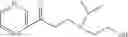


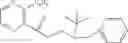


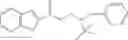




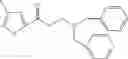


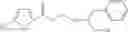


Sources:
- United States Patent and Trademark Office - verify current appl. status at the USPTO↗
Recent applications in this class:
- » 20250134830 2025-05-01
Arterial Application of Low Dose Ethyl Alcohol Enables Blood-Brain Barrier (BBB) Transient Opening - » 20250127730 2025-04-24
METHODS OF PERMEABILIZING THE BLOOD BRAIN BARRIER - » 20250057784 2025-02-20
TOPICAL COMPOSITION FOR CONTROL OF DEMODEX - » 20250017873 2025-01-16
TOPICAL PEEL-OFF CREAM FOR NUMBING PAIN DURING SKIN-RELATED PROCEDURES - » 20240374533 2024-11-14
COMPOSITIONS AND METHODS FOR TREATING PEDICULOSIS - » 20240335394 2024-10-10
Use Of Methanol And Prodrugs Thereof In Therapy - » 20240216293 2024-07-04
USE OF PERILLYL ALCOHOL TO ENHANCE LEVO-DOPA DELIVERY - » 20240207200 2024-06-27
USE OF PROPANDIOL MONONITRATE AND LIMONENE FOR REDUCING THE FORMATION OF METHANE EMANATING AND FOR IMPROVING THE DIGESTIBILITY - » 20240189253 2024-06-13
Treatment of kidney disease by renal pelvis ablation - » 20240173270 2024-05-30
PHARMACEUTICAL COMPOSITION CONTAINING ETHANOL AND USE THEREOF
Recent applications for this Assignee:
- » 20240040814 2024-02-01
Organic Light-Emitting Diode Device - » 20240017224 2024-01-18
MICRO TWO-PHASE LIQUID DROPLET GENERATION DEVICE - » 20230420690 2023-12-28
Methods for producing alpha-keto acid and pyruvic acid - » 20230380303 2023-11-23
Superconducting complex quantum computing circuit - » 20220376797 2022-11-24
Microwave photon control device, microwave photon transmitter, microwave photon receiver, microwave photon repeater, and quantum computer - » 20220308671 2022-09-29
Force sense presentation device and force sense presentation method - » 20220177948 2022-06-09
FLUOROGENIC NUCLEIC ACID MOLECULE AND TARGET RNA FLUORESCENT LABELING METHOD - » 20220145407 2022-05-12
METHOD AND KIT FOR DETECTING INFLUENZA VIRUS, AND METHOD FOR DIAGNOSING INFLUENZA VIRUS INFECTION - » 20220031666 2022-02-03
PPARδ activator - » 20220021372 2022-01-20
Nonlinear microwave filter