Back light module and liquid crystal display device
US20130093979A1
2013-04-18
13/375,481
2011-10-26
✅ Patent granted
US 8,525,949 B2
2013-09-03
WO; PCT/CN2011/081352; 20111026
WO; WO2013/053152; 20130418
Mike Stahl
IPro, Inc. | Na Xu
2031-11-07
Abstract:
The present invention discloses a back light module and a liquid crystal display (LCD) device. A back light module comprises a light guide plate; both sides of the light guide plate are respectively provided with multiple notches; the back light module is provided with riveted nut studs in the notches; and buffer parts are arranged between the riveted nut studs and the notches. In the present invention, because buffer material such as silicone, rubber and the like is arranged between each notch and each riveted nut stud of light guide plate, the buffer material can provide effective buffer function when the light guide plat is affected by impact force to avoid damage caused by direct impact between the light guide plate and the riveted nut studs. Thus, low cost is achieved because of simple process and economic material. In addition, the tight contact of the light guide plate and the riveted nut stud is kept by the buffer part, and the shake of the light guide plate is avoided.
Assignee:
- SHENZHEN CHINA STAR OPTOELECTRONICS TECHNOLOGY CO., LTD. 1,397 🇨🇳 Shenzhen, China
Applicant:
Interested in similar patents?
Get notified when new applications in this technology area are published.
Classification:
G02B6/0088 » CPC main
Light guides specially adapted for lighting devices or systems the light guides being planar or of plate-like form; Mechanical or electrical aspects of the light guide and light source in the lighting device peculiar to the adaptation to planar light guides, e.g. concerning packaging; Positioning aspects of the light guide or other optical sheets in the package
G02B7/00 » CPC further
Mountings, adjusting means, or light-tight connections, for optical elements
G02F1/1333 IPC
Devices or arrangements for the control of the intensity, colour, phase, polarisation or direction of light arriving from an independent light source, e.g. switching, gating or modulating; Non-linear optics for the control of the intensity, phase, polarisation or colour based on liquid crystals, e.g. single liquid crystal display cells; Constructional arrangements; Operation of liquid crystal cells; Circuit arrangements Constructional arrangements; Manufacturing methods
Description
TECHNICAL FIELD
The present invention relates to the field of liquid crystal displays (LCDs), and more particularly to a back light module and a LCD device.
BACKGROUND
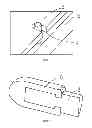
With the appeal of energy saving, environmental protection, etc., the market share of LCD device(s) using a light emitting diode (LED) as a back light source is rapidly increased in the market year by year. At present, a common LED back light mainly comprises edge type LED back light and direct type LED back light. In the edge type LED back light, a light guide plat is used, a specific light coupling distance is set between the light guide plat and a LED light emergent surface, and the light guide plat is required to be positioned. As shown in FIG. 1, the common mode is that metal riveted nut stud(s) is used for fixing. However, if the module suffers high impact force in the transportation process or the light guide plate fiercely impacts on the metal riveted nut stud(s), because of poor impact resistance of PMMA for making the light guide plat, cracks easily occur on partial light guide plate, which have an influence on the display quality.
SUMMARY
The aim of the present invention is to provide a back light module and a LCD device thereof with low cost and high shock resistance.
The purpose of the present invention is achieved by the following technical schemes.
A back light module comprises a light guide plate; both sides of the light guide plate are respectively provided with multiple notches; the back light module is provided with riveted nut studs in the notches, and buffer parts are arranged between the riveted nut studs and the notches.
Preferably, each buffer part is a buffer sleeve, and the buffer sleeve is sheathed on the body of each riveted nut stud. The process is simple and the production and assembly are convenient as long as the buffer sleeves are sheathed on the existing riveted nut studs.
Preferably, the buffer sleeves are made of silicone, rubber or foam materials. These materials are several preferable materials used by the buffer sleeves.
Preferably, each riveted nut stud is provided with a groove; correspondingly, the buffer sleeve opening is provided with a flange which is inwards extended and is used for inserting into the groove to prevent the buffer sleeve from disconnecting by accident under the conditions of vibration, etc.
Preferably, the groove surrounds the whole surface of the riveted nut stud; correspondingly, the flange is a collar flange. The preferable fixing performance is achieved when the collar flange is matched with the groove, and assembly becomes simpler because the flange is not required to be aligned with the groove when installing the buffer sleeve.
Preferably, the thickness of each buffer sleeve is not less than 1.2 mm. Preferable shock resistance can be guaranteed only when the thickness is more than 1.2 mm.
Preferably, each buffer part is a buffer pad, and the buffer pads are arranged on the inner surfaces of the notches on both sides of the light guide plate.
Preferably, each said buffer pad is made of elastic rubber. The elastic rubber is a specific material for making the buffer pads.
Preferably, elastic rubber or foam material is filled in all the gaps between the riveted nut studs and the notches to form the buffer parts. The shock resistance becomes higher if all the gaps are filled by the buffer parts.
Preferably, said buffer parts are formed through injection molding by an adhesive dispenser.
A LCD device comprises the aforementioned back light module.
In the present invention, because buffer material such as silicone, rubber and the like is arranged between each notch and each riveted nut stud of the light guide plate, the buffer material can provide effective buffer function when the light guide plate is affected by impact force to avoid damages caused by direct impact between the light guide plate and the riveted nut studs. Thus, low cost can be achieved because of simple process and economic material. In addition, when the light guide plate is expanded with heat, the buffer material can also avoid the damage caused by direct extrusion between the light guide plate and the riveted nut studs. When the light guide plate contracts with cold, the gap between the light guide plate and each riveted nut stud is increased so that shake easily occurs. The gap between the light guide plate and each riveted nut stud is automatically filled by a buffer part through the elastic regulation of the buffer part. Thus, the tight contact between the light guide plate and the riveted nut stud is kept, and the shake of the light guide plate is avoided.
BRIEF DESCRIPTION OF FIGURES
FIG. 1 is a fixing mode of a light guide plate of an existing back light module;
FIG. 2 is a schematic diagram of embodiment 1 of the present invention;
FIG. 3 is a schematic diagram of embodiment 2 of the present invention;
FIG. 4 is a schematic diagram of embodiment 3 of the present invention.
Wherein: 1. light guide plate 2. riveted nut stud; 3. backplane; 4. notch; 5. buffer part.
DETAILED DESCRIPTION
The present invention will further be described in detail in accordance with the figures and the preferred embodiments.
As shown in FIG. 2 to FIG. 4, a LCD device comprises a back light module; the back light module comprises a light guide plate 1. Both sides of said light guide plate 1 are respectively provided with multiple notches 4; the back light module is provided with riveted nut studs 2 in the notches 4; and the riveted nut studs 2 are fixed on a backplane 3. Buffer parts 5 are arranged between the riveted nut studs 2 and the notches 4. The invention will further be described in detail in accordance the embodiments.
Embodiment 1
As shown in FIG. 2, the body of a riveted nut stud 2 is sheathed with a buffer sleeve, and the buffer sleeve is made of silicone, rubber or other foam materials. Therefore, the buffer sleeve can be a rubber sleeve. The rubber sleeve is provided with an inwards extended flange in the opening; correspondingly, the riveted nut stud 2 is provided with a groove. After the rubber sleeve is sheathed on the stud body, the flange is inserted into the groove so that the rubber sleeve is tightly fixed. To ensure the buffer effect of the rubber sleeve, the thickness of the rubber sleeve is not less than 1.2 mm.
The process is simple when the rubber sleeve is used; the rubber sleeve is sheathed on the existing riveted nut stud 2, which is convenient for production and use.
The groove surrounds the whole surface of the riveted nut stud. Correspondingly, the flange is a collar flange. The preferable fixing performance is achieved when the collar flange is matched with the groove, and assembly becomes simpler because the flange is not required to be aligned with the groove when installing the buffer sleeve.
Embodiment 2
As shown in FIG. 3, in the embodiment, the inner surface of each notch 4 is bonded to a buffer pad by a double sided adhesive tape, and the buffer pad is made of silicone, rubber or foam material.
Embodiment 3
As shown in FIG. 4, in the embodiment, transparent rubber is filled in the gap between the notch 4 and the riveted nut stud 2 by an adhesive dispenser. Therefore, all gaps are filled with the buffer parts 5 so that the shock resistance becomes higher.
In the present invention, because buffer material such as silicone, rubber and the like is arranged between each notch 4 and each riveted nut stud 2 of the light guide plate 1, the buffer material can provide effective buffer function when the light guide plate 1 is affected by impact force to avoid the damage caused by direct impact between the light guide plate 1 and the riveted nut studs 2. Thus, low cost is achieved because of simple process and economic material. In addition, when the light guide plate 1 is expanded with heat, the buffer material can also avoid the damage caused by direct extrusion between the light guide plate 1 and the riveted nut studs 2. When the light guide plate 1 contracts with cold, the gap between the light guide plate 1 and each riveted nut stud 2 is increased so that shake easily occurs. The gap between the light guide plate 1 and each riveted nut stud 2 is automatically filled by a buffer part 5 through the elastic regulation of the buffer part 5. Thus, the tight contact between the light guide plate 1 and the riveted nut stud 2 is kept, and the shake of the light guide plate 1 is avoided.
The present invention is described in detail in accordance with the above contents with the specific preferred embodiments. However, this invention is not limited to the specific embodiments. For the ordinary technical personnel of the technical field of the present invention, all the technical schemes that buffer material is additionally filled in all the gaps between the riveted nut studs 2 and the notches 4 of the light guide plate 1 should be considered to belong to the protection scope of the present invention.
Claims
We claim:1, A back light module, comprising: a light guide plate; both sides of said light guide plate are respectively provided with multiple notches; said back light module is provided with riveting bolts in said notches, buffer parts are arranged between said riveted nut studs and said notches.
2, The back light module of claim 1, wherein each said buffer part is a buffer sleeve, and said buffer sleeve is sheathed with each said riveting bolt.
3, The back light module of claim 2, wherein said buffer sleeve is made of silicone, rubber or foam material.
4, The back light module of claim 2, wherein each said riveted nut stud is provided with a groove; correspondingly, the buffer sleeve opening is provided with a flange which is inwards extended and is used for inserting into said groove.
5, The back light module of claim 4, wherein said groove surrounds the whole surface of said riveted nut stud; correspondingly, said flange is a collar flange.
6, The back light module of claim 2, wherein the thickness of said buffer sleeve is not less than 1.2 mm.
7, The back light module of claim 1, wherein each said buffer part is a buffer pad, and said buffer pads are arranged on the inner surfaces of the notches on both sides of said light guide plate.
8, The back light module of claim 7, wherein said buffer pad is made of elastic rubber.
9, The back light module of claim 1, wherein elastic rubber or foam material is filled in all the gaps between said riveted nut studs and said notches to form said buffer parts.
10, The back light module of claim 9, wherein each said buffer part is formed through injection molding by an adhesive dispenser.
11, A liquid crystal display (LCD) device, comprising the back light module of claim 1, said back light module comprises a light guide plate; both sides of said light guide plate are respectively provided with multiple notches; said back light module is provided with riveting bolts in said notches, buffer parts are arranged between said riveted nut studs and said notches.
12, The LCD device of claim 11, wherein each said buffer part is a buffer sleeve, and said buffer sleeve is sheathed with each said riveting bolt.
13, The LCD device of claim 12, wherein said buffer sleeve is made of silicone, rubber or foam material.
14, The LCD device of claim 12, wherein each said riveted nut stud is provided with a groove; correspondingly, the buffer sleeve opening is provided with a flange which is inwards extended and is used for inserting into said groove.
15, The LCD device of claim 14, wherein said groove surrounds the whole surface of said riveted nut stud; correspondingly, said flange is a collar flange.
16, The LCD device of claim 12, wherein the thickness of said buffer sleeve is not less than 1.2 mm.
17, The LCD device of claim 11, wherein each said buffer part is a buffer pad, and said buffer pads are arranged on the inner surfaces of the notches on both sides of said light guide plate.
18, The LCD device of claim 17, wherein said buffer pad is made of elastic rubber.
19, The LCD device of claim 11, wherein elastic rubber or foam material is filled in all the gaps between said riveted nut studs and said notches to form said buffer parts.
20, The LCD device of claim 19, wherein each said buffer part is formed through injection molding by an adhesive dispenser.
Images & Drawings included:


Sources:
- United States Patent and Trademark Office - verify current appl. status at the USPTO↗
Similar patent applications:
- » 20130093976
Backplane of liquid crystal display device, back light module, and liquid crystal display device - » 20110050682
Liquid Crystal Display Device and Back Light Module of the Liquid Crystal Display Device - » 10227841
Panel light source device and back light module for liquid crystal display device - » 20160341872
LIGHT GUIDE PLATE, BACK LIGHT MODULE AND LIQUID CRYSTAL DISPLAY DEVICE - » 20050180171
Back light module of liquid crystal display device - » 20070200969
LIQUID CRYSTAL DISPLAY DEVICE AND BACK LIGHT MODULE THEREFOF - » 20130094185
LED lens, back light module and liquid crystal display device - » 20130094241
LED back light module and liquid crystal display device - » 20130107156
Backplane, Back Light Module and Liquid Crystal Display Device - » 20130258704
Back light module and liquid crystal display device having the same
Recent applications in this class:
- » 20250284047 2025-09-11
PANEL LIGHT AND PANEL LIGHT APPARATUS - » 20250277929 2025-09-04
UNDERCABINET LIGHTING DEVICES AND METHODS FOR INSTALLING THE SAME - » 20250271610 2025-08-28
Through-Type Lamp and Vehicle - » 20250264656 2025-08-21
BACKLIT FINGER FEATURE RECOGNITION STRUCTURE - » 20250244523 2025-07-31
Display device - » 20250208335 2025-06-26
LIGHT SOURCE MODULE AND DISPLAY DEVICE - » 20250155633 2025-05-15
LIGHT EMITTING UNIT, LIQUID CRYSTAL MODULE, DISPLAY DEVICE, AND LIGHTING SYSTEM - » 20250147226 2025-05-08
ELECTRONIC DEVICE - » 20250116808 2025-04-10
BACKLIGHT MODULE AND DISPLAY DEVICE - » 20250116807 2025-04-10
OPTICAL WAVEGUIDE BOARD, OPTICAL WAVEGUIDE PACKAGE, AND LIGHT SOURCE MODULE
Recent applications for this Assignee:
- » 20220052204 2022-02-17
Amorphous silicon thin film transistor and method for manufacturing the same - » 20210405424 2021-12-30
Array substrate - » 20210358953 2021-11-18
Pixel structure, array substrate, and display device - » 20210336040 2021-10-28
Manufacturing method of TFT substrate - » 20210335832 2021-10-28
Thin film transistor (TFT) array substrate and display panel - » 20210191204 2021-06-24
Pixel structure and display panel containing same - » 20210090528 2021-03-25
Display driving system - » 20210083229 2021-03-18
OLED display panel and manufacturing method thereof - » 20210083010 2021-03-18
Color filter substrate having a filter layer disposed on quantum dot layer - » 20210082358 2021-03-18
White balance method and device for LCD panel