Method of manufacturing ceramic sintered body, ceramic sintered body, and ceramic heater
US20130200067A1
2013-08-08
13/879,882
2011-10-24
✅ Patent granted
US 10,462,850 B2
2019-10-29
WO; PCT/JP2011/074458; 20111024
WO; WO2012/057091; 20120503
Shawntina T Fuqua
Locke Lord LLP | James E. Armstrong, IV | Nicholas J. DiCeglie, Jr.
2033-10-18
Abstract:
A method of manufacturing a ceramic sintered body, includes: a film forming step of forming, on a surface of a heat-resistant metal material, a metal coating film made of a metal material having a standard free energy of formation of metal carbides lower than that of the heat-resistant metal material; a molding step of disposing heat-resistant metal material provided with the coating film in the film forming step at a predetermined position in powder that serves as a starting material of a ceramic base, and molding a ceramic green body by press-molding the powder; and a sintering step of generating a ceramic sintered body by sintering the ceramic green body molded in the molding step.
Inventors:
- Toshihiko Hanamachi 13 🇯🇵 Kanagawa, Japan
- Satoshi Hirano 13 🇯🇵 Kanagawa, Japan
- Toshihiro Tachikawa 3 🇯🇵 Kanagawa, Japan
- Junichi Miyahara 2 🇯🇵 Kanagawa, Japan
Assignee:
- NHK SPRING CO., LTD. 623 🇯🇵 Yokohama-shi, Japan
Applicant:
Interested in similar patents?
Get notified when new applications in this technology area are published.
Classification:
H05B3/265 » CPC main
Ohmic-resistance heating; Heating elements having extended surface area substantially in a two-dimensional plane, e.g. plate-heater non-flexible heating conductor mounted on insulating base the insulating base being an inorganic material, e.g. ceramic
H05B3/26 IPC
Ohmic-resistance heating; Heating elements having extended surface area substantially in a two-dimensional plane, e.g. plate-heater non-flexible heating conductor mounted on insulating base
H05B3/18 » CPC further
Ohmic-resistance heating; Heater elements characterised by the composition or nature of the materials or by the arrangement of the conductor the conductor being embedded in an insulating material
C04B2237/343 » CPC further
Aspects relating to ceramic laminates or to joining of ceramic articles with other articles by heating; Composition of layers of ceramic laminates or of ceramic or metallic articles to be joined by heating, e.g. Si substrates; Ceramic; Oxidic Alumina or aluminates
C04B2237/366 » CPC further
Aspects relating to ceramic laminates or to joining of ceramic articles with other articles by heating; Composition of layers of ceramic laminates or of ceramic or metallic articles to be joined by heating, e.g. Si substrates; Ceramic; Non-oxidic Aluminium nitride
C04B2237/368 » CPC further
Aspects relating to ceramic laminates or to joining of ceramic articles with other articles by heating; Composition of layers of ceramic laminates or of ceramic or metallic articles to be joined by heating, e.g. Si substrates; Ceramic; Non-oxidic Silicon nitride
C04B2237/40 » CPC further
Aspects relating to ceramic laminates or to joining of ceramic articles with other articles by heating; Composition of layers of ceramic laminates or of ceramic or metallic articles to be joined by heating, e.g. Si substrates Metallic
C04B37/025 » CPC further
Joining burned ceramic articles with other burned ceramic articles or other articles by heating with metallic articles characterised by the interlayer used consisting of glass or ceramic material
C04B37/026 » CPC further
Joining burned ceramic articles with other burned ceramic articles or other articles by heating with metallic articles characterised by the interlayer used consisting of metals or metal salts
H05B3/283 » CPC further
Ohmic-resistance heating; Heating elements having extended surface area substantially in a two-dimensional plane, e.g. plate-heater non-flexible heating conductor embedded in insulating material the insulating material being an inorganic material, e.g. ceramic
C04B2237/083 » CPC further
Aspects relating to ceramic laminates or to joining of ceramic articles with other articles by heating; Aspects relating to interlayers, e.g. used to join ceramic articles with other articles by heating; Ceramic interlayers; Non-oxidic interlayers Carbide interlayers, e.g. silicon carbide interlayers
C04B2237/122 » CPC further
Aspects relating to ceramic laminates or to joining of ceramic articles with other articles by heating; Aspects relating to interlayers, e.g. used to join ceramic articles with other articles by heating; Metallic interlayers based on refractory metals
C04B2237/60 » CPC further
Aspects relating to ceramic laminates or to joining of ceramic articles with other articles by heating; Processing aspects relating to ceramic laminates or to the joining of ceramic articles with other articles by heating Forming at the joining interface or in the joining layer specific reaction phases or zones, e.g. diffusion of reactive species from the interlayer to the substrate or from a substrate to the joining interface, carbide forming at the joining interface
C04B2237/708 » CPC further
Aspects relating to ceramic laminates or to joining of ceramic articles with other articles by heating; Processing aspects relating to ceramic laminates or to the joining of ceramic articles with other articles by heating; Forming laminates or joined articles comprising layers of a specific, unusual thickness of one or more of the interlayers
C04B2237/72 » CPC further
Aspects relating to ceramic laminates or to joining of ceramic articles with other articles by heating; Processing aspects relating to ceramic laminates or to the joining of ceramic articles with other articles by heating Forming laminates or joined articles comprising at least two interlayers directly next to each other
H05B2203/017 » CPC further
Aspects relating to Ohmic resistive heating covered by group Manufacturing methods or apparatus for heaters
C04B35/645 » CPC further
Shaped ceramic products characterised by their composition ; Ceramics compositions ; Processing powders of inorganic compounds preparatory to the manufacturing of ceramic products; Forming processes; Processing powders of inorganic compounds preparatory to the manufacturing of ceramic products; Burning or sintering processes Pressure sintering
C04B37/02 IPC
Joining burned ceramic articles with other burned ceramic articles or other articles by heating with metallic articles
H05B3/28 IPC
Ohmic-resistance heating; Heating elements having extended surface area substantially in a two-dimensional plane, e.g. plate-heater non-flexible heating conductor embedded in insulating material
H05B3/74 » CPC further
Ohmic-resistance heating; Heating arrangements specially adapted for cooking plates or analogous hot-plates Non-metallic plates, e.g. vitroceramic, ceramic or glassceramic hobs, also including power or control circuits
C04B2237/84 » CPC further
Aspects relating to ceramic laminates or to joining of ceramic articles with other articles by heating; Processing aspects relating to ceramic laminates or to the joining of ceramic articles with other articles by heating Joining of a first substrate with a second substrate at least partially inside the first substrate, where the bonding area is at the inside of the first substrate, e.g. one tube inside another tube
Description
FIELD
The present invention relates to a method of manufacturing a ceramic sintered body, a ceramic sintered body, and a ceramic heater.
BACKGROUND
Conventionally, a ceramic heater formed by burying a heating element in a heater plate made of ceramic is used for heating a wafer in a process of manufacturing a semiconductor, for example, in CVD processing and etching. The ceramic heater is formed by burying metal, serving as the heating element, such as molybdenum having a heat resistance in the ceramic base, molding the ceramic base, and then heating and sintering the molded ceramic base at a high temperature. However, there is a problem that conductivity non-uniformly deteriorates since the buried metal reacts with carbon content in powder and is carbonized during the sintering, and a temperature distribution occurs in the heater plate.
On the other hand, a technique is disclosed in which a metallic heating element buried in a ceramic base is wound by a metal member made of the same material in a non-conduction state, and the ceramic base in which the heating element is buried is sintered to carbonize or oxidize the metal member prior to the heating element, thereby providing a ceramic heater having a high soaking property (for example, see Patent Literature 1).
CITATION LIST
Patent Literature
Patent Literature 1: Japanese Laid-open Patent Publication No. 2009-295960
SUMMARY
Technical Problem
However, the technique disclosed in Patent Literature 1 has a problem in that it requires great time and efforts to wind a heating element with a metal member in a non-conduction state.
The invention is made in view of the above problem, and an object of the invention is to provide a method of manufacturing a ceramic sintered body, a ceramic sintered body, and a ceramic heater which prevent deterioration in conductivity of metal by suppressing and stabilizing carbonization of a metal material buried therein during sintering.
Solution to Problem
To solve the problem described above and achieve the object, a method of manufacturing a ceramic sintered body according to the present invention includes: a film forming step of forming, on a surface of a heat-resistant metal material, a metal coating film made of a metal material having a standard free energy of formation of metal carbides lower than that of the heat-resistant metal material; a molding step of disposing the heat-resistant metal material provided with the coating film in the film forming step at a predetermined position in powder that serves as a starting material of a ceramic base, and molding a ceramic green body by press-molding the powder; and a sintering step of generating a ceramic sintered body by sintering the ceramic green body molded in the molding step.
Moreover, in the method of manufacturing a ceramic sintered body according to the invention described above, the heat-resistant metal material is a metal having a high melting point and low thermal expansion and selected from molybdenum or a molybdenum alloy, tungsten or a tungsten alloy, and niobium or a niobium alloy.
Moreover, in the method of manufacturing a ceramic sintered body according to the invention described above, the metal coating film is formed of titanium, aluminum, tantalum, or zirconium.
Moreover, in the method of manufacturing a ceramic sintered body according to the invention described above, the ceramic base is aluminum nitride, silicon nitride, or aluminum oxide.
Moreover, in the method of manufacturing a ceramic sintered body according to the invention described above, a sintering temperature of the ceramic sintered body is 1,300 to 2,000° C.
Moreover, in the method of manufacturing a ceramic sintered body according to the invention described above, a thickness of the metal coating film is 0.10 to 10.0 μm.
Moreover, a ceramic sintered body according to the present invention is formed by sintering a precursor ceramic that includes: a heat-resistant metal material; a metal coating film which is formed on a surface of the heat-resistant metal material, and is formed of a metal material having a standard free energy of formation of metal carbides lower than that of the heat-resistant metal material; and a ceramic green body obtained by disposing the heat-resistant metal material provided with the metal coating film at a predetermined position in powder that serves as a starting material of a ceramic base, and press-molding the powder, and a metal carbide coating film is formed when the metal coating film is carbonized during the sintering.
Moreover, in the ceramic sintered body according to the invention described above, the heat-resistant metal material is a metal having a high melting point and low thermal expansion and selected from molybdenum or a molybdenum alloy, tungsten or a tungsten alloy, and niobium or a niobium alloy.
Moreover, in the ceramic sintered body according to the invention described above, the metal coating film is formed of titanium, aluminum, tantalum, or zirconium.
Moreover, in the ceramic sintered body according to the invention described above, the ceramic base is aluminum nitride, silicon nitride, or aluminum oxide.
Moreover, in the ceramic sintered body according to the invention described above, a sintering temperature of the ceramic sintered body is 1,300 to 2,000° C.
Moreover, in the ceramic sintered body according to the invention described above, a thickness of the metal coating film is 0.10 to 10.0 μm.
Moreover, a ceramic heater according to the present invention includes one of the above described ceramic sintered body.
Advantageous Effects of Invention
According to the invention, when a metal coating film made of a metal material which has a standard free energy of formation of metal carbides lower than that of a heat-resistant metal material is formed on the heat-resistant metal material, the heat-resistant metal material provided with the metal coating film is buried in a ceramic material and is press-molded, and a molded ceramic green body is sintered, the metal coating film reacts with carbon in ceramic on a priority basis. Thus, there is an effect in that deterioration in conductivity is prevented by suppressing carbonization of the heat-resistant metal material, and non-uniformity of conductivity of the heat-resistant metal material may be suppressed by stabilizing a carbonization reaction thereof even when the heat-resistant metal material is carbonized.
BRIEF DESCRIPTION OF DRAWINGS
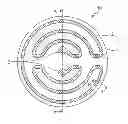
FIG. 1 is a plan view illustrating an example of wiring of a heater line of a ceramic heater according to an embodiment of the invention.
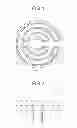
FIG. 2 is a cross-sectional view taken along a line A-A of the ceramic heater of FIG. 1.
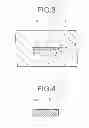
FIG. 3 is a partially enlarged cross-sectional view taken along a line B-B of the ceramic heater of FIG. 1.
FIG. 4 is a cross-sectional view illustrating a process of manufacturing the ceramic heater according to the embodiment of the invention.
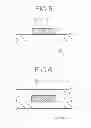
FIG. 5 is a cross-sectional view illustrating a process of manufacturing the ceramic heater according to the embodiment of the invention.
FIG. 6 is a cross-sectional view illustrating a process of manufacturing the ceramic heater according to the embodiment of the invention.
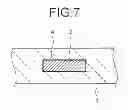
FIG. 7 is a cross-sectional view illustrating a process of manufacturing the ceramic heater according to the embodiment of the invention.
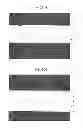
FIG. 8 is a photograph illustrating a portion of a cross-section of a ceramic heater according to a prior art.
FIG. 9 is a photograph illustrating a portion of a cross-section of a ceramic heater according to Example 1.
DESCRIPTION OF EMBODIMENTS
Hereinafter, a method of manufacturing a ceramic sintered body, the ceramic sintered body, and a ceramic heater according to an embodiment of the invention will be described in detail with reference to drawings. In the drawings, the same reference numeral is assigned to the same portion. It should be noted that the drawings are schematic drawings, and a relation between a size and a thickness of a part, or a ratio of a size to a thickness of each part is different from an actual one.
A ceramic heater 10 according to the embodiment of the invention includes a disk-shaped heater plate 1, and a heater line 2 in a shape of a foil buried in the heater plate 1. FIG. 1 is a plan view illustrating an example of wiring of a heater line of the ceramic heater 10 according to the embodiment of the invention. FIG. 2 is a cross-sectional view taken along a line A-A of the ceramic heater 10 of FIG. 1. FIG. 3 is a partially enlarged cross-sectional view taken along a line B-B of the ceramic heater 10 of FIG. 1.
The heater plate 1 functions as a carrying plate used for an etching or a film formation of a wafer in a manufacturing process of a semiconductor. The heater plate 1 forms a shape of a disk of about 200 to 500 mm in response to a shape of a work such as the wafer. It is preferable to use aluminum nitride (AlN), silicon nitride (SiNx), aluminum oxide (Al2O3), and the like as a material of the heater plate 1. The heater plate 1 is sintered at a temperature corresponding to a used material and a sintering additive. For example, aluminum nitride (AlN) is sintered at 1,600 to 2,000° C., silicon nitride (SiNx) is sintered at 1,600 to 2,000° C., and aluminum oxide (Al2O3) is sintered at 1,300 to 1,600 ° C., respectively.
As illustrated in FIG. 1, the heater line 2 is spirally wired and buried within the heater plate 1. It is preferable to use a heat-resistant metal material, for example, metal having a high melting point and low thermal expansion selected from molybdenum or a molybdenum alloy, tungsten or a tungsten alloy, and niobium or a niobium alloy for the heater line 2. The heater line 2 forms a shape of a foil having a thickness (T) of 25 to 200 μm, and a width (W) of 1 to 10 mm. However, a linear or coiled heater line having a cross-section in a shape of a rectangle or a circle may be used in addition to the shape of a foil.
As illustrated in FIG. 3, a metal carbide coating film 4 is formed on the heater line 2. The metal carbide coating film 4 is formed when a metal coating film 4a (see FIG. 4) formed on the heater line 2 is carbonized by sintering of the heater plate 1. A material (Ma) of the metal coating film 4a is selected from materials having a standard free energy of formation (ΔG0MaC) of metal carbides (MaC) lower than a standard free energy of formation (ΔGMbC) of carbides (MbC) of a metal material (Mb) of the heater line 2.
A standard free energy of reaction in a predetermined temperature range is used as a standard free energy of formation of metal carbides which serves as a criterion of selecting a material of the metal coating film 4a. In the embodiment, a standard free energy of reaction of metal carbides near a sintering temperature of the heater plate 1 is determined to be the criterion. When the metal coating film 4a selected from materials having a standard free energy of reaction of metal carbides near a sintering temperature lower than a standard free energy of reaction of metal carbides of a metal material of the heater line 2 is formed on the heater line 2, the metal coating film 4a reacts with carbon contained in the heater plate 1 at an order of several ppm prior to a material of the heater line 2 during sintering to form the metal carbide coating film 4. When the metal coating film 4a is formed on the heater line 2, it is possible to suppress carbonization of metal which is a material of the heater line 2. Furthermore, even when a metal material of the heater line 2 is carbonized by carbon incompletely trapped by the metal coating film 4a, a carbide layer of the metal material is substantially uniformly formed between the heater line 2 and the metal carbide coating film 4, and thus it is possible to prevent an occurrence of a temperature distribution of the ceramic heater 10 by suppressing non-uniformity of conductivity of the heater line 2 wired within the heater plate 1.
Titanium, aluminum, tantalum, or zirconium is suitable for the metal coating film 4a. However, calcium, chrome, vanadium, and the like may be used depending on a sintering temperature or metal species of the heater line. When molybdenum or a molybdenum alloy is used as the heater line 2, titanium is suitably used as the metal coating film 4a. It is preferable that a thickness of the metal coating film 4a be set to 0.10 to 10.0 μm. The reason is that carbonization of the heater line 2 may not be effectively suppressed when it is too thin, and an influence due to a thermal expansion difference during heating increases when it is too thick.
An electrode terminal 3 is connected to both ends of the heater line 2. The electrode terminal 3 is fixed to the heater plate 1 by brazing and the like. When an electric current is applied to the heater line 2 by applying a voltage to the electrode terminal 3, the heater line 2 generates heat, and the work placed on the heater plate 1 is heated.
Next, a method of manufacturing the ceramic heater 10 according to the embodiment will be described.
FIGS. 4 to 7 are cross-sectional views illustrating a process of manufacturing the ceramic heater 10 according to the embodiment of the invention.
First, the metal coating film 4a is formed on the heater line 2 (see FIG. 4). The metal coating film 4a is formed on the heater line 2 by a vapor deposition, a sputtering, or the like. The metal coating film 4a may be formed on the heater line 2 by covering a top and a bottom of the heater line 2 with two metal foils made of a material of the metal coating film 4a, and performing a rolling and bonding thereon. The metal coating film 4a may be formed on the heater line 2 using a scheme such as a thermal spraying.
First, in the heater plate 1, a lower green body 1a is press-molded. The lower green body 1a is formed by filling a metal mold with a predetermined amount of ceramic powder corresponding to a base material of the heater plate 1, and press-molding the ceramic powder.
Next, as illustrated in FIG. 5, the heater line 2 provided with the metal coating film 4a is wired at a predetermined position on the molded lower green body 1a.
As illustrated in FIG. 6, after wiring the heater line 2, a predetermined amount of ceramic powder is further provided on the lower green body 1a where the heater line 2 is wired, and an upper green body 1b is molded by press-molding the ceramic powder using a metal mold, thereby forming a ceramic green body 1c.
Subsequently, as illustrated in FIG. 7, the ceramic green body 1c is sintered. When aluminum nitride is used as a ceramic base material, a heating compression is performed for several hours at 1,600 to 2,000° C., and 10 to 40 MPa in a nitrogen atmosphere.
When the heater plate 1 corresponding to a ceramic sintered body is formed by sintering the ceramic green body 1c, the metal coating film 4a formed on the heater line 2 reacts with carbon content in the ceramic green body 1c prior to a metal material of the heater line 2, thereby forming the metal carbide coating film 4. In this way, it is possible to prevent deterioration in conductivity of the heater line 2. Further, even when a metal material of the heater line 2 is carbonized by forming the metal carbide coating film 4, it is possible to suppress non-uniformity of conductivity of the heater line 2 wired within the heater plate by stabilizing carbonization of the metal material.
After the sintering, the electrode terminal 3 used for supplying power from the outside is formed by cutting the heater plate 1.
Hereinbefore, the ceramic heater is described in the embodiment. However, the method of manufacturing the ceramic sintered body, and the ceramic sintered body of the invention may be used for a ceramic product in which conductive metal is buried, for example, a stage having an electrostatic chuck function, a ceramic stage incorporating a radio frequency electrode such as plasma etching equipment and plasma CVD equipment, and the like.
EXAMPLE
A test was conducted to verify a performance of the ceramic heater 10 according to the embodiment as follows. Aluminum nitride is used as a material of the heater plate 1. The heater line 2 having a size of 2 mm×6,700 mm×75 μm is formed from a metal foil of pure molybdenum, and the metal coating film 4a that uses titanium having a thickness of 1 μm as a material is formed on the heater line 2 by a sputtering. The heater line 2 provided with the metal coating film 4a is wired at a predetermined position within the heater plate 1, and a press-molding and a sintering (sintering temperature of 1,800° C., pressure of 20 MPa, 6 hours) are performed, thereby manufacturing the ceramic heater 10.
FIG. 8 is a photograph illustrating a portion of a cross-section of a ceramic heater according to Conventional Example 1. FIG. 9 is a photograph illustrating a portion of a cross-section of the ceramic heater 10 according to Example 1. Conventional Example 1 is manufactured by using aluminum nitride as a material of the heater plate 1, forming the heater line 2 having a size of 2 mm×6,700 mm×75 μm from a metal foil of pure molybdenum, wiring the heater line 2 at a predetermined position within the heater plate 1, and performing a press-molding and a sintering (sintering temperature of 1,800° C., pressure of 20 MPa, 6 hours), and is different from Example 1 in that the metal coating film 4a of titanium is not formed on the heater line 2 of molybdenum.
As illustrated in FIG. 8, molybdenum carbide 5 is non-uniformly formed within the heater line 2 in the Conventional Example 1 in which the metal coating film 4a is not formed on the heater line 2. On the other hand, as illustrated in FIG. 9, it is verified that the molybdenum carbide 5 is substantially uniformly formed between the heater line 2 and the metal carbide coating film 4 (titanium carbide) in the ceramic heater 10 according to Example 1, and a ratio at which the molybdenum carbide 5 is generated is small when compared to Conventional Example 1.
In addition, electrical resistance values of the heater line 2 of Example 1 and Conventional Example 1 are illustrated in Table 1. Reference Example 1 of Table 1 is an electrical resistance value of the heater line 2 measured before sintering the ceramic heater of Example 1. As illustrated in Table 1, it is verified that while an electrical resistance value which is 2.1 Ω before the sintering increases up to 4.0 Ω (90% increase) after the sintering in Conventional Example 1, the increase is drastically suppressed at 2.9 Ω (38% increase) after the sintering in Example 1.
| TABLE 1 | |
| Resistance value (Ω) of | |
| heater line | |
| Example 1 | 2.9 | |
| Conventional Example 1 | 4.0 | |
| Reference Example 1 | 2.1 | |
As described in Example 1, it is possible to drastically suppress an increase in electrical resistance value of the ceramic heater 10 sintered by forming the metal coating film 4a by titanium having a standard free energy of formation of metal carbides near a sintering temperature (1,800° C.) of the ceramic heater lower than that of molybdenum carbide on the heater line 2 made of molybdenum.
INDUSTRIAL APPLICABILITY
As described in the foregoing, the method of manufacturing the ceramic sintered body, the ceramic sintered body, and the ceramic heater of the invention may be used for semiconductor manufacturing equipment, and in particular, are suitable for manufacturing a high-quality wafer.
REFERENCE SIGNS LIST
1 HEATER PLATE
2 HEATER LINE
3 ELECTRODE TERMINAL
4a METAL COATING FILM
4 METAL CARBIDE COATING FILM
5 MOLYBDENUM CARBIDE
10 CERAMIC HEATER
Claims
1. A method of manufacturing a ceramic sintered body, comprising:
a film forming step of forming, on a surface of a heat-resistant metal material, a metal coating film made of a metal material having a standard free energy of formation of metal carbides lower than that of the heat-resistant metal material;
a molding step of disposing the heat-resistant metal material provided with the coating film in the film forming step at a predetermined position in powder that serves as a starting material of a ceramic base, and molding a ceramic green body by press-molding the powder; and
a sintering step of generating a ceramic sintered body by sintering the ceramic green body molded in the molding step.
2. The method of manufacturing a ceramic sintered body according to claim 1,
wherein the heat-resistant metal material is a metal having a high melting point and low thermal expansion and selected from molybdenum or a molybdenum alloy, tungsten or a tungsten alloy, and niobium or a niobium alloy.
3. The method of manufacturing a ceramic sintered body according to claim 1,
wherein the metal coating film is formed of titanium, aluminum, tantalum, or zirconium.
4. The method of manufacturing a ceramic sintered body according to claim 1,
wherein the ceramic base is aluminum nitride, silicon nitride, or aluminum oxide.
5. The method of manufacturing a ceramic sintered body according to claim 1,
wherein a sintering temperature of the ceramic sintered body is 1,300 to 2,000° C.
6. The method of manufacturing a ceramic sintered body according to claim 1,
wherein a thickness of the metal coating film is 0.10 to 10.0 μm.
7. A ceramic sintered body formed by sintering a precursor ceramic, the precursor ceramic comprising:
a heat-resistant metal material;
a metal coating film which is formed on a surface of the heat-resistant metal material, and is formed of a metal material having a standard free energy of formation of metal carbides lower than that of the heat-resistant metal material; and
a ceramic green body obtained by disposing the heat-resistant metal material provided with the metal coating film at a predetermined position in powder that serves as a starting material of a ceramic base, and press-molding the powder,
wherein a metal carbide coating film is formed when the metal coating film is carbonized during the sintering.
8. The ceramic sintered body according to claim 7,
wherein the heat-resistant metal material is a metal having a high melting point and low thermal expansion and selected from molybdenum or a molybdenum alloy, tungsten or a tungsten alloy, and niobium or a niobium alloy.
9. The ceramic sintered body according to claim 7,
wherein the metal coating film is formed of titanium, aluminum, tantalum, or zirconium.
10. The ceramic sintered body according to claim 7,
wherein the ceramic base is aluminum nitride, silicon nitride, or aluminum oxide.
11. The ceramic sintered body according to claim 7,
wherein a sintering temperature of the ceramic sintered body is 1,300 to 2,000° C.
12. The ceramic sintered body according to claim 7,
wherein a thickness of the metal coating film is 0.10 to 10.0 μm.
13. A ceramic heater comprising a ceramic sintered body formed by sintering a precursor ceramic, the precursor ceramic comprising:
a heat-resistant metal material;
a metal coating film which is formed on a surface of the heat-resistant metal material, and is formed of a metal material having a standard free energy of formation of metal carbides lower than that of the heat-resistant metal material; and
a ceramic green body obtained by disposing the heat-resistant metal material provided with the metal coating film at a predetermined position in powder that serves as a starting material of a ceramic base, and press-molding the powder,
wherein a metal carbide coating film is formed when the metal coating film is carbonized during the sintering.
Images & Drawings included:
Sources:
- United States Patent and Trademark Office - verify current appl. status at the USPTO↗
Recent applications in this class:
- » 20250151175 2025-05-08
ELECTRONIC SMOKING ARTICLE COMPRISING ONE OR MORE MICROHEATERS - » 20240430989 2024-12-26
CERAMIC HEATER FOR SEMICONDUCTOR MANUFACTURING APPARATUS - » 20240397582 2024-11-28
CERAMIC HEATER - » 20240334554 2024-10-03
ELECTRONIC VAPING DEVICE - » 20240292497 2024-08-29
AEROSOL-GENERATING SYSTEM INCLUDING A CARTRIDGE CONTAINING A GEL - » 20240260142 2024-08-01
FLOW HEATER - » 20240244718 2024-07-18
FLUID PERMEABLE HEATER ASSEMBLY FOR AN AEROSOL-GENERATING SYSTEM AND METHOD FOR ASSEMBLING A FLUID PERMEABLE HEATER FOR AN AEROSOL-GENERATING SYSTEM - » 20240090088 2024-03-14
HEATING ASSEMBLY AND ELECTROTHERMAL FURNACE - » 20230413388 2023-12-21
HEATER MODULE INCLUDING A THICK FILM HEATING ELEMENT - » 20230413387 2023-12-21
HEATER MODULE
Recent applications for this Assignee:
- » 20250283913 2025-09-11
PROBE HOLDER AND INSPECTION METHOD - » 20250283911 2025-09-11
PROBE UNIT AND CONTACT PROBE - » 20250266058 2025-08-21
DISK DRIVE SUSPENSION - » 20250266057 2025-08-21
DISK DRIVE SUSPENSION - » 20250259648 2025-08-14
DISK DRIVE SUSPENSION STRUCTURE AND DISK DRIVE - » 20250230850 2025-07-17
COIL SPRING, SUSPENSION DEVICE, AND COIL SPRING MANUFACTURING METHOD - » 20250206545 2025-06-26
CONVEYANCE DEVICE AND CONVEYANCE METHOD - » 20250206431 2025-06-26
PERSONAL WATERCRAFT AND CONTROLLING METHOD OF THE SAME - » 20250196218 2025-06-19
WORKING JIG, DIE SET USING THE WORKING JIG AND MANUFACTURING METHOD FOR WORKING JIG - » 20250191167 2025-06-12
INSPECTION DEVICE AND INSPECTION METHOD