Door made of polyurethane and method for manufacturing the same
US20140024732A1
2014-01-23
13/753,499
2013-01-29
✅ Patent granted
US 8,997,417 B2
2015-04-07
-
-
Michael L Leonard
2033-07-07
Abstract:
A door made of polyurethane, including a door body, the door body including a plurality of integrated plates stacked on one another for supporting. A method for preparing the door includes providing a mold, and spraying a parting agent inside the mold; heating the mold to a temperature of 30-70° C., spraying the parting agent, and placing a plurality of plates or a metal skeleton in the mold; mixing raw materials to obtain a mixture; injecting the mixture into the mold to cover the stacked plates, and curing for 30-90 min; demolding, transferring a product from the mold to a thermostatic chamber for shaping at a constant temperature; trimming uneven edges and surfaces of the product; and spraying a paint on the product.
Applicant:
Interested in similar patents?
Get notified when new applications in this technology area are published.
Classification:
C08K3/32 » CPC further
Use of inorganic substances as compounding ingredients Phosphorus-containing compounds
C08K5/5406 » CPC further
Use of organic ingredients; Silicon-containing compounds containing elements other than oxygen or nitrogen
C08K5/3492 IPC
Use of organic ingredients; Nitrogen-containing compounds; Heterocyclic compounds having nitrogen in the ring having more than two nitrogen atoms in the ring; Six-membered rings Triazines
C08K3/02 » CPC further
Use of inorganic substances as compounding ingredients Elements
C08K5/54 IPC
Use of organic ingredients Silicon-containing compounds
C08K5/34922 » CPC main
Use of organic ingredients; Nitrogen-containing compounds; Heterocyclic compounds having nitrogen in the ring having more than two nitrogen atoms in the ring; Six-membered rings; Triazines Melamine; Derivatives thereof
C08G18/1808 » CPC further
Polymeric products of isocyanates or isothiocyanates with compounds having active hydrogen; Processes; Catalysts containing secondary or tertiary amines or salts thereof having alkylene polyamine groups
B29C33/58 » CPC further
Moulds or cores; Details thereof or accessories therefor; Coatings, e.g. enameled or galvanised ; Releasing, lubricating or separating agents Applying the releasing agents
E04C1/00 IPC
Building elements of block or other shape for the construction of parts of buildings
C08G18/66 IPC
Polymeric products of isocyanates or isothiocyanates with compounds having active hydrogen characterised by the compounds used containing active hydrogen; Low-molecular-weight compounds having active hydrogen with high-molecular-weight compounds having active hydrogen Compounds of groups , , or
C08G18/76 IPC
Polymeric products of isocyanates or isothiocyanates with compounds having active hydrogen characterised by the isocyanates or isothiocyanates used; Polyisocyanates or polyisothiocyanates cyclic aromatic
C08G18/18 IPC
Polymeric products of isocyanates or isothiocyanates with compounds having active hydrogen; Processes; Catalysts containing secondary or tertiary amines or salts thereof
C08G18/20 IPC
Polymeric products of isocyanates or isothiocyanates with compounds having active hydrogen; Processes; Catalysts containing secondary or tertiary amines or salts thereof Heterocyclic amines; Salts thereof
Description
CROSS-REFERENCE TO RELATED APPLICATIONS
Pursuant to 35 U.S.C. §119 and the Paris Convention Treaty, this application claims the benefit of Chinese Patent Application No. 201210250414.0 filed Jul. 19, 2012, the contents of which, including any intervening amendments thereto, are incorporated herein by reference. Inquiries from the public to applicants or assignees concerning this document or the related applications should be directed to: Matthias Scholl P. C., Attn.: Dr. Matthias Scholl Esq., 14781 Memorial Drive, Suite 1319, Houston, Tex. 77079.
BACKGROUND OF THE INVENTION
1. Field of the Invention
The invention relates to a polyurethane product, and more particularly to a door made of polyurethane and a method for preparing the same.
2. Description of the Related Art
Polyurethane foam has been applied in inner doors' production; whereas, most of polyurethane foams are used as filling materials in composite doors.
A typical door made of polyurethane includes a matrix. The matrix is obtained by pressing a polyurethane material to a door shape; a wood texture is disposed on the matrix surface and integrated with the matrix. Furthermore, a coating is spread over the matrix surface for protection. Because the above technical scheme is adopted, the wood texture is stamped on the matrix surface when the polyurethane material is pressed to a door shape, thus the surface of the polyurethane door seems like natural wood due to the wood texture on the surface. Thereafter, the matrix surface is coated with a protecting coating, thereby preventing the wood texture from fading away.
However, the polyurethane door is apt to warp and fissure; moreover, it has a low size consistency.
SUMMARY OF THE INVENTION
In view of the above-described problems, it is one objective of the invention to provide a door made of polyurethane which has waterproof properties, low swell factor, good consistency in production sizes, and no warpage or fissure after long term use.
To achieve the above objective, in accordance with one embodiment of the invention, there is provided a door made of polyurethane, comprising a door body; the door body comprises a plurality of integrated plates stacked on one another for supporting.
In a class of this embodiment, the door body is made from the following raw materials by weight:
| a polyether polyol having a molecular weight of 300-350 | 5-15; |
| and a functionality of 4-6 | |
| a polyether polyol having a molecular weight of 600-700 | 30-50; |
| and a functionality of 4-6 | |
| a polyether polyol having a molecular weight of 800-900 | 20-40; |
| and a functionality of 4-6 | |
| a catalyst of 1,8-Diazabicyclo[5.4.0]undec-7-ene (DBU) | 0.05-0.15; |
| pentamethyl diethylenetriamine | 0.05-0.15; |
| tetramethylethylenediamine | 0.5-1.5; |
| a triphosphate as a flame retardant | 5-15; |
| melamine | 5-10; |
| a microencapsulated red phosphorus as a flame retardant | 5-10; |
| silicone oil | 1-2; |
| water | 0-0.5; and |
| a polyphenyl methane polyisocyanate | 110-130. |
In a class of this embodiment, the door body is made from the following raw materials by weight:
| the polyether polyol having the molecular weight | 8-12; |
| of 300-350 and the functionality of 4-6 | |
| the polyether polyol having the molecular weight | 33-45; |
| of 600-700 and the functionality of 4-6 | |
| the polyether polyol having the molecular weight | 25-35; |
| of 800-900 and the functionality of 4-6 | |
| the catalyst of DBU | 0.05-0.15; |
| pentamethyl diethylenetriamine | 0.1-0.12; |
| tetramethylethylenediamine | 0.1-1.2; |
| the triphosphate | 8-12; |
| melamine | 8-9; |
| the microencapsulated red phosphorus flame retardant | 6-8; |
| the silicone oil | 1.5-1.8; |
| water | 0.2-0.4; and |
| the polyphenyl methane polyisocyanate | 115-125. |
In a class of this embodiment, the door body is made from the following raw materials by weight:
| the polyether polyol having the molecular weight | 10; |
| of 300-350 and the functionality of 4-6 | |
| the polyether polyol having the molecular weight | 40; |
| of 600-700 and the functionality of 4-6 | |
| the polyether polyol having the molecular weight | 30; |
| of 800-900 and the functionality of 4-6 | |
| the catalyst of DBU | 0.1; |
| pentamethyl diethylenetriamine | 0.11; |
| tetramethylethylenediamine | 0.11; |
| the triphosphate | 10; |
| melamine | 8.5; |
| the microencapsulated red phosphorus flame retardant | 7; |
| the silicone oil | 1.6; |
| water | 0.3; and |
| the polyphenyl methane polyisocyanate | 120. |
It is another objective of the invention to provide a method for preparing the polyurethane door, the method comprising the following steps:
-
- 1) providing a mold, and spraying a parting agent inside the mold;
- 2) heating the mold to a temperature of 30-70° C., spraying the parting agent, and placing a plurality of plates or a metal skeleton in the mold;
- 3) completely mixing the polyether polyol having the molecular weight of 300-350 and the functionality of 4-6, the polyether polyol having the molecular weight of 600-700 and the functionality of 4-6, the polyether polyol having the molecular weight of 800-900 and the functionality of 4-6, the catalyst of DBU, pentamethyl diethylenetriamine, tetramethylethylenediamine, the triphosphate, melamine, the microencapsulated red phosphorus flame retardant, the silicone oil, and water to obtain a component A; and employing the polyphenyl methane polyisocyanate as a component B;
- 4) mixing the components A and B using a polyurethane doser to obtain a mixture, injecting the mixture into the mold, polymerizing and foaming the mixture to cover the stacked plates, and curing for 30-90 min;
- 5) demolding, transferring a product from the mold to a thermostatic chamber for shaping at a constant temperature;
- 6) trimming uneven edges and surfaces of the product; and
- 7) spraying a paint on the product.
It is still another objective of the invention to providing a method for preparing the polyurethane door, the method comprising steps as follows:
-
- 1) providing a mold, and laying a wood texture film inside the mold;
- 2) heating the mold to a temperature of 30-70° C., and placing a plurality of plates or a metal skeleton in the mold;
- 3) completely mixing the polyether polyol having the molecular weight of 300-350 and the functionality of 4-6, the polyether polyol having the molecular weight of 600-700 and the functionality of 4-6, the polyether polyol having the molecular weight of 800-900 and the functionality of 4-6, the catalyst of DBU, pentamethyl diethylenetriamine, tetramethylethylenediamine, the triphosphate, melamine, the microencapsulated red phosphorus flame retardant, the silicone oil, and water to obtain a component A; and employing the polyphenyl methane polyisocyanate as a component B;
- 4) mixing the components A and B using a polyurethane doser to obtain a mixture, injecting the mixture into the mold, polymerizing and foaming the mixture to cover the stacked plates, and curing for 30-90 min;
- 5) demolding, transferring a product from the mold to a thermostatic chamber for shaping at a constant temperature;
- 6) trimming uneven edges and surfaces of the product; and
- 7) spraying a paint on the product.
Advantages of the invention are summarized as follows:
-
- 1) the polyurethane door has waterproof properties, low swell factor, good consistency in production sizes, and no warpage or fissure after long term use;
- 2) the polyurethane door has beautiful appearances, wood textures on surfaces are the same as those of the solid wood doors; polyurethane polymer material is advantageous in its insulation, waterproof, and moisture-proof, thus, a door made from such a polymer material has a good water resisting property; no hygroscopicity, condensation, swell, or corrosion; and
- 3) the polyurethane door has a strong fire retardancy, and good insulating property; because the polyurethane polymer material has a B1 degree fire retardancy and a low thermal conductivity, thereby lowering the energy consumption of a building; furthermore, the polyurethane door has a simple operation, and can be cut and assembled easily.
BRIEF DESCRIPTION OF THE DRAWINGS
The invention is described hereinbelow with reference to the accompanying drawings, in which:
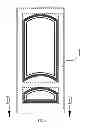
FIG. 1 is a structural diagram of a door made of polyurethane according to one embodiment of the invention;
FIG. 2 is a left view of a door made of polyurethane according to one embodiment of the invention;
FIG. 3 is a cross-sectional view taken from line A-A of FIG. 2; and
FIG. 4 is a cross-sectional view taken from line B-B of FIG. 4.
DETAILED DESCRIPTION OF THE EMBODIMENTS
Detailed description of the invention will be given below in conjunction with accompanying drawings.
As shown in FIGS. 1-4, a door made of polyurethane comprises a door body 1. The door body 1 comprises a plurality of integrated plates 3 stacked on one another for supporting. The stacked plates 3 are shaped like a Chinese character “ri”. The plates can be substituted with a metal skeleton. During the processing, a plurality of plates 3 are placed in a mold to form a skeleton, the skeleton is functioned in supporting, thereby largely improving the intensity of the door. In other words, the polyurethane door has a stable size, low swell factor, no warpage or fissure, and has a good consistency in the size of production.
The door body 1 is made from some raw materials according to a certain ratio, which are specifically exemplified hereinbelow.
Example 1
Ingredients of a Component A
| a polyether polyol having a molecular weight of 300-350 | 5 | kg; |
| and a functionality of 4-6 | ||
| a polyether polyol having a molecular weight of 600-700 | 350 | kg; |
| and a functionality of 4-6 | ||
| a polyether polyol having a molecular weight of 800-900 | 20 | kg; |
| and a functionality of 4-6 | ||
| a catalyst of DBU | 0.05 | kg; |
| pentamethyl diethylenetriamine acting as a foaming catalyst | 0.05 | kg; |
| tetramethylethylenediamine acting as a balancing catalyst | 0.55 | kg; |
| a triphosphate acting as a flame retardant | 5 | kg; |
| melamine acting as a flame retardant | 5 | kg; |
| microencapsulated red phosphorus as a flame retardant | 5 kg; and |
| silicone oil for stabilizing the foaming | 1 | kg. |
The catalyst of DBU is supplied by Air Products and Chemicals, Inc. The microencapsulated red phosphorus is supplied by Shanghai Xusen Non-halogen Smoke Suppressing Fire Retardant Co., LTD. The same ingredients in the following examples are supplied by the same companies, or supplied by other companies.
Ingredient of a Component B
| a polyphenyl methane polyisocyanate Sup5005 | 110 kg. | |
The polyphenyl methane polyisocyanate Sup5005 is supplied by Huntsman International LLC. or by other companies.
Thereafter, the following steps were carried out:
-
- 1) spraying a parting agent inside a mold;
- 2) heating the mold to a temperature of 30-70° C., spraying the parting agent, and placing a plurality of pretreated plates 3 in the mold;
- 3) completely mixing the polyether polyol having the molecular weight of 300-350 and the functionality of 4-6, the polyether polyol having the molecular weight of 600-700 and the functionality of 4-6, the polyether polyol having the molecular weight of 800-900 and the functionality of 4-6, the catalyst of DBU, pentamethyl diethylenetriamine, tetramethylethylenediamine, the triphosphate, melamine, the microencapsulated red phosphorus flame retardant, the silicone oil, and water according to the above ratio to obtain the component A; and employing the polyphenyl methane polyisocyanate as the component B;
- 4) mixing the components A and B using a polyurethane doser to obtain a mixture, injecting the mixture into the mold, polymerizing and foaming the mixture to cover the stacked plates, and curing for 30-90 min;
- 5) demolding, and transferring a product from the mold to a thermostatic chamber for shaping at a constant temperature;
- 6) trimming uneven edges and surfaces of the product; and
- 7) spraying a paint on the product.
Example 2
Ingredients of a Component A
| a polyether polyol having a molecular weight of 300-350 | 15 | kg; |
| and a functionality of 4-6 | ||
| a polyether polyol having a molecular weight of 600-700 | 50 | kg; |
| and a functionality of 4-6 | ||
| a polyether polyol having a molecular weight of 800-900 | 40 | kg; |
| and a functionality of 4-6 | ||
| a catalyst of DBU | 0.15 | kg; |
| pentamethyl diethylenetriamine acting as a foaming catalyst | 0.15 | kg; |
| tetramethylethylenediamine acting as a balancing catalyst | 1.5 | kg; |
| a triphosphate acting as a flame retardant | 15 | kg; |
| melamine acting as a flame retardant | 10 | kg; |
| a microencapsulated red phosphorus flame retardant | 10 | kg; |
| silicone oil for stabilizing the foaming | 2 kg; and |
| water | 0.5 | kg. |
Ingredient of a Component B
| a polyphenyl methane polyisocyanate Sup5005 | 130 kg. | |
Thereafter, the following steps were carried out:
-
- 1) spraying a parting agent inside a mold;
- 2) heating the mold to a temperature of 30-70° C., spraying the parting agent, and placing a plurality of plates in the mold;
- 3) completely mixing the polyether polyol having the molecular weight of 300-350 and the functionality of 4-6, the polyether polyol having the molecular weight of 600-700 and the functionality of 4-6, the polyether polyol having the molecular weight of 800-900 and the functionality of 4-6, the catalyst of DBU, pentamethyl diethylenetriamine, tetramethylethylenediamine, the triphosphate, melamine, the microencapsulated red phosphorus flame retardant, the silicone oil, and water according to the above ratio to obtain the component A; and employing the polyphenyl methane polyisocyanate Sup5005 as the component B;
- 4) mixing the components A and B using a polyurethane doser to obtain a mixture, injecting the mixture into the mold, polymerizing and foaming the mixture to cover the stacked plates, and curing for 30-90 min;
- 5) demolding, and transferring a product from the mold to a thermostatic chamber for shaping at a constant temperature;
- 6) trimming uneven edges and surfaces of the product; and
- 7) spraying a paint on the product.
Example 3
Ingredients of a Component A
| a polyether polyol having a molecular weight of 300-350 | 8 | kg; |
| and a functionality of 4-6 | ||
| a polyether polyol having a molecular weight of 600-700 | 33 | kg; |
| and a functionality of 4-6 | ||
| a polyether polyol having a molecular weight of 800-900 | 25 | kg; |
| and a functionality of 4-6 | ||
| a catalyst of DBU | 0.05 | kg; |
| pentamethyl diethylenetriamine acting as a foaming catalyst | 0.1 | kg; |
| tetramethylethylenediamine acting as a balancing catalyst | 0.1 | kg; |
| a triphosphate acting as a flame retardant | 8 | kg; |
| melamine acting as a flame retardant | 8 | kg; |
| a microencapsulated red phosphorus flame retardant | 6 | kg; |
| silicone oil for stabilizing the foaming | 1.5 kg; and |
| water | 0.2 | kg. |
Ingredient of a Component B
| a polyphenyl methane polyisocyanate Sup5005 | 115 kg. | |
Thereafter, the following steps were carried out:
-
- 1) spraying a parting agent inside a mold;
- 2) heating the mold to a temperature of 30-70° C., spraying the parting agent, and placing a plurality of pretreated plates in the mold;
- 3) completely mixing the polyether polyol having the molecular weight of 300-350 and the functionality of 4-6, the polyether polyol having the molecular weight of 600-700 and the functionality of 4-6, the polyether polyol having the molecular weight of 800-900 and the functionality of 4-6, the catalyst of DBU, pentamethyl diethylenetriamine, tetramethylethylenediamine, the triphosphate, melamine, the microencapsulated red phosphorus flame retardant, the silicone oil, and water according to the above ratio to obtain the component A; and employing the polyphenyl methane polyisocyanate as the component B;
- 4) mixing the components A and B using a polyurethane doser to obtain a mixture, injecting the mixture into the mold, polymerizing and foaming the mixture to cover the stacked plates, and curing for 30-90 min;
- 5) demolding, and transferring a product from the mold to a thermostatic chamber for shaping at a constant temperature;
- 6) trimming uneven edges and surfaces of the product; and
- 7) spraying a paint on the product.
Example 4
Ingredients of a Component A
| a polyether polyol having a molecular weight of 300-350 | 12 | kg; |
| and a functionality of 4-6 | ||
| a polyether polyol having a molecular weight of 600-700 | 45 | kg; |
| and a functionality of 4-6 | ||
| a polyether polyol having a molecular weight of 800-900 | 35 | kg; |
| and a functionality of 4-6 | ||
| a catalyst of DBU | 0.15 | kg; |
| pentamethyl diethylenetriamine acting as a foaming catalyst | 0.12 | kg; |
| tetramethylethylenediamine acting as a balancing catalyst | 1.2 | kg; |
| a triphosphate acting as a flame retardant | 12 | kg; |
| melamine acting as a flame retardant | 9 | kg; |
| a microencapsulated red phosphorus flame retardant | 8 | kg; |
| silicone oil for stabilizing the foaming | 1.8 kg; and |
| water | 0.4 | kg. |
Ingredient of a Component B
| a polyphenyl methane polyisocyanate Sup5005 | 125 kg. | |
Thereafter, the following steps were carried out:
-
- 1) spraying a parting agent inside a mold;
- 2) heating the mold to a temperature of 30-70° C., spraying the parting agent, and placing a plurality of pretreated plates in the mold;
- 3) completely mixing the polyether polyol having the molecular weight of 300-350 and the functionality of 4-6, the polyether polyol having the molecular weight of 600-700 and the functionality of 4-6, the polyether polyol having the molecular weight of 800-900 and the functionality of 4-6, the catalyst of DBU, pentamethyl diethylenetriamine, tetramethylethylenediamine, the triphosphate, melamine, the microencapsulated red phosphorus flame retardant, the silicone oil, and water according to the above ratio to obtain the component A; and employing the polyphenyl methane polyisocyanate as the component B;
- 4) mixing the components A and B using a polyurethane doser to obtain a mixture, injecting the mixture into the mold, polymerizing and foaming the mixture to cover the stacked plates, and curing for 30-90 min;
- 5) demolding, and transferring a product from the mold to a thermostatic chamber for shaping at a constant temperature;
- 6) trimming uneven edges and surfaces of the product; and
- 7) spraying a paint on the product.
Example 5
Ingredients of a Component A
| a polyether polyol having a molecular weight of 300-350 | 10 | kg; |
| and a functionality of 4-6 | ||
| a polyether polyol having a molecular weight of 600-700 | 40 | kg; |
| and a functionality of 4-6 | ||
| a polyether polyol having a molecular weight of 800-900 | 30 | kg; |
| and a functionality of 4-6 | ||
| a catalyst of DBU | 0.1 | kg; |
| pentamethyl diethylenetriamine acting as a foaming catalyst | 0.11 | kg; |
| tetramethylethylenediamine acting as a balancing catalyst | 0.11 | kg; |
| a triphosphate acting as a flame retardant | 10 | kg; |
| melamine acting as a flame retardant | 8.5 | kg; |
| a microencapsulated red phosphorus flame retardant | 7 | kg; |
| silicone oil for stabilizing the foaming | 1.6 kg; and |
| water | 0.3 | kg. |
Ingredient of a Component B
| a polyphenyl methane polyisocyanate Sup5005 | 120 kg. | |
Thereafter, the following steps were carried out:
-
- 1) spraying a parting agent inside a mold;
- 2) heating the mold to a temperature of 30-70° C., spraying the parting agent, and placing a plurality of pretreated plates in the mold;
- 3) completely mixing the polyether polyol having the molecular weight of 300-350 and the functionality of 4-6, the polyether polyol having the molecular weight of 600-700 and the functionality of 4-6, the polyether polyol having the molecular weight of 800-900 and the functionality of 4-6, the catalyst of DBU, pentamethyl diethylenetriamine, tetramethylethylenediamine, the triphosphate, melamine, the microencapsulated red phosphorus flame retardant, the silicone oil, and water according to the above ratio to obtain the component A; and employing the polyphenyl methane polyisocyanate as the component B;
- 4) mixing the components A and B using a polyurethane doser to obtain a mixture, injecting the mixture into the mold, polymerizing and foaming the mixture to cover the stacked plates, and curing for 30-90 min;
- 5) demolding, and transferring a product from the mold to a thermostatic chamber for shaping at a constant temperature;
- 6) trimming uneven edges and surfaces of the product; and
- 7) spraying a paint on the product.
In actual operation, a wood texture film is adopted for an integrated formation process. Specific steps are as follows:
-
- 1) laying a wood texture film inside the mold;
- 2) heating the mold to a temperature of 30-70° C., spraying the parting agent, and placing a plurality of pretreated plates or a metal skeleton in the mold;
- 3) completely mixing the polyether polyol having the molecular weight of 300-350 and the functionality of 4-6, the polyether polyol having the molecular weight of 600-700 and the functionality of 4-6, the polyether polyol having the molecular weight of 800-900 and the functionality of 4-6, the catalyst of DBU, pentamethyl diethylenetriamine, tetramethylethylenediamine, the triphosphate, melamine, the microencapsulated red phosphorus flame retardant, the silicone oil, and water according to the above ratio to obtain the component A; and employing the polyphenyl methane polyisocyanate as the component B;
- 4) mixing the components A and B using the polyurethane doser to obtain a mixture, injecting the mixture into the mold, polymerizing and foaming the mixture to cover the stacked plates, and curing for 30-90 min;
- 5) demolding, and transferring a product from the mold to the thermostatic chamber for shaping at a constant temperature;
- 6) trimming uneven edges and surfaces of the product; and
- 7) spraying a paint on the product.
The products have beautiful appearances, wood textures on surfaces are the same as those of the solid wood doors; polyurethane polymer material is advantageous in its insulation, waterproof, and moisture-proof, thus, a door made from such a polymer material has a good water resisting property, and no hygroscopicity, condensation, swell, or corrosion occurs.
The door made has a strong fire retardancy, and good insulating property; because the polyurethane polymer material has a B1 degree fire retardancy and a low thermal conductivity (≦0.024 W/mK) thereby lowering the energy consumption of a building. Furthermore, the polyurethane door has a simple operation, and can be cut and assembled easily.
While particular embodiments of the invention have been shown and described, it will be obvious to those skilled in the art that changes and modifications may be made without departing from the invention in its broader aspects, and therefore, the aim in the appended claims is to cover all such changes and modifications as fall within the true spirit and scope of the invention.
Claims
The invention claimed is:1. A door comprising a door body (1) comprising polyurethane; wherein the door body (1) comprises a plurality of integrated plates (3) stacked on one another for support.
2. The door of claim 1, wherein the door body (1) is made from the following raw materials by weight:
| a) | a polyether polyol having a molecular weight of | 5-15; |
| 300-350 and a functionality of 4-6 | ||
| b) | a polyether polyol having a molecular weight of | 30-50; |
| 600-700 and a functionality of 4-6 | ||
| c) | a polyether polyol having the molecular weight of | 20-40; |
| 800-900 and the functionality of 4-6 | ||
| d) | a catalyst of 1,8- | 0.05-0.15; |
| Diazabicyclo[5.4.0]undec-7-ene (DBU) | ||
| e) | pentamethyl diethylenetriamine | 0.05-0.15; |
| f) | tetramethylethylenediamine | 0.5-1.5; |
| g) | a triphosphate | 5-15; |
| h) | melamine | 5-10; |
| i) | a microencapsulated red phosphorus flame | 5-10; |
| retardant | ||
| j) | silicone oil | 1-2; |
| k) | water | 0-0.5; and |
| l) | a polyphenyl methane polyisocyanate | 110-130. |
3. The door of claim 2, wherein the door body is made from the following raw materials by weight:
| a) | the polyether polyol having the molecular weight | 8-12; |
| of 300-350 and the functionality of 4-6 | ||
| b) | the polyether polyol having the molecular weight | 33-45; |
| of 600-700 and the functionality of 4-6 | ||
| c) | the polyether polyol having the molecular weight | 25-35; |
| of 800-900 and the functionality of 4-6 | ||
| d) | the catalyst of DBU | 0.05-0.15; |
| e) | pentamethyl diethylenetriamine | 0.1-0.12; |
| f) | tetramethylethylenediamine | 0.1-1.2; |
| g) | the triphosphate | 8-12; |
| h) | melamine | 8-9; |
| i) | the microencapsulated red phosphorus flame | 6-8; |
| retardant | ||
| j) | the silicone oil | 1.5-1.8; |
| k) | water | 0.2-0.4; and |
| l) | the polyphenyl methane polyisocyanate | 115-125. |
4. The door of claim 2, wherein the door body is made from the following raw materials by weight:
| a) | the polyether polyol having the molecular weight | 10; |
| of 300-350 and the functionality of 4-6 | ||
| b) | the polyether polyol having the molecular weight | 40; |
| of 600-700 and the functionality of 4-6 | ||
| c) | the polyether polyol having the molecular weight | 30; |
| of 800-900 and the functionality of 4-6 | ||
| d) | the catalyst of DBU | 0.1; |
| e) | pentamethyl diethylenetriamine | 0.11; |
| f) | tetramethylethylenediamine | 0.11; |
| g) | the triphosphate | 10; |
| h) | melamine | 8.5; |
| i) | the microencapsulated red phosphorus flame | 7; |
| retardant | ||
| j) | the silicone oil | 1.6; |
| k) | water | 0.3; and |
| l) | the polyphenyl methane polyisocyanate | 120. |
5. A method for preparing the door of claim 2, the method comprising the following steps:
1) providing a mold, and spraying a parting agent inside the mold;
2) heating the mold to a temperature of 30-70° C., spraying the parting agent, and placing a plurality of the plates or a metal skeleton in the mold;
3) mixing the polyether polyol having the molecular weight of 300-350 and the functionality of 4-6, the polyether polyol having the molecular weight of 600-700 and the functionality of 4-6, the polyether polyol having the molecular weight of 800-900 and the functionality of 4-6, the catalyst of DBU, pentamethyl diethylenetriamine, tetramethylethylenediamine, the triphosphate, melamine, the microencapsulated red phosphorus flame retardant, the silicone oil, and water to obtain a component A; and employing the polyphenyl methane polyisocyanate as a component B;
4) mixing the components A and B using a polyurethane doser to obtain a mixture, injecting the mixture into the mold, polymerizing and foaming the mixture to cover the stacked plates, and curing for 30-90 min;
5) demolding, transferring a product from the mold to a thermostatic chamber for shaping at a constant temperature;
6) trimming uneven edges and surfaces of the product; and
7) spraying a paint on the product.
6. A method for preparing the door of claim 2, the method comprising the following steps:
1) providing a mold, and laying a wood texture film inside the mold;
2) heating the mold to a temperature of 30-70° C., and placing a plurality of the plates or a metal skeleton in the mold;
3) mixing the polyether polyol having the molecular weight of 300-350 and the functionality of 4-6, the polyether polyol having the molecular weight of 600-700 and the functionality of 4-6, the polyether polyol having the molecular weight of 800-900 and the functionality of 4-6, the catalyst of DBU, pentamethyl diethylenetriamine, tetramethylethylenediamine, the triphosphate, melamine, the microencapsulated red phosphorus flame retardant, the silicone oil, and water to obtain a component A; and employing the polyphenyl methane polyisocyanate as a component B;
4) mixing the components A and B using a polyurethane doser to obtain a mixture, injecting the mixture into the mold, polymerizing and foaming the mixture to cover the stacked plates, and curing for 30-90 min;
5) demolding, transferring a product from the mold to a thermostatic chamber for shaping at a constant temperature;
6) trimming uneven edges and surfaces of the product; and
7) spraying a paint on the product.
Images & Drawings included:



Sources:
- United States Patent and Trademark Office - verify current appl. status at the USPTO↗
Recent applications in this class:
- » 20230312877 2023-10-05
NON-HALOGENATED MULTI-MELAMINE FLAME-RETARDANT COMPOUNDS AND SALTS THEREOF AND PROCESSES FOR THEIR PREPARATION - » 20210032437 2021-02-04
FLAME-RETARDANT THERMOPLASTIC MOLDING COMPOSITION - » 20200017659 2020-01-16
High thermal stability melamine octamolybdate and use thereof as a smoke suppressant in polymer compositions - » 20190211185 2019-07-11
Method of attenuating concerntration of acrolein - » 20180171107 2018-06-21
High thermal stability melamine octamolybdate and use thereof as a smoke suppressant in polymer compositions - » 20160355667 2016-12-08
Flame-retardant polyamide composition - » 20160289424 2016-10-06
RESIN COMPOSITION AND RESIN MOLDED ARTICLE - » 20160215122 2016-07-28
Flame retardant polymer compositions comprising heat treated phosphorus compounds and melam - » 20160194477 2016-07-07
Polyester resin composition containing amino-triazine derivative - » 20150073103 2015-03-12
Multifunctional melamine epoxy resins, methylols and amines