Anchoring device
US20140027583A1
2014-01-30
13/741,373
2013-01-14
✅ Patent granted
US 9,431,809 B2
2016-08-30
-
-
Syed A Islam | Taylor Morris
Eric Karich | Karich & Associates
2033-02-03
Abstract:
An anchoring device for fastening guide wires on a roof has a base. The base has a mounting surface, a support, and carriers to which the wire guides are attached. The carriers are rotatably connected to the support and can be fixed in any desired relative position to the support, so that the anchoring device has many possibilities for holding the guide wires. The support has a number of parts which are present between the carriers, whereby between two adjacent parts of one or more carriers can be clamped. The wire guides are at different distances d1 and d2 from the central axis of the support and are at distances D1, D2 and D3 from each other.
Assignee:
- XSPLATFORMS HOLDING B.V. 4 🇳🇱 Gorinchem, Netherlands
- XS Platforms Holding, BV 1 🇳🇱 Gorinchem, Netherlands
Applicant:
Interested in similar patents?
Get notified when new applications in this technology area are published.
Classification:
H02G3/30 » CPC main
Installations of electric cables or lines in or on buildings, equivalent structures or vehicles Installations of cables or lines on walls, floors or ceilings
A62B35/0056 » CPC further
Safety belts or body harnesses; Similar equipment for limiting displacement of the human body, especially in case of sudden changes of motion; Lifelines, lanyards, and anchors therefore Horizontal lifelines
A62B35/0068 » CPC further
Safety belts or body harnesses; Similar equipment for limiting displacement of the human body, especially in case of sudden changes of motion; Lifelines, lanyards, and anchors therefore Anchors
E04G21/329 » CPC further
Preparing, conveying, or working-up building materials or building elements ; Other devices or measures for constructional work; Safety or protective measures for persons during the construction of buildings; Safety-nets; Safety mattresses; Arrangements on buildings for connecting safety-lines; Arrangements on buildings for connecting safety-lines with measures for dampening the fall
E04G21/3261 » CPC further
Preparing, conveying, or working-up building materials or building elements ; Other devices or measures for constructional work; Safety or protective measures for persons during the construction of buildings Safety-nets; Safety mattresses; Arrangements on buildings for connecting safety-lines
E04G21/3276 » CPC further
Preparing, conveying, or working-up building materials or building elements ; Other devices or measures for constructional work; Safety or protective measures for persons during the construction of buildings; Safety-nets; Safety mattresses; Arrangements on buildings for connecting safety-lines Arrangements on buildings for connecting safety-lines
E04G21/3295 » CPC further
Preparing, conveying, or working-up building materials or building elements ; Other devices or measures for constructional work; Safety or protective measures for persons during the construction of buildings; Safety-nets; Safety mattresses; Arrangements on buildings for connecting safety-lines Guide tracks for safety lines
A47L3/04 IPC
Safety devices for use in window-cleaning Safety ropes
A62B1/16 IPC
Devices for lowering persons from buildings or the like by making use of rope-lowering devices Life-saving ropes or belts
A62B35/00 IPC
Safety belts or body harnesses; Similar equipment for limiting displacement of the human body, especially in case of sudden changes of motion
A63B29/02 IPC
Apparatus for mountaineering Mountain guy-ropes or accessories, e.g. avalanche ropes; Means for indicating the location of accidentally buried, e.g. snow-buried, persons
E06C7/18 IPC
Component parts, supporting parts, or accessories Devices for preventing persons from falling
E04G21/32 IPC
Preparing, conveying, or working-up building materials or building elements ; Other devices or measures for constructional work Safety or protective measures for persons during the construction of buildings
E04D13/12 » CPC further
Special arrangements or devices in connection with roof coverings; Protection against birds ; Roof drainage; Sky-lights Devices or arrangements allowing walking on the roof or in the gutter
E04G1/36 IPC
Scaffolds primarily resting on the ground Scaffolds for particular parts of buildings or buildings of particular shape, e.g. for stairs, cupolas, domes
E04G3/26 IPC
Scaffolds essentially supported by building constructions, e.g. adjustable in height specially adapted for particular parts of buildings or for buildings of particular shape, e.g. chimney stacks or pylons specially adapted for working on roofs
E04G3/34 IPC
Scaffolds essentially supported by building constructions, e.g. adjustable in height; Mobile scaffolds; Scaffolds with mobile platforms characterised by supporting structures provided on the roofs
A47G29/00 IPC
Supports, holders, or containers for household use, not provided for in groups - or
E04G3/00 IPC
Scaffolds essentially supported by building constructions, e.g. adjustable in height
E04G5/06 IPC
Component parts or accessories for scaffolds Consoles; Brackets
F21V21/00 IPC
Supporting, suspending, or attaching arrangements for lighting devices ; Hand grips
F21V35/00 IPC
Candle holders
E04G3/20 IPC
Scaffolds essentially supported by building constructions, e.g. adjustable in height supported by walls
E06B7/28 IPC
Special arrangements or measures in connection with doors or windows Other arrangements on doors or windows, e.g. door-plates, windows adapted to carry plants, hooks for window cleaners
A62B1/04 » CPC further
Devices for lowering persons from buildings or the like by making use of rescue cages, bags, or the like Single parts, e.g. fastening devices
A62B35/04 » CPC further
Safety belts or body harnesses; Similar equipment for limiting displacement of the human body, especially in case of sudden changes of motion incorporating energy absorbing means
A62B35/0087 » CPC further
Safety belts or body harnesses; Similar equipment for limiting displacement of the human body, especially in case of sudden changes of motion; Equipment which can travel along the length of a lifeline, e.g. travelers Arrangements for bypassing lifeline supports without lanyard disconnection
A47B96/06 IPC
Details of cabinets, racks or shelf units not covered by a single one of groups - ; General details of furniture Brackets or similar supporting means for cabinets, racks or shelves
A47K1/00 IPC
Wash-stands; Appurtenances therefor
Description
FIELD OF THE INVENTION
The invention relates to an anchoring device for attaching at least two guide wires to a wall or ceiling or on a roof, on each of the guide wires a runner is movable with a fuse cable for a person attached to it, which anchoring device comprises a base provided with a mounting surface, as well as a support attached to the base and one or more carriers to which at least wire guides are mounted for holding the guide wires.
STATE OF THE ART
Such an anchoring device is known from WO 2008/151397 A. This known anchoring device has two spaced-apart wire guides, each of which hold a guide wire. Each guide wire is suitable for guiding one or more runners to which persons via fuse wires are attached. So, two people can pass each other without having to be detached from the guide wire.
SUMMARY OF THE INVENTION
An object of the invention is to provide an anchoring device of the kind described in the preamble which offers more possibilities for holding guide wires than the known anchoring device. To this end, the anchoring device according to the invention is characterized in that the carrier or carriers are rotatably connected to the support and can be fixed to the support in any desired position. Because the carriers to which the wire guides are attached can be rotated and fixed in any desired position relative to the support, the anchoring device according to the invention provides many options for holding the guide wires.
The holding possibilities further increase when the support comprises at least two parts between which the carrier or carriers are present, wherein between two adjacent parts one or more carriers can be clamped.
In case the base and support are rotation symmetrical the orientation of the base does not have to be taken into account when attaching the anchoring device on a roof or on a wall or ceiling.
In order to let two people pass each other easily without the risk that the fuse wires interfere with each other, at least two of the wire guides are at different distances from the center line of the support. Furthermore for this purpose, in a direction parallel to the mounting plane at least two of the wire guides are at a distance from each other, and in a direction perpendicular to the mounting surface, at least two of the wire guides are preferably at a distance from each other.
BRIEF DESCRIPTION OF THE DRAWINGS
The invention will be elucidated more fully hereinbelow based on examples of embodiment of a flywheel module according to the invention either or not located in a drive mechanism of a vehicle while reference is made to the appended drawing figures, in which:
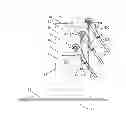
FIG. 1 shows a first embodiment of the anchoring device according to the invention for mounting on a roof;
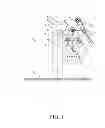
FIG. 2 shows a second embodiment of the anchoring device according to the invention for mounting on a roof;
FIG. 3 shows a third embodiment of the anchoring device according to the invention for mounting on a wall or ceiling, and
FIG. 4 shows the anchoring device shown in FIG. 3 in side view.
DETAILED DESCRIPTION OF THE DRAWINGS
In FIG. 1, a first embodiment of the anchoring device according to the invention for mounting on a roof is shown. Three guide wires 3, 3′, 3″ are attached to the anchoring device 1 over which runners 5, 5′, 5″ are movable. To each runner a fuse cable 7, 7′, 7″ for a person is attached. The anchor device 1 has a base 11 to which a support 13 is attached and which is provided with a mounting surface 19 with which it is fixed on the roof. The base 11 and the support 13 have a rotation-symmetrical shape. The support is composed of parts 13a-d, between which carriers 15, 15′, 15″ are clamped. At the free ends 17, 17′, 17″ of the carriers wire guides are attached for holding the guide wires. So, people can pass each other without thereby having to be detaching from the guide wires.
The carriers 15, 15′, 15″ are rotatably connected to the support 13 and can be fixed to the support in any desired position relative to the support. The wire guides 17, 17′, 17″ are at different distances d1, d2, d3 from the central axis 9 of the support 13. In a direction parallel to the mounting surface 19, the wire guides are at a distance D1 and D2 from one another, and in a direction at right angles to the mounting surface 19, the wire guides are at a distance D3 of each other.
In FIG. 2, a second embodiment of the anchoring device according to the invention for mounting on a roof is shown in cross-section. All parts that have the same function as those shown in FIG. 1 of the first embodiment are denoted by the same reference numerals. In this anchoring device 21, the wire guides 17 and 17′ are at the same distance from the central axis 9 of the support 13 and the wire guide 17″ is on top of the support 13 at the location of the center line 9.
In this cross section clearly can be seen that the parts 13a-d are tightened against each other by a bolt 23, and that in the lower part 13a, an energy-absorbing element 25 is present. The support 13 absorbs the energy of a person fallen. This person is captured with a jerk by the support 13 via the fuse cable 7 and the guide wire 3 and the energy of the fall is absorbed by the energy-absorbing element. The element 25 and the sleeve around this element will deform when a jerk is applied to the support 13 and thereby absorb energy.
In FIGS. 3 and 4 a third embodiment of the anchoring device according to the invention is shown. All parts that have the same function as those shown in FIG. 1 of the first embodiment are again indicated by the same reference numerals. This anchoring device 31 is designed for mounting on a wall or ceiling and has two wire guides 17 and 17′ which are mounted on one carrier 15. This carrier is clamped between the two parts 13a and 13b of the support 13, whereby one of the parts 13b has a threaded end 35 which is tightened in a threaded hole in the other part 13a. To absorb a fall disc springs 33 are located in the part 13b. The wall portion around the disc spring will deform when a jerk is applied on the support 13 and then the disc springs absorb the fall energy partially.
Also in this embodiment the cable guides 17 and 17′ are at different distances d1 and d2 from the central axis 9 of the support 13. Also, in a direction parallel to the mounting surface 19 the wire guides are at a distance D1 from each other, and in a direction at right angles to the mounting surface 19 the wire guides are at a distance D3 of each other.
Albeit the invention has been described in the foregoing with reference to the drawings, it should be observed that the invention is not by any manner or means restricted to the embodiments shown in the drawings. The invention also extends to all embodiments deviating from the embodiments shown in the drawings within the scope defined by the claims.
Claims
1. Anchoring device for attaching at least two guide wires to a wall or ceiling or on a roof, on each of the guide wires a runner is movable with a fuse cable for a person attached to it, the anchoring device comprising:
a base provided with a mounting surface, a support, and one or more carriers to which the wire guides are mounted, wherein the carrier or carriers are rotatably connected to the support and can be fixed to the support in any desired position.
2. Anchoring device according to claim 1, wherein the support comprises at least two parts, between which the carrier or carriers are present, wherein between two adjacent parts one or more carriers can be clamped.
3. Anchoring device according to claim 1, wherein the base and the support have a rotation-symmetrical shape.
4. Anchoring device according to claim 1, wherein the at least two of the wire guides are at different distances from a center line of the support.
5. Anchoring device according to claim 1, wherein, in a direction parallel to the mounting surface, the wire guides are spaced a distance from each other.
6. Anchoring device according to claim 1, wherein, in a direction at right angles to the mounting surface, the at least two of the guide wires are at a distance from each other.
Images & Drawings included:


Sources:
- United States Patent and Trademark Office - verify current appl. status at the USPTO↗
Similar patent applications:
- » 20220226025
Anchoring member for a polyaxial bone anchoring device and polyaxial bone anchoring device with such an anchoring member - » 20200155203
Anchoring member for a polyaxial bone anchoring device and polyaxial bone anchoring device with such an anchoring member - » 20250241687
ANCHORING MEMBER FOR A POLYAXIAL BONE ANCHORING DEVICE AND POLYAXIAL BONE ANCHORING DEVICE WITH SUCH AN ANCHORING MEMBER - » 20230024467
Anchor device for anchoring a floating structure to the seabed and installation method of the anchor device - » 20180214184
Receiving part of a bone anchoring device and bone anchoring device with such a receiving part - » 20110244179
Kit of Beach Towel and Associated Anchoring Device, Towels and Anchoring Devices - » 20160361093
Receiving part of a bone anchoring device and bone anchoring device with such a receiving part - » 20200268418
Receiving part of a bone anchoring device and bone anchoring device with such a receiving part - » 20170231665
Anchoring member suitable for use in a polyaxial bone anchoring device and polyaxial bone anchoring device with an enlarged pivot angle to one side - » 20140188174
Anchoring member suitable for use in a polyaxial bone anchoring device and polyaxial bone anchoring device with an enlarged pivot angle to one side
Recent applications in this class:
- » 20250174973 2025-05-29
WIRE HARNESS - » 20250070540 2025-02-27
MOUNTING DEVICE FOR SECURING AND ROUTING ELONGATED ARTICLES - » 20250047087 2025-02-06
ELECTRICAL POWER DISTRIBUTION SYSTEM - » 20250015581 2025-01-09
LOCKING CABLE HANGER AND METHOD OF USING - » 20240388075 2024-11-21
WIRING BOARD - » 20240348032 2024-10-17
WIRE MANAGEMENT DEVICE - » 20240128733 2024-04-18
ATTACHMENT STRUCTURE OF FLAT WIRE HARNESS - » 20230178971 2023-06-08
Locking cable hanger and method of using - » 20230141833 2023-05-11
Wire positioning device - » 20230058041 2023-02-23
Cable racks for reduced stress and increased load capacity
Recent applications for this Assignee:
- » 20130180801 2013-07-18
SCAFFOLD - » 20130153337 2013-06-20
SCAFFOLD MODULE - » 20100243837 2010-09-30
Anchor point