Apparatus and method for small data transmission in 3GPP-LTE systems
US20140036795A1
2014-02-06
13/790,630
2013-03-08
✅ Patent granted
US 9,100,160 B2
2015-08-04
-
-
Afshawn Towfighi
Schwegman Lundberg & Woessner, P.A.
2033-04-03
Abstract:
In Machine Type Communication (MTC) with a 3GPP Long Term Evolution (LTE) Network, there is often a need to transmit and receive small data payloads. New information elements (IEs) have been defined to ease the transmission and receipt of small data payloads. Methods and systems can use the new IEs to more efficiently transmit and receive data. The new IEs include a Small Data ACK IE and a Small Data Container IE. Other new messages include an RAC Release indicator and an RRC Connection Release.
Inventors:
- Puneet Jain 108 🇺🇸 Hillsboro, OR, United States
- Marta Martinez Tarradell 110 🇺🇸 Hillsboro, OR, United States
- Sangeetha L. Bangolae 35 🇺🇸 Beaverton, OR, United States
- Varun Rao 7 🇺🇸 Cincinnati, OH, United States
Assignee:
- INTEL CORPORATION 47,158 🇺🇸 Santa Clara, CA, United States
Applicant:
Interested in similar patents?
Get notified when new applications in this technology area are published.
Classification:
H04W72/0406 » CPC main
Local resource management, e.g. wireless traffic scheduling or selection or allocation of wireless resources; Wireless resource allocation involving control information exchange between nodes
H04L5/0057 » CPC main
Arrangements affording multiple use of the transmission path; Arrangements for allocating sub-channels of the transmission path; Allocation of signaling, i.e. of overhead other than pilot signals Physical resource allocation for CQI
H04L41/0836 » CPC further
Arrangements for maintenance, administration or management of data switching networks, e.g. of packet switching networks; Configuration management of networks or network elements; Configuration setting characterised by the purposes of a change of settings, e.g. optimising configuration for enhancing reliability to enhance reliability, e.g. reduce downtime
H04L43/0811 » CPC further
Arrangements for monitoring or testing data switching networks; Monitoring or testing based on specific metrics, e.g. QoS, energy consumption or environmental parameters by checking availability by checking connectivity
H04L65/80 » CPC further
Network arrangements, protocols or services for supporting real-time applications in data packet communication Responding to QoS
H04L67/303 » CPC further
Network arrangements or protocols for supporting network services or applications; Architectures; Arrangements; Profiles Terminal profiles
H04N21/23439 » CPC further
Selective content distribution, e.g. interactive television or video on demand [VOD]; Servers specifically adapted for the distribution of content, e.g. VOD servers; Operations thereof; Processing of content or additional data; Elementary server operations; Server middleware; Processing of video elementary streams, e.g. splicing of video streams, manipulating MPEG-4 scene graphs involving reformatting operations of video signals for distribution or compliance with end-user requests or end-user device requirements for generating different versions
H04N21/25825 » CPC further
Selective content distribution, e.g. interactive television or video on demand [VOD]; Servers specifically adapted for the distribution of content, e.g. VOD servers; Operations thereof; Management operations performed by the server for facilitating the content distribution or administrating data related to end-users or client devices, e.g. end-user or client device authentication, learning user preferences for recommending movies; Client or end-user data management, e.g. managing client capabilities, user preferences or demographics, processing of multiple end-users preferences to derive collaborative data; Management of client data involving client display capabilities, e.g. screen resolution of a mobile phone
H04W28/0236 » CPC further
Network traffic or resource management; Traffic management, e.g. flow control or congestion control based on communication conditions radio quality, e.g. interference, losses or delay
H04W72/005 » CPC further
Local resource management, e.g. wireless traffic scheduling or selection or allocation of wireless resources Resource management for broadcast services
H04W72/042 » CPC further
Local resource management, e.g. wireless traffic scheduling or selection or allocation of wireless resources; Wireless resource allocation involving control information exchange between nodes in downlink direction of a wireless link, i.e. towards terminal
H04W72/044 » CPC further
Local resource management, e.g. wireless traffic scheduling or selection or allocation of wireless resources; Wireless resource allocation where an allocation plan is defined based on the type of the allocated resource
H04W72/0413 » CPC further
Local resource management, e.g. wireless traffic scheduling or selection or allocation of wireless resources; Wireless resource allocation involving control information exchange between nodes in uplink direction of a wireless link, i.e. towards network
H04W88/06 » CPC further
Devices specially adapted for wireless communication networks, e.g. terminals, base stations or access point devices; Terminal devices adapted for operation in multiple networks or having at least two operational modes , e.g. multi-mode terminals
H04W16/28 » CPC further
Network planning, e.g. coverage or traffic planning tools; Network deployment, e.g. resource partitioning or cells structures; Cell structures using beam steering
H04W36/14 » CPC further
Hand-off or reselection arrangements Reselecting a network or an air interface
H04W4/00 » CPC further
Services specially adapted for wireless communication networks; Facilities therefor
H04L5/00 » CPC further
Arrangements affording multiple use of the transmission path
H04W24/04 » CPC further
Supervisory, monitoring or testing arrangements Arrangements for maintaining operational condition
H04W24/02 » CPC further
Supervisory, monitoring or testing arrangements Arrangements for optimising operational condition
H04N21/2343 IPC
Selective content distribution, e.g. interactive television or video on demand [VOD]; Servers specifically adapted for the distribution of content, e.g. VOD servers; Operations thereof; Processing of content or additional data; Elementary server operations; Server middleware; Processing of video elementary streams, e.g. splicing of video streams, manipulating MPEG-4 scene graphs involving reformatting operations of video signals for distribution or compliance with end-user requests or end-user device requirements
H04N21/258 IPC
Selective content distribution, e.g. interactive television or video on demand [VOD]; Servers specifically adapted for the distribution of content, e.g. VOD servers; Operations thereof; Management operations performed by the server for facilitating the content distribution or administrating data related to end-users or client devices, e.g. end-user or client device authentication, learning user preferences for recommending movies Client or end-user data management, e.g. managing client capabilities, user preferences or demographics, processing of multiple end-users preferences to derive collaborative data
H04W40/02 » CPC further
Communication routing or communication path finding Communication route or path selection, e.g. power-based or shortest path routing
H04W28/02 IPC
Network traffic or resource management Traffic management, e.g. flow control or congestion control
H04W40/34 » CPC further
Communication routing or communication path finding Modification of an existing route
H04W72/00 IPC
Local resource management, e.g. wireless traffic scheduling or selection or allocation of wireless resources
H04W72/04 » CPC further
Local resource management, e.g. wireless traffic scheduling or selection or allocation of wireless resources Wireless resource allocation
Description
CROSS-REFERENCE TO RELATED APPLICATIONS
This application claims priority under 35 U.S.C. §119(e) to U.S. Provisional Patent Application Ser. No. 61/679,627, filed Aug. 3, 2012, incorporated herein by reference in its entirety.
TECHNICAL FIELD
Embodiments pertain to wireless communications. Some embodiments pertain to wireless communications used in Long-Term Evolution (LTE) networks.
BACKGROUND ART
Machines often need to communicate with other machines with little or no human intervention. In the past, such communications were made via wire. As time went on, wireless communications began to be used. With the increased availability of mobile broadband, machine type communications (MTC) via mobile broadband is becoming more and more popular. MTC enables communications between remote machines for the exchange of information and operating commands without the need for human intervention. Exemplary uses of machine-type communications include remote sensors, e-health, remote-controlled utility meters, surveillance cameras, toll payments, production chain automation, and the like. For example, a device can monitor the operation status of another device and report the statuses to a central server; a device can read a utility meter and provide the data to a billing department for the preparation of monthly utility bills; or a device in a car can sense that the car has passed a toll booth and transmit the information to the toll taking authority for billing purposes.
The amount of data being sent in MTC applications is typically smaller in size than the data present in human-initiated communication. This small amount of data traffic is a common feature across many MTC applications. User equipment (UEs) that are used in an MTC configuration may spend most of their time in an idle state and need to wake up mainly to send or receive a small amount of data.
BRIEF DESCRIPTION OF THE DRAWINGS
FIG. 1 is a flowchart illustrating the operation of an embodiment of the present invention.
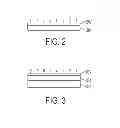
FIG. 2 shows the frame structure of an embodiment of the present invention.
FIG. 3 shows the frame structure of an embodiment of the present invention.
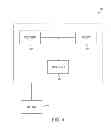
FIG. 4 shows an overview of an embodiment of the present invention.
DESCRIPTION OF THE EMBODIMENTS
The following description and the drawings sufficiently illustrate specific embodiments to enable those skilled in the art to practice them. Other embodiments may incorporate structural, logical, electrical, process, and other changes. Examples merely typify possible variations. Individual components and functions are optional unless explicitly required, and the sequence of operations may vary. Portions and features of some embodiments may be included in, or substituted for, those of other embodiments. Embodiments set forth in the claims encompass all available equivalents of those claims.
In the following detailed description, numerous specific details are set forth in order to provide a thorough understanding of the invention. However, it will be understood by those skilled in the art that the present invention may be practiced without these specific details. In other instances, well-known method, procedures, components, and circuits have not been described in detail so as not to obscure the present invention.
Although embodiments of the invention are not limited in this regard, the terms “plurality” and “a plurality” as used herein may include, for example, “multiple” or “two or more.” The terms “plurality” or “a plurality” may be used throughout the specification to describe two or more components, devices, elements, units, parameters, and the like. For example, “a plurality of stations” may include two or more stations.
The 3rd Generation Partnership Project (3GPP) is a collaboration agreement established in December 1998 to bring together a number of telecommunications standards bodies, known as “Organizational Partners,” that currently include the Association of Radio Industries and Business (ARIB), the China Communications Standards Association (CCSA), the European Telecommunications Standards Institute (ETSI), the Alliance for Telecommunications Industry Solutions (ATIS), the Telecommunications Technology Association (TTA), and the Telecommunication Technology Committee (TTC). The establishment of 3GPP was formalized in December 1998 by the signing of the “The 3rd Generation Partnership Project Agreement.”
GPP provides globally applicable standards as Technical Specifications and Technical Reports for a 3rd Generation Mobile System based on evolved GSM core networks and radio access technologies that they support e.g., Universal Terrestrial Radio Access (UTRA) for both Frequency Division Duplex (MD) and Time Division Duplex (TDD) modes). 3GPP also provides standards for maintenance and development of the Global System for Mobile communication (GSM) as Technical Specifications and Technical Reports including evolved radio access technologies (e.g., General Packet Radio Service (GPRS) and Enhanced Data rates for GSM Evolution (EDGE)). Technical Specifications for current standards related to mobile telephony are generally available to the public from the 3GPP organization.
GPP is currently studying the evolution of the 3G Mobile System and considers contributions (views and proposals) directed toward the evolution of the UTRA Network (UTRAN). A set of high-level requirements was identified by 3GPP workshops including: reduced cost per bit; increased service provisioning (i.e., more services at lower cost with better quality); flexibility of use of existing and new frequency bands; simplified architecture with open interfaces; and reduced/reasonable terminal power consumption. A study on the UTRA & UTRAN Long Term Evolution (UTRAN-LTE, also known as 3GPP-LTE and Evolved UTRAN (E-UTRA)) was started in December 2004 with the objective to develop a framework for the evolution of the 3GPP radio-access technology towards a high-data-rate, low-latency and packet-optimized radio-access technology. The study considered modifications to the radio-interface physical layer (downlink (DL) and uplink (UL)) such as means to support flexible transmission bandwidth up to 20 MHz, introduction of new transmission schemes, and advanced multi-antenna technologies.
3GPP-LTE is based on a radio-interface incorporating orthogonal frequency division multiplex (OFDM) techniques. OFDM is a digital multi-carrier modulation format that uses a large number of closely-spaced orthogonal sub-carriers to carry respective user data channels. Each sub-carrier is modulated with a conventional modulation scheme, such as quadrature amplitude modulation (QAM), at a (relatively) low symbol rate when compared to the radio frequency (RF) transmission rate. In practice, OFDM signals are generated using the fast Fourier transform (ITT) algorithm.
As described above, Machine Type Communication (MTC) is used for communication with user equipment (UE) without human input. Some MTC UEs might spend most of their time in RRC idle state or in an extra-low power consuming state (e.g. deep idle or optimized idle state) and will mainly wake up to send or receive a small amount of data. A more efficient method of operating the UEs would be desirable.
The following examples assume that a UE is in a not-active state but is registered to the network. For example, the UE may be in a Radio Resource Control (RRC) idle state. When the network wants to trigger the UE or has a small amount of data to convey to the UE (downlink data), the network might notify the UE through the use of a paging message or even send the small data payload directly in the paging message. In addition, another newly defined message might be used in an uplink transmission to notify RRC Connection release request indication or send the small data ACK from the UE. Small data payloads are typically 1 to 128 bytes in length. However, it should be understood that small data payloads may be larger in some instances.
FIG. 1 is a flowchart illustrating the use of a paging message to convey a small data payload to a UE. At the top of FIG. 1 are three entities: a user equipment (UE) 150, an evolved Node B (eNB) 160, and a Mobile Management Entity (MME) 170. The various lines shown illustrate which entity is performing a task.
MME 170 sends a paging message to UE 150. The paging message may contain a small data payload (102). After receiving this notification, UE 150 sends an RRC Connection Request message to eNB 160, requesting the establishment of a connection (104). After receiving the RRC Connection Request and assuming that the network does not reject the connection, eNB 160 replies to UE 150 with an RRC Connection Setup Complete message (106).
While sending the RRC Connection Setup Complete message to the eNB, the UE may include one of two defined information elements (IEs) (108), “Small Data ACK” and “RRC Release Indication.” These two IEs may perform the following actions:
1) Small Data ACK—UE 150 acknowledges the small data reception (downlink data).
2) RRC Release Indication—If UE 150 does not have any uplink data to convey, UE 150 indicates its intention of releasing its connection because the network has already indicated that only small data was going to be sent in the downlink connection. Therefore, no other actions are expected to be coming from the network.
Thereafter, eNB 160 forwards the Small Data ACK, to MME 170 (110). MME 170 sends a release command to eNB 160 (112). eNB 160 then sends RRC Connection Release message to UE 150 to terminate the connection (114).
With continued reference to FIG. 1, the elements of FIG. 1 can be followed in another embodiment with a few changes. At (102), MME 170 sends a paging message to UE 150 with a small data payload. The paging message may indicate the need to transmit small data to UE 150. After receiving this notification, UE 150 sends an RRC Connection Request message to eNB 160 to perform connection establishment (104). After receiving the RRC Connection Request and assuming that the network does not reject the connection, eNB 160 replies to UE 150, adding the small data payload if the paging was only indicating a future transmission (106).
While sending the RRC Connection Setup Complete message to eNB 160, UE 150 may include one of two defined information elements (IEs) (108): “Small Data ACK” and “RRC Release Indicator” performing the following actions:
1) UE acknowledges the small data reception (downlink data).
2) If it does not have any uplink data to convey, the UE indicates its intention of releasing its connection because the network already indicated that only small data was going to be sent in downlink. Therefore, no other actions are expected to be coming from the network.
Thereafter, eNB 160 forwards the Small Data ACK message to MME 170 (110). MME 170 sends a release command to eNB 160 (112). eNB 160 then sends an RRC Connection Release message to UE 150 to terminate the connection (114).
In another embodiment, if network vendors prefer to have further control over the connection release of UEs, then after the transmission or reception of a small data payload (108), the “RRC Connection Release” message might be sent by eNB 160 to UE 150 as an affirmative response to the RRC Release Indication sent in the RRC Connection Setup Complete message. Thus, the remaining steps of FIG. 1 need not be performed because the connection between eNB 160 and UE 150 has been released.
In another embodiment, UE 150 could send a new RRC message to eNB 160 at (108). This message would indicate the intention of releasing the connection and simultaneously acknowledge the reception of the small data instead of acknowledging the receipt with a RRC Connection Setup Complete message. The message could be called “RRC Connection Release Request.” This message might be replied to by the eNB using the existing “RRC Connection Release” message.
In another embodiment an RRC Connection Setup Complete message (described in 106) can be used to send a small data payload in an uplink connection. With continued reference to FIG. 1, at 102, UE 150 sends an RRC Connection Request to eNB 160 with a small data indicator. eNB 160 replies by sending an RRC Connection Setup message to UE 150 (104). The small data indicator is used by UE 150 to inform eNB 160 that the small data payload will be appended into the RRC Connection Setup Complete message (106). After UE 150 sends the RRC Connection Setup Complete message with the small data payload, if eNB 160 does not have any additional information to send to UE 150, eNB 160 will release UE 150 by sending an RRC Connection Release message (108). This RRC Connection Release message might also carry the acknowledgment that the small data payload was received.
In another embodiment, the RRC Connection Release message (114) may be used to send any downlink (DL) small data and acknowledgments (ACK) for uplink (UL) small data that eNB 160 has to forward to UE 150. The small data indicator may be sent via the paging message. In the alternative, eNB 160 may store the small data indicator and send it to UE 150 as part of the RRC Connection Setup Complete message.
When eNB 160 receives the first UL Network Access Stratum (NAS) message from the radio interface, eNB 160 invokes NAS Transport procedure. It sends the INITIAL UE MESSAGE message to MME 170 including the NAS message as a NAS Protocol Data Unit (NAS-PDU) Information Element (IE).
The Initial UE message format is defined in section 36.413 of the 3GPP specification. This message is sent by the eNB to transfer the initial layer 3 message to the MME over the S1 interface.
The format in FIG. 2 below defines the Initial UE Message with Small Data included. The new Small Data Container (SDC) Information Element (IE) that has been defined that will carry the small data payload from eNB to MME. Modified Initial UE message is shown below:
The frame structure of the Small Data ACK IE is illustrated in FIG. 2. The Small Data ACK IEI field (202) is the identifier of the Small Data ACK IE. The size is one octet. The result field (204) indicates the success or failure of the transmission. The size is one octet.
The frame structure for the Small Data Container IE is shown in FIG. 3. The Small Data Container (SDC) IE is defined to send small data on NAS signaling messages, SDC IE is included as an optional IE in the ‘Initial UE Message’ message content. The Small Data Container IEI field (302) is the identifier of this Small Data Container IE. The size is one octet (8 bits). Length of Small Data Container field (304) is the size of the small data that would be included in this IE. The size of this field is two octets (16 bits). The Data Payload field (306)—Carries the small data payload that needs to be transmitted to/from the network. The size of this field varies from 1 to 128 octets (8 bits to 1024 bits), depending on the amount of data to be sent.
The SDC IE is a type 6 information element. A detailed explanation on the different types of information element is described in section 24.007 of the 3GPP Technical Specification.
FIG. 4 shows a block diagram of an exemplary UE that is capable of performing embodiments of the invention, A UE 400 includes a processor 402. Processor 402 is arranged to perform instructions that may be contained in a memory 450. The UE may also comprise a transceiver 430 and an antenna assembly 440. Processor 402 may be arranged to perform calculations and other operations on signals, then send those signals to transceiver 430, which prepares the signals for transmission outside the UE via antenna assembly 440. Signals from outside the UE may be received by antenna assembly 440. These signals would then proceed through transceiver 430 to processor 402 for processing. It should be understood that a UE 400 may contain other elements that are not shown in FIG. 4, such as user interface inputs (e.g., touch screens and/or buttons and outputs e.g., a displays, speakers, etc.).
There may be new information elements within various messages. It should be understood that, for ease of use, the message termed RRC Connection Release may be written without spaces: “RRCConnectionRelease.” This does not change the functionality of the message.
The RRC Connection Setup Complete message may contain new information elements. In one embodiment, the RRC Connection Setup Complete message may contain several new messages, including smallDataAck, rrcRelease-Indication, and nonCriticalExtension. A SmallDataRelease message may comprise smallDataPayload and nonCriticalExtension information elements.
The RRC Connection Release message may also contain new information elements. Similarly, other messages may be referred to both with and without spaces. In one embodiment, the RRCConnectionRelease includes smallDataRelease, smallDataAck, and nonCriticalExtension information elements. The smallDataRelease information element may contain smallDataPayload and nonCriticalExtension information elements.
The RRCConnectionReleaseRequest message may also contain new information elements. In one embodiment, the RRCConnectionReleaseRequest message includes RRC-TransactionIdentifier, SmallDataRelease, and SmallDataPayload information elements.
Another new information element may be the AccessCause information element, which may be used along with the RRCConnectionRequest message.
The following examples pertain to further embodiments.
In one embodiment, user equipment (UE) may comprise: a processor arranged to: receive a request to send a small data payload to the UE; send a Radio Resource Control (RRC) Connection Request message to an evolved Node B (eNB); receive an RRC Connection Setup message from the eNB; send an RRC Connection Setup Complete message to the eNB; and receive an RRC Connection Release message from the eNB. The RRC Connection Setup message comprises a small data payload; and the RRC Connection Setup Complete message comprises a Small Data ACK message arranged to indicate the receipt of the small data payload.
The UE may be arranged to perform Machine Type Communications (MTC).
In one embodiment, the request to send a small data payload to the UE comprises the small data payload.
In one embodiment, the request to send a small data payload to the UE comprises a Small Data Indicator arranged to inform the UE of the need to receive a Small Data payload.
In one embodiment, the small data payload comprises data less than or equal to 128 octets in length.
In one embodiment, the UE is further arranged to receive an RRC Connection Release message. In one embodiment, the RRC Connection Release message is received from an eNB.
In one embodiment, the RRC Connection Release Request message comprises a Small Data ACK message arranged to indicate the receipt of the small data payload.
In one embodiment, the RRC Connection Request message comprises a small data indicator arranged to indicate that the UE has a second small data payload to send to the eNB; and the RRC Connection Setup Complete message comprises the second small data payload.
In one embodiment, the RRC Connection Setup message comprises an indicator arranged to indicate the presence of a small data payload; and the RRC Connection Release message comprises the small data payload.
In another embodiment, a method for sending a small data payload to a user equipment (UE) may comprise: sending a paging message to the UE; receiving a Radio Resource Control (RRC) Connection Request message; sending an RRC Connection Setup message to the UE; receiving an RRC Connection Setup Complete message; and sending an RRC Connection Release message; wherein: the paging message comprises a small data payload; and the RRC Connection Setup Complete message comprises a Small Data ACK message arranged to indicate the receipt of the small data payload.
In one embodiment, the paging message comprises a small data indictor; and the RRC Connection Setup message comprises a small data payload.
In one embodiment, the RRC Connection Request message may comprise an indication that the UE wishes to send an uplink small data payload; the RRC Connection Setup Complete message comprises the uplink small data payload; and the RRC Connection Release message comprises an acknowledgement of the receipt of the uplink small data payload.
In one embodiment, the small data payload may comprise data less than or equal to 128 octets.
In one embodiment, the small data payload may comprise a small data container information element (IE) comprising: a small data container information element identifier field; a field arranged to indicate the length of the small data container; and a payload field arranged to contain the small data payload.
In one embodiment, the small data container information element identifier field has a length of 1 octet; the field arranged to indicate the length of the small data container has a length of 2 octets; and the payload field has a length that is between 1 octet and 128 octets.
In one embodiment, the Small Data ACK message comprises a Small Data ACK information element comprising: a Small Data ACK identifier field with a length of 1 octet; and a Result field with a length of 1 octet.
In another embodiment, a method for sending a small data payload to a UE may comprise: sending a paging message to the UE; receiving an RRC Connection Request message; sending an RRC Connection Setup message to the UE; receiving an RRC Connection Setup Complete message; and sending an RRC Connection Release message; wherein: the RRC Connection Release Request message comprises a Small Data ACK message arranged to indicate the receipt of the small data payload.
In another embodiment, a method for a UE to receive a small data payload may comprise: receiving a paging message from an MME; sending an RRC Connection Request message to an eNB; and after receiving an RRC Connection Setup message from the eNB, sending an RRC Connection Setup Complete message to the eNB. The RRC Connection Setup Complete Message may comprise a small data payload.
In one embodiment, the RRC Connection Setup Complete message may further comprise an indication that the UE has received the small data payload.
In one embodiment, the RRC Connection Setup Complete message may further comprises a request to release a connection between the UE and the eNB.
In one embodiment, the UE may also send an RRC Connection Release Request message to the eNB after sending the RRC Connection Setup Complete message.
one embodiment, the UE may also release a connection between the UE and the eNB after receiving an RRC Connection Release message from the eNB.
In one embodiment, the RRC Connection Release message may comprise a small data payload.
While certain features of the invention have been illustrated and described herein, many modifications, substitutions, changes, and equivalents may occur to those skilled in the art. It is, therefore, to be understood that the appended claims are intended to cover all such modifications and changes as fall within the scope of the invention.
Claims
We claim:1. User equipment (UE) comprising:
a processor; and
a transceiver; wherein the processor is arranged to:
receive a request to send a small data payload to the UE from the transceiver;
instruct the transceiver to send a Radio Resource Control (RRC) Connection Request message to an evolved Node B (eNB);
receive an RRC Connection Setup message from the eNB from the transceiver;
instruct the transceiver to send an RRC Connection Setup Complete message to the eNB; and
receive an RRC Connection Release message from the eNB the transceiver; wherein:
the RRC Connection Setup message comprises the small data payload; and
the RRC Connection Setup Complete message comprises a Small Data Acknowledgment (ACK) message arranged to indicate the receipt of the small data payload.
2. The UE of claim 1 wherein the UE is arranged to perform Machine Type Communications (MTC).
3. The UE of claim 1 wherein the request to send a small data payload to the UE comprises the small data payload.
4. The UE of claim 1 wherein the request to send a small data payload to the UE comprises a Small Data Indicator arranged to inform the UE of the need to receive a Small Data payload.
5. The UE of claim 1 wherein the small data payload comprises data less than or equal to 128 octets in length.
6. The UE of claim 1 wherein the UE is further arranged to receive an RRC Connection Release message.
7. The UE of claim 6 wherein the RRC Connection Release message is received from an eNB.
8. The UE of claim 1 wherein the RRC Connection Release Request message comprises a Small Data Acknowledgement (ACK) message arranged to indicate the receipt of the small data payload.
9. The UE of claim 1 wherein:
the RRC Connection Request message comprises a small data indicator arranged to indicate that the UE has a second small data payload to send to the eNB; and
the RRC Connection Setup Complete message comprises the second small data payload.
10. The UE of claim 1 wherein:
the RRC Connection Setup message comprises an indicator arranged to indicate the presence of a small data payload; and
the RRC Connection Release message comprises the small data payload.
11. The UE of claim 1 further comprising an antenna assembly coupled to the transceiver wherein the transceiver is configured to transmit and receive signals using the antenna assembly.
12. A method for sending a small data payload to a user equipment (UE) comprising:
sending a paging message to the UE;
receiving a Radio Resource Control (RRC) Connection Request message from the UE;
sending an RRC Connection Setup message to the UE;
receiving an RRC Connection Setup Complete message from the UE; and
sending an RRC Connection Release message to the UE; wherein:
the paging message comprises a small data payload; and
the RRC Connection Setup Complete message comprises a Small Data Acknowledgement (ACK) message arranged to indicate the receipt of the small data payload.
13. The method of claim 12 wherein:
the paging message comprises a small data indictor; and
the RRC Connection Setup message comprises a small data payload.
14. The method of claim 12 wherein;
the RRC Connection Request message comprises an indication that the UE wishes to send an uplink small data payload;
the RRC Connection Setup Complete message comprises the uplink small data payload; and
the RRC Connection Release message comprises an acknowledgement of the receipt of the uplink small data payload.
15. The method of claim 12 wherein the small data payload comprises data less than or equal to 128 bytes.
16. The method of claim 12 wherein the small data payload comprises a small data container information element (IE) comprising:
a small data container information element identifier field;
afield arranged to indicate the length of the small data container; and
a payload field arranged to contain the small data payload.
17. The method of claim 16 wherein:
the small data container information element identifier field has a length of 1 octet;
the field arranged to indicate the length of the small data container has a length of 2 octets
the payload field has a length that is between 1 octet and 128 octets.
18. The method of claim 12 wherein the Small Data ACK message comprises a Small Data ACK information element comprising:
a Small Data ACK identifier field with a length of 1 octet; and
a Result field with a length of 1 octet.
19. A method for a user equipment (UE) to receive a small data payload comprising:
receiving a paging message from a mobile management entity (MME);
sending an RRC Connection Request message to an evolved Node B (eNB); and
after receiving an RRC Connection Setup message from the eNB, sending an RRC Connection Setup Complete message to the eNB;
wherein the RRC Connection Setup Complete Message comprises a small data payload.
20. The method of claim 19 wherein the RRC Connection Setup Complete message further comprises an indication that the UE has received the small data payload.
21. The method of claim 19 wherein the RRC Connection Setup Complete message further comprises an request to release a connection between the UE and the eNB.
22. The method of claim 19 further comprising:
sending an RRC Connection Release Request message to the eNB after sending the RRC Connection Setup Complete message.
23. The method of claim 19 further comprising:
releasing a connection between the UE and the eNB after receiving an RRC Connection Release message from the eNB.
24. The method of claim 23 wherein the RRC Connection Release message comprises a small data payload.
Images & Drawings included:


Sources:
- United States Patent and Trademark Office - verify current appl. status at the USPTO↗
Similar patent applications:
Recent applications in this class:
- » 20240147475 2024-05-02
RESOURCE EFFICIENT COMMON SEARCH SPACE MONITORING - » 20240114510 2024-04-04
PSCCH AND PSSCH TRANSMISSION ON CONTIGUOUS RB SETS IN SL-U - » 20240080842 2024-03-07
TRANSMITTING AN INDICATION OF A WAVEFORM USED BY A NETWORK NODE - » 20240073900 2024-02-29
SIDELINK BEAM HOPPING - » 20240064740 2024-02-22
SIDELINK USER EQUIPMENT (UE) CAPABILITY SIGNALING ENHANCEMENT - » 20240049229 2024-02-08
Selecting Unified Transmission States for Multipoint Operation Using Lists of Groups of States - » 20240040568 2024-02-01
RESOURCE PATTERN CONFIGURATION WITHIN A SLOT FOR SIDELINK COMMUNICATION - » 20240040567 2024-02-01
FULL-SLOT TRANSMISSION DETECTION FOR SIDELINK COMMUNICATIONS - » 20240008040 2024-01-04
Selective retransmissions on a non-orthogonal channel - » 20230403707 2023-12-14
TECHNIQUES FOR INTERFERENCE CANCELLATION IN SIDELINK COMMUNICATION
Recent applications for this Assignee:
- » 20250294866 2025-09-18
GATE CUT CONFINED WITHIN GATE TRENCH - » 20250294846 2025-09-18
BACKSIDE CROSS-COUPLE INTERCONNECTS - » 20250294835 2025-09-18
ELONGATED VERTICAL STRUCTURES OF CHANNEL MATERIALS - » 20250294827 2025-09-18
CO-INTEGRATION OF GATE-ALL-AROUND DEVICES WITH DIFFERENT NUMBERS OF NANORIBBONS - » 20250294818 2025-09-18
TRANSISTOR DESIGNS FOR FLOATING BODY MEMORY - » 20250294781 2025-09-18
MAGNETIC CORE INDUCTORS ON PACKAGE SUBSTRATES - » 20250294777 2025-09-18
INTEGRATED CIRCUIT DEVICE WITH MEMORY ARRAY AND SHARED GAIN ELEMENT - » 20250293985 2025-09-18
RECEIVER-BASED PRECISION CONGESTION CONTROL - » 20250293860 2025-09-18
PRESERVATION OF CONFIDENTIALITY AND INTEGRITY OF MODELS DURING EXECUTION - » 20250293706 2025-09-18
LOW-RANK DECOMPOSITION-BASED HARDWARE COMPRESSION OF MATRICES AND TENSORS