Stationary blade assembly
US20140041499A1
2014-02-13
13/984,683
2012-02-10
✅ Patent granted
US 9,289,911 B2
2016-03-22
WO; PCT/EP2012/052358; 20120210
WO; WO2012/107583; 20120816
Ned Landrum | Richard Crosby, Jr.
Schwegman Lundberg & Woessner, P.A.
2032-11-25
Abstract:
There is disclosed a stationary blade assembly for cutting labels from a label film in labelling machines, comprising: a support and a blade supported by said support; blade comprises at least two cutting edges which are adapted to cut said labels.
Assignee:
- SIDEL S.p.A. con Socio Unico 42 🇮🇹 Parma, Italy
- SIDEL S.p.A. con Socio Unico 12 🇮🇹 , Italy
Applicant:
Interested in similar patents?
Get notified when new applications in this technology area are published.
Classification:
B26D1/385 » CPC main
Cutting through work characterised by the nature or movement of the cutting member or particular materials not otherwise provided for ; Apparatus or machines therefor; Cutting members therefor involving a cutting member which does not travel with the work having a cutting member moving about an axis with a non-circular cutting member moving about an axis parallel to the line of cut and coacting with a fixed blade or other fixed member for thin material, e.g. for sheets, strips or the like
B26D7/2614 » CPC further
Details of apparatus for cutting, cutting-out, stamping-out, punching, perforating, or severing by means other than cutting; Means for mounting or adjusting the cutting member; Means for adjusting the stroke of the cutting member Means for mounting the cutting member
B65C9/1803 » CPC further
Details of labelling machines or apparatus; Label feeding; Label feeding from strips, e.g. from rolls the labels being cut from a strip
B26D1/38 IPC
Cutting through work characterised by the nature or movement of the cutting member or particular materials not otherwise provided for ; Apparatus or machines therefor; Cutting members therefor involving a cutting member which does not travel with the work having a cutting member moving about an axis with a non-circular cutting member moving about an axis parallel to the line of cut and coacting with a fixed blade or other fixed member
B65C9/18 IPC
Details of labelling machines or apparatus; Label feeding Label feeding from strips, e.g. from rolls
B26D7/26 IPC
Details of apparatus for cutting, cutting-out, stamping-out, punching, perforating, or severing by means other than cutting Means for mounting or adjusting the cutting member; Means for adjusting the stroke of the cutting member
B65H2301/46152 » CPC further
Handling processes for sheets or webs; Type of handling process; Splicing; Processing webs in splicing process after splicing cutting off tail after (flying) splicing
E05D5/02 IPC
Construction of single parts, e.g. the parts for attachment Parts for attachment, e.g. flaps
B26D1/0006 » CPC further
Cutting through work characterised by the nature or movement of the cutting member or particular materials not otherwise provided for ; Apparatus or machines therefor; Cutting members therefor Cutting members therefor
B26D1/405 » CPC further
Cutting through work characterised by the nature or movement of the cutting member or particular materials not otherwise provided for ; Apparatus or machines therefor; Cutting members therefor involving a cutting member which does not travel with the work having a cutting member moving about an axis with a non-circular cutting member moving about an axis parallel to the line of cut and coacting with a rotary member for thin material, e.g. for sheets, strips or the like
B65C9/1819 » CPC further
Details of labelling machines or apparatus; Label feeding; Label feeding from strips, e.g. from rolls the labels being cut from a strip and transferred by suction means the suction means being a vacuum drum
E05D5/023 » CPC further
Construction of single parts, e.g. the parts for attachment; Parts for attachment, e.g. flaps for attachment to profile members or the like with parts, e.g. screws, extending through the profile wall or engaging profile grooves with parts extending through the profile wall
B26D2001/0053 » CPC further
Cutting through work characterised by the nature or movement of the cutting member or particular materials not otherwise provided for ; Apparatus or machines therefor; Cutting members therefor; Cutting members therefor having a special cutting edge section or blade section
B65C2009/1861 » CPC further
Details of labelling machines or apparatus; Label feeding; Label feeding from strips, e.g. from rolls the labels being cut from a strip; Details of cutting means two co-acting knifes whereby one knife remains stationary
E05Y2600/51 » CPC further
Mounting or coupling arrangements for elements provided for in this subclass; Mounting methods; Positioning Screwing or bolting
E05Y2600/632 » CPC further
Mounting or coupling arrangements for elements provided for in this subclass; Mounting or coupling members ; Accessories therefore Screws
E05Y2900/132 » CPC further
Application of doors, windows, wings or fittings thereof for buildings or parts thereof characterised by the type of wing Doors
E05Y2900/148 » CPC further
Application of doors, windows, wings or fittings thereof for buildings or parts thereof characterised by the type of wing Windows
Y10T83/4847 » CPC further
Cutting; Cutting motion of tool has component in direction of moving work; Orbital motion of cutting blade; Rotary tool With cooperating stationary tool
Y10T83/9457 » CPC further
Cutting; Tool or tool with support Joint or connection
Y10T83/9493 » CPC further
Cutting; Tool or tool with support Stationary cutter
Y10T83/9498 » CPC further
Cutting; Tool or tool with support; Stationary cutter Parallel cutting edges
B26D1/00 IPC
Cutting through work characterised by the nature or movement of the cutting member or particular materials not otherwise provided for ; Apparatus or machines therefor; Cutting members therefor
B26D1/40 IPC
Cutting through work characterised by the nature or movement of the cutting member or particular materials not otherwise provided for ; Apparatus or machines therefor; Cutting members therefor involving a cutting member which does not travel with the work having a cutting member moving about an axis with a non-circular cutting member moving about an axis parallel to the line of cut and coacting with a rotary member
Description
TECHNICAL FIELD
The present innovation relates to a stationary blade assembly.
BACKGROUND ART
Labelling machines are known, especially of the kind that use a label reel from which labels are cut and applied onto articles, in particular articles filled with a pourable food product.
The above-identified machines, known as roll fed labelling machines, substantially comprise a carousel for advancing the articles along a path, and a labelling unit which applies a plurality of labels onto relative articles along the path.
In detail, the labelling unit comprises:
-
- at least one motorized feeding roll for moving a strip of label from a label reel towards the carousel;
- a cutting unit for cutting a label of a given length from the label strip; and
- a vacuum suction drum which receives the cut labels and transfers the labels to the articles in the carousel.
Cutting unit comprises a rotary blade assembly and a stationary blade assembly which are positioned adjacent to the vacuum suction drum.
More precisely, rotary blade comprises a rotating drum and one or more cutting edges arranged at an outer periphery of the rotating drum.
Stationary blade assembly comprises a support and a blade which projects outwards from the support.
The label strip is taken at its free end by suction by the vacuum drum, and passes between the stationary and the rotary blade of the cutting unit.
More precisely, since the vacuum drum rotates an higher speed than the label strip speed, the vacuum drum pulls an end of the label strip.
The label strip thus passes within a passage which is defined by the rotary and stationary blades. When the rotary and stationary blades face each other, a label is cut and separated by the vacuum drum from the remaining part of the label strip.
Stationary blade is generally pentagonal or triangular in section and comprises only one cutting edge.
Furthermore, stationary blade is generally made in a softer material than the rotary blade.
The rotary blades are commonly square with multiple useable edges.
Furthermore, the rotary blades are commonly made of a harder material such as carbide to resist wearing from the label sliding across the cutting edge.
Accordingly, the stationary blade needs to be changed more often than the rotary blade.
A need is felt within the industry to reduce the time and the costs connected with the stationary blade replacement, so as to increase the throughput of the labelling machine.
DISCLOSURE OF INVENTION
It is an object of the present innovation to provide a stationary blade assembly, designed to meet the above-identified requirement.
According to the present innovation, there is provided a stationary blade assembly, as claimed in claim 1.
BRIEF DESCRIPTION OF THE DRAWINGS
A preferred, non-limiting embodiment of the present innovation will be described by way of example with reference to the accompanying drawings, in which:
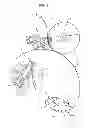
FIG. 1 shows a schematic top view of a cutting unit which comprises a stationary blade assembly according to a first embodiment the present innovation;
FIG. 2 is an enlarged view of some components of the cutting unit of FIG. 1; and
FIG. 3 shows, in an enlarged view, a section of stationary blade assembly according to a second embodiment of the present innovation.
BEST MODE FOR CARRYING OUT THE INVENTION
Number 1 in FIG. 1 indicates as a whole a cutting unit for cutting a label 5 from a labels strip 6.
Cutting unit 1 is adapted to be incorporated into a labeling machine, especially into a roll-fed labeling machine for applying labels 5 to relative articles, in particular containers filled with pourable product.
In detail, the roll-fed labeling machine (not shown) substantially comprises:
-
- a label reel from which label strip 6 is unwound along a path A from a motorized roll;
- a carrousel for advancing articles along an additional curved path; and
- a labeling unit for applying labels 5 onto relative articles which are advanced by carousel.
Labeling machine also comprises at least one feeding roll for moving labels strip 6 from reel towards carousel.
Cutting unit 1 cuts label 5 from strip 6 and conveys them towards carousel.
Cutting unit 1 substantially comprises:
-
- a drum 2 which rotates about an axis B;
- a stationary blade assembly 3 adapted to interact with drum 2 to separate a label 5 from label strip 6; and
- a vacuum-suction drum 4 adapted to advance each cut label 5 which has been separated from the remaining part of the label strip 6.
In detail, drum 2 comprises a cylindrical main body 7 and a blade 8 which outwardly protrudes from an outer periphery 12 of body 7. Blade 8 is provided with a cutting edge 39.
Drum 2 could also comprise a plurality of blades 8.
Assembly 3 comprises a support 9, and a blade 10 which protrudes outwardly from support 9.
Blade 10 and outer periphery 12 of body 7 define a passage 15 for the label strip 6.
At a given angular position of drum 2 shown in FIG. 1, the operational edges of blade 8 and blade 10 face each other at close proximity or with minimal contact with a consequent cutting action.
In such a condition, blades 8, 10 cut label 5 and separate it from label strip 6.
Vacuum suction drum 4 rotates about an axis D parallel to axis B and conveys cut label 5 towards carousel by means of vacuum applied onto such a cut label 5.
Blade 10 advantageously comprises a plurality of cutting edges 11a, 11b, 11c, 11d, four in the embodiment shown.
In particular, blade 10 comprises (FIG. 2):
-
- a pair of rectangular clamping surfaces 16 opposite to and parallel each other; and
- a pair of rectangular locating surfaces 17 opposite to and parallel each other.
Blade 10 also comprises, proceeding from one surface 17 to one of the surfaces 17 adjacent thereto:
-
- a surface 60 transversal to surface 16;
- a surface 50 orthogonal to surface 60;
- a surface 51 orthogonal to surface 50; and
- a surface 61 orthogonal to surface 51.
Surfaces 61, 50; 50, 51; and 51, 60 are orthogonal to each other.
Surfaces 61, 50, 51, 60 are finished by using a grinding wheel.
Each pair of surfaces 50, 51 adjacent to each other are sharply joined so as to form a relative cutting edge 11a, 11b, 11c, 11d.
Surfaces 61, 51; 50, 60 adjacent to each other are sharply joined to each other.
Surfaces 60 originate from a relative surface 16 and diverge from each other, starting from the relative surface 16.
Surfaces 61 originate from a relative surface 17 and converge towards each other, starting from the relative surface 17.
Surfaces 16 have a symmetry axis C.
Surfaces 17 have a symmetry axis Y orthogonal to axis C.
Cutting edges 11a, 11b, 11c, 11d are slightly inclined relative to an axis X, which is orthogonal to axes C, Y.
Cutting edges 11a, 11b, 11c, 11d are also inclined relative to cutting edge 39 of blade 8.
Blade assembly 3 comprises a plurality of releasable connecting elements 13 for connecting surfaces 16 to support 9 (FIG. 1).
Connecting elements 13 consist, in the embodiment shown, of five to nine screws.
In particular, surfaces 16 defines a plurality of holes 14 engaged by relative connecting elements 13.
Connecting elements 13 have shanks which pass through respective holes 14 with play.
Holes 14 have their own axes which are parallel to axis C.
Support element 9 comprises a main body 20 and an appendix 21 which protrudes from body 20 (FIG. 1).
Body 20 is bounded by a wall 29 which cooperates with one surface 16 of blade 10 and onto which connecting elements 13 are screwed.
Appendix 21 protrudes from wall 29 on the opposite side of body 20.
Blade assembly 3 also comprises regulating means to stabilize the final position of blade 10 after contact adjustment
Regulating means comprise, in the embodiment shown:
-
- a jacking screw 30 which pass through appendix 21 and cooperates with one of surfaces 17 of blade 10; and
- a locking nut 31 coupled with screw 30.
The operation of blade assembly 3 is described starting from a configuration, in which cutting edge 11c is in the cutting area.
Label strip 6 is unwound from label reel and advanced along a path A by the motorized roll.
Label strip 6 is taken up at its end by suction by vacuum suction drum 4, and advanced within passage 15 which is defined, on its opposite sides, by cutting edge 11c and outer periphery 12.
Due to the rotation of drum 2 about axis B, at a certain time, blade 8 faces cutting edge 11c of blade 10 of assembly 3 and closes passage 15 with such blade 8.
In such a position shown in FIG. 1, one label 5 is cut from the remaining part of label strip 6 by the actions of cutting edges 11c, 39 of blades 8 and of blade 10.
Due to the fact that cutting edges 11c, 39 are slanted relative to each other, the cutting action is progressive.
Cut label 5 is then conveyed by the suction action of vacuum suction drum 4 towards the carrousel where it is applied onto a relative article by the labelling group.
After that edge 11c has cut a given number of labels 5, edge 11c becomes worn out or blunted. At this stage, connecting elements 13 are released from support 9, blade 10 is rotated so as to use edge 11a to cut labels 5.
With reference to FIG. 2, blade 10 is rotated about axis X of 180 degrees, so as to arrange edge 11b in front of drum 2 in the cutting area.
At this stage, blade 10 is connected again to support 9, by using the connecting elements 13.
Once that also edge 11b is worn out or blunted, blade 10 is disconnected by support 9, rotated about axis Y of 180 degrees, so as to arrange cutting edge 11d in front of drum 2 in the cutting area.
At this stage, blade 10 is connected again to support element 9 by using connecting elements 13.
Finally, once that also edge 11d is worn out or blunted, blade 10 is rotated about axis X of 180 degrees, so as to arrange edge 11a in front of drum 2 in the cutting area.
Number 3′ in FIG. 3 indicates a second embodiment of a blade assembly in accordance with the present innovation; blade assembly 3. 3′ being similar to each other, the following description is limited to the differences between them, and using the same references, where possible, for identical or corresponding parts.
Blade assembly 3′ differs from blade assembly 3 in that support element 9′ comprises multiple rounded end arm 40′.
Arm 40′ has, at an its end close to the vacuum suction drum 4 and drum 2, a seat 41′ engaging blade 8.
Seat 41′ comprises a pair of flat walls 42′ facing to each other and lying on a plane parallel to axis C, and by a wall 43′ lying on a plane orthogonal to axis C.
Wall 43′ cooperates with surface 16 of blade 10′ and walls 42′ cooperate respectively with surfaces 17 of blade 10′.
Connecting elements 13′ are partly housed within holes 14′ of blade 10 and partly housed within relative holes 46′ defined by end arm 40′.
The length of wall 43′ orthogonally to axis C is higher than the length of walls 42′ parallel to axis C.
The operation of blade assembly 3′ is similar to the operation of blade assembly 3 and is not described in detail.
From an analysis of the features of stationary blade assembly 3, 3′ according to the present innovation, the advantages it achieves to obtain are apparent.
In particular, blade assembly 3, 3′ comprises a blade 10, 10′ with more than one cutting edge 11a, 11b, 11c, 11d.
The cutting edge which is effective in cutting labels 5 may be easily changed by simply rotating blade 10, 10′ of 180 degrees about axis X or axis Y.
As a result, the life of blade 10, 10′ is extended when compared with the solution described in the introductory part of the present description.
Furthermore, the time losses and the costs connected with the replacement of blade 10 are reduced, so as to increase the throughput of the labelling machine.
In addition, due to the fact that edges 11c, 39 are slanted relative to each other, the cutting action is progressive.
Finally, it is apparent that modifications and variants not departing from the scope of protection of the claims may be made to stationary blade assembly 3, 3′.
Claims
1. A stationary blade assembly for cutting labels from a label film in labelling machines, comprising:
a support; and
a stationary blade supported by said support;
wherein said stationary blade comprises at least two cutting edges which are adapted to cut said labels.
2. The blade assembly of claim 1, wherein said stationary blade comprises at least one pair of first surfaces sharply joined so as to form one relative cutting edge.
3. The blade assembly of claim 2, wherein said at least one of said first surfaces are orthogonal to each other.
4. The blade assembly of claim 1, wherein said stationary blade comprises:
a pair of second surfaces opposite to each other; and
a pair of third surfaces opposite to each other and transversal to said second surfaces;
said first surfaces being interposed between a relative second surface and a relative third surface.
5. The blade assembly of claim 4, wherein said stationary blade comprises, for each said cutting edge:
a fourth surface originating from said third surface; and
a fifth surface originating from said second surface;
said first surfaces being interposed between and orthogonal to said fourth and fifth surfaces.
6. The blade assembly of claim 5, wherein said first, fourth and fifth surfaces are finished by using a grinding wheel.
7. The blade assembly of claim 4, wherein said cutting edges are sloped relative to a first axis (X) parallel to both said second and third.
8. The blade assembly according to claim 4, comprising at least one releasable connecting element for releasably connecting said support and said stationary blade;
said connecting element passing through said second surface.
9. The blade assembly according to claim 4, comprising releasable regulating means for stabilizing the final position of said stationary blade after contact with said label to be cut;
said regulating means comprising:
a first element cooperating with at least one said second surface of said stationary blade; and
a second element releasably coupled with at least one said first element.
10. The blade assembly of claim, wherein said support defines a seat for said stationary blade;
said seat comprising a pair of first walls opposite to each other, a second wall which is interposed between said first walls
said first walls cooperating with relative said second surface of said stationary blade, and said second wall cooperating with said first surface of said stationary blade.
11. A cutting unit for cutting labels from said label film, comprising a rotary drum rotating, in use, about a second axis (B) and a stationary blade assembly according to any one of the foregoing claims;
said rotary drum comprising a rotary blade;
said stationary blade and said rotary blade contacting, in use, on opposite sides said label film, so as to separating a label from said label film.
12. A cutting unit according to claim 11, wherein said rotary blade comprises a rotary cutting edge; said cutting edge cooperating with and being sloped relative to said rotary cutting edge.
Images & Drawings included:



Sources:
- United States Patent and Trademark Office - verify current appl. status at the USPTO↗
Similar patent applications:
- » 20130149136
Stationary blade cascade, assembling method of stationary blade cascade, and steam turbine - » 20190024517
Stationary-blade-type rotating machine and method for assembling stationary-blade-type rotating machine - » 20140044526
Stationary blade ring, assembly method and turbomachine - » 20180045053
Stationary blades for a steam turbine and method of assembling same
Recent applications in this class:
- » 20230150160 2023-05-18
CUTTER UNIT AND PRINTER - » 20220024062 2022-01-27
Perforating device and converting machine comprising said device - » 20210331343 2021-10-28
Chopping machine - » 20150114197 2015-04-30
COMPOSITE BLADE MODULE AND CUTTING MEANS USING THE SAME - » 20130192438 2013-08-01
Rotary cutter device - » 20130118330 2013-05-16
Rotary cutter mechanism - » 20120006166 2012-01-12
Ground anchor strap puller, tensioner and cutter - » 20110107885 2011-05-12
Sheet material cutting device and printer using the same - » 20110048198 2011-03-03
Cutter and recorder - » 20090000971 2009-01-01
Cling Wrap Case
Recent applications for this Assignee:
- » 20180065769 2018-03-08
Container handling machine and method - » 20170166429 2017-06-15
Machine and method for filling containers with pourable product - » 20160257437 2016-09-08
Diagnostic kit and method for container processing machine - » 20160194189 2016-07-07
Machine and a method for filling containers - » 20160059982 2016-03-03
Container handling machine and method - » 20160058237 2016-03-03
Fluid-agitating tank assembly for a machine for filling containers - » 20160031577 2016-02-04
Plant for the filling and capping of containers, in particular bottles - » 20150375979 2015-12-31
Capping machine - » 20150274349 2015-10-01
Labelling machine and method with master-slave labelling groups - » 20150183538 2015-07-02
Unit for carrying out an operation on a container fillable with a pourable product