LED-lamp-board connector
US20140045384A1
2014-02-13
13/569,255
2012-08-08
✅ Patent granted
US 8,636,533 B1
2014-01-28
-
-
Hien Vu
Rosenberg, Klein & Lee
2032-08-08
Abstract:
An improved LED-lamp-board connector includes a main housing having a base having terminal sockets. The base has two laterals Formed with arms each separated from the base by a gap. The arms are provided with rabbets. The two arms are connected by a spine. The spine also has plural rabbets corresponding to the terminal sockets on the base. Each of plural terminals has a horizontal plate whose two ends each extended with a spring contacting piece. The horizontal plate has a lateral including an insert to be inserted into the rabbet on the spine or on the arm, making the horizontal plate and the spring contacting piece of the terminal received in the corresponding terminal socket on the base, thereby forming the connector. The connector receives two LED lamp boards inserted to its two ends, thereby forming an LED lamp board assembly of a variable length.
Applicant:
Interested in similar patents?
Get notified when new applications in this technology area are published.
Classification:
H01R12/732 » CPC main
Structural associations of a plurality of mutually-insulated electrical connecting elements, specially adapted for printed circuits, e.g. printed circuit boards [PCBs], flat or ribbon cables, or like generally planar structures, e.g. terminal strips, terminal blocks; Coupling devices specially adapted for printed circuits, flat or ribbon cables, or like generally planar structures; Terminals specially adapted for contact with, or insertion into, printed circuits, flat or ribbon cables, or like generally planar structures; Coupling devices for rigid printing circuits or like structures coupling with the edge of the rigid printed circuits or like structures connecting to other rigid printed circuits or like structures Printed circuits being in the same plane
F21K9/27 » CPC further
Light sources using semiconductor devices as light-generating elements, e.g. using light-emitting diodes [LED] or lasers; Light sources comprising attachment means Retrofit light sources for lighting devices with two fittings for each light source, e.g. for substitution of fluorescent tubes
F21Y2115/10 » CPC further
Light-generating elements of semiconductor light sources Light-emitting diodes [LED]
H01R12/7017 » CPC further
Structural associations of a plurality of mutually-insulated electrical connecting elements, specially adapted for printed circuits, e.g. printed circuit boards [PCBs], flat or ribbon cables, or like generally planar structures, e.g. terminal strips, terminal blocks; Coupling devices specially adapted for printed circuits, flat or ribbon cables, or like generally planar structures; Terminals specially adapted for contact with, or insertion into, printed circuits, flat or ribbon cables, or like generally planar structures; Coupling devices; Guiding, mounting, polarizing or locking means; Extractors; Locking or fixing a connector to a PCB Snap means
H01R12/7082 » CPC further
Structural associations of a plurality of mutually-insulated electrical connecting elements, specially adapted for printed circuits, e.g. printed circuit boards [PCBs], flat or ribbon cables, or like generally planar structures, e.g. terminal strips, terminal blocks; Coupling devices specially adapted for printed circuits, flat or ribbon cables, or like generally planar structures; Terminals specially adapted for contact with, or insertion into, printed circuits, flat or ribbon cables, or like generally planar structures; Coupling devices Coupling device supported only by cooperation with PCB
H01R12/714 » CPC further
Structural associations of a plurality of mutually-insulated electrical connecting elements, specially adapted for printed circuits, e.g. printed circuit boards [PCBs], flat or ribbon cables, or like generally planar structures, e.g. terminal strips, terminal blocks; Coupling devices specially adapted for printed circuits, flat or ribbon cables, or like generally planar structures; Terminals specially adapted for contact with, or insertion into, printed circuits, flat or ribbon cables, or like generally planar structures; Coupling devices for rigid printing circuits or like structures co-operating with the surface of the printed circuit or with a coupling device exclusively provided on the surface of the printed circuit with contacts abutting directly the printed circuit; Button contacts therefore provided on the printed circuit
H01R12/73 IPC
Structural associations of a plurality of mutually-insulated electrical connecting elements, specially adapted for printed circuits, e.g. printed circuit boards [PCBs], flat or ribbon cables, or like generally planar structures, e.g. terminal strips, terminal blocks; Coupling devices specially adapted for printed circuits, flat or ribbon cables, or like generally planar structures; Terminals specially adapted for contact with, or insertion into, printed circuits, flat or ribbon cables, or like generally planar structures; Coupling devices for rigid printing circuits or like structures coupling with the edge of the rigid printed circuits or like structures connecting to other rigid printed circuits or like structures
H01R13/62 IPC
Details of coupling devices of the kinds covered by groups or - Means for facilitating engagement or disengagement of coupling parts or for holding them in engagement
Description
BACKGROUND OF THE INVENTION
1. Technical Field
The present invention relates to an improved LED-lamp-board connector, which is useful to physically and electrically connect LED lamp boards to form a length-variable LED lighting apparatus.
2. Description of Related Art
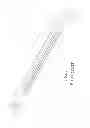
Referring to FIG. 1, generally, an LED lamp board 20 is made to have a fixed size and has two ends thereof equipped with conductive terminals 21. The LED lamp board 20 is then enclosed in a transparent tube 22 and between two end caps 23 to form an LED tubular lamp 200.
To make an LED tubular lamp of a varied length, it is necessary to provide a conductive board between two LED lamp boards 20 that electrically connects contacts of the two LED lamp board 20 and then solder the conductive board and the LED Ian p boards 20 together, thereby serially connecting the LED lamp boards 20 and changing the length of the assembly of the LED lamp boards 20. However, such an approach is relatively labor- and time-consuming.
SUMMARY OF THE INVENTION
In view of the shortcomings of the prior art, the inventor tried to implement his years of experience in the art to devise a simplified structure to serially connect LED lamp boards, and after many experiments as well as improvements, the improved structure proposed herein has been finally invented.
An improved LED-lamp-board connector primarily comprises a main housing that has a base formed with a plurality of terminal sockets extending therethrough. The base has two opposite laterals thereof formed with arms each separated from the base by a gap. The arms are provided with rabbets. The two arms are connected by a spine. The spine also has plural rabbets corresponding to the terminal sockets on the base. There are plural terminals. Each said terminal has a horizontal plate whose two ends each extended with a <-shaped spring contacting piece. The horizontal plate has a lateral extended and bent upward to form an insert, whose bottom is formed with two projecting hooks. The insert of the terminal is configured to be inserted into and positioned by the rabbet on the spine or on the arm, such that the horizontal plate and the spring contacting piece of the terminal are received in the corresponding terminal socket on the base, thereby forming the connector. The connector so formed can receive two LED lamp boards inserted to its two opposite ends, thereby forming an LED lamp board assembly of a variable length.
The objective of the present invention is to provide the improved connector that is useful to physically and electrically connect two LED lamp boards in series rapidly.
BRIEF DESCRIPTION OF THE DRAWINGS
The invention as well as a preferred mode of use, further objectives and advantages thereof will be best understood by reference to the following detailed description of illustrative embodiments when read in conjunction with the accompanying drawings, wherein:
FIG. 1 is a schematic drawing of a conventional LED tubular lamp;
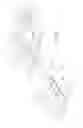
FIG. 2 is an exploded view of an improved LED-lamp-board connector according to one embodiment of the present invention;
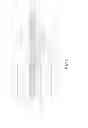
FIG. 3 is a cross-sectional view of the connector holding an LED lamp board;
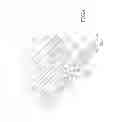
FIG. 4 is an exploded view of an improved LED-lamp-board connector according to another embodiment of the present invention;
FIG. 5 is an applied view of the connector according to the second embodiment of the present invention; and
FIG. 6 is a cross-sectional view of the connector of the second embodiment holding an LED lamp board;
DETAILED DESCRIPTION OF THE INVENTION
FIG. 2 is an exploded view of an improved LED-lamp-board connector according to one embodiment of the present invention. As shown, the connector comprises a main housing 30 having a base 301 formed with a plurality of terminal sockets 301a, wherein each said terminal socket 301a has each of its front and rear ends formed with a positioning hole 301b. The base 301 also at its opposite laterals has arms 40 extending towards its opposite two ends from its axis such that each said arm 40 and the base 301 are separated by a gap 40a. Each of the arms 40 has a rabbet 50. The arms 40 at the two opposite laterals are connected by a spine 41, wherein the spine 41 is formed with a plurality of rabbet 50 each corresponding to one of the terminal sockets 301a of the base 301.
In addition, there are plural terminals 60. The terminal 60 is a horizontal plate 601 having two ends thereof each extended with a <-shaped spring contacting piece 602. The spring contacting piece 602 has a downward bent hook 602a. Also, one lateral of the horizontal plate 601 is extended and bent upward to form an insert 603, whose bottom is formed with two projecting hooks 603a. The insert 603 of the terminal 60 is configured to be inserted into and held by the rabbet 50 on the spine 41 or on the arm 40 such that the horizontal plate 601 and the spring contacting piece 602 of the terminal 60 are set in the terminal socket 301a on the base 301, with the hook 602a of the spring contacting piece 602 retained by the positioning hole 301b of the terminal socket 301a, thereby preventing the terminal 60 from displacement and acting as a connector 70.
The gaps 40a between the arms 40 and the base 301 at two opposite ends of the connector 70 accommodate two LED lamp boards 80 therein (referring to FIGS. 2 and 3) such that the projecting hook 603a of the insert 603 of the terminal 60 can be inserted into the through hole 80a of the corresponding LED lamp board 80 and that the conductive surface 80b at the bottom of the LED lamp board 80 presses against the spring contacting pieces 602 of the terminals 60, thereby, electrically connecting the two LED lamp boards 80.
FIG. 4 is an exploded view of an improved LED-lamp-board connector according to another embodiment of the present invention. As shown, the connector has two arms 40 at its opposite laterals. Each of the arms 40s formed with a spine 410 extending toward a center of the main housing 30. The two spines 410 are disconnected and each have a slope 410a. Therein, each of the spines 410 and the arms 40 is provided with a rabbet 50 corresponding to one said terminal socket 301a on the bas 301 (also referring to FIG. 6) so that each said rabbet 50 allows the insert 603 of none said terminal 60 to be inserted to the spine 41 or the arms 40, and that the horizontal plate 601 and the spring contacting piece 602 of the terminal 60 can be positioned in the corresponding terminal socket 301a on the base 301, with the hook 602a of the spring contacting piece 602 engaged and positioned by the positioning hole 301b of the terminal socket 301a.
The gaps 40a between the arms 40 and the base 301 at two opposite ends of the connector 70 accommodate two LED lamp boards 80 therein (referring to FIGS. 5 and 6) such that the projecting hook 603a of the insert 603 of the terminal 60 can be inserted into the through hole 80a of the corresponding LED lamp board 80 and that the conductive surface 80b at the bottom of the LED lamp board 80 presses against the spring contacting pieces 602 of the terminals 60, thereby electrically connecting the two LED lamp boards 80. Furthermore, disconnection between the two spines 410 and the slopes 410a on the spines 410 are designed to prevent from obstructing light.
Claims
What is claimed is:1. An improved LED-lamp-board connector, being characterized in:
a main housing having a base formed with a plurality terminal sockets, each said terminal socket having front and rear ends thereof formed with a positioning hole, the base having two laterals thereof provided with arms that extend from an axis of the base toward two opposite ends of the base, each said arm being separated from the base by a gap, each said arm having as rabbet, the arms at the two laterals being connected by a spine, and the spine having plural rabbets each corresponding to one said terminal socket on the base; and
a plurality of terminals, each said terminal having a horizontal plate with two opposite ends thereof extended with a <-shaped spring contacting piece, the spring contacting piece having a downward bent hook, the horizontal plate having a lateral extended and bent upward to form an insert, the insert having a bottom formed with two projecting hooks, and the insert of the terminal being configured to be inserted into and positioned by the rabbet on the spine or on the arm such that the horizontal plate and the spring contacting piece of the terminal are received in the corresponding terminal socket on the base with the hook of the spring contacting piece engaged with and positioned by the positioning hole of the terminal socket, thereby presenting the terminal from displacement and forming the connector;
thereby the gaps between the arms and the base at the two opposite ends of the connector allowing two LED lamp boards to be inserted thereinto and get serially connected with each other, such that the projecting hooks of the insert of each said terminal are engaged with one through hole formed on the inserted LED lamp board, and that a conductive surface at a bottom of each said LED lamp board presses against the spring contacting pieces of the terminal, thus making the inserted LED lamp boards physically and electrically connected rapidly.
2. An improved LED-lamp-board connector, being characterized in
a main housing having a base formed with a plurality of terminal sockets extending therethrough, each said terminal socket having front and rear ends thereof formed with a positioning hole, the base having two laterals thereof provided with arms that extend from an axis of the base toward two opposite ends of the base, each said arm being separated from the base by a gap, each said arm having a rabbet, the arms at the two laterals of the base each having a spine extending toward a center of the base such that the two spine are disconnected, each said spine having a slope, and the spine having plural rabbets each corresponding to one said terminal socket on the base; and
a plurality of terminals, each said terminal having a horizontal plate with two opposite ends thereof extended with a <-shaped spring contacting piece, the spring contacting piece having a downward bent hook, the horizontal plate having a lateral extended and bent upward to form an insert, the insert having a bottom formed with two projecting hooks, and the insert of the terminal being configured to be inserted into and positioned by the rabbet on the spine or on the arm such that the horizontal plate and the spring contacting piece of the terminal are received in the corresponding terminal socket on the base with the hook of the spring contacting piece engaged with and positioned by the positioning hole of the terminal socket, thereby preventing the terminal from displacement and forming the connector;
thereby the gaps between the arms and the base at the two opposite ends of the connector allowing two LED lamp boards to be inserted thereinto and get serially connected with each other, such that the projecting hooks of the insert of each said terminal are engaged with one through hole formed on the inserted LED lamp board, and that a conductive surface at a bottom of each said LED lamp board presses against the spring contacting pieces of the terminal, thus making the inserted LED lamp boards physically and electrically connected rapidly, wherein disconnection between the two spines and the slopes on the spines are designed to prevent from obstructing light.
Images & Drawings included:

Sources:
- United States Patent and Trademark Office - verify current appl. status at the USPTO↗
Recent applications in this class:
- » 20250219310 2025-07-03
ULTRA-DENSE, LOW-PROFILE EDGE CARD CONNECTOR - » 20250174924 2025-05-29
CIRCUIT BOARD UNIT AND ELECTRONIC INSTRUMENT - » 20250149814 2025-05-08
PLUG CONNECTOR AND CONNECTOR ASSEMBLY - » 20240072469 2024-02-29
BRACKET FOR PRINTED CIRCUIT BOARD ASSEMBLY - » 20240063562 2024-02-22
ELECTRICAL CONNECTOR WITH INTEGRATED GROUND PLANE - » 20230318212 2023-10-05
COMPOSITE STRUCTURE OF CERAMIC SUBSTRATE - » 20230187865 2023-06-15
ASSEMBLY AND HARNESS ASSEMBLY - » 20220399664 2022-12-15
Card edge connector with improved terminal pattern - » 20220368050 2022-11-17
Scalable electronic modules having a common form factor - » 20220255253 2022-08-11
Input/output transmission interface assembly and motherboard module including thereof