Raspberry plant named 'Drisraspsix'
US20140047596P1
2014-02-13
13/507,990
2012-08-10
Abstract:
A new and distinct variety of raspberry plant named ‘DrisRaspSix’ particularly distinguished by having high productivity, partially self-fruitful plants bearing medium sized, bright red berries, is disclosed.
Inventors:
- Carlos D. Fear 12 🇬🇧 West Malling, United Kingdom
- Brian K. Hamilton 7 🇺🇸 Richmond, TX, United States
- Matthias Vitten 2 🇺🇸 Aptos, CA, United States
- Richard E. Harrison 4 🇺🇸 Aptos, CA, United States
- Miguel H. Ahumada 2 🇺🇸 Ojai, CA, United States
Assignee:
- DRISCOLL STRAWBERRY ASSOCIATES, INC. 44 🇺🇸 WATSONVILLE, CA, United States
Interested in similar patents?
Get notified when new applications in this technology area are published.
Classification:
A01H5/00 IPC
Products
A01H5/00 IPC
Angiosperms, i.e. flowering plants, characterised by their plant parts; Angiosperms characterised otherwise than by their botanic taxonomy
Description
GENUS AND SPECIES
Rubus idaeus L.
VARIETY DENOMINATION
‘DrisRaspSix’
BACKGROUND OF THE NEW PLANT
The present invention relates to a new and distinct raspberry variety designated ‘DrisRaspSix’ and botanically known as Rubus idaeus L. This new raspberry variety was discovered in Ventura, Calif. in February 2004 and originated from a cross between the proprietary female parent raspberry plant ‘Driscoll Maravilla’ (U.S. Plant Pat. No. 14,804) and the proprietary male parent raspberry plant ‘Driscoll Francesca’ (U.S. Plant Pat. No. 14,860). The original seedling of the new variety was first asexually propagated at a nursery in Santa Cruz, Calif. ‘DrisRaspSix’ was subsequently asexually propagated and underwent further testing at a nursery in Ventura, Calif. for nine years. The present invention has been found to be stable and reproduce true to type through successive asexual propagations via tissue culture and root cuttings.
Plant Breeder's Rights for this variety have not been applied for. ‘DrisRaspSix’ has not been made publicly available or sold more than one year prior to the filing date of this application.
SUMMARY OF THE INVENTION
The following are the most outstanding and distinguishing characteristics of this new variety when grown under normal horticultural practices in Ventura, Calif.:
1. High productivity;
2. Partially self-fruitful plant; and
3. Medium sized, bright red berries.
DESCRIPTION OF THE PHOTOGRAPHS
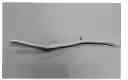
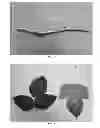
This new raspberry plant is illustrated by the accompanying photographs which show fruit of the plant as well as the primocanes. The colors shown are as true as can be reasonably obtained by conventional photographic procedures. The photographs are of plants that are six months old.
FIG. 1 shows a section of a young cane with prickles.
FIG. 2 shows both the upper surface and the lower surface of the plant leaves.
FIG. 3 shows close-up views of typical flowers and fruit at various stages of development.
DESCRIPTION OF THE NEW VARIETY
The following detailed descriptions set forth the distinctive characteristics of ‘DrisRaspSix’. The data which define these characteristics is based on observations taken in Ventura, Calif. from 2003 to 2011. This description is in accordance with UPOV terminology. Color designations, color descriptions, and other phenotypical descriptions may deviate from the stated values and descriptions depending upon variation in environmental, seasonal, climatic and cultural conditions. ‘DrisRaspSix’ has not been observed under all possible environmental conditions. The botanical description of ‘DrisRaspSix’ was taken from six-month-old plants. Color references are primarily to the R.H.S. Colour Chart of The Royal Horticultural Society of London (R.H.S.) (2007 edition). Descriptive terminology follows the Plant Identification Terminology, An Illustrated Glossary, 2nd edition by James G. Harris and Melinda Woolf Harris, unless where otherwise defined.
DETAILED BOTANICAL DESCRIPTION
- Classification:
-
- Family.—Rosaceae.
- Botanical.—Rubus idaeus L.
- Common name.—Raspberry.
- Variety name.—‘DrisRaspSix’.
-
- Parentage:
-
- Female parent.—The proprietary raspberry plant ‘Driscoll Maravilla’ (U.S. Plant Pat. No. 14,804).
- Male parent.—The proprietary raspberry plant ‘Driscoll Francesca’ (U.S. Plant Pat. No. 14,860).
-
- Plant:
-
- Propagation.—Tissue culture and root cuttings.
- Size.—Medium.
- Height.—21.5 cm.
- Width.—17.5 cm.
- Length/width ratio.—1.2.
- Productivity.—High.
- Self-fruitfulness.—Partially self-fruitful.
- New cane growth habit.—Semi-erect.
-
- Primocanes:
-
- Number of canes.—Medium.
- Glaucosity (waxy bloom) on full grown shoot after picking.—Medium.
- Cane length in autumn.—Medium.
- Cane length for current season's cane in autumn.—18.13 cm.
- Length of internode.—Very long.
- Internodal distance at central ⅓ of cane.—9.83 cm.
- Length of vegetative bud.—Long.
- Number of young shoots.—Medium.
- Anthocyanin coloration of apex during rapid growth.—Present.
- Intensity of anthocyanin coloration of apex during rapid growth.—Weak.
- Time of young shoot emergence from the soil.—Medium.
- Time of beginning of flowers.—Medium.
- Time of beginning of fruit ripening in autumn.—Medium.
- Length of fruiting period in autumn.—Medium.
- Percent of cane flowering as primocane.—35%.
- Percent primocane yield of total yield.—50%.
- Glaucosity (waxy bloom) on current years cane in autumn.—Medium.
- Cane strength.—Medium.
- Shape of cane cross section.—Rounded to angular.
- Pubescence on canes.—Absent.
-
- Floricanes:
-
- Dormant cane length in summer.—Medium (Pruned).
- Dormant cane color in summer.—RHS N200D (Light brown).
- Fruiting lateral attitude.—Semi-erect.
- Time of vegetative bud burst.—Medium.
- Time of beginning of flowers.—Medium.
- Time of beginning of fruit ripening.—Medium.
- Length of fruiting period.—Medium.
-
- Prickles (Spines):
-
- Density of spines on central third.—Sparse.
- Size of base of prickles.—Small.
- Length (from base to tip).—Very short.
- Length at 1.0 m height at end of harvest season (from base to tip).—1.22 mm.
- Color (pigmentation).—RHS 125A (Dark greyed-orange).
- Attitude of tip.—Horizontal to downward.
- Size.—Very small.
- Texture.—Soft.
- Presence and distribution on petioles.—Present and irregularly distributed.
-
- Leaves:
-
- Terminal leaflet.—Length: Medium; 9.98 cm Width: Medium; 6.59 cm Length/width ratio: 1.5 Leaf color: Upper surface: RHS 137A (Dark green) Lower surface: RHS N138D (Medium green) Profile in cross section: Flat (straight) Relief between the veins: Medium Overlapping of leaflets: Overlapping Glossiness: Medium Shape: Ovate Apex: Truncate Base: Obtuse Margin: Crenate Arrangement: Simple.
- Lateral leaflets (basal pair).—Number of leaflets: Usually 3 Size: Length: 9.02 cm Width: 5.58 cm Length/width ratio: 1.6 Arrangement: Compound-opposite (2 leaves per node) Shape: Ovate Apex: Truncate Base: Obtuse Margin: Crenate Lateral leaflet (length to stalklet, lower pair): Short.
- Rachis length between terminal leaflet and adjacent lateral leaflets.—19.3 mm.
-
- Stipules:
-
- Orientation.—Erect.
-
- Flowers:
-
- Size.—Small.
- Diameter.—10.71 mm.
- Petal length.—6.39 mm.
- Petal width.—2.92 mm.
- Length/width ratio.—2.2.
- Flowering period.—Primocane: Medium; Early June to mid-September Floricane: Medium; Late March to late June.
- Pedicel.—Number of spines: Absent or very few Anthocyanin coloration: Absent Length: Short; 20.33 mm Diameter: 1.05 mm.
-
- Peduncle:
-
- Presence of anthocyanin coloration.—Absent.
- Intensity of anthocyanin coloration.—Absent.
-
- Fruit:
-
- Length.—Medium; 23.56 mm.
- Width.—Medium; 20.65 mm.
- Ratio of length to width.—1.1; As long as broad.
- Average number of drupelets per fruit.—51.
- Weight (g/fruit).—Primocane: 6.5 Floricane: 6.0.
- Soluble solids (% in Brix).—10.5.
- Weight of seeds (g/seed).—0.001469.
- Size.—Medium.
- Shape.—Ovate (broad conical).
- Size of single drupelet.—Medium.
- Color.—Immature fruit: RHS 145B (Light yellow-green) Maturing fruit: RHS 33C (Light orange-red) Mature fruit color: RHS 53A (Dark red).
- Glossiness.—Medium.
- Firmness.—Medium.
- Adherence to plug.—Medium.
- Main bearing type.—Both on previous years cane in summer and on current years cane in autumn.
- Time of ripening.—Primocane: Medium Floricane: Medium.
- Harvest season.—Primocane: Mid-July to early October Floricane: Mid-May to late July.
- Yield.—High.
-
- Pest resistance: Tetranychus urticae.—Susceptible.
COMPARISON WITH PARENTAL VARIETIES
‘DrisRaspSix’ differs from the proprietary female parent ‘Driscoll Maravilla’ (U.S. Plant Pat. No. 14,804) in that ‘DrisRaspSix’ has a medium plant size, medium glaucosity on primocanes, and medium time of cane emergence, whereas ‘Driscoll Maravilla’ has a large plant size, weak glaucosity on primocanes, and late time of cane emergence. Additionally, ‘DrisRaspSix’ has medium size fruit and is partially self-fruitful, whereas ‘Driscoll Maravilla’ has large size fruit and is self-fruitful.
‘DrisRaspSix’ differs from the proprietary male parent ‘Driscoll Francesca’ (U.S. Plant Pat. No. 14,860) in that ‘DrisRaspSix’ has terminal leaflets with an obtuse base and a crenate margin, whereas ‘Driscoll Francesca’ has terminal leaflets with a cordate base and a doubly serrate margin. Additionally, ‘DrisRaspSix’ has fruit with medium glossiness and is partially self-fruitful, whereas ‘Driscoll Francesca’ has fruit with weak glossiness and is self-fruitful.
Claims
We claim:1. A new and distinct variety of raspberry plant named ‘DrisRaspSix’ as described and shown herein.
Images & Drawings included:

Sources:
- United States Patent and Trademark Office - verify current appl. status at the USPTO↗
Recent applications in this class:
- » 20240292771 2024-08-29
Campanula plant named 'Twilight' - » 20240251691 2024-07-25
HYDRANGEA PLANT NAMED 'HYLV17520' - » 20240251690 2024-07-25
Vaccinium Plant Named 'BWPBLUE02' - » 20240251689 2024-07-25
BLUEBERRY PLANT NAMED 'FC13-113' - » 20240251688 2024-07-25
BLUEBERRY PLANT NAMED 'FCM14-057' - » 20240237567 2024-07-11
PONGAMIA VARIETIES - » 20240224827 2024-07-04
PELARGONIUM PLANT NAMED 'PEQZ0103' - » 20240215470 2024-06-27
Agapanthus plant named 'Monsapho' - » 20240215469 2024-06-27
plant named ‘LOCORA3519’ - » 20240206359 2024-06-20
CORYLUS PLANT NAMED 'BWM01'
Recent applications for this Assignee:
- » 20160249505 2016-08-25
Blackberry plant named ‘DrisBlackFifteen’ - » 20160249504 2016-08-25
Blackberry plant named ‘DrisBlackFourteen’ - » 20160242335 2016-08-18
Blackberry plant named ‘DrisBlackEleven’ - » 20150307257 2015-10-29
Clamshell raspberry container - » 20150173280 2015-06-18
Strawberry plant named 'DrisStrawThirtySeven' - » 20150173263 2015-06-18
Blueberry plant named 'Drisblueten' - » 20150173262 2015-06-18
Blueberry plant named 'DrisBlueEleven' - » 20150163972 2015-06-11
Blueberry plant named 'Drisbluethirteen' - » 20150163971 2015-06-11
Blueberry plant named 'DrisBlueTwelve' - » 20150101090 2015-04-09
Strawberry plant named 'DrisStrawForty'