SYSTEM AND METHOD FOR ENABLING COMPLIANCE WITH RULES TO REDUCE FRAUDULENT REIMBURSEMENT ASSOCIATED WITH DURABLE MEDICAL EQUIPMENT PRESCRIPTIONS
US20140052466A1
2014-02-20
13/971,481
2013-08-20
Abstract:
A method of complying with rules to reduce fraudulent reimbursement associated with durable medical equipment prescriptions includes obtaining, using a processing device, information associated with at least one of a patient, the durable medical equipment, a physician, and an ancillary provider; and providing, using the processing device, selective access to the information. The access is selectively provided to at least one of the physician, ancillary provider, a payor, and an auditor, whereby the selective access enables compliance with the rules to reduce fraudulent reimbursement associated with the durable medical equipment prescriptions. A corresponding computer-readable medium and system are also disclosed.
Inventors:
- Auston Guillium DeVille 4 🇺🇸 Huntingdon, TN, United States
- Larry Leighton Holmes, JR. 1 🇺🇸 Brentwood, TN, United States
- William Stephen McConnell, IV 4 🇺🇸 Brentwood, TN, United States
- Jane Elizabeth Wilkinson-Bunch 1 🇺🇸 Marietta, GA, United States
- Eric Jason Shiflet 4 🇺🇸 Franklin, TN, United States
Assignee:
- Rearden Analytics 4 🇺🇸 Brentwood, TN, United States
Interested in similar patents?
Get notified when new applications in this technology area are published.
Classification:
Description
CROSS-REFERENCE TO RELATED APPLICATION
This application claims priority to U.S. Provisional Application No. 61/691,027, filed Aug. 20, 2012, which is incorporated by reference herein in its entirety.
BACKGROUND
1. Field
Embodiments disclosed herein are directed to collection and dissemination of information in the health field and, more particularly, to systems and methods that reduce or eliminate fraud in obtaining reimbursement associated with the provision and maintenance of durable medical equipment.
2. Related Art
Fraudulent activity associated with obtaining reimbursement for durable medical equipment is widespread. For example, in August 2011, a jury in Los Angeles convicted three defendants, a durable medical equipment (DME) owner, his wife, and an employee, for their roles in billing Medicare $14.2 million in fraudulent DME claims after a two-week trial. According to trial evidence, the owner and his wife were pastors of a Los Angeles area church where they also operated a DME supply company. The defendants purchased fraudulent prescriptions and documents, including Medicare numbers and identities of beneficiaries, including dead beneficiaries, from illicit sources to bill Medicare for expensive, high-end power wheelchairs and orthotics that were medically unnecessary or never provided. When it appeared that the owner would have to close the DME company due to an audit by Medicare, the owner persuaded his sister and a member of the church to allow him to use their names and identities to open two new fraudulent DME companies. After closing the first DME company, the defendants and their co-conspirators continued to operate the fraud scheme from the two new fraudulent DME companies. Two co-defendants pleaded guilty previously and three defendants were convicted at trial in August 2011.
In July 2011, a jury in Los Angeles convicted the co-owner of a DME company and a purported home health agency for his role in causing approximately $11.9 million in fraudulent DME billings and $8 million in fraudulent home health billings to Medicare. The DME co-owner and a second co-owner conspired with others to defraud Medicare by paying marketers for access to Medicare beneficiary information and fraudulent documents in order to submit and cause the submission of false claims to Medicare for DME and home health services that were not medically necessary, and that often were not provided at all. The second co-owner pleaded guilty prior to the trial to multiple health care fraud charges in connection with his participation in the scheme.
In May 2011, the U.S. District Court in Houston sentenced the owner of a Houston-area DME company to 84 months in connection with a $2 million Medicare fraud scheme. A DME company co-conspirator was sentenced to 70 months in prison. The DME owner admitted that she paid kickbacks, sometimes $1,000 per patient, to recruiters who brought patients to her DME company. The owner then billed Medicare for medical equipment that the patients either did not need or never received, including power wheelchairs and orthotic devices. A physician co-conspirator was sentenced to 41 months in prison. Two patient recruiters were sentenced to 46 months in prison.
In February 2011, the court sentenced a DME owner/manager to 57 months in prison in connection with a $2.8 million conspiracy to commit health care fraud. The defendant billed Medicare for arthritis kits for more than 683 beneficiaries, some of whom were deceased. None of the beneficiaries interviewed knew of the defendant, the co-defendant, or the DME provider. A physician co-conspirator signed purported prescriptions ordering DME that served as the basis for the owner's fraudulent claims to Medicare. A third co-conspirator who was charged in a separate case pleaded guilty.
In November 2010, a court sentenced a manager of a Houston-area DME company to 120 months in prison for his role in a $1.1 million Medicare fraud scheme. The defendant submitted false claims to Medicare for power wheelchairs and accessories as catastrophe related in connection with Hurricanes Katrina, Rita, Ike, and Gustav. Many of the Medicare beneficiaries, including some who testified at trial, had never owned a power wheelchair during these catastrophes or had owned one that was damaged during these catastrophes. According to trial evidence, the defendant was previously convicted of fraud, and he failed to admit that previous conviction on documents he submitted to Medicare. A co-defendant who was a DME delivery driver was sentenced to 41 months in prison for delivering medically unnecessary DME, including power wheelchairs, to Medicare beneficiaries whom he knew did not need, and in some cases did not even want the DME.
In January 2011, a physician and five other individuals in Texas were sentenced to 41 months, 21 months, 26 months, 46 months, 70 months, and 41 months of incarceration, respectively, for their roles in a multi-million dollar DME fraud scheme. Two others were sentenced to 10 months of community service and home confinement and 3 years of probation. respectively. Evidence presented at trial showed that from 2003 to 2009, these individuals billed Medicare for fraudulent DME, including power wheelchairs and orthotic devices. The physician ratified prescriptions for medically unnecessary DME, while others created fraudulent patient files, paid kickbacks to recruiters, and delivered DME, such as power wheelchairs and orthotics, to beneficiaries who had no medical need for the equipment. The owner of the DME and the other remaining defendants have pleaded guilty for their participation in various parts of the fraud scheme.
In August 2011, following a two-week trial, a jury in Baton Rouge found guilty all four defendants in a $4.7 million Medicare fraud. Trial evidence established that between 2003 and 2009, the owner/operator of a Baton Rouge area DME company paid two patient recruiters to locate and solicit Medicare beneficiaries to attend health fairs hosted at churches and other locations. At the health fairs, doctors prescribed the beneficiaries power wheelchairs that were medically unnecessary. The DME owner then used the prescriptions to submit false and fraudulent claims to Medicare. The patient recruiters paid the doctors illegal kickbacks based on the number of power wheelchair prescriptions generated at the health fairs. The DME owner also paid kickbacks to the recruiters on a per prescription basis when beneficiaries received prescriptions for medically unnecessary power wheelchairs for which the owner's company fraudulently billed Medicare.
In June 2011, the District Court in Baton Rouge sentenced an owner of a Baton Rouge DME company to 60 months in prison for his role in a $5.4 million health care fraud scheme. The DME owner and three co-conspirators admitted to their roles in a multi-year scheme to defraud Medicare by routinely submitting claims to Medicare seeking reimbursement for a set of expensive braces (including a back brace, knee braces, and other items) when they knew that the braces were not medically necessary and had not been prescribed for the beneficiaries by their physicians. The court sentenced one coconspirator to 48 months in prison, a second to 30 months in prison, and another to 24 months probation.
In January 2011, a court sentenced a DME owner/operator to serve 48 months in prison for his role in a $775,000 DME fraud scheme. The court sentenced the co-defendant, a physician, to 30 months in prison. The physician wrote prescriptions for medically unnecessary DME, such as power wheelchairs, wheelchair accessories, and feeding nutrients. The majority of the DME company's fraudulent claims were based on prescriptions for medically unnecessary DME that were written and provided by the physician.
In May 2011, the United States District Court for the Middle District of Tennessee entered a judgment of $82.6 million in favor of the United States in a FCA case alleging that Renal Care Group (RCG), Renal Care Group Supply Company (RCGSC) and Fresenius Medical Care Holdings, Inc. violated the FCA when they submitted claims from 1999 through 2005 to the Medicare program for home dialysis supplies provided to patients with end stage renal disease (ESRD) for reimbursement of the supplies and equipment.
All of these claims, as well as related claims for support services rendered by RCG dialysis clinics were false because the defendants were prohibited from and not qualified to bill Medicare for these home dialysis patients. Under Federal law, the Medicare program pays companies that provide dialysis supplies to patients only if the companies that provide the supplies are truly independent from dialysis facilities and the ESRD patient chooses to receive supplies from the independent supply company. The government alleged that the defendants set up a sham billing company, RCGSC, which was not independent from RCG. Further, RCG interfered with ESRD patients' choice of supply options, requiring patients to move to RCGSC. Even after RCG employees raised concerns and industry competitors closed their supply companies, RCG kept RCGSC open because of the illicit revenue it created.
In September 2011, Hill-Rom Company, Inc (Hill-Rom), a national DME supplier, paid the United States $41.8 million to resolve allegations that Hill-Rom submitted false Medicare claims for bed support surfaces for patients who no longer needed or were no longer using this DME. Bed support surfaces are generally used to relieve pressure on bed-bound patients suffering wounds or other sores.
In May 2011, the owner and operator of a Florida pharmacy was sentenced to 52 months incarceration for health care fraud. Between August 2006 and April 2007, the individual used his pharmacy to submit false claims to Medicare, including claims for deceased beneficiaries. These claims sought reimbursement for the cost of DME prescription medications, and other items and services for Medicare beneficiaries in Florida that were not prescribed by doctors or provided as claimed.
In May 2011, a Florida man was sentenced to 55 months incarceration for defrauding the Medicare program. Between July 2006 and January 2007, the individual, the owner of a DME supply company, caused the company to submit false and fraudulent Medicare claims for DME items such as pressure support ventilators, therapy pumps, and other DME that were not prescribed by physicians nor received by Medicare beneficiaries.
In October 2010, a consent judgment was entered against a defendant for $657,708 for causing the submission of false claims by the defendant's former company, Orthoscript. Inc., to Medicare, TR1CARE, and FEHBP from 1999 through 2004. Orthoscript improperly billed the programs under the wrong, higher paying codes for certain DME. The defendant was earlier tried and convicted for fraud in connection with the scheme.
The Department of Health and Human Services/Office of Inspector General (HHS/OIG) found that an estimated 61 percent of power wheelchairs provided to Medicare beneficiaries in the first half of 2007 were medically unnecessary or had claims that lacked sufficient documentation to determine medical necessity. The estimate was based on records submitted by suppliers that provided the power wheelchairs. HHS/OIG recommended that Medicare enhance reenrollment screening standards for current DME suppliers, review records from sources in addition to the supplier, such us the prescribing physician to determine medical necessity, continue supplier and physician education, and review the suppliers of the sampled claims found to be in error.
HHS calculated, and is reporting in the FY 2011 Agency Financial Report, the three-year weighted average national Medicaid error rate that includes rates from fiscal years 2009, 2010, and 2011. This three-year rolling national error rate is 8.1 percent or $21.9 billion in estimated improper payments and has decreased from FY 2010 (9.4 percent). The weighted national error components rates are as follows: Medicaid FFS, 2.7 percent; Medicaid managed care, 0.3 percent; and Medicaid eligibility, 6.1 percent. The most common cause of errors in fee-for-service claims is lack of sufficient documentation to support the payment. Medicare does not require durable medical equipment (DME) ancillary provider companies to prove they have the required documentation before payment is sent out. The vast majority of the eligibility errors were due to beneficiaries found to be ineligible or whose eligibility status could not be determined. The reports of fraudulent activity provided above were obtained from a document entitled “The Department of Health and Human Services and The Department of Justice Health Care Fraud and Abuse Program Annual Report for Fiscal Year 2011” (http://oig.hhs.gov/publications/docs/hcfac/hcfacreport2011.pdf).
Currently, there are no methods or systems to address the above-identified fraudulent activity in an effective and cost-efficient manner. Therefore, there is a substantial need to reduce such fraud that remains prevalent in the reimbursement process concerning durable medical equipment by proving the required information exists before billing the payer in a cost effective method.
SUMMARY
In accordance with one embodiment of the invention, a method of complying with rules to reduce fraudulent reimbursement associated with durable medical equipment prescriptions is provided, which includes obtaining, using a processing device, information associated with at least one of a patient, the durable medical equipment, a physician, and an ancillary provider; and providing, using the processing device, selective access to the information. The access is selectively provided to at least one of the physician, ancillary provider, a payor, and an auditor, whereby the selective access enables compliance with the rules to reduce fraudulent reimbursement associated with the durable medical equipment prescriptions.
The selective access may be provided by a third-party unrelated to the patient, physician, ancillary provider, payor, and auditor. Providing selective access may include restricting at least one of access to and modification of the information by at least one of the physician, ancillary provider, payor, and auditor, thereby reducing fraud associated with the information. The information may include physician information provided by the physician, which includes at least one of a manufacturer of the durable medical equipment, a make of the durable medical equipment, a model of the durable medical equipment, a serial number of the durable medical equipment, a lot number of the medical equipment, a latitude of the processing device, a longitude of the processing device, a quantity of the durable medical equipment, a full description of the durable medical equipment, a patient demographic, a user identifier, a patient identifier, a cost of the durable medical equipment to the patient, a signature of the patient, a date, a time, hours-of-operation of the durable medical equipment, an image or video of an hours-of-operation display of the durable medical equipment, whether the patient has had any problems with the durable medical equipment, whether the patient is benefitting from the durable medical equipment, daily hours prescribed for use of the durable medical equipment by the patient, a physician comment, whether the patient is present for a 90-day visit, whether a compliance download has been read by the physician, daily hour usage of the durable medical equipment, days of usage of the durable medical equipment, whether the patient needs to continue using the durable medical equipment, whether the patient is non-compliant with the prescribed usage of the durable medical equipment yet has been instructed to use the durable medical equipment correctly, patient verification information, durable medical equipment verification information, and durable medical equipment decommission information.
The method may include obtaining at least one of the latitude and longitude using a global positioning system feature of the processing device without user intervention; obtaining at least one of the date, time, and user identifier using a feature of the processing device without user intervention; and obtaining at least one of the hours-of-operation and signature of the patient using a feature of the processing device.
The information may include ancillary provider information, which includes at least one of a manufacturer of the durable medical equipment, a make of the durable medical equipment, a model of the durable medical equipment, a serial number of the durable medical equipment, a lot number of the medical equipment, a latitude of the processing device, a longitude of the processing device, a quantity of the durable medical equipment, a full description of the durable medical equipment, a patient demographic, a user identifier, a patient identifier, a cost of the durable medical equipment to the patient, a signature of the patient, a date, a time, hours-of-operation of the durable medical equipment, an image or video of an hours-of-operation display of the durable medical equipment, whether the patient has had any problems with the durable medical equipment, whether the patient is benefitting from the durable medical equipment, daily hours prescribed for use of the durable medical equipment by the patient, daily hour usage of the durable medical equipment, days of usage of the durable medical equipment, whether the patient needs to continue using the durable medical equipment, whether the patient is non-compliant with the prescribed usage of the durable medical equipment yet has been instructed to use the durable medical equipment correctly, patient verification information, durable medical equipment verification information, durable medical equipment decommission information, and in-home diagnostic testing and gathering information requested by a physician comprising at least one of blood gasses, international normalized ratio (INR) coumadin testing, ventilators, spirometry, and pulse oximetry. The method may include obtaining at least one of the latitude and longitude using a global positioning system feature of the processing device without user intervention; obtaining at least one of the date, time, and user identifier using a feature of the processing device without user intervention; and obtaining at least one of the hours-of-operation and signature of the patient, using a feature of the processing device.
The method may include associating a code with the durable medical equipment, wherein the code includes a 256-bit advanced encryption system string, the string includes a name of the ancillary provider and a coordinated universal time code date and time, and the date and time are encrypted using a secret key. The method may include generating at least one of a quick response code and a DataMatrix code image using the secret key. The method may include coupling the durable medical equipment to a network-enabled sensor, which transmits at least one of hours-of-operation, date and time of a receipt of an on command associated with the durable medical equipment, date and time of an off command associated with the durable medical equipment, air flow into the durable medical equipment, air flow out of the durable medical equipment, electronic current rating associated with the durable medical equipment, latitude of the processing device, and longitude of the processing device. The method may include coupling the durable medical equipment wirelessly to the network-enabled sensor, and the processing device may include a mobile communication device. The method may include determining whether the patient needs the durable medical equipment.
In accordance with another embodiment of the invention, a computer-readable medium is provided comprising instructions that, when executed by a processing device, perform the method of complying with rules to reduce fraudulent reimbursement associated with durable medical equipment prescriptions.
In accordance with yet another embodiment of the invention, a system, which includes a processing device and a computer readable medium, is provided. The computer readable medium includes instructions that, when executed by the processing device, perform the method of complying with rules to reduce fraudulent reimbursement associated with durable medical equipment prescriptions.
Embodiments of the invention will become apparent from the following detailed description, which is to be read in connection with the accompanying drawings.
BRIEF DESCRIPTION OF THE DRAWINGS
The following drawings are presented by way of example only and without limitation, wherein like reference numerals, when used, indicate corresponding elements throughout the several views, and wherein:
FIG. 1 is a flowchart of a third-party fraud reduction business process workflow;
FIG. 2 is a relational diagram showing issues with a reimbursement process for durable medical equipment;
FIG. 3 is a relational diagram showing a fraud reduction business process workflow in accordance with the embodiments disclosed herein;
FIG. 4 is a block diagram showing at least a portion of an exemplary machine in the form of a computing system configured to perform methods according to one or more embodiments.
It is to be appreciated that elements in the figures are illustrated for simplicity and clarity. Common but well-understood elements that are useful in a commercially feasible embodiment are not necessarily shown in order to facilitate a less hindered view of the illustrated embodiments.
DETAILED DESCRIPTION
Embodiments of the invention are directed to and method for reducing fraud associated particularly a third-party system and method with the provision and maintenance of durable medical equipment. The embodiments disclosed herein will be described in the context of devices, methods, systems, and computer-readable media that eliminate or substantially reduce the potential for fraud associated with obtaining reimbursement from public and private payers or payors concerning the provision and maintenance of durable medical equipment when compared with conventional techniques, while reducing the amount of human intervention required to perform these techniques. It should be understood, however, that the embodiments herein are not limited to these or any other particular devices, methods, systems, and computer-readable media.
Thus, the disclosed embodiments provide a third-party operational tool for preventing DME fraud, decreasing paperwork, decreasing manual labor, and increasing accuracy. The tool utilizes 31 to 90-day face-to-face visits between the patient and physician, as well as capture of the patients' signature. The (1) latitude and longitude coordinates, (2) date and time stamps, and (3) user credentials or user verification is captured each time data is acquired during the patient journey. The tool also makes data available to all certified and approved parties within HIPAA guidelines, which can be made selective by utilizing different authorization levels for different parties. Therefore, the tool reduces fraud that remains prevalent in the reimbursement process concerning durable medical equipment by providing proof that the required information exists before billing the payer in a cost-effective manner.
Embodiments of the invention provide for a third-party fraud prevention application, which is accomplished through a process that captures information between an ordering physician and a patient, and then provides the information to the patient's insurance company and ancillary provider. The application also captures GPS location information upon each completion of the application to ensure that delivered durable medical equipment and physician visits are verifiable. The physician or ancillary provider cannot alter the information.
The following list of terminology and their respective definitions is intended to provide guidance regarding the meaning of terms used herein without limitation thereto.
-
- Ancillary Company or Provider (AC)—are companies or entities that provide services and products to physicians and patients. ACs often act as middle-men or intermediaries that purchase durable medical equipment (DME) from DME manufacturers, ship the DME to patients, and bill insurance companies, including Medicare and Medicaid, as well as private insurers, to obtain reimbursement for the DME.
- Durable Medical Equipment (DME)—are products used by physicians and patients to treat illnesses such as, but not limited to mobility walkers, oxygen concentrators, lift chairs, and continuous positive airway pressure (CPAP) systems. Durable Medical Equipment can also be referred to as “Home Medical Equipment (HME)” and also as “Durable Medical Equipment, Prosthetics, Orthotics, and Supplies (DMEPOS)” as set forth in greater detail by the Centers for Medicare and Medicaid Services at http://www.cms.gov/Regulations-and-Guidance/Guidance/Manuals/Downloads/clm104c20.pdf, the content of which is incorporated by reference herein. For the purposes of this document, all references to DME herein are intended to include any device that may be defined as home medical equipment (HME) or durable medical equipment, prosthetics, orthotics, supplies (DMEPOS).
- Ancillary Company Technician (AC Technician)—delivers durable medical equipment (DME) to the patient, performs setup operations associated with the DME, provides instructions to the patient, and returns to the patient for follow-up inspections of the DME.
- Continuous Positive Airway Pressure (CPAP) systems—use mild air pressure to keep airways open for the treatment of patients who have breathing problems.
- Face-to-Face (visit or encounter)—is an in person encounter between a patient and their medical provider. In some cases, this may also be performed with a telemedicine video conferencing system.
- Electronic Medical Record (EMR)—is a computerized repository or database intended for storage, retrieval, and modification of patient medical records.
- Progress Notes—Progress Notes are the part of a medical record where healthcare professionals record details to document a patient's clinical status or achievements during the course of a hospitalization or over the course of outpatient care.
- Patient Journey—is a complete set of information starting from a first contact that a patient has with a medical provider through the patient's recovery.
- Centers for Medicare and Medicaid Services (CMS)—previously known as the Health Care Financing Administration (HCFA), is a federal agency within the United States Department of Health and Human Services (DHHS) that administers the Medicare program and works in partnership with state governments to administer Medicaid, the State Children's Health Insurance Program (SCHIP), and health insurance portability standards.
- Health Insurance Portability and Accountability Act (HIPAA)—is a U.S. law designed to provide privacy standards to protect patients' medical records and other health information provided to health plans, doctors, hospitals, and other health care providers. Developed by the Department of Health and Human Services, these new standards provide patients with access to their medical records and more control over how their personal health information is used and disclosed. They represent a uniform, federal floor of privacy protections for consumers across the country. State laws providing additional protections to consumers are not affected by this new rule. HIPAA took effect on Apr. 14, 2003.
- Certified Audit Entity—includes a recovery audit contractor or anyone approved by at least the payor, physician, or AC to perform audits.
- Recovery Audit Contractor (RAC)—is a person or entity enabled by the Tax Relief and Health Care Act of 2006 to identity improper Medicare payments in all 50 states. RACs are paid on a contingency fee basis, and receive a percentage of improper overpayments and underpayments that they collect from providers, as set forth in greater detail at http://www.aha.org/advocacy-issues/rac/index.shtml, the content of which is incorporated by reference herein.
- Medicare Administration Contractors (MAC)—A company under contract with the federal government to handle claims processing for Medicare services.
- Zone Program Integrity Contractors (ZPIC)—An entity established by the Centers for Medicare & Medicaid Services (CMS) to combat fraud, waste, and abuse in the Medicare program. As a result of the Medicare Prescription Drug, Improvement, and Modernization Act of 2003, which established 7 zones throughout the United States for the purpose of processing Medicare claims, CMS created ZPICs to more effectively protect the Medicare program. ZPICs replaced Program Safeguard Contractors (PSC), which had been established by the Health Insurance Portability and Accountability Act of 1996.
- Office of Inspector General (OIG)—Since its 1976 establishment, the Office of Inspector General of the U.S. Department of Health & Human Services (HHS) has been at the forefront of the Nation's efforts to fight waste, fraud, and abuse in Medicare, Medicaid and more than 300 other HHS programs as set forth in greater detail at http://oig.hhs.gov, the content of which is incorporated by reference herein.
- Health Care Fraud Prevention and Enforcement (HEAT)—on May 20, 2009, Attorney General Holder and Secretary Sebelius announced the Health Care Fraud Prevention & Enforcement Action Team, which is a new effort with increased tools, resources, and a sustained focus by senior level leadership to enhance collaboration between the Department of Health and Human Services (HHS) and the Department of Justice (DOJ). HEAT is committed to preventing and prosecuting health care fraud. HEAT is jointly led by the Deputy Attorney General and HHS Deputy Secretary, and includes top-level law enforcement agents, prosecutors, attorneys, auditors, evaluators, and other staff from the DOJ and HHS and their operation divisions, and is dedicated to joint efforts across governmental agencies to prevent fraud and enforce current anti-fraud laws around the country. Medicare Fraud Strike Force teams are a key component of HEAT, as described in greater detail at http://www.stopmedicarefraud.gov, the content of which is incorporated by reference herein.
- Payer—includes both public and private insurance companies and entities.
- Quick Response Code (QR Code) refers to a type of matrix bar code (or two-dimensional code) first designed for the automotive industry. More recently, the code has become popular beyond the automotive industry due to its readability and large storage capacity in comparison to standard universal product code (UPC) bar codes. QR code includes black modules, which appear as square dots, arranged in a square pattern on a white background. The encoded information can be made up of four standardized kinds or so-called “modes” of data, which include numeric, alphanumeric, byte/binary, and Kanji or, through supported extensions, virtually any kind of data, as is further described at http://en.wikipedia.org/wiki/QR_code, the content of which is incorporated by reference herein.
- DataMatrix Code—is a two-dimensional matrix bar code, which includes black and white cells or modules arranged in either a square or rectangular pattern. The information to be encoded can be text or numeric data, as is further described at http://en.wikipedia.org/wiki/Data_Matrix, the content of which is incorporated by reference herein.
- Preliminary Audit—is an audit that occurs prior to payment.
The workflow or process of the physician, patient, and AC encounter will now be described in relation to the workflow 10 shown in FIG. 1. Primary responsibility for blocks 12 and 24 is with the physician; primary responsibility for blocks 14, 16, and 26 is with a third-party; primary responsibility for block 20 is with the ancillary provider; and primary responsibility for block 22 is with the patient. First, the patient visits the physician for an initial face-to-face meeting or visit in step 12 to determine whether a DME is or is not needed by the patient in step 14. If the physician determines that the patient needs DME to improve the patient's health, this process continues with step 16, and if the physician determines that the patient does not need DME to improve the patient's health, this process ends with step 18.
If the physician finds a need for DME, the AC receives a prescription for DME and supplies from the physician. For example, if the physician determines that a continuous positive airway pressure (CPAP) device is needed, a humidification device may also be necessary if the patient's nasal passages are drying. The AC contacts the patient and then delivers and sets up the DME in the patient's home or the patient acquires the DME at the ACs office or facility in step 20.
The AC acquires information concerning the DME setup, which includes a delivery ticket and documentation, and then provides this information to the physician. DME information acquired at this time includes, but is not limited to a manufacturer, make, model, serial number and/or lot number, quantity, full description, patient demographics, patient cost, including a patient signature 33 or electronic signature, and date, which is acquired in step 22. The AC technician will also leave forms with the patient, such as, but not limited to, a patient's bill of rights, insurance documents, warrantee concerning the DME, and the like.
The physician completes any forms or questionnaires provided by the AC and then signs and dates these forms and returns these forms with progress notes from the initial face-to-face visit, a sleep study report from the physician's standard progress notes from the initial face-to-face visit prior to conducting the sleep study, and a polysinography sleep study to rule out obstructive sleep apnea (OSA). For example, if the patient exhibits an apnea hypopnea index of fifteen (15) or more events per hour or between five (5) and fourteen (14) events per hour with documented symptoms of daytime hypersomilance, which includes, for example, fatigue, moodiness, history of stroke, ischemic heart disease, and the like, then the patient qualifies for a CPAP and supplies. If this is the case, then for all follow-up visits between the 31st and 90th day following CPAP setup, the patient is required to be on the CPAP device a minimum of thirty (30) consecutive nights for at least four (4) hours per night with 70% compliance over that 30-day period. Such a patient must return to the treating physician for a follow-up face-to-face visit and that patient must state that he or she is improving from and must continue use of the DME. An improvement from the use of the DME is shown if the patient believes that he or she is feeling and sleeping better. The Epworth sleepiness scale, which is used to determine the level of daytime sleepiness, provides another indication of improvement. For example, a score of 10 or more is considered sleepy, and will qualify a patient for a CPAP device. The physician or a sleep lab can determine the Epworth score.
The patient is required to have another face-to-face visit with the physician between the 31st and 90th day following receipt of the DME and required documentation from the AC technician in step 24. The physician determines whether the DME device is improving the patient's health. Determination of whether the patient is using the DME can be made by verifying the hours-of-operation displayed on the DME, if the DME is equipped with an hours-of-operation meter or a memory card that actively stores a digital version of DME usage activity statistics. Whether the patient has had any problems with the DME can be determined by asking the patient. Whether the patient is benefitting from the DME can be determined by asking for the patient's opinion and/or a physical inspection of the patient by the physician.
If the patient is not benefiting from the DME, the AC can then reacquire the DME from the patient and should stop billing the payer for the DME. If the patient is benefiting from the DME the AC will continue billing for the DME for a total of thirteen (13) months following delivery of the DME. After thirteen (13) months following delivery of the DME, the patient owns the DME, which is one reason why the patient is provided with warrantee 42 concerning the DME upon delivery of the DME to the patient as shown in FIG. 2. The thirteen-month regulation provides a potential for thirteen (13) months of fraudulent billing 34 by the AC 32 and thirteen (13) months of fraudulent payment 34 by the payer 28.
The AC is required to warrantee the DME for a total of five (5) years from the date of delivery of the DME to the patient. If the DME is faulty, the AC must fix or replace the DME. Billing for the DME by the AC does not occur after thirteen (13) months following delivery of the DME to the patient. Medicare® will pay for parts associated with the DME at a prevailing wholesale rate for the part and will pay at a rate of $11 per 15 minutes of labor.
ACs are required to keep all documentation for four (4) years for all preliminary audits. However, audits can go back seven (7) years, and thus records should be kept for at least seven (7) years. Pediatric patient documentation must be retained until the patient reaches twenty-five (25) years of age or for the aforementioned 4-7 year time frames depending on which timeframe is longer. The third-party will maintain a record of all information obtained in steps 20, 22, and 24, and will make this information available to the physician, payer, and AC or ancillary provider in step 26.
The embodiments disclosed herein seek to address problems and issues, some of which are shown in FIG. 2. These problems are associated with reimbursement from public and private insurance companies and entities concerning the delivery of durable medical equipment (DME), which include, but are not limited to, the following:
-
- payers 28, such as Medicare®, United Healthcare®, Cigna®, Blue Cross Blue Shield® and the like, do not see information relevant to the patient and DME throughout the patient, physician, ancillary company (AC) encounter during the lifecycle of the DME;
- the physician 30 and AC 32 control information relevant to the patient and DME, which enables negligent and/or intentional billing fraud 34;
- the payer 28 does not have a complete record of the patient's journey regarding the DME, which is necessary to comply with billing regulations and policies concerning the DME;
- the physician 30 does not have a complete record of the patient's journey regarding the DME, which is necessary to comply with billing regulations and policies concerning the DME.
- the physician 30 realizes substantial additional manual labor costs associated with completing, acquiring, and transferring additional documentation to and from the AC so that the patient can receive the DME, and so that the AC can be properly paid by the payer. Much of this additional documentation is required by the payer to prevent fraud. The cost of this additional manual labor can be as much as $10 to $30 for each patient visit.
- the patient 36 may not be using the DME as prescribed by the physician 30 even though the payer may still be paying bills that the AC 32 continues to submit concerning the DME.
- the AC 32 has a difficult time acquiring the documentation required by the payer 28 from the physician 30 in an accurate and timely manner to complete the billing process and obtain reimbursement from the payer 28;
- the AC 32 continues to bill for DME even though the AC 32 does not have all of the required documentation including patient records. Most of the documentation issues are due to an unresponsive physician 30 who simply does not return the patient 28 face-to-face visit information in an accurate and/or timely manner. The AC 32 realizes that the patient has the DME and needs it, so the AC 32 continues to bill the payer in the hope of receiving the correct documentation from the provider before an audit from a certified audit entity or auditors 38, which can include a recovery audit contractor (RAC), occurs.
- payers 28 regularly audit ACs 32 through the use of auditors 38 that cost both the payer 28 and AC 32 time and fines. Medicare reports that auditors 38 succeeded in correcting more than $992,700,000 in Medicare® overpayments between March 2005 and March 2008, which is not limited to DME devices and does not include improper payments to private insurers.
- It has been estimated that about 30% of the 30 billion dollar DME industry represents fraudulent payments.
As is also shown in FIG. 2, there is a potential for a large number of unused devices to be delivered 44 from the AC 32 to the patient 36, and manual inspections of the DME are regularly performed 46 by the AC 32. As indicated above, documentation from the physician 30 to the AC 32 is often untimely and inaccurate 48. Also the auditors 38 often finds positive fraud audits 52 regarding the physician 32, and uncovers fraud in approximately 30% of AC 32 audits 50.
The workflow 42 of the physician 30, patient 36, and AC 32 encounter will now be described using an embodiment of the method disclosed herein to prevent fraud associated with reimbursement concerning the provision and maintenance of DME, as shown in FIG. 3.
The patient 36 visits the physician 30 for an initial face-to-face meeting, which may or may not determine a need for a DME. If the physician 30 determines that there is a need for a DME to improve the patient's health the process continues through issuance of a DME prescription or order 31, and if the physician 30 determines that there is no need for a DME to improve the patient's health, the process ends.
If the physician 30 determines that there is a need for the DME to improve the patient's health, the AC 32 receives a prescription for the DME and supplies from the physician. The AC 32 affixes or tags the DME with a uniquely defined code. This code is a 256-bit advanced encryption system (AES) encrypted string, which includes the name of the AC 32, coordinated universal time code (UTC) date and time to the millisecond, which are encrypted using an additional secret key as a salt. A quick response (QR) or DataMatrix code image is then created using the secret key. The QR or DataMatrix code image is then encrypted so that only an application in accordance with one or more embodiments disclosed herein, which are referred to herein as a third-party application, can read the code. Any other QR or DataMatrix code reader, such as an i-Nigma code reader, will not be able to recognize the resulting code nor will it be possible to hack the encrypted code image. Even if the code is hacked, an encrypted value would be the result which is extremely difficult, if not impossible, to hack.
The AC technician then scans the QR or DataMatrix code that is affixed to the DME using the third-party application. The third-party application displays a form, questionnaire, and/or template that enables the AC technician to enter information associated with the DME that includes, but is not limited to, the following:
-
- manufacturer, make, model, serial number and/or lot number of the DME;
- latitude and longitude of the DME, as automatically captured by the third-party application using the GPS features associated with a mobile device on which the third-party application is executing;
- user identification, which represents an identity of the AC technician who performed the scan of the DME, is automatically captured;
- date and time of the scan of the DME is automatically captured;
- hours-of-operation are entered by the AC technician after reading the hours-of-operation from the DME; and
- picture image or video of hours-of-operation meter on the DME, as captured by the AC technician using a camera function of the mobile device on which the third-party application is executing, which is used as an audit mitigation measure.
The AC technician delivers the DME to the patient's location, such as the patient's home or office. The AC technician then scans the encrypted QR or DataMatrix code using the third-party application. The third-party application displays a form, questionnaire, or template that enables the AC technician to enter information concerning the patient 36 that includes, but is not limited to, the following:
-
- patient identifier, such as, but not limited to medical record number, Medicare® health insurance claim (HIC) number, and the like, which is used by the physician 30, payer 28, and AC 32 to properly correlate the patient journey;
- latitude and longitude of the patient, which is automatically captured by the third-party application using the GPS function of the mobile device on which the on which the third-party application is executing;
- user identification, which represents the identity of the person performing the scan of the DME and which is automatically captured;
- date and time of the scan, which is automatically captured;
- hours-of-operation as entered by the AC technician after reading the hours-of-operation from the DME hours-of-operation meter;
- picture image or video of hours-of-operation meter on the DME, which is captured by the AC technician using a camera function of the mobile device on which the third-party application is executing, which is also used as an audit mitigation measure; and
- in-home diagnostic testing and result gathering to capture additional functionality that may be requested by the physician, such as, but not limited to blood gasses, international normalized ratio (INR) coumadin testing, ventilators, spirometry, pulse oximetry, and the like.
The DME can automatically transmit data statistics concerning DME state and usage when the DME is coupled to a networked device. Not all DME can or will have network-enabled sensors. Network-enabled sensors may be, but are not limited to, wireless phone networks, wireless home Internet networks, and the like. Built-in phone network sensor devices can enable the AC 32 to know where the DME is located when the DME is removed from the location to which the DME was delivered. Battery backup also allows the network-enabled sensor device to continue working as a location-monitoring device during loss of power or low power conditions. Information that the network-enabled sensor can automatically submit to a centralized data server includes, but is not limited to, the following:
-
- hours-of-operation as this value changes at any configurable interval;
- date and time or timestamp of a receipt of an on command associated with the DME;
- date and time or timestamp of an off command associated with the DME;
- air flow into the DME, which is updated at predetermined time periods, such as every second;
- air flow out of the DME, which is updated at predetermined time periods, such as every second;
- electrical current ratings, such as load and conditions associated with the DME, which are updated at predetermined time periods, such as every second; and
- latitude and longitude of the DME.
Embodiments disclosed herein enable real-time monitoring of information, which can be obtained automatically by network-enabled sensors or manually entered by using the third-party application including information regarding the delivery of the DME by the AC technician, physician 30, payer 28, auditors 38, and AC 32. The payer 28 can correlate the initial billing by the AC 32 against information made available by the embodiments disclosed herein. The physician 30 can subscribe to DME delivery information in order to integrate this information into the physician's electronic medical record (EMR) system.
Between 31 and 90 days following delivery of the DME, the patient 36 is required to have a face-to-face visit with the physician 30. The physician 30 scans the encrypted QR or DataMatrix code of the patient's DME using the third-party application. The third-party application then automatically shows the physician 30 a form, questionnaire, or template of fields requesting information required by the payer 28 to comply with patient outcomes, which include, but are not limited to, the following:
-
- daily hours prescribed, which must be entered by the physician 30, and represents how many hours (1-24) that the patient must use the DME;
- physician comments, which are entered by the physician 30 concerning the face-to-face visit with the patient;
- whether the patient 36 is present for a 90-day visit, to which the physician 30 is to answer “yes” or “no”;
- whether the compliance download has been read by the physician 30, to which the physician 30 is to answer “yes” or “no”;
- daily hour usage, which can be calculated automatically, and represents how many hours a day the patient has used the DME;
- days of usage, which can be automatically calculated, and represents how many days the patient has used the DME;
- whether the patient 36 is benefiting from use of the DME, to which the physician 30 is to answer “yes” or “no”;
- whether the patient 36 needs to continue use of the DME;
- whether the patient 36 is non-compliant with the prescribed usage of the DME, yet has been re-instructed to use it correctly, to which the physician 30 is to answer “yes” or “no”;
- patient's signature, in response to which the patient 36 is to sign 33 a signature screen signifying the patient's agreement with data entered by the physician 30;
- hours-of-operation, to which the physician 30 enters the number of hours-of-operation from the meter on the DME, which is used to calculate average daily hours-of-operation to determine whether the patient 36 is compliant with the daily hours of use prescribed by the physician 30;
- hours-of-operation picture image or video, to which the physician 30 responds by using a camera function of the mobile device on which the third-party application is executing to capture an image or video of the hours-of-operation meter on the DME, which is used as an audit mitigation measure;
- latitude and longitude, which is automatically captured by the third-party application using a GPS function of the mobile device on which the third-party application is executing;
- user identification of the person performing the scan, which is automatically captured;
- date and time of the scan, which is automatically captured;
- patient verification, which is performed by the physician 30 by verifying the patient identifier; and
- DME device verification, which is verified by the physician 30 by verifying the DME information that includes, but is not limited to, manufacturer, make, model, serial number and/or lot number associated with the DME.
The DME can automatically transmit data statistics concerning DME state and usage when coupled to a networked device. Not all DMEs can or will have network-enabled sensors. Network-enabled sensors may be, but are not limited to, wireless phone networks, wireless home Internet networks, and the like. Built-in phone network sensor devices can enable the AC to know where the device is located when removed from the location at which the DME was delivered. Battery backup also allows the network-enabled sensor device to continue working as a location device in the absence of power or during low power conditions. Information to be automatically submitted to a centralized data server may include, but is not limited to, the following:
-
- hours-of-operation as this value changes at any configurable interval;
- date and time or timestamp of a receipt of an on command associated with the DME;
- date and time or timestamp of an off command associated with the DME;
- air flow into the DME, which is updated at predetermined time periods, such as every second;
- air flow out of the DME, which is updated at predetermined time periods, such as every second;
- electrical current ratings; such as load and conditions associated with the DME, which are updated at predetermined time periods, such as every second; and
- latitude and longitude of the DME.
Information is automatically made available to the physician 30, payer 28, auditors 38, and AC 32 in real-time by network-enabled sensors or manual entry through the use of the third-party application. As a result, the AC 32 can bill immediately without the delay of waiting for documents from the physician 30. The payer can correlate bills from the AC 32 with data available from a third-party resource, such as a server. The auditors 32 can analyze the data available from the third-party resource for pattern recognition of fraudulent activities. This can include predictive analytics as well as regional trend correlations. The payer can wait for positive notification from the auditors 38 before payment is issued to the AC 32 and/or physician 30.
The AC technician visits the patient in accordance with a regular schedule to check if the DME is still working and to perform any regular maintenance. At this time, the AC technician scans the DME device encrypted QR or DataMatrix code using the third-party application. The application then displays a form, questionnaire, or template with fields that are to be completed by the AC Technician, which include, but are not limited to, the following:
-
- hours-of-operation, for which the physician enters the number of hours-of-operation from the meter on the DME, which is used to calculate average daily hours-of-operation to determine whether the patient 36 is compliant with the prescribed daily hours of use by the physician 30;
- hours-of-operation picture image or video, which is captured by the physician 30 using the camera function of the mobile device on which the third-party application is executing, to take a picture of the hours-of-operation meter on the DME, which is also used as an audit mitigation measure;
- latitude and longitude, which is automatically captured by the third-party application using the GPS function of the mobile device on which the third-party application is executing;
- user identification of the person performing the scan, which is automatically captured;
- date and time of the scan, which is automatically captured;
- patient verification, which is performed by the AC technician who verifies the patient identifier; and
- DME verification, which is performed by the AC technician who verifies the DME information, and includes, but is not limited to, the manufacturer, make, model, serial number, and/or lot number associated with the DME; and
- in-home diagnostic testing and result gathering to capture additional functionality that may be requested by the physician, such as, but not limited to blood gasses, international normalized ratio (INR) coumadin testing, ventilators, spirometry, pulse oximetry, and the like.
The DME can automatically transmit data statistics concerning the DME state and usage when coupled with a network-enabled device. Not all DME can or will have network-enabled sensors. Network-enabled sensors may include, but are not limited to, wireless phone networks, wireless home Internet networks, and the like. Built-in phone network sensor devices can enable the AC 36 to know where the DME is located when removed from the location to which the DME was delivered. Battery backup also allows the network-enabled sensor to continue working as a location device without power or during low power conditions. Information that can automatically be submitted to a centralized data server may include, but is not limited to, the following:
-
- hours-of-operation as this value changes at any configurable interval;
- date and time or timestamp of a receipt of an on command associated with the DME;
- date and time or timestamp of an off command associated with the DME;
- air flow into the DME, which is updated at predetermined time periods, such as every second;
- air flow out of the DME, which is updated at predetermined time periods, such as every second;
- electrical current ratings, such as load and condition associated with the DME, which are updated at predetermined time periods, such as every second; and
- latitude and longitude of the DME.
The third-party makes information available automatically by network-enabled sensors or manually entry through the use of the third-party application including usage patterns and/or DME performance to the physician 30, payer 28, auditors 36, and AC 32. If the physician 30 determines that the patient 36 is not benefiting or does not need to continue use of the DME, the AC technician visits the patient 36 to acquire the DME where it is located or the patient may deliver the DME to the AC office. The AC technician scans the encrypted QR or DataMatrix code on the DME to verify DME device information, verify the patient information, and change the value of the decommission form field from “no” to “yes”. The AC technician returns the DME to the ACs office or warehouse and creates a new encrypted QR or DataMatrix code for the returned DME, which enables the process to begin again with respect to a particular DME. The same encrypted QR or DataMatrix code is not to be reused once it has been decommissioned from a patient and DME, which avoids the potential for confusion between the encrypted QR or DataMatrix codes.
In addition to the features discussed above, embodiments of the invention incorporate and can be used in conjunction with any or all of the following while remaining within the intended scope:
-
- wired and wireless networks;
- software, firmware, assembly code, and machine code, wherein software is used herein to refer to any or all of the aforementioned instruction formats;
- any and all network protocols;
- any network device or resource including, but not limited to, network switches, routers, gateways, and storage switches; and
- steps of the embodiments are capable of being performed in any order.
As shown in FIG. 3, the embodiments disclosed herein enable a substantial reduction or elimination in fraudulent overbilling 54 and fraudulent overpayment 56. These embodiments also result in significant reductions in fraud victims 58, lost equipment 60, documentation and paperwork 62, positive fraud audits 64, and audit fines 66. In addition, these embodiments provide for real-time data availability 68 to the payer 28, physician 30, AC 32, and auditors 38.
FIG. 4 is a block diagram of an embodiment of a machine in the form of a computing system 100, within which is a set of instructions 102 that, when executed, cause the machine to perform any one or more of the methodologies according to embodiments of the invention. In some embodiments, the machine operates as a standalone device. In some embodiments, the machine is connected (e.g., via a network 122) to other machines. In a networked implementation, the machine operates in the capacity of a server or a client user machine in a server-client user network environment. Exemplary implementations of the machine as contemplated by the invention include, but are not limited to, a server computer, client user computer, personal computer (PC), tablet PC, Personal Digital Assistant (PDA), cellular telephone, mobile device, palmtop computer, laptop computer, desktop computer, communication device, personal trusted device, web appliance, network router, switch or bridge, or any machine capable of executing a set of instructions (sequential or otherwise) that specify actions to be taken by that machine.
The computing system 100 includes a processing device(s) 104 (e.g., a central processing unit (CPU), a graphics processing unit (GPU), or both), program memory device(s) 106, and data memory device(s) 108, which communicate with each other via a bus 110. The computing system 100 further includes display device(s) 112 (e.g., liquid crystals display (LCD), flat panel, solid-state display, or cathode ray tube (CRT)). The computing system 100 includes input device(s) 116 (e.g., a keyboard), cursor control device(s) 126 (e.g., a mouse), disk drive unit(s) 114, signal generation device(s) 120 (e.g., a speaker or remote control), and network interface device(s) 124, operatively coupled together, and/or with other functional blocks, via bus 110.
The disk drive unit(s) 114 includes machine-readable medium(s) 120, on which is stored one or more sets of instructions 102 (e.g., software) embodying any one or more of the methodologies or functions herein, including those methods illustrated herein. The instructions 102 also reside, completely or at least partially, within the program memory device(s) 106, the data memory device(s) 108, and/or the processing device(s) 104 during execution thereof by the computing system 100. The program memory device(s) 106 and the processing device(s) 104 also constitute machine-readable media. Dedicated hardware implementations, such as but not limited to application specific integrated circuits, programmable logic arrays, and other hardware devices can likewise be constructed to implement the methods described herein. Applications that include the apparatus and systems of various embodiments broadly comprise a variety of electronic and computer systems. Some embodiments implement functions in two or more specific interconnected hardware modules or devices with related control and data signals communicated between and through the modules, or as portions of an application-specific integrated circuit. Thus, the example system is applicable to software, firmware, and hardware implementations.
In accordance with various embodiments, the methods, functions or logic described herein is implemented as one or more software programs running on a computer processor. Dedicated hardware implementations including, but not limited to, application specific integrated circuits, programmable logic arrays and other hardware devices can likewise be constructed to implement the methods described herein. Further, alternative software implementations including, but not limited to, distributed processing or component/object distributed processing, parallel processing, or virtual machine processing can also be constructed to implement the methods, functions or logic described herein.
The embodiment contemplates a machine-readable medium or computer-readable medium containing instructions 102, or that which receives and executes instructions 102 from a propagated signal so that a device connected to a network environment 122 can send or receive voice, video or data, and to communicate over the network 122 using the instructions 102. The instructions 102 are further transmitted or received over the network 122 via the network interface device(s) 124. The machine-readable medium also contains a data structure for storing data useful in providing a functional relationship between the data and a machine or computer in an illustrative embodiment of the systems and methods herein.
While the machine-readable medium 102 is shown in an example embodiment to be a single medium, the term “machine-readable medium” should be taken to include a single medium or multiple media (e.g., a centralized or distributed database, and/or associated caches and servers) that store the one or more sets of instructions. The term “machine-readable medium” shall also be taken to include any medium that is capable of storing, encoding, or carrying a set of instructions for execution by the machine and that cause the machine to perform anyone or more of the methodologies of the embodiment. The term “machine-readable medium” shall accordingly be taken to include, but not be limited to: solid-state memories such as a memory card or other package that houses one or more read-only (non-volatile) memories, random access memories, or other re-writable (volatile) memories; magneto-optical or optical medium such as a disk or tape; and/or a digital file attachment to e-mail or other self-contained information archive or set of archives is considered a distribution medium equivalent to a tangible storage medium. Accordingly, the embodiment is considered to include anyone or more of a tangible machine-readable medium or a tangible distribution medium, as listed herein and including art-recognized equivalents and successor media, in which the software implementations herein are stored.
It should also be noted that software, which implements the methods, functions or logic herein, are optionally stored on a tangible storage medium, such as: a magnetic medium, such as a disk or tape; a magneto-optical or optical medium, such as a disk; or a solid state medium, such as a memory card or other package that houses one or more read-only (non-volatile) memories, random access memories, or other re-writable (volatile) memories. A digital file attachment to e-mail or other self-contained information archive or set of archives is considered a distribution medium equivalent to a tangible storage medium. Accordingly, the disclosure is considered to include a tangible storage medium or distribution medium as listed herein and other equivalents and successor media, in which the software implementations herein are stored.
As previously stated, although the specification describes components and functions implemented in accordance with embodiments of the invention with reference to particular standards and protocols, the embodiments are not limited to such standards and protocols.
The illustrations of embodiments of the invention described herein are intended to provide a general understanding of the structure of the various embodiments, and they are not intended to serve as a complete description of all the elements and features of apparatus and systems that might make use of the structures described herein. Many other embodiments will become apparent to those of skill in the art given the teachings herein. Other embodiments are utilized and derived therefrom, such that structural and logical substitutions and changes are made without departing from the scope of this disclosure. Figures are also merely representational and are not necessarily drawn to scale. Certain proportions thereof may be exaggerated, while others diminished in order to facilitate an explanation of the embodiments of the invention. Accordingly, the specification and drawings are to be regarded in an illustrative rather than a restrictive sense.
Such embodiments of the inventive subject matter are referred to herein, individually and/or collectively, by the term “embodiment” merely for convenience and without intending to voluntarily limit the scope of this application to any single embodiment or inventive concept if more than one is in fact shown. Thus, although specific embodiments have been illustrated and described herein, it should be appreciated that any arrangement calculated to achieve the same purpose are substituted for the specific embodiments shown. This disclosure is intended to cover any and all adaptations or variations of various embodiments. Combinations of the above embodiments, and other embodiments not specifically described herein, will be apparent to those of skill in the art upon reviewing the above description.
In the foregoing description of the embodiments, various features are grouped together in a single embodiment for the purpose of streamlining the disclosure. This method of disclosure is not to be interpreted as reflecting that the claimed embodiments have more features than are expressly recited in each claim. Rather, as the following claims reflect, inventive subject matter lies in less than all features of a single embodiment. Thus the following claims are hereby incorporated into the Detailed Description, with each claim standing on its own as a separate example embodiment.
The Abstract is provided to comply with 37 C.F.R. §1.72(b), which requires an abstract that will allow the reader to quickly ascertain the nature of the technical disclosure. It is submitted with the understanding that it will not be used to interpret or limit the scope or meaning of the claims. In addition, in the foregoing Detailed Description, it can be seen that various features are grouped together in a single embodiment for the purpose of streamlining the disclosure. This method of disclosure is not to be interpreted as reflecting an intention that the claimed embodiments require more features than are expressly recited in each claim. Rather, as the following claims reflect, inventive subject matter lies in less than all features of a single embodiment. Thus the following claims are hereby incorporated into the Detailed Description, with each claim standing on its own as separately claimed subject matter.
Although specific example embodiments have been described, it will be evident that various modifications and changes are made to these embodiments without departing from the broader scope of the inventive subject matter described herein. Accordingly, the specification and drawings are to be regarded in an illustrative rather than a restrictive sense. The accompanying drawings that form a part hereof, show by way of illustration, and without limitation, specific embodiments in which the subject matter are practiced. The embodiments illustrated are described in sufficient detail to enable those skilled in the art to practice the teachings herein. Other embodiments are utilized and derived therefrom, such that structural and logical substitutions and changes are made without departing from the scope of this disclosure. This Detailed Description, therefore, is not to be taken in a limiting sense, and the scope of various embodiments is defined only by the appended claims, along with the full range of equivalents to which such claims are entitled.
Given the teachings of the invention provided herein, one of ordinary skill in the art will be able to contemplate other implementations and applications of the techniques of the invention. Although illustrative embodiments of the invention have been described herein with reference to the accompanying drawings, it is to be understood that the invention is not limited to those precise embodiments, and that various other changes and modifications are made therein by one skilled in the art without departing from the scope of the appended claims.
Claims
What is claimed is:1. A method of complying with rules to reduce fraudulent reimbursement associated with durable medical equipment prescriptions, which comprises:
obtaining, using a processing device, information associated with at least one of a patient, the durable medical equipment, a physician, and an ancillary provider; and
providing, using the processing device, selective access to the information, the access being selectively provided to at least one of the physician, ancillary provider, a payor, and an auditor, whereby the selective access enables compliance with the rules to reduce fraudulent reimbursement associated with the durable medical equipment prescriptions.
2. The method, as defined by claim 1, wherein the selective access is provided by a third-party, the third-party being unrelated to the patient, physician, ancillary provider, payor, and auditor.
3. The method, as defined by claim 1, wherein providing selective access further comprises restricting at least one of access to and modification of the information by at least one of the physician, ancillary provider, payor, and auditor, thereby reducing fraud associated with the information.
4. The method, as defined by claim 1, wherein the information comprises physician information provided by the physician, the physician information comprising at least one of a manufacturer of the durable medical equipment, a make of the durable medical equipment, a model of the durable medical equipment, a serial number of the durable medical equipment, a lot number of the medical equipment, a latitude of the processing device, a longitude of the processing device, a quantity of the durable medical equipment, a full description of the durable medical equipment, a patient demographic, a user identifier, a patient identifier, a cost of the durable medical equipment to the patient, a signature of the patient, a date, a time, hours-of-operation of the durable medical equipment, an image or video of an hours-of-operation display of the durable medical equipment, whether the patient has had any problems with the durable medical equipment, whether the patient is benefitting from the durable medical equipment, daily hours prescribed for use of the durable medical equipment by the patient, a physician comment, whether the patient is present for a 90-day visit, whether a compliance download has been read by the physician, daily hour usage of the durable medical equipment, days of usage of the durable medical equipment, whether the patient needs to continue using the durable medical equipment, whether the patient is non-compliant with the prescribed usage of the durable medical equipment yet has been instructed to use the durable medical equipment correctly, patient verification information, durable medical equipment verification information, and durable medical equipment decommission information.
5. The method, as defined by claim 4, further comprising obtaining at least one of the latitude and longitude using a global positioning system feature of the processing device without user intervention.
6. The method, as defined by claim 4, further comprising obtaining at least one of the date, time, and user identifier using a feature of the processing device without user intervention.
7. The method, as defined by claim 4, further comprising obtaining at least one of the hours-of-operation and signature of the patient, using a feature of the processing device.
8. The method, as defined by claim 1, wherein the information comprises ancillary provider information, the ancillary provider information comprising at least one of a manufacturer of the durable medical equipment, a make of the durable medical equipment, a model of the durable medical equipment, a serial number of the durable medical equipment, a lot number of the medical equipment, a latitude of the processing device, a longitude of the processing device, a quantity of the durable medical equipment, a full description of the durable medical equipment, a patient demographic, a user identifier, a patient identifier, a cost of the durable medical equipment to the patient, a signature of the patient, a date, a time, hours-of-operation of the durable medical equipment, an image or video of an hours-of-operation display of the durable medical equipment, whether the patient has had any problems with the durable medical equipment, whether the patient is benefitting from the durable medical equipment, daily hours prescribed for use of the durable medical equipment by the patient, daily hour usage of the durable medical equipment, days of usage of the durable medical equipment, whether the patient needs to continue using the durable medical equipment, whether the patient is non-compliant with the prescribed usage of the durable medical equipment yet has been instructed to use the durable medical equipment correctly, patient verification information, durable medical equipment verification information, durable medical equipment decommission information, and in-home diagnostic testing and gathering information requested by a physician comprising at least one of blood gasses, international normalized ratio (INR) coumadin testing, ventilators, spirometry, and pulse oximetry.
9. The method, as defined by claim 8, further comprising obtaining at least one of the latitude and longitude using a global positioning system feature of the processing device without user intervention.
10. The method, as defined by claim 8, further comprising obtaining at least one of the date, time, and user identifier using a feature of the processing device without user intervention.
11. The method, as defined by claim 8, further comprising obtaining at least one of the hours-of-operation and signature of the patient, using a feature of the processing device.
12. The method, as defined by claim 1, further comprising associating a code with the durable medical equipment, the code comprising a 256-bit advanced encryption system string, the string comprising a name of the ancillary provider and a coordinated universal time code date and time, the date and time being encrypted using a secret key.
13. The method, as defined by claim 12, further comprising generating at least one of a quick response code and a DataMatrix code image using the secret key.
14. The method, as defined by claim 1, further comprising coupling the durable medical equipment to a network-enabled sensor, the network-enabled sensor transmitting at least one of hours-of-operation, date and time of a receipt of an on command associated with the durable medical equipment, date and time of an off command associated with the durable medical equipment, air flow into the durable medical equipment, air flow out of the durable medical equipment, electronic current rating associated with the durable medical equipment, latitude of the processing device, and longitude of the processing device.
15. The method, as defined by claim 1, further comprising coupling the durable medical equipment wirelessly to the network-enabled sensor.
16. The method, as defined by claim 1, wherein the processing device comprises a mobile communication device.
17. The method, as defined by claim 1, further comprising determining whether the patient needs the durable medical equipment.
18. A computer-readable medium comprising instructions that, when executed by a processing device, perform a method of complying with rules to reduce fraudulent reimbursement associated with durable medical equipment prescriptions, the method comprising:
obtaining, using a processing device, information associated with at least one of a patient, the durable medical equipment, a physician, and an ancillary provider; and
providing, using the processing device, selective access to the information, the access being selectively provided to at least one of the physician, ancillary provider, a payor, and an auditor, whereby the selective access enables compliance with the rules to reduce fraudulent reimbursement associated with the durable medical equipment prescriptions.
19. The computer-readable medium, as defined by claim 18, wherein the selective access is provided by a third-party, the third-party being unrelated to the patient, physician, ancillary provider, payor, and auditor.
20. The computer-readable medium, as defined by claim 18, wherein providing selective access further comprises restricting at least one of access to and modification of the information by at least one of the physician, ancillary provider, payor, and auditor, thereby reducing fraud associated with the information.
21. The computer-readable medium, as defined by claim 18, wherein the information comprises physician information provided by the physician, the physician information comprising at least one of a manufacturer of the durable medical equipment, a make of the durable medical equipment, a model of the durable medical equipment, a serial number of the durable medical equipment, a lot number of the medical equipment, a latitude of the processing device, a longitude of the processing device, a quantity of the durable medical equipment, a full description of the durable medical equipment, a patient demographic, a user identifier, a patient identifier, a cost of the durable medical equipment to the patient, a signature of the patient, a date, a time, hours-of-operation of the durable medical equipment, an image or video of an hours-of-operation display of the durable medical equipment, whether the patient has had any problems with the durable medical equipment, whether the patient is benefitting from the durable medical equipment, daily hours prescribed for use of the durable medical equipment by the patient, a physician comment, whether the patient is present for a 90-day visit, whether a compliance download has been read by the physician, daily hour usage of the durable medical equipment, days of usage of the durable medical equipment, whether the patient needs to continue using the durable medical equipment, whether the patient is non-compliant with the prescribed usage of the durable medical equipment yet has been instructed to use the durable medical equipment correctly, patient verification information, durable medical equipment verification information, and durable medical equipment decommission information.
22. The computer-readable medium, as defined by claim 21, wherein the method further comprises obtaining at least one of the latitude and longitude using a global positioning system feature of the processing device without user intervention.
23. The computer-readable medium, as defined by claim 21, wherein the method further comprises obtaining at least one of the date, time, and user identifier using a feature of the processing device without user intervention.
24. The computer-readable medium, as defined by claim 21, wherein the method further comprises obtaining at least one of the hours-of-operation and signature of the patient, using a feature of the processing device.
25. The computer-readable medium, as defined by claim 1, wherein the information comprises ancillary provider information, the ancillary provider information comprising at least one of a manufacturer of the durable medical equipment, a make of the durable medical equipment, a model of the durable medical equipment, a serial number of the durable medical equipment, a lot number of the medical equipment, a latitude of the processing device, a longitude of the processing device, a quantity of the durable medical equipment, a full description of the durable medical equipment, a patient demographic, a user identifier, a patient identifier, a cost of the durable medical equipment to the patient, a signature of the patient, a date, a time, hours-of-operation of the durable medical equipment, an image or video of an hours-of-operation display of the durable medical equipment, whether the patient has had any problems with the durable medical equipment, whether the patient is benefitting from the durable medical equipment, daily hours prescribed for use of the durable medical equipment by the patient, daily hour usage of the durable medical equipment, days of usage of the durable medical equipment, whether the patient needs to continue using the durable medical equipment, whether the patient is non-compliant with the prescribed usage of the durable medical equipment yet has been instructed to use the durable medical equipment correctly, patient verification information, durable medical equipment verification information, durable medical equipment decommission information, and in-home diagnostic testing and gathering information requested by a physician comprising at least one of blood gasses, international normalized ratio (INR) coumadin testing, ventilators, spirometry, and pulse oximetry.
26. The method, as defined by claim 25, wherein the method further comprises obtaining at least one of the latitude and longitude using a global positioning system feature of the processing device without user intervention.
27. The computer-readable medium, as defined by claim 25, wherein the method further comprises obtaining at least one of the date, time, and user identifier using a feature of the processing device without user intervention.
28. The computer-readable medium, as defined by claim 25, wherein the method further comprises obtaining at least one of the hours-of-operation and signature of the patient, using a feature of the processing device.
29. The computer-readable medium, as defined by claim 18, wherein the method further comprises associating a code with the durable medical equipment, the code comprising a 256-bit advanced encryption system string, the string comprising a name of the ancillary provider and a coordinated universal time code date and time, the date and time being encrypted using a secret key.
30. The computer-readable medium, as defined by claim 29, wherein the method further comprises generating at least one of a quick response code and a DataMatrix code image using the secret key.
31. The computer-readable medium, as defined by claim 1, wherein the method further comprises coupling the durable medical equipment to a network-enabled sensor, the network-enabled sensor transmitting at least one of hours-of-operation, date and time of a receipt of an on command associated with the durable medical equipment, date and time of an off command associated with the durable medical equipment, air flow into the durable medical equipment, air flow out of the durable medical equipment, electronic current rating associated with the durable medical equipment, latitude of the processing device, and longitude of the processing device.
32. The computer-readable medium, as defined by claim 1, wherein the method further comprises coupling the durable medical equipment wirelessly to the network-enabled sensor.
33. The computer-readable medium, as defined by claim 1, wherein the processing device comprises a mobile communication device.
34. The computer-readable medium, as defined by claim 1, wherein the method further comprises determining whether the patient needs the durable medical equipment.
35. A system comprising:
a processing device; and
a computer readable medium comprising instructions that, when executed by the processing device, perform a method of complying with rules to reduce fraudulent reimbursement associated with durable medical equipment prescriptions, the method comprising:
obtaining, using a processing device, information associated with at least one of a patient, the durable medical equipment, a physician, and an ancillary provider; and
providing, using the processing device, selective access to the information, the access being selectively provided to at least one of the physician, ancillary provider, a payor, and an auditor, whereby the selective access enables compliance with the rules to reduce fraudulent reimbursement associated with the durable medical equipment prescriptions.
36. The system, as defined by claim 35, wherein the selective access is provided by a third-party, the third-party being unrelated to the patient, physician, ancillary provider, payor, and auditor.
37. The system, as defined by claim 35, wherein providing selective access further comprises restricting at least one of access to and modification of the information by at least one of the physician, ancillary provider, payor, and auditor, thereby reducing fraud associated with the information.
38. The system, as defined by claim 35, wherein the information comprises physician information provided by the physician, the physician information comprising at least one of a manufacturer of the durable medical equipment, a make of the durable medical equipment, a model of the durable medical equipment, a serial number of the durable medical equipment, a lot number of the medical equipment, a latitude of the processing device, a longitude of the processing device, a quantity of the durable medical equipment, a full description of the durable medical equipment, a patient demographic, a user identifier, a patient identifier, a cost of the durable medical equipment to the patient, a signature of the patient, a date, a time, hours-of-operation of the durable medical equipment, an image or video of an hours-of-operation display of the durable medical equipment, whether the patient has had any problems with the durable medical equipment, whether the patient is benefitting from the durable medical equipment, daily hours prescribed for use of the durable medical equipment by the patient, a physician comment, whether the patient is present for a 90-day visit, whether a compliance download has been read by the physician, daily hour usage of the durable medical equipment, days of usage of the durable medical equipment, whether the patient needs to continue using the durable medical equipment, whether the patient is non-compliant with the prescribed usage of the durable medical equipment yet has been instructed to use the durable medical equipment correctly, patient verification information, durable medical equipment verification information, and durable medical equipment decommission information.
39. The system, as defined by claim 38, wherein the method further comprises obtaining at least one of the latitude and longitude using a global positioning system feature of the processing device without user intervention.
40. The system, as defined by claim 38, wherein the method further comprises obtaining at least one of the date, time, and user identifier using a feature of the processing device without user intervention.
41. The system, as defined by claim 38, wherein the method further comprises obtaining at least one of the hours-of-operation and signature of the patient using a feature of the processing device.
42. The system, as defined by claim 35, wherein the information comprises ancillary provider information, the ancillary provider information comprising at least one of a manufacturer of the durable medical equipment, a make of the durable medical equipment, a model of the durable medical equipment, a serial number of the durable medical equipment, a lot number of the medical equipment, a latitude of the processing device, a longitude of the processing device, a quantity of the durable medical equipment, a full description of the durable medical equipment, a patient demographic, a user identifier, a patient identifier, a cost of the durable medical equipment to the patient, a signature of the patient, a date, a time, hours-of-operation of the durable medical equipment, an image or video of an hours-of-operation display of the durable medical equipment, whether the patient has had any problems with the durable medical equipment, whether the patient is benefitting from the durable medical equipment, daily hours prescribed for use of the durable medical equipment by the patient, daily hour usage of the durable medical equipment, days of usage of the durable medical equipment, whether the patient needs to continue using the durable medical equipment, whether the patient is non-compliant with the prescribed usage of the durable medical equipment yet has been instructed to use the durable medical equipment correctly, patient verification information, durable medical equipment verification information, durable medical equipment decommission information, and in-home diagnostic testing and gathering information requested by a physician comprising at least one of blood gasses, international normalized ratio (INR) coumadin testing, ventilators, spirometry, and pulse oximetry.
43. The system, as defined by claim 42, wherein the method further comprises obtaining at least one of the latitude and longitude using a global positioning system feature of the processing device without user intervention.
44. The system, as defined by claim 42, wherein the method further comprises obtaining at least one of the date, time, and user identifier using a feature of the processing device without user intervention.
45. The system, as defined by claim 42, wherein the method further comprises obtaining at least one of the hours-of-operation and signature of the patient using a feature of the processing device.
46. The system, as defined by claim 35, wherein the method further comprises associating a code with the durable medical equipment, the code comprising a 256-bit advanced encryption system string, the string comprising a name of the ancillary provider and a coordinated universal time code date and time, the date and time being encrypted using a secret key.
47. The system, as defined by claim 44, wherein the method further comprises generating at least one of a quick response code and a DataMatrix code image using the secret key.
48. The system, as defined by claim 35, wherein the method further comprises coupling the durable medical equipment to a network-enabled sensor, the network-enabled sensor transmitting at least one of hours-of-operation, date and time of a receipt of an on command associated with the durable medical equipment, date and time of an off command associated with the durable medical equipment, air flow into the durable medical equipment, air flow out of the durable medical equipment, electronic current rating associated with the durable medical equipment, latitude of the processing device, and longitude of the processing device.
49. The system, as defined by claim 35, wherein the method further comprises coupling the durable medical equipment wirelessly to the network-enabled sensor.
50. The system, as defined by claim 35, wherein the processing device comprises a mobile communication device.
51. The system, as defined by claim 35, wherein the method further comprises determining whether the patient needs the durable medical equipment.
Images & Drawings included:
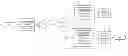
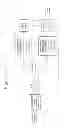
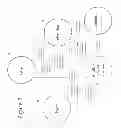

Sources:
- United States Patent and Trademark Office - verify current appl. status at the USPTO↗
Recent applications in this class:
- » 20210357481 2021-11-18
MEDICAL DIAGNOSTIC-INITIATED INSURANCE OFFERING - » 20200012762 2020-01-09
PRICE TRANSPARENCY SEARCH, BUNDLING, AND FINANCING FOR SURGERIES, MEDICAL PROCEDURES, AND SERVICES - » 20190163871 2019-05-30
OUTCOME-BASED CONTRACTS - » 20190121944 2019-04-25
INSURANCE-COMPLIANT ELECTRONIC ORDERING OF BIOLOGICAL SAMPLE TESTING - » 20190034593 2019-01-31
VARIATION IN COST BY PHYSICIAN - » 20190005198 2019-01-03
MANAGING BUNDLED CLAIMS ADJUDICATION USING PREDICTIVE ANALYTICS - » 20180349559 2018-12-06
Constructing prediction targets from a clinically-defined hierarchy - » 20180341751 2018-11-29
Medical scan natural language analysis system - » 20180341750 2018-11-29
Medical scan report labeling system - » 20180336317 2018-11-22
Medical network
Recent applications for this Assignee:
- » 20250165923 2025-05-22
NETWORK-ENABLED GLOBAL POSITIONING SATELLITE-BASED DEVICE FOR OBTAINING PATIENT VERIFICATION - » 20210042704 2021-02-11
Network-enabled global positioning satellite-based device for obtaining patient verification - » 20180261320 2018-09-13
NETWORK-ENABLED GLOBAL POSITIONING SATELLITE-BASED DEVICE FOR OBTAINING PATIENT VERIFICATION