Method of manufacturing fabric with cool effect
US20140057049A1
2014-02-27
14/071,868
2013-11-05
✅ Patent granted
US 9,469,926 B2
2016-10-18
-
-
Alex A Rolland
2034-09-02
Abstract:
A method of manufacturing fabric is provided with adding 900 g of a material having a 92 wt % of SiO2, 5 wt % of ZnO, and 3 wt % of polypropylene acid sodium and 1,500 g of PU resin to water to mix until a first solution is formed; pouring the first solution into a first foaming tank; agitating the first solution in the first foaming tank to foam; adding a bridging agent and a foaming agent to a second foaming tank to mix with water to foam until a second solution is formed; pouring the first and second solutions into a third tank to mix and form a coating solution; continuously conveying a fabric sheet to a top of a platform; activating squeegees to spread the coating solution on the fabric sheet to form a cooling layer thereon; and performing a dry setting finish on the fabric sheet.
Assignee:
- Grand Textile Co., Ltd. 2 🇹🇼 New Taipei City, Taiwan
Applicant:
Interested in similar patents?
Get notified when new applications in this technology area are published.
Classification:
D06C7/02 » CPC main
Heating or cooling textile fabrics Setting
D06M15/263 » CPC further
Treating fibres, threads, yarns, fabrics, or fibrous goods made from such materials, with macromolecular compounds; Such treatment combined with mechanical treatment with synthetic macromolecular compounds; Macromolecular compounds obtained by reactions only involving carbon-to-carbon unsaturated bonds of unsaturated carboxylic acids; Salts or esters thereof
D06M15/564 » CPC further
Treating fibres, threads, yarns, fabrics, or fibrous goods made from such materials, with macromolecular compounds; Such treatment combined with mechanical treatment with synthetic macromolecular compounds; Macromolecular compounds obtained otherwise than by reactions only involving carbon-to-carbon unsaturated bonds Polyureas, polyurethanes or other polymers having ureide or urethane links; Precondensation products forming them
D06M23/04 » CPC further
Treatment of fibres, threads, yarns, fabrics or fibrous goods made from such materials, characterised by the process Processes in which the treating agent is applied in the form of a foam
D06N3/00 IPC
Artificial leather, oilcloth or other material obtained by covering fibrous webs with macromolecular material, e.g. resins, rubber or derivatives thereof
D06N3/005 » CPC further
Artificial leather, oilcloth or other material obtained by covering fibrous webs with macromolecular material, e.g. resins, rubber or derivatives thereof characterised by their foraminous structure; Characteristics of the foamed layer or of cellular layers obtained by blowing or swelling agent
D06N2209/123 » CPC further
Properties of the materials; Permeability or impermeability properties; Permeability to gases, adsorption Breathable
D06N3/14 » CPC further
Artificial leather, oilcloth or other material obtained by covering fibrous webs with macromolecular material, e.g. resins, rubber or derivatives thereof with macromolecular compounds obtained otherwise than by reactions only involving carbon-to-carbon unsaturated bonds, e.g. gelatine proteins with polyurethanes
D06N3/0047 » CPC further
Artificial leather, oilcloth or other material obtained by covering fibrous webs with macromolecular material, e.g. resins, rubber or derivatives thereof characterised by their foraminous structure; Characteristics of the foamed layer or of cellular layers obtained by incorporating air, i.e. froth
D06N3/0063 » CPC further
Artificial leather, oilcloth or other material obtained by covering fibrous webs with macromolecular material, e.g. resins, rubber or derivatives thereof characterised by the compounding ingredients of the macro-molecular coating Inorganic compounding ingredients, e.g. metals, carbon fibres, NaCO, metal layers; Post-treatment with inorganic compounds
D06M11/44 » CPC further
Treating fibres, threads, yarns, fabrics or fibrous goods made from such materials, with inorganic substances or complexes thereof; Such treatment combined with mechanical treatment, e.g. mercerising with oxygen, ozone, ozonides, oxides, hydroxides or percompounds; Salts derived from anions with an amphoteric element-oxygen bond with oxides, hydroxides or mixed oxides; with salts derived from anions with an amphoteric element-oxygen bond Oxides or hydroxides of elements of Groups 2 or 12 of the Periodic System; Zincates; Cadmates
D06M11/79 » CPC further
Treating fibres, threads, yarns, fabrics or fibrous goods made from such materials, with inorganic substances or complexes thereof; Such treatment combined with mechanical treatment, e.g. mercerising with silicon or compounds thereof with silicon dioxide, silicic acids or their salts
Description
BACKGROUND OF THE INVENTION
1. Field of the Invention
The invention relates to fabric manufacturing and, more particularly, to a method of manufacturing fabric with cool effect so that a wearer may feel a degree of coolness when wearing clothes made of such fabric.
2. Description of Related Art
It is well known that some types of clothing are made of fabric having poor vapor permeability. Often times, a person wearing clothes made of such fabric may feel uncomfortable especially in hot summer days, because perspiration cannot be carried away from the skin.
There are many so-called “breathable” clothes commercially available. However, a person wearing the clothes may not have the feeling of comfort as desired. Further, there is prior literature about “cool fabric”. Such fabric can be made by adding a material with cool effect to fibers, spinning the fibers into threads, and further, for example, weaving. However, its manufacturing process including the grinding of cool material and the addition of the material to the fibers is very complex and cost ineffective, and, further, its quality is not as good as desired. Thus, the need for improvement still exists.
SUMMARY OF THE INVENTION
It is therefore one object of the invention to provide a method of manufacturing fabric comprising the steps of method of manufacturing fabric comprising the steps of adding 900 g of a material having a 92 wt % of silicone dioxide (SiO2), 5 wt % of zinc oxide (ZnO), and 3 wt % of polypropylene acid sodium and 1,500 g of polyurethane (PU) resin to water to mix until a first solution of 30 liter is formed; pouring the first solution into a first foaming tank; agitating the first solution in the first foaming tank to foam; adding a bridging agent and a foaming agent to a second foaming tank to mix with water to foam until a second solution having a volume of 100 liter is formed; pouring the first and second solutions into a third tank to mix and form a coating solution; continuously conveying a fabric sheet to a top of a platform; activating a squeegee to spread the coating solution on the fabric sheet to form a cooling layer; and performing a dry setting finish on the fabric sheet coated with the cooling layers.
The above and other objects, features and advantages of the invention will become apparent from the following detailed description taken with the accompanying drawings.
BRIEF DESCRIPTION OF THE DRAWINGS
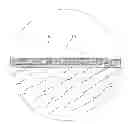
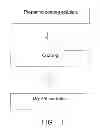
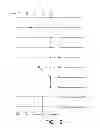
FIG. 1 is a flow chart diagram of a method of manufacturing fabric with cool effect according to the invention;
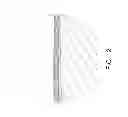
FIG. 2 is a perspective view of a piece of fabric made by the method of the invention;
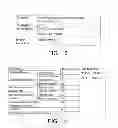
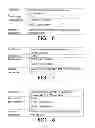
FIG. 3 tabulates sample and test methods regarding the touch feeling of warmth or coolness test of the Knitted fabric containing 92 wt % of silicone dioxide (SiO2), 5 wt % of zinc oxide (ZnO), and 3 wt % of polypropylene acid sodium;
FIG. 4 tabulates sample and test methods regarding the wetting time, absorption rate, maximum wetted radius, spreading speed, accumulative one-way transport index (%) and OMMC test of the Knitted fabric containing 92 wt % of silicone dioxide (SiO2), 5 wt % of zinc oxide (ZnO), and 3 wt % of polypropylene acid sodium;
FIG. 5 shows test grade with respect to the test table of FIG. 4;
FIG. 6 tabulates sample and test methods regarding the touch feeling of warmth or coolness test of the woven fabric (50%NYLON 9%CD 41%POLY WIDTH: 57/58) containing 92 wt % of silicone dioxide (SiO2), 5 wt % of zinc oxide (ZnO), and 3 wt % of polypropylene acid sodium;
FIG. 7 tabulates sample and test methods regarding the touch feeling of warmth or coolness test of the woven fabric (100%NYLON DOBBY WIDTH: 57) containing 92 wt % of silicone dioxide (SiO2), 5 wt % of zinc oxide (ZnO), and 3 wt % of polypropylene acid sodium;
FIG. 8 tabulates sample and test methods regarding the touch feeling of warmth or coolness test of the woven fabric (100%NYLON 6*6 RIB STOP WIDTH: 56) containing 92 wt % of silicone dioxide (SiO2), 5 wt % of zinc oxide (ZnO), and 3 wt % of polypropylene acid sodium;
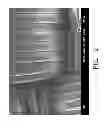
FIG. 9 is a photograph of the fabric of FIG. 2 being magnified 600 times; and
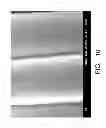
FIG. 10 is a photograph of the fabric of FIG. 2 being magnified 3,000 times.
DETAILED DESCRIPTION OF THE INVENTION
Referring to FIGS. 1 and 2, a method of manufacturing fabric with cool effect in accordance with the invention is illustrated below. The method comprises the following steps:
In step S1, 900 g of material having a 92 wt % of silicone dioxide (SiO2), 5 wt % of zinc oxide (ZnO), and 3 wt % of polypropylene acid sodium and 1,500 g of polyurethane (PU) resin are added to water to mix as a solution of 30 liter. The solution is poured into a first foaming tank. A powerful pump is employed to agitate the solution for quick foaming. A bridging agent and a foaming agent are added to a second foaming tank to mix with water for quick foaming having a volume of 100 liter. The bridging agent is PU resin (e.g., CAS No: 26680-22-8).
Quantity of the added bridging agent is 2-5% of a sum of volume of the first foaming tank and volume of the second foaming tank. The foaming agent is 3,7-dinitroso-1.3.5.7-tetraazobicyclo-nonane N,N, CAS No: 101-25-7, or azodicarbonamide CAS No:123-77-3. Quantity of the foaming agent is 1-3% of volume of the second foaming tank.
In step S2, pouring solutions in both the first and second foaming tanks into a third tank to mix and form a coating solution. A fabric sheet 10 is continuously conveyed to a top of a platform. Asqueegee is employed to spread the coating solution on the fabric sheet 10. As a result,the fabric sheet 10 is formed with a cooling layer 20. When a wearer wears clothes made of the fabric, the cooling layer 20 contacts with the wearer skin.
Preferably, the fabric sheet has low water absorbability.
In step S3, a dry setting finish is performed on the fabric sheet 10 coated with the cooling layers 20.
The fabric having cooling layers formed by foam coating has the following advantages:
Increased moisture permeability and breathability: This is because the fabric having apertures formed therein (i.e., porous) can quickly transmit air and moisture. As a result, a wearer may feel a degree of cooling when wearing clothes made of the fabric.
Increased softness: This is because the cooling layers 20 are porous and can absorb an increased quantity of moisture with the good absorbing capability of polypropylene acid sodium. As a result, a wearer may feel a degree of cooling when wearing clothes made of the fabric.
Increased difficulty of permeating rubber: A decreased pressure is sufficient to spread the coating solution to the fabric because the coating solution having PU resin with increased adhesiveness.
Wide applications: The cooling layer has a thickness less than that of a conventional coating and the fabric can be employed as knitted fabric of low strain or thick woven fabric.
Referring to FIGS. 3 to 5, knitted fabric containing 92 wt % of silicone dioxide (SiO2), 5 wt % of zinc oxide (ZnO), and 3 wt % of polypropylene acid sodium of the invention has been tested by TTRI (Taiwan Textile Research Institute). As show in FIG. 4 and FIG. 5, knitted fabric's bottom surface with cooling layers has good moisture permeability and knitted fabric's top surface without cooling layers has low water absorbability. And referring to FIGS. 6 to 8 different woven fabrics containing 92 wt % of silicone dioxide (SiO2), 5 wt % of zinc oxide (ZnO), and 3 wt % of polypropylene acid sodium of the invention have been tested by TTRI (Taiwan Textile Research Institute). Woven fabrics containing 92 wt % of silicone dioxide (SiO2), 5 wt % of zinc oxide (ZnO), and 3 wt % of polypropylene acid sodium show excellent coolness feeling about 0.144 to 0.196 W/cm2 (The average value about touch feeling of warmth or coolness in Asia is about 0.14 W/cm2). In conclusion, both knitted and woven fabric containing 92 wt % of silicone dioxide (SiO2), 5 wt % of zinc oxide (ZnO), and 3 wt % of polypropylene acid sodium show excellent water absorbency, breathability, and coolness feeling.
Referring to FIGS. 9 and 10, two photographs of the fabric of the invention are magnified 600 times and 3,000 times respectively. It is envisaged by the invention that a wearer may feel a degree of coolness when wearing clothes made of the fabric. Moreover, the fabric has an antibacterial effect due to the inclusion of zinc oxide powder of nanometer scale or silver powder of nanometer scale. Further, the method is easy to implement, and mass production can be carried out with the manufacturing cost being greatly reduced.
While the invention has been described in terms of the preferred embodiments, those skilled in the art will recognize that the invention can be practiced with modifications within the spirit and scope of the appended claims.
Claims
What is claimed is:1. A method of manufacturing fabric comprising the steps of:
adding 900 g of a material having a 92 wt % of silicone dioxide (SiO2), 5 wt % of zinc oxide (ZnO), and 3 wt % of polypropylene acid sodium and 1,500 g of polyurethane (PU) resin to water to mix until a first solution of 30 liter is formed;
pouring the first solution into a first foaming tank;
agitating the first solution in the first foaming tank to foam;
adding a bridging agent and a foaming agent to a second foaming tank to mix with water to foam until a second solution having a volume of 100 liter is formed;
pouring the first and second solutions into a third tank to mix and form a coating solution;
continuously conveying a fabric sheet to a top of a platform;
activating a squeegee to spread the coating solution on the fabric sheet to form a cooling layer; and
performing a dry setting finish on the fabric sheet coated with the cooling layers.
2. The method of claim 1, wherein the bridging agent is PU resin of CAS No: 26680-22-8, and quantity of the added bridging agent is 2-5% of a sum of volume of the first foaming tank and volume of the second foaming tank.
3. The method of claim 1, wherein, the foaming agent is 3,7-dinitroso-1.3.5.7-tetraazobicyclo-nonane N,N, CAS No: 101-25-7, or azodicarbonamide CAS No: 123-77-3, and quantity of the added foaming agent is 1-3% of volume of the second foaming tank.
4. The method of claim 1, wherein, the fabric sheet has low water absorbability.
Images & Drawings included:
Sources:
- United States Patent and Trademark Office - verify current appl. status at the USPTO↗
Similar patent applications:
- » 20120282399
Method of Manufacturing Fabric with Cool Effect
Recent applications in this class:
- » 20230243078 2023-08-03
Apparatuses For Guarding Against Steam Exhaust And Systems Comprising Same - » 20200131681 2020-04-30
Self-wrapping, braided textile sleeve with self-sustaining expanded and contracted states and method of construction thereof - » 20200040502 2020-02-06
Device and method for thermosetting a knitted fabric - » 20150354120 2015-12-10
Heat setter for delicate and/or sensitive knit fabrics - » 20110232053 2011-09-29
Machine and method for the combined mechanical and heat treatment of fabrics, especially knitted fabrics - » 20110072626 2011-03-31
Lead pellet recovery fabrics - » 20100199442 2010-08-12
METHOD FOR FORMING VINTAGE EFFECT WASHER AND THE VINTAGE EFFECT WASHER - » 20070270067 2007-11-22
Crimped Filament-Containing Woven or Knitted Fabric Manifesting Roughness Upon Wetting with Water, Process for Producing the Same and Textile Products Made Therefrom - » 20070243785 2007-10-18
Elastic fabric and process for producing the same - » 20070062062 2007-03-22
Nozzle blowing case of a tenter frame
Recent applications for this Assignee:
- » 20190136418 2019-05-09
Process of Manufacturing Resilient, Fibrous, Piled Woven Fabric