ABlitz
US20140057766A1
2014-02-27
13/595,289
2012-08-27
Abstract:
This invention is an exercise apparatus that relates to the field of exercise. The apparatus is user worn and primarily targets the lower region of the abdominal muscles, the lower portions of the rectus abdominis and obliquus internus. It is composed of 11 parts, 2 one size fits all foot pieces, 1 waist strap, 1 bench attachment, 4 easy-turn hand bolts and 3 elastic resistance bands. When used the invention generates the resistance needed to successfully exercise the lower abdominal region.
Interested in similar patents?
Get notified when new applications in this technology area are published.
Classification:
A63B23/03525 » CPC main
Exercising apparatus specially adapted for particular parts of the body for limbs, i.e. upper or lower limbs, e.g. simultaneously; For both arms together or both legs together; Aspects related to the co-ordination between right and left side limbs of a user Supports for both feet or both hands performing simultaneously the same movement, e.g. single pedal or single handle
A63B21/0442 » CPC further
Exercising apparatus for developing or strengthening the muscles or joints of the body by working against a counterforce, with or without measuring devices using resilient force-resisters attached to static foundation, e.g. a user Anchored at one end only, the other end being manipulated by the user
A63B21/0552 » CPC further
Exercising apparatus for developing or strengthening the muscles or joints of the body by working against a counterforce, with or without measuring devices using resilient force-resisters extension element type Elastic ropes or bands
A63B21/4009 » CPC further
Exercising apparatus for developing or strengthening the muscles or joints of the body by working against a counterforce, with or without measuring devices; Interfaces with the user related to strength training; Details thereof; Arrangements for attaching the exercising apparatus to the user's body, e.g. belts, shoes or gloves specially adapted therefor to the waist
A63B21/4015 » CPC further
Exercising apparatus for developing or strengthening the muscles or joints of the body by working against a counterforce, with or without measuring devices; Interfaces with the user related to strength training; Details thereof; Arrangements for attaching the exercising apparatus to the user's body, e.g. belts, shoes or gloves specially adapted therefor to the lower limbs to the foot
A63B21/4034 » CPC further
Exercising apparatus for developing or strengthening the muscles or joints of the body by working against a counterforce, with or without measuring devices; Interfaces with the user related to strength training; Details thereof; Specific exercise interfaces; Handles, pedals, bars or platforms for operation by feet
A63B23/0216 » CPC further
Exercising apparatus specially adapted for particular parts of the body for the abdomen, the spinal column or the torso muscles related to shoulders (e.g. chest muscles); Abdomen moving lower limbs with immobilized torso
A63B21/0557 » CPC further
Exercising apparatus for developing or strengthening the muscles or joints of the body by working against a counterforce, with or without measuring devices using resilient force-resisters extension element type; Elastic ropes or bands Details of attachments, e.g. clips or clamps
A63B21/4029 » CPC further
Exercising apparatus for developing or strengthening the muscles or joints of the body by working against a counterforce, with or without measuring devices; Interfaces with the user related to strength training; Details thereof; Specific exercise interfaces Benches specifically adapted for exercising
A63B2208/0252 » CPC further
Characteristics or parameters related to the user or player posture; Lying down supine
A63B21/02 IPC
Exercising apparatus for developing or strengthening the muscles or joints of the body by working against a counterforce, with or without measuring devices using resilient force-resisters
Description
BACKGROUND OF THE INVENTION
1. Field of the Invention
This invention, the ABltz is an exercise apparatus. More specifically, it is an apparatus that is to be used when attempting to strengthen the abdominal muscles. However, whereas many inventions focus on targeting the abdominal muscles as a whole, the current invention focuses on targeting the lower portion of the rectus abdominis and the obliquus internus. The invention provides the maximum amount of resistance to the lower portion of the rectus abdominis and the obliquus internus during each repetition performed. Exercising the lower portion of the abdominal muscles is the primary application of this invention, although other secondary muscles may be exercised as well.
2. Description of Related Art
There are countless machines and apparatuses out there to assist in strengthening the body and all of its muscle groups. Sebastian (U.S. Pat. No. 8,118,720) discusses the importance of strong abdominals and their direct affect on an individual's “core.” Furthermore, he dissects the term “abdominals” and concludes the term references many different muscle groups including the obliquus internus, transversus abdominis, the rectus abdominis, and the pyramidalis muscle. This invention focuses on targeting the lower regions of the rectus abdminis and the obliquus internus, although the transversus abdominis and the pyramidalis muscle may be exercised secondarily.
The abdominal muscles as a whole are essential to an individual's core strength and one's overall health. Athletes, sports enthusiasts and non-athletes alike must build a strong core in order to endure rigorous workouts involving weight training or to simply maintain good health. The current invention promotes weight loss, thus, improving the user's overall health and well being. Previous apparatuses aimed at targeting the lower portion of the abdominal muscles are limited. Most apparatuses and machines focus on the upper and middle areas of the abdominal muscles. The ABlitz is a user-worn apparatus intended to strengthen the lower area of the rectus abdominis and the obliquus internus.
BRIEF SUMMARY OF THE INVENTION
This invention, the ABlitz allows exercisers to exercise their lower abdominal region without having to have a partner present, a great advantage to all exercisers looking to perform various exercises that target the lower abdominals. Exercisers may achieve the same goal by sitting at the edge of a bench and performing knee raises with a dumbbell between his or her feet, but he/she risks bruising, and possibly injuring, his/her foot.
BRIEF DESCRIPTION OF THE SEVERAL VIEWS OF THE DRAWING
The following drawings will be referenced in the following section in greater depth.
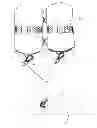
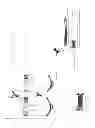
FIG. 1 shows both foot pieces with their adjustable and fasten-ready nylon straps connected to an elastic band and to the back of the user's waist strap.
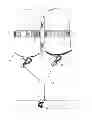
FIG. 2 shows a single foot piece and the parts that go into making each one in FIG. 1, without the hooks and loops on the insides of the outsides of each foot piece.
FIG. 3 shows the front of the user's waist strap.
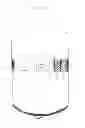
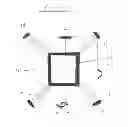
FIG. 4 shows the bench attachment fully assembled, but not connected to the leg of a bench.
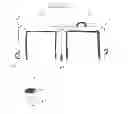
FIG. 5 shows the bench attachment in use by the user, on a bench.
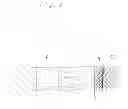
FIG. 6 shows an unassembled bench attachment.
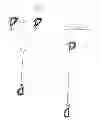
FIG. 7 shows the easy-turn hand bolts used for the bench attachment.
FIG. 8 shows the double hooked elastic resistance band, which connects from each foot piece to the user's waist strap or to the bench attachment, depending on the size of the band; there are two different sizes.
FIG. 9 shows the single hooked elastic resistance band, which connects via the two hooks on the inner sides of the outside of each foot piece.
FIG. 10 shows an image of the lower region of the abdominal muscles claimed to be exercised with the use of the apparatus.
DETAILED DESCRIPTION OF THE INVENTION
Composition/Manufacture
The apparatus is generally comprised of 11 parts: two (one size fits all) foot pieces in which the user may use an adjustable and fasten-ready strap to securely fasten his or her feet in; 1 attachment (FIG. 4) the user may employ to use said apparatus while doing lower abdominal exercises on a bench; 4 easy-turn hand bolts (FIG. 7); 1 waist strap in which the elastic band is clipped onto (FIG. 1, “15”); and 3 interchangeable elastic resistance bands (FIG. 8, 2 different lengths & FIG. 9), which the user hooks onto each foot piece and the waist strap or bench attachment to create the desired resistance.
The exercise apparatus according to claim 1 contains 2 (one size fits all) foot pieces (FIG. 1, “1” and “2”), which are strapped over the users foot with the provided foot strap to securely fasten the user's foot in said foot piece. Each foot piece has its own strap to secure each foot (FIG. 1, “5”-“9”) independently. The adjustable foot strap is composed of nylon (FIG. 2, “5” and “9”) and is securely and permanently attached to each side (left and right) (FIG. 2, “17”) of each foot. Turning to FIG. 2, the adjustable and fasten-ready nylon strap contains several features: a nylon strap indicated by the striped lines, “5”; a clickable buckle indicted by “6” and “7”; a strap length adjustor indicated by “8”; and an excess of nylon strap to provide ample room for the user's foot indicated by the checkered stripes and “9.”
Its secure and permanent attachment is on the left and right side, a ½″ closer to the user's toes than the palm of the user's foot (FIG. 2 “17.”). The strap meets in the middle, above the users foot to clip into place (FIG. 2, “6” and “7”), rendering it ready for tightening via the length adjustor (FIG. 2, “8”). The clip in question is composed of heavy-duty, high-impact plastic, has a middle prong facing straight forward and two hooked prongs (see FIG. 2, “7”), one on each side, facing outward, resulting in its readiness to securely fasten itself together with the connector on its complimentary side (see FIG. 2, “6”). The clip and its connector are ¾″ long ×1″ wide. There is a standard length adjustor (FIG. 2, “8”) connected to the nylon strap with an excess of nylon material on the strap (FIG. 2, “9”), which may be adjusted to provide more or less nylon to fully and securely fasten the user's foot according to size in each provided foot piece. The length adjustor is ¾″ long ×½″ wide; its ½″ width is broken down as follows: each side of the adjustor is ⅛″ wide and there is a ¼″ open space for the excess of nylon to feed through.
Each foot piece is 13″ long ×4½″ wide. The nylon strap that is to be used will have a 2″ excess of nylon material (FIG. 2, “9”) for the user to readily adjust the strap according to his foot size. The heel of each foot piece is raised an additional 1″ (FIG. 2, side 2, “16”) to support the rear of the user's foot when securely fastened into the foot piece. The entire heel portion of each foot piece is lined with high-traction synthetic rubber to create traction and support the user when securely fastening each foot piece to his or her foot. This rubber lining extends 3½″ towards the user's toes and is ⅛″ thick. On the rear of each foot piece is a loop (FIG. 2, “10”) that is ½″ long ×1″ wide. Said loops are for the secure fastening of the elastic band, which is attached to closeable hooks (FIG. 8, “27”), thus, creating the necessary resistance. All closeable hooks are 1″ long ×1″ wide and have an open space of ½″ for a loop to fit in. Each foot piece simply hooks together on the inner sides of each to form one piece. The hooks (FIG. 1 “4”), on the inner sides of the outside of each foot piece are ½″ long by ½″ wide and is composed of steel. Each hook is permanently and securely attached to the right foot piece. Each hook extends straight outward and is curved downward 90 degrees. Each loop (FIG. 1, “3”) is ½″ long ×½″ wide, is made of steel and is on the left foot piece.
The invention is an apparatus according to claim 1 in which three elastic bands are contained and employed by the user. The elastic bands are composed of heavy-duty synthetic rubber with elasticity and will be used at different times, when the user is using the apparatus on its own, connected to the body; when the user is using the apparatus while connected to the bench attachment; and when the user is using the apparatus to exercise muscles other than the abdominals. The resistance weights are the same on all three elastic bands, 30 lbs of resistance each, however the lengths are not. One end of the double hooked elastic bands will have 1 closable hook, while the other will branch out and have 2 closable hooks (FIG. 8). The double hooked elastic band comes in two different lengths: 2½′ for use with the waist strap and 1½′ for use with the bench attachment. The other type of elastic band (FIG. 9, “31”), the one used for exercising muscles other than the abdominals will have one hook (FIG. 9, “30” and “32”) on either side. The single hooked elastic band is 8″ long. The end of the double hooked elastic bands (FIG. 8, “28”) with 1 closeable hook (FIG. 8, “29”) will hook onto either the waist strap or the bench attachment, depending on what exercise the user is performing and which band the user has employed. The end of the elastic bands with 2 hooks will always connect to the two foot pieces (FIG. 1, “11” indicates the 2 closeable hooks connecting to the two loops), 1 loop (FIG. 1, “10”) per foot piece. Both foot pieces will be connected by a hook (FIG. 1, “4”) and loop (FIG. 1, “3”) on the inner sides, on the outside of each foot piece.
The invention is an apparatus according to claim 1 containing an attachment that is two halves connected by a hinge (FIG. 4, “21”) that may be affixed to the leg of a bench to aid the user with said lower abdominal (FIG. 10, “33” and “34”) exercises. The attachment in question is comprised of the same heavy-duty, high-impact plastic as each foot piece. The attachment comes in 5 pieces: 1 shell in half connected by a hinge (FIG. 6, “21”), which easily hooks to form a shell around the bench; and 4 easy twist hand bolts (FIG. 7, “18” and “19”) to securely fasten it to the bench, ready to produce stable resistance. Turning to FIG. 6, the shell is lined with high traction synthetic rubber (FIG. 6, “22”) to create friction against the bench and provide the user with additional stability.
The bench attachment halves (FIG. 6) connected by the hinge (FIG. 6, “21”) are composed of the same heavy-duty, high-impact plastic as the foot pieces. The attachment halves are square shaped and will be hooked together with a hook that has the ability to swivel (FIG. 6, “24”) and goes into a loop (FIG. 6, “25”) to form a box shaped shell around the leg of the bench (FIG. 5, “20”). The hook (FIG. 6, “24”) is ¼″ away from the center of the bench attachment when formed as a shell. The hook is ready to swivel into a loop (FIG. 6, “25”), which is also ¼″ away from the center of the bench attachment when formed as a shell. The hook and loop are 1/2″ away from one another and are on the opposite side of the hinge (FIG. 6). Each half of the shell is 2½″ long by 2″ wide, making the completed shell 5″ long ×4″ wide. The actual frame of the shell is ¼″ thick. This measurement assumes that most standard bench legs are 2″ thick although some exceed this measurement. The easy turn hand bolts are 4″ long ×¼″ wide grooved steel (FIG. 7, “19”) with heavy-duty, high-impact plastic handles (FIG. 7, “18”) that are oval shaped and 1″ long ×½″ wide. On the bench attachment there is a loop (FIG. 5, “23”) in which the user will attach the resistance band using the closeable hook (FIG. 5, “29”) attached to each band. There is a loop (FIG. 6, “25”) on the bench attachment that is ½″ long ×1″ wide and the swivel hook is 1″ long ×⅛″wide. The swivel hook (FIG. 6, “24”) is held in place with a screw that measures ¼″ long ×⅛″wide. The hook measures 1″ long ×⅛″ thick, the end of which is curved 90-degrees and is bulbous at the curvature of the 90-degree angle to lock onto the loop when connected to the complimentary foot piece. The grooved holes are ¼″ wide and go from the outer sides of the shell to the inner sides via its four corners.
Each corner of the bench attachment has 1 hole (FIG. 6, “26”). Said holes are grooved and ready for easy turn hand bolts to be twisted in, along the grooves, securely fastening the attachment to the bench itself. This Provides the user to use the bench's stability to clip the resistance band into place and proceed with his or her desired exercises.
Usage
Upon taking the invention out of the box, the user will have to put in minimal effort before using it. He or she will have to do the following: adjust each foot strap to the size of his foot; hook the 2 foot pieces together, making them 1 cohesive unit; adjust and securely fasten the nylon foot strap on each foot piece; put on the waistband; hook the closable hook to the waist band and each foot piece; and, if he or she desires to use the bench attachment, close the shell around the leg of a bench and hook it shut, just before screwing in the 4 easy turn hand bolts into the grooved openings along the edges of the connected halves to securely fasten and ready the attachment for use by the user instead of connecting the elastic resistance band to the waist strap.
The ABlitz is primarily an exercise apparatus in which the user may exercise the lower portion of the rectus abdominis (FIG. 10, “33”) and of the obliquus internus (FIG. 10, “34”) abdominal region. The user using the resistance band may perform the following abdominal exercises easily: leg-pushdowns (FIG. 8, 2¼′ & 30 lbs), knee to chest crunches (FIG. 8, 1′ & 30 lbs), and knee-ups with the two-hooked foot piece resistance band (FIG. 8, 1′ & 30 lbs). Lower abdominal exercises that may be performed with the single hooked elastic band include connecting the two foot pieces together via the hooks on the inner sides of the outside of each foot piece: standing knee-raises.
Exercises that may be performed on other muscle groups with the single hooked elastic band by connecting the two foot pieces together via the hooks on the inner sides of the outside of each foot piece: standing leg curls (biceps femoris, adductor magnus, semitendinosus gracillis, and semimembranosus); outer quadriceps leg kicks to the side and lying leg-spreads (tensor fasciae, rectus femoris and vastus lateralis); standing leg-extensions (rectus femoris, vastus lateralis, vastus medialis, gracillis and adductor longus); standing bent-knee kickbacks (gluteus medialis and gluteus maximus); and deadlifts (thoracolumbar fascia and erector spinae). The single hooked elastic resistance band is 8″ long and has a resistance of 30 lbs.
Distinguished from Other Inventions
The only other invention that even comes close to the ABlitz are the arm slings that attach to an elevated curl-bar in which the user slips his or her arms into the sling, effectively resting on the triceps muscles, while lifting his or her legs up. The two are incomparable, as is the machine that solely focuses on the obliquus internus as a whole, which requires the user to load up a weight stack and rotate his or her body while fighting the weighted resistance. This invention adds as much resistance as the user would like. The elastic bands included in the factory packaging start at 30 lbs, but the user may purchase additional bands with greater resistance if he or she desires.
Most other machines and apparatuses aimed at targeting the abdominal muscles target the upper to middle regions, with minimal engagement with the lower abdominals. The AB-roller, an apparatus that requires the user to get on his/her knees and roll the roller forward and, subsequently, return to back to the starting point. This apparatus engages the abdominal muscles as a whole, specifically targeting the upper and middle regions. The lower abdominals are targeted minimally, if at all.
Leg pushdowns are known to fully engage the lower abdominal muscles, making them one of the most effective ways to target the lower abdominal area. This invention allows the user to perform such exercises without having to enter a fitness club or have a training partner present.
Claims
I claim:1. The invention is an exercise apparatus that is comprised of 11 pieces: 2 one size fits all foot pieces; 1 bench attachment; 4 easy-turn hand bolts; 1 waist strap; and 3 elastic bands;
The invention uses user-created tension with 2 elastic bands that are connected from the user-worn waist strap to the user-worn foot pieces, one each. Furthermore, said foot pieces are hooked together via hook and loop on each piece's innermost side.
The invention utilizes a third elastic band and bench securement bench attachment. Said bench attachment is box shaped, is hinged on one side and clasped on the other, opening side. Said clasp locks and unlocks said attachment to either put on or take off said attachment from exercise bench. Said attachment further utilizes 4 easy turn hand screws, which are screwed into said attachment to lock it into the desired place on the exercise bench.
Images & Drawings included:
Sources:
- United States Patent and Trademark Office - verify current appl. status at the USPTO↗
Recent applications in this class:
- » 20250144469 2025-05-08
Two-Handed Dumbbell Grip - » 20230347206 2023-11-02
Devices for exercise apparatuses - » 20220273982 2022-09-01
Apparatus and method for exercising calf and thigh muscles - » 20190083845 2019-03-21
EXERCISE DEVICE - » 20190001186 2019-01-03
Two-Handed Crank-Action Exercise Device and Method - » 20180214737 2018-08-02
Exercise device and related methods thereof - » 20160332024 2016-11-17
MULTI-FUNCTIONAL EXERCISE MACHINE - » 20160256736 2016-09-08
EXERCISE DEVICE - » 20140274621 2014-09-18
REHABILITATION OR EXERCISING CHAIR DEVICE - » 20120283074 2012-11-08
SYSTEM AND METHOD FOR CONTROLLING A STACK PIN IN A WEIGHT STACK OF AN EXERCISE MACHINE AND FOR PROVIDING ANATOMICALLY CORRECT BODY MOVEMENT ON AN EXERCISE MACHINE