Methods and apparatus for package on package structures
US20140061932A1
2014-03-06
13/604,333
2012-09-05
✅ Patent granted
US 8,889,486 B2
2014-11-18
-
-
Luan C Thai
Slater and Matsil, L.L.P.
2033-02-05
Abstract:
A package-on-package (“PoP”) structure and a method of forming are provided. The PoP structure may be formed by forming a first set of electrical connections on a first substrate. A first material may be applied to the first set of electrical connections. A second substrate may be provided having a second set of electrical connections formed thereon. The first set of electrical connections of the first substrate having the epoxy flux applied may be contacted to the second electrical connections of the second substrate. A reflow process may be performed to electrically connect the first substrate to the second substrate. The epoxy flux applied to the first electrical connections of the first substrate may prohibit electrical bridges or shorts from forming during the reflow process.
Inventors:
- Chung-Shi Liu 239 🇹🇼 Hsin-Chu, Taiwan
- Ming-Da Cheng 238 🇹🇼 Jhubei City, Taiwan
- Wei-Yu CHEN 153 🇹🇼 Taipei City, Taiwan
- Meng-Tse Chen 79 🇹🇼 Changzhi Township, Taiwan
- Yi-Da Tsai 10 🇹🇼 Dongshi Township, Taiwan
- Xi-Hong Chen 2 🇹🇼 Luzhu Township, Taiwan
- Tao-Hua Lee 2 🇹🇼 Taipei City, Taiwan
- Ming-Da Cheng 238 🇹🇼 Jhubei, Taiwan
- Wei-Yu Chen 125 🇹🇼 Taipei, Taiwan
- Tao-Hua Lee 2 🇹🇼 Taipei, Taiwan
Assignee:
- TAIWAN SEMICONDUCTOR MANUFACTURING COMPANY, LTD. 8,890 🇹🇼 Hsin-Chu, Taiwan
Applicant:
Interested in similar patents?
Get notified when new applications in this technology area are published.
Classification:
H01L25/0657 » CPC main
Assemblies consisting of a plurality of individual semiconductor or other solid state devices ; Multistep manufacturing processes thereof all the devices being of a type provided for in the same subgroup of groups - , e.g. assemblies of rectifier diodes the devices not having separate containers the devices being of a type provided for in group Stacked arrangements of devices
H01L23/3128 » CPC further
Details of semiconductor or other solid state devices; Encapsulations, e.g. encapsulating layers, coatings, e.g. for protection characterised by the arrangement or shape the device being completely enclosed a substrate forming part of the encapsulation the substrate having spherical bumps for external connection
H01L23/3135 » CPC further
Details of semiconductor or other solid state devices; Encapsulations, e.g. encapsulating layers, coatings, e.g. for protection characterised by the arrangement or shape the device being completely enclosed Double encapsulation or coating and encapsulation
H01L23/49816 » CPC further
Details of semiconductor or other solid state devices; Arrangements for conducting electric current to or from the solid state body in operation, e.g. leads, terminal arrangements ; Selection of materials therefor consisting of soldered constructions; Leads, on insulating substrates,; Additional leads joined to the metallisation on the insulating substrate, e.g. pins, bumps, wires, flat leads Spherical bumps on the substrate for external connection, e.g. ball grid arrays [BGA]
H01L23/5384 » CPC further
Details of semiconductor or other solid state devices; Arrangements for conducting electric current within the device in operation from one component to another, i.e. interconnections, e.g. wires, lead frames the interconnection structure between a plurality of semiconductor chips being formed on, or in, insulating substrates Conductive vias through the substrate with or without pins, e.g. buried coaxial conductors
H01L23/5385 » CPC further
Details of semiconductor or other solid state devices; Arrangements for conducting electric current within the device in operation from one component to another, i.e. interconnections, e.g. wires, lead frames the interconnection structure between a plurality of semiconductor chips being formed on, or in, insulating substrates Assembly of a plurality of insulating substrates
H01L25/105 » CPC further
Assemblies consisting of a plurality of individual semiconductor or other solid state devices ; Multistep manufacturing processes thereof all the devices being of a type provided for in the same subgroup of groups - , e.g. assemblies of rectifier diodes the devices having separate containers the devices being of a type provided for in group
H01L21/563 » CPC further
Processes or apparatus adapted for the manufacture or treatment of semiconductor or solid state devices or of parts thereof; Manufacture or treatment of semiconductor devices or of parts thereof the devices having at least one potential-jump barrier or surface barrier, e.g. PN junction, depletion layer or carrier concentration layer; Assembly of semiconductor devices using processes or apparatus not provided for in a single one of the subgroups - , e.g. sealing of a cap to a base of a container; Encapsulations, e.g. encapsulation layers, coatings Encapsulation of active face of flip-chip device, e.g. underfilling or underencapsulation of flip-chip, encapsulation preform on chip or mounting substrate
H01L24/13 » CPC further
Arrangements for connecting or disconnecting semiconductor or solid-state bodies; Methods or apparatus related thereto; Means for bonding being attached to, or being formed on, the surface to be connected, e.g. chip-to-package, die-attach, "first-level" interconnects; Manufacturing methods related thereto; Bump connectors ; Manufacturing methods related thereto; Structure, shape, material or disposition of the bump connectors prior to the connecting process of an individual bump connector
H01L24/16 » CPC further
Arrangements for connecting or disconnecting semiconductor or solid-state bodies; Methods or apparatus related thereto; Means for bonding being attached to, or being formed on, the surface to be connected, e.g. chip-to-package, die-attach, "first-level" interconnects; Manufacturing methods related thereto; Bump connectors ; Manufacturing methods related thereto; Structure, shape, material or disposition of the bump connectors after the connecting process of an individual bump connector
H01L24/29 » CPC further
Arrangements for connecting or disconnecting semiconductor or solid-state bodies; Methods or apparatus related thereto; Means for bonding being attached to, or being formed on, the surface to be connected, e.g. chip-to-package, die-attach, "first-level" interconnects; Manufacturing methods related thereto; Layer connectors, e.g. plate connectors, solder or adhesive layers; Manufacturing methods related thereto; Structure, shape, material or disposition of the layer connectors prior to the connecting process of an individual layer connector
H01L24/32 » CPC further
Arrangements for connecting or disconnecting semiconductor or solid-state bodies; Methods or apparatus related thereto; Means for bonding being attached to, or being formed on, the surface to be connected, e.g. chip-to-package, die-attach, "first-level" interconnects; Manufacturing methods related thereto; Layer connectors, e.g. plate connectors, solder or adhesive layers; Manufacturing methods related thereto; Structure, shape, material or disposition of the layer connectors after the connecting process of an individual layer connector
H01L24/45 » CPC further
Arrangements for connecting or disconnecting semiconductor or solid-state bodies; Methods or apparatus related thereto; Means for bonding being attached to, or being formed on, the surface to be connected, e.g. chip-to-package, die-attach, "first-level" interconnects; Manufacturing methods related thereto; Wire connectors; Manufacturing methods related thereto; Structure, shape, material or disposition of the wire connectors prior to the connecting process of an individual wire connector
H01L24/48 » CPC further
Arrangements for connecting or disconnecting semiconductor or solid-state bodies; Methods or apparatus related thereto; Means for bonding being attached to, or being formed on, the surface to be connected, e.g. chip-to-package, die-attach, "first-level" interconnects; Manufacturing methods related thereto; Wire connectors; Manufacturing methods related thereto; Structure, shape, material or disposition of the wire connectors after the connecting process of an individual wire connector
H01L24/73 » CPC further
Arrangements for connecting or disconnecting semiconductor or solid-state bodies; Methods or apparatus related thereto Means for bonding being of different types provided for in two or more of groups , , , , , , ,
H01L25/50 » CPC further
Assemblies consisting of a plurality of individual semiconductor or other solid state devices ; Multistep manufacturing processes thereof Multistep manufacturing processes of assemblies consisting of devices, each device being of a type provided for in group or
H01L2224/81805 » CPC further
Indexing scheme for arrangements for connecting or disconnecting semiconductor or solid-state bodies and methods related thereto as covered by; Methods for connecting semiconductor or other solid state bodies using means for bonding being attached to, or being formed on, the surface to be connected using a bump connector; Bonding techniques; Soldering or alloying involving forming a eutectic alloy at the bonding interface
H01L2225/0651 » CPC further
Details relating to assemblies covered by the group but not provided for in its subgroups; All the devices being of a type provided for in the same subgroup of groups - the devices not having separate containers the devices being of a type provided for in group; Stacked arrangements of devices Wire or wire-like electrical connections from device to substrate
H01L2225/0652 » CPC further
Details relating to assemblies covered by the group but not provided for in its subgroups; All the devices being of a type provided for in the same subgroup of groups - the devices not having separate containers the devices being of a type provided for in group; Stacked arrangements of devices Bump or bump-like direct electrical connections from substrate to substrate
H01L2225/06565 » CPC further
Details relating to assemblies covered by the group but not provided for in its subgroups; All the devices being of a type provided for in the same subgroup of groups - the devices not having separate containers the devices being of a type provided for in group; Stacked arrangements of devices; Geometry of the stack, e.g. form of the devices, geometry to facilitate stacking the devices having the same size and there being no auxiliary carrier between the devices
H01L2225/1023 » CPC further
Details relating to assemblies covered by the group but not provided for in its subgroups; All the devices being of a type provided for in the same subgroup of groups - the devices having separate containers the devices being of a type provided for in group the containers being in a stacked arrangement the lowermost container comprising a device support the support being an insulating substrate
H01L2225/1058 » CPC further
Details relating to assemblies covered by the group but not provided for in its subgroups; All the devices being of a type provided for in the same subgroup of groups - the devices having separate containers the devices being of a type provided for in group the containers being in a stacked arrangement; Details of electrical connections between containers Bump or bump-like electrical connections, e.g. balls, pillars, posts
H01L2924/15311 » CPC further
Indexing scheme for arrangements or methods for connecting or disconnecting semiconductor or solid-state bodies as covered by; Details of package parts other than the semiconductor or other solid state devices to be connected; Die mounting substrate; Connection portion the connection portion being formed only on the surface of the substrate opposite to the die mounting surface being a ball array, e.g. BGA
H01L2924/15331 » CPC further
Indexing scheme for arrangements or methods for connecting or disconnecting semiconductor or solid-state bodies as covered by; Details of package parts other than the semiconductor or other solid state devices to be connected; Die mounting substrate; Connection portion the connection portion being formed on the die mounting surface of the substrate the connection portion being formed both on the die mounting surface of the substrate and outside the die mounting surface of the substrate being a ball array, e.g. BGA
H01L2224/73265 » CPC further
Indexing scheme for arrangements for connecting or disconnecting semiconductor or solid-state bodies and methods related thereto as covered by; Means for bonding being of different types provided for in two or more of groups; Location after the connecting process on different surfaces Layer and wire connectors
H01L2924/014 » CPC further
Indexing scheme for arrangements or methods for connecting or disconnecting semiconductor or solid-state bodies as covered by; Alloys Solder alloys
H01L2924/01322 » CPC further
Indexing scheme for arrangements or methods for connecting or disconnecting semiconductor or solid-state bodies as covered by; Alloys; Binary Alloys Eutectic Alloys, i.e. obtained by a liquid transforming into two solid phases
H01L2924/12042 » CPC further
Indexing scheme for arrangements or methods for connecting or disconnecting semiconductor or solid-state bodies as covered by; Details of semiconductor or other solid state devices to be connected; Device type; Passive devices, e.g. 2 terminal devices; Optical Diode LASER
H01L2924/00 » CPC further
Indexing scheme for arrangements or methods for connecting or disconnecting semiconductor or solid-state bodies as covered by
H01L2924/181 » CPC further
Indexing scheme for arrangements or methods for connecting or disconnecting semiconductor or solid-state bodies as covered by; Details of package parts other than the semiconductor or other solid state devices to be connected Encapsulation
H01L2924/00012 » CPC further
Indexing scheme for arrangements or methods for connecting or disconnecting semiconductor or solid-state bodies as covered by; Technical content checked by a classifier Relevant to the scope of the group, the symbol of which is combined with the symbol of this group
H01L2924/00014 » CPC further
Indexing scheme for arrangements or methods for connecting or disconnecting semiconductor or solid-state bodies as covered by; Technical content checked by a classifier the subject-matter covered by the group, the symbol of which is combined with the symbol of this group, being disclosed without further technical details
H01L23/28 IPC
Details of semiconductor or other solid state devices Encapsulations, e.g. encapsulating layers, coatings, e.g. for protection
H01L21/78 IPC
Processes or apparatus adapted for the manufacture or treatment of semiconductor or solid state devices or of parts thereof; Manufacture or treatment of devices consisting of a plurality of solid state components formed in or on a common substrate or of parts thereof; Manufacture of integrated circuit devices or of parts thereof; Manufacture or treatment of devices consisting of a plurality of solid state components or integrated circuits formed in, or on, a common substrate with subsequent division of the substrate into plural individual devices
H01L21/56 IPC
Processes or apparatus adapted for the manufacture or treatment of semiconductor or solid state devices or of parts thereof; Manufacture or treatment of semiconductor devices or of parts thereof the devices having at least one potential-jump barrier or surface barrier, e.g. PN junction, depletion layer or carrier concentration layer; Assembly of semiconductor devices using processes or apparatus not provided for in a single one of the subgroups - , e.g. sealing of a cap to a base of a container Encapsulations, e.g. encapsulation layers, coatings
H01L23/48 IPC
Details of semiconductor or other solid state devices Arrangements for conducting electric current to or from the solid state body in operation, e.g. leads, terminal arrangements ; Selection of materials therefor
H01L21/50 IPC
Processes or apparatus adapted for the manufacture or treatment of semiconductor or solid state devices or of parts thereof; Manufacture or treatment of semiconductor devices or of parts thereof the devices having at least one potential-jump barrier or surface barrier, e.g. PN junction, depletion layer or carrier concentration layer Assembly of semiconductor devices using processes or apparatus not provided for in a single one of the subgroups - , e.g. sealing of a cap to a base of a container
H01L21/48 IPC
Processes or apparatus adapted for the manufacture or treatment of semiconductor or solid state devices or of parts thereof; Manufacture or treatment of semiconductor devices or of parts thereof the devices having at least one potential-jump barrier or surface barrier, e.g. PN junction, depletion layer or carrier concentration layer Manufacture or treatment of parts, e.g. containers, prior to assembly of the devices, using processes not provided for in a single one of the subgroups -
H01L21/44 IPC
Processes or apparatus adapted for the manufacture or treatment of semiconductor or solid state devices or of parts thereof; Manufacture or treatment of semiconductor devices or of parts thereof the devices having at least one potential-jump barrier or surface barrier, e.g. PN junction, depletion layer or carrier concentration layer the devices having semiconductor bodies not provided for in groups, , , and with or without impurities, e.g. doping materials Manufacture of electrodes on semiconductor bodies using processes or apparatus not provided for in groups -
Description
BACKGROUND
Improvements in the size, formation, density, and packaging of integrated circuits (“ICs”) have led the semiconductor industry to experience rapid growth. Improvements in integration density have led to decreased IC feature size, which allows more components to be integrated into a given area.
These integration improvements are essentially two-dimensional (“2D”) in nature, in that the volume occupied by the integrated components is essentially on the surface of a semiconductor wafer. Although dramatic improvement in lithography has resulted in considerable improvement in 2D IC formations, there are physical limits to density that can be achieved in two dimensions. One of these limits is the minimum size needed to make these components. Another is the increased design complexity for increased density 2D IC formations.
One attempt to increase circuit density is to stack two IC dies on top of each other to form what is referred to as a three-dimensional (“3D”) IC. In a typical 3D IC formation process, two dies are bonded together and electrical connections are formed between each die and contact pads on a substrate. For example, two dies may be bonded on top of each other with the lower die being coupled to a substrate.
Another 3D package which increases circuit density is referred to as a “Package-on-Package” (“PoP”) structure, wherein multiple dies coupled to respective substrates (e.g., an interposer) can be “stacked” on top of each other and coupled together. To form a PoP structure, a first die is electrically coupled to a first substrate to form a first circuit. The first circuit includes first connection points for connecting to a second circuit. The second circuit includes a second die and substrate having connection points on each side of the substrate. The first circuit is stacked and electrically coupled on top of the second circuit to form the PoP structure. The PoP structure can then be electrically coupled to a printed circuit board (“PCB”) or the like.
In this manner, PoP structures provide increased feature density for ICs which enables more functionality to be integrated into an IC package within a minimized surface area or “footprint” on a PCB.
BRIEF DESCRIPTION OF THE DRAWINGS
For a more complete understanding of the present embodiments, and the advantages thereof, reference is now made to the following descriptions taken in conjunction with the accompanying drawings, in which:
FIGS. 1-4 illustrate various intermediate stages of forming an embodiment; and
FIG. 5 illustrates a cross sectional view of a semiconductor formed according to an embodiment.
DETAILED DESCRIPTION
The making and using of the embodiments of the present disclosure are discussed in detail below. It should be appreciated, however, that the present disclosure provides many applicable inventive concepts that can be embodied in a wide variety of specific contexts. The specific embodiments discussed are merely illustrative of specific ways to make and use the disclosed subject matter, and do not limit the scope of the different embodiments.
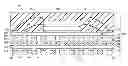
Referring first to FIG. 1, there is illustrated a cross-section view of a first substrate 130 in accordance with an embodiment. In an embodiment, the first substrate 130 may be a component of a package 100, which may include, for example, one or more integrated circuit die(s) 120 mounted on the first substrate 130 via a first set of conductive connections 152. The first set of conductive connections 152 may comprise, for example, lead free solder, eutectic lead, conductive pillars, combinations thereof, and/or the like.
In an embodiment, the integrated circuit die(s) 120 may also be connected to the first substrate 130 via a second set of conductive connections 154 coupled to each of a first set of conductive features 142. The second set of conductive connections 154 may comprise, for example, capillary wire bonds, which may be formed of aluminum, copper, gold, or other wire bonding materials. The first set of conductive features 142 may be formed of aluminum, copper, gold or other like materials. In an embodiment, the second set of conductive connections 154 may, for example, be coupled to the first set of conductive features 142 using a thermocompression bond (“TCB”). FIG. 1 illustrates electrical connections formed between the integrated circuit dies 120 (the second set of conductive connections 154) using wire bonding techniques for illustrative purposes only. Other embodiments may utilize other methods, such as flip-chip, ball grid arrays, through vias, and the like.
In various embodiments, the first substrate 130 may be, for example, a packaging substrate, a printed-circuit board, a high-density interconnect, or the like. Through vias (“TVs”) (not shown) may be used to provide electrical connections between each of the first integrated circuit die(s) 120 and each of a second set of conductive features 144 on an opposing surface of the first substrate 130. The first substrate 130 may also include redistribution lines (“RDLs”) (not shown) within and/or on one or both surfaces of the first substrate 130 to allow for a different pin configuration as well as larger electrical connections. A first encapsulant or overmold 160 may also be formed over the components to protect the components from the environment and/or external contaminants. In various embodiments, the first encapsulant may include an epoxy, a SiO2 filler, a hardener, an adhesion promoter, a catalyst, combinations thereof and the like.
In an embodiment, the second set of conductive features 144 may have formed thereon a third set of conductive connections 156 in electrical contact with the second set of conductive features 144. The third set of conductive connections 156 may comprise, for example, lead free solder, eutectic lead, conductive pillars, combinations thereof, and/or the like. In another embodiment, a flux (not shown) may be applied to the surface of each of the second set of conductive features 144, which may be in contact with each of the corresponding third set of conductive connections 156. The flux may be applied, for example, during an operation in which the surface of the first substrate 130 may be dipped or coated in the flux. The flux may help clean the surface of the second set of conductive features 144 thereby aiding in the formation of the electrical contact between each of the second set of conductive features 144 and each of the corresponding the third set of conductive connections 156.
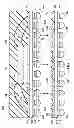
Referring now to FIG. 2(A), an epoxy flux 200 may be applied to the third set of conductive connections 156. In various embodiments, the epoxy flux 200 may comprise, for example, a polymer, epoxy, flux, and/or the like or any combination thereof. Exemplary epoxy fluxes that may be used with embodiments of the present disclosure are manufactured by Henkel® or the Indium Corporation®.
In an embodiment, as illustrated in FIG. 2(A), the first package 100 may be dipped in the epoxy flux 200 to cover an exposed surface of the third set of conductive connections 156. As shown in FIG. 2(A), the third set of conductive connections 156 may have a full height H as measured from a surface of the second set of conductive features 144. In an embodiment, the epoxy flux 200 may be applied to the surface of each of the third set of conductive connections 156 to between about one-half and less than the full height H of each of the third set of conductive connections 156.
Although FIG. 2(A) illustrates dipping the package 100 in the epoxy flux 200, the epoxy flux 200 may be applied to the third set of conductive connections 156 through other methods, such as, for example, spraying or brushing the epoxy flux 200 on the third set of conductive connections 156 to between about one-half and less than the full height H of each of the third set of conductive connections. In an embodiment, the epoxy flux 200 may be applied, in an individual manner to each of the third set of conductive connections 156 through an injection or other similar means to apply the epoxy flux 200 to the surface of the third set of conductive connections 156.
FIG. 2(B) illustrates the epoxy flux 200 as applied to the surface of each of the third set of conductive connections 156 following a desired application method, as discussed above. As illustrated, the epoxy flux 200 may be applied to the surface of the third set of conductive connections 156 to between about one-half and less than the full height H of each of the third set of conductive connections to a cover height HCOVER, Applying the epoxy flux 200 to the cover HCOVER within the range of between about one-half and less than the full height H of each of the third set of conductive connections 156 may prevent bridging between the third set of conductive connections 156 during subsequent reflow of the connections, which is described in further detail below. Application of the epoxy flux 200 to the third set of conductive connections 156 outside this range may not prevent bridging during reflow.
Referring now to FIG. 3, the package 100 may be electrically coupled to a second substrate 310. In an embodiment, the second substrate 310 may be a component of a package 300, which may include, for example, one or more IC die(s) (not shown) mounted thereon. The one or more IC die(s) may be mounted on the second substrate 310 using conductive connections (not shown) which may comprise, for example, lead free solder, eutectic lead, conductive pillars, capillary wire bonds, combinations thereof, and/or the like. The conductive connections may be coupled to conductive features (also not shown), which may provide electrical contact between the one or more IC dies and the second substrate 310. The conductive connections and features may be formed of aluminum, copper, gold, combinations thereof, or the like.
Further formed on the surfaces of the second substrate 310 may be a third set of conductive features 312, which may be formed on the same side as the one or more IC die(s), and a fourth set of conductive features 314, which may be formed on an opposing surface of the second substrate 310. In an embodiment, the third set of conductive features 312 may have formed thereon a fourth set of conductive connections 322, which may comprise lead free solder, eutectic lead, conductive pillars, combinations thereof, and/or the like. In an embodiment, the fourth set of conductive features 314 may have formed thereon a fifth set of conductive connections 324, which may comprise lead free solder, eutectic lead, conductive pillars, combinations thereof, and/or the like.
In various embodiments, the second substrate 310 may be, for example, a packaging substrate, a printed-circuit board, a high-density interconnect, or the like. Through vias (not shown) may be used to provide electrical connections between the IC die(s) and the fourth set of conductive features 314 on the opposing surface of the second substrate 310. The second substrate 310 may also include RDLs (not shown) within and/or on one or both surfaces of the second substrate 310 to allow for a different pin configuration as well as larger electrical connections. A second encapsulant or overmold 330 may also be formed over the components to protect the components from the environment and external contaminants.
During manufacture, the second encapsulant 330 may first be applied to fully cover (not shown) the fourth set of conductive connections 322. The second encapsulant 330 may then be removed to expose a surface 322a of each of the fourth set of conductive connections 322. Removal of the second encapsulant 330 may be performed using a saw, laser, grinding, or other similar singulation process to expose the surface 322a of each of the fourth set of conductive connections 322. Following removal of the second encapsulant 330, the surfaces 322a of each of the fourth set of conductive connections 322 may be at an approximately equal height along a horizontal plane parallel to the surface of the second substrate 310.
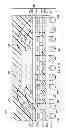
The first substrate 130 may be electrically coupled to the second substrate 310, thereby creating a Package-on-Package structure 400, as illustrated in FIG. 4. FIG. 4 illustrates a bonding step in accordance with an embodiment wherein the third set of conductive connections 156 (having the epoxy flux 200 applied to the surface of each connection) may be brought into contact with the fourth set of conductive connections 322 of the second substrate 310. Each of the corresponding third and fourth conductive connections 156, 322 of the first and second substrates 130, 310 may be bonded using a reflow process. In various embodiments, the reflow process may include induction reflow, RTP, IR, and the like.
Given that the surfaces 322a of each of the fourth set of conductive connections 322 of the second substrate 310 may be at an approximately equal height following removal of the second encapsulant 330, the epoxy flux 200 may inhibit or prohibit electrical bridging or shorting between the conductive connections of the substrates 130, 310 during reflow. Such electrical bridging or shorting may otherwise occur in the absence of the epoxy flux 200 being applied to the third set of conductive connections 156 to the cover height HCOVER. Further, electrical bridging or shorting may occur if the coverage of the epoxy flux 200 is outside the range of between about one-half and less than the full height H of each of the third set of conductive connections 156.
In an embodiment, the second set of conductive features 144 on the first substrate 130 and the third and fourth sets of conductive features 312, 314 on the second substrate 310 may be arranged in a ball grid array (“BGA”) arrangement. In various embodiments, the pitch of third and fourth sets of conductive features may vary in a range from approximately 200 μm to approximately 500 μm.
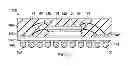
FIG. 5 illustrates a combined fifth set of conductive connections 510 formed between the second and third conductive features 144, 312 of the corresponding first and second substrates 130, 310 following the reflow of third and fourth conductive connections 156, 322 of FIG. 4. Following reflow of a material which may include, for example, an epoxy flux mixture, the flux may evaporate, which may leave epoxy 520 formed between the fifth set conductive connections 510. In an embodiment, wherein a polymer and flux may be used, there may be left polymer formed between the fifth set of conductive connections 510.
It should be noted that the shape of the fifth set of conductive connections 510 as illustrated in FIG. 5 is arbitrary and may change depending on various factors including, but not limited to, distance between the first and second substrates 130, 310, the time period that the reflow may be performed, the type of reflow process, and/or the types/material composition of third and fourth conductive connections 156, 322 formed on the second and third conductive features 144, 312 of the first and second substrates 130, 310.
Following reflow of the third and fourth conductive connections 156, 322 of the corresponding first and second substrates 130, 310 to form the fifth set of conductive connections 510, other normal processes may be used to complete the package 400. In an illustrative example, the second substrate 310 may be electrically coupled to yet another substrate, such as a PCB, a high density interconnect, a silicon substrate, an organic substrate, a ceramic substrate, a dielectric substrate, a laminate substrate, another semiconductor package, or the like. Further, a third encapsulant or overmold 520 may be formed between the first substrate 130 and the second encapsulant 330 to protect the substrate from the environment and external contaminants.
In an embodiment a device is provided. The device comprises a first substrate having a first surface, a second substrate having a first surface covered by a first encapsulant, a plurality of first electrical connections electrically coupling the first substrate to the second substrate, and a first material positioned between each of the first electrical connections, wherein the material is separated from the first surface of the first substrate.
In another embodiment, a method is provided. The method comprises providing a first substrate having a first plurality of electrical connections formed thereon; applying a first material to the first plurality of electrical connections to between about one-half and less than a full height of each of the first plurality of electrical connections; providing a second substrate having a second plurality of electrical connections formed thereon; contacting the first plurality of electrical connections of the first substrate to the second plurality of electrical connections of the second substrate; and performing a reflow process to form a third plurality of electrical connections between the first substrate and the second substrate, wherein the first material is positioned between each of the third plurality of electrical connections.
In another embodiment, another method is provided. The method comprises providing a first substrate; forming a first plurality of electrical connections on a first plurality of electrical features of the first substrate; applying a first material to the first plurality of electrical connections to between about one-half and less than a full height of each of the first plurality of electrical connections; providing a second substrate; forming a second plurality of electrical connections on a second plurality of electrical features of the second substrate; covering the second plurality of electrical connections with a first encapsulant; removing the first encapsulant from a surface of each of the second plurality of electrical connections; contacting the first plurality of electrical connections of the first substrate to the second plurality of electrical connections of the second substrate; and performing a reflow process to form a third plurality of electrical connections between the first substrate and the second substrate, wherein the first material is positioned between each of the third plurality of electrical connections.
It should be understood that the above description provides a general description of embodiments and that embodiments may include numerous other features. For example, embodiments may include under bump metallization layers, passivation layers, molding compounds, additional dies and/or substrates, and the like. Additionally, the structure, placement, and positioning of the first IC die(s) 120 are provided for illustrative purposes only, and accordingly, other embodiments may utilize different structures, placements, and positions.
Although the present embodiments and their advantages have been described in detail, it should be understood that various changes, substitutions and alterations can be made herein without departing from the spirit and scope of the disclosure as defined by the appended claims. For example, it will be readily understood by those skilled in the art that the structures and ordering of steps as described above may be varied while remaining within the scope of the present disclosure.
Moreover, the scope of the present application is not intended to be limited to the particular embodiments of the process, machine, manufacture, composition of matter, means, methods and steps described in the specification. As one of ordinary skill in the art will readily appreciate from the disclosure, processes, machines, manufacture, compositions of matter, means, methods, or steps, presently existing or later to be developed, that perform substantially the same function or achieve substantially the same result as the corresponding embodiments described herein may be utilized according to the present disclosure. Accordingly, the appended claims are intended to include within their scope such processes, machines, manufacture, compositions of matter, means, methods, or steps.
Claims
What is claimed is:1. A device comprising:
a first substrate having a first and second side, comprising:
a first encapsulant formed over the first side;
a first plurality of electrical features formed on the second side;
a second substrate having a first and second side, comprising:
a second plurality of electrical features formed on the first side;
a plurality of first electrical connections to couple the first plurality of electrical features of the first substrate to the second plurality of electrical features of the second substrate;
a second encapsulant formed over the first side of the second substrate, the second encapsulant positioned between each of the first plurality of electrical connections; and
a first material formed over the second encapsulant, the first material positioned between each of the first plurality of electrical connections, wherein the first material is separated from the second side of the first substrate.
2. The device of claim 1, further comprising:
a third encapsulant formed between the first material and the second side of the first substrate.
3. The device of claim 1, wherein the first material is made of a material selected from the group consisting of epoxy, polymer, flux, and any combination thereof.
4. The device of claim 1, wherein a pitch of the first electrical connections is within a range from approximately 200 μm to approximately 500 μm.
5. The device of claim 1, wherein the electrical connections are formed on at least one perimeter of the first substrate.
6. A method comprising:
providing a first substrate having a first plurality of electrical connections formed thereon;
applying a first material to the first plurality of electrical connections to between about one-half and less than a full height of each of the first plurality of electrical connections;
providing a second substrate having a second plurality of electrical connections formed thereon;
contacting the first plurality of electrical connections of the first substrate to corresponding ones of the second plurality of electrical connections of the second substrate; and
performing a reflow process to form a third plurality of electrical connections between the first substrate and the second substrate, wherein the first material is positioned between each of the third plurality of electrical connections.
7. The method of claim 6, the applying the first material to the first plurality of electrical connections comprising:
dipping the first substrate in the first material to cover a surface of the first plurality of electrical connections to between about one-half and less than the full height of each of the first plurality of electrical connections.
8. The method of claim 6, the applying the first material to the first plurality of electrical connections comprising:
injecting the first material onto a surface of the first plurality of electrical connections to between about one-half and less than the full height of the first plurality of electrical connections.
9. The method of claim 6, wherein the first material is made of a material selected from the group consisting of epoxy, polymer, flux and combinations thereof.
10. The method of claim 6, wherein the first plurality of electrical connections are formed on at least one perimeter of the first substrate.
11. The method of claim 6, wherein a pitch of the first electrical connections is within a range from approximately 200 μm to approximately 500 μm.
12. The method of claim 6, further comprising:
applying a molding underfill between the first material and a first surface of the first substrate following the reflow process.
13. A method for forming a semiconductor device, comprising:
providing a first substrate;
forming a first plurality of electrical connections on a first plurality of electrical features of the first substrate;
applying a first material to the first plurality of electrical connections to between about one-half and less than a full height of each of the first plurality of electrical connections;
providing a second substrate;
forming a second plurality of electrical connections on a second plurality of electrical features of the second substrate;
covering the second plurality of electrical connections with a first encapsulant;
removing the first encapsulant from a surface of each of the second plurality of electrical connections;
contacting the first plurality of electrical connections of the first substrate to the second plurality of electrical connections of the second substrate; and
performing a reflow process to form a third plurality of electrical connections between the first substrate and the second substrate, wherein the first material is positioned between each of the third plurality of electrical connections.
14. The method of claim 13, the applying the first material to the first plurality of electrical connections comprising:
dipping the first substrate in the first material to cover a surface of the first plurality of electrical connections to between about one-half and less than the full height of each of the first plurality of electrical connections.
15. The method of claim 13, the applying the first material to the first plurality of electrical connections comprising:
injecting the first material onto each of a surface of the first plurality of electrical connections to between about one-half and less than the full height of each of the first plurality of electrical connections.
16. The method of claim 13, wherein the first material is made of a material selected from the group consisting of epoxy, polymer, flux and combinations thereof.
17. The method of claim 13, further comprising:
applying a molding underfill between the first material and a first surface of the first substrate following the reflow process.
18. The method of claim 13, the removing the first encapsulant from the surface of each of the second plurality of electrical connections further comprising:
singulating the first encapsulant from the surface of each of the second plurality of electrical connections using a sawing process.
19. The method of claim 13, the removing the first encapsulant from the surface of each of the second plurality of electrical connections further comprising:
singulating the first encapsulant from the surface of each of the second plurality of electrical connections using a laser removal process.
20. The method of claim 13, wherein a pitch of the first plurality of electrical connections is within a range from approximately 200 μm to 500 μm.
Images & Drawings included:


Sources:
- United States Patent and Trademark Office - verify current appl. status at the USPTO↗
Similar patent applications:
- » 20250038086
PACKAGE STRUCTURE, CHIP, ELECTRONIC APPARATUS, MANUFACTURING METHOD FOR PACKAGE STRUCTURE AND CHIP PACKAGING METHOD - » 20100230793
Semiconductor apparatus packaging structure having embossed tape over tab tape, the embossed tape and method of forming the semiconductor apparatus packaging structure - » 20210273201
Packaging structure, display substrate, display apparatus and method for packaging display device - » 20230245923
Wafer level chip scale packaging intermediate structure apparatus and method - » 20200294845
Wafer level chip scale packaging intermediate structure apparatus and method - » 20210226150
Packaging structure, packaging method and display apparatus - » 20140264933
Wafer level chip scale packaging intermediate structure apparatus and method - » 20180075625
LED PACKAGE STRUCTURE, DISPLAY APPARATUS, AND METHOD FOR COLOR DISPLAY - » 20180342414
Wafer level chip scale packaging intermediate structure apparatus and method - » 20210305086
Wafer level chip scale packaging intermediate structure apparatus and method
Recent applications in this class:
- » 20250293212 2025-09-18
SEMICONDUCTOR PACKAGES - » 20250293211 2025-09-18
HEAT DISSIPATION FOR STACKED INTEGRATED CIRCUIT DEVICES - » 20250293210 2025-09-18
SYSTEMS AND METHODS FOR PACKAGING A SEMICONDUCTOR DEVICE - » 20250286021 2025-09-11
SEMICONDUCTOR PACKAGE - » 20250286020 2025-09-11
SEMICONDUCTOR BONDING STRUCTURE - » 20250286019 2025-09-11
SEMICONDUCTOR PACKAGE - » 20250286018 2025-09-11
METHOD OF FABRICATING SEMICONDUCTOR BONDING STRUCTURE - » 20250286017 2025-09-11
SEMICONDUCTOR DEVICE - » 20250279399 2025-09-04
SEMICONDUCTOR DEVICES AND MANUFACTURING METHODS OF THE SAME - » 20250279398 2025-09-04
VERTICAL INTERCONNECT STRUCTURES IN THREE-DIMENSIONAL INTEGRATED CIRCUITS
Recent applications for this Assignee:
- » 20240266341 2024-08-08
HYBRID BONDING WITH UNIFORM PATTERN DENSITY - » 20240224489 2024-07-04
SEMICONDUCTOR DEVICE - » 20240170063 2024-05-23
CONTENT ADDRESSABLE MEMORY ARRAY DEVICE STRUCTURE - » 20240161819 2024-05-16
MEMORY DEVICE AND MANUFACTURING THEREOF - » 20240153896 2024-05-09
SEMICONDUCTOR PACKAGE SYSTEM AND METHOD - » 20240120409 2024-04-11
Method for non-resist nanolithography - » 20240113080 2024-04-04
Semiconductor Device with Discrete Blocks - » 20240105632 2024-03-28
Method for forming a semiconductor device including forming a first interconnect structure on one side of a substrate having first metal feature closer the substrate than second metal feature and forming first and second tsv on other side of substrate connecting to the metal features - » 20240096816 2024-03-21
Method of manufacture overlay mark using laser marking process for semiconductor device - » 20240096383 2024-03-21
MEMORY DEVICE