PINCH VALVE DEVICE
US20140117261A1
2014-05-01
14/114,760
2012-10-31
Abstract:
A pinch valve device which has a simple structure and can shut off a fluid is provided. Inside of a first valve housing (100) and a second valve housing (110), a rotor (120) is rotatably arranged. A tube (150) made of silicon rubber has its both ends fastened to a flange (104) and a flange (114). On the outer side of the tube (150), a pair of pinch levers (160) are swingably equipped and are pressed by a first cam crest (124) by rotational movement of the rotor (120) and pinch the tube (150) and close a channel.
Assignee:
- OHKI-INDUSTRY CO., LTD. 1 🇯🇵 Saitama, Japan
Interested in similar patents?
Get notified when new applications in this technology area are published.
Classification:
F16K7/06 » CPC main
Diaphragm cut-off apparatus, e.g. with a member deformed, but not moved bodily, to close the passage with tubular diaphragm constrictable by external radial force by means of a screw-spindle, cam, or other mechanical means
Description
TECHNICAL FIELD
The present invention relates to a switch valve for a liquid, and particularly to a pinch valve.
BACKGROUND ART
In a plant for producing liquid food products, milk products, pharmaceuticals, cosmetics and the like, prevention of clogging of inside of a switch valve equipped in a piping line, easiness of cleaning of the inside, and easiness of assembling/disassembling are needed.
CITATION LIST
Patent Literature
[Patent Literature 1] Japanese Patent Laid-Open Publication No. 2002-122252
SUMMARY OF INVENTION
Technical Problem
With this type of pinch valve, a tube having a strong elastic force such as silicon rubber and the like is mechanically squeezed from the outside for performing a valve closing operation.
Problems of the current switch valve are size minimization of a space between valve faces, prevention of clogging of the inside, reduction of the number of components, easiness of cleaning of the inside, size minimization of a switching mechanism, and clarification of opened/closed states.
The present invention has an object to provide a switch valve which solves the aforementioned problems.
Solution to Problem
In order to achieve the aforementioned object, a pinch valve device of the present invention is provided with a valve housing having a disk shape, a rotor rotatably disposed inside the valve housing, a tube made of an elastic material disposed on an inner side of the rotor, a pair of pinch levers swingably disposed on an outer side of a center part of the tube, and a means for driving the tube in a direction of sandwiching the tube with the pair of pinch levers.
The valve housing is provided with piping mounting portions protruding outwardly with respect to each other and flanges provided at distal ends of the piping mounting portions, and a tightening tool for fastening tube flanges provided on both end portions of the tube to the flanges of the piping mounting portions is provided.
Moreover, the means for driving the pinch levers is a cam crest formed on the inner side of the rotor, and furthermore, a gear portion formed on the outer side of the rotor, a pinion meshed with the gear portion, and a driving device driving the pinion are provided.
Advantageous Effect of Invention
By providing the aforementioned means, the pinch valve device of the present invention has a simple structure and can reliably open/close a tube such as silicon rubber and the like having a strong elastic force.
BRIEF DESCRIPTION OF DRAWINGS
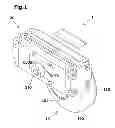
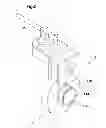
FIG. 1 is a perspective view illustrating an embodiment of the present invention.
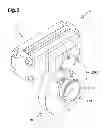
FIG. 2 is a perspective view illustrating the embodiment of the present invention.
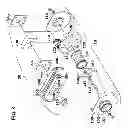
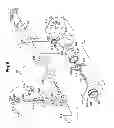
FIG. 3 is a component configuration diagram of the present invention.
FIG. 4 is a perspective view illustrating the embodiment of the present invention.
FIG. 5 is a perspective view illustrating the embodiment of the present invention.
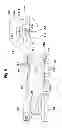
FIG. 6 is a component configuration diagram of the present invention.
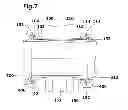
FIG. 7 is a sectional view of an essential part of the present invention.
FIG. 8 is a sectional view of the essential part of the present invention.
FIGS. 9A, 9B and 9C are explanatory diagrams illustrating an action of the present invention.
FIG. 10 is a sectional view of the essential part of the present invention.
FIG. 11 is an explanatory diagram of a driving mechanism of the present invention.
FIGS. 12A and 12B are explanatory diagrams of the driving mechanism of the present invention.
FIG. 13 is explanatory diagrams of the driving mechanism of the present invention.
FIGS. 14A and 14B are explanatory diagrams of the driving mechanism of the present invention.
FIG. 15 is an explanatory diagram of the driving mechanism of the present invention.
DESCRIPTION OF EMBODIMENT
FIGS. 1 and 2 are perspective views illustrating an appearance of an automatic pinch valve device 1 of the present invention, and FIG. 3 is a component configuration diagram.
The automatic pinch valve device 1 is provided with a valve main body 10 having an appearance of a disk shape and a pinch lever 160 for opening/closing a tube equipped inside the valve main body 10.
The valve main body 10 is provided with a first valve housing 100 and a second valve housing 110, and a piping mounting portion 102 is provided on the first valve housing 100, while a piping mounting portion 112 is provided on the second valve housing 110.
A driving device 20 has an actuator housing 200, a first plate 220, a cover 230, and a second plate 240 and rotates and drives a pinion 250 by making high-pressure air flow in through a port 205 of the actuator housing 200 so as to rotationally move a driving shaft 212 through a rack and the pinion. The pinion 250 is meshed with a gear portion 122 of a rotor 120, and by means of rotational movement of the rotor 120, the pinch lever 160 is operated by a first cam crest 124 and a second cam crest 125 so as to pinch a tube 150.
Moreover, a high-pressure air is made to flow in through a port 206 of the actuator housing 200, so as to open the tube 150.
A rotation position of the driving shaft is indicated on an indicator panel 210.
The driving shaft 212 is covered by the first plate 220, the cover 230, and the second plate 240 and drives the pinion 250. The rotational movement of the driving shaft 212 is transmitted to the switching indicator panel 210, and the switching indicator panel 210 indicates an opened/closed state of the valve.
FIGS. 4 and 5 are perspective views illustrating an appearance of a manual pinch valve device 2 of the present invention, and FIG. 6 is a component configuration diagram.
The manual pinch valve device 2 is provided with the valve main body 10 having an appearance of a disk shape and the pinch lever 160 for opening/closing a tube equipped inside the valve main body 10.
The valve main body 10 is provided with the first valve housing 100 and the second valve housing 110, and the piping mounting portion 102 is provided on the first valve housing 100, while the piping mounting portion 112 is provided on the second valve housing 110.
A manual driving device 30 has a handle 213, a driving shaft 214, a stopper 215, a screw piece 216, the first plate 220, the cover 230, and the second plate 240, and by means of rotational movement of the driving shaft 214 by the handle 213, the pinion 250 is rotated and driven. The pinion 250 is meshed with the gear portion 122 of the rotor 120, and by means of rotational movement of the rotor 120, the pinch lever 160 is operated by the first cam crest 124 and the second cam crest 125 so as to pinch or open the tube 150.
An end portion of a shaft 228 is supported by a bearing 218, and the bearing 218 covered by a cover 219 supports one end portion of the driving shaft 214, and the driving shaft 214 penetrates the cover 215, the first plate 220, the cover 230, and the second plate 240 and has the other end portion supported by a cover 245.
A bevel gear 217 mounted on the shaft 228 is meshed with a bevel gear 216 mounted on the driving shaft 214 and transmits revolving movement of the shaft 228 to the driving shaft 214.
The driving shaft 214 is connected to the pinion 250 through a key and rotates and drives the pinion 250.
Insides of the first valve housing 100 and the second valve housing 110, the rotor 120 is rotatably inserted. The gear portion 122 is formed on a part of an outer peripheral part of the rotor 120, and a pair of the first cam crest 124 and the second cam crest 125 are provided facing with each other inside the rotor 120.
Inside the rotor 120, the tube 150 is equipped. The tube 150 is made of silicon rubber or the like having a strong elastic force, and both end portions thereof are gripped firmly by flange portions of the first valve housing 100 and the second valve housing 110. Outside the center part of the tube 150, a pair of the pinch levers 160 sealing a flow of a fluid flowing inside by pinching the tube 150 are swingably provided. The pinch lever 160 seals the inside by squeezing the outer peripheral part of the tube 150 in a state which will be described later by rotational movement of the rotor 120.
In the pinch valve of the present invention, when the tube 150 is sandwiched between the pinch levers 160 and arranged, in an initial state (opened valve state), the tube 150 is squeezed in advance only by a small amount and set. By this setting, an opening/closing speed of the tube 150 is improved, and a revolving operation of the pinch lever 160 can be shorter.
FIG. 7 is a sectional view illustrating a mounted structure of the tube 150.
The tube 150 has a cylindrical shape made of silicon rubber or the like, a center part thereof is formed into a thin portion 151, and a tube flange 152 is provided on both end portions thereof. On an end portion of the piping mounting portion 102 of the first valve housing 100, a flange 104 having a projecting portion 103 is provided, while on an end portion of the piping mounting portion 112 of the second valve housing 110, a flange 114 having a projecting portion 113 is provided.
To both sides of the tube 150, a pipe 300 and a pipe 310 are connected and concluded by using a tightening tool 400.
FIG. 8 illustrates a detail of the mounted structure of both end portions of the tube 150.
The tube flange 152 of the tube 150 has a projecting portion 154 provided on an outer-side end face of the projecting portion tube flange and a groove portion 153 provided on an inner-side end face of the tube flange, and a piping flange 312 of the pipe 310 has a groove portion 314. The projecting portion 154 of the tube flange 152 is fitted in the groove portion 314 of the pipe 310, and the projecting portion 113 of the flange 114 is fitted in the groove portion 153 of the tube flange 152 and tightened by the tightening tool 400.
If the tube 150 is pinched by the pinch lever 160, the tube 150 is generally elongated and seals the inside thereof. By fitting the groove portion 153 of the tube flange 152 with the projecting portion 113 of the flange 114, gripping on both end portions of the tube 150 is made firmer so as to correspond to deformation of this tube 150. Moreover, since the center part of the tube 150 is formed as the thin portion 151, sealing performance when the valve is closed is also improved.
FIGS. 9A, 9B, and 9C illustrate states of pinching of the tube 150 by the pinch levers 160. FIG. 9A illustrates a state in which the tube 150 is fully opened, and a flow F1 of the fluid flowing through the inside is the maximum flow rate. FIG. 9B illustrates a state in which the tube 150 is squeezed by approximately half by the pinch lever 160, and the flow rate F1 is reduced.
FIG. 9C illustrates a state in which the tube 150 is fully squeezed by the pinch lever 160, and the flow of the fluid is stopped.
FIG. 10 illustrates stress distribution S1 received by the tube 150 due to the pinching. By forming a distal end of the pinch lever 160 as an arc-shaped projecting portion 162, the stress S1 received by a pinched part of the tube 150 becomes as illustrated in the figure, and concentration of forces is prevented.
FIG. 11 is an explanatory diagram illustrating an operation mechanism of the pinch lever 160 by the rotor 120. The pair of pinch levers 160 disposed on the inner side of the rotor 120 are swingably supported by a support column 116 mounted between the first valve housing 100 and the second valve housing 110.
When the rotor 120 rotationally moves, the pinch levers 160 are pressed to the inside by the first cam crest 124 formed on the inner side of the rotor 120 and pinch the center part of the tube 150 toward the center.
FIGS. 12(a) and 12(b) illustrate a detail of this operation.
When the rotor 120 rotationally moves in an arrow R1 direction as illustrated in FIG. 12(a), the first cam crest 124 applies a pressure P1 to the pinch lever 160 and squeezes the tube 150. As illustrated in FIG. 12(b), when the rotor 120 rotationally moves in an arrow R2 direction, the second cam crest 125 applies a pressure P2 to the rear end portion side of a shaft hole 164 of the pinch lever 160 and separates the pinch lever 160 from the tube 150.
FIG. 13 is a structural diagram illustrating pinching of the tube 150 by the rotor 120.
FIG. 14 are explanatory diagrams illustrating actions of the pressures P1 and P2 to the pinch lever 160 by the first cam crest 124 and the second cam crest 125 explained also in FIG. 9.
FIG. 15 illustrates a state in which the tube 150 is fully squeezed and the valve is closed.
In the pinch valve of the present invention, since the rotor 120 rotates and squeezes the tube 150 with the pinch lever 160, the pinch lever 160 squeezes the tube 150 while rotating with respect to the outer peripheral part of the tube 150. By means of this action, unlike a structure of a prior-art pinch valve which squeezes one point on the outer peripheral part of the tube 150, stress concentration acting on the tube 150 does not occur, and durability of the tube 150 is improved.
That is, the pair of pinch levers 160 are pushed out towards the center direction of the rotor 120 by the first cam crest 124 with rotation of the rotor 120.
Due to this action, the pair of pinch levers 160 are brought into contact with the outer peripheral part of the tube 150 while revolving to squeeze the tube.
Thus, as compared with a mechanism which squeezes the tube by linearly moving the lever in a radial direction, an influence of damaging the tube 150 can be alleviated.
REFERENCE SIGNS LIST
1 automatic pinch valve device
2 manual pinch valve device
10 valve main body
20 driving device
30 driving device
100 first valve housing
102 piping mounting portion
103 projecting portion
104 flange
110 second valve housing
112 piping mounting portion
113 projecting portion
114 flange
116 support column
120 rotor
122 gear portion
124 first cam crest
125 second cam crest
150 tube
151 thin portion
152 tube flange
153 groove portion
154 projecting portion
160 pinch lever
162 projecting portion
163 recess groove
164 shaft hole
200 actuator housing
205 port
206 port
210 switching indicator panel
212 driving shaft
213 handle
214 driving shaft
215 cover
216 gear
217 gear
218 bearing
219 cover
220 first plate
222 plate
224 semicircular plate
226 bearing
228 shaft
229 handle receiver
230 cover
240 second plate
245 cover
250 pinion
300 pipe
310 pipe
312 piping flange
314 groove portion
400 tightening tool
Claims
1. A pinch valve device comprising:
a valve housing having a disk shape;
a rotor rotatably disposed inside the valve housing;
a tube having a cylindrical shape and made of an elastic material which is disposed on an inner side of the rotor;
a pair of pinch levers swingably disposed on an outer side of a center part of the tube; and
a means for driving the pair of pinch levers in a direction of sandwiching the tube while revolving on an outer peripheral part of the tube.
2. The pinch valve device according to claim 1, wherein
the valve housing is provided with piping mounting portions protruding outwardly with respect to each other and flanges provided at distal ends of the piping mounting portions, and a tightening tool for fastening tube flanges provided on both end portions of the tube to the flanges of the piping mounting portions.
3. The pinch valve device according to claim 1, wherein
the tube is mounted between the pinch levers in an open valve state sandwiched by the pair of pinch levers and in a state squeezed by a small amount from the cylindrical shape.
4. The pinch valve device according to claim 1, wherein
the means for driving the pinch levers is a cam crest formed on the inner side of the rotor.
5. The pinch valve device according to claim 1, comprising:
a gear portion formed on the outer side of the rotor, a pinion meshed with the gear portion, and a driving device for driving the pinion.
6. The pinch valve device according to claim 5, wherein
the means for driving the pinion is composed of an air cylinder and a rack and a pinion.
7. The pinch valve device according to claim 5, wherein
the means for driving the pinion is a manual handle which revolves.
8. The pinch valve device according to claim 2, wherein
the tube flange provided on both end portions of the tube is provided with a projecting portion provided on an outer-side end face of the tube flange and a groove portion provided on an inner-side end face of the tube flange.
9. The pinch valve device according to claim 1, wherein
the tube is formed such that a thickness dimension on a center part is smaller than a thickness dimension of both end portions.
Images & Drawings included:



Sources:
- United States Patent and Trademark Office - verify current appl. status at the USPTO↗
Similar patent applications:
- » 20250092954
Pinch Valve Device - » 20180071085
Heart valve pinch devices and delivery systems - » 20190328512
Heart valve pinch devices and delivery systems - » 20220168096
Heart valve pinch devices and delivery systems - » 20240091007
HEART VALVE PINCH DEVICES AND DELIVERY SYSTEMS - » 20130066281
Sealing assembly with pinch valve structure for a fluid infusion device having a needled fluid reservoir - » 20240374345
A TUBE SECTION, A PINCH VALVE AND A POWDER GAS JET DEVICE - » 20100114024
Pinch valve mechanism for a medical fluid injection device - » 20110152682
Pinch valve mechanism for a medical fluid injection device - » 20110160581
Pinch valve mechanism for a medical fluid injection device
Recent applications in this class:
- » 20230349472 2023-11-02
Pinch clamp for flexible conduits - » 20230213103 2023-07-06
Valves and methods of making valves for restricting airflow to and/or from a patient - » 20220057001 2022-02-24
Pinch valve - » 20210215260 2021-07-15
PINCH VALVE - » 20200370663 2020-11-26
Pinch valve with linear sections - » 20190264820 2019-08-29
Vacuum-based energy-saving large-capacity precision pressure regulation valve - » 20190136985 2019-05-09
FLOW CONTROL VALVE - » 20170328482 2017-11-16
Clamp device and methods for making and using - » 20150267821 2015-09-24
Clamp device and methods for making and using - » 20150204450 2015-07-23
Circuit for biological liquid comprising a pinch valve