High-value polyurethane elastomers and production thereof
US20140142243A1
2014-05-22
14/125,836
2012-06-26
✅ Patent granted
US 9,062,149 B2
2015-06-23
WO; PCT/EP2012/062358; 20120626
WO; WO2013/000912; 20130103
Michael L Leonard
Miles and Stockbridge
2032-06-26
Abstract:
The present invention relates to high-value polyurethane (PUR) and polyurethaneurea elastomers, which can be processed in a particularly simple manner by use of low-viscosity prepolymers based on naphthalene 1,5-diisocyanate, and to a process for production thereof.
Inventors:
- Jens Krause 30 🇩🇪 Leverkusen, Germany
- Hartmut Nefzger 101 🇩🇪 Pulheim, Germany
- Stephan Reiter 9 🇩🇪 Langenfeld, Germany
- Florian Hupka 1 🇩🇪 Duesseldorf, Germany
Assignee:
- Bayer Intellectual Property GmbH 918 🇩🇪 Monheim, Germany
Applicant:
Interested in similar patents?
Get notified when new applications in this technology area are published.
Classification:
C08G18/72 » CPC main
Polymeric products of isocyanates or isothiocyanates with compounds having active hydrogen characterised by the isocyanates or isothiocyanates used Polyisocyanates or polyisothiocyanates
C08G18/4238 » CPC further
Polymeric products of isocyanates or isothiocyanates with compounds having active hydrogen characterised by the compounds used containing active hydrogen; High-molecular-weight compounds; Polycondensates having carboxylic or carbonic ester groups in the main chain containing only aliphatic groups derived from dicarboxylic acids and dialcohols
C08G18/10 » CPC further
Polymeric products of isocyanates or isothiocyanates with compounds having active hydrogen; Processes Prepolymer processes involving reaction of isocyanates or isothiocyanates with compounds having active hydrogen in a first reaction step
C08G18/78 IPC
Polymeric products of isocyanates or isothiocyanates with compounds having active hydrogen characterised by the isocyanates or isothiocyanates used; Polyisocyanates or polyisothiocyanates having heteroatoms in addition to the isocyanate or isothiocyanate nitrogen and oxygen or sulfur Nitrogen
C08G18/42 IPC
Polymeric products of isocyanates or isothiocyanates with compounds having active hydrogen characterised by the compounds used containing active hydrogen; High-molecular-weight compounds Polycondensates having carboxylic or carbonic ester groups in the main chain
C08G18/71 » CPC further
Polymeric products of isocyanates or isothiocyanates with compounds having active hydrogen characterised by the isocyanates or isothiocyanates used Monoisocyanates or monoisothiocyanates
C08G18/76 IPC
Polymeric products of isocyanates or isothiocyanates with compounds having active hydrogen characterised by the isocyanates or isothiocyanates used; Polyisocyanates or polyisothiocyanates cyclic aromatic
Description
The present invention relates to high-value polyurethane (PU) elastomers and high-value polyurethane-urea elastomers which are particularly easy to process as a result of use of low-viscosity prepolymers based on naphthalene 1,5-diisocyante, and also to a process for production of these.
PU cast elastomers are valuable materials, and are produced from polyisocyanates, polyols, and chain extenders, and/or crosslinking agents. An industrially important polyisocyanate here is naphthalene 1,5-diisocyanate (NDI).
Polyols that can be used are the mostly hydroxy-group-terminated polyester or polyether polyols that are known to the person skilled in the art. Chain extenders used are short-chain polyols, e.g. ethylene glycol or butylene 1,4-glycol, and likewise short-chain polyamines, e.g. 4,4′-methylenebis(2-chloroaniline) (MBOCA), or else water.
Polyurethanes based on naphthalene 1,5-diisocyanate (e.g. Desmodur® 15 from Bayer MaterialScience AG) have been known for a long time, and are marketed by Bayer MaterialScience AG with trademark Vulkollan®, preferably in high-value applications. A feature of polyurethanes based on naphthalene 1,5-diisocyanate here is that they have not only excellent dynamic mechanical properties but also exceptional long-term usage performance in comparison with many other materials.
The use of NDI for the production of cast elastomers is likewise known, and is described by way of example in DE-A 1694169. Here, polyester polyols having softening points in the range from 60 to 145° C. are used.
In the production of PU cast elastomers, a distinction is made between the one-shot process in which the reactants polyisocyanate, polyol, and chain extender are reacted simultaneously with one another and the prepolymer process in which the polyol is reacted with the polyisocyanate and only then is the chain-extender component used.
Oligomers formed from NDI and from low-molecular-weight chain extender have poor solubility in the reacting melt made of NDI, chain extender, and polyol, and therefore precipitate and are unavailable for complete reaction and coupling to the polyol component, and for this reason elastomers based on NDI, in contrast to elastomers based on hexamethylene diisocyanate, toluene diisocyanate, or diphenylmethane 4,4′-diisocyanate, are produced only by the prepolymer process, and not by the one-shot process.
On the other hand, because of the comparatively high melting point of NDI, 127° C., it is necessary to produce the NCO prepolymers based on NDI at reaction temperatures above that temperature, in order to ensure that the reaction mixture is homogeneous. However, the NCO prepolymers based on NDI that are widely used for the production of NDI-based cast elastomers have only a short shelf life when exposed to high temperature (≧127° C.), since the high temperatures cause side-reactions, the final result of which is a reduced NCO index, in conjunction with a viscosity rise, and processing therefore at least becomes more difficult, if not impossible.
The above problems with conventional NDI prepolymers having short shelf life form the background to recommended processing methods which require that the chain-extension reaction be carried out within 30 minutes after production of the NDI prepolymer, and to descriptions in the literature which cast doubt in very general terms on the storage capability of NDI prepolymers: in “Solid Polyurethane Elastomers”, P. Wright and A. P. C. Cummings, Maclaren and Sons, London 1969, pp. 104 ff. in chapter 6.2. we find the following:
- “6.2.1. Unstable Prepolymer Systems (Vulkollan®) (Vulkollan®; trademark for cast elastomer systems based on naphthalene diisocyanate (NDI) from Bayer MaterialScience AG).
Vulkollan® is manufactured by a prepolymer route, although the prepolymer is non-storable and must be further reacted within a short interval of time. The prepolymer so formed is relatively unstable since further undesirable side reactions can take place. To reduce the possibility of these side reactions occurring, the next stage in the process, viz. the chain extension, should take place as soon as possible but within a maximum of 30 minutes.”
These statements clarify the reason for the importance of low initial viscosity of the prepolymer, since even within the recommended 30 min the viscosity rises markedly, and therefore processing, in particular of relatively large and/or relatively complicated moldings, is made at least more difficult, if not impossible, since the reacting melt made of high-viscosity prepolymer and chain extender then fails by way of example to reach mold regions that are distant from the gate. A low initial viscosity of the NDI prepolymers is generally also desirable in order to ensure that it is easy to disperse the chain extender within the material. In particular NDI-based elastomers with high hardness values, based on prepolymer with high NCO content, where by way of example 1,4-butanediol is used as chain extender, also exhibit extremely low casting times, and again this makes it very difficult to produce complicated moldings.
WO 2007/022884 A1 describes 2,2′-thiodiethanol as chain extender permitting achievement of relatively long casting times for the reaction of PU-NCO prepolymers with crosslinking agents, where the mechanical properties of the resultant PU elastomers are no poorer than those of comparable prior-art elastomers. This longer casting time permits production of complicated moldings made of hard PU elastomers.
The object of the present invention was therefore to lower the initial viscosity of the prepolymer in order to improve processability, without rendering the mechanical properties of the resultant PU elastomers poorer than those of comparable elastomers of the prior art, a factor requiring consideration being that additives that are used to reduce viscosity, e.g. castor oil derivatives, are often not stable at the high usage temperatures and/or cause severe impairment not only of the dynamic mechanical properties of the PU elastomers but also of their other mechanical properties.
Surprisingly, it has been found that small proportions of naphthyl 1-isocyanate in the naphthalene 1,5-diisocyanate markedly reduce viscosity. In this connection it is well known to the person skilled in the art that additions made in a controlled manner to a prepolymer can reduce viscosity, but it is also known to the person skilled in the art that at the same time the mechanical properties of the finished moldings are severely impaired. Surprisingly, it has been found that addition of from 0.05 to 0.7% by weight, based on polyol, of naphthyl 1-isocyanate to the NDI used markedly reduces the initial viscosity of the prepolymer and at the same time the dynamic mechanical properties of the elastomer, and its other mechanical properties, are adequately good. It is therefore possible to produce complicated components even with the short casting times that are typical of formulations for PU elastomers of high hardness.
The present invention therefore provides a process for the production of low-viscosity NCO prepolymers based on naphthalene 1,5-diisocyanate, which is characterized in that
- a) naphthalene 1,5-diisocyanate (NDI) with which from 0.05 to 0.7% by weight, preferably from 0.05 to 0.5% by weight, based on component b), of naphthyl 1-isocyanate has been admixed is reacted continuously or batchwise with
- b) polyols which have a temperature of from 80° C. to 240° C., number-average molar masses of from 850 to 3000 g/mol, preferably from 1000 to 3000 g/mol, viscosities of ≦2500 mPas, preferably from 500 to 2500 mPas, measured at 120° C., and functionalities of from 1.95 to 2.15, selected from the group consisting of polyester polyols, poly-ε-caprolactone polyols, polycarbonate polyols, polyether polyols, and α-hydro-ω-hydroxypoly(oxytetramethylene) polyols
- in a ratio of NCO groups to OH groups of from 1.5:1 to 3.05:1, preferably from 1.6:1 to 2.95:1, particularly preferably from 1.7:1 to 2.85:1.
The present invention further provides a process for the production of polyurethane elastomers which is characterized in that the NCO prepolymers produced in the invention, based on naphthalene 1,5-diisocyanate, are reacted with
- c) chain extenders which have hydroxy groups and having molecular weights of from 62 to 450 daltons, and functionalities of from 2 to 3, and/or water,
- d) optionally in the presence of blowing agents, auxiliaries, and additives.
The polyurethane elastomers produced in the invention comprise not only cellular but also solid PU elastomers.
The present invention further provides low-viscosity NCO prepolymers based on naphthalene 1,5-diisocyanate which are characterized in that they are obtainable from
- a) naphthalene 1,5-diisocyanate (NDI) with which from 0.05 to 0.7% by weight, preferably from 0.05 to 0.5% by weight, based on component b), of naphthyl 1-isocyanate has been admixed and
- b) polyols which have a temperature of from 80° C. to 240° C., number-average molar masses of from 850 to 3000 g/mol, preferably from 1000 to 3000 g/mol, viscosities of ≦2500 mPas, preferably from 500 to 2500 mPas, measured at 120° C., and functionalities of from 1.95 to 2.15, selected from the group consisting of polyester polyols, poly-ε-caprolactone polyols, polycarbonate polyols, polyether polyols, and α-hydro-ω-hydroxypoly(oxytetramethylene) polyols
- in a ratio of NCO groups to OH groups of from 1.5:1 to 3.05:1, preferably from 1.6:1 to 2.95:1, particularly preferably from 1.7:1 to 2.85:1.
The present invention further provides polyurethane elastomers which are characterized in that they are obtainable from the NCO prepolymers of the invention based on naphthalene 1,5-diisocyanate and from
- c) chain extenders which have hydroxy groups and having molecular weights of from 62 to 450 daltons, and functionalities of from 2 to 3, and/or water,
- d) optionally in the presence of blowing agents, auxiliaries, and additives.
The polyurethane elastomers of the invention can be used as damping elements in vehicle construction, for example in automobile construction, e.g. as overload springs, buffers, transverse link bearings, rear axle subframe bearings, stabilizer bearings, longitudinal strut bearings, suspension strut bearings, shock absorber bearings, or bearings for wishbones, and also as an emergency wheel located on the rim, and as coating for rollers, wheels, and rolls.
The examples hereinafter are intended to provide further explanation of the invention.
EXAMPLES
Starting Compounds and Test Equipment Used:
Desmodur® 15 from Bayer MaterialScience AG: naphthalene 1,5-diisocyanate
Vulkollan® 2000 MM from Bayer MaterialScience AG: polyethylene adipate, OH number (OHN) 55, functionality 2
Naphthyl 1-isocyanate from Acros Organics
Butanediol: 1,4-butanediol from Aldrich
Viscometer: Physica MCR 51 from Anton Paar
Example 1
Production of NDI Elastomers of Low Hardness with Addition of Different Amounts of Naphthyl 1-Isocyanate
A-1C is a comparative example, but A-2, A-3, and A-4 are inventive examples.
100 parts by weight of Vulkollan® 2000 MM were heated to 110° C. and degassed. The temperature was increased to 133° C. 18 parts by weight of Desmodur® 15 with which 0 (A-1C), 0.1 (A-2), 0.3 (A-3), or 0.5 (A-4) part by weight of naphthyl 1-isocyanate was admixed in advance, were added, with stirring. Vacuum was then applied. After 5 minutes, the viscosity of the resultant prepolymer was measured (see table 1). After 15 minutes of reaction time, the exothermic activity of the reaction had subsided, and the temperature of the prepolymer melt was 125° C. 2 parts by weight of 1,4-butanediol were mixed with the product, and the reaction mixture, the viscosity of which was still low, was cast into molds that had been preheated to 110° C., demolded after 30 minutes, and then conditioned at 110° C. for 16 hours in a convection oven. Dynamic mechanical properties and other mechanical properties were determined (see table 2).
| TABLE 1 |
| Formulations for the elastomers produced and viscosities |
| of the prepolymers produced with different |
| contents of naphthyl 1-isocyanate |
| Elastomer | A-1C | A-2 | A-3 | A-4 | |
| Formulation for | |||||
| prepolymer: | |||||
| Vulkollan ® 2000 MM | [pts. by wt.] | 100 | 100 | 100 | 100 |
| Naphthalene 1,5- | [pts. by wt.] | 18 | 17.9 | 17.7 | 17.5 |
| diisocyanate | |||||
| Naphthyl 1-isocyanate | [pts. by wt.] | 0.0 | 0.1 | 0.3 | 0.5 |
| Chain extender: | |||||
| 1,4-Butanediol | [pts. by wt.] | 2.0 | 2.0 | 2.0 | 2.0 |
| Indices for the reaction: | |||||
| Overall index | 120.4 | 120.1 | 119.6 | 119.1 | |
| OH number of polyol | [mgKOH/g] | 55 | 55 | 55 | 55 |
| Prepolymer temperature | [° C.] | 130 | 126 | 131 | 127 |
| Casting time | [s] | 150 | 150 | 150 | 150 |
| Mold temperature | [s] | 110 | 110 | 110 | 110 |
| Demolding after | [min] | 30 | 30 | 30 | 30 |
| Viscosity of prepolymer | [mPas] | 2390 | 2270 | 2080 | 1940 |
| TABLE 2 |
| Dynamic mechanical properties and other mechanical properties of the unfoamed elastomers |
| Elastomer | B-1C | B-2 | B-3 | B-4 | ||
| Mechanical properties: |
| DIN 53505 | Shore A hardness | [Shore A] | 86 | 85 | 85 | 84 |
| DIN 53505 | Shore D hardness | [Shore D] | 33 | 33 | 33 | 31 |
| DIN 53504 | Tensile stress, 100% | [MPa] | 4.6 | 4.5 | 4.5 | 4.1 |
| DIN 53504 | Tensile stress, 300% | [MPa] | 10.9 | 9.7 | 9.3 | 8.5 |
| DIN 53504 | Tensile stress at break | [MPa] | 50.3 | 43.5 | 40.3 | 39.8 |
| DIN 53504 | Elongation at break | [%] | 640 | 679 | 615 | 737 |
| DIN 53515 | Tear-propagation resistance | [kN/m] | 37 | 38 | 49 | 49 |
| (Graves) | ||||||
| DIN 53512 | Rebound resilience | [%] | 49 | 51 | 49 | 50 |
| DIN 53516 | Abrasion | [mm3] | 40 | 42 | 59 | 48 |
| DIN 53520 | Density | [g/mm3] | 1.248 | 1.249 | 1.249 | 1.246 |
| Dynamic mechanical properties: |
| DIN EN ISO 6721-2 | Storage modulus, G′ at −15° C. | [MPa] | 22 | 23 | 25 | 23 |
| DIN EN ISO 6721-2 | Storage modulus, G′ at 50° C. | [MPa] | 17 | 16 | 18 | 16 |
| DIN EN ISO 6721-2 | Storage modulus, G′ at 110° C. | [MPa] | 17 | 16 | 17 | 16 |
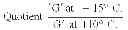
| Quotient G ′ ′ at - 15 ° C . G ′ at 110 ° C . | 1.35 | 1.47 | 1.45 | 1.40 | ||
| DIN EN ISO 6721-2 | Loss factor tanδ at −15° C. | 0.26 | 0.31 | 0.27 | 0.26 | |
| DIN EN ISO 6721-2 | Loss factor tanδ at 50° C. | 0.02 | 0.03 | 0.02 | 0.03 | |
| DIN EN ISO 6721-2 | Loss factor tanδ at 110° C. | 0.02 | 0.03 | 0.03 | 0.03 | |
| tanδ min. | [° C.] | 90 | 40 | 45 | 85 | |
| tanδ max. | [° C.] | −25 | −20 | −21 | −20 | |
Example 2
Production of NDI Elastomers of High Hardness with Addition of Different Amounts of Naphthyl 1-Isocyanate
A-5C is a comparative example, but A-6, A-7, and A-8 are inventive examples.
100 parts by weight of Vulkollan® 2000 MM were heated to 110° C. and degassed. The temperature was increased to 133° C. 25 parts by weight of Desmodur® 15 with which 0 (A-5C), 0.1 (A-6), 0.3 (A-7), or 0.5 (A-8) part by weight of naphthyl 1-isocyanate was admixed in advance, were added, with stirring. Vacuum was then applied. After 5 minutes, the viscosity of the resultant prepolymer was measured (see table 3). After 15 minutes of reaction time, the exothermic activity of the reaction had subsided, and the temperature of the prepolymer melt was 125° C. 5 parts by weight of 1,4-butanediol were mixed with the product, and the reaction mixture, the viscosity of which was still low, was cast into molds that had been preheated to 110° C., demolded after 30 minutes, and then conditioned at 110° C. for 16 hours in a convection oven. Dynamic mechanical properties and other mechanical properties were determined (see table 4).
| TABLE 3 |
| Formulations for the elastomers produced and viscosities |
| of the prepolymers produced with different |
| contents of naphthyl 1-isocyanate |
| Elastomer | A-5C | A-6 | A-7 | A-8 | |
| Formulation for | |||||
| prepolymer: | |||||
| Vulkollan ® 2000 MM | [pts. by wt.] | 100 | 100 | 100 | 100 |
| Naphthalene 1,5- | [pts. by wt.] | 25 | 24.9 | 24.7 | 24.5 |
| diisocyanate | |||||
| Naphthyl 1-isocyanate | [pts. by wt.] | 0.0 | 0.1 | 0.3 | 0.5 |
| Chain extender: | |||||
| 1,4-Butanediol | [pts. by wt.] | 5 | 5 | 5 | 5 |
| Indices for the reaction: | |||||
| Overall index | 113.9 | 113.7 | 113.4 | 113.1 | |
| OH number of polyol | [mgKOH/g] | 55 | 55 | 55 | 55 |
| Prepolymer temperature | [° C.] | 128 | 129 | 128 | 127 |
| Casting time | [s] | 100 | 100 | 100 | 100 |
| Mold temperature | [s] | 110 | 110 | 110 | 110 |
| Demolding after | [min] | 30 | 30 | 30 | 30 |
| Viscosity of prepolymer | [mPas] | 1050 | 1030 | 880 | 840 |
| TABLE 4 |
| Dynamic mechanical properties and other mechanical properties of the unfoamed elastomers |
| Elastomer | B-5C | B-6 | B-7 | B-8 | ||
| Mechanical properties: |
| DIN 53505 | Shore A hardness | [Shore A] | 95 | 94 | 93 | 93 |
| DIN 53505 | Shore D hardness | [Shore D] | 37 | 37 | 35 | 34 |
| DIN 53504 | Tensile stress, 100% | [MPa] | 7.7 | 7.6 | 7.6 | 7.3 |
| DIN 53504 | Tensile stress, 300% | [MPa] | 14.4 | 14.4 | 14.3 | 13.1 |
| DIN 53504 | Tensile stress at break | [MPa] | 33.2 | 28.6 | 31.2 | 25.5 |
| DIN 53504 | Elongation at break | [%] | 687 | 627 | 689 | 637 |
| DIN 53515 | Tear-propagation resistance | [kN/m] | 72 | 68 | 66 | 61 |
| (Graves) | ||||||
| DIN 53512 | Rebound resilience | [%] | 59 | 57 | 56 | 56 |
| DIN 53516 | Abrasion | [mm3] | 63 | 68 | 52 | 59 |
| DIN 53520 | Density | [g/mm3] | 1.256 | 1.255 | 1.256 | 1.254 |
| Dynamic mechanical properties: |
| DIN EN ISO 6721-2 | Storage modulus, G′ at −15° C. | [MPa] | 49 | 52 | 50 | 53 |
| DIN EN ISO 6721-2 | Storage modulus, G′ at 50° C. | [MPa] | 33 | 34 | 32 | 32 |
| DIN EN ISO 6721-2 | Storage modulus, G′ at 110° C. | [MPa] | 30 | 33 | 31 | 29 |
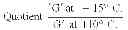
| Quotient G ′ ′ at - 15 ° C . G ′ at 110 ° C . | 1.63 | 1.59 | 1.62 | 1.82 | ||
| DIN EN ISO 6721-2 | Loss factor tanδ at −15° C. | 0.21 | 0.21 | 0.19 | 0.21 | |
| DIN EN ISO 6721-2 | Loss factor tanδ at 50° C. | 0.03 | 0.03 | 0.03 | 0.04 | |
| DIN EN ISO 6721-2 | Loss factor tanδ at 110° C. | 0.02 | 0.02 | 0.03 | 0.04 | |
| tanδ min. | [° C.] | 120 | 110 | 100 | 100 | |
| tanδ max. | [° C.] | −21 | −20 | −25 | −20 | |
Tables 1 and 3 show that the viscosities of the prepolymers of the invention are considerably lower than the viscosities of the comparative prepolymers. From tables 2 and 4 it is clear that, despite addition of naphthyl 1-isocyanate, the dynamic mechanical properties and other mechanical properties of the elastomers of the invention are similar to the properties of the comparative examples.
Claims
1. A process for producing a low-viscosity NCO prepolymer based on naphthalene 1,5-diisocyanate, comprising:
a) reacting naphthalene 1,5-diisocyanate (NDI) with which from 0.05 to 0.7% by weight, based on component b), of naphthyl 1-isocyanate has been admixed continuously or batchwise with
b) at least one polyol which has a temperature of from 80° C. to 240° C., number-average molar mass of from 850 to 3000 g/mol, optionally from 1000 to 3000 g/mol, viscosity ≦2500 mPas measured at 120° C., and functionality of from 1.95 to 2.15, selected from the group consisting of polyester polyols, poly-ε-caprolactone polyols, polycarbonate polyols, polyether polyols, and α-hydro-ω-hydroxy-poly(oxytetramethylene) polyols
in a ratio of NCO groups to OH groups of from 1.5:1 to 3.05:1.
2. A process for producing a polyurethane elastomer, wherein a NCO prepolymer is produced by a process as claimed in claim 1, based on naphthalene 1,5-diisocyanate, is reacted with
c) a chain extender which has at least one hydroxy group and having a molecular weight of from 62 to 450 daltons, and functionality of from 2 to 3, and/or water,
d) optionally in the presence of a blowing agent, an auxiliary, and/or an additive.
3. A low-viscosity NCO prepolymer based on naphthalene 1,5-diisocyanate obtainable from
a) naphthalene 1,5-diisocyanate (NDI) with which from 0.05 to 0.7% by weight, based on component b), of naphthyl 1-isocyanate has been admixed and
b) at least one polyol which has a number-average molar mass of from 850 to 3000 g/mol, optionally from 850 to 3000 g/mol, viscosity of ≦2500 mPas measured at 120° C., and functionality of from 1.95 to 2.15, selected from the group consisting of polyester polyols, poly-ε-caprolactone polyols, polycarbonate polyols, polyether polyols, and α-hydro-ω-hydroxypoly(oxytetramethylene) polyols
in a ratio of NCO groups to OH groups of from 1.5:1 to 3.05:1.
4. A polyurethane elastomer obtainable from a NCO prepolymer based on naphthalene 1,5-diisocyanate as claimed in claim 3 and from
c) a chain extender which has at least one hydroxy group and having a molecular weight of from 62 to 450 daltons, and a functionalty of from 2 to 3, and/or water,
d) optionally in the presence of a blowing agent, an auxiliary, and/or an additive.
5. The polyurethane elastomer as claimed in claim 4 as capable of being used a damping element in vehicle construction, and also as emergency wheel located on the wheel rim, and/or as a coating for a roller, wheel, and/or roll.
Images & Drawings included:
Sources:
- United States Patent and Trademark Office - verify current appl. status at the USPTO↗
Recent applications in this class:
- » 20240052089 2024-02-15
Polyol or polythiol compound, preparation method therefor, transparent polyurethane-based resin prepared therefrom, and optical body - » 20230114799 2023-04-13
ISOCYANATE COMPOSITION AND METHOD FOR PRODUCING ISOCYANATE POLYMER - » 20220112328 2022-04-14
"Polyurethanes, Articles and Coatings Prepared Therefrom and Methods of Making the Same" - » 20200031986 2020-01-30
POLYOL OR POLYTHIOL COMPOUND, PREPARATION METHOD THEREFOR, TRANSPARENT POLYURETHANE-BASED RESIN PREPARED THEREFROM, AND OPTICAL BODY - » 20190225739 2019-07-25
Isocyanate composition and method for producing isocyanate polymer - » 20180208708 2018-07-26
RIGID POLYURETHANE RESIN COMPOSITION, RIGID POLYURETHANE RESIN, MOLDED ARTICLE, AND FIBER REINFORCED PLASTIC - » 20180171064 2018-06-21
Aldehyde scavengers for polyurethane foams - » 20180072839 2018-03-15
RESIN COMPOSITION FOR OPTICAL MATERIAL, RESIN FOR OPTICAL MATERIAL, AND OPTICAL LENS MADE THEREFROM - » 20180044465 2018-02-15
Flexible microsphere articles having high temperature stability - » 20160102167 2016-04-14
Comb-like polyurethane and methods for preparing and using the same
Recent applications for this Assignee:
- » 20200385335 2020-12-10
Branched 3-phenylpropionic acid derivatives and their use - » 20200377614 2020-12-03
ANTI-MESOTHELIN IMMUNOCONJUGATES AND USES THEREFOR - » 20200095602 2020-03-26
Methods of using ALS inhibitor herbicides for control of unwanted vegetation in ALS inhibitor herbicide tolerant beta vulgaris plants - » 20190284206 2019-09-19
Substituted benzylindazoles for use as BUB1 kinase inhibitors in the treatment of hyperproliferative diseases - » 20190201434 2019-07-04
Enhanced immune response in bovine species - » 20190185415 2019-06-20
BRANCHED 3-PHENYLPROPIONIC ACID DERIVATIVES AND THEIR USE - » 20190040057 2019-02-07
Heteroaryl carboxamides - » 20190010150 2019-01-10
Amides of acetic and propionic acids - » 20180282262 2018-10-04
Branched 3-phenylpropionic acid derivatives and their use - » 20180258181 2018-09-13
ANTI-MESOTHELIN ANTIBODIES AND USES THEREOF