Copper(I) complexes, in particular for optoelectronic components
US20140166944A1
2014-06-19
14/117,190
2012-05-14
✅ Patent granted
US 9,490,431 B2
2016-11-08
WO; PCT/EP2012/058957; 20120514
WO; WO2012/156378; 20121122
Nathan T Leong
Ryan, Mason & Lewis, LLP
2033-10-08
Abstract:
The invention relates to copper(I) complexes of the formula A,
in which
- X*═Cl, Br, I, CN and/or SCN (i.e. independently of one another);
- N*∩E=a bidentate ligand where
- E=phosphanyl/arsenyl group of the R2E form (where R=alkyl, aryl, alkoxyl, phenoxyl, or amide);
- N*=imine function, which is part of a N-heteroaromatic 5- or 6-membered ring, which is chosen from the group consisting of oxazole, imidazole, thiazole, isoxazole, isothiazole, pyrazole, 1,2,3-triazole, 1,2,3-oxadiazole, 1,2,5-oxadiazole, 1,2,3-thiadiazole and 1,2,5-thiadiazole, pyridine, pyrimidine, triazine, pyrazine and pyridazine; and
- “∩”=at least one carbon atom, which is likewise part of the aromatic group, wherein the carbon atom is directly adjacent to both the imine nitrogen atom and to the phosphorous or arsenic atom.
Inventors:
- Thomas Baumann 13 🇩🇪 Karlsruhe, Germany
- Tobias Grab 11 🇩🇪 Karlsruhe, Germany
- Daniel Zink 2 🇩🇪 Karlsruhe, Germany
Assignee:
- CYNORA GmbH 13 🇩🇪 Eggenstein-Leopoldshafen, Germany
- CYNORA GMBH 41 🇩🇪 Bruchsal, Germany
Applicant:
Interested in similar patents?
Get notified when new applications in this technology area are published.
Classification:
H01L51/0003 » CPC main
Solid state devices using organic materials as the active part, or using a combination of organic materials with other materials as the active part; Processes or apparatus specially adapted for the manufacture or treatment of such devices, or of parts thereof; Processes specially adapted for the manufacture or treatment of devices or of parts thereof; Deposition of organic semiconductor materials on a substrate using liquid deposition, e.g. spin coating
H01L51/0008 » CPC further
Solid state devices using organic materials as the active part, or using a combination of organic materials with other materials as the active part; Processes or apparatus specially adapted for the manufacture or treatment of such devices, or of parts thereof; Processes specially adapted for the manufacture or treatment of devices or of parts thereof; Deposition of organic semiconductor materials on a substrate using physical deposition, e.g. sublimation, sputtering
H01L51/0091 » CPC main
Solid state devices using organic materials as the active part, or using a combination of organic materials with other materials as the active part; Processes or apparatus specially adapted for the manufacture or treatment of such devices, or of parts thereof; Selection of organic semiconducting materials, e.g. organic light sensitive or organic light emitting materials; Coordination compounds, e.g. porphyrin Metal complexes comprising a IB-metal (Cu, Ag, Au)
H01L51/00 IPC
Solid state devices using organic materials as the active part, or using a combination of organic materials with other materials as the active part; Processes or apparatus specially adapted for the manufacture or treatment of such devices, or of parts thereof
C07F9/65068 » CPC further
Compounds containing elements of Groups 5 or 15 of the Periodic System; Phosphorus compounds; Heterocyclic compounds, e.g. containing phosphorus as a ring hetero atom having two nitrogen atoms as the only ring hetero atoms; Five-membered rings having the nitrogen atoms in positions 1 and 3 condensed with carbocyclic rings or carbocyclic ring systems
C07F9/65318 » CPC further
Compounds containing elements of Groups 5 or 15 of the Periodic System; Phosphorus compounds; Heterocyclic compounds, e.g. containing phosphorus as a ring hetero atom having nitrogen and oxygen atoms as the only ring hetero atoms; Five-membered rings containing two nitrogen atoms having the two nitrogen atoms in positions 1 and 3
C07F9/65324 » CPC further
Compounds containing elements of Groups 5 or 15 of the Periodic System; Phosphorus compounds; Heterocyclic compounds, e.g. containing phosphorus as a ring hetero atom having nitrogen and oxygen atoms as the only ring hetero atoms; Five-membered rings condensed with carbocyclic rings or carbocyclic ring systems
H01L51/009 » CPC further
Solid state devices using organic materials as the active part, or using a combination of organic materials with other materials as the active part; Processes or apparatus specially adapted for the manufacture or treatment of such devices, or of parts thereof; Selection of organic semiconducting materials, e.g. organic light sensitive or organic light emitting materials; Coordination compounds, e.g. porphyrin Polynuclear complexes, i.e. complexes having two or more metal centers
H01L51/5016 » CPC further
Solid state devices using organic materials as the active part, or using a combination of organic materials with other materials as the active part; Processes or apparatus specially adapted for the manufacture or treatment of such devices, or of parts thereof specially adapted for light emission, e.g. organic light emitting diodes [OLED] or polymer light emitting devices [PLED]; Electroluminescent [EL] layer Triplet emission
Y02E10/549 » CPC further
Energy generation through renewable energy sources; Photovoltaic [PV] energy Organic PV cells
Y02E10/549 » CPC further
Energy generation through renewable energy sources; Photovoltaic [PV] energy Organic PV cells
C07F9/58 IPC
Compounds containing elements of Groups 5 or 15 of the Periodic System; Phosphorus compounds; Heterocyclic compounds, e.g. containing phosphorus as a ring hetero atom having one nitrogen atom as the only ring hetero atom; Six-membered rings Pyridine rings
C07F9/6506 IPC
Compounds containing elements of Groups 5 or 15 of the Periodic System; Phosphorus compounds; Heterocyclic compounds, e.g. containing phosphorus as a ring hetero atom having two nitrogen atoms as the only ring hetero atoms; Five-membered rings having the nitrogen atoms in positions 1 and 3
C07F9/6512 IPC
Compounds containing elements of Groups 5 or 15 of the Periodic System; Phosphorus compounds; Heterocyclic compounds, e.g. containing phosphorus as a ring hetero atom having two nitrogen atoms as the only ring hetero atoms; Six-membered rings having the nitrogen atoms in positions 1 and 3
C07F9/6518 IPC
Compounds containing elements of Groups 5 or 15 of the Periodic System; Phosphorus compounds; Heterocyclic compounds, e.g. containing phosphorus as a ring hetero atom having three nitrogen atoms as the only ring hetero atoms Five-membered rings
C07F9/653 IPC
Compounds containing elements of Groups 5 or 15 of the Periodic System; Phosphorus compounds; Heterocyclic compounds, e.g. containing phosphorus as a ring hetero atom having nitrogen and oxygen atoms as the only ring hetero atoms Five-membered rings
C07F9/6539 IPC
Compounds containing elements of Groups 5 or 15 of the Periodic System; Phosphorus compounds; Heterocyclic compounds, e.g. containing phosphorus as a ring hetero atom having nitrogen and sulfur atoms with or without oxygen atoms, as the only ring hetero atoms Five-membered rings
H01L51/50 IPC
Solid state devices using organic materials as the active part, or using a combination of organic materials with other materials as the active part; Processes or apparatus specially adapted for the manufacture or treatment of such devices, or of parts thereof specially adapted for light emission, e.g. organic light emitting diodes [OLED] or polymer light emitting devices [PLED]
C07F9/65397 » CPC further
Compounds containing elements of Groups 5 or 15 of the Periodic System; Phosphorus compounds; Heterocyclic compounds, e.g. containing phosphorus as a ring hetero atom having nitrogen and sulfur atoms with or without oxygen atoms, as the only ring hetero atoms; Five-membered rings containing two nitrogen atoms having the two nitrogen atoms in positions 1 and 3
Description
The invention relates to copper(I) complexes of the general formula A, in particular for use in optoelectronic components.
INTRODUCTION
A dramatic change is currently on the horizon in the sector of visual display unit and illumination technology. It will be possible to manufacture flat displays or illuminated surfaces with a thickness of less than 0.5 mm. This new technology is based on the principle of OLEDs, Organic Light Emitting Diodes.
Such components consist predominantly of organic layers. At a voltage of, for example, 5 V to 10 V, electrons pass from a conductive metal layer, for example from an aluminum cathode, into a thin electron conduction layer and migrate in the direction of the anode. This consists, for example, of a transparent but electrically conductive thin indium tin oxide layer, from which positive charge carriers, so-called holes, migrate into an organic hole conduction layer. These holes move in the opposite direction compared to the electrons, namely towards the cathode. In a middle layer, the emitter layer, which likewise consists of an organic material, there are additionally special emitter molecules where, or close to which, the two charge carriers recombine and lead to uncharged but energetically excited states of the emitter molecules. The excited states then release their energy as bright emission of light, for example in a blue, green or red color. White light emission is also achievable. In some cases, it is also possible to dispense with the emitter layer when the emitter molecules are present in the hole or electron conduction layer.
Crucial for the construction of effective OLEDs are the light emitting materials (emitter molecules) used. These can be realized in different ways, namely by using purely organic or organometallic molecules as well as complex compounds. It can be shown that the light output of the OLEDs with organometallic substances, so-called triplet emitters, can be significantly greater than of purely organic materials. Due to this property, the further development of the organometallic materials is of high significance. Using organometallic complexes with high emission quantum yield (transitions including the lowermost triplet states to the singlet ground states), it is possible to achieve a particularly high efficiency of the device. These materials are often called triplet emitters or phosphorescent emitters.
Against this background, it was the object of the present invention to provide novel compounds, which are suitable for optoelectronic components.
DESCRIPTION OF THE INVENTION
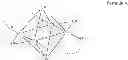
The problem underlying the invention is solved by the provision of copper(I) complexes of the form Cu4X*4(E∩N*)2, which have a structure according to formula A:
with:
X*=Cl, Br, I, CN and/or SCN (i.e. independently of each other, so that the complex can have four identical or four different atoms X*);
E=R2As and/or R2P,
N*∩E=bidentate ligands with E=phosphanyl/arsenyl group of the R2E form (with R=alkyl, aryl, alkoxyl, phenoxyl, amide); N*=imine function. “∩” is a carbon atom. E is in particular a Ph2P-group (Ph=Phenyl), the imine function is part of a N-heteroaromatic 5- or 6-membered ring such as oxazole, imidazole, thiazole, isoxazole, isothiazole, pyrazole, 1,2,3-triazole, 1,2,3-oxadiazole, 1,2,5-oxadiazole, 1,2,3-thiadiazole, 1,2,5-thiadiazole, pyridine, pyrimidine, triazine, pyrazine or pyridazine. “∩” is likewise part of this aromatic group. The carbon atom is directly adjacent to both the imine nitrogen atom and to the E atom. N*∩E can optionally be substituted, in particular with groups which increase the solubility of the copper(I) complex in common organic solvents for the production of OLED components. Common organic solvents comprise, besides alcohols, ethers, alkanes as well as halogenated aliphatic and aromatic hydrocarbons and alkylated aromatic hydrocarbons in particular toluene, chlorobenzene, dichlorobenzene, mesitylene, xylene, tetrahydrofuran, phenetole, propiophenone.
A copper(I) complex according to the invention consists preferably of two identical ligands N*∩E, which reduces the synthetic effort and thus the production costs. The great advantage in the case of use of copper as the central metal is the low cost thereof, in particular compared to the metals such as Re, Os, Ir and Pt which are otherwise customary in OLED emitters. In addition, the low toxicity of copper also supports use thereof.
With regard to use thereof in optoelectronic components, the copper(I) complexes according to the invention are notable for a wide range of achievable emission colors. In addition, the emission quantum yield is high, especially greater than 50%. For emitter complexes with a Cu central ion, the emission decay times are astonishingly short.
In addition, the copper(I) complexes according to the invention are usable in relatively high emitter concentrations without considerable quenching effects. This means that emitter concentrations of 5% to 100% can be used in the emitter layer.
Preferably, the ligand N*∩E is oxazole, imidazole, thiazole, isoxazole, isothiazole, pyrazole, 1,2,3-triazole, 1,2,3-oxadiazole, 1,2,5-oxadiazole, 1,2,3-thiadiazole, 1,2,5-thiadiazole, pyridine, pyrimidine, triazine, pyrazine and/or pyridazine, which each can be substituted, as described herein.
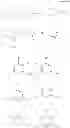
Preferably the ligand N*∩E is the following ligands:
with
X═O or NR2
Y═O or NR2 or S
E*=As or P
R1-R5 can be, each independently from each other, hydrogen, halogen or substituents which are bound via oxygen (—OR), nitrogen (—NR2) or silicon atoms (—SiR3) as well as alkyl- (also branched or cyclic), aryl-, heteroaryl-, alkenyl-, alkinyl-groups and respectively substituted alkyl- (also branched or cyclic), aryl-, heteroaryl- and alkenyl-groups with substituents such as halogens or deuterium, alkyl groups (also branched or cyclic), and further generally known donor and acceptor groups such as for example amines, carboxylates and their esters, and CF3-groups. R2-R5 can optionally also lead to annulated ring systems.
Particularly preferably the ligand N*∩E is the following ligands:
wherein the symbols used are described above.
The invention also relates to a method for producing a copper(I) complex according to the invention. This method according to the invention comprises the step of performing a reaction of N*∩E with Cu(I)X*,
wherein
X*=Cl, Br, I, CN, and/or SCN (independently from each other)
N*∩E=a bidentate ligand with
E=phosphanyl/arsenyl group of the R2E form (with R=alkyl, aryl, alkoxyl, phenoxyl, or amide);
N*=imine function, which is part of a N-hereroaromatic 5- or 6-membered ring such as oxazole, imidazole, thiazole, isoxazole, isothiazole, pyrazole, 1,2,3-triazole, 1,2,3-oxadiazole, 1,2,5-oxadiazole, 1,2,3-thiadiazole, 1,2,5-thiadiazole, pyridine, pyrimidine, triazine, pyrazine and/or pyridazine.
“∩”=at least one carbon atom which is likewise part of the aromatic group, wherein the carbon atom is directly adjacent both to the imine nitrogen atom and to the phosphorus or arsenic atom.
The at least one substituent for increasing the solubility of the complex in organic solvents, optionally present at the ligand N*∩E, is described further below.
The reaction is performed preferably in dichloromethane (DCM). A solid can be obtained by addition of diethyl ether to the dissolved product. The latter can be conducted by precipitation or inward diffusion or in an ultrasound bath.
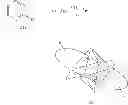
In the reaction of 2 units of bidentate PnN*-ligands (PnN*=phosphine ligand, definition see below) with 4 units Cu(I)X* (X*═Cl, Br, I, CN, SCN), preferably in dichloromethane (DCM), preferably at room temperature, the tetranuclear 4:2-complex Cu4X*4(P∩N*)2 is formed, in which the four Cu atoms form the base area of an octahedron and two halogen ions form its top (eq. 1). The other two halogen ions bridge two opposing sides of the base area of the octahedron, whereas the two P∩N*-ligands bridge the two other opposite sides of the base area of the octahedron in a chelating way with the N atom as well as the P atom and thereby coordinatively saturate the Cu atoms.
Thus, the complex is obtainable in only one step by reaction of Cu(I)X* with the bidentate P∩N* ligand. The complex can be isolated by precipitation with Et2O as white microcrystalline powder. Single crystals can be obtained by slow diffusion of Et2O into the reaction solution. The identities of the complexes were clearly determined by elementary analyses and X-ray structure analyses.
This is the general formula A shown above. The bidentate E∩N* ligands can comprise each independently at least one substituent: The substituents can be, each independently from each other, hydrogen, halogen or substituents which are bound via oxygen (—OR), nitrogen (—NR2) or silicon atoms (—SiR3) as well as alkyl- (also branched or cyclic), aryl, heteroaryl, alkenyl, akinyl groups or respectively substituted alkyl (also branched or cyclic), aryl, heteroaryl and alkenyl groups with substituents such as halogens or deuterium, alkyl groups (also branched or cyclic), and further generally known donor and acceptor groups such as for example amines, carboxylates and their esters, and CF3-groups. The substituents can optionally also lead to annulated ring systems.
Solubility
When manufacturing optoelectronic components using wet-chemical processes, it is advantageous to specifically regulate the solubility. Thereby, the complete or partial dissolving of a layer already deposited can be avoided. By introducing special substituents, the solubility characteristics can be strongly influenced. Thereby, it is possible to use orthogonal solvents that dissolve only the substances of the instant manufacturing step, but not the substances of the layer(s) below. For this purpose the substituents R2-R5 can be selected such that they allow tuning of the solubilities. The following possibilities for the selection of corresponding substituents are given:
Solubility in Nonpolar Media
Nonpolar substituents R2-R5 increase the solubility in nonpolar solvents and decrease the solubility in polar solvents. Nonpolar groups are for example alkyl groups [CH3—(CH2)n—] (n=1-30), also branched or cyclic, substituted alkyl groups, e.g. with halogens. Hereby particularly highlighted are: partly or perfluorinated alkyl groups as well as perfluorinated oligo- and polyether, e.g. [—(CF2)2—O]n— and (—CF2—O)n— (n=2-500). Further nonpolar groups are: ethers —OR*, thioethers —SR*, differently substituted silanes R*3Si— (R*=alkyl or aryl), siloxanes R*3Si—O, oligosiloxanes R**(—R2Si—O)n— (R**=R*, n=2-20), polysiloxanes R**(—R*2Si—O)n— (n>20); oligo/polyphosphazenes R**(—R*2P═N—)n— (n=1-200).
Solubility in Polar Media
Polar substituents R2-R5 increase the solubility in polar solvents. These can be:
alcohol-groups: —OH
carboxylic acid, phosphonic acid, sulfonic acid groups as well as their salts and esters (R*=H, alkyl, aryl, halogen; cations: alkali metals, ammonium salts):
—COOH, —P(O)(OH)2 , —P(S)(OH)2, —S(O)(OH)2, —COOR*, —P(O)(OR*)2, —P(S)(OR*)2, —S(O)(OR*)2, —CONHR*, —P(O)(NR*2)2, —P(S)(NR*2)2, —S(O)(NR*2)2
sulfoxides: —S(O)R*, —S(O)2R*
carbonyl groups: —C(O)R*
amines: −NH2, —NR*2, —N(CH2CH2OH)2,
hydroxylamines ═NOR*
oligoesters, —O(CH2O—)n, —O(CH2CH2O—)n (n=2-200)
positively charged substituents: e.g. ammonium salts —N+R*3X−, phosphonium salts —P+R*3X−
negatively charged substituents, e.g. borates —(BR*3)−, aluminates —(AlR*3)− (an alkali metal or ammonium ion can act as anion).
In order to increase the solubility of the copper(I) complexes according to the invention in organic solvents, optionally at least one of the structures N*∩E is substituted preferably with at least one substituent. The substituent can be chosen from the group consisting of:
long-chained, branched or unbranched or cyclic alkyl chains with a length of C1 to C30, preferably with a length of C3 to C20, particularly preferably with a length of C5 to C15,
long-chained, branched or unbranched or cyclic alkoxy chains with a length of C1 to C30, preferably with a length of C3 to C20, particularly preferably with a length of C5 to C15,
branched or unbranched or cyclic perfluoro alkyl chains with a length of C1 to C30, preferably with a length of C3 to C20, particularly preferably with a length of C5 to C15 and
short-chained polyethers, such as for example polymers in the form of (—OCH2CH2O—)n, with n<500. Examples are polyethylene glycols (PEG), which can be applied as chemical inert, watersoluble and non-toxic polymers with a chain length of 3-50 repeating units.
In one preferred embodiment of the invention, the alkyl chains or alkoxy chains or perfluoro alkyl chains are modified by polar groups, e.g. by alcohols, aldehydes, acetals, amines, amidines, carboxylic acids, carboxylic acid esters, carboxylic acid amides, imides, carboxylic acid halides, carboxylic acid anhydrides, ethers, halogens, hydroxamic acids, hydrazines, hydrazones, hydroxyl amines, lactones, lactams, nitriles, isocyanides, isocyanates, isothiocyanates, oximes, nitrosoaryls, nitroalkyls, nitroaryls, phenols, phosphoric acid esters and/or phosphonic acid, thiols, thioethers, thioaldehydes, thioketones, thioacetals, thiocarboxylic acids, thioester, dithio acid, dithio acid ester, sulfoxides, sulfones, sulfonic acid, sulfonic acid esters, sulfinic acid, sulfinic acid ester, sulfenic acid, sulfenic acid ester, thiosulfinic acid, thiosulfinic acid ester, thiosulfonic acid, thiosulfonic acid ester, sulfonamides, thiosulfonamides, sulfinamides, sulfenamides, sulfates, thiosulfates, sultones, sultames, trialkylsilyl and triarylsilyl groups as well as trialkoxysilyl groups, which lead to an additional increase in solubility.
A very distinct increase in solubility is achieved from at least one C6 unit, branched or unbranched or cyclic. Substitution e.g. with a linear C6 chain (see below) leads to a very good solubility in e.g. dichloromethane and to a good solubility in dichlorobenzene or chlorobenzene.
Optionally, the method of preparation can comprise the step that at least one ligand N*∩E is substituted with at least one substituent for increasing the solubility in the desired organic solvent, whereat in one embodiment of the invention the substituent can be chosen from the groups described above.
In accordance with the invention are also copper(I) complexes which can be prepared by such a synthesis method.
The copper(I) complexes of formula A can be applied according to the invention as emitter materials in an emitter layer of a light emitting optoelectronic component. The optoelectronic components are preferably the following: organic light emitting components (OLEDs), light emitting electrochemical cells, OLED-sensors (in particular in gas and vapor sensors which are not hermetically screened from the outside), organic solar cells, organic field-effect transistors, organic lasers and down-conversion elements.
In one embodiment of the invention the ratio of the copper(I) complex in the emitter layer or absorber layer in such an optoelectronic component is 100%. In an alternative embodiment the ratio of the copper(I) complex in the emitter layer or absorber layer is 1% to 99%.
In one method for the manufacture of an optoelectronic component, in which a copper(I) complex according to the invention is used, the application of such a copper(I) complex on a carrier material can be carried out. This application can be carried out by wet-chemical means, by means of colloidal suspension or by means of sublimation.
Another aspect of the invention relates to a method for altering the emission and/or absorption properties of an electronic component. Thereby, a copper(I) complex according to the invention is introduced into a matrix material for conduction of electrons or holes into an optoelectronic component.
Another aspect of the invention relates to the use of a copper(I) complex according to the invention, particularly in an optoelectronic component, for conversion of UV radiation or of blue light to visible light, especially to green, yellow or red light (down-conversion).
In another aspect the invention relates to a bidentate ligand of formula B, in particular for the production of a copper complex of formula A, as well as the method for the preparation of such a ligand.
The symbols used in formula B correspond to the symbols used in formula A, which are described herein.
The method for preparing a bidentate ligand of formula B is performed according to the scheme shown below:
Preferably, the method for preparing a bidentate ligand of formula B is performed according to one of the schemes shown below:
The symbols used above correspond to the symbols used in formula A, which are described herein.
EXAMPLES
In the examples shown here the ligand E∩N* of the general formula A is a ligand P∩N* (with E=Ph2P).
The bidentate phosphine ligands oxazole, imidazole, thiazole, isoxazole, isothiazole, pyrazole, 1,2,3-triazole, 1,2,3-oxadiazole, 1,2,5-oxadiazole, 1,2,3-thiadiazole, 1,2,5-thiadiazole, pyridine, pyrimidine, triazine, pyrazine, pyridazine were used for the preparation of the copper complexes according to the description above:
The ligands were synthesized in the case of the imidazoles, thiazoles and 1H-1,2,3-triazoles and pyridine, pyrimidine, triazine, pyrazine, pyridazine according to literature, whereas all other phosphine ligands are not yet known in the literature and thus they were synthesized according to a new synthesis method.
General Synthesis of the Phosphine Ligands
The identities of the ligands were unequivocally determined by NMR spectroscopy and mass spectroscopy.
Examples for Complexes of the form Cu4X*4(PnN*)2
I. P∩N*=Ph2Pbenzimidazole, 1a-e: Cu4I4(Ph2Pbenzimidazole)2, 2a-e
The compounds 2a-e are white, fine-crystalline solids.
Characterization:
Elementary Analysis:
| 2a (R = Me) | calc.: C 34.45; H 2.46; N 4.02 |
| found: C 34.23; H 2.42; N 3.85 | |
| 2b (R = Isopropyl) | calc.: C 34.10; H 2.86; N 3.46 (x1 CH2Cl2) |
| found: C 34.34; H 2.85; N 3.41 | |
| 2c (R = Hexyl) | calc.: C 37.82; H 3.48; N 3.46 (x1 CH2Cl2) |
| found: C 37.99; H 3.43; N 3.31 | |
| 2d (R = Ph) | calc.: C 37.58; H 2.51; N 3.40 (x1.5 CH2Cl2) |
| found: C 37.56; H 2.51; N 3.25 | |
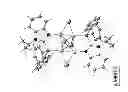
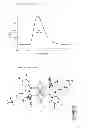
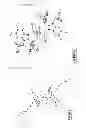
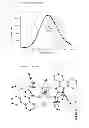
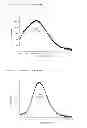
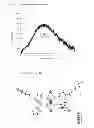
The crystal structures of 2b, 2c, 2e are shown in FIG. 1-3.
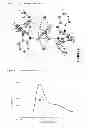
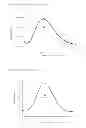
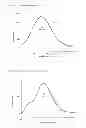
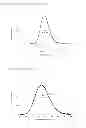
The emission spectra of 2a-c, 2e are shown in FIG. 4-7.
II. P∩N*=Ph2PMe2benzimidazole, 3a-e: Cu4I4(Ph2PMe2benzimidazole)2, 4a-e
The compounds 4a-g are white, fine-crystalline solids.
Characterization:
Elementary Analysis:
| 4a (R = Isobutyl) | calc.: C 37.82; H 3.48; N 3.46 (x1 CH2Cl2) |
| found: C 37.54; H 3.52; N 3.44 | |
| 4b (R = Hexyl) | calc.: C 40.77; H 3.93; N 3.52 |
| found: C 41.07; H 3.97; N 3.31 | |
| 4d (R = 2EtHex) | calc.: C 42.30; H 4.28; N 3.40 |
| found: C 42.37; H 4.23; N 3.30 | |
| 4e (R = PhOHex) | calc.: C 44.66; H 3.97; N 3.16 |
| found: C 44.60; H 3.96; N 2.92 | |
| 4f (R = Isopropyl) | calc.: C 35.82; H 3.25; N 3.34 (x2 CH2Cl2) |
| found: C 36.22; H 3.13; N 3.49 | |
| 4g (R = Methyl) | calc.: C 35.20; H 2.89; N 3.65 (x1 CH2Cl2) |
| found: C 35.28; H 2.77; N 3.67 | |
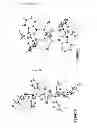
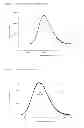
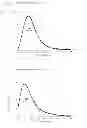
The crystal structures of 4c, 4d, 4e are shown in FIG. 8-10. The emission spectra of 4a, 4c, 4d, 4f, 4g are shown in FIG. 11-15.
III. P∩N*=Ph2Phenimidazole, 5a-d: Cu4I4(Ph2Phenimidazole)2, 6a-d
The compounds 6a-d are white, fine-crystalline solids.
Characterization:
Elementary Analysis:
| 6a (R = Butyl) | calc.: C 41.58; H 3.16; N 3.03 (x2 CH2Cl2) | |
| found: C 41.34; H 3.17; N 2.76 | ||
| 6b (R = 2EtHexl) | calc.: C 46.94; H 3.94; N 3.13) | |
| found: C 47.02; H 3.91; N 3.02 | ||
| 6c (R = Me) | calc.: C 40.76; H 2.64; N 3.34 (x1 CH2Cl2) | |
| found: C 40.64; H 2.45; N 3.51 | ||
| 6d (R = Hex) | calc.: C 45.69; H 3.60; N 3.23 (x2 CH2Cl2) | |
| found: C 45.54; H 3.49; N 3.08 | ||
The crystal structure of 6a is shown in FIG. 16.
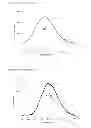
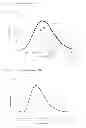
The emission spectra of 6a-d are shown in FIG. 17-20.
IV. P∩N*=Ph2PImidazole. 7a-c: Cu4I4(Ph2PImidazole)2, 8a-c
The compounds 8a-c are white, fine-crystalline solids.
Characterization:
Elementary Analysis:
| 8a (R = Me) | calc.: C 28.74; H 2.34; N 4.06 (x1 CH2Cl2) | |
| found: C 28.76; H 2.31; N 4.10 | ||
| 8b (R = Pent) | calc.: C 33.57; H 3.27; N 3.87 (x1/2 CH2Cl2) | |
| found: C 33.51, H 3.18; N 3.80 | ||
| 8c (R = Tolyl) | calc.: C 35.89; H 2.64; N 3.76 (x1/2 CH2Cl2) | |
| found: C 35.78; H 2.58; N 3.60 | ||
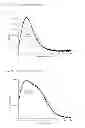
The emission spectra of 8a-c are shown in FIG. 21-23.
V. P∩N*=Ph2PBenzoxazole, 9a: Cu4I4(Ph2PBenzoxazole)2, 10a
The compound 10a is a white, fine-crystalline solid.
Characterization:
Elementary Analysis:
| 10a | calc.: C 33.35; H 2.06; N 2.05 | |
| found: C 33.21; H 2.09; N 1.79 | ||
The emission spectrum of 10a is shown in FIG. 24.
VI. P∩N*=Ph2PPh2triazole, 11a: Cu4I4(Ph2PPh2triazole)2, 12a
The compound 12a is a white, fine-crystalline solid.
Characterization:
The crystal structure of 12a is shown in FIG. 25.
VII. P∩N*=Ph2P-1,2,4-Triazole, 13a-e: Cu4I4(Ph2P-1,2,4-Triazole)2, 14a-e
The compounds 14a-e are white, fine-crystalline solids,
Characterization:
Elementary Analysis:
| 14a (R = iPr) | calc.: C 31.12; H 2.97; N 6.05 (x1/2 Et2O) | |
| found: C 31.02; H 2.83; N 6.16 | ||
| 14b (R = Tolyl) | calc.: C 34.24; H 2.50; N 5.46 (x1/2 | |
| CH2Cl2) | ||
| found: C 34.36; H 2.45; N 5.61 | ||
| 14c (R = Pent) | calc.: C 32.40; H 3.15; N 5.97 | |
| found: C 32.79; H 3.11; N 5.94 | ||
| 14d (R = 2EtHex) | calc.: C 35.40; H 3.78; N 5.44 | |
| found: C 35.15; H 3.70; N 5.52 | ||
| 14e (R = Bn) | calc.: C 34.83; H 2.51; N 5.80 | |
| found: C 35.17; H 2.43; N 5.77 | ||
The emission spectra of 14a-e are shown in FIG. 26-30.
VIII. P∩N*=Ph2PPh2Oxazole, 15a: Cu4I4(Ph2PPh2Oxazole)2, 16a
The compound 16a is a white, fine-crystalline solid.
Characterization:
Elementary Analysis:
| 16a | calc.: C 39.85; H 2.55; N 1.69 (x1 CH2Cl2) | |
| found: C 40.04; H 2.43; N 1.40 | ||
IX. P∩N*=Ph2PThiazole, 17a: Cu4I4(Ph2PThiazole)2, 18a
The compound 18a is a white, fine-crystalline solid.
Characterization:
Elementary Analysis:
| 18a | calc.: C 27.28; H 1.88; N 2.09; S 4.78 (x1/2 | |
| CH2Cl2) | ||
| found: C 26.80; H 1.96; N 1.73; S 4.60 | ||
The emission spectrum of 18a is shown in FIG. 31.
X. P∩N*=Ph2PPyridine, 19a-g: Cu4I4(Ph2PPyridine)2, 20a-g
The compounds 20a-h are yellowish, fine-crystalline solids.
Characterization:
Elementary Analysis:
| 20a (R1 = H; R2 = H) | calc.: C 31.14; H 2.20; N 2.10 (x1/2 CH2Cl2) |
| found: C 31.14; H 2.21; N 1.97 | |
| 20b (R1 = H; R2 = Me) | calc.: C 32.85; H 2.45; N 2.13 |
| found: C 32.49; H 2.38; N 1.88 | |
| 20c (R1 = Me; R2 = H) | calc.: C 32.85; H 2.45; N 2.13 |
| found: C 32.73; H 2.38; N 1.87 | |
| 20d (R1 = 2-EtHex; | calc.: C 40.53; H 4.19; N 1.82 |
| R2 = H) | found: C 40.38; H 4.18; N 1.55 |
| 20e (R1 = Heptyl; | calc.: C 38.83; H 3.80; N 1.89 |
| R2 = H) | found: C 38.80; H 3.85; N 1.58 |
| 20f (R1 = t-Bu; R2 = H) | calc.: C 34.77; H 3.12; N 1.89 (x1 CH2Cl2) |
| found: C 34.62; H 3.12; N 1.89 | |
| 20g (R1 = H; R2 = Pr) | calc.: C 36.48; H 3.35; N 1.98 (x1/2 n-Hexan) |
| found: C 36.55; H 3.10; N 1.83 | |
The crystal structure of 20e is shown in FIG. 32.
The emission spectra of 20a-g are shown in FIG. 33-39.
XI. P∩N*=Ph2PPyrimidine, 21a: Cu4I4(Ph2PPyrimidine)2, 22a
The compound 22a is a yellowish, fine-crystalline solid.
Characterization:
Elementary Analysis:
| 22a | calc.: C 29.79; H 2.03; N 4.34 | |
| found: C 29.81; H 1.95; N 4.26 | ||
The emission spectra of 22a are shown in FIG. 40
Claims
1-16. (canceled)
17. A copper(I) complex of formula A
wherein:
X*=at least one of Cl, Br, I, CN and SCN
N*∩E=a bidentate ligand, wherein
E=phosphanyl/arsenyl group of the R2E form, wherein R=one of alkyl, aryl, alkoxyl, phenoxyl, and amide;
N*=an imine function, which is part of a N-heteroaromatic 5-membered ring, which is selected from the group consisting of oxazole, imidazole, thiazole, isoxazole, isothiazole, pyrazole, 1,2,3-triazole, 1,2,3-oxadiazole, 1,2,5-oxadiazole, 1,2,3-thiadiazole and 1,2,5-thiadiazole, or an imine function, which is part of a N-heteroaromatic 6-membered ring, which is chosen from the group consisting of pyridine, pyrimidine, triazine, pyrazine and pyridazine; and
∩=at least one carbon atom, which is part of the aromatic group, wherein the at least one carbon atom is directly adjacent to both the imine nitrogen atom and to the phosphorous or arsenic atom.
18. The copper(I) complex according to claim 1, wherein N*∩E includes at least one substituent for increasing the solubility of the copper(I) complex in an organic solvent.
19. The copper(I) complex according to claim 17, wherein N*∩E is selected from the group consisting of:
wherein
X═O or NR2
Y═O, NR2 or S
E*=As or P
R1-R5 are each independently from each other hydrogen, a halogen or substituents which are bound via oxygen (—OR), nitrogen (—NR2) or silicon atoms (—SiR3), as well as alkyl-, aryl-, heteroaryl-, alkenyl-, alkinyl-groups and respectively substituted alkyl-, aryl-, heteroaryl- and alkenyl-groups.
20. A copper(I) complex according to claim 18, wherein the substituent for increasing solubility is selected from the group consisting of:
branched, unbranched or cyclic long-chained alkyl chains with a length of C1 to C30;
branched, unbranched or cyclic long-chained alkoxy chains with a length of C1 to C30;
branched, unbranched or cyclic long-chained perfluoro alkyl chains with a length of C1 to C30; and
short-chained polyethers with a chain length of 3-50 repeating units.
21. A method for preparing the copper(I) complex of claim 17, comprising:
performing a reaction of N*∩E with Cu(I)X*.
22. The method according to claim 21, wherein the reaction is performed in dichloromethane.
23. The method according to claim 22, further comprising adding diethyl ether or pentane to obtain the copper(I) complex in the form of a solid.
24. The method according to claim 21, further comprising substituting at least one ligand N*∩E with at least one substituent selected from the group consisting of:
long-chained branched, unbranched or cyclic alkyl chains with a length of C1 to C30;
long-chained branched, unbranched or cyclic alkoxy chains with a length of C1 to C30;
branched, unbranched or cyclic perfluoro alkyl chains with a length of C1 to C30; and
short-chained polyethers.
25. An optoelectronic component comprising at least one of an emitter and an absorber having the copper(I) complex of claim 17.
26. The optoelectronic component according to claim 25, wherein the optoelectronic component is selected from the group consisting of:
an organic light emitting diode (OLED);
a light emitting electrochemical cell;
an OLED-sensor;
an organic solar cell;
an organic field-effect transistor;
an organic laser; and
a down conversion element.
27. An optoelectronic component comprising the copper(I) complex of claim 17.
28. The optoelectronic component according to claim 27, wherein the optoelectronic component is selected from the group consisting of an organic light emitting component, an organic diode, an organic solar cell, an organic transistor, an organic light emitting diode, a light emitting electrochemical cell, an organic field-effect transistor and an organic laser.
29. A method for manufacturing an optoelectronic component, comprising applying the copper(I) complex of claim 17 onto a carrier.
30. The method according to claim 29, wherein the application of the copper(I) complex is performed by a wet-chemical process, by using a colloidal suspension means or by sublimation.
31. The cooper(I) complex according to claim 17, wherein the bidentate ligand has the formula B,
32. The method according to claim 21, further comprising preparing the bidentate ligand having the formula B,
pursuant to one of:
a)
Images & Drawings included:








Sources:
- United States Patent and Trademark Office - verify current appl. status at the USPTO↗
Similar patent applications:
Recent applications in this class:
- » 20230165135 2023-05-25
d10 METAL CARBENE COMPLEXES FOR OLED APPLICATIONS - » 20230137127 2023-05-04
ORGANIC LIGHT-EMITTING DEVICE - » 20230112122 2023-04-13
Luminescent tetradentate ligand-containing gold(III) compounds for organic light-emitting devices and their preparation - » 20230101042 2023-03-30
ORGANIC ELECTROLUMINESCENT MATERIALS AND DEVICES - » 20230056395 2023-02-23
Organic Electronic Device Comprising a Compound of Formula (I), Display Device Comprising the Organic Electronic Device as Well as Compounds of Formula (I) for Use in Organic Electronic Devices - » 20230049161 2023-02-16
ORGANIC ELECTROLUMINESCENT MATERIALS AND DEVICES - » 20230006155 2023-01-05
Organic Electronic Device Comprising a Compound of Formula (I), Display Device Comprising the Organic Electronic Device as Well as Compounds of Formula (I) for Use in Organic Electronic Devices - » 20220393118 2022-12-08
TETRADENTATE LIGANDS, GOLD(III) COMPLEXES, PREPARATION METHOD AND USE THEREOF - » 20220190260 2022-06-16
Organometallic compound, composition including same, organic light-emitting device, and electronic apparatus - » 20220181562 2022-06-09
Tandem-Carbene Phosphors
Recent applications for this Assignee:
- » 20210328166 2021-10-21
Organic electroluminescent device emitting green light - » 20210184134 2021-06-17
Organic molecules for use in organic devices - » 20200399256 2020-12-24
Organic molecules for use in organic optoelectronic devices - » 20200385399 2020-12-10
Organic molecules for use in optoelectronic devices - » 20200223831 2020-07-16
Organic molecules for optoelectronic devices - » 20200136054 2020-04-30
Organic molecules for use in organic optoelectronic devices - » 20190341571 2019-11-07
Organic electroluminescent device emitting blue light - » 20190292151 2019-09-26
Organic molecules for use in optoelectronic devices - » 20190284174 2019-09-19
Organic molecules for optoelectronic devices - » 20190259958 2019-08-22
Organic electroluminescent devices comprising host compounds