ELECTRONIC DEVICE AND METHOD FOR PROVIDING TACTILE STIMULATION
US20140168103A1
2014-06-19
13/729,046
2012-12-28
Abstract:
A method for providing tactile stimulation is applied in an electronic device. The electronic device includes a touch-sensitive screen and a tactile stimulation multilayer connected to the touch-sensitive screen. The method includes the following steps: detecting one or more touch points on the touch-sensitive screen; obtaining position information of each touch point; calculating a cover range of each touch point according to the obtained position information, and determining a center of each calculated cover range; determining a number of continuous electrodes corresponding to each calculated cover range and one electrode corresponding to the determined center of the calculated cover range; and energizing the continuous electrodes with different electrical parameters, causing the electrical parameters of the continuous electrodes to gradually decrease outward from the electrode corresponding to the center.
Inventors:
- HON HAI PRECISION INDUSTRY CO., LTD. 68 🇺🇸 , United States
- FU TAI HUA INDUSTRY (SHENZHEN) CO., LTD. 13 🇺🇸 , United States
- SHANG-QING ZHOU 8 🇨🇳 Shenzhen, China
Assignee:
- HON HAI PRECISION INDUSTRY CO., LTD. 9,798 🇹🇼 New Taipei, Taiwan
- FU TAI HUA INDUSTRY (SHENZHEN) CO., LTD. 790 🇨🇳 Shenzhen, China
Interested in similar patents?
Get notified when new applications in this technology area are published.
Classification:
G06F3/0416 » CPC main
Input arrangements for transferring data to be processed into a form capable of being handled by the computer; Output arrangements for transferring data from processing unit to output unit, e.g. interface arrangements; Input arrangements or combined input and output arrangements for interaction between user and computer; Arrangements for converting the position or the displacement of a member into a coded form; Digitisers, e.g. for touch screens or touch pads, characterised by the transducing means Control or interface arrangements specially adapted for digitisers
G06F3/041 IPC
Input arrangements for transferring data to be processed into a form capable of being handled by the computer; Output arrangements for transferring data from processing unit to output unit, e.g. interface arrangements; Input arrangements or combined input and output arrangements for interaction between user and computer; Arrangements for converting the position or the displacement of a member into a coded form Digitisers, e.g. for touch screens or touch pads, characterised by the transducing means
Description
BACKGROUND
1. Technical Field
The present disclosure relates to electronic devices, and particularly, to an electronic device and a method for providing tactile stimulation adapted for the electronic device.
2. Description of Related Art
Many electronic devices, such as mobile phones, tablet computers, and multimedia players, usually employ touch-sensitive screens as input interfaces. When a user presses one virtual graphical button or icon displayed on a touch-sensitive screen, the graphical button or icon does not provide very good tactile feedback to the user as a conventional keyboard does which has a travel distance for a keystroke when operated. In order to improve the user experience, a number of vibrating mechanical members are arranged under the touch-sensitive screen. When sensing a click operation on the touch-sensitive screen, the vibrating mechanical member at a corresponding location begins to vibrate to provide tactile feedback to the user. However, a problem shared by most such electronic devices is that such vibration-based tactile sensation tends to be mundane.
Recently, a new technology of enabling the touch-sensitive screen to provide tactile feedback is realized by delivering an electrosensory sensation to the user touching the touch-sensitive screen. However, there is less developments on how this kind of tactile feedback is applied in response to a touch gesture to bring a new level of tactile experience to the user corresponding to the touch gesture.
Therefore, what is needed is a means to solve the problem described above.
BRIEF DESCRIPTION OF THE DRAWINGS
Many aspects of the present disclosure should be better understood with reference to the following drawings. The modules in the drawings are not necessarily drawn to scale, the emphasis instead being placed upon clearly illustrating the principles of the present disclosure. Moreover, in the drawings, like reference numerals designate corresponding portions throughout the views.
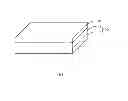
FIG. 1 is a perspective view of a touch-sensitive screen included in an electronic device, in accordance with an exemplary embodiment.
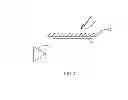
FIG. 2 is a perspective view of a tactile stimulation multilayer connected to the touch-sensitive screen of FIG. 1, in accordance with an exemplary embodiment.
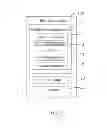
FIG. 3 is a block diagram of a tactile stimulation system applied to the electronic device of FIG. 1, in accordance with an exemplary embodiment.
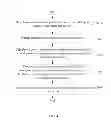
FIG. 4 is a flowchart of a method for providing tactile stimulation, in accordance with an exemplary embodiment.
DETAILED DESCRIPTION
FIG. 1 is a perspective view of a touch-sensitive screen 10 according to an exemplary embodiment. The screen 10 is included in an electronic device 100. The electronic device 100 may be a mobile phone, a tablet computer, or a multimedia player. A tactile stimulation multilayer 20 is connected to the screen 10, and is arranged above or under the screen 10. The multilayer 20 includes a number of electrodes 220 (further shown in FIG. 3) which can be independently controlled. The electronic device 100 further includes a storage unit 30 and a processor 40 (further shown in FIG. 3). The storage unit 30 stores a relationship between a number of positions of the screen 10 and the electrodes 220. Each position corresponds to one electrode 220. The storage unit 30 further stores a tactile stimulation system 1. The system 1 includes a variety of modules executed by the processor 40 to provide the functions of the system 1. In this embodiment, the system 1 is executed by the processor 40 to detect touch operation on the screen 10 by an object (e.g., a body member to be stimulated, such as a finger) and employ position information of the touch operation to energize the corresponding electrode 220 in the multilayer 20 to provide tactile stimulation. A detail description of the tactile stimulation multilayer 20 will be described as follows.
Referring to FIG. 2, the multilayer 20 includes an insulation layer 21 and an electrode layer 22. The said electrodes 220 are included in the electrode layer 22. The electrodes 220 are connected to a power supply unit 23, and can be independently energized via the power supply unit 23. The insulation layer 21 includes a number of insulators 210, and each insulator 210 corresponds to one electrode 220. In the embodiment, the multilayer 20 is arranged under the screen 10, and the insulation layer 21 is arranged between the multilayer 20 and the electrode layer 22. Furthermore, when a body member which is a relatively good insulator when dry touches the multilayer 20, the body member and the multilayer 20 cooperatively form a imaginary capacitor. Then, the system 1 determines the position of the body member on the screen 10 and energizes the electrode 220 corresponding to the determined position via the power supply unit 23. Thus, static charges generated on the body member because of a capacitive coupling between the determined electrode 220 and the body member, and the generated static charges flows to form electrical current which delivers a tactile stimulation to the body member.
FIG. 3 shows that in the embodiment, the system 1 includes a detecting module 11, a parameter obtaining module 12, a calculating module 13, and a control module 14.
The detecting module 11 detects one or more touch points on the screen 10 according to touch signals from the screen 10.
The parameter obtaining module 12 obtains position information of each touch point. Specifically, when an object touches one or more touch points on the screen 10, each touch point covers a cover range on the screen 10, and a number of continuous positions within the cover range are simultaneously touched. Thus, each time when one or more touch points are detected, position information of a number of touched positions of each touch point are obtained.
The calculating module 13 calculates a cover range of each touch point according to the obtained position information, and determines a center of each calculated cover range.
The control module 14 determines a number of continuous electrodes 220 corresponding to each calculated cover range and one electrode 220 corresponding to the determined center of the calculated cover range according to the relationship between the positions and the electrodes 220 stored in the storage unit 30. The control module 15 further energizes the continuous electrodes 220 via the power supply unit 23 with different electrical parameters, causing the electrical parameters of the continuous electrodes 220 to gradually decrease outward from the electrode 220 corresponding to the center. Thus, an improved tactile stimulation is provided to the object touched on the screen 10. In the embodiment, the electrical parameter is the amplitude or frequency of electrical current energizing the electrodes 220. The electrode 220 corresponding to each determined center is energized with a first electrical parameter, and electrical parameters energized to other continuous electrodes 220 corresponding to the calculated cover range are decreased from the first electrical parameter with a certain percentage. The first electrical parameter and the certain percentage are predetermined and stored in the storage unit 30.
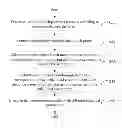
FIG. 4 is a flowchart of a method for providing tactile stimulation, in accordance with an exemplary embodiment.
In step S41, the detecting module 11 detects one or more touch points on the screen 10 according to touch signals from the screen 10.
In step S42, the parameter obtaining module 12 obtains position information of each touch point. Specifically, when an object touches one or more touch points on the screen 10, a number of positions of each touch point are simultaneously touched, thus each time when one or more touch points are detected, position information of a number of touched positions of each touch point are obtained.
In step S43, the calculating module 13 calculates a cover range of each touch point according to the obtained position information, and determines a center of the calculated cover range.
In step S44, the control module 14 determines a number of continuous electrodes 220 corresponding to each calculated cover range and one electrode 220 corresponding to the determined center of the calculated cover range according to the relationship between the positions and the electrodes 220 stored in the storage unit 30.
In step S45, the control module 15 energizes the continuous electrodes 220 via the power supply unit 23 with different electrical parameters, causing the electrical parameters of the continuous electrodes 220 to gradually decrease outward from the electrode 220 corresponding to the center.
It is believed that the present embodiments and their advantages will be understood from the foregoing description, and it will be apparent that various changes may be made thereto without departing from the spirit and scope of the disclosure or sacrificing all of its material advantages, the examples hereinbefore described merely being exemplary embodiments of the present disclosure.
Claims
What is claimed is:1. An electronic device comprising:
a touch-sensitive screen;
a tactile stimulation multilayer connected to the touch-sensitive screen, the tactile stimulation multilayer comprising a plurality of electrodes;
a storage unit storing a plurality of modules and a relationship between positions of the touch-sensitive screen and the electrodes, each position corresponding to one of the electrodes; and
a processor to execute the plurality of modules, and the plurality of modules comprising:
a detecting module to detect one or more touch points on the touch-sensitive screen according to touch signals from the touch-sensitive screen;
a parameter obtaining module to obtain position information of each touch point;
a calculating module to calculate a cover range of each touch point according to the obtained position information, and determine a center of each calculated cover range; and
a control module to determine a plurality of continuous electrodes corresponding to each calculated cover range and one electrode corresponding to the determined center of the calculated cover range according to the relationship between the positions and the electrodes, and energize the continuous electrodes with different electrical parameters, causing the electrical parameters of the continuous electrodes to gradually decrease outward from the electrode corresponding to the center.
2. The electronic device of claim 1, wherein the electrode corresponding to each determined center is energized with a first electrical parameter, and electrical parameters energized to other continuous electrodes corresponding to the calculated cover range are decreased from the first electrical parameter with a certain percentage, wherein the first electrical parameter and the certain percentage are predetermined and stored in the storage unit.
3. The electronic device of claim 1, wherein the predetermined electrical parameter is the amplitude or frequency of electrical current.
4. A method for providing tactile stimulation applied in an electronic device, the electronic device comprising a touch-sensitive screen and a tactile stimulation multilayer connected to the touch-sensitive screen, the tactile stimulation multilayer comprising a plurality of electrodes, the method comprising:
detecting one or more touch points on the touch-sensitive screen according to touch signals from the touch-sensitive screen;
obtaining position information of each touch point;
calculating a cover range of each touch point according to the obtained position information, and determining a center of each calculated cover range;
determining a plurality of continuous electrodes corresponding to each calculated cover range and one electrode corresponding to the determined center of the calculated cover range according to the relationship between the positions and the electrodes; and
energizing the continuous electrodes with different electrical parameters, causing the electrical parameters of the continuous electrodes to gradually decrease outward from the electrode corresponding to the center.
5. A storage medium storing a plurality of modules, the plurality of modules comprising instructions executable by a processor of an electronic device to perform a method for providing tactile stimulation, the electronic device comprising a touch-sensitive screen and a tactile stimulation multilayer connected to the touch-sensitive screen, the tactile stimulation multilayer comprising a plurality of electrodes, the method comprising:
storing a relationship between positions of the touch-sensitive screen and the electrodes stored in the electronic device, wherein each position corresponding to one of the electrodes;
detecting one or more touch points on the touch-sensitive screen according to touch signals from the touch-sensitive screen;
obtaining position information of each touch point;
calculating a cover range of each touch point according to the obtained position information, and determining a center of each calculated cover range;
determining a plurality of continuous electrodes corresponding to each calculated cover range and one electrode corresponding to the determined center of the calculated cover range according to the relationship between the positions and the electrodes; and
energizing the continuous electrodes with different electrical parameters, causing the electrical parameters of the continuous electrodes to gradually decrease outward from the electrode corresponding to the center.
Images & Drawings included:
Sources:
- United States Patent and Trademark Office - verify current appl. status at the USPTO↗
Similar patent applications:
- » 20140168102
ELECTRONIC DEVICE AND METHOD FOR PROVIDING TACTILE STIMULATION - » 20140168104
ELECTRONIC DEVICE AND METHOD FOR PROVIDING TACTILE STIMULATION - » 20140168105
ELECTRONIC DEVICE AND METHOD FOR PROVIDING TACTILE STIMULATION - » 20140168108
ELECTRONIC DEVICE AND METHOD FOR PROVIDING TACTILE STIMULATION - » 20140171192
ELECTRONIC DEVICE AND METHOD FOR PROVIDING TACTILE STIMULATION
Recent applications in this class:
- » 20250156004 2025-05-15
ELECTRONIC DEVICE AND METHOD FOR DRIVING THE SAME - » 20250156003 2025-05-15
TOUCH-CONTROL METHOD, ELECTRONIC DEVICE, AND TOUCH-CONTROL SYSTEM - » 20250138663 2025-05-01
TOUCH PANEL SYSTEM AND ELECTRONIC DEVICE - » 20250130662 2025-04-24
ELECTRONIC DEVICE - » 20250103159 2025-03-27
DISPLAY DEVICE - » 20250093990 2025-03-20
Speed Adapted Touch Detection - » 20250093989 2025-03-20
INSPECTION TOOL AND INSPECTION METHOD FOR AN TOUCH PLATE - » 20250085801 2025-03-13
DISPLAY PANEL AND DISPLAY DEVICE - » 20250085800 2025-03-13
Electronic Devices With Proximity Sensors - » 20250077015 2025-03-06
CONTROL METHOD, CONTROL APPARATUS, AND ELECTRONIC DEVICE
Recent applications for this Assignee:
- » 20240411051 2024-12-12
Light-emitting device array and optical transceiver system having the same - » 20240295957 2024-09-05
METHOD FOR CONTROLLING ELECTRONIC DEVICE, ELECTRONIC DEVICE AND COMPUTER STROAGE MEDIUM EMPLOYING METHOD - » 20240257357 2024-08-01
METHOD FOR DETECTING OBSTACLES, ELECTRONIC DEVICE, AND STORAGE MEDIUM - » 20240194999 2024-06-13
Robot using limiting device for locking battery - » 20240177502 2024-05-30
METHOD OF DETERMINING DEGREE OF CONGESTION OF COMPARTMENT, ELECTRONIC DEVICE AND STORAGE MEDIUM - » 20240140338 2024-05-02
ELECTROSTATIC ELIMINATING DEVICE AND VEHICLE - » 20240047565 2024-02-08
FIELD EFFECT TRANSISTOR AND METHOD FOR MAKING THE SAME - » 20240044098 2024-02-08
Monitoring device and well cover assembly - » 20240033856 2024-02-01
Deposition mask, mask member for deposition mask, method of manufacturing deposition mask, and method of manufacturing organic EL display apparatus - » 20230419653 2023-12-28
METHOD FOR DETECTING DEFECT OF IMAGES AND ELECTRONIC DEVICE