Peach Tree, 'Burpeachtwentynine'
US20140173792P1
2014-06-19
13/694,571
2012-12-13
Abstract:
A new and distinct variety of peach tree (Prunus persica), which is denominated varietally as ‘Burpeachtwentynine’, and which produces an attractively colored white-fleshed, freestone peach which is mature for harvesting and shipment approximately August 10 to August 17 under the ecological conditions prevailing in the San Joaquin Valley of central California.
Inventors:
- John K. Slaughter 35 🇺🇸 Fresno, CA, United States
- Tomothy J. Gerdts 1 🇺🇸 Kingsburg, CA, United States
Interested in similar patents?
Get notified when new applications in this technology area are published.
Classification:
A01H5/00 IPC
Products
A01H5/00 IPC
Angiosperms, i.e. flowering plants, characterised by their plant parts; Angiosperms characterised otherwise than by their botanic taxonomy
Description
BOTANICAL DESIGNATION
The present invention relates to a new, novel, and distinct variety of peach tree, ‘Prunus persica’.
VARIETAL DENOMINATION
‘Burpeachtwentynine’.
BACKGROUND OF THE NEW VARIETY
The present variety of peach tree resulted from an on-going program of fruit and nut tree breeding. The purpose of this program is to improve the commercial quality of deciduous fruit and nut varieties, and rootstocks, by creating and releasing promising selections of prunus, malus and regia species. To this end, we make both controlled and hybrid cross pollinations each year in order to produce seedling populations from which improved progenies are evaluated and selected.
The seedling, ‘Burpeachtwentynine’ was originated by us, and selected from a population of seedlings growing in our experimental orchards which is located near Fowler, Calif. The seedlings, grown on their own roots, were derived from an open pollenated seedling of an experimental peach seedling which was then growing in our breeding program. The seed was collected from the aforementioned unnamed experimental peach seedling during the summer in August of 2002. This experimental peach seedling was of unknown parentage. After a period of stratification, the seed was placed in a greenhouse, by population, and then field planted for tree establishment, and ultimately to exhibit fruit for evaluation. One white-fleshed peach seedling, which is the present variety, exhibited especially desirable characteristics, and was then designated as ‘M37.028’. This seedling was marked for subsequent observation. After the 2005 fruiting season, the new variety of peach tree was selected for advanced evaluation and repropagation.
ASEXUAL REPRODUCTION
Asexual reproduction of this new and distinct variety of peach tree was accomplished by budding the new peach tree onto ‘Nemaguard’ Rootstock (un-patented). This was performed by us in our experimental orchard which is located near Fowler, Calif. Subsequent evaluations of these asexually reproduced plants have shown those asexual reproductions run true to the original tree. All characteristics of the original tree, and its fruit, were established, and appear to be transmitted through these succeeding asexual propagations.
SUMMARY OF THE VARIETY
‘Burpeachtwentynine’ is a new and distinct variety of peach tree, which is considered of medium large size, and which has a moderately vigorous growth characteristic. This new tree is also a regular and productive bearer of relatively large, firm, white-fleshed, freestone fruit which have a very good flavor, and eating qualities. This new peach tree has a medium-high chilling requirement of approximately 750 hours, and further produces relatively uniformly sized fruit throughout the tree's canopy. In addition to the foregoing, the fruit of the new peach tree also appears to have good handling and shipping qualities. The Burpeachtwentynine peach tree bears fruit which are typically ripe for commercial harvesting and shipment on approximately August 10 to August 17 under the ecological conditions prevailing in the San Joaquin Valley of central California. In relative comparison to the ‘Snow Giant’ peach tree (U.S. Plant Pat. No. 10,872), and which is the closest known variety, the new variety of peach tree bears fruit, when sampled at the same flesh pressures and maturity as that of ‘Snow Giant’ exhibits increased soluble solid levels, that is, from 2 to 4 brix higher. When the new variety is compared to its parent, Burpeachtwentynine provides a juicier flesh and a more aromatic sensation in flavor.
BRIEF DESCRIPTION OF THE DRAWING
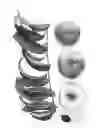
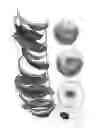
The accompanying drawing, which is provided, is a color photograph of the new peach tree variety. The photograph, as provided, depicts two whole mature fruit showing the top and bottom characteristics thereof, and one mature fruit bisected transversely below the equatorial plane, and which reveals the flesh color, and stone characteristics, thereof. The external coloration of the fruit, as shown in the photograph, is sufficiently matured for harvesting and shipment. Additionally, the photograph displays a sample vegetative shoot bearing typical leaves, and a typical stone with the flesh removed. The colors in these photographs are as nearly true as is reasonably possible in a color representation of this type. Due to chemical development, processing and printing, the leaves and fruit depicted in these photographs may, or may not, be accurate when compared to the actual specimen. For this reason, future color references should be made to the color plates (Royal Horticultural Society, Fourth Edition, 2001), and the descriptions as provided, hereinafter.
NOT A COMMERCIAL WARRANTY
The following detailed description has been prepared to solely comply with the provisions of 35 U.S.C. §112, and does not constitute a commercial warranty, (either expressed or implied), that the present variety will in the future display all the botanical, pomological or other characteristics as set forth, hereinafter. Therefore, this disclosure may not be relied upon to support any future legal claims including, but not limited to, breach of warranty of merchantability, or fitness for any particular purpose, or non-infringement which is directed, in whole, or in part, to the present variety.
DETAILED DESCRIPTION
Referring more specifically to the pomological details of this new and distinct variety of peach tree, the following has been observed during the seventh fruiting season, and under the ecological conditions prevailing at the orchards of the assignee which are located near the town of Fowler, county of Fresno, state of Calif. All major color code designations are by reference to the R.H.S. Colour Chart (Fourth Edition, 2001) provided by The Royal Horticultural Society of Great Britain. Common color names are also occasionally used.
- Tree:
-
- Size.—Generally considered medium to medium-large in its growth pattern as compared to other common commercial peach cultivars ripening in the late season of maturity. The tree of the present variety was pruned to a height of approximately 280.0 cm to about 320.0 cm at commercial maturity.
- Width.—Approximately 300.0 cm.
- Vigor.—Considered moderately vigorous. The present peach tree variety grew from about 170.0 cm to about 178.0 cm in height during the first growing season. The new variety was pruned to a height of approximately 150.0 cm during the first dormant season, and primary scaffolds were then selected for the desired tree structure.
- Productivity.—Productive. Fruit set varies from more than the desired crop load, to levels higher than desired levels, when the new variety is grown in a suitable horticultural zone, and under appropriate commercial conditions. The fruit set is spaced by thinning to develop the remaining fruit into the desired market-sized fruit. The number of the fruit set varies with the prevailing climatic conditions, and the cultural practices employed. Therefore, productivity is not a distinctive characteristic of the new variety.
- Fruit bearing.—Regular. Fruit set has been more than adequate during the previous years of observation, and thinning was necessary during the past 7 years on both the original seedling and on subsequent asexually reproduced trees.
- Tree form.—Upright, and pruned into a vase shape.
- Density.—Considered moderately dense. It has been discovered that pruning the branches from the center of the tree to obtain a resulting vase shape allows for enhanced air movement and appropriate amounts of sunlight to improve fruit color, and renewal of fruiting wood throughout the tree.
- Hardiness.—The present tree was grown and evaluated in USDA Hardiness Zone 9. The calculated winter chilling requirements of the new tree is approximately 750 hours at a temperature below 7.0 degrees C. The present variety appears to be hardy under typical central San Joaquin Valley climatic conditions.
-
- Trunk:
-
- Diameter.—Approximately 18.5 cm in diameter when measured at a distance of approximately 15.24 cm above the soil level. This measurement was taken at the end of the seventh growing season.
- Bark texture.—Considered moderately rough, with numerous folds of papery scarfskin being present. Since bark development and coloration change with advancing tree age this characteristic varies with the tree vigor, age and surrounding regional conditions. Therefore, this characteristic is not a dependable descriptor of the new variety.
- Lenticels.—Numerous flat, oval lenticels are present. The lenticels range in size from approximately 3.0 millimeters to about 6.0 mm in width, and between about 1.0 and about 2.0 millimeters in height. The development and size of the trunk lenticels can be influenced, to some degree, by the ambient growing conditions, and are not, necessarily, a dependable characteristic of this variety. As trees of this variety mature, lenticels are present, but they are generally covered by increasing layers of cork (mature bark) and therefore become less apparent.
- Lenticel color.—Considered an orange brown, (RHS Greyed-Orange Group 165 B).
- Bark coloration.—Variable, but it is generally considered to be a medium reddish brown, (RHS Greyed-Orange Group 175 A). This bark description was taken from trees in their seventh leaf which have ruptured the scarf skin, and which also have developed bark furrowing which is much more typical of the bark of older trees. It should be noted that the coloration of the bark is influenced, and varies, as the smoother, darker background color approaches other bark features such as the lenticels, and the initial fissures which form a feature of the scarf skin development.
-
- Branches:
-
- Size.—Considered medium for the variety.
- Diameter.—Average as compared to other peach varieties. The branches have a diameter of about 10.2 centimeters when measured during the seventh year after grafting.
- Surface texture.—Average, and appearing furrowed on wood which is several years old.
- Crotch angles.—Primary branches are considered variable, and are usually growing at an angle of about 42 to about 55 degrees when measured from a horizontal plane. This characteristic can be influenced, to some degree, by tree vigor, rootstock and other cultural conditions.
- Current season shoots.—Surface texture — Substantially glabrous.
- Internode length.—Approximately 2.2 cm.
- Color of mature branches.—Grey brown, (RHS Greyed-Brown Group 199 B).
- Current seasons shoots.—Color — Medium-light green, (RHS Yellow-Green Group 144 B). The color of new shoot tips is considered a bright and shiny green (RHS Yellow-Green Group 144 C). The vegetative shoot color can be significantly influenced by plant nutrition, irrigation practices, and exposure to sunlight, and therefore should not be considered a consistent botanical characteristic of this new variety.
-
- Leaves:
-
- Size.—Considered medium large for the species. Leaf measurements have been taken from vigorous, upright, current-season growth, at approximately mid-shoot. It should be understood that the leaf size is often influenced by prevailing growing conditions, quality of sunlight, and the location of the leaf within the tree canopy. For this reason, leaf sizes can vary significantly based upon the ambient and cultural factors listed above, and are not typically considered a dependable botanical descriptor.
- Leaf length.—Approximately 135.0 to about 173.0 millimeters.
- Leaf width.—Approximately 39.0 to about 55.0 millimeters.
- Leaf base-shape.—The leaves generally exhibit equal marginal symmetry relative to the leaf longitudinal axis.
- Leaf form.—Lanceolate.
- Leaf tip form.—Acuminate.
- Leaf color.—Upper Leaf Surface — Dark green, (approximately RHS Green Group 135 A).
- Leaf texture.—Glabrous.
- Leaf color.—Lower Leaf Surface — light to medium green, (approximately RHS Yellow-Green Group 145 A).
- Leaf venation.—Broadly, pinnately veined.
- Mid-vein.—Color — Considered a light yellow-green, (approximately RHS Yellow-Green Group 150 C) in the early to mid-period of the growing season.
- Leaf margins.—Gently undulating. Form. — Considered crenate. Uniformity. — Considered generally uniform.
- Leaf petioles.—Form. — Considered canaliculated, and having a more pronounced trough when viewed from the dorsal aspect. The petiole margin is considered rounded when viewed from the ventral aspect. Size. — Considered medium small for the species. Length. — About 6.0 to about 11.0 mm. Diameter. — About 1.5 to about 2.0 mm. Color. — Pale green, (approximately RHS Yellow-Green Group 151 C).
- Leaf glands.—Size. — Considered small for the species; approximately 1.0 mm in length; and about 1.0 mm in height. Number. — Generally one to two glands per marginal side are found. Observations of more than two glands per marginal side are much more uncommon. Type. — Generally considered to be a tight, small reniform shaped gland. Color. — Considered a medium light brown, approximately (RHS Grey-Brown Group 199 B). Typically the coloration of the glands darkens, and occasionally begins to desiccate during, and after, the mid-late growing season.
- Leaf stipules.—Size. — Medium large for this variety. Number. — Typically 2 per leaf bud, and up to 6 per shoot tip. Form. — Lanceolate in form, and having a serrated marginal edge. Color. — Green, (approximately RHS Green Group 139 B) when young, but graduating to a brown color, (approximately RHS Greyed-Orange Group N172 A) with advancing senescence. The leaf stipules are generally considered to be early deciduous.
-
- Flower buds:
-
- Hardiness.—Generally speaking, no winter injury (bud death) has been noted during the last several years of observation in the central San Joaquin Valley. The new variety of peach tree has not been intentionally subjected to drought, cold or heat stress, and therefore this information is not available.
- Length.—Approximately 12.0 millimeters.
- Diameter.—Approximately 8.5 millimeters.
- Flower bud surface texture.—Pubescent.
- Bud orientation.—Considered not appressed. This is particularly so as the blossom is observed near opening.
- Flower bud.—Size — This is highly dependent on the state of maturity. The flower buds as described herein were observed approximately 7 days prior to bloom.
-
- Flowers:
-
- Date of first bloom.—Observed on Mar. 4, 2012.
- Blooming time.—Considered average in relative comparison to other commercial peach cultivars grown in the central San Joaquin Valley. The date of full bloom was observed on Mar. 9, 2012. The date of full bloom varies slightly with climatic conditions, and prevailing cultural practices.
- Duration of bloom.—Approximately 7 days. This characteristic varies slightly with the prevailing climatic conditions.
- Flower class.—Considered a perfect flower, complete and perigynous.
- Flower type.—The variety is considered to have a Showy type flower.
- Flower size.—Considered average for the species. The flower diameter at full bloom, is approximately 38.0 to 42.0 millimeters.
- Bloom quantity.—Considered abundant.
- Flower bud frequency.—Normally one to two flower buds appear per node.
- Petal size.—Generally considered medium for the species. Petal Length. — Approximately 16.0 to 20.0 millimeters. Petal Width. — Approximately 14.0 to 17.0 millimeters.
- Petal form.—Considered broadly ovate.
- Petal count.—Nearly always 5.
- Petal texture.—Glabrous.
- Petal color.—Considered a light pink at the popcorn stage, (RHS Red-Purple Group 63 D), and darkening with advanced senescence, and the exposure of the petal to sunlight, to a medium-dark pink, (RHS Red-Purple 64 C).
- Fragrance.—Slight.
- Petal claw.—Form. — The claw is considered truncate in shape, and is generally medium-small in size when compared to other known varieties. Length. — Approximately 6.0-8.0 millimeters. Width. — Approximately 7.0 to 9.0 millimeters.
- Petal margins.—Generally considered variable in shape, from nearly smooth to moderately undulate and ruffled, especially apically.
- Petal apex.—Generally, the petal margin is entire at the tip.
- Flower pedicel.—Length. — Considered medium-long with an approximate length of about 3.0 to about 4.0 millimeters. Diameter. — Approximately 2.5 millimeters. Color. — A medium-brown, approximately (RHS Grey-Brown Group N199 D).
- Floral nectaries.—Color. — Considered a light olive green (RHS Yellow-Green Group N144 A).
- Calyx.—Surface Texture. — Generally glabrous. Color. — A dull red, (approximately RHS Greyed-Purple Group 183 A).
- Sepals.—Surface Texture. — The surface has a short, fine pubescent texture. Number. — 5 sepals are usually present. Size. — Average, and ovate in form. Sepal Length. — Approximately 4.0 to 6.0 millimeters. Sepal Width. — Approximately 4.0 to 6.0 millimeters. Sepal Shape. — Generally obovate. Sepal Margin. — Considered smooth and entire. Sepal Color. — A dark, muddy red, (approximately RHS Greyed-Purple Group 187 A).
- Anthers.—Generally. — Average in length. Color. — Red to reddish-orange when viewed, dorsally, and prior to dehiscence, (approximately RHS Greyed-Red Group 180 A).
- Pollen production.—Pollen is abundant, and has a yellow color, (approximately RHS Yellow-Orange Group 17 B).
- Fertility.—Self-fertile.
- Filaments.—Size. — Approximately 13.0 to 18.0 millimeters in length. Color. — Considered white to a pinkish-white, (RHS Red Purple Group 62 D).
- Pistil.—Number. — Usually one, and only rarely more than one. Generally. — Average in size. Length. — Approximately 18.0 to about 20.0 millimeters in length including the ovary. Color. — Considered a very pale green, (approximately RHS Yellow Green Group 151 C). Surface Texture. — The variety has a long pubescent pistil.
-
- Fruit:
-
- Maturity when described.—Firm ripe condition (shipping ripe).
- Date of first picking.—Aug. 10, 2012. Date of last picking. — Aug. 17, 2012. The date of harvest can vary slightly with the prevailing climatic conditions and the current cultural practices. When compared to the original parent, the date of maturity is about 3 weeks earlier.
- Size.—Generally — Considered large, and uniform for the species.
- Average cheek diameter.—Approximately 70.0 to about 90.0 millimeters.
- Average axial diameter.—Approximately 68.0 to about 85.0 millimeters.
- Typical weight.—Approximately 205.0 grams. This characteristic is quite dependent upon the prevailing cultural practices, and therefore is not particularly distinctive of the new variety.
- Fruit form.—Generally — Considered globose. The fruit is generally uniform in symmetry.
- Fruit suture.—No callousing or stitching exists along the suture line.
- Suture.—Color — Generally, the fruit is blushed to the same degree as the skin, (approximately RHS Red Group 42 B).
- Ventral surface.—Form — Quite even, and uniform in appearance, when it is viewed from the lateral sutural plane. The suture shape often exhibits a slight, rounded protrusion, in the region of the ventral axis.
- Apex.—Shape — Rounded, to slightly retuse.
- Base.—Shape — Generally smooth.
- Stem cavity.—Generally — It extends in a rounded circular form which is generally considered uniform, and equally centered around the pedicle. The average depth of the stem cavity is about 6.0 mm. The average width of the stem cavity is about 25.0 mm. The average length of the stem cavity when measured in the suturial plane is about 25.0 mm.
- Fruit skin.—Thickness. — Considered medium in thickness, and tenacious to the flesh. Surface Texture. — Short, fine and pubescent. The pubescence is moderately abundant. Taste. — Non-astringent. Tendency to crack. — Not observed in the previous years of observation and evaluation.
- Fruit skin color.—Blush Color. — Generally speaking, a red blush exists on a majority of the skin of the fruit (approximately RHS Red Group 42 C), and is more typically present on the portions of the fruit which are exposed to sunlight. The blush of the fruit typically covers approximately 70-80% of the fruit skin surface. The percentage of the blush on the fruit skin surface can vary, and is generally dependent, as noted above, upon the fruit's exposure to direct sunlight; specific fruit maturity; and also the prevailing ecological and cultural conditions under which the fruit is grown. It should be noted that the presence of darker pigmentation which causes ‘striping’ or ‘tigering,’ is generally observed laterally, and above the equatorial plane and generally increases in frequency, and in progression toward the fruit's apex. This additional pigmentation generally deepens the hue of the surrounding skin surface.
- Ground color.—Yellow (approximately RHS Yellow Group 12 C). The ground color of the fruit can vary quite significantly, based upon the maturity of the fruit when this measurement is taken.
- Fruit stem.—Size — Medium in length, approximately 6.0 to about 8.0 millimeters. Diameter. — Approximately 2.0 to about 3.0 millimeters. Color. — Pale yellow-green, (approximately RHS Yellow-Green Group N144 C).
- Fruit flesh.—Ripening. — Considered even. Texture. — Firm, juicy and dense. Considered firm yet non-melting. Fibers. — Present but not prominent. Aroma. — Very slight. Eating Quality. — Considered very good. Flavor. — Considered very sweet, and with moderate acidity. The flavor is considered both pleasant and balanced. Juice Production. — Moderate. When compared to the original parent tree the new variety is much more juicy. Brix. — About 15.0 to 19.0 degrees. This characteristic varies slightly with the number of fruit per tree; the maturity of fruit when harvested; the prevailing cultural practices; and the ambient climatic conditions. In comparison, the brix of the closest known variety, that being, ‘Snow Giant’ is about 12 to about 14. Flesh Color. — It is considered a yellowed white, (approximately RHS Yellow Group 10 D. In contrast the flesh color of the original parent is white.
-
- Stone:
-
- Type.—Considered free stone.
- Size.—It is generally considered to be medium-small for the variety. The stone size varies significantly depending upon the tree vigor, the crop load and the prevailing growing and cultural conditions.
- Length.—Average, about 27.0 to about 30.0 millimeters.
- Width.—Average, about 23.0 to about 28.0 millimeters.
- Diameter.—Average, about 21.0 to about 24.0 millimeters.
- Apex.—Shape — The stone exhibits a slight to prominently acute apex.
- Stone surface.—Surface Texture — Considered irregularly furrowed toward the apex. Further, more pitting exists in the mid-portion of the stone (laterally), and is more common toward the base. Ridges. — Ridging is generally more prominent, and is usually oriented parallel, and laterally relative at the ventral and dorsal margins.
- Stone form.—Roughly ovoid.
- Stone base.—Shape — The stone is considered shortly, attenuate. Ventral Edge. — The ventral edge of the stone is generally considered troughed with two reasonably distinguishable edges running parallel to, and on both sides of the stone's suture. These distinct edges continue from the hilum to the apex. Dorsal Edge. — Shape — Generally considered even. The folds of the surface ridges appearing on the external margins often end, rather gently along the suture.
- Stone color.—The color of a mature, dry stone is generally considered a dull brown, approximately (RHS Greyed-Orange Group 166A).
- Tendency to split.—Splitting has rarely been noted.
- Kernel.—Length. — Approximately 15.0-18.0 millimeters. Width. — Approximately 9.0-12.0 millimeters. Thickness. — Approximately 4.0-7.0 millimeters. Size. — The kernel is considered medium in size. Further the kernel is gelatinous and immature when the fruit is fully mature. Form. — Considered generally ovoid. Pellicle. — Slightly pubescent. Color. — (RHS Greyed-Orange Group 175 A).
- Use.—The present variety ‘Burpeachtwentynine’ is considered to be a peach tree of the late season of maturity, and which produces fruit which are considered to be firm, attractively colored, and which are useful for both local and long distance shipping.
- Keeping quality.—Appears excellent. The fruit of the present variety has stored well for periods of up to 30 days after harvest at 1.0 degree Celsius.
- Shipping quality.—Good. The fruit of the new peach tree variety showed minimal bruising of the flesh or skin damage after being subjected to normal harvesting and packing procedures.
- Resistance to insects and disease.—No particular susceptibilities were noted. The present variety has not been intentionally tested to expose or detect any susceptibilities or resistances to any known plant, fruit diseases, insect, frost, winter injury or other environmental factors.
-
Although the new variety of peach tree possesses the described characteristics when grown under the ecological conditions prevailing near Fowler, Calif., in the Central part of the San Joaquin Valley of California, it should be understood that variations of the usual magnitude, and characteristics incident to changes in growing conditions, fertilization, nutrition, pruning, pest control, frost, climatic variables and changes in horticultural management are to be expected.
Claims
Having thus described and illustrated our new variety of peach tree, what we claim is new, and desire to secure by plant Letters Patent is:1. A new distinct variety of peach tree, substantially as illustrated and described, and which is characterized principally as to novelty by producing an attractively colored white-fleshed, freestone peach which is mature for harvesting and shipment approximately August 10 to August 17 under the ecological conditions prevailing in the San Joaquin Valley of central California.
Images & Drawings included:
Sources:
- United States Patent and Trademark Office - verify current appl. status at the USPTO↗
Recent applications in this class:
- » 20240292771 2024-08-29
Campanula plant named 'Twilight' - » 20240251691 2024-07-25
HYDRANGEA PLANT NAMED 'HYLV17520' - » 20240251690 2024-07-25
Vaccinium Plant Named 'BWPBLUE02' - » 20240251689 2024-07-25
BLUEBERRY PLANT NAMED 'FC13-113' - » 20240251688 2024-07-25
BLUEBERRY PLANT NAMED 'FCM14-057' - » 20240237567 2024-07-11
PONGAMIA VARIETIES - » 20240224827 2024-07-04
PELARGONIUM PLANT NAMED 'PEQZ0103' - » 20240215470 2024-06-27
Agapanthus plant named 'Monsapho' - » 20240215469 2024-06-27
plant named ‘LOCORA3519’ - » 20240206359 2024-06-20
CORYLUS PLANT NAMED 'BWM01'