Bitless Bridle with double cross under reinstraps
US20140190133A1
2014-07-10
13/733,972
2013-01-04
✅ Patent granted
US 8,789,349 B1
2014-07-29
-
-
Son T Nguyen | Kathleen Alker
2033-01-07
Abstract:
A bitless bridle with double cross under reinstraps for riding, driving, and training horses and similar animals that achieves improved control, comfort, and communication with the animal. The bridle is composed of a solid crownpiece that bifurcates, after a brow band attachment, into a cheek strap and an elongated reinstrap. The cheek strap connects to two nosebands which have solid rings attached to each end. The elongated reinstraps cross under the horse's jaw and pass through the first set of rings then cross under the jaw a second time and pass through the second set of rings to continue back to the rider's hands. Pulling on a single reinstrap applies pressure to the horse's nose and poll causing it to turn in the direction pulled. Pulling on both reinstraps cinches the noseband in place, causing the horse to slow down or stop.
Assignee:
- Jefferson Aaron Drumm 1 🇺🇸 Signal Mountain, TN, United States
Applicant:
Interested in similar patents?
Get notified when new applications in this technology area are published.
Classification:
B68B2001/042 » CPC further
Devices in connection with harness, for hitching, reining, training, breaking or quietening horses or other traction animals; Bridles; Reins Bitless bridles
B68B1/04 » CPC main
Devices in connection with harness, for hitching, reining, training, breaking or quietening horses or other traction animals Bridles; Reins
Description
TECHNICAL FIELD
This invention relates to devices for riding, training, driving or quieting horses or other animals.
BACKGROUND INFORMATION
It is known that bridles for riding, driving, and training horses typically control the direction and momentum of the animal by exerting force on a metal bit inserted in the horse's mouth, causing the horse to turn or stop in response to pain, discomfort or pressure of the bit. When the rider or driver applies pressure to a single rein, the bit is pulled backwards into the horse's mouth and against the tongue, gums and lips causing the horse to turn in the direction of the pull in an effort to lessen the discomfort. When the rider or driver applies pressure to both reins, the bit applies pressure against the tongue, gums and lips, causing the horse to slow down or stop. Bridles with bits can cause pain to the horse and create an adverse relationship. In many cases, the pain of the bit can cause horses to become agitated or even run away. A bit in the horse's mouth can also lead to lacerations of the tongue, tooth pain and severe bruising to the gums and underlying bone.
Various bitless bridles exist which affect the control of turning, slowing, or stopping, in a similar manner as bridles with bits, by transferring pressure from a person's hands on reins or driving lines (referred to hereafter as reins) to specific points on the horse's nose or head. Many different configurations have been created which apply patterns of pressure points and thus affect the impact of the bridle upon the horse.
The current invention is composed of five component pieces (constructed from either leather or a woven or solid fiber such as nylon or cotton) which create its unique structure and function:
-
- 1. A crownpiece section over the horse's poll which bifurcates on each side.
- 2. A browband that connects to each side of the crownpiece before the bifurcation.
- 3. A cheek strap on each side of the horse's face, starting at the crownpiece bifurcation that connects to,
- 4. A set of two nosebands which terminate in metal circular rings (four rings total) on either side of the horse's nose.
- 5. A set of elongated reinstraps, one on each side of the horse's head, beginning at the crownpiece bifurcation, which cross under the horse's jaw and run through the first set of rings, then cross under the horse's jaw again and pass through a second set of rings and connect directly to the reins and thus the rider's hands.
In a 2002 US Patent Application 2002/0148207, Cook discloses a bitless bridle that composes an elongated strap connected to a centerpiece at the poles and two crossover reinstraps at the sides and attachable to a pair of reins providing a link between the centerpiece and the reins. Differences in structure between the current invention and Cook's bridle alter the pattern of pressure points and thus affect the ultimate effect that each bridle produces on a horse.
- 1. Where the current invention has a solid, smooth crownpiece over the horses' poll which bifurcates after the browband into an elongated reinstrap and cheek strap, Cook's bridle uses a crownpiece with a plurality of holes where studs or protuberances may be mounted on the inner surface in combination with a second separate crownpiece that also passes over the poll and is a continuation of the reinstraps. With Cook's bridle, when pressure is applied to the reins attached to the bridle's reinstraps, pressure is transferred to the rings of the noseband and to the reinstrap on the opposite side of the head with significant pressure transferred to the crownpiece over the poll. In Cook's bridle the reinstraps are a continuous piece which passes over the pole and if excessive pressure is applied to one rein, the reinstraps may slip around the horse's head and become uneven with more reinstrap on one side than the other. In the current invention, the reinstrap terminates at the bifurcation after the browband, allowing each reinstrap to maintain an equal length on each side of the horse's head.
- 2. Where an integral part of the current invention are two nosebands which terminate in solid circular rings on the side of the horse's nose. This creates a different pattern of pressure points. Cook's bridle differs in that it has only one noseband with rings.
- 3. Where the current invention has a set of two reinstraps beginning at the crownpiece bifurcation, which cross under the jaw and pass through the first set of rings then cross under the jaw again and pass through the second set of rings to connect to the reins and thus the rider's hands. Cook's bridle has a set of elongated reinstraps similar to the current invention where the straps cross under the horse's jaw only once and pass through a set of rings and then continue on to the reins. The function of the reinstraps crossing under the jaw creates a noose or a cinch which anchors the bridle on the horse's face when a rein is pulled. The difference between Cook's bridle and the current invention is the application of a second set of rings on a second noseband. This second noseband and second set of rings allow the reinstraps to cross under the jaw a second time, creating second noose or cinch point under the horse's jaw. In the current invention, a new pattern of pressure points is created. For example, when the right rein is pulled, pressure is transferred first to the ring on that side (first noseband), then to the ring on the opposite side of the nose (second noseband) and then up to the right side of the poll. Cook's bridle, having only one noose or cinch point under the horse's jaw, has a different pattern of pressure points beginning at the ring on the side of the nose then transferring significant pressure up to the opposite side of the poll. When a single rein is pulled on Cook's bridle, the pressure points create a twisting action at the noseband, which is counteracted by a separate strap which cinches around the nose and is connected to the noseband, referred to hereafter as a chinstrap. The current invention eliminates the need for a chinstrap because the second noseband and thus second cinch point under the horse's jaw anchors the bridle in place.
In a 2008 US Patent Application 2008/0236111, Brooks discloses a bitless bridle that may be placed on an animal such as a horse where the bridle exerts substantial pressure on the nose and poll of the animal when the reins are pulled. The bridle includes a solid crownpiece and attached browband, cheek straps, elongated reinstraps and a crossover reinstrap stabilizer. Differences in structure between the current invention and Brook's bridle alter the pattern of pressure points and thus affect the ultimate effect that each bridle produces on a horse.
- 1. The crownpiece, browband, and cheek straps of these and most bridles are similar.
- 2. The elongated reinstraps are similar and cross under the horse's jaw.
- 3. Where an integral part of the current invention is a second noseband with solid circular rings attached to the ends. Brooks bridle has no such comparable feature. Brook's distinguishing features are a textured noseband and a crossover reinstrap stabilizer located under the horse's jaw. The purpose of Brook's textured noseband and reinstrap stabilizer are to reduce the tendency of the bridle to twist on the nose when a single rein is pulled and to reduce the force transferred to the horse's poll. The current invention eliminates the twisting action of the bridle and reduces the force transferred to the poll through the integration of a second noseband and set of rings which allow the reinstraps to cross under the horse's jaw a second time creating a second noose or cinch point under the jaw. The pressure points acted upon by the current invention differ from those acted upon by Brook's bridle. In the current invention, when a person's hand pulls on a rein attached to the bridle's reinstraps, pressure is transferred to the ring of the first noseband, to the opposite ring of the second noseband, then to the reinstrap and poll on the side from which the rein was pulled, transferring minimal pressure to the solid crownpiece over the poll.
- 4. Where the current invention eliminates the need for a chinstrap on the underside of the jaw to secure the noseband in place. In the current invention, the nosebands are secured in place through the cinching action of the reinstraps under the jaw. Brook's bridle differs because it employs a chinstrap to secure the noseband.
BRIEF SUMMARY OF THE INVENTION
The present invention is composed of a solid crownpiece that bifurcates on each side of the horse's head, after a brow band attachment, into a cheek strap and an elongated reinstrap. The cheek strap connects to two nosebands which have solid rings attached to each end. The elongated reinstraps cross under the horse's jaw and pass through the first set of rings then cross under the jaw a second time and pass through the second set of rings to continue back to the rider's hands. Pulling on a single reinstrap applies pressure to the first ring on the horse's nose, then to the second ring on the opposite side of the nose, then to the poll causing it to turn in the direction pulled. Pulling on both reinstraps cinches the noseband in place, causing the horse to slow down or stop.
Technical Problems Addressed
I have found that similar bitless bridles have the disadvantage of allowing the noseband to slip on the horse's nose when a single rein is pulled. When the noseband slips, the entire bridle shifts position on the horse's head causing unnecessary discomfort and distraction to the horse. The current invention addresses this issue through the integration of a second noseband with attached rings. This second noseband allows the elongated reinstraps to cross under the horse's jaw a second time, creating a second noose or cinch point under the jaw, which stabilizes the bridle on the horse's nose. This design improvement also eliminates the need for a chinstrap to secure the nosebands in place, a feature unique to this design.
BRIEF DESCRIPTION OF THE DRAWINGS
A preferred embodiment of the invention is illustrated in the accompanying drawings in which:
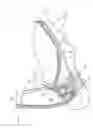
FIG. 1 is a perspective view showing the bridle on the head of a horse with the right reinstrap shaded for clarity.
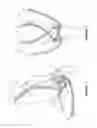
FIG. 2 is a bottom view of the horse's head as seen from directly under the horse's jaw.
DETAILED DESCRIPTION OF THE ILLUSTRATED EMBODIMENTS
FIGS. 1 and 2 show the improved bitless bridle and the components which make it up. The present invention is composed of a solid crownpiece 1 that bifurcates on each side of the horse's head, after a brow band attachment 2, into an elongated reinstrap 3 and a cheek strap 4. The cheek strap 4 connects to two nosebands 5 and 8 which have solid rings attached to each end 6, 7, 9, 10. The elongated reinstraps 3 cross under the horse's jaw 11 and pass through the first set of rings 6 and 7 then cross under the jaw a second time 12 and pass through the second set of rings 9 and 10 to continue back to the rider's hands 13.
The bridle components 1, 2, 3, 4, 5, 8, are made from either leather or a woven fiber such as nylon or cotton. The solid rings 6, 7, 9, 10 can be in any geometric shape (although circular seems to be the most efficient) and made from any material as long as the rings can withstand substantial pressure and the reinstraps are able to freely pass through them. Also, the bridle components can be either sized to the horse or buckle adjustments can be added to provide a wide range of sizing options.
Claims
I claim:1. A bitless bridle, characterized by:
a solid crownpiece that bifurcates on each side of the horse's head into a cheek strap and an elongated reinstrap;
a brow band attached to the crownpiece before the bifurcation;
two nosebands that have solid circular rings attached to each end;
a cheek strap that connects to the two nosebands;
an elongated reinstrap that crosses under the horse's jaw and passes through the ring on the first noseband then crosses under the jaw a second time and passes through the opposing ring on the second noseband to continue on to the rider's hands.
2. A bitless bridle according to claim 1, wherein the crownpiece extends over the poll and bifurcates on each side of the horse's head into a cheek strap and elongated reinstrap.
3. A bitless bridle according to claim 1, wherein the two nosebands are located between the horse's facial crest and end of the nasal bone.
4. A bitless bridle according to claim 3, wherein said nosebands terminate in solid circular rings located on the side of the horse's nose.
5. A bitless bridle according to claim 1, wherein said elongated reinstrap extends downward to cross under the jaw and pass through the ring on the first noseband.
6. A bitless bridle according to claim 1, wherein said elongated reinstrap crosses under the jaw a second time to pass through the opposing ring on the second noseband to continue on to the rider's hands.
7. A bitless bridle, characterized by:
a solid crownpiece that bifurcates on each side of the horse's head into a cheek strap and an elongated reinstrap;
a brow band attached to the crownpiece before the bifurcation;
two nosebands that have solid circular rings attached to each end;
a cheek strap that connects to the two nosebands;
an elongated reinstrap that crosses under the horse's jaw and passes through the ring on the first noseband then crosses under the jaw a second time and passes through the opposing ring on the second noseband to continue on to the rider's hands.
Images & Drawings included:
Sources:
- United States Patent and Trademark Office - verify current appl. status at the USPTO↗
Recent applications in this class:
- » 20250243050 2025-07-31
EQUINE HALTER ATTACHMENT - » 20250128933 2025-04-24
Sliding Martingale - » 20250066184 2025-02-27
Equestrian control device and methods of use - » 20240327196 2024-10-03
DRESSAGE AND POSTURE MARTINGALE FOR HORSES - » 20240308840 2024-09-19
Horse stopping method and apparatus - » 20230391607 2023-12-07
Horse-stopping apparatus - » 20230211999 2023-07-06
ADJUSTABLE HAND GRIP FOR EQUESTRIAN REIN - » 20220219967 2022-07-14
Band-like element for forming a bridle headband or a decorative band, as well as bridle headband and decorative band - » 20200255282 2020-08-13
BRIDLE FOR HORSES - » 20190315618 2019-10-17
METHOD AND APPARATUS FOR EVALUATING THE QUALITY OF CHARACTERISTICS OF MOTION OF AN ANIMAL-HUMAN-DYAD