Detection and use of low molecular-weight modulators of the cold-menthol receptor TRPM8
US20140194433A1
2014-07-10
14/206,182
2014-03-12
✅ Patent granted
US 9,346,823 B2
2016-05-24
-
-
Jennifer A Berrios
Drinker Biddle & Reath LLP
2034-03-12
Abstract:
The invention relates to novel modulators of the cold menthol receptor TRPM8, to a method for modulating the TRPM8 receptor using said modulators; to the use of the modulators for induction of cold sensation; and to objects and means produced using said modulators.
Inventors:
- Thomas Subkowski 35 🇩🇪 Ladenburg, Germany
- Michael KROHN 43 🇩🇪 Lorsch, Germany
- Claus Bollschweiler 43 🇩🇪 Heidelberg, Germany
- Jens Wittenberg 11 🇩🇪 Limburgerhof, Germany
- Holger Zinke 6 🇩🇪 Heppenheim, Germany
Assignee:
- BASF SE 6,681 🇩🇪 Ludwigshafen, Germany
Applicant:
Interested in similar patents?
Get notified when new applications in this technology area are published.
Classification:
C07C275/28 » CPC further
Derivatives of urea, i.e. compounds containing any of the groups , the nitrogen atoms not being part of nitro or nitroso groups having nitrogen atoms of urea groups bound to carbon atoms of six-membered aromatic rings of a carbon skeleton
C07D211/14 » CPC further
Heterocyclic compounds containing hydrogenated pyridine rings, not condensed with other rings with only hydrogen or carbon atoms directly attached to the ring nitrogen atom having no double bonds between ring members or between ring members and non-ring members with hydrocarbon or substituted hydrocarbon radicals directly attached to ring carbon atoms with radicals containing only carbon and hydrogen atoms attached to ring carbon atoms with hydrocarbon or substituted hydrocarbon radicals attached to the ring nitrogen atom
C07D233/84 » CPC further
Heterocyclic compounds containing 1,3-diazole or hydrogenated 1,3-diazole rings, not condensed with other rings having two double bonds between ring members or between ring members and non-ring members with hetero atoms or with carbon atoms having three bonds to hetero atoms with at the most one bond to halogen, e.g. ester or nitrile radicals, directly attached to ring carbon atoms Sulfur atoms
C07D241/44 » CPC further
Heterocyclic compounds containing 1,4-diazine or hydrogenated 1,4-diazine rings condensed with carbocyclic rings or ring systems with only hydrogen or carbon atoms directly attached to the ring nitrogen atoms; Benzopyrazines with hetero atoms or with carbon atoms having three bonds to hetero atoms with at the most one bond to halogen, e.g. ester or nitrile radicals, directly attached to carbon atoms of the hetero ring
C07D317/64 » CPC further
Heterocyclic compounds containing five-membered rings having two oxygen atoms as the only ring hetero atoms having the hetero atoms in positions 1 and 3 ortho- or peri-condensed with carbocyclic rings or ring systems condensed with one six-membered ring; Methylenedioxybenzenes or hydrogenated methylenedioxybenzenes, unsubstituted on the hetero ring with hetero atoms or with carbon atoms having three bonds to hetero atoms with at the most one bond to halogen, e.g. ester or nitrile radicals, directly attached to atoms of the carbocyclic ring Oxygen atoms
C07D401/12 » CPC further
Heterocyclic compounds containing two or more hetero rings, having nitrogen atoms as the only ring hetero atoms, at least one ring being a six-membered ring with only one nitrogen atom containing two hetero rings linked by a chain containing hetero atoms as chain links
C07D409/12 » CPC further
Heterocyclic compounds containing two or more hetero rings, at least one ring having sulfur atoms as the only ring hetero atoms containing two hetero rings linked by a chain containing hetero atoms as chain links
C07D495/20 » CPC further
Heterocyclic compounds containing in the condensed system at least one hetero ring having sulfur atoms as the only ring hetero atoms in which the condensed system contains three hetero rings Spiro-condensed systems
C07D495/22 » CPC main
Heterocyclic compounds containing in the condensed system at least one hetero ring having sulfur atoms as the only ring hetero atoms in which the condensed system contains four or more hetero rings
A61Q19/00 IPC
Preparations for care of the skin
A61K8/69 » CPC further
Cosmetics or similar toilet preparations characterised by the composition containing organic compounds containing fluorine
A61K8/4926 » CPC further
Cosmetics or similar toilet preparations characterised by the composition containing organic compounds containing heterocyclic compounds with one nitrogen as the only hetero atom having six membered rings
A61Q17/04 » CPC further
Barrier preparations; Preparations brought into direct contact with the skin for affording protection against external influences, e.g. sunlight, X-rays or other harmful rays, corrosive materials, bacteria or insect stings Topical preparations for affording protection against sunlight or other radiation; Topical sun tanning preparations
A61K8/42 » CPC further
Cosmetics or similar toilet preparations characterised by the composition containing organic compounds containing nitrogen Amides
A61Q19/004 » CPC further
Preparations for care of the skin Aftersun preparations
A61K8/49 » CPC further
Cosmetics or similar toilet preparations characterised by the composition containing organic compounds containing heterocyclic compounds
A61K8/4946 » CPC further
Cosmetics or similar toilet preparations characterised by the composition containing organic compounds containing heterocyclic compounds with more than one nitrogen as the only hetero atom Imidazoles or their condensed derivatives, e.g. benzimidazoles
A61K8/4953 » CPC further
Cosmetics or similar toilet preparations characterised by the composition containing organic compounds containing heterocyclic compounds with more than one nitrogen as the only hetero atom containing pyrimidine ring derivatives, e.g. minoxidil
A61K8/4973 » CPC further
Cosmetics or similar toilet preparations characterised by the composition containing organic compounds containing heterocyclic compounds with oxygen as the only hetero atom
A61Q5/02 » CPC further
Preparations for care of the hair Preparations for cleaning the hair
A61K2800/78 » CPC further
Properties of cosmetic compositions or active ingredients thereof or formulation aids used therein and process related aspects; Biological properties of particular ingredients Enzyme modulators, e.g. Enzyme agonists
A61Q17/02 » CPC further
Barrier preparations; Preparations brought into direct contact with the skin for affording protection against external influences, e.g. sunlight, X-rays or other harmful rays, corrosive materials, bacteria or insect stings containing insect repellants
A61K31/00 » CPC further
Medicinal preparations containing organic active ingredients
C07D401/04 » CPC further
Heterocyclic compounds containing two or more hetero rings, having nitrogen atoms as the only ring hetero atoms, at least one ring being a six-membered ring with only one nitrogen atom containing two hetero rings directly linked by a ring-member-to-ring-member bond
A61K2800/244 » CPC further
Properties of cosmetic compositions or active ingredients thereof or formulation aids used therein and process related aspects; Chemical, physico-chemical or functional or structural properties of the composition as a whole; Thermal properties Endothermic; Cooling; Cooling sensation
Description
RELATED APPLICATIONS
This application is a divisional of Application No. 13/060,323, filed Feb. 23, 2011, which is incorporated herein by reference in its entirety, and which is a national stage application under 35 U.S.C. §371 of PCT/EP2009/061019, filed Aug. 26, 2009, which claims benefit of European Application No. EP 08162997.4, filed Aug. 26, 2008.
SUBMISSION OF SEQUENCE LISTING
The Sequence Listing associated with this application is filed in electronic format via EFS-Web and hereby incorporated by reference into the specification in its entirety. The name of the text file containing the Sequence Listing is seqlist1311100303.txt. The size of the text file is 16.8 kb, and the text file was created on Mar. 10, 2014.
FIELD OF THE INVENTION
The invention relates to new types of modulators of the cold menthol receptor TRPM8, methods for modulating the TRPM8 receptor using these modulators; the use of the modulators for inducing a sensation of coldness; and also the articles and compositions produced using these modulators.
BACKGROUND OF THE INVENTION
The cold menthol receptor TRPM8 (also referred to as Cold Membrane Receptor (CMR)1) belongs to the family of the “Transient Receptor Potential Ion Channels”, is specifically expressed in a special group of neurons and, in the cell membrane, forms pores (in each case 4 units combine to give a tetramer), which selectively allow Ca2+ ions to pass. The protein has 6 transmembrane domains and a cytoplasmatic C and N terminus. Low temperatures (preferably 10-25° C.) stimulate this receptor, resulting in a signal transduction which is interpreted by the nervous system as a sensation of coldness. The receptor was described for the first time in 2002 as cold receptor in a number of publications (Peier A M et al, .A TRP channel that senses cold stimuli and menthol. Cell. 2002 Mar. 8;108(5):705-15; McKemy D D et al. Identification of a cold receptor reveals a general role for TRP channels in thermosensation. Nature. 2002 Mar. 7; 416 (6876): 52-8; Zuker CS. Neurobiology: a cool ion channel. Nature. 2002 Mar. 7; 416 (6876): 27-8).
Cooling compounds, such as e.g. menthol, have for a long time played an important role in the flavorings and fragrance industry in order to produce an association with freshness and cleanliness. For the compound menthol, it has been shown that it acts as a natural modulator of the receptor TRPM8 (McKemy D. D., Molecular Pain 1, 2005, 16; McKemy D. D., Nature 416, 2002, 52-58; Peier A. M., Cell 108, 2002, 705-715; Dhaka A., Annu. Rev. Neurosci. 29, 2006, 135-161). By applying menthol, TRPM8 is activated, which brings about a Ca2+ influx into the cold-sensitive neurons. The electrical signal produced as a result is ultimately perceived as a sensation of coldness. Elevated menthol concentrations lead to irritation and an anesthetic effect. Moreover, various publications have described menthol derivatives with a similar effect (British Patent 1971#1315761; Watson H. R., J. Soc. Cosmet. Chem. 29, 1978, 185-200; Furrer S. M., Chem. Percept. 1, 2008, 119-126). There are also individual compounds, structurally unrelated to menthol, which bring about a significant TRPM8 modulation, such as e.g. Icilin (Wei E. T., J. Pharm. Pharmacol. 35, 1983, 110-112; WO 2004/026840), WS-23 or compounds listed in the patent application WO 2007/019719.
Further effects of substances which modulate the TRPM8 receptor and/or its insect analogs are a repellent effect on insects (WO 2002/015692; WO 2004/000023, US 2004/0028714), and also activity in antitumor therapy (e.g. an influencing of prostate tumors), activity in the treatment of inflammatory pain/hyperalgesia and an effect as TRPM8 antagonists in the treatment of bladder syndrome or overactive bladder (Beck B. Cell Calcium, 41, 2007, 285-294; Levine J. D. Biochim. Biophys. Acta, Mol. Basis Dis. 1772, 2007, 989-1003; Mukerji G., BMC Urology 6, 2006, 6; US 2003/0207904; US 2005/6893626, Dissertation Behrendt H. J. 2004, Universitat Bochum; Lashinger E. S. R. Am. J. Physiol. Renal Physiol. Am J Physiol Renal Physiol. 2008 Jun. 18. [Epub ahead of print]; PMID: 18562636).
However, many of the TRPM8 modulators found hitherto have deficiencies with regard to strength of effect, duration of effect, skin/mucosa irritation, odor, taste, solubility and/or volatility.
SUMMARY OF THE INVENTION
It was therefore an object of the present invention to identify novel substances, which lead to a modulation of the TRPM8 receptor, which can be used as alternatives to the modulators known hitherto. Such compounds should in particular also be suitable for applications in the field of cosmetics (e.g. hair care, skin care, oral care), nutrition (feed/food), textiles, OTC products (e.g. burn ointment), pharmaceuticals (e.g. tumor treatment, bladder weakness), packagings or as insecticide or repellent.
BRIEF DESCRIPTION OF THE DRAWINGS
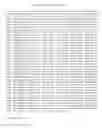
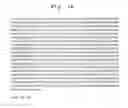
FIG. 1 shows (a) the mRNA sequence and (b) the amino acid sequence derived therefrom of the hTRPM8 receptor according to sequence databank entry NM—024080.
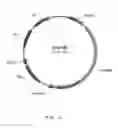
FIG. 2 shows the vector map of the plasmid pind_M8 coding with hTRPM8, which has been used for the transfection of HEK293 cells.
DETAILED DESCRIPTION OF THE INVENTION
1. Definition of General Terms
In the literature there are various synonyms for “TRPM8”: TRPP8, LTRPC6, CMR1, MGC2849, transient receptor potential cation channel subfamily M member 8. Within the context of the present invention, all names are encompassed. Also encompassed are all functional modifications of the receptor, such as, in particular, splice variants, isoforms, such as e.g. TRPM8 CRA_a, TRPM8 CRA_b and all analogous receptors from various organisms, such as human, mouse, rat. The nucleotide and amino acid sequences of the various receptors are known per se and listed in sequence databases. Thus, e.g. the sequence information for hTRPM8 is entered under the number NM—024080.
Within the context of the invention, a “modulator” is a compound which can act as agonist and/or antagonist of the TRPM8 receptor in vivo and/or in vitro.
Suitable modulators here can act either only as antagonist or agonist or both as antagonist and also as agonist. Here, in particular an agonistic or an antagonistic effect can be established depending on the particular modulator concentration selected.
Here, an “agonist” is a compound which mediates an activation of the TRPM8 receptor, thus induces a Ca2+ ingress into the cold-sensitive neurons and thereby mediates a sensation of coldness. By contrast, an “antagonist” is a compound which can counteract this activation of the TRPM8 receptor.
The mediators according to the invention can exert their effect by binding reversibly or irreversibly, specifically or nonspecifically to a TRPM8 receptor molecule. Usually, the binding takes place noncovalently via ionic and/or nonionic, such as e.g. hydrophobic, interactions with the receptor molecule. Here, “specific” encompasses both exclusive interaction with one or more different TRPM8 receptor molecules (such as e.g. TRPM8 molecules of different origin or various isoforms). By contrast, “nonspecific” is an interaction of the modulator with a plurality of various receptor molecules of different function and/or sequence but where, as a consequence, a desired agonistic and/or antagonistic modulation (as described above) of the TRPM8 receptor can be established.
2. Preferred Embodiments
The invention relates firstly to a method for the in-vitro or in-vivo modulation of the cold menthol receptor TRMP8, in particular of the human TRPM8 receptor, where the receptor is brought into contact with at least one compound which is selected from polynuclear organic compounds which, in a cellular activity test, in particular under standard conditions, using cells which recombinantly express the human TRPM8 receptor, modulate the permeability of these cells for Ca2+ ions.
In this connection, “standard conditions” is understood as meaning an activity test carried out with HEK293 cells which have been transformed with human TRPM8 and loaded with calcium-sensitive dye (such as e.g. Fluo-4AM, i.e. fluo-4-acetoxymethyl ester), subsequent addition of the test compound and detection of the color change, the experimental procedure taking place at 37° C.; as described e.g. example 3 below, or in Behrendt et al. (2004) loc. cit.).
In particular, the modulating compound here comprises at least two 4- to 7-membered rings which, independently of one another, are carbocyclic or heterocyclic, monocyclic or polycyclic, and where at least two of these rings may be optionally condensed or spiro-linked. Other nonlimiting examples of suitable ring linkages comprise chemical single bonds between ring carbon atoms and/or ring heteroatoms, via 2 to 6-membered carbon bridging groups, where individual carbon atoms may be replaced by heteroatoms, such as N, O, or S. Moreover, the ring groups and bridging groups may optionally carry substituents which are selected from keto groups, —OH, —SH, —CN, —NO2, —C1-6-alkyl, or C2-4-alkenyl, where, in the alkyl or alkenyl groups, one or more H atoms may be replaced by halogen, such as F, Cl, Br or I.
Carbocyclic rings comprise here 4, 5, 6 or 7 carbon atoms; besides the ring carbon atoms, heterocyclic rings comprise 1 to 3 identical or different ring heteroatoms, such as O, N and S atoms. The rings here may be, independently of one another, saturated, mono- or polyunsaturated, such as e.g. aromatic rings.
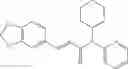
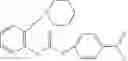
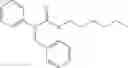
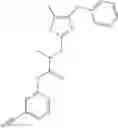
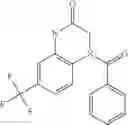
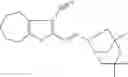
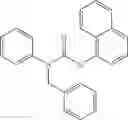
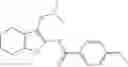
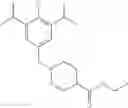
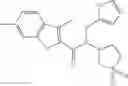
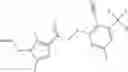
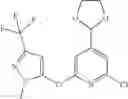
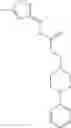
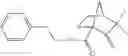
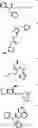
The modulator used according to the invention have an agonistic or antagonistic effect here on the cellular Ca2+ ion permeability. In particular, the modulator is at least one compound selected from compounds of the following formulae 1 to 19 according to table 1 below.
| TABLE 1 |
| Modulators according to the invention |
| 1 | |
| 2 | |
| 3 | |
| 4 | |
| 5 | |
| 6 | |
| 7 | |
| 8 | |
| 9 | |
| 10 | |
| 11 | |
| 12 | |
| 13 | |
| 14 | |
| 15 | |
| 16 | |
| 17 | |
| 18 | |
| 19 | |
where the compound may be present in chemically pure or enriched form, as individual stereoisomer or in the form of stereoisomer mixtures. Furthermore, the compounds can be present uncharged or in the form of their salts, such as e.g. as acid addition salt. Functional groups may optionally be replaced by equivalent chemical groups; fluorine atoms may thus be replaced e.g. by other halogen atoms, such as Cl, Br or I; oxygen atoms (such as e.g. ether groups) may be replaced by corresponding sulfur groups, and vice versa; keto groups may be replaced by corresponding thionyl groups. The compounds specified above are chemical substances known per se which are either commercially available or are obtainable using customary organic synthesis methods.
Thus, the following are known for example:
Compound 1 under CAS number: 99602-94-5 (3R-cis form)
Compound 2 under CAS number: 165753-08-2
Compound 3 under CAS number: 338771-57-6
Compound 4 under CAS number: 878942-21-3
Compound 5 under CAS number: 748783-13-3
The modified forms or derivatives are also referred to as functional analogs or functionally equivalent compounds, if they furthermore exhibit the desired biological activity (receptor TRPM8 modulation).
Furthermore, particularly derivatives which permit a coupling of the specifically disclosed substances to solid carriers are also encompassed within the context of the invention; a large selection of corresponding linker/spacer groups is known to the person skilled in the art. The derivatization can take place here prior to the coupling to a solid phase or only as a result of the coupling.
The invention further relates to the use of a modulator, in particular agonists, for the TRPM8 receptor, where the modulator is as defined above, for inducing a sensation of coldness, in particular topically, i.e. cutaneously or orally, in humans and/or animals. An “induction of a sensation of coldness” is present when the compound in the cellular activity test described above exhibits an agonistic effect on hTRPM8.
The invention further relates to the use of a modulator for the TRPM8 receptor, where the modulator is as defined above, as active constituent of a pharmaceutical composition.
The invention further relates to the use of a modulator for the TRPM8 receptor, where the modulator is as defined above, for the treatment of prostate carcinomas, for the treatment of bladder weakness or in pain therapy.
The invention further relates to the use of a modulator for the TRPM8 receptor, where the modulator is as defined above, as insect repellent or insecticide.
The invention further relates to the use of a modulator for the TRPM8 receptor, where the modulator is as defined above, for inducing a sensation of coldness in packagings (e.g. made of paper or plastic) in a very wide variety of processing forms (such as e.g. fibers, fabrics, moldings), where the sensation of coldness becomes noticeable in particular upon contact with the packaging material. In this connection, the substances can be associated in very diverse ways with the packaging material: e.g. by spin-coating, imprinting, in the form of microencapsulation, direct incorporation into the packaging material (e.g. extruding), covalent coupling of suitable derivatives of the modulators (via suitable spacer/linker groups, with the help of which the molecule is reversibly or irreversibly bonded to the packaging material). Suitable methods are known to the person skilled in the art.
The invention further relates to the use of a modulator for the TRPM8 receptor, where the modulator is as defined above, for inducing a sensation of coldness in textiles. In this connection, the substances can be associated in very diverse ways with the textile: e.g. by spin-coating, imprinting, in the form of microencapsulation, direct incorporation into the textile material (e.g. extruding), covalent coupling of suitable derivatives of the modulators (via suitable spacer/linker groups, with the help of which the molecule is reversibly or irreversibly bonded to the packaging material). Suitable methods are known to the person skilled in the art.
The invention further relates to substances per se according to the above definition for use as mediator, in particular agonists and/or antagonists, of the TRMP8 receptor.
The invention further relates to compositions comprising at least one compound according to the above definition. In particular, such compositons are selected from
a) pharmaceutical compositions, such as antitumor compositions, compositions for the treatment of diseases of the bladder, painkillers;
b) foods, such as ice cream, mousse, cream, beverages, confectionery,
c) mouthcare compositions, such as toothpaste, mouthwash, chewing gum, breath fresheners
d) skincare or haircare compositions, such as suncream, sunburn cream, lotions, shampoos, plasters, mouthwash, lotions, shaving cream, conditioners, face cleansers, soaps, bath oils and bath foams, antiperspirants, deodorants,
e) insect repellents, insecticides.
Besides constituents customary in each case for the particular composition, such compositions comprise an effective amount of at least one modulator according to the invention. In this connection, “effective” means a concentration of the modulator which suffices to bring about the desired effect, such as e.g. pharmacological effect, or sensory effect, such as the olfactory effect of coldness, upon application of the composition (e.g. application to the skin).
Optionally, the compounds according to the invention can be combined with further known active ingredients, in particular also those with a comparable effect. For example, these can be combined with known cooling compounds, such as e.g. menthol, menthone, N-ethyl-p-menthanecarboxamide (WS-3), N-2,3-trimethyl-2-isopropylbutanamide (WS-23), menthyl lactate (FRESCOLAT® ML), menthone glycerol acetal (FRESCOLAT® MGA), monomenthyl succinate (PHYSCOOL®), monomenthyl glutarate, O-menthylglycerol, menthyl N,N-dimethylsuccinamate.
The invention furthermore relates to textile products, such as e.g. shirts, trousers, socks, towels, finished (in particular on the surface) with at least one compound according to the above definition.
The invention furthermore relates to packaging materials which are associated with at least one compound according to the above definition.
The invention will now be described with reference to the following nonlimiting working examples.
EXPERIMENTAL SECTION
Example 1
Cloning of Human TRPM8
The starting point for the cloning of the human TRPM8 receptor is an LnCaP cDNA library. This is, for example, commercially available (e.g. BioChain, Hayward, USA) or can be produced from the androgen-sensitive human prostate adenocarcinoma cell line LnCaP (e.g. ATCC, CRL1740 or ECACC, 89110211) using standard kits.
The coding TRPM8 sequence (cf. FIG. 1A) can be PCR-amplified and cloned using standard methods. The human TRPM8 gene isolated in this way was used for producing the plasmid pind_M8, the construction of which is illustrated by the plasmid map according to FIG. 2.
Alternatively to this, the TRPM8 gene can also be produced synthetically.
Example 2
Generation of the HEK293 Test Cells
As test cell system, HEK293 cell line stably transfected with the human TRPM8 DNA (cf. above plasmid pind-M8) are produced. Preference here is given to HEK293 which offers the option, via the introduced plasmid, of inducing the TRPM8 expression by means of tetracycline.
Methods for producing suitable test cell systems are known to the person skilled in the art. For example, the details of the preparation of the cells used according to the invention can be found in Behrendt H. J. et al., Br. J. Pharmacol. 141, 2004, 737-745 or the dissertation by Behrendt “Vergleichende funktionale Untersuchungen des Hitze-Capsaicin-Rezeptors (TRPV1) und des Kälte-Menthol-Rezeptors (TRPM8) in rekombinanten und nativen Zellsystemen”. [Comparative functional investigations of the heat capsaicin receptor (TRPV1) and of the cold menthol receptor (TRPM8) in recombinant and native cell systems].
Reference is expressly made to the disclosure of these documents.
Example 3
Assay on TRPM8 Modulators
A test comparable with the test already described in the literature by Behrendt H. J. et al., Br. J. Pharmacol. 141, 2004, 737-745 is carried out. The agonization or antagonization of the receptor can be quantified by means of a Ca2+-sensitive dye (e.g. FURA, Fluo-4 etc.). On their own, agonists bring about an increase in the Ca2+ signal; antagonists bring about, in the presence of e.g. menthol, a reduction in the Ca2+ signal (in each case detected via the dye Fluo-4, which has different fluorescent properties as the result of Ca2+ ).
a) Test Procedure:
Firstly, a fresh culture of transformed HEK cells is prepared in a manner known per se in cell culture flasks. The test cells HEK293-TRPM8 are detached from the cell culture flasks by means of trypsin and 40 000 cells/well are sown out with 100 μl of medium in 96-well plates (Greiner # 655948 poly-D-lysine-coated). To induce the receptor TRPM8, tetracycline is added to the growth medium (DMEM/HG, 10% FCS tetracycline-free, 4 mM L-glutamine, 15 μg/ml blasticidin, 100 μg/ml hygromycin B, 1 μg/ml tetracycline). On the following day, the cells are loaded with Fluo-4AM dye and the test is carried out. For this, the procedure is as follows:
-
- addition of in each case 100 μl/well of dye solution Ca-4 kit (RB 141, Molecular Devices) to in each case 100 μl of medium (DMEM/HG, 10% FCS tetracycline-free, 4 mM L-glutamine, 15 μg/ml blasticidin, 100 μg/ml hygromycin B, 1 μg/ml tetracycline)
- incubation in the hatching cabinet, 30 minutes/37° C./5% CO2, 30 minutes/RT
- preparation of the test substances (various concentrations in 200 μl of HBSS buffer), and also of positive controls (various concentrations of menthol, icilin and ionomycin in 200 μl of HBSS buffer) and negative controls (only 200 μl of HBSS buffer)
- addition of the test substances in amounts of 50 μl/well and measurement of the change in fluorescence (e.g. in the assay instrument FLIPR, Molecular Devices or NovoStar, BMG) at 485 nm excitation, 520 nm emission, and evaluation of the effectiveness of the various substances/concentrations and determination of the EC50 values.
The test substances are used in the assay in triplicate in concentrations of 0.1-200 μM. Normally, the compounds are kept ready in DMSO solutions and are diluted down to a maximum DMSO concentration of 2% for the assay.
b) Test Result
The EC50 values determined for modulators according to the invention are summarized in table 2 below
| TABLE 2 |
| Activity of test substances on the human receptor TRPM8 |
| # | Activity TRPM8 EC50 | |
| 1 | 0.4 | |
| 2 | 2 | |
| 3 | 2 | |
| 4 | 2.5 | |
| 5 | 2.5 | |
| 6 | 3.5 | |
| 7 | 4 | |
| 8 | 5 | |
| 9 | 10 | |
| 10 | 10 | |
| 11 | 10 | |
| 12 | 10 | |
| 13 | 10 | |
| 14 | 20 | |
| 15 | 20 | |
| 16 | 25 | |
| 17 | 50 | |
| 18 | 100 | |
| 19 | 100 | |
The evaluation surprisingly reveals that, according to the invention, it was possible for the first time to prepare agonists of TRPM8 which differ significantly in structural terms from agonists known hitherto, such as (−) menthol, icilin and other modulators described by Behrendt H. J. et al., in Br. J. Pharmacol. 141, 2004, 737-745 (cf. table 1 therein), and, moreover, in some cases exhibit better acitivities than (−) menthol, or are as comparably effective as icilin.
Example 4
Preparation of Mouthwash
A mouthwash of the following composition is prepared:
| Ethanol 95% | 177 | ml | |
| Sorbitol 70% | 250 | g | |
| TRPM8 agonist according to tab. 2 | 50 | ml | |
| as 1% solution in the ethanol | |||
| Peppermint oil | 0.30 | g | |
| Methyl salicylate | 0.64 | g | |
| Eucalyptol | 0.922 | g | |
| Thymol | 0.639 | g | |
| Benzoic acid | 1.50 | g | |
| Pluronic ® F127 | 5.00 | g | |
| nonionic surfactant | |||
| Sodium saccharin | 0.60 | g | |
| Sodium citrate | 0.30 | g | |
| Citric acid | 0.10 | g | |
| Water | q.s. 1 | liter | |
To prepare a mouthwash, the above-described components are mixed together in the stated amounts.
Reference is hereby expressly made to the disclosure of the literature sources cited herein.
Claims
1. A method for the in-vitro or in-vivo modulation of the cold menthol receptor TRMP8, comprising contacting the receptor with at least one compound which is selected from polynuclear organic compounds which, in a cellular activity test using cells which recombinantly express the human TRPM8 receptor, modulate the permeability of these cells for Ca2+ ions.
2. The method according to claim 1, where the compound has at least two 4- to 7-membered rings which, independently of one another, are carbo- or heterocyclic, mono- or polycyclic, and wherein at least two of these rings can optionally be condensed.
3. The method according to claim 1, wherein the modulator has an agonistic or antagonistic effect on the cellular Ca2+ ion permeability.
4. The method according to claim 1, where the modulator is a compound selected from the compounds of the formulae 1 to 19:
5. A modulator for the TRPM8 receptor which is selected from polynuclear organic compounds which, in a cellular activity test using a cell which recombinantly expresses the human TRPM8 receptor, modulates the permeability of the cell for Ca2+ ions.
6. The use of a modulator for the TRPM8 receptor according to claim 5 for inducing a sensation of coldness in humans and/or animals.
7. The use of a modulator for the TRPM8 receptor according to claim 5 as an active constituent of a pharmaceutical composition.
8. The use of a modulator for the TRPM8 receptor according to claim 5 for the treatment of prostate carcinomas, for the treatment of bladder weakness or in pain therapy.
9. The use of a modulator for the TRPM8 receptor according to claim 5 as insect repellent or insecticide.
10. The use of a modulator for the TRPM8 receptor according to claim 5 for inducing a sensation of coldness in a packaging.
11. The use of a modulator for the TRPM8 receptor according to claim 5 for inducing a sensation of coldness in a textile.
12. The modulator for the TRPM8 receptor according to claim 5 for use as mediator of the TRMP8 receptor.
13. A composition comprising at least one modulator for the TRPM8 receptor according to claim 5.
14. The composition according to claim 13, selected from
a) pharmaceutical compositions, such as antitumor agents, agents for the treatment of diseases of the bladder, painkillers;
b) foods, such as ice cream, mousse, cream, beverages, confectionery;
c) mouthcare compositions, such as toothpaste, mouthwash, chewing gum;
d) skincare or haircare compositions, such as suncream, sunburn cream, lotions, shampoos, plasters; and
e) insect repellents, insecticides.
15. A textile product such as e.g. a shirt, trousers, socks, a towel, finished with at least one modulator for the TRPM8 receptor according to claim 5.
16. A packaging material which is associated with at least one modulator for the TRPM8 receptor according to claim 5.
Images & Drawings included:





Sources:
- United States Patent and Trademark Office - verify current appl. status at the USPTO↗
Similar patent applications:
Recent applications in this class:
- » 20250282793 2025-09-11
COMPOUND - » 20240343739 2024-10-17
TWO DIMENSIONAL BENZO[4,5]IMIDAZO[2,1-A]ISOINDOLEINCORPORATED NON-FULLERENE ELECTRON ACCEPTORS FOR ORGANIC PHOTOVOLTAIC DEVICES - » 20240109911 2024-04-04
Synthesis of cantharidin - » 20230416270 2023-12-28
NOVEL CAMPTOTHECIN DERIVATIVE, COMPOSITION COMPRISING SAME AND USE THEREOF - » 20230322802 2023-10-12
LIGHT EMITTING DEVICE AND FUSED POLYCYCLIC COMPOUND FOR THE LIGHT EMITTING DEVICE - » 20230287001 2023-09-14
Organic Semiconducting Compounds - » 20230242549 2023-08-03
Reactive deasphalting process - » 20220127280 2022-04-28
Synthetic novel pyrroloiminoquinone alkaloid and method of use - » 20210070770 2021-03-11
ORGANIC SEMICONDUCTING COMPOUNDS - » 20210024541 2021-01-28
Salt of pentacyclic compound and crystal thereof
Recent applications for this Assignee:
- » 20250185653 2025-06-12
Herbicidal compositions comprising 2,4-D - » 20250040553 2025-02-06
Herbicidal compositions comprising trifludimoxazin - » 20240402694 2024-12-05
METHOD FOR MONITORING AND/OR CONTROLLING ONE OR MORE CHEMICAL PLANT(S) - » 20240402684 2024-12-05
MANUFACTURING SYSTEM FOR MONITORING AND/OR CONTROLLING ONE OR MORE CHEMICAL PLANT(S) - » 20240360314 2024-10-31
PROCESS FOR PREPARATION OF ASPHALT MIX COMPOSITION - » 20240309409 2024-09-19
Methods for making L-glufosinate - » 20240301452 2024-09-12
Methods for making L-glufosinate - » 20240239728 2024-07-18
Method and Plant for Producing Ethylene and/or Other Olefins by Steam Cracking - » 20240211517 2024-06-27
KNOWLEDGE INSIGHT CAPTURING SYSTEM - » 20240130221 2024-04-18
HETEROLEPTIC CARBENE COMPLEXES AND THE USE THEREOF IN ORGANIC ELECTRONICS