TRAINING MACHINE WITH AUTOMATIC CONTROL OF A GRAVITATIONAL LOAD
US20140228174A1
2014-08-14
14/128,403
2012-06-22
Abstract:
The present invention concerns a training machine, in particular a muscular strength machine, with automatic control of a gravitational load, including a gravitational load (10, 10′) coupled to force transmission means (20, 30, 40, 50, 60, 70), by means of which the gravitational load (10, 10′) is movable by a user exerting a force on said force transmission means (20, 30, 40, 50, 60, 70), the training machine being characterised in that it further comprises a first shaft (80), rotatably coupled to said transmission means (20, 30, 40, 50, 60, 70) and to a first end of a torsion spring (90), and an electric motor (110) having a rotatable second shaft (100) coupled to a second end of the torsion spring (90), the training machine also comprising first rotation angle sensing means (120) sensing a rotation angle (B) of the first shaft (80) and second rotation angle sensing means (130) sensing a rotation angle (A) of the second shaft (100), the training machine also comprising processing means (200) receiving sensed data (A, B) from said first and second rotation angle sensing means (120, 130) and controlling the electric motor (110) on the basis of said sensed data (A, B).
The present invention further concerns the related process performed by the processing means (200) of such a training machine and the tools that may be used for performing the process.
Interested in similar patents?
Get notified when new applications in this technology area are published.
Classification:
A63B21/0058 » CPC main
Exercising apparatus for developing or strengthening the muscles or joints of the body by working against a counterforce, with or without measuring devices using electromagnetic or electric force-resisters using motors
A63B24/0087 » CPC further
Electric or electronic controls for exercising apparatus of preceding groups; Controlling or monitoring of exercises, sportive games, training or athletic performances Electric or electronic controls for exercising apparatus of groups - , e.g. controlling load
A63B21/005 IPC
Exercising apparatus for developing or strengthening the muscles or joints of the body by working against a counterforce, with or without measuring devices using electromagnetic or electric force-resisters
A63B24/00 IPC
Electric or electronic controls for exercising apparatus of preceding groups; Controlling or monitoring of exercises, sportive games, training or athletic performances
Description
The present invention relates to a training machine, in particular a muscular strength machine, with automatic control of a gravitational load (i.e. a weight load), that allows in a manner that is reliable, inexpensive, comfortable and safe for the user to control movements of the gravitational load when the user trains himself, particularly for absorbing the kinetic energy of moving weights.
The present invention further relates to the related process and the tools that may be used for performing the process.
It is known that gravitational loads are the most common way to produce resistance in muscular strength training. There are many reasons for that, but the most important reason is from a physiological point of view. The neuro-muscular system has evolved over thousands of years to conquer gravity. The purpose is to enable us to move our body and move external objects. Also when moving a mass, the inertia of the mass will provide extra resistance in addition to the gravitational forces.
That generates distinct characteristics of the resistance force F given by a mass in moving with acceleration a as follows:
F−m·g+m·a [1]
where:
-
- the unit of force F is [Newton],
- the unit of mass m is [kilogram],
- the unit of acceleration a is [m/s2], and
- g is the standard gravity equal to 9,80665 m/s2.
Hence, when carrying out strength training, or testing dynamic strength, it is in most cases preferable to work under conditions which are natural for the neuro-muscular system.
However, in a practical situation, the nature of a mass in motion is challenging. The kinetic energy E of a mass in moving at velocity v is given by the formula:
E=1/2·m·v2 [2]
where
-
- the unit of energy E is [Joule], and
- the unit of velocity v is [m/s].
As seen from formula [2], the energy E increases exponentially with the velocity v of the weight load having mass in. In a training machine having a stack of weights, or loaf, moved by a user, this energy must be absorbed somehow in order to stop the loaf from moving, especially when the weights are moving at high velocity.
In real life high speeds are normally associated with jumping, hitting something or throwing an external object. The kinetic energy is absorbed in such different cases as follows:
-
- when jumping, kinetic energy is absorbed by the body at landing;
- when hitting, hit mass is usually low (e.g. in boxing, tennis, volleyball) and consequently kinetic energy levels are relatively low: through sufficient range of motion the kinetic energy is absorbed by the antagonist muscles at relatively low forces;
- when throwing, kinetic energy is absorbed by the object that is receiving the flying object.
Differently, in a training machine the range of motion, i.e. the travel path run by the weights, is often too short to allow kinetic energy to be absorbed by proper damping before the moving weight load hits the mechanical end of the weight load travel path. That will generate unwanted noise and may even damage the machine. In some cases, absorption of kinetic energy of the moving weight load is absolutely undesirable since an impact (produced to this end) may also cause discomfort or injury to the user.
Document WO 2007/043970 discloses a sensorised machine using an electric motor controlled by a processing member, possibly a computer, on the basis of a mathematical model, so that the electric motor is regulated so as to imitate the resistance of a mass although no moving weight is present in the machine.
However, this prior art machine suffers from a number of drawbacks.
First of all, a strong motor is needed since all resistance is provided by the motor. Moreover, high quality sensors are needed since control is also based on sensing of several motion parameters. This entails that the machine is very expensive.
Furthermore, a user does not feel the artificial load resistance, exerted by the controlled motor, as perfectly natural, due to the performance of the regulation algorithms, sensors used for regulation, motor and related electronics.
In this context, the solution proposed according to the present invention is introduced, allowing to overcome the aforementioned problems.
It is therefore an object of the present invention to allow in a manner that is reliable, inexpensive, comfortable and safe for the user to control movements of the gravitational load (i.e. a weight load) of a training machine when used by a user training himself, especially for absorbing the kinetic energy of moving weights.
It is specific subject matter of this invention a training machine, in particular a muscular strength machine, with automatic control of a gravitational load, including a gravitational load coupled to force transmission means, by means of which the gravitational load is movable by a user exerting a force on said force transmission means, the training machine being characterised in that it further comprises a first shaft, rotatably coupled to said transmission means and to a first end of a torsion spring, and an electric motor having a rotatable second shaft coupled to a second end of the torsion spring, the training machine also comprising first rotation angle sensing means sensing a rotation angle of the first shaft and second rotation angle sensing means sensing a rotation angle of the second shaft, the training machine also comprising processing means receiving sensed data from said first and second rotation angle sensing means and controlling the electric motor on the basis of said sensed data.
Always according to the invention, said transmission means may comprise:
-
- a first cable coupled to the gravitational load, preferably through a first end of the first cable that is integrally coupled to a supporting bar supporting the gravitational load,
- handling means, preferably selected from the group comprising a handle, a bar, and a plate, attached to a second end of the first cable,
- a first pulley over which the first cable runs, whereby the first pulley is capable to change direction of a force exerted on said handling means by the user in order to lift the gravitational load,
said first shaft being rotatably coupled to the first pulley.
Still according to the invention, said transmission means may comprise:
-
- a first cable coupled to the gravitational load, preferably through a first end of the first cable that is integrally coupled to a supporting bar supporting the gravitational load,
- handling means, preferably selected from the group comprising a handle, a bar, and a plate, attached to a second end of the first cable,
- a first pulley over which the first cable is capable to run, whereby the first pulley is capable to change direction of a force exerted on said handling means by the user in order to lift the gravitational load,
- a second cable the two ends of which are coupled to the gravitational load, preferably through a supporting bar supporting the gravitational load,
- a second pulley, wherein the second cable is capable to run over the first and second pulleys,
said first shaft being rotatably coupled to the second pulley.
Furthermore according to the invention, the gravitational load may be adjustable, the gravitational load preferably comprising a stack of selectable weights.
Always according to the invention, the processing means may control the electric motor so as to maintain the difference between the rotation angles respectively sensed by said second and first rotation angle sensing means equal to a target value, the target value being preferably received by said processing means from an input/output interface, the target value being more preferably depending on the rotation angle sensed by said second rotation angle sensing means.
Still according to the invention, the gravitational load may comprise a stack of selectable weights movable upwards from a base when selected, unselected weights resting on the base, the base being provided with weight sensing means, preferably comprising a load cell, for sensing the weight resting on the base, said weight sensing means being connected to said processing means, said processing means being capable to automatically set the target value on the basis of the weight sensed by said weight sensing means.
Furthermore according to the invention, said first rotation angle sensing means may comprise a first digital encoder or linear potentiometer and said second rotation angle sensing means may comprise a second digital encoder or linear potentiometer.
Always according to the invention, said processing means may comprise a computer.
It is also specific subject matter of this invention a process for controlling an electric motor of a training machine, in particular a muscular strength machine, with automatic control of a gravitational load, wherein the training machine includes a gravitational load coupled to force transmission means, by means of which the gravitational load is movable by a user exerting a force on said force transmission means, the training machine further comprising a first shaft, rotatably coupled to said transmission means and to a first end of a torsion spring, the electric motor having a rotatable second shaft coupled to a second end of the torsion spring, the training machine also comprising first rotation angle sensing means sensing a rotation angle of the first shaft and second rotation angle sensing means sensing a rotation angle of the second shaft, the process being characterised in that it comprises the following steps:
- A. setting a target value of angular difference between the second and first shafts;
- B. receiving first and second rotation angles respectively from said first and second rotation angle sensing means;
- C. checking whether a difference of the sensed rotation angles from said second and first rotation angle sensing means is larger than the target value;
- D. if the outcome of checking step C is positive, decreasing power to the electric motor;
- E. if the outcome of checking step C is negative, increasing power to the electric motor;
- F. repeating steps from A to E until control of the the electric motor is disabled.
It is still subject matter of this invention a computer program, comprising code means adapted to perform, when operating on processing means of a training machine, the aforementioned process for controlling an electric motor of a training machine.
It is further subject matter of this invention a computer-readable memory medium, having a program stored therein, characterised in that the program is the computer program just described.
The training machine according to the invention is based on a new approach that is extremely advantageous with respect to the prior art one. In fact, it uses a motor that interferes with the moving weight(s) only when it is desired (by maintaining a constant or dynamically varying tension of the torsion spring). Thus, under normal operation, the traditional weight load is the only resistance, i.e. the motor is just moving along with the movement of the weight load (by keeping the torsion spring at rest).
Also, the use of the the tension of a spring to set the force acting on the weight load enables a more comfortable feeling by the user. In fact, the motor is connected to the weight load through a spring system, e.g. a torsion spring, and the motor is controlled basically to change/break the moving weight load before it hits the mechanical end stop, thus helping control of the return of the weight load and/or providing extra load during negative muscle work (so-called eccentric overload training).
This approach of the training machine according to the invention offers many advantages when compared with the prior art ones: it is greatly inexpensive, also thanks to the small motor needed as main resistance is caused from the conventional weights; a user feels the gravitational load as perfectly natural, as the weight load is not interfered with during the work; there is no need for complex sensor arrangement related to force measurement, as the controlling resistance is given by the tension of the spring; with a relatively low spring constant k the possible shortcoming of the regulation performance of the motor will be compensated by the spring.
The present invention will be now described, by way of illustration and not by way of limitation, according to its preferred embodiments, by particularly referring to the Figures of the enclosed drawings, in which:
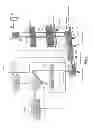
FIG. 1 shows a schematic view of a first embodiment of the training machine according to the invention; and
FIG. 2 shows a schematic view of a second embodiment of the training machine according to the invention.
In the Figures, identical reference numbers are used for alike elements.
With reference to FIG. 1, it may be observed that a first embodiment of the training machine according to the invention comprises a stack of weights 10, which are movable upwards from a base 140 operating as a mechanical end stop, wherein such weights 10 are selectable for adjusting the overall weight load movable by a user. In particular, a specific number of weights 10 can be selected by conventional mechanical means, such as a pin (not shown) that can be inserted into a front horizontal through hole of any one of the weights and into a corresponding horizontal through hole 21 of a vertical supporting bar 20, in turn insertable in vertical central through holes 11 of the weights 10; in this manner, a first weight (indicated in FIG. 1 with reference numeral 10′), into which the pin is inserted, is coupled to the vertical bar 20 and, consequently, when the supporting bar 20 is lifted, the first weight 10′ will be also lifted along with the weight(s) 10 resting on the latter, if any.
The top end of the supporting bar 20 is integrally coupled to a first end of a first cable 30 that can be pulled by a user (not shown) exerting a pulling force on a handle 40 attached to a second end of the first cable 30; the first cable 30 runs over a top pulley 50 that changes direction of the pulling force exerted by the user in order to lift the supporting bar 20 and the weight load formed by the selected weights 10. It should be noted that the handle 40 may also be any other type of tool that can be operated by a user, e.g. a bar or a plate.
The two ends of a second cable 60 are integrally coupled to the two ends of the supporting bar 20; the second cable 60 runs over the top pulley 50 and a bottom pulley 70.
The bottom pulley 70 is coupled to a first end of a first shaft 80, a second end of which is integrally coupled to a first end of a torsion spring 90 having spring constant k; a second end of the torsion spring 90 is integrally coupled to a first end of a second shaft 100 that is the rotatable shaft of an electric motor 110.
A first digital encoder 120 and a second digital encoder 130 are respectively coupled to the first and second shafts 80 and 100, in order to sense the respective rotation angles of these.
A processing unit 200, preferably comprising a computer, receives sensed data from the digital encoders 120 and 130 and controls the electric motor 110 accordingly, as follows.
The force F exerted by the tension of the torsion spring 90 on the gravitational load of selected weights 10, when the ends of the torsion spring 90 are rotated from each other with respect to an equilibrium position, is given by:
F=angle·k
where
-
- the unit of force F is [Newton],
- angle is a function of the spring tension depending on the rotation angles sensed by the encoders 120 and 130, and
- k is the spring constant.
The spring tension is sensed by the two digital encoders, since the angle between the first shaft 80 (sensed by the first encoder 120) and the second shaft 100 (sensed by the second encoder 130) is proportional to the force exerted by the the torsion spring 90 on the gravitational load of selected weights 10.
The processing unit 200 controls the electric motor 110 so as to dynamically adjust the tension of the torsion spring 90, i.e. the difference of the rotation angles of the shafts 80 and 100. The processing unit 200 can controls the electric motor 110, and consequelty the torsion spring 90, on the basis of the instant motion and/or position of the weight load moved by the user. In fact, on the basis of the data sensed by the first encoder 120, the processing unit 200 knows the instant position of the supporting bar 20 and, consequently, of the gravitational load of selected weights 10; moreover, the processing unit 200 is capable to calculate the instant velocity and the instant acceleration of the supporting bar 20 on the basis of such instant position. In this way, the processing unit 200 can therefore control the electric motor 110 to change/break the moving weight load only before it hits the base 140, thus helping control of the return of the weight load to rest and/or providing extra load during negative muscle work (so-called eccentric overload training).
In other words, the electric motor 110 is controlled by the processing unit 200 so as to interfere with the moving weight(s) only when it is desired (by maintaining a constant or dynamically varying tension of the torsion spring 90). Thus, under normal operation, the traditional weight load is the only resistance, i.e. the electric motor 110 is just moving along with the movement of the weight load (by keeping the torsion spring 90 at rest, i.e. with null tension).
FIG. 1 also schematically shows a process performed by the processing unit 200 for controlling the tension of the torsion spring 90 by means of the electric motor 110 (e.g. when a motion and/or position of the weight load requires a force F exerted by the tension of the torsion spring 90), that comprises the following steps:
-
- setting a target value X of angular difference between the second and first shafts 100 and 80 (step 210);
- receiving first and second rotation angles B and A respectively from first and second digital encoders 120 and 130 (step 220);
- checking whether the difference (A-B) of the sensed rotation angles A and B from the second and first digital encoders 130 and 120 is larger than the target value X (step 230);
- if the outcome of checking step 230 is positive, decreasing power to electric motor 110 (step 240);
- if the outcome of checking step 230 is negative, increasing power to electric motor 110 (step 250).
Obviously, steps 220-250 are continuously repeated when the required process for controlling the tension of the torsion spring 90 is in progress, implementing a typical feedback control aiming at reducing to zero the error between sensed current data (A-B) and expected data X. Actually, the target value X can be also dynamically varying with the instant position and/or motion (e.g. the instant velocity and/or the instant acceleration) of the gravitational load, and therefore even step 210 can be repeated as long as the process is in progress. Advantageously, the target value X, is preferably depending on the rotation angle B sensed by the second digital encoder 130 (corresponding to the position of the gravitational load) and, possibly, on the instant variation of the rotation angle B sensed by the second digital encoder 130 (corresponding to the instant motion features, e.g. velocity and acceleration, of the gravitational load).
With a relatively low value of the spring constant k, the shortcoming of the regulation performance of the electric motor 110 is absorbed by the torsion spring 90.
It should be noted that other embodiments of the machine according to the invention may use different components operating in a similar way as the digital encoders (e.g. linear potentiometers) and/or the electric motor and/or the torsion spring.
Moreover, further embodiments of the machine according to the invention may also have the first shaft 80 coupled to the top pulley 50, instead of the bottom pulley 70, so that the second cable 60 and the bottom pulley 70 can also be absent.
Furthermore, the processing unit 200 can also receive further data input from an input/output interface (e.g. from a keyboard), such as the overall weight load to be moved by the user, and these further data can be used for affecting the control process performed by the processing unit 200 (e.g., by setting the target value X proportionally to the overall weight load).
FIG. 2 shows a second embodiment of the training machine according to the invention that differs from the one shown in FIG. 1 in that the base 140 is provided with a weight sensor 300, preferably comprising a load cell, connected to the processing unit 200. The weight sensed by the weight sensor 300 gives to the processing unit 200 an indirect measure of the overall weight load being moved by the user, since the latter is equal to the difference between the weight of the whole stack of weights 10 (that is a predetermined value) and the still weight of unselected weights which remain resting on the base 140, and which still weight is sensed by the weight sensor 300; hence, on the basis of the weight sensed by the weight sensor 300, the processing unit 200 can automatically set the target value X.
The preferred embodiments have been above described and some modifications of this invention have been suggested, but it should be understood that those skilled in the art can make variations and changes, without so departing from the related scope of protection, as defined by the following claims.
Claims
1. A training machine comprising an automatic control of a gravitational load, including a gravitational load coupled to a force transmission means, by means of which the gravitational load is movable by a user exerting a force on said force transmission means, wherein the training machine further comprises a first shaft, rotatably coupled to said transmission means and to a first end of a torsion spring, and an electric motor having a rotatable second shaft (100) coupled to a second end of the torsion spring, the training machine also comprising first rotation angle sensing means sensing a rotation angle B of the first shaft and a second rotation angle sensing means sensing a rotation angle A of the second shaft, the training machine also comprising processing means receiving sensed data from said first and second rotation angle sensing means and controlling the electric motor on the basis of said sensed data.
2. A training machine according to claim 1, wherein said transmission means comprises:
a first cable coupled to the gravitational load
a handling means attached to a second end of the first cable
a first pulley over which the first cable runs, whereby the first pulley is capable to change direction of a force exerted on said handling means by the user in order to lift the gravitational load,
said first shaft being rotatably coupled to the first pulley.
3. A training machine according to claim 1, wherein said transmission means comprises:
a first cable coupled to the gravitational load,
a handling means attached to a second end of the first cable,
a first pulley over which the first cable is capable to run, whereby the first pulley is capable to change direction of a force exerted on said handling means by the user in order to lift the gravitational load,
a second cable, the two ends of which are coupled to the gravitational load,
a second pulley wherein the second cable is capable to run over the first and second pulleys,
said first shaft being rotatably coupled to the second pulley.
4. A training machine according to claim 1, wherein the gravitational load is adjustable.
5. A training machine according to claim 1, wherein the processing means controls the electric motor so as to maintain the difference (A-B) between the rotation angles B and A, respectively, sensed by said second and first rotation angle sensing means equal to a target.
6. A training machine according to claim 5, wherein the gravitational load is adjustable and comprises a stack of selectable weights movable upwards from a base when selected, unselected weights resting on the base, the base being provided with weight sensing means for sensing the weight resting on the base, said weight sensing means being connected to said processing means, said processing means being capable to automatically set the target value on the basis of the weight sensed by said weight sensing means.
7. A training machine according to claim 1, wherein said first rotation angle sensing means comprises a first digital encoder or linear potentiometer and said second rotation angle sensing means comprises a second digital encoder or linear potentiometer.
8. A training machine according to claim 1, wherein said processing means comprises a computer.
9. A process for controlling an electric motor of a training machine, comprising an automatic control of a gravitational load, wherein the training machine includes a gravitational load coupled to force transmission means, by means of which the gravitational load is movable by a user exerting a force on said force transmission means, the training machine further comprising a first shaft, rotatably coupled to said transmission means and to a first end of a torsion spring, the electric motor having a rotatable second shaft coupled to a second end of the torsion spring, the training machine also comprising a first rotation angle sensing means sensing a rotation angle B of the first shaft and a second rotation angle sensing means sensing a rotation angle A of the second shaft, wherein the process comprises the following steps:
A. setting a target value of angular difference between the second and first shafts;
B. receiving first and second rotation angles B and A respectively from said first and second rotation angle sensing means;
C. checking whether a difference (A-B) of the sensed rotation angles A and B from said second and first rotation angle sensing means is larger than the target value;
D. if the outcome of checking step C is positive, decreasing power to the electric motor;
E. if the outcome of checking step C is negative, increasing power to the electric motor;
F repeating steps from A to E until control of the the electric motor is disabled.
10. (canceled)
11. A computer-readable memory medium, having a program stored therein, wherein the program is a computer program comprising code means adapted to perform, when operating on a processing means of a training machine, a process for controlling an electric motor of a training machine comprising automatic control of a gravitational load, wherein the training machine includes a gravitational load coupled to a force transmission means, by means of which the gravitational load is movable by a user exerting a force on said force transmission means, the training machine further comprising a first shaft, rotatably coupled to said transmission means and to a first end of a torsion spring, the electric motor having a rotatable second shaft coupled to a second end of the torsion spring, the training machine also comprising a first rotation angle sensing means sensing a rotation angle B of the first shaft and a second rotation angle sensing means sensing a rotation angle A of the second shaft, wherein the process comprises the following steps:
A. setting a target value of angular difference between the second and first shafts;
B. receiving first and second rotation angles B and A, respectively, from said first and second rotation angle sensing means;
C. checking whether a difference (A-B) of the sensed rotation angles A and B from said second and first rotation angle sensing means is larger than the target value;
D. if the outcome of the checking step C is positive, decreasing power to the electric motor;
E. if the outcome of the checking step C is negative, increasing power to the electric motor;
F. repeating steps from A to E until control of the the electric motor is disabled.
12. A training machine according to claim 2, wherein said first cable is coupled to the gravitational load through a first end of the first cable that is integrally coupled to a supporting bar supporting the gravitational load.
13. A training machine according to claim 2, wherein said handling means are selected from the group comprising a handle, a bar, and a plate.
14. A training machine according to claim 3, wherein said first cable is coupled to the gravitational load through a first end of the first cable that is integrally coupled to a supporting bar supporting the gravitational load.
15. A training machine according to claim 3, wherein said handling means are selected from the group comprising a handle, a bar, and a plate.
16. A training machine according to claim 3, wherein the two ends of said second cable are coupled to the gravitational load through a supporting bar supporting the gravitational load.
17. A training machine according to claim 4, wherein the gravitational load comprises a stack of selectable weights.
18. A training machine according to claim 5, wherein the target value is received by said processing means from an input/output interface.
19. A training machine according to claim 5, wherein the target value depends on the rotation angle B sensed by said second rotation angle sensing means.
20. A training machine according to claim 6, wherein said weight sensing means for sensing the weight resting on the base comprises a load cell.
21. A training machine according to claim 1, wherein the training machine is a muscular strength machine.
22. A process according to claim 9, wherein the training machine is a muscular strength machine.
23. A computer-readable memory medium according to claim 11, wherein the training machine is a muscular strength machine.
Images & Drawings included:


Sources:
- United States Patent and Trademark Office - verify current appl. status at the USPTO↗
Recent applications in this class:
- » 20250161735 2025-05-22
EXERCISING DEVICE FOR DEVELOPING, STRENGTHENING AND/OR REHABILITATING THE MUSCLES OR JOINTS OF THE BODY - » 20250152991 2025-05-15
DRIVING DEVICE AND EXERCISE EQUIPMENT INCLUDING SAME - » 20250090888 2025-03-20
ELECTRIC LOCKING STRUCTURE FOR RESISTANCE MOTOR OF EXERCISE MACHINE - » 20250090887 2025-03-20
ELECTRIC FULL BODY FITNESS EQUIPMENT - » 20250090886 2025-03-20
ELECTRIC FULL BODY FITNESS EQUIPMENT - » 20250050158 2025-02-13
MUSCLE EXERCISE DEVICE - » 20250041647 2025-02-06
Resistance training machine and methods of use - » 20250025735 2025-01-23
WEARABLE DEVICE AND OPERATION METHOD THEREOF - » 20240399188 2024-12-05
ROPE MECHANISM FOR FITNESS EQUIPMENT AND FITNESS EQUIPMENT UTILIZING THE ROPE MECHANISM - » 20240335693 2024-10-10
EXERCISE SYSTEM AND CLIMBING SIMULATOR