Method for setting up a star-shaped communication network consisting of a central node and peripheral nodes via a web application provided by the central node on the basis of hardware identifiers
US20140362734A1
2014-12-11
14/366,763
2012-12-21
✅ Patent granted
US 10,050,839 B2
2018-08-14
WO; PCT/DE2012/100399; 20121221
WO; WO2013/110254; 20130801
Candal Elpenord
Collard & Roe, P.C.
2032-12-21
Abstract:
As an alternative to known communication systems which are available on the Internet and set up voice-over-IP links between users, the invention provides for the setup of a star-shaped communication network. To this end, a software generator first of all generates a native application which acts as a central node and, when required, for its part generates Internet applications that allow communication with the native application.
Assignee:
- AppByYou GmbH 6 🇩🇪 Balgheim, Germany
Applicant:
Interested in similar patents?
Get notified when new applications in this technology area are published.
Classification:
H04L41/12 » CPC main
Arrangements for maintenance, administration or management of data switching networks, e.g. of packet switching networks Discovery or management of network topologies
H04B5/0025 » CPC further
Near-field transmission systems, e.g. inductive loop type Near field system adaptations
H04B5/00 IPC
Near-field transmission systems, e.g. inductive loop type
H04L12/44 » CPC further
Data switching networks characterised by path configuration, e.g. LAN [Local Area Networks] or WAN [Wide Area Networks] Star or tree networks
H04L63/0492 » CPC further
Network architectures or network communication protocols for network security for providing a confidential data exchange among entities communicating through data packet networks wherein the data content is protected, e.g. by encrypting or encapsulating the payload by using a location-limited connection, e.g. near-field communication or limited proximity of entities
H04W4/21 » CPC further
Services specially adapted for wireless communication networks; Facilities therefor; Services signaling; Auxiliary data signalling, i.e. transmitting data via a non-traffic channel for social networking applications
H04L63/0876 » CPC further
Network architectures or network communication protocols for network security for supporting authentication of entities communicating through a packet data network based on the identity of the terminal or configuration, e.g. MAC address, hardware or software configuration or device fingerprint
H04W12/02 » CPC further
Security arrangements; Authentication; Protecting privacy or anonymity Protecting privacy or anonymity, e.g. protecting personally identifiable information [PII]
G06F9/44505 » CPC further
Arrangements for program control, e.g. control units using stored programs, i.e. using an internal store of processing equipment to receive or retain programs; Arrangements for executing specific programs; Program loading or initiating Configuring for program initiating, e.g. using registry, configuration files
G06F9/445 IPC
Arrangements for program control, e.g. control units using stored programs, i.e. using an internal store of processing equipment to receive or retain programs; Arrangements for executing specific programs Program loading or initiating
H04W12/10 » CPC further
Security arrangements; Authentication; Protecting privacy or anonymity Integrity
H04W12/06 » CPC further
Security arrangements; Authentication; Protecting privacy or anonymity Authentication
H04W4/80 » CPC further
Services specially adapted for wireless communication networks; Facilities therefor Services using short range communication, e.g. near-field communication [NFC], radio-frequency identification [RFID] or low energy communication
Description
The present invention relates to a method for setting up a star-shaped communication network.
Particularly with the greatly increasing spread of smartphones, communication is gaining more and more importance in daily life. Within the heterogeneous Internet, subordinate communication networks are forming, which are set up partly as public networks and partly as protected networks.
It is known, as a known and popular form of communication, to use Voice-over-IP services, for example, such as the well-known Internet service “Skype,” in which a request to an Internet server is issued, which then produces a peer-to-peer connection between the terminals conducting the call. The current Internet addresses, in each instance, of the participating clients are registered with the server by means of a request, so that for one thing, information is exchanged as to what members of a community are active at a specific point in time, and for another, addressing of the call parties when setting up the communication connection between the call parties is allowed. A restriction of the members of the community is possible, in this connection, in that such systems keep what is called a “buddy list,” by way of which the ability to contact individual nodes is organized.
Thus, multiple clients will therefore submit a request for such communication to a server available on the Internet, in order to then begin a Voice-over-IP call by means of the mediation of the server. Other data can also be transmitted in this way, but always with the involvement of the Internet server.
However, the call quality in such connections depends to a great extent on the infrastructure between the participants, as it does on the infrastructure that can be provided by the provider as a function of the load at a specific time.
For this reason, and particularly in the case of security-relevant applications, it is desirable to do without central servers, in order to thereby allow the communication of confidential data to run over as few unmonitored paths as possible.
A possible reaction to this set of problems consists in the operators of communication networks developing their own software systems, which can then be utilized within the company, for example. In the private sector, however, such a project generally fails because relatively high fees must be paid for distribution of such a special smartphone application, in order for it to be set up in the relevant markets.
Against this background, the present invention is supposed to create a solution for setting up a communication network on the basis of personalized software in the private sector, which network possesses effective access monitoring and, at the same time, can be distributed without greater costs.
This task is accomplished by means of a method for setting up a star-shaped communication network in accordance with the characteristics of claim 1. Further practical embodiments of this method can be derived from the dependent claims.
According to the invention, it is provided, for setting up a star-shaped communication network in this sector, that first, a future central node that is formed by a central device downloads a software generator, for example from a market server, so that the significant investment for setting up the star-shaped communication network at most lies in the acquisition of this software generator. If the latter is offered free of charge, only the network operator costs are otherwise incurred in this step. Using the software generator, a program product is then created, which has a communication interface. This product is then executed directly on the central device, as a native application, which device thereby represents the central node of the new star-shaped communication network to be formed. Peripheral nodes, in other words those nodes that can communicate with the central node, are then formed in that first, the program product in turn generates an Internet application that it provides for execution by the peripheral device.
On the one hand, providing this directly on a virtual server of the central device is possible; on the other hand, this can take place on an Internet server, on which the Internet application is provided for execution by the peripheral device.
Implementation then takes place in an Internet browser of the peripheral device, and thereby not as a native application but rather as a “web app,” so that neither the costs of provisioning nor possible costs of procurement by the peripheral device occur as the result of this method of provisioning. In this connection, the Internet application generated by the program product is configured in such a manner that it is suitable exclusively for communication with the central node and the native application that is running on it. This can be done by means of suitable access codes, for example, which can be based on unique hardware addresses of the central device, for example.
In this manner, a communication system in the form of a star-shaped communication network can be set up, in that each desired participant can be added as a peripheral device, in that the Internet application suitable for communication with the central node is executed on the peripheral device.
In a further development of this method, the program product can adapt the Internet application provided on the Internet server or on the other facility suitable for this purpose to a single user, in that a unique code of the peripheral device is filed in the native application of the central node, for example. Such an access code, which is made known between the users, is then entered in a White List in the central node, so that the validity of the access code is checked every time communication is set up between the peripheral device in question and the central device.
In order to prevent the exchange of the code by way of third channels and to not only simplify operation but also add greater security, the method provides, in a concrete embodiment, that the Internet application that was generated for a specific, uniquely identified peripheral device, links its executability with the unique hardware address of the peripheral device and therefore cannot be executed from a different peripheral device. In this way, it is ensured that passing the software on is not possible, in order to keep the circle of the participating communication participants within a monitored framework. In the event that a new device is procured, or the like, all that is required for further participation in the communication network is that a new Internet application is generated on the central node and provided to the user having the changed peripheral device.
The method is further simplified in that the unique hardware address is exchanged in advance, before generation of the Internet application, directly between the central device and the peripheral device. This can be done, for example, by way of near-field communication, so that the possibility that the access data are intercepted can be excluded. In particular, the transfer of the required data can take place in that the data to be transmitted from one device to the other, in each instance, are first encrypted in a two-dimensional barcode, and this code is reproduced on the display of the transmitting device, in each instance. By means of scanning this two-dimensional barcode from the display of the transmitting device, the receiving device can record, decrypt, and then utilize these data. Thus, the hardware address of the peripheral device required for identification is first transmitted to the central device in this manner, for example, and, in the opposite direction, the call-up address or the required access codes for the Internet application, which is now uniquely assigned to the peripheral device, is sent from the central device to the peripheral device.
In order to be able to process the data in suitable manner, it can be practical, in this case, if the software generator with which the native application was initially created on the central device is also installed on the peripheral device and is set up for handling near-field communication. In this manner, it is possible to do without the use of additional software and the creation of suitable data interfaces.
In this star-shaped communication network, it is now primarily provided that communication takes place between a peripheral node and the central node, in each instance. The advantage of this arrangement essentially consists of operability for the smartphone user. This user thereby has a special application on his/her smartphone for every call party, whereby this call party is always the central node of a separate communication network. The common smartphone operating systems allow linking such an Internet application directly on the user interface, so that a call with the desired person, in each instance, is made possible without detours, using a click on the user interface.
Because each call party sets up a corresponding star-shaped communication network for himself/herself as the central node, it is possible that every node in question is simultaneously a central device in his/her network, in each instance, and, vice versa, functions as a peripheral device on one or more outside networks. By means of the superimposition of such communication network architectures, communication using the smartphone can be greatly simplified and can be adapted to the needs of the users.
Data transmission is possible by way of such a communication connection, within the entire communication network, as is making calls.
Supplementally, it is also possible to use the central node as a switching node, so that a communication connection can also be set up between multiple peripheral nodes, with the involvement of the central node.
The invention described above will be explained in greater detail in the following, using an exemplary embodiment.
The figures show:
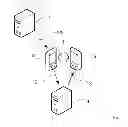
FIG. 1 a schematic representation of the distribution of the applications required for communication, and
FIG. 2 a schematic representation of the communication in a star-shaped communication network around the central device.
FIG. 1 shows the sequence of setting up a star-shaped communication network around a central device 2, to which transmission of a software generator 10 is triggered first from a market server 1, on which different applications for mobile devices are kept available. Using this software generator, which itself is an application for mobile devices, a native application is created on the central device 2, which application runs on the central device 2 after it is created. This native application implements a central node of the star-shaped communication network of the star-shaped communication network to be set up, with which the added peripheral nodes can communicate later.
In order to now add a peripheral node, a peripheral device 3 that implements the peripheral node is connected with the central device 2 by way of a near-field communication 11, so that the two devices 2, 3 can undertake an exchange of required data. These data comprise, first of all, on the side of the peripheral device 3, its hardware address, which is first coded as a two-dimensional barcode (QR code) that is shown on the display of the peripheral device 3. This two-dimensional barcode is scanned using an optical sensor of the central device 2, and an Internet application, which carries out an inquiry with regard to the hardware address of the executing device, is generated using the encrypted data contained in the barcode, by the native application. Use of the Internet application will then be able to take place only on a device having the predetermined hardware address. In this way, the Internet application specifically created on the basis of performing the near-field communication 11 is linked with the devices participating in this near-field communication 11.
On the part of the central device 2, provisioning of the Internet application on an Internet server takes place, on which server, in turn, execution of the Internet application 13 can be triggered at the instigation of the peripheral device 3. The access data required for call-up or for execution, which have also been established on the central device 2 by the native application, will convert these data once again into a two-dimensional barcode and show this on the display of the central device 2, so that in the opposite direction, the access data can be taken over from the central device 2, using an optical sensor of the peripheral device 3.
Subsequently, after multiple repetition of this procedure with different peripheral devices 3, a star-shaped communication network according to FIG. 2 has been set up, in which a central device 2 implements a central node 5, while the peripheral devices 3 represent peripheral nodes 6, in each instance. The peripheral nodes 6 can then communicate with the central node 5, in each instance, while reciprocal communication among the peripheral nodes 6 is only possible if the central node 5 is functioning as a telephone switch. A flexible overall network that can be adapted to the most varied needs can be created and securely operated, in simple manner, by means of superimposition of a plurality of such star-shaped communication networks.
REFERENCE SYMBOL LIST
- 1 market server
- 2 central device
- 3 peripheral device
- 4 Internet server
- 5 central node
- 6 peripheral node
- 10 transmission of the software generator
- 11 near-field communication
- 12 provisioning of the Internet application
- 13 execution of the Internet application
Claims
1. Method for setting up a star-shaped communication network, in which first, a central node (5) is created on a central device (2) in that a software generator running on the central device (2) generates a program product having a communication interface, and the central device (2) executes this program product as a native application, and addition of peripheral nodes (6) to the communication network takes place in that the program product generates an Internet application for exclusive communication with the central node (5), and provides it for execution on a peripheral device (3).
2. Method according to claim 1, wherein the program product provides the Internet application on an Internet server (4) that can be accessed by the peripheral device (3) by way of a data connection.
3. Method according to claim 1, wherein the program product generates a separate, identifiable Internet application for every peripheral node (6) to be added.
4. Method according to claim 3, wherein the program product assigns a unique access code to every Internet application, which code identifies the Internet application during communication with the central node (5).
5. Method according to claim 4, wherein the program product maintains a White List in which the access codes of all the Internet applications generated by the program product are stored, wherein the White List is checked with regard to validity of an access code during the course of setting up communication between the central node (5) and a peripheral node (6), using the access code.
6. Method according to claim 3, wherein in advance, before generation of an Internet application for a peripheral node (6), the related peripheral device (3) is uniquely identified to the central node (5) and the executability of the Internet application to be generated for this peripheral node (6) is linked with a unique hardware address of the peripheral device (3).
7. Method according to claim 6, wherein the unique hardware address is exchanged between the central device (2) and the peripheral device (3) in advance, before generation of an Internet application, by way of a near-field communication (11).
8. Method according to claim 1, wherein an access address of an Internet application generated by the program product is exchanged from the central device (2) to the peripheral device (3), by way of a near-field communication (11).
9. Method according to claim 7, wherein the near-field communication (11) between the central device and a peripheral device (3) takes place in that the data to be transmitted are encrypted in a two-dimensional barcode and reproduced on a display of the sending device (2, 3), in each instance, and recorded using an optical sensor of the receiving device (3, 2), in each instance, and decrypted in the receiving device (3, 2).
10. Method according to claim 7, wherein in order to carry out the near-field communication (11), the software generator is equipped with a near-field communication interface, and the near-field communication is also performed on the peripheral device (3).
11. Method according to claim 1, wherein the central node (5) can be used as a switching node between multiple peripheral nodes (6).
Images & Drawings included:


Sources:
- United States Patent and Trademark Office - verify current appl. status at the USPTO↗
Recent applications in this class:
- » 20250293938 2025-09-18
MAKING A WHAT-IF SCENARIO EVALUATION IN A GREEN ELASTIC NETWORK WITH PARTIAL TRAFFIC AND TOPOLOGY INFORMATION - » 20250293937 2025-09-18
Implementing a Topology Lock For a Plurality of Dynamically Deployed Components - » 20250293936 2025-09-18
Agentless Generation of a Topology Of Components in a Distributed Computing System - » 20250293935 2025-09-18
Agentless Active and Available Inventory Discovery - » 20250286786 2025-09-11
FILTERED ADVERTISEMENTS OF SECONDARY SERVERS - » 20250286785 2025-09-11
ENHANCED RECONFIGURABLE INTERCONNECT NETWORK - » 20250279937 2025-09-04
DYNAMIC TRAFFIC MIRRORING OF AUTOMOTIVE ETHERNET TRAFFIC ACROSS A NETWORK TOPOLOGY - » 20250274347 2025-08-28
QOE OPTIMIZED ELASTIC CLOUD NETWORKS - » 20250254095 2025-08-07
REVERSE WIRELESS DISCOVERY FOR ADDING AN IOT DEVICE TO AN IOT ECOSYSTEM - » 20250254094 2025-08-07
IDENTIFYING NETWORK DEVICE UPLINKS
Recent applications for this Assignee:
- » 20150052361 2015-02-19
METHOD FOR SETTING UP AN ENCRYPTED CONNECTION BETWEEN TWO COMMUNICATION APPLIANCES FOLLOWING PRIOR KEY INTERCHANGE VIA A SHORTHAUL CONNECTION - » 20150012594 2015-01-08
METHOD FOR FORMING A NETWORK - » 20140372760 2014-12-18
Method for the encryption of data - » 20140280656 2014-09-18
METHOD EMPLOYING AT LEAST ONE CENTRAL PROCESSING UNIT (CPU) - » 20140237002 2014-08-21
SYSTEM HAVING A DATABASE UNIT AND TWO PROCESS APPLICATIONS EXECUTED ON MOBILE DEVICES