Breathable and waterproof composite fabric
US20140363625A1
2014-12-11
14/294,613
2014-06-03
✅ Patent granted
US 9,713,914 B2
2017-07-25
-
-
Jeff Vonch
Nixon & Vandehye P.C.
2034-09-26
Abstract:
A breathable and waterproof composite fabric includes: a fabric sheet having opposite first and second surfaces and defining a plurality of micropores extending through the first and second surfaces; and a waterproof plastic film of a non-porous material that is bonded to the first surface of the fabric sheet, that conforms to the first surface of the fabric sheet, and that is perforated to form a plurality of hollow protrusions extending into the micropores, respectively. The plastic film has inner and outer surfaces. The inner surface is in contact with the first surface of the fabric sheet. Each of the hollow protrusions defines a channel that, extends through the inner and outer surfaces for imparting breathability to the plastic film.
Inventors:
- Chen-Cheng Huang 27 🇹🇼 Taipei City, Taiwan
- Pao-Hao Huang 23 🇹🇼 Taipei City, Taiwan
- Pao-Han Huang 22 🇹🇼 Taipei City, Taiwan
- Chen-Cheng Huang 19 🇹🇼 Taipei, Taiwan
- Pao-Hao Huang 14 🇹🇼 Taipei, Taiwan
- Pao-Han Huang 14 🇹🇼 Taipei, Taiwan
Applicant:
Interested in similar patents?
Get notified when new applications in this technology area are published.
Classification:
B32B27/32 » CPC further
Layered products comprising synthetic resin comprising polyolefins
B32B3/266 » CPC further
Layered products comprising a layer with external or internal discontinuities or unevennesses, or a layer of non-planar form ; Layered products having particular features of form characterised by a particular shape of the outline of the cross-section of a continuous layer; characterised by a layer with cavities or internal voids ; characterised by an apertured layer characterised by an apertured layer, the apertures going through the whole thickness of the layer, e.g. expanded metal, perforated layer, slit layer regular cells
B32B7/14 » CPC further
Layered products characterised by the relation between layers; Layered products characterised by the relative orientation of features between layers, or by the relative values of a measurable parameter between layers, i.e. products comprising layers having different physical, chemical or physicochemical properties; Layered products characterised by the interconnection of layers; Interconnection of layers using interposed adhesives or interposed materials with bonding properties applied in spaced arrangements, e.g. in stripes
B32B27/12 » CPC main
Layered products comprising synthetic resin next to a fibrous or filamentary layer
B32B27/36 » CPC further
Layered products comprising synthetic resin comprising polyesters
B32B27/40 » CPC further
Layered products comprising synthetic resin comprising polyurethanes
B32B3/26 IPC
Layered products comprising a layer with external or internal discontinuities or unevennesses, or a layer of non-planar form ; Layered products having particular features of form characterised by a particular shape of the outline of the cross-section of a continuous layer; characterised by a layer with cavities or internal voids ; characterised by an apertured layer
B32B2305/026 » CPC further
Condition, form or state of the layers or laminate; Cellular or porous Porous
B32B2307/728 » CPC further
Properties of the layers or laminate; Other properties Hydrophilic
B32B2307/73 » CPC further
Properties of the layers or laminate; Other properties Hydrophobic
A41D31/00 IPC
Materials specially adapted for outerwear
B32B5/02 » CPC further
Layered products characterised by the non- homogeneity or physical structure, i.e. comprising a fibrous, filamentary, particulate or foam layer; Layered products characterised by having a layer differing constitutionally or physically in different parts characterised by structural features of a layer
B32B7/00 IPC
Layered products characterised by the relation between layers; Layered products characterised by the relative orientation of features between layers, or by the relative values of a measurable parameter between layers, i.e. products comprising layers having different physical, chemical or physicochemical properties; Layered products characterised by the interconnection of layers
B32B7/02 » CPC further
Layered products characterised by the relation between layers; Layered products characterised by the relative orientation of features between layers, or by the relative values of a measurable parameter between layers, i.e. products comprising layers having different physical, chemical or physicochemical properties; Layered products characterised by the interconnection of layers Physical, chemical or physicochemical properties
B32B3/30 » CPC further
Layered products comprising a layer with external or internal discontinuities or unevennesses, or a layer of non-planar form ; Layered products having particular features of form characterised by a particular shape of the outline of the cross-section of a continuous layer; characterised by a layer with cavities or internal voids ; characterised by an apertured layer characterised by a layer formed with recesses or projections, e.g. hollows, grooves, protuberances, ribs
B32B25/10 » CPC further
Layered products comprising natural or synthetic rubber next to a fibrous or filamentary layer
B32B27/08 » CPC further
Layered products comprising synthetic resin as the main or only constituent of a layer, next to another layer of a of synthetic resin
A41D31/02 » CPC further
Materials specially adapted for outerwear Layered materials
B32B2250/02 » CPC further
Layers arrangement 2 layers
B32B5/022 » CPC further
Layered products characterised by the non- homogeneity or physical structure, i.e. comprising a fibrous, filamentary, particulate or foam layer; Layered products characterised by having a layer differing constitutionally or physically in different parts characterised by structural features of a layer Non-woven fabric
B32B5/024 » CPC further
Layered products characterised by the non- homogeneity or physical structure, i.e. comprising a fibrous, filamentary, particulate or foam layer; Layered products characterised by having a layer differing constitutionally or physically in different parts characterised by structural features of a layer Woven fabric
A41D2500/20 » CPC further
Materials for garments Woven
A41D2500/50 » CPC further
Materials for garments Synthetic resins or rubbers
A41D2500/52 » CPC further
Materials for garments; Synthetic resins or rubbers in sheet form
B32B25/08 » CPC further
Layered products comprising natural or synthetic rubber comprising rubber as the main or only constituent of a layer, next to another layer of a of synthetic resin
B32B2250/03 » CPC further
Layers arrangement 3 layers
B32B2274/00 » CPC further
Thermoplastic elastomer material
B32B2307/724 » CPC further
Properties of the layers or laminate; Other properties Permeability to gases, adsorption
B32B2437/00 » CPC further
Clothing
Y10T156/1056 » CPC further
Adhesive bonding and miscellaneous chemical manufacture; Methods of surface bonding and/or assembly therefor with cutting, punching, tearing or severing Perforating lamina
Y10T156/1057 » CPC further
Adhesive bonding and miscellaneous chemical manufacture; Methods of surface bonding and/or assembly therefor with cutting, punching, tearing or severing; Perforating lamina Subsequent to assembly of laminae
B32B3/28 » CPC further
Layered products comprising a layer with external or internal discontinuities or unevennesses, or a layer of non-planar form ; Layered products having particular features of form characterised by a particular shape of the outline of the cross-section of a continuous layer; characterised by a layer with cavities or internal voids ; characterised by an apertured layer characterised by a layer comprising a deformed thin sheet, i.e. the layer having its entire thickness deformed out of the plane , e.g. corrugated, crumpled
Y10T428/24289 » CPC further
Stock material or miscellaneous articles; Structurally defined web or sheet [e.g., overall dimension, etc.] including aperture; Struck out portion type Embedded or interlocked
Y10T428/24322 » CPC further
Stock material or miscellaneous articles; Structurally defined web or sheet [e.g., overall dimension, etc.] including aperture Composite web or sheet
Y10T428/24851 » CPC further
Stock material or miscellaneous articles; Structurally defined web or sheet [e.g., overall dimension, etc.]; Discontinuous or differential coating, impregnation or bond [e.g., artwork, printing, retouched photograph, etc.] Intermediate layer is discontinuous or differential
Y10T428/24942 » CPC further
Stock material or miscellaneous articles; Structurally defined web or sheet [e.g., overall dimension, etc.] including components having same physical characteristic in differing degree
Y10T442/3854 » CPC further
Fabric [woven, knitted, or nonwoven textile or cloth, etc.]; Woven fabric [i.e., woven strand or strip material] Woven fabric with a preformed polymeric film or sheet
Y10T442/3886 » CPC further
Fabric [woven, knitted, or nonwoven textile or cloth, etc.]; Woven fabric [i.e., woven strand or strip material]; Woven fabric with a preformed polymeric film or sheet Olefin polymer or copolymer sheet or film [e.g., polypropylene, polyethylene, ethylene-butylene copolymer, etc.]
Y10T442/3911 » CPC further
Fabric [woven, knitted, or nonwoven textile or cloth, etc.]; Woven fabric [i.e., woven strand or strip material]; Woven fabric with a preformed polymeric film or sheet Natural or synthetic rubber sheet or film
Y10T442/678 » CPC further
Fabric [woven, knitted, or nonwoven textile or cloth, etc.]; Nonwoven fabric [i.e., nonwoven strand or fiber material]; Nonwoven fabric with a preformed polymeric film or sheet Olefin polymer or copolymer sheet or film [e.g., polypropylene, polyethylene, ethylene-butylene copolymer, etc.]
Y10T442/679 » CPC further
Fabric [woven, knitted, or nonwoven textile or cloth, etc.]; Nonwoven fabric [i.e., nonwoven strand or fiber material]; Nonwoven fabric with a preformed polymeric film or sheet Natural or synthetic rubber sheet or film
B32B3/20 IPC
Layered products comprising a layer with external or internal discontinuities or unevennesses, or a layer of non-planar form ; Layered products having particular features of form characterised by a discontinuous layer, i.e. formed of separate pieces of material characterised by an internal layer formed of separate pieces of material which are juxtaposed side-by-side of hollow pieces, e.g. tubes; of pieces with channels or cavities
B32B38/04 IPC
Ancillary operations in connection with laminating processes Punching, slitting or perforating
B32B37/04 IPC
Methods or apparatus for laminating, e.g. by curing or by ultrasonic bonding characterised by the partial melting of at least one layer
B32B37/12 IPC
Methods or apparatus for laminating, e.g. by curing or by ultrasonic bonding characterised by using adhesives
A41D2500/30 » CPC further
Materials for garments Non-woven
Y10T428/24281 » CPC further
Stock material or miscellaneous articles; Structurally defined web or sheet [e.g., overall dimension, etc.] including aperture Struck out portion type
B32B2307/7265 » CPC further
Properties of the layers or laminate; Other properties; Permeability to liquids, absorption Non-permeable
Description
CROSS-REFERENCE TO RELATED APPLICATION
This application claims priority of Taiwanese application no. 102120734, filed on Jun. 11, 2013.
BACKGROUND OF THE INVENTION
1. Field of the Invention
This invention relates to a breathable and waterproof composite fabric, more particularly to a breathable and waterproof composite fabric including a fabric sheet and a plastic film having hollow protrusions extending into micropores in the fabric sheet.
2. Description of the Related Art
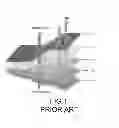
FIG. 1 illustrates a Gore-tex® breathable and waterproof fabric for outdoor clothing. The Gore-tex® breathable and waterproof fabric includes an outer shell 11, an inner liner 12, and a breathable and waterproof sponge-like porous membrane 13 sandwiched between two protection layers 14. The porous membrane 13 is made from a polymer, such as Teflon®, polyvinylidene fluoride (PVDF), and polyurethane, and is formed with pores in a known manner, such as that disclosed in U.S. Pat. Nos. 3,953,566 and 4,187,390. The pores formed in the porous membrane 13 have a pore diameter in the order of less than one micron in order to permit transpiration of water vapor therethrough and prevent water from passing therethrough. The porous membrane 13 has a thickness ranging from 50 microns to several hundreds of microns.
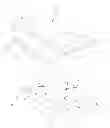
Referring to FIG. 2, U.S. Patent Application Publication No. 2004/0256310 discloses a method of making a highly breathable and waterproof fabric including a multilayered fabric sheet 21, a breathable and waterproof sponge-like porous membrane 22 (with a trade name NanoTex™) formed on the fabric sheet 21, and a hydrophilic layer 23 formed on the porous membrane 22. The method involves the steps of providing a solution of PVDF in a solvent, coating the solution on the fabric sheet 21 to form a film of the solution, and bringing a liquid material into contact with the film so as to leach the solvent from the solution of PVDF and to cause gelation of PVDF so as to form the porous membrane 22 on the fabric sheet 21. The porous membrane 22 has apore size ranging from 100 nm to 10 microns, and preferably ranging from 100 nm to 1000 nm so as to obtain satisfactory waterproofness and breathability. In one example, the porous membrane 22 has a maximum pore size of about 0.3 micron in order to be waterproof under a 60 mph raindrop velocity. Moreover, the porous membrane 22 has a breathability ranging from 4000 to 10000 g/m2/day. It is noted that FIG. 4 of the specification of U.S. Patent Application Publication No. 2004/0256310 shows a comparison between a structure of the porous membrane 22 (Manolex™) and a structure of the porous membrane 13 (Gore-tex®) of FIG. 1. Both of the structures show irregular and randomly distributed pores. The costs of making the aforesaid porous membranes 13, 22 are high.
SUMMARY OF THE INVENTION
Therefore, an object of the present invention is to provide a breathable and waterproof composite fabric that can overcome the aforesaid drawback associated with the prior art.
According to this invention, there is provided a breathable and waterproof composite fabric that comprises: a fabric sheet having opposite first and second surfaces and defining a plurality of micropores extending through the first and second surfaces; and a waterproof plastic film of a non-porous material that is bonded to the first surface of the fabric sheet, that conforms to the first surface of the fabric sheet, and that is perforated to form a plurality of hollow protrusions extending into corresponding ones of the micropores. The plastic film has inner and outer surf aces. The inner surface is in contact with the first surface of the fabric sheet. Each of the hollow protrusions defines a channel that extends through the inner and outer surfaces for imparting breatnability to the plastic film.
In drawings which illustrate embodiments of the invention,
FIG. 1 is an exploded perspective view of a conventional breathable and waterproof fabric;
FIG. 2 is a schematic view of another conventional breathable and waterproof fabric;
FIG. 3 is an exploded perspective view of the first preferred embodiment of a breathable and waterproof composite fabric according to the present invention;
FIG. 4 is a sectional view of the first preferred embodiment; and
FIG. 5 is a sectional view of the second preferred embodiment of the breathable and waterproof composite fabric according to the present invention.
Before the present invention is described in greater detail with reference to the accompanying preferred embodiments, it should be noted herein that like elements are denoted by the same reference numerals throughout the disclosure.
FIGS. 3 and 4 illustrate the first preferred embodiment of a breathable and waterproof composite fabric according to the present invention. The composite fabric includes: a fabric sheet 3 having opposite first and second surfaces 31, 32 and defining a plurality of micropores 33 extending through the first and second surfaces 31, 32; a patterned adhesive layer 4; and a waterproof first plastic film 5 of a non-porous material that is bonded to the firs t surface 31 of the fabric sheet 3 through the patterned adhesive layer 4, that conforms to the first surface 31 of the fabric sheet 3, and that is perforated to form a plurality of hollow protrusions 50 extending into corresponding ones of the micropores 33, The first plastic film 5 has inner and outer surfaces 51, 52. The inner surface 51 is in intimate contact with the first surface 31 of the fabric sheet 3. In this embodiment, the inner surface 51 of the plastic film 5 is melt-bonded and is conformed to the first surface 31 of the fabric sheet 3 so as to be formed with an embossed texture that corresponds to a fabric texture of the first surface 31 of the fabric sheet 3. Each of the hollow protrusions 50 defines a first channel 501 that extends through the inner and outer surfaces 51, 52, that permits passage of water vapor therethrough, and that prevents water droplet from passing therethrough, thereby imparting breathability to the first plastic film 5.
The fabric sheet 3 can be a woven or a non-woven fabric. In this embodiment, the fabric sheet 3 includes a plurality of warp) yarns 34 and a plurality of weft yarns 35 that are interlaced with the warp yarns 34 so as to define the micropores 33 thereamong and the fabric texture. Alternatively, the warp yarns 34 and the weft, yarns 35 are knitted together to define the micropores 33 thereamong and the fabric texture.
In another embodiment, the fabric sheet 3 has a multi-layered structure.
The patterned adhesive layer 4 is preferably formed of dots or lines of an adhesive material.
The first channel 501 has a funnel shape and a minimum diameter (dm) that is preferably less than 10 microns and greater than 0.2 micron and that is more preferably less than five microns and greater than 0.5 micron so as to obtain satisfactory waterproofness and breathability.
Preferably, the micropores 33 have a diameter ranging from 20 microns to 200 microns, and the first plastic film 5 has a thickness ranging from 10 microns to 70 microns.
Each of the micropores 33 is defined by a pore-defining wall. Each of the hollow protrusions 50 is melt-bonded to the pore-defining wall of the respective one of the micropores 33.
The first plastic film 5 is preferably made from a thermoplastic material selected from the group consisting of polyolef ins, polyesters and thermoplastic elastomers, and is more preferably made from polyurethane elastomers.
The first preferred embodiment can be made by a method including the steps of: applying an adhesive material in the form of dots to the fabric sheet 3 so to form the patterned adhesive layer 4 on the fabric sheet 3; bonding the first plastic film 5 to the fabric sheet 3 through the patterned adhesive layer 4; stacking the fabric sheet 3 together with the first plastic film 5 on a screen mold (not shown); heating and softening the first plastic film 5 on the fabric sheet 3; suctioning the softened plastic film 5 through vacuum perforation techniques using a suctioning device (not shown) so as to form the hollow protrusions 50 on the first plastic film 5 and to permit melt bonding of the plastic film 5 to the fabric sheet 3, thereby forming the composite fabric; and cooling and removing the composite fabric from the screen mold. The method of this invention is advantageous in that the minimum diameter (dm) of the first channels 501 in the first plastic film 5 can be easily adjusted by adjusting the thickness of the first plastic film 5 and the diameter of the micropores 33 in the fabric sheet 3. In addition, the size of the hollow protrusions 50 can be adjusted by adjusting the diameter of the micropores 33, and the density of the hollow protrusions 50 can be adjusted by adjusting the number of mesh holes in the screen mold. The higher the density of the hollow protrusions 50, the higher will be the breathability of the first plastic film 5. Alternatively, a portion of the channels 501 can be in the form of blind holes, i.e., instead of extending through the inner and outer surfaces 51, 52 (as in the case of a through-hole), each extending through only the outer surface 52 and not through the inner surface 51. As such, by adjusting the ratio of the number of the blind holes to the number of the through-holes, the breathability and the waterproofness of the composite fabric can be adjusted.
FIG. 5 illustrates the second preferred embodiment of the breathable and waterproof composite fabric according to the present invention. The second preferred embodiment differs from the previous embodiment in that a second plastic film 6 is further included in the composite fabric. In this embodiment, the second plastic film 6 is bonded, to the outer surface 52 of the first plastic film 5, has inner and outer surfaces 61, 62, and is formed with a plurality of hollow projections 60 which extend into the first channels 501 in the hollow protrusions 50, respectively. The second, plastic film 6 is melt-bonded to the first plastic film 5 by stacking and thermally softening the first and second plastic films 5, 6, followed by suctioning the softened first and second plastic films 5, 6 through vacuum perforation techniques. Each of the hollow projections 60 defines a second channel 601 that extends through the inner and outer surfaces 61, 62 for passage of water vapor and air therethrough. The second channel 601 has a minimum diameter less than that of the first channel 501, thereby enhancing the waterproofness of the composite fabric as compared to the previous embodiment.
Preferably, the second plastic film 6 is made from a thermoplastic material selected from the group consisting of polyolefins, polyesters and thermoplastic elastomers.
Preferably, the first plastic film 5 is made from a hydrophobic elastomeric material, and the second plastic film 6 is made from a hydrophilic elastomeric material so as to enhance transpiration of the composite fabric.
With the inclusion of the first plastic film 5 in the composite fabric of the present invention, the aforesaid drawback associated with the prior art may be alleviated.
While the present, invention has been described in connection with what are considered the most practical and preferred embodiments, it is understood that this invention is not limited to the disclosed embodiments but is intended to cover various arrangements included within the spirit and scope of the broadest interpretation and equivalent arrangements.
Claims
What is claimed is:1. A breathable and waterproof composite fabric comprising:
a fabric sheet having opposite first and second surfaces and defining a plurality of micropores extending through said first and second surfaces; and
a waterproof first plastic film of a non-porous material that is bonded to said first surface of said fabric sheet, that conforms to said first surface of said fabric sheet, and that is perforated to form a plurality of hollow protrusions extending into corresponding ones of said micropores, said first plastic film having inner and outer surfaces, said inner surface being in contact, with said first, surface of said fabric sheet;
wherein each of said hollow protrusions defines a channel that extends through said inner and outer surfaces for imparting breathability to said first plastic film.
2. The composite fabric of claim 1, wherein said, channel has a funnel shape.
3. The composite fabric of claim 2, wherein said channel has a minimum diameter less than ten microns and greater than 0.2 micron.
4. The composite fabric of claim 3, wherein said channel has a minimum diameter less than, five microns and greater than 0.5 micron.
5. The composite fabric of claim 2, wherein said micropores have a diameter ranging from 20 microns to 200 microns.
6. The composite fabric of claim 1, wherein said inner surface of said first plastic film is melt-bonded to said first surface of said fabric sheet.
7. The composite fabric of claim 1, wherein said first plastic film is made from a thermoplastic material selected from, the group consisting of polyolefins, polyesters and thermoplastic elastomers.
8. The composite fabric of claim 7, wherein said first plastic film is made from polyurethane elastomers.
9. The composite fabric of claim 1, further comprising a second plastic film that is bonded to said outer surface of said first plastic film and that is formed with a plurality of hollow projections which extend into said channels in said hollow protrusions, respectively.
10. The composite fabric of claim 9, wherein said second plastic film is made from a thermoplastic material selected from the group consisting of polyolefins, polyesters and thermoplastic elastomers.
11. The composite fabric of claim 10, wherein said first plastic film is made from a hydrophobic elastomeric material and said second plastic film is made from a hydrophilic elastomeric material.
12. The composite fabric of claim 1, wherein said first plastic film has a thickness ranging from 10 microns to 70 microns.
13. The composite fabric of claim 1, wherein said fabric sheet is one of a woven fabric and a non-woven fabric.
14. The composite fabric of claim 1, wherein said fabric sheet includes a plurality of warp yarns and a plurality of weft yarns that are interlaced with said warp yarns so as to define said micropores thereamong.
15. The composite fabric of claim 1, further comprising a patterned adhesive layer, said waterproof first plastic film being bonded to said first surface of said fabric sheet through said adhesive layer.
Images & Drawings included:



Sources:
- United States Patent and Trademark Office - verify current appl. status at the USPTO↗
Similar patent applications:
- » 20050191920
Waterproof and breathable composite film, and waterproof and breathable composite fabric - » 20170157903
Breathable and waterproof composite fabric and a method of making the same - » 20120100334
Waterproof breathable composite materials for fabrication of flexible membranes and other articles - » 20140363615
Waterproof breathable composite materials for fabrication of flexible membranes and other articles - » 20160339671
Waterproof breathable composite materials for fabrication of flexible membranes and other articles
Recent applications in this class:
- » 20250289210 2025-09-18
Hybrid-type fiber-reinforced composite material and apparatus for producing same - » 20250276508 2025-09-04
PLANK WITH ANTI-SLIP FUNCTION - » 20250249670 2025-08-07
SYNTHETIC LEATHER - » 20250222684 2025-07-10
ELASTIC COMPOSITE STRUCTURE CONTAINING A TEXTILE LAYER - » 20250187320 2025-06-12
WATERPROOF SHEET FOR FORMING A SLAB GUARD - » 20250187319 2025-06-12
METHOD FOR PRODUCING CURED POLYMERIC SKINS - » 20250187318 2025-06-12
FABRIC ALUMINUM COMPOSITE FILM STRUCTURE - » 20250170808 2025-05-29
PANELS FOR FORMWORK AND RELATED DEVICES, SYSTEMS, AND METHODS - » 20250170807 2025-05-29
Environmentally Sustainable Flooring Product Comprising Natural Fibers and Bio-Based Resins - » 20250170806 2025-05-29
LAMINATED FABRIC/FILM MATERIAL THAT IS SUBSTANTIALLY GAS AND WATER VAPOR IMPERMEABLE