Electromagnetic open loop antenna with self-coupling element
US20140375516A1
2014-12-25
14/195,849
2014-03-03
✅ Patent granted
US 9,379,431 B2
2016-06-28
-
-
Linh Nguyen
Coastal Patent Law Group, P.C.
2034-03-03
Abstract:
An antenna is provided for the new combined GPS and GLONASS technologies in single port for tracking and navigation applications in wireless devices. The resonant mechanism is excited by an open loop structure at 1.575 GHz and 1.610 GHz, forcing the current distribution to remain at that particular portion of the antenna resulting as the primary resonator.
Inventors:
- Javier Ruben Flores-Cuadras 11 🇲🇽 Tijuana, Mexico
- Juan Alberto Saldivar-Morales 3 🇲🇽 Tijuana, Mexico
Assignee:
- TAOGLAS GROUP HOLDINGS LIMITED 13 🇮🇪 Wexford, Ireland
- Taoglas Group Holdings Limited 4 🇺🇸 San Diego, CA, United States
Applicant:
Interested in similar patents?
Get notified when new applications in this technology area are published.
Classification:
H01Q13/106 » CPC main
Waveguide horns or mouths; Slot antennas; Leaky-waveguide antennas; Equivalent structures causing radiation along the transmission path of a guided wave; Resonant slot antennas Microstrip slot antennas
H01Q13/10 IPC
Waveguide horns or mouths; Slot antennas; Leaky-waveguide antennas; Equivalent structures causing radiation along the transmission path of a guided wave Resonant slot antennas
H01Q9/285 » CPC further
Electrically-short antennas having dimensions not more than twice the operating wavelength and consisting of conductive active radiating elements; Resonant antennas with feed intermediate between the extremities of the antenna, e.g. centre-fed dipole; Conical, cylindrical, cage, strip, gauze, or like elements having an extended radiating surface; Elements comprising two conical surfaces having collinear axes and adjacent apices and fed by two-conductor transmission lines Planar dipole
H01Q9/28 IPC
Electrically-short antennas having dimensions not more than twice the operating wavelength and consisting of conductive active radiating elements; Resonant antennas with feed intermediate between the extremities of the antenna, e.g. centre-fed dipole Conical, cylindrical, cage, strip, gauze, or like elements having an extended radiating surface; Elements comprising two conical surfaces having collinear axes and adjacent apices and fed by two-conductor transmission lines
H01Q1/36 » CPC main
Details of, or arrangements associated with, antennas Structural form of radiating elements, e.g. cone, spiral, umbrella; Particular materials used therewith
H01Q5/357 » CPC further
Arrangements for simultaneous operation of antennas on two or more different wavebands, e.g. dual-band or multi-band arrangements; Arrangements for providing operation on different wavebands; Individual or coupled radiating elements, each element being fed in an unspecified way for different propagation modes using a single feed point
Description
CROSS-REFERENCE TO RELATED APPLICATIONS
This application is a continuation in part of U.S. Ser. No. 14/049,186, filed Oct. 8, 2013;
which claims benefit of priority with U.S. Provisional Ser. No. 61/711,191, filed Oct. 8, 2012;
the contents of each of which are hereby incorporated by reference.
BACKGROUND
1. Field of the Invention
This invention relates to antennas; and more particularly to antennas configured for operability among GPS and GLONASS platforms.
2. Description of the Related Art
Satellite based location services are provided by Global Positioning System (GPS) and Global Navigation Satellite System (GLONASS).
GLONASS began worldwide operation in October of 2011. As such, consumer level devices are being developed which make use of the GLONASS platform.
There is a need for GLONASS antennas for integration with forthcoming devices.
There is a further need for a GPS and GLONASS compatible antenna, capable of servicing both platforms for providing robust and selectable satellite based location services.
SUMMARY
An antenna is provided for the new combined GPS and GLONASS technologies in single port for tracking and navigation applications in wireless devices. The resonant mechanism is excited by an open loop structure at 1.575 GHz and 1.610 GHz, forcing the current distribution to remain at that particular portion of the antenna resulting as the primary resonator.
When a metallic element becomes in close proximity to the antenna, instead of being highly de-tuned, the antenna only suffers minor mismatching but continues to provide a working resonance at similar frequency.
The antenna design has a very low profile of 0.15 mm of total thickness. The antenna has a good immunity to resist detuning by nearby metal parts such as RF connectors, I/O connectors, metal shielding, batteries, proximity with human body and other high dielectric elements.
BRIEF DESCRIPTION OF THE DRAWINGS
FIG. 1 shows and electromagnetic open loop antenna with a self-coupling element fixed on a flexible substrate.
FIG. 2 shows a conductor portion of the electromagnetic open loop antenna.
FIG. 3 further shows an expanded view of the conductor portion associated with the antenna.
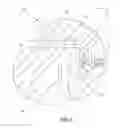
FIG. 4 shows details of the antenna and structural elements thereof
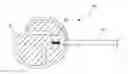
FIG. 5 shows a section view of the antenna illustrating multiple layers thereof.
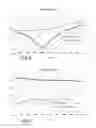
FIG. 6 shows a plot of return loss associated with the antenna in one embodiment.
FIG. 7 shows a plot of efficiency associated with the antenna in one embodiment.
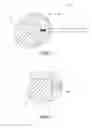
FIG. 8 shows peak gain associated with the antenna in one embodiment.
FIG. 9 shows electromagnetic fields concentrated within a primary radiating portion of the antenna for enhanced isolation from nearby components or human detuning effects.
DESCRIPTION OF EMBODIMENTS
In various embodiments, an antenna is described that provides stable radiation performance across a wide bandwidth when mounted in difficult scenarios or use cases.
In one embodiment, an effective technique comprises implementing an open loop structure to force the current distribution to be kept and isolated mainly in that portion of the antenna referred to herein as a “channel”.
In certain embodiments, the electromagnetic fields of the antenna resist coupling with nearby positioned elements, since the fields are kept at the open loop structure, and as a result the antenna is substantially consistent in frequency and not shifted, or detuned.
Forming the antenna on flexible body allows the antenna to conform to a surface of the device where the antenna can be placed or bent multiple times. However, in other embodiments the antenna may alternatively be developed in a rigid form.
A coax-cable may be provided for simple connectivity. Alternatively, other type of connections may be implemented such as pogo pins, spring contacts, and the like.
In certain embodiments, slots are incorporated in the antenna design for a better response and improved tuning when needed.
FIG. 1 shows and electromagnetic open loop antenna with a self-coupling element fixed on a flexible substrate.
The antenna 100 is shown coupled to a coaxial cable 30 having a feed wire and a ground wire. The antenna comprises a monolithic conductor 20 disposed on a flexible polymer substrate 10.
FIG. 2 shows a conductor portion of the electromagnetic open loop antenna.
The conductor comprises a rounded peripheral edge extending about an outer periphery of the conductor; a center portion having four sides; a rectangular feed pad 25 extending from a first side of the center portion; a corner portion disposed adjacent to the rectangular feed pad and forming a right-angle about the first side of the center portion and a second side thereof; a first conductor portion 22 extending from a third side of the center portion opposite of the first side; a second conductor portion 21 extending from a fourth side of the center portion opposite of the second side, said second conductor portion arranged to overlap with the rectangular feed pad and the corner portion, and further configured to overlap with an edge of the first conductor portion. A channel 23 extends about three sides of the rectangular feed pad 25 and outwardly through the peripheral edge, said channel further extending around the corner portion and separating the second conductor portion 21 from the first conductor portion 22. A tuning slot 24 extends outwardly from the center portion to the peripheral edge, the tuning slot is disposed between the first and second conductor portions 21; 22, respectively.
FIG. 3 further shows an expanded view of the conductor portion associated with the antenna.
The conductor portion further comprises a first isolated region 33 disposed between the second conductor portion and the rectangular feed pad; a gap 32 disposed between the corner portion and a diagonal edge; and a second isolated region 31 disposed along the channel between the first and second conductor portions.
The conductor additionally comprises a tuning slot having a first tuning region 35 extending from the center portion, and a second tuning region 34 extending from the first tuning region 35 to the periphery of the conductor. The second tuning region is oriented at an angle with respect to the first tuning region; the angle is less than ninety degrees.
FIG. 4 shows details of the antenna and structural elements thereof
The antenna 100 comprises a monolithic planar conductor comprising: a rounded peripheral edge 55; 56 extending about an outer periphery of the conductor; a center portion 43 having four sides; a rectangular feed pad 25 extending from a first side of the center portion; a corner portion 57 disposed adjacent to the rectangular feed pad and forming a right-angle about the first side 52 of the center portion and a second side thereof; a first conductor portion and a first radiating portion 42 associated therewith extending from a third side of the center portion opposite of the first side; a second conductor portion and a second radiating portion 41 associated therewith extending from a fourth side of the center portion opposite of the second side, said second conductor portion arranged to overlap with the rectangular feed pad 25 and the corner portion 57, and further configured to overlap with an edge of the first conductor portion 45. The conductor further comprises a channel extending about three sides of the rectangular feed pad 25 and outwardly through the peripheral edge 56, said channel further extending around the corner portion 57 and separating the second conductor portion 44 from the first conductor portion 45 at respective first and second edges thereof A tuning slot extends outwardly from the center portion to the peripheral edge, the tuning slot being disposed between the first and second conductor portions.
FIG. 5 shows a section view of the antenna illustrating multiple layers thereof.
In an embodiment, from the bottom going upward through the cross section, the antenna comprises a liner 501; an adhesive layer 502; a bottom solder mask 503; a flexible polymer 504; a first conductor 505, for example copper; a top solder mask 506; and a second conductor 507, for example tin or gold.
FIG. 6 shows a plot of return loss associated with the antenna in one embodiment.
FIG. 7 shows a plot of efficiency associated with the antenna in one embodiment.
FIG. 8 shows peak gain associated with the antenna in one embodiment.
FIG. 9 shows electromagnetic fields concentrated within a primary radiating portion of the antenna for enhanced isolation from nearby components or human detuning effects.
LIST OF REFERENCE CHARACTERS
- (10) flexible polymer substrate
- (20) monolithic planar conductor
- (21) second conductor portion
- (22) first conductor portion
- (23) channel
- (24) tuning slot
- (25) rectangular feed pad
- (26) ground pad
- (30) coaxial cable
- (31) second isolated region
- (32) gap
- (33) first isolated region
- (34) second tuning slot region
- (35) first tuning slot region
- (41) second radiating portion
- (42) first radiating portion
- (43) center portion
- (44) first edge
- (45) second edge
- (52) first side of center portion
- (53) diagonal edge
- (54) opposing edge
- (55) second peripheral edge portion
- (56) first peripheral edge portion
- (57) corner
- (58) terminal edge
- (61) solder
- (100) antenna
- (501) liner
- (502) adhesive
- (503) bottom solder mask
- (504) flexible polymer
- (505) first conductor
- (506) top solder mask
- (507) second conductor
Claims
1. An electromagnetic open loop antenna, comprising:
a monolithic planar conductor comprising:
a rounded peripheral edge extending about an outer periphery of the conductor;
a center portion having four sides;
a rectangular feed pad extending from a first side of the center portion;
a corner portion disposed adjacent to the rectangular feed pad and forming a right-angle about the first side of the center portion and a second side thereof;
a first conductor portion extending from a third side of the center portion opposite of the first side;
a second conductor portion extending from a fourth side of the center portion opposite of the second side, said second conductor portion arranged to overlap with the rectangular feed pad and the corner portion, and further configured to overlap with an edge of the first conductor portion;
a channel extending about three sides of the rectangular feed pad and outwardly through the peripheral edge, said channel further extending around the corner portion and separating the second conductor portion from the first conductor portion; and
a tuning slot extending outwardly from the center portion to the peripheral edge, the tuning slot being disposed between the first and second conductor portions; and
a flexible polymer substrate;
wherein said conductor is formed on said flexible polymer substrate.
2. The antenna of claim 1, said second conductor portion comprising a diagonal edge arranged tangent to the corner portion and separated therefrom to form a gap.
3. The antenna of claim 2, wherein said channel forms a ninety degree turn thorough said gap.
4. The antenna of claim 1, said second conductor portion further comprising a ground pad disposed between said peripheral edge and said rectangular feed pad.
5. An antenna, comprising:
a monolithic planar conductor having a non-circular rounded peripheral edge;
a channel extending horizontally from a left side periphery of the conductor toward a corner portion and further extending downwardly from the corner portion to surround a rectangular feed pad about three sides thereof;
a tuning slot extending vertically from a bottom side periphery of the conductor toward a center thereof;
wherein said channel is configured to form an open loop for isolating a current distribution of the antenna therein; and
wherein said tuning slot is configured to tune a frequency associated with the antenna.
Images & Drawings included:


Sources:
- United States Patent and Trademark Office - verify current appl. status at the USPTO↗
Recent applications in this class:
- » 20250239780 2025-07-24
ANTENNA DEVICE AND ELECTRONIC APPARATUS - » 20250210873 2025-06-26
COPPER METAL ETCHED ANTENNA FOR POLARIZED UWB MIMO - » 20250158288 2025-05-15
Wideband Dual-Mode Antenna - » 20250132501 2025-04-24
TRANSMISSION APPARATUS AND TRANSMISSION SYSTEM - » 20240380115 2024-11-14
Sub-GHZ circularly polarized UWB MIMO antenna - » 20240235043 2024-07-11
Straight microstrip line antenna system and control thereof - » 20240235042 2024-07-11
Method of fabricating an antenna system - » 20240235041 2024-07-11
Microstrip line antenna system with cascaded power divider - » 20240145928 2024-05-02
ON-PACKAGE SIGNAL LAUNCH AND ANTENNA STRUCTURE - » 20240047888 2024-02-08
RADIO FREQUENCY CIRCULATOR
Recent applications for this Assignee:
- » 20230123293 2023-04-20
Antenna box module and antenna box - » 20200395678 2020-12-17
Millimeter wave antenna array - » 20200006857 2020-01-02
Spiral wideband low frequency antenna - » 20170133767 2017-05-11
Flexible polymer antenna with multiple ground resonators - » 20170047651 2017-02-16
Low-cost ultra wideband LTE antenna - » 20160079676 2016-03-17
WiFi patch antenna with dual u-shaped slots - » 20150303579 2015-10-22
Wideband deformed dipole antenna for LTE and GPS bands - » 20150303571 2015-10-22
Ultra-low profile monopole antenna for 2.4GHz band - » 20150288059 2015-10-08
Low-cost ultra wideband LTE antenna - » 20150061950 2015-03-05
Small digital tunable antenna systems for wireless applications