Inhibitors of the activity of complex (III) of the mitochondrial electron transport chain and use thereof
US20150148301A1
2015-05-28
14/401,685
2013-05-23
✅ Patent granted
US 9,458,174 B2
2016-10-04
WO; PCT/EP2013/060670; 20130523
WO; WO2013/174974; 20131128
Rei-Tsang Shiao
Harness, Dickey and Pierce, P.L.C.
2033-05-23
Abstract:
The present invention relates to inhibitors of the activity of Complex (III) of the mitochondrial electron transport chain and use thereof in treatment and/or prevention of cancers presenting tumour-initiating cells. The present invention further relates to pharmaceutical compositions containing said inhibitors alone or in combination with other pharmaceutically active agents, and their use as medicaments or as agrochemicals where their properties as inhibitors of the mitochondrial respiration is of benefit.
Inventors:
- Erick Carreira 10 🇨🇭 Zumikon, Switzerland
- Virginie Clement-Schatlo 2 🇨🇭 Suhr, Switzerland
- Thomas Fessard 2 🇨🇭 Zürich, Switzerland
- Damien Barbaras 1 🇨🇭 Baar, Switzerland
- Joana Matos 1 🇨🇭 Zurich, Switzerland
Assignee:
- STEMERGIE BIOTECHNOLOGY SA 2 🇨🇭 Geneva, Switzerland
Applicant:
Interested in similar patents?
Get notified when new applications in this technology area are published.
Classification:
C07D213/81 » CPC further
Heterocyclic compounds containing six-membered rings, not condensed with other rings, with one nitrogen atom as the only ring hetero atom and three or more double bonds between ring members or between ring members and non-ring members having three double bonds between ring members or between ring members and non-ring members having no bond between the ring nitrogen atom and a non-ring member or having only hydrogen or carbon atoms directly attached to the ring nitrogen atom with hetero atoms or with carbon atoms having three bonds to hetero atoms with at the most one bond to halogen, e.g. ester or nitrile radicals, directly attached to ring carbon atoms; Carbon atoms having three bonds to hetero atoms, with at the most one bond to halogen, e.g. ester or nitrile radicals Amides; Imides
C07C275/42 » CPC further
Derivatives of urea, i.e. compounds containing any of the groups , the nitrogen atoms not being part of nitro or nitroso groups having nitrogen atoms of urea groups bound to carbon atoms of six-membered aromatic rings of a carbon skeleton being further substituted by carboxyl groups
A61K31/167 » CPC further
Medicinal preparations containing organic active ingredients; Amides, e.g. hydroxamic acids having aromatic rings, e.g. colchicine, atenolol, progabide having the nitrogen of a carboxamide group directly attached to the aromatic ring, e.g. lidocaine, paracetamol
A61K31/18 » CPC further
Medicinal preparations containing organic active ingredients; Amides, e.g. hydroxamic acids Sulfonamides
A61K31/397 » CPC further
Medicinal preparations containing organic active ingredients; Heterocyclic compounds having nitrogen as a ring hetero atom, e.g. guanethidine or rifamycins having four-membered rings, e.g. azetidine
A61K31/421 » CPC further
Medicinal preparations containing organic active ingredients; Heterocyclic compounds having nitrogen as a ring hetero atom, e.g. guanethidine or rifamycins having five-membered rings with two or more ring hetero atoms, at least one of which being nitrogen, e.g. tetrazole; Oxazoles 1,3-Oxazoles, e.g. pemoline, trimethadione
A61K31/44 » CPC further
Medicinal preparations containing organic active ingredients; Heterocyclic compounds having nitrogen as a ring hetero atom, e.g. guanethidine or rifamycins having six-membered rings with one nitrogen as the only ring hetero atom Non condensed pyridines; Hydrogenated derivatives thereof
A61K31/47 » CPC further
Medicinal preparations containing organic active ingredients; Heterocyclic compounds having nitrogen as a ring hetero atom, e.g. guanethidine or rifamycins having six-membered rings with one nitrogen as the only ring hetero atom Quinolines; Isoquinolines
A61K31/55 » CPC further
Medicinal preparations containing organic active ingredients; Heterocyclic compounds having nitrogen as a ring hetero atom, e.g. guanethidine or rifamycins having seven-membered rings, e.g. azelastine, pentylenetetrazole
A61K45/06 » CPC further
Medicinal preparations containing active ingredients not provided for in groups - Mixtures of active ingredients without chemical characterisation, e.g. antiphlogistics and cardiaca
C07D223/24 » CPC further
Heterocyclic compounds containing seven-membered rings having one nitrogen atom as the only ring hetero atom condensed with carbocyclic rings or ring systems; Dibenzazepines; Hydrogenated dibenzazepines; Dibenz [b, f] azepines; Hydrogenated dibenz [b, f] azepines with hydrocarbon radicals, substituted by nitrogen atoms, attached to the ring nitrogen atom
C07D263/34 » CPC further
Heterocyclic compounds containing 1,3-oxazole or hydrogenated 1,3-oxazole rings not condensed with other rings having two or three double bonds between ring members or between ring members and non-ring members with hetero atoms or with carbon atoms having three bonds to hetero atoms with at the most one bond to halogen, e.g. ester or nitrile radicals, directly attached to ring carbon atoms
C07C237/44 » CPC further
Carboxylic acid amides, the carbon skeleton of the acid part being further substituted by amino groups having the carbon atom of at least one of the carboxamide groups bound to a carbon atom of a non-condensed six-membered aromatic ring of the carbon skeleton having carbon atoms of carboxamide groups, amino groups and singly-bound oxygen atoms bound to carbon atoms of the same non-condensed six-membered aromatic ring
C07D495/10 » CPC main
Heterocyclic compounds containing in the condensed system at least one hetero ring having sulfur atoms as the only ring hetero atoms in which the condensed system contains two hetero rings Spiro-condensed systems
A61K31/17 » CPC further
Medicinal preparations containing organic active ingredients; Amides, e.g. hydroxamic acids having the group >N—C(O)—N< or >N—C(S)—N<, e.g. urea, thiourea, carmustine
C07D215/28 » CPC further
Heterocyclic compounds containing quinoline or hydrogenated quinoline ring systems having no bond between the ring nitrogen atom and a non-ring member or having only hydrogen atoms or carbon atoms directly attached to the ring nitrogen atom with hetero atoms or with carbon atoms having three bonds to hetero atoms with at the most one bond to halogen, e.g. ester or nitrile radicals, directly attached to ring carbon atoms; Oxygen atoms attached in position 8; Alcohols; Ethers thereof with halogen atoms or nitro radicals in positions 5, 6 or 7
A61K31/137 » CPC further
Medicinal preparations containing organic active ingredients; Amines having aromatic rings, e.g. ketamine, nortriptyline Arylalkylamines, e.g. amphetamine, epinephrine, salbutamol, ephedrine or methadone
C07C215/50 » CPC further
Compounds containing amino and hydroxy groups bound to the same carbon skeleton having hydroxy groups bound to carbon atoms of at least one six-membered aromatic ring and amino groups bound to acyclic carbon atoms or to carbon atoms of rings other than six-membered aromatic rings of the same carbon skeleton with amino groups linked to the six-membered aromatic ring, or to the condensed ring system containing that ring, by carbon chains not further substituted by hydroxy groups with amino groups and the six-membered aromatic ring, or the condensed ring system containing that ring, bound to the same carbon atom of the carbon chain
C07C311/08 » CPC further
Amides of sulfonic acids, i.e. compounds having singly-bound oxygen atoms of sulfo groups replaced by nitrogen atoms, not being part of nitro or nitroso groups; Sulfonamides having sulfur atoms of sulfonamide groups bound to acyclic carbon atoms of an acyclic saturated carbon skeleton having the nitrogen atom of at least one of the sulfonamide groups bound to a carbon atom of a six-membered aromatic ring
C07C43/1787 » CPC further
Ethers; Compounds having groups, groups or groups; Ethers having all ether-oxygen atoms bound to acyclic carbon atoms; Unsaturated ethers containing hydroxy or O-metal groups containing six-membered aromatic rings and having unsaturation outside the aromatic rings
C07C233/33 » CPC further
Carboxylic acid amides having carbon atoms of carboxamide groups bound to hydrogen atoms or to acyclic carbon atoms having the nitrogen atom of at least one of the carboxamide groups bound to a carbon atom of a hydrocarbon radical substituted by doubly-bound oxygen atoms with the substituted hydrocarbon radical bound to the nitrogen atom of the carboxamide group by a carbon atom of a six-membered aromatic ring
C07C233/25 » CPC further
Carboxylic acid amides having carbon atoms of carboxamide groups bound to hydrogen atoms or to acyclic carbon atoms having the nitrogen atom of at least one of the carboxamide groups bound to a carbon atom of a hydrocarbon radical substituted by singly-bound oxygen atoms with the substituted hydrocarbon radical bound to the nitrogen atom of the carboxamide group by a carbon atom of a six-membered aromatic ring having the carbon atom of the carboxamide group bound to a hydrogen atom or to a carbon atom of an acyclic saturated carbon skeleton
C07C237/38 » CPC further
Carboxylic acid amides, the carbon skeleton of the acid part being further substituted by amino groups having the carbon atom of at least one of the carboxamide groups bound to a carbon atom of a non-condensed six-membered aromatic ring of the carbon skeleton having the nitrogen atom of the carboxamide group bound to a carbon atom of a ring other than a six-membered aromatic ring
C07C235/60 » CPC further
Carboxylic acid amides, the carbon skeleton of the acid part being further substituted by oxygen atoms having carbon atoms of carboxamide groups bound to carbon atoms of six-membered aromatic rings and singly-bound oxygen atoms bound to the same carbon skeleton with carbon atoms of carboxamide groups and singly-bound oxygen atoms bound to carbon atoms of the same non-condensed six-membered aromatic ring with carbon atoms of carboxamide groups and singly-bound oxygen atoms, bound in ortho-position to carbon atoms of the same non-condensed six-membered aromatic ring having the nitrogen atoms of the carboxamide groups bound to hydrogen atoms or to acyclic carbon atoms
C07D261/08 » CPC further
Heterocyclic compounds containing 1,2-oxazole or hydrogenated 1,2-oxazole rings not condensed with other rings having two or more double bonds between ring members or between ring members and non-ring members with only hydrogen atoms, hydrocarbon or substituted hydrocarbon radicals, directly attached to ring carbon atoms
C07D491/107 » CPC further
Heterocyclic compounds containing in the condensed ring system both one or more rings having oxygen atoms as the only ring hetero atoms and one or more rings having nitrogen atoms as the only ring hetero atoms, not provided for by groups - , , or in which the condensed system contains two hetero rings; Spiro-condensed systems with only one oxygen atom as ring hetero atom in the oxygen-containing ring
C07C237/40 » CPC further
Carboxylic acid amides, the carbon skeleton of the acid part being further substituted by amino groups having the carbon atom of at least one of the carboxamide groups bound to a carbon atom of a non-condensed six-membered aromatic ring of the carbon skeleton having the nitrogen atom of the carboxamide group bound to a carbon atom of a six-membered aromatic ring
C07D277/56 » CPC further
Heterocyclic compounds containing 1,3-thiazole or hydrogenated 1,3-thiazole rings not condensed with other rings having two or three double bonds between ring members or between ring members and non-ring members with hetero atoms or with carbon atoms having three bonds to hetero atoms with at the most one bond to halogen, e.g. ester or nitrile radicals, directly attached to ring carbon atoms Carbon atoms having three bonds to hetero atoms with at the most one bond to halogen
C07D209/42 » CPC further
Heterocyclic compounds containing five-membered rings, condensed with other rings, with one nitrogen atom as the only ring hetero atom condensed with one carbocyclic ring; Indoles; Hydrogenated indoles with hetero atoms or with carbon atoms having three bonds to hetero atoms with at the most one bond to halogen, directly attached to carbon atoms of the hetero ring Carbon atoms having three bonds to hetero atoms with at the most one bond to halogen, e.g. ester or nitrile radicals
C07D305/06 » CPC further
Heterocyclic compounds containing four-membered rings having one oxygen atom as the only ring hetero atoms not condensed with other rings having no double bonds between ring members or between ring members and non-ring members with only hydrogen atoms, hydrocarbon or substituted hydrocarbon radicals, directly attached to the ring atoms
C07D235/18 » CPC further
Heterocyclic compounds containing 1,3-diazole or hydrogenated 1,3-diazole rings, condensed with other rings condensed with carbocyclic rings or ring systems; Benzimidazoles; Hydrogenated benzimidazoles with aryl radicals directly attached in position 2
A01N31/08 » CPC further
Biocides, pest repellants or attractants, or plant growth regulators containing organic oxygen or sulfur compounds Oxygen or sulfur directly attached to an aromatic ring system
C07D263/32 » CPC further
Heterocyclic compounds containing 1,3-oxazole or hydrogenated 1,3-oxazole rings not condensed with other rings having two or three double bonds between ring members or between ring members and non-ring members with only hydrogen atoms, hydrocarbon or substituted hydrocarbon radicals, directly attached to ring carbon atoms
C07D249/06 » CPC further
Heterocyclic compounds containing five-membered rings having three nitrogen atoms as the only ring hetero atoms not condensed with other rings 1,2,3-Triazoles; Hydrogenated 1,2,3-triazoles with aryl radicals directly attached to ring atoms
C07D235/26 » CPC further
Heterocyclic compounds containing 1,3-diazole or hydrogenated 1,3-diazole rings, condensed with other rings condensed with carbocyclic rings or ring systems; Benzimidazoles; Hydrogenated benzimidazoles with hetero atoms or with carbon atoms having three bonds to hetero atoms with at the most one bond to halogen, e.g. ester or nitrile radicals, directly attached in position 2 Oxygen atoms
C07D405/12 » CPC further
Heterocyclic compounds containing both one or more hetero rings having oxygen atoms as the only ring hetero atoms, and one or more rings having nitrogen as the only ring hetero atom containing two hetero rings linked by a chain containing hetero atoms as chain links
C07C235/62 » CPC further
Carboxylic acid amides, the carbon skeleton of the acid part being further substituted by oxygen atoms having carbon atoms of carboxamide groups bound to carbon atoms of six-membered aromatic rings and singly-bound oxygen atoms bound to the same carbon skeleton with carbon atoms of carboxamide groups and singly-bound oxygen atoms bound to carbon atoms of the same non-condensed six-membered aromatic ring with carbon atoms of carboxamide groups and singly-bound oxygen atoms, bound in ortho-position to carbon atoms of the same non-condensed six-membered aromatic ring having the nitrogen atom of at least one of the carboxamide groups bound to a carbon atom of a ring other than a six-membered aromatic ring
C07D487/10 » CPC further
Heterocyclic compounds containing nitrogen atoms as the only ring hetero atoms in the condensed system, not provided for by groups - in which the condensed system contains two hetero rings Spiro-condensed systems
C07D263/57 » CPC further
Heterocyclic compounds containing 1,3-oxazole or hydrogenated 1,3-oxazole rings condensed with carbocyclic rings or ring systems; Benzoxazoles; Hydrogenated benzoxazoles with only hydrogen atoms, hydrocarbon or substituted hydrocarbon radicals, directly attached in position 2 Aryl or substituted aryl radicals
C07C237/42 » CPC further
Carboxylic acid amides, the carbon skeleton of the acid part being further substituted by amino groups having the carbon atom of at least one of the carboxamide groups bound to a carbon atom of a non-condensed six-membered aromatic ring of the carbon skeleton having nitrogen atoms of amino groups bound to the carbon skeleton of the acid part, further acylated
C07D513/10 » CPC further
Heterocyclic compounds containing in the condensed system at least one hetero ring having nitrogen and sulfur atoms as the only ring hetero atoms, not provided for in groups , or - in which the condensed system contains two hetero rings Spiro-condensed systems
C07D305/08 » CPC further
Heterocyclic compounds containing four-membered rings having one oxygen atom as the only ring hetero atoms not condensed with other rings having no double bonds between ring members or between ring members and non-ring members with hetero atoms or with carbon atoms having three bonds to hetero atoms with at the most one bond to halogen, e.g. ester or nitrile radicals, directly attached to ring atoms
C07C251/48 » CPC further
Compounds containing nitrogen atoms doubly-bound to a carbon skeleton; Oximes with oxygen atoms of oxyimino groups bound to hydrogen atoms or to carbon atoms of unsubstituted hydrocarbon radicals with the carbon atom of at least one of the oxyimino groups bound to a carbon atom of a six-membered aromatic ring
C07D403/12 » CPC further
Heterocyclic compounds containing two or more hetero rings, having nitrogen atoms as the only ring hetero atoms, not provided for by group containing two hetero rings linked by a chain containing hetero atoms as chain links
A01N35/04 » CPC further
Biocides, pest repellants or attractants, or plant growth regulators containing organic compounds containing a carbon atom having two bonds to hetero atoms with at the most one bond to halogen, e.g. aldehyde radical containing aldehyde or keto groups, or thio analogues thereof, directly attached to an aromatic ring system, e.g. acetophenone; Derivatives thereof, e.g. acetals
A01N37/40 » CPC further
Biocides, pest repellants or attractants, or plant growth regulators containing organic compounds containing a carbon atom having three bonds to hetero atoms with at the most two bonds to halogen, e.g. carboxylic acids containing at least one carboxylic group or a thio analogue, or a derivative thereof, and a singly bound oxygen or sulfur atom attached to the same carbon skeleton, this oxygen or sulfur atom not being a member of a carboxylic group or of a thio analogue, or of a derivative thereof, e.g. hydroxy-carboxylic acids having at least one oxygen or sulfur atom attached to an aromatic ring system having at least one carboxylic group or a thio analogue, or a derivative thereof, and one oxygen or sulfur atom attached to the same aromatic ring system
A01N37/44 » CPC further
Biocides, pest repellants or attractants, or plant growth regulators containing organic compounds containing a carbon atom having three bonds to hetero atoms with at the most two bonds to halogen, e.g. carboxylic acids containing at least one carboxylic group or a thio analogue, or a derivative thereof, and a nitrogen atom attached to the same carbon skeleton by a single or double bond, this nitrogen atom not being a member of a derivative or of a thio analogue of a carboxylic group, e.g. amino-carboxylic acids
A01N37/46 » CPC further
Biocides, pest repellants or attractants, or plant growth regulators containing organic compounds containing a carbon atom having three bonds to hetero atoms with at the most two bonds to halogen, e.g. carboxylic acids containing at least one carboxylic group or a thio analogue, or a derivative thereof, and a nitrogen atom attached to the same carbon skeleton by a single or double bond, this nitrogen atom not being a member of a derivative or of a thio analogue of a carboxylic group, e.g. amino-carboxylic acids N-acyl derivatives
A01N37/50 » CPC further
Biocides, pest repellants or attractants, or plant growth regulators containing organic compounds containing a carbon atom having three bonds to hetero atoms with at the most two bonds to halogen, e.g. carboxylic acids containing at least one carboxylic group or a thio analogue, or a derivative thereof, and a nitrogen atom attached to the same carbon skeleton by a single or double bond, this nitrogen atom not being a member of a derivative or of a thio analogue of a carboxylic group, e.g. amino-carboxylic acids the nitrogen atom being doubly bound to the carbon skeleton
A01N43/20 » CPC further
Biocides, pest repellants or attractants, or plant growth regulators containing heterocyclic compounds having rings with one or more oxygen or sulfur atoms as the only ring hetero atoms with one hetero atom three- or four-membered rings
A01N43/38 » CPC further
Biocides, pest repellants or attractants, or plant growth regulators containing heterocyclic compounds having rings with one nitrogen atom as the only ring hetero atom five-membered rings condensed with carbocyclic rings
A01N43/40 » CPC further
Biocides, pest repellants or attractants, or plant growth regulators containing heterocyclic compounds having rings with one nitrogen atom as the only ring hetero atom six-membered rings
A01N43/42 » CPC further
Biocides, pest repellants or attractants, or plant growth regulators containing heterocyclic compounds having rings with one nitrogen atom as the only ring hetero atom six-membered rings condensed with carbocyclic rings
A01N43/46 » CPC further
Biocides, pest repellants or attractants, or plant growth regulators containing heterocyclic compounds having rings with one nitrogen atom as the only ring hetero atom rings with more than six members
A01N43/52 » CPC further
Biocides, pest repellants or attractants, or plant growth regulators containing heterocyclic compounds having rings with two nitrogen atoms as the only ring hetero atoms 1,3-Diazoles; Hydrogenated 1,3-diazoles condensed with carbocyclic rings, e.g. benzimidazoles
A01N43/56 » CPC further
Biocides, pest repellants or attractants, or plant growth regulators containing heterocyclic compounds having rings with two nitrogen atoms as the only ring hetero atoms 1,2-Diazoles; Hydrogenated 1,2-diazoles
A01N43/60 » CPC further
Biocides, pest repellants or attractants, or plant growth regulators containing heterocyclic compounds having rings with two nitrogen atoms as the only ring hetero atoms 1,4-Diazines; Hydrogenated 1,4-diazines
A01N43/647 » CPC further
Biocides, pest repellants or attractants, or plant growth regulators containing heterocyclic compounds having rings with three nitrogen atoms as the only ring hetero atoms Triazoles; Hydrogenated triazoles
A01N43/76 » CPC further
Biocides, pest repellants or attractants, or plant growth regulators containing heterocyclic compounds having rings with nitrogen atoms and oxygen or sulfur atoms as ring hetero atoms five-membered rings with one nitrogen atom and either one oxygen atom or one sulfur atom in positions 1,3 1,3-Oxazoles; Hydrogenated 1,3-oxazoles
A01N43/80 » CPC further
Biocides, pest repellants or attractants, or plant growth regulators containing heterocyclic compounds having rings with nitrogen atoms and oxygen or sulfur atoms as ring hetero atoms five-membered rings with one nitrogen atom and either one oxygen atom or one sulfur atom in positions 1,2
A01N43/90 » CPC further
Biocides, pest repellants or attractants, or plant growth regulators containing heterocyclic compounds having two or more relevant hetero rings, condensed among themselves or with a common carbocyclic ring system
A01N47/30 » CPC further
Biocides, pest repellants or attractants, or plant growth regulators containing organic compounds containing a carbon atom not being member of a ring and having no bond to a carbon or hydrogen atom, e.g. derivatives of carbonic acid the carbon atom having one or more single bonds to nitrogen atoms; Ureas or thioureas containing the groups >N—CO—N< or >N—CS—N< Derivatives containing the group >N—CO—N aryl or >N—CS—N—aryl
C07C39/24 IPC
Compounds having at least one hydroxy or O-metal group bound to a carbon atom of a six-membered aromatic ring Halogenated derivatives
C07C39/245 » CPC further
Compounds having at least one hydroxy or O-metal group bound to a carbon atom of a six-membered aromatic ring; Halogenated derivatives monocyclic polyhydroxylic containing halogens bound to ring carbon atoms
A01N33/10 » CPC further
Biocides, pest repellants or attractants, or plant growth regulators containing organic nitrogen compounds; Amines; Quaternary ammonium compounds containing oxygen or sulfur having at least one oxygen or sulfur atom directly attached to an aromatic ring system
C07D231/56 » CPC further
Heterocyclic compounds containing 1,2-diazole or hydrogenated 1,2-diazole rings condensed with carbocyclic rings or ring systems Benzopyrazoles; Hydrogenated benzopyrazoles
A61K31/41 IPC
Medicinal preparations containing organic active ingredients; Heterocyclic compounds having nitrogen as a ring hetero atom, e.g. guanethidine or rifamycins having five-membered rings with two or more ring hetero atoms, at least one of which being nitrogen, e.g. tetrazole
C07C43/178 IPC
Ethers; Compounds having groups, groups or groups; Ethers having all ether-oxygen atoms bound to acyclic carbon atoms; Unsaturated ethers containing hydroxy or O-metal groups
C07C49/245 » CPC further
Ketones; Ketenes; Dimeric ketenes ; Ketonic chelates; Unsaturated compounds containing keto groups bound to acyclic carbon atoms containing hydroxy groups containing six-membered aromatic rings
C07C49/825 » CPC further
Ketones; Ketenes; Dimeric ketenes ; Ketonic chelates; Ketones containing a keto group bound to a six-membered aromatic ring containing hydroxy groups all hydroxy groups bound to the ring
A01N37/24 » CPC further
Biocides, pest repellants or attractants, or plant growth regulators containing organic compounds containing a carbon atom having three bonds to hetero atoms with at the most two bonds to halogen, e.g. carboxylic acids containing the group —CO—N<, e.g. carboxylic acid amides or imides; Thio analogues thereof the nitrogen atom being directly attached to an aromatic ring system, e.g. anilides containing at least one oxygen or sulfur atom being directly attached to the same aromatic ring system
A01N43/78 » CPC further
Biocides, pest repellants or attractants, or plant growth regulators containing heterocyclic compounds having rings with nitrogen atoms and oxygen or sulfur atoms as ring hetero atoms five-membered rings with one nitrogen atom and either one oxygen atom or one sulfur atom in positions 1,3 1,3-Thiazoles; Hydrogenated 1,3-thiazoles
C07C39/30 » CPC further
Compounds having at least one hydroxy or O-metal group bound to a carbon atom of a six-membered aromatic ring; Halogenated derivatives monocyclic monohydroxylic containing halogen bound to ring carbon atoms all halogen atoms being bound to ring carbon atoms the halogen being two chlorine atoms
C07D223/28 » CPC further
Heterocyclic compounds containing seven-membered rings having one nitrogen atom as the only ring hetero atom condensed with carbocyclic rings or ring systems; Dibenzazepines; Hydrogenated dibenzazepines; Dibenz [b, f] azepines; Hydrogenated dibenz [b, f] azepines with hydrocarbon radicals, substituted by nitrogen atoms, attached to the ring nitrogen atom having a single bond between positions 10 and 11
Description
FIELD OF THE INVENTION
The present invention relates to inhibitors of the activity of Complex (III) of the mitochondrial electron transport chain and use thereof in treatment and/or prevention of cancers presenting tumour-initiating cells. The present invention further relates to pharmaceutical compositions containing said inhibitors alone or in combination with other pharmaceutically active agents, and their use as medicaments or as agrochemicals where their properties as inhibitors of the mitochondrial respiration is of benefit.
BACKGROUND OF THE INVENTION
Cancer affects people at all ages with the risk for most types increasing with age. Cancers are mainly due to genetic deregulations of cells and to lifestyle and environmental factors, which cause abnormalities in the genetic material of cells. For example brain tumours make up to 2% of all tumours in adults and, in their malignant form (grade IV or glioblastoma (GBM)) remain one of the most aggressive diseases with a 2-years survival rate of 32% with today's available standard treatments. It is reported that 1 out of 166 humans are diagnosed with brain tumour once in their lifetime (lifetime risk). Although combining chemotherapy with radiation shows a significant benefit for patients suffering from glioblastoma (GBM), the mean survival rate remains dismal, 16 months on average. Neither genetic factors nor environmental risk factors have been identified and little is known about the biological mechanisms involved in the initiation and progression phases of these brain tumours.
The treatment of cancers is one of the most heavily investigated areas in biomedical research today. Although many anticancer drugs have been and continue to be discovered, there remains the immense problem of developing drugs which will efficiently address this disease and avoid it recurrence.
Many current therapeutic strategies make the assumption that the biology and metabolism of every single cancer cell, including glioma cells, is similar and unfortunately did not provide a significant progress in the treatment of cancers, including glioma.
The recent identification of Stem-like Cells (SC) in a number of human cancers like acute myeloid leukemias (AML), breast, melanoma, colon and brain tumours has renewed interest in the hypothesis that cancers may arise from somatic mutations in adult stem/progenitor cells. A minor population of cancer stem-like cells is likely to represent the source of tumour cell expansion, recurrence and metastasis, thus determining the biological behaviour of tumours including proliferation, progression, and subsequently response to therapy.
Targeting tumour-initiating cells remains challenging due to their rarity, instability in culture and the absence of robust tracer agents. So far, no efficient treatment against tumour-initiating cells has shown a complete eradication of the tumour growth or absence of recurrence in any of the orthotopic xenograft and/or transgenic mouse model. The resistance of tumour-initiating cells to conventional radiotherapy has been demonstrated (Bao et al., 2006; Clement et al., 2007). For example it is known that glioma-initiating cells are resistant to chemotherapeutic agents like temozolomide. These data might explain the inevitable recurrence of gliomas and define tumour-initiating cells as novel targets to overcome the resistance to conventional therapy in this disease.
Because it was shown that tumour-initiating cells (TICs) are actively chemo- and radio-resistant, including brain tumours, there is therefore a need to develop new active agents against the TICs reservoir which may be useful in the treatment of such cancers presenting tumour-initiating cells.
SUMMARY OF THE INVENTION
One object of the present invention is to provide a compound of formula I:
or a pharmaceutically acceptable salt or solvate thereof, wherein:
Ar is selected from (C5-C10)aromatic ring, (C5-C10)heteroaromatic ring where one or more of the carbon atoms in the ring system is replaced by heteroatoms selected from the group consisting of O, S, and N, or (C11-C12)-benzofused heteroaromatic cycle where one or more of the carbon atoms in the ring system is replaced by heteroatoms selected from the group consisting of O, S, and N;
R1 and R2 are independently of each other selected from —H, —(C1-C10)alkyl, -aryl, —OH, —O—(C1-C10)alkyl, —O-aryl, —NH2, —NH(CHO), —NH(C═O)—(C1-C10)alkyl, halogen, —NO2, —C(═O)OH, —C(═O)O(C1-C10)alkyl, —CF3, —NH(C═O)(CF3(OMe))Ph, CHF2;
X is selected from covalent bond, —H, —O—, —NH—, —CH2—;
Y is selected from covalent bond, —H, —O—, —NH—, —CH2—;
R3 and R4 are independently of each other selected from —H, —(C1-C10)alkyl, -aryl, —C(═O)OH, —C(═O)O(C1-C10)alkyl, —CF3, —NH(C═O)(CF3(OMe))Ph, —CHF2, —C(═O)CH2CO2H, —SO2(C1-C10)alkyl, —C(═O)CF3, —C(═O)NH(C1-C10)alkyl, or when X and Y are both —NH—, R3 and R4 form together a carbonyl group (C(═O)), with the proviso that if X is —H, than R3 is nothing and if Y is —H, then R4 is nothing;
Z is selected from covalent bond, —NH—, —CH2—; —O—; —C(═O)NH—;
L is selected from: covalent bond, —O—, —S—, —S(O)—, —S(O)2—, —NR—, —C(O)O—, —C(O)NR—, —S(O)NR—, —S(O)2NR—, —CR′R″—, —CR′R″O—, —CR′R″NR—, —C(═NOR)—, —C(═O)—, —(CH═CHOMe)-, —C(CH2OCH2)—, —C(CH2SCH2)—, —C(CH2S(O)2CH2)—, —C(CH2N(R)CH2)—, cyclobut-3-ene-1,2-dione, —C6-aryl, substituted —C6-aryl by —(C1-C3)alkyl, halogens or —CnHmFp where n, m and p are between 1 and 7, —(C5-C6)heteroaryl, substituted —(C5-C6)heteroaryl by —(C1-C3)alkyl, halogens or —CnHmFp where n, m and p are between 1 and 7;
R, R′ and R″ being independently of each other —H or —(C1-C6)alkyl.
B1 is selected from covalent bond, —O—, —NH, —C(═O)—;
B2 is selected from covalent bond, —(C1-C6)alkyl, —(C1-C6)cycloalkyl, —(C1-C10)spirocycloalkyl, where one or several —CH2— unites are replaced by heteroatoms, such as O or S, or by —NMe-, —SO2— or —C(Me)2-;
B3 is selected from covalent bond, —H, optionally substituted —(C3-C30)alkyl, optionally substituted —(C3-C30)cycloalkyl, optionally substituted —(C3-C30)alkylaryl, optionally substituted —(C3-C30)cycloalkylaryl, optionally substituted (C7-C30)spirocycloalkyl, wherein substituent is one or more heteroatom selected from N, O, S, and/or wherein one or more of carbon atoms is replaced by a heteroatom selected from N, O, S to form ethers (—O—), amines (—NR*—), or amides (—C(O)NR*—) wherein R* is selected from —H, —(C1-C6)alkyl or benzyl.
A further object if the present invention is the compound of formula I according to the invention for use in a method for treating or preventing cancers presenting tumour-initiating cells.
Another object of the present invention is a pharmaceutical composition comprising a therapeutically effective amount of the compound of the invention and a pharmaceutically acceptable carrier.
Another object of the present invention is a kit comprising the compound according to the invention or the pharmaceutical composition of the invention.
Still another object of the present invention is the use of the compound of the invention as antibacterial agent, antifungal agent, pesticide agent and/or herbicide agent.
BRIEF DESCRIPTION OF THE FIGURES
FIG. 1 shows dose response experiment. GICs were exposed to various doses of the compound of Example 19 for 48 hrs. Cell death was measured by incorporating trypan blue and was quantified by Flow cytometry. GBM stands for Glioblastoma Multiforme, -1,-2,-3 represents GBM from various patients
FIG. 2 shows dose response experiment. GICs were exposed to various doses of the compound of Example 92 for 48 hrs. Cell death was measured by incorporating trypan blue and was quantified by Flow cytometry. O.A-III stands for oligoastrocytoma grade III and GBM stands for Glioblastoma Multiforme, -1,-2,-3 represents GBM from various patients
FIG. 3 shows dose response experiment. GICs were exposed to various doses of the compound of the Example 93 for 48 hrs. Cell death was measured by incorporating trypan blue and was quantified by Flow cytometry. O.A-III stands for oligoastrocytoma grade III and GBM stands for Glioblastoma Multiforme, -1,-2,-3 represents GBM from various patients
DETAILED DESCRIPTION OF THE INVENTION
Although methods and materials similar or equivalent to those described herein can be used in the practice or testing of the present invention, suitable methods and materials are described below. All publications, patent applications, patents, and other references mentioned herein are incorporated by reference in their entirety. The publications and applications discussed herein are provided solely for their disclosure prior to the filing date of the present application. Nothing herein is to be construed as an admission that the present invention is not entitled to antedate such publication by virtue of prior invention. In addition, the materials, methods, and examples are illustrative only and are not intended to be limiting.
In the case of conflict, the present specification, including definitions, will control. Unless defined otherwise, all technical and scientific terms used herein have the same meaning as is commonly understood by one of skill in art to which the subject matter herein belongs. As used herein, the following definitions are supplied in order to facilitate the understanding of the present invention.
As used herein, the term “comprise” is generally used in the sense of include, that is to say permitting the presence of one or more features or components.
As used in the specification and claims, the singular form “a”, “an” and “the” include plural references unless the context clearly dictates otherwise.
As used herein the terms “subject” or “patient” are well-recognized in the art, and, are used interchangeably herein to refer to a mammal, including dog, cat, rat, mouse, monkey, cow, horse, goat, sheep, pig, camel, and, most preferably, a human. In some embodiments, the subject is a subject in need of treatment or a subject with a disease or disorder, such as cancer, preferably glioma and/or cancers presenting tumour-initiating cells. However, in other embodiments, the subject can be a normal subject or a subject who has already undergone a treatment, such as for example a prior removal of tumour bulk, for example a tumour glioma bulk. The term does not denote a particular age or sex. Thus, adult and newborn subjects, whether male or female, are intended to be covered.
As used herein, the terms “the compound of formula I” or “the compound of the invention” or “the pharmaceutical composition of the invention” also include pharmaceutically acceptable salts or solvates thereof.
The term “alkyl” used alone or in combination with other groups should be understood to include straight chain and branched aliphatic hydrocarbon chain having from 1 to 30, preferably 1 to 6, or 1 to 10, or 3 to 30. Alkyl groups may be optionally substituted with one or more substituents. Non-limiting examples of suitable alkyl groups include methyl, ethyl, n-propyl, i-propyl, n-butyl, i-butyl, t-butyl, n-pentyl, n-hexyl. The optional substituents of alkyl group are independently selected from —H, —(C1-C6)alkyl, —OR′, —NR′R″, —OC(═O)OR′, —C(═O)OR′, —C(═O)NR′R″, —CF3, —CN, —NO2 or halogen, wherein R, R′ and R″ represent —H or —(C1-C6)alkyl. The term “branched” should be understood to represent a linear straight chain hydrocarbon group having one or more lower alkyl groups such as methyl, ethyl or propyl, attached to it.
The term “halogen” (or “hal” or “halogens”) should be understood to include fluoro, chloro, bromo, iodo, preferably fluoro and chloro, most preferably chloro.
The term “cycloalkyl” unless defined otherwise refers to a saturated monocyclic, bicyclic, tricyclic or spirocyclic ring system having 1 to 30, preferably 3 to 30, more preferably 6 to 30 ring atoms or 1 to 10 ring atoms, or 6 to 20 ring atoms. Preferred cycloalkyl groups include cyclopropyl, cyclobutyl, cyclopentyl, cyclohexyl, norbornyl and the like.
The term “spirocycloalkyl” unless defined otherwise refers to a radical wherein “cycloalkyl” has the meaning as defined above, and is a bicyclic organic compound with two cycloalkyl rings connected through just one atom. The rings can be different or identical.
The term “heterocycloalkyl” unless defined otherwise refers to a cycloalkyl group as defined above, wherein one or more of the atoms in the ring system, preferably 1 to 4 is/are replaced by heteroatoms chosen from the group consisting of O, S, and N. Preferred heterocycloalkyl include oxetane, thioxetane, azetidine, tetrahydrofurane, tetrahydropyrane, pyrrolidine, piperidine, piperazine, oxazines, such as morpholine, thiazines and the like.
The term “aryl” unless defined otherwise should be understood to include a monocyclic or bicyclic, aromatic ring system having 5 to 10, preferably 5, 6 or 10, more preferably 5 or 6 ring atoms. Non-limiting examples of suitable aryl groups include phenyl, (1- or 2-)naphthyl or tetraline groups, most preferably phenyl groups.
The term “alkylaryl”, such as for example “(C3-C30)alkylaryl”, refers to a radical wherein alkyl and aryl have the meanings as defined above. Illustrative examples of an alkyl-aryl group or radical include benzyl, 2-phenylethyl, 3-phenylpropyl, 4-phenylbutyl, 1-naphthylmethyl.
The term “heteroaryl” unless defined otherwise should be understood to include an aromatic ring system of 5 to 10, preferably 5, 6 or 10, more preferably 5 or 6 ring atoms, in which one or more of the atoms in the ring system is/are atoms other than carbon, for example nitrogen, oxygen or sulfur. Preferably, the aromatic heteroaryl is a 5- or 6-membered aromatic ring having 1 to 3 heteroatoms selected from N, O, S, preferably N and O, and benzo-fused derivatives thereof. Examples of suitable 6-membered heteroaryl groups include pyridine, pyrimidine, pyrazine, pyridazine and the like. Examples of useful 5-membered aromatic heteroaryls include furan, pyrrole, triazole, thiazole, isothiazole, imidazole, pyrazole, oxazole and isoxazole. Useful bicyclic groups are benzo-fused ring systems derived from the aromatic heteroaryls named above, e.g., quinoline, phthalazine, quinazoline, benzofuran, phthaleimide and indole. Most preferred examples are pyridine, pyrimidine, oxazole, thiazole, imidazole, triazole, pyrazole, and phthaleimide.
The cyclic groups aryl, heteroaryl, alkyl, cycloalkyl, heterocycloalkyl, alkylaryl can be substituted with one or more substituents, preferably one, two or three substituents, which may be the same or different, and are independently selected from —H, (C1-C6)alkyl, —OR, —NR′R″′, —OC(═O)R″, —C(═O)OR″, —C(═O)NR″R″′, —CH═CHC(═O)OR″, —CF3, —CN, —NO2, halogen, —(C1-C6)alkyl, —(C1-C6)cycloalkyl, —(C1-C6)heterocycloalkyl, wherein R, R′ and R″ represent —H or (C1-C6)alkyl.
Applicants have found that tumour-initiating cells (TICs), such as glioma-initiating cells (GICs), (more specifically the FL1+ cell population as used herein) do produce their energy, divide, and survive using the aerobic pathway (TCA cycle/oxidative phosphorylation-electron transport chain). The Applicants have also found that for example the glioma-initiating cells (GICs) have a different metabolism than others glioma cells (cancer cells) from the tumour bulk, which preferentially uses the aerobic glycolysis (Warburg's effect). Indeed the Applicants made an interesting finding that FL1+ cells (CICs) are enriched for NADH, for active mitochondria, and active LD. Furthermore, FL1+ cells have lower levels of lactate compared to FL10 cells, suggesting that FL1+ cells might preferentially used the aerobic-mitochondria pathway to produce ATP.
The identification of the compounds useful in the treatment of cancers presenting tumour-initiating cells implies the use of a reliable selection method to identify, isolate and characterize the whole cancer-initiating cells (CICs) or tumour-initiating cells (TICs) reservoir and a specific and robust method to test the compounds.
Different developed approaches as recently described in international patent application n° PCT/IB2008/054872 and n ° PCT/IB2010/052237, were used to isolate and enrich for a subpopulation of cells showing self-renewing and tumor-initiating properties.
Both methods lie on primary cell cultures derived from human specimen and rely on simple and robust phenotypic characteristics of tumor cells to trace and distinguish viable TICs (referred as FL1+ cells) from the non tumourigenic cells (referred as FL10 cells) independently of any cell surface marker.
The efficacy of a compound in decreasing and/or eradicating the tumour-initiating cells (e.g. recurrence of the cancer initiating cells) may be assayed by detecting the presence of initiating cells in a cell sample after treatment with the compound according to the present invention, for example by a method as described in PCT/IB2008/054872 and PCT/IB2010/052237, i.e. comprising the following steps:
a) Providing a cancer stem cell sample which was treated by a compound or a method according to the invention;
b) Incubating the treated stem cell sample in a stem cell culture medium for an incubation period without treatment;
c) Selecting the viable cell population from the stem cell sample incubated under step (b);
d) Measuring the mean level of autofluorescence on the viable cell population isolated under step (c) by detecting, by fluorescence activated cell sorting, cells presenting autofluorescence emission in the FL1 channel upon laser beam excitation at a wavelength of or about 488 nm;
e) Isolating cells by fluorescence activated cell sorting cell which have a specific morphology (high FSC and low/middle SSC) and present autofluorescence emission in the FL1 channel upon laser beam excitation at a wavelength of or about 488 nm of the viable cell population isolated under step (c);
f) Isolating cells by fluorescence activated cell sorting which have a specific morphology (low/middle FSC and middle/high SSC), do not present autofluorescence emission in the FL1 channel under step (c) and present a slight positive shift in the cell fluorescence emission in the FL3 and/or FL4 channel upon laser beam excitation of the viable cell population isolated under under step (c);
g) Calculating the percentage of autofluorescent viable cells by comparing the mean level of autofluorescence in the cancer stem cell sample provided under step (a) and the mean level of autofluorescence measured under step (d);
h) Calculating the percentage of the cell death by comparing the number of initial cells present in the cancer stem cell sample provided under step (a) and the resulting viable cell population isolated under step (c);
i) Calculating the percentage of viable FL1+ cells by comparing the number of initial FL1+ cells present in the cancer stem cell sample provided under step (a) and the resulting viable FL1+ cell population isolated under step (e);
j) Calculating the percentage of viable FL10 cells by comparing the number of initial FL10 cells present in the cancer stem cell sample provided under step (a) and the resulting viable FL10 cell population isolated under step (f);
k) Detecting spherogenicity of the cell populations detected under steps (e) and (f).
l) Determining the activity of the agent through its ability to inhibit cancer stem cells recurrence.
The in vitro and in vivo phenotypic and behaviour differences between FL1+ and FL10 tumour cell populations was supported by further characterization demonstrating that FL1+ cells are enriched for sternness-related genes, are multipotent, can generate FL10 cells and are responsible for maintaining the long-term self-renewal capacity overtime. Because FL10 derived cultures do not yield any FL1+ cell, it provides further evidence that FL10 cells are derived from the FL1+ population, remain viable for several passages, but are unable to reacquire autofluorescent properties once they have switched from the FL1+ toward the FL10 state.
Applicants found that compounds, which target the oxidative cellular energy production process, demonstrate a reliable and long-lasting efficacy to eradicate tumour-initiating cells. Compounds which prevents NADH from being converted into cellular ATP at the mitochondrial III and induces the formation of H2O2 generation might therefore be considered as novel and specific therapeutic strategy against tumour-initiating cells.
Applicants also demonstrate that blocking the production of energy generated by the aerobic pathway is sufficient for killing the whole tumour-initiating cell population (the killing is done by starving tumour-initiating cells, and not by apoptosis). Compounds, which can be inhibitors, interfering with the electron transport chain such as the one of mitochondria at the level of the complex III are demonstrating an exceptional capacity to kill every tumour-initiating cells in vitro and in vivo. As the inhibition of complex III results in large production of reactive oxygen species (ROS) and free radicals, it is likely that the tumour-initiating cells are also killed by the accumulation of ROS or the saturation of the detoxification system.
Applicants surprisingly found that the compounds of the present invention are inhibitors of the activity of Complex (III) of the mitochondrial electron transport chain. This finding provides the application of the compounds of the present invention not only in treatment and prevention of cancers presenting tumour-initiating cells, but also in many other fields where the inhibition of the activity of Complex (III) of the mitochondrial electron transport chain is beneficial. This includes, for example, antibacterial, antifungal, pesticide and herbicide applications.
The present invention provides a compound of formula I
or a pharmaceutically acceptable salt or solvate thereof, wherein:
Ar is selected from (C5-C10)aromatic ring, (C5-C10)heteroaromatic ring where one or more of the carbon atoms in the ring system is replaced by heteroatoms selected from the group consisting of O, S, and N, or (C11-C12)-benzofused heteroaromatic cycle where one or more of the carbon atoms in the ring system is replaced by heteroatoms selected from the group consisting of O, S, and N;
R1 and R2 are independently of each other selected from —H, —(C1-C10)alkyl, -aryl, —OH, —O—(C1-C10)alkyl, —O-aryl, —NH2, —NH(CHO), —NH(C═O)—(C1-C10)alkyl, halogen, —NO2, —C(═O)OH, —C(═O)O(C1-C10)alkyl, —CF3, —NH(C═O)(CF3(OMe))Ph, CHF2;
X is selected from covalent bond, —H, —O—, —NH—, —CH2—;
Y is selected from covalent bond, —H, —O—, —NH—, —CH2—;
R3 and R4 are independently of each other selected from —H, —(C1-C10)alkyl, -aryl, —C(═O)OH, —C(═O)O(C1-C10)alkyl, —CF3, —NH(C═O)(CF3(OMe))Ph, —CHF2, —C(═O)CH2CO2H, —SO2(C1-C10)alkyl, —C(═O)CF3, —C(═O)NH(C1-C10)alkyl, or when X and Y are both —NH—, R3 and R4 form together a carbonyl group (C(═O)), with the proviso that if X is —H, than R3 is nothing and if Y is —H, then R4 is nothing;
Z is selected from covalent bond, —NH—, —CH2—; —O—; —C(═O)NH—;
L is selected from: covalent bond, —O—, —S—, —S(O)—, —S(O)2—, —NR—, —C(O)O—, —C(O)NR—, —S(O)NR—, —S(O)2NR—, —CR′R″—, —CR′R″O—, —CR′R″NR—, —C(═NOR)—, —C(═O)—, —(CH═CHOMe)-, —C(CH2OCH2)—, —C(CH2SCH2)—, —C(CH2S(O)2CH2)—, —C(CH2N(R)CH2)—, cyclobut-3-ene-1,2-dione, —C6-aryl, substituted —C6-aryl by —(C1-C3)alkyl, halogens or —CnHmFp where n, m and p are between 1 and 7, —(C5-C6)heteroaryl, substituted —(C5-C6)heteroaryl by —(C1-C3)alkyl, halogens or —CnHmFp where n, m and p are between 1 and 7;
R, R′ and R″ being independently of each other —H or —(C1-C6)alkyl.
B1 is selected from covalent bond, —O—, —NH, —C(═O)—;
B2 is selected from covalent bond, —(C1-C6)alkyl, —(C1-C6)cycloalkyl, —(C1-C10)spirocycloalkyl, where one or several —CH2— unites are replaced by heteroatoms, such as O or S, or by —NMe-, —SO2— or —C(Me)2-;
B3 is selected from covalent bond, —H, optionally substituted —(C3-C30)alkyl, optionally substituted —(C3-C30)cycloalkyl, optionally substituted —(C3-C30)alkylaryl, optionally substituted —(C3-C30)cycloalkylaryl, optionally substituted (C7-C30)spirocycloalkyl, wherein substituents are one or more heteroatoms selected from N, O, S, and/or wherein one or more of carbon atoms is replaced by a heteroatom selected from N, O, S to form ethers (—O—), amines (—NR*—), or amides (—C(O)NR*—), wherein R* is selected from —H, —(C1-C6)alkyl or benzyl.
Preferably, Ar is C6-aromatic ring.
Preferably Ar is (C11-C12)-benzofused heteroaromatic cycle where one or more of the carbon atoms in the ring system is replaced by heteroatoms selected from the group consisting of O, S, and N.
Preferably L is selected from —C(O)NH—, —NH—CH2—, oxazole-C(O)NH—, oxazole-NH—, oxazole, pyridines, pyrimidines, pyroles, furanes, thiophenes, imidazoles, pyrzoles, oxazoles, isoxazoles thioxazoles, oxadiazoles, (1,2,3)- and (1,2,4)-triazoles.
Preferably R1 and R2 are H.
Preferably B3 is selected from the group comprising adamantyl, bicyclo[2.2.2]octane, bicyclo[1.1.1]pentanes, quinuclidine, 10,11-dihydro-5H-dibenzo[b,f]azepine, optionally substituted with (C1-C3)alkyls, halogens, CF3 groups.
Preferably the compound of formula I is selected from the group comprising:
- 3-formamido-N-(heptadecan-9-yl)-2-hydroxybenzamide;
- N-cyclopentadecyl-7-hydroxy-1H-indazole-6-carboxamide;
- 3,5-dichloro-N-(3-(3-chloro-10,11-dihydro-5H-dibenzo[b,f]azepin-5-yl)-2-hydroxybenzamide;
- 2-(3-formamido-2-hydroxybenzamido)-2,3-dihydro-1H-inden-1-yl octanoate;
- N-cyclopentadecyl-3-formamido-2-hydroxybenzamide;
- N-cyclododecyl-3-formamido-2-hydroxybenzamide
- 3,5-dichloro-N-cyclopentadecyl-2-hydroxybenzamide
- 3,5-dichloro-N-decyl-2-hydroxybenzamide
- N-(3,5-dichloro-2-hydroxyphenyl)undecanamide
- N-(4-(cyclopentadecylcarbamoyl)phenyl)-3-formamido-2-hydroxybenzamide
- N-(heptadecan-9-yl)-2-oxo-2,3-dihydro-1H-benzo[d]imidazole-4-carboxamide
- N-(3-(3-chloro-10,11-dihydro-5H-dibenzo[b,f]azepin-5-yn)propyl)-7-hydroxy-1H-imidazole-6-carboxamide
- N-(3-(3-chloro-10,11-dihydro-5H-dibenzo[b,f]azepin-5-yl)propyl)-3-formamido-2-hydroxybenzamide
- N-(3-(10,11-dihydro-5H-dibenzo[b,f]azepin-5-yl)propyl)-3-formamido-2-hydroxybenzamide
- N-(3-(1-(heptadecan-9-yl)-1H-1,2,3-triazol-4-yl)-2-hydroxyphenyl)formamide
- N-(3-(1-cyclopentadecyl-1H-1,2,3-triazol-4-yl)-2-hydroxyphenyl)formamide
- N-cyclononyl-7-hydroxy-1H-indazole-6-carboxamide
- N-cyclononyl-2-oxo-2,3-dihydro-1H-benzo[d]imidazole-4-carboxamide
- N-cyclopentadecyl-2-oxo-2,3-dihydro-1H-benzo[d]imidazole-4-carboxamide
More preferably the compound of formula I is selected from the group comprising:
- 3-formamido-N-(heptadecan-9-yl)-2-hydroxybenzamide;
- N-cyclopentadecyl-7-hydroxy-1H-indazole-6-carboxamide;
- 3,5-dichloro-N-(3-(3-chloro-10,11-dihydro-5H-dibenzo[b,f]azepin-5-yl)-2-hydroxybenzamide
It is further understood that all isomers, including enantiomers, stereoisomers, rotamers, tautomers and racemates of the compound(s) of formula I are contemplated as being part of this invention. The invention includes stereoisomers in optically pure form and in admixture, including racemic mixtures. Isomers can be prepared using conventional techniques, either by reacting optically pure or optically enriched starting materials or by separating isomers of a compound of formula I.
A skilled person will know that, if a compound of the invention contains charged group, a suitable counterion will be derived from an organic or inorganic acid. Such counterions include halide (such as chloride, bromide, fluoride, iodide), sulfate, phosphate, acetate, succinate, citrate, lactate, maleate, fumarate, palmitate, cholate, glutamate, glutarate, tartrate, stearate, salicylate, methanesulfonate, benzenesulfonate, sorbate, picrate, benzoate, cinnamate, and the like. If the polar moiety is a negatively charged group, a suitable counterion will be selected from sodium, ammonium, barium, calcium, copper, iron, lithium, potassium and zinc, and the like.
According to the present invention, pharmaceutically acceptable salts are produced from acidic inorganic or organic compounds, or alkaline inorganic or organic compounds.
As used herein, the phrase “pharmaceutically acceptable salt” refers to a salt that retains the biological effectiveness of the free acids and bases of a specified compound and that is not biologically or otherwise undesirable. The pharmaceutically acceptable salts of the compounds of formula (I) are acid addition salts with pharmaceutically acceptable acids.
A desired salt may be prepared by any suitable method known in the art, including treatment of the free base with an inorganic acid, such as hydrochloric acid, hydrobromic acid, sulphuric acid, nitric acid, phosphoric acid, and the like, or with an organic acid, such as formic acid, acetic acid, maleic acid, succinic acid, mandelic acid, maleic acid, fumaric acid, malonic acid, pyruvic acid, oxalic acid, glycolic acid, salicylic acid; a pyranosidyl acid, such as glucuronic acid or galacturonic acid; an alpha-hydroxy acid, such as citric acid or tartaric acid; an amino acid, such as aspartic acid or glutamic acid; an aromatic acid, such as benzoic acid or cinnamic acid; a sulfonic acid, such as methanesulfonic acid, p-toluenesulfonic acid or ethanesulfonic acid; or the like.
In the present invention the preferred ammonium salts are derived from hydrochloric, hydrobromic, methanesulfonic, acetic, propionic, benzoic, citric, tartaric, malic, maleic, fumaric, lactic, nitric, and phosphoric or succinic acid.
Generally, the salts are prepared by reacting the free base with stoichiometric amounts or with an excess of the desired salt forming inorganic or organic acid in a suitable solvent or various combinations of solvents. For example, the free base can be dissolved in a mixed aqueous solution of the appropriate acid and the salt recovered by standard techniques, for example, by evaporation of the solution. Alternatively, the free base can be charged into an organic solvent such as a lower alkanol, symmetrical or asymmetrical ethers containing 2 to 10 carbon atoms, an alkyl ester, or mixtures thereof, and the like, and then it is treated with the appropriate acid to form the corresponding salt. The salt is recovered by standard recovery techniques, for example, by filtration of the desired salt from the mixture, or it can be precipitated by the addition of a solvent in which the salt is insoluble and recovered there from.
Examples of suitable inorganic and organic solvents for performing the various reactions include any inorganic or organic solvent that does not adversely affect the reactants or the resulting product, including halogenated solvents such as methylene chloride, chloroform, ether solvents such as diethyl ether, and other solvents such as tetrahydrofuran, dioxane, diglyme, cyclooctane, benzene or toluene, heptane, cyclohexane, aliphatic as well as cycloaliphatic and aromatic hydrocarbon solvents, water, acidified aqueous solutions, mixed organic and inorganic solutions, ethyl acetate, propyl acetate and mixtures thereof.
Also encompassed by the present invention are salts formed from acidic prodrugs, such as phosphates, and alkaline inorganic or organic compounds. Preferred inorganic cations comprised in the salts are lithium, sodium, potassium, rubidium, ammonium, calcium, magnesium, zinc and manganese. Production of phosphate salts are described in e.g. G. R. Pettit et al. Anti-Cancer Drug Design 16 (2001) 185-193.
Preferred salts also include those formed from acidic prodrugs and organic amines, including, but not limited to, imidazole and morpholine. Alkaline amino acid salts may also be used. The term “amino acids” designates, according to the invention, in particular the [alpha]-amino acids occurring in nature, but moreover also includes their homologues, isomers and derivatives. Enantiomers can be mentioned as an example of isomers. Derivatives can be, for example, amino acids provided with protective groups. Preferred alkaline amino acid are arginine, ornithine, diaminobutyric acid, lysine or hydroxy lysine and especially L-arginine, L-lysine or L-hydroxy lysine; an alkaline dipeptide or a pharmaceutically acceptable alkaline amino acid derivate.
A “pharmaceutically acceptable solvate” or “solvate” refers to an aggregate or physical association of a compound of the present invention with one or more solvent molecules. The solvent may be water or any common organic solvent. This physical association involves varying degrees of ionic and covalent bonding, including hydrogen bonding. In certain embodiments, the solvate will be capable of isolation, for example when one or more solvent molecules are incorporated in the crystal lattice of the crystalline solid. “Solvate” encompasses both solution-phase and isolable solvates. Representative solvates include ethanolates, methanolates, and the like. “Hydrate” is a solvate wherein the solvent molecule(s) is/are H20.
The present invention also relates to pro-drugs of a compound of formula I that in vivo convert to the compound of formula I as such. Any reference to a compound of formula I is therefore to be understood as referring also to the corresponding pro-drug of the compound of formula I, as appropriate.
For the purposes of the present invention, a “pro-drug” is an entity which either comprises an inactive form of an active drug (parent compound) or includes a chemical group which confers preferred characteristics on the drug. In other words, it concerns a composition which has the potential of producing a desired physiological effect on cells, but is initially inert (i.e. does not produce said effect), and only after undergoing some modifications becomes physiologically active and produces said physiological effect on cells. In particular, the derivative of the compound of formula I has a chemically or metabolically degradable group, and becomes pharmaceutically active after biotransformation.
Biotransformation of the prodrug or a salt thereof is carried out under physiological conditions (in vivo) and is a result of a reaction with an enzyme, or a body fluid such as gastric acid, blood etc., thus undergoing an enzymatic oxidation, reduction, hydrolysis etc. or a chemical hydrolysis convert into the active parent compound of formula I.
As used herein, the terms “parent compounds” or “active parent compounds” or “active drugs” are used interchangeably herein to designate the compounds of formula I according to the present invention.
The term “physiological effect” concerns any effect a drug may have on cells, in order to improve the health of the subject administered with the drug. The effect is produced in order to treat, prevent a disease, a defect or pathological condition or to alleviate some of the manifestations of a disease, defect or pathological condition.
The invention also encompasses chemical modifications of the compounds of formula Ito prolong their circulating lifetimes. Examples of suitable poly(ethylene glycol) derivatives that possess this property are described in e.g. US 2005171328 (NEKTAR THERAPEUTICS AL CORP) or U.S. Pat. No. 6,713,454 (NOBEX CORP). Since the compounds of formula I are fairly lipophilic, the PEG-oligomer/polymer also increases the hydrophilicity of the pro-drugs and thereby their aqueous solubility.
The selection method and the process method of an appropriate prodrug derivative are described in the literature such as Design of Prodrugs, Elsevier, Amsterdam 1985; G. R. Pettit et al. Anti-Cancer Drug Design 16 (2001) 185-193.
The compound(s) of formula (I) according to the present invention, their pharmaceutically acceptable salts and pro-drugs thereof, where applicable, may be administered in the form of a pharmaceutical composition in which they are in association with a pharmaceutically acceptable adjuvant, diluent or carrier, in order to prevent or treat any disease in which the compounds of the present invention would be considered beneficial by the skilled person.
The present invention also provides a pharmaceutical composition comprising a compound of formula (I), or a pharmaceutically acceptable salt thereof, as hereinbefore defined, in association with a pharmaceutically acceptable adjuvant, diluent or carrier. As to the appropriate excipients, diluents and adjuvants, reference may be made to the standard literature describing these, e.g. to chapter 25.2 of Vol. 5 of “Comprehensive Medicinal Chemistry”, Pergamon Press 1990, and to “Lexikon der Hilfsstoffe für Pharmazie, Kosmetik and angrenzende Gebiete”, by H. P. Fiedler, Editio Cantor, 2002.
The compound(s) of formula (I) may also be entrapped in microcapsules prepared, for example, by coacervation techniques or by interfacial polymerization, for example, hydroxymethylcellulose or gelatin-microcapsules and poly-(methylmethacylate) microcapsules, respectively, in colloidal drug delivery systems (for example, liposomes, albumin microspheres, microemulsions, nano-particles and nanocapsules) or in macroemulsions. Such techniques are disclosed in Remington's Pharmaceutical Sciences 16th edition, Osol, A. Ed. (1980).
Sustained-release preparations may be prepared. Suitable examples of sustained-release preparations include semi permeable matrices of solid hydrophobic polymers containing the compounds of formula (I), which matrices are in the form of shaped articles, e.g. films, or microcapsules. Examples of sustained-release matrices include polyesters, hydrogels (for example, poly(2-hydroxyethyl-methacrylate), or poly(vinylalcohol)), polylactides (U.S. Pat. No. 3,773,919), copolymers of L-glutamic acid and [gamma]ethyl-L-glutamate, non-degradable ethylene-vinyl acetate, degradable lactic acid-glycolic acid copolymers such as the LUPRON DEPOT™ (injectable microspheres composed of lactic acid-glycolic acid copolymer and leuprolide acetate), and poly-D-(−)-3-hydroxybutyric acid.
The pharmaceutical compositions of the invention may be also formulated as creams, gels, solutions, ointments, suspensions or plasters etc. when intended for topical administration; for administration by inhalation, e.g. as aerosols or dry powders; for oral administration, e.g. in the form of tablets, capsules, gels, syrups, suspensions, solutions, powders or granules; for rectal or vaginal administration e.g. as suppositories; or for parenteral injection (including intravenous, subcutaneous, intramuscular, intravascular, or infusion) as a sterile solution, suspension or emulsion.
Applicants have found that the compounds of the present invention are inhibitors of the activity of Complex (III) of the mitochondrial electron transport chain are useful in methods of treatment and/or prevention of a subject, preferably a mammalian subject, who is suffering from cancers presenting tumour-initiating cells (GICs). Preferably cancers presenting tumour-initiating cells are selected from the group comprising human gliomas, schwanommas, metastasis to the brain, meningiomas, ependymomas, a metastatic cancer such as for example melanoma, breast cancer, colon cancer or lung cancer.
The present invention further provides a compound of formula I as per present invention or a pharmaceutically acceptable salt or solvate thereof, for use in a method for treatment or prevention of cancers presenting tumour-initiating cells.
Preferably said cancers presenting tumour-initiating cells are selected from the group comprising human gliomas, schwanommas, metastasis to the brain, meningiomas, ependymomas, a metastatic cancer such as melanoma, breast cancer, colon cancer or lung cancer. More preferably the cancers presenting tumour-initiating cells is a cancer involving GICs.
In a particular embodiment, the present invention provides a method for treating or preventing cancers presenting tumour-initiating cells comprising administering to a subject in need of such treatment a therapeutically effective amount of the compound of the invention or the pharmaceutical composition of the invention.
The daily dose of compounds of the present invention will necessarily be varied depending upon the host treated, the particular route of administration, and the severity and kind of the illness being treated. Accordingly the optimum dosage may be determined by the practitioner who is treating any particular patient.
The present invention further provides a pharmaceutical composition comprising a therapeutically effective amount of the compound of the present invention and pharmaceutically acceptable carrier. Optionally, the pharmaceutical composition of the present invention further comprises one or more additional active agents.
“Treatment” refers to both therapeutic treatment and prophylactic or preventative measures. Those in need of treatment include those already with the disorder, for example cancer, preferably glioma and/or cancers presenting tumour-initiating cells, as well as those in which the disorder, for example cancer, is to be prevented. Hence, the mammal to be treated herein may have been diagnosed as having the disorder, for example cancer, or may be predisposed or susceptible to the disorder, for example cancer, preferably glioma and/or cancers presenting tumour-initiating cells.
“Mammal” for purposes of treatment refers to any animal classified as a mammal, including humans, domestic and farm animals or pet animals, such as dogs, horses, cats, cows, monkeys etc. Preferably, the mammal is human.
The term “therapeutically effective amount” refers to an amount of a drug effective to treat a disease or disorder in a mammal. In the case of cancer, the therapeutically effective amount of the a compound of the present invention may reduce the number of cancer cells, more specifically tumour-initiating cell (TICs) and/or glioma-initiating cells (GICs); reduce the tumour size; inhibit (i.e., slow to some extent and preferably stop) cancer cell infiltration into peripheral organs; inhibit (i.e., slow to some extent and preferably stop) tumour metastasis; inhibit, to some extent, tumour growth; and/or relieve to some extent one or more of the symptoms associated with the cancer. To the extent the compound of the present invention may prevent growth and/or kill existing cancer cells, more specifically tumour-initiating cell (TICs) and/or glioma-initiating cells (GICs), it may be cytostatic and/or cytotoxic. The phrase “therapeutically effective amount” is used herein to mean an amount sufficient to prevent, or preferably statistically reduce a clinically significant change in the growth or progression or mitotic activity of a target cellular mass, group of cancer cells or tumour, or other feature of pathology.
The terms “cancer” and “cancerous” refer to or describe the physiological condition in mammals that is typically characterized by unregulated cell growth. According to the present invention, cancer refers preferably to cancers presenting tumour-initiating cells (TICs), in particular human gliomas (GICs), schwanommas, metastasis to the brain, meningiomas, ependymomas, a metastatic cancer such as for example melanoma, breast cancer, colon cancer or lung cancer.
Optionally the compounds of formula (I) according to the present invention may be used against cell proliferate diseases in combination with conventional treatments such as standard radiotherapy and/or standard chemotherapy. The standard radiotherapy and chemotherapy can be also the concomitant chemo-radiotherapy.
The term “concomitant chemo-radiotherapy” is used when these two treatments (chemotherapy and radiotherapy) are given either at the same time, or almost at the same time, for instance one after the other, or on the same day, etc.
The term “standard radiotherapy” refers to the use of ionizing radiation as part of cancer treatment to control malignant cells. Preferably the ionizing radiation is γ-irradiation. It is also common to combine radiotherapy with surgery, chemotherapy, hormone therapy, or combinations thereof. Most common cancer types can be usually treated with radiotherapy. The precise treatment intent (curative, adjuvant, neoadjuvant or palliative) will depend on the tumour type, location, and stage, as well as the general health of the subject in need thereof.
The term “standard chemotherapy” generally refers to a treatment of a cancer using specific chemotherapeutic/chemical agents. A chemotherapeutic agent refers to a pharmaceutical agent generally used for treating cancer. The chemotherapeutic agents for treating cancer include, for example, Altretamine, Bleomycin, Busulphan, Capecitabine, Carboplatin, Carmustine, Chlorambucil, Cisplatin, Cladribine, Crisantaspase, Cyclophosphamid, Cytarabine, Dacarbazine, Daunorubicin, Doxorubicin, Epirubicin, Etoposide, Fludarabine, Fluorouracil, Gemcitabine, Idarubicin, Ifosfamide, Irinotecan, Lomustine, Melphalan, Mercaptopurine, Methotrexate, Mitomycin, Mitoxantrone, Oxaliplatin, Pentostatin, Procarbazine, Streptozocin, Taco, Temozolomide, Tioguanine/Thioguanine, Thiotepa, Topotecan, Treosulfan, Vinblastine, Vincristine, Vindesine or Vinorelbine.
When a chemotherapeutic agent selected from the agents listed-above, or at least one chemotherapeutic agent selected from the agents listed-above, is used in combination with the compounds of formula (I) according to the present invention, then this may be used in the form of a medicament containing a combination of these two agents, for simultaneous administration, or they may be used in the form of separate dosage forms, each containing one of the agents, and in the latter case the individual dosage forms may be used e.g. sequentially, i.e. one dosage form with the compound (I), followed by a dosage form containing the chemotherapeutic agent (or vice versa). This embodiment of two separate dosage forms may be conceived and provided in the form of a kit.
Generally, the kit comprises a container and a label or package insert on or associated with the container. Suitable containers include, for example, bottles, vials, syringes, etc. The containers may be formed from a variety of materials such as glass or plastic. The container holds the compound's composition or the pro-drug composition or pharmaceutically acceptable salts thereof that are effective for treating the condition and may have a sterile access port (for example the container may be an intravenous solution bag or a vial having a stopper pierceable by a hypodermic injection needle). The label or package insert indicates that the composition is used for treating the condition of choice, such as cancer.
Thus an object of the present invention is also a kit comprising the compound of the present invention or the pharmaceutical composition of the present invention. The kit can further contain one or more chemotherapeutic agent selected from the group comprising Altretamine, Bleomycin, Busulphan, Capecitabine, Carboplatin, Carmustine, Chlorambucil, Cisplatin, Cladribine, Crisantaspase, Cyclophosphamid, Cytarabine, Dacarbazine, Daunorubicin, Doxorubicin, Epirubicin, Etoposide, Fludarabine, Fluorouracil, Gemcitabine, Idarubicin, Ifosfamide, Irinotecan, Lomustine, Melphalan, Mercaptopurine, Methotrexate, Mitomycin, Mitoxantrone, Oxaliplatin, Pentostatin, Procarbazine, Streptozocin, Taco, Temozolomide Tioguanine/Thioguanine, Thiotepa, Topotecan, Treosulfan, Vinblastine, Vincristine, Vindesine or Vinorelbine.
Since the compounds of the present invention are inhibitors of the activity of Complex (III) of the mitochondrial electron transport chain, the present invention further provides the use of the compound of the invention for many other applications where the inhibition of the activity of Complex (III) of the mitochondrial electron transport chain is beneficial. This includes, for example, antibacterial, antifungal, pesticide and herbicide applications. Therefore the compounds of the present invention can be used in agriculture, in fish farming and in food industry in general. In particular, the present invention provides for the use of the compound of formula I as antibacterial agent, antifungal agent, pesticide agent and/or herbicide agent.
Another useful application of the compound(s) of the present invention is its use as cardiovascular drugs.
Those skilled in the art will appreciate that the invention described herein is susceptible to variations and modifications other than those specifically described. It is to be understood that the invention includes all such variations and modifications without departing from the spirit or essential characteristics thereof. The invention also includes all of the steps, features, compositions and compounds referred to or indicated in this specification, individually or collectively, and any and all combinations or any two or more of said steps or features. The present disclosure is therefore to be considered as in all aspects illustrated and not restrictive, the scope of the invention being indicated by the appended Claims, and all changes which come within the meaning and range of equivalency are intended to be embraced therein.
Various references are cited throughout this specification, each of which is incorporated herein by reference in its entirety.
The foregoing description will be more fully understood with reference to the following Examples. Such Examples, are, however, exemplary of methods of practicing the present invention and are not intended to limit the scope of the invention.
EXAMPLES
Synthesis of Compounds
Typically the compounds of the present invention can be synthesised by adapting the protocols reported by Hu et al. in Tetrahedron Lett. 2008, 49, 5192, or Wu et al. in J. Org. Chem. 2006, 71, 4296 or Chakraborty et al. in Tetrahedron Lett. 2007, 48, 1265. Other heteroatom containing rings (bis-lactam, bis-thiolactones etc.) can be accessed using the same synthetic approach. The cycloalkyl and heterocycloalkyl rings formed by for example by R5 and R7 can be introduced before the closure of the 9-membered ring using methods known by the person skilled in the art, or after closure of the ring, using for example ring-closing methatesis reactions followed by hydrogenation. Metathesis can also be used for the cyclisation of the 9-membered central ring. Examples of ring-closing methasis to synthesize 9-membered ring can be found in Clark et al., Org. Lett. 2003, 5, 89.
For examples where the central core is an all-carbon bicycle or a heteroatom containing bicycle, a person skilled in the art will synthesize the corresponding central motif using reactions such as Diels-Alder reaction, before decorating the scaffold with the desired side-chains.
Alternatively, the amino group attached to the ring can be introduced by reductive amination of the corresponding preformed cyclic ketone.
Example 1
3-formamido-2-hydroxy-N-(1,7,7-trimethylbicyclo[2.2.1]heptan-2-yl)benzamide
Example 2
2-(3-formamido-2-hydroxybenzamido)-2,3-dihydro-1H-inden-1-yl octanoate
Example 3
3-formamido-2-hydroxy-N-(1-hydroxy-2,3-dihydro-1H-inden-2-yl)benzamide
Example 4
N-cyclopentadecyl-3-formamido-2-hydroxybenzamide
1H NMR (300 MHz, CDCl3) δ 13.35 (s, 1H), 8.49 (s, 1H), 8.48 (dd, J=5.8, 1.6 Hz, 1H), 7.98 (s, 1H), 7.11 (d, J=7.9 Hz, 1H), 6.83 (t, J=8.1 Hz, 1H), 6.22 (d, J=8.4 Hz, 1H), 4.22-4.11 (m, 1H), 1.73-1.27 (m, 28H).
LC-MS (ESI): [M+H]+=389.2
Example 5
N-adamantan-1-yl-3-formamido-2-hydroxybenzamide
Example 6
N-cyclododecyl-3-formamido-2-hydroxybenzamide
Example 7
N-adamantan-2-yl-3-formamido-2-hydroxybenzamide
Example 8
3-formamido-2-hydroxy-N-(4-phenylcyclohexyl)benzamide
Example 9
3-formamido-2-hydroxy-N-(3,3,5,5-tetramethylcyclohexyl)benzamide
Example 10
N-(4-(tert-butyl)cyclohexyl)-3-formamido-2-hydroxybenzamide
Example 11
(E)-N-(3,7-dimethylocta-2,6-dien-1-yl)-3-hydroxy-4-methoxypicolinamide
1H NMR (300 MHz, CDCl3) δ 12.49 (s, 1H), 7.91 (d, J=5.2 Hz, 1H), 6.83 (d, J=5.2 Hz, 1H), 5.26 (t, J=7.1 Hz, 1H), 5.05 (t, J=6.9 Hz, 1H), 4.01 (t, J=6.4 Hz, 2H), 3.99 (br s, 1H), 3.91 (s, 3H), 2.15-1.90 (m, 4H), 1.70 (s, 3H), 1.65 (s, 3H), 1.58 (s, 3H).
LC-MS (ESI): [M+H]+=305.1
Example 12
5-chloro-7-((diethylamino)methyl)quinolin-8-ol
1H NMR (300 MHz, CDCl3) δ 10.50 (br s, 1H), 8.91 (dt, J=4.2, 1.1 Hz, 1H), 8.44 (dt, J=8.7, 1.2 Hz, 1H), 7.45 (dd, J=8.5, 4.1 Hz, 1H), 3.91 (s, 2H), 2.69 (q, J=7.2 Hz, 4H), 1.15 (t, J=7.1 Hz, 6H).
Example 13
3,5-dichloro-N-cyclopentadecyl-2-hydroxybenzamide
1H NMR (300 MHz, CDCl3) δ 13.01 (s, 1H), 7.49 (dd, J=2.4, 1.0 Hz, 1H), 7.21 (dd, J=2.4, 1.0 Hz, 1H), 6.18 (d, J=8.2 Hz, 1H), 4.30-4.10 (m, 1H), 2.02-1.42 (m, 28H).
LC-MS (ESI): [M+H]+=414.2
Example 14
3,5-dichloro-N-decyl-2-hydroxybenzamide
1H NMR (300 MHz, CDCl3) δ 12.96 (s, 1H), 7.48 (d, J=2.3 Hz, 1H), 7.25 (d, J=2.8 Hz, 1H), 6.27 (s, 1H), 3.44 (q, J=6.8 Hz, 2H), 1.68-1.52 (m, 2H), 1.41-1.22 (m, 18H).
LC-MS (ESI): [M+H]+=346.1
Example 15
N-cyclononyl-2-hydroxy-3-(methylsulfonamido)benzamide
1H NMR (300 MHz, CDCl3) δ 13.59 (s, 1H), 7.61 (dt, J=7.6, 2.0 Hz, 1H), 7.50 (dd, J=8.0, 1.8 Hz, 1H), 7.37 (t, J=7.9 Hz, 1H), 6.11 (d, J=8.0 Hz, 1H), 4.25-4.10 (m, 1H), 3.38 (d, J=0.9 Hz, 3H), 1.85-1.50 (m, 16H).
LC-MS (ESI): [M+H]+=355.2
Example 16
N-cyclononyl-2-hydroxy-3-(3-methylureido)benzamide
1H NMR (300 MHz, CDCl3) δ 13.07 (s, 1H), 8.15 (dd, J=8.0, 1.4 Hz, 1H), 7.00 (s, 1H), 6.91 (dd, J=8.1, 1.5 Hz, 1H), 6.74 (t, J=8.1 Hz, 1H), 6.27 (d, J=8.0 Hz, 1H), 4.76 (d, J=5.3 Hz, 1H), 4.27-4.09 (m, 1H), 2.80 (d, J=4.7 Hz, 3H), 1.78-1.40 (m, 16H).
LC-MS (ESI): [M+H]+=334.2
Example 17
N-cyclononyl-2-hydroxy-3-(2,2,2-trifluoroacetamido)benzamide
1H NMR (300 MHz, CDCl3) δ 13.53 (s, 1H), 8.69 (s, 1H), 8.43 (d, J=7.7 Hz, 1H), 7.17 (dd, J=8.2, 1.4 Hz, 1H), 6.88 (t, J=8.1 Hz, 1H), 6.28 (d, J=8.0 Hz, 1H), 4.35-4.17 (m, 1H), 1.89-1.54 (m, 16H).
19F NMR (282 MHz, CDCl3) 6-75.81 (s)
LC-MS (ESI): [M+H]+=373.2
Example 18
2,4-dichloro-6-((cyclononylamino)methyl)phenol
1H NMR (300 MHz, CDCl3) δ 7.24 (d, J=2.6 Hz, 1H), 6.87 (d, J=2.5 Hz, 1H), 4.78 (s, 1H), 3.96 (s, 2H), 2.80-2.73 (m, 1H), 1.92 (br s, 1H), 1.80-1.35 (m, 16H).
LC-MS (ESI): [M+H]+=316.0
Example 19
3-formamido-N-(heptadecan-9-yl)-2-hydroxybenzamide
1H NMR (300 MHz, CDCl3) δ 13.28 (s, 1H), 8.44 (dd, J=6.2, 1.6 Hz, 1H), 7.89 (s, 1H), 7.03 (dd, J=8.2, 1.4 Hz, 1H), 6.79 (t, J=8.0 Hz, 1H), 4.12-3.97 (m, 1H), 1.59-1.14 (m, 34H).
LC-MS (ESI): [M+H]+=419.3
Example 20
2,4-dichloro-6-(1-hydroxyundecyl)phenol
1H NMR (300 MHz, CDCl3) δ 12.96 (s, 1H), 7.48 (d, J=2.3 Hz, 1H), 7.25 (d, J=2.4 Hz, 1H), 6.27 (s, 1H), 3.44 (q, J=6.8 Hz, 1H), 1.68-1.52 (m, 2H), 1.41-1.22 (m, 16H), 0.93-0.80 (m, 3H).
LC-MS (ESI): [M+H]+=333.1
Example 21
3-((3-(cyclononylcarbamoyl)-2-hydroxyphenyl)amino)-3-oxopropanoic acid
1H NMR (300 MHz, CD3OD-d4) δ 8.42 (d, J=7.9 Hz, 1H), 7.18 (dd, J=8.1, 1.4 Hz, 1H), 6.89 (d, J=8.0 Hz, 1H), 4.34-4.14 (m, 1H), 3.32 (s, 2H), 1.88-1.54 (m, 16H).
LC-MS (ESI): [M+H]+=363.2
Example 22
N-(3,5-dichloro-2-hydroxyphenyl)undecanamide
1H NMR (300 MHz, CDCl3) δ 7.93 (s, 1H), 7.70 (d, J=2.4 Hz, 1H), 7.68 (s, 1H), 7.11 (d, J=2.4 Hz, 1H), 2.48-2.29 (m, 2H), 1.79-1.61 (m, 2H), 1.43-1.21 (m, 14H), 0.94-0.81 (m, 3H).
LC-MS (ESI): [M+H]+=346.1
Example 23
N-cyclononyl-3-formamidobenzamide
1H NMR (300 MHz, CDCl3) δ 9.26 (s, 1H), 8.35 (d, J=1.8 Hz, 1H), 7.97 (d, J=9.1 Hz, 1H), 7.54-7.17 (m, 3H), 6.42 (d, J=8.9 Hz, 1H), 4.28-4.16 (m, 1H), 1.96-1.34 (m, 16H).
LC-MS (ESI): [M+H]+=289.2
Example 24
N-cyclopentadecyl-2-(3-formamido-2-hydroxyphenyl)-5-methyloxazole-4-carboxamide
1H NMR (300 MHz, CDCl3) δ 10.47 (s, 1H), 7.23 (dd, J=6.0, 3.5 Hz, 1H), 6.87-6.74 (m, 2H), 6.46 (d, J=8.9 Hz, 1H), 4.18-4.05 (m, 1H), 3.93 (br s, 1H), 2.74 (s, 3H), 1.72-1.19 (m, 28H).
LC-MS (ESI): [M+H]+=470.3
Example 25
N-cyclononyl-2-(3-formamido-2-hydroxyphenyl)-5-methyloxazole-4-carboxamide
1H NMR (300 MHz, CDCl3) δ 10.88 (s, 1H), 8.52 (s, 1H), 8.47 (d, J=8.1 Hz, 1H), 7.89 (br s, 1H), 7.57 (d, J=7.9 Hz, 1H), 6.99 (t, J=8.1 Hz, 1H), 6.55 (d, J=9.1 Hz, 1H), 4.46-4.10 (m, 1H), 2.75 (s, 3H), 1.99-1.32 (m, 16H).
LC-MS (ESI): [M+H]+=386.2
Example 26
N-(2-hydroxy-3-(5-methyloxazol-2-yl)phenyl)formamide
1H NMR (300 MHz, CDCl3) δ 11.81 (br s, 1H), 8.44 (d, J=1.8 Hz, 1H), 8.36 (dd, J=8.1, 1.5 Hz, 1H), 7.88 (br s, 1H), 7.47 (dd, J=7.9, 1.5 Hz, 1H), 6.88 (t, J=8.0 Hz, 1H), 6.79 (dd, J=3.0, 1.7 Hz, 1H), 2.35 (d, J=1.3 Hz, 3H).
LC-MS (ESI): [M+H]+=219.1
Example 27
N-adamantan-1-yl-4((2,5-dihydroxybenzyl)amino)benzamide
1H NMR (300 MHz, CD3OD-d4) δ 7.77-7.70 (m, 1H), 6.74-6.46 (m, 6H), 4.30 (s, 2H), 2.20-2.08 (m, 9H), 1.81-1.62 (m, 6H).
LC-MS (ESI): [M+H]+=393.1
Example 28
N-adamantan-1-yl-4((3,5-dichloro-2-hydroxybenzyl)amino)benzamide
1H NMR (300 MHz, DMSO-d6) δ 9.74 (br s, 1H), 7.53 (d, J=8.4 Hz, 2H), 7.35 (d, J=2.6 Hz, 1H), 7.08 (s, 2H), 6.65 (br s, 1H), 6.49 (d, J=8.4 Hz, 2H), 4.28 (s, 2H), 2.15-1.90 (m, 9H), 1.66-1.54 (m, 6H).
LC-MS (ESI): [M+H]+=445.0
Example 29
N-(4-(adamantan-1-ylcarbamoyl)phenyl)-3,5-dichloro-2-hydroxybenzamide
1H NMR (300 MHz, CDCl3) δ 10.10 (s, 1H), 7.89 (d, J=2.5 Hz, 1H), 7.47 (d, J=8.5 Hz, 2H), 7.43 (d, J=2.2 Hz, 1H), 6.57 (d, J=8.5 Hz, 2H), 5.89 (br s, 1H), 5.74 (br s, 1H), 2.16-1.92 (m, 9H), 1.72-1.59 (m, 6H).
LC-MS (ESI): [M+H]+=459.1
Example 30
N-(4-(adamantan-1-ylcarbamoyl)phenyl)-3-formamido-2-hydroxybenzamide
1H NMR (300 MHz, CDCl3) δ 9.42 (s, 1H), 7.71-7.60 (m, 1H), 7.52 (d, J=8.5 Hz, 2H), 7.42-7.21 (m, 3H), 6.61 (d, J=8.5 Hz, 2H), 5.69 (s, 1H), 4.95 (s, 1H), 2.21-2.01 (m, 9H), 1.80-1.60 (m, 6H).
LC-MS (ESI): [M+H]+=434.1
Example 31
N-(4-(cyclononylcarbamoyl)phenyl)-3-formamido-2-hydroxybenzamide
1H NMR (300 MHz, CDCl3) δ 12.53 (s, 1H), 8.46 (dd, J=5.9, 1.5 Hz, 1H), 8.16 (s, 1H), 7.89 (br s, 1H), 7.72 (d, J=8.6 Hz, 2H), 7.61 (d, J=8.6 Hz, 2H), 7.27 (dd, J=8.2, 1.1 Hz, 1H), 6.89 (t, J=8.1 Hz, 1H), 5.92 (br s, 1H), 4.25-4.10 (m, 1H), 1.80-1.40 (m, 16H).
LC-MS (ESI): [M+H]+=424.2
Example 32
N-(4-(cyclopentadecylcarbamoyl)phenyl)-3-formamido-2-hydroxybenzamide
1H NMR (300 MHz, CDCl3) δ 12.56 (s, 1H), 8.45 (dd, J=6.5, 2.4 Hz, 1H), 7.93 (s, 1H), 7.70 (d, J=8.6 Hz, 2H), 7.62 (d, J=8.5 Hz, 2H), 7.34 (d, J=8.1 Hz, 1H), 7.19 (s, 1H), 6.84 (t, J=8.0 Hz, 1H), 5.85 (d, J=8.5 Hz, 1H), 4.16-4.03 (m, 1H), 1.65-1.24 (m, 28H).
LC-MS (ESI): [M+H]+=508.3
Example 33
N-(3-(5-cyclononyloxazol-2-yl)-2-hydroxyphenyl)formamide
Example 34
N-(2-hydroxy-3-(5-nonyloxazol-2-yl)phenyl)formamide
Example 35
N-(4-(4-cyclononyl-5-methyloxazol-2-yl)-2-hydroxyphenyl)formamide
Example 36
N-(2-hydroxy-4-(5-methyl-4-nonyloxazol-2-yl)phenyl)formamide
Example 37
N-(3-(2-cyclononyloxazol-5-yl)-2-hydroxyphenyl)formamide
Example 38
N-(2-hydroxy-3-(2-nonyloxazol-5-yl)phenyl)formamide
Example 39
N-(4-(2-cyclononyloxazol-5-yl)-2-hydroxyphenyl)formamide
Example 40
N-(2-hydroxy-4-(2-nonyloxazol-5-yl)phenyl)formamide
Example 41
N-(2-hydroxy-3-(3-nonyloxetan-3-yl)phenyl)formamide
Example 42
N-benzyl-N-cyclononyl-3-formamido-2-hydroxybenzamide
Example 43
N-cyclononyl-3-formamido-2,5-dihydroxybenzamide
Example 44
5-chloro-N-cyclononyl-3-formamido-2-hydroxybenzamide
Example 45
N-cyclononyl-3-formamido-2-hydroxy-5-(trifluoromethyl)benzamide
Example 46
3-formamido-2-hydroxy-N-(1-octanamido-2,3-dihydro-1H-inden-2-yl)benzamide
Example 47
3-formamido-2,5-dihydroxy-N-(1-octanamido-2,3-dihydro-1H-inden-2-yl)benzamide
Example 48
5-chloro-3-formamido-2-hydroxy-N-(1-octanamido-2,3-dihydro-1H-inden-2-yl)benzamide
Example 49
3-formamido-2-hydroxy-N-(1-octanamido-2,3-dihydro-1H-inden-2-yl)-5-(trifluoromethyl)benzamide
Example 50
N-(3-decanoyl-2-hydroxyphenyl)formamide
Example 51
(E)-N-(2-hydroxy-3-(1-(hydroxyimino)decyl)phenyl)formamide
Example 52
(E)-N-(2-hydroxy-3-(1-(methoxyimino)decyl)phenyl)formamide
Example 53
(E)-N-(2-hydroxy-3-(1-methoxyundec-1-en-2-yl)phenyl)formamide
Example 54
1-(3,5-dichloro-2-hydroxyphenyl)decan-1-one
Example 55
(E)-1-(3,5-dichloro-2-hydroxyphenyl)decan-1-one oxime
Example 56
(E)-1-(3,5-dichloro-2-hydroxyphenyl)decan-1-one O-methyl oxime
Example 57
(E)-2,4-dichloro-6-(1-methoxyundec-1-en-2-yl)phenol
Example 58
2-(3-formamido-2-hydroxyphenyl)-N-nonyloxazole-4-carboxamide
Example 59
N-cyclononyl-2-(3-formamido-2-hydroxyphenyl)oxazole-4-carboxamide
Example 60
N-cyclopentadecyl-2-(3-formamido-2-hydroxyphenyl)oxazole-4-carboxamide
Example 61
2-(3-formamido-2-hydroxyphenyl)-N-nonylthiazole-4-carboxamide
Example 62
N-cyclononyl-2-(3-formamido-2-hydroxyphenyl)thiazole-4-carboxamide
Example 63
N-cyclopentadecyl-2-(3-formamido-2-hydroxyphenyl)thiazole-4-carboxamide
Example 64
5-(3-formamido-2-hydroxyphenyl)-N-nonyloxazole-2-carboxamide
Example 65
N-cyclononyl-5-(3-formamido-2-hydroxyphenyl)oxazole-2-carboxamide
Example 66
N-cyclopentadecyl-5-(3-formamido-2-hydroxyphenyl)oxazole-2-carboxamide
Example 67
5-(3-formamido-2-hydroxyphenyl)-N-nonylthiazole-2-carboxamide
Example 68
N-cyclononyl-5-(3-formamido-2-hydroxyphenyl)thiazole-2-carboxamide
Example 69
N-cyclopentadecyl-5-(3-formamido-2-hydroxyphenyl)thiazole-2-carboxamide
Example 70
N-(2-hydroxy-3-(4-nonylisoxazol-3-yl)phenyl)formamide
Example 71
N-(3-(4-(cyclononylmethyl)isoxazol-3-yl)-2-hydroxyphenyl)formamide
Example 72
N-(2-hydroxy-3-(3-(nonylamino)oxetan-3-yl)phenyl)formamide
Example 74
2-(5-chloro-3-formamido-2-hydroxyphenyl)-N-nonyloxazole-4-carboxamide
Example 75
2-(5-chloro-3-formamido-2-hydroxyphenyl)-N-cyclononyloxazole-4-carboxamide
Example 76
2-(5-chloro-3-formamido-2-hydroxyphenyl)-N-cyclopentadecyloxazole-4-carboxamide
Example 77
2-(3-formamido-2-hydroxy-5-(trifluoromethyl)phenyl)-N-nonyloxazole-4-carboxamide
Example 78
N-cyclononyl-2-(3-formamido-2-hydroxy-5-(trifluoromethyl)phenyl)oxazole-4-carboxamide
Example 79
N-cyclopentadecyl-2-(3-formamido-2-hydroxy-5-(trifluoromethyl)phenyl)oxazole-4-carboxamide
Example 80
2-(3-formamido-5-formyl-2-hydroxyphenyl)-N-nonyloxazole-4-carboxamide
Example 81
N-cyclononyl-2-(3-formamido-5-formyl-2-hydroxyphenyl)oxazole-4-carboxamide
Example 82
N-cyclopentadecyl-2-(3-formamido-5-formyl-2-hydroxyphenyl)oxazole-4-carboxamide
Example 83
N-(3-((2-(cyclononylamino)-3,4-dioxocyclobut-1-en-1-yl)amino)-2-hydroxyphenyl)formamide
Example 84
N-(3-((2-(cyclononylamino)-3,4-dioxocyclobut-1-en-1-yl)oxy)-2-hydroxyphenyl)formamide
Example 85
N-(3-(2-(cyclononylamino)-3,4-dioxocyclobut-1-en-1-yl)-2-hydroxyphenyl)formamide
Example 86
N-(−2-hydroxy-3-(5-(2-oxo-4-phenylbutyl)oxazol-2-yl)phenyl)formamide
1H NMR (300 MHz, Chloroform-d) δ 8.77-8.32 (m, 2H), 7.88 (s, 1H), 7.49 (ddd, J=15.8, 7.9, 1.5 Hz, 1H), 7.29-7.08 (m, 5H), 6.88 (t, J=8.1 Hz, 1H), 6.73 (s, 1H), 3.07-2.89 (m, 4H).
LC-MS (ESI): [M+H]+=309.1
Example 87
N-(2-hydroxy-3-(5-(2-oxo-4-phenylbutyl)oxazol-2-yl)phenyl)formamide
1H NMR (300 MHz, Chloroform-d) δ 8.79-8.34 (m, 2H), 7.46 (ddd, J=15.9, 8.0, 1.5 Hz, 1H), 7.26-7.07 (m, 5H), 7.00 (s, 1H), 6.88 (t, J=8.0 Hz, 1H), 3.77 (d, J=0.9 Hz, 2H), 2.96-2.74 (m, 4H).
LC-MS (ESI): [M+H]+=351.1
Example 88
N-(2-(1H-benzo[d]imidatol-2-yl)phenyl)formamide
1H NMR (300 MHz, Chloroform-d) δ 9.13 (s, 1H), 8.67 (dd, J=7.9, 1.6 Hz, 1H), 8.06-7.89 (m, 3H), 7.85-7.74 (m, 1H), 7.74-7.65 (m, 1H), 7.58 (ddd, J=8.2, 7.2, 1.2 Hz, 1H), 7.53-7.43 (m, 1H).
LC-MS (ESI): [M+H]+=238.1
Example 89
N-(2-(5,6-dimethyl-1H-benzo[d]imidazole-2-yl)phenyl)formamide
1H NMR (300 MHz, Chloroform-d) δ 9.12 (s, 1H), 8.65 (dd, J=8.0, 1.5 Hz, 1H), 7.97 (dd, J=8.2, 1.2 Hz, 1H), 7.87-7.57 (m, 5H), 2.45 (d, J=3.2 Hz, 8H).
LC-MS (ESI): [M+H]+=266.2
Example 90
N-(heptadecan-9-yl)-7-hydroxy-1H-indazole-6-carboxamide
1H NMR (300 MHz, Chloroform-d) δ 13.60-13.51 (bs, 1H), 10.67-10.41 (bs, 1H), 7.97 (s, 1H), 7.14 (d, J=8.5 Hz, 1H), 6.98 (d, J=8.7 Hz, 1H), 5.92 (d, J=9.0 Hz, 1H), 4.18-3.99 (m, 1H), 1.52 (m, 3H), 1.35-1.11 (m, 28H), 0.87-0.70 (m, 6H).
LC-MS (ESI): [M+H]+=416.2
Example 91
3,5-dichloro-N-(heptadecane-9-yl)-2-hydroxybenzamide
1H NMR (300 MHz, Chloroform-d) δ 7.42 (d, J=2.2 Hz, 1H), 7.20-7.17 (m, 1H), 5.92 (d, J=9.0 Hz, 1H), 4.04 (ddd, J=12.7, 5.4, 2.6 Hz, 1H), 1.65-1.09 (m, 37H), 0.92-0.66 (m, 8H).
LC-MS (ESI): [M]=444.1 (92% purity)
Example 92
N-cyclopentadecyl-7-hydroxy-1H-indazole-6-carboxamide
1H NMR (300 MHz, CDCl3) δ 13.71 (s, 1H), 11.57 (s, 1H), 8.07 (s, 1H), 7.19 (d, J=8.5 Hz, 1H), 7.05 (d, J=8.6 Hz, 1H), 6.19 (d, J=8.5 Hz, 1H), 4.20 (q, J=6.8 Hz, 1H), 1.71-1.25 (m, 28H).
LC-MS (ESI): [M+H]+=386.3
Example 93
3,5-dichloro-N-(3-(3-chloro-10,11-dihydro-5H-dibenzo[b,f]azepin-5-yl)propyl)-2-hydroxybenzamide
1H NMR (300 MHz, Chloroform-d) δ 7.38 (d, J=2.4 Hz, 1H), 7.08 (m, 2H), 7.03-6.89 (m, 6H), 6.82 (dd, J=8.1, 1.9 Hz, 1H), 6.23 (t, J=5.6 Hz, 1H), 3.74 (t, J=6.4 Hz, 2H), 3.41 (td, J=7.0, 5.7 Hz, 2H), 3.04 (d, J=2.0 Hz, 4H), 1.85 (p, J=6.7 Hz, 3H).
LC-MS (ESI): [M+H]+=474.4
Example 94
N-(3-(3-chloro-10,11-dihydro-5H-dibenzo[b,f]azepin-5-yl)-3-formamido-2-hydroxybenzamide and N-(3-(10,11-dihydro-5H-dibenzo[b,f]azepin-5-yl)-3-formamido-2-hydroxybenzamide
1H NMR (300 MHz, Chloroform-d) δ 7.15-6.40 (m, 23H), 3.87-3.67 (m, 5H), 3.49-3.33 (m, 4H), 3.08 (d, J=11.7 Hz, 8H), 1.92-1.78 (m, 3H).
LC-MS (ESI): [M+H]+=449.9 (with Cl) and 416.2 (without Cl)
Example 95
N-(3-(benzo[d]oxazol-2-yl)-2-hydroxyphenyl)formamide
1H NMR (300 MHz, Chloroform-d) δ 11.98 (s, 1H), 8.49 (dd, J=8.0, 1.5 Hz, 1H), 7.86 (s, 1H), 7.72-7.64 (m, 2H), 7.59-7.52 (m, 1H), 7.37-7.29 (m, 2H), 6.96 (t, J=8.1 Hz, 1H).
LC-MS (ESI): [M]=254
Example 96
N-(heptadecan-9-yl)-2-oxo-2,3-dihydro-1H-benzo[d]imidazole-4-carboxamide
1H NMR (300 MHz, Chloroform-d) δ 7.16 (dd, J=12.5, 7.8 Hz, 2H), 7.03 (t, J=7.8 Hz, 1H), 5.99 (d, J=9.0 Hz, 1H), 4.23-4.03 (m, 1H), 1.95 (d, J=4.8 Hz, 1H), 1.70-1.11 (m, 46H), 0.85 (td, J=6.6, 4.2 Hz, 10H).
LC-MS (ESI): [M+H]+=416.2
Example 97
N-(3-(3-chloro-10,11-dihydro-5H-dibenzo[b,f]azepin-5-yn)propyl)-7-hydroxy-1H-imidazole-6-carboxamide
1H NMR (300 MHz, Chloroform-d) δ 7.94 (s, 1H), 7.14-6.87 (m, 8H), 6.85-6.74 (m, 2H), 6.32 (t, J=5.8 Hz, 1H), 3.76 (t, J=6.5 Hz, 2H), 3.50-3.41 (m, 2H), 3.05 (d, J=2.5 Hz, 3H), 1.87 (p, J=6.7 Hz, 2H).
LC-MS (ESI): [M+H]+=447.1
Example 98
N-(3-(3-chloro-10,11-dihydro-5H-dibenzo[b,f]azepin-5-yl)propyl)-3-formamido-2-hydroxybenzamide
1H NMR (300 MHz, Chloroform-d) δ 13.04 (s, 1H), 8.39 (td, J=3.8, 1.4 Hz, 2H), 7.84 (s, 1H), 7.14-6.79 (m, 9H), 6.71 (t, J=8.1 Hz, 1H), 6.29 (d, J=6.0 Hz, 1H), 3.75 (t, J=6.5 Hz, 2H), 3.47-3.37 (m, 2H), 3.05 (q, J=2.6 Hz, 4H), 1.86 (p, J=6.7 Hz, 2H).
LC-MS (ESI): [M+H]+=450.0
Example 99
N-(3-(10,11-dihydro-5H-dibenzo[b,f]azepin-5-yl)propyl)-3-formamido-2-hydroxybenzamide
1H NMR (300 MHz, DMSO-d6) δ 9.69 (d, J=1.9 Hz, 1H), 8.94 (t, J=5.4 Hz, 1H), 8.39-8.12 (m, 2H), 7.53 (dd, J=8.2, 1.5 Hz, 1H), 7.20-6.99 (m, 7H), 6.89 (dt, J=8.4, 3.8 Hz, 2H), 6.80 (t, J=8.0 Hz, 1H), 3.75 (t, J=6.7 Hz, 2H), 3.31 (s, 8H), 3.08 (s, 4H), 1.75 (p, J=6.9 Hz, 2H).
LC-MS (ESI): [M+H]+=416.0
Example 100
N-(3-(1-(heptadecan-9-yl)-1H-1,2,3-triazol-4-yl)-2-hydroxyphenyl)formamide
1H NMR (300 MHz, Chloroform-d) δ 11.58 (d, J=20.1 Hz, 1H), 8.52 (d, J=1.7 Hz, 1H), 8.34 (dd, J=8.1, 1.5 Hz, 1H), 8.02 (s, 1H), 7.79 (s, 1H), 7.20 (dd, J=7.9, 1.6 Hz, 1H), 6.92 (t, J=8.0 Hz, 1H), 4.54 (p, J=7.6 Hz, 1H), 1.90 (dd, J=9.1, 5.7 Hz, 4H), 1.34-1.14 (m, 23H), 0.85 (t, J=6.6 Hz, 5H).
LC-MS (ESI): [M+H]+=443.1
Example 101
N-(3-(1-cyclopentadecyl-1H-1,2,3-triazol-4-yl)-2-hydroxyphenyl)formamide
1H NMR (300 MHz, Chloroform-d) δ 11.6-11.5 (bs, 1H), 7.88-7.76 (m, 2H), 7.31 (d, J=8.2 Hz, 1H), 7.19 (dd, J=7.8, 1.6 Hz, 1H), 4.85-4.62 (m, 2H), 2.43 (s, 1H), 2.11-1.80 (m, 4H), 1.38 (s, 24H).
LC-MS (ESI): [M+H]+=413.1
Example 102
N-(3,5-dichloro-2-hydroxyphenyl)-2-(3-methyloxetan-3-yl)acetamide
Example 103
3,5-dichloro-N-(2-(2,2-dioxido-2-thia-6-azaspiro[3.4]octan-6-yl)ethyl)-2-hydroxybenzamide
Example 104
(8-benzyl-2-oxa-5,8-diazaspiro[3.5]nonan-5-yl)(3,5-dichloro-2-hydroxyphenyl)methanone
Example 105
(3,5-dichloro-2-hydroxyphenyl)(8-methyl-2-oxa-5,8-diazaspiro[3.5]nonan-5-yl)methanone
Example 106
7-hydroxy-N-(2-oxaspiro[3.5]nonan-7-yl)-1H-indazole-6-carboxamide
Example 107
(8-benzyl-2-methyl-2,5,8-triazaspiro[3.5]nonan-5-yl)(3,5-dichloro-2-hydroxyphenyl)methanone
Example 108
N-(2-(1-thia-6-azaspiro[3.3]heptan-6-yl)ethyl)-3,5-dichloro-2-hydroxybenzamide
Example 109
3,5-dichloro-N-(2-(1,1-dioxido-1-thia-6-azaspiro[3.3]heptan-6-yl)ethyl)-2-hydroxybenzamide
Example 110
N-(3-((2-(cyclopentadecylamino)-3,4-dioxocyclobut-1-en-1-yl)amino)-2-hydroxyphenyl)formamide
Example 111
N-cyclononyl-7-formamido-1H-indole-2-carboxamide
1H NMR (300 MHz, CDCl3) δ 10.15 (s, 1H), 8.80 (d, J=10.4 Hz, 1H), 8.42 (s, 1H), 7.23 (s, 1H), 7.17 (dd, J=8.1, 0.9 Hz, 1H), 6.99 (dd, J=8.1, 7.3 Hz, 1H), 6.65 (dd, J=7.3, 1.0 Hz, 1H), 6.28 (d, J=7.8 Hz, 1H), 4.31-4.10 (m, 1H), 1.96-1.42 (m, 16H).
LC-MS (ESI): [M+H]+=328.2
Example 112
N-cyclononyl-4-(7-formamido-1H-benzo[d]imidazol-2-yl)benzamide
1H NMR (300 MHz, Chloroform-d) δ 10.53 (s, 1H), 8.50 (s, 1H), 8.28 (d, J=8.5 Hz, 2H), 8.19 (dd, J=8.3, 0.9 Hz, 1H), 8.10 (d, J=8.6 Hz, 2H), 8.05 (dt, J=8.0, 0.8 Hz, 1H), 7.42 (dd, J=8.0 Hz, 1H), 6.24 (d, J=5.3 Hz, 1H), 4.33-4.19 (m, 1H), 1.86-1.25 (m, 16H).
LC-MS (ESI): [M+H]+=405.2
Example 113
N-cyclononyl-7-hydroxy-1H-indazole-6-carboxamide
1H NMR (300 MHz, CDCl3) δ 13.66 (s, 1H), 11.32 (s, 1H), 8.06 (s, 1H), 7.18 (d, J=8.6 Hz, 1H), 7.03 (d, J=8.6 Hz, 1H), 6.28 (d, J=8.0 Hz, 1H), 4.30 (dq, J=8.2, 4.1 Hz, 1H), 2.18-1.39 (m, 16H).
LC-MS (ESI): [M+H]+=302.2
Example 114
N-cyclononyl-2-oxo-2,3-dihydro-1H-benzo[d]imidazole-4-carboxamide
1H NMR (300 MHz, CDCl3) δ 10.20 (s, 1H), 9.59 (s, 1H), 7.21-7.00 (m, 3H), 6.21 (d, J=8.1 Hz, 1H), 4.27 (dp, J=12.0, 4.0 Hz, 1H), 2.09-1.40 (m, 16H).
LC-MS (ESI): [M+H]+=302.2
Example 115
N-cyclopentadecyl-2-oxo-2,3-dihydro-1H-benzo[d]imidazole-4-carboxamide
1H NMR (300 MHz, CDCl3) δ 10.25 (s, 1H), 9.58 (s, 1H), 7.23-6.93 (m, 3H), 6.08 (d, J=8.6 Hz, 1H), 4.31-4.05 (m, 1H), 1.88-1.13 (m, 28H).
LC-MS (ESI): [M+H]+=386.3
Example 116
N-(2-hydroxy-3-(1-(4-(trifluoromethyl)benzyl)-1H-1,2,3-triazol-4-yl)phenyl)formamide
Example 117
N-adamantan-1-yl-4-((2,5-dihydroxybenzyl)amino)benzamide
1H NMR (300 MHz, CD3OD-d4) δ 7.77-7.70 (m, 1H), 6.74-6.46 (m, 6H), 4.30 (s, 2H), 2.20-2.08 (m, 9H), 1.81-1.62 (m, 6H).
LC-MS (ESI): [M+H]+=393.1
Example 118
N-adamantan-1-yl-4-((3,5-dichloro-2-hydroxybenzyl)amino)benzamide
1H NMR (300 MHz, DMSO-d6) δ 9.74 (br s, 1H), 7.53 (d, J=8.4 Hz, 2H), 7.35 (d, J=2.6 Hz, 1H), 7.08 (s, 2H), 6.65 (br s, 1H), 6.49 (d, J=8.4 Hz, 2H), 4.28 (s, 2H), 2.12-1.92 (m, 9H), 1.69-1.54 (m, 6H).
LC-MS (ESI): [M+H]+=445.0
Example 119
N-(4-(adamantan-1-ylcarbamoyl)phenyl)-3,5-dichloro-2-hydroxybenzamide
1H NMR (300 MHz, CDCl3) δ 10.10 (s, 1H), 7.89 (d, J=2.5 Hz, 1H), 7.47 (d, J=8.6 Hz, 2H), 7.43 (d, J=2.2 Hz, 1H), 6.57 (d, J=8.5 Hz, 2H), 5.89 (s, 1H), 5.74 (s, 1H), 2.20-2.08 (m, 9H), 1.81-1.62 (m, 6H).
LC-MS (ESI): [M+H]+=459.1
Example 120
N-(4-(adamantan-1-ylcarbamoyl)phenyl)-3-formamido-2-hydroxybenzamide
1H NMR (300 MHz, CDCl3) δ 9.42 (s, 1H), 7.71-7.60 (m, 1H), 7.52 (d, J=8.5 Hz, 2H), 7.42-7.21 (m, 3H), 6.61 (d, J=8.5 Hz, 2H), 5.69 (s, 1H), 4.95 (s, 1H), 2.21-2.01 (m, 9H), 1.80-1.60 (m, 6H).
LC-MS (ESI): [M+H]+=434.1
Biological Test:
The efficacy of a compound in decreasing and/or eradicating the tumor-initiating cells (e.g. recurrence of the cancer initiating cells) was assayed by detecting the presence of initiating cells in a cell sample after treatment (FIGS. 1, 2, 3: 48 hrs treatment) with the compounds according to the present invention, for example by a method as described in PCT/IB2008/054872 and PCT/IB2010/052237, i.e. comprising the following steps:
a) Providing a cancer stem cell sample which was treated by a compound or a method according to the invention;
b) Incubating the treated stem cell sample in a stem cell culture medium for an incubation period without treatment;
c) Selecting the viable cell population from the stem cell sample incubated under step (b);
d) Measuring the mean level of autofluorescence on the viable cell population isolated under step (c) by detecting, by fluorescence activated cell sorting, cells presenting autofluorescence emission in the FL1 channel upon laser beam excitation at a wavelength of or about 488 nm;
e) Isolating cells by fluorescence activated cell sorting cell which have a specific morphology (high FSC and low/middle SSC) and present autofluorescence emission in the FL1 channel upon laser beam excitation at a wavelength of or about 488 nm of the viable cell population isolated under step (c);
f) Isolating cells by fluorescence activated cell sorting which have a specific morphology (low/middle FSC and middle/high SSC), do not present autofluorescence emission in the FL1 channel under step (c) and present a slight positive shift in the cell fluorescence emission in the FL3 and/or FL4 channel upon laser beam excitation of the viable cell population isolated under step (c);
g) Calculating the percentage of autofluorescent viable cells by comparing the mean level of autofluorescence in the cancer stem cell sample provided under step (a) and the mean level of autofluorescence measured under step (d);
h) Calculating the percentage of the cell death by comparing the number of initial cells present in the cancer stem cell sample provided under step (a) and the resulting viable cell population isolated under step (c);
i) Calculating the percentage of viable FL1+ cells by comparing the number of initial FL1+ cells present in the cancer stem cell sample provided under step (a) and the resulting viable FL1+ cell population isolated under step (e);
j) Calculating the percentage of viable FL10 cells by comparing the number of initial FL10 cells present in the cancer stem cell sample provided under step (a) and the resulting viable FL10 cell population isolated under step (f);
Results: see FIGS. 1, 2 and 3.
Claims
1. A compound of formula I
or a pharmaceutically acceptable salt or solvate thereof, wherein:
Ar is selected from the group consisting of a (C5-C10)aromatic ring, a (C5-C10)heteroaromatic ring where one or more of the carbon atoms in the ring system is replaced by a heteroatom selected from the group consisting of O, S, and N, and a (C11-C12)-benzofused heteroaromatic cycle where one or more of the carbon atoms in the ring system is replaced by a heteroatom selected from the group consisting of O, S, and N;
R1 and R2 are independently selected from the group consisting of —H, —(C1-C10)alkyl, -aryl, —OH, —O—(C1-C10)alkyl, —O-aryl, —NH2, —NH(CHO), —NH(C═O)—(C1-C10)alkyl, halogen, —NO2, —C(═O)OH, —C(═O)O(C1-C10)alkyl, —CF3, —NH(C═O) (CF3(OMe))Ph, and CHF2;
X is selected from the group consisting of a covalent bond, —H, —O—, —NH—, and —CH2—;
Y is selected from the group consisting of a covalent bond, —H, —O—, —NH—, and —CH2—;
R3 and R4 are independently selected from the group consisting of —H, —(C1-C10)alkyl, -aryl, —C(═O)OH, —C(═O)O(C1-C10)alkyl, —CF3, —NH(C═O)(CF3(OMe))Ph, —CHF2, —C(═O)CH2CO2H, —SO2(C1-C10)alkyl, —C(═O)CF3, and —C(═O)NH(C1-C10)alkyl; or when X and Y are both —NH—, R3 and R4 form together a carbonyl group (C(═O)), with the proviso that if X is —H, than R3 is nothing and if Y is —H, then R4 is nothing;
Z is selected from the group consisting of a covalent bond, —NH—, —CH2—; —O—; and —C(═O)NH—;
L is selected from the group consisting of a covalent bond, —O—, —S—, —S(O)—, —S(O)2—, —NR—, —C(O)O—, —C(O)NR—, —S(O)NR—, —S(O)2NR—, —CR′R″—, —CR′R″O—, —CR′R″NR—, —C(═NOR)—, —C(═O)—, —(CH═CHOMe)-, —C(CH2OCH2)—, —C(CH2SCH2)—, —C(CH2S(O)2CH2)—, —C(CH2N(R)CH2)—, cyclobut-3-ene-1,2-dione, —C6-aryl, substituted —C6-aryl by —(C1-C3)alkyl, halogen or —CnHmFp where n, m and p are between 1 and 7, —(C5-C6)heteroaryl, and substituted —(C5-C6)heteroaryl by —(C1-C3)alkyl, halogen or —CnHmFp where n, m and p are between 1 and 7;
R, R′ and R″ are independently —H or —(C1-C6)alkyl;
B1 is selected from the group consisting of a covalent bond, —O—, —NH, and —C(═O)—;
B2 is selected from the group consisting of a covalent bond, —(C1-C6)alkyl, —(C1-C6)cycloalkyl, and —(C1-C10)spirocycloalkyl, where one or several —CH2— units are replaced by a heteroatom, —NMe-, —SO2— or —C(Me)2-;
B3 is selected from the group consisting of a covalent bond, —H, optionally substituted —(C3-C30)alkyl, optionally substituted —(C3-C30)cycloalkyl, optionally substituted —(C3-C30)alkylaryl, optionally substituted —(C3-C30)cycloalkylaryl, and optionally substituted (C7-C30)spirocycloalkyl, wherein substituents are one or more heteroatoms selected from N, O, S, and/or wherein one or more of carbon atoms is replaced by a heteroatom selected from N, O, S to form ethers (—O—), amines (—NR*—), or amides (—C(O)NR*—), wherein R* is selected from —H, —(C1-C6)alkyl or benzyl-.
2. The compound of formula I according to claim 1, wherein Ar is a C6-aromatic ring.
3. The compound of formula I according to claim 1, wherein Ar is a (C11-C12)-benzofused heteroaromatic cycle where one or more of the carbon atoms in the ring system is replaced by a heteroatom selected from the group consisting of O, S, and N.
4. The compound of formula I according to claim 1, wherein L is selected from the group consisting of —C(O)NH—, —NH—CH2—, oxazole-C(O)NH—, oxazole-NH—, oxazole, pyridine, pyrimidine, pyrole, furane, thiophene, imidazole, pyrazole, oxazole, isoxazole, thioxazole, oxadiazole, a (1,2,3)- and a (1,2,4)-triazole.
5. The compound of formula I according to claim 1, wherein R1 and R2 are —H.
6. The compound of formula I according to claim 1, wherein B3 is selected from the group consisting of adamantyl, bicyclo[2.2.2]octane, bicyclo[1.1.1]pentane, quinuclidine, 10,11-dihydro-5H-dibenzo[b,f]azepine, optionally substituted with a —(C1-C3)alkyl, a halogen, and a CF3 group.
7. The compound of formula I according to claim 1, selected from the group consisting of:
3-formamido-N-(heptadecan-9-yl)-2-hydroxybenzamide;
N-cyclopentadecyl-7-hydroxy-1H-indazole-6-carboxamide;
3,5-dichloro-N-(3-(3-chloro-10,11-dihydro-5H-dibenzo[b,f]azepin-5-yl)-2-hydroxybenzamide;
2-(3-formamido-2-hydroxybenzamido)-2,3-dihydro-1H-inden-1-yl octanoate;
N-cyclopentadecyl-3-formamido-2-hydroxybenzamide;
N-cyclododecyl-3-formamido-2-hydroxybenzamide;
3,5-dichloro-N-cyclopentadecyl-2-hydroxybenzamide;
3,5-dichloro-N-decyl-2-hydroxybenzamide;
N-(3,5-dichloro-2-hydroxyphenyl)undecanamide;
N-(4-(cyclopentadecylcarbamoyl)phenyl)-3-formamido-2-hydroxybenzamide;
N-(heptadecan-9-yl)-2-oxo-2,3-dihydro-1H-benzo[d]imidazole-4-carboxamide;
N-(3-(3-chloro-10,11-dihydro-5H-dibenzo[b,f]azepin-5-yn)propyl)-7-hydroxy-1H-imidazole-6-carboxamide;
N-(3-(3-chloro-10,11-dihydro-5H-dibenzo[b,f]azepin-5-yl)propyl)-3-formamido-2-hydroxybenzamide;
N-(3-(10,11-dihydro-5H-dibenzo[b, f]azepin-5-yl)propyl)-3-formamido-2-hydroxybenzamide;
N-(3-(1-(heptadecan-9-yl)-1H-1,2,3-triazol-4-yl)-2-hydroxyphenyl)formamide;
N-(3-(1-cyclopentadecyl-1H-1,2,3-triazol-4-yl)-2-hydroxyphenyl)formamide;
N-cyclononyl-7-hydroxy-1H-indazole-6-carboxamide;
N-cyclononyl-2-oxo-2,3-dihydro-1H-benzo[d]imidazole-4-carboxamide; and
N-cyclopentadecyl-2-oxo-2,3-dihydro-1H-benzo[d]imidazole-4-carboxamide.
8. The compound of formula I according to claim 1, selected from the group consisting of:
3-formamido-N-(heptadecan-9-yl)-2-hydroxybenzamide;
N-cyclopentadecyl-7-hydroxy-1H-indazole-6-carboxamide; and
3,5-dichloro-N-(3-(3-chloro-10,11-dihydro-5H-dibenzo[b,f]azepin-5-yl)-2-hydroxybenzamide.
9. A method for treating or preventing a cancer presenting tumor-initiating cells, the method comprising administering to a subject in need thereof a therapeutically effective amount of a compound of formula 1 according to claim 1.
10. The method according to claim 9, wherein said cancer presenting tumor-initiating cells is selected from the group consisting of a human glioma, a schwanomma, a metastasis to the brain, a meningioma, a ependymoma, and a metastatic cancer.
11. A pharmaceutical composition comprising a therapeutically effective amount of a compound of formula I according to claim 1 and a pharmaceutically acceptable carrier.
12. A kit comprising the pharmaceutical composition of claim 11.
13. The kit according to claim 12, further comprising one or more chemotherapeutic agent selected from the group consisting of Altretamine, Bleomycin, Busulphan, Capecitabine, Carboplatin, Carmustine, Chlorambucil, Cisplatin, Cladribine, Crisantaspase, Cyclophosphamid, Cytarabine, Dacarbazine, Daunorubicin, Doxorubicin, Epirubicin, Etoposide, Fludarabine, Fluorouracil, Gemcitabine, Idarubicin, Ifosfamide, Irinotecan, Lomustine, Melphalan, Mercaptopurine, Methotrexate, Mitomycin, Mitoxantrone, Oxaliplatin, Pentostatin, Procarbazine, Streptozocin, Taco, Temozolomide, Tioguanine/Thioguanine, Thiotepa, Topotecan, Treosulfan, Vinblastine, Vincristine, Vindesine and Vinorelbine.
14. (canceled)
15. The compound of formula I according to claim 1, wherein B2 is selected from the group consisting of a covalent bond, —(C1-C6)alkyl, —(C1-C6)cycloalkyl, and —(C1-C10)spirocycloalkyl, where one or several —CH2— units are replaced by a heteroatom selected from the group consisting of O and S.
16. The method of claim 10, wherein said cancer presenting tumor-initiating cells is a metastatic cancer selected from the group consisting of melanoma, breast cancer, colon cancer and lung cancer.
Images & Drawings included:



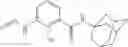
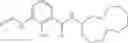


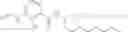


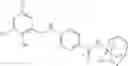


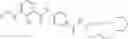


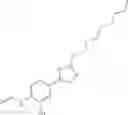

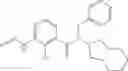


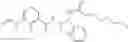






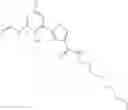


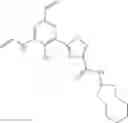

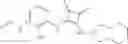


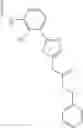


Sources:
- United States Patent and Trademark Office - verify current appl. status at the USPTO↗
Similar patent applications:
Recent applications in this class:
- » 20240400579 2024-12-05
SPIROCYCLIC MODULATORS OF CHOLESTEROL BIOSYNTHESIS AND THEIR USE FOR PROMOTING REMYELINATION - » 20240391930 2024-11-28
SPIROCYCLIC BICYCLIC MODULATORS OF CHOLESTEROL BIOSYNTHESIS AND THEIR USE FOR PROMOTING REMYELINATION - » 20230073362 2023-03-09
METHODS FOR THE PREPARATION OF 1,3-BENZODIOXOLE HETEROCYCLIC COMPOUNDS - » 20230002406 2023-01-05
Imino sulfanone inhibitors of ENPP1 - » 20220162227 2022-05-26
Methods for the preparation of 1,3-benzodioxole heterocyclic compounds - » 20210300940 2021-09-30
TLR7/8 ANTAGONISTS AND USES THEREOF - » 20210277017 2021-09-09
Thioxanthone Derivatives, Composition Comprising the Same and Pattern Forming Method Comprising Said Composition - » 20210147440 2021-05-20
Methods for the preparation of 1,3-benzodioxole heterocyclic compounds - » 20200354375 2020-11-12
Quinoxaline derivatives as adenosine receptor antagonists - » 20200262842 2020-08-20
Methods for the preparation of 1,3-benzodioxole heterocyclic compounds