Cathode active material
US20150236348A1
2015-08-20
14/621,698
2015-02-13
✅ Patent granted
US 9,466,835 B2
2016-10-11
-
-
Tanisha Diggs
Rankin, Hill & Clark LLP
2035-02-13
Abstract:
A cathode active material is provided which has a charge and discharge capacity larger than that of FeF3 when used in a non-aqueous electrolyte secondary battery. The cathode active material for use in secondary batteries with a non-aqueous electrolyte includes an amorphous metal fluoride represented by a general formula Fe(1−x−ny)NaxMyF(3−2(x+ny)), wherein M is a metal element selected from a group consisting of Co, Ni, Cu, Mg, Al, Zn, and Sn, n represents an oxidation number of the metal element M, 0<x≦0.4, and 0≦y≦0.1.
Inventors:
- Yuji ISOGAI 32 🇯🇵 Saitama, Japan
- Akihiro Yoshizawa 10 🇯🇵 Saitama, Japan
- Shintaro Aoyagi 22 🇯🇵 Saitama, Japan
Assignee:
- HONDA MOTOR CO., LTD. 20,747 🇯🇵 Tokyo, Japan
Applicant:
Interested in similar patents?
Get notified when new applications in this technology area are published.
Classification:
H01M4/582 » CPC main
Electrodes; Electrodes composed of, or comprising, active material; Selection of substances as active materials, active masses, active liquids of inorganic compounds other than oxides or hydroxides, e.g. sulfides, selenides, tellurides, halogenides or LiCoF; of polyanionic structures, e.g. phosphates, silicates or borates Halogenides
H01M4/58 IPC
Electrodes; Electrodes composed of, or comprising, active material; Selection of substances as active materials, active masses, active liquids of inorganic compounds other than oxides or hydroxides, e.g. sulfides, selenides, tellurides, halogenides or LiCoF; of polyanionic structures, e.g. phosphates, silicates or borates
C01G49/009 » CPC further
Compounds of iron Compounds containing, besides iron, two or more other elements, with the exception of oxygen or hydrogen
H01M4/388 » CPC further
Electrodes; Electrodes composed of, or comprising, active material; Selection of substances as active materials, active masses, active liquids of elements or alloys Halogens
C01P2002/02 » CPC further
Crystal-structural characteristics Amorphous compounds
C01B7/20 » CPC further
Halogens; Halogen acids; Fluorine; Hydrogen fluoride Fluorine
C01G49/00 IPC
Compounds of iron
C01G49/0027 » CPC further
Compounds of iron; Mixed oxides or hydroxides, containing one alkali metal
C01G51/006 » CPC further
Compounds of cobalt Compounds containing, besides cobalt, two or more other elements, with the exception of oxygen or hydrogen
C01G53/006 » CPC further
Compounds of nickel Compounds containing, besides nickel, two or more other elements, with the exception of oxygen or hydrogen
C01P2002/72 » CPC further
Crystal-structural characteristics defined by measured X-ray, neutron or electron diffraction data by d-values or two theta-values, e.g. as X-ray diagram
C01P2006/40 » CPC further
Physical properties of inorganic compounds Electric properties
C01B9/08 » CPC further
General methods of preparing halides Fluorides
H01M10/054 » CPC further
Secondary cells; Manufacture thereof; Accumulators with non-aqueous electrolyte Accumulators with insertion or intercalation of metals other than lithium, e.g. with magnesium or aluminium
C01G51/00 IPC
Compounds of cobalt
C01G53/00 IPC
Compounds of nickel
H01M4/136 » CPC further
Electrodes; Electrodes composed of, or comprising, active material; Electrodes for accumulators with non-aqueous electrolyte, e.g. for lithium-accumulators; Processes of manufacture thereof Electrodes based on inorganic compounds other than oxides or hydroxides, e.g. sulfides, selenides, tellurides, halogenides or LiCoFy
H01M4/38 IPC
Electrodes; Electrodes composed of, or comprising, active material; Selection of substances as active materials, active masses, active liquids of elements or alloys
H01M10/052 » CPC further
Secondary cells; Manufacture thereof; Accumulators with non-aqueous electrolyte Li-accumulators
Description
BACKGROUND OF THE INVENTION
1. Field of the Invention
The present invention relates to a cathode active material for non-aqueous electrolyte rechargeable secondary batteries.
2. Description of the Related Art
Metal fluorides represented by a general formula MF3, for example, are known to be used as cathode active materials for non-aqueous electrolyte rechargeable secondary batteries which are used for driving power sources of electric vehicles. (For example, refer to Japanese Patent Laid-Open No. 2008-130265.)
M in the general formula MF3 is one type of a metal element selected from the group consisting of Fe, V, Ti, Co, and Mn. The metal fluorides represented by the general formula MF3 are known to have a high theoretical energy density (reversible capacity). For example, a non-aqueous electrolyte secondary battery containing FeF3 as a cathode active material and Li as an anode active material is considered to have a theoretical energy density of about 240 mAh/g.
SUMMARY OF THE INVENTION
Since the electric vehicle requires a longer travel distance per charge of the non-aqueous electrolyte secondary battery, it is desired that the cathode active materials for the non-aqueous electrolyte secondary battery have a higher charge and discharge capacity.
In view of the circumstances, the object of the present invention is to provide a cathode active material for use in non-aqueous electrolyte secondary batteries, having a charge and discharge capacity higher than that of FeF3.
In order to achieve such an object, the cathode active material of the present invention, which is for use in secondary batteries with an non-aqueous electrolyte, includes an amorphous metal fluoride represented by a general formula Fe(1−x−ny)NaxMyF(3−2(x+ny)), wherein M is one type of a metal element selected from the group consisting of Co, Ni, Cu, Mg, Al, Zn, and Sn, n represents an oxidation number of the metal element M, 0<x≦0.4, and 0≦y≦0.1.
Since the cathode active material of the present invention includes the amorphous metal fluoride, a charge and discharge capacity higher than that of FeF3 can be achieved when used as cathode active material for non-aqueous electrolyte secondary batteries. The reasons for that may be considered as follows, though not being clear.
First of all, the conventionally known FeF3 is a crystalline material having FeF6 octahedral structures in which an Fe ion is surrounded by six F ions, and forms a three-dimensional network in which the F ions share the apex. The charge and discharge reaction of the FeF3 includes an intercalation reaction region and a conversion reaction region.
For example, in the case of using Li ions as anode (negative electrode) active material, the intercalation reaction region includes a reaction region where the Li ions are intercalated into the FeF3 crystal and a reaction region where the Li ions are desorbed. In the intercalation reaction region, the FeF3 allows a Li ion to be intercalated at any of the apex positions of a cube including one FeF6 octahedral structure, so that LixFeF3 having a perovskite structure is formed.
On the other hand, the conversion region includes a reaction region where LixFeF3 with intercalated Li ions decompose into LiF and Fe and a reaction region where LixFeF3 is reproduced from LiF and Fe. The reaction of LixFeF3 decomposing into LiF and Fe includes breakage of a bond between an Fe ion and an F ion and formation of a bond between a Li ion and an F ion, which is an anion (F ion) exchange reaction with metal ions (Fe ion and Li ion). In the crystalline material FeF3, the activation energy for breaking the bond between an Fe ion and an F ion is high, so that a high overpotential occurs in the anion exchange reaction.
In contrast, the metal fluorides represented by the general formula Fe(1−x−ny)NaxMyF(3−2(x+ny)) of the present invention contain Na ions having an ion radius larger than that of Fe in the crystal structure of FeF3, which replaces a part of Fe. As a result, the metal fluorides of the present invention have a larger spacing between the neighboring octahedral structures compared with the crystal structure of FeF3, and takes an amorphous structure.
Consequently, the metal fluorides of the present invention allows the spacing through which Li ions are intercalated or desorbed to be enlarged due to the enlarged spacing between the neighboring octahedral structures, so that Li ions tend to be easily intercalated or desorbed in the intercalation reaction region. It is therefore conceivable that the metal fluorides of the present invention enable an unused region where no Li ion is intercalated in the case of crystalline FeF3 to be used for intercalation and desorption of Li ions, achieving an increased charge and discharge capacity.
In the second place, the metal fluorides of the present invention allow the region available for intercalation and desorption of Li ions to be enlarged in the conversion reaction region along with enlargement of the region available for intercalation and desorption of Li ions in the intercalation reaction region.
In addition, since the metal fluorides of the present invention are amorphous, the bond energy between an Fe ion and an F ion is smaller than that of crystalline FeF3. As a result, it is conceivable that the overpotential occurring during the anion exchange reaction in the conversion reaction region can be reduced.
Furthermore, since the metal fluorides of the present invention including one type of a metal element M selected from a group consisting of Co, Ni, Cu, Mg, Al, Zn, and Sn have a higher electric conductivity than that of FeF3, it is conceivable that the electromotive force in the conversion reaction region increases.
From the reasons described above, it is conceivable that the metal fluorides of the present invention have an increased charge and discharge capacity.
Alternatively, the metal fluorides of the present invention may be metal fluorides not including the one type of metal element M selected from the group consisting of Co, Ni, Cu, Mg, Al, Zn, and Sn in the general formula, which may be represented by a general formula represented by Fe(1−x)NaxF(3−2x). In this case, x may be in the numeral range of 0<x≦0.4, preferably 0<x≦0.05, enabling the charge and discharge capacity of the metal fluorides of the present invention to be particularly increased.
The M in the general formula of the metal fluorides of the present invention is preferably a metal element selected from the group consisting of Co, Cu, and Sn. Consequently, the charge and discharge capacity of the metal fluorides of the present invention can be particularly increased.
BRIEF DESCRIPTION OF THE DRAWINGS
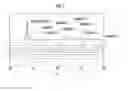
FIG. 1 is a graph showing X-ray diffraction spectra of metal fluorides in Examples 1, and 7 to 13 of the present invention;
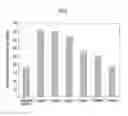
FIG. 2 is a graph showing discharge capacities of metal fluorides in Examples 1 to 6 of the present invention; and
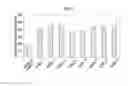
FIG. 3 is a graph showing discharge capacities of metal fluorides in Examples 7 to 13 of the present invention;
DETAILED DESCRIPTION OF THE PREFERRED EMBODIMENTS
Embodiments of the present invention will now be further described in detail by referring to the accompanying drawings.
The cathode (positive electrode) active material of the present embodiment includes an amorphous metal fluoride which is obtained by substituting a part of Fe in FeF3 by another metal element, and represented by a general formula Fe(1−x−ny)NaxMyF(3−2(x+ny)), wherein M is one type of a metal element selected from a group consisting of Co, Ni, Cu, Mg, Al, Zn, and Sn, n represents an oxidation number of the metal element M, 0<x≦0.4, and 0≦y≦0.1.
The amorphous metal fluoride may be prepared, for example, as describe below.
First, iron chloride hexahydrate and a chloride hydrate which contains ions of metal M are dissolved in a solvent, so as to prepare a first solution. Examples of the solvent for use include ultrapure water. The total concentration of iron ions and metal M ions may be in the range of, for example, 0.01 to 0.1 mol/liter.
Subsequently, NaOH is dissolved in a solvent, so as to prepare a second solution. Examples of the solvent for use include ultrapure water. On this occasion, the concentration of Na ions may be in the range of, for example, 0.01 to 0.1 mol/liter.
Subsequently, the second solution is slowly dripped into the first solution little by little to cause a reaction. During dripping of the second solution into the first solution, the pH of the reaction liquid is shifted to the alkaline side, so that Fe(1−x−ny)NaxMy(OH)3 can be coprecipitated as an intermediate. After completion of dripping of the second solution into the first solution, the reaction liquid is agitated at room temperature (25° C.) for a period in the range of 6 to 12 hours. The precipitate is then filtered under reduced pressure, so that the intermediate is obtained as a product.
Subsequently, the obtained product is dispersed in ethanol, methanol, or ultrapure water once again, and agitated. The product is then washed through filtration under reduced pressure, so that impurities are removed. The washing may be performed one to three times as needed, so that a Na content in the obtained product can be controlled by the type of solvent and the number of times of washing.
Subsequently, the obtained product is dried under reduced pressure atmosphere kept at a temperature in the range of 70 to 90° C. for a time period in the range of 8 to 24 hours, so that the powder of Fe(1−x−ny)NaxMy(OH)3 can be obtained as an intermediate.
Subsequently, onto the intermediate powder in an amount in the range of 10 to 500 g, 10 to 3000 milliliter of HF aqueous solution is slowly dripped with agitation for a reaction. The concentration of the HF aqueous solution may be, for example, in the range of 10 to 50 mass %. After completion of dripping of the HF aqueous solution, the reaction liquid is agitated at room temperature (25° C.) for a time period in the range of 3 to 10 hours, and further agitated on an oil bath at a temperature of 75° C. for a time period of 5 to 12 hours.
After completion of the agitation, the precipitate is separated with a centrifugal machine. The obtained precipitate is dried, for example, by being held on a hot plate heated at a temperature of 50° C. for 8 hours, so that the powder of Fe(1−x−ny)NaxMyF(3−2(x+ny))·3H2O can be obtained. Subsequently, the obtained powder of Fe(1−x−ny)NaxMyF(3−2(x+ny))·3H2O is kept and baked under an inert atmosphere at a temperature in the range of 160 to 500° C. for a time period of 0.5 to 24 hours, so that the powder of Fe(1−x−ny)NaxMyF(3−2(x+ny)) can be obtained.
In the case of y=0 in the general formula Fe(1−x−ny)NaxMyF(3−2(x+ny)), metal fluorides including no metal element M, represented by a general formula Fe(1−x)NaxF(3−2x), can be obtained by exactly the same procedure as described above, except that no chloride hydrate which contains ions of metal M is dissolved in the first solution.
Examples and Comparative Examples are shown in the following.
Example 1
First, iron chloride hexahydrate was dissolved in ultrapure water, so as to prepare a first solution with an iron ion concentration of 0.1 mol/liter. Subsequently, NaOH was dissolved in ultrapure water, so as to prepare a second solution with a Na ion concentration of 0.1 mol/liter.
Subsequently, 458 g of the second solution was slowly dripped into 169 g of the first solution little by little in 3 hours to cause a reaction. After completion of dripping of the second solution into the first solution, the reaction liquid was agitated at room temperature (25° C.) for a time period of 12 hours. The precipitate was then filtered under reduced pressure, so that a product was obtained.
Subsequently, the obtained product was dispersed in ultrapure water once again. The product was washed through filtration under reduced pressure, so that impurities were removed. The washing was repeated two times.
Subsequently, the obtained product was dried under reduced pressure atmosphere kept at a temperature of 80° C. for 12 hours, so that 15 g of the powder of Fe(1−x)Nax(OH)3 was obtained as an intermediate.
Subsequently, onto 15 g of the intermediate powder, 100 milliliters of 40 mass % HF aqueous solution was slowly dripped with agitation for a reaction. After completion of dripping of the HF aqueous solution, the reaction liquid was agitated at room temperature (25° C.) for 6 hours, and further agitated on an oil bath at a temperature of 75° C. for 12 hours.
After completion of the agitation, the precipitate was separated with a centrifugal machine. The obtained precipitate was kept and dried on a hot plate heated at a temperature of 50° C. for 8 hours, so that the powder of Fe(1−x)NaxF(3−2x)·3H2O was obtained.
Subsequently, the obtained powder of Fe(1−x)NaxF(3−2x)·3H2O was kept and baked under Ar atmosphere at a temperature of 350° C. for 12 hours in a tubular furnace, so that the powder of Fe(1−x)NaxF(3−2x) was obtained.
Subsequently, the X-ray diffraction (XDR) pattern of the powder of Fe(1−x)NaxF(3−2x) obtained in the present Example was measured and the amorphous state was confirmed. The results are shown in FIG. 1.
Furthermore, the composition of Fe(1−x)NaxF(3−2x) obtained in the present Example was analyzed to be Fe0.987Na0.013F2.97 (x=0.013) by an inductively coupled plasma atomic emission spectrophotometer (IPS-AES).
Subsequently, the powder of Fe0.987Na0.013F2.97 obtained in the present Example and Ketjenblack as a conductive auxiliary agent (made by Lion Corporation, trade name: KETJENBLACK EC600JD) were mixed at a mass ratio of 85:15. The obtained mixture was pulverized with a planetary ball mill at 360 rpm for 1 hour, so that a composite material including the powder of Fe0.987Na0.013F2.97 as cathode active material and the conductive auxiliary agent.
Subsequently, 0.111 g of polyvinylidene fluoride (PVDF) and 1.28 g of N-methyl-2-pyrrolidone (NMP) were added to 1 g of the composite material, and mixed by a planetary centrifugal mixer so as to produce a slurry. The obtained slurry was applied to a current collector made of aluminum foil, which was dried at a temperature of 150° C. for 12 hours, and then pressed with a roll press. A cathode having a diameter of 14 mm was thus formed.
Subsequently, a Li foil having a diameter of 15 mm and a thickness of 0.1 mm was stuck onto a current collector composed of an SUS plate having a diameter of 15 mm and a thickness of 0.3 mm to which an SUS mesh (100 mesh) having a diameter of 15 mm was welded, so that an anode was produced.
Subsequently, the cathode and the anode were laminated through a separator made of a polypropylene fine porous film having a diameter of 17 mm and a thickness of 0.25 mm. Subsequently, the separator was impregnated with a non-aqueous electrolyte, so that a coin-shaped non-aqueous electrolyte secondary battery was obtained. The non-aqueous electrolyte for use was a solution of LiPF6 as supporting salt dissolved in a mixed solvent composed of a mixture of ethylene carbonate and diethyl carbonate with a mass ratio of 7:3, at a concentration of 1 mol/liter.
Subsequently, the charge and discharge characteristics of the coin-shaped non-aqueous electrolyte secondary battery obtained in the present Example were measured. The measurement was performed under atmosphere at room temperature (25° C.), with a voltage relative to Li in the range of 1.5 to 4.5 V, and a current of 0.6 mA. This corresponds to 0.03 C (discharge time: 33.3 hours) in terms of C-rate. Subsequently, the discharge capacity was obtained from the discharge curve for the second cycle after the start of the charge/discharge testing among the obtained charge/discharge curves. The results are shown in FIG. 2.
Example 2
In the present Example, the powder of Fe(1−x)NaxF(3−2x) was obtained exactly in the same way as in Example 1, except that the reaction product between the first solution and the second solution was washed with methanol instead of ultrapure water.
Subsequently, the composition of Fe(1−x)NaxF(3−2x) obtained in the present Example was analyzed to be Fe0.977Na0.023F2.95 (x=0.023) by the inductively coupled plasma atomic emission spectrophotometer (IPS-AES).
Subsequently, a coin-shaped non-aqueous electrolyte secondary battery was obtained exactly in the same way as in Example 1, except that the powder of Fe0.977Na0.023F2.95 obtained in the present Example was used.
Subsequently, the charge and discharge characteristics were measured exactly in the same way as in Example 1, except that the coin-shaped non-aqueous electrolyte secondary battery obtained in the present Example was used. The results are shown in FIG. 2.
Example 3
In the present Example, the powder of Fe(1−x)NaxF(3−2x) was obtained exactly in the same way as in Example 2, except that the number of times of washing of the reaction product between the first solution and the second solution was one.
Subsequently, the composition of Fe(1−x)NaxF(3−2x) obtained in the present Example was analyzed to be Fe0.952Na0.048F2.9 (x=0.048) by the inductively coupled plasma atomic emission spectrophotometer (IPS-AES).
Subsequently, a coin-shaped non-aqueous electrolyte secondary battery was obtained exactly in the same way as in Example 1, except that the powder of Fe0.952Na0.048F2.9 obtained in the present Example was used.
Subsequently, the charge and discharge characteristics were measured exactly in the same way as in Example 1, except that the coin-shaped non-aqueous electrolyte secondary battery obtained in the present Example was used. The results are shown in FIG. 2.
Example 4
In the present Example, the powder of Fe(1−x)NaxF(3−2x) was obtained exactly in the same way as in Example 1, except that the reaction product between the first solution and the second solution was washed with ethanol instead of ultrapure water.
Subsequently, the composition of Fe(1−x)NaxF(3−2x) obtained in the present Example was analyzed to be Fe0.922Na0.078F2.84 (x=0.078) by the inductively coupled plasma atomic emission spectrophotometer (IPS-AES).
Subsequently, a coin-shaped non-aqueous electrolyte secondary battery was obtained exactly in the same way as in Example 1, except that the powder of Fe0.922Na0.078F2.84 obtained in the present Example was used.
Subsequently, the charge and discharge characteristics were measured exactly in the same way as in Example 1, except that the coin-shaped non-aqueous electrolyte secondary battery obtained in the present Example was used. The results are shown in FIG. 2.
Example 5
In the present Example, the powder of Fe(1−x)NaxF(3−2x) was obtained exactly in the same way as in Example 4, except that the number of times of washing of the reaction product between the first solution and the second solution was one.
Subsequently, the composition of Fe(1−x)NaxF(3−2x) obtained in the present Example was analyzed to be Fe0.868Na0.132F2.74 (x=0.132) by the inductively coupled plasma atomic emission spectrophotometer (IPS-AES).
Subsequently, a coin-shaped non-aqueous electrolyte secondary battery was obtained exactly in the same way as in Example 1, except that the powder of Fe0.868Na0.132F2.74 obtained in the present Example was used.
Subsequently, the charge and discharge characteristics were measured exactly in the same way as in Example 1, except that the coin-shaped non-aqueous electrolyte secondary battery obtained in the present Example was used. The results are shown in FIG. 2.
Example 6
In the present Example, the reaction product between the first solution and the second solution was washed with ethanol instead of ultrapure water, and the filtrate obtained by filtration under reduced pressure after washing was evaporated to dryness, so that a solid precipitate was obtained.
Subsequently, the powder of Fe(1−x)NaxF(3−2x) was obtained exactly in the same way as in Example 1, except that the solid precipitate was used instead of the reaction product between the first solution and the second solution after washing.
Subsequently, the composition of Fe(1−x)NaxF(3−2x) obtained in the present Example was analyzed to be Fe0.6Na0.4F2.2 (x=0.4) by the inductively coupled plasma atomic emission spectrophotometer (IPS-AES).
Subsequently, a coin-shaped non-aqueous electrolyte secondary battery was obtained exactly in the same way as in Example 1, except that the powder of Fe0.6Na0.4F2.2 obtained in the present Example was used.
Subsequently, the charge and discharge characteristics were measured exactly in the same way as in Example 1, except that the coin-shaped non-aqueous electrolyte secondary battery obtained in the present Example was used. The results are shown in FIG. 2.
Example 7
In the present Example, the powder of Fe(1−x−2y)NaxCuyF(3−2(x+2y)) was obtained exactly in the same way as in Example 1, except that iron chloride hexahydrate and copper chloride hexahydrate were dissolved in ultrapure water so as to prepare a first solution containing iron ions at a concentration of 0.1 mol/liter and copper ions in an amount of 5 atom % relative to iron ions.
Subsequently, the X-ray diffraction (XRD) pattern of the powder of Fe(1−x−2y)NaxCuyF(3−2(x+2y)) obtained in the present Example was measured and the amorphous state was confirmed. The results are shown in FIG. 1.
Subsequently, the composition of Fe(1−x−2y)NaxCuyF(3−2(x+2y)) obtained in the present Example was analyzed to be Fe0.914Na0.022Cu0.032F2.83 (x=0.022, y=0.032) by the inductively coupled plasma atomic emission spectrophotometer (IPS-AES).
Subsequently, a coin-shaped non-aqueous electrolyte secondary battery was obtained exactly in the same way as in Example 1, except that the powder of Fe0.914Na0.022Cu0.032F2.83 obtained in the present Example was used.
Subsequently, the charge and discharge characteristics were measured exactly in the same way as in Example 1, except that the coin-shaped non-aqueous electrolyte secondary battery obtained in the present Example was used. The results are shown in FIG. 3.
Example 8
In the present Example, the powder of Fe(1−x−2y)NaxCoyF(3−2(x+2y)) was obtained exactly in the same way as in Example 7, except that copper chloride hexahydrate was replaced with cobalt chloride hexahydrate.
Subsequently, the X-ray diffraction (XRD) pattern of the powder of Fe(1−x−2y)NaxCoyF(3−2(x+2y)) obtained in the present Example was measured and the amorphous state was confirmed. The results are shown in FIG. 1.
Subsequently, the composition of Fe(1−x−2y)NaxCoyF(3−2(x+2y)) obtained in the present Example was analyzed to be Fe0.883Na0.011Co0.053F2.77 (x=0.011, y=0.053) by the inductively coupled plasma atomic emission spectrophotometer (IPS-AES).
Subsequently, a coin-shaped non-aqueous electrolyte secondary battery was obtained exactly in the same way as in Example 1, except that the powder of Fe0.883Na0.011Co0.053F2.77 obtained in the present Example was used.
Subsequently, the charge and discharge characteristics were measured exactly in the same way as in Example 1, except that the coin-shaped non-aqueous electrolyte secondary battery obtained in the present Example was used. The results are shown in FIG. 3.
Example 9
In the present Example, the powder of Fe(1−x−y)NaxMgyF(3−2(x+y)) was obtained exactly in the same way as in Example 7, except that copper chloride hexahydrate was replaced with magnesium chloride hexahydrate.
Subsequently, the X-ray diffraction (XRD) pattern of the powder of Fe(1−x−y)NaxMgyF(3−2(x+y)) obtained in the present Example was measured and the amorphous state was confirmed. The results are shown in FIG. 1.
Subsequently, the composition of Fe(1−x−y)NaxMgyF(3−2(x+y)) obtained in the present Example was analyzed to be Fe0.800Na0.129Mg0.071F2.6 (x=0.129, y=0.071) by the inductively coupled plasma atomic emission spectrophotometer (IPS-AES).
Subsequently, a coin-shaped non-aqueous electrolyte secondary battery was obtained exactly in the same way as in Example 1, except that the powder of Fe0.800Na0.129Mg0.071F2.6 obtained in the present Example was used.
Subsequently, the charge and discharge characteristics were measured exactly in the same way as in Example 1, except that the coin-shaped non-aqueous electrolyte secondary battery obtained in the present Example was used. The results are shown in FIG. 3.
Example 10
In the present Example, the powder of Fe(1−x−3y)NaxAlyF(3−2(x+3y)) was obtained exactly in the same way as in Example 1, except that copper chloride hexahydrate was replaced with aluminum chloride hexahydrate.
Subsequently, the X-ray diffraction (XRD) pattern of the powder of Fe(1−x−3y)NaxAlyF(3−2(x+3y)) obtained in the present Example was measured and the amorphous state was confirmed. The results are shown in FIG. 1.
Subsequently, the composition of Fe(1−x−3y)NaxAlyF(3−2(x+3y)) obtained in the present Example was analyzed to be Fe0.742Na0.150Al0.036F2.484 (x=0.150, y=0.036) by the inductively coupled plasma atomic emission spectrophotometer (IPS-AES).
Subsequently, a coin-shaped non-aqueous electrolyte secondary battery was obtained exactly in the same way as in Example 1, except that the powder of Fe0.742Na0.150Al0.036F2.484 obtained in the present Example was used.
Subsequently, the charge and discharge characteristics were measured exactly in the same way as in Example 1, except that the coin-shaped non-aqueous electrolyte secondary battery obtained in the present Example was used. The results are shown in FIG. 3.
Example 11
In the present Example, the powder of Fe(1−x−2y)NaxNiyF(3−2(x+2y)) was obtained exactly in the same way as in Example 7, except that copper chloride hexahydrate was replaced with nickel chloride hexahydrate.
Subsequently, the X-ray diffraction (XRD) pattern of the powder of Fe(1−x−2y)NaxNiyF(3−2(x+2y)) obtained in the present Example was measured and the amorphous state was confirmed. The results are shown in FIG. 1.
Subsequently, the composition of Fe(1−x−2y)NaxNiyF(3−2(x+2y)) obtained in the present Example was analyzed to be Fe0.833Na0.043Ni0.062F2.67 (x=0.043, y=0.062) by the inductively coupled plasma atomic emission spectrophotometer (IPS-AES).
Subsequently, a coin-shaped non-aqueous electrolyte secondary battery was obtained exactly in the same way as in Example 1, except that the powder of Fe0.833Na0.043Ni0.062F2.67 obtained in the present Example was used.
Subsequently, the charge and discharge characteristics were measured exactly in the same way as in Example 1, except that the coin-shaped non-aqueous electrolyte secondary battery obtained in the present Example was used. The results are shown in FIG. 3.
Example 12
In the present Example, the powder of Fe(1−x−2y)NaxZnyF(3−2(x+2y)) was obtained exactly in the same way as in Example 7, except that copper chloride hexahydrate was replaced with zinc chloride hydrate.
Subsequently, the X-ray diffraction (XRD) pattern of the powder of Fe(1−x−2y)NaxZnyF(3−2(x+2y)) obtained in the present Example was measured and the amorphous state was confirmed. The results are shown in FIG. 1.
Subsequently, the composition of Fe(1−x−2y)NaxZnyF(3−2(x+2y)) obtained in the present Example was analyzed to be Fe0.890Na0.07Zn0.020F2.78 (x=0.007, y=0.020) by the inductively coupled plasma atomic emission spectrophotometer (IPS-AES).
Subsequently, a coin-shaped non-aqueous electrolyte secondary battery was obtained exactly in the same way as in Example 1, except that the powder of Fe0.890Na0.07Zn0.020F2.78 obtained in the present Example was used.
Subsequently, the charge and discharge characteristics were measured exactly in the same way as in Example 1, except that the coin-shaped non-aqueous electrolyte secondary battery obtained in the present Example was used. The results are shown in FIG. 3.
Example 13
In the present Example, the powder of Fe(1−x−2y)NaxSnyF(3−2(x+2y)) was obtained exactly in the same way as in Example 7, except that copper chloride hexahydrate was replaced with tin chloride dihydrate.
Subsequently, the X-ray diffraction (XRD) pattern of the powder of Fe(1−x−2y)NaxSnyF(3−2(x+2y)) obtained in the present Example was measured and the amorphous state was confirmed. The results are shown in FIG. 1.
Subsequently, the composition of Fe(1−x−2y)NaxSnyF(3−2(x+2y)) obtained in the present Example was analyzed to be Fe0.938Na0.42Sn0.010F2.88 (x=0.042, y=0.010) by the inductively coupled plasma atomic emission spectrophotometer (IPS-AES).
Subsequently, a coin-shaped non-aqueous electrolyte secondary battery was obtained exactly in the same way as in Example 1, except that the powder of Fe0.938Na0.42Sn0.010F2.88 obtained in the present Example was used.
Subsequently, the charge and discharge characteristics were measured exactly in the same way as in Example 1, except that the coin-shaped non-aqueous electrolyte secondary battery obtained in the present Example was used. The results are shown in FIG. 3.
Comparative Example 1
In the present Comparative Example, the X-ray diffraction (XRD) pattern of the powder of FeF3 (made by Sigma-Aldrich Corporation) was first measured. The results are shown in FIG. 1.
Subsequently, a coin-shaped non-aqueous electrolyte secondary battery was obtained exactly in the same way as in Example 1, except that the powder of FeF3 was used.
Subsequently, the charge and discharge characteristics were measured exactly in the same way as in Example 1, except that the coin-shaped non-aqueous electrolyte secondary battery obtained in the present Comparative Example was used. The results are shown in FIGS. 2 and 3.
From FIG. 1, it is evident that the powder of FeF3 is in a crystalline state, having a sharp peak at 2θ=23.9°; while it is evident that any of the metal fluorides in Examples 1, and 7 to 13 is in an amorphous state, having a broad peak at 2θ=23.9°.
From FIG. 2, it is evident that the amorphous metal fluorides represented by a general formula Fe(1−x)NaxF(3−2x) (0<x≦0.4) in Examples 1 to 6 have a discharge capacity larger than that of FeF3 powder, as a cathode active material. It is also evident that in the case of 0<x≦0.05 for the general formula Fe(1−x)NaxF(3−2x) (Examples 1 to 3), a particularly large discharge capacity is achieved.
From FIG. 3, it is also evident that the amorphous metal fluorides represented by a general formula Fe(1−x−ny)NaxMyF3−2(x+ny) (wherein M represents a metal element selected from the group consisting of Co, Ni, Cu, Mg, Al, Zn, and Sn, n represents an oxidation number of the metal element M, 0<x≦0.150, and 0≦y≦0.071) in Examples 7 to 13 have a discharge capacity larger than that of FeF3 powder, as a cathode active material. It is also evident that in the case of the metal element M of Cu (Example 7), Co (Example 8), or Sn (Example 13) in a general formula Fe(1−x−ny)NaxMyF3−2(x+ny), a particularly large discharge capacity is achieved.
Claims
What is claimed is:1. A cathode active material for use in secondary batteries with a non-aqueous electrolyte comprising:
an amorphous metal fluoride represented by a general formula Fe(1−x−ny)NaxMyF(3−2(x+ny)), wherein M is a metal element selected from a group consisting of Co, Ni, Cu, Mg, Al, Zn, and Sn, n represents an oxidation number of the metal element M, 0<x≦0.4, and 0≦y≦0.1.
2. The cathode active material according to claim 1, wherein the amorphous metal fluoride is represented by a general formula Fe(1−x)NaxF(3−2x), wherein 0<x≦0.05.
3. The cathode active material according to claim 1, wherein the M is a metal element selected from a group consisting of Co, Cu, and Sn.
Images & Drawings included:
Sources:
- United States Patent and Trademark Office - verify current appl. status at the USPTO↗
Similar patent applications:
- » 20150284259
Composite precursor of cathode active material, cathode active material, cathode and lithium battery containing the cathode active material, and method of preparing composite precursor - » 20190074513
Cathode active material precursor, cathode active material formed therefrom, method of preparing the cathode active material, and cathode and lithium battery each including the cathode active material - » 20140308572
Cathode active material, cathode active material layer, all solid state battery and producing method for cathode active material - » 20150053890
Method of preparing cathode active material precursor for lithium rechargeable battery, cathode active material precursor for lithium rechargeable battery prepared thereby, and cathode active material formed using the cathode active material precursor - » 20140356712
Precursor of a cathode active material for a lithium secondary battery, cathode active material, method for manufacturing the cathode active material, and lithium secondary battery including the cathode active material - » 20110151325
Cathode active material, cathode including the cathode active material, lithium battery including the cathode, and method of preparing the cathode active material - » 20150287990
Method of preparing composite cathode active material, composite cathode active material, and cathode and lithium battery containing the composite cathode active material - » 20080152995
Cathode active material, cathode material having the cathode active material, secondary aqueous lithium-ion battery having the cathode material, and method for preparing the cathode active material - » 20200136132
Composite cathode active material, cathode and lithium battery each containing composite cathode active material, and preparation method of cathode active material - » 20240097117
COMPOSITE CATHODE ACTIVE MATERIAL, CATHODE AND LITHIUM BATTERY EACH CONTAINING COMPOSITE CATHODE ACTIVE MATERIAL, AND PREPARATION METHOD OF CATHODE ACTIVE MATERIAL
Recent applications in this class:
- » 20250286059 2025-09-11
POSITIVE ELECTRODE PLATE, BATTERY, AND ELECTRICAL DEVICE - » 20250286058 2025-09-11
CATHODE MATERIALS FOR ALKALI METAL-ION BATTERIES AND METHODS OF MAKING THE SAME - » 20250273673 2025-08-28
HALOGENATED ALL-SOLID-STATE BATTERY MATERIAL AND PREPARATION METHOD AND APPLICATION THEREOF - » 20250158057 2025-05-15
CATHODE HAVING DOPED METAL FLUORIDE CORE-SHELL PARTICLE AND BATTERIES COMPRISING THE SAME - » 20250140851 2025-05-01
POSITIVE ELECTRODE ACTIVE MATERIAL AND LITHIUM ION SECONDARY BATTERY - » 20250054977 2025-02-13
LITHIUM ION-CONDUCTING SOLID MATERIALS - » 20250015286 2025-01-09
OXYHALIDE MATERIAL, BATTERY, AND BATTERY SYSTEM - » 20250015285 2025-01-09
Cathode active material and fluoride ion battery - » 20240363855 2024-10-31
ELECTRODE MIXTURE AND LITHIUM-ION BATTERY - » 20240332525 2024-10-03
HIGH CAPACITY, HIGH ENERGY DENSITY AND HIGH POWER REVERSIBLE Li-Cl2 BATTERY SYSTEM
Recent applications for this Assignee:
- » 20250293548 2025-09-18
POWER TRANSMISSION DEVICE AND POWER RECEPTION DEVICE - » 20250289343 2025-09-18
INFORMATION PROCESSING SYSTEM, MOVING OBJECT DEVICE, AND POWER SUPPLY DEVICE - » 20250289329 2025-09-18
POWER RECEPTION DEVICE - » 20250289328 2025-09-18
POWER TRANSMISSION DEVICE AND POWER RECEPTION DEVICE - » 20250289327 2025-09-18
POWER TRANSMISSION DEVICE - » 20250286234 2025-09-11
BATTERY DEVICE - » 20250284006 2025-09-11
LIDARGRID A 3D OPACITY GRID FROM LIDAR FOR SCENE FORECASTING - » 20250282369 2025-09-11
VEHICLE - » 20250282349 2025-09-11
VEHICLE CONTROL DEVICE - » 20250278165 2025-09-04
Virtual tools for supported tele-operations