Assembly of a metal insert and a sheet of composite material, method for incorporating such an insert into such a sheet and part obtained by molding such a sheet
US20150290903A1
2015-10-15
14/443,404
2013-11-19
✅ Patent granted
US 9,925,738 B2
2018-03-27
WO; PCT/FR2013/052786; 20131119
WO; WO2014/080121; 20140530
Jeffrey A Vonch
Jacox, Meckstroth & Jenkins
2034-04-05
Abstract:
The assembly consists of at least one metal insert and one reinforcing sheet. The reinforcing sheet contains reinforcing fibers longer than or equal in length to one centimeter. The metal insert comprises protrusions shaped to traverse the sheet, passing between the reinforcing fibers, and to fold by plastic deformation, enclosing the reinforcing fibers when said protrusions are subjected to a longitudinal compression force.
Assignee:
- COMPAGNIE PLASTIC OMNIUM 132 🇫🇷 Lyons, France
Applicant:
Interested in similar patents?
Get notified when new applications in this technology area are published.
Classification:
B32B3/266 » CPC further
Layered products comprising a layer with external or internal discontinuities or unevennesses, or a layer of non-planar form ; Layered products having particular features of form characterised by a particular shape of the outline of the cross-section of a continuous layer; characterised by a layer with cavities or internal voids ; characterised by an apertured layer characterised by an apertured layer, the apertures going through the whole thickness of the layer, e.g. expanded metal, perforated layer, slit layer regular cells
B29K2105/0881 » CPC further
Condition, form or state of moulded material or of the material to be shaped containing reinforcements, fillers or inserts of continuous length, e.g. cords, rovings, mats, fabrics, strands or yarns; Prepregs unidirectional
B32B3/30 » CPC main
Layered products comprising a layer with external or internal discontinuities or unevennesses, or a layer of non-planar form ; Layered products having particular features of form characterised by a particular shape of the outline of the cross-section of a continuous layer; characterised by a layer with cavities or internal voids ; characterised by an apertured layer characterised by a layer formed with recesses or projections, e.g. hollows, grooves, protuberances, ribs
B29C65/56 » CPC further
Joining of preformed parts ; Apparatus therefor using mechanical means or mechanical connections, e.g. form-fits
B29C37/00 IPC
Component parts, details, accessories or auxiliary operations, not covered by group or
B29C65/00 IPC
Joining of preformed parts ; Apparatus therefor
B29C70/86 » CPC further
Shaping composites, i.e. plastics material comprising reinforcements, fillers or preformed parts, e.g. inserts by incorporating or moulding on preformed parts, e.g. inserts or layers, e.g. foam blocks Incorporated in coherent impregnated reinforcing layers, e.g. by winding
B29C37/0082 » CPC further
Component parts, details, accessories or auxiliary operations, not covered by group or; Measures or configurations for obtaining anchoring effects in the contact areas between layers Mechanical anchoring
B32B15/14 » CPC further
Layered products comprising a layer of metal next to a fibrous or filamentary layer
B29C66/006 » CPC further
General aspects of processes or apparatus for joining preformed parts Preventing damaging, e.g. of the parts to be joined
B32B5/26 » CPC further
Layered products characterised by the non- homogeneity or physical structure, i.e. comprising a fibrous, filamentary, particulate or foam layer; Layered products characterised by having a layer differing constitutionally or physically in different parts characterised by the presence of two or more layers which are next to each other and are fibrous, filamentary, formed of particles or foamed one layer being a fibrous or filamentary layer another layer also being fibrous or filamentary
B32B2262/062 » CPC further
Composition or structural features of fibres which form a fibrous or filamentary layer or are present as additives; Vegetal fibres Cellulose fibres, e.g. cotton
B32B7/08 » CPC further
Layered products characterised by the relation between layers; Layered products characterised by the relative orientation of features between layers, or by the relative values of a measurable parameter between layers, i.e. products comprising layers having different physical, chemical or physicochemical properties; Layered products characterised by the interconnection of layers; Interconnection of layers by mechanical means
Y10T29/49906 » CPC further
Metal working; Method of mechanical manufacture; Assembling or joining Metal deforming with nonmetallic bonding
B29C37/0085 » CPC further
Component parts, details, accessories or auxiliary operations, not covered by group or; Measures or configurations for obtaining anchoring effects in the contact areas between layers; Mechanical anchoring by means of openings in the layers
B32B3/26 IPC
Layered products comprising a layer with external or internal discontinuities or unevennesses, or a layer of non-planar form ; Layered products having particular features of form characterised by a particular shape of the outline of the cross-section of a continuous layer; characterised by a layer with cavities or internal voids ; characterised by an apertured layer
B29C70/82 » CPC further
Shaping composites, i.e. plastics material comprising reinforcements, fillers or preformed parts, e.g. inserts by incorporating or moulding on preformed parts, e.g. inserts or layers, e.g. foam blocks Forcing wires, nets or the like partially or completely into the surface of an article, e.g. by cutting and pressing
B29C70/02 IPC
Shaping composites, i.e. plastics material comprising reinforcements, fillers or preformed parts, e.g. inserts comprising combinations of reinforcements, and fillers, , incorporated in matrix material, forming one or more layers and with or without non-reinforced or non-filled layers
B29C65/561 » CPC further
Joining of preformed parts ; Apparatus therefor using mechanical means or mechanical connections, e.g. form-fits using screw-threads being integral at least to one of the parts to be joined
B29C66/034 » CPC further
General aspects of processes or apparatus for joining preformed parts; General aspects dealing with the joint area or with the area to be joined; After-treatments in the joint area Thermal after-treatments
B29C66/0324 » CPC further
General aspects of processes or apparatus for joining preformed parts; General aspects dealing with the joint area or with the area to be joined; After-treatments in the joint area; Mechanical after-treatments Reforming or reshaping the joint, e.g. folding over
B29C66/723 » CPC further
General aspects of processes or apparatus for joining preformed parts characterised by the composition, physical properties or the structure of the material of the parts to be joined; Joining with non-plastics material characterised by the structure of the material of the parts to be joined being multi-layered
B29C66/7214 » CPC further
General aspects of processes or apparatus for joining preformed parts characterised by the composition, physical properties or the structure of the material of the parts to be joined; Joining with non-plastics material characterised by the structure of the material of the parts to be joined; Fibre-reinforced materials characterised by the length of the fibres
B29C66/72141 » CPC further
General aspects of processes or apparatus for joining preformed parts characterised by the composition, physical properties or the structure of the material of the parts to be joined; Joining with non-plastics material characterised by the structure of the material of the parts to be joined; Fibre-reinforced materials characterised by the length of the fibres Fibres of continuous length
B29C66/72143 » CPC further
General aspects of processes or apparatus for joining preformed parts characterised by the composition, physical properties or the structure of the material of the parts to be joined; Joining with non-plastics material characterised by the structure of the material of the parts to be joined; Fibre-reinforced materials characterised by the length of the fibres Fibres of discontinuous lengths
B29C66/742 » CPC further
General aspects of processes or apparatus for joining preformed parts characterised by the composition, physical properties or the structure of the material of the parts to be joined; Joining with non-plastics material; Joining plastics material to non-plastics material to metals or their alloys
B29C70/023 » CPC further
Shaping composites, i.e. plastics material comprising reinforcements, fillers or preformed parts, e.g. inserts comprising combinations of reinforcements, and fillers, , incorporated in matrix material, forming one or more layers and with or without non-reinforced or non-filled layers; Combinations of fibrous reinforcement and non-fibrous material with reinforcing inserts
B29K2705/00 » CPC further
Use of metals, their alloys or their compounds, for preformed parts, e.g. for inserts
B32B5/022 » CPC further
Layered products characterised by the non- homogeneity or physical structure, i.e. comprising a fibrous, filamentary, particulate or foam layer; Layered products characterised by having a layer differing constitutionally or physically in different parts characterised by structural features of a layer Non-woven fabric
F16B5/07 » CPC further
Joining sheets or plates, e.g. panels, to one another or to strips or bars parallel to them by means of multiple interengaging protrusions on the surfaces, e.g. hooks, coils
B32B2262/101 » CPC further
Composition or structural features of fibres which form a fibrous or filamentary layer or are present as additives; Inorganic fibres Glass fibres
B32B2262/106 » CPC further
Composition or structural features of fibres which form a fibrous or filamentary layer or are present as additives; Inorganic fibres Carbon fibres, e.g. graphite fibres
B32B2305/10 » CPC further
Condition, form or state of the layers or laminate Fibres of continuous length
B32B2305/20 » CPC further
Condition, form or state of the layers or laminate; Fibres of continuous length in the form of a non-woven mat
B32B2305/28 » CPC further
Condition, form or state of the layers or laminate; Fibres of short length in the form of a mat
B32B2305/34 » CPC further
Condition, form or state of the layers or laminate Inserts
B32B2305/72 » CPC further
Condition, form or state of the layers or laminate Cured, e.g. vulcanised, cross-linked
B32B2605/00 » CPC further
Vehicles
F16B5/0096 » CPC further
Joining sheets or plates, e.g. panels, to one another or to strips or bars parallel to them by using permanent deformation
Y10T29/49924 » CPC further
Metal working; Method of mechanical manufacture; Assembling or joining; Joining by deforming of parallel side-by-side elongated members
Y10T428/2419 » CPC further
Stock material or miscellaneous articles; Structurally defined web or sheet [e.g., overall dimension, etc.] Fold at edge
Y10T428/24174 » CPC further
Stock material or miscellaneous articles; Structurally defined web or sheet [e.g., overall dimension, etc.] including sheet or component perpendicular to plane of web or sheet
Y10T428/24994 » CPC further
Stock material or miscellaneous articles; Web or sheet containing structurally defined element or component; Noninterengaged fiber-containing paper-free web or sheet which is not of specified porosity Fiber embedded in or on the surface of a polymeric matrix
Y10T428/24995 » CPC further
Stock material or miscellaneous articles; Web or sheet containing structurally defined element or component; Noninterengaged fiber-containing paper-free web or sheet which is not of specified porosity; Fiber embedded in or on the surface of a polymeric matrix Two or more layers
Y10T428/249923 » CPC further
Stock material or miscellaneous articles; Web or sheet containing structurally defined element or component Including interlaminar mechanical fastener
Y10T428/249924 » CPC further
Stock material or miscellaneous articles; Web or sheet containing structurally defined element or component Noninterengaged fiber-containing paper-free web or sheet which is not of specified porosity
Y10T428/249942 » CPC further
Stock material or miscellaneous articles; Web or sheet containing structurally defined element or component; Noninterengaged fiber-containing paper-free web or sheet which is not of specified porosity; Fiber embedded in or on the surface of a polymeric matrix Fibers are aligned substantially parallel
Y10T428/249945 » CPC further
Stock material or miscellaneous articles; Web or sheet containing structurally defined element or component; Noninterengaged fiber-containing paper-free web or sheet which is not of specified porosity; Fiber embedded in or on the surface of a polymeric matrix; Fibers are aligned substantially parallel Carbon or carbonaceous fiber
Y10T428/249946 » CPC further
Stock material or miscellaneous articles; Web or sheet containing structurally defined element or component; Noninterengaged fiber-containing paper-free web or sheet which is not of specified porosity; Fiber embedded in or on the surface of a polymeric matrix; Fibers are aligned substantially parallel Glass fiber
Y10T428/26 » CPC further
Stock material or miscellaneous articles Web or sheet containing structurally defined element or component, the element or component having a specified physical dimension
B29C70/42 » CPC further
Shaping composites, i.e. plastics material comprising reinforcements, fillers or preformed parts, e.g. inserts comprising reinforcements only, e.g. self-reinforcing plastics; Shaping operations therefor; Shaping or impregnating by compression not applied for producing articles of definite length, i.e. discrete articles
B32B15/08 » CPC further
Layered products comprising a layer of metal comprising metal as the main or only constituent of a layer, next to another layer of a of synthetic resin
F16B5/00 IPC
Joining sheets or plates, e.g. panels, to one another or to strips or bars parallel to them
B32B5/02 IPC
Layered products characterised by the non- homogeneity or physical structure, i.e. comprising a fibrous, filamentary, particulate or foam layer; Layered products characterised by having a layer differing constitutionally or physically in different parts characterised by structural features of a layer
B29C35/02 » CPC further
Heating, cooling or curing, e.g. crosslinking or vulcanising; Apparatus therefor Heating or curing, e.g. crosslinking or vulcanizing during moulding, e.g. in a mould
B32B5/28 » CPC further
Layered products characterised by the non- homogeneity or physical structure, i.e. comprising a fibrous, filamentary, particulate or foam layer; Layered products characterised by having a layer differing constitutionally or physically in different parts characterised by the presence of two or more layers which are next to each other and are fibrous, filamentary, formed of particles or foamed one layer being a fibrous or filamentary layer impregnated with or embedded in a plastic substance
B32B2305/07 » CPC further
Condition, form or state of the layers or laminate Parts immersed or impregnated in a matrix
Y10T428/24289 » CPC further
Stock material or miscellaneous articles; Structurally defined web or sheet [e.g., overall dimension, etc.] including aperture; Struck out portion type Embedded or interlocked
B29C65/72 » CPC further
Joining of preformed parts ; Apparatus therefor by combined operations or combined techniques , e.g. welding and stitching
B29C65/64 » CPC further
Joining of preformed parts ; Apparatus therefor using mechanical means or mechanical connections, e.g. form-fits Joining a non-plastics element to a plastics element, e.g. by force
B29C66/30321 » CPC further
General aspects of processes or apparatus for joining preformed parts; General aspects dealing with the joint area or with the area to be joined; Particular design of joint configurations the joint involving an anchoring effect making use of protusions or cavities belonging to at least one of the parts to be joined making use of protusions belonging to at least one of the parts to be joined
B32B2305/08 » CPC further
Condition, form or state of the layers or laminate Reinforcements
Y10T428/24322 » CPC further
Stock material or miscellaneous articles; Structurally defined web or sheet [e.g., overall dimension, etc.] including aperture Composite web or sheet
Y10T428/249951 » CPC further
Stock material or miscellaneous articles; Web or sheet containing structurally defined element or component; Noninterengaged fiber-containing paper-free web or sheet which is not of specified porosity; Fiber embedded in or on the surface of a polymeric matrix; Two or more layers Including a free metal or alloy constituent
Description
CROSS-REFERENCE TO RELATED APPLICATIONS
This application is the U.S. National Phase application of PCT Application No. PCT/FR2013/052786 filed Nov. 19, 2013, which claims priority to the French application 1261041 filed on Nov. 20, 2012, which applications are incorporated herein by reference and made a part hereof.
BACKGROUND OF THE INVENTION
1. Field of the Invention
This invention concerns the technical field of parts made of composite material.
2. Description of the Related Art
Typically, a composite material comprises a reinforcement and a matrix of thermoplastic or thermosetting resin. The reinforcement may consist of short fibers, long fibers or fiber cloth. Dry reinforcing sheets to be coated with resin are known, as well as preimpregnated sheets which can be draped directly. A composite material can be shaped in particular by an injection, compression or infusion process.
For example, an assembly of composite material composed of a thermosetting polyester resin which impregnates glass fibers (20% to 30% by weight of this reinforcement), with in particular fillers and a catalyst (hardener). This assembly may comprise a polyethylene protective film on each side.
The blank is for example molded by hot compression under pressure in a closed mold, usually by moving a movable part of the mold against a fixed part of the mold.
The difficulties that arise with these parts made of composite material are their assembly and the addition or attachment of other components of the structure of a motor vehicle.
In particular, it may be necessary to weld, screw or glue the part thereto.
SUMMARY OF THE INVENTION
The invention aims to propose a solution to this problem.
This invention relates to an assembly of a metal insert and a reinforcing sheet for a composite material, wherein:
the reinforcing sheet contains reinforcing fibers of length greater than or equal to 1 cm.
the metal insert includes protrusions shaped so as to:
traverse the reinforcing sheet in its thickness going between the fibers;
fold by plastic deformation, enclosing reinforcing fibers.
According to a first embodiment, the protrusions are teeth having a sharp generally triangular end.
The assembly may also include a barrel to generate a “passage”, the barrel may for example also be threaded to allow the part to be screwed or to add a screw component which traverses the reinforcing sheet by separating the fibers, therefore without damaging them.
Advantageously, the assembly has a protrusion or a barrel which traverses the reinforcing sheet without damaging it. “Without damaging it” is taken to mean that the protrusion or the barrel does not cut, tear or shear the reinforcing sheet.
The reinforcing sheet may comprise resin as preimpregnation or powder which covers substantially all the fibers.
According to a second embodiment, the reinforcing fibers consist of a unidirectional sheet of long fibers.
According to a third embodiment, the fibers consist of a fabric of long fibers.
According to a fourth embodiment, the fibers consist of cut fibers distributed randomly in the material. In this case, they have a length greater than 5 mm, preferably greater than 10 mm, ideally greater than 20 mm.
Advantageously, the fibers are carbon, glass or plant fibers.
The invention also relates to a method of incorporating an insert as described above in a reinforcing sheet, the reinforcing sheet having a thickness, a top wall and a bottom wall, wherein it comprises:
depositing the insert on the top wall of the reinforcing sheet;
pushing the protrusions of the insert through the thickness of the reinforcing sheet;
folding the protrusions by plastic deformation so that they are folded towards the bottom wall, enclosing the reinforcing fibers.
Advantageously, in a special implementation mode, the protrusions are folded by an axial or lateral force.
In a special implementation mode, the step of folding the protrusions is carried out in a mold for manufacturing a part made of composite material. Resin is taken to mean an organic material belonging to the family of thermosetting or thermoplastic polymers.
In another special implementation mode, the step of folding the protrusions is carried out before introducing the assembly in a mold for manufacturing a part made of composite material.
A particularly interesting application of the invention is to make interfaces on the edge of an assembly as described above or a resin part and/or in the middle of the sheet or part. The interfaces may be flat or interfaces with through screwing barrel (which traverses the part without damaging the fibers).
In particular, an assembly or part comprising such an insert may be more easily picked up by a robot by magnetization or by suction. This is highly advantageous since the magnetization and suction cannot generally be used on fiber sheets. The insert can also be used to produce a weld with another metal component.
The insert may further comprise a flat surface or a surface with projection for interfacing with another part, this surface can be either a flat surface for welding, magnetization or suction, or a surface forming a projection for attachment of the finished part.
Lastly, the invention relates to a part made of composite material obtained by shaping and polymerizing an assembly as described above.
In a particularly advantageous embodiment, the composite material part is a motor vehicle component.
These and other objects and advantages of the invention will be apparent from the following description, the accompanying drawings and the appended claims.
BRIEF DESCRIPTION OF THE ACCOMPANYING DRAWINGS
It will be easier to understand the invention on reading the attached figures, which are given purely by way of example and are not to be construed as limiting, in which:
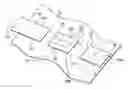
FIG. 1 is a perspective view in elevation of a portion of an assembly according to the invention;
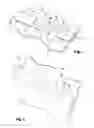
FIG. 2 is a perspective view from underneath of a portion of an assembly according to the invention;
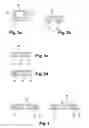
FIGS. 3A, 3B, 3C and 3D are cross-sectional representations of the steps of a method for incorporating an assembly of FIG. 1; and
FIG. 4 shows examples of implementation of screw barrels for an assembly according to the invention.
DETAILED DESCRIPTION OF THE PREFERRED EMBODIMENTS
FIGS. 1 and 2 show only a small portion of an assembly 10 provided with a reinforcing sheet for composite material 12 and three metal inserts 14A, 14B, 14C.
To simplify the description, the assembly portion is called “assembly” in the remainder of the description. The assembly 10 is defined by a longitudinal direction along an axis of symmetry L, a transverse direction along an axis T and a through direction along an axis Z.
In the example, the reinforcing sheet of composite material 12 has a rectangular shape and a thickness of 4 millimeters. It comprises a bottom wall 16A and a top wall 16B which has the metal inserts 14A, 14B, 14C arranged on the surface.
The reinforcing sheet of composite material 12 contains a resin and reinforcing fibers of length greater than or equal to 1 cm.
The reinforcing fibers are glass fibers and form layers that intertwine and overlap each other.
In the example, the metal inserts 14A, 14B, 14C are rectangular and 1 mm thick, but they could be of any shape and of thickness between 0.5 and 1.5 mm.
The metal inserts 14A, 14B, 14C define rectangles of smaller size than the sheet 12 on which they are arranged. In this case the metal inserts 14A, 14B, 14C have a longitudinal axis of symmetry which is coincident with the longitudinal axis of symmetry L of the assembly 10.
In the applications considered for the automobile sector, the size of the assembly 10 is usually much greater than that of the inserts 14A, 14B, 14C. In the example, two of the three inserts 14A, 14B, arranged on the surface of the sheet 12 define an area inside the rectangular shape defined by the sheet of composite material 12. The third insert 14C forms a rectangle longer than the other two inserts 14A, 14B and has an end 20 which extends outside the rectangular shape formed by the sheet of composite material 12.
The metal inserts 14A, 14B, 14C are provided with protrusions 22 distributed at regular intervals, i.e. every 5 mm in this case, near the edges of the inserts 14A, 14B, 14C and on a central portion of an insert 14B. These protrusions 22 form small pointed rectangular and triangular teeth that originate near the edges of the inserts 14A, 14B, 14C. They separate the fibers during insertion of the inserts 14A, 14B, 14C and traverse the reinforcing sheet for composite material 12 going between the fibers and their ends are bent substantially parallel to the bottom wall 16A of the sheet of composite material 12. Alternatively, they could be substantially bent back on themselves, their ends being directed towards the top wall 16B.
The assembly 10 could also comprise screw barrels traversing the sheet of composite material 12 and separating the fibers, therefore without damaging them. Note that these barrels are usually located in the middle of an insert rather than on its edges.
The protrusions 22 are shaped to traverse the sheet of composite material 12 without significantly destroying the reinforcing fibers but by separating them. They are folded by plastic deformation, for example like an office staple. They therefore enclose the reinforcing fibers when they are subjected to a compressive force in their longitudinal direction. The protrusions 22 may also be folded by lateral deformation and when they are on the edge of the assembly 10, they can be folded towards the outside or inside of the assembly 10.
According to a second embodiment, the reinforcing fibers are a unidirectional sheet of long fibers.
According to a third embodiment, the fibers are a fabric of long fibers, i.e. the fibers are continuous. Thus, they consist of unidirectional fibers and their length is the same as that of the part.
According to a fourth embodiment, the fibers are cut fibers distributed randomly in the material 12. In this case, their length is necessarily greater than or equal to 2 cm.
We will now describe a method of incorporating an insert as described above in a reinforcing sheet 12. As shown in FIG. 3A, a first step consists in depositing the insert on the reinforcing sheet 12. According to FIG. 3B, the protrusions 22 of the insert are pushed through the sheet 12, the protrusions 22 going between the fibers and separating them. Then, the protrusions 22 on the sheet 12 are folded by plastic deformation, either by a force applied along the Z axis or by a lateral force, so that the protrusions 22 are folded towards the sheet 12 as shown in FIG. 3D of the example. Alternatively, the protrusions 22 may be folded substantially parallel to the sheet 12 as shown in FIG. 3C.
In a special implementation mode, the step of folding the protrusions 22 is carried out in a mold for manufacturing a part made of composite material. To do this, at least one reinforcing sheet with the inserts is introduced into the mold, the mold is closed and resin is injected.
In another special implementation mode, the step of folding the protrusions 22 is carried out before introducing the assembly 10 in a mold for manufacturing a part made of composite material.
Lastly, the invention relates to a part made of composite material obtained by shaping and cross-linking an assembly 10 as described above.
The invention is not limited to the embodiments described and other embodiments will be clearly apparent to those skilled in the art. In particular, it is possible that the reinforcing fibers are carbon fibers, plant fibers or fibers of another material. In addition, interfaces can be produced at the edge or the middle of a part made of composite material. The interfaces may be flat or have through screwing barrel 24 as shown in FIG. 4. The sheet of composite material 12 may contain reinforcing fibers of length greater than or equal to 1 cm. The thickness of the sheet 12 may be different and its thickness may be between 0.5 mm and 10 mm, preferably between 1 mm and 7 mm, and in some configurations between 1 mm and 4 mm. The teeth of the insert may be located in its center in order to increase the number of anchorage points and to improve the tear strength. Lastly, the insert may further comprise a projection for interfacing with another part, it being possible for example to screw, weld or overmold this projection.
Applications of this assembly could be considered in particular for the manufacture of vehicle floors, side sills, A-, B- and C-pillars, opening panels, roof crossbeams, as well as beams or structural reinforcements.
While the process and method herein described constitute preferred embodiments of this invention, it is to be understood that the invention is not limited to this precise process and method, and that changes may be made therein without departing from the scope of the invention which is defined in the appended claims.
Claims
What is claimed is:1. An assembly comprising:
at least one metal insert and at least one reinforcing sheet for composite material, wherein:
said at least one reinforcing sheet contains reinforcing fibers longer than or equal in length to one centimeter;
said at least one metal insert comprises protrusions shaped to:
traverse said at least one reinforcing sheet for composite material going between said reinforcing fibers;
fold by plastic deformation, enclosing said reinforcing fibers.
2. The assembly according to claim 1, wherein
said protrusions have a sharp end.
3. The assembly according to claim 1, wherein said assembly comprises a screw barrel which traverses said at least one reinforcing sheet of composite material by separating said reinforcing fibers.
4. The assembly according to claim 3, wherein said screw barrel traverses said at least one reinforcing sheet of composite material without damaging said at least one reinforcing sheet of composite material.
5. The assembly according to claim 1, wherein said reinforcing fibers are a unidirectional sheet of long fibers.
6. The assembly according to claim 1, wherein said reinforcing fibers consist of cut fibers distributed randomly in said at least one reinforcing sheet of composite material.
7. The assembly according to claim 1, wherein said reinforcing fibers are carbon, glass or plant fibers.
8. A method of incorporating an insert in a reinforcing sheet, wherein said method comprises the steps of:
depositing said insert on the-said reinforcing sheet;
pushing protrusions of said insert through said reinforcing sheet;
folding by plastic deformation said protrusions on said reinforcing sheet.
9. The method according to claim 8, wherein the step of folding said protrusions is carried out in a mold for manufacturing a part made of a composite material.
10. The method for manufacturing an assembly according to claim 8, wherein said protrusions are folded by an axial or lateral force.
11. The method according to claim 8, wherein the step of folding said protrusions is carried out before introducing an assembly in a mold for manufacturing a part made of composite material.
12. A part of composite material wherein said part is obtained by shaping and polymerizing an assembly comprising:
at least one metal insert and at least one reinforcing sheet for composite material, wherein:
said at least one reinforcing sheet contains reinforcing fibers longer than or equal in length to one centimeter;
said at least one metal insert comprises protrusions shaped to:
traverse said at least one reinforcing sheet for composite material going between said reinforcing fibers;
fold by plastic deformation, enclosing said reinforcing fibers.
13. A part made of composite material according to claim 12, said part being a motor vehicle component.
14. The assembly according to claim 2, wherein said assembly comprises a screw barrel which traverses said at least one reinforcing sheet of composite material by separating said reinforcing fibers.
15. The assembly according to claim 2, wherein a screw barrel traverses said at least one reinforcing sheet of composite material without damaging said at least one reinforcing sheet of composite material.
16. The assembly according to claim 2, wherein said reinforcing fibers are a unidirectional sheet of long fibers.
17. The assembly according to claim 2, wherein said reinforcing fibers are carbon, glass or plant fibers.
18. The method for manufacturing an assembly according to claim 9, wherein said protrusions are folded by an axial or lateral force.
19. A part made of composite material wherein said part is obtained by shaping and polymerizing an assembly comprising:
at least one metal insert and at least one reinforcing sheet for composite material, wherein:
said at least one reinforcing sheet contains reinforcing fibers longer than or equal in length to one centimeter;
said at least one metal insert comprises protrusions shaped to:
traverse said at least one reinforcing sheet for composite material going between said reinforcing fibers;
fold by plastic deformation, enclosing said reinforcing fibers;
wherein said protrusions have a sharp end.
20. The assembly according to claim 1, wherein said fold by deformation comprises a fold by plastic deformation.
Images & Drawings included:
Sources:
- United States Patent and Trademark Office - verify current appl. status at the USPTO↗
Recent applications in this class:
- » 20250249654 2025-08-07
WINDOW AND ELECTRONIC DEVICE INCLUDING THE SAME - » 20250249653 2025-08-07
MULTI-LAYERED STRUCTURE AND METHOD OF MANUFACTURING THE SAME - » 20250242563 2025-07-31
DECORATIVE SHEET - » 20250222674 2025-07-10
Decorative Substrate, Preparation Method Therefor and Application Thereof - » 20250214315 2025-07-03
VEHICLE INTERIOR MATERIAL - » 20250205991 2025-06-26
DECORATIVE SHEET AND METHOD FOR MANUFACTURING DECORATIVE SHEET - » 20250196467 2025-06-19
LAYERED ARTICLE INCLUDING SYNTHETIC POLYMER FILM HAVING ANTIMICROBIAL AND/OR ANTIVIRAL PROPERTIES, AND METHOD FOR PRODUCING THE SAME - » 20250196466 2025-06-19
BUFFER MATERIAL, EXTERIOR MATERIAL, AND ROBOT COMPONENT - » 20250144910 2025-05-08
STRAND SIDING WITH PEBBLED STUCCO TEXTURE - » 20250128495 2025-04-24
SURFACE MATERIALS AND METHOD OF MANUFACTURE
Recent applications for this Assignee:
- » 20220234531 2022-07-28
Retractable aerodynamic underbody flap with force absorption by the lower support - » 20220155409 2022-05-19
Backlit radar protection device - » 20220072993 2022-03-10
Light element for bodywork component made of injection-molded polycarbonate - » 20220063531 2022-03-03
Bumper reinforcement for integration into a vehicle front assembly, comprising a sensor-bearing mounting plate - » 20210382321 2021-12-09
Body part comprising a lenticular wall to form a three-dimensional image - » 20210221165 2021-07-22
Hot stamping for decorating a part of a vehicle body - » 20210203065 2021-07-01
Vehicle body part comprising at least one directional antenna - » 20210070380 2021-03-11
Active front splitter for automobile - » 20200406989 2020-12-31
Active aerodynamic system with offset actuator - » 20200298916 2020-09-24
Rear closure system of a motor vehicle comprising a removable module