Physical resource block (PRB)-restricted interference averaging in a wireless communication system
US20150365960A1
2015-12-17
14/764,547
2013-12-13
✅ Patent granted
US 10,271,304 B2
2019-04-23
WO; PCT/US2013/075139; 20131213
WO; WO2014/133642; 20140904
Raj Jain | Andrew C Lee
Schwabe, Williamson & Wyatt, P.C.
2034-08-06
Abstract:
Methods, apparatuses, and systems are described related to interference averaging to generate feedback information. In embodiments, an evolved Node B (eNB) may transmit an feedback management message to a user equipment (UE) that defines one or more PRB sets. The PRB sets may include at least one PRB of the channel. The UE may average interference measurements within the PRB set and may generate channel state information (CSI) feedback for the PRB set based on the average interference measurement. The UE may transmit the CSI feedback to the eNB.
Inventors:
- Alexander Maltsev 190 🇷🇺 Nizhny Novgorod, Russian Federation
- Yuan Zhu 361 🇨🇳 Beijing, China
- Alexei Davydov 446 🇷🇺 Nizhny Novgorod, Russian Federation
- Gregory Morozov 85 🇷🇺 Nizhny Novgorod, Russian Federation
- Xiaogang Chen 148 🇨🇳 Beijing, China
- Seunghee Han 4 🇰🇷 Anyangshi, Kyoungkido, South Korea
- Alexei Davydov 35 🇷🇺 Nizhny Novgorod Niz, Russian Federation
- Gregory MOROZOV 8 🇷🇺 Nizhny Novgorod, NIZ, Russian Federation
- Alexander MALTSEV 6 🇷🇺 Nizhny Novgorod, NIZ, Russian Federation
- SEUNGHEE HAN 272 🇺🇸 San Jose, CA, United States
Assignee:
- Intel IP Corporation 2,119 🇺🇸 Santa Clara, CA, United States
Applicant:
Interested in similar patents?
Get notified when new applications in this technology area are published.
Classification:
H04W72/04 IPC
Local resource management, e.g. wireless traffic scheduling or selection or allocation of wireless resources Wireless resource allocation
H04W72/085 » CPC main
Local resource management, e.g. wireless traffic scheduling or selection or allocation of wireless resources; Wireless resource allocation based on quality criteria where an allocation plan is defined using measured or perceived quality
H04B7/06 IPC
Radio transmission systems, i.e. using radiation field; Diversity systems; Multi-antenna system, i.e. transmission or reception using multiple antennas using two or more spaced independent antennas at the transmitting station
H04W24/10 » CPC further
Supervisory, monitoring or testing arrangements Scheduling measurement reports ; Arrangements for measurement reports
H04W72/08 IPC
Local resource management, e.g. wireless traffic scheduling or selection or allocation of wireless resources; Wireless resource allocation based on quality criteria where an allocation plan is defined
H04B7/0452 » CPC further
Radio transmission systems, i.e. using radiation field; Diversity systems; Multi-antenna system, i.e. transmission or reception using multiple antennas using two or more spaced independent antennas; MIMO systems Multi-user MIMO systems
H04W72/005 » CPC main
Local resource management, e.g. wireless traffic scheduling or selection or allocation of wireless resources Resource management for broadcast services
H04W36/165 » CPC further
Hand-off or reselection arrangements; Performing reselection for specific purposes for improving the overall network performance
H04J3/12 » CPC further
Time-division multiplex systems; Details Arrangements providing for calling or supervisory signals
H04W12/04 » CPC further
Security arrangements; Authentication; Protecting privacy or anonymity Key management, e.g. using generic bootstrapping architecture [GBA]
H04W36/16 IPC
Hand-off or reselection arrangements Performing reselection for specific purposes
H04L12/18 IPC
Data switching networks; Details; Arrangements for providing special services to substations for broadcast or conference, e.g. multicast
H04W36/22 » CPC further
Hand-off or reselection arrangements; Performing reselection for specific purposes for handling the traffic
H04W76/20 » CPC further
Connection management Manipulation of established connections
H04W24/08 » CPC further
Supervisory, monitoring or testing arrangements Testing, supervising or monitoring using real traffic
H04W48/20 » CPC further
Access restriction ; Network selection; Access point selection Selecting an access point
H04L5/0037 » CPC further
Arrangements affording multiple use of the transmission path; Arrangements for allocating sub-channels of the transmission path Inter-user or inter-terminal allocation
H04M15/00 IPC
Arrangements for metering, time-control or time indication ; Metering, charging or billing arrangements for voice wireline or wireless communications, e.g. VoIP
H04W52/244 » CPC further
Power management, e.g. TPC [Transmission Power Control], power saving or power classes; TPC; TPC being performed according to specific parameters using SIR [Signal to Interference Ratio] or other wireless path parameters taking into account interferences Interferences in heterogeneous networks, e.g. among macro and femto or pico cells or other sector / system interference [OSI]
H04L45/74 » CPC further
Routing or path finding of packets in data switching networks Address processing for routing
H04W76/10 » CPC further
Connection management Connection setup
H04W76/30 » CPC further
Connection management Connection release
H04W4/80 » CPC further
Services specially adapted for wireless communication networks; Facilities therefor Services using short range communication, e.g. near-field communication [NFC], radio-frequency identification [RFID] or low energy communication
H04W76/14 » CPC further
Connection management; Connection setup Direct-mode setup
H04W4/06 » CPC further
Services specially adapted for wireless communication networks; Facilities therefor Selective distribution of broadcast services, e.g. multimedia broadcast multicast service [MBMS]; Services to user groups; One-way selective calling services
H04W84/18 » CPC further
Network topologies Self-organising networks, e.g. ad-hoc networks or sensor networks
H04W88/02 » CPC further
Devices specially adapted for wireless communication networks, e.g. terminals, base stations or access point devices Terminal devices
H04W88/08 » CPC further
Devices specially adapted for wireless communication networks, e.g. terminals, base stations or access point devices Access point devices
H04W88/06 » CPC further
Devices specially adapted for wireless communication networks, e.g. terminals, base stations or access point devices; Terminal devices adapted for operation in multiple networks or having at least two operational modes , e.g. multi-mode terminals
H04W48/10 » CPC further
Access restriction ; Network selection; Access point selection; Access restriction or access information delivery, e.g. discovery data delivery using broadcasted information
H04L12/184 » CPC further
Data switching networks; Details; Arrangements for providing special services to substations for broadcast or conference, e.g. multicast with heterogeneous network architecture with heterogeneous receivers, e.g. layered multicast
H04W76/23 » CPC further
Connection management; Manipulation of established connections Manipulation of direct-mode connections
H04L65/4038 » CPC further
Network arrangements, protocols or services for supporting real-time applications in data packet communication; Support for services or applications; Arrangements for multi-party communication, e.g. for conferences with floor control
H04L65/80 » CPC further
Network arrangements, protocols or services for supporting real-time applications in data packet communication Responding to QoS
H04L67/02 » CPC further
Network arrangements or protocols for supporting network services or applications; Protocols based on web technology, e.g. hypertext transfer protocol [HTTP]
H04M15/8044 » CPC further
Arrangements for metering, time-control or time indication ; Metering, charging or billing arrangements for voice wireline or wireless communications, e.g. VoIP; Rating or billing plans; Tariff determination aspects Least cost routing
H04W12/02 » CPC further
Security arrangements; Authentication; Protecting privacy or anonymity Protecting privacy or anonymity, e.g. protecting personally identifiable information [PII]
H04W72/0406 » CPC further
Local resource management, e.g. wireless traffic scheduling or selection or allocation of wireless resources; Wireless resource allocation involving control information exchange between nodes
H04W72/087 » CPC further
Local resource management, e.g. wireless traffic scheduling or selection or allocation of wireless resources; Wireless resource allocation based on quality criteria where an allocation plan is defined using requested quality
H04W16/14 » CPC further
Network planning, e.g. coverage or traffic planning tools; Network deployment, e.g. resource partitioning or cells structures Spectrum sharing arrangements between different networks
H04W72/00 IPC
Local resource management, e.g. wireless traffic scheduling or selection or allocation of wireless resources
H04B7/0456 IPC
Radio transmission systems, i.e. using radiation field; Diversity systems; Multi-antenna system, i.e. transmission or reception using multiple antennas using two or more spaced independent antennas; MIMO systems Selection of precoding matrices or codebooks, e.g. using matrices antenna weighting
H04W4/10 » CPC further
Services specially adapted for wireless communication networks; Facilities therefor; Selective distribution of broadcast services, e.g. multimedia broadcast multicast service [MBMS]; Services to user groups; One-way selective calling services Push-to-Talk [PTT] or Push-On-Call services
H04W52/24 IPC
Power management, e.g. TPC [Transmission Power Control], power saving or power classes; TPC; TPC being performed according to specific parameters using SIR [Signal to Interference Ratio] or other wireless path parameters
H04W72/10 » CPC further
Local resource management, e.g. wireless traffic scheduling or selection or allocation of wireless resources; Wireless resource allocation based on priority criteria where an allocation plan is defined
H04W36/30 » CPC further
Hand-off or reselection arrangements; Reselection being triggered by specific parameters used to improve the performance of a single terminal by measured or perceived connection quality data
H04L25/03 » CPC further
Baseband systems; Details ; arrangements for supplying electrical power along data transmission lines Shaping networks in transmitter or receiver, e.g. adaptive shaping networks
H04B7/0486 » CPC further
Radio transmission systems, i.e. using radiation field; Diversity systems; Multi-antenna system, i.e. transmission or reception using multiple antennas using two or more spaced independent antennas; MIMO systems; Selection of precoding matrices or codebooks, e.g. using matrices antenna weighting taking channel rank into account
H04W36/14 » CPC further
Hand-off or reselection arrangements Reselecting a network or an air interface
H04W24/02 » CPC further
Supervisory, monitoring or testing arrangements Arrangements for optimising operational condition
H04W72/044 » CPC further
Local resource management, e.g. wireless traffic scheduling or selection or allocation of wireless resources; Wireless resource allocation where an allocation plan is defined based on the type of the allocated resource
H04W76/27 » CPC further
Connection management; Manipulation of established connections Transitions between radio resource control [RRC] states
H04L5/00 IPC
Arrangements affording multiple use of the transmission path
Description
CROSS REFERENCE TO RELATED APPLICATIONS
The present application claims priority to U.S. Provisional Patent Application No. 61/771,698, filed Mar. 1, 2013 and entitled “Advanced Wireless Communication Systems and Techniques,” the entire disclosure of which is hereby incorporated by reference in its entirety.
FIELD
Embodiments of the present invention relate generally to wireless networks and more particularly to interference averaging in wireless networks.
BACKGROUND
In some wireless communication networks, such as Long Term Evolution Advanced (LTE-A) networks, a user equipment (UE) measures interference on a channel of the network to generate channel state information (CSI) feedback. The UE sends the CSI feedback to an evolved Node B (eNB). However, the UE averages interference over the entire frequency bandwidth for generation of CSI.
BRIEF DESCRIPTION OF THE DRAWINGS
Embodiments will be readily understood by the following detailed description in conjunction with the accompanying drawings. To facilitate this description, like reference numerals designate like structural elements.
Embodiments are illustrated by way of example and not by way of limitation in the figures of the accompanying drawings.
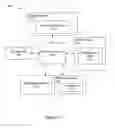
FIG. 1 schematically illustrates a high-level example of a network system comprising a user equipment (UE) and an evolved Node B (eNB), in accordance with various embodiments.
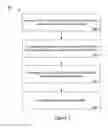
FIG. 2 schematically illustrates a wireless communication channel with a plurality of physical resource blocks (PRBs), showing PRBs assigned to a first PRB set and a second PRB set, in accordance with various embodiments.
FIG. 3 illustrates a method for generating feedback information in accordance with various embodiments.
FIG. 4 illustrates a method for managing feedback information generated by a UE in accordance with various embodiments.
FIG. 5 schematically illustrates an example system that may be used to practice various embodiments described herein.
DETAILED DESCRIPTION
Illustrative embodiments of the present disclosure include, but are not limited to, methods, systems, computer-readable media, and apparatuses for interference averaging in a wireless communication system.
Various aspects of the illustrative embodiments will be described using terms commonly employed by those skilled in the art to convey the substance of their work to others skilled in the art. However, it will be apparent to those skilled in the art that alternate embodiments may be practiced with only some of the described aspects. For purposes of explanation, specific numbers, materials, and configurations are set forth in order to provide a thorough understanding of the illustrative embodiments. However, it will be apparent to one skilled in the art that alternate embodiments may be practiced without the specific details. In other instances, well-known features are omitted or simplified in order not to obscure the illustrative embodiments.
Further, various operations will be described as multiple discrete operations, in turn, in a manner that is most helpful in understanding the illustrative embodiments; however, the order of description should not be construed as to imply that these operations are necessarily order dependent. In particular, these operations need not be performed in the order of presentation.
The phrase “in some embodiments” is used repeatedly. The phrase generally does not refer to the same embodiments; however, it may. The terms “comprising,” “having,” and “including” are synonymous, unless the context dictates otherwise.
The phrase “A and/or B” means (A), (B), or (A and B). The phrases “NB” and “A or B” mean (A), (B), or (A and B), similar to the phrase “A and/or B.”
As used herein, the term “circuitry” refers to, is part of, or includes hardware components such as an Application Specific Integrated Circuit (ASIC), an electronic circuit, a logic circuit, a processor (shared, dedicated, or group) and/or memory (shared, dedicated, or group) that are configured to provide the described functionality. In some embodiments, the circuitry may execute one or more software or firmware programs to provide at least some of the described functionality.
FIG. 1 schematically illustrates a network environment 100 in accordance with various embodiments. The network environment 100 includes a user equipment (UE) 104 wirelessly coupled with an evolved Node B (eNB) 108 of a radio access network (RAN) via an over-the-air (OTA) interface. The RAN may be part of a 3GPP LTE Advanced (LTE-A) network and may be referred to as an evolved universal terrestrial radio access network (EUTRAN). In other embodiments, other radio access network technologies may be utilized.
The UE 104 may include a communication device 112 that implements various communication protocols in order to effectuate communication with the eNB 108. The communication device 112 may be a chip, chipset, or other collection of programmed and/or preconfigured circuitry. In some embodiments, the communication device 112 may include or be part of baseband circuitry, radio-frequency circuitry, etc.
The communication device 112 may include communication circuitry 116 to wirelessly communicate with the eNB 108 over a channel of a wireless communication network (e.g., the RAN). The communication circuitry 116 may be coupled with one or more antennas 120 of the UE 104 to transmit wireless signals to, and/or receive wireless signals from, the eNB 108.
The communication circuitry 116 may communicate with the eNB 108 over a plurality of resource elements of the channel, each resource element corresponding to a time and frequency resource of the channel. The resource elements of the channel may be arranged in physical resource blocks (PRBs) that include a plurality of resource elements. The channel may include a plurality of sub-bands in the frequency domain, with each sub-band including a plurality of PRBs separated from one another in the frequency domain. The channel may further include a plurality of sub-frames in the time domain, with each sub-frame including a plurality of PRBs separated from one another in the time domain.
The communication device 112 may further include interference measurement circuitry 124 and feedback circuitry 128 coupled to the communication circuitry 116. The interference measurement circuitry 124 may measure interference and/or noise on the channel over which the UE 104 communicates with the eNB 108. In some embodiments, the interference measurements may be performed on CSI-interference measurement resource elements (CSI-IM REs) of the channel.
The feedback circuitry 128 may use one or more of the interference measurements to generate feedback information, such as channel state information (CSI), associated with the channel. In some embodiments, the CSI may include one or more channel quality indicators (CQIs).
It will be appreciated that the connections between the circuitry of the communication device 112 shown in FIG. 1 are presented as an example, and some embodiments may include fewer, additional, and/or different connections between the circuitry of communication device 112.
The eNB 108 may include a communication device 136 that implements various communication protocols in order to effectuate communication with the UE 104. The communication device 136 may be a chip, chipset, or other collection of programmed and/or preconfigured circuitry. In some embodiments, the communication device 136 may include or be part of baseband circuitry, radio-frequency circuitry, etc.
The communication device 136 may include communication circuitry 140 to wirelessly communicate with the UE 104. The communication circuitry 140 may be coupled with one or more antennas 144 of the eNB 108 to transmit wireless signals to, and/or receive wireless signals from, the UE 104. The communication device 136 may further include feedback management circuitry 148 coupled to the communication circuitry 140.
In various embodiments, the communication circuitry 116 of the UE 104 may receive, from the eNB 108, a feedback management message that defines one or more PRB sets. In some embodiments, the eNB 108 may transmit the feedback management message via radio resource control (RRC) signaling. Each of the one or more PRB sets may include one or more PRBs of the channel. For example, the message may define a first PRB set that includes at least one PRB of the channel and a second PRB set that includes at least one PRB of the channel. In some embodiments, the PRBs of the one or more PRB sets may be differentiated in the frequency domain. Additionally, or alternatively, in some embodiments, the PRBs of an individual PRB set may be non-contiguous. That is, the PRBs included in the PRB set may not all be consecutive in the frequency domain. Furthermore, in some embodiments, the different PRB sets may be non-overlapping (e.g., may not include any of the same PRBs).
FIG. 2 illustrates an example wireless communication channel 200 in accordance with various embodiments. The channel 200 includes a plurality of PRBs 204 differentiated from one another in the frequency domain. In some embodiments, the feedback management circuitry 148 of the eNB 108 may assign the PRBs to a first PRB set or a second PRB set, for example as shown. In some embodiments, at least one sub-band 208 of the channel 200 may include PRBs that are included in the first PRB set and PRBs that are included in the second PRB set. In some embodiments, the feedback management circuitry 148 may define more than two PRB sets.
In various embodiments, the interference measurement circuitry 124 may average interference measurements over the PRBs included in an individual PRB set. For example, the interference measurement circuitry 124 may average interference measurements for the PRBs of the first PRB set to obtain a first average interference measurement. Additionally, the interference measurement circuitry 124 may average interference measurements for the PRBs of the second PRB set to obtain a second average interference measurement. In some embodiments, the interference measurements may include CQIs.
In various embodiments, the feedback circuitry 128 may generate separate CSI reports for the individual PRB sets. The CSI reports may be based on the respective average interference measurements. For example, the feedback circuitry 128 may generate a first CSI report for the first PRB set based on the first average interference measurement. Additionally, the feedback circuitry 128 may generate a second CSI report for the second PRB set based on the second average interference measurement.
In various embodiments, the feedback circuitry 128 may transmit, via the communication circuitry 116, the first and second CSI reports to the eNB 108. The eNB 108 may schedule communications with the UE 104, and/or determine one or more parameters for communications with the UE 104, based on the first and second CSI reports.
Accordingly, the eNB 108 may send the feedback management message to instruct the UE 104 to generate separate CSI reports for the different PRB sets. In some embodiments, the eNB 108 may receive a relative narrowband transmit power (RNTP) message, for example from another eNB of the network 100. The RNTP message may indicate whether transmissions on individual PRBs of the channel are limited by a transmission power threshold. For example, transmissions on some PRBs of the channel may be limited to transmissions with a transmission power below the transmission power threshold as part of a frequency-domain inter-cell interference coordination (ICIC) scheme.
The feedback management circuitry 148 of the eNB 108 may determine the PRBs included in the first and second PRB sets based on the RNTP message. For example, the first PRB set may include PRBs of the channel, as indicated in the RNTP message, that are restricted to transmissions with a transmission power below the transmission power threshold (also referred to as protected PRBs). The second PRB set may include PRBs of the channel that are not restricted to transmissions with a transmission power below the transmission power threshold (also referred to as unprotected PRBs). The interference on the protected PRBs may be significantly different from the interference on the unprotected PRBs. Accordingly, the CSI feedback for the individual PRB sets, as described herein, may more accurately reflect the conditions on the PRBs compared with CSI feedback based on interference averaged across all of the PRBs of the channel.
Additionally, or alternatively, in some embodiments, the eNB 108 may schedule a communication with the UE 104 with a granularity of one PRB. For example, the eNB 108 may schedule a transmission to the UE 104 on the first PRB set. In some embodiments, the transmission may include an enhanced physical downlink control channel (ePDCCH). The CSI report for the first PRB set may enable the eNB 108 to determine one or more parameters for the transmission based on the average interference reported for the first PRB set. The parameters of the transmission that may be determined by the eNB 108 based on the CSI report for the first PRB set may include, for example, a transmit power, precoding parameters, and/or an aggregation level for the transmission.
In some embodiments, eNB 108 may define the first and second PRB sets using one or more bitmaps. For example, the feedback management message transmitted by the eNB 108 may include a bitmap having a plurality of bits, where individual bits of the bitmap correspond to respective PRBs of the channel. The individual bits may indicate whether the corresponding PRB is included in the first PRB set. For example, the individual bits may have a first logic value (e.g., a logic 1) to indicate that the corresponding PRB is included in the first PRB set or a second logic value (e.g., a logic 0) to indicate that the corresponding PRB is not included in the first PRB set. In some embodiments, the bits of the bitmap with the second logic value may also indicate that the corresponding PRBs are included in the second PRB set.
In other embodiments, the feedback management message may include a second bitmap to indicate the PRBs included in the second PRB set. The second bitmap may include a plurality of bits, with individual bits of the second bitmap corresponding to respective PRBs of the channel. The individual bits of the second bitmap may have the first logic value to indicate that the corresponding PRB is included in the second PRB set or the second logic value to indicate that the corresponding PRB is not included in the second PRB set. In some embodiments, additional bitmaps may be included in the message to define additional PRB sets.
FIG. 3 illustrates a method 300 for generating feedback information that may be performed by a UE (e.g., UE 104) in accordance with various embodiments. In some embodiments, the UE may include one or more tangible computer-readable media having instructions, stored thereon, that when executed cause the UE to perform method 300.
At block 304, the method 300 may include receiving, from an eNB (e.g., eNB 108), a bitmap to define a first PRB set that includes one or more PRBs of a channel. For example, the bitmap may include a plurality of bits, where individual bits of the bitmap correspond to respective PRBs of a channel over which the UE communicates with the eNB. The individual bits of the bitmap may have a first logic value (e.g., logic 1) to indicate that the corresponding PRB is included in the first PRB set or a second logic value (e.g., logic 0) to indicate that the corresponding PRB is not included in the first PRB set. In some embodiments, the UE may receive the bitmap via RRC signaling. For example, the bitmap may be included in a feedback management message.
At block 308, the method 300 may include averaging interference measurements for the PRBs of the first PRB set to obtain an average interference measurement. In some embodiments, the interference measurements may include CQIs.
At block 312, the method 300 may include generating a CSI report for the first PRB set based on the average interference measurement.
At block 316, the method 300 may include transmitting the CSI report to the eNB.
In some embodiments, the UE may be configured with one or more additional PRB sets, including a second PRB set. In some embodiments, the second PRB set may be defined by the same bitmap that defines the first PRB set. For example, the individual bits of the bitmap that have the second value may indicate that the corresponding PRBs are included in the second PRB set. In other embodiments, the UE may receive a second bitmap that defines the second PRB set. The UE may average interference measurements for the PRBs of the second PRB set to obtain a second average interference measurement. The UE may further generate a CSI report for the second PRB set based on the second average interference measurement and transmit the CSI report for the second PRB set to the eNB.
FIG. 4 illustrates a method for managing feedback information that may be performed by an eNB (e.g., eNB 108) in accordance with various embodiments. In some embodiments, the eNB may include one or more tangible computer-readable media having instructions, stored thereon, that when executed cause the eNB to perform method 400.
At block 404, the method 400 may include generating a bitmap having a plurality of bits, where individual bits of the bitmap correspond to respective PRBs of a channel, and where the PRBs are differentiated from one another in the frequency domain of the channel.
At block 408, the method 400 may include setting a subset of less than all the bits of the bitmap to a first logic value (e.g., logic 1) to indicate that the corresponding PRBs are included in a PRB set. The PRBs included in the PRB set may be non-contiguous in the frequency domain.
At block 412, the method 400 may include transmitting the bitmap to a UE (e.g., UE 108) to instruct the UE to generate a CSI report for the PRB set based on an average interference measurement for the PRBs of the PRB set.
The eNB may thereafter receive, from the UE, the CSI report for the PRB set. The eNB may schedule communications with the UE on the PRBs of the PRB set, and/or determine one or more parameters for communications on the PRBs of the PRB set, based on the CSI report. For example, the eNB may transmit an ePDCCH on one or more PRBs of the PRB set.
The UE 104 and eNB 108 described herein may be implemented into a system using any suitable hardware and/or software to configure as desired. FIG. 5 illustrates, for one embodiment, an example system 500 comprising one or more processor(s) 504, system control logic 508 coupled with at least one of the processor(s) 504, system memory 512 coupled with system control logic 508, non-volatile memory (NVM)/storage 516 coupled with system control logic 508, a network interface 520 coupled with system control logic 508, and input/output (I/O) devices 532 coupled with system control logic 508.
The processor(s) 504 may include one or more single-core or multi-core processors. The processor(s) 504 may include any combination of general-purpose processors and dedicated processors (e.g., graphics processors, application processors, baseband processors, etc.).
System control logic 508 for one embodiment may include any suitable interface controllers to provide for any suitable interface to at least one of the processor(s) 504 and/or to any suitable device or component in communication with system control logic 508.
System control logic 508 for one embodiment may include one or more memory controller(s) to provide an interface to system memory 512. System memory 512 may be used to load and store data and/or instructions, e.g., communication logic 524. System memory 512 for one embodiment may include any suitable volatile memory, such as suitable dynamic random access memory (DRAM), for example.
NVM/storage 516 may include one or more tangible, non-transitory computer-readable media used to store data and/or instructions, e.g., communication logic 524. NVM/storage 516 may include any suitable non-volatile memory, such as flash memory, for example, and/or may include any suitable non-volatile storage device(s), such as one or more hard disk drive(s) (HDD(s)), one or more compact disk (CD) drive(s), and/or one or more digital versatile disk (DVD) drive(s), for example.
The NVM/storage 516 may include a storage resource physically part of a device on which the system 500 is installed or it may be accessible by, but not necessarily a part of, the device. For example, the NVM/storage 516 may be accessed over a network via the network interface 520 and/or over Input/Output (I/O) devices 532.
The communication logic 524 may include instructions that, when executed by one or more of the processors 504, cause the system 500 to perform operations associated with the components of the communication device 112 or 136 as described with respect to the above embodiments. In various embodiments, the communication logic 524 may include hardware, software, and/or firmware components that may or may not be explicitly shown in system 500.
Network interface 520 may have a transceiver 522 to provide a radio interface for system 500 to communicate over one or more network(s) and/or with any other suitable device. In various embodiments, the transceiver 522 may be integrated with other components of system 500. For example, the transceiver 522 may include a processor of the processor(s) 504, memory of the system memory 512, and NVM/Storage of NVM/Storage 516. Network interface 520 may include any suitable hardware and/or firmware. Network interface 520 may include a plurality of antennas to provide a multiple input, multiple output radio interface.
Network interface 520 for one embodiment may include, for example, a wired network adapter, a wireless network adapter, a telephone modem, and/or a wireless modem.
For one embodiment, at least one of the processor(s) 504 may be packaged together with logic for one or more controller(s) of system control logic 508. For one embodiment, at least one of the processor(s) 504 may be packaged together with logic for one or more controllers of system control logic 508 to form a System in Package (SiP). For one embodiment, at least one of the processor(s) 504 may be integrated on the same die with logic for one or more controller(s) of system control logic 508. For one embodiment, at least one of the processor(s) 504 may be integrated on the same die with logic for one or more controller(s) of system control logic 508 to form a System on Chip (SoC).
In various embodiments, the I/O devices 532 may include user interfaces designed to enable user interaction with the system 500, peripheral component interfaces designed to enable peripheral component interaction with the system 500, and/or sensors designed to determine environmental conditions and/or location information related to the system 500.
In various embodiments, the user interfaces could include, but are not limited to, a display (e.g., a liquid crystal display, a touch screen display, etc.), speakers, a microphone, one or more cameras (e.g., a still camera and/or a video camera), a flashlight (e.g., a light emitting diode flash), and a keyboard.
In various embodiments, the peripheral component interfaces may include, but are not limited to, a non-volatile memory port, a universal serial bus (USB) port, an audio jack, an Ethernet connection, and a power supply interface.
In various embodiments, the sensors may include, but are not limited to, a gyro sensor, an accelerometer, a proximity sensor, an ambient light sensor, and a positioning unit. The positioning unit may also be part of, or interact with, the network interface 520 to communicate with components of a positioning network, e.g., a global positioning system (GPS) satellite.
In various embodiments, the system 500 may be a mobile computing device such as, but not limited to, a laptop computing device, a tablet computing device, a netbook, a smartphone, etc. In various embodiments, system 500 may have more or less components, and/or different architectures.
Some non-limiting examples are provided below.
Example 1 is an apparatus to be employed by a user equipment (UE) to generate feedback information, the apparatus comprising communication circuitry and feedback circuitry coupled to the communication circuitry. The communication circuitry is to: wirelessly communicate with an evolved Node B (eNB) via physical resource blocks (PRBs) of a channel; and receive, from the eNB, a message defining a first PRB set that includes one or more PRBs of the channel and a second PRB set that includes at least one PRB of the channel. The feedback circuitry is to: generate a first channel state information (CSI) report for the first PRB set based on a first average interference measurement for the one or more PRBs of the first PRB set; generate a second CSI report for the second PRB set based on a second average interference measurement for the at least one PRB of the second PRB set; and transmit, via the communication circuitry, the first and second CSI reports to the eNB.
Example 2 is the apparatus of Example 1, further comprising interference measurement circuitry to generate the first and second average interference measurements.
Example 3 is the apparatus of Example 1, wherein the PRBs of the first and second PRB sets are differentiated in a frequency domain.
Example 4 is the apparatus of Example 3, wherein a sub-band of the channel includes PRBs that are included in the first PRB set and PRBs that are included in the second PRB set.
Example 5 is the apparatus of Example 1, wherein the message includes a bitmap having a plurality of bits, wherein individual bits of the bitmap correspond to respective PRBs of the channel and wherein the individual bits indicate whether the corresponding PRB is included in the first PRB set.
Example 6 is the apparatus of Example 5, wherein the bitmap is a first bitmap, and wherein the message further includes a second bitmap having a plurality of bits, wherein individual bits of the second bitmap correspond to respective PRBs of the channel and wherein the individual bits of the second bitmap indicate whether the corresponding PRB is included in the second PRB set.
Example 7 is the apparatus of any one of Examples 1 to 6, wherein the PRBs included in the first PRB set are non-contiguous.
Example 8 is the apparatus of any one of Examples 1 to 6, wherein the first and second PRB sets are non-overlapping.
Example 9 is the apparatus of Example 1, wherein the apparatus is a mobile device with a touchscreen and one or more cameras.
Example 10 is an apparatus to be employed by an evolved Node B (eNB), the apparatus comprising communication circuitry and feedback management circuitry coupled to the communication circuitry. The communication circuitry is to communicate with a user equipment (UE) over physical resource blocks (PRBs) of a channel. The feedback management circuitry is to: generate a message defining a first PRB set that includes one or more PRBs of the channel and a second PRB set that includes at least one PRB of the channel; and transmit the message, via the communication circuitry, to the UE to instruct the UE to generate a first channel state information (CSI) report for the first PRB set based on a first average interference measurement for the one or more PRBs of the first PRB set and a second CSI report for the second PRB set based on a second average interference measurement for the at least one PRB of the second PRB set.
Example 11 is the apparatus of Example 10, wherein the communication circuitry is to receive a relative narrowband transmit power (RNTP) message from another eNB to indicate whether transmissions on individual PRBs of the channel are limited by a threshold, and wherein the feedback management circuitry is to determine the PRBs included in the first and second PRB sets based on the RNTP message.
Example 12 is the apparatus of Example 10, wherein the communication circuitry is further to receive the first and second CSI reports from the UE, and wherein the apparatus further comprises scheduling circuitry to schedule transmissions to the UE based on the first and second CSI reports.
Example 13 is the apparatus of Example 10, wherein the PRBs of the first and second PRB sets are differentiated in a frequency domain.
Example 14 is the apparatus of Example 10, wherein a sub-band of the channel includes PRBs that are included in the first PRB set and PRBs that are included in the second PRB set.
Example 15 is the apparatus of Example 10, wherein the message includes a bitmap having a plurality of bits, wherein individual bits of the bitmap correspond to respective PRBs of the channel and wherein the individual bits indicate whether the corresponding PRB is included in the first PRB set.
Example 16 is the apparatus of Example 15, wherein the bitmap is a first bitmap, and wherein the message further includes a second bitmap having a plurality of bits, wherein individual bits of the second bitmap correspond to respective PRBs of the channel and wherein the individual bits of the second bitmap indicate whether the corresponding PRB is included in the second PRB set.
Example 17 is the apparatus of any one of Examples 10 to 16, wherein the PRBs included in the first PRB set are non-contiguous.
Example 18 is the apparatus of any one of Examples 10 to 16, wherein the first and second PRB sets are non-overlapping.
Example 19 is a method to be performed by a user equipment (UE), the method comprising: receiving, from an evolved Node B (eNB) of a wireless communication network, a bitmap having a plurality of bits, wherein individual bits of the bitmap correspond to respective PRBs of a channel, and wherein the individual bits have a first logic value to indicate that the corresponding PRB is included in a PRB set or a second logic value to indicate that the corresponding PRB is not included in the PRB set; averaging interference measurements for the PRBs of the PRB set to obtain an average interference measurement; and generating a channel state information (CSI) report for the PRB set based on the average interference measurement.
Example 20 is the method of Example 19, wherein the PRBs of the channel are differentiated in a frequency domain and wherein the PRBs included in the PRB set are non-contiguous.
Example 21 is the method of Example 19 or 20, wherein the bitmap is a first bitmap, the PRB set is a first PRB set, and the CSI report is a first CSI report, and wherein the method further includes: receiving, from the eNB, a second bitmap having a plurality of bits, wherein individual bits of the second bitmap correspond to respective PRBs of the channel, and wherein individual bits have the second bitmap have the first logic value to indicate that the corresponding PRB is included in the second PRB set or the second logic value to indicate that the corresponding PRB is not included in the first PRB set; averaging interference measurements for the PRBs of the second PRB set to obtain a second average interference measurement; and generating a second CSI report for the second PRB set based on the second average interference measurement.
Example 22 is the method of Example 19 or 20, wherein the PRB set is a first PRB set, wherein the CSI report is a first CSI report, wherein the individuals bits of the bitmap that have the second logic value indicate that the corresponding PRB is included in a second PRB set, and wherein the method further includes: averaging interference measurements for the PRBs of the second PRB set to obtain a second average interference measurement; and generating a second CSI report for the second PRB set based on the second average interference measurement.
Example 23 is one or more tangible computer-readable media having instructions, stored thereon, that when executed cause an evolved Node B (eNB) to: generate a bitmap having a plurality of bits, wherein individual bits of the bitmap correspond to respective PRBs of a channel, the PRBs differentiated from one another in a frequency domain of the channel; set a subset of less than all the bits of the bitmap to a first logic value to indicate that the corresponding PRBs are included in a PRB set, wherein the PRBs included in the PRB set are non-contiguous in the frequency domain; and transmit the bitmap to a user equipment (UE) to instruct the UE to generate a channel state information (CSI) report for the PRB set based on an average interference measurement for the PRBs of the PRB set.
Example 24 is the one or more media of Example 23, wherein the bitmap is a first bitmap, the PRB set is a first PRB set, and the CSI report is a first CSI report, and wherein the instructions, when executed, further cause the eNB to: generate a second bitmap having a plurality of bits, wherein individual bits of the second bitmap correspond to respective PRBs of the channel, the PRBs differentiated from one another in the frequency domain of the channel; set a subset of less than all the bits of the second bitmap to the first value to indicate that the corresponding PRBs are included in a second PRB set, wherein the PRBs included in the second PRB set are non-contiguous in the frequency domain; and transmit the second bitmap to the UE to instruct the UE to generate a second CSI report for the second PRB set based on an average interference measurement for the PRBs of the second PRB set.
Example 25 is the one or more media of Example 23: wherein the PRB set is a first PRB set and the CSI report is a first CSI report; wherein bits of the bitmap other than the subset of less than all the bits have a second value to indicate that the corresponding PRBs are included in a second PRB set; and wherein the bitmap is further to instruct the UE to generate a second CSI report for the second PRB set based on an average interference measurement for the PRBs of the second PRB set.
Example 26 is an apparatus to be employed by an evolved Node B (eNB), the apparatus comprising: means to generate a bitmap having a plurality of bits, wherein individual bits of the bitmap correspond to respective PRBs of a channel, the PRBs differentiated from one another in a frequency domain of the channel; means to set a subset of less than all the bits of the bitmap to a first logic value to indicate that the corresponding PRBs are included in a PRB set, wherein the PRBs included in the PRB set are non-contiguous in the frequency domain; and means to transmit the bitmap to a user equipment (UE) to instruct the UE to generate a channel state information (CSI) report for the PRB set based on an average interference measurement for the PRBs of the PRB set.
Example 27 is the apparatus of claim 26, wherein the bitmap is a first bitmap, the PRB set is a first PRB set, and the CSI report is a first CSI report, and wherein the apparatus further comprises: means to generate a second bitmap having a plurality of bits, wherein individual bits of the second bitmap correspond to respective PRBs of the channel, the PRBs differentiated from one another in the frequency domain of the channel; means to set a subset of less than all the bits of the second bitmap to the first value to indicate that the corresponding PRBs are included in a second PRB set, wherein the PRBs included in the second PRB set are non-contiguous in the frequency domain; and means to transmit the second bitmap to the UE to instruct the UE to generate a second CSI report for the second PRB set based on an average interference measurement for the PRBs of the second PRB set.
Example 28 is the apparatus of claim 26: wherein the PRB set is a first PRB set and the CSI report is a first CSI report; wherein bits of the bitmap other than the subset of less than all the bits have a second value to indicate that the corresponding PRBs are included in a second PRB set; and wherein the bitmap is further to instruct the UE to generate a second CSI report for the second PRB set based on an average interference measurement for the PRBs of the second PRB set.
Although certain embodiments have been illustrated and described herein for purposes of description, a wide variety of alternate and/or equivalent embodiments or implementations calculated to achieve the same purposes may be substituted for the embodiments shown and described without departing from the scope of the present disclosure. This application is intended to cover any adaptations or variations of the embodiments discussed herein. Therefore, it is manifestly intended that embodiments described herein be limited only by the claims and the equivalents thereof.
Claims
1. An apparatus to be employed by a user equipment (UE) to generate feedback information, the apparatus comprising:
communication circuitry to:
wirelessly communicate with an evolved Node B (eNB) via physical resource blocks (PRBs) of a channel; and
receive, from the eNB, a message defining a first PRB set that includes one or more PRBs of the channel and a second PRB set that includes at least one PRB of the channel; and
feedback circuitry coupled to the communication circuitry, the feedback circuitry to:
generate a first channel state information (CSI) report for the first PRB set based on a first average interference measurement for the one or more PRBs of the first PRB set;
generate a second CSI report for the second PRB set based on a second average interference measurement for the at least one PRB of the second PRB set; and
transmit, via the communication circuitry, the first and second CSI reports to the eNB.
2. The apparatus of claim 1, further comprising interference measurement circuitry to generate the first and second average interference measurements.
3. The apparatus of claim 1, wherein the PRBs of the first and second PRB sets are differentiated in a frequency domain.
4. The apparatus of claim 3, wherein a sub-band of the channel includes PRBs that are included in the first PRB set and PRBs that are included in the second PRB set.
5. The apparatus of claim 1, wherein the message includes a bitmap having a plurality of bits, wherein individual bits of the bitmap correspond to respective PRBs of the channel and wherein the individual bits indicate whether the corresponding PRB is included in the first PRB set.
6. The apparatus of claim 5, wherein the bitmap is a first bitmap, and wherein the message further includes a second bitmap having a plurality of bits, wherein individual bits of the second bitmap correspond to respective PRBs of the channel and wherein the individual bits of the second bitmap indicate whether the corresponding PRB is included in the second PRB set.
7. The apparatus of claim 1, wherein the PRBs included in the first PRB set are non-contiguous.
8. The apparatus of claim 1, wherein the first and second PRB sets are non-overlapping.
9. The apparatus of claim 1, wherein the apparatus is a mobile device with a touchscreen and one or more cameras.
10. An apparatus to be employed by an evolved Node B (eNB), the apparatus comprising:
communication circuitry to communicate with a user equipment (UE) over physical resource blocks (PRBs) of a channel; and
feedback management circuitry coupled to the communication circuitry, the feedback management circuitry to:
generate a message defining a first PRB set that includes one or more PRBs of the channel and a second PRB set that includes at least one PRB of the channel; and
transmit the message, via the communication circuitry, to the UE to instruct the UE to generate a first channel state information (CSI) report for the first PRB set based on a first average interference measurement for the one or more PRBs of the first PRB set and a second CSI report for the second PRB set based on a second average interference measurement for the at least one PRB of the second PRB set.
11. The apparatus of claim 10, wherein the communication circuitry is to receive a relative narrowband transmit power (RNTP) message from another eNB to indicate whether transmissions on individual PRBs of the channel are limited by a threshold, and wherein the feedback management circuitry is to determine the PRBs included in the first and second PRB sets based on the RNTP message.
12. The apparatus of claim 10, wherein the communication circuitry is further to receive the first and second CSI reports from the UE, and wherein the apparatus further comprises scheduling circuitry to schedule transmissions to the UE based on the first and second CSI reports.
13. The apparatus of claim 10, wherein the PRBs of the first and second PRB sets are differentiated in a frequency domain.
14. The apparatus of claim 10, wherein a sub-band of the channel includes PRBs that are included in the first PRB set and PRBs that are included in the second PRB set.
15. The apparatus of claim 10, wherein the message includes a bitmap having a plurality of bits, wherein individual bits of the bitmap correspond to respective PRBs of the channel and wherein the individual bits indicate whether the corresponding PRB is included in the first PRB set.
16. The apparatus of claim 15, wherein the bitmap is a first bitmap, and wherein the message further includes a second bitmap having a plurality of bits, wherein individual bits of the second bitmap correspond to respective PRBs of the channel and wherein the individual bits of the second bitmap indicate whether the corresponding PRB is included in the second PRB set.
17. The apparatus of claim 10, wherein the PRBs included in the first PRB set are non-contiguous.
18. The apparatus of claim 10, wherein the first and second PRB sets are non-overlapping.
19. A method to be performed by a user equipment (UE), the method comprising:
receiving, from an evolved Node B (eNB) of a wireless communication network, a bitmap having a plurality of bits, wherein individual bits of the bitmap correspond to respective PRBs of a channel, and wherein the individual bits have a first logic value to indicate that the corresponding PRB is included in a PRB set or a second logic value to indicate that the corresponding PRB is not included in the PRB set;
averaging interference measurements for the PRBs of the PRB set to obtain an average interference measurement; and
generating a channel state information (CSI) report for the PRB set based on the average interference measurement.
20. The method of claim 19, wherein the PRBs of the channel are differentiated in a frequency domain and wherein the PRBs included in the PRB set are non-contiguous.
21. The method of claim 19, wherein the bitmap is a first bitmap, the PRB set is a first PRB set, and the CSI report is a first CSI report, and wherein the method further includes:
receiving, from the eNB, a second bitmap having a plurality of bits, wherein individual bits of the second bitmap correspond to respective PRBs of the channel, and wherein individual bits have the second bitmap have the first logic value to indicate that the corresponding PRB is included in the second PRB set or the second logic value to indicate that the corresponding PRB is not included in the first PRB set;
averaging interference measurements for the PRBs of the second PRB set to obtain a second average interference measurement; and
generating a second CSI report for the second PRB set based on the second average interference measurement.
22. The method of claim 19, wherein the PRB set is a first PRB set, wherein the CSI report is a first CSI report, wherein the individual bits of the bitmap that have the second logic value indicate that the corresponding PRB is included in a second PRB set, and wherein the method further includes:
averaging interference measurements for the PRBs of the second PRB set to obtain a second average interference measurement; and
generating a second CSI report for the second PRB set based on the second average interference measurement.
23. One or more tangible computer-readable media having instructions, stored thereon, that when executed cause an evolved Node B (eNB) to:
generate a bitmap having a plurality of bits, wherein individual bits of the bitmap correspond to respective PRBs of a channel, the PRBs differentiated from one another in a frequency domain of the channel;
set a subset of less than all the bits of the bitmap to a first logic value to indicate that the corresponding PRBs are included in a PRB set, wherein the PRBs included in the PRB set are non-contiguous in the frequency domain; and
transmit the bitmap to a user equipment (UE) to instruct the UE to generate a channel state information (CSI) report for the PRB set based on an average interference measurement for the PRBs of the PRB set.
24. The one or more media of claim 23, wherein the bitmap is a first bitmap, the PRB set is a first PRB set, and the CSI report is a first CSI report, and wherein the instructions, when executed, further cause the eNB to:
generate a second bitmap having a plurality of bits, wherein individual bits of the second bitmap correspond to respective PRBs of the channel, the PRBs differentiated from one another in the frequency domain of the channel;
set a subset of less than all the bits of the second bitmap to the first value to indicate that the corresponding PRBs are included in a second PRB set, wherein the PRBs included in the second PRB set are non-contiguous in the frequency domain; and
transmit the second bitmap to the UE to instruct the UE to generate a second CSI report for the second PRB set based on an average interference measurement for the PRBs of the second PRB set.
25. The one or more media of claim 23:
wherein the PRB set is a first PRB set and the CSI report is a first CSI report;
wherein bits of the bitmap other than the subset of less than all the bits have a second value to indicate that the corresponding PRBs are included in a second PRB set; and
wherein the bitmap is further to instruct the UE to generate a second CSI report for the second PRB set based on an average interference measurement for the PRBs of the second PRB set.
Images & Drawings included:




Sources:
- United States Patent and Trademark Office - verify current appl. status at the USPTO↗
Recent applications in this class:
- » 20240147515 2024-05-02
RADIO ACCESS NETWORK (RAN) ENHANCEMENT FOR UNEQUAL ERROR PROTECTION (UEP) - » 20240121812 2024-04-11
CONSIDERATIONS ON CHANNEL SENSING FOR SIDELINK - » 20240114542 2024-04-04
METHODS AND SYSTEMS FOR ULTRA-WIDEBAND LOCALIZATION - » 20240107568 2024-03-28
TECHNIQUES FOR CHANNEL SELECTION - » 20240090010 2024-03-14
LOW LATENCY DYNAMIC QUALITY OF SERVICE FEEDBACK REPORT - » 20240064793 2024-02-22
METHODS FOR ENHANCED SIDELINK COMMUNICATIONS WITH CLUSTERED OR PEER-TO-PEER FEDERATED LEARNING - » 20240023152 2024-01-18
PREEMPTION AND ALLOCATION OF A CONTROL CHANNEL RESOURCE IN A RADIO ACCESS NETWORK - » 20240015777 2024-01-11
User communication system that determines carrier aggregation or dual connect communication demand requirement for primary band selection - » 20240008068 2024-01-04
5G/6G CARRIER AGGREGATION EFFICIENCY - » 20230422285 2023-12-28
SYSTEMS AND METHODS FOR CONNECTING DEVICES TO A BASE STATION BASED ON A SIGNAL STRENGTH THRESHOLD OF THE BASE STATION
Recent applications for this Assignee:
- » 20230139455 2023-05-04
Frequency domain resource allocation for downlink (DL) and uplink (UL) in new radio (NR) - » 20230119093 2023-04-20
Mechanism to accelerate graphics workloads in a multi-core computing architecture - » 20230035966 2023-02-02
Wideband carrier configuration - » 20220345762 2022-10-27
Apparatus, system and method of video encoding - » 20220013473 2022-01-13
Warpage compensating RF shield frame - » 20210410024 2021-12-30
Network controlled small gap configuration - » 20210368420 2021-11-25
Deterministic backoff with collision avoidance - » 20210351859 2021-11-11
Apparatus, system and method of transmitting a PPDU - » 20210351817 2021-11-11
MIMO AND BANDWIDTH SIGNALING IN MILLIMETER-WAVE SYSTEMS - » 20210342968 2021-11-04
Mechanism to accelerate graphics workloads in a multi-core computing architecture