PLASTICIZING COMPOSITION
US20160053083A1
2016-02-25
14/783,702
2014-04-08
Abstract:
The invention relates to a plasticizing composition comprising a vinyl chloride resin and a plasticizing agent which comprises at least one diester having the general formula (I), derived from a diacid selected from succinic acid, glutaric acid, adipic acid, ethylsuccinic acid, methylglutaric acid and mixtures thereof wherein: A is a C4 to C6 linear or branched aliphatic chain, and R is an alkyl, a cycloalkyl or an aryl. The plasticizing agent according to the present invention has a good performance for different types of formulations (foam, film and paste). Said plasticizer gels rapidly, has a very low viscosity, and ages very well. Efficient debubblizing is one of the key properties thereof. The foams prepared with said plasticizer have very low densities, a high expansion rate, and excellent qualities.
Interested in similar patents?
Get notified when new applications in this technology area are published.
Classification:
C08J2327/06 » CPC further
Characterised by the use of homopolymers or copolymers of compounds having one or more unsaturated aliphatic radicals, each having only one carbon-to-carbon double bond, and at least one being terminated by a halogen; Derivatives of such polymers not modified by chemical after-treatment containing chlorine atoms Homopolymers or copolymers of vinyl chloride
C08K5/11 » CPC main
Use of organic ingredients; Oxygen-containing compounds; Esters; Ether-esters of acyclic polycarboxylic acids
C08K5/101 » CPC further
Use of organic ingredients; Oxygen-containing compounds; Esters; Ether-esters of monocarboxylic acids
C07C67/08 » CPC further
Preparation of carboxylic acid esters by reacting carboxylic acids or symmetrical anhydrides with the hydroxy or O-metal group of organic compounds
C09D127/06 » CPC further
Coating compositions based on homopolymers or copolymers of compounds having one or more unsaturated aliphatic radicals, each having only one carbon-to-carbon double bond, and at least one being terminated by a halogen; Coating compositions based on derivatives of such polymers not modified by chemical after-treatment containing chlorine atoms Homopolymers or copolymers of vinyl chloride
C09J127/06 » CPC further
Adhesives based on homopolymers or copolymers of compounds having one or more unsaturated aliphatic radicals, each having only one carbon-to-carbon double bond, and at least one being terminated by a halogen; Adhesives based on derivatives of such polymers not modified by chemical after-treatment containing chlorine atoms Homopolymers or copolymers of vinyl chloride
C09D11/00 » CPC further
Inks
C08J9/00 » CPC further
Working-up of macromolecular substances to porous or cellular articles or materials; After-treatment thereof
C08K5/12 » CPC further
Use of organic ingredients; Oxygen-containing compounds; Esters; Ether-esters of cyclic polycarboxylic acids
Description
The invention relates to a plasticizing composition comprising a resin of vinyl chloride type and a plasticizing agent which comprises at least one diester derived from a diacid chosen from succinic acid, glutaric acid, adipic acid, ethylsuccinic acid, methylglutaric acid and their mixture. The present invention relates more particularly to a plasticizing agent which comprises at least one diester derived from a diacid chosen from succinic acid, glutaric acid, adipic acid, ethylsuccinic acid, methylglutaric acid and their mixture and to its process of preparation. The present invention also relates to the uses of the plasticizing composition.
PRIOR ART
The plasticizing agents predominantly used are commonly known as “General Purpose” (GP) phthalates and thus represent 88% of consumption worldwide (6.7 MTon in 2011). The GP phthalates family includes DEHP (di(2-ethylhexyl) phthalate), DINP (diisononyl phthalate) and DIDP (diisodecyl phthalate). These three combined phthalates represent of the order of 83% of worldwide demand for plasticizers. DEHP alone represents approximately 50% of worldwide demand.
AIM OF THE INVENTION
The general aim of the invention is to provide novel plasticizing compositions. The plasticizing agent according to the invention exhibits a good performance for formulations of different types (foam, film and paste). This plasticizer rapidly gels, has a very low viscosity and ages very well. Efficient debubbling is one of these leading characteristics. The foams prepared with this plasticizer have low densities, a high rate of expansion and excellent qualities.
It is an aim in particular of the invention to provide a process which makes it possible to obtain the plasticizing agent.
The inventors have developed a process for the preparation of diester compounds starting from dinitriles and/or diacids employing a hydrolysis reaction followed by an esterification stage. A decoloration and/or purification stage makes it possible to obtain a pure diester.
The invention relates more particularly still to a process for the preparation of branched diester compounds, such as the diester of 2-methylglutaric acid (also known as MGA) and the diester of 2-ethylsuccinic acid (also known as ESA). The diester based on MGA alone or as a mixture with the diester based on ESA has a promising future in the milieu of the chemical industries. It is a plasticizer having plasticizing properties which can replace plasticizers based on phthalates and devoid of phthalates. It can be used as replacement for plasticizer, all alone or as a mixture with other plasticizers, for preparations/formulations of polyamides, of concrete, of polyesters, of polyurethanes, of vinyl chloride resins, of ethylene/vinyl acetate copolymers, of rubber, of mastics or of their mixtures.
The diester is obtained either from dinitriles, involving a diacid intermediate, or from diacid directly.
WO 2007/141404 provides for the preparation of diacid compounds by hydrolysis of dinitrile compounds in the presence of an excess of basic hydroxyl compounds, the carboxylate salt obtained subsequently being reacted with an inorganic acid in order to recover the diacid compound.
WO 2008/062058 provides for the preparation of diacid compounds by hydrolysis of dinitrile compounds in the presence of an excess of strong inorganic acid. WO2007/101929 provides for the preparation of diester by hydrolysis of dinitriles by the acid route or by the basic route; the diacid intermediate is subsequently esterified in the presence of methanol in order to obtain the corresponding dimethyl ester.
The present invention relates to a plasticizing composition comprising a resin and a plasticizing agent which comprises at least one diester of general formula (I):
RO—OC-A-CO—OR
derived from a diacid chosen from succinic acid, glutaric acid, adipic acid, ethylsuccinic acid, methylglutaric acid and their mixture,
in which:
-
- A can be a linear or branched aliphatic chain comprising from 4 to 6 carbons, and
- R can be an alkyl, a cycloalkyl or an aryl;
- in particular, R is a substituted or unsubstituted cycloalkyl of 5 to 6 carbon atoms;
- or a branched alkyl having from 4 to 10 carbon atoms.
Preferably, R is cyclohexyl or 2-ethylhexyl.
According to one embodiment of the invention, the plasticizing agent comprises a mixture comprising:
from 70% to 95% by weight of methylglutaric acid diester;
from 5% to 30% by weight of ethylsuccinic acid diester;
from 0% to 10% by weight of adipic acid diester.
According to another embodiment of the invention, the plasticizing agent comprises a mixture comprising:
from 95% to 100% by weight of methylglutaric acid diester, and
from 0% to 5% by weight of ethylsuccinic acid diester.
According to a preferred embodiment of the invention, the diester is the dicyclohexyl one of methylglutaric acid (DCH-MGA).
According to another embodiment of the invention, the diester is the diethylhexyl one of adipic acid (DCH-AA).
According to a third embodiment of the invention, the diester is the diethylhexyl one of methylglutaric acid (DEH-MGA).
The plasticizer of this invention can be prepared by esterification of diacids with these cyclic alcohols.
Reactions:
During the hydrolysis reaction of the dinitrile compound in the presence of acid, diacids and ammonium hydrogensulfate salt are formed. The latter can be recovered in value in the form of ammonium sulfates by its reaction with another molecule of ammonia.
Diagrammatically, the hydrolysis reaction of a dinitrile compound, for example 2-methylglutaronitrile, to give a diacid intermediate compound of the process of the invention can be represented in the following way:
In the reaction medium, the diacid compound is subsequently subjected to an esterification reaction with an alcohol, for example cyclohexanol, to give a diester of the process of the invention in the following way:
EXAMPLES
The percentages are given by weight, with respect to the weight of the total composition. The temperatures are given in degrees Celsius (° C.).
Example 1
General Procedure for the Synthesis of Plasticizers by Esterification
The catalyst, for example sulfuric acid, is added at 80° C. to a 1000 ml jacketed reactor equipped with a system for bleeding at the bottom, with a stirring system, with a nitrogen inlet, with a thermometer, with a Dean and Stark apparatus, with a pump for providing the vacuum and with a dropping funnel equipped with a cooling and heating system, via which the acid and the alcohol, the stoichiometry of which is 1:2, are added. The reaction takes place at 140° C. with removal of the water as the reaction progresses. The stripping with nitrogen thus promotes its removal and its recovery in the Dean and Stark apparatus. Once the amount of water co-produced has been completely collected, the temperature is raised above 140° C. and the pressure is lowered in order to remove the excess alcohol. The reaction medium is subsequently washed several times with sodium chloride solutions and, at the end, with demineralized water. The remaining catalyst is neutralized with sodium carbonate. A stage of decoloration by passing through charcoal can be carried out according to the level of coloration of the medium. The organic phase comprising the diester is subsequently purified and decolored by distillation. The pure and colorless diester is thus obtained with good yields.
RO—OC-A-CO—OR
| TABLE 1 |
| summary of the diesters prepared by |
| reaction of alcohol and diacids. |
| MW | |||
| Nomenclature | A | R | (g/mol) |
| Bis(2-ethylhexyl) | —(CH2)2— | - 2-Ethylhexyl | 342 |
| succinate | |||
| Bis(2-ethylhexyl) | —(CH2)3— | - 2-Ethylhexyl | 356 |
| glutarate | |||
| Dicyclohexyl | —(CH2)4— | - Cyclohexyl | 310 |
| adipate | |||
| Bis(2-ethylhexyl) | —CH2—CH2—CH(CH3)— | - 2-Ethylhexyl | 370 |
| 2-methylglutarate | |||
| Dicyclohexyl | —CH2—CH2—CH(CH3)— | - Cyclohexyl | 310 |
| 2-methylglutarate | |||
| Bis(2-ethylhexyl) | —CH2—CH(CH2CH3)— | - 2-Ethylhexyl | 370 |
| 2-ethylsuccinate | |||
| Dicyclohexyl | —CH2—CH(CH2CH3)— | - Cyclohexyl | 310 |
| 2-ethylsuccinate | |||
| Plast Fast = | 95%: | - Cyclohexyl | 310 |
| mixture of 95% | —CH2—CH2—CH(CH3)— | ||
| dicyclohexyl | 5%: | ||
| methylglutarate | —CH2—CH(CH2CH3)— | ||
| and 5% dicyclo- | |||
| hexyl 2- | |||
| ethylsuccinate | |||
Synthesis of Compounds Based on PVC: Plasticization
All the plasticizers used for the tests with the PVC resins under different formulations are summarized in table 2.
| TABLE 2 |
| description of the plasticizers |
| MW | |||
| Plasticizer | Manufacturer | Chemical name | (g/mol) |
| DEHP | Arkema | Di(2-ethylhexyl) phthalate | 390 |
| DINP | BASF | Diisononyl phthalate | 418 |
| DINCH | BASF | 1,2-Cyclohexanedicarboxylic | 425 |
| acid, diisononyl ester | |||
| DOTP | Eastman | Di(2-ethylhexyl) terephthalate | 390 |
| Nexo E01 | Nexoleum | Methyl epoxy soyate | 327 |
| Benzoflex | Eastman | Mixture of benzoate esters | 350 |
| 2088 | (78-80%) and dipropylene | ||
| glycol dibenzoate (18-20%) | |||
| Jayflex MB10 | Exxon | Isodecyl monobenzoate | 262 |
| Plast Fast | Solvay | 2-Methylglutarate diester | 310 |
A comparative assessment of the performances of the plasticizers studied was carried out for each formulation. The criteria for classifying the performance of the plasticizers, in comparison with DINP, are classified as follows:
| 0: idem | −0.5: slightly poorer | 0.5: slightly better | |
| −1: poorer | 1: better | ||
| −2: bad | 2: excellent | ||
| −3: very bad | 3: outstanding | ||
Example 2
Each plasticizer listed in table 2 makes it possible to produce transparent formulations according to table 3 below, using a mixer of medium-speed mixer type at a temperature of 23° C.
| TABLE 3 |
| Recipe for PVC pastes (compact transparent layers): |
| Starting materials | Amount (phr) | |
| SolVin ® 382NG | 100 | |
| Plasticizer | 50 | |
| Baerostab ® NT 306 | 2.5 | |
| (Ca/Zn) | ||
The comparison of the data obtained for the formulations synthesized, the plasticizer being modified on each occasion, are summarized in table 4.
| TABLES 4a to 4i |
| evaluations and comparison of the properties |
| 4a- Shore A: Hardness (on 6 mm plaques) |
| Curings in the oven | |||
| Plasticizer | (cutting) | Pressed films | |
| DEHP | 67 | 75 | |
| DINP | 72 | 78 | |
| DINCH | 74.5 | 84 | |
| DOTP | 71 | 76 | |
| Nexo E01 | 66 | 70 | |
| Plast Fast | 65 | 68 | |
| MB10/DINP | 68 | 71 | |
| 2088/DINP | 71 | 73 | |
| 4b- Viscosity at low rate gradient (Eta = 1.4 s−1) |
| Plasticizer | t 0 | t 0 + 24 h | |
| DEHP | 4.4 | 9.6 | |
| DINP | 3.6 | 15.7 | |
| DINCH | 2.0 | 3.4 | |
| DOTP | 3.4 | 3.4 | |
| Nexo E01 | 2.4 | 4.0 | |
| Plast Fast | 2.7 | 5.9 | |
| MB10/DINP | 1.6 | 36.0 | |
| 2088/DINP | 14.4 | 13.4 | |
| 4c- Relative gelation rate (ARES rheometer, plate-plate, |
| 1 rad/s, temperatures from 23 to 100° C., rise of 3° C./min) |
| Plasticizers | Gelation | |
| DEHP | 0.75 | |
| DINP | 0 | |
| DINCH | −1.5 | |
| DOTP | −0.75 | |
| Nexo E01 | 1.25 | |
| Plast Fast | 2.5 | |
| MB10 | 1 | |
| 2088 | 2 | |
| 4d- Loss in weight (%) at 100° C. - ventilated oven |
| Plasticizer | After 4 days | After 7 days | |
| DEHP | 9.85 | 19.4 | |
| DINP | 2.3 | 3.8 | |
| DINCH | 6.3 | 10.2 | |
| DOTP | 3.7 | 7.55 | |
| Nexo E01 | 12.4 | 15.8 | |
| Plast Fast | 20.7 | 24.6 | |
| MB10/DINP | 16.4 | 17.6 | |
| 2088/DINP | 4.7 | 6.9 | |
| 4e- Color, gloss and transparency of the PVC |
| films (0.7 mm, 190° C., 2 min) |
| Yellowness | ||||
| Plasticizer | index | Gloss | Transparency | |
| DEHP | 8.4 | 29.3 | 83.7 | |
| DINP | 8.7 | 30.6 | 86.5 | |
| DINCH | 8.1 | 35.5 | 85.35 | |
| DOTP | 7.75 | 30.05 | 81.7 | |
| Nexo E01 | 17.8 | 22.6 | 74.1 | |
| Plast Fast | 11.4 | 29.1 | 87.9 | |
| MB10/DINP | 8.0 | 23.2 | 82.6 | |
| 2088/DINP | 9.3 | 25.8 | 82.4 | |
| 4f- Debubbling |
| Plasticizer | Column height (ml) | Time (s) | |
| DEHP | 98 | 49.5 | |
| DINP | 100.5 | 53 | |
| DINCH | 100 | 60.5 | |
| DOTP | 93 | 29 | |
| Nexo E01 | 29 | 23 | |
| Plast Fast | 94 | 37 | |
| MB10/DINP | 83 | 22 | |
| 2088/DINP | 100 | 100 | |
| 4g- Thermal stability (DHC at 180° C. and Metrastat at 197° C.) |
| Plasticizer | DHC (min) | Metrastat (min) | |
| DEHP | 25 | 10 | |
| DINP | 24.2 | 15 | |
| DINCH | 28.3 | 11.6 | |
| DOTP | 25.8 | 15.5 | |
| Nexo E01 | 152 | 27 | |
| Plast Fast | 27 | 19.15 | |
| MB10/DINP | 25.8 | 19.3 | |
| 2088/DINP | 30.6 | 18.5 | |
| 4h- Compatibility plasticizer with PVC ASTM D3291-92 |
| Plasticizer | 0 | 1 Day | 1 Week | 2 Weeks | 4 Weeks | 8 Weeks |
| DINP | 0 | 0 | 0 | 0 | 0 | 0 |
| Plast Fast | 0 | 0 | 0 | 0 | 0 | 0 |
| 4i- Migration of the PVC film (0.7 mm, 190° C., 2 min) |
| Date of | |||
| manufacture of the | |||
| Plasticizer | Migration | film | Comments |
| DEHP | 0 | Sept-09 | dry sample |
| DINP | 0 | Sept-09 | dry sample |
| DINCH | 0 | Sept-09 | dry sample |
| DOTP | 0 | Apr-10 | dry sample |
| Nexo E01 | −0.5 | Apr-10 | presence of exudation on |
| the paper | |||
| Plast Fast | 0 | Nov-12 | dry sample |
| MB10/DINP | 0 | August-10 | dry sample |
| 2088/DINP | 0 | August-10 | dry sample |
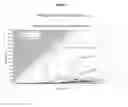
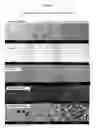
The best performances which emerge for the “Plast Fast” plasticizer are the gelation and the debubbling. This phenomenon is illustrated in FIG. 1 and the photographs taken for the debubbling are presented in FIG. 2. In FIG. 1, it should be understood that the photographs of the 2nd column are taken after 1 minute of resumption of the mixing (that is to say, reincorporation of air). The same applies for the photographs of the 3rd column, after 5 minutes
The classification of the plasticizers according to the grades assigned are summarized in table 5.
| TABLE 5 |
| Summary of the properties obtained with the plasticizers in the transparent |
| PVC paste formulations |
| Thermal | Loss in | |||||||||||
| Plasticizer | Viscosity | Aging | Gelation | Efficacy | Debubbling | stability | Color | Transp. | Gloss | weight | Migration | Score |
| DEHP | 0 | 0.5 | 0.75 | 1 | 0 | −0.125 | 0 | 0 | 0 | −2 | 0 | 0.125 |
| DINP | 0 | 0 | 0 | 0 | 0 | 0 | 0 | 0 | 0 | 0 | 0 | 0 |
| DINCH | 0.5 | 1.25 | −1.5 | −0.75 | 0 | 0 | 0 | 0 | 0.75 | −1 | 0 | −0.75 |
| DOTP | 0 | 1.25 | −0.75 | 0.25 | 0 | 0 | 0 | −0.5 | 0 | −0.75 | 0 | −0.5 |
| Nexo E01 | 0 | 1 | 1.25 | 1.375 | 1 | 3 | −1.5 | −0.75 | −0.5 | −1.5 | −0.5 | 2.875 |
| Plast Fast | 0.25 | 0.75 | 2.5 | 1.5 | 0.75 | 0.25 | −0.5 | 0 | 0 | −2.75 | 0 | 2.75 |
| MB10/DINP | 0.75 | −0.5 | 1 | 1.125 | −0.5 | 0.125 | 0 | −0.25 | −0.5 | −1.75 | 0 | −0.5 |
| 2088/DINP | −2 | 0 | 2 | 0.7 | −1.5 | 0.25 | −0.25 | −0.25 | −0.25 | −0.5 | 0 | −1.81 |
Example 3
Foam formulations corresponding to table 6 were produced with each plasticizer of table 2 in a mixer of medium-speed type.
| TABLE 6 |
| Recipe for PVC pastes - foam-type formulations (expanded layers): |
| Starting materials | Amount (phr) | |
| SolVin 367NK | 100 | |
| Plasticizer | 62 | |
| CaCO3 (15 mm) | 40 | |
| Porofor ® ADC (50%) + DINP | 6 | |
| Baerostab ® KK42 (K/Zn) | 2.0 | |
The comparison of the data obtained for the formulations synthesized, the plasticizer being modified on each occasion, are summarized in table 7.
| TABLES 7a and 7b |
| evaluations and comparison of the properties |
| 7a- Rheology and aging of the paste at low rate gradient (Eta = 1.4 s−1) |
| Plasticizer | t 0 | t 0 + 24 h |
| DEHP | 9.1 | 8.5 |
| DINP | 7.2 | 6.5 |
| DINCH | 7.4 | 5.6 |
| DOTP | 10.6 | 7.5 |
| Nexo E01 | 3.8 | 5.0 |
| Plast Fast | 11.4 | 11.7 |
| MB10/DINP | 2.1 | 2.5 |
| 2088/DINP | 6.9 | 7.3 |
| 7b- Density, color, rate of expansion, and cell quality |
| (thickness 0.35 mm, 2 min at 200° C.) |
| Density | Rate of | Yellowness | Cell | |
| Plasticizer | (g/cm3) | expansion | index | quality |
| DEHP | 0.25 | 5.1 | 12.9 | Very good |
| DINP | 0.25 | 5.27 | 14.19 | Very good |
| DINCH | 0.25 | 5.2 | 15.2 | Very good |
| DOTP | 0.26 | 5.2 | 11.25 | Very good |
| Nexo E01 | 0.24 | 5.6 | 47.7 | Moderate |
| Plast Fast | 0.21 | 6.3 | 19.4 | Good |
| MB10/DINP | 0.25 | 5.4 | 14 | Very good |
| 2088/DINP | 0.25 | 5.2 | 16.2 | Very good |
The classification of the plasticizers according to the grades assigned are summarized in table 8.
| TABLE 8 |
| Summary of the properties obtained with the plasticizers |
| in the PVC foam formulations |
| Rate | Cell | ||||||
| Plasticizer | Viscosity | Aging | Color | Density | exp | quality | Score |
| DEHP | −0.5 | 0 | 0.5 | 0 | 0 | 0 | 0 |
| DINP | 0 | 0 | 0 | 0 | 0 | 0 | 0 |
| DINCH | 0 | 0 | 0 | 0 | 0 | 0 | 0 |
| DOTP | −0.75 | 0 | 0.5 | 0 | 0 | 0 | −0.25 |
| Nexo E01 | 1 | 0 | −2.5 | 0.5 | 0.5 | −1 | −1.5 |
| Plast Fast | −0.75 | 0 | −0.75 | 1 | 1.25 | −0.5 | 0.25 |
| MB10/ | 1.5 | 0 | 0 | 0 | 0.25 | 0 | 1.75 |
| DINP | |||||||
| 2088/ | 0 | 0 | 0 | −0.25 | 0 | 0 | −0.25 |
| DINP | |||||||
The general comparison of these 2 formulations allows us to have the result of the overall performance of the plasticizers. The mean of the score of the transparent layers and the score of the foam layers gives us the overall performance score for each plasticizer and thus allows us to compare them. The total score of the performances evaluated is given in table 9.
| TABLE 9 |
| Total score of the performances of each plasticizer. |
| Plasticizer | Score transparent layers | Score foam layers | Total score |
| DEHP | 0.125 | 0 | 0.125 |
| DINP | 0 | 0 | 0 |
| DINCH | −0.75 | 0 | −0.75 |
| DOTP | −0.5 | −0.25 | −0.75 |
| Nexo E01 | 2.875 | −1.5 | 1.38 |
| Plast Fast | 2.75 | 0.25 | 3 |
| MB10/DINP | −0.5 | 1.75 | 1.25 |
| 2088/DINP | −1.8125 | −0.25 | −2.06 |
On average, the Plast Fast exhibits a good performance for the 2 recipes tested; it has the highest score in comparison with the other plasticizers. This plasticizer rapidly gels, has a very low viscosity and ages very well. Efficient debubbling is one of these leading characteristics. The foams prepared with this plasticizer have low densities, a high rate of expansion and excellent qualities.
Claims
1. A plasticizing composition, comprising a vinyl chloride resin and a plasticizing agent which comprises at least one diester of general formula (I):
RO—OC-A-CO—OR (I)
derived from a diacid selected from succinic acid, glutaric acid, adipic acid, ethylsuccinic acid, methylglutaric acid, and mixtures thereof,
in which:
A is linear or branched C4 to C6 aliphatic, and
R is alkyl, cycloalkyl or aryl.
2. The composition as claimed in claim 1, wherein R is a substituted or unsubstituted cycloalkyl of 5 to 6 carbon atoms selected from cyclopentyl or cyclohexyl or an aryl chosen from benzyl, phenyl, and their isomers.
3. The composition as claimed in claim 1, wherein R is a branched or unbranched alkyl having from 4 to 10 carbon atoms selected from n-butyl, t-butyl, n-pentyl, n-hexyl, n-heptyl, n-octyl, ethylhexyl, isooctyl, n-nonyl, isononyl, n-decyl or isodecyl.
4. The composition as claimed in claim 1, wherein the plasticizing agent is a mixture of:
from 70% to 95% by weight of methylglutaric acid diester,
from 5% to 30% by weight of ethylsuccinic acid diester, and
from 0% to 10% by weight of adipic acid diester.
5. The composition as claimed in claim 1, wherein the plasticizing agent is a mixture of:
from 95% to 100% by weight of methylglutaric acid diester, and
from 0% to 5% by weight of ethylsuccinic acid diester.
6. The composition as claimed in claim 1, wherein the composition additionally comprises one or more compounds selected from stabilizers, fillers, pigments, biocides, carbon black, adhesion promoters, viscosity reducers, thixotropic agents, thickening agents, blowing agents, dispersants, and other additives.
7. The composition as claimed in claim 1, wherein the plasticizing agent additionally comprises one or more compounds selected from phthalate, adipate, benzoate, triglyceride and other polymers.
8. A process for the production of a diester or a mixture of diesters of general formula (I):
RO—OC-A-CO—OR (I)
in which:
A is linear or branched C4 to C6 aliphatic, and
R is alkyl, cycloalkyl or aryl,
wherein the process comprises the following steps:
hydrolysis of a dinitrile or a mixture of dinitriles selected from adiponitrile, methylglutaronitrile, ethylsuccinonitrile, glutaronitrile or succinonitrile to form a corresponding diacid intermediate or a mixture of diacids,
esterification of a diacid intermediate or of the diacid mixture in the presence of an alcohol to form a corresponding diester or mixture of diesters,
decoloration and purification of the diester or mixture of diesters.
9. The process as claimed in claim 10, wherein the diester or mixture of diesters is produced from a diacid selected from succinic acid, glutaric acid, adipic acid, ethylsuccinic acid, methylglutaric acid, and mixtures thereof.
10-11. (canceled)
12. A plastisol comprising the composition as claimed in claim 1, wherein the plastisol is in the form of a paste, film, or foam.
13. The composition as claimed in claim 1, wherein the composition is an adhesive or an ink.
14. A method for making an article, comprising dry blending or extruding a plasticizing composition according to claim 1.
15. An article made by the method of claim 14, wherein the article is selected from toys, films, sheets, flexible pipes, coatings, cables, floor tiles, and synthetic leather articles.
Images & Drawings included:
Sources:
- United States Patent and Trademark Office - verify current appl. status at the USPTO↗
Similar patent applications:
- » 20160376219
Ester compound, plasticizer composition including the same, preparation method of the plasticizer composition and resin composition including the plasticizer composition - » 20100187892
METHOD FOR PRODUCING A COMPOSITE PLASTIC SHEET, THE COMPOSITE PLASTIC SHEET AND THE SEAT BACK OF A CHAIR MADE OF THE COMPOSITE PLASTIC SHEET - » 20220315131
Metal - fiber reinforced plastic composite, metal - fiber reinforced plastic composite unit, method of production of metal - fiber reinforced plastic composite, and auto part - » 20200385560
Wood plastic composite composition comprising a wax composition, method for producing a wood plastic composite therefrom and the use of wax compositions as lubricants for the production of wood plastic composites - » 20170166724
Ester-based compound, plasticizer composition including the same, preparation method of the composition and resin composition including the plasticizer composition - » 20150111042
Method for bonding plastics and method for releasing a bond in the plastic composite and a plastic composite - » 20180016410
PLASTIC COMPOSITION, COMPOSITE FLOOR INCLUDING PLASTIC COMPOSITION AND PREPARATION METHOD THEREOF - » 20150005420
PLASTICIZER COMPOSITIONS AND METHODS FOR MAKING PLASTICIZER COMPOSITIONS - » 20170088695
Plasticizer compositions and methods for making plasticizer compositions - » 20160200883
Composite plastic part with improved adhesion between the plastic components contained in the composite plastic part
Recent applications in this class:
- » 20250051543 2025-02-13
HIGH PERFORMANCE HYBRID FLUOROPOLYMER COMPOSITES MEMBRANES - » 20250043106 2025-02-06
MELT PROCESSIBLE COMPOSITIONS COMPRISING A NONFLUORINATED POLYMER PROCESSING ADDITIVE AND METHODS OF USE - » 20250011571 2025-01-09
MODIFIER FOR POLYOLEFIN-BASED RESIN, POLYOLEFIN-BASED RESIN COMPOSITION, POLYOLEFIN-BASED RESIN FILM, AND LAMINATE FILM - » 20240417540 2024-12-19
PLASTICIZER FOR POLYMER RESIN COMPOSITIONS - » 20240317966 2024-09-26
RUBBER COMPOSITION, AND RUBBER PRODUCT AND HOSE EACH OBTAINED USING SAID RUBBER COMPOSITION - » 20240309177 2024-09-19
PLASTICIZER COMPOSITION FOR VINYL CHLORIDE RESIN, PLASTISOL, AND COATING FILM THEREOF - » 20240294733 2024-09-05
PROPANE TRICARBOXYLATE-BASED PLASTICIZER COMPOSITION AND RESIN COMPOSITION INCLUDING THE SAME - » 20240199846 2024-06-20
ACONITATE-BASED PLASTICIZER COMPOSITION AND RESIN COMPOSITION INCLUDING THE SAME - » 20240199845 2024-06-20
PROPANE TRICARBOXYLATE-BASED PLASTICIZER COMPOSITION AND RESIN COMPOSITION INCLUDING THE SAME - » 20240191058 2024-06-13
CELLULOSE ESTER COMPOSITION AND MOLDED ARTICLE