One pot process for the preparation of gold quantum clusters
US20160054328A1
2016-02-25
14/779,197
2014-03-24
✅ Patent granted
US 9,857,376 B2
2018-01-02
WO; PCT/IN2014/000183; 20140324
WO; WO2014/147649; 20140925
Matthew E Hoban
Andrews Kurth Kenyon LLP
2034-03-24
Abstract:
The invention disclosed herein provides tunable process for the preparation of water dispersive, biocompatible, fluorescent L-cystine labeled gold (Au) quantum clusters without using any toxic reactants. Further the invention discloses application of synthesized fluorescent gold (Au) quantum clusters in the field of nano-medicine, fluorescence imaging and florescence based sensors.
Inventors:
- Puneet KHANDELWAL 1 🇮🇳 Pune, India
- Dheeraj Kuman SINGH 1 🇮🇳 Pune, India
- Pankaj PODDAR 2 🇮🇳 Pune, India
- Dheeraj Kumar Singh 1 🇮🇳 Pune, India
Assignee:
- Council of Scientific and Industrial Research 701 🇮🇳 New Delhi, India
Applicant:
Interested in similar patents?
Get notified when new applications in this technology area are published.
Classification:
G01N33/588 » CPC main
Investigating or analysing materials by specific methods not covered by groups -; Biological material, e.g. blood, urine ; Haemocytometers; Chemical analysis of biological material, e.g. blood, urine; Testing involving biospecific ligand binding methods; Immunological testing involving labelled substances with semiconductor nanocrystal label, e.g. quantum dots
C09K2211/10 » CPC further
Chemical nature of organic luminescent or tenebrescent compounds Non-macromolecular compounds
G01N33/58 IPC
Investigating or analysing materials by specific methods not covered by groups -; Biological material, e.g. blood, urine ; Haemocytometers; Chemical analysis of biological material, e.g. blood, urine; Testing involving biospecific ligand binding methods; Immunological testing involving labelled substances
C09K11/06 » CPC further
Luminescent, e.g. electroluminescent, chemiluminescent materials containing organic luminescent materials
C12Q1/68 IPC
Measuring or testing processes involving enzymes, nucleic acids or microorganisms ; Compositions therefor; Processes of preparing such compositions involving nucleic acids
G01N33/553 » CPC further
Investigating or analysing materials by specific methods not covered by groups -; Biological material, e.g. blood, urine ; Haemocytometers; Chemical analysis of biological material, e.g. blood, urine; Testing involving biospecific ligand binding methods; Immunological testing; Immunoassay; Biospecific binding assay; Materials therefor with an insoluble carrier for immobilising immunochemicals the carrier being inorganic Metal or metal coated
B82Y15/00 » CPC further
Nanotechnology for interacting, sensing or actuating, e.g. quantum dots as markers in protein assays or molecular motors
Description
FIELD OF THE INVENTION
The present invention relates to a facile, one-pot process for the synthesis of water dispersive, monodispersible, biocompatible, fluorescent, L-cystine labeled gold (Au) quantum clusters. Particularly, the present invention provides a facile, one-pot process for the synthesis of water dispersive, monodispersible, biocompatible, fluorescent, L-cystine labeled gold (Au) quantum clusters of different core size, without addition of any other reducing agent. The present invention also relates to the use of an amino acid molecule, L-cystine, for the synthesis of water dispersive, biocompatible, a range of fluorescent Au clusters.
BACKGROUND AND PRIOR ART
Usually, noble metals show drastic changes in their electronic properties at nanoscale. The electronic properties of noble metals become more interesting when the size decrease to the extent where it would be comparable to the Fermi wavelength of an electron. Such small size regime is called metal clusters, where the free electrons are confined relative to the Fermi wavelength in the conduction band. These metal clusters composed of few atoms to few tens of atoms and exhibit molecule like, size dependent properties where the valence and conduction bands show further discritization. Excitation of electrons from valence band (filled 5d10) to the conduction band (6sp1) leads to a strong size dependent fluorescence emission in a range that can extend from the visible to the near -infrared. The synthesis of Au QCs with different core sizes have been reported recently, where the mass spectroscopy, especially, MALDI-TOF was ideally used as a major characterization tool.
In the past decade, researchers have reported multiple step synthesis of different core size of Au QCs employing various capping and reducing agents where most of them are either bulky (like protein or polymers) and/or non-biocompatible which limits their application in biological fields. While Au has been tried, Ag being less stable, gets oxidized and therefore is not very attractive for applications similar to Au.
In other prior arts, alkane thiols are used, which is not recommended, especially for medical applications.
The assembly of gold nanoparticles in presence of semi-essential amino acid such as cysteine for biomedical applications is reported in the art.
Aurora Mocanu et al. in Colloids and Surfaces A: Physicochemical and Engineering Aspects vol 338, 1-3, April 2009, Pgs 93-101 discloses preparation of gold nanoparticles in aqueous dispersions, using sodium citrate as reduction agent, and their interaction with L-cysteine. Further preparation of citrate capped gold nanoparticles of controlled size in aqueous solution and their interaction with L-cysteine is reported by Petean I. in Journal of optoelectronics and advanced materials; 2008, vol. 10, no.9, pp. 2289-2292.
The gold nanorods conjugated with 1-cysteine and their applications” is disclosed by M. M. Dzaglil in the African Review of Physics (2012) 7:0055 475.(Additionally 1H MAS NMR study of cysteine-coated gold nanoparticles is described in J. Phys. Chem. B, 2012, 116 (27), pp 7771-7775 by Anuji Abraham.
Further KR20040060357 discloses a substrate for biosensor and a method for preparing thereof. The substrate for biosensor comprises a solid substrate with one side covered with a metal thin layer; a self-assembled peptide on the metal thin layer of the solid substrate through the cysteine residue in the end; a protein bound to the peptide and having specificity to the invariable region of an antibody; and the antibody bound with the protein, wherein the metal thin layer is composed of gold, silver, copper or white gold; the peptide consists of 5 to 25 amino acids; and the solid substrate is treated with mercaptoethanol solution or mercaptopropionic acid solution.
Zheng and Ying in J. AM. CHEM. SOC. 2009, 131, 888-889 titled “Protein-Directed Synthesis of Highly Fluorescent Gold Nanoclusters” disclose gold nano clusters of a single size, ˜25 atoms, which emit red fluorescence, prepared by using HAuCl4, NaOH and a large protein, Bovine Serum Albumin (BSA). Further, the process is a 12 hour reaction to synthesize the nano clusters.
Currently the challenge lies in providing a process to synthesize water dispersive, biocompatible and a range of Au QCs core size population with different emissions, especially, using small, biocompatible non-bulky molecules. Actually, the tuning of the size of Au QCs core, specially using small biomolecule, is a very difficult and quite tricky task.
Moreover, there is no report on the synthesis of small non-bulky and non-essential amino acid molecule conjugated Au QCs so far, wherein amino acid itself provides the site for sequestration of gold ions and plays the role as both reducing and stabilizing/capping agent. Therefore cost-effective, industrially viable and environmental friendly process for the synthesis of water dispersible, highly biocompatible and fluorescent non-bulky amino acid capped or conjugated metal quantum clusters with a range of core size for biomedical applications is highly desirable, which obviates use of any toxic materials.
OBJECT OF INVENTION
The main object of the present invention is to provide a facile, one-pot process for the synthesis of water dispersive, monodispersible, biocompatible, fluorescent, L-cystine labeled gold (Au) quantum clusters. Another objective of the present invention is to provide a facile, one-pot process for the synthesis of water dispersive, monodispersible, biocompatible, fluorescent L-cystine labeled gold (Au) quantum clusters of different core size, without addition of any other reducing agent.
One more object of the invention is to provide the facile and one pot synthesis of a small non-bulky amino acid molecule i.e. L-cystine labeled Au QCs, which is water dispersible, highly biocompatible and fluorescent.
SUMMARY OF THE INVENTION
Accordingly, the present invention provides a facile one-pot process for the synthesis of fluorescent L-cystine labeled gold (Au) quantum clusters (QCs) of different core size, without addition of any other reducing agent, wherein the process comprises;
-
- a) mixing a solution of a gold salt with a solution of L-cystine, followed by the addition of a base, to obtain brown coloured reaction mixture; and
- b) allowing said reaction mixture to stand at ambient temperature ranging between 20-35° C. for a period ranging between 5 10 min for complete reduction of gold ions to obtain L-cystine labeled gold (Au) quantum clusters.
In an embodiment of the present invention L-cystine labeled gold (Au) quantum clusters (QCs) are water dispersive, monodispersible, biocompatible.
In one embodiment of the present invention the gold salt used is chloroauric acid (HAuCl4).
In another embodiment of the present invention the concentration of chloroauric acid is in the rage of 0.005 to 0.01M.
Still in another embodiment of the present invention the concentration of L-cystine solution is in the range of 0.05-0.1M.
Still in another embodiment of the present invention the base is selected from the group consisting of NaOH, KOH, K2CO3, Na2CO3, NaHCO3,
Still in another embodiment of the present invention the concentration of NaOH is about 0.1M.
Still in another embodiment of the present invention the gold clusters size is less than 2 nm.
Still in another embodiment of the present invention the gold-quantum-clusters comprise less than 100 atoms of gold metal.
Still in another embodiment of the present invention gold-quantum clusters show differently fluorescing from blue to red according to their size.
BRIEF DESCRIPTION OF THE DRAWINGS
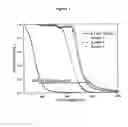
FIG. 1 depicts UV-Vis spectra of L-cystine and L-cystine labeled Au QCs.
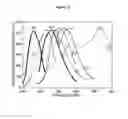
FIG. 2 depicts Normalized fluorescence excitation (1) and emission spectra (2) for L-cystine only (-, Solid line), sample 1 (. . . , Dotted line), sample 2 (o, circle), sample 3 (- - - Dashed line). Spectra b, c and d were multiplied by 1.85, 1.03 and 3.5 respectively, for clarity.
ABBREVIATIONS
Au QC: Gold Quantum Clusters
DEFINITIONS
The term “water dispersible” used in the specification defines the clusters are in suspension form in water and can be easily reconstituted.
The term “biocompatible” defines the ligand used is a FDA approved drug. L-cystine is a non-essential amino acid i.e. human body can synthesize sufficient L-cystine to meet its requirements.
The cluster obtained is “mono dispersible” means size of cluster is controlled within a narrow range. The as-obtained Au QCs do not have broad and multiple peaks in the fluorescence spectra. Generally, the broad and multiple peaks in the fluorescence spectra lead to the synthesis of polydisperse Au QCs.
DETAILED DESCRIPTION OF THE INVENTION
The invention will now be described in detail in connection with certain preferred and optional embodiments, so that various aspects thereof may be more fully understood and appreciated.
The present invention provides tunable process for the preparation of water dispersive, biocompatible, fluorescent L-cystine labeled gold (Au) quantum clusters having different core sizes, without using any toxic reactants.
The present invention provides L-cystine labeled Au QCs which is biocompatible and water dispersive having tunable fluorescence properties. The invention provides the facile, one pot synthesis of L-cystine labeled Au QCs comprising the steps of:
-
- a) mixing a solution of a gold salt with a solution of L-cystine, followed by the addition of a base, to obtain brown coloured reaction mixture; and
- b) allowing said reaction mixture to stand at ambient temperature for complete reduction of gold ions to obtain Au QCs.
According to the process, gold solution is chloroauric acid HAuCl4, wherein the concentration of gold solution ranges from 0.005-0.01M, and volume ranges from 0.1-20 milliliters (ml), while the volume of L-cystine solution used is in the range of 1-5 ml having concentration in the range of 0.05-0.1M.
The base employed in the process is selected from the group consisting of NaOH, KOH, K2CO3, Na2CO3, NaHCO3, preferred base is NaOH with concentration of about 0.1M, and used in the range of 200-600 μl.
The ambient temperature is maintained in between 20-35° C., preferably 25° C.
Further the synthesized quantum clusters contain less than 100 atoms of gold metal, wherein the Au clusters having the sizes less than 2 nm.
The process of formation of L-cystine labeled Au QCs disclosed results in the formation of the QCs within few minutes. The process of synthesis is completed in 5 minutes.
The invention provides facile, one pot process for the synthesis of L-cystine labeled Au QCs comprises:
-
- a) mixing of 0.01 M HAuCl4 and 0.1M L-cystine solutions followed by the addition of 0.1 M NaOH, to obtain brown coloured reaction mixture; and
- b) allowing said reaction mixture to stand for 5 min at 25° C. for complete the reduction of gold ions to obtain Au QCs.
The instant L-cystine labeled Au QCs having different core sizes are characterized by using UV-vis spectroscopy and fluorescence spectroscopy.
EXAMPLES
Following examples are given by way of illustration therefore should not be construed to limit the scope of the invention.
Example 1
10-2 M HAuCl4 and 10-1 M L-cystine solutions were mixed following the addition of 10-1 M NaOH, as shown in Table 1, to prepare 3 samples without addition of any other reducing agent, catalyst or template. Immediately after the addition, the color of mixture was turned to red first and then brown. The 3 sample mixture of solutions was left at 250 C for 5 min to complete the reduction process of gold ions into the Au cluster. The suspension as such for each sample was used for further characterization.
| TABLE 1 |
| Composition of various L-cystines labeled Au clusters. |
| Volume of | Volume of | Volume of | ||
| Sample | 10−1 M | 10−2 M | 10−1 M | |
| Name | L-cystine (ml) | HAuCl4 (ml) | NaOH (μl) | |
| Sample1 | 2 | 0.5 | — | |
| Sample2 | 2 | 8 | 250 | |
| Sample3 | 2 | 10 | 500 | |
UV-Vis spectra of sample 1 Au QCs (cf FIG. 1) showed the broad and strong absorption in the UV range starting from ˜490 nm with the absence of surface plasmon resonance peak (520 nm) that indicated the presence of Au QCs having the sizes smaller than ˜2 nm. The spectra of gold QCs samples were quite different from the spectrum of pure L-cystine solution. The shift of absorbance onset to the longer wavelength showed the synthesis of Au QCs with larger core sizes. Further, photoluminescence properties were studied by fluorescence spectroscopy and confirmed the synthesis of Au cluster with various core sizes. The emission peak position for fluorescent Au clusters depends on the size of the Au QC core. According to the spherical Jellium model, Au QCs with larger core size emit at longer wavelengths (e.g., UV (Au5), blue sample 1(Au8), green sample 2(Au13), and red sample 3 (Au25) emission. Fluorescence excitation and emission spectra for all samples were demonstrated in FIG. 2. The shift in fluorescence excitation and emission spectrum peaks for different Au QCs suspension exhibits the synthesis of Au QCs with different core sizes.
ADVANTAGES OF INVENTION
-
- 1. One pot simple route of synthesis.
- 2. The process does not require use of other reducing agent, catalyst or template.
- 3. The process involves the use of small, biocompatible and non-toxic molecule, like L-cystine which adds the key advantage of use of the L-cystine capped Au QCs for biological systems.
- 4. The process allows the synthesis of different core size Au QCs with various emissions.
Claims
We claim:1. A facile one-pot process for the synthesis of fluorescent L-cystine labeled gold (Au) quantum clusters (QCs) of different core size, without addition of any other reducing agent, wherein the process comprises;
a) mixing a solution of a gold salt with a solution of L-cystine, followed by the addition of a base, to obtain brown coloured reaction mixture; and
b) allowing said reaction mixture to stand at ambient temperature ranging between 20-35° C. for a period ranging between 5-10 min for complete reduction of gold ions to obtain L-cystine labeled gold (Au) quantum clusters.
2. The one-pot process according to claim 1, wherein L-cystine labeled gold (Au) quantum clusters (QCs) are water dispersive, monodispersible, biocompatible.
3. The one-pot process according to claim 1, wherein the gold salt used is chloroauric acid (HAuCl4).
4. The one-pot process according to claim 1, wherein the concentration of chloroauric acid is in the rage of 0.005 to 0.01M.
5. The one-pot process according to claim 1, wherein the concentration of L-cystine solution is in the range of 0.05-0.1M.
6. The one-pot process according to claim 1, wherein the base is selected from the group consisting of NaOH, KOH, K2CO3, Na2CO3, NaHCO3.
7. The one-pot process according to claim 1, wherein the concentration of NaOH is about 0.1M.
8. The one-pot process according to claim 1, wherein the gold clusters size is less than 2 nm.
9. The one-pot process according to claim 1, wherein the gold-quantum clusters comprise less than 100 atoms of gold metal.
10. The one-pot process according to claim 1, wherein gold-quantum clusters show differently fluorescing from blue to red according to their size.
Images & Drawings included:
Sources:
- United States Patent and Trademark Office - verify current appl. status at the USPTO↗
Recent applications in this class:
- » 20250035636 2025-01-30
CHROMOPHORIC POLYMER DOTS - » 20230408526 2023-12-21
Chromophoric polymer dots - » 20230160902 2023-05-25
ZWITTERIONIC NANOPARTICLES - » 20210172957 2021-06-10
METHODS AND SYSTEMS FOR ANALYSIS USING POLYMER DOTS - » 20200371109 2020-11-26
Chromophoric polymer dots - » 20200355696 2020-11-12
Modular, multifunctional nanoparticle-based bioconjugate for realtime visualization of cellular membrane potential - » 20200240992 2020-07-30
METHODS AND COMPOSITIONS FOR BIOSENSING - » 20200081012 2020-03-12
METHODS APPARATUSES AND SYSTEMS FOR DETECTING AND QUANTIFYING PHOSPHOPROTEINS - » 20200025772 2020-01-23
Compact and homogeneous quantum dots and methods of making the same - » 20190369107 2019-12-05
ZWITTERIONIC NANOPARTICLES
Recent applications for this Assignee:
- » 20250293290 2025-09-18
HONEYCOMB BORON CARBON NITRIDE (HBCN) AS ANODE FOR SODIUM-ION BATTERY - » 20250282701 2025-09-11
A PROCESS FOR THE DIRECT CONVERSION OF SUGAR TO VALUE ADDED PRODUCTS - » 20250235910 2025-07-24
AN IMPROVED DISINFECTION-SOLIDIFICATION PROCESS FOR PATHOGENIC MEDICAL WASTE DISPOSAL - » 20250230477 2025-07-17
A PROCESS FOR THE PREPARATION OF TETRAHYDROANTHRACENES FROM STREPTOMYCES SPP. AND ANTICANCER ACTIVITY THEREOF - » 20240417358 2024-12-19
Continuous Flow Reactor and Process for Synthesis of Substituted Benzoic Acid - » 20240382509 2024-11-21
Cannabinoids C- and O-glycosides possessing anti-proliferative and anti-metastatic properties and process for preparation thereof - » 20240294473 2024-09-05
FUNCTIONALIZED MALEIMIDES AND ISOMALEIMIDES AND A PROCESS FOR PREPARATION THEREOF - » 20240262753 2024-08-08
MAX PHASES BY REACTIVE FLASH SINTERING AND A METHOD FOR ULTRAFAST SYNTHESIS THEREOF - » 20240255096 2024-08-01
THREE DEGREES OF FREEDOM (3DoFs) PRECISION POSITIONING WEDGE AIR BEARING STAGE SYSTEM (WABSS) - » 20240229779 2024-07-11
BIDIRECTIONAL, LINEAR AND BINARY, SEGMENTED ANTAGONISTIC SERVOMECHANISM-BASED SHAPE MEMORY ALLOY (SMA) ACTUATOR