Guaranteed periods of inactivity for network listening modes
US20160057644A1
2016-02-25
14/779,184
2013-03-22
✅ Patent granted
US 9,949,159 B2
2018-04-17
WO; PCT/EP2013/056117; 20130322
WO; WO2014/146725; 20140925
Redentor Pasia
Harrington & Smith
2033-04-22
Abstract:
The present invention provides methods, apparatuses and computer program product relating to guaranteed periods of inactivity for network listening modes. The present invention includes configuring a measurement configuration message, the measurement configuration message including measurement gap information, and transmitting the measurement configuration message to at least two user equipments connected to the base station, wherein the measurement gap information included in the measurement configuration message is the same for each of the at least two user equipments.
Inventors:
- Klaus Ingemann Pedersen 160 🇩🇰 Aalborg, Denmark
- Benoist Pierre Sebire 130 🇯🇵 Tokyo, Japan
Assignee:
- Nokia Solutions and Networks Oy 2,409 🇫🇮 Espoo, Finland
Applicant:
Interested in similar patents?
Get notified when new applications in this technology area are published.
Classification:
H04W74/08 IPC
Wireless channel access, e.g. scheduled or random access Non-scheduled or contention based access, e.g. random access, ALOHA, CSMA [Carrier Sense Multiple Access]
H04L47/27 » CPC further
Traffic control in data switching networks; Flow control; Congestion control Evaluation or update of window size, e.g. using information derived from acknowledged [ACK] packets
H04W74/0833 » CPC further
Wireless channel access, e.g. scheduled or random access; Non-scheduled or contention based access, e.g. random access, ALOHA, CSMA [Carrier Sense Multiple Access] using a random access procedure
H04W84/045 » CPC further
Network topologies; Hierarchically pre-organised networks, e.g. paging networks, cellular networks, WLAN [Wireless Local Area Network] or WLL [Wireless Local Loop]; Large scale networks; Deep hierarchical networks; Public Land Mobile systems, e.g. cellular systems using private Base Stations, e.g. femto Base Stations, home Node B
H04W24/10 » CPC main
Supervisory, monitoring or testing arrangements Scheduling measurement reports ; Arrangements for measurement reports
H04W24/02 » CPC further
Supervisory, monitoring or testing arrangements Arrangements for optimising operational condition
H04W88/06 » CPC further
Devices specially adapted for wireless communication networks, e.g. terminals, base stations or access point devices; Terminal devices adapted for operation in multiple networks or having at least two operational modes , e.g. multi-mode terminals
H04W84/08 IPC
Network topologies; Hierarchically pre-organised networks, e.g. paging networks, cellular networks, WLAN [Wireless Local Area Network] or WLL [Wireless Local Loop]; Large scale networks; Deep hierarchical networks Trunked mobile radio systems
H04W84/04 IPC
Network topologies; Hierarchically pre-organised networks, e.g. paging networks, cellular networks, WLAN [Wireless Local Area Network] or WLL [Wireless Local Loop] Large scale networks; Deep hierarchical networks
Description
FIELD OF THE INVENTION
The present invention relates to guaranteed periods of inactivity for network listening modes. In particular, the present invention relates to apparatuses, methods and a program for guaranteed periods of inactivity for network listening modes.
BACKGROUND OF THE INVENTION
Network Listening Mode (NLM) is a mode of operation during which an eNB listens to the downlink transmission of other eNBs. NLM is for instance used by small cells at start up in order to select a Physical Cell Identifier (PCI) that is not currently used in the area where the small cell is located (cf., for example, §22.3.5 in document [1]). NLM allows the small cell to read the broadcast channels of surrounding cells to determine which PCI are already used locally.
A Measurement Gap (MG) allows the UE to make inter-frequency and inter-RAT measurements. With the exception of the Random Access Channel (RACH) procedure that always has priority when started, no dedicated transmission/reception (TX/RX) activity takes place in the serving cell when a measurement gap occurs. A measurement gap is always 6 ms long in downlink (DL), 7 ms long in uplink (UL), and occurs with a periodicity of 40 or 80 ms.
The eNB can only use the receiver capability for NLM during time-slots with no transmissions from the eNB. While this is not an issue when a small cell is starting and has not yet any UE to serve, it is a major issue for scenarios requiring NLM to be used while having UEs already connected.
REFERENCES
[1]: 3GPP TS 36.300, V11.4.0, December 2012
[2]: 3GPP TS 36.331, V11.2.0, December 2012
[3]: 3GPP TS 36.321, V11.1.0, December 2012
SUMMARY OF THE INVENTION
It is therefore an object of the present invention to overcome the above mentioned issues and to provide methods, apparatuses and a program for guaranteed periods of inactivity for network listening modes.
According to an aspect of the present invention there is provided a method comprising:
-
- configuring, at a base station, a measurement configuration message, the measurement configuration message including measurement gap information, and
- transmitting the measurement configuration message to at least two user equipments connected to the base station, wherein
- the measurement gap information included in the measurement configuration message is the same for each of the at least two user equipments.
According to further refinements of the present invention as defined under the above aspect
-
- the measurement gap information is included in an information element measGapConfig according to radio resource control protocol;
- the measurement gap is a period during which no reception or transmission is done by the user equipment configured with the measurement gap;
- the method further comprises switching, by the base station, to a network listening mode during the measurement gap;
- the measurement gap is configured independent from any inter-frequency measurements;
- the method further comprises increasing, by the base station, a time window for a random access response in a random access procedure.
According to another aspect of the present invention there is provided a method comprising:
-
- receiving, at user equipment, a measurement configuration message from a base station to which the user equipment is connected, the measurement configuration message including measurement gap information, and
- setting up a measurement gap configuration based on the measurement gap information included in the received measurement configuration message.
According to further refinements of the present invention as defined under the above aspect
-
- the measurement gap information is included in an information element measGapConfig according to radio resource control protocol;
- the measurement gap is a period during which no reception or transmission is done by the user equipment configured with the measurement gap;
- the measurement gap is configured independent from any inter-frequency measurements.
According to another aspect of the present invention there is provided a method in a system comprising a base station and at least two user equipments connected to the base station, comprising:
-
- configuring, at a base station, a measurement configuration message, the measurement configuration message including measurement gap information, and
- transmitting the measurement configuration message to at least two user equipments connected to the base station, wherein
- the measurement gap information included in the measurement configuration message is the same for each of the at least two user equipments,
- receiving, at user equipment, the measurement configuration message from the base station to which the user equipment is connected, and
- setting up a measurement gap configuration based on the measurement gap information included in the received measurement configuration message.
According to another aspect of the present invention there is provided an apparatus comprising:
-
- a configuring unit adapted to configure a measurement configuration message, the measurement configuration message including measurement gap information, and
- a transmitting unit adapted to transmit the measurement configuration message to at least two user equipments connected to the apparatus, wherein
- the measurement gap information included in the measurement configuration message is the same for each of the at least two user equipments.
According to further refinements of the present invention as defined under the above aspect
-
- the measurement gap information is included in an information element measGapConfig according to radio resource control protocol;
- the measurement gap is a period during which no reception or transmission is done by the user equipment configured with the measurement gap;
- the apparatus further comprises a switching unit adapted to switch to a network listening mode during the measurement gap;
- the measurement gap is configured independent from any inter-frequency measurements;
- the apparatus further comprises a unit adapted to increase a time window for a random access response in a random access procedure;
According to another aspect of the present invention there is provided an apparatus comprising:
-
- a receiving unit adapted to receive a measurement configuration message from a base station to which the apparatus is connected, the measurement configuration message including measurement gap information, and
- a setup unit adapted to setup a measurement gap configuration based on the measurement gap information included in the received measurement configuration message.
According to further refinements of the present invention as defined under the above aspect
-
- the measurement gap information is included in an information element measGapConfig according to radio resource control protocol;
- the measurement gap is a period during which no reception or transmission is done by the apparatus configured with the measurement gap;
- the measurement gap is configured independent from any inter-frequency measurements;
According to another aspect of the present invention there is provided system comprising a base station and a user equipment as defined under any one of the above aspects.
According to another aspect of the present invention there is provided an apparatus comprising:
-
- means for configuring a measurement configuration message, the measurement configuration message including measurement gap information, and
- means for transmitting the measurement configuration message to at least two user equipments connected to the apparatus, wherein
- the measurement gap information included in the measurement configuration message is the same for each of the at least two user equipments.
According to another aspect of the present invention there is provided an apparatus comprising:
-
- means for receiving a measurement configuration message from a base station to which the apparatus is connected, the measurement configuration message including measurement gap information, and
- means for setting up a measurement gap configuration based on the measurement gap information included in the received measurement configuration message.
According to another aspect of the present invention there is provided a computer program product comprising code means adapted to produce steps of any of the methods as described above when loaded into the memory of a computer.
According to a still further aspect of the invention there is provided a computer program product as defined above, wherein the computer program product comprises a computer-readable medium on which the software code portions are stored.
According to a still further aspect of the invention there is provided a computer program product as defined above, wherein the program is directly loadable into an internal memory of the processing device.
BRIEF DESCRIPTION OF THE DRAWINGS
These and other objects, features, details and advantages will become more fully apparent from the following detailed description of aspects/embodiments of the present invention which is to be taken in conjunction with the appended drawings, in which:
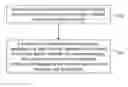
FIG. 1 is a flowchart illustrating a method according to certain embodiments of the present invention.
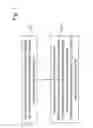
FIG. 2 is a block diagram showing an example of an apparatus according to certain embodiments of the present invention.
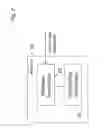
FIG. 3 is a flowchart illustrating another method according to certain embodiments of the present invention.
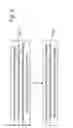
FIG. 4 is a block diagram showing another example of an apparatus according to certain embodiments of the present invention.
DETAILED DESCRIPTION
In the following, aspects/embodiments of the present invention are described by referring to general and specific examples of the aspects/embodiments, wherein the features of the aspects/embodiments can be freely combined with each other unless otherwise described. It is to be understood, however, that the description is given by way of example only, and that the described aspects/embodiments are by no means to be understood as limiting the present invention thereto.
The invention looks at the scenario wherein, in a cell where UEs are connected to an eNB, using the network listening mode (NLM) is problematic, as this mode requires that the eNB uses its receiver capability during time-slots when it does not transmit, as described above. When UEs are connected the opportunities to use network listening mode are reduced.
To overcome this issue, certain embodiments of the present invention propose to configure all UEs that are connected to have a common period of inactivity. By configuring the UEs with the same “gapOffset”, a period of inactivity common to all UEs is then possible, allowing the eNB to then operate in network listening mode and for example receive information relating to Physical Cell Identifiers (PCIs).
In order to guarantee a common period of inactivity for all connected UEs, it is proposed to configure them with overlapping measurement gaps.
Since measurement gaps are currently configured for inter-frequency measurement, another aspect of the present invention is to allow such a configuration to take place even when no inter-frequency measurements are configured. That is, the measurement gaps may be configured independent from inter-frequency measurements.
Measurement gaps are configured by radio resource control (RRC) protocol in a dedicated manner through the Information Element (IE) measGapConfig (cf. §5.5.2.9 of document [2]), which is part of the Information Element (IE) measConfig. By configuring all UEs with the same gapOffset, included in the IE measGapConfig, RRC can therefore guarantee a period of inactivity common to all UEs, allowing the eNB to operate in NLM mode.
In this regard, it is noted that it is only necessary that the resulting measurement gap is the same for all UEs. Thus, there may be a case that even though not the same information element is sent to the UEs, the resulting measurement gap is the same for each UE.
The periods of inactivity during measurement gaps are ensured by the MAC layer (cf. document [3]) of each UE: no DL transmission is expected, no UL transmission takes place. The only exception is related to the random access procedure during which the UE expects a random access response after sending a preamble (cf. §5.1.4 of document [3]):
In particular, document [3] discloses that once the Random Access Preamble is transmitted and regardless of the possible occurrence of a measurement gap, the UE shall monitor the PDCCH of the Primary Cell (PCell) for Random Access Response(s) identified by the RA-RNTI defined below, in the RA Response window which starts at the subframe that contains the end of the preamble transmission plus three subframes and has length ra-ResponseWindowSize subframes.
Because the eNB does not wish to transmit a random access response during the common period of inactivity used for NLM, it would have to delay it. This can easily be done by increasing the size of the RA window with the ra-ResponseWindowSize.
RRC signalling restricts the measurement configuration so that whenever the UE has a measConfig, it includes a measObject for each serving frequency. There is no other restriction that would limit the occurrence of measGapConfig to the cases where measConfig also include measObjectToAddModList for inter-frequencies. However since measurement gaps are typically configured only in the presence of inter-frequency neighbours to be measured, it should be clarified that measurements gaps may be configured independent from UE inter-frequency measurements.
In the following, a specific example of the present invention will be described with reference to the drawings.
FIG. 1 is a flowchart illustrating a method according to certain aspects of the present invention.
According to certain aspects of the present invention, the method comprises configuring, in a step S11, a measurement configuration message, the measurement configuration message including measurement gap information. Further, the method comprises transmitting, in a step S12, the measurement configuration message to at least two user equipments connected to the base station. The measurement gap information included in the measurement configuration message is the same for each of the at least two user equipments.
According to certain aspects of the present invention, the measurement gap information is included in an information element measGapConfig according to radio resource control protocol.
Further, according to certain aspects of the present invention, the measurement gap is a period during which no reception or transmission is done by the user equipment configured with the measurement gap.
According to certain aspects of the present invention the method further comprises switching, by the base station, to a network listening mode during the measurement gap.
According to certain aspects of the resent invention, the measurement gap is configured independent from any inter-frequency measurements.
According to certain aspects of the present invention the method further comprises increasing, by the base station, a time window for a random access response in a random access procedure
Thus, there is guaranteed a period of inactivity common to all UEs connected to the base station so as to allow the base station to operate in a NLM mode.
FIG. 2 is a block diagram showing an example of an apparatus according to certain aspects of the present invention.
According to an aspect of the present invention, the apparatus 20, e.g. a base station 20, like an eNodeB, comprises a configuring unit adapted to configure a measurement configuration message, the measurement configuration message including measurement gap information. Further, the apparatus comprises a receiver/transmitter 22 adapted to transmit the measurement configuration message to at least two user equipments connected to the base station. The measurement gap information included in the measurement configuration message is the same for each of the at least two user equipments.
For further functions of the base station according to further exemplary embodiments of the present invention, reference is made to the above description of a method according to certain embodiments of the present invention, as described in connection with FIG. 1.
FIG. 3 is a flowchart illustrating another method according to certain aspects of the present invention.
According to certain aspects of the present invention, the method comprises receiving, at a user equipment in a step S31, a measurement configuration message from a base station to which the user equipment is connected, the measurement configuration message including measurement gap information. Further, the method comprises setting up, at the user equipment in a step S32, a measurement gap configuration based on the measurement gap information included in the received measurement configuration message and that regardless of the possible configuration of UE inter-frequency measurements.
According to certain aspects of the present invention, the measurement gap information is included in an information element measGapConfig according to radio resource control protocol.
According to certain aspects of the present invention, the measurement gap is a period during which no reception or transmission is done by the user equipment configured with the measurement gap, and the measurement gap is configured independent from any inter-frequency measurements.
FIG. 4 is a block diagram showing another example of an apparatus according to certain aspects of the present invention.
According to certain aspects of the present invention, the apparatus 40, e.g. a user equipment 40 comprises a receiver/transmitter 41 adapted to receive a measurement configuration message from a base station to which the user equipment is connected, the measurement configuration message including measurement gap information. Further, the apparatus comprises a setup unit adapted to set up a measurement gap configuration based on the measurement gap information included in the received measurement configuration message.
For further functions of the apparatus, i.e. the user equipment according to further exemplary embodiments of the present invention, reference is made to the above description of a method according to certain embodiments of the present invention, as described in connection with FIG. 3.
In the foregoing exemplary description of the apparatus, only the units/means that are relevant for understanding the principles of the invention have been described using functional blocks. The apparatus may comprise further units/means that are necessary for its respective operation. However, a description of these units/means is omitted in this specification. The arrangement of the functional blocks of the apparatus is not construed to limit the invention, and the functions may be performed by one block or further split into sub-blocks.
According to further certain embodiments of the present invention, there is provided a system comprising the base station and user equipment as described above with respect to FIGS. 2 and 4.
When in the foregoing description it is stated that the apparatus (or some other means) is configured to perform some function, this is to be construed to be equivalent to a description stating that a (i.e. at least one) processor or corresponding circuitry, potentially in cooperation with computer program code stored in the memory of the respective apparatus, is configured to cause the apparatus to perform at least the thus mentioned function. Also, such function is to be construed to be equivalently implementable by specifically configured circuitry or means for performing the respective function (i.e. the expression “unit configured to” is construed to be equivalent to an expression such as “means for”).
For the purpose of the present invention as described herein above, it should be noted that
-
- method steps likely to be implemented as software code portions and being run using a processor at an apparatus (as examples of devices, apparatuses and/or modules thereof, or as examples of entities including apparatuses and/or modules therefore), are software code independent and can be specified using any known or future developed programming language as long as the functionality defined by the method steps is preserved;
- generally, any method step is suitable to be implemented as software or by hardware without changing the idea of the aspects/embodiments and its modification in terms of the functionality implemented;
- method steps and/or devices, units or means likely to be implemented as hardware components at the above-defined apparatuses, or any module(s) thereof, (e.g., devices carrying out the functions of the apparatuses according to the aspects/embodiments as described above) are hardware independent and can be implemented using any known or future developed hardware technology or any hybrids of these, such as MOS (Metal Oxide Semiconductor), CMOS (Complementary MOS), BiMOS (Bipolar MOS), BiCMOS (Bipolar CMOS), ECL (Emitter Coupled Logic), TTL (Transistor-Transistor Logic), etc., using for example ASIC (Application Specific IC (Integrated Circuit)) components, FPGA (Field-programmable Gate Arrays) components, CPLD (Complex Programmable Logic Device) components or DSP (Digital Signal Processor) components;
- devices, units or means (e.g. the above-defined apparatuses, or any one of their respective units/means) can be implemented as individual devices, units or means, but this does not exclude that they are implemented in a distributed fashion throughout the system, as long as the functionality of the device, unit or means is preserved;
- an apparatus may be represented by a semiconductor chip, a chipset, or a (hardware) module comprising such chip or chipset; this, however, does not exclude the possibility that a functionality of an apparatus or module, instead of being hardware implemented, be implemented as software in a (software) module such as a computer program or a computer program product comprising executable software code portions for execution/being run on a processor;
- a device may be regarded as an apparatus or as an assembly of more than one apparatus, whether functionally in cooperation with each other or functionally independently of each other but in a same device housing, for example.
In general, it is to be noted that respective functional blocks or elements according to above-described aspects can be implemented by any known means, either in hardware and/or software, respectively, if it is only adapted to perform the described functions of the respective parts. The mentioned method steps can be realized in individual functional blocks or by individual devices, or one or more of the method steps can be realized in a single functional block or by a single device.
Generally, any method step is suitable to be implemented as software or by hardware without changing the idea of the present invention. Devices and means can be implemented as individual devices, but this does not exclude that they are implemented in a distributed fashion throughout the system, as long as the functionality of the device is preserved. Such and similar principles are to be considered as known to a skilled person.
Software in the sense of the present description comprises software code as such comprising code means or portions or a computer program or a computer program product for performing the respective functions, as well as software (or a computer program or a computer program product) embodied on a tangible medium such as a computer-readable (storage) medium having stored thereon a respective data structure or code means/portions or embodied in a signal or in a chip, potentially during processing thereof.
It is noted that the aspects/embodiments and general and specific examples described above are provided for illustrative purposes only and are in no way intended that the present invention is restricted thereto. Rather, it is the intention that all variations and modifications which fall within the scope of the appended claims are covered.
ABBREVIATIONS
-
- DL Downlink
- eNB E-UTRAN NodeB
- MAC Medium Access Control
- MG Measurement Gap
- NLM Network Listening Mode
- PCell Primary Cell
- PCI Physical Cell Identifier
- PDCCH Physical Downlink Control Channel
- RACH Random Access Channel
- RA-RNTI Random Access Radio Network Temporary Identifier
- RAT Radio Access Technology
- RNTI Radio Network Temporary Identifier
- RRC Radio Resource Control
- RX Reception
- TX Transmission
- UE User Equipment
- UL Uplink
Claims
1. A method, comprising:
configuring, at a base station, a measurement configuration message, the measurement configuration message including measurement gap information, and
transmitting the measurement configuration message to at least two user equipments connected to the base station, wherein
the measurement gap information included in the measurement configuration message is the same for each of the at least two user equipments.
2. The method according to claim 1, wherein
the measurement gap information is included in an information element measGapConfig according to radio resource control protocol.
3. The method according to claim 1 or 2, wherein
the measurement gap is a period during which no reception or transmission is done by the user equipment configured with the measurement gap.
4. The method according to claim 1, further comprising:
switching, by the base station, to a network listening mode during the measurement gap.
5. The method according to claim 1, wherein
the measurement gap is configured independent from any inter-frequency measurements.
6. The method according to claim 1, further comprising:
increasing, by the base station, a time window for a random access response in a random access procedure.
7.-11. (canceled)
12. An apparatus, comprising:
at least one processor,
a memory comprising computer-readable code,
the memory and the computer-readable code configured, with the at least one processor, to cause the apparatus to perform at least the following:
configure a measurement configuration message, the measurement configuration message including measurement gap information, and
transmit the measurement configuration message to at least two user equipments connected to the apparatus, wherein
the measurement gap information included in the measurement configuration message is the same for each of the at least two user equipments.
13. The apparatus according to claim 12, wherein
the measurement gap information is included in an information element measGapConfig according to radio resource control protocol.
14. The apparatus according to claim 12, wherein
the measurement gap is a period during which no reception or transmission is done by the user equipment configured with the measurement gap.
15. The apparatus according to claim 12, wherein the memory and the computer-readable code are further configured, with the at least one processor, to cause the apparatus to perform at least the following: switch to a network listening mode during the measurement gap.
16. The apparatus according to claim 12, wherein
the measurement gap is configured independent from any inter-frequency measurements.
17. The apparatus according to claim 12, wherein the memory and the computer-readable code are further configured, with the at least one processor, to cause the apparatus to perform at least the following:
increase a time window for a random access response in a random access procedure.
18. An apparatus, comprising:
at least one processor,
a memory comprising computer-readable code,
the memory and the computer-readable code configured, with the at least one processor, to cause the apparatus to perform at least the following:
receive a measurement configuration message from a base station to which the apparatus is connected, the measurement configuration message including measurement gap information, and
setup a measurement gap configuration based on the measurement gap information included in the received measurement configuration message.
19. The apparatus according to claim 18, wherein
the measurement gap information is included in an information element measGapConfig according to radio resource control protocol.
20. The apparatus according to claim 18, wherein
the measurement gap is a period during which no reception or transmission is done by the apparatus configured with the measurement gap.
21. The apparatus according to claim 18, wherein
the measurement gap is configured independent from any inter-frequency measurements.
22. (canceled)
23. (canceled)
24. (canceled)
25. A computer program product comprising a non-transitory computer-readable medium including a program for a processing device, comprising software code portions for performing the steps of claim 1 when the program is run on the processing device.
26. (canceled)
27. (canceled)
Images & Drawings included:
Sources:
- United States Patent and Trademark Office - verify current appl. status at the USPTO↗
Recent applications in this class:
- » 20250294399 2025-09-18
MINIMIZATION DRIVE TEST FOR WIRELESS DEVICES WITH MULTIPLE RADIO ACCESS TECHNOLOGIES (RATS) - » 20250294398 2025-09-18
INFORMATION TRANSMISSION METHOD, MEASUREMENT REPORT TRANSMISSION METHOD, MEASUREMENT REPORT CACHING METHOD, AND DEVICE AND MEDIUM - » 20250294397 2025-09-18
SECONDARY CELL DISCOVERY IN ENERGY SAVING NETWORK - » 20250294396 2025-09-18
MEASUREMENT REPORTING METHOD, TERMINAL DEVICE, AND NETWORK DEVICE - » 20250294395 2025-09-18
Wireless Audio Data Transmission Method, Scalable Controller and Receiving Device - » 20250294394 2025-09-18
EVENT-DRIVEN MEASUREMENT AND REPORTING - » 20250294393 2025-09-18
TECHNIQUES TO FACILITATE EXPLOITING INDICATION REDUNDANCY BETWEEN TRANSMISSION RECEPTION POINT SELECTION AND SPATIAL DOMAIN BASIS SELECTION - » 20250294392 2025-09-18
TECHNIQUES FOR BEAM IDENTIFICATION FOR RADIO SENSING PARTICIPATION - » 20250294391 2025-09-18
DIFFERENTIAL CELL MEASUREMENT REPORTING - » 20250287254 2025-09-11
WIRELESS COMMUNICATION METHOD AND APPARATUS, TERMINAL DEVICE, AND NETWORK DEVICE
Recent applications for this Assignee:
- » 20250294462 2025-09-18
DISTORTION REDUCING PRECODING - » 20250279947 2025-09-04
NETWORK- AND COMPUTE-AWARE SERVICE CONTACT POINT SELECTION - » 20250279875 2025-09-04
PHASE ESTIMATION FOR CLOCK-AND-DATA RECOVERY INITIALISATION IN AN OPTICAL RECEIVER OF A PASSIVE OPTICAL NETWORK - » 20250274393 2025-08-28
RESOURCE SHARING AMONG NETWORK GATEWAYS IN SOFTWARE-DEFINED NETWORKS - » 20250274376 2025-08-28
MULTI-THREADED SIMULATOR FOR PERFORMANCE BENCHMARKING IN SOFTWARE-DEFINED NETWORKS - » 20250267381 2025-08-21
METHOD AND APPARATUS FOR WAKING UP AN ONU - » 20250267125 2025-08-21
EFFICIENT, RESOURCE-AWARE SECURITY OPERATIONS IN SOFTWARE-DEFINED NETWORKS - » 20250261169 2025-08-14
COMMUNICATION DEVICE, METHOD, APPARATUS, AND COMPUTER READABLE STORAGE MEDIUM - » 20250260647 2025-08-14
CACHE-ASSISTED SERVICE CONTACT INSTANCE SELECTION FOR COMPUTING-AWARE TRAFFIC STEERING NETWORKS - » 20250254594 2025-08-07
Mobile Terminal Handover Decision Optimizations