Viola plant named 'SMEV5'
US20160057915P1
2016-02-25
14/121,334
2014-08-21
Abstract:
A new variety of Viola plant named ‘SMEV5’ that is distinguishable by compact dome-shaped habit, fragrant violet colored flowers consisting of dark violet upper petals and violet lateral and lower petals which exhibit prominent dark violet veins, flowers having a small bright yellow eye, hardy in USDA Zone 5, and blooms from early spring through fall, is disclosed.
Interested in similar patents?
Get notified when new applications in this technology area are published.
Classification:
A01H5/00 IPC
Products
A01H5/00 IPC
Angiosperms, i.e. flowering plants, characterised by their plant parts; Angiosperms characterised otherwise than by their botanic taxonomy
Description
GENUS AND SPECIES
Viola×hybrida
VARIETY DENOMINATION
‘SMEV5’
BACKGROUND OF THE NEW PLANT
The present invention relates to a new and distinct cultivar of Viola known commonly as violet and grown for use in border, container, and landscape. The new invention from the family Violaceae is known botanically as Viola×hybrida and will be referred to hereinafter by the variety name ‘SMEV5’.
‘SMEV5’ resulted from a formal breeding program conducted in Wonga Park, Victoria, Australia with the goal of producing a series of perennial Viola exhibiting a range of flower colors borne on plants with a uniform dense domed habit. The breeding program commenced in 2001.
‘SMEV5’ is a hybrid seedling selection that resulted from the controlled cross-pollination in December 2006 of the female parent, Viola ‘Tiger Eyes’ (unpatented) and the male parent, Viola ‘Lord Primrose’ (U.S. Plant Pat. No. 18,253). The resulting seed was collected, sown and raised to flowering during 2007. From approximately 150 seedlings, ten were selected and then propagated asexually by cuttings. From these ten, ‘SMEV5’ was selected in March 2008 based on the criteria of novel flower color and prolific flower number.
The unique traits exhibited by ‘SMEV5’ are compact dome-shaped habit, glossy green foliage, and numerous scented violet flowers, with a bright yellow eye. Blooming commences in early spring and continues through fall. After six months of growth from a rooted cutting the dimensions of ‘SMEV5’ are 20 cm in height and 20 cm in width. ‘SMEV5’ grows and flowers well under a wide range of conditions provided that the planting medium is maintained in moist condition. ‘SMEV5’ is hardy in USDA Zone 5.
The first asexual reproduction of ‘SMEV5’ was accomplished in 2008 in a cultivated area of Victoria, Australia. Asexual propagation was accomplished using the method of softwood cuttings. Since that time ‘SMEV5’ has been determined stable and true to type in subsequent generations of asexual propagation via softwood cuttings.
SUMMARY
The following traits have been repeatedly observed and represent the distinguishing characteristics of the new Viola variety named ‘SMEV5’. ‘SMEV5’ has not been tested under all possible conditions and phenotypic differences may be observed with variations in environmental, climatic, and cultural conditions, however, without any variance in genotype.
1. ‘SMEV5’ exhibits compact dome-shaped habit.
2. ‘SMEV5’ exhibits green glossy foliage.
3. ‘SMEV5’ produces numerous flowers on short peduncles.
4. The flowers of ‘SMEV5’ are violet in color, consisting of dark violet upper petals and violet lateral and lower petals.
5. The lateral and lower petals of ‘SMEV5’ exhibit prominent dark violet veins.
6. The flowers of ‘SMEV5’ exhibit a small but distinct bright yellow eye.
7. The flowers of ‘SMEV5’ are pleasantly fragrant with the characteristic perfume of violets.
8. After one year of growth from a rooted cutting, ‘SMEV5’ is 20 cm in height including the flowers, and 20 cm in width.
9. ‘SMEV5’ is hardy in USDA Zone 5.
10. ‘SMEV5’ blooms from early spring through fall.
DESCRIPTION OF THE PHOTOGRAPHS
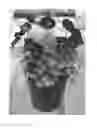
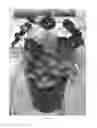
The accompanying color photographs illustrate the overall appearance of the new Viola variety named ‘SMEV5’ showing colors as true as is reasonably possible to obtain in color reproductions of this type. Colors in the photographs may differ from the color values cited in the detailed botanical description, which accurately describe the actual color of the new variety ‘SMEV5’. Both photographs were made from a plant which has been grown in an unheated greenhouse in Arroyo Grande, Calif. No pinching or chemical growth regulators have been employed. Both photographs were made using conventional techniques and although flower and foliage color may appear different from actual color due to light reflectance, they are as accurate as possible by conventional photography.
FIG. 1 depicts a 7-month-old plant in its first season of bloom in a 15 cm diameter container.
FIG. 2 depicts a close-up view of a flower on the plant shown in FIG. 1.
DESCRIPTION OF THE NEW VARIETY
The following is a detailed botanical description of the new Viola variety named ‘SMEV5’. Observations and measurements were collected from a six-month-old plant which had been grown in an unheated greenhouse in Arroyo Grande, Calif. Color determinations were made in accordance with the 2007 edition of The Royal Horticultural Society Colour Chart from London, England, except where general color terms of ordinary dictionary significance are used.
- Botanical classification:
-
- Family.—Violaceae.
- Genus.—Viola.
- Species.—×hybrida.
- Denomination.—‘SMEV5’.
- Common name.—Violet.
-
- Parentage:
-
- General.—Viola×hybrida ‘SMEV5’ is a hybrid seedling selection that resulted from the controlled cross-pollination of the following parents:
- Female parent.—Viola ‘Tiger Eyes’ (unpatented).
- Male parent.—Viola ‘Lord Primrose’ (U.S. Plant Pat. No. 18,253).
-
- Plant:
-
- Habit.—Compact.
- Shape.—Dome-shaped.
- Type.—Perennial.
- Commercial category.—Ornamental.
- Use.—Border, container, and in the landscape.
- Suggested commercial containers.—From multi-section bedding plant packs up to 1 gallon containers.
- Propagation method.—Softwood cuttings.
- Rooting system.—Fine and fibrous.
- Vigor.—Moderate.
- Time to develop roots (range).—14 to 20 days to develop roots on an initial cutting.
- Temperature to develop roots.—The recommended air temperature is 20-21° Centigrade.
- Crop time (range).—Under summer growing conditions, ‘SMEV5’ will flower and be saleable in a 10 cm container in flower after 3 months of growing from an unrooted cutting. During winter and spring months in an unheated greenhouse ‘SMEV5’ flowers and is saleable in 4 to 6 months depending on light levels and day length.
- Plant dimensions.—20 cm in height including the flowers, and 20 cm in width.
- Cultural requirements.—Consistently moist soil or container medium.
- Pest or disease resistance or susceptibility.—No particular disease or pest resistance or susceptibility is known to the inventor.
- Hardiness.—USDA Zone 5.
-
- Stem:
-
- Branching.—Basal.
- Stem color.—N144C.
- Stem length (average).—5 cm.
- Stem width.—0.25 cm.
- Stem shape.—Cylindrical.
- Stem surface.—Glabrous.
- Internode (average).—0.75 cm.
-
- Foliage:
-
- Type.—Evergreen.
- Leaf arrangement.—Alternate.
- Leaf division.—Simple.
- Leaf quantity.—Approximately 12 to 16 per stem.
- Margin.—Crenate.
- Leaf shape.—Ovate.
- Leaf length (range).—2.0 cm to 3.50 cm.
- Leaf width (range).—1.50 cm to 2.25 cm.
- Leaf color (abaxial surface).—137C.
- Leaf color (adaxial surface).—137A.
- Leaf base.—Rounded.
- Leaf apex.—Rounded.
- Venation.—Pinnate.
- Vein color (abaxial and adaxial surfaces).—137C.
- Leaf surface (abaxial and adaxial).—Glabrous.
- Leaf attachment.—Petiolate.
- Petiole color.—138B.
- Petiole dimensions.—1 to 2 cm in length and 1 mm in width.
- Petiole shape.—Sulcate.
- Petiole surface.—Glabrous.
-
- Inflorescence:
-
- Inflorescence.—Solitary terminal flower consisting of five petals.
- Inflorescence quantity.—Approximately 10 open and opening flowers.
- Aspect (range).—Facing outward to pendant when aging.
- Inflorescence width.—3.5 cm.
- Inflorescence length.—4.0 cm.
- Inflorescence depth.—2.0 cm.
- Inflorescence shape.—Rotate.
- Blooming seasons.—Early spring through fall.
- Peduncle length (range).—5.50 cm to 7 cm.
- Peduncle width.—3 mm.
- Peduncle shape.—Sub-cylindrical.
- Peduncle surface.—Glabrous.
- Peduncle color.—144B.
- Peduncle strength.—Flexible.
- Bud color.—143B.
- Bud shape.—Elongated oval.
- Bud dimensions (average).—1.30 cm in length and 0.40 cm in width.
- Bud surface.—Glabrous.
- Bud apex.—Rounded.
- Corolla tube depth.—6 mm.
- Petal quantity.—5, consisting of 2 upper petals, 2 lateral petals, and 1 lower petal.
- Upper petals (two).—Petal shape: Reniform Petals fused or unfused: Unfused Petal apex: Rounded Petal base: Truncate to cuneate Petal margin: Entire, lightly undulating Petal length: 1.5 cm to 2.0 cm Petal width: 2.0 cm to 2.5 cm Petal color (both surfaces): Predominantly 79A, becoming lighter 77A towards margin and base Veins: 79A but barely evident Petal surface (both surfaces): Glabrous.
- Lateral petals (two).—Petal shape: Reniform Petals fused or unfused: Fused Petal apex: Rounded Petal base: Truncate Petal margin: Entire, lightly undulating Petal length: 1.2 cm to 1.5 cm. Petal width: 1.5 cm to 1.8 cm Petal color (adaxial surface): 93B with orange red iridescence, color difficult to match, appears close to 42C Petal color (abaxial surface): 93B Veins (adaxial surface only): Approximately 8 in number, parallel at base then diverging, length between 0.5 cm and 1.2 cm, width up to 2 mm Vein color 79A Petal surface (both surfaces): Glabrous.
- Lower petal (one).—Petal shape: Obcordate Petals fused or unfused: Fused Petal apex: Emarginate. Fully developed petal exhibits notch, depth 0.3 cm to 0.4 cm Petal base: Truncate Petal margin: Entire, lightly undulating Petal length: 1.5 cm to 1.7 cm Petal width: 2.0 cm to 2.2 cm Petal color (adaxial surface): 93B (outer one-third of ground) with iridescence close to 42C extending towards base. Lower ground and base bright mid-yellow 14B, creating the petal “eye”. Petal color (abaxial surface): 93B Veins (adaxial surface only): Approximately 8 in number, parallel towards base then diverging, length between 0.5 cm and 1.0 cm, width up to 3 mm. Vein color: 79A; veins disappear abruptly within the mid-yellow eye Petal surface (both surfaces): Glabrous.
- Calyx shape.—Stellate.
- Calyx diameter.—2 cm.
- Sepals.—5 in number.
- Sepal dimensions.—1 cm in length and 0.40 cm in width.
- Fused or unfused.—Sepals unfused.
- Sepal color (both surfaces).—138A.
- Sepal apex.—Acute.
- Sepal base.—Truncate.
- Sepal surface.—Glabrous.
- Sepal margin.—Entire.
- Sepal shape.—Lanceolate.
- Inflorescence self-cleaning or persistent.—Self-cleaning.
- Inflorescence fragrance.—Pleasant scent characteristic of violets.
- Lastingness of inflorescence (range).—5 to 7 days.
-
- Reproductive organs:
-
- Stamen quantity.—5 joined around ovary.
- Stamen length.—4 mm.
- Stamen color.—145D.
- Anther length.—Less than 1 mm.
- Anther width.—2.50 mm Anther color: 164A Pollen color: 155C Pollen quantity (range): Moderate to heavy Pistil quantity: 1 Pistil height: 6.5 mm Style height: 1 mm Style color: N144A Stigma dimensions: Less than 1 mm in height and 1 mm in diameter Stigma color: N144A Stigma shape: Globular Stigma surface: Glandular Ovary position: Superior Ovary color: N144A Ovary shape: Dome-shaped Ovary dimensions: 6 mm in height and 3 mm in width.
-
- Seed: None observed to date
COMPARISON TO PARENTAL VARIETY AND COMMERCIAL VARIETY
‘SMEV5’ is distinguishable from each of its parents by flower color as follows. The flowers of ‘SMEV5’ are predominantly violet in color, consisting of dark violet upper petals and violet lateral and lower petals. In addition, the lateral and lower petals of ‘SMEV5’ exhibit dark violet veins. The flowers of ‘SMEV5’ exhibit a small but distinct bright yellow eye. The flowers of the female parent, Viola ‘Tiger Eyes’ (unpatented), are golden yellow throughout except for a dark brown to black central blotch and radiating veins. The flowers of the male parent, Viola ‘Lord Primrose’ (U.S. Plant Pat. No. 18,253) are bicolored pale violet and mid yellow, without a prominent eye.
The closest comparison plant in commerce known to the inventor is the male parent, Viola ‘Lord Primrose’ (U.S. Plant Pat. No. 18,253). The flowers of ‘SMEV5’ are predominantly violet in color, consisting of dark violet upper petals and violet lateral and lower petals. In addition, the lateral and lower petals of ‘SMEV5’ exhibit dark violet veins. The flowers of ‘SMEV5’ exhibit a small but distinct bright yellow eye. The flowers of the male parent, Viola ‘Lord Primrose’ (U.S. Plant Pat. No. 18,253) are bicolored pale violet and mid yellow, without a prominent eye.
Claims
I claim:1. A new and distinct cultivar of Viola plant named ‘SMEV5’ as described and illustrated herein.
Images & Drawings included:
Sources:
- United States Patent and Trademark Office - verify current appl. status at the USPTO↗
Recent applications in this class:
- » 20240292771 2024-08-29
Campanula plant named 'Twilight' - » 20240251691 2024-07-25
HYDRANGEA PLANT NAMED 'HYLV17520' - » 20240251690 2024-07-25
Vaccinium Plant Named 'BWPBLUE02' - » 20240251689 2024-07-25
BLUEBERRY PLANT NAMED 'FC13-113' - » 20240251688 2024-07-25
BLUEBERRY PLANT NAMED 'FCM14-057' - » 20240237567 2024-07-11
PONGAMIA VARIETIES - » 20240224827 2024-07-04
PELARGONIUM PLANT NAMED 'PEQZ0103' - » 20240215470 2024-06-27
Agapanthus plant named 'Monsapho' - » 20240215469 2024-06-27
plant named ‘LOCORA3519’ - » 20240206359 2024-06-20
CORYLUS PLANT NAMED 'BWM01'