METHODS FOR SPLITTING MIXED HYDROCARBON STREAMS
US20160137927A1
2016-05-19
14/838,598
2015-08-28
Abstract:
Methods of extracting and enriching high value pentane streams suitable for adding to refinery grade gasoline are provided by balancing the relative amounts of isopentane and n-pentane in the output stream of a depentanizer tower, and by balancing the sulfur fractions in the input and output streams of the tower.
Assignee:
- Sunoco Logistics Partners LP 1 🇺🇸 Philadelphia, PA, United States
Interested in similar patents?
Get notified when new applications in this technology area are published.
Classification:
C10L1/1608 » CPC further
Liquid carbonaceous fuels containing additives; Organic compounds; Hydrocarbons Well defined compounds, e.g. hexane, benzene
C10L2270/023 » CPC further
Specifically adapted fuels for internal combustion engines for gasoline engines
C10L2290/543 » CPC further
Fuel preparation or upgrading, processes or apparatus therefore, comprising specific process steps or apparatus units; Specific separation steps for separating fractions, components or impurities during preparation or upgrading of a fuel Distillation, fractionation or rectification for separating fractions, components or impurities during preparation or upgrading of a fuel
C10G7/00 » CPC main
Distillation of hydrocarbon oils
C10L10/10 » CPC further
Use of additives to fuels or fires for particular purposes for improving the octane number
C10L1/16 » CPC further
Liquid carbonaceous fuels containing additives; Organic compounds Hydrocarbons
Description
CROSS-REFERENCE TO RELATED APPLICATIONS
This application claims the benefit of U.S. Provisional Patent Application Ser. No. 62/081,687, entitled “Methods For Splitting Mixed Hydrocarbon Streams,” filed on Nov. 19, 2014, which is incorporated herein by reference in its entirety as if fully set forth below.
FIELD OF THE INVENTION
This invention relates to mixed hydrocarbon streams, particularly liquid gasoline streams extracted from natural gasoline wells, and to methods of splitting those streams into defined product streams, including an overhead pentane stream with defined ratios of n-pentane to isopentane, and a bottoms stream comprising heavier hydrocarbons.
BACKGROUND OF THE INVENTION
Hydraulic finking has tapped into enormous volumes of energy reserves in North America, but it has also resulted in the production of large volumes of NGLs and lesser value streams that have limited industrial utility and market applications. The production of liquid gasoline, for example, has increased dramatically as natural gas is extracted from hydraulic fracking wells.
Liquid extracted from natural gas deposits (natural gas liquids or NGLs) typically consists of several hydrocarbon components of differing value and industrial utility. Common NGL products are ethane (C2H6), propane (C3H8), butanes (iC4H10 and nC4H10) and natural gasoline (C5+). Natural gasoline, sometimes known as condensate or naphtha, refers to the pentanes and heavier components in a natural gas stream, and usually is primarily made up of straight and branched chain paraffins. Natural gasoline is most commonly used as refinery feedstock, although it can also be used as a petrochemical feedstock.
One potential use for NGLs is as a hydrocarbon feedstock for the production of refinery-grade gasoline, and numerous publications have proposed using the components of NGLs in this manner. For example, several publications, including U.S. Pat. Nos. 6,679,302, 7,631,671 and 8,192,510 to Mattingly and Vanderbur, have described the use of butane to expand refinery grade gasoline downstream of the refinery. Butane is especially useful in these blending operations because of its consistent physical contribution to volatility and octane in a blended gasoline pool.
U.S. Pat. Nos. 7,456,328 and 7,741,525 teach methods for blending propane into an ethane containing stream to increase the vapor pressure of the ethane, thereby allowing for production of an “on-spec” propane product stream while at the same time maximizing the value of the ethane stream.
The mixed pentanes derived from NGL and natural gasoline streams have found less market applications and industrial utility than their lighter counterparts due in large part to the variability in pentane's hydrocarbon content, and uncertainty about how much impact this inconsistency will have on the volatility and octane of a hydrocarbon stream with which the pentanes are mixed. This is especially true for pentane streams that contain large amounts of n-pentane, which has a neat octane value of only 65, and whose effect on fuel octane is variable and uncertain. The following table summarizes relevant physical properties associated with pentane when blended into gasoline:
| Neat | Blending | ||||
| Boiling | Octane | Octane | |||
| Pt | TV/L = | (R + | (R + | ||
| (° F.) | RVP | 20 | M/2) | M/2) | |
| n-butane | 31 | 55 | negative | 92 | 92 |
| n-pentane | 97 | 16 | 87 | 65 | >65 |
| neopentane | 49 | 20 | 50 | 83 | >83 |
| isopentane | 82 | 35 | 1 | 91 | 91 |
As can be seen, the addition of n-pentane to a gasoline stream, or the addition of mixed pentanes that include n-pentane, could be expected to significantly and negatively impact the octane value of the gasoline stream, given the low blending octane value of n-pentane.
SUMMARY OF THE INVENTION
Methods for splitting low-value natural gasoline streams have now been developed that produce pentane streams with defined n-pentane and isopentane ratios. As long as the ratio of n-pentane to isopentane is controlled in the splitting operation, these pentane streams, which have previously been considered low value by-products of natural gasoline, can be added to refined gasoline without negatively impacting the octane value of the gasoline, thereby greatly increasing the value of the pentanes. It has been experimentally found that these mixed pentanes can be added to gasoline in proportions as high as 15 or even 20% (i.e. 15 or 20 parts pentanes to 85 or 80 parts gasoline).
The methods partly depend on the discovery that isopentane can effectively offset the low blending octane value of n-pentane when defined isopentane:n-pentane ratios are observed in the production of the mixed pentane stream. The methods also depend on the discovery that the natural gasoline streams from fracking operations lend themselves to these operations, such that mixed pentanes meeting defined isopentane:n-pentane ratios can be split from the natural gasoline using a suitably designed depentanizer.
Therefore, in a first embodiment the invention provides a method of making mixed pentanes comprising: (a) providing a natural gasoline stream comprising: (i) 0 wt % methane or ethane or propane; (ii) from 0 to 5.0 wt % butane; (iii) from 5 to 80 wt % isopentane; (iv) from 5 to 80 wt % normal pentane; and (v) from 10 to 90 wt % of hydrocarbons consisting of 6 or more carbon atoms (C6+ hydrocarbons); (b) splitting said natural gasoline stream into a bottom stream and an enriched overhead pentane stream comprising: (i) greater than 95 wt % of said butane in said natural gasoline stream; (ii) greater than 95 wt % of said isopentane in said natural gasoline stream; (iii) greater than 95 wt % of said normal pentane in said natural gasoline stream; and (iv) from 0 to 20 wt % of said C6+ hydrocarbons in said natural gasoline stream; and (c) recovering said enriched overhead pentane stream.
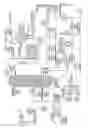
As shown in FIG. 1, these methods are preferably performed in a suitably designed depentanizer distillation column in which the higher volatility pentanes are withdrawn from the top of the tower and the lower volatility heavier hydrocarbons are withdrawn from the bottom of the tower. In a particularly preferred embodiment, the mixed pentanes produced by the methods of the present invention are suitable for mixing into a refined gasoline stream meeting applicable ASTM specifications.
A second principal embodiment relates to the enriched pentane produced by the methods of the present invention. Thus, in another embodiment the invention provides an enriched pentane stream suitable for mixing into a refined gasoline stream meeting ASTM D4814-13b made by the process of the first principal embodiment or any subembodiment thereof.
In yet another principal embodiment the invention provides an enriched pentane stream suitable for mixing into a refined gasoline stream meeting ASTM D4814-13b comprising: a) 0 wt % methane or ethane or propane; b) from 0.01 to 5 wt % butane; c) from 30 to 70 wt % isopentane; d) from 30 to 70 wt % normal pentane; and e) from (0.01 to 5 wt % hydrocarbons having 6 or more carbons.
Additional advantages of the invention are set forth in part in the description which follows, and in part will be obvious from the description, or may be learned by practice of the invention. The advantages of the invention will be realized and attained by means of the elements and combinations particularly pointed out in the appended claims. It is to be understood that both the foregoing general description and the following detailed description are exemplary and explanatory only and are not restrictive of the invention, as claimed.
DESCRIPTION OF THE FIGURES
FIG. 1 depicts a representative system of the present invention for splitting a natural gasoline stream into a mixed pentane stream that contains isopentane and n-pentane at designated ratios.
DETAILED DESCRIPTION
Definitions and Use of Terms
“ASTM” refers to the American Society for Testing and Materials. Unless otherwise indicated, when reference is made to an ASTM standard herein, it is made in reference to the ASTM standard in effect on Oct. 1, 2012, and the ASTM standard is incorporated herein by reference.
“Butane” refers to isobutane and n-butane and mixtures thereof, but preferably refers to n-butane.
“Certified gasoline” is fuel meeting the standards of ASTM Standard Specification Number D 4814-01a (“ASTM 4814”), and should be distinguished from in-process gasoline streams at a refinery that have not been released from the refinery and have not been certified. The specifications for different types of gasoline set forth in ASTM 4814 vary based on a number of parameters affecting volatility and combustion such as weather, season, geographic location and altitude. For this reason, gasoline types produced in accordance with ASTM 4814 are broken down into volatility categories AA, A, B, C, D and E, and vapor lock protection categories 1, 2, 3, 4, 5, and 6, each category having a set of specifications. Certified gasoline also includes a gasoline certified to meet ASTM 4814 upon the addition of a designated quantity of ethanol.
“Hydrocarbon” refers to any linear, branched, or cyclic molecule, aliphatic or aromatic, saturated or unsaturated, composed primarily of hydrogen and carbon.
The enriched pentane stream of the present invention will comprise “mixed pentanes,” referring to a stream or pool of pentanes that contains n-pentane in addition to isopentane. The stream or pool might also contain neopentane, although this compound is quite rare in natural supplies. The pentanes preferably make up at least 10%, 30%, 50%, 70%, 90% or 95% of the enriched pentane stream. The pentanes can be present in an ratio that satisfies the performance requirements of this invention, but preferably contain front 20% of 30% up to 100% isopentane, with the balance being n-pentane. In any of the various embodiments and subembodiments discussed herein, the mixed pentanes can be characterized by a minimum ratio of isopentane to n-pentane of 1:5, 2:5, 3:5, 4:5, 5:5, 10:5, or greater, an isopentane to n-pentane ratio of from 30:70 to 95:5, from 30:70 to 60:40, or an isopentane to n-pentane ratio of from 40:60 to 50:50.
Ratios, quantities and rates of liquid flows expressed herein, unless otherwise specified, are expressed in terms of volume, and are preferably measured at room temperature (25° C.) and atmospheric pressure.
When the singular forms “a,” “an” and “the” or like terms are used herein, they will be understood to include plural referents unless the context clearly dictates otherwise. Thus, for example, reference to “a hydrocarbon” includes mixtures of two or more such hydrocarbons, and the like. The word “or” or like terms as used herein means any one member of a particular list and also includes any combination of members of that list.
Throughout the description and claims of this specification, the word “comprise” and variations of the word, such as “comprising” and “comprises,” means “including but not limited to,” and is not intended to exclude, for example, other additives, components, integers or steps.
When ranges are given by specifying the lower end of a range separately from the upper end of the range, it will be understood that the range can be defined by selectively combining any one of the lower end variables with any one (If the upper end variables that is mathematically possible.
The invention is defined in terms of three principal embodiments. When an embodiment or subembodiment other than the principal embodiment is discussed herein, it will be understood that the embodiment or subembodiment can be applied to farther limit any three of the principal embodiments.
Discussion
As mentioned above, the invention is based on the discovery that isopentane overcomes the negative effects of n-pentane on blend octane values when the two pentanes are present in defined ratios, the discovery that natural gasoline streams coming onto the market are suitable for producing such mixed pentanes, and the development of processes for splitting mixed pentanes from the natural gasoline stream to ensure that the mixed pentanes withdrawn from the top of the depentanizer properly balance the ratio of isopentane and n-pentane.
In a first principal embodiment the invention provides a method of making pentanes suitable for mixing into a refined gasoline stream meeting applicable ASTM specifications comprising: a) providing a natural gasoline stream comprising: i) 0 wt % methane or ethane or propane; ii) from 0, 0.01, or 0.1 wt % to 5.0, 1.5, or 0.5 wt % butane; iii) from 5, 10 or 15 to 80, 50 or 35 wt % isopentane; iv) from 5, 10 or 15 to 80, 50 or 35 wt % normal pentane; and v) from 10, 20 or 30 to 90, 80 or 70 wt % hydrocarbons consisting of 6 or more carbon atoms (C6+ hydrocarbons); b) splitting said natural gasoline stream into a bottom stream and an enriched overhead pentane stream comprising: i) greater than 95, 98, or 99.5 wt % of said butane in said natural gasoline stream; ii) greater than 95, 97, or 9 wt % of said isopentane in said natural gasoline stream; iii) greater than 95, 97 or 98 wt % of said normal pentane in said natural gasoline stream; and iv) from 0, 0.01, or 0.1 wt % to 20, 5, or 2 wt % of said C6+ hydrocarbons in said natural gasoline stream; and c) recovering said enriched overhead pentane stream.
The methods of the present invention can be performed according to traditional distillation techniques described in the prior art including Henry Z. Kister, Chemical engineering: Distillation design McGraw-Hill 1992 (1st Edition). In a preferred embodiment the method comprises splitting said natural gasoline stream into an enriched overhead pentane stream in a distillation column comprising from 15 to 70 trays having a tray efficiency of greater than 80%. Particular methods for performing the methods are described in the examples and FIG. 1 hereto.
In a particular subembodiment of the methods of this invention, (a) the natural gasoline stream comprises (i) from 0.01 to 1.5 wt % butane; from 10 to 50 wt % isopentane; (iii) from 10 to 50 wt % normal pentane; and (iv) from 20 to 80 wt % C6+ hydrocarbons; (b) said enriched overhead pentane flow comprises (i) greater than 98 wt % of said butane in said natural gasoline stream; (greater than 97 wt % of said isopentane in said natural gasoline stream; (iii) greater than 97 wt % of said normal pentane in said natural gasoline stream; and (iv) from 0.1 to 5 wt % of said C6+ hydrocarbons in said natural gasoline stream.
In another particular subembodiment of the methods of the invention: (a) said natural gasoline comprises (i) from 0 to 0.5 wt % butane, (ii) from 15 to 35 wt % isopentane: (iii) from 15 to 35 wt % normal pentane; and (iv) from 30 to 70 wt % C6+ hydrocarbons; and (b) said enriched isopentane flow comprises (i) greater than 99.5 wt % of said butane in said natural gasoline stream; (ii) greater than 98 wt % of said isopentane in said natural gasoline stream; (iii) greater than 98 wt % of said normal pentane in said natural gasoline stream; and (iii) from 0.01 to 2 wt of said C6+ hydrocarbons in said natural gasoline stream.
Another subembodiment depends on the control of olefinic and aromatic compounds in the input stream, and in this subembodiment the natural gasoline stream comprises less than 5 or 2 wt % of olefinic and aromatic compounds.
Yet another subembodiment relates to the use of the method to control sulfur compounds in the final product. In this subembodiment, (a) said liquid gasoline stream comprises from 5, 10 or 15 to 50, 40 or 30 ppm sulfur compounds; (b) said enriched overhead pentane stream comprises less than 60, 40, or 20 of said sulfur compounds in said liquid gasoline stream; and (c) said enriched overhead pentane stream comprises greater than 1 or 2 and less than 30 or 10 ppm sulfur compounds. Exemplary sulfur containing compounds include hydrogen sulfide (H2S), carbonyl sulfide (COS), methyl mercaptan (MeSH), ethyl mercaptan (EtSH), carbon disulfide (CS2), isopropyl mercaptan (iC3SH), and isobutyl mercaptan (iC4SH).
In another subembodiment, (a) said liquid gasoline stream comprises from 10 to 30 ppm sulfur compounds; and (h) said enriched pentane stream comprises greater than 1 and less than 10 ppm sulfur compounds. In still another subembodiment a) said liquid gasoline stream comprises from 15 to 40 ppm sulfur containing compounds; and (c) said enriched pentane stream comprises greater than 1 and less than 10 ppm sulfur compounds. In either embodiment, the enriched overhead pentane stream preferably comprises less than 40, 50 or 60% of the sulfur compounds in the natural gasoline stream.
Another principal embodiment relates to the pentane stream produced by any of the foregoing embodiments. Therefore, the invention also provides an enriched pentane stream suitable for mixing into a refined gasoline stream meeting ASTM D4814-13b made by the process of any of the foregoing embodiments or subembodiments.
Another principal embodiment relates to the novelty of the pentane stream produced the foregoing embodiments. In this embodiment the invention provides an enriched pentane stream suitable for mixing into a refined gasoline stream meeting ASTM D4814-13b comprising: a) 0 wt % methane or ethane or propane; b) from 0.01 to 5 wt % butane; c) from 30 to 70 wt % isopentane; d) from 30 to 70 wt % normal pentane; and e) from 0.01 to 5 wt % hydrocarbons having 6 or more carbons. In one subembodiment the enriched pentane stream comprises greater than 1 or 2 ppm and less than 10 or 30 ppm sulfur containing compounds. In another subembodiment the enriched pentane stream comprises greater than 1 ppm and less than 10 ppm sulfur containing compounds.
EXAMPLES
The following examples are put forth so as to provide those of ordinary skill in the art with a complete disclosure and description of how the methods claimed herein are made and evaluated, and are intended to be purely exemplary of the invention and are not intended to limit the scope of what the inventor regards as his invention. Efforts have been made to ensure accuracy with respect to numbers (e.g., amounts, temperature, etc.) but some errors and deviations should be accounted for.
Example 1
Case Study of Depentanizer Tower Performance at Various Conditions
A simulation study was undertaken to evaluate the impact of various operating parameters on the performance of a depentanizing tower, and the ability of the depentanizing tower to produce mixed pentanes meeting the specifications described in the instant specification. The results are presented in Tables 1.a and 1.b.
| TABLE 1.a |
| Case Study of Sunoco Tower Depentanizer Performance at Various Conditions |
| Case 8 | |||||||||
| (Note 3) | |||||||||
| Soluble | |||||||||
| Case 1 | Case 7 | H2O, | |||||||
| Original | Case 2 | Case 3 | Case 4 | Case 5 | (Note 2) | 2 vol % | |||
| 0.2 vol % | 0.1 vol % | Soluble | Soluble | Soluble | Case 6 | Soluble | Butane | ||
| H2O, | H2O, | H2O, | H2O, | H2O, | Soluble | H2O, | (Increase | ||
| 2 vol % | 2 vol % | 2 vol % | 1 vol % | 0.5 vol % | H2O, 0% | 2 vol % | reboiler | ||
| Title | Butane | Butane | Butane | Butane | Butane | Butane | Butane | duty) | |
| Property | Units | Value | Value | New Base | Value | Value | Value | Value | Value |
| TOWER | |||||||||
| PERFORMANCE | |||||||||
| C5 Recovery | vol % | 97.0% | 97.0% | 97.0% | 97.0% | 97.0% | 97.0% | 97.0% | 99.7% |
| C5 Purity | vol % | 96.0% | 96.0% | 96.0% | 96.0% | 96.0% | 96.0% | 96.0% | 96.0% |
| Free water from | lb/hr | 577 | 278 | 22 | 22 | 22 | 22 | 22 | 22 |
| Overhead Drum | |||||||||
| Feed/Btms Exchanger | MM Btu/hr | 5.16 | 5.16 | 5.16 | 5.16 | 5.16 | 5.16 | 5.16 | 5.16 |
| Duty | |||||||||
| Reboiler Duty | MM Btu/hr | 45.2 | 45.2 | 45.2 | 36.7 | 35.5 | 34.6 | 48.4 | 60 |
| FEED | |||||||||
| Temp of Feed | Deg F. | 100 | 100 | 100 | 100 | 100 | 100 | 60 | 100 |
| RVP of Feed | psia | 13.6 | 13.6 | 13.6 | 13.1 | 12.9 | 12.6 | 12.6 | 13.6 |
| TVP of Feed | psia | 14.1 | 14.1 | 14.1 | 13.6 | 13.3 | 13.0 | 6.2 | 14.1 |
| TVP of Feed @ 60 F. | |||||||||
| Water in Feed | vol % | 0.200% | 0.102% | 0.015% | 0.015% | 0.015% | 0.015% | 0.015% | 0.015% |
| Free water in Feed | lb/hr | 555 | 256 | 0 | 0 | 0 | 0 | 0 | |
| Total water in Feed | lb/hr | 600 | 300 | 44 | 44 | 44 | 45 | 44 | 44 |
| nC4 in Feed | vol % | 2.0% | 1.0% | 2.0% | 1.0% | 0.5% | 0.0% | 2.0% | 2.0% |
| C5 PRODUCT | |||||||||
| Temp of C5 Product | Deg F. | 100 | 100 | 100 | 100 | 100 | 100 | 100 | 100 |
| nC4 in C5 Product | vol % | 3.53 | 3.53 | 3.53 | 1.77 | 0.88 | 0.00 | 3.53 | 3.44 |
| RVP of C5 Product | paia | 19.4 | 19.4 | 19.4 | 18.6 | 18.2 | 17.9 | 19.4 | 19.1 |
| TVP of C5 Product | psia | 20.3 | 20.3 | 20.3 | 19.4 | 18.9 | 18.4 | 20.3 | 20.2 |
| Cases 3 through 5 | |||||||||
| have only soluble | |||||||||
| water in the feed. | |||||||||
| TVP of C5 Product as | |||||||||
| a function of | |||||||||
| temperature for the | |||||||||
| case of 2 lv % nC4 in | |||||||||
| the feed (Note 1). | |||||||||
| Temperature | Deg F. | 90 | 100 | 120 | 130 | ||||
| Pressure | psia | 16.8 | 20.3 | 31.3 | 33.9 | ||||
| Note 1: | |||||||||
| The RVP of the CS product is not a function of temperature since it represents the vapor pressure at a given temperature of 100 F. | |||||||||
| Note 2: | |||||||||
| Temperature of Feed = 100 F. except for Case 7 where it is 60 F. | |||||||||
| Note 3: | |||||||||
| Reboiler duty for Case 8 is set at 60 MM Btu/hr which improves the % recovery of the C5s. |
| TABLE 1.b | ||||||
| Case 1 | Case 2 | Case 3 | Case 4 | Case 5 | Case 6 | |
| 577 | 278 | 22 | 22 | 22 | 22 | Water from |
| Ovhd Drum | ||||||
| 45,564,222 | 45,409,652 | 45,186,302 | 36,676,087 | 35,527,629 | 34,626,371 | Reboiler Duty |
| 13.6 | 13.6 | 13.6 | 13.1 | 12.9 | 12.6 | RVP of Feed |
| 14.1 | 14.1 | 14.1 | 13.6 | 13.3 | 13.0 | TVP of Feed |
| 600.0 | 300.3 | 44.3 | 44.7 | 44.9 | 45.1 | Water in Feed |
| 0.0020439 | 0.001023 | 0.000151105 | 0.000152455 | 0.000153138 | 1.54E−04 | vol frac water |
| in feed | ||||||
| 100 | 100 | 100 | 100 | 100 | 1.00E+02 | Temp of C5 |
| Product | ||||||
| 19.4 | 19.4 | 19.4 | 18.6 | 18.2 | 17.9 | RVP of C5 |
| Product | ||||||
| 20.1 | 20.3 | 20.3 | 19.4 | 18.9 | 18.4 | TVP of C5 |
| Product | ||||||
| 0.0353 | 0.0353 | 0.0353 | 0.0177 | 0.0088 | 0.0000 | vol fr nC4 in C5 |
| Product | ||||||
| 0.020 | 0.020 | 0.0199 | 0.009948431 | 0.004974212 | 0.00E+00 | vol frac nC4 in |
| Feed | ||||||
Example 2
Simulation of Depentanizer and Associated Streams Under Optimized Conditions
The pentane splitting operation depicted in FIG. 1 was simulated using a set of assumed operating conditions to determine the overall properties of the process streams, including the natural gasoline input to the depentanizer, the mixed pentane stream withdrawn from the top of the depentanizer, and the heavy hydrocarbon stream withdrawn from the bottom of the depentanizer. The properties and content of the various streams depicted in FIG. 1 are given in Tables 2.a and 2.b.
| TABLE 2.a |
| Properties of Streams 1-9 |
| 1 | 2 | 3 | 4 | 6 | 7 | ||||
| Stream Number | Natural | Preheated | Tower | Tower | 5 | PURITY | Liquid | 8 | 9 |
| Gasoline to | Natural | Overhead | Overhead | Tower | C5s to | to | Reboiler | Tower | |
| Stream Description | Fractionator | Gasoline | Vapor | Liquid | Reflux | Storage | Reboiler | Boilup | Bottoms |
| Overall Properties | |||||||||
| Pressure, psig | 200 | 45 | 30 | 30 | 30 | 30 | 40 | 40 | 40 |
| Temperature, ° F. | 97 | 162 | 155 | 100 | 105 | 105 | 241 | 254 | 254 |
| Std. Vol Flow (V), | — | — | 32.6 | — | — | — | — | 34.3 | — |
| MMSCFD | |||||||||
| Std. Vol Flow (L), | 19,959 | 19,959 | — | 27,682 | 16,446 | 11,237 | 40,912 | — | 8,722 |
| barrel/day | |||||||||
| Mass Flow, lb/hr | 193,635 | 193,635 | 254,370 | 254,370 | 150,776 | 103,021 | 415,923 | 325,882 | 90,041 |
| Mole Flow, | 2,460 | 2,460 | 3,581 | 3,581 | 2,109 | 1,441 | 4,758 | 3,770 | 987 |
| lbmole/hr | |||||||||
| Vapor Weight | 0.00 | 0.00 | 1.00 | 0.00 | 0.00 | 0.00 | 0.00 | 1.00 | 0.00 |
| Fraction | |||||||||
| Vapor Mole | 0.00 | 0.00 | 1.00 | 0.00 | 0.00 | 0.00 | 0.00 | 1.00 | 0.00 |
| Fraction | |||||||||
| Enthalpy Flow, | −185.2 | −178.2 | −221.3 | −264.8 | −154.6 | −105.6 | −323.7 | −212.3 | −67.4 |
| MMBtu/hr | |||||||||
| Composition, liq. | |||||||||
| vol % | |||||||||
| H2O | 0.20 | 0.20 | 0.16 | 0.16 | 0.01 | 0.01 | 0.00 | 0.00 | 0.00 |
| N-Butane | 1.99 | 1.99 | 3.53 | 3.53 | 3.53 | 3.53 | 0.00 | 0.00 | 0.00 |
| 4O | 0.03 | 0.03 | 0.05 | 0.05 | 0.05 | 0.05 | 0.00 | 0.00 | 0.00 |
| N-Pentane | 28.36 | 28.36 | 48.60 | 48.60 | 48.67 | 48.67 | 4.55 | 5.16 | 2.31 |
| Isopentane | 25.58 | 25.58 | 45.33 | 45.33 | 45.39 | 45.39 | 0.30 | 0.33 | 0.16 |
| Cyclopentane | 1.67 | 1.67 | 1.93 | 1.93 | 1.93 | 1.93 | 2.31 | 2.57 | 1.33 |
| 5O | 0.06 | 0.06 | 0.11 | 0.11 | 0.11 | 0.11 | 0.01 | 0.01 | 0.00 |
| Hexane | 9.51 | 9.51 | 0.00 | 0.00 | 0.00 | 0.00 | 24.07 | 24.68 | 21.81 |
| Benzene | 1.13 | 1.13 | 0.00 | 0.00 | 0.00 | 0.00 | 2.99 | 3.10 | 2.58 |
| 22 Methylbutane | 0.41 | 0.41 | 0.15 | 0.15 | 0.15 | 0.15 | 1.20 | 1.32 | 0.75 |
| 23 Methylbutane | 0.90 | 0.90 | 0.02 | 0.02 | 0.02 | 0.02 | 2.76 | 2.95 | 2.04 |
| 2 Methylpentane | 6.25 | 6.25 | 0.09 | 0.09 | 0.09 | 0.09 | 19.16 | 20.50 | 14.22 |
| 3 Methylpentane | 3.24 | 3.24 | 0.01 | 0.01 | 0.01 | 0.01 | 9.43 | 9.98 | 7.41 |
| Methylcyclopentane | 3.26 | 3.26 | 0.00 | 0.00 | 0.00 | 0.00 | 8.07 | 8.22 | 7.48 |
| Cyclohexane | 2.60 | 2.60 | 0.00 | 0.00 | 0.00 | 0.00 | 5.60 | 5.51 | 5.96 |
| 6O | 0.06 | 0.06 | 0.00 | 0.00 | 0.00 | 0.00 | 0.18 | 0.19 | 0.14 |
| C7+ | 14.74 | 14.74 | 0.00 | 0.00 | 0.00 | 0.00 | 19.37 | 15.47 | 33.80 |
| Vapor Phase | |||||||||
| Properties | |||||||||
| Mole Flow, | — | — | 3,581 | — | 0 | — | — | 3,770 | — |
| lbmole/hr | |||||||||
| Mass Flow, lb/hr | — | — | 254,370 | — | 0 | — | — | 325,882 | — |
| Actual Volumetric | — | — | 8,015 | — | 0 | — | — | 7,884 | — |
| Flow, ACFM | |||||||||
| Density, lb/ft3 | — | — | 0.5289 | — | 0.5630 | — | — | 0.6889 | — |
| Viscosity, cP | — | — | 0.0078 | — | 0.0073 | — | — | 0.0085 | — |
| Heat Capacity, | — | — | 0.46 | — | 0.43 | — | — | 0.49 | — |
| Btu/lb-F. | |||||||||
| Thermal | — | — | 0.01 | — | 0.01 | — | — | 0.01 | — |
| Conductivity, | |||||||||
| Btu/hr-ft-F. | |||||||||
| Molecular Weight | — | — | 71.03 | — | 68.06 | — | — | 86.43 | — |
| Liquid Phase | |||||||||
| Properties | |||||||||
| Mole Flow, | 2,460 | 2,460 | — | 3,581 | 2,109 | 1,441 | 4,758 | — | 987 |
| lbmole/hr | |||||||||
| Mass Flow, lb/hr | 193,635 | 193,635 | — | 254,370 | 150,776 | 103,021 | 415,923 | — | 90,041 |
| Actual Volumetric | 596 | 635 | — | 837 | 499 | 341 | 1,390 | — | 298 |
| Flow, USGPM | |||||||||
| Std. Vol. Flow, | 19,853 | 19,853 | — | 27,600 | 16,384 | 11,195 | 40,666 | — | 8,669 |
| barrel/day | |||||||||
| Density, lb/ft3 | 40.48 | 38.03 | — | 37.91 | 37.69 | 37.69 | 37.32 | — | 37.64 |
| Viscosity, cP | 0.2580 | 0.1861 | — | 0.1955 | 0.1898 | 0.1898 | 0.1601 | — | 0.1622 |
| Heat Capacity, | 0.5375 | 0.5852 | — | 0.5647 | 0.5675 | 0.5675 | 0.6150 | — | 0.6180 |
| Btu/lb-F. | |||||||||
| Thermal | 0.0615 | 0.0554 | — | 0.0577 | 0.0571 | 0.0571 | 0.0522 | — | 0.0523 |
| Conductivity, | |||||||||
| Btu/hr-ft-F. | |||||||||
| Molecular Weight | 78.72 | 78.72 | — | 71.03 | 71.51 | 71.51 | 87.42 | — | 91.19 |
| Blend Properties | |||||||||
| Viscosity: cSt | 0.40 | 0.31 | — | 0.32 | 0.31 | 0.31 | 0.27 | — | 0.27 |
| Std Density: kg/m3 | 668 | 668 | — | 631 | 631 | 631 | 701 | — | 712 |
| RVP @ 100° F.: | 90 | 90 | — | 133 | 133 | 133 | 38 | — | 31 |
| kPa (absolute) | |||||||||
| JPG RVP | 19 | ||||||||
| ESTIMATE PSIA | |||||||||
| TVP @ 100° F.: kPa | 97 | 97 | — | 140 | 140 | 140 | 38 | — | 31 |
| (absolute) | |||||||||
| Olefins: vol % | 0.50 | 0.50 | — | 0.17 | 0.17 | 0.17 | 0.49 | — | 0.93 |
| Benzene: vol % | 1.13 | 1.13 | — | 0.00 | 0.00 | 0.00 | 2.99 | — | 2.58 |
| BTEX: vol % | 2.08 | 2.08 | — | 0.00 | 0.00 | 0.00 | 4.12 | — | 4.76 |
| H2S: PPMws | 0.0 | 0.0 | — | 0.0 | 0.0 | 0.0 | 0.0 | — | 0.0 |
| C1-C3 Mercaptans: | 3 | 3 | — | 3 | 3 | 3 | 6 | — | 4 |
| PPMws | |||||||||
| Total Sulfur: | 10 | 10 | — | 4 | 4 | 4 | 22 | — | 17 |
| PPMws | |||||||||
| TABLE 2.b |
| Properties of Stream 10-34 |
| 33 | 34 | ||||||||
| CWS to | CWR from | ||||||||
| Stream Number | 10 | 11 | 20 | 21 | 22 | 31 | 32 | Light | Light |
| Cool Tower | Light Naphtha | MPS to | Exhaust | Conden- | CWS to | CWR from | Naphtha | Naphtha | |
| Stream Description | Bottoms | to Storage | Reboiler | Steam | sate | Condenser | Condenser | Cooler | Cooler |
| Overall Properties | |||||||||
| Pressure, psig | 40 | 40 | 150 | 10 | 10 | 50 | 50 | 50 | 50 |
| Temperature, ° F. | 116 | 100 | 450 | 239 | 239 | 90 | 95 | 90 | 105 |
| Std. Vol Flow (V), | — | — | 24.5 | 3.4 | — | — | — | — | — |
| MMSCFD | |||||||||
| Std. Vol Flow (L), | 8,721 | 8,721 | — | — | 0 | 0 | 0 | 0 | 0 |
| barrel/day | |||||||||
| Mass Flow, lb/hr | 90,027 | 90,027 | 48,609 | 6,669 | 41,940 | 146,345 | 146,345 | 2,903,938 | 2,903,938 |
| Mole Flow, | 987 | 987 | 2,698 | 370 | 2,328 | 8,123 | 8,123 | 161,195 | 161,195 |
| lbmole/hr | |||||||||
| Vapor Weight | 0.00 | 0.00 | 1.00 | 1.00 | 0.00 | 0.00 | 0.00 | 0.00 | 0.00 |
| Fraction | |||||||||
| Vapor Mole | 0.00 | 0.00 | 1.00 | 1.00 | 0.00 | 0.00 | 0.00 | 0.00 | 0.00 |
| Fraction | |||||||||
| Enthalpy Flow, | −74.4 | −75.1 | −272.3 | −37.9 | −278.4 | −993.5 | −992.8 | −19713.8 | −19670.4 |
| Composition liq. | |||||||||
| vol % | |||||||||
| H2O | 0.00 | 0.00 | 100.00 | 100.00 | 100.00 | 100.00 | 100.00 | 100.00 | 100.00 |
| N-Butane | 0.00 | 0.00 | 0.00 | 0.00 | 0.00 | 0.00 | 0.00 | 0.00 | 0.00 |
| 4O | 0.00 | 0.00 | 0.00 | 0.00 | 0.00 | 0.00 | 0.00 | 0.00 | 0.00 |
| N-Pentane | 2.30 | 2.30 | 0.00 | 0.00 | 0.00 | 0.00 | 0.00 | 0.00 | 0.00 |
| Isopentane | 0.16 | 0.16 | 0.00 | 0.00 | 0.00 | 0.00 | 0.00 | 0.00 | 0.00 |
| Cyclopentane | 1.33 | 1.33 | 0.00 | 0.00 | 0.00 | 0.00 | 0.00 | 0.00 | 0.00 |
| 5O | 0.00 | 0.00 | 0.00 | 0.00 | 0.00 | 0.00 | 0.00 | 0.00 | 0.00 |
| Hexane | 21.81 | 21.81 | 0.00 | 0.00 | 0.00 | 0.00 | 0.00 | 0.00 | 0.00 |
| Benzene | 2.58 | 2.58 | 0.00 | 0.00 | 0.00 | 0.00 | 0.00 | 0.00 | 0.00 |
| 22 Methylbutane | 0.75 | 0.75 | 0.00 | 0.00 | 0.00 | 0.00 | 0.00 | 0.00 | 0.00 |
| 23 Methylbutane | 2.04 | 2.04 | 0.00 | 0.00 | 0.00 | 0.00 | 0.00 | 0.00 | 0.00 |
| 2 Methylpentane | 14.23 | 14.23 | 0.00 | 0.00 | 0.00 | 0.00 | 0.00 | 0.00 | 0.00 |
| 3 Methylpentane | 7.41 | 7.41 | 0.00 | 0.00 | 0.00 | 0.00 | 0.00 | 0.00 | 0.00 |
| Methylcyclopentane | 7.48 | 7.48 | 0.00 | 0.00 | 0.00 | 0.00 | 0.00 | 0.00 | 0.00 |
| Cyclohexane | 5.96 | 5.96 | 0.00 | 0.00 | 0.00 | 0.00 | 0.00 | 0.00 | 0.00 |
| 6O | 0.14 | 0.14 | 0.00 | 0.00 | 0.00 | 0.00 | 0.00 | 0.00 | 0.00 |
| C7+ | 33.81 | 33.81 | 0.00 | 0.00 | 0.00 | 0.00 | 0.00 | 0.00 | 0.00 |
| Vapor Phase | |||||||||
| Properties | |||||||||
| Mole Flow, | — | — | 2,698 | 370 | 0 | — | — | — | — |
| lbmole/hr | |||||||||
| Mass Flow, lb/hr | — | — | 48,609 | 6,669 | 0 | — | — | — | — |
| Actual Volumetric | — | — | 2,538 | 1,833 | 0 | — | — | — | — |
| Flow, ACFM | |||||||||
| Density, lb/ft3 | — | — | 0.3192 | 0.0606 | 0.0606 | — | — | — | — |
| Viscosity, cP | — | — | 0.0172 | 0.0126 | 0.0126 | — | — | — | — |
| Heat Capacity, | — | — | 0.56 | 0.50 | 0.50 | — | — | — | — |
| Btu/lb-F. | |||||||||
| Thermal | — | — | 0.02 | 0.01 | 0.01 | — | — | — | — |
| Conductivity, | |||||||||
| Btu/hr-ft-F. | |||||||||
| Molecular Weight | — | — | 18.02 | 18.02 | 18.02 | — | — | — | — |
| Liquid Phase | |||||||||
| Properties | |||||||||
| Mole Flow, | 987 | 987 | — | — | 2,328 | 8,123 | 8,123 | 161,195 | 161,195 |
| lbmole/hr | |||||||||
| Mass Flow, lb/hr | 90,027 | 90,027 | — | — | 41,940 | 146,345 | 146,345 | 2,903,938 | 2,903,938 |
| Actual Volumetric | 263 | 260 | — | — | 89 | 294 | 294 | 5,829 | 5,847 |
| Flow, USGPM | |||||||||
| Std. Vol. Flow, | 8,667 | 8,667 | — | — | 2,875 | 10,031 | 10,031 | 199,051 | 199,051 |
| barrel/day | |||||||||
| Density, lb/ft3 | 42.60 | 43.12 | — | — | 59.08 | 62.11 | 62.05 | 62.11 | 61.93 |
| Viscosity, cP | 0.3199 | 0.3501 | — | — | 0.2401 | 0.7606 | 0.7185 | 0.7606 | 0.6446 |
| HeatCapacity, | 0.5194 | 0.5090 | — | — | 1.0122 | 0.9980 | 0.990 | 0.9980 | 0.9981 |
| Btu/lb-F. | |||||||||
| Thermal | 0.0648 | 0.0662 | — | — | 0.3962 | 0.3590 | 0.3612 | 0.3590 | 0.3653 |
| Conductivity | |||||||||
| Btu/hr-ft-F. | |||||||||
| Molecular Weight | 91.20 | 91.20 | — | — | 18.02 | 18.02 | 18.02 | 18.02 | 18.02 |
| Blend Properties | |||||||||
| Viscosity: cSt | 0.47 | 0.51 | — | — | 0.25 | 0.76 | 0.72 | 0.76 | 0.65 |
| Std Density: kg/m3 | 712 | 712 | — | — | 1,000 | 1,000 | 1,000 | 1,000 | 1,000 |
| RVP @ 100° F.: | 31 | 31 | — | — | 7 | 7 | 7 | 7 | 7 |
| kPa (absolute) | |||||||||
| JPG RVP | 4.;5 | ||||||||
| ESTIMATE PSIA | |||||||||
| TVP @ 100° F.: kPa | 31 | 31 | — | — | 7 | 7 | 7 | 7 | 7 |
| (absolute) | |||||||||
| Olefins: vol % | 0.93 | 0.93 | — | — | 0.00 | 0.00 | 0.00 | 0.00 | 0.00 |
| Benzene: vol % | 2.58 | 2.58 | — | — | 0.00 | 0.00 | 0.00 | 0.00 | 0.00 |
| BTEX: vol % | 4.76 | 4.76 | — | — | 0.00 | 0.00 | 0.00 | 0.00 | 0.00 |
| H2S: PPMws | 0.0 | 0.0 | — | — | 0.0 | 0.0 | 0.0 | 0.0 | 0.0 |
| C1-C3 Mercaptans: | 4 | 4 | — | — | 0 | 0 | 0 | 0 | 0 |
| PPMws | |||||||||
| Total Sulfur: | 17 | 17 | — | — | 0 | 0 | 0 | 0 | 0 |
| PPMws | |||||||||
Example 3
Study to Determine the Effect of Mixed Pentanes on the Octane Value of a Refined Gasoline Stream
Unleaded regular and premium gasoline blends satisfying the performance characteristics of ASTM D4814-01a were blended with varying amounts of a mixed pentane stream containing 55% n-pentane and 45% iso-pentane (hereinafter referred to as “mC5”), a 55:45 mixture of the butane and mC5, a 80:20 mixture of the butane and mC5, and the resulting blends measured for RVP and octane. The same blends were subsequently mixed with 10% ethanol and their RVP and octane values measured a second time. RVP and octane values of the starting gasoline and resulting blends are reported below in Tables 3.a-3.f.
All RVP values reported in the following examples were measured according to ASTM D 5191. Octane is reported as (R+M)/2, where R equals the research octane number calculated according to ASTM D 2699, and M equals the motor octane number calculated according to ASTM D 2700. Butane used in all blends as n-butane.
| TABLE 3.a | ||||
| CBOB | CBOB + EtOH | PBOB | PBOB + EtOH | |
| RVP | 5.82 | 7.25 | 5.28 | 6.54 |
| +4.5% mC5 | 6.64 | — | 6.05 | — |
| +12% mC5 | 7.24 | 8.7 | 7.24 | 8.37 |
| +15% mC5 | 7.82 | — | 7.31 | — |
| TABLE 3.b | ||||
| CBOB | CBOB + EtOH | PBOB | PBOB + EtOH | |
| RVP | 5.82 | 7.25 | 5.28 | 6.54 |
| +3% 55/45 | 6.92 | 7.99 | 6.48 | 7.75 |
| +8% 55/45 | 8.37 | — | 8.48 | — |
| +11% 55/45 | 9.94 | 10.83 | 9.36 | 10.21 |
| TABLE 3.c | ||||
| CBOB | CBOB + EtOH | PBOB | PBOB + EtOH | |
| RVP | 5.82 | 7.25 | 5.28 | 6.54 |
| +2% 80/20 | 6.61 | — | 6.44 | — |
| +6% 80/20 | 8.43 | 9.7 | 8.48 | 9.07 |
| +9% 80/20 | 9.91 | — | 9.47 | — |
| TABLE 3.d | ||||
| CBOB | CBOB + EtOH | PBOB | PBOB + EtOH | |
| Octane | 83.2 | 87.0 | 91.2 | 93.1 |
| +4.5% mC5 | 83.0 | — | 91.0 | — |
| +12% mC5 | 83.0 | 86.6 | 91.0 | 93.2 |
| +15% mC5 | 83.0 | — | 91.0 | — |
| TABLE 3.e | ||||
| CBOB | CBOB + EtOH | PBOB | PBOB + EtOH | |
| Octane | 83.2 | 87.0 | 91.2 | 93.1 |
| +3% 55/45 | 83.6 | 87.2 | 91.5 | 93.3 |
| +8% 55/45 | 83.6 | — | 91.2 | — |
| +11% 55/45 | 83.5 | 87.5 | 91.1 | 93.5 |
| TABLE 3.f | ||||
| CBOB | CBOB + EtOH | PBOB | PBOB + EtOH | |
| Octane | 83.2 | 87.0 | 91.2 | 93.1 |
| +2% 80/20 | 83.4 | — | 91.2 | — |
| +6% 80/20 | 83.5 | 87.5 | 91.0 | 93.6 |
| +9% 80/20 | 83.5 | — | 90.8 | |
| TABLE 3.g | ||||
| CBOB | CBOB + EtOH | PBOB | PBOB + EtOH | |
| RVP | 11.12 | 12.89 | 11.2 | 11.98 |
| +4% mC5 | 11.4 | 12.4 | 11.24 | 12.1 |
| +7% mC5 | 11.37 | 12.63 | 11.5 | 12.2 |
| +12% mC5 | 11.66 | 12.83 | 11.56 | 12.49 |
| TABLE 3.h | ||||
| CBOB | CBOB + EtOH | PBOB | PBOB + EtOH | |
| RVP | 11.12 | 12.89 | 11.2 | 11.98 |
| +6% 55/45 | 12.3 | 13.87 | 12.46 | 13.16 |
| +8% 55/45 | 13.05 | 14.21 | 13.47 | 14.14 |
| +9% 55/45 | 13.34 | 14.68 | 13.71 | 14.27 |
| TABLE 3.i | ||||
| CBOB | CBOB + EtOH | PBOB | PBOB + EtOH | |
| RVP | 11.12 | 12.89 | 11.2 | 11.98 |
| +9% 80/20 | 14.17 | 15.16 | 13.94 | 13.84 |
| +12% 80/20 | 15.32 | 15.75 | 14.62 | 14.24 |
| +13% 80/20 | 15.58 | 16.82 | 14.89 | 15.59 |
| TABLE 3.j | ||||
| CBOB | CBOB + EtOH | PBOB | PBOB + EtOH | |
| Octane | 84.1 | 87.4 | 92.3 | 94.4 |
| +4% mC5 | 87.9 | 87.6 | 92.4 | 94.5 |
| +7% mC5 | 87.8 | 87.3 | 92.4 | 94.4 |
| +12% mC5 | 87.5 | 87.1 | 92.2 | 93.9 |
| TABLE 3.k | ||||
| CBOB | CBOB + EtOH | PBOB | PBOB + EtOH | |
| Octane | 84.1 | 87.4 | 92.3 | 94.4 |
| +6% 55/45 | 84 | 87.6 | 92.5 | 94.5 |
| +8% 55/45 | 84.1 | 87.5 | 92.3 | 94.1 |
| +9% 55/45 | 84.2 | 87.5 | 92.2 | 94.1 |
| TABLE 3.l | ||||
| CBOB | CBOB + EtOH | PBOB | PBOB + EtOH | |
| Octane | 84.1 | 87.4 | 92.3 | 94.4 |
| +9% 80/20 | 84.3 | 87.6 | 92.4 | 94.4 |
| +12% 80/20 | 84.2 | 87.6 | 92.4 | 94.3 |
| +13% 80/20 | 84.3 | 87.6 | 92.5 | 94.1 |
Three notable findings emerge from the foregoing tables. The first emerges from Table 3.d, wherein it is seen that isopentane stabilizes the impact of n-pentane on the resulting blend, across the entire range of quantities tested. In site of a neat octane value of approximately 65 for n-pentane, the n-pentane added to the blend had very little impact on the octane of the resulting blend due to the presence of isopentane.
The second finding relates to the impact of the mixed hydrocarbons (C4 and C5) on octane as the amount of pentanes increases, when added to a hydrocarbon stream that is eventually mixed with ethanol. This can be seen most clearly from the data in Tables 3.e and 3.f. As a general rule, increasing the quantity of mixed hydrocarbons (C4 and C5) either decreased the final octane value slightly or had no effect on the final octane value of the mixture. However, when ethanol was added to the blend a reversal to the trend was observed, with the ethanol blended octane value increasing with the additional mixed hydrocarbons. Indeed, synergy is observed at various blending rates, and is observed sooner (from a pentane standpoint) when the pentane is mixed with larger proportions of butane.
The third finding relates to the consistency of the impact on octane as the ratio of butane and pentane components is varied. In fact, varying the ratio of butane to mixed pentanes had very little impact on the octane value of the resulting blend, demonstrating that RVP can be used as the controlling variable when a range of butane/pentane batches is added to the gasoline.
Throughout this application, various publications are referenced. The disclosures of these publications are hereby incorporated by reference in order to more fully describe the state of the art to which this invention pertains. It will be apparent to those skilled in the art that various modifications and variations can be made in the present invention without departing from the scope or spirit of the invention. Other embodiments of the invention will be apparent to those skilled in the art from consideration of the specification and practice of the invention disclosed herein. It is intended that the specification and examples be considered as exemplary only, with a true scope and spirit of the invention being indicated by the following claims.
Claims
1) A method of making pentanes suitable for mixing into a refined gasoline stream meeting applicable ASTM specifications comprising:
a) providing a natural gasoline stream comprising:
i) 0 wt % methane or ethane or propane;
ii) from 0 to 5.0 wt % butane;
iii) from 5 to 80 wt % isopentane;
iv) from 5 to 80 wt % normal pentane; and
v) from 10 to 90 wt % of hydrocarbons consisting of 6 or more carbon atoms (C6+ hydrocarbons);
b) splitting said natural gasoline stream into a bottom stream and an enriched overhead pentane stream comprising:
i) greater than 95 wt % of said butane in said natural gasoline stream;
ii) greater than 95 wt % of said isopentane in said natural gasoline stream;
iii) greater than 95 wt % of said normal pentane in said natural gasoline stream; and
iv) from 0 to 20 wt % of said C6+ hydrocarbons in said natural gasoline stream; and
c) recovering said enriched overhead pentane stream.
2) The method of claim 1 comprising splitting said natural gasoline stream in a distillation column comprising from 15 to 70 trays having a tray efficiency of greater than 80%.
3) The method of claim 1 wherein:
a) said natural gasoline stream comprises:
i) from 0.01 to 1.5 wt % butane;
ii) from 10 to 50 wt % isopentane;
iii) from 10 to 50 wt % normal pentane; and
iv) from 20 to 80 wt % C6+ hydrocarbons;
b) said enriched overhead pentane stream comprises:
i) greater than 98 wt % of said butane in said natural gasoline stream;
ii) greater than 97 wt % of said isopentane in said natural gasoline stream;
iii) greater than 97 wt % of said normal pentane in said natural gasoline stream; and
iv) from 0.1 to 5 wt % of said C6+ hydrocarbons in said natural gasoline stream.
4) The method of claim 1 wherein:
a) said natural gasoline stream comprises:
i) from 0 to 0.5 wt % butane;
ii) from 15 to 35 wt % isopentane;
iii) from 15 to 35 wt % normal pentane; and
iv) from 30 to 70 wt % C6+ hydrocarbons;
b) said enriched overhead pentane stream comprises:
i) greater than 99.5 wt % of said butane in said natural gasoline stream;
ii) greater than 98 wt % of said isopentane in said natural gasoline stream;
iii) greater than 98 wt % of said normal pentane in said natural gasoline stream; and
iv) from 0.01 to 2 wt % of said C6+ hydrocarbons in said natural gasoline stream.
5. The method of claim 1 wherein said natural gasoline stream comprises less than 5 or 2 wt % of olefinic and aromatic compounds.
6) The method of claim 1, wherein:
a) said liquid gasoline stream comprises from 5 to 50 ppm sulfur compounds;
b) said enriched overhead pentane stream comprises less than 60% of said sulfur compounds in said liquid gasoline stream; and
c) said enriched overhead pentane stream comprises greater than 1 and less than 30 ppm sulfur compounds.
7) The method of claim 1, wherein:
a) said liquid gasoline stream comprises from 10 to 30 ppm sulfur compounds;
b) said enriched overhead pentane stream comprises less than 40% of said sulfur compounds in said natural gasoline stream; and
c) said enriched pentane stream comprises greater than 1 and less than 10 ppm sulfur compounds.
8) The method of claim 1, wherein:
a) said liquid gasoline stream comprises from 15 to 40 ppm sulfur compounds;
b) said enriched overhead pentane stream comprises less than 60% of said sulfur compounds in said natural gasoline stream; and
c) said enriched pentane stream comprises greater than 1 and less than 10 ppm sulfur compounds.
9) The method of claim 6 wherein said sulfur compounds are selected from the group consisting of hydrogen sulfide (H2S), carbonyl sulfide (COS), methyl mercaptan (MeSH), ethyl mercaptan (EtSH), carbon disulfide (CS2), isopropyl mercaptan (iC3SH), and isobutyl mercaptan (iC4SH).
10) An enriched pentane stream suitable for mixing into a refined gasoline stream meeting ASTM D4814-13b made by the process of claim 1.
11) An enriched pentane stream suitable for mixing into a refined gasoline stream meeting ASTM D4814-13b comprising:
a) 0 wt % methane or ethane or propane;
b) from 0.01 to 5 wt % butane;
c) from 30 to 70 wt % isopentane;
d) from 30 to 70 wt % normal pentane; and
e) from 0.01 to 5 wt % hydrocarbons having 6 or more carbons.
12) The enriched pentane stream of claim 11 comprising greater than 1 ppm and less than 30 ppm sulfur compounds.
13) The enriched pentane stream of claim 11 comprising greater than 1 ppm and less than 10 ppm sulfur compounds.
14) The enriched pentane stream of claim 12 wherein said sulfur compounds are selected from the group consisting of hydrogen sulfide (H2S), carbonyl sulfide (COS), methyl mercaptan (MeSH), ethyl mercaptan (EtSH), carbon disulfide (CS2), isopropyl mercaptan (iC3SH), and isobutyl mercaptan (iC4SH).
Images & Drawings included:

Sources:
- United States Patent and Trademark Office - verify current appl. status at the USPTO↗
Recent applications in this class:
- » 20240318087 2024-09-26
MOBILE HYDROCARBON REFINERIES AND RELATED METHODS - » 20220315842 2022-10-06
Atmospheric-vacuum heat exchange system having coil-wound heat exchangers, and heat exchange process - » 20220204864 2022-06-30
Systems and methods for purging an isolation valve with a liquid purge medium - » 20210324275 2021-10-21
METHOD FOR FRACTIONATION OF HYDROCARBONS - » 20210324274 2021-10-21
Process for separating alkylation product, alkylation reaction and separation process, and related apparatus - » 20210002558 2021-01-07
Integrated gas oil separation plant for crude oil and natural gas processing - » 20200148959 2020-05-14
Method and apparatus for steam separation of pyrolysis oils - » 20190382666 2019-12-19
Biogenic low viscosity insulating oil - » 20190375991 2019-12-12
Method and apparatus for steam separation of pyrolysis oils - » 20190338195 2019-11-07
Processes for recovering valuable components from a catalytic fast pyrolysis process