Metal-encapsulated polymeric article
US20160144602A1
2016-05-26
14/903,913
2014-07-09
✅ Patent granted
US 11,691,388 B2
2023-07-04
WO; PCT/US2014/045913; 20140709
WO; WO2015/006421; 20150115
Matthew J Daniels
Cantor Colburn LLP
2034-12-03
Abstract:
An encapsulated polymeric article is disclosed. The encapsulated polymeric article may include a polymer substrate and a metallic outer shell at least partially encapsulating the polymer substrate. The encapsulated polymeric article may be fabricated by a method comprising: 1) providing a mandrel in a shape of the encapsulated polymeric article, 2) shaping the metallic outer shell on the mandrel, 3) removing the mandrel from the metallic outer shell, and 4) molding the polymeric substrate into the metallic outer shell through a port formed in the metallic outer shell to provide the encapsulated polymeric article.
Inventors:
- Glenn Levasseur 52 🇺🇸 Colchester, CT, United States
- Shari L. Bugaj 22 🇺🇸 Haddam, CT, United States
- Grant O. Cook, III 74 🇺🇸 Spring, TX, United States
- Shari Bugaj 1 🇺🇸 Haddam, CT, United States
- Grant O. Cook 22 🇺🇸 Spring, TX, United States
Assignee:
- Raytheon Technologies Corporation 2,600 🇺🇸 Farmington, CT, United States
Applicant:
Interested in similar patents?
Get notified when new applications in this technology area are published.
Classification:
B29B11/14 » CPC further
Making preforms characterised by structure or composition
B29C43/18 IPC
Compression moulding, i.e. applying external pressure to flow the moulding material; Apparatus therefor of articles of definite length, i.e. discrete articles incorporating preformed parts or layers, e.g. compression moulding around inserts or for coating articles
B29C45/14 » CPC further
Injection moulding, i.e. forcing the required volume of moulding material through a nozzle into a closed mould; Apparatus therefor incorporating preformed parts or layers, e.g. injection moulding around inserts or for coating articles
B29C43/183 » CPC further
Compression moulding, i.e. applying external pressure to flow the moulding material; Apparatus therefor of articles of definite length, i.e. discrete articles incorporating preformed parts or layers, e.g. compression moulding around inserts or for coating articles the preformed layer being a lining, e.g. shaped in the mould before compression moulding, or a preformed shell adapted to the shape of the mould
B29K2101/10 » CPC further
Use of unspecified macromolecular compounds as moulding material Thermosetting resins
B32B2250/02 » CPC further
Layers arrangement 2 layers
B32B2307/558 » CPC further
Properties of the layers or laminate having particular mechanical properties Impact strength, toughness
B32B2605/00 » CPC further
Vehicles
C23C18/1605 » CPC further
Chemical coating by decomposition of either liquid compounds or solutions of the coating forming compounds, without leaving reaction products of surface material in the coating; Contact plating by reduction or substitution, e.g. electroless plating; Process or apparatus coating on selected surface areas by masking
C25D5/022 » CPC further
Electroplating characterised by the process; Pretreatment or after-treatment of workpieces; Electroplating of selected surface areas using masking means
B29K2101/12 » CPC further
Use of unspecified macromolecular compounds as moulding material Thermoplastic materials
B29K2105/20 » CPC further
Condition, form or state of moulded material or of the material to be shaped containing reinforcements, fillers or inserts Inserts
B29K2705/00 » CPC further
Use of metals, their alloys or their compounds, for preformed parts, e.g. for inserts
B29L2009/00 » CPC further
Layered products
E04B2001/1927 » CPC further
Constructions in general; Structures which are not restricted either to walls, e.g. partitions, or floors or ceilings or roofs; Structures comprising elongated load-supporting parts, e.g. columns, girders, skeletons; Three-dimensional framework structures; Struts specially adapted therefor of essentially circular cross section
C25D1/10 IPC
Electroforming Moulds; Masks; Masterforms
C25D5/02 IPC
Electroplating characterised by the process; Pretreatment or after-treatment of workpieces Electroplating of selected surface areas
C25D7/04 » CPC further
Electroplating characterised by the article coated Tubes; Rings; Hollow bodies
C23C18/16 IPC
Chemical coating by decomposition of either liquid compounds or solutions of the coating forming compounds, without leaving reaction products of surface material in the coating; Contact plating by reduction or substitution, e.g. electroless plating
C23C26/00 » CPC further
Coating not provided for in groups -
E04B1/19 » CPC further
Constructions in general; Structures which are not restricted either to walls, e.g. partitions, or floors or ceilings or roofs; Structures comprising elongated load-supporting parts, e.g. columns, girders, skeletons Three-dimensional framework structures
E04B1/30 » CPC further
Constructions in general; Structures which are not restricted either to walls, e.g. partitions, or floors or ceilings or roofs; Structures comprising elongated load-supporting parts, e.g. columns, girders, skeletons the supporting parts being composed of two or more materials; Composite steel and concrete constructions
B32B15/08 » CPC main
Layered products comprising a layer of metal comprising metal as the main or only constituent of a layer, next to another layer of a of synthetic resin
B29B11/06 » CPC further
Making preforms by moulding the material
Description
CROSS-REFERENCE TO RELATED APPLICATIONS
This application claims priority under 35 U.S.C. §119(e) to U.S. Provisional Patent Application Ser. No. 61/844,161 filed on Jul. 9, 2013.
FIELD OF THE DISCLOSURE
The present disclosure generally relates to polymeric components. More specifically, this disclosure relates polymeric components at least partially encapsulated in a metallic outer shell.
BACKGROUND
Many engineers continue to seek strategies to fabricate high-strength and lightweight components in complex geometries for various industrial applications. Lightweight components may be desirable, for example, in some applications (e.g., automotive and aerospace applications) to provide increases in fuel efficiency. In addition, higher-strength components may exhibit enhanced performance characteristics such as improved environmental durability, erosion resistance, and impact resistance. Polymeric materials may be attractive materials for forming components with complex geometrical features, as they are lightweight and may be molded into a range of complex shapes. However, many polymeric materials may be limited to relatively few structurally loaded applications due to their low strengths relative to metallic materials. In addition, certain complex geometries may be costly to access by conventional polymer molding techniques such as injection molding.
Clearly, there is a need for enhancements to provide high-strength and lightweight parts in a range of complex geometries.
SUMMARY OF THE DISCLOSURE
In accordance with one aspect of the present disclosure, an encapsulated polymeric article is disclosed. The encapsulated polymeric article may comprise a polymer substrate, and an outer shell at least partially encapsulating the polymer substrate. The polymer substrate and the outer shell may be in mechanical contact without being bonded to each other.
In another refinement, the outer shell may be formed from a metallic material.
In another refinement, the outer shell may fully encapsulate the polymer substrate.
In another refinement, the metallic material may be selected from the group consisting of nickel, cobalt, copper, iron, gold, silver, palladium, rhodium, chromium, zinc, tin, cadmium, and an alloy of any of the foregoing elements comprising at least 50 wt. % of the alloy, and combinations thereof.
In another refinement, the polymer substrate may be formed from a thermoplastic material.
In another refinement, the thermoplastic material may be selected from the group consisting of polyetherimide, thermoplastic polyimide, polyether ether ketone, polyether ketone ketone, polysulfone, polyamide, polyphenylene sulfide, polyesters, polyimide, and combinations thereof.
In another refinement, the polymer substrate may be formed from a thermoset material.
In another refinement, the thermoset material may be selected from the group consisting of a condensation polyimide, an addition polyimide, an epoxy cured with an aliphatic amine, an aromatic amine, and/or an anhydride, a cyanate ester, a phenolic compound, a polyester, polybenzoxazine, a polyurethane, a polyacrylate, a polymethacrylate, a thermoset silicone, and combinations thereof.
In another refinement, the polymer substrate may be reinforced with a reinforcement material selected from glass and carbon.
In accordance with another aspect of the present disclosure, an encapsulated polymeric article is disclosed. The encapsulated polymeric article may include a polymer substrate and a metallic outer shell at least partially encapsulating the polymer substrate. The encapsulated polymeric article may be fabricated by a method comprising: 1) providing a mandrel in a shape of the encapsulated polymeric article, 2) shaping the metallic outer shell on the mandrel, 3) removing the mandrel from the metallic outer shell, and 4) molding the polymeric substrate into the metallic outer shell through a port formed in the metallic outer shell to provide the encapsulated polymeric article.
In another refinement, shaping the metallic outer shell on the mandrel may comprise shaping the metallic outer shell on the mandrel by a method selected from the group consisting of electroforming, cold spraying, and plasma vapor deposition.
In another refinement, molding the polymeric substrate into the metallic outer shell may comprise injecting a polymeric material into the metallic outer shell.
In another refinement, molding the polymeric substrate into the metallic outer shell may comprise molding the polymeric substrate by compression molding.
In another refinement, the method may further comprise introducing the port into the metallic outer shell prior to molding the polymeric substrate into the metallic outer shell.
In another refinement, the method may further comprise attaching one or more additional features to the encapsulated polymeric article.
In another refinement, the method may further comprise removing the port from the metallic outer shell after molding the polymeric substrate into the metallic outer shell.
In accordance with another aspect of the present disclosure, a method for fabricating an encapsulated polymeric article is disclosed. The method may comprise: 1) providing a mandrel in a shape of the encapsulated polymeric article, 2) shaping an outer shell on the mandrel, 3) removing the mandrel from the outer shell, and 4) molding a polymeric substrate into the outer shell through a port formed in the outer shell to provide the encapsulated polymeric article.
In another refinement, shaping the outer shell on the mandrel may comprise shaping the outer shell on the mandrel by a method selected from the group consisting of electroforming, cold spraying, and plasma vapor deposition.
In another refinement, molding the polymeric substrate into the outer shell may comprise injecting a polymeric material into the outer shell.
In another refinement, molding the polymeric substrate into the outer shell may comprise molding the polymeric substrate by compression molding.
These and other aspects and features of the present disclosure will be more readily understood when read in conjunction with the accompanying drawings.
BRIEF DESCRIPTION OF THE DRAWINGS
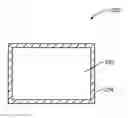
FIG. 1 is a front view of a metal-encapsulated polymeric article, constructed in accordance with the present disclosure.
FIG. 2 is a cross-sectional view of the metal-encapsulated polymeric article of FIG. 1 taken along the line 2-2 of FIG. 1, constructed in accordance with the present disclosure.
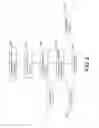
FIG. 3 is a flowchart illustrating a method for the fabrication of the metal-encapsulated polymeric article, in accordance with a method of the present disclosure.
It should be understood that the drawings are not necessarily drawn to scale and that the disclosed embodiments are sometimes illustrated schematically and in partial views. It is to be further appreciated that the following detailed description is merely exemplary in nature and is not intended to limit the invention or the application and uses thereof. In this regard, it is to be additionally appreciated that the described embodiment is not limited to use with certain applications. Hence, although the present disclosure is, for convenience of explanation, depicted and described as certain illustrative embodiments, it will be appreciated that it can be implemented in various other types of embodiments and in various other systems and environments.
DETAILED DESCRIPTION
Referring now to FIGS. 1 and 2, an encapsulated polymeric article 250 is shown. The encapsulated polymeric article 250 may consist of a polymeric substrate 252 encapsulated in one or more outer shells 254, as best shown in FIG. 2. Depending on the application, the polymeric substrate 252 may be fully encapsulated or it may be partially encapsulated in the outer shell 254. The outer shell 254 may be formed from a metallic material and may substantially increase the strength of the article 250 over all polymeric materials of similar size and dimensions. Accordingly, the article 250 may exhibit enhanced performance characteristics over similarly-dimensioned completely polymeric parts with respect to properties such as, but not limited to, environmental durability, erosion resistance, impact resistance, and resistance to foreign-objection damage. In addition, the article 250 may exhibit a range of geometries, including complex geometries. More specifically, it may have any shape suitable for its intended use, which may deviate substantially from the exemplary box-like structure shown in FIGS. 1 and 2.
The polymeric substrate 252 may be in intimate contact with the outer shell 254 and there may be a mechanical interaction between the polymeric substrate 252 and the outer shell 254. However, the polymer substrate 252 may not be directly bonded to the outer shell 254. If the outer shell 254 is formed from metallic materials, it may be formed from a range of metallic materials, such as, but not limited to, nickel, cobalt, copper, iron, gold, silver, palladium, rhodium, chromium, zinc, tin, cadmium, and alloys with any of the foregoing elements comprising at least 50 wt.% of the alloy, and combinations thereof. The polymeric substrate 252 may be formed from a thermoplastic material or a thermoset material, and it may be optionally structurally reinforced with reinforcement materials, such as, but not limited to, carbon or glass. Suitable thermoplastic materials may include, but are not limited to, polyetherimide (PEI), thermoplastic polyimide, polyether ether ketone (PEEK), polyether ketone ketone (PEKK), polysulfone, polyamide, polyphenylene sulfide, polyesters, polyimide, combinations thereof, or any of the foregoing with reinforcement (e.g., carbon or glass). Suitable thermoset materials may include, but are not limited to, condensation polyimides, addition polyimides, epoxy cured with aliphatic and/or aromatic amines and/or anhydrides, cyanate esters, phenolics, polyesters, polybenzoxazine, polyurethanes, polyacrylates, polymethacrylates, silicones (thermoset), combinations thereof, or any of the foregoing with fiber reinforcement.
A method for fabricating the encapsulated polymeric article 250 is illustrated in FIG. 3. Beginning with a first block 256, a mandrel in the shape of the desired article may be provided. The mandrel may be designed to be removable from the outer shell 254 or it may be a sacrificial mandrel. It may be formed in the desired shape by a conventional forming process (e.g., additive manufacturing, etc.) from a range of materials such as, but not limited to, metallic materials including pure metals and alloys, polymeric materials, glass, or wood. According to a next block 258, the outer shell 254 may be formed on the mandrel from selected metallic materials. The outer shell 254 may be shaped on the mandrel using a range of processes apparent to those skilled in the art such as, but not limited to, electroforming, cold spraying, plasma vapor deposition, or other spray deposition processes.
Subsequent to the block 258, the mandrel may be removed from the outer shell 254 according to a block 260, leaving the outer shell 254 with one or more open (or hollow) internal cavities for receiving polymeric materials. A port (or opening) for receiving the polymeric materials may be directly formed in the body of the outer shell 254 during its formation (block 258), but if not, a port may be later introduced into the body of the outer shell by an optional block 261, as shown. This port may have features such as a flange or a boss to facilitate attachment of a polymer molding tool in the next step (see below).
Following the block 260 (or the block 261), the polymeric substrate 252 may be molded in the outer shell 254 by injecting selected polymeric materials (selected from the thermoplastic or thermoset materials described above) into the outer shell 254 through the port, according to a block 262. Alternatively, the polymeric substrate 252 may be molded into the outer shell 254 by compression molding or another suitable process selected by a skilled artisan.
The block 262 may furnish the desired encapsulated polymeric article 250, although additional optional processing of the article may also follow. For example, the port on the outer shell 254 may be removed by machining or another process by an optional block 264, as shown. Alternatively, the port may be designed to be an integral part of the article 250 and may be used, for example, to subsequently attach the article 250 to another component. In addition, additional features (e.g., bosses or inserts) may be attached to the encapsulated polymeric article 250 according to an optional block 266. Such features may be attached to selected surfaces of the article using a range of methods apparent to those skilled in the art such as, but not limited to, adhesive bonding, riveting, brazing, or transient liquid phase (TLP) bonding. It is noted that the optional block 266 may also be performed prior to the block 262, if desired. As another optional processing step, a polymer coating may be applied over the surfaces of the article 250 according to an optional block 268, as shown. The polymer coating may be applied by conventional processes such as, but not limited to, spray coating or dip coating, and it may be applied over all of the outer surfaces of the article or on selected surfaces. The optional polymer coating may produce a lightweight, strong, and polymeric-appearing (non-conductive) article.
INDUSTRIAL APPLICABILITY
From the foregoing, it can therefore be seen that encapsulated polymeric articles as disclosed herein may find industrial applicability in many situations such as, but not limited to, situations requiring lightweight, high-strength parts with complex geometrical features. The metallic outer shell may markedly enhance the structural resilience of the article and lead to advantageous improvements in properties such as, but not limited to, stiffness, environmental durability, erosion resistance, impact resistance, and foreign-object damage resistance. In addition, the outer shell may be formed into a range of complex shapes and serve as a template for molding the polymeric substrate. In some circumstances, this fabrication method may lead to increased ease of fabricating complex part geometries and reductions in manufacturing costs. The technology as disclosed herein may find wide industrial applicability in a wide range of areas such as, but not limited to, automotive and aerospace industries.
Claims
What is claimed is:1. An encapsulated polymeric article, comprising:
a polymer substrate; and
an outer shell at least partially encapsulating the polymer substrate, the polymer substrate and the outer shell being in mechanical contact without being bonded to each other.
2. The encapsulated polymeric article of claim 1, wherein the outer shell is formed from a metallic material.
3. The encapsulated polymeric article of claim 2, wherein the outer shell fully encapsulates the polymer substrate.
4. The encapsulated polymeric article of claim 2, wherein the metallic material is selected from the group consisting of nickel, cobalt, copper, iron, gold, silver, palladium, rhodium, chromium, zinc, tin, cadmium, and an alloy of any of the foregoing elements comprising at least 50 wt.% of the alloy, and combinations thereof.
5. The encapsulated polymeric article of claim 4, wherein the polymer substrate is formed from a thermoplastic material.
6. The encapsulated polymeric article of claim 5, wherein the thermoplastic material is selected from the group consisting of polyetherimide, thermoplastic polyimide, polyether ether ketone, polyether ketone ketone, polysulfone, polyamide, polyphenylene sulfide, polyesters, polyimide, and combinations thereof.
7. The encapsulated polymeric article of claim 4, wherein the polymer substrate is formed from a thermoset material.
8. The encapsulated polymeric article of claim 7, wherein the thermoset material is selected from the group consisting of a condensation polyimide, an addition polyimide, an epoxy cured with an aliphatic amine, an aromatic amine, and/or an anhydride, a cyanate ester, a phenolic compound, a polyester, polybenzoxazine, a polyurethane, a polyacrylate, a polymethacrylate, a thermoset silicone, and combinations thereof.
9. The encapsulated polymeric article of claim 4, wherein the polymer substrate is reinforced with a reinforcement material selected from glass and carbon.
10. An encapsulated polymeric article including a polymer substrate and a metallic outer shell at least partially encapsulating the polymer substrate, the encapsulated polymeric article being fabricated by a method comprising:
providing a mandrel in a shape of the encapsulated polymeric article;
shaping the metallic outer shell on the mandrel;
removing the mandrel from the metallic outer shell; and
molding the polymeric substrate into the metallic outer shell through a port formed in the metallic outer shell to provide the encapsulated polymeric article.
11. The encapsulated polymeric article of claim 10, wherein shaping the metallic outer shell on the mandrel comprises shaping the metallic outer shell on the mandrel by a method selected from the group consisting of electroforming, cold spraying, and plasma vapor deposition.
12. The encapsulated polymeric article of claim 10, wherein molding the polymeric substrate into the metallic outer shell comprises injecting a polymeric material into the metallic outer shell.
13. The encapsulated polymeric article of claim 10, wherein molding the polymeric substrate into the metallic outer shell comprises molding the polymeric substrate by compression molding.
14. The encapsulated polymeric article of claim 10, wherein the method further comprises introducing the port into the metallic outer shell prior to molding the polymeric substrate into the metallic outer shell.
15. The encapsulated polymeric article of claim 10, wherein the method further comprises attaching one or more additional features to the encapsulated polymeric article.
16. The encapsulated polymeric article of claim 10, wherein the method further comprises removing the port from the metallic outer shell after molding the polymeric substrate into the metallic outer shell.
17. A method for fabricating an encapsulated polymeric article, comprising:
providing a mandrel in a shape of the encapsulated polymeric article;
shaping an outer shell on the mandrel;
removing the mandrel from the outer shell; and
molding a polymeric substrate into the outer shell through a port formed in the outer shell to provide the encapsulated polymeric article.
18. The method of claim 17, wherein shaping the outer shell on the mandrel comprises shaping the outer shell on the mandrel by a method selected from the group consisting of electroforming, cold spraying, and plasma vapor deposition.
19. The method of claim 17, wherein molding the polymeric substrate into the outer shell comprises injecting a polymeric material into the outer shell.
20. The method of claim 17, wherein molding the polymeric substrate into the outer shell comprises molding the polymeric substrate by compression molding.
Images & Drawings included:
Sources:
- United States Patent and Trademark Office - verify current appl. status at the USPTO↗
Recent applications in this class:
- » 20250269627 2025-08-28
LAMINATE - » 20250236093 2025-07-24
METHOD OF PRODUCING THERMALLY CONDUCTIVE SHEET - » 20250236092 2025-07-24
SULFONATED THERMOPLASTIC PART AND METHOD FOR FORMING SAME - » 20250229507 2025-07-17
MULTILAYER ARTICLE COMPRISING METAL, THERMALLY CONDUCTIVE HYBRID, AND THERMALLY CONDUCTIVE CONTINUOUS FIBER COMPOSITE - » 20250153461 2025-05-15
ELECTROMAGNETIC INTERFERENCE SHIELDING FILM AND PREPARING METHODS THEREOF - » 20250121586 2025-04-17
LAMINATED BODY HAVING RESIN LAYER AND METAL LAYER AND PRODUCTION METHOD FOR SAME - » 20250108583 2025-04-03
COMPOSITE MATERIAL, APPLICATIONS THEREOF, AND METHOD FOR PRODUCING BASE MATERIAL TO WHICH POLYDOPAMINE IS ADHERED - » 20250108582 2025-04-03
RESIN COMPOSITION, PREPREG, FILM WITH RESIN, SHEET OF METAL FOIL WITH RESIN, METAL-CLAD LAMINATE, AND PRINTED WIRING BOARD - » 20250042134 2025-02-06
SHIELDED CEILING TILE - » 20250042133 2025-02-06
Temperature-adaptive radiative coating for all-season building thermal regulation
Recent applications for this Assignee:
- » 20250027449 2025-01-23
Stud film cooling for double wall combustors - » 20250027430 2025-01-23
MANIFOLD MIXING FEATURE - » 20250027416 2025-01-23
SYMMETRICAL TWO-PIECE HOLLOW-VANE ASSEMBLY JOINED VIA BRAZING ALONG AIRFOIL CENTERLINE - » 20250024563 2025-01-16
INDUCTION HEATING OF A COMPONENT DURING DIRECT ENERGY DEPOSITION REPAIR - » 20250020558 2025-01-16
Localized Rework Using Powder be Fusion Generated Segments - » 20250020557 2025-01-16
IN SITU ENGINE AIRFOIL PROCESS COMPENSATED RESONANCE TESTING - » 20250020080 2025-01-16
BEAD PROTRUSIONS HEAT TRANSFER SURFACE STRUCTURE OF FLUID CONDUITS AND MANIFOLDS - » 20250020062 2025-01-16
LOCALIZED REWORK USING DIRECTED ENERGY DEPOSITION - » 20250003894 2025-01-02
HARDWARE FOR AUTOMATION OF COMPUTER TOMOGRAPHY SAMPLE CHANGING - » 20250003593 2025-01-02
Steam cooled hood injector