Synbodies for detection of human norovirus
US20160153991A1
2016-06-02
14/776,434
2014-03-12
✅ Patent granted
US 9,766,239 B2
2017-09-19
WO; PCT/US2014/024932; 20140312
WO; WO2014/195240; 20141009
Bao Li
Quarles & Brady LLP | Gavin J. Milczarek-Desai
2034-05-30
Abstract:
Synbodies specific for Norovirus and coupled with a substrate provide Norovirus binding and detection platforms (FIG. 1). A Norovirus capturing platform, comprising one or more synbodies selected from the group consisting of synbodies 6-6, 92-92, 93-93, and 94-94 coupled to a substrate, has been found to found to bind with either GII.4 Minerva or both GII.4 Minerva and GII.4 Sydney# strains of norovirus.
Inventors:
- Nidhi Gupta 7 🇺🇸 Phoenix, AZ, United States
- Stephen Johnston 22 🇺🇸 Tempe, AZ, United States
- Chris Diehnelt 9 🇺🇸 Chandler, AZ, United States
- Charles ARNTZEN 3 🇺🇸 Gold Canyon, AZ, United States
Assignee:
- ARIZONA BOARD OF REGENTS ON BEHALF OF ARIZONA STATE UNIVERSITY 1,318 🇺🇸 Scottsdale, AZ, United States
Applicant:
Interested in similar patents?
Get notified when new applications in this technology area are published.
Classification:
G01N33/56983 » CPC main
Investigating or analysing materials by specific methods not covered by groups -; Biological material, e.g. blood, urine ; Haemocytometers; Chemical analysis of biological material, e.g. blood, urine; Testing involving biospecific ligand binding methods; Immunological testing; Immunoassay; Biospecific binding assay; Materials therefor for microorganisms, e.g. protozoa, bacteria, viruses Viruses
C07K14/001 » CPC further
Peptides having more than 20 amino acids; Gastrins; Somatostatins; Melanotropins; Derivatives thereof by chemical synthesis
G01N2333/08 » CPC further
Assays involving biological materials from specific organisms or of a specific nature from viruses RNA viruses
G01N2469/10 » CPC further
Immunoassays for the detection of microorganisms Detection of antigens from microorganism in sample from host
G01N2800/26 » CPC further
Detection or diagnosis of diseases Infectious diseases, e.g. generalised sepsis
G01N33/569 IPC
Investigating or analysing materials by specific methods not covered by groups -; Biological material, e.g. blood, urine ; Haemocytometers; Chemical analysis of biological material, e.g. blood, urine; Testing involving biospecific ligand binding methods; Immunological testing; Immunoassay; Biospecific binding assay; Materials therefor for microorganisms, e.g. protozoa, bacteria, viruses
C07K2318/20 » CPC further
Antibody mimetics or scaffolds Antigen-binding scaffold molecules wherein the scaffold is not an immunoglobulin variable region or antibody mimetics
C07K14/00 IPC
Peptides having more than 20 amino acids; Gastrins; Somatostatins; Melanotropins; Derivatives thereof
C07K16/08 » CPC further
Immunoglobulins [IGs], e.g. monoclonal or polyclonal antibodies against material from viruses
Description
CROSS-REFERENCE TO RELATED APPLICATIONS
This application claims benefit of U.S. Provisional Application No. 61/780,102 filed Mar. 13, 2013; which is incorporated herein by reference in its entirety.
STATEMENT REGARDING FEDERALLY SPONSORED RESEARCH
This invention was made with government support under 2011-68003-30395 awarded by U.S. Department of Agriculture/National Institute of Food and Agriculture. The government has certain rights in the invention.
BACKGROUND OF THE INVENTION
Norovirus, a Calicivirus (family Caliciviridae), is colloquially known as “stomach flu” or “food poisoning”. Norovirus is recognized as one of the major causes of nonbacterial outbreaks worldwide. This accounts for an estimated of 23 million infections per year in the US (the second highest cause of nonbacterial gastroenteritis (GE) morbidity) and imposes a substantial burden on healthcare.
Norovirus is classified as “NIAID category B Priority bio-defense Pathogen”. It is a non-enveloped, single-stranded, positive sense RNA genome which is environmentally stable due to capsid formation. It can resist freezing and heating to up to 60 C and is stable at low concentrations of chlorine. An infectious dose of 10-100 viruses via fecal-oral transmission or droplet transmission can lead to infection. This is a highly contagious but short-lived illness (48 hrs) causes vomiting, stomach pain and diarrhea. Also, it can cause chronic infections in transplant recipient.
Of the five geno-groups of Norovirus, GI, GII, and GIV are known to infect humans. There is no available vaccine for human Norovirus infection, with progress being hampered by the absence of suitable animal model/cell culture for preclinical testing of the candidate vaccine. Presently, the detection of viral RNA is limited to RT-PCR in the stool samples of affected humans.
SUMMARY OF THE INVENTION
The embodiments disclosed herein generally relate to the creation of synbodies for Norovirus and to simple, practical, and broadly reactive methods to detect human Norovirus in relevant non-clinical sample matrices (e.g., food, water, and environment).
These and other aspects of the invention will be apparent upon reference to the following detailed description and figures. To that end, any patent and other documents cited herein are hereby incorporated by reference in their entirety.
BRIEF DESCRIPTION OF THE DRAWINGS
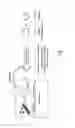
FIG. 1 illustrates an overview of the identification of lead peptide candidates.
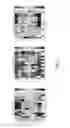
FIG. 2 depicts a heat MAP of the Optimization of lead peptide candidates for nVLP GII.4.
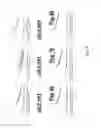
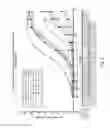
FIG. 3 depicts surface plasmon resonance screening of optimized peptides.
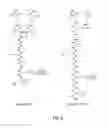
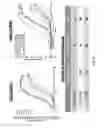
FIG. 4 depicts nVLPGII.4 synbody construction.
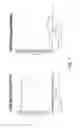
FIG. 5 depicts an ELISA screening of nVLPGII.4 synbodies.
FIG. 6 depicts nVLP (GII.4) synbodies with KD<50 nM.
FIG. 7 depicts the ELISA based detection of human Norovirus.
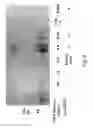
FIG. 8 depicts the enrichment of GII.4 Minerva VLP captured from a dilute solution using synbody 93-93.
DETAILED DESCRIPTION OF THE INVENTION
Embodiments of the invention relate to peptide affinity ligands (synbodies) for the detection of human Norovirus. As a first step to creating a synbody, a virus-like particle (VLP) was used as a Norovirus surrogate. The Norovirus surrogate VLP (nVLP) assembled from capsid structural subunits antigenically resembles native virus yet lacks viral nucleic acid, thereby rendering it non-infectious. The nVLP can be produced in a variety of known prokaryotic and eukaryotic expression systems to provide an ample sample supply.
To engineer peptide affinity ligands for nVLP, peptides specific for nVLP were identified by screening cell lysate from baculovirus expression and transgenic tobacco expression of nVLP (type GII.4 Minerva strain) against a library of 10,000 20mer peptides of random sequences in microarray format. Three lead peptides were identified. With an aim to detect very low amount of virus coat protein present in complex mixture, we focused on improving the affinity and specificity of the identified lead peptides for nVLP GII.4 (FIGS. 1 and 2).
For this, nine amino acids (Y, A, D, S, K, N, V, W, E) were selected and an amino acid point variant peptide library for each selected lead peptide was designed. These peptides (408 in all) were printed on microarrays using similar sulfhydryl chemistry as used in the 10,000 peptide microarrays and screened against nVLP GII.4. After amino acid substitutions for increased binding affinity for nVLP GII.4 were identified, a library of optimized peptides (96) was created by the addition of 5-7 amino acid combinations.
These 96 peptides were synthesized and tested unpurified against GII.4 via surface plasmon resonance (SPR), a sample of which is shown in FIG. 3. Peptides candidates were analyzed and selected for improved binding and slower dissociation rate. Finally, a list of 10 peptide candidates with improved binding and slower dissociation rates were chosen to construct bivalent peptide affinity reagents (synbodies).
| TABLE-1 |
| Selected Peptides candidates for Synbody Construction |
| Avg | |||||
| Binding | |||||
| Peptide | (Spot | % | kd-1 | ||
| S.No. | Code | Selected Peptides | 1/2) | Stability | (sec) |
| 1 | nVLP-1WT | LLYNKTFPHGRWSPSYPGSC | 71.5 | 25% | 7.85E-03 |
| 2 | nVLP-2WT | DWARSNTSRSMDFNLGWGSC | 2.5 | — | 2.33E-02 |
| 3 | Mut Peptide-81 | AWARSNNSRSKAFNLGWGSC | 127.9 | 45% | 4.55E-03 |
| 4 | Mut Peptide-60 | DWARKNNKRKMNFNLGWGSC | 134.3 | 44% | 4.87E-03 |
| 5 | Mut Peptide-53 | VWARKNNKRKKDFNAGWGSC | 188.8 | 51% | 4.08E-03 |
| 6 | Mut Peptide-78 | SWARSNNKRSKAFNLGWGSC | 168.8 | 46% | 4.31E-03 |
| 7 | nVLP-6WT | RWHRVDLRSHTELPRYIGSC | 175.7 | 37% | 5.13E-03 |
| 8 | Mut Peptide-92 | RWHRVKLRSHTELNRYIGSC | 229.5 | 57% | 3.55E-03 |
| 9 | Mut Peptide-93 | RWVRVKLRSHTELNRYIGSC | 274.2 | 60% | 3.32E-03 |
| 10 | Mut Peptide-94 | RWVRVKLRSHTKLRYIGSC | 358.2 | 63% | 2.94E-03 |
Construction of Peptide Affinity Reagents (Synbody) for nVLP GII.4:
Two scaffolds (scaffold-1571 and scaffold-MAP-2) with maleimide functional groups were selected for synbody construction (see, for example, FIG. 4). Peptide candidates (Table 1) were constrained on two scaffolds via sulfhydryl coupling. A total of 53 synbody conjugation reactions were carried out on two different scaffold types and 98 synbodies were recovered after HPLC purification. Synbodies were characterized by a matrix-assisted laser desorption/ionization time-of-flight mass spectrometer (MALDI-TOF) and tested against purified GII.4 nVLP binding in a direct ELISA assay (FIG. 5). Table 2 and FIG. 6 show synbodies with KD<50 nM.
| TABLE-2 |
| nVLP (GII.4) Synbodies with KD < 50 nM |
| nVLP Synbodies for GII.4 |
| S. No. | Synbody | Synbody Sequence | Scaffold | ELISA KD |
| 1 | nVLP6-6-1571 | RWHRVDLRSHTELPRYIGSC-RWHRVDLRSHTELPRYIGSC-1571 | 1571 | 2 nM |
| 2 | nVLP6-53-1571 | RWHRVDLRSHTELPRYIGSC-VWARKNNKRKKDFNAGWGSC-1571 | 1571 | 1 nM |
| 3 | nVLP6-78-1571 | RWHRVDLRSHTELPRYIGSC-SWARSNNKRSKAFNLGWGSC-1571 | 1571 | 2 nM |
| 4 | nVLP6-92-1571 | RWHRVDLRSHTELPRYIGSC-RWHRVKLRSHTELNRYIGSC-1571 | 1571 | 2 nM |
| 5 | nVLP6-60-1571 | RWHRVDLRSHTELPRYIGSC-DWARKNNKRKMNFNLGWGSC-1571 | 1571 | 3 nM |
| 6 | nVLP6-81-1571 | RWHRVDLRSHTELPRYIGSC-RWHRVDLRSHTELPRYIGSC-1571 | 1571 | 3 nM |
| 7 | nVLP6-94-1571 | RWHRVDLRSHTELPRYIGSC-RWHRVDLRSHTELPRYIGSC-1571 | 1571 | 1 nM |
| 8 | nVLP2-53-1571 | DWARSNTSRSMDFNLGWGSC-VWARKNNKRKKDFNAGWGSC-1571 | 1571 | 20 nM |
| 9 | nVLP2-78-1571 | DWARSNTSRSMDFNLGWGSC-SWARSNNKRSKAFNLGWGSC-1571 | 1571 | 25 nM |
| 10 | nVLP2-92-1571 | DWARSNTSRSMDFNLGWGSC-RWHRVKLRSHTELNRYIGSC-1571 | 1571 | 15 nM |
| 11 | nVLP2-60-1571 | DWARSNTSRSMDFNLGWGSC-DWARKNNKRKMNFNLGWGSC-1571 | 1571 | 10 nM |
| 12 | nVLP2-81-1571 | DWARSNTSRSMDFNLGWGSC-AWARSNNSRSKAFNLGWGSC-1571 | 1571 | 40 nM |
| 13 | nVLP2-92-1571 | DWARSNTSRSMDFNLGWGSC-RWHRVKLRSHTELNRYIGSC-1571 | 10 nM | |
| 14 | nVLP2-93-1571 | DWARSNTSRSMDFNLGWGSC-RWVRVKLRSHTELNRYIGSC-1571 | 5 nM | |
| 15 | nVLP2-94-1571 | DWARSNTSRSMDFNLGWGSC-RWVRVKLRSHTKLNRYIGSC-1571 | 1571 | 5 nM |
| 16 | nVLP1-53-1571 | LLYNKTFPHGRWSPSYPGSC-VWARKNNKRKKDFNAGWGSC-1571 | 1571 | 19 nM |
| 17 | nVLP1-55-1571 | LLYNKTFPHGRWSPSYPGSC-VWARKNNSRSKDFNAGWGSC-1571 | 1571 | 7 nM |
| 18 | nVLP1-72-1571 | LLYNKTFPHGRWSPSYPGSC-SWARSNNSRSMDFNLGWGSC-1571 | 1571 | 15 nM |
| 19 | nVLP1-93-1571 | LLYNKTFPHGRWSPSYPGSC-RWVRVKLRSHTELNRYIGSC-1571 | 1571 | 4 nM |
| 20 | nVLP1-94-1571 | LLYNKTFPHGRWSPSYPGSC-RWVRVKLRSHTKLNRYIGSC-1571 | 1571 | 6 nM |
| 21 | nVLP60-60-1571 | DWARKNNKRKMNFNLGWGSC-DWARKNNKRKMNFNLGWGSC-1571 | 1571 | 2 nM |
| 22 | nVLP81-81-1571 | AWARSNNSRSKAFNLGWGSC-AWARSNNSRSKAFNLGWGSC-1571 | 1571 | 3 nM |
| 23 | nVLP93-93-1571 | RWVRVKLRSHTELNRYIGSC-RWVRVKLRSHTELNRYIGSC-1571 | 1571 | 4 nM |
| 24 | nVLP78-78-1571 | SWARSNNKRSKAFNLGWGSC-SWARSNNKRSKAFNLGWGSC-1571 | 1571 | 5 nM |
| 25 | nVLP92-92-1571 | RWHRVKLRSHTELNRYIGSC-RWHRVKLRSHTELNRYIGSC-1571 | 1571 | 3 nM |
| 26 | nVLP94-94-1571 | RWVRVKLRSHTKLNRYIGSC-RWVRVKLRSHTKLNRYIGSC-1571 | 1571 | 1 nM |
| 27 | nVLP53-53-1571 | VWARKNNKRKKDFNAGWGSC-VWARKNNKRKKDFNAGWGSC-1571 | 1571 | 1 nM |
| 28 | nVLP55-55-1571 | VWARKNNSRSKDFNAGWGSC-VWARKNNSRSKDFNAGWGSC-1571 | 1571 | 9 nM |
| 29 | nVLP1-1-MAP2 | LLYNKTFPHGRWSPSYPGSC-LLYNKTFPHGRWSPSYPGSC-MAP2 | MAP-2 | 4 nM |
| 30 | nVLP1-53-MAP2 | LLYNKTFPHGRWSPSYPGSC-LLYNKTFPHGRWSPSYPGSC-MAP2 | MAP-2 | 2 nM |
| 31 | nVLP1-60-MAP2 | LLYNKTFPHGRWSPSYPGSC-LLYNKTFPHGRWSPSYPGSC-MAP2 | MAP-2 | 5 nM |
| 32 | nVLP1-78-MAP2 | LLYNKTFPHGRWSPSYPGSC-LLYNKTFPHGRWSPSYPGSC-MAP2 | MAP-2 | 7 nM |
| 33 | nVLP1-81-MAP2 | LLYNKTFPHGRWSPSYPGSC-LLYNKTFPHGRWSPSYPGSC-MAP2 | MAP-2 | 7 nM |
| 34 | nVLP1-92-MAP2 | LLYNKTFPHGRWSPSYPGSC-LLYNKTFPHGRWSPSYPGSC-MAP2 | MAP-2 | 8 nM |
| 35 | nVLP1-94-MAP2 | LLYNKTFPHGRWSPSYPGSC-LLYNKTFPHGRWSPSYPGSC-MAP2 | MAP-2 | 1 nM |
| 36 | nVLP2-53-MAP2 | DWARSNTSRSMDFNLGWGSC-VWARKNNKRKKDFNAGWGSC-MAP2 | MAP-2 | 5 nM |
| 37 | nVLP2-92-MAP2 | DWARSNTSRSMDFNLGWGSC-RWHRVKLRSHTELNRYIGSC-MAP2 | MAP-2 | 34 nM |
| 38 | nVLP6-6MAP2 | RWHRVDLRSHTELPRYIGSC-RWHRVDLRSHTELPRYIGSC-MAP2 | MAP-2 | 39 nM |
| 39 | nVLP6-53-MAP2 | RWHRVDLRSHTELPRYIGSC-VWARKNNKRKKDFNAGWGSC-MAP2 | MAP-2 | 0 nM |
| 40 | nVLP6-81-MAP2 | RWHRVDLRSHTELPRYIGSC-AWARSNNSRSKAFNLGWGSC-MAP2 | MAP-2 | 40 nM |
| 41 | nVLP6-92-MAP2 | RWHRVDLRSHTELPRYIGSC-RWHRVKLRSHTELNRYIGSC-MAP2 | MAP-2 | 33 nM |
| 42 | nVLP6-93-MAP2 | RWHRVDLRSHTELPRYIGSC-RWVRVKLRSHTELNRYIGSC-MAP2 | MAP-2 | 50 nM |
| 43 | nVLP6-94-MAP2 | RWHRVDLRSHTELPRYIGSC-RWVRVKLRSHTKLNRYIGSC-MAP2 | MAP-2 | 15 nM |
ELISA Detection.
A direct ELISA method for detection of HuNoV also has been developed. Stool samples containing HuNoV (GII.3, GII.4, or no NoV) were coated onto an ELISA plate and detected with a fixed concentration of the candidate synbody. Initial results clearly indicate that the synbody performs similarly to a polyclonal antibody raised against the GII.4 strain (FIG. 7).
As shown in FIG. 8 and Table 3, enrichment of either GII.4 Minerva or both GII.4 Minerva and GII.4 Sydney# occurs for synbodies 6-6, 92-92, 93-93, and 94-94 from Table 2.
| TABLE 3 |
| Enrichment of two different Norovirus |
| VLPs captured from a dilute solution. |
| VP1 Protein | Enrichment Factor from 1 ng/μL solution |
| Identity | Syn 6-6 | Syn 92-92 | Syn 93-93 | Syn 94-94 | |
| GII.4 | 100% | 16 | 3 | 10 | 7 |
| Minerva | |||||
| GII.4 | 95% | n.e. | n.e. | 3 | 3 |
| Sydney# | |||||
In view of the above, a series of affinity agents for the detection of Norovirus have been developed. These synbodies can be used for detection of Norovirus or in capture assays for Norovirus concentration or enrichment. These Norovirus detecting synbodies can be coupled with filtration procedures, which may be used to remove low levels of viruses present in naturally contaminated surfaces or samples.
The claims are not intended to be limited to the embodiments and examples described herein.
Claims
1. A norovirus detection agent selected from the group consisting of synbodies 6-6, 92-92, 93-93, and 94-94.
2. A Norovirus capturing platform, comprising one or more synbodies selected from the group consisting of synbodies 6-6, 92-92, 93-93, and 94-94 coupled to a substrate.
3. A method for binding Norovirus, comprising the steps of coupling one or more synbodies selected from the group consisting of those disclosed in Table 2 to a substrate and contacting said substrate with a sample.
Images & Drawings included:
Sources:
- United States Patent and Trademark Office - verify current appl. status at the USPTO↗
Recent applications in this class:
- » 20250290927 2025-09-18
PEPTIDES AND PEPTIDE MICROARRAYS FOR DETECTION AND DIFFERENTIATION OF ANTIBODY RESPONSES TO EBOLA VIRUS - » 20250283884 2025-09-11
METHODS AND REAGENTS FOR ZIKA VIRUS IMMUNOASSAYS - » 20250283883 2025-09-11
TEST METHOD, TEST REAGENT, AND TEST KIT - » 20250283882 2025-09-11
HIGH SENSITIVITY DNA LINKED IMMUNOSORBENT SIGNAL AMPLIFICATION ASSAY (DLISA) FOR DETECTION OF INFECTIOUS SARS-COV-2 VIRUS AND VARIANTS - » 20250283881 2025-09-11
SYSTEMS AND PROCESSES TO SCREEN FOR SEVERE ACUTE RESPIRATORY SYNDROME CORONAVIRUS 2 (SARS-CoV-2) OF 2019 (COVID-19) - » 20250283880 2025-09-11
SENSITIZER FOR IMMUNOCHROMATOGRAPHIC ASSAYS, AND ASSAY - » 20250277789 2025-09-04
METHOD OF IMPROVING PREDICTION ACCURACY AND REDUCING FALSE NEGATIVE RATE OF SEVERE DENGUE PREDICTION IN SUBJECT - » 20250277788 2025-09-04
SARS-COV-2 N PROTEIN-SPECIFIC SINGLE-CHAIN ANTIBODY, AND FUSION PROTEIN AND USE THEREOF - » 20250271431 2025-08-28
Camelid Antibodies for Use in Therapy and Diagnosis - » 20250264467 2025-08-21
NOVEL HCV NUCLEIC ACIDS AND ENCODED GLYCOPROTEIN ANTIGENS AND METHODS
Recent applications for this Assignee:
- » 20250293436 2025-09-18
SYSTEMS AND METHODS FOR DETECTING ANGLE OF ARRIVAL ON A HYBRID RECONFIGURABLE INTELLIGENT SURFACE USING INTENSITY ONLY DATA - » 20250288543 2025-09-18
METHODS OF ENHANCING BENEFICIAL SHORT-CHAIN AND MEDIUM-CHAIN FATTY ACIDS PRODUCTION BY GUT MICROBIOME - » 20250279163 2025-09-04
METHODS, SYSTEMS, AND COMPUTER READABLE MEDIA FOR APTAMER SELECTION - » 20250278622 2025-09-04
ON-CHIP HYPERDIMENSIONAL COMPUTING USING MIXED-SIGNAL CIRCUITS - » 20250276272 2025-09-04
MOVING SORBENT PANEL SYSTEM FOR CAPTURING ATMOSPHERIC CARBON DIOXIDE - » 20250272962 2025-08-28
Systems, Methods, and Apparatuses for Anatomically Consistent Embeddings in Composition and Decomposition - » 20250271428 2025-08-28
PEPTIDE-BASED BIOMARKERS AND RELATED ASPECTS FOR DISEASE DETECTION - » 20250268549 2025-08-28
Systems, Methods, and Apparatuses for Learning Anatomical Consistency, Sub-Volume Spatial Relationships and Fine-Grained Appearance for Computed Tomography - » 20250260410 2025-08-14
MACHINE LEARNING ENHANCED ANALOG-TO-DIGITAL CONVERTERS - » 20250260408 2025-08-14
PHASE NOISE CANCELLING PHASE LOCKED LOOP (PLL)