Composite board
US20160159032A1
2016-06-09
14/613,439
2015-02-04
✅ Patent granted
US 9,725,901 B2
2017-08-08
-
-
Linda L Gray
Kaplan Breyer Schwarz, LLP | Janine D. Geraigery, Esq.
2035-03-20
Abstract:
A composite board is formed from binding a cover layer to a base layer, wherein the base layer has a composition comprising one or more of the following ingredients: magnesium oxide, recycled magnesium oxide, fibrous chips, wood chips, bamboo chips, chemical additive and water. A method of manufacturing the composite board includes providing the base layer, which includes preparing a semi-arid mixture of the above ingredients, and pouring the mixture through a funnel onto a conveyor belt. The conveyor belt passes the mixture through a series of rollers to remove excess liquid. The layer is cut into panels, which are heat before being sprayed with dried magnesium oxide. A binding agent is applied to one side of the base layer. The cover layer has a bottom surface which is then aligned and bonded to one side of the base layer.
Inventors:
- Eddie Wai Ho Chu 3 🇺🇸 New York, NY, United States
- Wesley Jin Bong Lai 2 🇺🇸 New York, NY, United States
Assignee:
- Chu & Son Inc. 1 🇺🇸 New York, NY, United States
Applicant:
Interested in similar patents?
Get notified when new applications in this technology area are published.
Classification:
B32B21/042 » CPC further
Layered products comprising a layer of wood, e.g. wood board, veneer, wood particle board comprising wood as the main or only constituent of a layer, next to another layer of a of wood
B32B9/048 » CPC further
Layered products comprising a layer of a particular substance not covered by groups - comprising such substance as the main or only constituent of a layer, next to another layer of a made of particles
B32B2255/04 » CPC further
Coating on the layer surface on a particulate layer
B32B2255/26 » CPC further
Coating on the layer surface Polymeric coating
B32B2264/102 » CPC further
Composition or properties of particles which form a particulate layer or are present as additives; Inorganic particles Oxide or hydroxide
B32B5/16 » CPC main
Layered products characterised by the non- homogeneity or physical structure, i.e. comprising a fibrous, filamentary, particulate or foam layer; Layered products characterised by having a layer differing constitutionally or physically in different parts characterised by features of a layer formed of particles, e.g. chips, powder or granules
B32B21/02 » CPC further
Layered products comprising a layer of wood, e.g. wood board, veneer, wood particle board of fibres, chips, or particles
B32B9/02 » CPC further
Layered products comprising a layer of a particular substance not covered by groups - comprising animal or vegetable substances, e.g. cork, bamboo, starch
B32B9/04 IPC
Layered products comprising a layer of a particular substance not covered by groups - comprising such substance as the main or only constituent of a layer, next to another layer of a
B32B21/04 IPC
Layered products comprising a layer of wood, e.g. wood board, veneer, wood particle board comprising wood as the main or only constituent of a layer, next to another layer of a
E04C2/26 » CPC main
Building elements of relatively thin form for the construction of parts of buildings, e.g. sheet materials, slabs, or panels characterised by specified materials composed of materials covered by two or more of groups , , or of materials covered by one of these groups with a material not specified in one of the groups
B32B7/12 » CPC further
Layered products characterised by the relation between layers; Layered products characterised by the relative orientation of features between layers, or by the relative values of a measurable parameter between layers, i.e. products comprising layers having different physical, chemical or physicochemical properties; Layered products characterised by the interconnection of layers; Interconnection of layers using interposed adhesives or interposed materials with bonding properties
B32B13/02 » CPC further
Layered products comprising a a layer of water-setting substance, e.g. concrete, plaster, asbestos cement, or like builders' material with fibres or particles being present as additives in the layer
B32B13/10 » CPC further
Layered products comprising a a layer of water-setting substance, e.g. concrete, plaster, asbestos cement, or like builders' material comprising such substance as the main or only constituent of a layer, next to another layer of a of wood; of wood particle board
B32B13/12 » CPC further
Layered products comprising a a layer of water-setting substance, e.g. concrete, plaster, asbestos cement, or like builders' material comprising such substance as the main or only constituent of a layer, next to another layer of a of synthetic resin
B32B37/003 » CPC further
Methods or apparatus for laminating, e.g. by curing or by ultrasonic bonding involving treatment or provisions in order to avoid deformation or air inclusion, e.g. to improve surface quality to avoid air inclusion
B32B37/02 » CPC further
Methods or apparatus for laminating, e.g. by curing or by ultrasonic bonding characterised by a sequence of laminating steps, e.g. by adding new layers at consecutive laminating stations
B32B2250/02 » CPC further
Layers arrangement 2 layers
B32B2262/065 » CPC further
Composition or structural features of fibres which form a fibrous or filamentary layer or are present as additives; Vegetal fibres; Cellulose fibres, e.g. cotton Lignocellulosic fibres, e.g. jute, sisal, hemp, flax, bamboo
B32B2262/067 » CPC further
Composition or structural features of fibres which form a fibrous or filamentary layer or are present as additives; Vegetal fibres; Cellulose fibres, e.g. cotton Wood fibres
B32B2264/065 » CPC further
Composition or properties of particles which form a particulate layer or are present as additives; Vegetal particles; Cellulose particles, e.g. cotton Lignocellulosic particles, e.g. jute, sisal, hemp, flax, bamboo
B32B2264/067 » CPC further
Composition or properties of particles which form a particulate layer or are present as additives; Vegetal particles; Cellulose particles, e.g. cotton Wood particles
B32B2307/3065 » CPC further
Properties of the layers or laminate having particular thermal properties; Resistant to heat Flame resistant or retardant, fire resistant or retardant
B32B2307/50 » CPC further
Properties of the layers or laminate having particular mechanical properties
B32B2307/542 » CPC further
Properties of the layers or laminate having particular mechanical properties Shear strength
B32B2307/546 » CPC further
Properties of the layers or laminate having particular mechanical properties Flexural strength; Flexion stiffness
B32B2419/00 » CPC further
Buildings or parts thereof
B32B2419/04 » CPC further
Buildings or parts thereof Tiles for floors or walls
B32B2419/06 » CPC further
Buildings or parts thereof Roofs, roof membranes
B32B2471/00 » CPC further
Floor coverings
B32B2607/00 » CPC further
Walls, panels
Y10T156/1085 » CPC further
Adhesive bonding and miscellaneous chemical manufacture; Methods of surface bonding and/or assembly therefor with cutting, punching, tearing or severing of continuous or running length bonded web One web only
Y10T156/1727 » CPC further
Adhesive bonding and miscellaneous chemical manufacture; Surface bonding means and/or assemblymeans with work feeding or handling means; For plural parts or plural areas of single part; Indefinite or running length work; Means applying fluent adhesive or adhesive activator material between layers Plural indefinite length or running length workpieces
Y10T156/1741 » CPC further
Adhesive bonding and miscellaneous chemical manufacture; Surface bonding means and/or assemblymeans with work feeding or handling means; For plural parts or plural areas of single part; Indefinite or running length work Progressive continuous bonding press [e.g., roll couples]
B32B38/04 IPC
Ancillary operations in connection with laminating processes Punching, slitting or perforating
E04C2/00 IPC
Building elements of relatively thin form for the construction of parts of buildings, e.g. sheet materials, slabs, or panels
B32B37/00 IPC
Methods or apparatus for making layered products; Treatment of the layers or of the layered products
B32B37/00 IPC
Methods or apparatus for laminating, e.g. by curing or by ultrasonic bonding
Description
CROSS-REFERENCE TO RELATED APPLICATION
The present application is a continuation-in-part of application Ser. No. 14/564,388 filed Dec. 9, 2014 in the U.S. Patent & Trademark Office, the entire disclosure of which is incorporated herein by reference.
BACKGROUND OF THE INVENTION
1. Field of the Invention
The present invention relates generally to composite boards and the method of manufacturing same for use as building material. More particularly, the invention is directed toward a composite board having a base layer bonded to a cover layer, wherein the base layer is comprised of a mixture of magnesium-oxide, fibrous chips, and chemical additive dissolved in water. The composite boards are used for building homes and other types of structures including constructing interior walls, floors, and roofs.
2. Description of the Related Art Conventional composite boards include a base panel layer bonded to a cover layer. It is known that base layers of conventional composite boards are manufactured from a slurry mixture that is placed between two layers of reinforced material, which may include glass fabric mesh.
The base panel layer is conventionally formed from a mixture of inorganic magnesium compounds, wood fibers, perlite, chemical additives, water and other substances. The slurry mixture is then extruded onto a supporting surface on top of a PVC mold, between layers of glass fabric. The wet slurry mix is cut to the exact size of the mold and placed within the mold and then delivered on top of a movable metal rack to a curing room or space for drying. The mix is set to dry within the mold for several hours at room temperature. After which, the panel is separated from the mold and left in a stack for several more hours to further dry. The panels are then trimmed and sanded to a uniform thickness and the process is complete.
It is apparent that several problems exist with the current process including that it is very costly and unduly lengthy. Considerable manpower is required over the course of several days. A large amount of space is necessary for storing the panels during curing. The glass fabric used for reinforcing the strength of the panel is costly and accounts for approximately twenty percent of the total cost of the raw materials required.
Furthermore, the currently known process represents a considerable amount of economic waste, including the raw materials wasted when the panels are trimmed and sanded.
Moreover, the composite boards suffer from a number of structural and environmental shortcomings. The magnesium chloride incorporated in the base panel layer composition allows for leaching and breeding, substantially weakening the material. The flexural and shear strengths are also such that they leave the panels vulnerable to cracking or splitting. The glass fabric used, although alkaline resistant, eventually erodes the fabric gradually weakening the panels.
Thus, a faster, cost-friendly, environmentally conscience process resulting in a more stable product is highly desired.
It is, therefore, a primary object of the present invention to provide a composite board having a base layer bonded to a cover layer, wherein the base layer is comprised of a mixture of magnesium oxide, fibrous chips, and chemical additive dissolved in water.
It is another object of the present invention to provide an improved base panel layer that presents a lower risk of cracking or splitting by having increased flexural and shear strength, is recyclable, and simultaneously increases the numerous positive characteristics that make the existing composite board's exceptional wallboards in the construction industry today.
It is another object of the present invention to provide an improved base panel layer that is twice as strong as the existing construction panels, while still maintaining superior resistance and durability to damage from fire and water.
It is another object of the present invention to provide an improved base panel layer comprising a small percentage of magnesium oxide, low grade or recycled material, bamboo chips, chemical additive and water.
It is another object of the present invention to provide an improved base panel layer no longer comprising glass fabric, magnesium chloride, neutralizing chemical additives, and perlite.
It is another object of the present invention to provide an improved base panel layer that is free from leaching or breeding issues.
It is another object of the present invention to provide an improved base panel layer comprising environmentally-friendly recycled material including dust after sanding, trimmings, and broken panels.
It is another object of the present invention to manufacture an improved base panel layer with substantially desirable properties in a single day.
It is another object of the present invention to manufacture an improved base panel layer in a process that bonds the semi-arid mix under pressure, in lieu of heat.
It is another object of the present invention to manufacture an improved base panel layer in a process free of molds and racks.
BRIEF SUMMARY OF THE INVENTION
In accordance with one aspect of the present invention, a composite board is provided including a base layer having a first side and second side opposite said first side and comprosing a semi-arid mixture of magnesium oxide, fibrous chips, and chemical additive dissolved in an aqueous solution. The composite board further includes a cover layer having a top and bottom surface, wherein the bottom surface is arranged on the first side of the base layer, and a binding agent for connecting the bottom surface of the cover layer to the first side of the base layer. The cover layer may be wood or linoleum. The binding agent may be seccotine. The magnesium oxide may have purity in the range of 20%-79%. The mixture may further comprise recycled base layers. The fibrous chips may be from the group consisting of wood and bamboo chips. The base layer may have a thickness in the range of 10-18 mm. The cover layer may have a thickness in the range of 0.5-5 mm. The cover layer may have a thickness in the range of 2-3 mm. The manufactured panel may be used to construct load bearing walls, non-load bearing walls, ceilings, roofing, siding, insulated walls, and tile backer.
In accordance with an additional embodiment a composite board is provided comprising a cover layer having a bottom surface, a base layer bonded to the bottom surface of the cover layer. The base layer having a first side and a second side and comprising a mixture of at least 5% magnesium oxide, at least 50% recycled magnesium oxide, at least 40% fibrous chips, and at least 5% chemical additive in an aqueous solution. The recycled magnesium oxide material may include recycled manufactured panel material. The composite board includes a binding agent for bonding the cover layer to the base layer. The recycled magnesium oxide includes recycled composite board or base layer. The fibrous chips may be from the group consisting of wood and bamboo chips.
In accordance with an additional embodiment, a method of manufacturing a composite board is provided comprising providing a base layer panel having a first side and a second side opposite the first side, the base layer panel includes the steps of preparing a semi-arid mixture of high purity magnesium oxide, low purity magnesium oxide, fibrous chips, and chemical additive in an aqueous solution. Then, pouring the semi-arid mixture through a funnel and dispensing the semi-arid mixture from the funnel onto a conveyor belt. Next, passing the dispensed semi-arid mixture through a roller, where the roller is configured to press and spread the semi-arid mixture against the conveyor belt to a layer of desired uniform thickness. Then, pressing the layer through a compressor, where the compressor is configured to remove excess liquid from the layer, before cutting the compressed layer into panels of predetermined length. Then, a binding agent is applied to the first side of the base layer panel. A cover layer having a top and bottom surface is provided. The bottom surface of the cover layer is connected to the first surface of the base layer panel. The high purity magnesium oxide may have purity of at least 79%. The low purity magnesium oxide may have purity of at least 20%. The low purity magnesium oxide mixture may further comprise recycled base layer panels. The fibrous chips may be from the group consisting of wood and bamboo chips.
The method may further comprise drying the panels, heating the panels to a desired temperature, and heating the panels by solar energy.
The method may further comprise passing the panels through a jet, where the jet is configured to spray dry magnesium oxide on the panels, and stacking the panels.
In accordance with an additional embodiment, a system for manufacturing a composite board is provided comprising means for preparing a semi-arid mixture of high purity magnesium oxide, low purity magnesium oxide, fibrous chips, and chemical additive in an aqueous solution. The system includes means for dispensing the semi-arid mixture onto a conveyor belt, and means for spreading the semi-arid mixture against the conveyor belt to a layer of desired uniform thickness. The system includes means for removing excess liquid from the layer and means for cutting the layer into panels of predetermined length. The system includes means for applying a binding agent to the first side of the base layer panel, means for providing a cover layer having a top and bottom surface, and means for connecting the bottom surface of the cover layer to the first surface of the base layer panel.
The system may further comprise means for drying the panels, means for spraying dry magnesium oxide onto the panels, and means for stacking the panels.
BRIEF DESCRIPTION OF THE SEVERAL VIEWS OF THE DRAWINGS
To these and to such other objects that may hereinafter appear, the present invention relates to an improved magnesium-oxide based composite board and the process for manufacturing same as described in detail in the following specification and recited in the annexed claims, taken together with the accompanying drawings, in which like numerals refer to like parts in which:
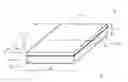
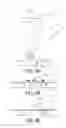
FIG. 1A is a perspective view of a composite board having a base panel layer bonded to a cover layer, in accordance with the preferred embodiment of the present invention;
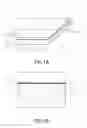
FIG. 1B is a cross-sectional view of the composite board taken along line 1B-1B of FIG. 1A;
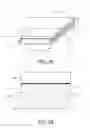
FIG. 2A is a perspective view of a composite board having a base panel layer bonded to a cover layer, in accordance with an additional embodiment of the present invention;
FIG. 2B is a cross-sectional view of the composite board taken along line 2B-2B of FIG. 2A;
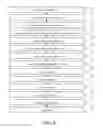
FIG. 3 is a flow chart of the preferred method of fabricating the base panel layer of the composite board in accordance with FIG. 1A of the present invention;
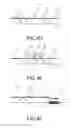
FIG. 4A is a cross-sectional view of a first step in the process for manufacturing the base panel layer, showing the mixture being poured through a funnel;
FIG. 4B is a cross-sectional view of a second step in the process for manufacturing the base panel layer, showing the mixture being spread onto the conveyor belt;
FIG. 4C is a cross-sectional view of a third step in the process for manufacturing the base panel layer, showing the mixture being compressed onto the conveyor belt;
FIG. 4D is a cross-sectional view of a fourth step in the process for manufacturing the base panel layer, showing the layer being cut into panels;
FIG. 4E is a cross-sectional view of a fifth step in the process for manufacturing the base panel layer, showing the panel passing through at least one tunnel and heated; and
FIG. 4F is a cross-sectional view of a six step in the process for manufacturing the base panel layer, showing the conveyor passing the panel through a jet spraying dry magnesium oxide, before discarding the panel onto a stack; and
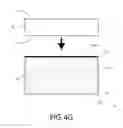
FIG. 4G is a cross-sectional view of the composite board of FIG. 1, showing the method for bonding the base panel layer to the cover layer, in accordance with the preferred method of the present invention.
To the accomplishment of the above and related objects the invention may be embodied in the form illustrated in the accompanying drawings. Attention is called to the fact, however, that the drawings are illustrative only. Variations are contemplated as being part of the invention, limited only by the scope of the claims.
DETAILED DESCRIPTION OF THE INVENTION
Referring now to FIGS. 1A and 1B, there is shown an improved composite board 10 in accordance with the preferred embodiment of the present invention. The board 10 includes a length L, width W and height H, which may be varied to suit particular needs.
The board 10 may be used in a variety of ways during the fabrication of a house or other type of structure. Without limitation, the boards 10 are used for constructing floors, walls, roofing, siding, and ceilings. By varying the height H of the boards, the constructed walls may be load bearing or non-load bearing.
The composite board 10 has a base panel layer 20 having a first side 22 and a second side 24 opposite the first side. The base panel layer 20 is made from a composition comprising one or more of the following ingredients, magnesium oxide (MgO), recycled magnesium oxide, fibrous chips, wood chips, bamboo chips, water, and chemical additive.
The composite board 10 includes a cover layer 30 having a top surface 32 and bottom surface 34. Preferably, the cover layer 30 is wood or linoleum. The cover layer 30 is arranged on the base panel layer 20. In particular, the bottom surface 34 of the cover layer 30 is bonded to the first side 22 of the base panel layer 20 by a binding agent 36. Preferably, the binding agent is glue and more particularly fish glue or seccotine.
In the preferred embodiment, the base panel layers 20 are made using recycled magnesium oxide materials that are ground up excess portions (e.g. scraps) from prior fabrication processes. That is, as the panels are cut to size, sanded and trimmed, the leftover scraps and shavings are ground up and reused to make future base panel layers. In the below table, the row labeled “New MgO” refers to the ingredients used to make the base panel layers without reusing leftover board scraps from prior fabrication processes. The “New MgO” has a preferred purity of at least 79%. The row labeled “Recycled MgO” refers to ingredients used to make the base panel layer while reusing leftover panel scraps from prior manufacturing processes. The row labeled “Bamboo chips” refers to ingredients produced from a machine, which creates chips using the whole bamboo. In the preferred embodiment, the base panel layer comprises ingredients listed below in Table 1.
| TABLE 1 |
| (preferred embodiment) |
| Ingredients | Weight Range (%) | |
| New MgO | 5% | |
| Recycled MgO | 50% | |
| Bamboo Chips | 40% | |
| Chemical additive in aqueous | 5% | |
| solution | ||
In alternate embodiments, recycled MgO may be replaced with low-grade material having purity as low as 20%. In addition, bamboo chips may be replaced with wood or other fibrous chips. In one such alternate embodiment, the base panel layer comprises ingredients listed below in Table 2.
| TABLE 2 |
| (alternative embodiment) |
| Ingredients | Weight Range (%) | |
| New MgO | 5% | |
| Low-grade material | 50% | |
| Fibrous Chips | 40% | |
| Chemical additive in aqueous | 5% | |
| solution | ||
FIG. 1A illustrates a cross-sectional view of the composite board 10, which generally comprises the base panel layer 20 composed of various ingredients described above and the cover layer 30. As illustrated, the base panel layer is preferably composed of one single layer of mixed ingredients having varying particle size, including fibrous or bamboo chips 12. The preferred composition calls for ingredients within a very large range of particle size. Normally, the smaller the particle size the better the composition, and the better the composition the more expensive the product. However, the present process is able to utilize ingredients having a much larger and variable particle sizes in order to provide a base panel layer with superior quality. In addition, the base panel layer 20 no longer requires fiberglass fabric or sheet layers above and/or below the panel 10.
FIGS. 2A and 2B illustrate an alternate embodiment of the composite board 10A wherein the base panel layer 20A includes a first end 26 having a groove 26A and a second end 28, opposite the first end, having a protrusion 28A. The grooves 26A of a first board 10 are matingly engaged with the protrusions 28A of a second board 10 to form a wall or floor surface.
FIG. 3 illustrates the preferred method 100 for fabricating the base panel layer 20 of the present invention. The method 100 includes a plurality of steps 112-136. The order of these steps may be varied and at least some of the steps are performed sequentially and may be formed concurrently.
The first step 110 of the method 100 includes mixing magnesium oxide with low grade or recycled board materials, and preferably fibrous or bamboo chips, and a chemical additive in an aqueous solution to create a semi-arid mixture. The second step 112 involves pouring the semi-arid mixture through a funnel. In the third step 114, the semi-arid mixture is dispensed through the funnel onto a conveyor belt. In the fourth step 116, the dispensed mixture is passed through a first roller. The first roller is configured to press the semi-arid mixture against the conveyor belt and form a base panel layer of desired thickness. The fifth step 118 involves pressing the base layer through a compressor, where the compressor is configured to remove excess liquid from the base layer and compress the base layer to a desired thickness. In the sixth step 120, the compressed base layer is cut using a cutting blade, into base panel layers of predetermined length. In the seventh step 122, the base panel layers are cured by mild heat. Preferably, the conveyor belt delivers the base panel layers through the tunnel, which exposes the base panel layer to drying by at least one tunnel providing solar energy in order to raise the temperature of the base panel layer from 30 degrees Celsius to 60 degrees Celsius plus or minus 5 degrees. After the base panel layers pass through the solar energy in the tunnel, they are approximately 85% dry. In the eighth step 124, the base panel layers pass through a powder puffing jet, where dry magnesium oxide is sprayed from the jet onto the base panel layers. In the ninth step 126, the base panel layers exit the conveyor belt and are stacked by a stacking machine on top of one another. Additional steps 128 may include further curing when the ambient temperature is warm or hot. Under extreme weather elements, it may take additional time for the base panel layers to dry and cure 100%. However, even when the ambient temperature is as low as 6 degrees Celsius, it usually only takes a few hours for the panels to completely cure.
The remaining steps 130-136 involve combining the base panel layers 20 with the cover layer 30 to form the composite board. In the tenth step 130, the cover layer is provided and cut to a predetermined length and width. In the eleventh step 132, a binding agent 36 is applied to at least the first side 22 of the base panel layer 20. In the twelfth step 134, the bottom surface 34 of the cover layer is aligned with the first side 22 of the base panel layer 20 and then the cover layer 30 is pressed onto the base panel layer 30 connecting the two layers together. In the thirteenth step 136, the binding agent is dried and the layers solidify together to form the composite board 10.
FIGS. 4A-4G illustrate a system including a variety of steps within the production line assembly process 150 for manufacturing the composite board 10. In the preferred embodiment, the process 150 includes the conveyor belt 152 for transporting the mixture through the plurality of actions 112-128. In alternate embodiments, the conveyor belt may be substituted for other methods of transport by and between steps of the methods. Once mixed, the semi-arid mixture 20 is poured through the funnel 154 or hopper and dispensed from the funnel 154 onto the conveyor belt 152. The conveyor belt 152 transports the semi-arid mixture 16 to the roller 156 or spreader in order to form a layer 18 of desired thickness. Next, the layer 18 travels by conveyor belt 152 to the compressor 158, and is pressed to remove excess liquid therefrom. The conveyor belt then transports the base panel layer 20 to the cutter 160 and cuts the layer into base panel layers 20 of desired dimensions. The base panel layer 20 is then dried by passing through at least one tunnel providing solar energy 162, before passing a spray jet 164 and being sprayed with dry magnesium oxide. Once sprayed, the base panel layers are stacked 166 for storage or transport by a stacking machine.
Then, the base panel layers 20 are combined with a cover layer 30 to form the composite board 10. The cover layer is provided and cut to a predetermined length and width. The binding agent 36 is applied to at least the first side 22 of the base panel layer 20. Next, the bottom surface 34 of the cover layer 30 is aligned with the first side 22 of the base panel layer 20 and then the cover layer 30 is pressed onto the base panel layer 30 connecting the two layers together. Finally, the binding agent is dried and the layers solidify together to form the composite board 10.
In conclusion, herein is presented improved magnesium-oxide based composite board and the process for manufacturing same. The invention is illustrated by example in the drawing figures, and throughout the written description.
It should be understood that numerous variations are possible, while adhering to the inventive concept. Such variations are contemplated as being a part of the present invention.
While only a limited number of preferred embodiments of the present invention have been disclosed for purposes of illustration, it is obvious that many modifications and variations could be made thereto. It is intended to cover all of those modifications and variations, which fall within the scope of the present invention as defined by the following claims.
Claims
We claim:1. A composite board, comprising:
a base layer having a first side and a second side opposite said first side and comprising a semi-arid mixture of magnesium oxide, fibrous chips, and chemical additive dissolved in an aqueous solution; and
a cover layer having a top and bottom surface, wherein said bottom surface is arranged on said first side of said base layer; and
a binding agent for connecting said bottom surface of said cover layer to said first side of said base layer.
2. The composite board of claim 1 wherein the cover layer may be from the group consisting of wood or linoleum.
3. The composite board of claim 1 wherein the binding agent is seccotine.
4. The composite board of claim 1 wherein the magnesium oxide has purity in the range of 20-79%.
5. The composite board of claim 4 wherein the semi-arid mixture further comprises recycled base layers.
6. The composite board of claim 1 wherein the fibrous chips are from the group consisting of wood and bamboo chips.
7. The composite board of claim 1 wherein the base layer has a thickness in the range of 10-18 mm.
8. The composite board of claim 1 wherein the cover layer has a thickness in the range of 0.5-5 mm.
9. The composite board of claim 1 wherein the cover layer has a thickness in the range of 2-3 mm.
10. A composite board, comprising:
a cover layer having a bottom surface; and
a base layer bonded to said bottom surface of said cover layer, said base layer having a first side and a second side and comprising a mixture of at least 5% magnesium oxide, at least 50% recycled magnesium oxide, at least 40% fibrous chips, and at least 5% chemical additive in an aqueous solution; and
a binding agent for bonding said cover layer to said base layer.
11. The composite board of claim 10 wherein the recycled magnesium oxide includes recycled composite board or base layer.
12. The composite board of claim 10 wherein the fibrous chips are from the group consisting of wood and bamboo chips.
13. A method of manufacturing a composite board, the steps comprising:
a. providing a base layer panel having a first and a second side opposite said first side, said base layer panel includes the steps of:
i. preparing a semi-arid mixture of high purity magnesium oxide, low purity magnesium oxide, fibrous chips, and chemical additive in an aqueous solution;
ii. pouring said semi-arid mixture through a funnel;
iii. dispensing said semi-arid mixture from said funnel onto a conveyor belt;
iv. passing the dispensed semi-arid mixture through a roller, where the roller is configured to press and spread said semi-arid mixture against the conveyor belt to a layer of desired uniform thickness;
v. pressing the layer through a compressor, where the compressor is configured to remove excess liquid from said layer; and
vi. cutting said compressed layer into panels of predetermined length;
b. apply a binding agent to said first side of said base layer panel;
c. providing a cover layer having a top and bottom surface; and
d. connecting the bottom surface of said cover layer to said first surface of said base layer panel.
14. The method of claim 13 wherein the high purity magnesium oxide has purity of at least 79%.
15. The method of claim 13 wherein the low purity magnesium oxide has purity of at least 20%.
16. The method of claim 15 wherein the low purity magnesium oxide mixture further comprises recycled base layer panels.
17. The method of claim 13 wherein the fibrous chips are from the group consisting of wood and bamboo chips.
18. The method of claim 13 further comprises drying the base layer panels.
19. The method of claim 13 further comprising heating the panels to a desired temperature.
20. The method of claim 19 wherein the panels are heated by solar energy.
21. The method of claim 13 further comprising:
passing the panels through a jet, where the jet is configured to spray dry magnesium oxide on the panels; and
stacking the panels.
22. A system for manufacturing a composite board comprising:
a. means for providing a base layer panel including:
i. means for preparing a semi-arid mixture of high purity magnesium oxide, low purity magnesium oxide, fibrous chips, and chemical additive in an aqueous solution;
ii. means for dispensing said semi-arid mixture onto a conveyor belt;
iii. means for spreading said semi-arid mixture against said conveyor belt to a layer of desired uniform thickness;
iv. means for removing excess liquid from said layer;
v. means for cutting said layer into panels of predetermined length;
b. means for apply a binding agent to said first side of said base layer panel;
c. means for providing a cover layer having a top and bottom surface; and
d. means for connecting the bottom surface of said cover layer to said first surface of said base layer panel.
23. The system of claim 22 further comprising:
means for drying said base layer panels;
means for spraying dry magnesium oxide onto said base layer panels panels; and
means for stacking said base layer panels.
Images & Drawings included:
Sources:
- United States Patent and Trademark Office - verify current appl. status at the USPTO↗
Similar patent applications:
- » 20170120474
Method for producing decorated wooden composite boards and panel produced from the wooden composite board, in particular floor panel, and use of a wooden composite board produced according to the method - » 20050224164
Method for making a composite board and the composite board made thereby - » 20190270273
COMPOSITE FIBER, COMPOSITE BOARD, AND METHOD FOR MANUFACTURING THE COMPOSITE BOARD - » 20190111656
Composite fiber, composite board, and method for manufacturing the composite board - » 20240391131
METHOD FOR PRODUCING A WOODEN COMPOSITE BOARD, AND DEVICE FOR PRODUCING A WOODEN COMPOSITE BOARD - » 20100232127
WIRING BOARD COMPOSITE BODY, SEMICONDUCTOR DEVICE, AND METHOD FOR MANUFACTURING THE WIRING BOARD COMPOSITE BODY AND THE SEMICONDUCTOR DEVICE - » 20130333925
Flexible-rigid circuit board composite and method for producing a flexible-rigid circuit board composite - » 20120167509
HIGH DENSITY POLYURETHANE AND POLYISOCYANURATE CONSTRUCTION BOARDS AND COMPOSITE BOARDS - » 20110214387
HIGH DENSITY POLYURETHANE AND POLYISOCYANURATE CONSTRUCTION BOARDS AND COMPOSITE BOARDS - » 20130036694
HIGH DENSITY POLYURETHANE AND POLYISOCYANURATE CONSTRUCTION BOARDS AND COMPOSITE BOARDS
Recent applications in this class:
- » 20250282116 2025-09-11
SHEET COMPRISING THERMAL INSULATION LAYER AND ADHESIVE LAYER - » 20250010574 2025-01-09
SUPER INSULATING NANO-SPHERES FOR APPLIANCE INSULATION AND METHOD FOR CREATING A SUPER INSULATING NANO-SPHERE MATERIAL - » 20240198626 2024-06-20
Wear resistant decorative surface coverings, and process for manufacturing thereof - » 20240025143 2024-01-25
ADVANCED DIELECTRIC METHODS AND APPLICATIONS - » 20230391047 2023-12-07
Super insulating nano-spheres for appliance insulation and method for creating a super insulating nano-sphere material - » 20230191742 2023-06-22
SHEET STRUCTURE - » 20230057101 2023-02-23
MULTILAYER FILM - » 20220396052 2022-12-15
Method of Forming a Mycological Product - » 20220347964 2022-11-03
Fiber-reinforced resin material, method for manufacturing same, and fiber-reinforced resin structure - » 20220212440 2022-07-07
COMPOSITE BOARD