Condensation-curable silicone resin composition
US20160160047A1
2016-06-09
14/941,038
2015-11-13
✅ Patent granted
US 9,815,982 B2
2017-11-14
-
-
Margaret Moore
Oliff PLC
2035-11-13
Abstract:
The present invention provides a condensation-curable silicone resin composition containing (A) 100 parts by mass of one or more polyorganosiloxanes represented by the following average composition formula (1): (R3SiO1/2)x(R2SiO2/2)y(RSiO3/2)w(SiO4/2)u (1), and (B) 0.1 to 500 parts by mass of a polyorganosiloxane having one or more silicon-bonded hydrogen atoms and two or more silicon-bonded —OX groups per molecule, wherein at least one silicon atom is bonded to both of one or more hydrogen atoms and one or more —OX groups. There can be provided a condensation-curable silicone resin composition that can quickly provide a cured product having high heat resistance and light resistance.
Assignee:
- SHIN-ETSU CHEMICAL CO., LTD 4,838 🇯🇵 Tokyo, Japan
Applicant:
Interested in similar patents?
Get notified when new applications in this technology area are published.
Classification:
C08L2205/025 » CPC further
Polymer mixtures characterised by other features containing two or more polymers of the same -group containing two or more polymers of the same hierarchy , and differing only in parameters such as density, comonomer content, molecular weight, structure
C08L83/06 » CPC main
Compositions of macromolecular compounds obtained by reactions forming in the main chain of the macromolecule a linkage containing silicon with or without sulfur, nitrogen, oxygen or carbon only; Compositions of derivatives of such polymers; Polysiloxanes containing silicon bound to oxygen-containing groups
C08G77/12 » CPC further
Macromolecular compounds obtained by reactions forming a linkage containing silicon with or without sulfur, nitrogen, oxygen or carbon in the main chain of the macromolecule; Polysiloxanes containing silicon bound to hydrogen
C08G77/16 » CPC further
Macromolecular compounds obtained by reactions forming a linkage containing silicon with or without sulfur, nitrogen, oxygen or carbon in the main chain of the macromolecule; Polysiloxanes containing silicon bound to oxygen-containing groups to hydroxyl groups
C08G77/18 » CPC further
Macromolecular compounds obtained by reactions forming a linkage containing silicon with or without sulfur, nitrogen, oxygen or carbon in the main chain of the macromolecule; Polysiloxanes containing silicon bound to oxygen-containing groups to alkoxy or aryloxy groups
Description
BACKGROUND OF THE INVENTION
1. Field of the Invention
The present invention relates to a condensation-curable silicone resin composition.
2. Description of the Related Art
Until now, a condensation-curable polyorganosiloxane has been widely used for an adhesive, water-proof and moisture-proof coating material, insulator film, sealing material for architecture, etc. In recent years, use for a sealing material of a light emitting diode (LED) has attracted attention from the viewpoint of high heat resistance, light resistance, and transparency thereof. In such an industrial use, curing rate of a resin is important, however, a condensation-curable polyorganosiloxane has lower reactivity and thus poor productivity compared with an addition-curable polyorganosiloxane. Thus, there is a problem that the silicone resin cannot exhibit an inherent high heat resistance and light resistance since a large amount of condensation catalyst for enhancing the reactivity accelerates the deterioration of the silicone resin. In addition, some catalysts are unsuitable for a field requiring transparency since they have a color themselves or exhibit a color due to the deterioration.
So far, many attempts have been made to improve and utilize a condensation-curable polyorganosiloxane. For example, Patent Document 1 attempts to minimize the deterioration of a resin while enhancing the curing rate by adding, besides a metal catalyst such as aluminum or zinc, a condensation catalyst such as a phosphate ester or a boron compound to a polyorganosiloxane having two or more silanol groups per molecule and a polyorganosiloxane having two or more silicon-bonded alkoxy groups per molecule. In addition, as described in Patent Document 2, there has been an attempt inducing a silanol group or an alkoxy group into an addition-curable polyorganosiloxane composition having an alkenyl group and a hydrosilyl group to combine addition curing and condensation curing, thereby compensating disadvantages each other. Further, as described in Patent Document 3, there also has been an attempt previously increasing the molecular weight of a condensable polyorganosiloxane to reduce the number of reaction for gelation.
PRIOR ART DOCUMENTS
Patent Documents
Patent Document 1: Japanese Patent Laid-Open Publication No. 2011-219729
Patent Document 2: Japanese Patent No. 4788837
Patent Document 3: Japanese Patent No. 4781780
SUMMARY OF THE INVENTION
However, condensable polyorganosiloxane compositions as described above are not satisfactory for a field requiring high heat resistance and light resistance.
The present invention has been done in view of the above circumstances, and an object thereof is to provide a condensation-curable silicone resin composition that can quickly provide a cured product having high heat resistance and light resistance.
To accomplish the object, the present invention provides a condensation-curable silicone resin composition comprising:
(A) 100 parts by mass of one or more polyorganosiloxanes represented by the following average composition formula (1):
(R3SiO1/2)x(R2SiO2/2)y(RSiO3/2)w(SiO4/2)u (1)
wherein R independently represents a monovalent hydrocarbon group having 1 to 18 carbon atoms and optionally having an oxygen atom, a halogen atom, a nitrogen atom, or a sulfur atom, and two or more R are an —OX group, wherein X represents a hydrogen atom, an alkyl group having 1 to 10 carbon atoms, or an alkoxyalkyl group having 2 to 10 carbon atoms; and “x”, “y”, “w”, and “u” are each an integer of 0 to 1,000, and satisfy 2≦x+y+w≦3,000; and
(B) 0.1 to 500 parts by mass of a polyorganosiloxane having one or more silicon-bonded hydrogen atoms and two or more silicon-bonded —OX groups per molecule, wherein at least one silicon atom is bonded to both of one or more hydrogen atoms and one or more —OX groups, wherein X has the same meaning as above.
Such a condensation-curable silicone resin composition can quickly provide a cured product having high heat resistance and light resistance.
The condensation-curable silicone resin composition preferably does not contain a condensation catalyst.
A cured product obtained by the above condensation-curable silicone resin composition can exhibit high heat resistance and light resistance inherent in the silicone resin without occurrence of coloration of the resin due to a catalyst and deterioration of a catalyst since a condensation catalyst is not contained therein.
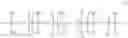
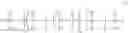
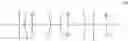
The component (B) is preferably selected from at least one of polyorganosiloxanes represented by the following general formula (2), general formula (3), and general formula (5),
wherein X has the same meaning as above, R1 independently represents a monovalent hydrocarbon group having 1 to 18 carbon atoms and optionally having an oxygen atom, a halogen atom, a nitrogen atom, or a sulfur atom; R2 independently represents a monovalent hydrocarbon group having 1 to 18 carbon atoms and optionally having an oxygen atom, a halogen atom, a nitrogen atom, or a sulfur atom, or represents an —OX′ group, wherein X′ independently represents an alkyl group having 1 to 10 carbon atoms or an alkoxyalkyl group having 2 to 10 carbon atoms; “d” is an integer of 1 to 300; “e” is 0 or 1; when “e” is 0, d′ is 0; when “e” is 1, d′ is “d”; “p” is an integer of 1 or more; and the siloxane in the square brackets may form a random structure or a block structure,
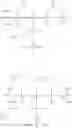
wherein R1, R2, and X have the same meanings as above; Q independently represents a monovalent hydrocarbon group having 1 to 18 carbon atoms and optionally having an oxygen atom, a halogen atom, a nitrogen atom, or a sulfur atom, or represents an —OX′ group, wherein X′ has the same meaning as above, or a group represented by the following general formula (4), provided that one or more Q is the group represented by the general formula (4); d1 is an integer of 1 to 300; e1 is 1; d3 is d1; p′ is an integer of 1 or more; and the siloxane in the square brackets may form a random structure or a block structure,
wherein R1, R2, and X have the same meanings as above; d2 is an integer of 1 to 300; e2 is 0 or 1; p″ is an integer of 1 or more; and the siloxane in the square brackets may form a random structure or a block structure,
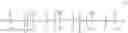
wherein R1, R2, and X have the same meanings as above; R3 independently represents a hydrogen atom, a methyl group, a phenyl group, an alkenyl group having 2 to 10 carbon atoms, or a 3-glycidyloxypropyl group, provided that, when one or more R2 bonding to the silicon atom at the end are —OX′ groups, wherein X′ has the same meaning above, R3 bonding to the same silicon atom is not a hydrogen atom; “t” is 0 or 1; “s” is an integer of 0 to 300; when “t” is 0, s′ is 0; when “t” is 1, s′ is “s”; “q” is an integer of 1 or more; and the siloxane in the square brackets may form a random structure or a block structure.
When the component (B) is selected from the polyorganosiloxanes represented by the general formula (2), general formula (3), and general formula (5), sufficient curability can be obtained even when a condensation catalyst is not used.
In addition, the condensation-curable silicone resin composition is preferably gelated within 4 hours at 150° C.
Such a condensation-curable silicone resin composition can quickly provide a cured product, so that it is preferable.
The condensation-curable silicone resin composition of the present invention can be quickly cured even when a condensation catalyst is not contained therein. Further, a cured product obtained from the condensation-curable silicone resin composition of the present invention can exhibit high heat resistance and light resistance inherent in the silicone resin without occurrence of coloration of the resin due to a catalyst, deterioration of the resin, and deterioration of a catalyst since a condensation catalyst is not contained therein.
DETAILED DESCRIPTION OF THE PREFERRED EMBODIMENTS
As described above, there has been demanded a condensation-curable silicone resin composition that can quickly provide a cured product having high heat resistance and light resistance.
The present inventors have diligently studied to accomplish the above object and consequently found a condensation-curable silicone resin composition that has a rapid curability and can provide a cured product having high heat resistance and light resistance without a catalyst by condensation-curing of one or more polyorganosiloxanes having two or more silicon-bonded alkoxy groups or hydroxyl groups per molecule and one or more specific polyorganosiloxanes having one or more silicon-bonded hydrogen atoms and two or more silicon-bonded alkoxy groups or hydroxyl groups per molecule in which at least one silicon atom is bonded to both of one or more hydrogen atoms and one or more alkoxy groups or hydroxyl groups, thereby brought the present invention to completion.
Hereinafter, the present invention will be described in detail, but the present invention is not limited thereto.
Incidentally, in the present invention, Ph and Me represent a phenyl group and a methyl group, respectively.
The present invention is a condensation-curable silicone resin composition that contains:
(A) 100 parts by mass of one or more polyorganosiloxanes represented by the following average composition formula (1):
(R3SiO1/2)x(R2SiO2/2)y(RSiO3/2)w(SiO4/2)u (1)
wherein R independently represents a monovalent hydrocarbon group having 1 to 18 carbon atoms and optionally having an oxygen atom, a halogen atom, a nitrogen atom, or a sulfur atom, and two or more R are an —OX group, wherein X represents a hydrogen atom, an alkyl group having 1 to 10 carbon atoms, or an alkoxyalkyl group having 2 to 10 carbon atoms; and “x”, “y”, “w”, and “u” are each an integer of 0 to 1,000, and satisfy 2≦x+y+w≦3,000; and
(B) 0.1 to 500 parts by mass of a polyorganosiloxane having one or more silicon-bonded hydrogen atoms and two or more silicon-bonded —OX groups per molecule, wherein at least one silicon atom is bonded to both of one or more hydrogen atoms and one or more —OX groups, wherein X has the same meaning as above.
[Component (A)]
The component (A) is one or more polyorganosiloxanes represented by the following general formula (1):
(R3SiO1/2)x(R2SiO2/2)y(RSiO3/2)w(SiO4/2)u (1)
wherein R independently represents a monovalent hydrocarbon group having 1 to 18 carbon atoms and optionally having an oxygen atom, a halogen atom, a nitrogen atom, or a sulfur atom, and two or more R are an —OX group, wherein X represents a hydrogen atom, an alkyl group having 1 to 10 carbon atoms, or an alkoxyalkyl group having 2 to 10 carbon atoms; and “x”, “y”, “w”, and “u” are each an integer of 0 to 1,000, and satisfy 2≦x+y+w≦3,000.
Preferable ranges of “x”, “y”, “w”, and “u” are as follows: “x” is an integer of 0 to 300; “y” is an integer of 0 to 500; “w” is an integer of 0 to 800; and “u” is an integer of 0 to 500. In addition, x+y+w is preferably in the range of 2≦x+y+w≦2,000, more preferably 20≦x+y+w≦1,000.
Such a polyorganosiloxane of component (A) can be synthesized by hydrolysis condensation of halogenated silane or alkoxysilane in accordance with a known method; or a commercial product may be used.
[Component (B)]
The component (B) is a polyorganosiloxane having one or more silicon-bonded hydrogen atoms and two or more silicon-bonded —OX groups per molecule in which at least one silicon atom is bonded to both of one or more hydrogen atoms and one or more —OX groups, wherein X has the same meaning as above.
The polyorganosiloxane of component (B) in the condensation-curable silicone resin composition of the present invention is preferably selected from at least one of polyorganosiloxanes represented by the general formula (2), general formula (3), and general formula (5) described later. When such a component (B) is employed, sufficient curability can be obtained even when a condensation catalyst is not used.
First, the polyorganosiloxane of component (B) is preferably a polyorganosiloxane represented by the general formula (2),
wherein X has the same meaning as above, R1 independently represents a monovalent hydrocarbon group having 1 to 18 carbon atoms and optionally having an oxygen atom, a halogen atom, a nitrogen atom, or a sulfur atom; R2 independently represents a monovalent hydrocarbon group having 1 to 18 carbon atoms and optionally having an oxygen atom, a halogen atom, a nitrogen atom, or a sulfur atom, or represents an —OX′ group, wherein X′ independently represents an alkyl group having 1 to 10 carbon atoms or an alkoxyalkyl group having 2 to 10 carbon atoms; “d” is an integer of 1 to 300; “e” is 0 or 1; when “e” is 0, d′ is 0; when “e” is 1, d′ is “d”; “p” is an integer of 1 or more; and the siloxane in the square brackets may form a random structure or a block structure.
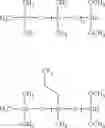
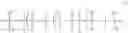
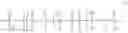
Examples of the compound represented by the general formula (2) include the following compounds.
Other examples of the compound represented by the general formula (2) are as follows.
wherein d has the same meaning as above.
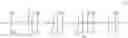
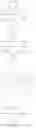
Besides, in the present invention, the compound having a branched structure as represented by the general formula (3) may also be suitably used as the polyorganosiloxane of component (B),
wherein R1, R2, and X have the same meanings as above; Q independently represents a monovalent hydrocarbon group having 1 to 18 carbon atoms and optionally having an oxygen atom, a halogen atom, a nitrogen atom, or a sulfur atom, or represents an —OX′ group, wherein X′ has the same meaning as above, or a group represented by the following general formula (4), provided that one or more Q is the group represented by the general formula (4); d1 is an integer of 1 to 300; e1 is 1; d3 is d1; p′ is an integer of 1 or more; and the siloxane in the square brackets may form a random structure or a block structure,
wherein R1, R2, and X have the same meanings as above; d2 is an integer of 1 to 300; e2 is 0 or 1; p″ is an integer of 1 or more; and the siloxane in the square brackets may form a random structure or a block structure.
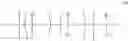
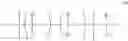
Examples of the compound represented by the general formula (3) include the following compounds.
wherein d1, d2, and d3 have the same meanings as above.
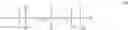
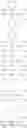
Further, in the present invention, the compound represented by the general formula (5) also can be suitably used as the polyorganosiloxane of component (B). By using such a compound, curability can be properly adjusted.
wherein R1, R2, and X have the same meanings as above; R3 independently represents a hydrogen atom, a methyl group, a phenyl group, an alkenyl group having 2 to 10 carbon atoms, or a 3-glycidyloxypropyl group, provided that, when one or more R2 bonding to the silicon atom at the end are —OX′ groups, wherein X′ has the same meaning above, R3 bonding to the same silicon atom is not a hydrogen atom; “t” is 0 or 1; “s” is an integer of 0 to 300; when “t” is 0, s′ is 0; when “t” is 1, s′ is “s”; “q” is an integer of 1 or more; and the siloxane in the square brackets may form a random structure or a block structure.
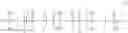
Examples of the compound represented by the general formula (5) include the following compounds.
wherein “s” has the same meaning as above.
In the condensation-curable silicone resin composition of the present invention, the component (A) and the component (B) are blended in such amount that the amount of the component (B) is 0.1 to 500 parts by mass, preferably 0.5 to 500 parts by mass, more preferably 1 to 500 parts by mass, based on a total of 100 parts by mass of the component (A).
[Other Component]
The condensation-curable silicone resin composition of the present invention may further contain other components. Examples of the other component include inorganic fillers such as a white pigment, silica, and a luminous substance, a diluent, a pH adjusting agent, and an antioxidant.
Examples of the inorganic filler include oxides, sulfides, and various complex oxides each containing a metal such as Si, Al, Ti, Zr, Fe, Ca, Mg, Sr, Ba, Y, Zn, Cu, Cr, Nb, Ce, Mn, Sn, Cd, Se, Li, Co, and Eu or a nonmetal element, and composite compounds thereof.
Examples of the diluent include solvents such as toluene, xylene, cyclohexanone, polyethylene glycol monomethyl ether, and methyl isobutyl ketone, and a non-reactive short-chain silicone oil.
Examples of the pH adjusting agent include organic acids such as acetic acid and citric acid, and organic bases such as pyridine and N,N-dimethylaniline.
Examples of the antioxidant include benzoic acid, isopropylmethylphenol, ethylhexanediol, lysozyme chloride, chlorhexidine hydrochloride, octylphenoxyethanol, and ortho-phenylphenol.
In addition, the condensation-curable silicone resin composition of the present invention preferably does not contain a condensation catalyst. A cured product obtained from such a condensation-curable silicone resin composition can exhibit high heat resistance and light resistance inherent in the silicone resin without occurrence of coloration of the resin due to a catalyst and deterioration of a catalyst. However, depending on the purpose, a small amount of a condensation catalyst may be added.
<Preparation of Condensation-Curable Silicone Resin Composition>
The condensation-curable silicone resin composition of the present invention can be prepared by a known method. That is, the condensation-curable silicone resin composition of the present invention can be prepared by stirring and mixing the components with a rotation/revolution type mixer, planetary mixer, or 3-rolls, etc.
The curing temperature of the condensation-curable silicone resin composition of the present invention can be adjusted so as to be cured in a desired curing time. The curing temperature is preferably in the range of 20° C. to 200° C., more preferably 60° C. to 180° C. In addition, the condensation-curable silicone resin composition is more preferably cured at step-by-step curing temperatures for the purpose of inhibiting bubbles due to volatile components.
In addition, the condensation-curable silicone resin composition of the present invention is preferably gelated within 4 hours at 150° C.
The condensation-curable silicone resin composition of the present invention can be cured in a short time even when a condensation catalyst is not used, so that it is industrially advantageous. Moreover, a cured product obtained from the condensation-curable silicone resin composition of the present invention is excellent in heat resistance and light resistance. Therefore, it is significantly useful for a sealing material of a semiconductor, LED, or solar cell, etc., which is exposed to severe conditions.
EXAMPLES
Hereinafter, the present invention will be described in more detail with reference to examples, but the present invention is not restricted thereto.
Components (A) used in Examples and Comparative Examples are shown below.
(A-1) Methylphenyl type silicone resin consisting of T unit (available from Shin-Etsu Chemical Co., Ltd., SiOH content: 1.5 wt %, SiOCH3 content: 3.0 wt %, 50 wt % xylene solution)
(A-2) Methyl type silicone resin consisting of M unit and Q unit (available from Shin-Etsu Chemical Co., Ltd., SiOH content: 1.2 wt %, 60 wt % toluene solution)
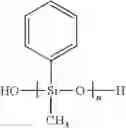
(A-3) Methylphenyl silicone oil having hydroxyl groups at both terminals (available from Shin-Etsu Chemical Co., Ltd., represented by the following general formula:)
wherein “n” is 12 on average.
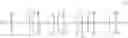
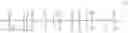
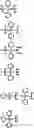
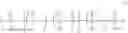
Structures of components (B) used in Examples and Comparative Examples are shown below.
wherein n1 is 4 on average; n2 is 20 on average; n3 is 200 on average; n4 is 6 on average; and “m” is 32 on average.
Examples 1 to 10
After the components are mixed as shown in Table 1-1, the solvent was distilled off under reduced pressure at 80° C. to prepare a condensation-curable silicone resin composition. Note that the amount of component (A) shown in Table 1-1 and Table 1-2 is an amount excluding a solvent. Also, the amounts of component (A), component (B), and a later-described catalyst shown in Table 1-1 and Table 1-2 are expressed in part by mass.
[Measurement of Gelation Time]
According to a procedure described in Japanese Industrial Standard (JIS) K 6910, about 0.5 g of the prepared condensation-curable silicone resin composition was placed on a hot plate heated at 150° C., and a stopwatch was simultaneously started. Then, after placing the sample on a hot plate, the sample was quickly moved back and forth by the edge of a metal spatula (with a length of about 10 cm and a width of about 1.25 cm) so as to uniformly spread into an area of about 4 cm×7.5 cm. The sample was further reciprocately moved with 3 seconds there and back under a slight pressure until a point the sample becomes not-sticky, and this point was recorded. This measurement was performed 3 times, and the average values thereof are shown in Table 1-1.
[Evaluation of Heat Resistance and Crack Resistance]
Four edges of a slide glass with a size of 26 mm×76 mm×1 mm were surrounded by a dam formed of 1.08 mm-six-layered Teflon (registered trademark) tape (each tape having a thickness of 180 μm). The condensation-curable silicone resin composition prepared in Example was put into an area surrounded by the dam, and successively heated at 60° C. for 1 hour, at 100° C. for 1 hour, and at 150° C. for 4 hours step-by-step to obtain a cured product of the condensation-curable silicone resin composition with a thickness of 1 mm. With respect to the obtained cured product of the condensation-curable silicone resin composition, the presence of cracks was examined, and the initial transmittance at a light wavelength of 450 nm was measured with a visible-ultraviolet spectrophotometer. Thereafter, the sample was left to stand in an oven at 200° C. for 2,000 hours, and the transmittance at a light wavelength of 450 nm was measured again. In addition, the presence of cracks and the color of the cured product of the condensation-curable silicone resin composition after 2,000 hours at 200° C. were visually observed. The results are shown in Table 1-1.
[Evaluation of Light Resistance]
A cured product of the condensation-curable silicone resin composition produced for the heat resistance evaluation was exposed to a laser beam with a wavelength of 440 nm (power: 250 mW/mm2) for 1,000 hours at 180° C. by a laser irradiation device having a temperature adjusting function (light source: UV-LED manufactured by NICHIA CO., oven: STH-120 manufactured by ESPEC Co., detector: R8240 manufactured by Advantest component, Inc.). By defining the initial transmittance (0 hour) at 440 nm as 100%, transmittance after a laser was irradiated for 1,000 hours was relatively measured. In addition, the presence of cracks and the color of the cured product of the condensation-curable silicone resin composition after 1,000 hours were visually observed. The results are shown in Table 1-1.
Comparative Example 1
A condensation-curable silicone resin composition was prepared by using (A-1) alone, and evaluated in the same manner as in Examples 1 to 10. The results are shown in Table 1-2.
Comparative Example 2
A condensation-curable silicone resin composition was prepared in the same manner as in Example 9 except for adding (B-9) instead of (B-7) and evaluated in the same manner as in Examples 1 to 10. The results are shown in Table 1-2.
Comparative Example 3
A condensation-curable silicone resin composition was prepared by adding, as a condensation catalyst (Catalyst 1), Aluminum chelate D (available from Kawaken Fine Chemicals Co., Ltd.) to the condensation-curable silicone resin composition of Comparative Example 2, and evaluated in the same manner as in Examples 1 to 10. The results are shown in Table 1-2.
| TABLE 1-1 | ||||||||||
| Exam- | Exam- | Exam- | Exam- | Exam- | Exam- | Exam- | Exam- | Exam- | Exam- | |
| ple 1 | ple 2 | ple 2 | ple 4 | ple 5 | ple 6 | ple 7 | ple 8 | ple 9 | ple 10 | |
| Component | (A-1) | 100 | 70 | 100 | 100 | 85 | 100 | 90 | 100 | — | — |
| (A) | (A-2) | — | — | — | — | — | — | — | — | 100 | 100 |
| (A-3) | — | 30 | — | — | 15 | — | 10 | — | — | — | |
| Component | (B-1) | 20 | 1 | 100 | — | — | — | — | — | — | — |
| (B) | (B-2) | — | — | — | 30 | — | — | — | — | — | — |
| (B-3) | — | — | — | — | 5 | — | — | — | — | — | |
| (B-4) | — | — | — | — | — | 20 | — | — | — | — | |
| (B-5) | — | — | — | — | — | — | 10 | — | — | — | |
| (B-6) | — | — | — | — | — | — | — | 20 | — | — | |
| (B-7) | — | — | — | — | — | — | — | — | 40 | — | |
| (B-8) | — | — | — | — | — | — | — | — | — | 500 | |
| (B-9) | — | — | — | — | — | — | — | — | — | — |
| Catalyst 1 | — | — | — | — | — | — | — | — | — | — |
| Gelation time (min) | 12 | 60 | 20 | 51 | 27 | 22 | 14 | 25 | 33 | 46 |
| Heat | Initial | 99.4 | 98.6 | 99.3 | 99.4 | 98.1 | 99.5 | 99.0 | 99.0 | 99.6 | 99.5 |
| resistance | transmittance | ||||||||||
| evaluation | (%) | ||||||||||
| Transmittance | 98.8 | 97.3 | 98.6 | 98.7 | 96.4 | 98.8 | 98.2 | 98.3 | 99.2 | 99 | |
| after 2000 | |||||||||||
| hours (%) | |||||||||||
| Difference | −0.6 | −1.3 | −0.7 | −0.7 | −1.7 | −0.7 | −0.8 | −0.7 | −0.4 | −0.5 | |
| between | |||||||||||
| transmittances | |||||||||||
| of initial and | |||||||||||
| after 2000 | |||||||||||
| hours (%) | |||||||||||
| Appearance | color- | color- | color- | color- | color- | color- | color- | color- | color- | color- | |
| color after | less | less | less | less | less | less | less | less | less | less | |
| 2000 hours | |||||||||||
| Presence of | none | none | none | none | none | none | none | none | none | none | |
| initial crack | |||||||||||
| Presence of | none | none | none | none | none | none | none | none | none | none | |
| crack after | |||||||||||
| 2000 hours | |||||||||||
| Light | Transmittance | 99.1 | 98.0 | 98.9 | 99.0 | 97.2 | 99.3 | 98.6 | 98.8 | 99.5 | 99.4 |
| resistance | after 1000 | ||||||||||
| evaluation | hours (%) *1 | ||||||||||
| Difference | −0.9 | −2.0 | −1.1 | −1.0 | −2.8 | −0.7 | −1.4 | −1.2 | −0.5 | −0.6 | |
| between | |||||||||||
| transmittances | |||||||||||
| of initial and | |||||||||||
| after 1000 | |||||||||||
| hours (%) | |||||||||||
| Appearance | color- | color- | color- | color- | color- | color- | color- | color- | color- | color- | |
| color after | less | less | less | less | less | less | less | less | less | less | |
| 1000 hours | |||||||||||
| Presence of | none | none | none | none | none | none | none | none | none | none | |
| crack after | |||||||||||
| 1000 hours | |||||||||||
| TABLE 1-2 | |||
| Compar- | |||
| Comparative | ative | Comparative | |
| Example 1 | Example 2 | Example 3 | |
| Component | (A-1) | 100 | — | — |
| (A) | (A-2) | — | 100 | 100 |
| (A-3) | — | — | — | |
| Component | (B-1) | — | — | — |
| (B) | (B-2) | — | — | — |
| (B-3) | — | — | — | |
| (B-4) | — | — | — | |
| (B-5) | — | — | — | |
| (B-6) | — | — | — | |
| (B-7) | — | — | — | |
| (B-8) | — | — | — | |
| (B-9) | — | 40 | 40 |
| Catalyst 1 | — | — | 3.5 |
| Gelation time (min) | not cured | not cured | 38 |
| Heat | Initial | at 150° C. | at 150° C. | 99.3 |
| resistance | transmittance | for 4 | for 4 | |
| evaluation | (%) | hours | hours | |
| Transmittance | 87.1 | |||
| after 2000 | ||||
| hours (%) | ||||
| Difference | −12.2 | |||
| between | ||||
| transmittances | ||||
| of initial and | ||||
| after 2000 | ||||
| hours (%) | ||||
| Appearance | yellow | |||
| color after | ||||
| 2000 hours | ||||
| Presence of | none | |||
| initial crack | ||||
| Presence of crack | present | |||
| after 2000 hours | ||||
| Light | Transmittance | 99.4 | ||
| resistance | after 1000 hours | |||
| evaluation | (%) *1 | |||
| Difference | −20.2 | |||
| between | ||||
| transmittances of | ||||
| initial and after | ||||
| 1000 hours (%) | ||||
| Appearance color | yellow | |||
| after 1000 hours | ||||
| Presence of crack | present | |||
| after 1000 hours | ||||
| *1: Values when the initial transmittance was defined as 100%. |
As shown in Table 1-1 and Table 1-2, Examples 1 to 10, which are the condensation-curable silicone resin compositions of the present invention, were cured at 150° C. for 4 hours although a condensation catalyst is not contained, and the obtained cured product was excellent in heat resistance and light resistance.
On the other hand, Comparative Example 1, which does not contain component (B), and Comparative Example 2, which contains component (B) different from the present invention, were not cured at 150° C. for 4 hours. Also, Comparative Example 3 obtained by adding a condensation catalyst to Comparative Example 2 was poor in heat resistance and light resistance although it was cured.
In addition, evaluation was performed for a condensation-curable silicone resin composition obtained by changing the amount of (B-1) in Example 2 to 0.5 part by mass (Example 11), and a condensation-curable silicone resin composition obtained by changing the amount of (B-1) in Example 2 to 0.1 part by mass (Example 12). As a result, it was revealed that the condensation-curable silicone resin composition of Example 11 was cured in 2 hours and the condensation-curable silicone resin composition of Example 12 was cured in 4 hours.
It should be noted that the present invention is not limited to the foregoing embodiment. The embodiment is just an exemplification, and any examples that have substantially the same feature and demonstrate the same functions and effects as those in the technical concept described in claims of the present invention are included in the technical scope of the present invention.
Claims
What is claimed is:1. A condensation-curable silicone resin composition comprising:
(A) 100 parts by mass of one or more polyorganosiloxanes represented by the following average composition formula (1):
(R3SiO1/2)x(R2SiO2/2)y(RSiO3/2)w(SiO4/2)u (1)
wherein R independently represents a monovalent hydrocarbon group having 1 to 18 carbon atoms and optionally having an oxygen atom, a halogen atom, a nitrogen atom, or a sulfur atom, and two or more R are an —OX group, wherein X represents a hydrogen atom, an alkyl group having 1 to 10 carbon atoms, or an alkoxyalkyl group having 2 to 10 carbon atoms; and “x”, “y”, “w”, and “u” are each an integer of 0 to 1,000, and satisfy 2≦x+y+w≦3,000; and
(B) 0.1 to 500 parts by mass of a polyorganosiloxane having one or more silicon-bonded hydrogen atoms and two or more silicon-bonded —OX groups per molecule, wherein at least one silicon atom is bonded to both of one or more hydrogen atoms and one or more —OX groups, wherein X has the same meaning as above.
2. The condensation-curable silicone resin composition according to claim 1, wherein the condensation-curable silicone resin composition does not contain a condensation catalyst.
3. The condensation-curable silicone resin composition according to claim 1, wherein the component (B) is selected from at least one of polyorganosiloxanes represented by the following general formula (2), general formula (3), and general formula (5),
wherein X has the same meaning as above, R1 independently represents a monovalent hydrocarbon group having 1 to 18 carbon atoms and optionally having an oxygen atom, a halogen atom, a nitrogen atom, or a sulfur atom; R2 independently represents a monovalent hydrocarbon group having 1 to 18 carbon atoms and optionally having an oxygen atom, a halogen atom, a nitrogen atom, or a sulfur atom, or represents an —OX′ group, wherein X′ independently represents an alkyl group having 1 to 10 carbon atoms or an alkoxyalkyl group having 2 to 10 carbon atoms; “d” is an integer of 1 to 300; “e” is 0 or 1; when “e” is 0, d′ is 0; when “e” is 1, d′ is “d”; “p” is an integer of 1 or more; and the siloxane in the square brackets may form a random structure or a block structure,
wherein R1, R2, and X have the same meanings as above; Q independently represents a monovalent hydrocarbon group having 1 to 18 carbon atoms and optionally having an oxygen atom, a halogen atom, a nitrogen atom, or a sulfur atom, or represents an —OX′ group, wherein X′ has the same meaning as above, or a group represented by the following general formula (4), provided that one or more Q is the group represented by the general formula (4); d1 is an integer of 1 to 300; e1 is 1; d3 is d1; p′ is an integer of 1 or more; and the siloxane in the square brackets may form a random structure or a block structure,
wherein R1, R2, and X have the same meanings as above; d2 is an integer of 1 to 300; e2 is 0 or 1; p″ is an integer of 1 or more; and the siloxane in the square brackets may form a random structure or a block structure,
wherein R1, R2, and X have the same meanings as above; R3 independently represents a hydrogen atom, a methyl group, a phenyl group, an alkenyl group having 2 to 10 carbon atoms, or a 3-glycidyloxypropyl group, provided that, when one or more R2 bonding to the silicon atom at the end are —OX′ groups, wherein X′ has the same meaning above, R3 bonding to the same silicon atom is not a hydrogen atom; “t” is 0 or 1; “s” is an integer of 0 to 300; when “t” is 0, s′ is 0; when “t” is 1, s′ is “s”; “q” is an integer of 1 or more; and the siloxane in the square brackets may form a random structure or a block structure.
4. The condensation-curable silicone resin composition according to claim 2, wherein the component (B) is selected from at least one of polyorganosiloxanes represented by the following general formula (2), general formula (3), and general formula (5),
wherein X has the same meaning as above, R1 independently represents a monovalent hydrocarbon group having 1 to 18 carbon atoms and optionally having an oxygen atom, a halogen atom, a nitrogen atom, or a sulfur atom; R2 independently represents a monovalent hydrocarbon group having 1 to 18 carbon atoms and optionally having an oxygen atom, a halogen atom, a nitrogen atom, or a sulfur atom, or represents an —OX′ group, wherein X′ independently represents an alkyl group having 1 to 10 carbon atoms or an alkoxyalkyl group having 2 to 10 carbon atoms; “d” is an integer of 1 to 300; “e” is 0 or 1; when “e” is 0, d′ is 0; when “e” is 1, d′ is “d”; “p” is an integer of 1 or more; and the siloxane in the square brackets may form a random structure or a block structure,
wherein R1, R2, and X have the same meanings as above; Q independently represents a monovalent hydrocarbon group having 1 to 18 carbon atoms and optionally having an oxygen atom, a halogen atom, a nitrogen atom, or a sulfur atom, or represents an —OX′ group, wherein X′ has the same meaning as above, or a group represented by the following general formula (4), provided that one or more Q is the group represented by the general formula (4); d1 is an integer of 1 to 300; e1 is 1; d3 is d1; p′ is an integer of 1 or more; and the siloxane in the square brackets may form a random structure or a block structure,
wherein R1, R2, and X have the same meanings as above; d2 is an integer of 1 to 300; e2 is 0 or 1; p″ is an integer of 1 or more; and the siloxane in the square brackets may form a random structure or a block structure,
wherein R1, R2, and X have the same meanings as above; R3 independently represents a hydrogen atom, a methyl group, a phenyl group, an alkenyl group having 2 to 10 carbon atoms, or a 3-glycidyloxypropyl group, provided that, when one or more R2 bonding to the silicon atom at the end are —OX′ groups, wherein X′ has the same meaning above, R3 bonding to the same silicon atom is not a hydrogen atom; “t” is 0 or 1; “s” is an integer of 0 to 300; when “t” is 0, s′ is 0; when “t” is 1, s′ is “s”; “q” is an integer of 1 or more; and the siloxane in the square brackets may form a random structure or a block structure.
5. The condensation-curable silicone resin composition according to claim 1, wherein the condensation-curable silicone resin composition is gelated within 4 hours at 150° C.
6. The condensation-curable silicone resin composition according to claim 2, wherein the condensation-curable silicone resin composition is gelated within 4 hours at 150° C.
7. The condensation-curable silicone resin composition according to claim 3, wherein the condensation-curable silicone resin composition is gelated within 4 hours at 150° C.
8. The condensation-curable silicone resin composition according to claim 4, wherein the condensation-curable silicone resin composition is gelated within 4 hours at 150° C.
Images & Drawings included:



Sources:
- United States Patent and Trademark Office - verify current appl. status at the USPTO↗
Similar patent applications:
- » 20160194454
Condensation-curable silicone resin composition, condensation-curable silicone resin cured product, and sealed optical semiconductor element - » 20180155512
Condensation-curable silicone resin composition sheet, method of manufacturing condensation-curable silicone resin composition sheet, and method of manufacturing light-emitting apparatus - » 20180051138
Condensation-curable silicone resin composition - » 20190106549
Method of manufacturing condensation-curable silicone resin composition sheet, and method of manufacturing light-emitting apparatus - » 20250206948
CONDENSATION-CURABLE SILICONE RESIN COMPOSITION AND DIE ATTACH MATERIAL FOR OPTICAL SEMICONDUCTOR APPARATUS
Recent applications in this class:
- » 20250282952 2025-09-11
METHOD OF ADDITIVE MANUFACTURING AND DUAL MATERIAL ELASTOMERIC FILAMENT - » 20250223444 2025-07-10
THERMAL CONDUCTIVE SILICONE COMPOSITION, SEMICONDUCTOR DEVICE, AND METHOD FOR PRODUCING SAME - » 20250215227 2025-07-03
Flame-Retardant and Fire-Resistant Silicone Tape and Preparation Method Thereof - » 20250206951 2025-06-26
CURABLE SILICONE COMPOSITIONS CONTAINING ADDITIVES - » 20250206950 2025-06-26
AUTONOMOUS SELF-HEALING, TRANSPARENT, ELECTRICALLY CONDUCTING ELASTOMER AND METHOD OF MAKING THE SAME - » 20250206949 2025-06-26
HIGH DISPENSING RATE, HIGH THERMAL CONDUCTIVITY SILICONE THERMAL GEL WITH VERTICAL STABILITY AND NO CRACKING - » 20250171637 2025-05-29
RAPID LOW TEMPERATURE CURING MOLDABLE SILICONE COMPOSITIONS - » 20250136813 2025-05-01
LONG-WEAR COMPOSITIONS CONTAINING SILICONE ACRYLATE COPOLYMER AND T-MODIFIED SILICONE RESIN - » 20250026933 2025-01-23
A POLYSILOXANE COMPOSITION - » 20240318001 2024-09-26
Thick Film Low Refractive Index Polysiloxane Claddings
Recent applications for this Assignee:
- » 20250291251 2025-09-18
RESIST COMPOSITION AND PATTERN FORMING PROCESS - » 20250291249 2025-09-18
RESIST COMPOSITION, LAMINATE, AND PATTERN FORMING PROCESS - » 20250291245 2025-09-18
RESIST COMPOSITION AND PATTERN FORMING PROCESS - » 20250289954 2025-09-18
HEAT-CURABLE PERFLUOROPOLYETHER RUBBER COMPOSITION - » 20250289931 2025-09-18
POLYVALENT AMMONIUM SALT COMPOUND, COMPOSITION FOR FORMING SILICON-CONTAINING RESIST UNDERLAYER FILM, AND PATTERNING PROCESS - » 20250289747 2025-09-18
QUARTZ GLASS ROD AND MANUFACTURING METHOD THEREOF - » 20250287559 2025-09-11
MICROSTRUCTURE-TRANSFER APPARATUS, STAMP HEAD UNIT, STAMP COMPONENT FOR TRANSFERRING MICROSTRUCTURE, AND METHOD FOR TRANSFERRING MICROSTRUCTURE-INTEGRATED COMPONENT - » 20250284199 2025-09-11
PATTERNING PROCESS AND RESIST MATERIAL - » 20250282914 2025-09-11
ORGANOPOLYSILOXANE CONTAINING MERCAPTO GROUP AND ALKOXYSILYL GROUP, AND COMPOSITION COMPRISING SAME - » 20250281386 2025-09-11
SURFACTANT COMPOSITION AND COSMETIC