Mesh fence material and method for making thereof
US20160177594A1
2016-06-23
14/978,777
2015-12-22
✅ Patent granted
US 11,168,489 B2
2021-11-09
-
-
Michael P Ferguson
Taylor IP, P.C.
2037-08-28
Abstract:
A fencing material includes a border material including a first polymer and having an interior surface; and a mesh material having a front and a back, a portion of at least one of the front and the back being bonded to the interior surface of the border material.
Inventors:
- Thomas Callahan 2 🇺🇸 Nampa, ID, United States
- Patrick Callahan 3 🇺🇸 Escondido, CA, United States
Assignee:
- Cover Care, LLC 3 🇺🇸 Westfield, IN, United States
Applicant:
Interested in similar patents?
Get notified when new applications in this technology area are published.
Classification:
B29C66/8362 » CPC further
General aspects of processes or apparatus for joining preformed parts; General aspects of machine operations or constructions and parts thereof characterised by the movement of the joining or pressing tools; Moving relative to and tangentially to the parts to be joined, e.g. transversely to the displacement of the parts to be joined, e.g. using a X-Y table Rollers, cylinders or drums moving relative to and tangentially to the parts to be joined
B29C66/72 » CPC further
General aspects of processes or apparatus for joining preformed parts characterised by the composition, physical properties or the structure of the material of the parts to be joined; Joining with non-plastics material characterised by the structure of the material of the parts to be joined
B29K2027/06 » CPC further
Use of polyvinylhalogenides or derivatives thereof as moulding material PVC, i.e. polyvinylchloride
B29C65/1412 » CPC further
Joining of preformed parts ; Apparatus therefor by heating, with or without pressure using wave energy or particle radiation characterised by the type of electromagnetic or particle radiation Infrared [IR] radiation
B29C66/431 » CPC further
General aspects of processes or apparatus for joining preformed parts; General aspects of joining substantially flat articles, e.g. plates, sheets or web-like materials; Making flat seams in tubular or hollow articles; Joining single elements to substantially flat surfaces; Joining substantially flat articles ; Making flat seams in tubular or hollow articles; Joining a relatively small portion of the surface of said articles Joining the articles to themselves
E04H17/16 IPC
Fencing, e.g. fences, enclosures, corrals; Fences constructed of rigid elements, e.g. with additional wire fillings or with posts using prefabricated panel-like elements, e.g. wired frames
B29C65/103 » CPC further
Joining of preformed parts ; Apparatus therefor by heating, with or without pressure using hot gases (e.g. combustion gases) or flames coming in contact with at least one of the parts to be joined direct heating both surfaces to be joined
B29C66/1122 » CPC further
General aspects of processes or apparatus for joining preformed parts; General aspects dealing with the joint area or with the area to be joined; Particular design of joint configurations particular design of the joint cross-sections; Joint cross-sections comprising a single joint-segment, i.e. one of the parts to be joined comprising a single joint-segment in the joint cross-section; Single lapped joints Single lap to lap joints, i.e. overlap joints
B29C66/304 » CPC further
General aspects of processes or apparatus for joining preformed parts; General aspects dealing with the joint area or with the area to be joined; Particular design of joint configurations Joining through openings in an intermediate part of the article
B29C66/472 » CPC further
General aspects of processes or apparatus for joining preformed parts; General aspects of joining substantially flat articles, e.g. plates, sheets or web-like materials; Making flat seams in tubular or hollow articles; Joining single elements to substantially flat surfaces; Joining single elements to sheets, plates or other substantially flat surfaces said single elements being substantially flat
B29C66/723 » CPC further
General aspects of processes or apparatus for joining preformed parts characterised by the composition, physical properties or the structure of the material of the parts to be joined; Joining with non-plastics material characterised by the structure of the material of the parts to be joined being multi-layered
B29C66/81465 » CPC further
General aspects of processes or apparatus for joining preformed parts; General aspects of machine operations or constructions and parts thereof; General aspects of the pressing elements, i.e. the elements applying pressure on the parts to be joined in the area to be joined, e.g. the welding jaws or clamps characterised by the design of the pressing elements, e.g. of the welding jaws or clamps characterised by the constructional aspects of the pressing elements, e.g. of the welding jaws or clamps comprising a plurality of single pressing elements, e.g. a plurality of sonotrodes, or comprising a plurality of single counter-pressing elements, e.g. a plurality of anvils, said plurality of said single elements being suitable for making a single joint one placed behind the other in a single row in the feed direction
B29C66/83411 » CPC further
General aspects of processes or apparatus for joining preformed parts; General aspects of machine operations or constructions and parts thereof characterised by the movement of the joining or pressing tools moving with the parts to be joined; Roller, cylinder or drum types; Band or belt types; Ball types Roller, cylinder or drum types
E04H17/05 » CPC further
Fencing, e.g. fences, enclosures, corrals; Wire fencing, e.g. made of wire mesh characterised by the use of specially adapted wire, e.g. barbed wire, wire mesh, toothed strip or the like; Coupling means therefor Wire mesh or wire fabric
E04H17/161 » CPC further
Fencing, e.g. fences, enclosures, corrals; Fences constructed of rigid elements, e.g. with additional wire fillings or with posts using prefabricated panel-like elements, e.g. wired frames using wire panels
E04H17/163 » CPC further
Fencing, e.g. fences, enclosures, corrals; Fences constructed of rigid elements, e.g. with additional wire fillings or with posts using prefabricated panel-like elements, e.g. wired frames using wire panels using wired panels with frame
G01B11/2504 » CPC further
Measuring arrangements characterised by the use of optical means for measuring contours or curvatures by projecting a pattern, e.g. one or more lines, moiré fringes on the object Calibration devices
G01B11/2545 » CPC further
Measuring arrangements characterised by the use of optical means for measuring contours or curvatures by projecting a pattern, e.g. one or more lines, moiré fringes on the object with one projection direction and several detection directions, e.g. stereo
G01B21/042 » CPC further
Measuring arrangements or details thereof in so far as they are not adapted to particular types of measuring means of the preceding groups for measuring length, width, or thickness by measuring coordinates of points Calibration or calibration artifacts
H04N9/3194 » CPC further
Details of colour television systems; Picture reproducers; Projection devices for colour picture display, e.g. using electronic spatial light modulators [ESLM]; Testing thereof including sensor feedback
B29C65/14 IPC
Joining of preformed parts ; Apparatus therefor by heating, with or without pressure using wave energy or particle radiation
B29C65/483 » CPC further
Joining of preformed parts ; Apparatus therefor using adhesives, i.e. using supplementary joining material; solvent bonding characterised by the type of adhesives Reactive adhesives, e.g. chemically curing adhesives
B29C65/4815 » CPC further
Joining of preformed parts ; Apparatus therefor using adhesives, i.e. using supplementary joining material; solvent bonding characterised by the type of adhesives; Non-reactive adhesives, e.g. physically hardening adhesives Hot melt adhesives, e.g. thermoplastic adhesives
B29C65/522 » CPC further
Joining of preformed parts ; Apparatus therefor using adhesives, i.e. using supplementary joining material; solvent bonding applying the adhesive by spraying, e.g. by flame spraying
B29C35/04 IPC
Heating, cooling or curing, e.g. crosslinking or vulcanising; Apparatus therefor; Heating or curing, e.g. crosslinking or vulcanizing during moulding, e.g. in a mould using liquids, gas or steam
B29C66/71 » CPC further
General aspects of processes or apparatus for joining preformed parts characterised by the composition, physical properties or the structure of the material of the parts to be joined; Joining with non-plastics material characterised by the composition of the plastics material of the parts to be joined
B29C66/712 » CPC further
General aspects of processes or apparatus for joining preformed parts characterised by the composition, physical properties or the structure of the material of the parts to be joined; Joining with non-plastics material characterised by the composition of the plastics material of the parts to be joined the composition of one of the parts to be joined being different from the composition of the other part
B29C66/729 » CPC further
General aspects of processes or apparatus for joining preformed parts characterised by the composition, physical properties or the structure of the material of the parts to be joined; Joining with non-plastics material characterised by the structure of the material of the parts to be joined Textile or other fibrous material made from plastics
B29C66/742 » CPC further
General aspects of processes or apparatus for joining preformed parts characterised by the composition, physical properties or the structure of the material of the parts to be joined; Joining with non-plastics material; Joining plastics material to non-plastics material to metals or their alloys
B29C66/919 » CPC further
General aspects of processes or apparatus for joining preformed parts; Measuring or controlling the joining process by measuring or controlling the temperature, the heat or the thermal flux characterised by specific temperature, heat or thermal flux values or ranges
B29C66/92451 » CPC further
General aspects of processes or apparatus for joining preformed parts; Measuring or controlling the joining process by measuring or controlling the pressure, the force, the mechanical power or the displacement of the joining tools by controlling or regulating the pressure, the force, the mechanical power or the displacement of the joining tools by controlling or regulating the pressure, the force or the mechanical power using joining tools having different pressure zones or using several joining tools with different pressures
B29C66/949 » CPC further
General aspects of processes or apparatus for joining preformed parts; Measuring or controlling the joining process by measuring or controlling the time characterised by specific time values or ranges
B29C66/9534 » CPC further
General aspects of processes or apparatus for joining preformed parts; Measuring or controlling the joining process by measuring or controlling specific variables not covered by groups - by measuring or controlling the humidity of the atmosphere, i.e. taking the ambient humidity into account
B29C2035/046 » CPC further
Heating, cooling or curing, e.g. crosslinking or vulcanising; Apparatus therefor; Heating or curing, e.g. crosslinking or vulcanizing during moulding, e.g. in a mould using liquids, gas or steam using gas or flames dried air
B29C2035/0855 » CPC further
Heating, cooling or curing, e.g. crosslinking or vulcanising; Apparatus therefor; Heating or curing, e.g. crosslinking or vulcanizing during moulding, e.g. in a mould by wave energy or particle radiation using electromagnetic radiation using microwave
B29L2028/00 » CPC further
Nets or the like
B29L2031/73 » CPC further
Other particular articles Fences
B29C65/10 » CPC further
Joining of preformed parts ; Apparatus therefor by heating, with or without pressure using hot gases (e.g. combustion gases) or flames coming in contact with at least one of the parts to be joined
B29C65/00 IPC
Joining of preformed parts ; Apparatus therefor
G01B11/25 IPC
Measuring arrangements characterised by the use of optical means for measuring contours or curvatures by projecting a pattern, e.g. one or more lines, moiré fringes on the object
G01B21/04 IPC
Measuring arrangements or details thereof in so far as they are not adapted to particular types of measuring means of the preceding groups for measuring length, width, or thickness by measuring coordinates of points
H04N9/31 IPC
Details of colour television systems; Picture reproducers Projection devices for colour picture display, e.g. using electronic spatial light modulators [ESLM]
H04N9/67 » CPC further
Details of colour television systems; Circuits for processing colour signals for matrixing
B29C65/48 IPC
Joining of preformed parts ; Apparatus therefor using adhesives, i.e. using supplementary joining material; solvent bonding
B29C65/62 » CPC further
Joining of preformed parts ; Apparatus therefor using mechanical means or mechanical connections, e.g. form-fits Stitching
B29C35/08 IPC
Heating, cooling or curing, e.g. crosslinking or vulcanising; Apparatus therefor; Heating or curing, e.g. crosslinking or vulcanizing during moulding, e.g. in a mould by wave energy or particle radiation
H04N9/3185 » CPC further
Details of colour television systems; Picture reproducers; Projection devices for colour picture display, e.g. using electronic spatial light modulators [ESLM]; Video signal processing therefor Geometric adjustment, e.g. keystone or convergence
B29C66/9441 » CPC further
General aspects of processes or apparatus for joining preformed parts; Measuring or controlling the joining process by measuring or controlling the time by controlling or regulating the time the time being controlled or regulated as a function of another parameter
E04H17/04 » CPC main
Fencing, e.g. fences, enclosures, corrals; Wire fencing, e.g. made of wire mesh characterised by the use of specially adapted wire, e.g. barbed wire, wire mesh, toothed strip or the like; Coupling means therefor
B29C65/1425 » CPC further
Joining of preformed parts ; Apparatus therefor by heating, with or without pressure using wave energy or particle radiation characterised by the type of electromagnetic or particle radiation Microwave radiation
B29C2035/0822 » CPC further
Heating, cooling or curing, e.g. crosslinking or vulcanising; Apparatus therefor; Heating or curing, e.g. crosslinking or vulcanizing during moulding, e.g. in a mould by wave energy or particle radiation using electromagnetic radiation using IR radiation
B29C65/52 IPC
Joining of preformed parts ; Apparatus therefor using adhesives, i.e. using supplementary joining material; solvent bonding applying the adhesive
Description
CROSS REFERENCE TO RELATED APPLICATIONS
This is a non-provisional application based upon U.S. provisional patent application Ser. No. 62/095,329, entitled “MESH FENCE MATERIAL AND METHOD FOR MAKING THEREOF”, filed Dec. 22, 2014, which is incorporated herein by reference.
BACKGROUND OF THE INVENTION
1. Field of the Invention
The present invention relates to fence materials, and, more particularly, to mesh fence materials.
2. Description of the Related Art
Safety pool fences, which can be made of mesh, are designed to surround a pool area and prevent young children, debris and animals from entering the pool area. The safety pool fence can be designed to be removable, or can be intended as a fixture in the ground.
Current safety pool fence products consist of a series of poles with material stretched between the pools. The safety pool fences can assume heights of between 4 and 5 feet. The safety pool fence typically consists of several sections, with each section typically being between 10 to 15 feet long and linked together to form the complete fence. The material stretched between the poles is made from mesh fabric with a border attached to the mesh by stitching. The border material can be a variety of materials including cloth, synthetic webbing, and vinyl.
The border material is an important component of a safety pool fence and if the material undergoes excessive stretching/contracting or is poorly attached to the mesh fabric, it can cause the fence to have an unappealing appearance or become unsafe. Specifically, excessive stretching or contracting of the border can cause the fence to become unsafe by causing the fence gate to become misaligned and not close properly, or fail to serve as a self-latching gate. The border can also cause a safety problem if not properly attached because the fence would become loose and easier for a young child to climb. Known border materials are attached to the mesh fabric using stitching, with either two or three stitches running the full length of the mesh webbing. Stitching can miss parts of the mesh material and is prone to weathering by the sun, which can cause failure of the stitching and border material.
What is needed in the art is an improved fence material that is less prone to failure.
SUMMARY OF THE INVENTION
The present invention provides a fencing material with a border material that is bonded to a mesh material.
The invention in one form is directed to a fencing material including a border material comprising a first polymer and having an interior surface; and a mesh material having a front and a back, a portion of at least one of the front and the back being bonded to the interior surface of the border material.
The invention in another form is directed to a fence including at least two fencing poles; and a fencing material connected to the at least two fencing poles. The fencing material includes a border material comprising a first polymer and having an interior surface; and a mesh material having a front and a back, a portion of at least one of the front and the back being bonded to the interior surface of the border material.
The invention in yet another form is directed to a method for producing a fencing material including the steps of: providing a border material having an interior surface; providing a mesh material having a front and a back; treating the interior surface of the border material to produce a tacky border material surface; placing a portion of at least one of the front and the back of the mesh material against the tacky border material surface; and pressing the tacky border material surface and the mesh material together.
An advantage of the present invention is the fencing material is less prone to the mesh separating from the border material than sewn materials.
BRIEF DESCRIPTION OF THE DRAWINGS
The above-mentioned and other features and advantages of this invention, and the manner of attaining them, will become more apparent and the invention will be better understood by reference to the following description of embodiments of the invention taken in conjunction with the accompanying drawings, wherein:
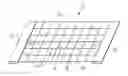
FIG. 1 is a perspective view of an embodiment of a fencing material formed according to the present invention;
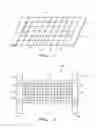
FIG. 2 is a perspective view of an embodiment of a fence formed according to the present invention;
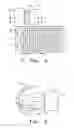
FIG. 3 is a top view of an embodiment of a fencing material being manufactured according to the present invention; and
FIG. 4 is cross-sectional view of the fencing material shown as being manufactured in FIG. 3 taken along line 4-4.
Corresponding reference characters indicate corresponding parts throughout the several views. The exemplifications set out herein illustrate embodiments of the invention and such exemplifications are not to be construed as limiting the scope of the invention in any manner.
DETAILED DESCRIPTION OF THE INVENTION
Referring now to the drawings, and more particularly to FIG. 1, an embodiment of a fencing material 10 formed according to the present invention is shown which generally includes a border material 12 comprising a polymer material, such as vinyl, and a mesh material 14 bonded to the border material 12. As can be seen, the fencing material 10 can have border material 12 bonded to two opposite edges of the mesh material 14, such as a top edge 16 and a bottom edge 18 of the mesh material 14. As used herein, the top edge 16 and bottom edge 18 of the mesh material 14 refer to the edges of the mesh material 14 that extend along a length of the mesh material 14, and are only used to describe relative orientations of the mesh material 14. It should be appreciated that the border material 12 can also be bonded to lateral edges 20 of the mesh material 14 in addition to or in place of the top edge 16 and bottom edge 18.
The border material 12 can be formed of a vinyl, such as polyvinyl chloride (PVC), or other polymers that can form a bond to the mesh material 14, as described further herein. If the border material 12 is vinyl, the vinyl can have a weight 10 to 20 ounces per square yard and be laminated or coated. The thickness and width of the border material 12 can be altered to give desired aesthetic and functional characteristics to the fencing material 10, with exemplary widths of the border material 12 being between 1 and 4 inches. While shown as being substantially solid with possible microscopic pores formed therein, the border material 12 can also be formed to have macroscopic openings formed therein to accommodate insertion of objects through the border material 12, such as mounting screws 22 shown in FIG. 2. The border material 12 shown in FIG. 1 can be folded over the edges 16, 18 of the mesh material 14 prior to bonding so the border material 12 sandwiches a front 24 of the mesh material 14 and a back 26 of the mesh material 14, which are illustrated in FIG. 4, inside the border material 12. In this sense, the border material 12 can completely envelop portions of the front 24 and back 26 of the mesh material 14 adjacent the top edge 16 and bottom edge 18 to produce a strong bond between the mesh material 14 and the border material 12.
The mesh material 14, on the other hand, can be formed as a lattice grid having multiple horizontal threads 28 interlaced with multiple vertical threads 30. It should be appreciated that while the mesh material 14 is described as having threads 28 and 30, which imply cloth or polymer construction, the “threads” 28 and 30 of the mesh material 14 can be formed of any desired material to produce the mesh such as polymer, cloth, metal, etc. If the mesh material 14 is formed of a polymer, the chosen polymer can be the same or a different polymer from the polymer forming the border material 12. The mesh material 14 can be, for example, formed of PVC or be a non-vinyl material coated with vinyl. The spacing and shapes formed between adjacent threads 28 and 30 can also be altered, as desired, to give many different varieties of mesh patterns for the mesh material 14 other than lattice grids. The mesh material 14 may have, for example, a pattern with relatively large distances between adjacent threads 28 and 30 to allow a large amount of light to pass through and allow a passerby to see through the mesh material 14. In other cases, the mesh material 14 may have relatively small distances between adjacent threads 28 and 30 to allow less light through and provide privacy. Exemplary distances between adjacent threads 28 and 30 can be between 1/32 and ½ inches.
Referring now to FIG. 2, an embodiment of a fence 40 according to the present invention is shown that generally includes two or more fencing poles 42 connected by the fencing material 10 shown in FIG. 1 and previously described. As can be seen, the fencing material 10 is connected to each pole 42 by a joining plate 44 that is attached to the poles 42 by the aforementioned mounting screws 22, which can also extend through the border material 12 of the fencing material 10 to help hold the fencing material 10 in place and taut. The fence 40 can be formed to have a clearance between bottoms 46 of the poles 42 and the bottom edge 18 of the mesh material 14 surrounded by the border material 12 so the bottoms 46 of the poles 42 can be drilled into the ground, but the clearance is optional and may not always be desired. While not shown, the fence 40 can also have a gate or other type of construction that allows access past the fence 40 without having to get over or under the fencing material 10 and poles 42.
Referring now to FIGS. 3-4, an embodiment of a method of producing the fencing material 10 according to the present invention is shown. As can be seen, the fencing material 10 is being produced in a continuous manufacturing process. The border material 12 can be fed through a guide 48 which will fold the border material 12 into a folded border material, shown in FIG. 4, of roughly two equal halves. Alternatively, the border material 12 can be formed by two strips of border material placed adjacent to or abutting one another rather than by folding a single piece of border material. As the border material 12 is folded, an interior surface 50 of the border material 12 is established which a portion of the mesh material 14, such as the top edge 16 or bottom edge 18, can be placed against.
A treatment unit 52, shown schematically as a rectangle in FIGS. 3 and 4, can treat the border material 12 and/or the mesh material 14 to make the interior surface 50 of the border material 12 a tacky border material surface. The treatment unit 52 can be, for example, a heating unit that directs heated gas, represented by wavy lines 54, toward the interior surface 50 of the border material 12 and mesh material 14 to heat the interior surface 50 and/or the mesh material 14 to a tacking temperature where the border material 12 and/or mesh material 14 is sticky due to being in a partially or completely melted state. The heated gas 54 can be, for example, ambient air. Optionally, the heated air 54 can be dehumidified to remove moisture which can increase the temperature of the heated air 54 needed to treat the materials 12, 14 and slow down the production rate of the fencing material 10. The temperature of the heated air 54 can be altered based on the used border material 12 and/or mesh material 14, as well as the exposure time of the materials 12 and 14 to the heated air 54. For example, a lower heated air temperature may be desired to slowly raise the temperature of the materials 12 and 14 over a longer exposure time as opposed to a higher heated air temperature over a short exposure time. An example heated air temperature may be between 800 to 1600 degrees Fahrenheit, such as 1200 degrees Fahrenheit, with an exposure time of 2 to 15 seconds in order to get the border material 12 and/or the mesh material 14 tacky for bonding when the border material 12 is a vinyl material. It should be appreciated that if a lower temperature is used to make the materials 12, 14 tacky, the exposure time should be increased, and vice versa. Further, the temperature of the heated air and exposure time can vary based on the daily temperature and humidity of the manufacturing facility, as well as the thickness and composition of the materials 12, 14. After the border material 12 and/or mesh material 14 is tacky, the materials 12 and 14 can be thermally bonded together.
Although the treatment unit 52 is described as a heating unit which uses heated gas to heat the materials 12 and 14, the treatment unit can also use other heating methods such as emitting microwaves or infrared light. Alternatively, the treatment unit 52 can be a chemical sprayer which sprays an adhesive or melting agent on the materials 12 and 14 to make the interior surface 50 of the border material 12 a tacky border material surface. The adhesive can be an industrial adhesive compound, such as cyanoacrylates or epoxy, and the melting agent can be a heated liquid. The border material 12 and/or mesh material 14 can also be fed toward the chemical sprayer in an uncured state, with the chemical sprayer applying a curing catalyst to the materials 12 and 14 to allow one or both materials 12, 14 to cure and bond. It should therefore be appreciated that many different types of treatment units 52 can be used to treat the border material 12 and/or mesh material 14 for bonding.
After the interior surface 50 of the border material 12 has been made a tacky border material surface, the tacky border material surface is pressed into the mesh material 12 to form the fencing material 10. One or more rollers 56, 58 can be used to press the tacky border material surface into the mesh material 14, bonding the tacky border material surface to the mesh material 12. The border material 12 and mesh material 14 can be pulled through the rollers 56 and 58 through friction between the rollers 56 and 58 and the border material 12, or a conveyor (not shown) can move the border material 12 and mesh material 14 past the guide 48 to the rollers 56, 58. When the border material 12 is folded so the mesh material 14 is placed between two halves of the border material 12, the rollers 56 and 58 can press the halves of the border material 12 together so that one half of the border material 12 is bonded to the front 24 of the mesh material 14 and the other half of the border material 12 is bonded to the back 26 of the mesh material 14, sandwiching the mesh material 14 in the folded border material 12. The two halves of the border material 12 will also be pressed together, due to spacing between threads of the mesh material 14, to form a tight bond between the border material 12 and the mesh material 14. In this sense, the mesh material 14 is not just bonded to the border material 12, but also held between border material 12 bonded to itself which resides in the spacing formed in the mesh material 14, forming a fencing material 10 with a strong, durable bond between the border material 12 and mesh material 14.
The rollers 56 and 58 can both press on the border material 12 and mesh material 14 with an equivalent pressing pressure, or rollers 56 and 58 can press on the border material 12 and mesh material 14 with different pressing pressures. For example, the first roller 56 that presses on the border material 12 and mesh material 14 can press down with a first pressing pressure which is relatively low, while the second roller 58 presses on the border material 12 and mesh material 14 with a second pressing pressure which is higher or lower than the first pressing pressure. More than two rollers 56, 58 can also be utilized to press the border material 12 and mesh material 14 together, with each successive roller increasing or decreasing in pressing pressure. The pressing pressure(s) applied by the rollers 56, 58 will vary depending on the material composition and thickness, with a wide range of pressures being suitable to bond the border material 12 and mesh material 14 together. The first roller 56 can rotate with a first rotational speed and the second roller 58 can rotate with a second rotational speed that is higher than the first rotational speed in order to stretch the materials 12, 14 as the materials 12, 14 advance from the first roller 56 to the second roller 58, reducing wrinkling of the fencing material 10 in the process.
While FIGS. 3 and 4 only show one edge of the fencing material 10 having the border material 12 bonded to the mesh material 14, the process used to bond the border material 12 to the mesh material 14 can simultaneously occur at the opposite edge of the mesh material 14 if both the top edge 16 and bottom edge 18 of the mesh material 14 are to be bonded to the border material 12. Alternatively, each edge 16, 18 can be bonded to the border material 12 separately, or only one edge 16 or 18 may be bonded to the border material 12.
While this invention has been described with respect to at least one embodiment, the present invention can be further modified within the spirit and scope of this disclosure. This application is therefore intended to cover any variations, uses, or adaptations of the invention using its general principles. Further, this application is intended to cover such departures from the present disclosure as come within known or customary practice in the art to which this invention pertains and which fall within the limits of the appended claims.
Claims
What is claimed is:1. A fencing material, comprising:
a border material comprising a first polymer and having an interior surface; and
a mesh material having a front and a back, a portion of at least one of said front and said back being bonded to said interior surface of said border material.
2. The fencing material according to claim 1, wherein said mesh material comprises a second polymer different from said first polymer of said border material.
3. The fencing material according to claim 1, wherein portions of said front and said back of said mesh material are thermally bonded to said interior surface of said border material.
4. The fencing material according to claim 3, wherein said border material comprises a polyvinyl chloride.
5. The fencing material according to claim 4, wherein said mesh material is one of a polyvinyl chloride material and a vinyl coated material.
6. The fencing material according to claim 1, wherein said border material is a folded border material, said mesh material being sandwiched in said folded border material.
7. The fencing material according to claim 6, wherein said folded border material is folded in half, one half of said folded border material being bonded to said front of said mesh material and the other half of said folded border material being bonded to said back of said mesh material.
8. A fence, comprising:
at least two fencing poles; and
a fencing material connected to said at least two fencing poles, said fencing material comprising:
a border material comprising a first polymer and having an interior surface; and
a mesh material having a front and a back, a portion of at least one of said front and said back being bonded to said interior surface of said border material.
9. The fence according to claim 8, wherein said mesh material comprises a second polymer different from said first polymer of said border material.
10. The fence according to claim 8, wherein portions of said front and said back of said mesh material are thermally bonded to said interior surface of said border material.
11. The fence according to claim 10, wherein said border material comprises a polyvinyl chloride.
12. The fence according to claim 11, wherein said mesh one of a polyvinyl chloride material and a vinyl coated material.
13. The fence according to claim 8, wherein said border material is a folded border material, said mesh material being sandwiched in said folded border material.
14. The fence according to claim 13, wherein said folded border material is folded in half, one half of said folded border material being bonded to said front of said mesh material and the other half of said folded border material being bonded to said back of said mesh material.
15. A method for producing a fencing material, comprising:
providing a border material having an interior surface;
providing a mesh material having a front and a back;
treating said interior surface of said border material to produce a tacky border material surface;
placing a portion of at least one of said front and said back of said mesh material against said tacky border material surface; and
pressing said tacky border material surface and said mesh material together.
16. The method according to claim 15, wherein said treating step comprises heating said interior surface of said border material to a tacking temperature.
17. The method according to claim 16, wherein said treating step comprises heating said border material and said mesh material simultaneously.
18. The method according to claim 15, wherein said pressing step is performed by at least one roller.
19. The method according to claim 18, wherein said pressing step is performed by a pair of rollers.
20. The method according to claim 19, wherein one of said rollers presses said at least one tacky border material and said mesh material together with a first pressure and the other of said rollers presses said at least one tacky border material and said mesh material together with a second pressure which is greater than said first pressure.
Images & Drawings included:
Sources:
- United States Patent and Trademark Office - verify current appl. status at the USPTO↗
Similar patent applications:
- » 20210388632
Mesh fence material and method for making thereof
Recent applications in this class:
- » 20230125612 2023-04-27
FENCE SUPPORT SYSTEM - » 20220396969 2022-12-15
ROBOTIC LAWNMOWER FENCE - » 20220333401 2022-10-20
Vertical cable rail barrier - » 20220220763 2022-07-14
Animal repellent products, repellent compositions and methods of manufacturing the same - » 20210388632 2021-12-16
Mesh fence material and method for making thereof - » 20210123263 2021-04-29
Vertical cable rail barrier - » 20200149308 2020-05-14
Razor wire fence panel - » 20190085586 2019-03-21
FENCE SUPPORT SYSTEM - » 20190032362 2019-01-31
Barb tape and barb tape panel - » 20170362854 2017-12-21
Vertical cable rail barrier
Recent applications for this Assignee:
- » 20210388632 2021-12-16
Mesh fence material and method for making thereof - » 20160281387 2016-09-29
Tri-truss self-closing gate