Vehicle light
US20160178154A1
2016-06-23
14/909,101
2013-08-08
✅ Patent granted
US 9,933,127 B2
2018-04-03
WO; PCT/RU2013/000688; 20130808
WO; WO2015/020555; 20150212
Bryon T Gyllstrom | James Endo
Inventa Capital PLC
2034-02-16
Abstract:
This invention relates to illumination systems, namely, to automotive headlamps and can be used as the principal head lighting of light and cargo vehicles. The automotive headlamp includes at least one LED and a system of lenses. The system of lenses includes both composite diverging and regulating lenses. The composite diverging lens is made up of two plano-concave lenses. The composite regulating lens is made up of the converging plano-convex lens and the refracting right-angled wedge placed in a series through the luminous flux. The composite regulating lens is placed between the LED and the composite diverging lens, which is suitable for controllable obscuration of the light flux. The invention enhances the reliability of the high/low-beam switch system.
Inventors:
- Georgiy Pavlovich Sapt 2 🇷🇺 Moscow, Russian Federation
- Maxim Yurievich Davydov 1 🇷🇺 Moscow, Russian Federation
- Maxim Yur'evich DAVYDOV 2 🇷🇺 Moscow, Russian Federation
Applicant:
Interested in similar patents?
Get notified when new applications in this technology area are published.
Classification:
F21S41/25 » CPC further
Illuminating devices specially adapted for vehicle exteriors, e.g. headlamps characterised by refractors, transparent cover plates, light guides or filters Projection lenses
F21V5/04 IPC
Refractors for light sources of lens shape
F21S41/285 » CPC further
Illuminating devices specially adapted for vehicle exteriors, e.g. headlamps characterised by refractors, transparent cover plates, light guides or filters Refractors, transparent cover plates, light guides or filters not provided in groups -
F21S41/63 » CPC further
Illuminating devices specially adapted for vehicle exteriors, e.g. headlamps characterised by a variable light distribution by acting on refractors, filters or transparent cover plates
F21S41/663 » CPC further
Illuminating devices specially adapted for vehicle exteriors, e.g. headlamps characterised by a variable light distribution by acting on light sources by switching light sources
G02B19/0019 » CPC further
Condensers, e.g. light collectors or similar non-imaging optics characterised by the optical means employed having reflective surfaces only (e.g. louvre systems, systems with multiple planar reflectors)
G02B19/0061 » CPC further
Condensers, e.g. light collectors or similar non-imaging optics characterised by the use for use with a light source the light source comprising a LED
F21S41/265 » CPC further
Illuminating devices specially adapted for vehicle exteriors, e.g. headlamps characterised by refractors, transparent cover plates, light guides or filters; Projection lenses Composite lenses; Lenses with a patch-like shape
F21S41/635 » CPC further
Illuminating devices specially adapted for vehicle exteriors, e.g. headlamps characterised by a variable light distribution by acting on refractors, filters or transparent cover plates by moving refractors, filters or transparent cover plates
F21V5/008 » CPC further
Refractors for light sources Combination of two or more successive refractors along an optical axis
F21V5/00 IPC
Refractors for light sources
G02B19/00 IPC
Condensers, e.g. light collectors or similar non-imaging optics
B60Q1/124 » CPC further
Arrangement of optical signalling or lighting devices, the mounting or supporting thereof or circuits therefor the devices being primarily intended to illuminate the way ahead or to illuminate other areas of way or environments the devices being headlights adjustable, e.g. remotely-controlled from inside vehicle automatically due to steering position by mechanical means
B60Q1/12 » CPC further
Arrangement of optical signalling or lighting devices, the mounting or supporting thereof or circuits therefor the devices being primarily intended to illuminate the way ahead or to illuminate other areas of way or environments the devices being headlights adjustable, e.g. remotely-controlled from inside vehicle automatically due to steering position
F21V5/048 » CPC further
Refractors for light sources of lens shape the lens being a simple lens adapted to cooperate with a point-like source for emitting mainly in one direction and having an axis coincident with the main light transmission direction, e.g. convergent or divergent lenses, plano-concave or plano-convex lenses
F21S41/143 » CPC further
Illuminating devices specially adapted for vehicle exteriors, e.g. headlamps characterised by the light source characterised by the type of light source; Light emitting diodes [LED] the main emission direction of the LED being parallel to the optical axis of the illuminating device
Description
FIELD OF INVENTION
This invention relates to illumination systems, namely, to automotive headlamps and can be used as the principal head lighting of light and cargo vehicles.
The automotive headlamp is known from previous equipment to comprise at least one LED and a lens system including a composite diverging lens made up of two plano-concave lenses (see Patent RU 82178, Class F21S 2/00, published on Apr. 20, 2009). Among the drawbacks of this common device are a high probability of complete failure and poor focusing accuracy of the high/low-beam switch system based on the linear displacement of the plano-concave lenses. The object of this invention is to eliminate these drawbacks.
The technical result is to increase the reliability of operation of the high/low-beam switch system. The task at hand is solved and the technical result is achieved through the fact that the automotive headlamp comprises of at least one LED and lens system including a composite diverging lens made up of two plano-concave lenses and located between the LED and the composite diverging lens, which allows for controllable obscuration of the light flux to control the composite lens, which is made up of the converging plano-convex lens and the refracting right-angled wedge placed in a series through the luminous flux. The composite diverging and regulating lenses can have a revolute system between them featuring two cylindrical refracting wedges, with their flat bottoms located next to each other, where at least one of them is rotatable with respect to the optical axis of the system synchronized with the steering input. The LED is preferably equipped with a collimator lens. The composite diverging lens has the first lens through the luminous flux facing the LED with its concave side, while the second one faces it with its flat side.
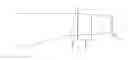
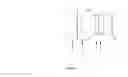
FIG. 1 shows the proposed automotive headlamp;
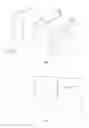
FIG. 2 shows the path of optical beams at the output of the headlamp;
FIG. 3 shows the steering system in a straight position and the corresponding light spot on the roadway;
FIG. 4 shows the same as FIG. 3 with the steering input;
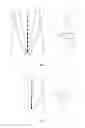
FIG. 5 shows the composite regulating lens in a position not obscuring the light beam;
FIG. 6 shows the same as FIG. 5 in a position obscuring the light beam;
FIG. 7 shows the path of optical beams with no composite regulating lens, profile view;
FIG. 8 shows the path of optical beams with no composite regulating lens, top view;
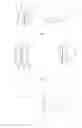
FIG. 9 shows the path of optical beams with the composite regulating lens, profile view;
FIG. 10 shows the path of optical beams with the composite regulating lens, top view.
The automotive headlamp is composed of one or more LEDs, 1 is equipped with a collimator lens, as well as an optical system consisting of blocks A, B and C. Block A is the composite diverging lens made up of the two plano-concave lenses 2 and 3. The first lens through the luminous flux 3 has its concave side facing the LED, whereas the second lens 2 faces the LED with its flat side. LED 1 and the composite diverging lens of Block A have the composite regulating lens of Block C in between, suitable for controllable obscuration of the light flux. The Block C lens is made up of converging plano-convex lens 4 and refracting right-angled wedge 5 placed in a series through the luminous flux.
The composite diverging lens of Block A and the composite regulating lens of Block C have the revolute system of Block B made up of two cylindrical refracting wedges 6 and 7. Wedges 6-7 are located on the same optical axis with their flat bottoms facing each other. At least one of wedges 6-7 is designed to be rotatable with respect to the optical axis of the system synchronized with the steering input.
The proposed headlamp provides the ability to work in the following operating modes: Low-beam mode, High-beam mode due to reconfiguration of the light beam using Block C, Light beam turn mode in which the beam follows the steering-wheel angle by using Block B.
The role of the composite diverging lens of Block A is the expansion of the light beam along axes. Diverging plano-concave lens 3 extends the light beam along the X-axis, whose radius of curvature is based on the requirements for the optical system. Diverging plano-concave lens 2 extends the light beam along the Y-axis, whose radius of curvature is selected in such a way that the upper part of the light flux passing through Block A is parallel to the optical axis, and with an increased tilt of the bottom part. Thus, the underlying concept of design of automotive headlamp optics is fulfilled: In low-beam mode the upper part of the light beam has zero tilt angle relative to the horizon and therefore does not blind drivers in oncoming traffic.
Block B is designed to provide the rotation of the light beam during steering input. In the neutral position, wedges 6-7 neutralize the refraction angles of each other: By first passing through wedge 6, the light beam is refracted at an angle of N degrees along the Y-axis, but when passing through wedge 7, it is repeatedly refracted by −N degrees, thereby leaving the resulting angle unchanged. When turning relative to each other, the wedges' total angle of refraction changes, and the light beam diverges from a straight line. Thus, the revolute system allows for a change in the direction of the light beam of the headlamp relative to the road, i.e. illuminate the road space during and after a turn.
Adjustment of the relative angle of rotation of wedges 6-7 may be: Three-positional, i.e. it can have three positions—two outer and one neutral position, implemented using one or more solenoids. Incremental, i.e. the rotation of the wedges can be broken down into specific increments related to certain angles. This can be implemented by using stepping motors. Smooth, i.e. the angle of rotation of the wedges is accurately tied to the angle of the steering wheel or other controls. It can be implemented by using an electric motor or microprocessor control unit.
Block C represents a high/low-beam switch system. In the retracted position, the composite regulating lens operates in low-beam mode, and in the working position (on the optical axis of the system) it intercepts the light beam by focusing it and increasing its range—high-beam mode. Lens movement control is carried out using a solenoid.
The proposed optical system is complete and can be used as the main headlight for vehicles, public transport, special vehicles, and railway rolling stock. A headlight system can have a single system or be made up of several similar systems (this may be due to the requirements for capacity of the LED light source used for the system). Lenses and other elements can be made from either K8 optical glass or acrylic glass. Due to the difference in the refraction indices of each material, a corresponding adjustment is required for the radii of curvature and tilt angles. As far as merits of the proposed headlamp are concerned, as compared to the currently existing LED systems used for automotive optics, the following can be pointed out: The system is free from reflectors and is designed completely using lenses, which allows for a great level of precision in producing a light beam.
When forming the low/high beam, 100% of the original light beam is used, as compared to the currently existing systems where a low-beam mode has a 50% cutoff of the light used, thus adversely affecting its efficiency. In addition, the selection of the high/low-beam lighting system in a separate Block C can significantly enhance its reliability and positioning accuracy. The light beam rotation system is implemented using two light elements (refracting wedges) relative to each other, as compared to the currently existing systems, which utilize rotation of the entire headlamp casing or its basic blocks, thus exerting a greater load on the power grid of the vehicle and complicating the design of the headlamp.
Claims
1. An automotive headlamp, comprising;
at least one LED and a lens system that includes a composite diverging lens made up of two plano-concave lenses; and
a composite regulating lens suitable for controllable obscuration of the light flux located between the LED and the composite diverging lens and made up of a converging plano-convex lens and a refracting, right-angled wedge placed in a series through the luminous flux.
2. The automotive headlamp as set forth in claim 1, including a revolute system between the composite diverging and regulating lenses, which features two cylindrical refracting wedges, with their flat bottoms located to each other, where at least one of them is rotatable with respect to the optical axis of the system synchronized with the steering input.
3. The automotive headlamp as set forth in claim 1, including an LED equipped with a collimator lens.
4. The automotive headlamp as set forth in claim 1, wherein the composite diverging lens has the first lens through the luminous flux facing the LED with its concave side, with the second one facing it with its flat side.
Images & Drawings included:

Sources:
- United States Patent and Trademark Office - verify current appl. status at the USPTO↗
Similar patent applications:
- » 20220349542
Vehicle light optical element assembly, vehicle lighting device, vehicle light and vehicle - » 20140347874
Light emitting device that can realize reduction in thickness of vehicle light fitting, vehicle light fitting using the light emitting device and vehicle provided with the vehicle light - » 20240302014
VEHICLE LIGHT OPTICAL ELEMENT, VEHICLE LIGHT MODULE, AND VEHICLE LIGHT - » 20240280232
Vehicle lighting appliance lens, vehicle lighting appliance unit, and vehicle lighting appliance device - » 20230220969
Light-regulating mechanism, vehicle light module, vehicle light and vehicle - » 20250251102
OPTICAL ELEMENT, VEHICLE LIGHT MODULE, VEHICLE LIGHT AND VEHICLE - » 20150127227
Method for automatically adapting vehicle lighting to a surrounding area of a vehicle, lighting apparatus and vehicle having lighting - » 20220107067
Vehicle light optical element, vehicle light module, vehicle headlight and vehicle - » 20220120401
Vehicle light optical element, vehicle light module, vehicle headlight, and vehicle - » 20120007505
LIGHT SOURCE UNIT OF SEMICONDUCTOR-TYPE LIGHT SOURCE OF VEHICLE LIGHTING DEVICE AND VEHICLE LIGHTING DEVICE
Recent applications in this class:
- » 20190063715 2019-02-28
Automotive headlamp with S-polarizer filter to reduce glare - » 20180149333 2018-05-31
LOW-PROFILE EFFICIENT VEHICULAR LIGHTING MODULES - » 20180106450 2018-04-19
Lighting device for vehicles - » 20180073699 2018-03-15
Optical element and car lamp - » 20180073698 2018-03-15
Lighting device for producing a supplemental beam - » 20180051857 2018-02-22
Headlight with illumination device having rotatable transmissive element for shifting light concentration position - » 20180031196 2018-02-01
ILLUMINATION DEVICE, METHOD AND SYSTEM - » 20180017225 2018-01-18
Vehicular lighting assemblies with invisible fluted regions and methods of making the same - » 20180003356 2018-01-04
LIGHTING APPARATUS AND VEHICLE HEADLIGHT COMPRISING LIGHTING APPARATUS - » 20180003355 2018-01-04
ILLUMINATION DEVICE