Laser drilling encapsulated semiconductor die to expose electrical connection therein
US20160260652A1
2016-09-08
15/154,489
2016-05-13
✅ Patent granted
US 9,691,681 B2
2017-06-27
-
-
Nitin Parekh
McDermott Will & Emery LLP
2036-05-13
Abstract:
A method of making an integrated circuit package that contains a semiconductor die having one or more electrical connections to an electronic circuit within the semiconductor die. The method may include: encapsulating the semiconductor die and its electrical connections in non-electrically conductive, encapsulation material; laser drilling the encapsulation material to expose one of the electrical connections within the integrated circuit package, thereby creating a via opening in an external surface of the encapsulation material to the electrical connection; and electroplating or sputtering over the via opening in the encapsulation material to create a conductive routing layer from the exterior surface of the encapsulation material to the electrical connection.
Assignee:
- LINEAR TECHNOLOGY CORPORATION 436 🇺🇸 Milpitas, CA, United States
Applicant:
Interested in similar patents?
Get notified when new applications in this technology area are published.
Classification:
H01L23/3675 » CPC main
Details of semiconductor or other solid state devices; Arrangements for cooling, heating, ventilating or temperature compensation ; Temperature sensing arrangements; Selection of materials, or shaping, to facilitate cooling or heating, e.g. heatsinks; Cooling facilitated by shape of device characterised by the shape of the housing
H01L21/285 IPC
Processes or apparatus adapted for the manufacture or treatment of semiconductor or solid state devices or of parts thereof; Manufacture or treatment of semiconductor devices or of parts thereof the devices having at least one potential-jump barrier or surface barrier, e.g. PN junction, depletion layer or carrier concentration layer the devices having semiconductor bodies comprising elements of Group IV of the Periodic System or AB compounds with or without impurities, e.g. doping materials; Manufacture of electrodes on semiconductor bodies using processes or apparatus not provided for in groups -; Deposition of conductive or insulating materials for electrodes conducting electric current from a gas or vapour, e.g. condensation
H01L21/288 IPC
Processes or apparatus adapted for the manufacture or treatment of semiconductor or solid state devices or of parts thereof; Manufacture or treatment of semiconductor devices or of parts thereof the devices having at least one potential-jump barrier or surface barrier, e.g. PN junction, depletion layer or carrier concentration layer the devices having semiconductor bodies comprising elements of Group IV of the Periodic System or AB compounds with or without impurities, e.g. doping materials; Manufacture of electrodes on semiconductor bodies using processes or apparatus not provided for in groups -; Deposition of conductive or insulating materials for electrodes conducting electric current from a liquid, e.g. electrolytic deposition
H01L21/56 » CPC further
Processes or apparatus adapted for the manufacture or treatment of semiconductor or solid state devices or of parts thereof; Manufacture or treatment of semiconductor devices or of parts thereof the devices having at least one potential-jump barrier or surface barrier, e.g. PN junction, depletion layer or carrier concentration layer; Assembly of semiconductor devices using processes or apparatus not provided for in a single one of the subgroups - , e.g. sealing of a cap to a base of a container Encapsulations, e.g. encapsulation layers, coatings
H01L21/76802 » CPC further
Processes or apparatus adapted for the manufacture or treatment of semiconductor or solid state devices or of parts thereof; Manufacture or treatment of devices consisting of a plurality of solid state components formed in or on a common substrate or of parts thereof; Manufacture of integrated circuit devices or of parts thereof; Manufacture of specific parts of devices defined in group; Applying interconnections to be used for carrying current between separate components within a device comprising conductors and dielectrics characterised by the formation and the after-treatment of the dielectrics, e.g. smoothing by forming openings in dielectrics
H01L23/373 IPC
Details of semiconductor or other solid state devices; Arrangements for cooling, heating, ventilating or temperature compensation ; Temperature sensing arrangements; Selection of materials, or shaping, to facilitate cooling or heating, e.g. heatsinks Cooling facilitated by selection of materials for the device or materials for thermal expansion adaptation, e.g. carbon
H01L21/76879 » CPC further
Processes or apparatus adapted for the manufacture or treatment of semiconductor or solid state devices or of parts thereof; Manufacture or treatment of devices consisting of a plurality of solid state components formed in or on a common substrate or of parts thereof; Manufacture of integrated circuit devices or of parts thereof; Manufacture of specific parts of devices defined in group; Applying interconnections to be used for carrying current between separate components within a device comprising conductors and dielectrics characterised by the formation and the after-treatment of the conductors; Filling of holes, grooves or trenches, e.g. vias, with conductive material by selective deposition of conductive material in the vias, e.g. selective C.V.D. on semiconductor material, plating
H01L23/3107 » CPC further
Details of semiconductor or other solid state devices; Encapsulations, e.g. encapsulating layers, coatings, e.g. for protection characterised by the arrangement or shape the device being completely enclosed
H01L23/3736 » CPC further
Details of semiconductor or other solid state devices; Arrangements for cooling, heating, ventilating or temperature compensation ; Temperature sensing arrangements; Selection of materials, or shaping, to facilitate cooling or heating, e.g. heatsinks; Cooling facilitated by selection of materials for the device or materials for thermal expansion adaptation, e.g. carbon Metallic materials
H01L24/32 » CPC further
Arrangements for connecting or disconnecting semiconductor or solid-state bodies; Methods or apparatus related thereto; Means for bonding being attached to, or being formed on, the surface to be connected, e.g. chip-to-package, die-attach, "first-level" interconnects; Manufacturing methods related thereto; Layer connectors, e.g. plate connectors, solder or adhesive layers; Manufacturing methods related thereto; Structure, shape, material or disposition of the layer connectors after the connecting process of an individual layer connector
H01L24/83 » CPC further
Arrangements for connecting or disconnecting semiconductor or solid-state bodies; Methods or apparatus related thereto; Methods for connecting semiconductor or other solid state bodies using means for bonding being attached to, or being formed on, the surface to be connected using a layer connector
H01L2224/83801 » CPC further
Indexing scheme for arrangements for connecting or disconnecting semiconductor or solid-state bodies and methods related thereto as covered by; Methods for connecting semiconductor or other solid state bodies using means for bonding being attached to, or being formed on, the surface to be connected using a layer connector; Bonding techniques Soldering or alloying
H01L2924/01029 » CPC further
Indexing scheme for arrangements or methods for connecting or disconnecting semiconductor or solid-state bodies as covered by; Chemical elements Copper [Cu]
H01L2924/10253 » CPC further
Indexing scheme for arrangements or methods for connecting or disconnecting semiconductor or solid-state bodies as covered by; Details of semiconductor or other solid state devices to be connected; Material of the semiconductor or solid state bodies; Semiconducting materials; Elemental semiconductors, i.e. Group IV Silicon [Si]
H01L2924/14 » CPC further
Indexing scheme for arrangements or methods for connecting or disconnecting semiconductor or solid-state bodies as covered by; Details of semiconductor or other solid state devices to be connected; Device type Integrated circuits
H01L23/367 IPC
Details of semiconductor or other solid state devices; Arrangements for cooling, heating, ventilating or temperature compensation ; Temperature sensing arrangements; Selection of materials, or shaping, to facilitate cooling or heating, e.g. heatsinks Cooling facilitated by shape of device
H01L23/31 IPC
Details of semiconductor or other solid state devices; Encapsulations, e.g. encapsulating layers, coatings, e.g. for protection characterised by the arrangement or shape
H01L23/00 IPC
Details of semiconductor or other solid state devices
H01L21/268 » CPC further
Processes or apparatus adapted for the manufacture or treatment of semiconductor or solid state devices or of parts thereof; Manufacture or treatment of semiconductor devices or of parts thereof the devices having at least one potential-jump barrier or surface barrier, e.g. PN junction, depletion layer or carrier concentration layer the devices having semiconductor bodies comprising elements of Group IV of the Periodic System or AB compounds with or without impurities, e.g. doping materials; Bombardment with radiation with high-energy radiation using electromagnetic radiation, e.g. laser radiation
H01L21/768 IPC
Processes or apparatus adapted for the manufacture or treatment of semiconductor or solid state devices or of parts thereof; Manufacture or treatment of devices consisting of a plurality of solid state components formed in or on a common substrate or of parts thereof; Manufacture of integrated circuit devices or of parts thereof; Manufacture of specific parts of devices defined in group Applying interconnections to be used for carrying current between separate components within a device comprising conductors and dielectrics
H01L21/3105 » CPC further
Processes or apparatus adapted for the manufacture or treatment of semiconductor or solid state devices or of parts thereof; Manufacture or treatment of semiconductor devices or of parts thereof the devices having at least one potential-jump barrier or surface barrier, e.g. PN junction, depletion layer or carrier concentration layer the devices having semiconductor bodies comprising elements of Group IV of the Periodic System or AB compounds with or without impurities, e.g. doping materials; Treatment of semiconductor bodies using processes or apparatus not provided for in groups - to form insulating layers thereon, e.g. for masking or by using photolithographic techniques ; After treatment of these layers; Selection of materials for these layers After-treatment
H01L23/4334 » CPC further
Details of semiconductor or other solid state devices; Arrangements for cooling, heating, ventilating or temperature compensation ; Temperature sensing arrangements; Fillings or auxiliary members in containers or encapsulations selected or arranged to facilitate heating or cooling; Auxiliary members in containers characterised by their shape, e.g. pistons Auxiliary members in encapsulations
H01L21/486 » CPC further
Processes or apparatus adapted for the manufacture or treatment of semiconductor or solid state devices or of parts thereof; Manufacture or treatment of semiconductor devices or of parts thereof the devices having at least one potential-jump barrier or surface barrier, e.g. PN junction, depletion layer or carrier concentration layer; Manufacture or treatment of parts, e.g. containers, prior to assembly of the devices, using processes not provided for in a single one of the subgroups -; Conductive parts; Leads on or in insulating or insulated substrates, e.g. metallisation Via connections through the substrate with or without pins
H01L23/481 » CPC further
Details of semiconductor or other solid state devices; Arrangements for conducting electric current to or from the solid state body in operation, e.g. leads, terminal arrangements ; Selection of materials therefor Internal lead connections, e.g. via connections, feedthrough structures
H01L23/49827 » CPC further
Details of semiconductor or other solid state devices; Arrangements for conducting electric current to or from the solid state body in operation, e.g. leads, terminal arrangements ; Selection of materials therefor consisting of soldered constructions; Leads, on insulating substrates, Via connections through the substrates, e.g. pins going through the substrate, coaxial cables
H01L23/5384 » CPC further
Details of semiconductor or other solid state devices; Arrangements for conducting electric current within the device in operation from one component to another, i.e. interconnections, e.g. wires, lead frames the interconnection structure between a plurality of semiconductor chips being formed on, or in, insulating substrates Conductive vias through the substrate with or without pins, e.g. buried coaxial conductors
H01L24/19 » CPC further
Arrangements for connecting or disconnecting semiconductor or solid-state bodies; Methods or apparatus related thereto; Means for bonding being attached to, or being formed on, the surface to be connected, e.g. chip-to-package, die-attach, "first-level" interconnects; Manufacturing methods related thereto; High density interconnect [HDI] connectors; Manufacturing methods related thereto Manufacturing methods of high density interconnect preforms
H01L24/24 » CPC further
Arrangements for connecting or disconnecting semiconductor or solid-state bodies; Methods or apparatus related thereto; Means for bonding being attached to, or being formed on, the surface to be connected, e.g. chip-to-package, die-attach, "first-level" interconnects; Manufacturing methods related thereto; High density interconnect [HDI] connectors; Manufacturing methods related thereto; Structure, shape, material or disposition of the high density interconnect connectors after the connecting process of an individual high density interconnect connector
H01L24/82 » CPC further
Arrangements for connecting or disconnecting semiconductor or solid-state bodies; Methods or apparatus related thereto; Methods for connecting semiconductor or other solid state bodies using means for bonding being attached to, or being formed on, the surface to be connected by forming build-up interconnects at chip-level, e.g. for high density interconnects [HDI]
H01L2224/04105 » CPC further
Indexing scheme for arrangements for connecting or disconnecting semiconductor or solid-state bodies and methods related thereto as covered by; Means for bonding being attached to, or being formed on, the surface to be connected, e.g. chip-to-package, die-attach, "first-level" interconnects; Manufacturing methods related thereto; Bonding areas; Manufacturing methods related thereto; Structure, shape, material or disposition of the bonding areas prior to the connecting process Bonding areas formed on an encapsulation of the semiconductor or solid-state body, e.g. bonding areas on chip-scale packages
H01L2224/73253 » CPC further
Indexing scheme for arrangements for connecting or disconnecting semiconductor or solid-state bodies and methods related thereto as covered by; Means for bonding being of different types provided for in two or more of groups; Location after the connecting process on different surfaces Bump and layer connectors
H01L2224/73267 » CPC further
Indexing scheme for arrangements for connecting or disconnecting semiconductor or solid-state bodies and methods related thereto as covered by; Means for bonding being of different types provided for in two or more of groups; Location after the connecting process on different surfaces Layer and HDI connectors
H01L2224/83005 » CPC further
Indexing scheme for arrangements for connecting or disconnecting semiconductor or solid-state bodies and methods related thereto as covered by; Methods for connecting semiconductor or other solid state bodies using means for bonding being attached to, or being formed on, the surface to be connected using a layer connector involving a temporary auxiliary member not forming part of the bonding apparatus being a temporary or sacrificial substrate
H01L2224/8385 » CPC further
Indexing scheme for arrangements for connecting or disconnecting semiconductor or solid-state bodies and methods related thereto as covered by; Methods for connecting semiconductor or other solid state bodies using means for bonding being attached to, or being formed on, the surface to be connected using a layer connector; Bonding techniques using a polymer adhesive, e.g. an adhesive based on silicone, epoxy, polyimide, polyester
H01L21/44 IPC
Processes or apparatus adapted for the manufacture or treatment of semiconductor or solid state devices or of parts thereof; Manufacture or treatment of semiconductor devices or of parts thereof the devices having at least one potential-jump barrier or surface barrier, e.g. PN junction, depletion layer or carrier concentration layer the devices having semiconductor bodies not provided for in groups, , , and with or without impurities, e.g. doping materials Manufacture of electrodes on semiconductor bodies using processes or apparatus not provided for in groups -
H01L23/48 IPC
Details of semiconductor or other solid state devices Arrangements for conducting electric current to or from the solid state body in operation, e.g. leads, terminal arrangements ; Selection of materials therefor
H01L23/433 IPC
Details of semiconductor or other solid state devices; Arrangements for cooling, heating, ventilating or temperature compensation ; Temperature sensing arrangements; Fillings or auxiliary members in containers or encapsulations selected or arranged to facilitate heating or cooling Auxiliary members in containers characterised by their shape, e.g. pistons
H01L23/498 IPC
Details of semiconductor or other solid state devices; Arrangements for conducting electric current to or from the solid state body in operation, e.g. leads, terminal arrangements ; Selection of materials therefor consisting of soldered constructions Leads, on insulating substrates,
H01L23/36 » CPC further
Details of semiconductor or other solid state devices; Arrangements for cooling, heating, ventilating or temperature compensation ; Temperature sensing arrangements Selection of materials, or shaping, to facilitate cooling or heating, e.g. heatsinks
H01L23/5389 » CPC further
Details of semiconductor or other solid state devices; Arrangements for conducting electric current within the device in operation from one component to another, i.e. interconnections, e.g. wires, lead frames the interconnection structure between a plurality of semiconductor chips being formed on, or in, insulating substrates the chips being integrally enclosed by the interconnect and support structures
H01L23/538 IPC
Details of semiconductor or other solid state devices; Arrangements for conducting electric current within the device in operation from one component to another, i.e. interconnections, e.g. wires, lead frames the interconnection structure between a plurality of semiconductor chips being formed on, or in, insulating substrates
H01L23/49861 » CPC further
Details of semiconductor or other solid state devices; Arrangements for conducting electric current to or from the solid state body in operation, e.g. leads, terminal arrangements ; Selection of materials therefor consisting of soldered constructions; Leads, on insulating substrates, Lead-frames fixed on or encapsulated in insulating substrates
H01L21/48 IPC
Processes or apparatus adapted for the manufacture or treatment of semiconductor or solid state devices or of parts thereof; Manufacture or treatment of semiconductor devices or of parts thereof the devices having at least one potential-jump barrier or surface barrier, e.g. PN junction, depletion layer or carrier concentration layer Manufacture or treatment of parts, e.g. containers, prior to assembly of the devices, using processes not provided for in a single one of the subgroups -
Description
CROSS-REFERENCE TO RELATED APPLICATIONS
This application is a divisional application of U.S. patent application Ser. No. 14/630,239, entitled “Exposed, Solderable Heat Spreader for Integrated Circuit Packages,” filed Feb. 24, 2015, which is based upon and claims priority to U.S. provisional patent application 62/032,347, entitled “Exposed Backside Heat-Spreader for Embedded Die Package,” filed Aug. 1, 2014. The entire content of both applications is incorporated herein by reference.
BACKGROUND
1. Technical Field
This disclosure relates to integrated circuit packaging technology, including embedded die packages, flipchip packages, and other types of packages that are configured to be mounted to a printed circuit board (PCB).
2. Description of Related Art
Integrated circuit packages, such as embedded die packages and flipchip packages, may contain a semiconductor die on which one or more electronic circuits are fabricated. The semiconductor die may be embedded, as in an embedded die package, or attached to a wire frame, as in a flipchip package. There may be multiple semiconductor dies stacked in a single package.
The electronic circuits within these packages may generate significant heat during operation. If this heat is not quickly removed, the electronic circuit may be damaged and/or not perform properly. Quick removal of this heat, therefore, may be important.
Thin lateral conductive traces have been used to remove heat. However, they may not remove heat as fast as may be needed or desired. They may also add complexities to the connection requirements of the integrated circuit package.
SUMMARY
A method of making an integrated circuit package that contains a semiconductor die having one or more electrical connections to an electronic circuit within the semiconductor die. The method may include: encapsulating the semiconductor die and its electrical connections in non-electrically conductive, encapsulation material; laser drilling the encapsulation material to expose one of the electrical connections within the integrated circuit package, thereby creating a via opening in an external surface of the encapsulation material to the electrical connection; and electroplating or sputtering over the via opening in the encapsulation material to create a conductive routing layer from the exterior surface of the encapsulation material to the electrical connection.
These, as well as other components, steps, features, objects, benefits, and advantages, will now become clear from a review of the following detailed description of illustrative embodiments, the accompanying drawings, and the claims.
BRIEF DESCRIPTION OF DRAWINGS
The drawings are of illustrative embodiments. They do not illustrate all embodiments. Other embodiments may be used in addition or instead. Details that may be apparent or unnecessary may be omitted to save space or for more effective illustration. Some embodiments may be practiced with additional components or steps and/or without all of the components or steps that are illustrated. When the same numeral appears in different drawings, it refers to the same or like components or steps.
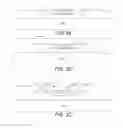
FIGS. 1A-1R illustrate an example of a process for creating an integrated circuit package, such as an embedded die package, that contains a heat spreader that has a solderable surface that forms part of an exterior surface of the integrated circuit package.
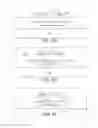
FIGS. 2A-2I illustrate an example of a process for creating an integrated circuit package, such as an embedded die package, that includes multiple routing layers and that contains a heat spreader that has a solderable surface that forms part of an exterior surface of the integrated circuit package.
FIGS. 3A-3B each illustrate a different type of integrated circuit package, such as flipchip packages, that each contain a heat spreader that has a solderable surface that forms part of an exterior surface of the integrated circuit package.
DETAILED DESCRIPTION OF ILLUSTRATIVE EMBODIMENTS
Illustrative embodiments are now described. Other embodiments may be used in addition or instead. Details that may be apparent or unnecessary may be omitted to save space or for a more effective presentation. Some embodiments may be practiced with additional components or steps and/or without all of the components or steps that are described.
FIGS. 1A-1R illustrate an example of a process for creating an integrated circuit package, such as an embedded die package, that contains a heat spreader 104b that has a solderable surface 120 that forms part of an exterior surface 122 of the integrated circuit package. The silicon side of an internal semiconductor die 108 may be affixed both electrically and thermally to an internal surface of the heat spreader 104b. This package may enable the silicon side of the internal semiconductor die 108 to be connected both thermally and electrically to a printed circuit board (PCB) using conventional surface mount technology (SMT). The surface area of the heat spreader 104b that is affixed to the semiconductor die 108 may be larger than the area of the surface of the semiconductor die 108 to which it is affixed to increase the area of thermal dissipation. The solderable surface 120 of the heat spreader 104b may be soldered to a PCB on which the integrated circuit package is mounted. The process illustrated in FIGS. 1A-1R may use molded interconnect substrate (MIS) technology.
In FIG. 1A, a base metal layer 101 (which may instead be a carrier layer) may serve as a substrate for an electroplating seed layer. The base metal layer 101 may be patterned with photoresist film 102 (e.g., a dry film laminate photoresist) and processed to expose underlying base metal regions 103a, 103b, and 103c for plating, as illustrated in FIG. 1B. Photoresist processing may be achieved, for example, using laser direct write, development, and etching steps.
As illustrated in FIG. 1C, the opened base metal regions 103a, 103b, and 103c may be electroplated to provide conductive regions 104a and 104c and the heat spreader 104b, which may serve as electrical connections to the semiconductor die 108. The conductive regions 104a and 104c and the heat spreader 104b may be of any thickness, such as between 5 and 100 microns. The conductive regions 104a and 104c and the heat spreader 104b may instead be created using a different method, such as a deposition process, such as sputtering.
One of these conductive regions, such as the heat spreader 104b, may later be attached to the bottom of and serve as a heat spreader in connection with the semiconductor die 108, as will later be discussed. The heat spreader 104b may be made of a thermally-conductive material, meaning a material with a thermal conductivity coefficient that may be greater than 2.0 W/mK, but no less than 0.4 W/m K.
The material that makes up the heat spreader 104b may also be conductive and solderable, such as when the material is a metal, such as copper.
A second layer of interconnection conductors may be provided. To this end, second photoresist film 105 may be provided, as illustrate in FIG. 1D. The photoresist film 105 (e.g., a dry film laminate photoresist) may be processed in substantially the same manner as photoresist film 102, e.g., using conventional laser direct write, development, and etching steps. As illustrated in FIG. 1E, the etching steps may create opened areas 106a and 106b in photoresist film 105a, 105b, and 105c. These opened areas 106a and 106b may then be electroplated to provide electrically conductive “stud” layers 107a and 107b, as illustrated in FIG. 1F, which may have any thickness, such as between 75 and 225 microns. Photoresist film 105a, 105b, and 105c may then be removed, as illustrated in FIG. 1G.
All portions of a silicon side of the semiconductor die 108 may be affixed to the heat spreader 104b with an adhesive layer 109, as illustrated in FIG. 1H.
The semiconductor die 108 may have its own interconnection conductive structures 110a and 110b fabricated thereon, The interconnection conductive structures 110a and 110b may have any thickness, such as, for example, between 3 and 100 microns.
The semiconductor die 108 may of any type. For example, the semiconductor die 108 may be silicon, Gallium Arsenide, CMOS, DMOS, or analog. The semiconductor die 108 may have any size. For example, the semiconductor die 108 may have a thickness of between 75 and 200 microns.
The adhesive layer 109 may have any size. For example, the adhesive layer 109 may span across the entire area of the silicon side of the semiconductor die 108. The adhesive layer 109 may be a thermally, electrically conductive, and solderable material, such as Ablestik 84-1 LMISR4 epoxy or SnSb solder. The adhesive layer 109 may have any thickness, such as between 6 and 75 microns.
The base metal layer 101 may then be over-molded using non-electrically conductive encapsulation material 111, as illustrated in FIG. 1I. The encapsulation material 111 may completely cover and extend over the top of the stud layers 107a and 107b and the interconnection conductive structures 110a and 110b. For example, the height of the encapsulation material 111 may be between 60 and 600 microns.
The encapsulation material 111 may be planarized or ground down to expose the tops of the stud layers 107a and 107b and the interconnection conductive structures 110a and 110b, as illustrated in FIG. 1J. Complete exposure may require, for example, removal of between 50 and 500 microns from the top of the encapsulation material 111. If the tops of interconnection conductive structures 110a and 110b are not tall enough, it may be necessary to drill down into the encapsulation material 111 to reach them, such as with a laser. Additional conductive studs may instead be added.
An additional conductive routing layer 112 may be added on top of the exposed conductors, such as by electroplating or sputtering, as illustrated in FIG. 1K, to electrically connect the stud layers 107a and 107b to the interconnection conductive structures 110a and 110b, respectively. To pattern conductive routing layer 112, photoresist layer 113 may be provided, as illustrated in FIG. 1L.
Conventional photoresist processing, development, and etching may again be used to provide openings 118a, 118b, and 118c to allow the conductive routing layer 112 to be etched, as illustrated in FIG. 1M.
Conductive routing layer 112 may then be etched using any suitable etching process, as illustrated in FIG. 1N. Photoresist layers 113a and 113b may then be removed, as illustrated in FIG. 1O. Etched and exposed conductive routing layer 112 can be planarized with a grinding process, if needed. Additional patterning to create additional conductive layers may be added by repeating the process steps described above in connection with FIG. 1K to FIG. 1N one or more times.
FIG. 1O also illustrates organic solderability preservative (OSP) or anti-tarnish layers 114a and 114b that may be provided by a similar photolithography process to allow one or more additional components to be attached. The additional components may include, for example, a passive circuit element and/or another MIS technology-packaged device.
FIG. 1P shows an additional electronic component 115 being to electrically connected to layers 114a and 114b formed out of an OSP layer through structures 116a and 116b which may, for example, be solder mask material. Additional solder-masking, component attaching, and/or other patternable isolative materials may be included by repeating one or more of the foregoing steps, such as the steps illustrated in FIGS. 1O and 1P.
The resulting structure may be completely enclosed by over-molding using non-conductive encapsulation material 117, as illustrated in FIG. 1Q. The over-molding may form a cap having any thickness, such as between 500 and 4000 microns.
All or portions of the base metal layer 101 may be selectively removed by etching. FIG. 1R illustrates the removal of a portion thereof. The exposed surfaces of conductive regions 104a and 104c and the exposed solderable surface 120 of the heat spreader 104b may be plated using a suitable lead finish. Solder connections to the exposed surfaces of conductive regions 104a and 104c may be made and thus serve as electrical connections to conductive structures 110a and 110b on the top of a circuit side of the semiconductor die 108. Similarly, a solder connection may be made to the entire exposed solderable surface 120 of the heat spreader 104b, thus providing both an electrical and thermal connection to the silicon side of the semiconductor die 108.
Numerous embedded integrated circuit packages of one of the types described above may be formed on the same substrate, such as the same base metal layer 101. Individual finished packages may then be obtained by singulation.
FIGS. 2A-2I illustrate an example of a process for creating an integrated circuit package, such as an embedded die package, that includes multiple routing layers and that contains a heat spreader that has a solderable surface that forms part of an exterior surface of the integrated circuit package. FIG. 2A illustrates the structure of FIG. 1N after removal of photoresist layers 113a and 113b. Thereafter, an over-molding step may provide non-conductive encapsulation material 201 at any thickness, such as between 5 and 150 microns. Laser drilling (e.g., using a C02 infrared laser) may be used to create via openings 202a and 202b in encapsulation material 201 to underlying routing layers 112a and 112b, as illustrated in FIG. 2C.
A conductive routing layer 203 (e.g., copper) may then be provided by electroplating or sputtering over the surface of the encapsulation material 201, filling via openings 202a and 202b, as illustrated in FIG. 2D. A planarization process may be applied to ensure uniformity on the surface of the conductive routing layer 203.
The conductive routing layer 203 may then be patterned and etched to provide a second layer of interconnection traces 203a and 203b (the first layer of interconnection being formed out of routing layers 112a and 112b, as shown in FIG. 2E. An OSP layer or anti-tarnish layer may be applied to provide OSP or anti-tarnish structures 204a and 204b, as shown in FIG. 2F using, for example, the process discussed above with respect to FIG. 1O. An electrical component 209 may then be attached using solder-mask material 210a and 210b, as illustrated in FIG. 2G, in the manner discussed above with respect to attachment of electrical component 115 using solder mask material 116a and 116b in FIG. 1P. The resulting structure may then be encapsulated using an over-molding step with non-conductive encapsulation material 205, as illustrated in FIG. 2H. The encapsulation material 205 may be, for example, 1 mm to 3 mm thick. In the same manner discussed above with respect to FIG. 1R, the embedded integrated circuit package may be completed by etching of the base metal layer 101, as illustrated in FIG. 2I. Multiple instances of the integrated circuit package that is illustrated in FIG. 2H may be on a single base metal later, in which case each instance may be singulated from the others.
The heat spreader technology that has been described above may be applied to other type of integrated circuit packages. For example, a pre-molded MIS substrate may instead be formed with a landing pattern that allows a bumped die (e.g., a semiconductor die with solder bumps attached to the pin pads) to be attached to it in a “flip-chip” manner. After the bumped die is attached to the pre-molded MIS substrate, the resulting structure may then be encapsulated by over-molding it with a non-conductive encapsulation material. Openings may then be created (e.g., using laser drilling) for connections to the silicon side of the semiconductor die and to the underlying substrate. A conductor layer may then be plated or sputtered over the surface of the encapsulation, which may then be patterned and planarized (if needed) to provide interconnection traces. Isolation material may then be provided and patterned over the interconnection layer to define solderable external pads.
FIGS. 3A-3B each illustrate examples of different types of integrated circuit packages, such as flipchip packages, that contain a heat spreader 303 or 312 that each have a solderable surface that forms part of an exterior surface of the integrated circuit package. Each integrated circuit package may include non-conductive encapsulation material 301 or 310, semiconductor dies 302 or 311, heat spreader 303 or 312, adhesives 304 or 313, internal/external lead conductors 305 and 306 or 314 or 315 (which may have been part of a lead frame) and conductive flipchip joints 307 and 308 or 316 and 317. Components 301, 302, 303, 304, 310, 311, 312, and 313 may be the same as the corresponding components discussed above in connection with the embedded die packages embodiments.
The components, steps, features, objects, benefits, and advantages that have been discussed are merely illustrative. None of them, nor the discussions relating to them, are intended to limit the scope of protection in any way. Numerous other embodiments are also contemplated. These include embodiments that have fewer, additional, and/or different components, steps, features, objects, benefits, and/or advantages. These also include embodiments in which the components and/or steps are arranged and/or ordered differently.
For example, the semiconductor die may include through-silicon vias. The integrated package may also or instead include one or more additional semiconductor dies and heat spreaders stacked vertically.
Unless otherwise stated, all measurements, values, ratings, positions, magnitudes, sizes, and other specifications that are set forth in this specification, including in the claims that follow, are approximate, not exact. They are intended to have a reasonable range that is consistent with the functions to which they relate and with what is customary in the art to which they pertain.
All articles, patents, patent applications, and other publications that have been cited in this disclosure are incorporated herein by reference.
The phrase “means for” when used in a claim is intended to and should be interpreted to embrace the corresponding structures and materials that have been described and their equivalents. Similarly, the phrase “step for” when used in a claim is intended to and should be interpreted to embrace the corresponding acts that have been described and their equivalents. The absence of these phrases from a claim means that the claim is not intended to and should not be interpreted to be limited to these corresponding structures, materials, or acts, or to their equivalents.
The scope of protection is limited solely by the claims that now follow. That scope is intended and should be interpreted to be as broad as is consistent with the ordinary meaning of the language that is used in the claims when interpreted in light of this specification and the prosecution history that follows, except where specific meanings have been set forth, and to encompass all structural and functional equivalents.
Relational terms such as “first” and “second” and the like may be used solely to distinguish one entity or action from another, without necessarily requiring or implying any actual relationship or order between them. The terms “comprises,” “comprising,” and any other variation thereof when used in connection with a list of elements in the specification or claims are intended to indicate that the list is not exclusive and that other elements may be included. Similarly, an element preceded by an “a” or an “an” does not, without further constraints, preclude the existence of additional elements of the identical type.
None of the claims are intended to embrace subject matter that fails to satisfy the requirement of Sections 101, 102, or 103 of the Patent Act, nor should they be interpreted in such a way. Any unintended coverage of such subject matter is hereby disclaimed. Except as just stated in this paragraph, nothing that has been stated or illustrated is intended or should be interpreted to cause a dedication of any component, step, feature, object, benefit, advantage, or equivalent to the public, regardless of whether it is or is not recited in the claims.
The abstract is provided to help the reader quickly ascertain the nature of the technical disclosure. It is submitted with the understanding that it will not be used to interpret or limit the scope or meaning of the claims. In addition, various features in the foregoing detailed description are grouped together in various embodiments to streamline the disclosure. This method of disclosure should not be interpreted as requiring claimed embodiments to require more features than are expressly recited in each claim. Rather, as the following claims reflect, inventive subject matter lies in less than all features of a single disclosed embodiment. Thus, the following claims are hereby incorporated into the detailed description, with each claim standing on its own as separately claimed subject matter.
Claims
1. A method of making an integrated circuit package that contains therein a semiconductor die having one or more electrical connections to an electronic circuit within the semiconductor die, the method comprising:
encapsulating the semiconductor die and its electrical connections in non-electrically conductive, encapsulation material;
laser drilling the encapsulation material to expose one of the electrical connections within the integrated circuit package, thereby creating a via opening in an external surface of the encapsulation material to the electrical connection; and
electroplating or sputtering over the via opening in the encapsulation material to create a conductive routing layer from the exterior surface of the encapsulation material to the electrical connection.
2. The method of claim 1 wherein the semiconductor die has a silicon side and further comprising:
attaching a first surface of a thermally-conductive heat spreader in a thermally-conductive manner to the silicon side of the semiconductor die before the encapsulating; and
during the encapsulating, also encapsulating the attached heat spreader in the non-electrically conductive, encapsulation material, except for a second surface of the heat spreader.
3. The method of claim 2 wherein the second surface of heat spreader forms part of an exterior surface of integrated circuit package.
4. The method of claim 3 further comprising electrically connecting the conductive routing layer to a terminal in the same plane as the second surface of the heat spreader.
5. The method of claim 3 wherein the second surface of heat spreader is solderable.
6. The method of claim 3 wherein the integrated circuit package has a configuration that makes it suitable to solder the second surface of the heat spreader to a surface on a circuit board on which the integrate circuit package is mounted.
7. The method of claim 2 wherein the second surface of heat spreader is solderable.
8. The method of claim 2 further comprising attaching the first surface of the heat spreader to all portions of the silicon side of the semiconductor die.
9. The method of claim 2 wherein the first surface of the heat spreader has a larger surface area than the silicon side of the semiconductor die.
10. The method of claim 2 wherein the first and the second surfaces of the heat spreader are parallel.
11. The method of claim 2 wherein the semiconductor die has a circuit side that contains the one or more electrical connections and that is substantially parallel to the silicon side.
12. The method of claim 2 further comprising using an adhesive to attach the heat spreader to the silicon side of the semiconductor die.
13. The method of claim 2 wherein the heat spreader is electrically conductive.
14. The method of claim 2 further comprising encapsulating at least one additional electrical component within the integrated circuit that is not part of the semiconductor die.
15. The method of claim 14 further comprising attaching a second thermally-conductive, solderable heat spreader to the at least one additional electrical component.
16. The method of claim 15 wherein the encapsulating also encapsulates the second heat spreader, except for a surface of the second heat spreader.
17. The method of claim 2 further comprising electroplating the first surface of the heat spreader to the silicon side of the semiconductor die
18. The method of claim 2 further comprising electroless plating the first surface of the heat spreader to the silicon side of the semiconductor die.
19. The method of claim 1 wherein the one or more electrical connections are electroplated.
20. The method of claim 1 wherein the integrated circuit package includes at least one additional electrical component that is not part of the semiconductor die and wherein the encapsulating also encapsulates the at least one additional electrical component.
Images & Drawings included:






Sources:
- United States Patent and Trademark Office - verify current appl. status at the USPTO↗
Recent applications in this class:
- » 20250293114 2025-09-18
Package and Method for Manufacturing the Same - » 20250293113 2025-09-18
ELECTRONIC PACKAGE AND MANUFACTURING METHOD THEREOF - » 20250293112 2025-09-18
PACKAGE COMPRISING SUBSTRATES, INTEGRATED DEVICES AND A HEAT SINK - » 20250293111 2025-09-18
LID THROUGH INTERPOSER OF SEMICONDUCTOR PACKAGE FOR THERMAL MANAGEMENT - » 20250279329 2025-09-04
SEMICONDUCTOR MODULE - » 20250273531 2025-08-28
PACKAGE STRUCTURE - » 20250273530 2025-08-28
THERMALLY ENHANCED ELECTRO-OPTICAL DEVICE - » 20250266317 2025-08-21
SEMICONDUCTOR DEVICE - » 20250266316 2025-08-21
HEAT SPREADER WITH PINS FOR THE THERMAL MANAGEMENT IMPROVEMENT OF CHIPLETS - » 20250246505 2025-07-31
SEMICONDUCTOR PACKAGE AND METHOD FOR MAKING THE SAME
Recent applications for this Assignee:
- » 20180284272 2018-10-04
Trans-impedance amplifier with fast overdrive recovery - » 20180160321 2018-06-07
Monitoring of channel stability and interference in wireless networks - » 20180129171 2018-05-10
Detection and classification scheme for power over Ethernet system - » 20180115191 2018-04-26
Fault-tolerant power network - » 20180102800 2018-04-12
Active differential resistors with reduced noise - » 20180046242 2018-02-15
Low power timing, configuring, and scheduling - » 20180026525 2018-01-25
Communications system using hybrid common mode choke and kelvin sensing of voltage - » 20180024620 2018-01-25
Communications system using hybrid common mode choke and kelvin sensing of voltage - » 20180019669 2018-01-18
Balancing techniques and circuits for charge pumps - » 20180019666 2018-01-18
Driving charge pump circuits