Method of desizing fiber
US20160305048A1
2016-10-20
14/595,294
2015-01-13
✅ Patent granted
US 9,765,455 B2
2017-09-19
-
-
Joseph Miller, Jr.
Carlson, Gaskey & Olds, PC
2036-06-02
Abstract:
A method of preparing a fiber for use in forming a ceramic matrix composite material comprises the steps of removing a polymer coating from an outer surface of glass or ceramic fibers by providing heated and humidified gas across the glass or ceramic fibers for a period of time.
Inventors:
- Neal Magdefrau 38 🇺🇸 Tolland, CT, United States
- Tania Bhatia Kashyap 33 🇺🇸 West Hartford, CT, United States
- PAUL SHEEDY 101 🇺🇸 BOLTON, CT, United States
Assignee:
- UNITED TECHNOLOGIES CORPORATION 3,722 🇺🇸 Farmington, CT, United States
Applicant:
Interested in similar patents?
Get notified when new applications in this technology area are published.
Classification:
C04B35/62277 » CPC further
Shaped ceramic products characterised by their composition ; Ceramics compositions ; Processing powders of inorganic compounds preparatory to the manufacturing of ceramic products; Forming processes; Processing powders of inorganic compounds preparatory to the manufacturing of ceramic products obtaining fibres based on non-oxide ceramics Fibres based on carbides
C04B35/62281 » CPC further
Shaped ceramic products characterised by their composition ; Ceramics compositions ; Processing powders of inorganic compounds preparatory to the manufacturing of ceramic products; Forming processes; Processing powders of inorganic compounds preparatory to the manufacturing of ceramic products obtaining fibres based on non-oxide ceramics; Fibres based on carbides based on silicon carbide
C04B35/62295 » CPC further
Shaped ceramic products characterised by their composition ; Ceramics compositions ; Processing powders of inorganic compounds preparatory to the manufacturing of ceramic products; Forming processes; Processing powders of inorganic compounds preparatory to the manufacturing of ceramic products obtaining fibres based on non-oxide ceramics; Fibres based on nitrides based on silicon nitride
C04B35/62236 » CPC further
Shaped ceramic products characterised by their composition ; Ceramics compositions ; Processing powders of inorganic compounds preparatory to the manufacturing of ceramic products; Forming processes; Processing powders of inorganic compounds preparatory to the manufacturing of ceramic products obtaining fibres based on oxide ceramics Fibres based on aluminium oxide
C04B35/62245 » CPC further
Shaped ceramic products characterised by their composition ; Ceramics compositions ; Processing powders of inorganic compounds preparatory to the manufacturing of ceramic products; Forming processes; Processing powders of inorganic compounds preparatory to the manufacturing of ceramic products obtaining fibres based on oxide ceramics; Fibres based on silica rich in aluminium oxide
C04B35/6225 » CPC further
Shaped ceramic products characterised by their composition ; Ceramics compositions ; Processing powders of inorganic compounds preparatory to the manufacturing of ceramic products; Forming processes; Processing powders of inorganic compounds preparatory to the manufacturing of ceramic products obtaining fibres based on oxide ceramics Fibres based on zirconium oxide, e.g. zirconates such as PZT
C04B35/6286 » CPC further
Shaped ceramic products characterised by their composition ; Ceramics compositions ; Processing powders of inorganic compounds preparatory to the manufacturing of ceramic products; Forming processes; Processing powders of inorganic compounds preparatory to the manufacturing of ceramic products; Preparing or treating the powders individually or as batches ; preparing or treating macroscopic reinforcing agents for ceramic products, e.g. fibres; mechanical aspects section; Coating the powders or the macroscopic reinforcing agents; Coating fibres with non-oxide ceramics Carbides
C04B35/62873 » CPC further
Shaped ceramic products characterised by their composition ; Ceramics compositions ; Processing powders of inorganic compounds preparatory to the manufacturing of ceramic products; Forming processes; Processing powders of inorganic compounds preparatory to the manufacturing of ceramic products; Preparing or treating the powders individually or as batches ; preparing or treating macroscopic reinforcing agents for ceramic products, e.g. fibres; mechanical aspects section; Coating the powders or the macroscopic reinforcing agents; Coating fibres with non-oxide ceramics Carbon
C04B2235/524 » CPC further
Aspects relating to ceramic starting mixtures or sintered ceramic products; Composition of constituents of the starting material or of secondary phases of the final product; Constituents or additives of the starting mixture chosen for their shape or used because of their shape or their physical appearance; Constituents or additives characterised by their shapes; Fibers; Inorganic Non-oxidic, e.g. borides, carbides, silicides or nitrides
C23C16/455 » CPC further
Chemical coating by decomposition of gaseous compounds, without leaving reaction products of surface material in the coating, i.e. chemical vapour deposition [CVD] processes characterised by the method of coating characterised by the method used for introducing gases into reaction chamber or for modifying gas flows in reaction chamber
C23C16/46 » CPC further
Chemical coating by decomposition of gaseous compounds, without leaving reaction products of surface material in the coating, i.e. chemical vapour deposition [CVD] processes characterised by the method of coating characterised by the method used for heating the substrate
C04B2235/422 » CPC further
Aspects relating to ceramic starting mixtures or sintered ceramic products; Composition of constituents of the starting material or of secondary phases of the final product; Constituents and secondary phases not being of a fibrous nature; Non metallic elements added as constituents or additives, e.g. sulfur, phosphor, selenium or tellurium Carbon
C04B2235/386 » CPC further
Aspects relating to ceramic starting mixtures or sintered ceramic products; Composition of constituents of the starting material or of secondary phases of the final product; Constituents and secondary phases not being of a fibrous nature; Non-oxide ceramic constituents or additives; Nitrides, e.g. oxynitrides, carbonitrides, oxycarbonitrides, lithium nitride, magnesium nitride Boron nitrides
C04B2235/3873 » CPC further
Aspects relating to ceramic starting mixtures or sintered ceramic products; Composition of constituents of the starting material or of secondary phases of the final product; Constituents and secondary phases not being of a fibrous nature; Non-oxide ceramic constituents or additives; Nitrides, e.g. oxynitrides, carbonitrides, oxycarbonitrides, lithium nitride, magnesium nitride Silicon nitrides, e.g. silicon carbonitride, silicon oxynitride
C04B35/622 IPC
Shaped ceramic products characterised by their composition ; Ceramics compositions ; Processing powders of inorganic compounds preparatory to the manufacturing of ceramic products Forming processes; Processing powders of inorganic compounds preparatory to the manufacturing of ceramic products
F01D5/282 » CPC further
Blades; Blade-carrying members ; Heating, heat-insulating, cooling or antivibration means on the blades or the members; Blades; Selecting particular materials; Particular measures relating thereto; Measures against erosion or corrosion Selecting composite materials, e.g. blades with reinforcing filaments
D02J3/00 » CPC main
Modifying the surface
C04B35/628 IPC
Shaped ceramic products characterised by their composition ; Ceramics compositions ; Processing powders of inorganic compounds preparatory to the manufacturing of ceramic products; Forming processes; Processing powders of inorganic compounds preparatory to the manufacturing of ceramic products; Preparing or treating the powders individually or as batches ; preparing or treating macroscopic reinforcing agents for ceramic products, e.g. fibres; mechanical aspects section Coating the powders or the macroscopic reinforcing agents
D02J13/00 » CPC further
Heating or cooling the yarn, thread, cord, rope, or the like, not specific to any one of the processes provided for in this subclass
C23C16/34 IPC
Chemical coating by decomposition of gaseous compounds, without leaving reaction products of surface material in the coating, i.e. chemical vapour deposition [CVD] processes characterised by the deposition of inorganic material, other than metallic material; Deposition of compounds, mixtures or solid solutions, e.g. borides, carbides, nitrides Nitrides
C23C16/325 » CPC further
Chemical coating by decomposition of gaseous compounds, without leaving reaction products of surface material in the coating, i.e. chemical vapour deposition [CVD] processes characterised by the deposition of inorganic material, other than metallic material; Deposition of compounds, mixtures or solid solutions, e.g. borides, carbides, nitrides; Carbides Silicon carbide
C23C16/32 » CPC further
Chemical coating by decomposition of gaseous compounds, without leaving reaction products of surface material in the coating, i.e. chemical vapour deposition [CVD] processes characterised by the deposition of inorganic material, other than metallic material; Deposition of compounds, mixtures or solid solutions, e.g. borides, carbides, nitrides Carbides
D06L1/14 » CPC further
Dry-cleaning or washing fibres, filaments, threads, yarns, fabrics, feathers or made-up fibrous goods using aqueous solvents De-sizing
C04B35/80 » CPC further
Shaped ceramic products characterised by their composition ; Ceramics compositions ; Processing powders of inorganic compounds preparatory to the manufacturing of ceramic products; Ceramic products containing macroscopic reinforcing agents containing non-metallic materials Fibres, filaments, whiskers, platelets, or the like
C04B2235/5256 » CPC further
Aspects relating to ceramic starting mixtures or sintered ceramic products; Composition of constituents of the starting material or of secondary phases of the final product; Constituents or additives of the starting mixture chosen for their shape or used because of their shape or their physical appearance; Constituents or additives characterised by their shapes; Fibers having a specific pre-form Two-dimensional, e.g. woven structures
F05D2220/32 » CPC further
Application in turbines in gas turbines
C04B35/62894 » CPC further
Shaped ceramic products characterised by their composition ; Ceramics compositions ; Processing powders of inorganic compounds preparatory to the manufacturing of ceramic products; Forming processes; Processing powders of inorganic compounds preparatory to the manufacturing of ceramic products; Preparing or treating the powders individually or as batches ; preparing or treating macroscopic reinforcing agents for ceramic products, e.g. fibres; mechanical aspects section; Coating the powders or the macroscopic reinforcing agents with more than one coating layer
C04B35/82 » CPC further
Shaped ceramic products characterised by their composition ; Ceramics compositions ; Processing powders of inorganic compounds preparatory to the manufacturing of ceramic products; Ceramic products containing macroscopic reinforcing agents containing non-metallic materials; Fibres, filaments, whiskers, platelets, or the like Asbestos; Glass; Fused silica
C23C16/342 » CPC further
Chemical coating by decomposition of gaseous compounds, without leaving reaction products of surface material in the coating, i.e. chemical vapour deposition [CVD] processes characterised by the deposition of inorganic material, other than metallic material; Deposition of compounds, mixtures or solid solutions, e.g. borides, carbides, nitrides; Nitrides Boron nitride
C23C16/345 » CPC further
Chemical coating by decomposition of gaseous compounds, without leaving reaction products of surface material in the coating, i.e. chemical vapour deposition [CVD] processes characterised by the deposition of inorganic material, other than metallic material; Deposition of compounds, mixtures or solid solutions, e.g. borides, carbides, nitrides; Nitrides Silicon nitride
F01D5/28 IPC
Blades; Blade-carrying members ; Heating, heat-insulating, cooling or antivibration means on the blades or the members; Blades Selecting particular materials; Particular measures relating thereto; Measures against erosion or corrosion
C04B2235/5264 » CPC further
Aspects relating to ceramic starting mixtures or sintered ceramic products; Composition of constituents of the starting material or of secondary phases of the final product; Constituents or additives of the starting mixture chosen for their shape or used because of their shape or their physical appearance; Constituents or additives characterised by their shapes; Fibers characterised by the diameter of the fibers
F01D11/08 » CPC further
Preventing or minimising internal leakage of working-fluid, e.g. between stages for sealing space between rotor blade tips and stator
F05D2230/90 » CPC further
Manufacture Coating; Surface treatment
F05D2300/6033 » CPC further
Materials; Properties thereof; Properties or characteristics given to material by treatment or manufacturing; Composites; e.g. fibre-reinforced Ceramic matrix composites [CMC]
F05D2300/614 » CPC further
Materials; Properties thereof; Properties or characteristics given to material by treatment or manufacturing Fibres or filaments
C23C16/26 » CPC further
Chemical coating by decomposition of gaseous compounds, without leaving reaction products of surface material in the coating, i.e. chemical vapour deposition [CVD] processes characterised by the deposition of inorganic material, other than metallic material Deposition of carbon only
C23C16/00 » CPC further
Chemical deposition or plating by decomposition; Contact plating
C23C16/00 » CPC further
Chemical coating by decomposition of gaseous compounds, without leaving reaction products of surface material in the coating, i.e. chemical vapour deposition [CVD] processes
F01D9/02 » CPC further
Stators Nozzles; Nozzle boxes; Stator blades; Guide conduits, e.g. individual nozzles
C04B35/62884 » CPC further
Shaped ceramic products characterised by their composition ; Ceramics compositions ; Processing powders of inorganic compounds preparatory to the manufacturing of ceramic products; Forming processes; Processing powders of inorganic compounds preparatory to the manufacturing of ceramic products; Preparing or treating the powders individually or as batches ; preparing or treating macroscopic reinforcing agents for ceramic products, e.g. fibres; mechanical aspects section; Coating the powders or the macroscopic reinforcing agents by gas phase techniques
F05D2230/314 » CPC further
Manufacture with deposition of material; Layer deposition by chemical vapour deposition
Description
CROSS-REFERENCE TO RELATED APPLICATION
This application claims priority to U.S. Provisional Patent Application No. 61/933,896, filed Jan. 31, 2014.
BACKGROUND OF THE INVENTION
This application relates to a method of desizing or removing an intermediate coating from ceramic or glass fibers.
Ceramic and glass fibers are utilized in the formation of ceramic matrix composite (“CMC”) materials. CMC materials are finding applications in any number of high temperature applications. As an example, gas turbine engines may incorporate a number of components formed of CMC materials.
The CMC materials are formed from ceramic or glass fibers, such as silicon carbide (“SiC”) fibers. In the formation of CMC materials, the diameter of the fibers may be between 5 and 150 microns. Such fibers are provided with a polymeric coating, also called a sizing, which prevents fiber breakage and damage during handling after production. However, in the process of making the CMC materials, it is often desirable to coat the SiC fibers with one or more fiber interface coatings. As an example, an interface coating such as boron nitride on a SiC fiber provides for a weak interface in the CMC material which deflect cracks and provides toughness in the material. Outwardly of this coating, there could also be another coating such as silicon nitride, silicon carbide, boron carbide, carbon, or combinations thereof, which improves the environmental durability of the underlying boron nitride coating.
Prior to application of the interface coating or coatings, the polymer sizing on the fibers must be removed, or desized.
Traditionally, the desizing of fibers such as SiC has been provided by using a high temperature ammonia heat treatment. In some instances, other methods such as passing the fibers through a flame have also been used to burn off the polymer coating and desize the fiber. For textile sizes and applications, hot water treatments have also been utilized.
SUMMARY OF THE INVENTION
In a featured embodiment, a method of preparing a fiber for use in forming a ceramic matrix composite material comprises the steps of removing a polymer coating from an outer surface of glass or ceramic fibers by providing heated and humidified gas across the glass or ceramic fibers for a period of time.
In another embodiment according to the previous embodiment, the glass or ceramic fibers have a diameter of greater than or equal to 5 micron and less than or equal to 150 micron.
In another embodiment according to any of the previous embodiments, the gas is heated to a temperature between 20 and 900° C.
In another embodiment according to any of the previous embodiments, the gas is heated to between 300 and 500° C.
In another embodiment according to any of the previous embodiments, the gas is air.
In another embodiment according to any of the previous embodiments, the glass or ceramic fibers include bundled fibers provided with polymer coating on the outer surface.
In another embodiment according to any of the previous embodiments, the bundled fibers are provided with a subsequent interface coating after having the polymer coating removed.
In another embodiment according to any of the previous embodiments, the subsequent interface coating is provided by a chemical vapor deposition process.
In another embodiment according to any of the previous embodiments, the subsequent interface coating includes at least one inner layer and an outer layer.
In another embodiment according to any of the previous embodiments, the at least one inner layer of the interface coating is boron nitride.
In another embodiment according to any of the previous embodiments, the outer layer of the interface coating is one of silicon nitride, silicon carbide, boron carbide, carbon, and combinations thereof.
In another embodiment according to any of the previous embodiments, the glass or ceramic fibers are woven into fabric prior to the polymer coating removal step.
In another embodiment according to any of the previous embodiments, the gas is heated to between 300 and 500° C.
In another embodiment according to any of the previous embodiments, the gas is air.
In another embodiment according to any of the previous embodiments, the gas is air.
In another embodiment according to any of the previous embodiments, the glass or ceramic fibers include bundled fibers provided with the polymer coating on the outer surface.
In another embodiment according to any of the previous embodiments, the bundled fibers are provided with a subsequent interface coating after having the polymer coating removed.
In another embodiment according to any of the previous embodiments, the subsequent interface coating is provided by a chemical vapor deposition process.
In another embodiment according to any of the previous embodiments, the subsequent interface coating includes at least one inner layer and an outer layer.
In another embodiment according to any of the previous embodiments, the coated fibers are utilized to form a component for a gas turbine engine.
These and other features may be best understood from the following drawings and specification.
BRIEF DESCRIPTION OF THE DRAWINGS
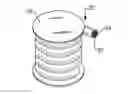
FIG. 1 shows a raw fiber as may be produced.
FIG. 2A shows a step in desizing.
FIG. 2B shows a subsequent coating step.
FIG. 3 shows an intermediate product.
FIG. 4 schematically shows a final product.
DETAILED DESCRIPTION
FIG. 1 shows a spool 18 that may carry a bundled fiber or fiber tow 20, which may be composed of Si-C, Si-C-O, Si-C-N-O, Si-B-C-N, Si-N, boron carbide, aluminium oxide, mullite, zirconia, alumina-silicate glass, and combinations thereof. Examples of such SiC fibers are available under the trade names Hi-Nicalon™ and Hi-Nicalon type S™. Such fibers may be available from Nippon Carbon Co, Ltd. (“NCK”) of Japan. The site of the bundled fibers 20 is greatly exaggerated relative to the size of spool 18, to better illustrate the details of the bundled fibers 20. As mentioned, this disclosure extends to glass or ceramic fibers generally.
As shown, a number of fibers 22 may be bundled within fiber tow, 20. Such fibers, when utilized to form CMC materials, may be greater than or equal to 5 and less than or equal to 150 microns in diameter. An outer coating 24 is provided about an outer surface of the bundled fibers. The outer coating 24 may be a polymer coating such as a polyvinyl alcohol coating. This coating is provided to protect the fibers during handling and prevent damage and breakage.
However, subsequent coatings are required and the polymer coating must be removed prior to the subsequent coating.
Thus, as shown in FIG. 2A, the fiber 20 is placed in a chamber 26 which is exposed to air 30 which is heated and passed through a source of water such as humidifier 32, such that the combined humidified air entering chamber 26 and passes an inlet 28 and across the fibers 20 to desize the polymer coating from the bundled fiber 20.
The air entering the chamber 26 may be between 20 and 900° C. More narrowly, it may be between 300 and 500° C.
The fiber 20 may be exposed to the process of FIG. 2A for a time on the order of one to three hours. The flow rate of water in the humidified air may be on the order of 1 to 20 ml per minute. The humidifier 32 may require that air be bubbled through a water bubbler.
In another embodiment, the chamber is fed air or inert gas which is passed through a water vaporizer or steam generator.
While air is disclosed, other carrier gases, such as helium, argon or nitrogen, carbon dioxide, carbon monoxide, ammonia, or combinations thereof may be utilized.
Once the polymer sizing has been removed, a subsequent interface coating may be applied by tool 90, such as coating 92, as shown in FIG. 2B. This interface coating is applied to the bundled fibers 120 which have now had the polymer sizing removed. Such interface coatings may be known and may be provided by a chemical vapor deposition process, as shown schematically at 90. The interface coatings may include an inner layer of boron nitride and an outer layer of silicon nitride, silicon carbide, boron carbide, carbon, or combinations thereof. The coatings themselves are as known, however, to make these coatings, the polymer sizing must first be successfully removed.
While a particular process is disclosed in FIG. 2A, the polymer sizing may also be removed by soaking the fibers in boiling de-ionized water along with air or other gases.
Once the fibers have been desized and coated with an appropriate interface coating or coatings, they may be utilized in any known process to form an intermediate product 100. As an example, the intermediate product 100 may be a pre-preg tape, such that a subsequent and final CMC component 130 is formed. In other examples, the fiber or fiber tows may first be woven into a fabric prior to desizing (that is, the polymer coating removal step), then desized and coated with appropriate interface coatings to form the intermediate product 100. This intermediate product 100 may be subsequently utilized in a polymer infiltration and pyrolysis and/or slurry cast melt infiltration process to form the final CMC component 130. The component 130 formed in these ways may be for use in a gas turbine engine, in one example, and could be a turbine blade, vane, blade outer air seal, combustor liner, etc.
Although an embodiment of this invention has been disclosed, a worker of ordinary skill in this art would recognize that certain modifications would come within the scope of this invention. For that reason, the following claims should be studied to determine the true scope and content of this invention.
Claims
1. A method of preparing a fiber for use in forming a ceramic matrix composite material comprising the steps of:
removing a polymer coating from an outer surface of glass or ceramic fibers by providing heated and humidified gas across said glass or ceramic fibers for a period of time.
2. The method as set forth in claim 1, wherein said glass or ceramic fibers have a diameter of greater than or equal to 5 micron and less than or equal to 150 micron.
3. The method as set forth in claim 2, wherein said gas is heated to a temperature between 20 and 900° C.
4. The method as set forth in claim 3, wherein said gas is heated to between 300 and 500° C.
5. The method as set forth in claim 4, wherein said gas is air.
6. The method as set forth in claim 4, wherein said glass or ceramic fibers include bundled fibers provided with polymer coating on the outer surface.
7. The method as set forth in claim 6, wherein said bundled fibers are provided with a subsequent interface coating after having the polymer coating removed.
8. The method as set forth in claim 7, wherein said subsequent interface coating is provided by a chemical vapor deposition process.
9. The method as set forth in claim 7, wherein said subsequent interface coating includes at least one inner layer and an outer layer.
10. The method as set forth in claim 9, wherein said at least one inner layer of the interface coating is boron nitride.
11. The method as set forth in claim 9, wherein said outer layer of the interface coating is one of silicon nitride, silicon carbide, boron carbide, carbon, and combinations thereof.
12. The method as set forth in claim 1, wherein the glass or ceramic fibers are woven into fabric prior to the polymer coating removal step.
13. The method as set forth in claim 1, wherein said gas is heated to between 300 and 500° C.
14. The method as set forth in claim 13, wherein said gas is air.
15. The method as set forth in claim 1, wherein said gas is air.
16. The method as set forth in claim 1, wherein said glass or ceramic fibers include bundled fibers provided with the polymer coating on the outer surface.
17. The method as set forth in claim 16, wherein said bundled fibers are provided with a subsequent interface coating after having the polymer coating removed.
18. The method as set forth in claim 17, wherein said subsequent interface coating is provided by a chemical vapor deposition process.
19. The method as set forth in claim 17, wherein said subsequent interface coating includes at least one inner layer and an outer layer.
20. The method as set forth in claim 1, wherein said coated fibers are utilized to form a component for a gas turbine engine.
Images & Drawings included:

Sources:
- United States Patent and Trademark Office - verify current appl. status at the USPTO↗
Similar patent applications:
Recent applications in this class:
- » 20180044820 2018-02-15
Coated cable for a conveyor system
Recent applications for this Assignee:
- » 20210317743 2021-10-14
Thermally isolated rotor systems and methods - » 20210310363 2021-10-07
Balanced composite root region for a blade of a gas turbine engine - » 20210283681 2021-09-16
Method for removing refractory metal cores - » 20210262415 2021-08-26
High bypass ratio engine bypass duct nozzle with controlled nozzle area - » 20210262400 2021-08-26
Speed limiting for power turbine governing and protection in a turboshaft engine - » 20210262359 2021-08-26
After-fan system with electrical motor for gas turbine engines - » 20210254494 2021-08-19
Vane arm torque transfer plate - » 20210254480 2021-08-19
Tangential rotor blade slot spacer for a gas turbine engine - » 20210254232 2021-08-19
THERMALLY STABLE NICKEL-PHOSPHORUS ALLOY FOR HIGH TEMPERATURE APPLICATIONS - » 20210246838 2021-08-12
Engine control device and methods thereof