Buddleia plant named 'UCONNBD603'
US20160360666P1
2016-12-08
14/545,688
2015-06-06
Abstract:
A new and distinct cultivar of Buddleia plant named ‘UCONNBD603 ’, characterized by its relatively compact, upright and outwardly spreading plant habit; freely branching habit and thick stems with short internodes; dense and bushy appearance; leathery and durable leaves; freely flowering habit; broadly conical inflorescences with numerous white-colored flowers; and good garden performance.
Inventors:
- Mark Henry Brand 9 🇺🇸 Willington, CT, United States
- William Addison Smith 4 🇺🇸 Bristol, CT, United States
Assignee:
- University of Connecticut 391 🇺🇸 Farmington, CT, United States
Interested in similar patents?
Get notified when new applications in this technology area are published.
Classification:
A01H5/00 IPC
Products
A01H5/00 IPC
Angiosperms, i.e. flowering plants, characterised by their plant parts; Angiosperms characterised otherwise than by their botanic taxonomy
Description
BOTANICAL DESIGNATION
Buddleia davidii
CULTIVAR DENOMINATION
‘UCONNBD603’
BACKGROUND OF THE INVENTION
The present invention relates to a new and distinct Buddleia plant, botanically known as Buddleia davidii and hereinafter referred to by the name ‘UCONNBD603’.
The new Buddleia plant is a product of a planned breeding program conducted by the Inventors in Storrs, Conn. The objective of the breeding program was to create new compact Buddleia plants with dense growth habit and attractive flower coloration.
The new Buddleia plant originated from a cross-pollination conducted by the Inventors in July, 2008 in Storrs, Conn. of a proprietary selection of Buddleia davidii identified as code designation Uconn dwf-01, not patented, as the female, or seed, parent with Buddleia davidii ‘White Profusion’, not patented, as the male, or pollen, parent. The new Buddleia plant was discovered and selected by the Inventors as a single flowering plant within the progeny of the stated cross-pollination in a controlled environment in Storrs, Conn. in July, 2010.
Asexual reproduction of the new Buddleia plant by softwood stem cuttings in a controlled environment in Storrs, Conn. since July, 2010 has shown that the unique features of this new Buddleia plant are stable and reproduced true to type in successive generations.
SUMMARY OF THE INVENTION
Plants of the new Buddleia have not been observed under all possible combinations of environmental conditions and cultural practices. The phenotype may vary somewhat with variations in environmental conditions such as temperature and light intensity without, however, any variance in genotype.
The following traits have been repeatedly observed and are determined to be the unique characteristics of ‘UCONNBD603 ’. These characteristics in combination distinguish ‘UCONNBD603’ as a new and distinct Buddleia plant:
1. Relatively compact, upright and outwardly spreading plant habit.
2. Freely branching habit, thick stems with short internodes; dense and bushy appearance.
3. Leathery and durable leaves.
4. Freely flowering habit.
5. Broadly conical inflorescences with numerous white-colored flowers.
6. Good garden performance.
Plants of the new Buddleia differ primarily from plants of the female parent selection in the following characteristics:
1. Plants of the new Buddleia have larger inflorescences than plants of the female parent selection.
2. Plants of the new Buddleia have white-colored flowers whereas plants of the female parent selection have dark lilac-colored flowers.
Plants of the new Buddleia differ primarily from plants of the male parent, ‘White Profusion’, in the following characteristics:
1. Plants of the new Buddleia are more compact than plants of ‘White Profusion’.
2. Plants of the new Buddleia have thicker stems, shorter internodes and are denser and bushier than plants of ‘White Profusion’.
3. Plants of the new Buddleia have broader and darker green-colored leaves than plants of ‘White Profusion’.
4. Inflorescences of plants of the new Buddleia are broader, fuller and denser than inflorescences of plants of ‘White Profusion’.
Plants of the new Buddleia can also be compared to plants of Buddleia davidii ‘ILVOargus01’, not patented. In side-by-side comparisons, plants of the new Buddleia differ primarily from plants of ‘ILVOargus01’ in the following characteristics:
1. Plants of the new Buddleia are more compact than plants of ‘ILVOargus01’.
2. Inflorescences of plants of the new Buddleia face more outwardly than inflorescences of plants of ‘ILVOargus01’.
3. Inflorescences of plants of the new Buddleia are fuller and denser than inflorescences of plants of ‘ILVOargus01’.
BRIEF DESCRIPTION OF THE PHOTOGRAPH
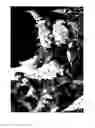
The accompanying colored photograph illustrates the overall appearance of the new Buddleia plant showing the colors as true as it is reasonably possible to obtain in colored reproductions of this type. Colors in the photograph may differ slightly from the color values cited in the detailed botanical description which accurately describe the colors of the new Buddleia plant. The photograph is a close-up view of a typical flowering plant of ‘UCONNBD603’ grown in an outdoor nursery.
DETAILED BOTANICAL DESCRIPTION
The aforementioned photograph and following observations, measurements and values describe plants grown during the summer in ground beds in an outdoor nursery in Grand Haven, Mich. and under cultural practices typical of commercial production. Plants were two years old when the photograph and description were taken. During the production of the plants, day temperatures ranged from 18° C. to 27° C. and night temperatures ranged from 5° C. to 10° C. In the following description, color references are made to The Royal Horticultural Society Colour Chart, 1995 Edition, except where general terms of ordinary dictionary significance are used.
- Botanical classification: Buddleia davidii ‘UCONNBD603’.
- Parentage:
-
- Female, or seed, parent.—Proprietary selection of Buddleia davidii identified as code designation Uconn dwf-01, not patented.
- Male, or pollen, parent.—Buddleia davidii ‘White Profusion’, not patented.
-
- Propagation:
-
- Type.—By softwood stem cuttings.
- Time to initiate roots plant, summer.—About one to two weeks at temperatures ranging from 21° C. to 29° C.
- Time to produce a rooted plant, summer.—About 30 days at temperatures ranging from 21° C. to 29° C.
- Root description.—Medium in thickness, fibrous; white in color.
- Rooting habit.—Freely branching; dense.
-
- Plant description:
-
- Plant and growth habit.—Deciduous perennial shrub; relatively compact, upright and outwardly spreading plant habit; thick stems, short internodes and dense and bushy appearance; vigorous growth habit.
- Plant height.—About 50 cm.
- Plant width (spread).—About 64.5 cm.
- Lateral branches.—Quantity: Freely branching habit with about six primary lateral branches developing per plant; pinching enhances lateral branch development. Length: About 49.5 cm. Diameter: About 8 mm. Internode length: About 3 cm. Strength: Strong. Aspect: Erect to about 45° from vertical. Texture: Pubescent, glaucous; with development, woody. Color, developing: Close to 145C. Color, developed: Close to 199B with striations, close to 199A.
-
- Leaf description:
-
- Arrangement and appearance.—Opposite, simple; leaves durable and leathery.
- Length.—About 12 cm.
- Width.—About 3.2 cm.
- Shape.—Lanceolate.
- Apex.—Acute to acuminate.
- Base.—Cuneate.
- Margin.—Serrulate; slightly undulate.
- Texture, upper and lower surfaces.—Pubescent, coriaceous; venation prominent.
- Venation pattern.—Pinnate.
- Color.—Developing and fully expanded leaves, upper surface: Close to 139A; venation, close to 145A. Developing and fully expanded leaves, lower surface: Close to 194A; venation, close to 145B.
- Petioles.—Length: About 3 mm. Diameter: About 2 mm. Texture, upper and lower surfaces: Pubescent. Color, upper surface: Close to 145A. Color, lower surface: Close to 146C.
-
- Flower description:
-
- Flower type and flowering habit.—Single salverform flowers arranged on terminal and axillary panicles; inflorescences face mostly outwardly; panicles broadly conical in shape; freely flowering habit with more than 1,250 flowers developing per inflorescence; flowers not persistent.
- Fragrance.—Fragrant; sweet, honey-like, pleasant.
- Natural flowering season.—Long flowering period, plants flower continuously from mid-summer into the autumn in Michigan.
- Flower buds.—Height: About 7 mm. Diameter: About 1 mm. Shape: Lanceolate. Color: Close to 155B.
- Inflorescence length.—About 13 cm to 17 cm.
- Inflorescence diameter.—About 5 cm.
-
Flower diameter.—About 5 mm.
- Flower depth.—About 8 mm.
- Petals.—Quantity per flower: Typically four in a single whorl. Length: About 2 mm. Width: About 2 mm. Shape: Oblong to obovate. Apex: Obtuse. Base: Slightly acute. Margin: Entire; slightly undulate giving a ruffled appearance. Texture, upper and lower surfaces: Smooth, glabrous; soft. Color: Developing and fully developed petals, upper surface: Close to 155B; color does not change with development. Developing and fully developed petals, lower surface: Close to 155B; color does not change with development. Throat: Close to 31A. Tube: Close to 155B.
- Sepals.—Quantity per flower: Typically five in a single whorl. Length: About 2 mm. Width: About 0.5 mm. Shape: Lanceolate to ovate. Apex: Acute. Base: Cuneate. Margin: Entire. Texture, upper and lower surfaces: Slightly pubescent. Color, upper surface: Towards the base, close to 145C and towards the apex, close to 147C. Color, lower surface: Close to 148D.
- Pedicels.—Length: About 1 mm to 5 mm. Diameter: About 0.5 mm. Strength: Strong. Angle: Upright to outwardly. Texture: Pubescent to smooth and glabrous. Color: Close to 145B tinged with close to 184A.
- Reproductive organs.—Stamens: Quantity per flower: Typically four. Filament length: About 0.6 mm. Filament color: Close to 155B tinged with close to 145B. Anther length: About 1 mm. Anther shape: Oblong. Anther color: Close to 155B. Pollen amount: Scarce. Pollen color: Close to 11C. Pistils: Quantity per flower: One. Pistil length: About 1 mm. Stigma shape: Oblong. Stigma color: Close to 145A.
- Seeds and fruits.—Seed and fruit development have not been observed on plants of the new Buddleia.
-
- Disease & pest resistance: Plants of the new Buddleia have not been observed to be resistant to pathogens and pests common to Buddleia plants.
- Garden performance: Plants of the new Buddleia have been observed to have good garden performance and tolerate rain, wind and to be hardy to USDA Hardiness Zone 6.
Claims
It is claimed:1. A new and distinct Buddleia plant named ‘UCONNBD603’ as illustrated and described.
Images & Drawings included:

Sources:
- United States Patent and Trademark Office - verify current appl. status at the USPTO↗
Recent applications in this class:
- » 20240292771 2024-08-29
Campanula plant named 'Twilight' - » 20240251691 2024-07-25
HYDRANGEA PLANT NAMED 'HYLV17520' - » 20240251690 2024-07-25
Vaccinium Plant Named 'BWPBLUE02' - » 20240251689 2024-07-25
BLUEBERRY PLANT NAMED 'FC13-113' - » 20240251688 2024-07-25
BLUEBERRY PLANT NAMED 'FCM14-057' - » 20240237567 2024-07-11
PONGAMIA VARIETIES - » 20240224827 2024-07-04
PELARGONIUM PLANT NAMED 'PEQZ0103' - » 20240215470 2024-06-27
Agapanthus plant named 'Monsapho' - » 20240215469 2024-06-27
plant named ‘LOCORA3519’ - » 20240206359 2024-06-20
CORYLUS PLANT NAMED 'BWM01'
Recent applications for this Assignee:
- » 20250128062 2025-04-24
System and Method for Reversible Sensory Nerve Block - » 20250011884 2025-01-09
Methods and Compositions for Identification and Modulation of Microbiome and Uses Thereof - » 20250009644 2025-01-09
LONG-ACTING INJECTABLE IN SITU FORMING BIODEGRADABLE IMPLANTS COMPRISING NON-STEROIDAL ANTI-INFLAMMATORY DRUGS - » 20240417734 2024-12-19
Methods for Treating Glioblastoma by Targeting Oncomirs - » 20240399376 2024-12-05
Sample Collection Card for Untargeted Metabolomics and Methods of Use Thereof - » 20240386320 2024-11-21
Autonomous Optimization of Inkjet Printing Through Machine Learning - » 20240350421 2024-10-24
Cationic Polymeric Nanoparticles and Their Uses in Treating Diseases - » 20240299400 2024-09-12
Transcription Factor GLI1 Inhibitors and Uses Thereof - » 20240075050 2024-03-07
Methods and Compositions for Treating Leucine Rich Repeat Kinase 2 (LRRK2)-Associated Disorder or Condition - » 20240067911 2024-02-29
Multigel tumor-on-a-chip system